

The decision to choose a board can be a minefield. You’ll have to consider different brands, sizes, styles, and other factors that determine your overall experience with the board.
How great your rides are is influenced by your knowledge of these terms. Educate yourself on the template, the rails, the tail, and, of course, our topic of focus today, the rocker.

What Is a Rocker?
Observed from a side angle, the rocker of a bodyboard is the original bottom curve that runs from the nose to the tail. It refers to the “flatness” of your board. For instance, when you lay the board on the ground and aren’t able to rock it from its tail, it has what you call a “flat rocker.”
The upward curve of the board’s nose should keep it from touching the ground. However, based on most production standards, the tail must be flat. A banana-shaped curved gives a bodyboard more rocker.
The rocker also means that your rides will be a bit slower, but your board more responsive. Generally, a board should have a relatively flat rocker with just enough bend when necessary. It should also be able to revert back to its original shape.
Rockers can happen when there’s too much heat. This emphasizes the importance of storing your bodyboards in a cool environment. Forget to do this, and it’ll only be a matter of time before the dreaded “reverse rocker” develops, causing your board to convex and perform frequent nosedives.
Why Bodyboards Have Rockers
The reason why bodyboards have rockers is so that they’ll have enough curve to fit in the steeper portions of a wave’s face. The absence of a rocker would make it incredibly hard for a surfer to drop into the waves without nose-diving.
For advanced surfers, rockers are crucial for performing complex maneuvers in the most critical areas of the wave.
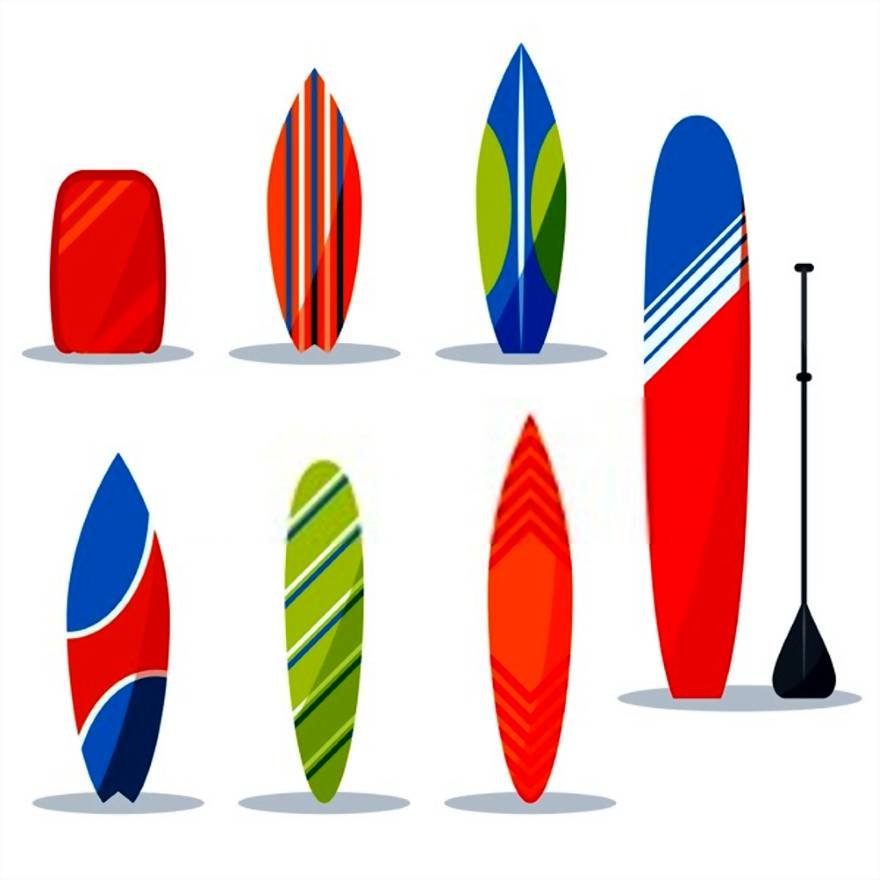
What You Need to Know About Flat Bodyboards
Bodyboards that are mostly flat and have less rocker aren’t all bad. They’re pretty big in terms of size, which helps with floatation and surface planning. Combined with its low-to-moderate rocker, you’ll barely have any trouble gliding on the water’s surface.
Longboards, for instance, can give you a smooth ride even when surf conditions are poor. They provide a lot of stability because of their width, length, and thickness. You can easily paddle on these boards and catch more waves.
What you’re not going to like about a flat bodyboard, particularly if you’re an expert, is its inability to help you perform complex maneuvers. A board with a low rocker is much more difficult to turn and increases your chances of nose-diving as you take off.
How You Should Want the Rocker to Be
Your board should not have a banana-shaped rocker; that’s for sure. If it has, however, then you’re going to need to fix it. Fixing entails reducing or eliminating the board’s curve.
A rocker isn’t all bad; it even has some advantages where turns are concerned. It gives you more control, resulting in better sharp and bottom turns. The downside is that your speed down the line will be greatly reduced.
There are several factors that determine how a rocker develops. The rider’s weight, the temperature of the waters, and riding habits can all contribute to the development of a few millimeters of rocker, sometimes even more.

Fixing the Rocker
If your bodyboard, which was once relatively flat, has somehow taken a U-shape, then perhaps it’s time to flatten it out. Here’s how you remove or reduce your bodyboard’s rocker.
Step 1
The first thing you do is place an object on the floor, under the nose of the board, to elevate it a couple of inches.
Step 2
You then need to turn your bodyboard upside down, with the slick bottom part facing upward.
Step 3
Using a heat gun, start melting the section of the board that has developed too much “rocker” and is ruining your rides.
Step 4
Three to five minutes is all it takes to heat that “part” of the board. Don’t overdo it or get too close.
Step 5
There will be a slight change in the appearance of the slick skin.
Step 6
A box or weight should then be placed over the heated section for five minutes. Make sure to be extra gentle during this process.
Step 7
Once the five minutes are up, remove the weight and flip the board to see if the rocker is just right.
Conclusion
Whether or not you want to “fix” the rocker of your bodyboard is entirely up to you. Learn more about a rocker’s role and how it contributes to your wave riding experience before you make a decision.
If you’re still fresh off the blocks of your bodyboarding journey, we recommend you stick to the relatively flat boards with low to medium rockers. If you want to perform expert maneuvers, then a bodyboard with a higher rocker level would suit you best.
Don’t hesitate to consider Own the Wave bodyboards, too. They hold the necessary features that allow them to handle any wave they’re pitched against.