
1. Striped Skunk (Mephitis mephitis)
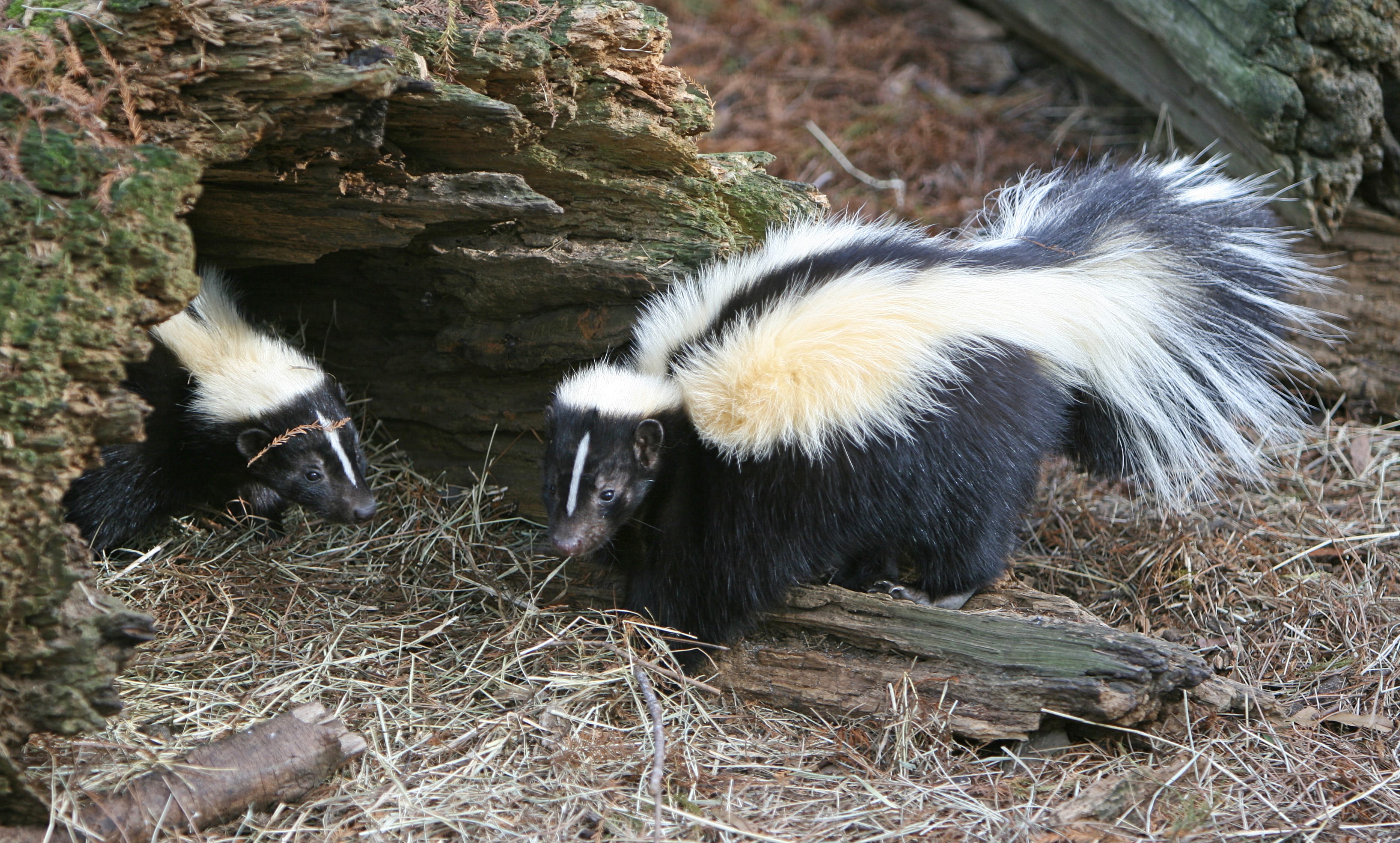
Physical Characteristics & Identification Tips
The Striped Skunk is the most familiar skunk across North America, and it’s abundant throughout Texas. It has a glossy black coat with two broad white stripes that run from the top of its head, down its back, and onto its bushy tail. Adults typically measure 20–32 inches long (including tail) and weigh between 4–12 pounds, depending on their age and fat stores.
Key identification clues: the distinct V-shaped white lines on its shoulders, its stout body, and the loud hiss or foot-stomping when threatened.
Behavior
Striped Skunks are primarily nocturnal and solitary. They spend their nights foraging for food, often using repeated nightly routes. When alarmed, they stomp their feet, raise their tail, and hiss before spraying. Their musk is a powerful defense, but they rarely use it unless cornered.
They are good diggers, turning over soil to find insects, grubs, and invertebrates. They also scavenge, making their way into human-dominated landscapes like farms and suburbs.
Habitat and Range
This species is widespread across Texas, occupying open fields, wooded areas, grasslands, and even suburban neighborhoods. Den sites may include hollow logs, rock crevices, brush piles, or spaces under buildings. They adapt well to human-altered environments.
Diet
As omnivores, Striped Skunks eat a wide variety of foods: insects (especially beetles and larvae), small rodents, eggs, fruits, seeds, and even carrion. Their flexible diet allows them to take advantage of whatever food resources are available.
Reproduction and Life Cycle
Breeding usually occurs in late winter or early spring. After about 60–75 days of gestation, a female will give birth to a litter of roughly 4–6 kits. The kits are born blind and helpless but grow quickly. By midsummer they begin to explore outside the den, and by fall they disperse to find their own territories.
Fun Facts / Unique Traits
- A single striped skunk can accurately spray several times, with the powerful musk reaching as far as 10–15 feet.
- Despite their stinky reputation, they are very clean animals and groom themselves regularly.
- They help control pests such as insects and small rodents, playing a beneficial ecological role.
Human Interaction
Because of their adaptability, Striped Skunks often come into contact with humans. They may rummage through trash cans, raid compost piles, or den beneath sheds and porches. To reduce conflicts, homeowners should secure food sources, block access to denning sites, and use deterrents like motion-activated lights. If sprayed, a well-known home remedy (hydrogen peroxide, baking soda, and dish soap) can help neutralize the odor, but please follow pet safety guidelines if washing a dog or cat.
2. Eastern Spotted Skunk (Spilogale putorius)
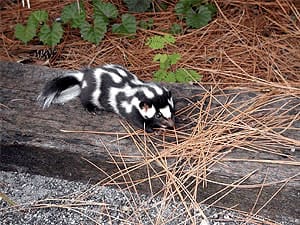
Physical Characteristics & Identification Tips
The Eastern Spotted Skunk is smaller and more slender than the striped skunk, typically weighing 1–3 pounds. Its fur is black with white “broken” stripes and spots rather than continuous lines. Its tail is bushy but proportionally shorter than in the striped species.
A distinctive trait: when threatened, it may perform a “handstand” on its front legs, raising its hindquarters and tail in the air—a dramatic warning before spraying.
Behavior
This species is acrobatic and agile. It can climb low vegetation, hay bales, or even small trees. It is nocturnal and uses a combination of hisses, foot-stomping, and the handstand display to warn predators before releasing its musk. Like other skunks, it is solitary except during breeding or when a mother raises her young.
Habitat and Range
In Texas, the Eastern Spotted Skunk is found more often in the eastern and northeastern parts of the state, although its numbers have declined. Preferred habitat includes rocky slopes, shrubby areas, fence lines, old farm structures, and woodland edges where hiding places abound.
Diet
It primarily eats insects — beetles, grasshoppers, larvae — but also consumes small mammals, eggs, small birds, fruits, and plant matter. Its small size and agility help it exploit food resources that are harder to reach for larger predators.
Reproduction and Life Cycle
Breeding usually occurs in late winter. Some populations show delayed implantation, meaning the fertilized egg may not immediately implant, which times births with favorable food availability. Litters typically consist of 4–6 kits. Young are cared for by the mother until midsummer, when they start dispersing.
Fun Facts / Unique Traits
- The handstand warning display is one of the most theatrical defensive postures in the animal kingdom.
- They are surprisingly good climbers for skunks, using their agility to escape or forage.
- Their spotted pattern provides more disruptive camouflage than bold stripes — effective in scrub or rocky habitat.
Human Interaction
Due to their declining numbers, Eastern Spotted Skunks rarely come into conflict with people. They may enter barns or outbuildings, especially in rural areas, but are less likely to rummage in trash than Striped Skunks. Conservationists encourage preserving brushy edges, shrubby fencerows, and old farm structures to support their habitat.
3. Western Spotted Skunk (Spilogale gracilis)
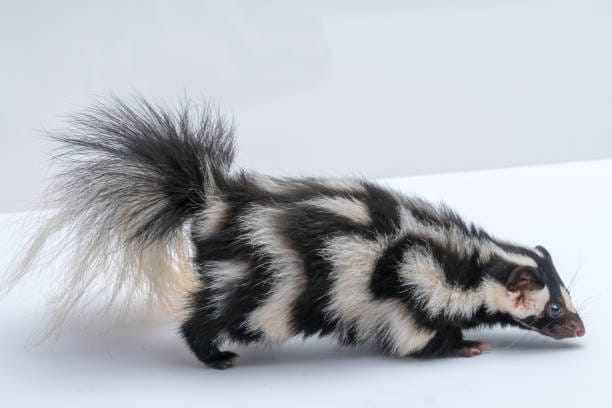
Physical Characteristics & Identification Tips
The Western Spotted Skunk is a close relative of the Eastern Spotted Skunk, but genetically distinct and slightly different in pattern. Its coat is also black with white spots and stripes, but the pattern and distribution of markings can differ. It tends to have a more elongated body and slightly different proportions.
Though hard to spot, one can identify it by its patterning, size, and often very quick movements. Like its eastern cousin, it’s well adapted to climbing and hiding in varied terrain.
Behavior
Western Spotted Skunks are nocturnal and extremely nimble. They climb, forage, and retreat with agility. Their defensive behavior mirrors that of the eastern spotted skunk — foot-stomping, hissing, and sometimes the upright display before spraying.
Habitat and Range
In Texas, Western Spotted Skunks are found more commonly in the western and southwestern regions, especially in scrublands, rocky hillsides, and transitional desert-grassland zones. They prefer rocky terrain that offers dens, crevices, or brush for shelter.
Diet
Their diet is similar to other spotted skunks: insects, small mammals, eggs, berries, and occasionally reptiles. Their ability to climb and squeeze through tight spaces gives them access to a wider variety of prey than strictly ground-dwelling species.
Reproduction and Life Cycle
Breeding habits are similar to eastern spotted skunk. Litters of about 4–6 are common. The young stay with the mother through early summer, then disperse. Their adaptation to more rugged terrain can influence den site choice and survival.
Fun Facts / Unique Traits
- Western Spotted Skunks are less studied than other species, making sightings rare and interesting for wildlife watchers.
- Their climbing skills help them escape predators and exploit food sources higher off the ground.
- They may travel more across rocky terrain than other skunks, using crevices as hideouts.
Human Interaction
Because of their preference for rugged or less developed terrain, Western Spotted Skunks seldom come into conflict with people. Ranchers or landowners in rocky country may occasionally encounter them, especially near old structures or rocky outcrops. Habitat preservation is critical for this species, particularly in areas experiencing development or rock quarrying.
4. Hog‑Nosed Skunk (Conepatus leuconotus)

Physical Characteristics & Identification Tips
The Hog‑Nosed Skunk (also called the American Hog‑Nosed Skunk) is distinctive for its long, pig-like snout—ideal for digging. It is larger than some skunk species, and its back often features a broad white stripe. Its legs are powerful, built for excavation.
Behavior
This skunk spends much of its time digging in soil for insects, grubs, and tubers. It is typically nocturnal and uses strong forelimbs to unearth prey. As with other skunks, it can spray when threatened, but it often prefers to dig or retreat first.
Habitat and Range
In Texas, Hog‑Nosed Skunks inhabit scrublands, open plains, and rocky areas. They favor loose soils and brushy terrain that make it easy to burrow or root for food.
Diet
Their diet is dominated by subterranean invertebrates such as grubs and insect larvae. They also consume roots, small vertebrates, and occasionally fruits. Their digging behavior helps aerate the soil, making them important ecosystem engineers.
Reproduction and Life Cycle
Typically, mating occurs in early spring. Litters of 2–6 young are born after a gestation period, and the kits remain in the den for weeks while they develop strong digging abilities. The mother trains them to forage before they leave in the summer.
Fun Facts / Unique Traits
- The long snout of the Hog‑Nosed Skunk acts much like a shovel for rooting through soil.
- They can dig up large volumes of soil, helping to turn over ground that might otherwise remain compacted.
- They are less likely to spray than other skunks, relying more on escape and digging for defense.
Human Interaction
Because of their habitat preferences, Hog‑Nosed Skunks are less common around dense human settlements, though they may be seen on ranches, open country, or near scrubby brush. Landowners with loose soil or brush piles should be aware of them but generally experience few direct conflicts. Efforts to conserve their habitat include preserving native prairie soil and discouraging excessive land disruption.
5. Hooded Skunk (Mephitis macroura)
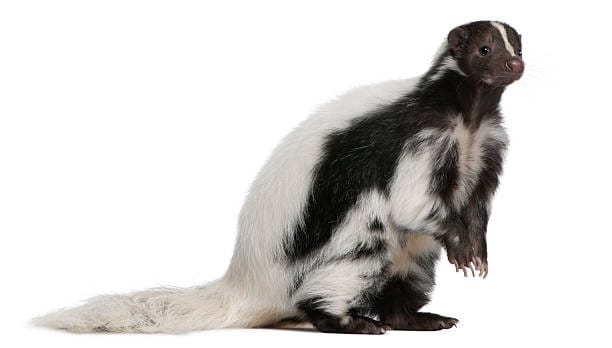
Physical Characteristics & Identification Tips
The Hooded Skunk is notable for the “hood” of longer fur that frames its head, giving it a slightly different silhouette than the striped skunk. Its coloration may vary: some individuals show a white stripe down the back, while others have more white on the head or shoulders.
Behavior
Similar in many ways to the striped skunk, the Hooded Skunk is largely nocturnal and uses warning displays of hissing and foot-stomping before resorting to spraying. It is less frequently seen than other species due to its scattered distribution and shy temperament.
Habitat and Range
This species is found in parts of western Texas, particularly in rocky, scrubby, and semi-arid regions. Brushy hillsides, rocky outcrops, and areas of sparse vegetation provide suitable den sites.
Diet
Hooded Skunks eat insects, small mammals, eggs, and plant matter. Their diet is quite similar to that of striped skunks, though they may rely more heavily on insects in drier, more arid regions.
Reproduction and Life Cycle
Breeding likely occurs in late winter or early spring. Litters are usually moderate in size. Young skunks are weaned and begin foraging with their mother before dispersing later in the year.
Fun Facts / Unique Traits
- The “hood” effect of longer fur gives this species a distinctive look compared to more common skunks.
- They are relatively rare in Texas, making sightings a treat for wildlife watchers.
- They may travel more on rocky ground and rugged terrain than other skunks.
Human Interaction
Because Hooded Skunks are not common, interactions with people are rare. However, in remote ranching or rocky rural areas, they might den near rock outcroppings or dense shrubs. Conservation of these rugged habitats helps maintain their populations.
Conclusion
Texas is richer in skunk diversity than many realize. From the familiar Striped Skunk that thrives near human habitations to the acrobatic Spotted Skunks and the specialized digging Hog‑Nosed Skunk, each species brings something unique to the state’s ecology. The rare Hooded Skunk adds even more intrigue for wildlife enthusiasts. By learning to identify these species, appreciating their ecological roles, and reducing conflict through responsible practices, Texans can live in harmony with these nocturnal neighbors. If you are lucky enough to spot any of them, give them space—and gratitude for their quiet service in pest control.
Frequently Asked Questions (FAQ)
- How many skunk species are found in Texas? — Five: Striped, Eastern Spotted, Western Spotted, Hog‑Nosed, and Hooded.
- Which skunk is most common in Texas? — The Striped Skunk (Mephitis mephitis).
- Where are Eastern Spotted Skunks mainly found? — In eastern and northeastern regions of Texas, especially near brushy or rocky habitats.
- Are skunks dangerous? — Generally no, unless they feel threatened; they warn before spraying.
- Can skunks carry rabies? — Yes, like many wild mammals, so it’s best not to handle them.
- What do skunks eat? — A variety: insects, rodents, eggs, fruit, and sometimes tubers (for Hog‑Nosed).
- Do skunks dig? — Yes, especially the Hog‑Nosed Skunk, which digs extensively for insects.
- Do skunks climb? — Spotted Skunks climb surprisingly well; striped and hooded are mostly ground‑based.
- When do skunks breed? — Usually late winter to early spring.
- How many babies do skunks have? — Typically 4–6 for most species.
- Do skunks hibernate? — No, but they may become less active in cold weather.
- How far can a skunk spray? — Up to 10–15 feet in a well-aimed shot.
- How can I keep skunks away? — Secure trash, block access to den areas, use lights or sprinklers.
- Are all skunk types found statewide? — No; some are region-specific (e.g., Hooded Skunk in western Texas).
- What should I do if a pet is sprayed? — Wash with a recommended deodorizing solution and call a vet if needed.
- Can spotted skunks perform a handstand? — Yes, it’s part of their threat display.
- Are Hog‑Nosed Skunks likely to spray? — Less often; they rely on digging or fleeing first.
- What kind of habitats do skunks prefer? — Varied: grasslands, brush, scrub, rocky hills, farmland.
- Do skunks make nests? — They often use dens, burrows, or hollow spaces.
- How long do skunks live? — Often 2–4 years in the wild, depending on species.
- Can skunks help the environment? — Yes, they control pests and aerate soil.
- Should I report rare skunk sightings? — Absolutely — wildlife agencies appreciate reports for conservation.
- Are skunks nocturnal? — Yes, most species are active at night.
- Do skunks eat venomous prey? — Sometimes, small reptiles or amphibians might be included in their diet.
- Do skunks dig under buildings? — They might if there is access and a denning opportunity.
- Are Western Spotted Skunks endangered? — Status varies; they are less common in some regions and monitored.
- How do I identify a Hooded Skunk? — Look for longer “hooded” fur around the head and variable white striping.
- Will skunks revisit the same den? — Yes, they may reuse dens seasonally.
- Do skunks swim? — Yes, to some degree, but they prefer dry shelter.
- What predators hunt skunks? — Large owls, foxes, bobcats, coyotes.
- Can skunks be relocated? — Only by licensed wildlife professionals; relocation laws apply.
- Are skunks threatened by development? — Yes: habitat loss, fragmentation, and human conflict are major risks.
Read more: