
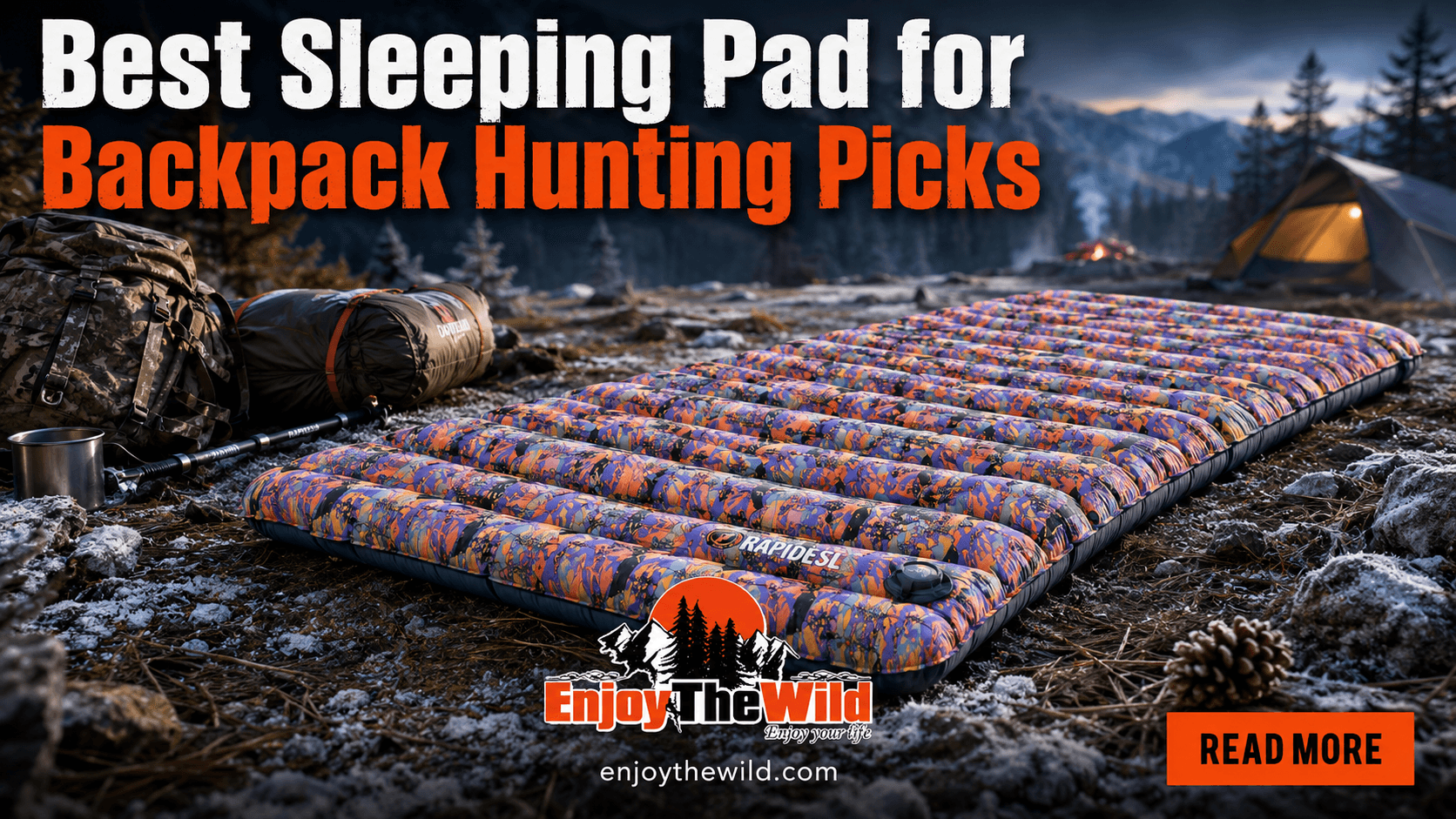
Choosing the best sleeping pad for backpack hunting is just as important as choosing the right sleeping bag, tent, boots, or pack. When you are sleeping miles from the truck after a long day of climbing, glassing, still-hunting, or packing meat, your sleeping pad is what separates your body from the cold ground. A poor pad can leave you cold, sore, tired, and less focused the next morning.
Backpack hunters need a sleeping pad that balances warmth, weight, packed size, comfort, durability, and reliability. A thick car-camping mattress may feel great at home, but it is usually too bulky for a spike camp. An ultralight summer pad may fit easily in your pack, but it may not insulate well enough for cold ground, high elevation, or late-season hunts. The best choice depends on the season, terrain, expected temperature, sleeping bag rating, shelter, body size, sleeping style, and how far you need to carry your camp.
This guide compares 10 sleeping pads that make sense for backpack hunting, elk hunting, mule deer hunting, sheep hunting, public-land backpack trips, high-country scouting, spring bear camps, and cold-weather spike camps. Some are premium high-R-value pads for cold mountain hunts. Some are ultralight three-season options for early archery trips. Some are more comfortable for side sleepers. One closed-cell foam pad is included because foam pads remain useful as durable backup insulation, puncture protection, or a lightweight emergency layer.
The products were selected based on R-value, weight, packed size, comfort, inflation system, noise level, durability, insulation type, repairability, field usefulness, Amazon availability, brand reputation, and overall value. Because sleeping pad performance depends on your full sleep system, this article also explains how to match a sleeping pad with your sleeping bag, shelter, expected weather, and hunting style.
Important safety note: A sleeping pad is part of your backcountry safety system. A sleeping bag can lose warmth quickly if the pad underneath you is not insulated enough. Always check weather forecasts, carry repair supplies for inflatable pads, protect your pad from sharp rocks and thorns, follow hunting regulations, respect land-access rules, store food responsibly, and prepare for colder-than-expected overnight conditions.
Quick Picks:
- Best Overall: Therm-a-Rest NeoAir XTherm NXT Sleeping Pad on Amazon
- Best Budget Option: Klymit Insulated Static V Sleeping Pad on Amazon
- Best Premium Pick: NEMO Tensor Extreme Conditions Sleeping Pad on Amazon
- Best Ultralight Pick: Therm-a-Rest NeoAir XLite NXT Sleeping Pad on Amazon
- Best Comfort Pick: Therm-a-Rest NeoLoft Sleeping Pad on Amazon
Comparison Table
| Product | Best For | R-Value / Insulation | Key Features | Backpack Hunting Use | Check Price |
|---|---|---|---|---|---|
| Therm-a-Rest NeoAir XTherm NXT | Best Overall | R-value 7.3 listed | 3-inch thickness, WingLock valve, pump sack, repair kit, high warmth-to-weight ratio | Excellent for cold backpack hunts, elk camps, sheep hunts, and late-season spike camps | Check Price on Amazon |
| NEMO Tensor All-Season Ultralight Insulated | Best All-Season Balance | All-season insulated design | Spaceframe baffles, Thermal Mirror insulation, quiet design, 3.5-inch loft | Great for hunters who want comfort, warmth, quietness, and packability in one pad | Check Price on Amazon |
| Therm-a-Rest NeoAir XLite NXT | Best Ultralight Pick | Three-season ultralight insulated design | 13-ounce listed regular weight, 3-inch thickness, small packed size, WingLock valve | Best for early-season backpack hunters who want low weight and solid warmth | Check Price on Amazon |
| NEMO Tensor Extreme Conditions | Best Premium Cold-Weather Pick | R-value 8.5 listed | Apex baffles, four Thermal Mirror layers, quiet insulation, 3.5-inch loft | Best for late-season, snow, alpine, and very cold backpack hunting trips | Check Price on Amazon |
| Sea to Summit Ether Light XR Pro Insulated | Best Plush Cold-Weather Pad | R-value 7.4 listed | 3.9-inch thickness, Air Sprung Cells, ThermalCore insulation, integrated pump sack | Great for side sleepers and cold-weather hunters who want comfort and high insulation | Check Price on Amazon |
| Exped Ultra 6.5R Mummy | Best High-R-Value Mummy Pad | R-value 6.9 listed | Mummy shape, recycled synthetic microfiber insulation, reflective foil layers, lightweight build | Good for hunters who want strong warmth with a tapered pack-friendly shape | Check Price on Amazon |
| Big Agnes Rapide SL Insulated | Best Three-Season Comfort | R-value 4.8 listed | Double ripstop nylon, TPU lamination, pump sack, light insulated construction | Good for three-season backpack hunting, archery elk, mule deer, and scouting trips | Check Price on Amazon |
| Therm-a-Rest NeoLoft | Best Comfort Pick | Comfort-focused insulated air pad | 4.6-inch thickness, 3D sidewalls, centered side rails, backcountry comfort design | Best for side sleepers, older hunters, and anyone who prioritizes sleep quality | Check Price on Amazon |
| Klymit Insulated Static V | Best Budget Option | Insulated V-chamber design | V-chamber layout, Klymalite synthetic insulation, side rails, lightweight inflatable build | Best for budget hunters, early-season trips, and backup sleeping systems | Check Price on Amazon |
| Therm-a-Rest Z Lite Sol | Best Foam Backup Pad | R-value 2.0 listed | Closed-cell foam, accordion fold, reflective ThermaCapture coating, puncture-proof simplicity | Best as a durable backup, glassing pad, kneeling pad, or extra insulation under an air pad | Check Price on Amazon |
The best sleeping pad for backpack hunting should match your terrain, weather, and sleep system. For cold-weather hunts, Therm-a-Rest NeoAir XTherm NXT, NEMO Tensor Extreme Conditions, Sea to Summit Ether Light XR Pro, and Exped Ultra 6.5R offer higher insulation. For early-season hunts where ounces matter, Therm-a-Rest NeoAir XLite NXT and Big Agnes Rapide SL are easier to justify. For side sleepers or hunters who struggle to sleep on thin pads, Therm-a-Rest NeoLoft, NEMO Tensor All-Season, and Sea to Summit Ether Light XR Pro are more comfort-focused. For budget and backup use, Klymit Insulated Static V and Therm-a-Rest Z Lite Sol remain practical options.
1. Therm-a-Rest NeoAir XTherm NXT Sleeping Pad on Amazon
Short Overview
The Therm-a-Rest NeoAir XTherm NXT is the best overall sleeping pad for backpack hunting because it combines high insulation, low weight, compact packability, and proven backcountry usefulness. The Amazon listing describes a 3-inch-thick ultralight air mattress with reflective ThermaCapture technology, Triangular Core Matrix construction, a 7.3 R-value, WingLock valve, pump sack, stuff sack, and repair kit. That makes it a strong choice for cold elk hunts, late-season mule deer trips, sheep country, high-elevation scouting, and any hunt where the ground can pull heat from your body overnight. It is warmer than most three-season pads while still packing much smaller than a foam-only system. Hunters who sleep cold will appreciate the extra insulation margin. It is not the cheapest pad, and it still needs puncture care like any inflatable pad. However, for backpack hunters who want one pad that can handle a wide range of serious conditions, the XTherm NXT is hard to beat. Pair it with a properly rated sleeping bag and a reliable shelter for a strong mountain sleep system.
Key Features
- 7.3 R-value listed for cold-weather insulation
- 3-inch-thick inflatable construction
- Reflective ThermaCapture technology listed
- WingLock valve for inflation and deflation
- Includes pump sack, stuff sack, and repair kit according to listing
Pros
- Excellent warmth-to-weight ratio for backpack hunting
- Good choice for cold ground and late-season hunts
- Packs smaller than foam-only winter setups
- Strong all-around pad for serious backcountry hunters
Cons
- Premium cost compared with budget pads
- Inflatable design requires puncture care
- May be more insulation than needed for warm summer scouting
Who It’s Best For
This sleeping pad is best for elk hunters, sheep hunters, cold sleepers, late-season hunters, and backpack hunters who want a warm, compact, high-R-value pad for serious backcountry use.
2. NEMO Tensor All-Season Ultralight Insulated Sleeping Pad on Amazon
Short Overview
The NEMO Tensor All-Season Ultralight Insulated Sleeping Pad is the best all-season balance for hunters who want warmth, quietness, and comfort without going to an extreme winter pad. The Amazon listing describes a pad with two layers of floating Thermal Mirror metallized film, Spaceframe baffles, a 3.5-inch cushioned loft, quiet insulation, and a stable sleep surface. That makes it appealing for backpack hunters who move between early-season archery hunts, October rifle hunts, spring bear trips, and three-season scouting camps. The Tensor design is known for being quieter than many crinkly insulated pads, which matters when sharing a small tent or sleeping lightly after a long hunting day. The 3.5-inch loft is also helpful for side sleepers and people who feel pressure points on thinner pads. It is not the most extreme cold-weather pad in the list, but it covers a wide range of realistic hunting conditions. It also offers a more comfortable sleeping feel than many ultralight minimalist pads. For hunters wanting one versatile inflatable pad, the Tensor All-Season is a strong pick.
Key Features
- All-season insulated backpacking pad design
- Two layers of floating Thermal Mirror metallized film listed
- Spaceframe baffles for stability and weight distribution
- 3.5 inches of cushioned loft
- Quiet construction for backcountry sleeping comfort
Pros
- Great balance of warmth, comfort, and packability
- Quieter than many insulated air pads
- Good choice for side sleepers and restless sleepers
- Useful across many backpack hunting seasons
Cons
- Not as warm as the highest-R-value winter pads
- Still requires repair care like any inflatable pad
- Premium cost compared with basic sleeping pads
Who It’s Best For
This pad is best for backpack hunters who want one quiet, comfortable, all-season insulated pad for elk, deer, bear, sheep, mule deer, and scouting trips.
3. Therm-a-Rest NeoAir XLite NXT Sleeping Pad on Amazon
Short Overview
The Therm-a-Rest NeoAir XLite NXT is the best ultralight pick for backpack hunters who want low pack weight without giving up real sleeping comfort. The listing describes the regular size as weighing about 13 ounces and rolling up about the size of a 1-liter bottle. It also lists a 3-inch profile, baffled internal structure, WingLock valve, pump sack, stuff sack, and repair kit. That makes it a strong choice for early archery elk, high-country mule deer, sheep scouting, spring turkey backpack trips, and long public-land approaches where weight matters. It is not as warm as the XTherm NXT, so hunters expecting frozen ground, snow, or deep late-season cold should choose a warmer pad. However, the XLite NXT is very attractive when you need a light and compact pad that still works for many three-season trips. The lower carried weight can matter when you are also packing optics, food, water, and hunting gear. For ounce-conscious hunters, this is one of the best pads to compare.
Key Features
- 13-ounce listed regular weight
- 3-inch-thick inflatable profile
- Rolls up very compactly according to listing
- WingLock valve for easier inflation and deflation
- Includes pump sack, stuff sack, and repair kit according to listing
Pros
- Excellent ultralight option for backpack hunters
- Packs extremely small for a full-length air pad
- Good choice for early and mid-season hunts
- Strong warmth-to-weight performance for three-season use
Cons
- Not as warm as dedicated winter pads
- Premium price compared with budget options
- Thin ultralight gear requires careful campsite selection
Who It’s Best For
This sleeping pad is best for ultralight-minded backpack hunters, early-season elk hunters, sheep hunters, and public-land hunters who want a compact pad for long approaches.
4. NEMO Tensor Extreme Conditions Sleeping Pad on Amazon
Short Overview
The NEMO Tensor Extreme Conditions Sleeping Pad is the best premium cold-weather pick for hunters who expect serious cold, frozen ground, snow, or high-elevation nights. The Amazon listing describes an 8.5 R-value, four layers of floating Thermal Mirror metallized film, Apex baffle construction, 3.5 inches of loft, and a quiet sleeping surface. This makes it one of the strongest options for late-season elk, alpine deer, high-country sheep, winter scouting, and cold spike camps. The high R-value provides a bigger insulation buffer than many three-season pads, which is important when the ground is colder than the air temperature. The quieter construction is also useful for hunters who wake easily or share lightweight shelters. It is more pad than most warm-weather hunters need, and premium cold-weather pads usually cost more. However, carrying enough ground insulation is a safety decision, not just a comfort decision. For cold-weather backpack hunting, this pad deserves serious consideration.
Key Features
- 8.5 R-value listed for extreme conditions
- Four layers of floating Thermal Mirror metallized film
- Apex baffle design listed
- 3.5 inches of stable cushioned loft
- Quiet insulated construction for better sleep
Pros
- Excellent insulation for cold-weather backpack hunting
- Good choice for snow, frozen ground, and alpine camps
- Quiet construction improves sleep quality
- Comfortable 3.5-inch loft works well for side sleepers
Cons
- Premium cost
- May be more warmth than needed for summer hunts
- Inflatable design requires repair kit and careful campsite choice
Who It’s Best For
This pad is best for late-season backpack hunters, cold sleepers, alpine hunters, winter campers, and anyone who needs maximum ground insulation without using a bulky car-camping mattress.
5. Sea to Summit Ether Light XR Pro Insulated Sleeping Pad on Amazon
Short Overview
The Sea to Summit Ether Light XR Pro Insulated Sleeping Pad is the best plush cold-weather pad for hunters who want high insulation and better comfort for side sleeping. The Amazon listing describes a 7.4 ASTM-tested R-value, 3.9-inch thickness, ThermalCore insulation, Air Sprung Cell construction, and a pumpsack integrated into the stuff sack. That combination makes it useful for cold-weather backpack hunting, sheep country, late-season elk, high-elevation mule deer, and side sleepers who struggle on thinner pads. The 3.9-inch thickness gives more cushion than many ultralight pads, which can improve sleep quality on rocky or uneven ground. It is not the lightest pad in the list, but it offers excellent warmth and comfort for hunters who value recovery. The Air Sprung Cell design is also helpful for reducing the unstable waterbed feeling some hunters dislike. This pad should still be protected from punctures and paired with a repair kit. For cold-weather comfort without moving to a bulky car-camping pad, this is an excellent option.
Key Features
- 7.4 ASTM-tested R-value listed
- 3.9-inch thick Air Sprung Cell construction
- ThermalCore insulation listed
- Integrated pumpsack in stuff sack
- Designed for plush comfort in cold backcountry conditions
Pros
- Excellent comfort for side sleepers
- High R-value works well for cold ground
- Thicker design reduces pressure points
- Good choice for mountain hunters who prioritize sleep quality
Cons
- Not the lightest sleeping pad in the group
- Premium cost compared with budget pads
- Inflatable construction needs campsite care
Who It’s Best For
This pad is best for cold-weather backpack hunters, side sleepers, mountain hunters, and anyone who wants more cushion and insulation than a minimalist pad provides.
6. Exped Ultra 6.5R Mummy Sleeping Pad on Amazon
Short Overview
The Exped Ultra 6.5R Mummy Sleeping Pad is the best high-R-value mummy pad for hunters who want cold-weather warmth in a tapered shape. The Amazon listing describes a 6.9 R-value, recycled synthetic microfiber insulation, reflective foil layers, and a design made for year-round backpacking and bikepacking. The mummy shape helps reduce extra material, which can save weight and pack space compared with rectangular pads. This makes sense for backpack hunters carrying everything into the mountains. The insulation level is strong enough for many cold-weather hunts when paired with the right bag and shelter. It is not as roomy as a rectangular pad, so larger hunters or side sleepers should check width carefully. It is also not a budget pad, but it offers strong technical performance. For hunters who want warmth, packability, and a tapered backcountry design, the Exped Ultra 6.5R Mummy is a smart pick.
Key Features
- 6.9 R-value listed
- Mummy shape for reduced weight and bulk
- Recycled synthetic microfiber insulation listed
- Reflective foil layers for thermal efficiency
- Designed for all-season backpacking and bikepacking use
Pros
- Strong R-value for backpack hunting
- Mummy shape saves pack space
- Good option for colder high-country hunts
- Useful for hunters who want warmth without a wide rectangular pad
Cons
- Tapered shape may feel narrow for some sleepers
- Premium cost compared with basic pads
- Inflatable design requires puncture awareness
Who It’s Best For
This pad is best for backpack hunters who want a warm, efficient, tapered sleeping pad for cold mountain hunts, spike camps, and shoulder-season trips.
7. Big Agnes Rapide SL Insulated Sleeping Pad on Amazon
Short Overview
The Big Agnes Rapide SL Insulated Sleeping Pad is the best three-season comfort option for hunters who want a good balance of cushion, warmth, durability, and packability. The Amazon listing describes an R-value of 4.8, durable superlight double ripstop nylon, aviation-grade TPU lamination, and a pump sack for inflation. That makes it useful for archery elk hunts, early mule deer seasons, spring bear trips, turkey backpack camps, scouting, and public-land deer hunts. It is warmer than many summer pads but not as warm as the highest-R-value winter pads in this guide. The comfort-focused design makes it appealing for side sleepers and hunters who wake up sore on thinner ultralight pads. The R-value is suitable for many three-season trips when paired with an appropriate sleeping bag and shelter. It is not the best choice for frozen ground or deep late-season cold. For most backpack hunters outside of true winter conditions, the Rapide SL is a comfortable and practical option.
Key Features
- 4.8 R-value listed
- Superlight double ripstop nylon fabric listed
- Aviation-grade TPU lamination listed
- Pump sack included according to listing
- Comfortable three-season insulated design
Pros
- Good balance of warmth, comfort, and packability
- Comfortable for many side sleepers
- Practical for three-season backpack hunting
- Durable construction helps in rough camp use
Cons
- Not as warm as dedicated winter pads
- Not the lightest ultralight option
- May require a warmer pad for late-season hunts
Who It’s Best For
This pad is best for three-season backpack hunters, side sleepers, and hunters who want more comfort than an ultralight minimalist pad without jumping to a heavy winter model.
8. Therm-a-Rest NeoLoft Sleeping Pad on Amazon
Short Overview
The Therm-a-Rest NeoLoft Sleeping Pad is the best comfort pick for backpack hunters who struggle to sleep on traditional thin inflatable pads. The listing describes a 4.6-inch-thick design, 3D sidewall construction, side rails to keep the sleeper centered, and a concept that blends backpacking packability with car-camping comfort. That makes it appealing for older hunters, side sleepers, broad-shouldered hunters, and anyone who needs better recovery after long hiking days. Sleep quality matters during backcountry hunting because fatigue can affect judgment, patience, glassing ability, and safety. The NeoLoft is not the lightest pad in the list, but extra comfort may be worth the weight for some hunters. It is also a good choice for hunters who have tried ultralight pads and found them too uncomfortable. The main tradeoff is that comfort-focused pads generally take more pack space than minimalist options. For hunters who prioritize rest over the absolute lowest weight, the NeoLoft is worth considering.
Key Features
- 4.6-inch thickness listed
- 3D sidewall construction
- Side rails to help keep sleeper centered
- Comfort-focused backcountry sleeping pad design
- Useful for side sleepers and restless sleepers
Pros
- Excellent comfort for backpack hunters
- Thick profile helps reduce pressure points
- Side rails help keep sleepers centered
- Good choice for hunters who value recovery and sleep quality
Cons
- Heavier and bulkier than ultralight pads
- Premium cost compared with budget pads
- May be more comfort than minimalist hunters want to carry
Who It’s Best For
This pad is best for side sleepers, older hunters, comfort-focused backpack hunters, and anyone who needs better support than a thin ultralight sleeping pad provides.
9. Klymit Insulated Static V Sleeping Pad on Amazon
Short Overview
The Klymit Insulated Static V Sleeping Pad is the best budget option for hunters who need an insulated inflatable pad without premium pricing. The Amazon listing describes a V-chamber design, dynamic side rails, Klymalite synthetic insulation, lightweight construction, and cold-ground insulation. This makes it practical for early-season hunts, mild shoulder-season trips, beginner backpack hunters, and budget-conscious campers. The V-chamber design is meant to limit air movement and support the body, which can help with comfort compared with very basic air mattresses. It is not the highest-R-value pad in this guide, so it should not be the first choice for frozen ground or late-season mountain hunts. However, not every backpack hunt requires a premium cold-weather pad. For beginners building a sleep system, it offers a reasonable entry point. It is also useful as a backup or loaner pad for scouting trips and shorter hunts.
Key Features
- Insulated inflatable sleeping pad design
- V-chamber layout for support and reduced air movement
- Klymalite synthetic insulation listed
- Dynamic side rails for sleeping stability
- Budget-friendly option for backpacking and camping
Pros
- Good budget option for new backpack hunters
- Insulated design is better than basic uninsulated pads
- V-chamber layout provides practical support
- Useful for mild-weather hunts, scouting, and camping
Cons
- Not warm enough for extreme cold compared with high-R-value pads
- May not pack or weigh like premium ultralight pads
- Budget materials may require careful field handling
Who It’s Best For
This pad is best for budget-minded hunters, beginners, early-season backpack hunters, and campers who want an insulated pad without paying for premium technical models.
10. Therm-a-Rest Z Lite Sol Sleeping Pad on Amazon
Short Overview
The Therm-a-Rest Z Lite Sol is the best foam backup pad for backpack hunting because it is simple, durable, puncture-proof, and useful beyond sleeping. The Amazon listing describes a closed-cell foam pad with accordion-style construction, reflective ThermaCapture coating, heat-trapping dimples, and an R-value of 2.0. By itself, it is not warm enough for many cold-weather backpack hunts, but that is not its only purpose. Hunters often use foam pads as extra insulation under an air pad, a glassing seat, a kneeling pad, a pack-frame cushion, a meat-care surface, or an emergency backup if an inflatable pad fails. It does not require inflation, cannot leak air, and can be strapped outside a pack. The main drawback is bulk and limited comfort compared with air pads. Still, foam pads remain valuable in rough country where sharp rocks, thorns, cactus, or frozen ground can threaten inflatable pads. For durability and backup use, Z Lite Sol is a smart addition to consider.
Key Features
- Closed-cell foam construction
- Accordion-style folding design
- Reflective ThermaCapture coating listed
- R-value 2.0 listed
- Useful as backup pad, glassing seat, and extra insulation layer
Pros
- Puncture-proof and simple to use
- Great backup for inflatable pads
- Useful as a glassing pad or kneeling pad
- Affordable and durable for rough hunting camps
Cons
- Not comfortable enough for many side sleepers by itself
- Low R-value compared with cold-weather inflatable pads
- Bulky when strapped to a backpack
Who It’s Best For
This pad is best for backpack hunters who want a durable foam backup, extra ground insulation, a glassing seat, or a puncture-proof emergency pad for rough country.
Buying Guide: How to Choose the Best Sleeping Pad for Backpack Hunting
Start With Your Sleep System
The best sleeping pad for backpack hunting is not chosen in isolation. It has to work with your sleeping bag, shelter, clothing, ground conditions, expected temperature, and sleeping style. A warm sleeping bag can still feel cold if the pad underneath you has too little insulation. Your body compresses the sleeping bag insulation below you, so the pad is what protects you from ground cold.
Understand R-Value
R-value measures how well a sleeping pad resists heat loss to the ground. Higher R-values mean more insulation. For warm summer scouting, a lower R-value pad may be enough. For three-season backpack hunting, many hunters prefer a pad in the mid-range. For cold ground, high elevation, snow, frost, and late-season hunts, a higher R-value pad is much safer. Do not choose by sleeping bag rating alone.
Match the Pad to the Season
Early archery elk hunts may not require the same pad as late-season mule deer or rifle elk hunts. If you hunt mostly warm early seasons, a lighter pad such as Therm-a-Rest NeoAir XLite NXT or Big Agnes Rapide SL may be enough. If you hunt in cold shoulder-season conditions, a warmer pad like Therm-a-Rest XTherm NXT, NEMO Tensor Extreme Conditions, Sea to Summit Ether Light XR Pro, or Exped Ultra 6.5R is a better match.
Weight and Packed Size
Backpack hunters already carry heavy loads. Shelter, food, water, optics, clothing, game bags, kill kit, and emergency gear add up quickly. A sleeping pad should be light and compact enough to fit into the overall system. However, do not cut so much weight that you lose critical ground insulation. Shivering all night saves no energy.
Comfort Matters More Than Many Hunters Admit
Comfort is not a luxury in the backcountry. Sleep affects decision-making, safety, energy, patience, and recovery. Side sleepers often need thicker pads or wider pads. Back sleepers can usually tolerate narrower and thinner designs. If you know you wake up sore on minimal pads, a more comfortable pad may be worth the extra ounces.
Inflatable vs. Foam Pads
Inflatable pads offer better comfort and warmth-to-weight performance, but they can puncture. Foam pads are durable and simple, but they are bulkier and less comfortable. Many serious hunters use an inflatable pad as the main sleep pad and carry a small foam pad for glassing, kneeling, or emergency backup. In cactus, sharp rock, or desert country, foam backup becomes more valuable.
Durability and Campsite Selection
Backcountry hunting camps often sit on rocky benches, dry grass, pine needles, tundra, frozen ground, or uneven forest floors. Clear sharp sticks, thorns, and rocks before laying out an inflatable pad. Use a tent floor, groundsheet, or foam layer when needed. Carry a repair kit and know how to patch leaks before the hunt.
Noise Level
Some insulated sleeping pads are loud when you move. This may not matter to everyone, but light sleepers and tent partners will notice. Quiet pads like NEMO Tensor-style designs can be helpful in small shelters. If you toss and turn, consider comfort and noise together.
Pad Shape and Width
Mummy-shaped pads save weight but reduce sleeping space. Rectangular pads weigh more but offer better comfort. Wide pads can improve sleep quality for side sleepers, broad-shouldered hunters, and people who move at night. Choose the narrowest pad you can sleep on comfortably, not the narrowest pad on a spec sheet.
Thickness and Pressure Points
Thicker pads can help side sleepers and hunters with hip, shoulder, or back discomfort. Pads in the 3- to 4.6-inch range can offer better pressure relief than thin minimalist pads. However, thicker pads may feel unstable if overinflated. Let a small amount of air out after lying down to fine-tune comfort.
Inflation Systems
Many modern pads include pump sacks. A pump sack helps reduce moisture from breath inside the pad and saves effort after a long hiking day. Mouth inflation can introduce moisture, which may reduce long-term pad performance, especially in cold conditions. Practice using the valve and pump sack before hunting season.
Repairability
Carry a patch kit for inflatable pads. Know how to find a leak, clean the surface, apply a patch, and give it time to bond. A sleeping pad failure on a cold hunt can become more than an inconvenience. If you hunt remote country, consider carrying a small foam pad or foam sit pad as backup insulation.
Cold-Weather Safety
Cold ground can be dangerous if your pad is not warm enough. If you expect freezing conditions, do not rely on a low-R-value summer pad. Pair a high-R-value pad with an appropriately rated sleeping bag, dry base layers, a proper shelter, enough food, and hydration. If conditions are colder than expected, adding a foam pad underneath can increase insulation and protect the air pad.
Budget and Value
Premium pads cost more, but they can save weight, improve warmth, and pack smaller. Budget pads can work well for mild conditions and beginner hunters, but they may be heavier, less warm, or less refined. The best value is the pad that keeps you warm and rested without overloading your pack or risking failure in your chosen terrain.
Responsible Hunting and Camp Use
Backpack hunting requires good judgment. Follow license rules, tag regulations, season dates, land-access rules, and ethical hunting practices. Choose campsites carefully, protect fragile ground, pack out trash, store food responsibly, and avoid damaging habitat. A good sleeping pad helps you rest, but planning and responsible field decisions keep you safe.
Final Recommendation
The best overall choice is the Therm-a-Rest NeoAir XTherm NXT Sleeping Pad on Amazon because it offers an excellent balance of high R-value, low weight, packability, and cold-weather backcountry performance for serious backpack hunters.
For hunters who want a quiet all-season pad with excellent comfort, the NEMO Tensor All-Season Ultralight Insulated Sleeping Pad on Amazon is a strong alternative. For ultralight early-season hunts, choose the Therm-a-Rest NeoAir XLite NXT Sleeping Pad on Amazon. For the coldest hunts, compare the NEMO Tensor Extreme Conditions Sleeping Pad on Amazon and the Sea to Summit Ether Light XR Pro Insulated Sleeping Pad on Amazon.
For side sleepers and comfort-focused hunters, the Therm-a-Rest NeoLoft Sleeping Pad on Amazon is the most comfortable pick. For budget buyers, the Klymit Insulated Static V Sleeping Pad on Amazon is the best low-cost option. For backup durability, add the Therm-a-Rest Z Lite Sol Sleeping Pad on Amazon.
Frequently Asked Questions
1. What is the best sleeping pad for backpack hunting overall?
The best sleeping pad for backpack hunting overall is the Therm-a-Rest NeoAir XTherm NXT because it combines a high R-value, low pack weight, compact storage, and cold-weather usefulness. It is especially strong for hunters who may face cold ground, mountain weather, and long backcountry nights.
2. What R-value do I need for backpack hunting?
The right R-value depends on season and ground temperature. For warm early-season scouting, a lower R-value may work. For most three-season backpack hunting, a mid-range insulated pad is safer. For cold-weather hunting, frost, snow, or frozen ground, choose a higher R-value pad.
3. Is R-value more important than sleeping bag rating?
Both matter, but many hunters underestimate R-value. Your sleeping bag insulation compresses beneath your body, so the sleeping pad protects you from ground cold. A warm sleeping bag can still feel cold on a low-R-value pad.
4. What is the best cold-weather sleeping pad for backpack hunting?
NEMO Tensor Extreme Conditions, Therm-a-Rest NeoAir XTherm NXT, Sea to Summit Ether Light XR Pro, and Exped Ultra 6.5R are the strongest cold-weather options in this guide. Choose based on comfort, weight, R-value, and pack shape.
5. What is the best ultralight sleeping pad for backpack hunting?
The Therm-a-Rest NeoAir XLite NXT is the best ultralight pick because it offers a very strong mix of low weight, small packed size, and three-season warmth. It is best for hunters who prioritize long approaches and low pack weight.
6. What is the best budget sleeping pad for backpack hunting?
The Klymit Insulated Static V is the best budget option in this guide because it offers an insulated inflatable design at a more accessible price. It is best for mild-to-cool conditions, beginner backpack hunters, and budget sleep systems.
7. What is the best sleeping pad for late-season hunting?
Late-season hunters should choose a high-R-value pad such as Therm-a-Rest NeoAir XTherm NXT, NEMO Tensor Extreme Conditions, Sea to Summit Ether Light XR Pro, or Exped Ultra 6.5R. Cold ground can drain heat fast, so pad insulation is critical.
8. What is the best sleeping pad for early-season elk hunting?
For early-season elk hunting, Therm-a-Rest NeoAir XLite NXT, NEMO Tensor All-Season, Big Agnes Rapide SL, and Klymit Insulated Static V are practical options depending on expected temperatures and budget.
9. What is the best sleeping pad for sheep hunting?
Sheep hunters should prioritize low weight, packability, and enough R-value for high-country nights. Therm-a-Rest NeoAir XTherm NXT, Therm-a-Rest XLite NXT, Sea to Summit Ether Light XR Pro, and Exped Ultra 6.5R are good options.
10. What is the best sleeping pad for elk hunting?
For elk hunting, choose based on season. Early archery elk hunters may prefer lighter pads like XLite NXT or Rapide SL. Rifle elk hunters and late-season hunters should consider warmer pads like XTherm NXT or Tensor Extreme Conditions.
11. What is the best sleeping pad for mule deer hunting?
Mule deer hunters often camp in high, exposed country. A warm, compact pad such as XTherm NXT, Tensor All-Season, Sea to Summit Ether Light XR Pro, or Exped Ultra 6.5R is a good choice depending on season.
12. What is the best sleeping pad for public-land backpack hunting?
Public-land backpack hunters need a pad that packs small, insulates well, and can survive rough camps. XTherm NXT is the best all-around choice, while XLite NXT is better for ultralight early-season trips and Z Lite Sol is useful as backup.
13. Is an inflatable sleeping pad good for hunting?
Yes, inflatable pads are excellent for backpack hunting because they offer better comfort and insulation for their packed size than most foam pads. However, they can puncture, so carry a repair kit and choose campsites carefully.
14. Is a foam sleeping pad good for backpack hunting?
Foam pads are durable and simple, but less comfortable and usually less warm than high-end inflatable pads. They are excellent backup pads, glassing seats, kneeling pads, or extra insulation under an inflatable pad.
15. Should I carry a foam pad and an inflatable pad?
Some hunters do, especially in cold or rough terrain. A foam pad can protect the inflatable pad, add insulation, and work as an emergency backup if the inflatable leaks. The tradeoff is extra bulk.
16. What is the best pad for side sleepers?
Side sleepers should look for thicker pads with stable support. Therm-a-Rest NeoLoft, Sea to Summit Ether Light XR Pro, NEMO Tensor All-Season, NEMO Tensor Extreme Conditions, and Big Agnes Rapide SL are strong options.
17. What thickness sleeping pad is best for backpack hunting?
Many modern backpacking pads are around 3 to 4 inches thick. Side sleepers often prefer thicker pads. Back sleepers may be comfortable on thinner pads. Thickness should be balanced with weight, R-value, and stability.
18. What sleeping pad is best for cold sleepers?
Cold sleepers should choose a high-R-value pad and a sleeping bag rated lower than expected temperatures. XTherm NXT, Tensor Extreme Conditions, Sea to Summit Ether Light XR Pro, and Exped Ultra 6.5R are strong cold-sleeper choices.
19. Why do I feel cold even with a warm sleeping bag?
You may be losing heat to the ground through a low-R-value pad. You may also be wearing damp clothing, sleeping in a drafty shelter, eating too little, or using a bag rating that is not a comfort rating for your body.
20. Is a higher R-value always better?
A higher R-value is better for warmth, but it can add cost, weight, and bulk. For warm weather, a high-R-value pad may be unnecessary. For cold-weather backpack hunting, the warmth margin is usually worth it.
21. Can a sleeping pad be too warm?
A pad usually does not feel too warm the same way a sleeping bag can, but a warmer pad may cost more and weigh more than needed. For summer scouting, a lighter pad can be more efficient.
22. What is ASTM R-value?
ASTM R-value refers to a standardized testing method used to compare sleeping pad insulation. It helps buyers compare warmth across brands more fairly. Higher numbers mean better resistance to heat loss through the ground.
23. What packed size should I look for?
Backpack hunters should choose a pad that fits inside or securely outside the pack without crowding food, shelter, optics, clothing, and hunting gear. Inflatable pads usually pack smaller than foam pads.
24. How much should a backpack hunting sleeping pad weigh?
Weight depends on season and comfort needs. Ultralight three-season pads can be very light, while cold-weather high-R-value pads weigh more. Choose enough warmth first, then save weight where it is safe to do so.
25. Should I choose regular, wide, or long size?
Choose based on body size and sleep style. Wide pads are better for side sleepers and larger hunters. Long pads help taller hunters. Regular mummy pads save weight but may feel narrow or short for some users.
26. Are wide sleeping pads worth it for hunting?
Wide pads can be worth it if they improve sleep quality. A few extra ounces may be a good tradeoff if you sleep better, recover faster, and wake up less sore during demanding hunts.
27. What is the best sleeping pad for broad-shouldered hunters?
Broad-shouldered hunters should consider wide rectangular pads or comfort-focused designs like Therm-a-Rest NeoLoft, Sea to Summit Ether Light XR Pro, Big Agnes Rapide SL, or NEMO Tensor models in wider sizes.
28. What is the best sleeping pad for older hunters?
Older hunters may prefer comfort-focused pads with extra thickness and stable support. Therm-a-Rest NeoLoft, Sea to Summit Ether Light XR Pro, NEMO Tensor All-Season, and Big Agnes Rapide SL are good options to compare.
29. How do I prevent sleeping pad punctures?
Clear the campsite of sharp rocks, thorns, sticks, and pine cones. Use a tent floor or groundsheet. Keep knives, broadheads, crampons, and sharp gear away from the pad. Consider using foam underneath in rough terrain.
30. Should I bring a repair kit?
Yes. Always bring a repair kit for inflatable sleeping pads. Practice patching at home so you know how to find leaks and apply repairs before you are tired, cold, and deep in the backcountry.
31. How do I find a leak in the field?
Listen for air, feel for escaping pressure, and check around valves and seams first. If you have water available, you can lightly wet suspected areas and look for bubbles. Dry the area before applying a patch.
32. Can I use a sleeping pad on a cot?
Yes, but for backpack hunting, cots are uncommon because they are heavy. In a base camp, a sleeping pad on a cot can improve warmth and comfort because air underneath a cot can feel cold.
33. Can I use a backpacking sleeping pad for truck camping?
Yes, but backpacking pads may feel narrower than car-camping mattresses. If you mainly truck camp, you may prefer a wider and thicker camp pad. For backpack hunting, packability matters more.
34. Should I inflate a pad with my mouth?
Using a pump sack is better because it reduces moisture from breath entering the pad. Moisture inside an air pad can be a problem in cold conditions and may affect long-term performance.
35. How firm should my sleeping pad be?
Do not overinflate the pad. Many people sleep better when they inflate the pad, lie down, then release a small amount of air until the hips and shoulders feel supported without pressure points.
36. Why is my sleeping pad noisy?
Some insulated pads use reflective films or internal structures that can crinkle when you move. If noise bothers you, consider quieter designs like NEMO Tensor-style pads or use clothing layers to reduce rubbing sounds.
37. What is the best quiet sleeping pad for hunting?
NEMO Tensor All-Season and NEMO Tensor Extreme Conditions are strong quiet options because their listings emphasize quiet insulation and stable baffle design. Quiet pads are helpful in small shelters and for light sleepers.
38. What is the best pad for winter backpack hunting?
For winter backpack hunting, choose a high-R-value pad such as NEMO Tensor Extreme Conditions, Therm-a-Rest NeoAir XTherm NXT, Sea to Summit Ether Light XR Pro, or Exped Ultra 6.5R. Add foam underneath if conditions are severe.
39. What is the best pad for warm-weather scouting?
For warm-weather scouting, Therm-a-Rest NeoAir XLite NXT, Big Agnes Rapide SL, Klymit Insulated Static V, or a foam pad may be enough. Choose based on comfort and pack weight rather than maximum R-value.
40. Can I trim a foam sleeping pad?
Some hunters trim foam pads to reduce weight or use them as short torso pads. This can save weight, but it reduces comfort and coverage. Do not trim an inflatable pad.
41. Is the Z Lite Sol warm enough by itself?
The Z Lite Sol has a lower R-value than insulated inflatable pads, so it is usually best for mild conditions or as a supplemental layer. For cold backpack hunting, use it under a warmer inflatable pad.
42. What is the best sleeping pad for cactus or thorny terrain?
In cactus, thorny, or sharp-rock terrain, use careful site selection and consider a foam pad layer like Z Lite Sol under your inflatable. Foam is less comfortable but much more puncture-resistant.
43. How do I store a sleeping pad?
Store inflatable pads unrolled or loosely rolled with the valve open if the manufacturer recommends it. Keep pads dry and away from heat, sharp objects, rodents, and direct sunlight. Foam pads should be stored clean and dry.
44. How do I clean a sleeping pad?
Wipe the pad with a damp cloth and mild soap if needed. Avoid machine washing inflatable pads. Dry the pad fully before storage to prevent odor, mildew, or fabric damage.
45. What should I check on an Amazon sleeping pad listing?
Check the exact model, size, R-value, weight, thickness, included pump sack, repair kit, packed size, material, seller, return policy, and selected variation. Make sure you are buying the exact pad you intended.
46. Should I buy sleeping pads on Amazon?
Amazon can be useful for comparing exact product pages, current availability, size variations, and customer feedback. Always confirm the pad model, size, and R-value before ordering because variations can differ.
47. What is the biggest mistake when buying a sleeping pad for backpack hunting?
The biggest mistake is choosing only by weight while ignoring R-value and comfort. A very light pad may be cold or uncomfortable. A good pad should keep you warm enough and rested enough for the next day’s hunt.
48. How many sleeping pads should a backpack hunter own?
Many hunters eventually own more than one pad: a light early-season pad, a warmer cold-weather pad, and a foam backup or glassing pad. Beginners can start with one versatile insulated pad that matches their most common hunts.
49. Can a better sleeping pad improve hunting performance?
A sleeping pad does not directly make you a better hunter, but better sleep improves energy, patience, focus, and safety. Staying warm and rested helps you hike, glass, and make better decisions in the field.
50. Should I choose a pad based on my sleeping bag?
Yes. Your pad and sleeping bag should work together. A warm bag needs a pad with enough R-value. A 0-degree bag on a low-R-value pad can still feel cold because the ground steals heat from below.
51. What is the best pad for a floorless shelter?
For floorless shelters, choose a durable pad, use a groundsheet when needed, and clear the area carefully. Foam under an inflatable pad can add protection and insulation on rough or cold ground.
52. What is the best pad for bivy hunting?
For bivy hunting, choose a compact insulated pad that fits your bivy system. Be careful with condensation, moisture, and sharp ground. A lighter pad may be attractive, but warmth and durability are still important.
53. Can I use a two-person sleeping pad for backpack hunting?
Two-person pads can work for couples or partners sharing a shelter, but they are less flexible if one person moves camp separately. Solo backpack hunters usually prefer individual pads for weight, packing, and backup security.
54. What is the safest way to choose a backpack hunting sleeping pad?
The safest approach is to choose a pad with enough R-value for the coldest expected ground conditions, test it with your sleeping bag, carry a repair kit, protect it from punctures, and avoid cutting warmth too close just to save weight.
55. What is the most important buying factor?
The most important buying factor is matching the pad to your complete sleep system and real hunting conditions. R-value, weight, packed size, comfort, durability, sleeping style, repairability, and season all matter together.