
Herons are elegant wading birds recognized for their long legs, sharp bills, and graceful hunting techniques. Found in wetlands, rivers, lakes, and coastal regions worldwide, types of herons exhibit incredible diversity in size, color, and behavior. From the iconic Great Blue Heron to the elusive Agami Heron of the tropical rainforests, each species has unique adaptations for survival, foraging, and nesting. This guide explores 30 types of herons, highlighting their distinguishing features, habitats, and fascinating behaviors. Whether you are a beginner birdwatcher or an experienced wildlife enthusiast, this comprehensive review will help you identify these majestic birds and understand their ecological significance.
1. Great Blue Heron (Ardea herodias)
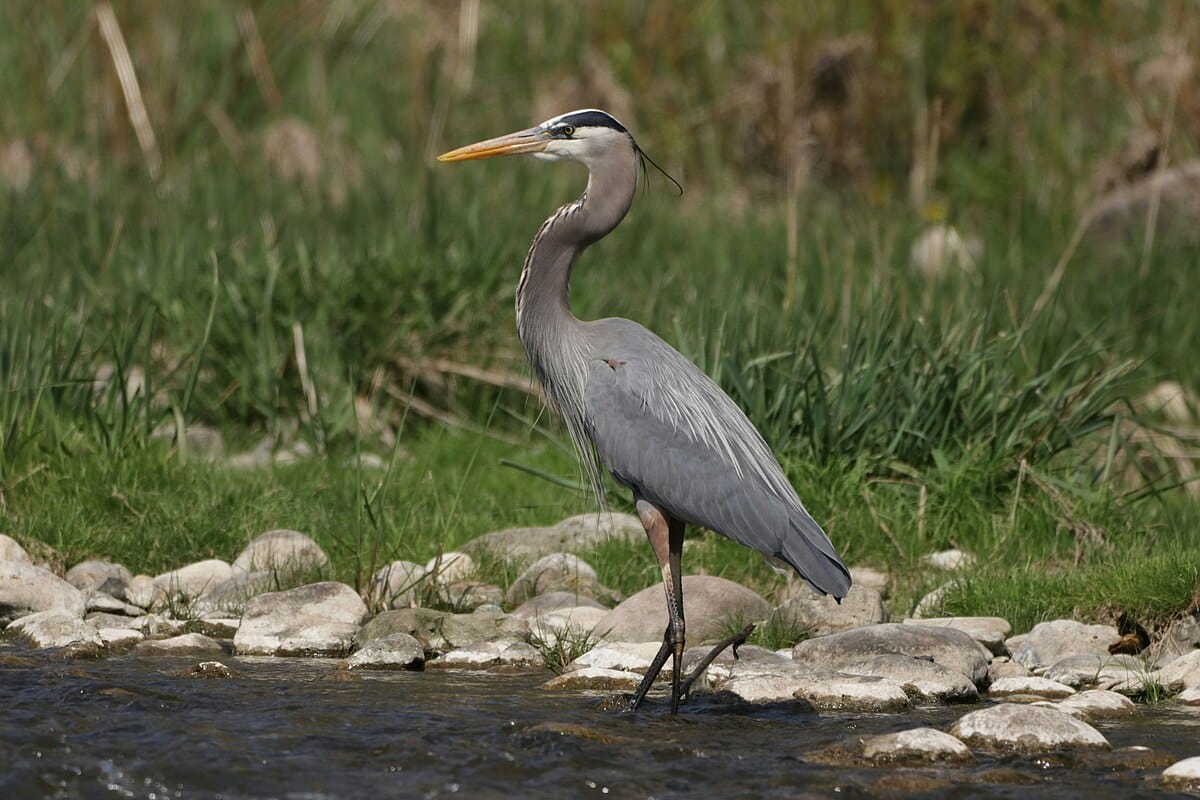
The Great Blue Heron is one of North America’s most iconic wading birds, notable for its towering height, long neck, and striking blue-gray plumage. Adults can reach up to 1.3 meters in height with a wingspan of nearly 2 meters, making them the largest herons on the continent. Their long, dagger-like bill allows them to catch a wide variety of prey, including fish, amphibians, and small mammals. They are patient hunters, often standing motionless for minutes before striking with precision.
Great Blue Herons are primarily solitary feeders, though they nest in colonies called heronries, often in tall trees near water bodies. Their nests are large and constructed from sticks, providing sturdy platforms for raising chicks. These birds are highly adaptable, thriving in freshwater and saltwater habitats, urban lakes, and marshes. Observing a Great Blue Heron in the wild demonstrates their grace, strategic hunting skills, and the critical role they play in controlling aquatic populations, making them a captivating species for wildlife enthusiasts.
2. Grey Heron (Ardea cinerea)
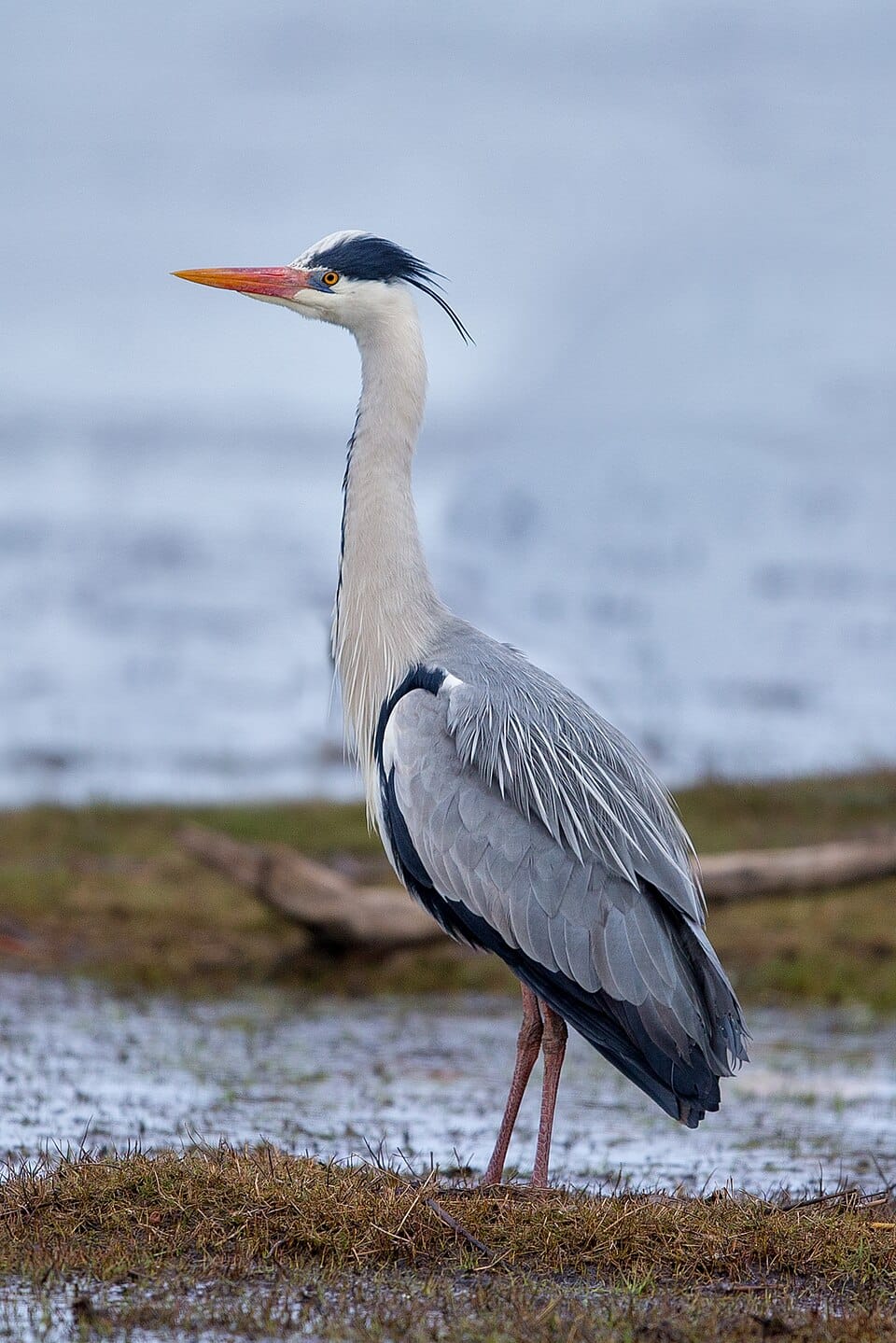
The Grey Heron is a striking wader found throughout Europe, Asia, and parts of Africa. Sporting a predominantly grey plumage with a white head, black crown streak, and long, sharp yellow bill, it closely resembles the Great Blue Heron but is slightly smaller. Standing about 1 meter tall with a wingspan of 1.5–1.95 meters, it is easily recognizable when hunting along riverbanks, lakes, and wetlands.
Grey Herons feed on fish, amphibians, insects, and occasionally small mammals. Their hunting technique involves slow, deliberate movements, using their sharp beaks to spear prey with precision. These herons are territorial during feeding but may nest in large colonies, with nests built high in trees for protection. They adapt well to human-altered landscapes, often seen in urban ponds and canals. The Grey Heron’s combination of elegance, adaptability, and hunting prowess makes it a favorite among birdwatchers and photographers alike.
3. Great Egret (Ardea alba)

The Great Egret is a majestic all-white heron found across the Americas, Europe, Asia, and Africa. Known for its slender body, long black legs, and striking yellow bill, this species epitomizes grace. Adults can reach up to 1 meter in height with a wingspan of 1.3–1.7 meters. During the breeding season, delicate plumes extend from the back, creating an elegant display used in courtship rituals.
Great Egrets feed primarily on fish, frogs, and small aquatic animals. They are patient and methodical hunters, often standing perfectly still before striking. Egrets nest in colonies, sometimes with other heron species, building stick nests in trees or shrubs near water. Their ability to thrive in wetlands, marshes, and human-modified landscapes showcases their adaptability. Observing a Great Egret stalking prey or soaring gracefully across a lake provides a striking example of nature’s elegance and the vital role these birds play in aquatic ecosystems.
4. Intermediate Egret (Ardea intermedia)
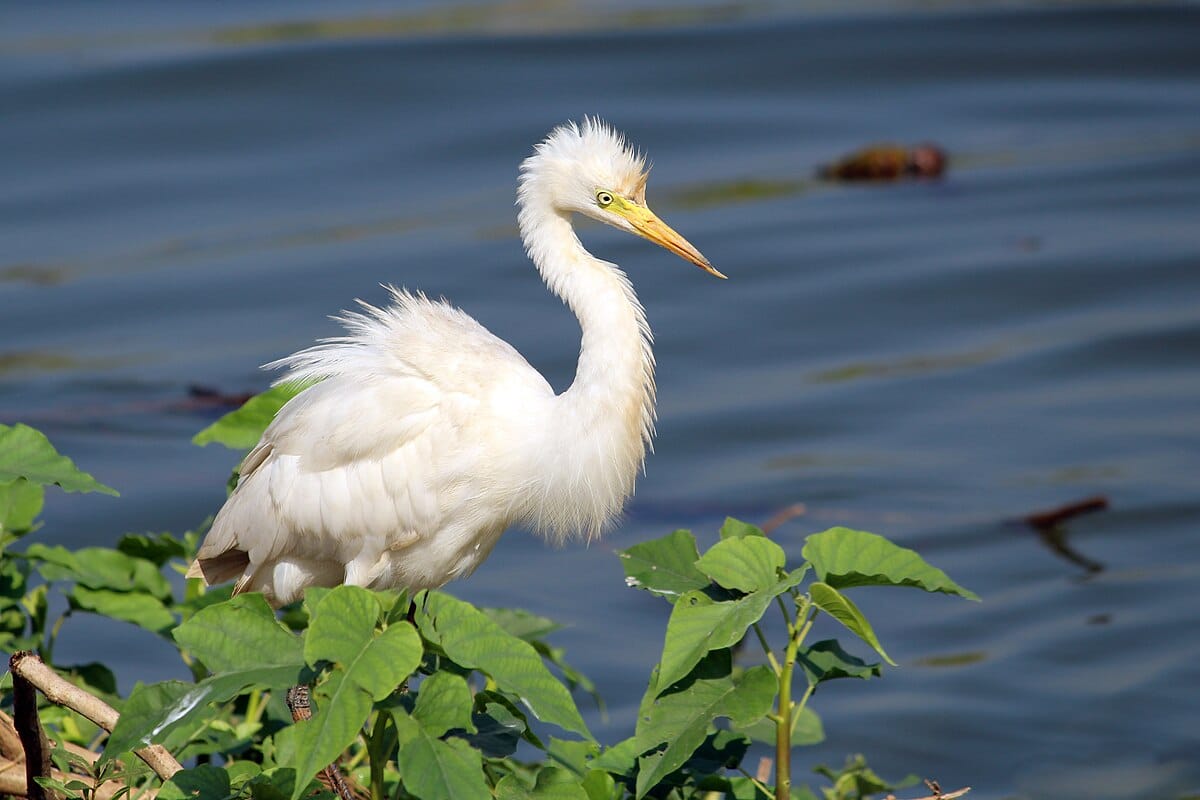
The Intermediate Egret is a medium-sized heron found in parts of Asia, Africa, and Australia. It is smaller than the Great Egret, with a length of 55–65 cm and a wingspan of about 1 meter. Its plumage is entirely white, with a slender yellow bill and black legs. During the breeding season, the bill turns reddish-orange, and long plumes grow on the back, creating a striking appearance.
Intermediate Egrets are wading predators, feeding mainly on fish, amphibians, and aquatic insects. They hunt in shallow waters, using slow stalking movements or sudden thrusts of the bill to capture prey. These birds often nest in colonies, sometimes alongside other herons and egrets, building stick nests in trees over water. The species’ ability to thrive in rice paddies, marshes, and freshwater wetlands highlights its adaptability. Observing an Intermediate Egret reveals both its elegant hunting behavior and its critical role in wetland ecosystems.
5. Little Egret (Egretta garzetta)

The Little Egret is a small, graceful heron found across Europe, Africa, Asia, and Australia. It measures about 55–65 cm in length with a wingspan of 88–106 cm. Its plumage is pure white, with black legs and yellow feet. During the breeding season, long ornamental plumes appear on the back and head, enhancing its elegance. Its slender, pointed bill allows it to catch fish and invertebrates efficiently.
Little Egrets are highly active hunters, often seen running through shallow water to flush out prey or using a foot-stirring technique to scare fish. They may forage alone or in groups, and they nest in colonies, building stick nests in trees or reed beds near water. Their adaptability to wetlands, rice paddies, and estuaries has helped them thrive despite habitat changes. Watching a Little Egret’s delicate movements and precise hunting technique highlights the beauty, agility, and ecological importance of this small heron species.
6. Snowy Egret (Egretta thula)
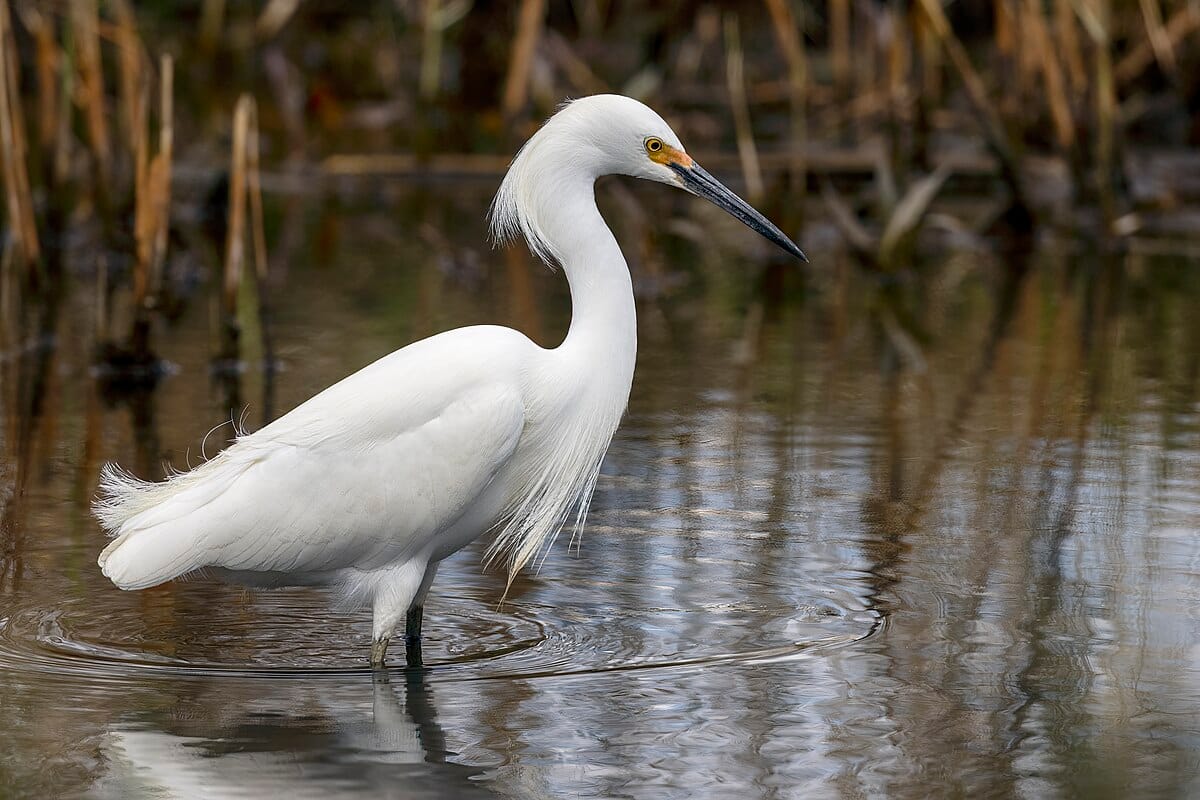
The Snowy Egret is a small, striking heron native to the Americas, renowned for its all-white plumage, black legs, and bright yellow feet. Measuring about 56–66 cm in length with a wingspan of 88–106 cm, it is slightly smaller than the Great Egret but just as elegant. During the breeding season, delicate plumes adorn its head, neck, and back, creating an exquisite display that attracts mates.
Snowy Egrets are highly active hunters, employing a variety of techniques to capture fish, crustaceans, and insects. They use a combination of stalking, foot-stirring, and rapid strikes to secure prey. Typically found in shallow wetlands, estuaries, and tidal flats, they are highly adaptable to both natural and human-modified habitats. Snowy Egrets nest in colonies, often alongside other wading birds, constructing stick nests in trees or shrubs over water. Observing them highlights their agility, elegance, and vital ecological role in maintaining balanced wetland ecosystems.
7. Cattle Egret (Bubulcus ibis)

The Cattle Egret is a versatile heron species found across Africa, Asia, Europe, and the Americas. It is smaller than most other egrets, measuring about 46–56 cm in length with a wingspan of 88–96 cm. Its plumage is mainly white, with yellow legs and bill, and during the breeding season, golden plumes appear on the head and back. Unlike other herons, Cattle Egrets are often seen in fields and grasslands rather than wetlands.
True to its name, the Cattle Egret frequently follows grazing animals, feeding on insects and small vertebrates disturbed by livestock. This opportunistic behavior showcases its adaptability and intelligence. They nest in colonies near water or trees, often with other heron species. Their ability to thrive in urban and agricultural landscapes demonstrates resilience and ecological flexibility. Watching a Cattle Egret foraging among cattle or striking insects mid-air provides a fascinating glimpse into its opportunistic feeding strategies and unique symbiotic relationships with other animals.
8. Chinese Egret (Egretta eulophotes)

The Chinese Egret is a rare and elegant heron species found primarily along the coasts of eastern China, Korea, and Japan. Measuring about 56–66 cm in length with a wingspan of 88–105 cm, it is characterized by slender white plumage, black legs, and a long yellow bill. During breeding season, long, delicate plumes appear on the back, enhancing its graceful appearance. This species is known for its shy nature and preference for secluded coastal wetlands.
Chinese Egrets feed mainly on small fish, crustaceans, and aquatic insects, hunting in shallow tidal flats and estuaries. They are highly sensitive to disturbance, making them challenging to observe in the wild. Chinese Egrets nest in small colonies on offshore islands or rocky coasts, using sticks and vegetation to create delicate nests. Conservation efforts are crucial for this vulnerable species due to habitat loss and human interference. Observing a Chinese Egret requires patience but offers a rewarding glimpse of one of Asia’s most elegant and rare herons.
9. Pacific Reef Heron (Egretta sacra)
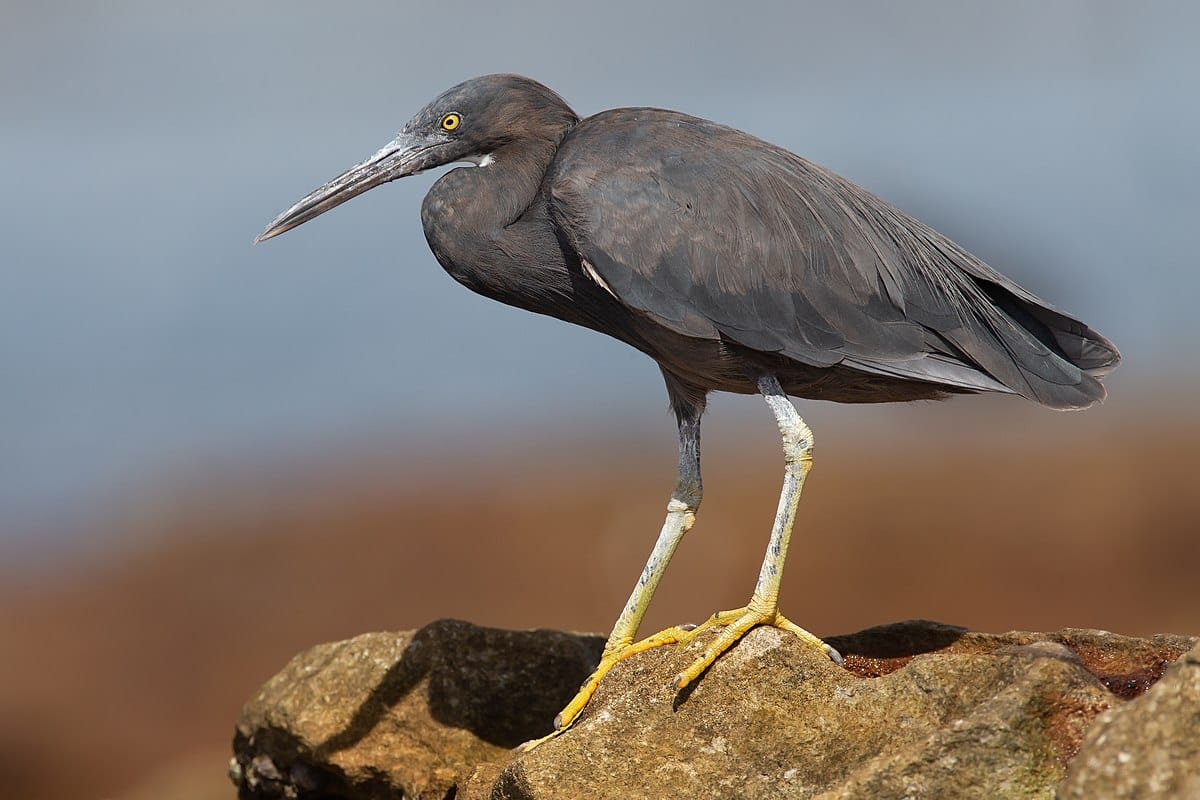
The Pacific Reef Heron, also known as the Eastern Reef Egret, is native to coastal regions of Southeast Asia, Australia, and the Pacific Islands. It is notable for its two color morphs: a dark slate-gray morph and a white morph, allowing it to blend with rocky shorelines or sandy beaches. Measuring about 56–66 cm in length, it is a medium-sized heron with long legs and a sharp bill adapted for catching marine prey.
Pacific Reef Herons forage along rocky coasts, tidal flats, and coral reefs, feeding on small fish, crustaceans, and mollusks. They employ stalking and quick pecking techniques to catch prey efficiently. These herons are often solitary but may be observed in small groups during low tide. Nesting occurs in cliffs or trees near the coast, with colonies being relatively small compared to freshwater herons. Their unique coloration, coastal adaptations, and specialized feeding behaviors make the Pacific Reef Heron a fascinating species for wildlife enthusiasts exploring marine ecosystems.
10. Reddish Egret (Egretta rufescens)
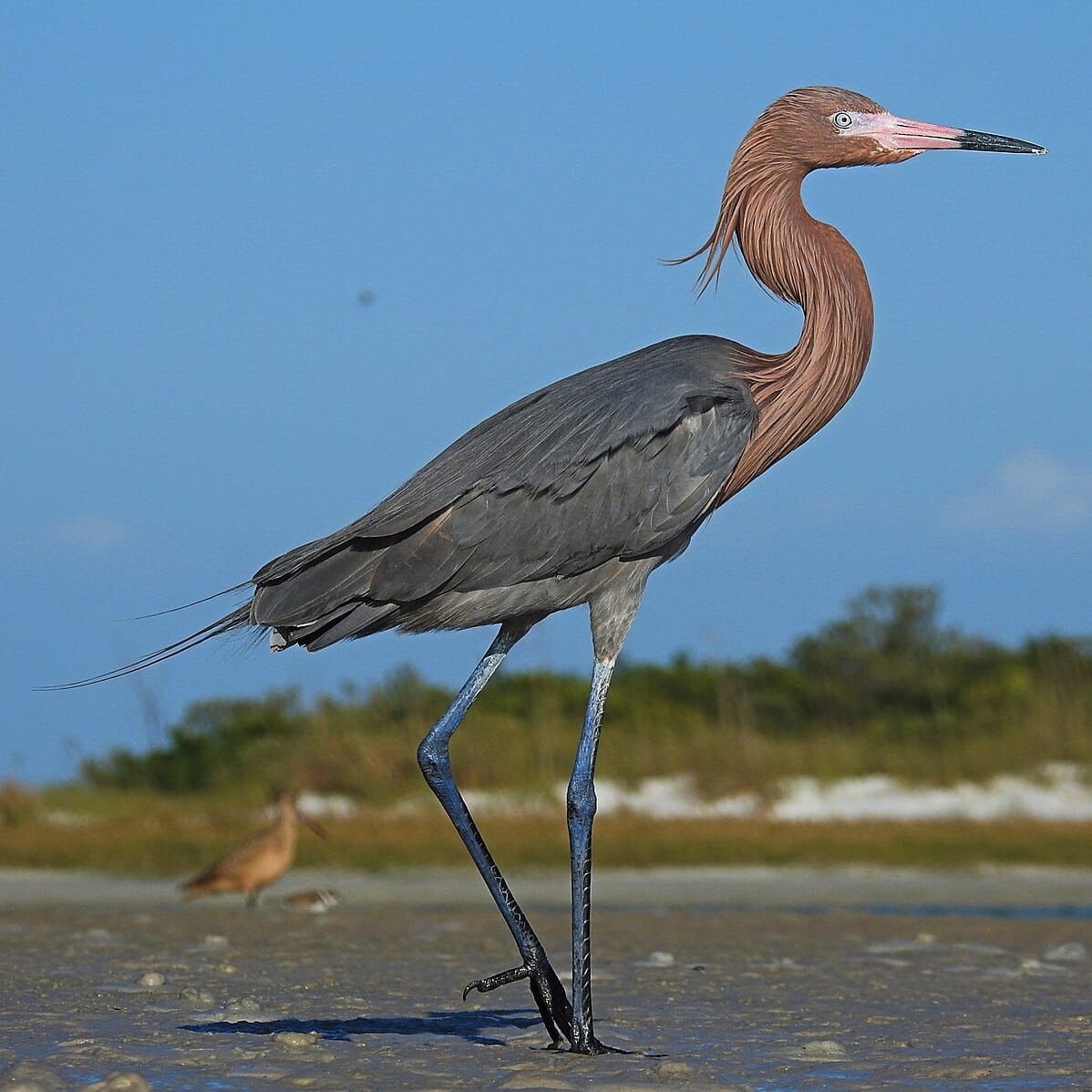
The Reddish Egret is a striking heron found along coastal regions of the Gulf of Mexico, the Caribbean, and parts of Central America. Measuring 56–66 cm in length with a wingspan of approximately 90–105 cm, it is easily recognizable by its reddish-brown head and neck contrasted with slate-gray or white body plumage. Known for its energetic hunting style, the Reddish Egret is sometimes called the “dancing egret” due to its dramatic foraging movements.
Reddish Egrets feed primarily on small fish and aquatic invertebrates, using a unique combination of running, flapping, and chasing to stir prey from shallow waters. They are solitary foragers, preferring tidal flats, lagoons, and coastal estuaries. Nesting occurs in small colonies in mangroves or shrubs near water, with both parents participating in raising chicks. Observing a Reddish Egret in action is a spectacular display of energy, skill, and adaptability, highlighting the diversity of hunting strategies among heron species.
11. Black Heron (Egretta ardesiaca)

The Black Heron, also known as the Black Egret, is a remarkable species native to sub-Saharan Africa. Measuring around 56–66 cm in length with a wingspan of 88–106 cm, it is instantly recognizable by its entirely black plumage. One of its most fascinating behaviors is “canopy feeding,” where the heron spreads its wings to create a shadow over the water, luring fish within striking distance.
Black Herons feed primarily on small fish and aquatic invertebrates, using their unique canopy technique to improve hunting efficiency. They are typically found in shallow lakes, ponds, and marshes. During breeding season, they nest in colonies, often alongside other wading birds, building nests in reeds or trees. Observing a Black Heron in action showcases the ingenuity and adaptability of herons, highlighting unique behavioral strategies that enhance survival and feeding success in their native habitats.
12. Western Reef Heron (Egretta gularis)
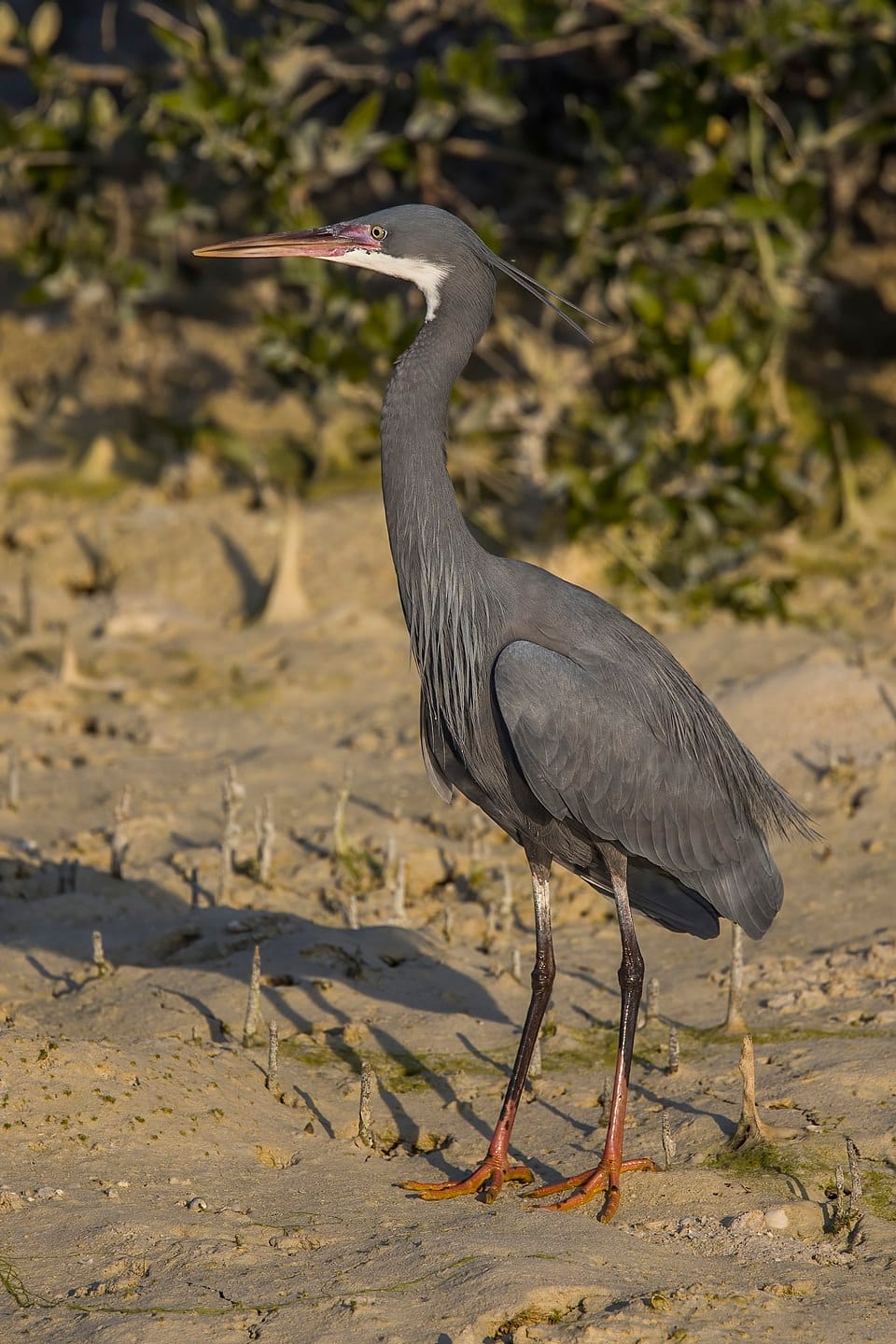
The Western Reef Heron, sometimes called the Western Reef Egret, is a medium-sized coastal heron found along the shores of West Africa, the Middle East, and parts of India. This species displays two color morphs: a dark slate-gray morph and a white morph, allowing it to blend seamlessly with rocky shores, sandy beaches, or tidal flats. Adults measure about 55–66 cm in length with a wingspan of approximately 90–105 cm.
Western Reef Herons primarily feed on small fish, crabs, and other marine invertebrates, using stealth and quick strikes to capture prey. They are often solitary hunters but may be seen in small groups during feeding. Nesting occurs in mangroves, coastal shrubs, or isolated trees, usually in small colonies. Their coastal adaptations, specialized hunting techniques, and color morphs make the Western Reef Heron a fascinating subject for coastal birdwatchers, illustrating the diversity of feeding strategies among herons.
13. Black-headed Heron (Ardea melanocephala)

The Black-headed Heron is a large, striking bird native to sub-Saharan Africa. Adults reach up to 90 cm in length with a wingspan of 150–180 cm. It has predominantly grey plumage, with a distinctive black head and neck, and a long, sharp bill suited for catching prey. These herons are adaptable and can be found in grasslands, wetlands, and agricultural areas.
Black-headed Herons feed primarily on fish, amphibians, insects, and small mammals, often hunting in open fields or shallow waters. They are mostly solitary hunters but can be observed in loose colonies during nesting. Nests are constructed in trees or reed beds, lined with sticks and grass. Observing the Black-headed Heron provides insight into its stealth, patience, and hunting efficiency, as well as its vital ecological role in controlling populations of small aquatic and terrestrial animals.
14. Purple Heron (Ardea purpurea)
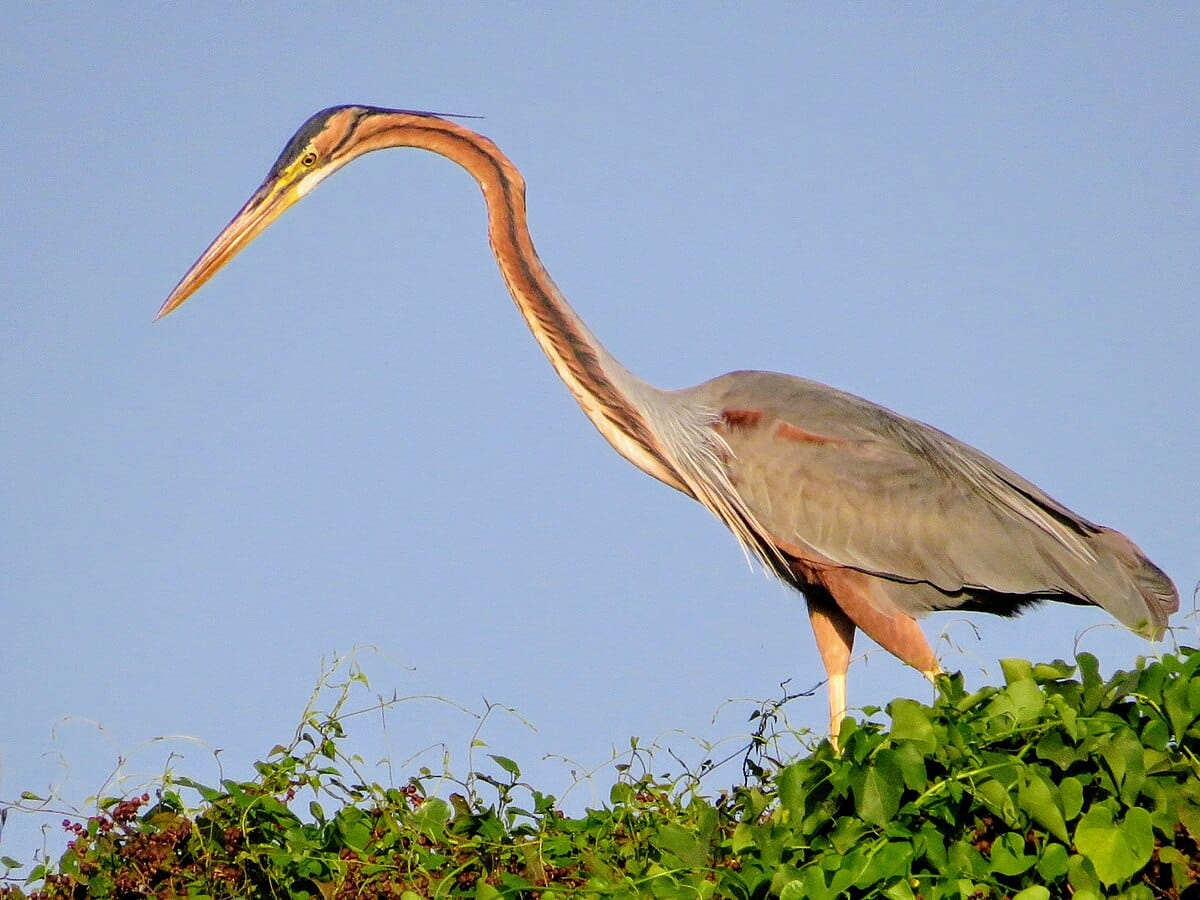
The Purple Heron is a medium-sized heron found across Europe, Africa, and Asia. Its elegant plumage features a mix of chestnut, purplish-brown, and grey, with a long, slender neck and yellow bill. Adults measure about 78–90 cm in length with a wingspan of 120–130 cm. This species prefers reed beds, marshes, and wetlands, relying on dense vegetation for cover.
Purple Herons feed mainly on fish, amphibians, and insects, using stealth and careful stalking to catch prey. They are mostly solitary hunters but breed in colonies, building nests in reeds or trees over water. Their secretive nature and preference for dense habitats make them less visible than other herons, but observing them reveals exceptional patience and agility. The Purple Heron’s coloration and behavior provide a striking example of adaptation to reed-dominated wetland ecosystems.
15. White-faced Heron (Egretta novaehollandiae)

The White-faced Heron is the most widespread heron in Australia, also found in New Zealand and parts of Southeast Asia. Adults measure about 64–70 cm in length with a wingspan of 100–110 cm. It has pale blue-grey plumage with a distinctive white face and black bill, giving it its name. These herons are highly adaptable, inhabiting wetlands, urban parks, and coastal areas.
White-faced Herons feed primarily on fish, frogs, and insects, hunting in shallow waters using slow, deliberate movements. They may forage alone or in small groups and nest in trees or shrubs, often near water. Their adaptability to urban environments demonstrates resilience and flexibility in feeding behavior. Observing a White-faced Heron showcases its elegant movements, subtle beauty, and crucial role in maintaining healthy aquatic ecosystems in both natural and modified habitats.
16. Slaty Egret (Egretta vinaceigula)
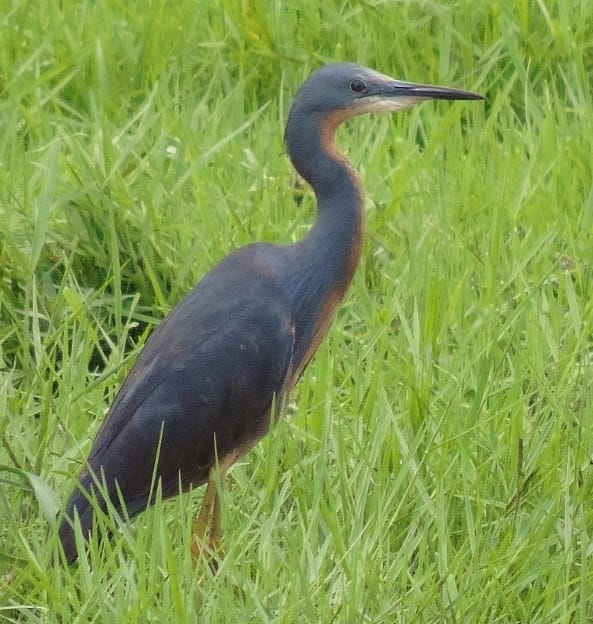
The Slaty Egret is a rare and striking heron endemic to wetlands in Botswana, Namibia, and Zambia. Measuring about 55–60 cm in length, it features slate-gray plumage with darker flight feathers and a long, slender bill. Its subtle coloration allows it to blend seamlessly into shallow freshwater habitats like floodplains and marshes.
Slaty Egrets primarily feed on small fish, amphibians, and invertebrates, often hunting in shallow waters by slowly stalking prey before striking. They are usually found in small groups and nest in isolated reeds or grasses, building compact nests that protect their young from predators. Due to its limited range and specialized habitat, the Slaty Egret is considered vulnerable, making its conservation critical. Observing this species highlights the fragility and beauty of wetland ecosystems and the importance of preserving unique heron species for biodiversity.
17. Agami Heron (Agamia agami)
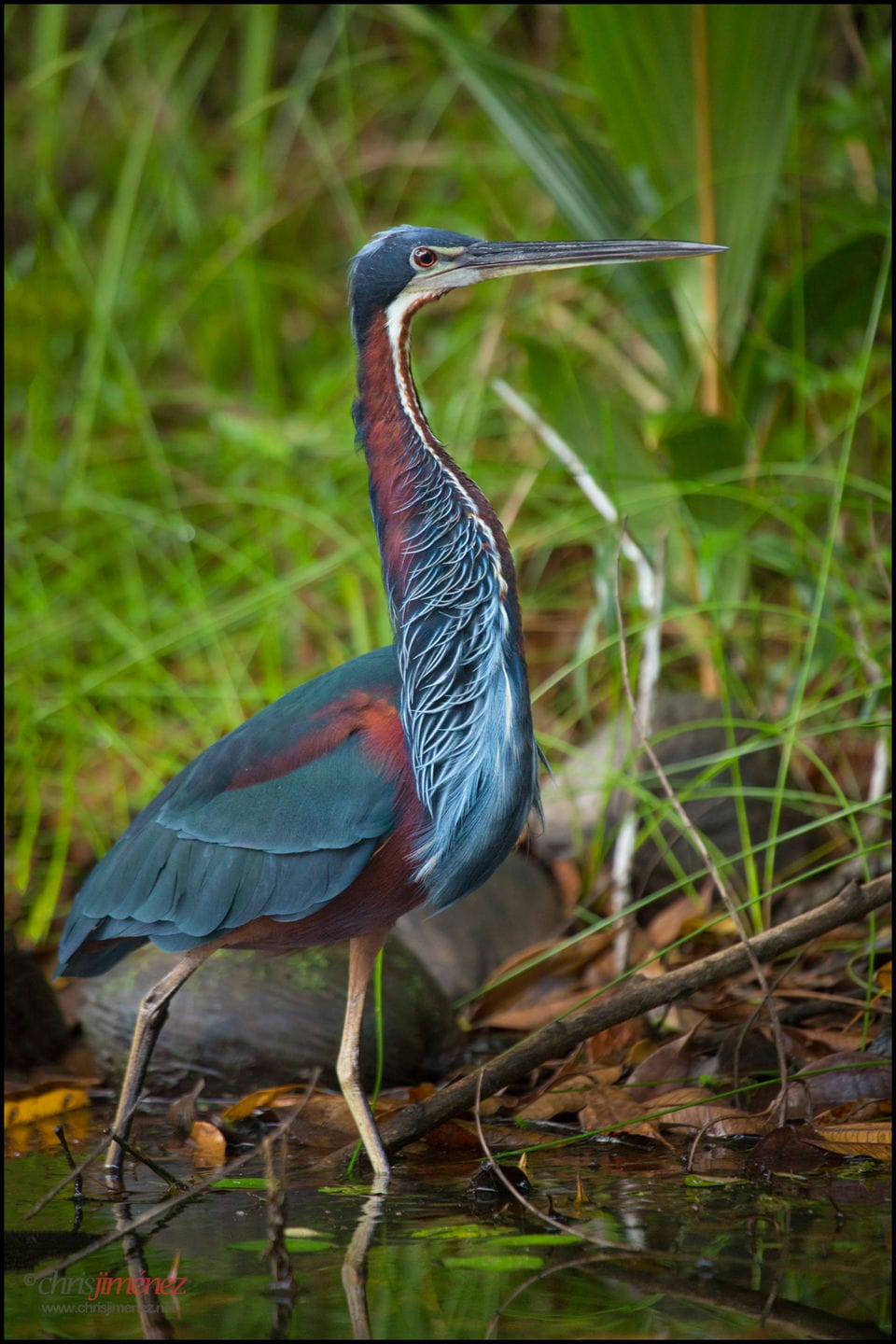
The Agami Heron is one of the most elusive and visually stunning herons in Central and South America. Measuring about 66–76 cm in length, it has rich chestnut plumage with dark green-blue upperparts and a long, slender neck. Its striking appearance is complemented by a long bill and bright orange legs. Agami Herons are rarely seen due to their secretive behavior and preference for dense, shaded freshwater habitats.
They feed primarily on fish and aquatic insects, often hunting under low-hanging branches in slow-moving streams or swampy areas. Nests are constructed in dense vegetation, making observation difficult. Their elusive nature, combined with vibrant colors, makes the Agami Heron a prized sight for birdwatchers. Studying this species provides insight into specialized hunting strategies, camouflage techniques, and the ecological significance of maintaining undisturbed tropical wetland habitats.
18. Rufescent Tiger Heron (Tigrisoma lineatum)
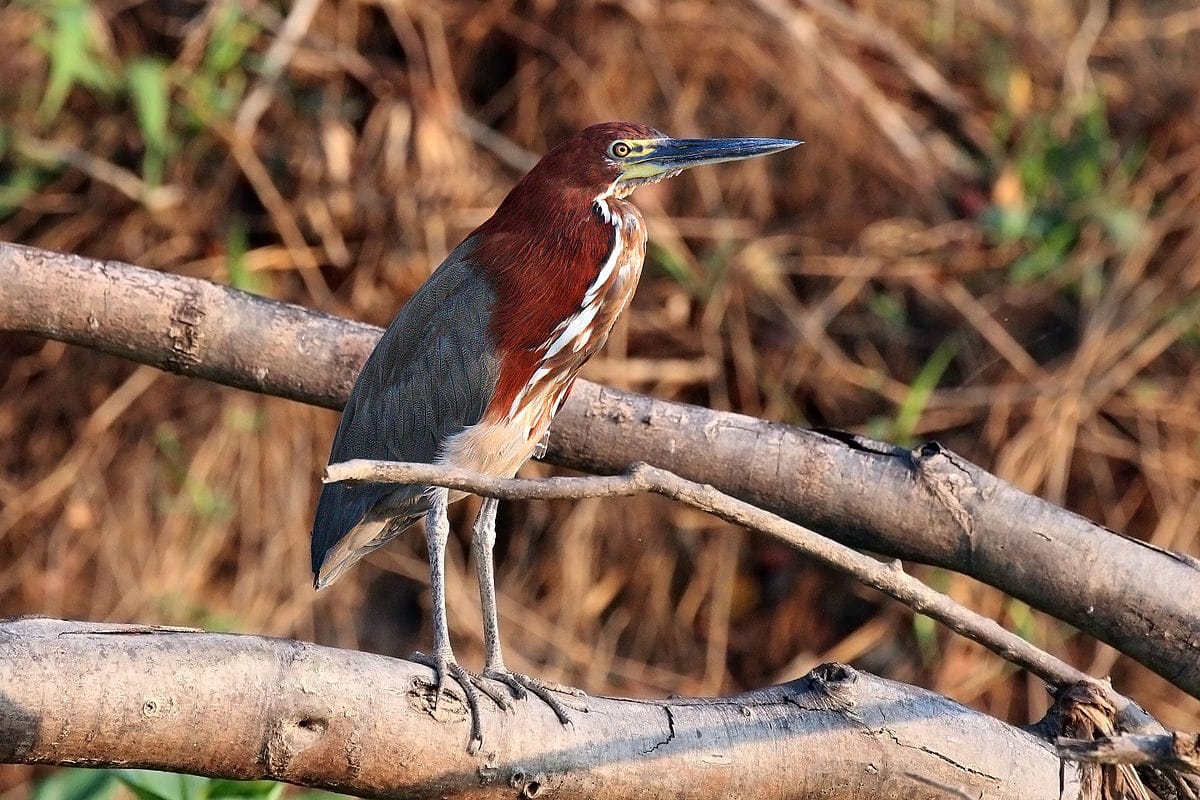
The Rufescent Tiger Heron is a medium-sized heron found in Central and South American forests, particularly along rivers and streams. It measures about 66–79 cm in length and is known for its rufous-brown plumage with fine black streaks resembling tiger stripes, hence the name. Its cryptic coloration allows it to blend perfectly into shaded forest streams.
Rufescent Tiger Herons feed mainly on fish, frogs, and aquatic insects. They are solitary hunters, standing motionless for long periods before striking swiftly. Nesting occurs in dense shrubs or low trees near water, where they construct small stick nests. Observing the Rufescent Tiger Heron offers a glimpse into the delicate balance of tropical riparian ecosystems, showcasing the bird’s stealth, camouflage, and specialized predatory skills.
19. Bare-throated Tiger Heron (Tigrisoma mexicanum)
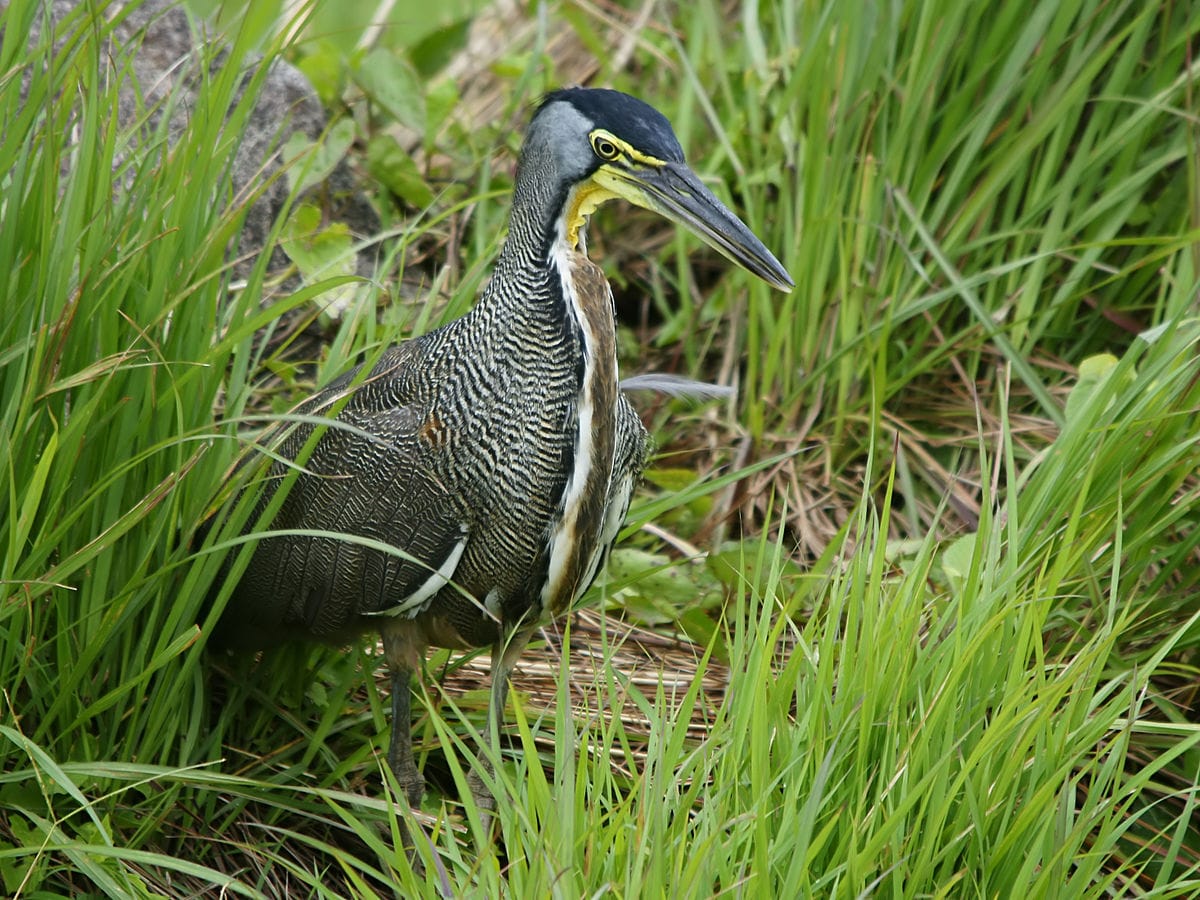
The Bare-throated Tiger Heron is native to Central America, including Mexico, Belize, and Costa Rica. Measuring 66–76 cm in length, it is recognized by its rufous body, striped neck, and bare yellow throat patch. Preferring forested rivers, marshes, and mangroves, this species is relatively secretive and often difficult to observe.
It feeds primarily on fish, amphibians, and insects, using stealth and patience to catch prey in shallow waters. Nests are built low in shrubs or small trees near water. The Bare-throated Tiger Heron’s distinctive appearance, secretive behavior, and specialized habitat requirements make it an important species for conservation efforts, offering insights into the biodiversity and ecological dynamics of Central American freshwater ecosystems.
20. Fasciated Tiger Heron (Tigrisoma fasciatum)
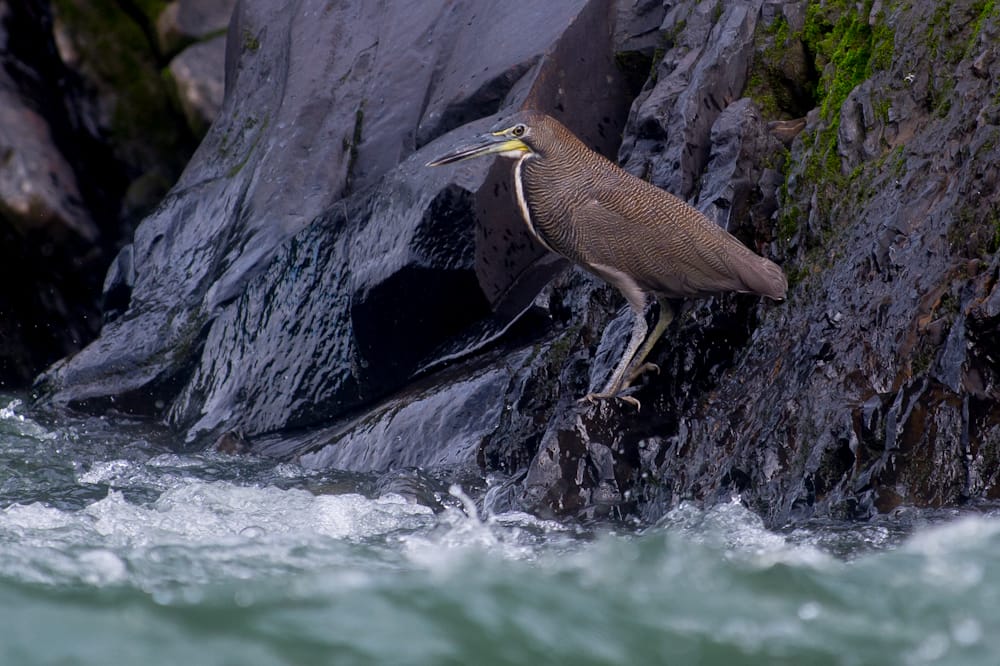
The Fasciated Tiger Heron is a tropical heron found along streams and rivers from southern Mexico to northern South America. Measuring about 66–76 cm, it has a dark brown body with fine black streaks and a subtly barred neck, providing excellent camouflage in forested streams. Its long, pointed bill and agile movements make it a skilled predator in shaded waters.
Fasciated Tiger Herons feed primarily on fish and aquatic insects, often hunting alone under dense overhanging foliage. They construct nests in low trees or shrubs near water, typically small and inconspicuous. Observing this heron provides insight into the importance of forested aquatic habitats and the specialized hunting strategies that allow these birds to thrive. Its striking yet understated appearance highlights the diversity and adaptability of heron species in tropical ecosystems.
21. Boat-billed Heron (Cochlearius cochlearius)
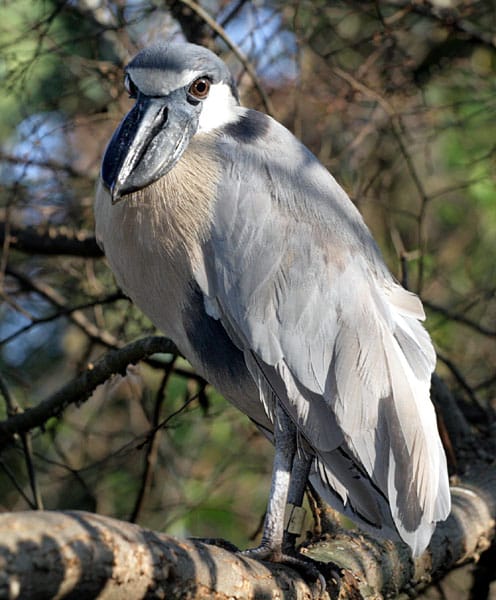
The Boat-billed Heron is a medium-sized nocturnal heron found in Central and South American mangroves, swamps, and slow-moving rivers. Measuring about 53–66 cm in length, it is easily recognized by its broad, scoop-shaped bill, which gives it the “boat-billed” name. Its grayish-brown plumage provides excellent camouflage during daytime roosting, while the bill aids in catching fish and crustaceans at night.
Unlike most herons, the Boat-billed Heron is primarily active at dusk and during the night, using its sensitive bill to detect prey in murky waters. They nest in dense mangroves or trees over water, often in small colonies. Observing this species offers unique insight into nocturnal hunting adaptations and the specialized behaviors of herons that thrive in tidal and freshwater wetlands, highlighting ecological diversity and evolutionary specialization.
22. Green Heron (Butorides virescens)
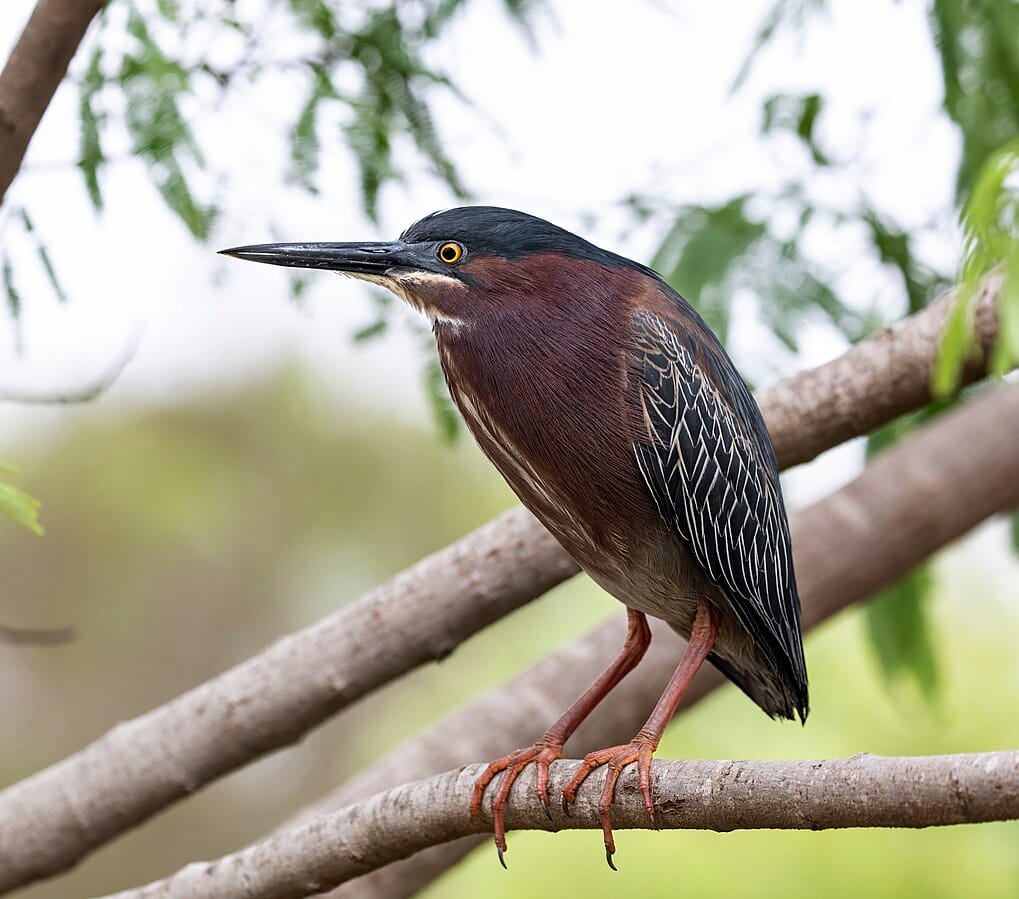
The Green Heron is a small, compact heron native to North and Central America. Measuring about 44–46 cm in length with a wingspan of 66–73 cm, it has a greenish-black cap, dark back, chestnut neck, and yellow legs. Its diminutive size and striking coloration make it one of the most visually appealing herons in freshwater habitats.
Green Herons feed mainly on small fish, amphibians, and insects. They are known for using tools, such as dropping insects or bait on the water to lure fish—a rare behavior among birds. Nests are built low in shrubs or trees near water, and both parents participate in raising chicks. Observing Green Herons provides a glimpse into intelligence, adaptability, and the innovative hunting strategies that contribute to their success in diverse wetland environments.
23. Striated Heron (Butorides striata)
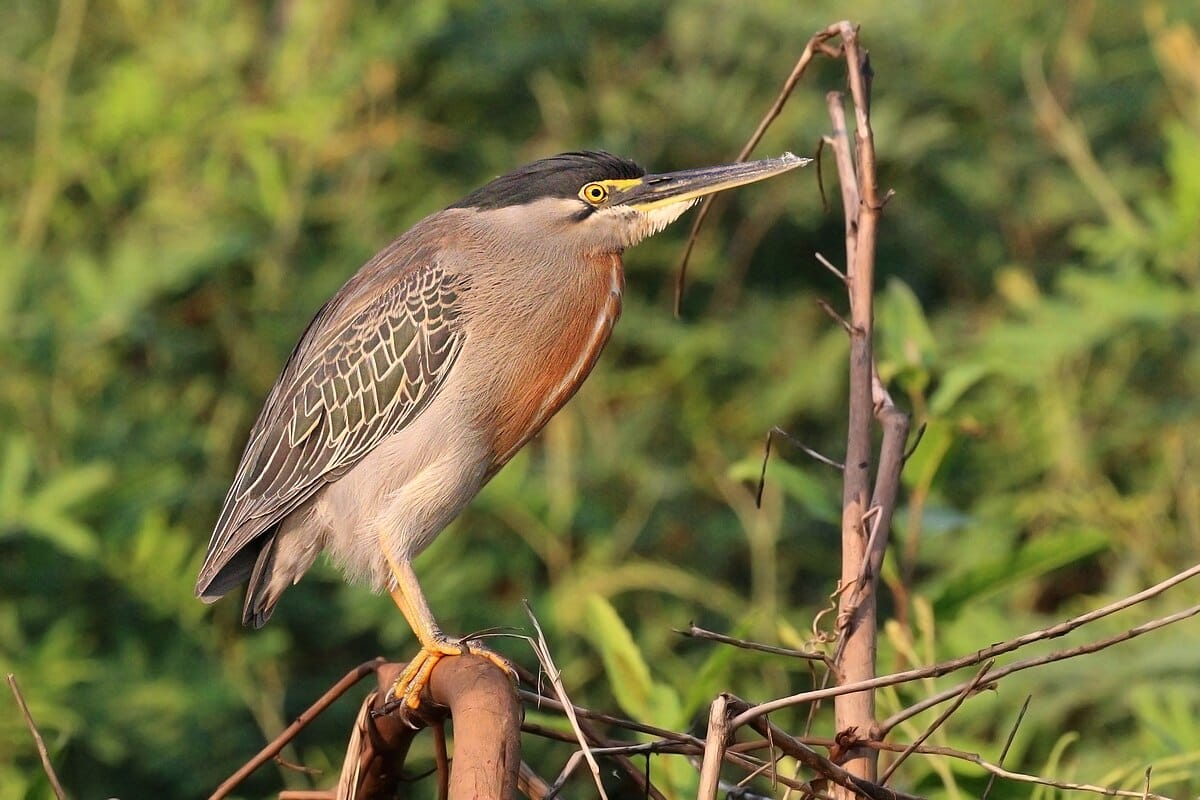
The Striated Heron, also called the Little Green Heron in some regions, is found across Africa, Asia, and the Americas. Measuring 44–46 cm in length, it has dark greenish-black upperparts, a streaked neck, and yellow legs. Its compact body and cryptic plumage allow it to blend into riverbanks, ponds, and mangrove habitats effectively.
Striated Herons feed primarily on small fish, insects, and crustaceans, often using sit-and-wait hunting techniques. They may also use tools, dropping lures to attract prey. Nesting occurs in trees, shrubs, or reeds, with both parents actively caring for young. Observing a Striated Heron reveals subtle yet sophisticated predatory strategies, emphasizing the ecological role and adaptability of small herons in various aquatic environments worldwide.
24. Black-crowned Night Heron (Nycticorax nycticorax)
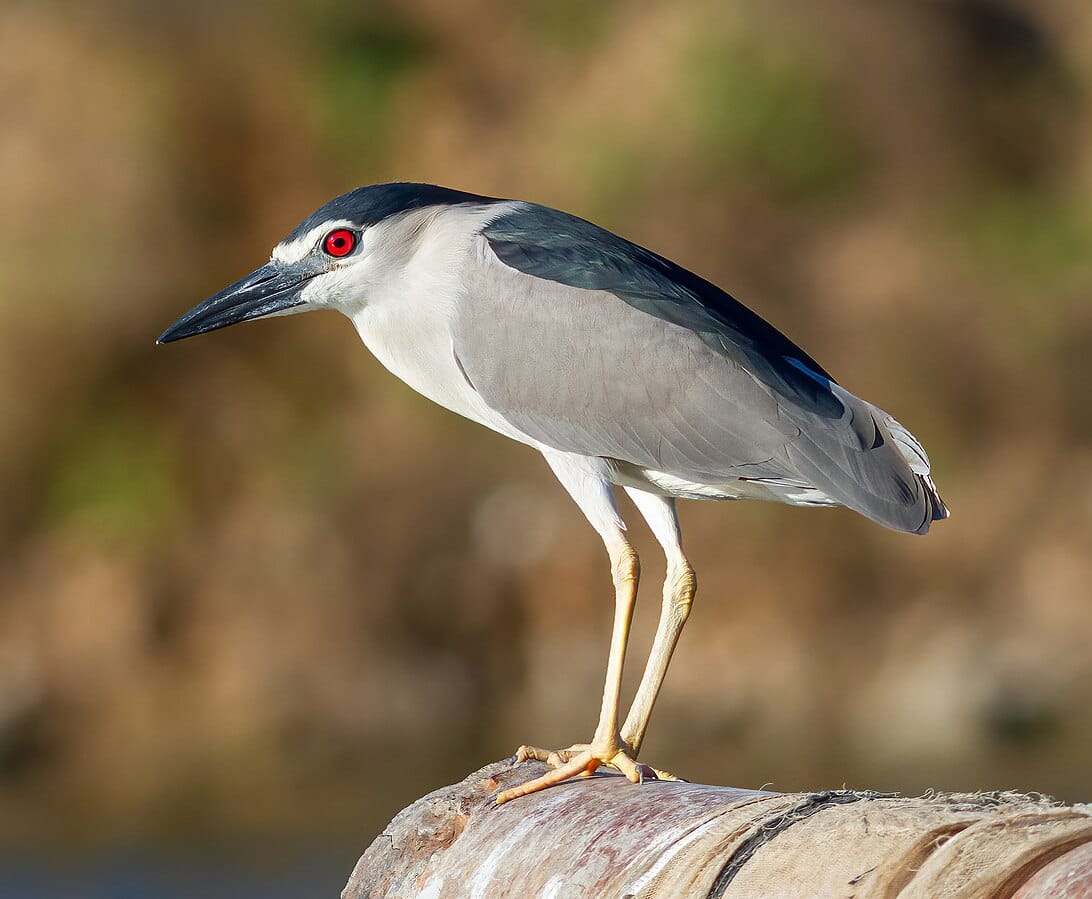
The Black-crowned Night Heron is a medium-sized nocturnal heron with a stocky build, measuring about 58–65 cm in length with a wingspan of 105–112 cm. Its most distinctive feature is the black crown and back contrasted with pale gray wings and underparts. Found across Europe, Asia, Africa, and the Americas, it inhabits wetlands, rivers, and coastal regions.
Active primarily at dusk and night, these herons feed on fish, amphibians, and aquatic invertebrates. During the day, they roost in dense vegetation to avoid predators. Black-crowned Night Herons nest in colonies, often with other herons or egrets, constructing nests in trees or shrubs over water. Observing them provides insight into nocturnal hunting adaptations and the diverse strategies herons use to thrive across multiple habitats and continents.
25. Yellow-crowned Night Heron (Nyctanassa violacea)
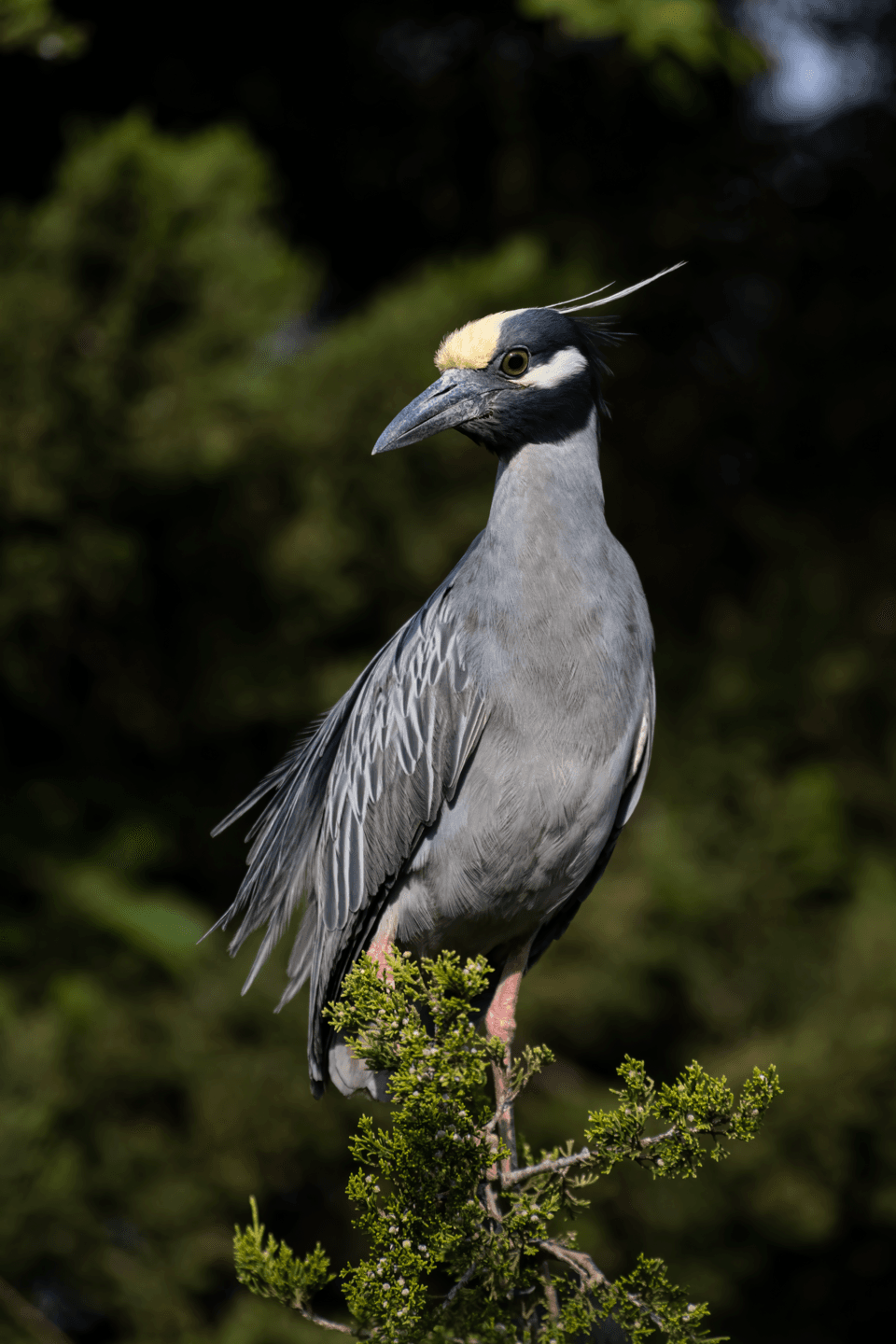
The Yellow-crowned Night Heron is a medium-sized nocturnal heron native to the Americas, measuring about 56–66 cm in length with a wingspan of 105–115 cm. It is easily recognized by its black body, gray wings, and striking yellow crown. Preferring coastal marshes, mangroves, and tidal flats, it is often active at dusk and night, feeding on crustaceans and small aquatic animals.
Yellow-crowned Night Herons forage by patiently stalking crabs, crayfish, and other invertebrates in shallow water. They nest in colonies, often with other herons, in trees or shrubs near water. Their nocturnal lifestyle and specialized diet illustrate unique adaptations among herons, highlighting behavioral diversity and ecological importance. Observing this species emphasizes patience, stealth, and precision, core traits that define heron hunting success.
26. Lava Heron (Butorides sundevalli)
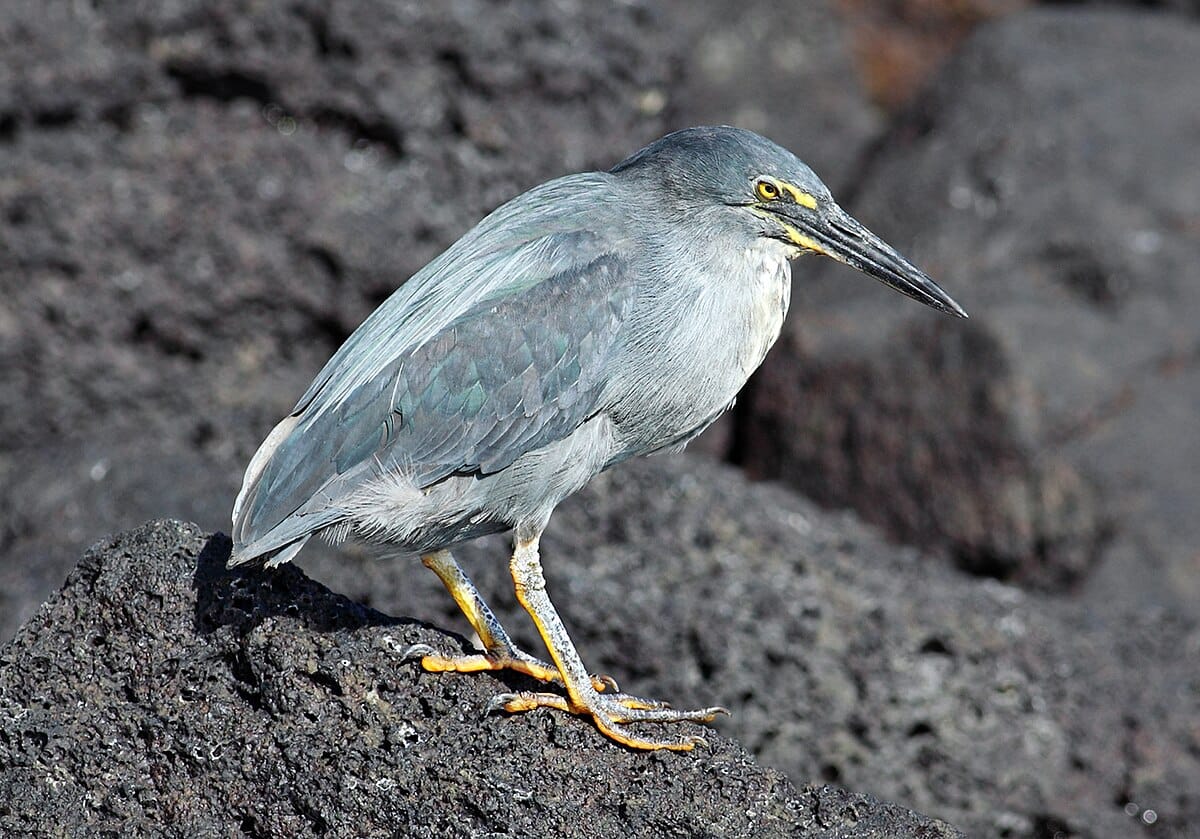
The Lava Heron is a unique heron endemic to the Galápagos Islands, measuring about 46–50 cm in length. Its dark, slate-gray to black plumage helps it blend perfectly with the volcanic lava rocks along the coastline. This cryptic coloration is a key adaptation for both hunting and avoiding predators in the harsh island environment.
Lava Herons feed primarily on small fish, crabs, and other intertidal invertebrates. They are solitary hunters, often seen stalking prey along rocky shores or tidal pools. Nesting occurs in small colonies in shrubs or rocky crevices, and both parents care for the young. Observing a Lava Heron highlights the species’ remarkable adaptation to a unique ecosystem, showcasing evolutionary specialization and survival strategies in isolated environments.
27. White-backed Night Heron (Gorsachius leuconotus)
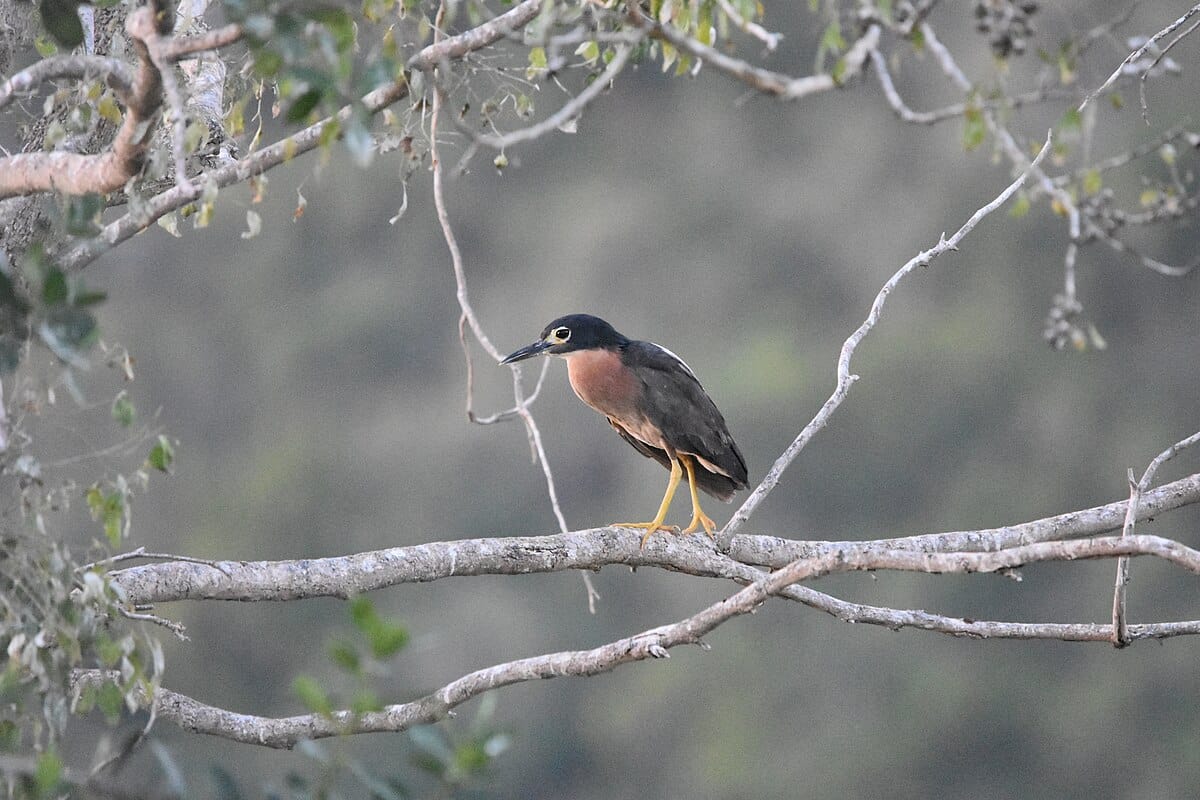
The White-backed Night Heron is a nocturnal heron native to sub-Saharan Africa, measuring about 56–66 cm in length. It has dark brown plumage with a contrasting white back and a robust, pointed bill. Preferring dense forests and riverine habitats, it is rarely seen during the day, making it one of Africa’s most elusive herons.
This species feeds on fish, frogs, and aquatic invertebrates at night, using stealth and patience to catch prey. Nesting occurs in secluded trees or shrubs, usually in small colonies or solitary pairs. Observing the White-backed Night Heron offers insight into nocturnal adaptations and the importance of undisturbed forested wetlands for biodiversity conservation, highlighting the subtle beauty of Africa’s hidden wildlife.
28. Japanese Night Heron (Gorsachius goisagi)
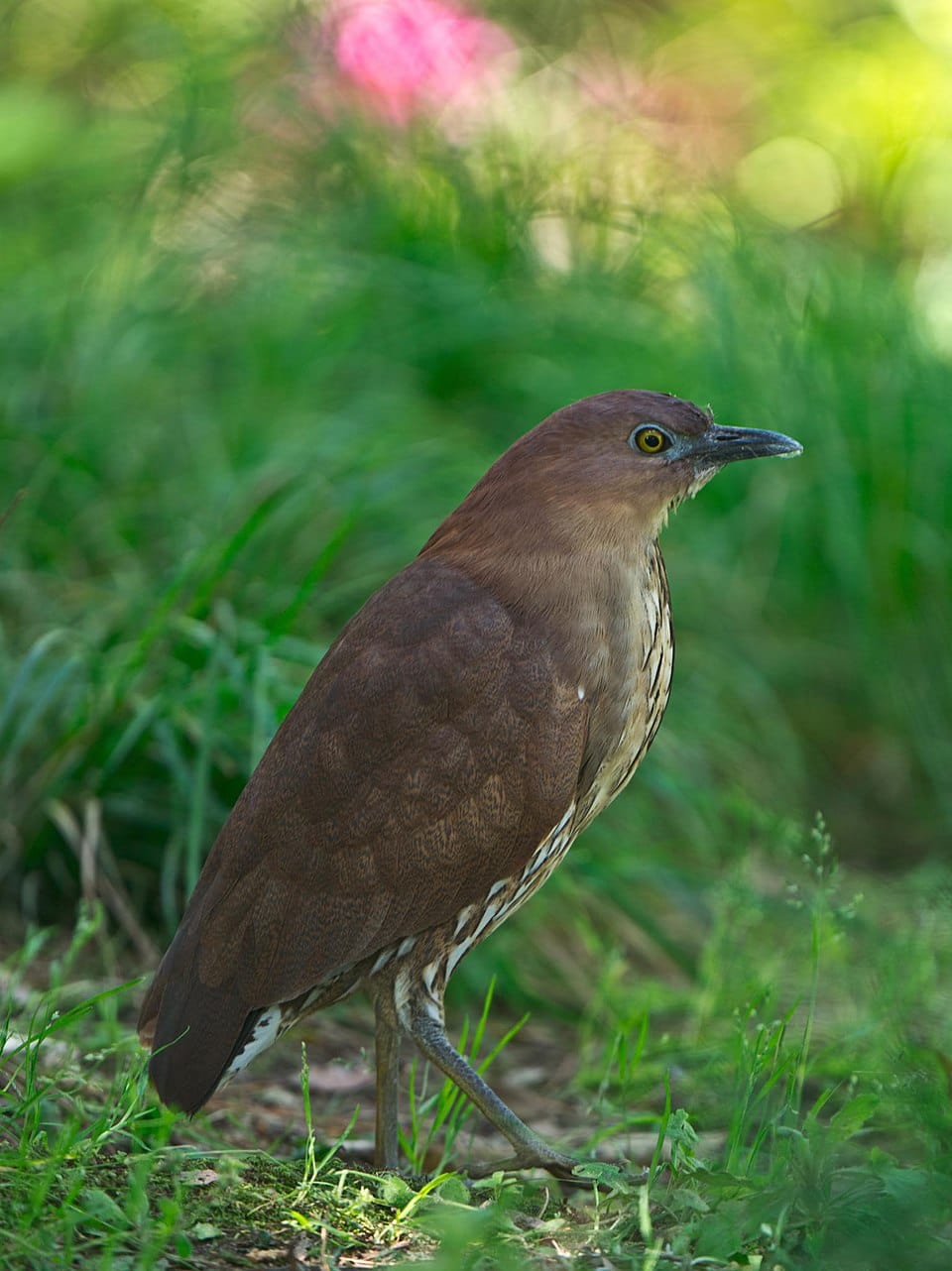
The Japanese Night Heron is a rare and enigmatic species found in Japan and parts of East Asia. Measuring approximately 58–65 cm, it has dark brown plumage with subtle streaks and a short, stout bill. This heron prefers dense forests near freshwater streams and is highly secretive, often remaining hidden during daylight hours.
Japanese Night Herons feed primarily on fish, amphibians, and aquatic insects at night. They nest in secluded trees, constructing small nests from twigs and leaves. Due to habitat loss and limited distribution, this species is considered vulnerable. Observing a Japanese Night Heron is a rare and rewarding experience, providing a glimpse into the adaptations of nocturnal herons and the conservation challenges they face in modern landscapes.
29. Malayan Night Heron (Gorsachius melanolophus)
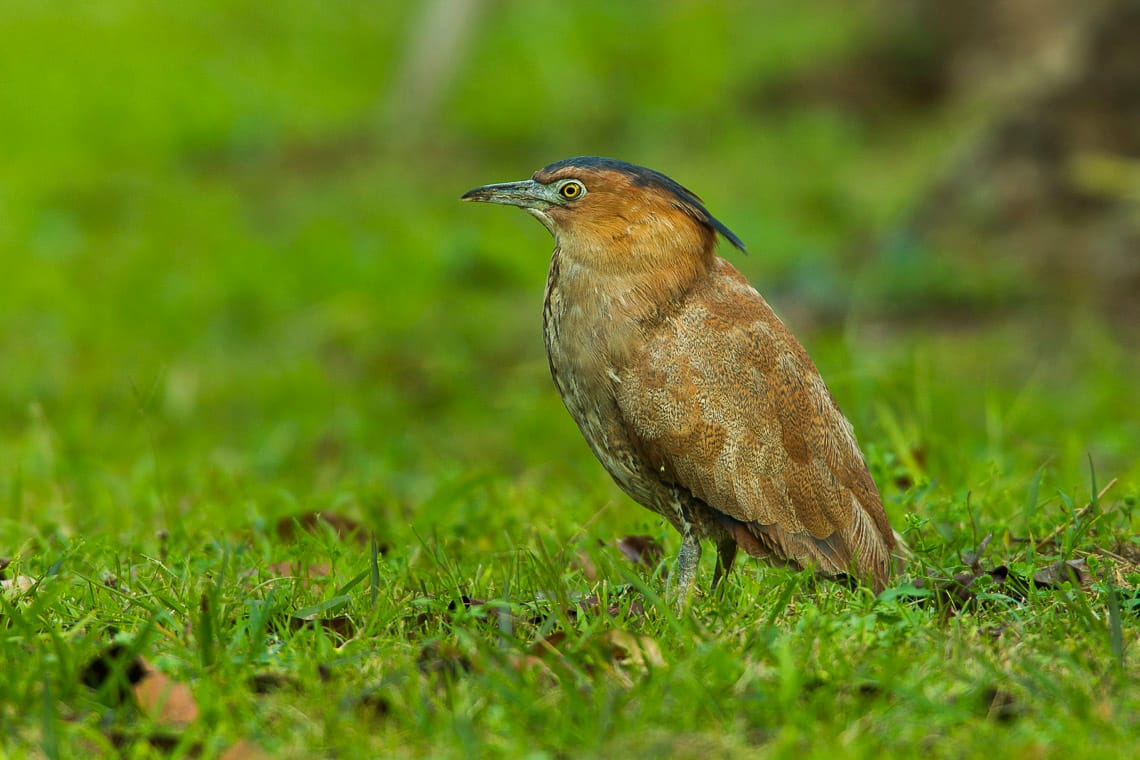
The Malayan Night Heron is a medium-sized nocturnal heron found in Southeast Asia, including Malaysia, Indonesia, and Thailand. Measuring about 56–66 cm in length, it has dark brown upperparts, a streaked neck, and a short yellow bill. This heron prefers forested wetlands and rivers, remaining hidden during the day and emerging at dusk to feed.
Malayan Night Herons feed primarily on fish, frogs, and insects, hunting quietly in shallow waters or along forest streams. They nest in trees, often in small colonies, with both parents caring for the young. Observing this species provides insight into nocturnal behavior, habitat specialization, and the delicate balance of tropical wetland ecosystems, emphasizing the importance of forest conservation for sustaining heron populations.
30. Nankeen Night Heron (Nycticorax caledonicus)
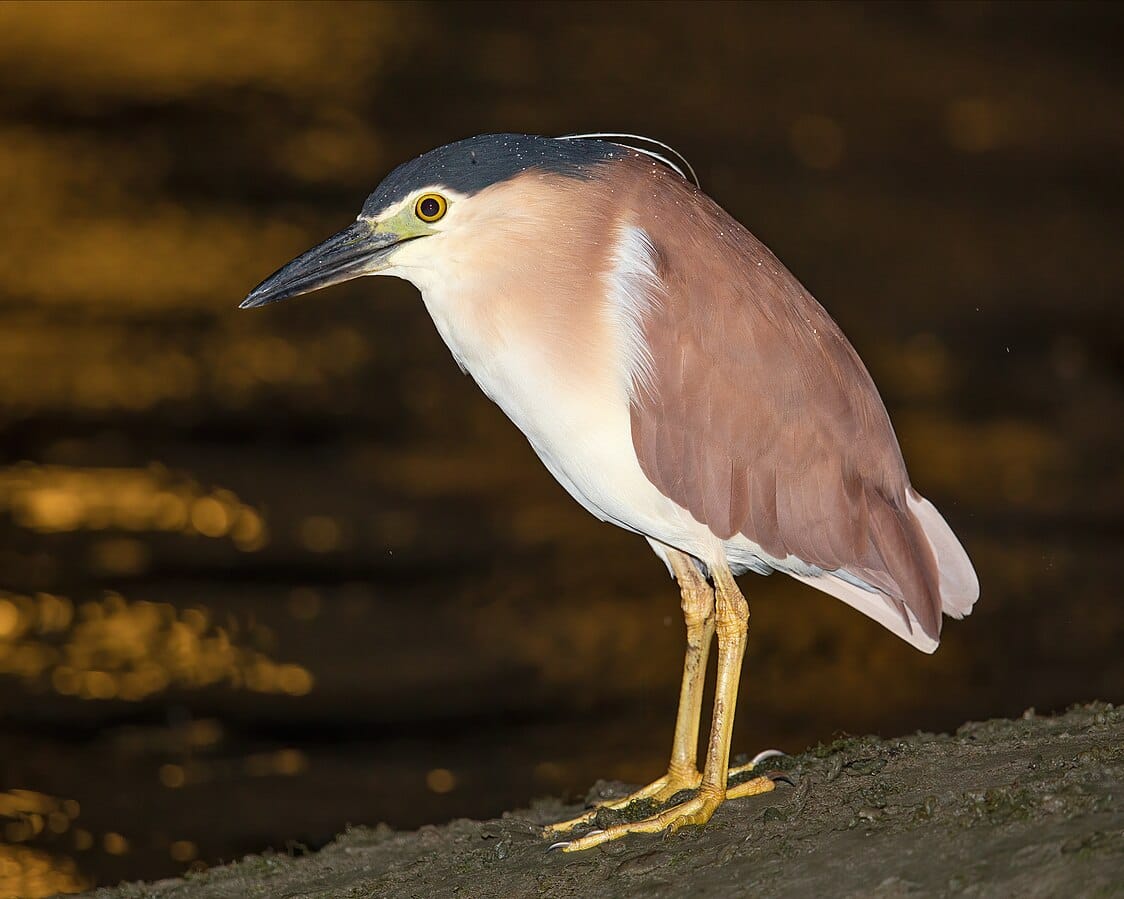
The Nankeen Night Heron, also known as the Rufous Night Heron, is a medium-sized nocturnal heron native to Australia, Southeast Asia, and some Pacific islands. Measuring 58–66 cm in length, it has rufous-brown plumage with paler underparts and a distinctive black crown and back. This species is primarily active at night and in twilight hours, feeding along wetlands, rivers, and coastal areas.
Nankeen Night Herons feed on fish, frogs, crustaceans, and insects, using stealth and patience to capture prey. They nest in trees or shrubs near water, often in colonies alongside other herons or egrets. Observing a Nankeen Night Heron highlights nocturnal adaptations, the importance of wetland ecosystems, and the remarkable diversity of hunting strategies among heron species. Its elegant plumage and secretive behavior make it a favorite among birdwatchers and wildlife enthusiasts.
Frequently Asked Questions About Herons
1. What is the rarest type of heron?
The Madagascar Heron, also called the Madagascar Pond Heron, is extremely rare and mostly found in wetland areas of Madagascar. Its population is small and declining due to habitat loss.
2. What is the most common heron?
The Grey Heron is the most common heron, widely distributed across Europe, Asia, and parts of Africa, often seen near rivers, lakes, and wetlands.
3. Is a heron a stork?
No, herons and storks are different families of birds. Herons belong to the family Ardeidae, while storks belong to Ciconiidae. They may look similar but have distinct behaviors and anatomy.
4. What kind of herons are in the UK?
The UK is home to several herons, including the Grey Heron, Little Egret, and occasionally the Night Heron during migration periods.
5. What is the most beautiful heron in the world?
The Purple Heron is often considered one of the most beautiful, with its striking reddish-purple and chestnut plumage and graceful long neck.
6. How rare is a blue heron?
The Great Blue Heron is not rare; it is common in North America. Its large size and blue-grey feathers make it easily recognizable near wetlands.
7. What is the biggest type of heron?
The Goliath Heron is the largest, standing up to 1.5 meters tall with a wingspan of around 2.3 meters, mostly found in sub-Saharan Africa.
8. Can you get a black heron?
Yes, the Black Heron exists and is famous for its unique “canopy feeding” technique, where it spreads its wings to create shade and attract fish.
9. How to tell a crane from a heron?
Herons generally stand still and hunt by stalking prey, while cranes are more social, walk gracefully in groups, and perform elaborate dances. Cranes also have shorter necks during flight.
10. Is it rare to see a grey heron?
No, the Grey Heron is common in many parts of Europe, Asia, and Africa, and is frequently seen along rivers, lakes, and marshes.
11. What eats herons?
Herons can fall prey to large birds of prey, such as eagles and hawks, as well as foxes, raccoons, and crocodiles in wetland areas.
12. How rare is a white heron?
White herons, often referring to the Great Egret, are not rare globally but may be uncommon in certain regions. Conservation efforts have helped their populations recover.
13. What bird is like a heron but bigger?
The Goliath Heron is like a regular heron but significantly bigger, with a very long neck and legs, capable of catching large fish.
14. What is a flock of herons called?
A group of herons can be called a “heronry” when nesting, or simply a “flight” when seen in the air together.
15. What is the rarest heron?
The Madagascar Pond Heron and the Rufous-bellied Heron are among the rarest herons, with small populations restricted to specific wetlands.
16. Is a heron a dinosaur?
Not exactly, but birds like herons are descendants of certain small theropod dinosaurs, so in a broad evolutionary sense, birds are modern dinosaurs.
17. Is flamingo a bird?
Yes, flamingos are birds. They are tall, long-legged waders known for their pink color and filter-feeding habits, but they are not herons.
18. What do herons symbolize?
Herons symbolize patience, grace, and determination, often representing calmness, self-reliance, and the ability to stand still before action.
19. Is an egret a heron?
Yes, egrets are a type of heron, usually white, and part of the Ardeidae family. The main differences are color and some size variations.
20. What is the lifespan of a heron?
Herons can live 15–25 years in the wild, depending on species and environmental conditions.
21. What is the difference between a bittern and a heron?
Bitterns are generally smaller, stockier, and secretive, living in dense reed beds. Herons are taller, more visible, and usually hunt in open water.
22. Which is the largest heron in the world?
The Goliath Heron holds the title as the largest heron species, with a wingspan up to 2.3 meters and a weight of around 5 kg.
23. What is the loudest bird in the world?
The White Bellbird is considered the loudest, capable of producing calls over 125 decibels, louder than a chainsaw!
24. What is the rarest bird in the universe?
The Spix’s Macaw, also known as the Little Blue Macaw, is extremely rare and once thought extinct in the wild, with very few individuals remaining.
25. Is an ibis a heron?
No, ibises are not herons. They belong to the Threskiornithidae family and are characterized by their long, curved bills for probing mud.
26. Did I see a crane or a heron?
Check the neck and flight pattern: herons fly with their necks folded in an S-shape, while cranes fly with extended necks. Behavior and size also help distinguish them.
27. Is bittern a bird?
Yes, bitterns are birds. They are secretive herons that live in marshes and reed beds and are known for their booming calls.
28. What bird is the most talkative?
Parrots, especially African grey parrots, are considered the most talkative birds because they can mimic human speech and sounds.
29. What bird sounds like a machine gun?
The White Bellbird or the Northern Lapwing can produce rapid, repetitive calls that sound like a machine gun, especially during mating displays.
30. Are white bellbirds still alive?
Yes, White Bellbirds are still alive. They are rare but can be found in parts of South America, mainly in the Amazon rainforest.
31. Are flamingos a type of heron?
No, flamingos are not herons. They belong to the family Phoenicopteridae and have very different feeding habits and body structures.
32. Which god is an ibis?
In ancient Egyptian mythology, the ibis is associated with Thoth, the god of wisdom, writing, and knowledge.
33. What is a bin chicken?
The “bin chicken” is a nickname for the Australian White Ibis, known for scavenging in urban areas and rummaging through trash bins.
Conclusion
Herons are among the most elegant and diverse wading birds in the world, showcasing a remarkable range of sizes, colors, and behaviors. From the towering Great Blue Heron to the elusive Japanese Night Heron, each species has unique adaptations for hunting, nesting, and thriving in freshwater and coastal ecosystems. Learning to identify different types of herons enhances not only your birdwatching skills but also your appreciation for the vital ecological roles these birds play, such as controlling fish and insect populations and maintaining wetland health.
Observing herons provides a glimpse into the delicate balance of aquatic ecosystems and the incredible diversity of wildlife. Whether stalking prey in shallow waters, nesting in dense forests, or gliding gracefully across estuaries, herons embody patience, precision, and resilience. Protecting their habitats ensures that future generations can continue to enjoy the beauty and ecological importance of these majestic birds. Studying herons reminds us that even subtle movements and quiet behaviors contribute profoundly to the richness of nature.
Read more: