

Wild horses are among the most captivating and resilient animals on Earth. From the steppes of Mongolia to the deserts of Namibia, these free-roaming equines showcase incredible adaptability, intelligence, and social complexity. They play a vital ecological role by grazing landscapes, shaping vegetation patterns, and supporting biodiversity. Understanding their behavior, habitats, and survival strategies provides insights into the natural world and the challenges wild horses face, including habitat loss, human interference, and climate change. This guide introduces 29 unique wild horses, offering detailed identification, history, and fascinating facts for enthusiasts, researchers, and conservationists alike.
1. Przewalski’s Horse (Equus ferus przewalskii)
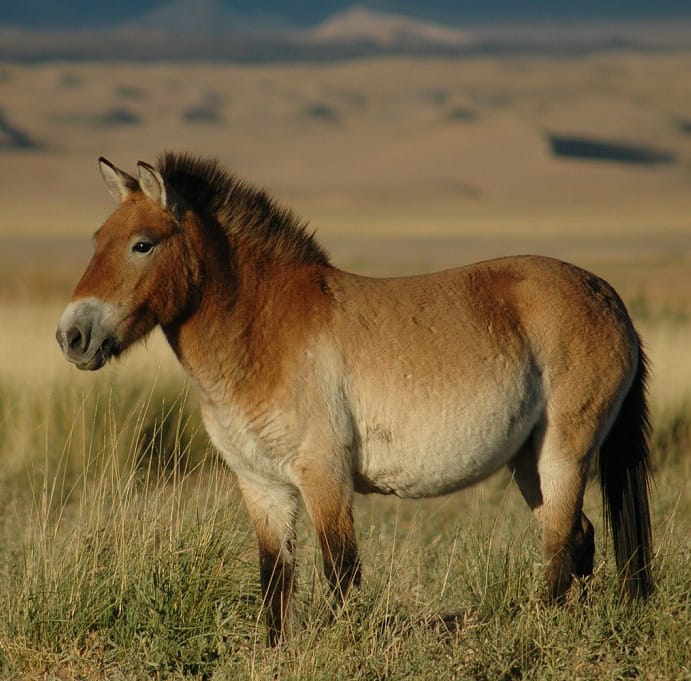
Przewalski’s Horse, also known as the Mongolian wild horse, is the only remaining true wild horse species. Native to the steppes of central Asia, particularly Mongolia, this robust equine measures around 230–250 cm in length and weighs 250–300 kg. Its distinct features include a short, upright mane, sandy-brown coat, pale muzzle, and dark legs. Unlike domesticated horses, Przewalski’s horses have 66 chromosomes, compared to 64 in domestic breeds, highlighting their genetic uniqueness.
These horses live in small herds led by dominant stallions. Social structures are complex, with females and their offspring forming cohesive groups that communicate via vocalizations, body language, and visual cues. Their diet consists primarily of grasses and shrubs, with occasional browsing on leaves and herbs. Przewalski’s Horses are highly adapted to harsh climates, enduring extreme temperatures from scorching summers to freezing winters.
Historically, these horses were widespread across Asia and Europe, but hunting and habitat loss caused near extinction by the 1960s. Successful captive breeding programs and reintroductions into Mongolia’s Hustai National Park have revived wild populations. Conservation efforts continue to monitor genetic diversity, habitat preservation, and human-wildlife coexistence.
Przewalski’s Horses exemplify resilience, adaptability, and the importance of conservation initiatives for truly wild equine species.
2. Tarpan (Equus ferus ferus)
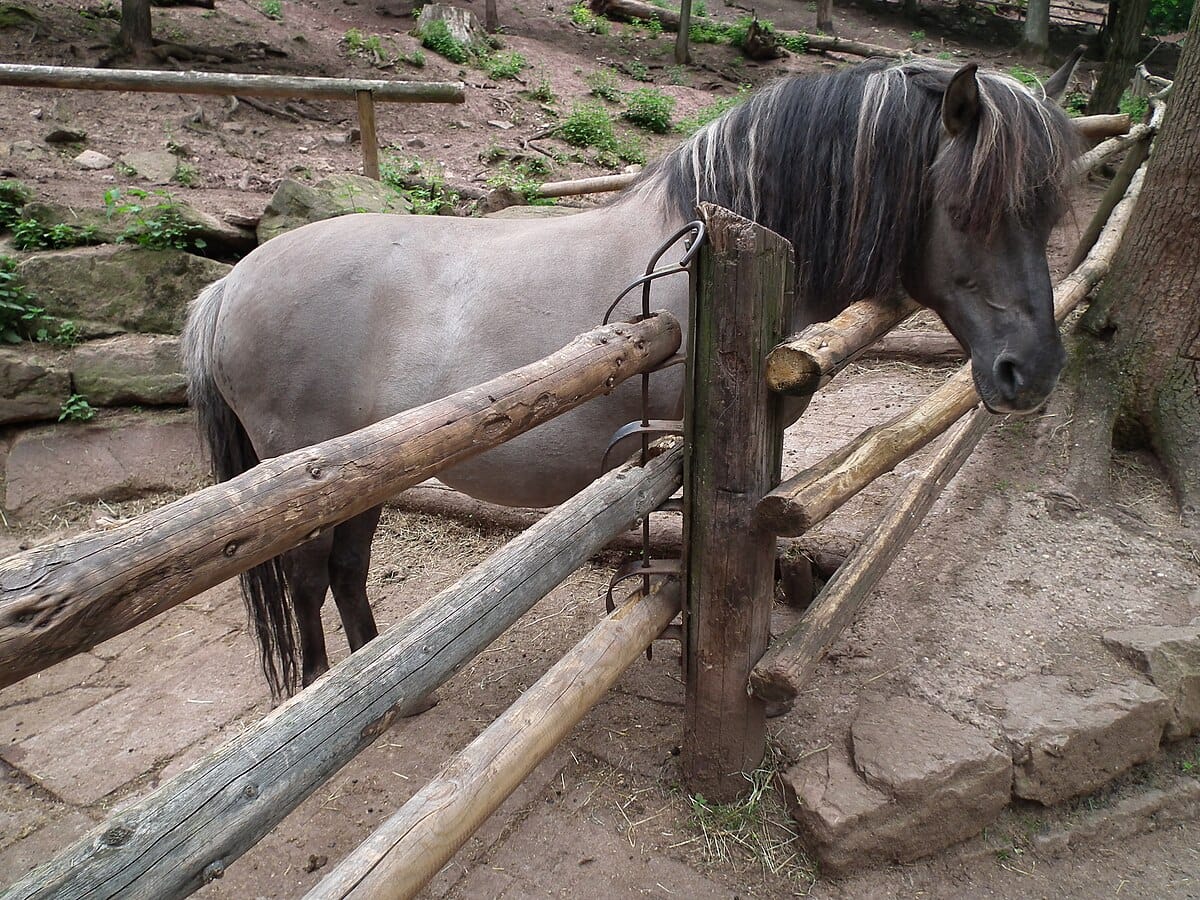
The Tarpan was the European wild horse, now extinct, which once roamed the steppes and forests of Eastern Europe. Adult tarpans had a grayish-brown coat, dark dorsal stripe, and a short, upright mane similar to Przewalski’s horse. They were smaller and stockier than modern domesticated horses, with powerful legs for navigating forests and grasslands.
Tarpans lived in small herds led by dominant stallions. Their diet included grasses, shrubs, and seasonal plants. They exhibited cautious behavior, wary of predators and humans. Unlike modern domestic horses, tarpans were highly adapted to natural landscapes, surviving winters with limited forage.
By the late 19th century, hunting, habitat encroachment, and interbreeding with domestic horses led to their extinction. However, the Tarpan inspired efforts to recreate Tarpan-like horses through selective breeding, leading to breeds such as the Konik Horse in Poland. These attempts aim to preserve their physical traits and ecological role.
The Tarpan serves as a symbol of lost biodiversity and the importance of conserving wild equines and their habitats for future generations.
3. Mustang (Equus ferus caballus)
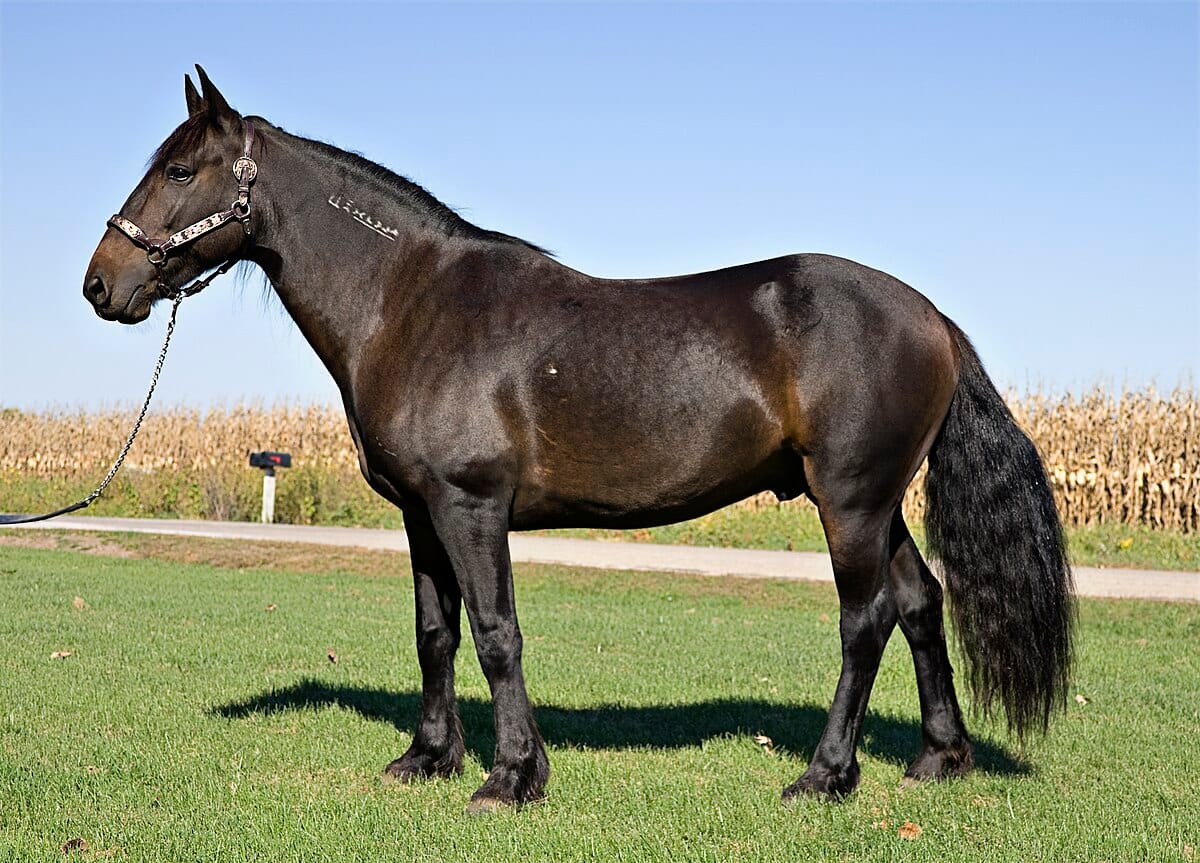
Mustangs are feral horses of North America descended from horses introduced by Spanish explorers in the 16th century. They inhabit the western United States, roaming deserts, mountains, and grasslands. Adults weigh 380–500 kg and have diverse coat colors, including bay, black, palomino, and dun. Their manes and tails are typically long and flowing.
Mustangs live in bands consisting of a stallion, several mares, and their offspring. Social hierarchies are maintained through dominance behaviors, grooming, and vocalizations. They are herbivorous, feeding on grasses, shrubs, and forbs, and can travel long distances to find water and forage.
Feral populations face challenges from habitat loss, competition with livestock, and management programs by federal agencies to control numbers. Despite these challenges, Mustangs are highly adaptable, resilient, and symbolize freedom in North American culture.
Their social structure, adaptability, and diverse genetics make Mustangs an iconic example of feral horse survival in modern ecosystems.
4. Brumby
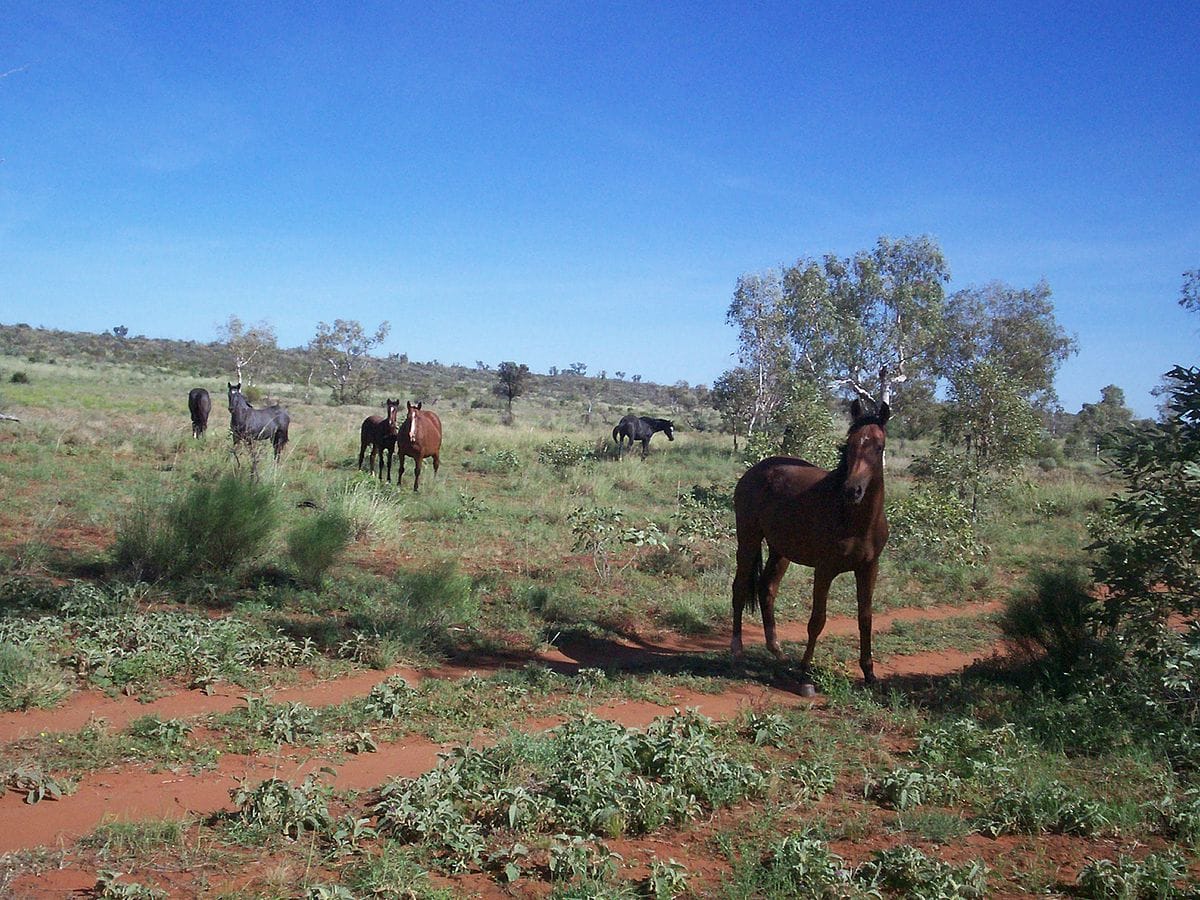
Brumbies are wild horses of Australia, originating from escaped domestic horses brought by European settlers. Found across New South Wales, Queensland, and the Northern Territory, they have adapted to deserts, woodlands, and mountainous regions. Adult Brumbies weigh 350–500 kg, with variable coat colors and strong, muscular builds.
Brumbies live in bands of one dominant stallion, multiple mares, and young foals. They graze on native grasses and shrubs and are highly mobile, covering large distances for food and water. Their behavior includes complex social interactions, marking territories, and alert communication to protect against predators.
While Brumbies are valued for their cultural and ecological significance, they are also considered pests in some areas due to overgrazing. Management strategies focus on population control, habitat protection, and coexistence with native flora and fauna.
Brumbies demonstrate the resilience of feral horses in harsh environments and their ability to maintain wild populations even after centuries of human influence.
5. Konik Horse
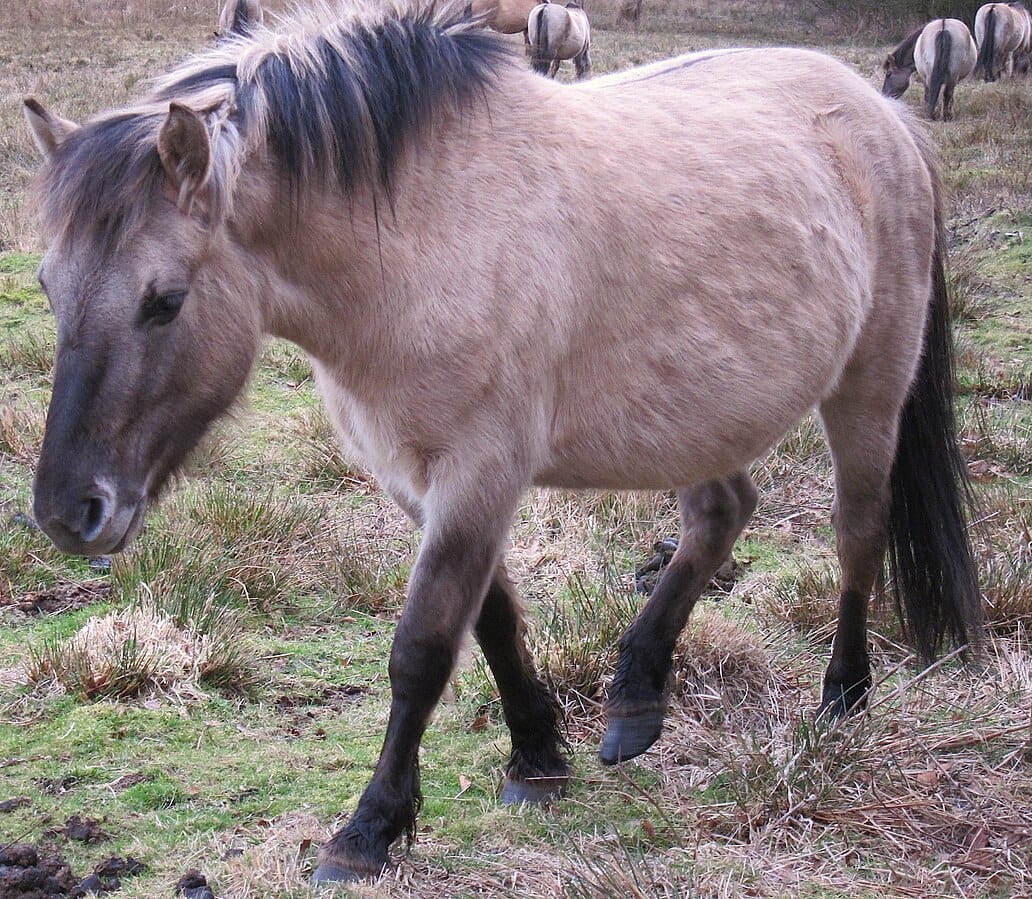
The Konik Horse is a semi-feral breed from Poland, developed to resemble the extinct Tarpan. Adults weigh 300–400 kg, with dun coats, primitive markings, and a stocky build. They inhabit nature reserves and forested areas, often roaming freely in protected landscapes.
Konik horses live in herds with a dominant stallion, multiple mares, and foals. Their diet consists of grasses, shrubs, and herbs, and they help maintain vegetation balance in conservation areas. Social behaviors include grooming, play, and hierarchical interactions.
Konik Horses are used in rewilding projects across Europe to restore ecological processes, such as natural grazing and seed dispersal. They are hardy, adaptable, and able to survive harsh winters with minimal human intervention.
As descendants of the Tarpan, Konik Horses are living examples of conservation-driven breeding and the ecological importance of wild horse populations in modern landscapes.
6. Icelandic Horse (Feral Populations)
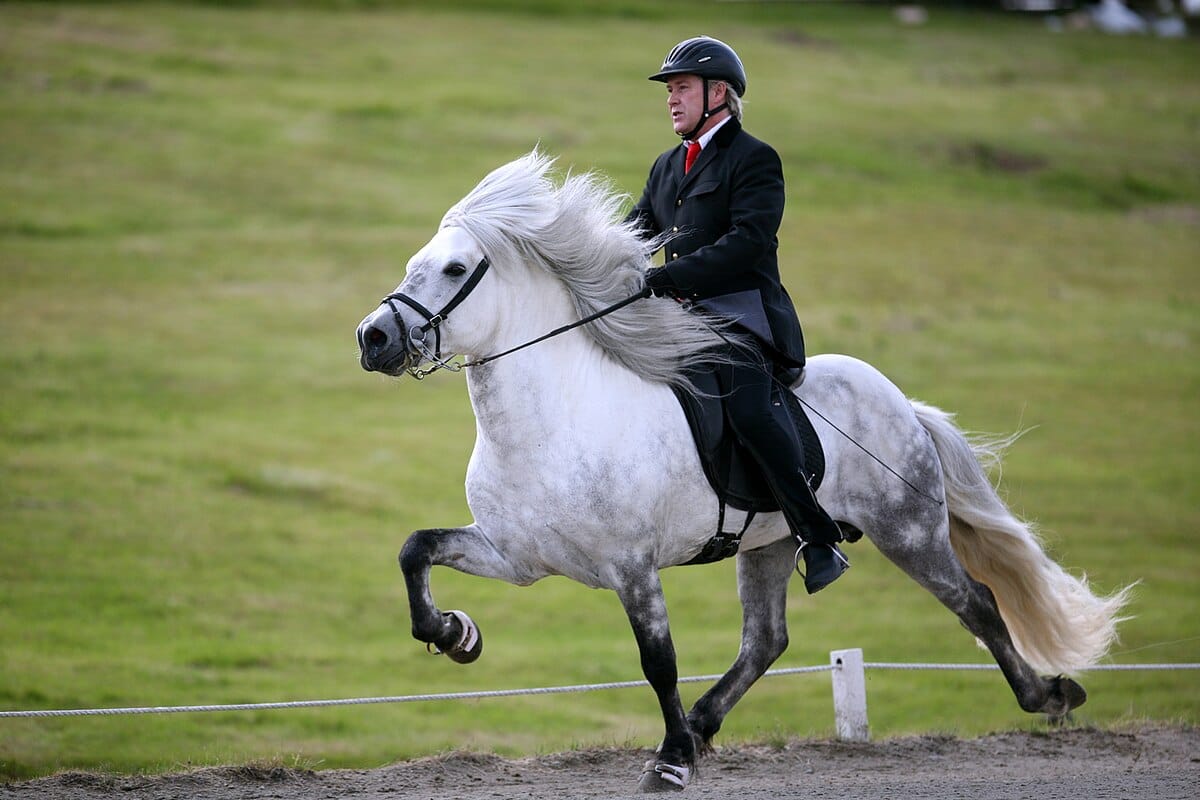
The Icelandic Horse, though domesticated for centuries, maintains several feral populations roaming freely across Iceland’s volcanic landscapes, lava fields, and grasslands. Adults are small but sturdy, typically weighing 350–450 kg, with thick double-layered coats that protect them from harsh winter temperatures. They exhibit a variety of coat colors, including chestnut, black, gray, palomino, and pinto, and possess a distinctive, flowing mane and tail.
Feral Icelandic Horses live in small bands, usually led by a dominant stallion. These groups maintain social cohesion through mutual grooming, play, and vocal communications. Their diet consists mainly of grasses and shrubs, and they have adapted to survive the long, cold winters by foraging under snow and traveling significant distances to find food.
Despite their small size, Icelandic Horses are highly resilient and display remarkable endurance. Predation is limited in Iceland, allowing these feral populations to flourish. However, harsh weather, limited forage, and human interventions like fencing can influence their distribution.
Icelandic Horses illustrate how semi-feral equines can adapt to extreme climates, survive independently, and maintain complex social structures in isolated ecosystems.
7. Sable Island Horse
The Sable Island Horse is a unique feral population residing on Sable Island, a remote sandbar off the coast of Nova Scotia, Canada. This isolated population has existed for over 250 years, descending from horses brought by European settlers. Adults weigh 350–450 kg and have variable coats, most commonly bay, black, or dun, with thick manes and tails adapted to windy conditions.
Sable Island Horses form loose herds led by dominant stallions. These bands exhibit strong social hierarchies, with mares and foals playing central roles in maintaining cohesion. Their diet is primarily salt-tolerant grasses and shrubs, carefully foraged across the sandy dunes. Despite limited freshwater sources, the horses have adapted to survive in this harsh, isolated environment.
Their population size is naturally regulated by the island’s carrying capacity, and they face minimal predation. Conservation management focuses on monitoring herd health, preserving genetic diversity, and preventing human disturbance.
The Sable Island Horse is an extraordinary example of natural adaptation, social behavior, and survival in extreme isolation, making it one of the world’s most fascinating wild horse populations.
8. Chincoteague Pony
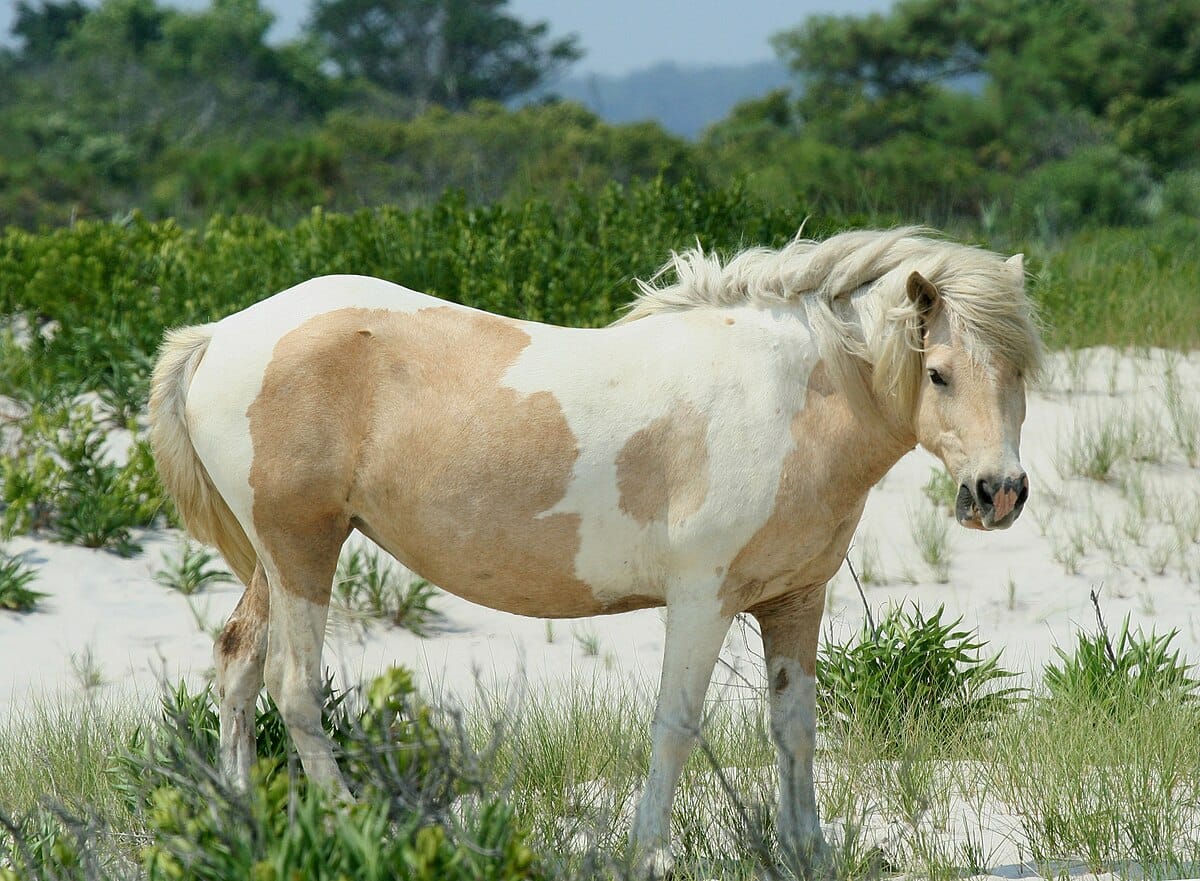
The Chincoteague Pony, also called the Assateague Pony, roams the barrier islands of Virginia and Maryland, USA. Descended from domestic horses that escaped colonial farms, these ponies have adapted to the salt marshes, dunes, and grassy meadows of the islands. Adults typically weigh 300–400 kg and stand around 13–14 hands high, with diverse coat colors including chestnut, bay, black, and gray.
Chincoteague Ponies live in herds led by dominant stallions, and social interactions include grooming, playful chasing, and defensive behaviors. Their diet consists of native grasses, marsh vegetation, and occasional shrubs. They are excellent swimmers, often navigating the tidal waters to reach forage and escape predators.
Population control is managed through the famous annual Pony Swim and auction events, which maintain sustainable herd sizes while preserving their wild behavior. Predators are minimal, though storms, harsh winters, and human disturbance can impact survival.
Chincoteague Ponies highlight adaptation to coastal environments, herd social structures, and the balance between human intervention and natural wild behaviors.
9. Sorraia Horse
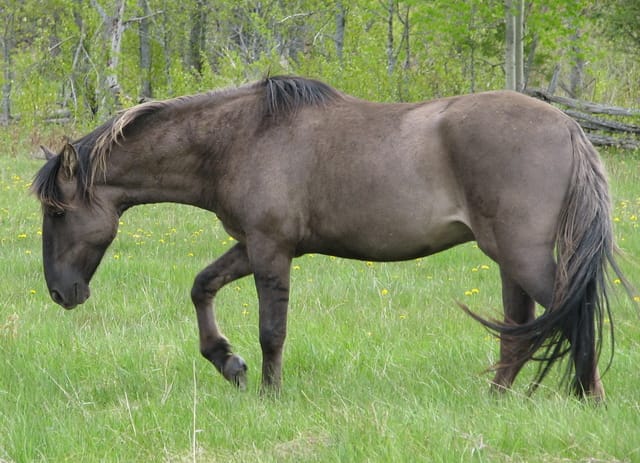
The Sorraia Horse is a rare, primitive horse breed native to the Iberian Peninsula, particularly Portugal. Often considered a relict of ancient European wild horses, Sorraia Horses have dun or mouse-gray coats, primitive dorsal stripes, and slender, compact builds. Adults weigh 350–400 kg and stand 14–15 hands high.
Sorraia Horses live in semi-feral herds in nature reserves and private ranches. Herds are led by dominant stallions with several mares and foals, and social behaviors include grazing coordination, mutual grooming, and hierarchical displays. Their diet consists of native grasses, shrubs, and occasional herbs, providing a balanced intake for survival in semi-arid conditions.
Conservation programs aim to preserve the Sorraia’s genetic purity and maintain semi-wild populations, as this breed is extremely rare. They are hardy, resilient, and capable of surviving with minimal human intervention.
The Sorraia Horse represents an ancient lineage, connecting modern horses with Europe’s wild horse history, and serves as a vital conservation and ecological resource.
10. Dülmen Pony
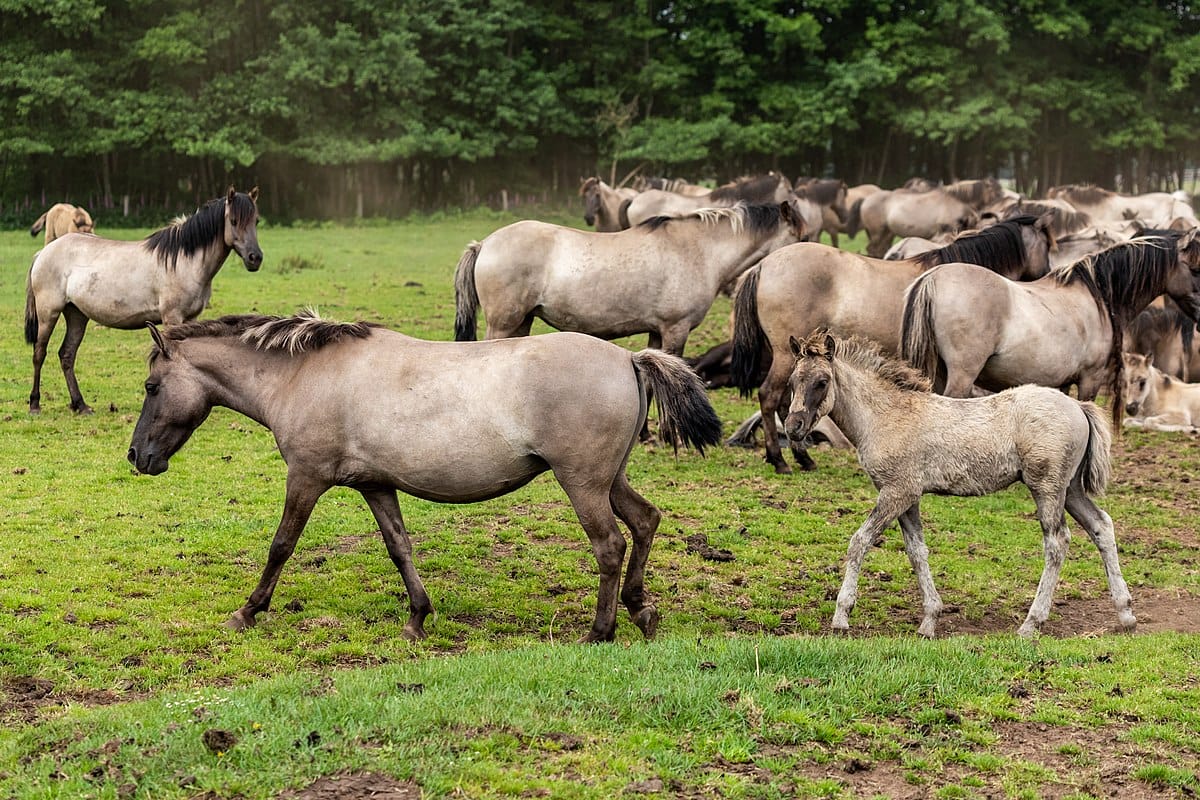
The Dülmen Pony is Germany’s only native wild horse breed, found primarily in the Merfelder Bruch region. Adults weigh 300–400 kg and stand 12–14 hands high. They have compact, sturdy bodies with a variety of coat colors, including bay, chestnut, and dun. Their short, thick manes and tails are well-suited for temperate European climates.
Dülmen Ponies live in small herds dominated by stallions, with mares and foals forming close social bonds. Their diet consists mainly of grasses and herbs found in heathlands, meadows, and forests. These ponies are highly adaptable, capable of surviving cold winters and limited forage availability.
Predation is minimal, but human activity and habitat fragmentation can impact their range. Conservation efforts focus on preserving natural grazing areas, maintaining genetic diversity, and allowing natural behaviors to flourish without excessive human interference.
The Dülmen Pony illustrates the survival and social strategies of native European wild horses, emphasizing the importance of habitat conservation and herd dynamics.
11. Hokkaido Horse
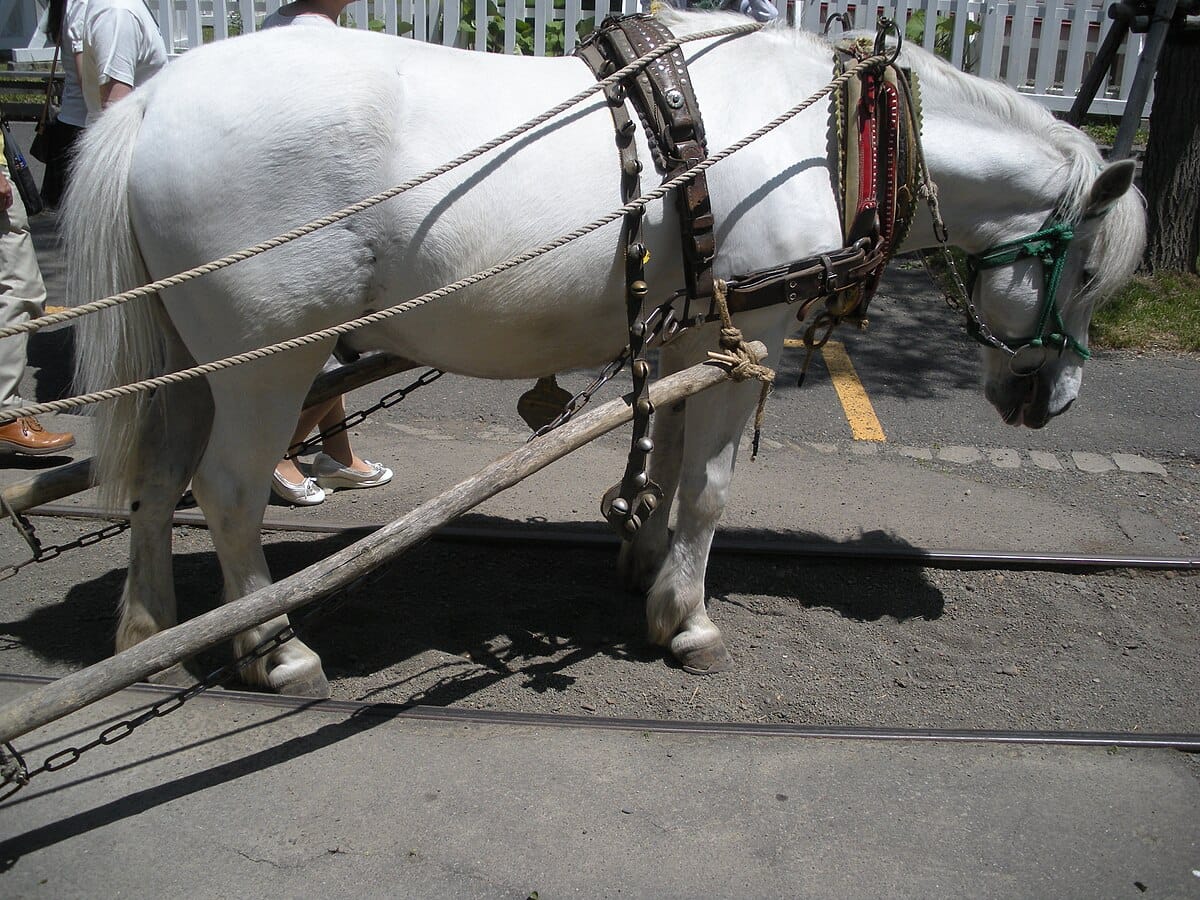
The Hokkaido Horse is a rare feral horse breed native to northern Japan, primarily on the island of Hokkaido. Adults weigh 350–400 kg and stand 13–14 hands high, with a sturdy, compact build and thick winter coats that provide protection against severe cold and snow. Their coats are typically bay, chestnut, or gray, and their strong legs enable them to navigate rugged terrain.
Hokkaido Horses live in small, loosely organized herds led by dominant stallions. Social bonds are maintained through grooming, play, and vocalizations. Their diet consists mainly of grasses, leaves, and shrubs, with seasonal variation based on available forage. They are highly adaptable, able to survive harsh winters by seeking sheltered areas and conserving energy.
The population is semi-feral, with conservation programs ensuring genetic diversity and natural grazing patterns. Predation is minimal, but habitat changes and human interference can impact herd dynamics.
Hokkaido Horses demonstrate adaptability to extreme climates, strong social structures, and the resilience of wild horses in isolated and challenging environments.
12. Caspian Horse (Feral Populations)
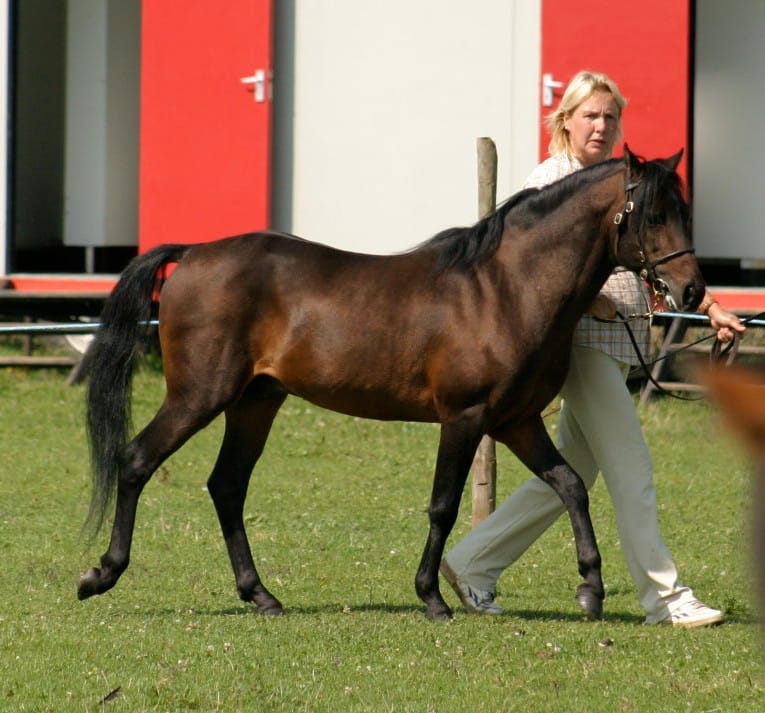
The Caspian Horse is one of the world’s oldest horse breeds, originating in northern Iran. Though primarily semi-domesticated, feral populations exist in remote valleys. Adults weigh 200–250 kg and stand 11–12 hands high, making them small yet sturdy. They have a fine build, refined head, and a wide variety of coat colors, including bay, gray, chestnut, and black.
Feral Caspian Horses live in small family bands led by stallions, grazing on grasses, herbs, and shrubs. Their social behavior is complex, with play, grooming, and hierarchical interactions maintaining herd cohesion. They are hardy, able to withstand extreme temperatures and limited food availability.
Conservation programs focus on preserving this ancient breed’s genetics and rewilding efforts in natural habitats. Their small size, agility, and endurance allow them to navigate mountainous terrain with ease.
Caspian Horses highlight the survival of primitive equine breeds in the wild, bridging the gap between ancient domestication and free-roaming populations.
13. Pottok
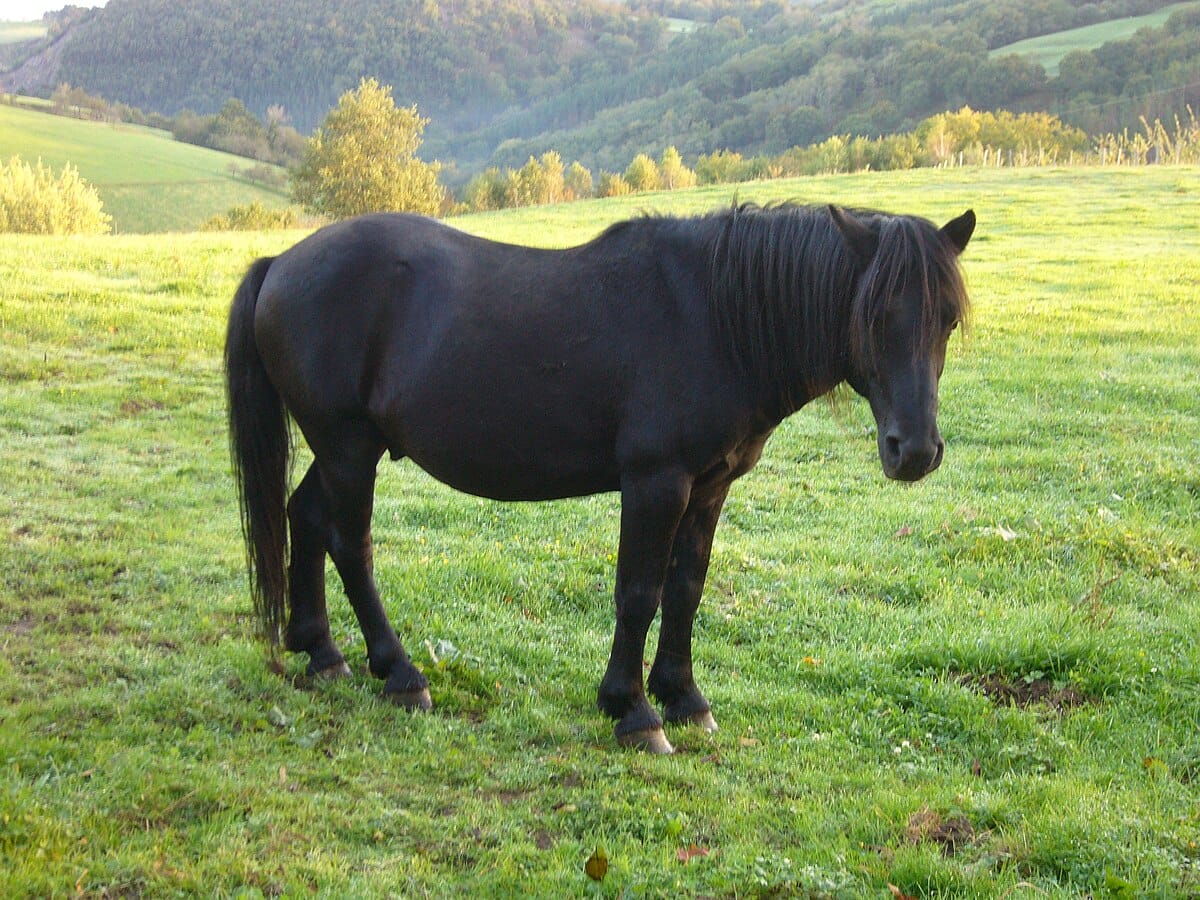
The Pottok is a semi-feral pony native to the Basque region of northern Spain and southwestern France. Adults weigh 300–350 kg and stand 12–13 hands high, with sturdy builds and thick manes suited to mountainous and forested terrain. Coat colors include bay, black, gray, and chestnut.
Pottok ponies live in herds led by dominant stallions, with social hierarchies maintained through grooming, play, and protective behaviors. Their diet consists primarily of grasses, shrubs, and occasional bark, allowing them to survive harsh winters and rugged landscapes. They exhibit remarkable agility, navigating rocky hills and dense vegetation with ease.
Conservation efforts focus on protecting natural habitats, preventing genetic dilution, and maintaining semi-wild populations. These ponies are culturally significant to the Basque region and represent a living connection to Europe’s wild equine history.
Pottok ponies demonstrate resilience, adaptability, and the ecological importance of maintaining semi-feral horse populations in mountainous environments.
14. Yakutian Horse (Feral Populations)
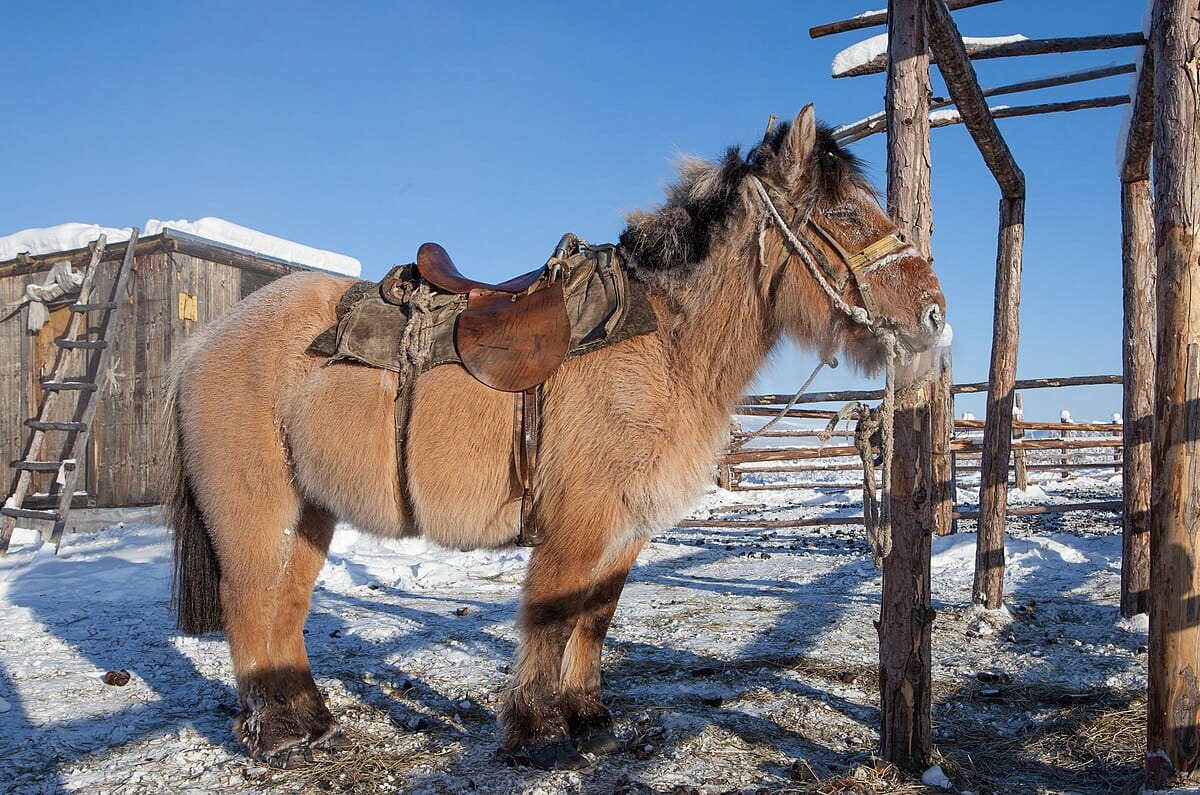
The Yakutian Horse is native to Siberia, Russia, and thrives in some of the coldest inhabited regions on Earth. Adults weigh 350–450 kg and stand 13–14 hands high, with dense, long winter coats, short legs, and strong bodies that allow survival in temperatures as low as −70°C. Common coat colors include bay, chestnut, gray, and black.
Yakutian Horses live in small herds led by stallions, with strong social bonds maintained through mutual grooming, play, and vocal signals. They graze on grasses, mosses, and shrubs, digging through snow to reach forage in winter. Their endurance and hardiness make them exceptionally well-adapted to extreme climates.
While domesticated for centuries, some populations remain semi-feral, providing insight into natural survival strategies, social behaviors, and ecological adaptations of wild horses. Conservation programs aim to maintain genetic diversity and protect these horses from habitat disruption and climate change impacts.
Yakutian Horses exemplify extreme cold adaptations, strong herd cohesion, and the resilience of wild equines in harsh environments.
15. Namib Desert Horse

The Namib Desert Horse is a rare feral population in Namibia’s harsh desert landscapes, particularly the Namib-Naukluft region. Adults weigh 400–500 kg and stand 14–15 hands high, with sandy, dun, or chestnut coats that blend with the desert terrain. Their long legs and muscular bodies allow them to travel long distances in search of water and forage.
Namib Desert Horses live in small herds led by dominant stallions. Social interactions include grooming, play, and alert behaviors to warn against threats. They feed on sparse desert vegetation, including grasses, shrubs, and succulents, and are highly mobile to survive extreme heat and drought conditions.
Predation is limited, but their survival depends heavily on water availability and forage. Conservation efforts focus on monitoring populations, maintaining water access, and reducing human impacts. These horses are considered one of the world’s rarest feral equine populations.
Namib Desert Horses illustrate remarkable desert adaptation, social structure, and resilience, highlighting the survival of wild horses in one of the most inhospitable environments on Earth.
16. Przewalski’s Mustang Hybrid
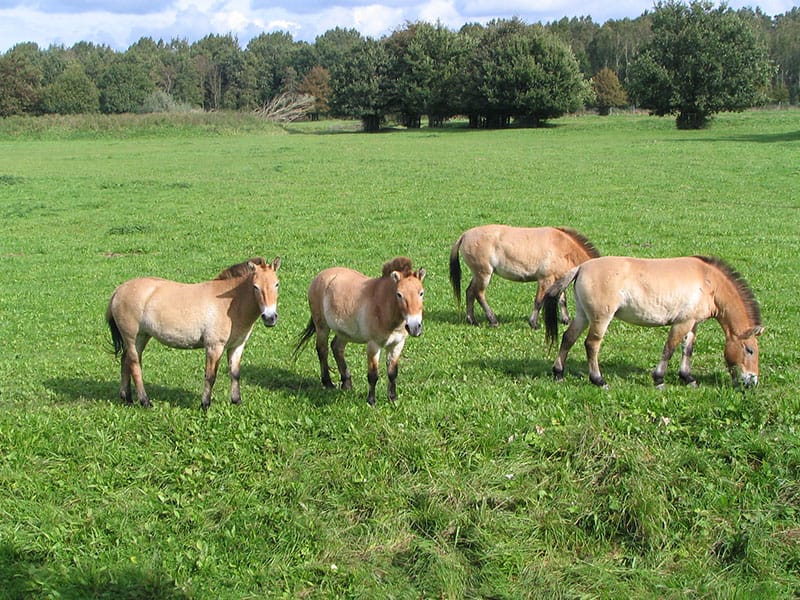
Przewalski’s Mustang Hybrids are unique horses bred to combine the traits of the true wild Przewalski’s Horse with feral Mustangs of North America. Adults weigh 350–500 kg and have robust builds, upright manes, and diverse coat colors ranging from dun and bay to palomino. These hybrids are primarily maintained in conservation programs to study genetics, behavior, and adaptability of wild horse populations.
These horses live in small herds or family groups, often led by a dominant stallion. Social interactions include grooming, playful chasing, and hierarchical behaviors, mirroring natural wild horse dynamics. They graze on grasses, shrubs, and herbs, demonstrating high adaptability to different terrains and climates, from North American grasslands to steppe-like areas in breeding reserves.
Conservation programs monitor their population, genetics, and overall health to ensure the long-term survival of wild horse traits. While not purely wild, these hybrids provide insights into the ecology, social structure, and survival mechanisms of truly wild equines.
Przewalski’s Mustang Hybrids highlight the role of conservation and selective breeding in preserving wild horse characteristics while maintaining genetic diversity and ecological research opportunities.
17. Kaimanawa Horse
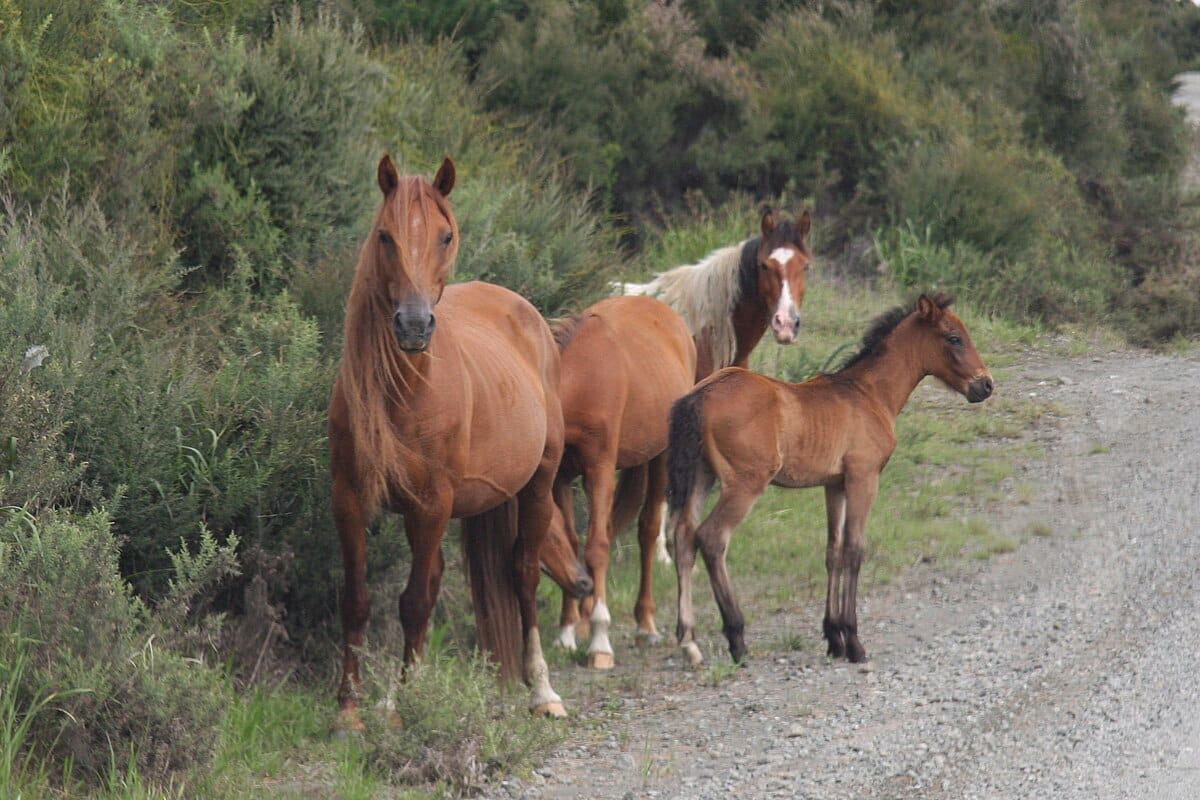
The Kaimanawa Horse is a feral population native to New Zealand’s central plateau. Descended from domestic horses introduced in the 19th century, these horses have adapted to rugged terrain, volcanic soils, and limited water sources. Adults weigh 350–450 kg and have strong, compact builds with varied coat colors, including bay, chestnut, and dun.
Kaimanawa Horses live in small bands led by dominant stallions, maintaining social cohesion through grooming, play, and hierarchical interactions. They are herbivorous, feeding primarily on native grasses, herbs, and shrubs, and can travel long distances in search of water and forage.
Population control programs are in place to maintain ecological balance, prevent overgrazing, and ensure sustainable herd sizes. Despite human management, these horses exhibit wild behaviors, strong herd dynamics, and exceptional adaptability to their environment.
Kaimanawa Horses exemplify the resilience of feral horses in isolated environments, balancing natural behaviors with modern conservation efforts.
18. Shetland Pony (Feral Populations)
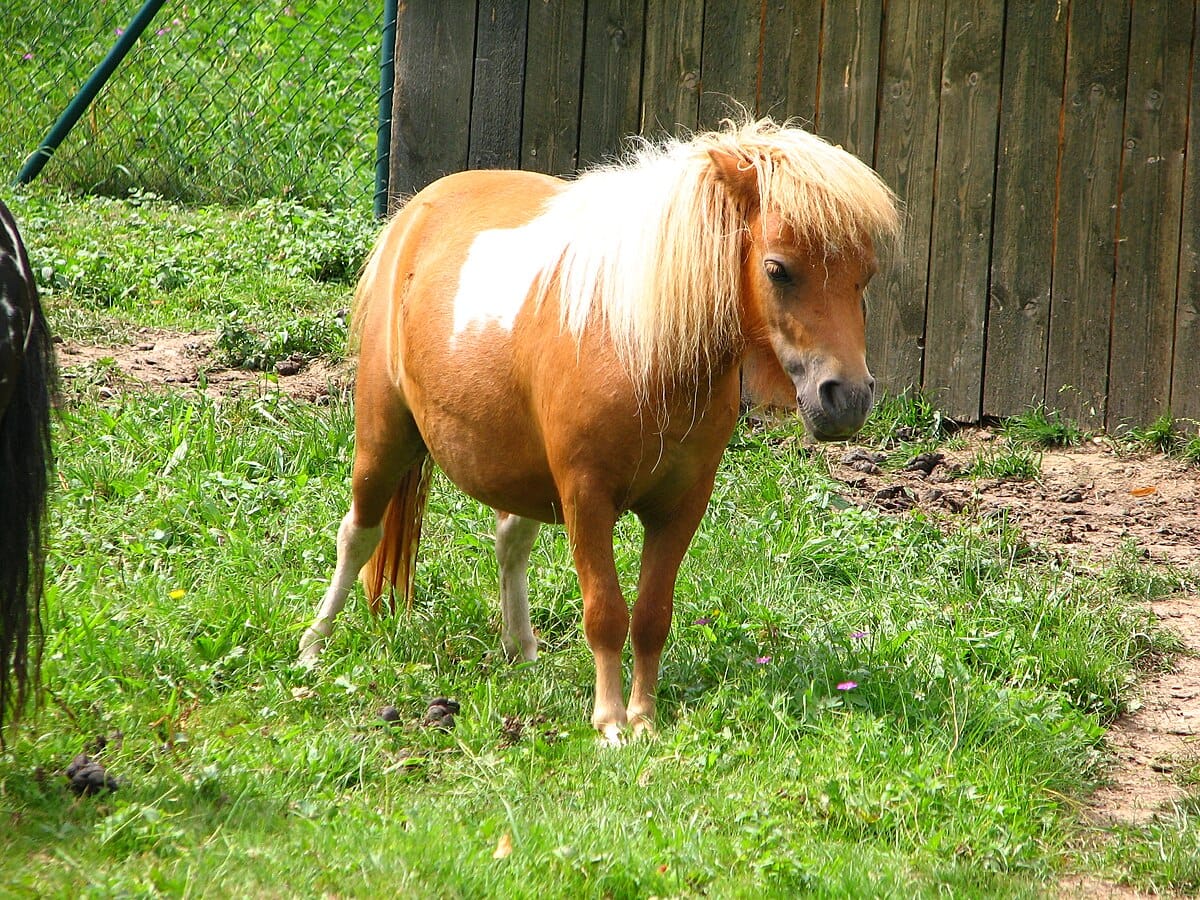
The Shetland Pony, native to the Shetland Islands of Scotland, has long-standing feral populations. Adults are small but muscular, standing 10–11 hands high and weighing 180–200 kg. Their thick winter coats, long manes, and tails provide protection against harsh winds, snow, and rain typical of the northern Scottish isles.
Feral Shetland Ponies live in small herds led by dominant stallions, with social hierarchies maintained through grooming, play, and dominance displays. Their diet consists primarily of native grasses and hardy shrubs, and they are capable of surviving harsh winters with limited forage.
Predation is minimal, but environmental pressures such as limited pasture and severe weather impact population dynamics. Conservation programs aim to preserve genetic diversity and allow these semi-wild populations to thrive in their natural habitat.
Shetland Ponies demonstrate extreme resilience, adaptation to northern climates, and the ecological value of maintaining small feral horse populations.
19. New Forest Pony (Feral Herds)
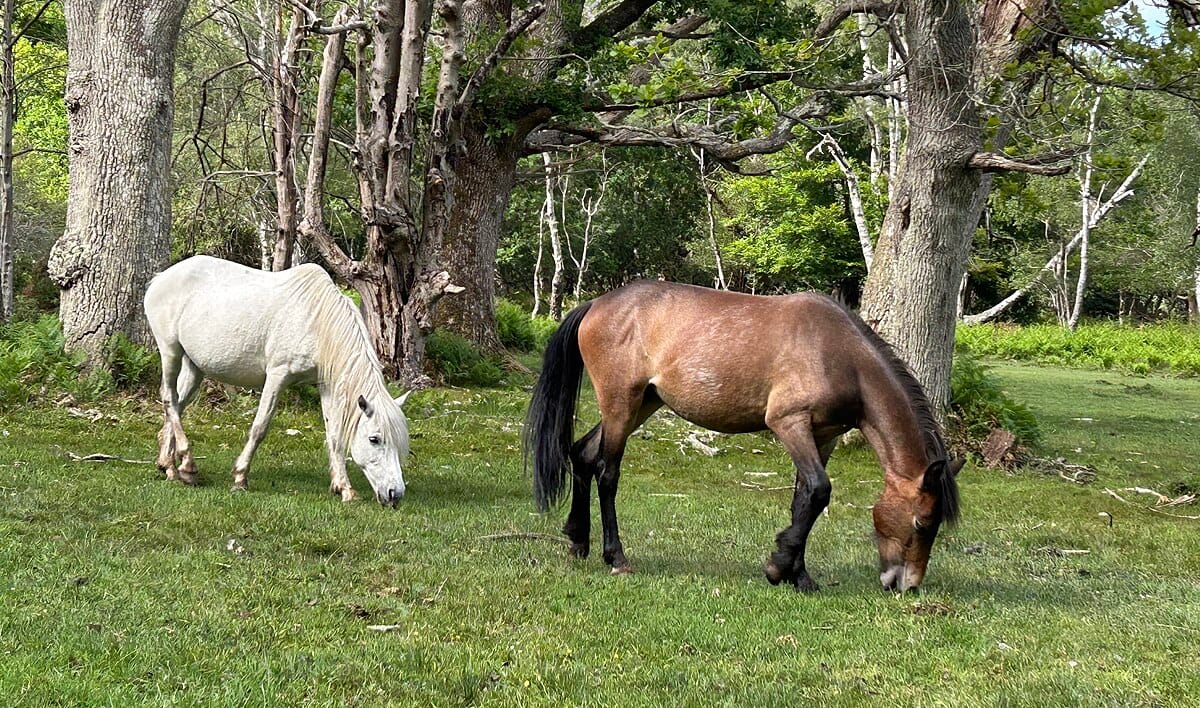
The New Forest Pony inhabits the New Forest region in southern England, living in semi-feral herds. Adults weigh 300–400 kg and stand 12–14 hands high, with a variety of coat colors including bay, black, and gray. Their sturdy builds and strong legs make them well-suited for forests, meadows, and heathlands.
Herds are led by dominant stallions, with mares and foals forming close-knit social groups. These ponies graze on grasses, shrubs, and forest undergrowth, playing a crucial role in maintaining ecological balance by controlling vegetation growth. Social behaviors include grooming, play, and protective responses to threats.
Conservation programs regulate grazing areas and monitor herd numbers to prevent overpopulation and habitat degradation. The New Forest Pony highlights the interaction between semi-wild equines and managed natural habitats, balancing wildlife conservation with human land use.
These ponies showcase adaptability, strong herd dynamics, and the benefits of semi-feral management for both ecology and heritage preservation.
20. Exmoor Pony (Feral Herds)
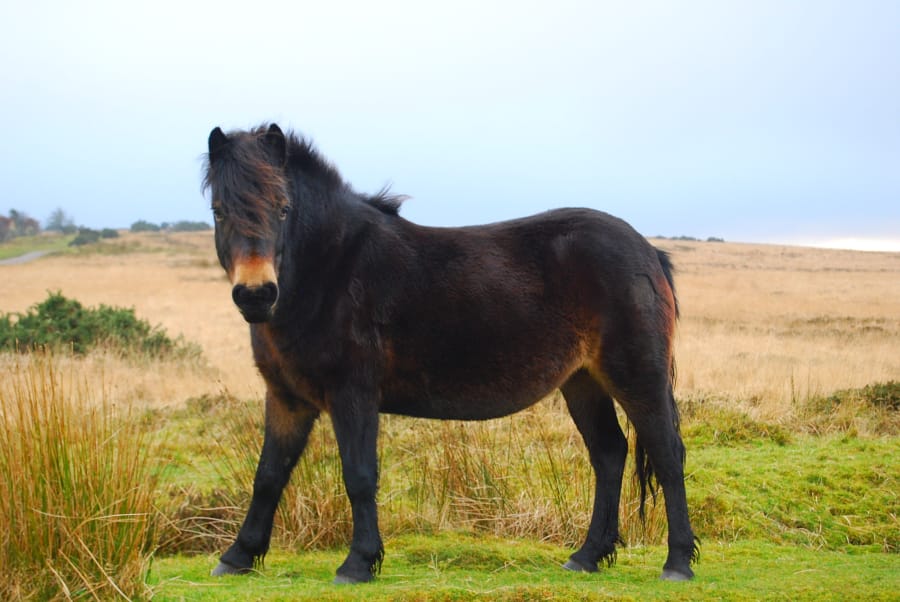
The Exmoor Pony, native to the moorlands of southwestern England, is a primitive, hardy horse breed that survives in semi-wild conditions. Adults weigh 350–400 kg and stand 12–13 hands high, with dense, waterproof coats, dark points, and characteristic “mealy” muzzles. Their stocky build enables them to navigate rough terrain and harsh weather.
Exmoor Ponies live in small herds led by dominant stallions, maintaining social cohesion through grooming, play, and alert signaling. Their diet consists mainly of grasses, heather, and shrubs, which allows them to survive winter scarcity and nutrient-poor environments.
Conservation efforts focus on preserving purebred lines, protecting moorland habitats, and allowing natural herd behaviors. These ponies are resilient, highly social, and demonstrate remarkable survival skills in challenging ecosystems.
Exmoor Ponies exemplify the adaptation of primitive equines to wild environments, highlighting the importance of conservation and habitat management in maintaining semi-feral horse populations.
21. Kiger Mustang
The Kiger Mustang is a distinctive feral horse breed found in the Kiger Gorge region of Oregon, USA. Descended from Spanish horses introduced centuries ago, Kiger Mustangs are known for their agility, endurance, and unique dun coloration with primitive markings such as dorsal stripes and zebra-like leg stripes. Adults weigh 380–500 kg and stand 14–15 hands high, making them medium-sized but strong and athletic.
These horses live in bands led by dominant stallions, which protect and guide their mares and foals. Herd interactions include grooming, playful behaviors, and hierarchical displays to establish dominance. Kiger Mustangs are herbivorous, feeding on grasses, shrubs, and seasonal vegetation, often traveling long distances to find forage and water in the rugged canyon terrain.
Management programs by the Bureau of Land Management regulate herd sizes to balance ecological impacts and maintain genetic diversity. Kiger Mustangs are highly valued for their historical significance, survival instincts, and contribution to the biodiversity of wild horse populations.
Kiger Mustangs demonstrate the combination of feral adaptability, primitive traits, and social complexity that allows wild horses to thrive in isolated landscapes.
22. Feral Welsh Pony
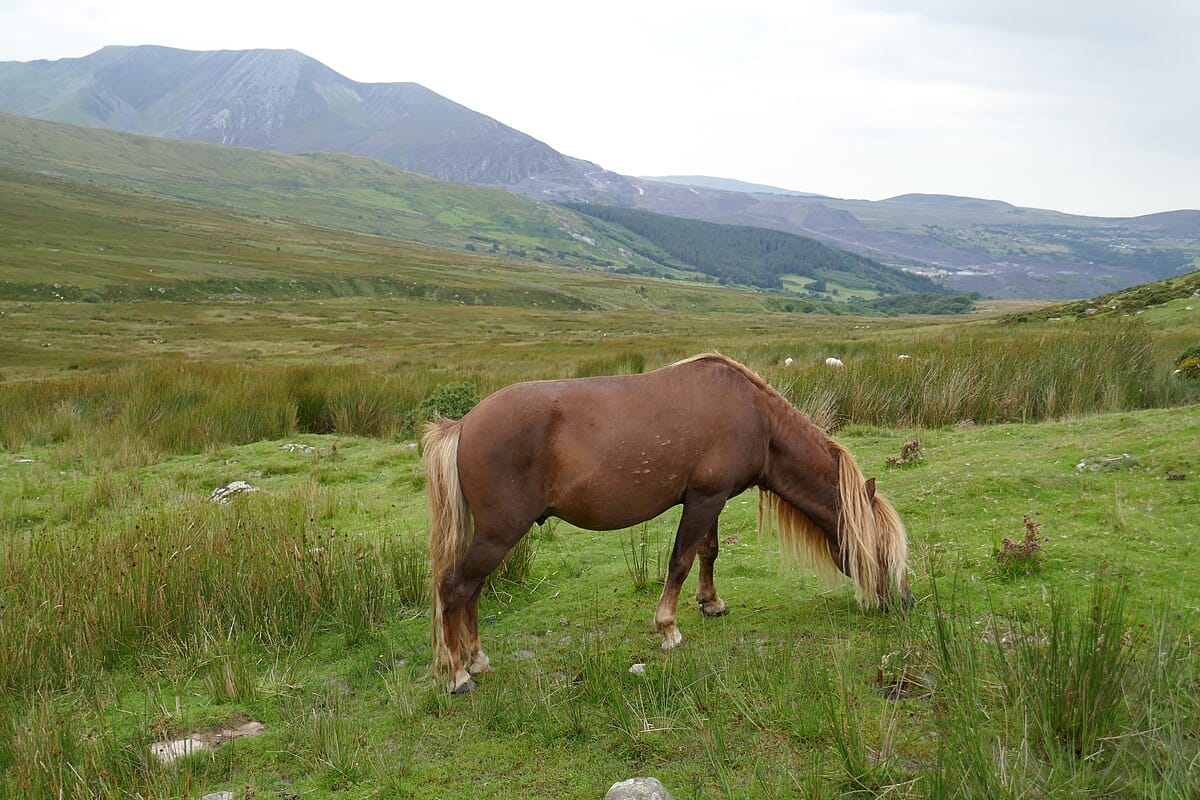
The Feral Welsh Pony inhabits remote valleys and hills of Wales, maintaining semi-wild populations descended from ancient native ponies. Adults weigh 300–350 kg and stand 12–13 hands high, with compact bodies, thick manes, and strong legs. Common coat colors include bay, black, gray, and chestnut.
These ponies live in herds led by dominant stallions, with mares and foals forming cohesive social groups. Social behaviors include grooming, play, and communication through vocalizations and body language. Their diet consists mainly of grasses, herbs, and shrubs, and they are capable of foraging efficiently in nutrient-poor environments.
Feral Welsh Ponies face challenges from habitat encroachment and human activity, but conservation efforts ensure natural grazing areas and minimal interference. They are culturally significant and provide ecological benefits by maintaining vegetation balance in semi-wild landscapes.
Feral Welsh Ponies highlight resilience, social cohesion, and the value of preserving native semi-wild horse populations in European habitats.
23. Marwari Horse (Feral Herds)
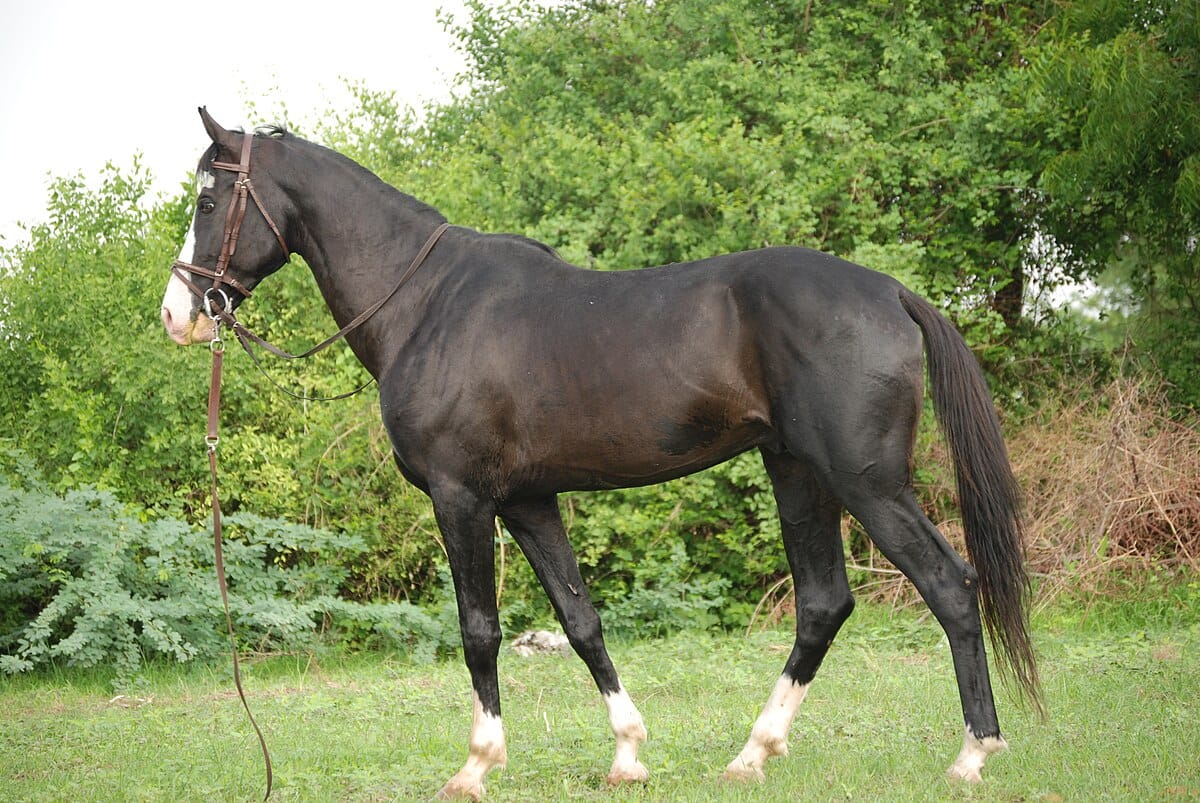
The Marwari Horse originates from India’s Marwar region and has some semi-feral populations in rural and desert areas. Known for their inward-turning ears and elegant build, adults weigh 400–500 kg and stand 14–15 hands high. Their coats include bay, gray, black, and chestnut, often with striking markings.
Marwari Horses live in small herds with a dominant stallion, mares, and foals. Social dynamics involve grooming, play, and defensive behaviors to protect the herd. Their diet includes native grasses, shrubs, and desert-adapted plants, allowing them to survive arid environments with minimal water.
Conservation programs focus on maintaining genetic purity, monitoring feral populations, and preserving their cultural and ecological significance. These horses are resilient, intelligent, and able to thrive in extreme heat and arid landscapes.
Marwari Horses demonstrate how feral equines can survive challenging climates while maintaining social cohesion and ecological balance.
24. Penelek Pony
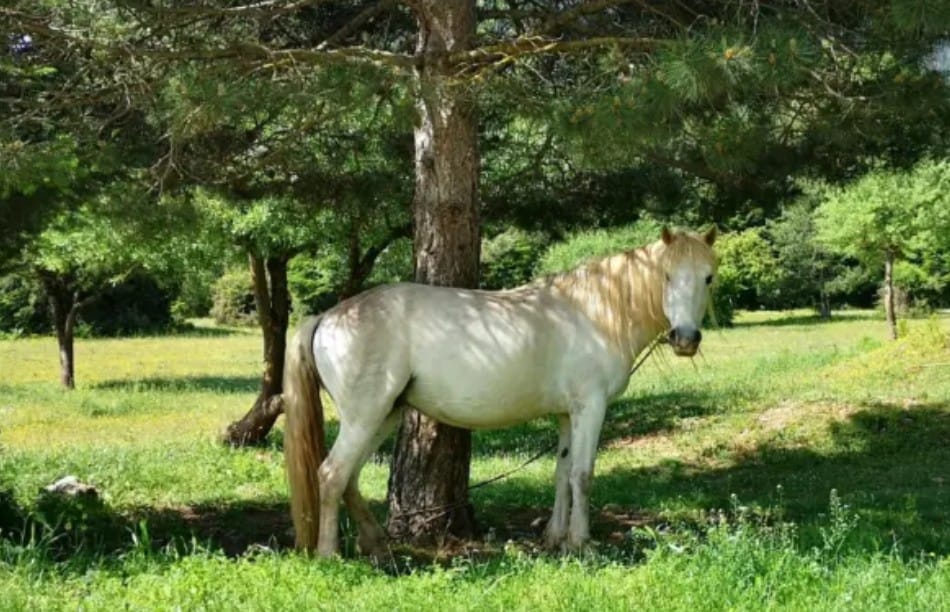
The Penelek Pony is a semi-wild pony found in Eastern Europe, particularly in Romania and neighboring countries. Adults weigh 300–350 kg and stand 12–13 hands high, with stocky builds, dense manes, and variable coat colors including bay, chestnut, and gray. They are hardy and well-adapted to forests, hills, and open meadows.
Penelek Ponies live in small herds led by stallions, with mares and foals forming tight social bonds. They forage on grasses, herbs, and shrubs and are skilled at navigating rugged terrain. Social interactions include grooming, play, and hierarchical behaviors, ensuring herd stability.
Conservation programs and protected areas help maintain feral populations and prevent genetic dilution. These ponies are vital for ecosystem maintenance, grazing management, and cultural heritage.
Penelek Ponies highlight the adaptability of semi-feral horses to European landscapes, emphasizing the importance of natural grazing and herd dynamics for survival.
25. Feral Arabian Horse
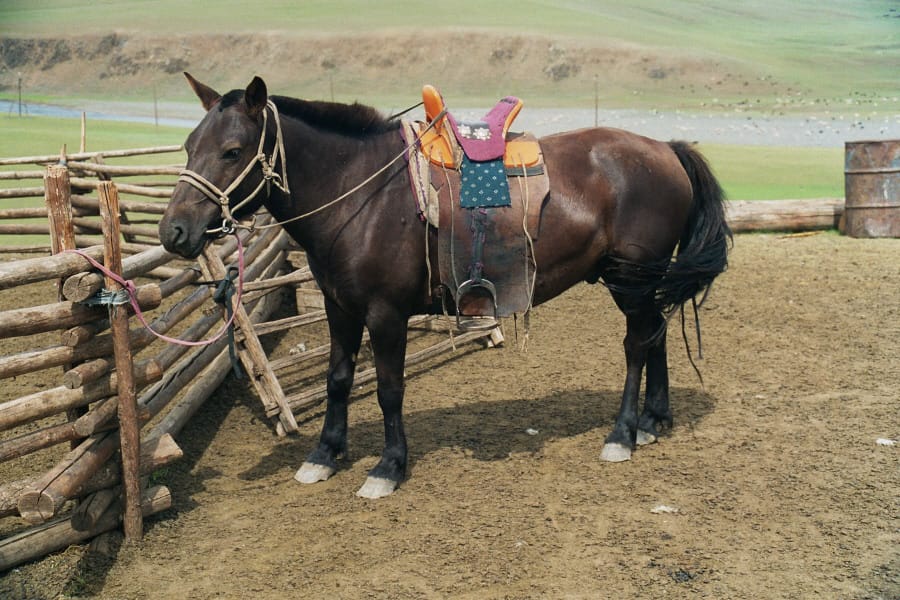
Feral Arabian Horses inhabit desert regions in the Middle East, often descended from escaped or released domesticated stock. Adults weigh 350–450 kg and stand 14–15 hands high, with refined heads, arched necks, and graceful builds. Common coat colors include bay, gray, and chestnut, often with distinctive white markings.
Arabian Horses live in bands led by stallions, with complex social interactions among mares and foals. They are highly agile, able to traverse desert dunes and rocky terrain efficiently. Their diet consists primarily of grasses, desert shrubs, and sparse vegetation, supplemented by water sources when available.
Feral populations face challenges from habitat scarcity, extreme heat, and competition with livestock. Conservation efforts aim to protect desert habitats, monitor population health, and ensure the survival of feral herds while maintaining genetic diversity.
Feral Arabian Horses exemplify adaptation to arid environments, strong herd structures, and the enduring legacy of one of the world’s most iconic horse breeds.
26. Camargue Horse
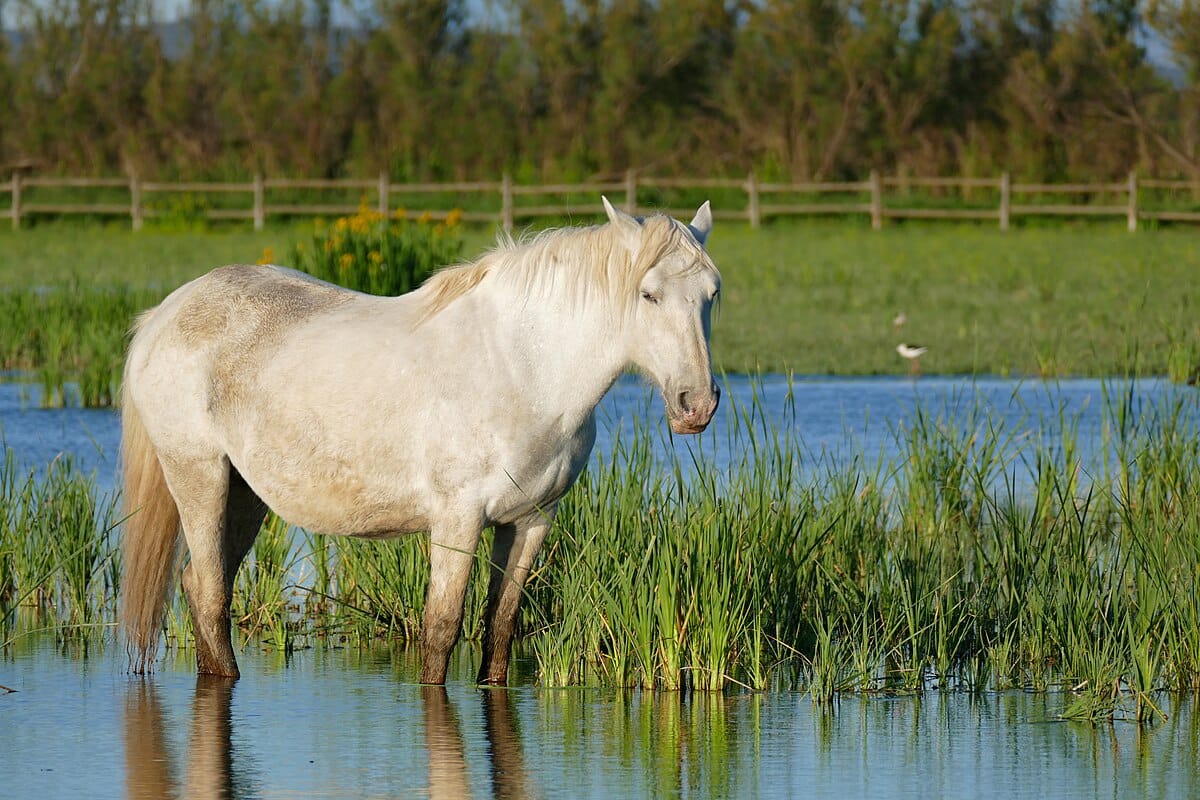
The Camargue Horse is a semi-feral breed native to the Camargue region in southern France, inhabiting marshlands, salt flats, and wetlands. Adults weigh 350–400 kg and stand 13–14 hands high. They are famous for their white or gray coats, although foals are born dark and gradually lighten with age. Their sturdy builds, strong legs, and thick manes make them exceptionally suited to wet, marshy environments.
Camargue Horses live in herds led by dominant stallions, with mares and foals forming cohesive social groups. Social interactions include grooming, playful chasing, and defensive posturing. Their diet consists primarily of marsh grasses, reeds, and aquatic vegetation, and they are known for their ability to traverse flooded areas with ease.
Conservation programs in the Camargue maintain natural grazing patterns while allowing the horses to remain largely free-roaming. These semi-feral populations are also culturally significant, historically used by local cowboys (gardians) for herding cattle in wetlands.
Camargue Horses demonstrate resilience, adaptability to wetlands, and the ecological and cultural importance of semi-feral horse populations.
27. New Zealand Kaimanawa Pony
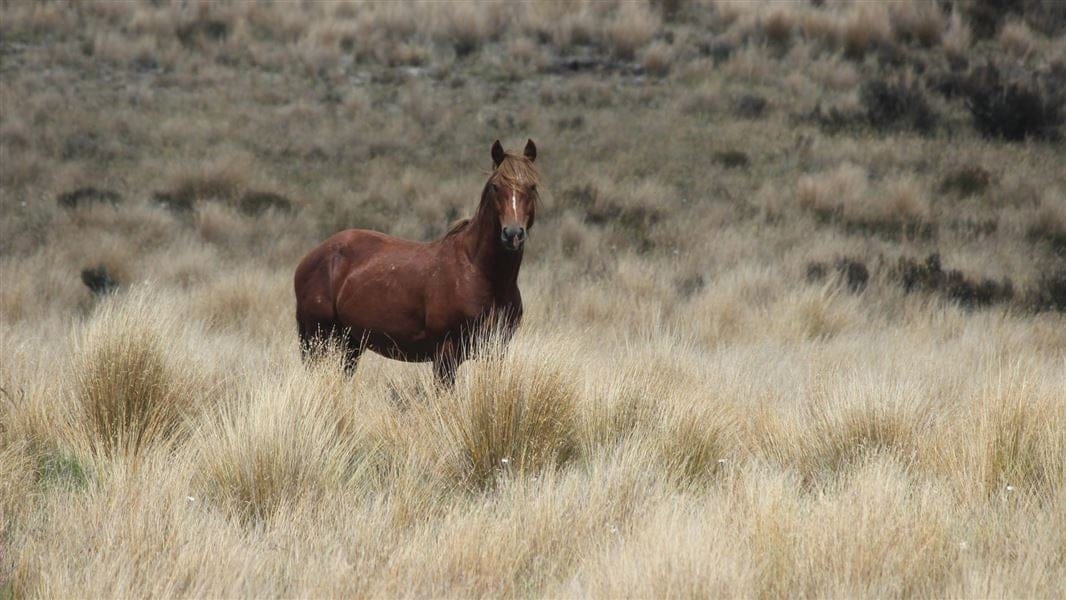
Distinct from other Kaimanawa horses, some populations inhabit more remote, mountainous areas of New Zealand, maintaining semi-feral characteristics. Adults weigh 350–450 kg and stand 13–14 hands high, with muscular builds, dense manes, and varied coat colors such as bay, chestnut, and dun.
These ponies live in bands led by dominant stallions, with social cohesion maintained through grooming, play, and hierarchical behaviors. Their diet includes native grasses, herbs, and shrubs, and they are capable of surviving long periods with limited water and forage.
Population management ensures sustainable herd sizes and prevents ecological damage while preserving natural behaviors. The New Zealand Kaimanawa Pony showcases adaptability, survival skills, and complex social structures in isolated habitats.
This population emphasizes the importance of balancing conservation, ecological management, and natural wild horse behaviors in rugged landscapes.
28. Gobi Horse (Feral Populations)
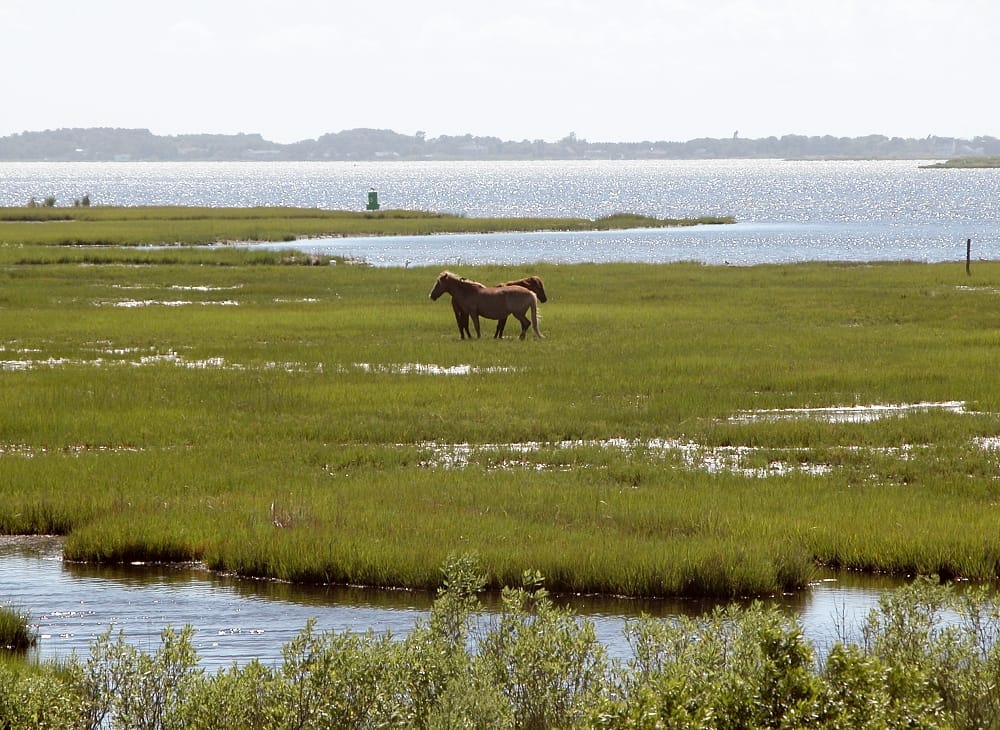
The Gobi Horse is a feral population native to the Gobi Desert in Mongolia, adapted to extreme arid conditions and temperature fluctuations. Adults weigh 350–450 kg and stand 13–14 hands high, with short, hardy coats that vary from bay and gray to dun and chestnut. Their strong legs and compact bodies allow them to travel long distances across sand dunes and rocky terrain.
Gobi Horses live in small bands led by stallions, maintaining social hierarchies through grooming, play, and protective behaviors. They forage for sparse desert vegetation, including hardy grasses and shrubs, often digging through sand or snow to reach forage.
Predation is minimal, but environmental extremes and human encroachment pose challenges. Conservation programs aim to preserve these feral populations and study their adaptations to desert survival.
Gobi Horses exemplify desert adaptation, herd cohesion, and resilience, offering insights into how wild horses survive in some of the harshest environments on Earth.
29. Namib Desert Pony
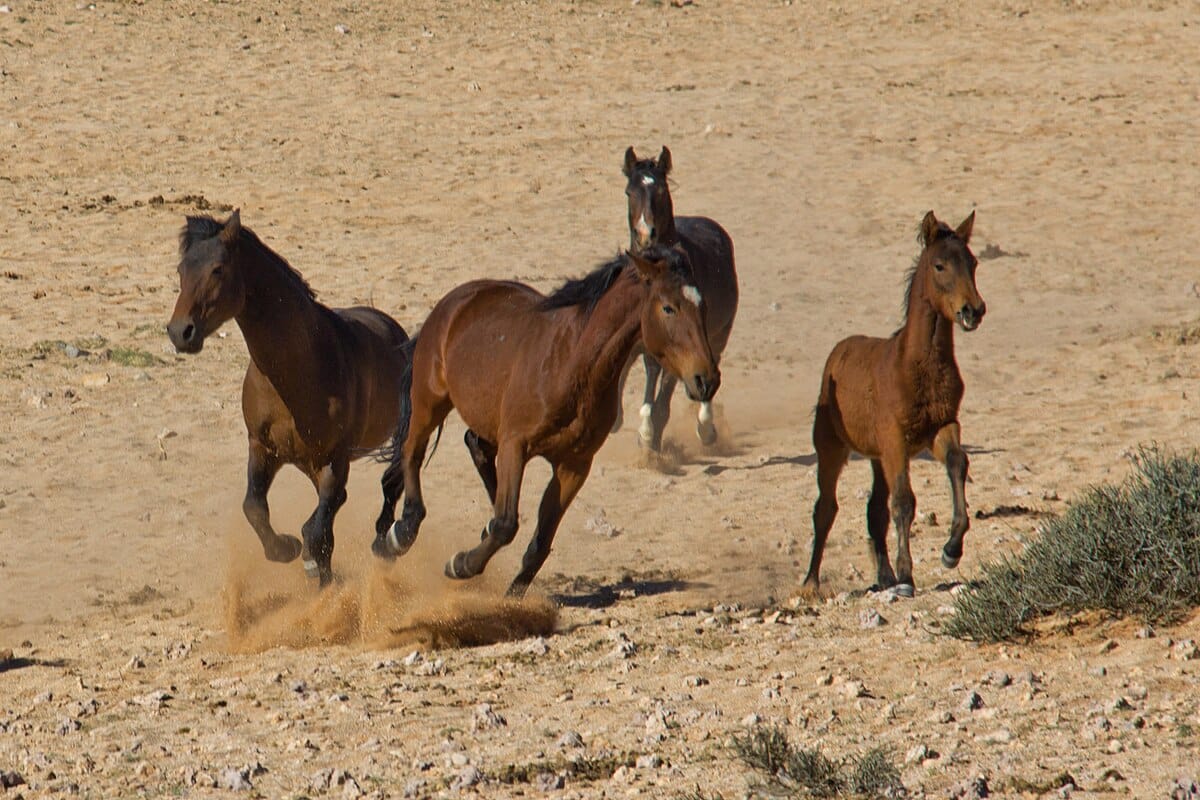
The Namib Desert Pony is a feral horse population residing in Namibia’s coastal desert regions, distinct from previously mentioned Namib Desert Horses. Adults weigh 400–500 kg and stand 14–15 hands high, with sandy or dun coats blending with desert terrain. They have long legs and muscular bodies that allow them to traverse arid landscapes and endure extreme heat.
These ponies live in small herds led by dominant stallions. Social interactions include grooming, play, and defensive behaviors. Their diet consists of sparse desert grasses, succulents, and shrubs, and water scarcity forces them to travel long distances for hydration.
Conservation efforts monitor herd size, habitat conditions, and population health. These ponies highlight the extraordinary adaptations and resilience of wild equines in one of the most inhospitable habitats on the planet.
Namib Desert Ponies demonstrate social cohesion, endurance, and remarkable desert survival strategies, making them an iconic example of feral horse resilience.
Frequently Asked Questions About Wild Horses
1. How many species of wild horses are there?
There are about six recognized species and subspecies of wild horses, including the Przewalski’s horse, the Tarpan (extinct), and several feral populations like Mustangs and Brumbies.
2. What type of horse lives in the wild?
Horses that live in the wild are typically feral horses, like Mustangs in North America, Brumbies in Australia, or the Przewalski’s horse in Mongolia. They survive without human care.
3. What is the most common wild horse?
Mustangs are the most common wild horses in the world today, especially in the western United States.
4. What are the wild horses called?
Wild horses are called by various names depending on the region: Mustangs in the U.S., Brumbies in Australia, and Przewalski’s horses in Mongolia.
5. Are mustangs just wild horses?
Yes, Mustangs are feral horses descended from domestic horses brought to the Americas by Europeans. They now live freely in the wild.
6. Which country has the most wild horses?
The United States has the largest population of wild horses, primarily Mustangs. Australia also has large populations of Brumbies.
7. Is Mule a hybrid?
Yes, a mule is a hybrid between a male donkey (jack) and a female horse (mare). Mules are usually sterile.
8. What horses did the Mongols use?
The Mongols primarily used the Mongolian horse, a small, sturdy breed well-adapted to harsh climates and long-distance travel.
9. What types of horses are there?
Horses can be divided into domestic breeds, feral populations, and true wild species like the Przewalski’s horse. Domestic breeds include draft, riding, and pony types.
10. What is the nicest type of horse?
“Nicest” is subjective, but breeds known for gentle temperament include the American Quarter Horse, Arabian, and Haflinger.
11. Can wild horses be tamed?
Yes, wild horses can be tamed through consistent training and care, though it requires patience and experience.
12. What is the only true wild horse left on earth?
The Przewalski’s horse, native to Mongolia, is the only remaining true wild horse species that has never been domesticated.
13. What is a wild, untamed horse called?
Wild, untamed horses are often called feral horses, Mustangs, Brumbies, or Przewalski’s horses depending on the region.
14. What is the fastest horse breed?
The Thoroughbred is the fastest horse breed, capable of reaching speeds up to 40–45 mph in short distances.
15. What is the true wild horse breed?
The Przewalski’s horse is considered the only true wild horse species that has never been domesticated.
16. Are mustangs wild horses?
Yes, Mustangs are wild horses descended from domesticated horses, now living freely in North America.
17. Can you ride a Mongolian horse?
Yes, Mongolian horses are traditionally ridden by locals, though they are smaller and hardy rather than fast or smooth for long rides.
18. What is the name of the Mongolian wild horse?
The Przewalski’s horse, or Takhi, is the Mongolian wild horse species.
19. What horses are truly wild?
Przewalski’s horses are truly wild. Feral horses like Mustangs and Brumbies descended from domestic horses but live independently in the wild.
20. Is a Bronco a breed of horse?
No, a Bronco refers to an untrained, often wild or semi-wild horse that bucks. It is not a recognized breed.
21. What is the opposite of wild horse?
The opposite would be a domesticated horse, trained and cared for by humans.
22. Can you pet wild horses?
It is generally not recommended. Wild horses are cautious of humans and may bite or kick if approached too closely.
23. Is “untamed” the same as “wild”?
Not exactly. “Wild” refers to species that have never been domesticated, while “untamed” can refer to domesticated horses that are not yet trained.
24. What are wild horses called today?
They are called Mustangs in North America, Brumbies in Australia, and Przewalski’s horses in Mongolia.
25. What’s the difference between a brumby and a mustang?
Brumbies are feral horses in Australia, Mustangs are feral horses in North America. Both are descended from domesticated horses but adapted to local wild environments.
26. What is a colt horse?
A colt is a young male horse under four years old that has not yet been gelded.
27. What is a group of wild horses called?
A group of wild horses is called a herd, typically led by a dominant stallion and a lead mare.
28. What are the two types of horses?
Horses can be divided into wild (Przewalski’s horses and feral populations) and domesticated horses (various breeds used by humans).
29. What is the difference between a Mustang and a Bronco horse?
Mustangs are a specific feral population of horses in North America. A Bronco refers to any untrained horse that bucks and is not a distinct breed.
30. Is eohippus a horse?
Yes, Eohippus is an ancient, extinct ancestor of modern horses, also called the “dawn horse,” which lived around 50 million years ago.
31. What countries still have wild horses?
Wild and feral horses are found in the United States (Mustangs), Australia (Brumbies), Mongolia (Przewalski’s horses), and parts of Europe and Asia.
32. Are golden horses real?
Yes, “golden” or palomino horses have a golden coat with a white mane and tail, but they are domesticated, not wild.
33. Are there real pink horses?
No, pink horses do not exist in reality. Pink horses are fictional or digitally created for media and art.
Conclusion
Wild horses are extraordinary examples of resilience, adaptability, and social intelligence in the animal kingdom. From the icy plains of Siberia with the Yakutian Horse to the deserts of Namibia with the Namib Desert Pony, each species and feral population has evolved unique traits to survive in diverse and often extreme environments. Their complex herd structures, hierarchical dynamics, and foraging strategies showcase remarkable behavioral adaptations that ensure survival across generations.
Conservation efforts worldwide play a crucial role in preserving these semi-feral and wild populations, maintaining genetic diversity, and protecting natural habitats. Understanding and appreciating wild horses not only provides insights into their ecological importance but also connects us to the history of domestication and human interaction with these iconic animals. Whether roaming remote islands, rugged mountains, or open grasslands, wild horses remain symbols of freedom, endurance, and the delicate balance of nature.
Read more: 45 Types of Wild Cats (Pictures & Identification)