
New York is home to a diverse array of squirrels, each with its own personality, habits, and fascinating adaptations. From the acrobatic Eastern Gray Squirrel leaping between trees to the nimble American Red Squirrel darting along forest floors, the state offers a vibrant squirrel ecosystem. If you’ve ever paused in a park or woodland and wondered about the little furballs scurrying overhead or burying nuts in the ground, this guide is your gateway to understanding them. This article explores 10 types of squirrels in New York, providing in-depth insights into their physical traits, behavior, habitats, diet, life cycles, and interactions with humans. By the end, you’ll feel like a mini wildlife biologist ready to identify squirrels on the go.
1. Eastern Gray Squirrel (Sciurus carolinensis)
Physical Characteristics & Identification Tips
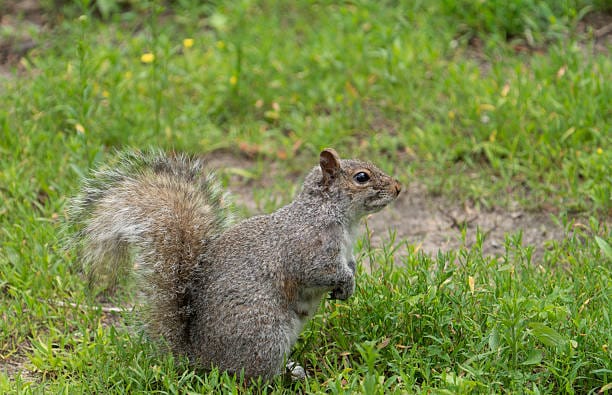
The Eastern Gray Squirrel is probably the most familiar squirrel to New Yorkers, boasting soft gray fur with hints of brown, a bushy tail that acts like a parachute during jumps, and sharp, black eyes that constantly scan for predators. They measure roughly 9 to 12 inches in body length with an equally long tail. One identifying feature is their white underbelly, which contrasts beautifully with the gray dorsal fur. Their nimble paws and sharp claws allow them to cling to tree bark, a signature behavior that makes them stand out.
Behavior
Eastern Gray Squirrels are diurnal and highly energetic, spending much of their day foraging and storing food for winter. They exhibit territorial behavior, using vocalizations like barks and tail flicks to communicate. Observing a gray squirrel chase its companion or leap from branch to branch is a glimpse into their playful yet cautious nature.
Habitat and Range
This species thrives in deciduous and mixed forests but adapts well to suburban neighborhoods and urban parks. In New York, you’ll spot them in Central Park, along wooded trails, and near backyard feeders. They often choose tall trees with cavities or dense foliage for nesting.
Diet
Gray squirrels are primarily herbivorous, feeding on acorns, nuts, seeds, fruits, and occasionally buds or bark. They are famous for caching food, burying it in multiple spots to retrieve during lean winter months.
Reproduction and Life Cycle
Eastern Gray Squirrels breed twice a year, typically in late winter and mid-summer. Litters consist of 2 to 4 young, which remain in the nest for about 10 weeks. Juveniles learn climbing and foraging skills from their mothers before venturing out independently.
Fun Facts / Traits
Did you know gray squirrels can remember hundreds of buried nut locations using spatial memory? Their bushy tails also help regulate temperature and act as a warning signal to other squirrels.
Human Interaction
Gray squirrels are generally friendly but wary of humans. Many urban residents enjoy feeding them, though overfeeding can lead to dependency and aggression. They remain a beloved symbol of New York’s parks and neighborhoods.
2. Eastern Fox Squirrel (Sciurus niger)
Physical Characteristics & Identification Tips
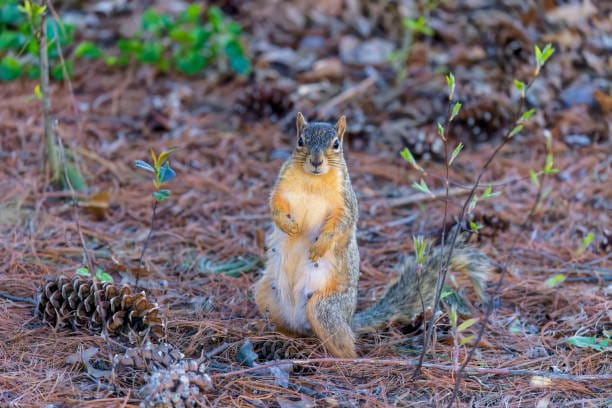
Eastern Fox Squirrels are larger than their gray cousins, with a body length of 10 to 15 inches and a thick, reddish-brown fur coat. Their tail is often rust-colored with black flecks, making them striking in contrast to the forest floor. Identifying a fox squirrel involves noting its reddish dorsal fur, paler underparts, and larger size compared to gray squirrels.
Behavior
These squirrels are more solitary than gray squirrels and can be a bit more cautious. They are excellent climbers but also spend significant time foraging on the ground. Like the gray squirrel, they cache food, but fox squirrels tend to use fewer, larger caches.
Habitat and Range
Fox squirrels favor open woodlands, parklands, and suburban areas. In New York, they are most common in the Hudson Valley and western forests, where oak and hickory trees provide abundant nuts for storage.
Diet
Fox squirrels are opportunistic eaters, consuming acorns, nuts, seeds, fruits, and occasionally insects or bird eggs. They have powerful jaws capable of cracking hard nuts.
Reproduction and Life Cycle
Breeding occurs once or twice a year, with 2 to 5 young per litter. The young are altricial, remaining in the nest until they can climb and forage independently. Mothers are attentive, teaching survival and caching skills.
Fun Facts / Traits
Fox squirrels are known for their bushy tails and loud chattering, which serves as communication. Their size and vibrant coloration often make them a favorite for wildlife photographers.
Human Interaction
Fox squirrels generally avoid heavy human interaction but will forage near residential areas. Gardeners may consider them nuisances when they raid bird feeders, yet they remain an important part of the ecosystem.
3. American Red Squirrel (Tamiasciurus hudsonicus)
Physical Characteristics & Identification Tips
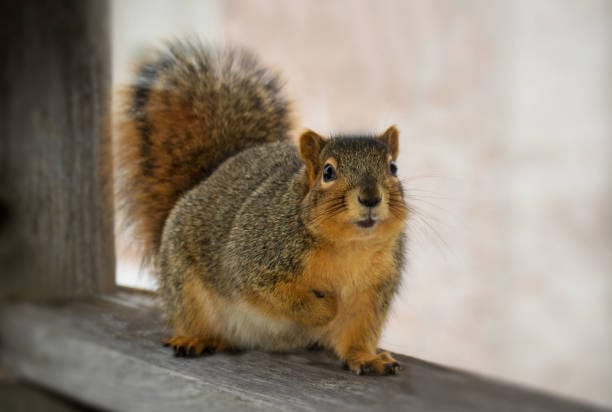
The American Red Squirrel is smaller, measuring 7 to 9 inches with a bright reddish coat, white underparts, and a noticeably smaller, bushy tail. Its small size and distinctive reddish coloring make it easy to identify against New York’s green forests.
Behavior
Red squirrels are feisty and highly territorial. They defend middens (central food storage areas) aggressively against intruders. These squirrels are vocal, using trills and chatters to communicate boundaries.
Habitat and Range
They prefer coniferous and mixed forests, often near spruce and pine trees where they build dens and store cones. In New York, they are common in Adirondacks and Catskills.
Diet
Primarily eating conifer seeds, red squirrels also enjoy nuts, fruits, fungi, and occasionally bird eggs. They maintain central middens filled with cached seeds to last through winter.
Reproduction and Life Cycle
Red squirrels breed twice a year. Litters usually have 2 to 5 young, which remain in dens for several weeks. Juveniles quickly learn foraging and territorial behaviors from their mothers.
Fun Facts / Traits
Despite their small size, red squirrels are fiercely territorial. They can outcompete larger squirrels in defending resources and are known for their rapid, acrobatic movements.
Human Interaction
Humans rarely disturb red squirrels, though they may be spotted raiding feeders. Their energetic antics and vibrant coloring make them a favorite among hikers and photographers.
4. Northern Flying Squirrel (Glaucomys sabrinus)
Physical Characteristics & Identification Tips
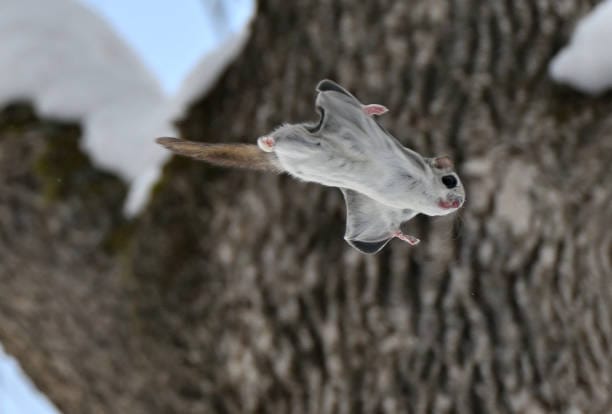
The Northern Flying Squirrel is a nocturnal marvel, measuring around 9 to 10 inches in body length with a tail nearly as long. Its soft, grayish-brown fur, large dark eyes, and patagium (the skin flap stretching from wrist to ankle) allow it to glide gracefully between trees. Spotting one can be tricky because of its nocturnal habits, but keen observers may notice it gliding silently across forest canopies at dusk.
Behavior
This species is primarily nocturnal, foraging at night while using gliding to move efficiently between trees. They are social animals, often nesting in groups in tree cavities or abandoned woodpecker holes. Communication involves high-pitched squeaks and scent marking.
Habitat and Range
Northern Flying Squirrels prefer coniferous and mixed forests, particularly in the Adirondacks and higher-elevation forests of New York. They require mature trees for nesting and foraging, often sticking close to moss-covered trunks and dense canopy areas.
Diet
These squirrels feed on a variety of foods including nuts, seeds, fungi, lichens, and occasionally insects. Their ability to cache food and digest fungi provides a crucial winter survival strategy.
Reproduction and Life Cycle
Breeding typically occurs once a year, in late winter to early spring. Litters range from 2 to 4 pups, which remain in the nest for several weeks. Both parents may contribute to the care of young in some populations, although females primarily handle nurturing duties.
Fun Facts / Traits
Northern Flying Squirrels don’t truly “fly”—they glide up to 150 feet between trees! Their large eyes are perfectly adapted for night vision, and their soft fur allows silent movement, helping them avoid nocturnal predators.
Human Interaction
These squirrels are rarely seen by casual hikers, but wildlife enthusiasts may spot them with night vision equipment. They are harmless to humans and play a crucial role in forest ecosystems by dispersing fungal spores and seeds.
5. Southern Flying Squirrel (Glaucomys volans)
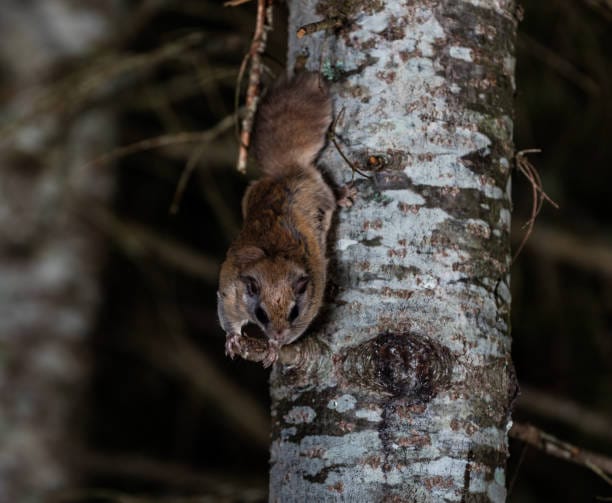
Physical Characteristics & Identification Tips
The Southern Flying Squirrel is slightly smaller than its northern cousin, with a body length of 8 to 10 inches. Its soft, brownish-gray fur, white belly, and gliding membrane (patagium) are key identifying features. Large, dark eyes help it navigate the nighttime world with impressive precision.
Behavior
Like the Northern species, Southern Flying Squirrels are nocturnal gliders. They often share communal nests during cold months and exhibit social interactions uncommon among many squirrels. Squeaks, chirps, and tail movements serve as their main communication methods.
Habitat and Range
They inhabit deciduous and mixed forests throughout much of New York, especially near oak and hickory trees. Tree cavities, nest boxes, and abandoned bird nests are commonly used for shelter.
Diet
Their diet is diverse, including nuts, seeds, fruits, fungi, and occasionally bird eggs or insects. Food caching is essential for survival in the winter, and Southern Flying Squirrels are expert hoarders.
Reproduction and Life Cycle
Southern Flying Squirrels breed twice a year, producing litters of 2 to 6 pups. Young are dependent on their mother for several weeks before venturing out to glide and forage independently. Nest sharing helps conserve heat and enhances survival.
Fun Facts / Traits
Southern Flying Squirrels can glide up to 90 feet and maneuver midair with remarkable agility. Their social behavior and communal nesting are fascinating contrasts to the typically solitary habits of tree squirrels.
Human Interaction
They are rarely encountered by humans due to nocturnal habits. However, they may occasionally visit feeders or nest boxes, providing delight for backyard wildlife observers and photographers alike.
6. Eastern Chipmunk (Tamias striatus)
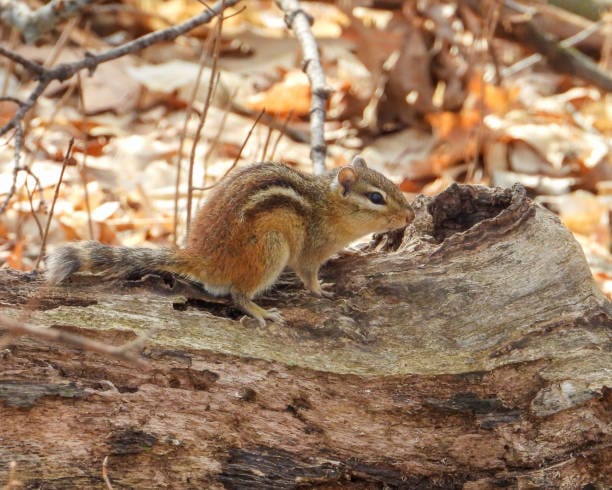
Physical Characteristics & Identification Tips
Eastern Chipmunks are small, terrestrial squirrels, measuring 5 to 6 inches in body length with a short tail. They are distinguished by five dark stripes running down their backs with lighter stripes in between. Their compact size, chubby cheeks, and quick movements make them a favorite for many nature watchers.
Behavior
Chipmunks are diurnal and extremely active, often seen scurrying along forest floors and darting into burrows. They are excellent diggers, constructing intricate tunnel systems with separate chambers for food storage, nesting, and waste.
Habitat and Range
Eastern Chipmunks thrive in deciduous forests, shrublands, and suburban gardens across New York. Their burrows are typically located under rocks, logs, or dense vegetation for protection against predators.
Diet
Their omnivorous diet includes nuts, seeds, fruits, fungi, insects, and small bird eggs. They are particularly famous for stuffing their cheek pouches with food to transport it to their burrows for storage.
Reproduction and Life Cycle
Chipmunks breed twice annually, in spring and summer. Litters usually consist of 2 to 5 pups. Young learn to forage and burrow under maternal supervision and disperse when mature.
Fun Facts / Traits
Chipmunks’ cheek pouches can expand dramatically, allowing them to carry several nuts at once. Their vocalizations include chirps, trills, and squeaks that signal alarm or establish territory.
Human Interaction
Chipmunks are commonly seen in backyards and parks. While they can raid bird feeders or gardens, most encounters are harmless, and their playful antics are enjoyed by wildlife enthusiasts.
7. Groundhog / Woodchuck (Marmota monax)
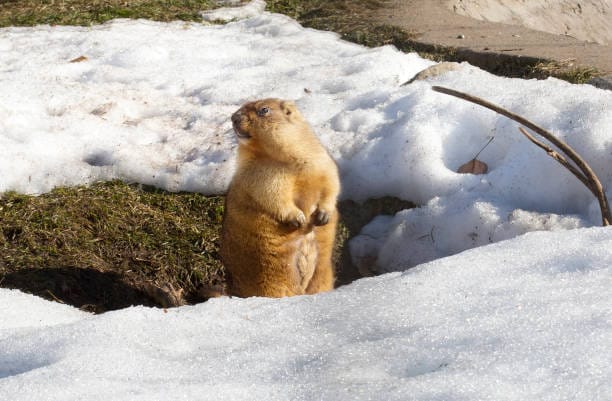
Physical Characteristics & Identification Tips
The Groundhog, also known as a Woodchuck, is a chunky, medium-sized rodent measuring 16–26 inches long including its bushy tail. Its fur is typically brownish-gray, with a lighter underside. Strong, curved claws are perfect for digging, and their stocky body gives them a waddling gait that’s hard to miss in open fields.
Behavior
Groundhogs are primarily diurnal and famous for their burrowing abilities. They dig elaborate underground dens with multiple chambers used for nesting, food storage, and hibernation. While usually solitary, they are vigilant and may emit high-pitched whistles as alarm calls.
Habitat and Range
Found throughout New York, Groundhogs favor open fields, meadows, and forest edges. They often create burrows near human habitation such as gardens, parks, and farmland, taking advantage of food sources and soft soil.
Diet
Groundhogs are herbivores, feeding on grasses, clovers, dandelions, garden vegetables, and sometimes tree bark. They have a remarkable ability to consume large quantities of vegetation before hibernating in the fall.
Reproduction and Life Cycle
Groundhogs mate in early spring after emerging from hibernation. Females give birth to 2–6 pups per litter, usually once a year. Young remain in the burrow for several weeks until they are strong enough to forage above ground independently.
Fun Facts / Traits
Groundhogs can hibernate for up to six months, slowing their metabolism dramatically. They are excellent swimmers and climbers, though burrowing is their specialty. Their presence can indicate healthy soil and abundant vegetation.
Human Interaction
Groundhogs are often considered garden pests due to their voracious appetite for vegetables. However, they play a vital role in soil aeration and are an important prey species for predators like foxes and hawks.
8. Black Squirrel (Color Variant of Eastern Gray Squirrel)
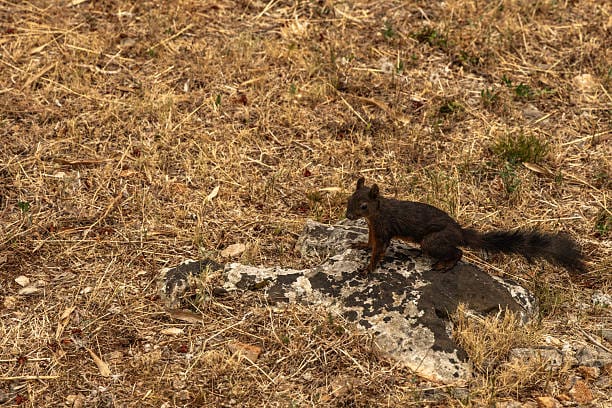
Physical Characteristics & Identification Tips
Black Squirrels are a melanistic variant of the Eastern Gray Squirrel. Their fur ranges from deep black to dark brown, with the same bushy tail and size (16–20 inches including tail) as gray squirrels. Large eyes, sharp claws, and agile movements make them adept at climbing and foraging.
Behavior
Black Squirrels exhibit similar behaviors to gray squirrels, including caching food, vocal communication, and territoriality. Their dark fur may provide slight camouflage in dense forests and snowy winters, aiding survival.
Habitat and Range
They inhabit deciduous forests, urban parks, and suburban neighborhoods across New York, often overlapping with standard gray squirrels. Trees for nesting and open areas for foraging are preferred.
Diet
Omnivorous, they feed primarily on nuts, seeds, fruits, and occasionally bird eggs. Like their gray cousins, they are expert hoarders, burying food to retrieve later, especially in winter months.
Reproduction and Life Cycle
Breeding occurs twice a year, with litters of 2–4 young. Juveniles learn foraging and climbing skills from their mothers before dispersing to establish their own territories.
Fun Facts / Traits
Black Squirrels are often mistaken for a separate species, but they are genetically identical to Eastern Gray Squirrels. Their striking color and adaptability make them popular among wildlife photographers.
Human Interaction
Black Squirrels are largely harmless, frequenting urban parks and residential areas. They may take birdseed or nuts but are generally a delight for backyard wildlife watchers.
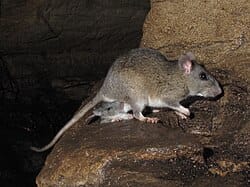
9. Allegheny Woodrat (Neotoma magister)
Physical Characteristics & Identification Tips
Allegheny Woodrats are medium-sized rodents, approximately 10–14 inches long including the tail. They have coarse brownish-gray fur with a lighter underside and large, sensitive whiskers. Their tails are long and slightly bushy, assisting with balance when climbing rocky areas.
Behavior
These nocturnal rodents are agile climbers and excellent builders. They construct “middens”—piles of twigs, leaves, and human-made objects—for nesting and food storage. Allegheny Woodrats are generally solitary but may share middens occasionally.
Habitat and Range
They are primarily found in rocky outcrops, cliffs, and forested hills of New York. These locations offer protection from predators and stable microclimates for nesting and storing food.
Diet
Their diet is herbivorous and varied, including seeds, fruits, leaves, and nuts. They are particularly fond of acorns and may supplement their diet with bark or fungi. Food storage in middens is critical for surviving winter.
Reproduction and Life Cycle
Allegheny Woodrats breed once or twice per year. Litters usually consist of 2–4 pups. The young stay in the nest for several weeks and learn essential survival skills from the mother.
Fun Facts / Traits
Woodrats are nicknamed “packrats” because of their habit of collecting shiny or unusual objects to add to their middens. They are important for seed dispersal and forest ecosystem health.
Human Interaction
While rare in urban settings, Allegheny Woodrats may occasionally be found near cabins or trails. They are harmless but are indicators of healthy, undisturbed forest habitats.
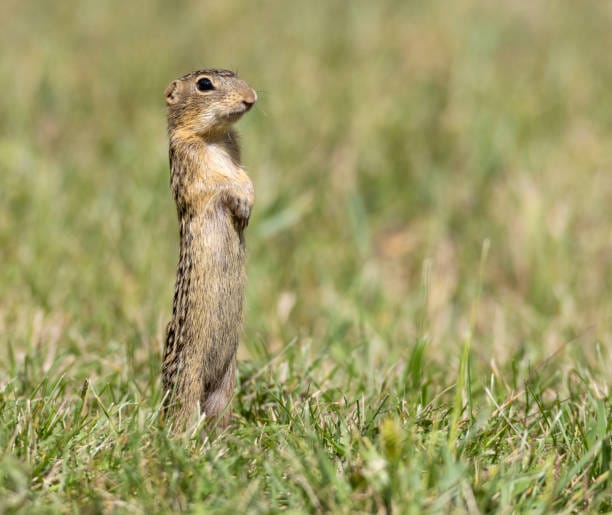
10. Thirteen‑lined Ground Squirrel (Ictidomys tridecemlineatus)
Physical Characteristics & Identification Tips
The Thirteen‑lined Ground Squirrel is a small, slender rodent, about 7–10 inches long, with a short tail. Its fur is tan to grayish-brown, adorned with 13 alternating light and dark stripes running from head to tail. Large eyes and small ears make it highly alert to predators, and its sharp claws aid in digging and climbing low vegetation.
Behavior
These squirrels are diurnal and highly social, often seen sunbathing or foraging in groups. They dig extensive burrow systems with multiple entrances, which provide shelter, storage, and protection from predators. They are quick and agile, often standing on hind legs to survey their surroundings.
Habitat and Range
Thirteen‑lined Ground Squirrels inhabit open grassy areas, prairies, and fields throughout New York. They prefer areas with sparse tree cover to maintain visibility of predators while foraging. Burrow entrances are often marked with small mounds of soil.
Diet
Omnivorous but leaning heavily on plant material, their diet includes seeds, grasses, grains, fruits, and occasionally insects. They store food in burrows to tide over during colder months and periods of scarcity.
Reproduction and Life Cycle
Breeding occurs in early spring after hibernation. Females produce one or two litters per year, each with 4–8 pups. Juveniles stay in the burrow for a few weeks before venturing out to learn foraging skills from adults.
Fun Facts / Traits
Thirteen‑lined Ground Squirrels hibernate during winter, often for five to six months, significantly slowing their metabolism. They communicate through chirps and tail flicks, providing social cohesion and alerting others of danger.
Human Interaction
These squirrels are generally harmless but may be considered minor pests in agricultural fields. They contribute to soil aeration through burrowing and serve as prey for hawks, foxes, and snakes, playing a key role in local ecosystems.
FAQ’s
1. What type of squirrels live in New York?
New York is home to several types of squirrels, including the Eastern Gray Squirrel, Eastern Fox Squirrel, Red Squirrel, and a few populations of Black Squirrels, which are a melanistic variant of the gray squirrel.
2. Does New York City have squirrels?
Yes, New York City is full of Eastern Gray Squirrels. They thrive in parks, streets, and green spaces, and are one of the most visible urban wildlife species in the city.
3. What is the name of the squirrel in New York?
There isn’t a single “official” squirrel, but the most common species is the Eastern Gray Squirrel. Sometimes locals notice or nickname certain squirrels, like the famous Peanut the Squirrel incident in NYC.
4. Are black squirrels only in New York?
No, black squirrels are found in several states in the northeastern U.S., including New York, Pennsylvania, and Ohio. They are simply a color variant of the Eastern Gray Squirrel.
5. Why are there so many squirrels in NYC?
New York City offers plenty of food sources, like nuts, seeds, and human leftovers, as well as parks and trees for shelter. Fewer predators and mild winters in urban areas help their populations thrive.
6. Can a squirrel be a pet in New York?
Generally, it is illegal to keep wild squirrels as pets in New York without a special permit. Only licensed wildlife rehabilitators or certain facilities can legally keep them.
7. Are there red squirrels in NY?
Yes, Eastern Red Squirrels are present, especially in northern and forested regions of New York State. They are smaller than gray squirrels and have reddish fur and a white belly.
8. Is it illegal to feed squirrels in NYC?
Yes, feeding squirrels in New York City parks is illegal. The city wants to reduce dependence on humans and prevent overpopulation and trash issues.
9. Can you rescue a squirrel in New York?
Yes, but only if you are a licensed wildlife rehabilitator. Rescuing squirrels without a permit is illegal. Injured squirrels should be taken to licensed wildlife rehab centers.
10. How rare are black squirrels in NYC?
Black squirrels are relatively uncommon in NYC. While gray squirrels dominate, certain areas, particularly parks and older neighborhoods, may have small populations of black squirrels.
11. Is it illegal to shoot squirrels in NY?
Yes, hunting or shooting squirrels is illegal within city limits. In rural areas, hunting may be allowed under state regulations and seasons.
12. How to legally own a squirrel in New York?
To legally own a squirrel, you need a permit from the New York State Department of Environmental Conservation (DEC) for wildlife possession, or you must be a licensed rehabilitator. Pet squirrels without a permit are illegal.
13. Are squirrels a protected species in New York state?
Yes, all wild squirrels are protected under state wildlife laws. It is illegal to capture, harm, or sell them without proper permits.
14. What type of squirrels are in NYC?
The most common squirrels in New York City are Eastern Gray Squirrels. Black squirrels, a color variant, are also present in small numbers.
15. Is it legal to feed squirrels in NYC?
No, feeding squirrels in city parks is prohibited by law to prevent overpopulation, disease, and dependency on humans.
16. What happened with the pet squirrel in New York?
“Peanut the Squirrel” was a gray squirrel kept illegally as a pet in NYC. Authorities removed the animal because private ownership of wild squirrels without a permit is illegal.
17. How rare are black squirrels in NY?
Black squirrels are uncommon but not unheard of. They appear mostly in certain suburban or forested areas, while gray squirrels remain the majority.
18. Can you own a squirrel as a pet in NY?
Not without a DEC permit. Owning wild squirrels as pets is illegal, and only licensed rehabilitators or certain wildlife facilities can keep them legally.
19. Why did NY take Peanut the Squirrel?
NY authorities took Peanut the Squirrel because keeping a wild squirrel as a pet without a permit violates state wildlife laws and can be unsafe for both the animal and people.
20. Is it illegal to relocate squirrels in NY?
Yes, relocating squirrels without a permit is illegal. Moving wildlife can spread disease, disrupt local populations, and is regulated under state law.
Conclusion
New York is home to a fascinating variety of squirrels, each with its own behaviors, adaptations, and charm. From the agile Northern and Southern Flying Squirrels gliding silently through the night to the industrious Thirteen‑lined Ground Squirrel burrowing through open fields, these creatures enrich both urban and rural landscapes. Black Squirrels and Eastern Chipmunks showcase the diversity of coloration and social habits, while species like the Groundhog and Allegheny Woodrat highlight the importance of burrows and middens in their survival. Observing squirrels in their natural habitats provides insight into ecological balance, foraging strategies, and the subtle ways wildlife adapts to human presence. Whether you are a wildlife enthusiast, a backyard observer, or simply curious about local fauna, understanding these squirrels deepens appreciation for New York’s dynamic ecosystems.
Read more: 18 Types of Squirrels in Idaho (Pictures And Identification)