
Birds are everywhere — in our backyards, along coastlines, high above mountains, and deep inside forests. With over 10,000 known species worldwide, birds come in more shapes, colors, and behaviors than almost any other animal group. When people search for types of birds, they are often looking for simple, clear explanations that help them recognize what they see and understand how birds live.
This guide to 200 types of birds is written for beginners, students, and curious readers who want friendly, easy-to-follow information without scientific overload. Each bird review explains identification features, habitat, behavior, diet, and interesting facts using everyday language. Think of it as a knowledgeable friend walking beside you on a nature trail, pointing up and saying, “See that one? Let me tell you a story.” In this first section, we explore the first 10 birds from our full list, starting with ocean wanderers and ending with familiar garden visitors.
Types of Birds: Detailed Reviews of the First 10 Species
1. Albatross

The albatross is famous for its enormous wingspan, which can stretch wider than a small car. These seabirds spend most of their lives gliding over open oceans, barely flapping their wings. If birds were marathon runners, the albatross would take gold. Some individuals can fly thousands of miles without landing, using wind currents like invisible highways.
Albatrosses are mostly found in the Southern Ocean and the North Pacific. They prefer cold, windy waters where food is easier to spot. Squid, fish, and crustaceans make up most of their meals. When feeding, they skim the ocean surface, grabbing prey with their hooked beaks.
One of the most touching facts about albatrosses is their loyalty. Many species mate for life. Their courtship dances involve head bobbing, bill clacking, and synchronized movements that look like a rehearsed routine. Watching two albatrosses reunite after months apart is like seeing an old couple meet again at a train station.
Despite their strength in flight, albatrosses face serious threats. Plastic pollution and fishing lines cause many deaths each year. Conservation efforts focus on safer fishing methods and protecting breeding islands. Seeing an albatross soar effortlessly reminds us how connected oceans, wildlife, and humans truly are.
2. Avocet

Avocets are elegant wading birds best known for their long, thin legs and upward-curving bills. They look like they stepped straight out of a fashion magazine for birds. Found near wetlands, lagoons, and shallow coastal waters, avocets often move gracefully through water like dancers practicing slow steps.
Their unusual bills are not just for show. Avocets sweep them side to side through muddy water to catch insects, small crustaceans, and worms. This feeding style makes them easy to recognize even from a distance. If you see a bird swishing its beak like a windshield wiper, chances are it’s an avocet.
Most avocets have striking black-and-white feathers, though some species show hints of rust or brown during breeding season. They are social birds and often gather in flocks, especially outside nesting periods. Their calls are sharp and clear, often used to warn others of danger.
Avocets are protective parents. Both adults defend the nest fiercely, sometimes pretending to be injured to lure predators away. It’s an old trick in the bird playbook, but it works surprisingly well.
3. Bald Eagle

The bald eagle is one of the most recognizable birds in North America. With its white head, dark brown body, and powerful yellow beak, it looks confident, almost royal. Despite the name, bald eagles are not bald at all — the word comes from an old meaning of “white-headed.”
Bald eagles live near lakes, rivers, and coastlines where fish are plentiful. Fish make up most of their diet, though they won’t turn down small mammals or carrion. Watching a bald eagle dive toward water and emerge with a fish is like seeing nature’s version of a perfect grab.
These birds build massive nests, sometimes weighing over a ton. The same nest may be used for decades, growing larger each year as new sticks are added. Eagles often return to the same nesting area year after year, showing strong attachment to their territory.
Once endangered due to pesticide use, bald eagle populations have recovered thanks to conservation laws. Today, spotting one in the wild feels like seeing a living symbol of resilience and recovery.
4. Barn Owl

Barn owls are quiet night hunters with heart-shaped faces and ghostly pale feathers. If you’ve ever walked near a field at dusk and felt like something passed silently overhead, it might have been a barn owl. Their flight is so soft it barely makes a sound.
They are found on almost every continent except Antarctica. As their name suggests, they often nest in barns, old buildings, or tree cavities. Farmers usually welcome them because barn owls eat large numbers of rodents.
A barn owl’s face works like a satellite dish, guiding sound directly to its ears. This allows it to locate prey in complete darkness. Even under snow or tall grass, a mouse doesn’t stand much chance.
Barn owls don’t hoot like many other owls. Instead, they make eerie screeches that can startle anyone not expecting it. Still, they play a helpful role in balancing ecosystems and controlling pests.
5. Barn Swallow

Barn swallows are small, fast birds with forked tails and glossy blue-black feathers. They seem to write cursive letters across the sky as they chase insects mid-air. These birds are expert flyers, turning sharply without losing speed.
They often build mud nests on buildings, bridges, and barns, choosing spots close to humans. Unlike shy forest birds, barn swallows appear comfortable sharing space with people. Many cultures see them as signs of good luck.
Barn swallows migrate long distances, traveling between continents each year. Some fly from North America all the way to South America. That’s a lot of wing power packed into a tiny body.
Their cheerful chirping and constant movement make them a favorite among birdwatchers. When barn swallows return in spring, many people know warmer days are on the way.
6. Barnacle Goose

Barnacle geese are medium-sized geese with black necks, white faces, and soft gray bodies. Long ago, people believed these birds came from barnacles attached to ships. While that idea didn’t age well, the name stuck.
They breed in Arctic regions and migrate south during winter. Large flocks gather in coastal grasslands, fields, and marshes. Watching hundreds of barnacle geese land together sounds like applause mixed with chatter.
Their diet mainly includes grass, leaves, and roots. On farmland, they sometimes cause trouble by grazing on crops, which can lead to conflict with farmers.
Barnacle geese are social and form strong family groups. Parents protect their young carefully, guiding goslings through dangerous terrain with surprising patience.
7. Bar-tailed Godwit

The bar-tailed godwit holds one of the longest nonstop migration records among birds. Some individuals fly over 7,000 miles without stopping. That’s like running several marathons back to back without water.
These shorebirds have long legs and slightly upturned bills. Their plumage changes with the seasons, shifting from gray-brown to rich reddish tones during breeding time.
Bar-tailed godwits feed on worms, shellfish, and small invertebrates found in mudflats. Their sensitive bills help them feel prey hidden beneath the surface.
Because they depend on specific stopover sites during migration, habitat loss is a major concern. Protecting coastal wetlands helps keep these remarkable travelers in the sky.
8. Bee-eater
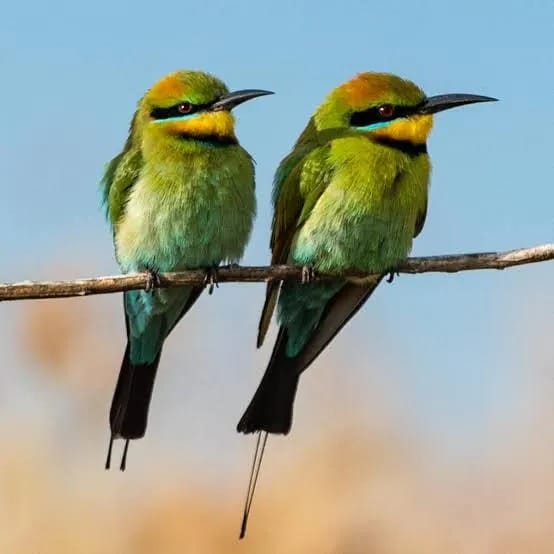
Bee-eaters are some of the most colorful birds you’ll ever see. With bright greens, blues, yellows, and chestnut tones, they look painted by an artist who refused to hold back.
As their name suggests, they eat bees, wasps, and other flying insects. Before swallowing, they rub insects against branches to remove stingers. It’s a smart move that saves them from painful mistakes.
Bee-eaters often nest in tunnels dug into sandy banks. Colonies can include dozens of pairs, creating a lively neighborhood filled with chatter and motion.
They are skilled flyers and catch prey mid-air with precision. Watching a bee-eater hunt feels like watching a tiny acrobat at work.
9. Black Swan

Black swans challenge the idea that swans must be white. Native to Australia, these birds have glossy black feathers and bright red bills that stand out dramatically.
They live in lakes, rivers, and wetlands, often forming long-term pairs. Black swans are strong swimmers and graceful on water, though a bit clumsy on land.
Their diet includes aquatic plants and algae, which they reach by dipping their long necks underwater. Sometimes they even tip forward, tail up, like floating commas.
Black swans have become symbols of surprise and rarity in language, but in nature, they are simply another reminder of birds’ endless variety.
10. Blackbird

Blackbirds are common yet often overlooked. Depending on the region, the name can refer to several species, but many people picture the male with glossy black feathers and a bright yellow eye ring.
These birds adapt well to human environments. You’ll find them in gardens, parks, farms, and woodlands. They eat insects, seeds, fruits, and leftovers, showing impressive flexibility.
Male blackbirds are known for their rich, flute-like songs, especially during early mornings. Their music feels like a gentle alarm clock provided by nature.
Though familiar, blackbirds play an important role in controlling insects and spreading seeds. Sometimes the most common birds have the most interesting stories.
11. Black-capped Chickadee

The black-capped chickadee is small, round, and full of personality. With its black cap, white cheeks, and soft gray body, it looks like it’s wearing a tiny tuxedo. These birds are common across North America and are often the first to visit backyard feeders, especially in cold weather.
Chickadees are curious and bold. Some will even take food directly from a human hand if they feel safe enough. Their call sounds like their name — “chick-a-dee-dee-dee” — and the number of “dee” notes can signal danger to other birds. Think of it as a neighborhood alarm system.
They eat insects, seeds, and berries. In winter, chickadees rely heavily on stored food. They have impressive memories, remembering hundreds of hiding spots. For such a tiny brain, that’s no small feat.
Black-capped chickadees are active year-round and do not migrate. Watching one hop from branch to branch on a snowy day is like seeing a spark of life refusing to fade.
12. Blue Jay

Blue jays are loud, clever, and impossible to ignore. Their bright blue feathers, white chest, and bold crest make them easy to spot. Found across much of North America, blue jays are often heard before they are seen.
These birds are excellent mimics and can imitate hawk calls to scare other birds away from food. It’s a sneaky move, but it works. Blue jays eat nuts, seeds, insects, and sometimes eggs or small animals.
They are social within family groups and often form strong bonds. Despite their bossy reputation, blue jays also play a helpful role by spreading oak trees. Many acorns they bury are never retrieved.
If forests had gossip columns, blue jays would be writing them.
13. Bluebird
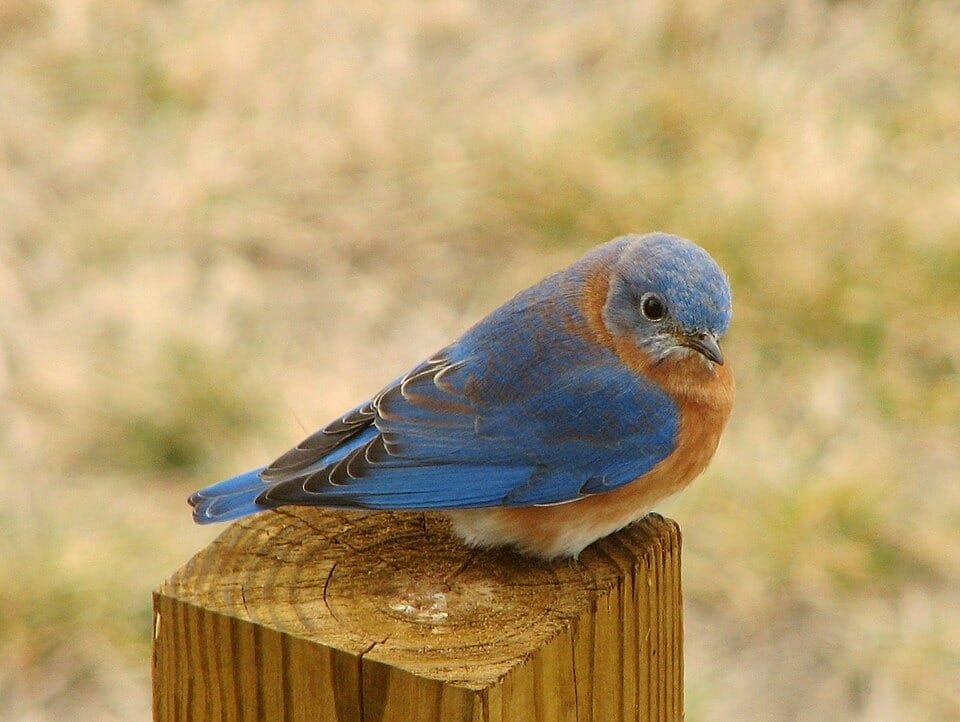
Bluebirds are gentle, soft-colored birds often linked with happiness and calm. Their blue backs and warm orange chests make them look like pieces of the sky at sunrise. They prefer open areas with scattered trees.
Bluebirds feed mostly on insects during warmer months and switch to berries in winter. Unlike many birds, they rely heavily on natural nesting cavities or nest boxes.
Their songs are quiet and musical, more like a friendly conversation than a performance. Bluebirds are patient parents, raising several broods in a single season.
Seeing a bluebird nearby often feels like a small reward from nature.
14. Bobolink

Bobolinks are grassland birds with striking plumage. Males look like they’re wearing tuxedos with cream-colored backs and black undersides. Females, however, are streaky brown and much less flashy.
They are long-distance migrants, traveling from North America to South America each year. During breeding season, bobolinks sing bubbly, fast songs that sound like musical chatter.
Bobolinks eat insects and seeds and are closely tied to healthy grasslands. Changes in farming practices have made their lives harder.
Their joyful song feels like summer packed into sound.
15. Booby
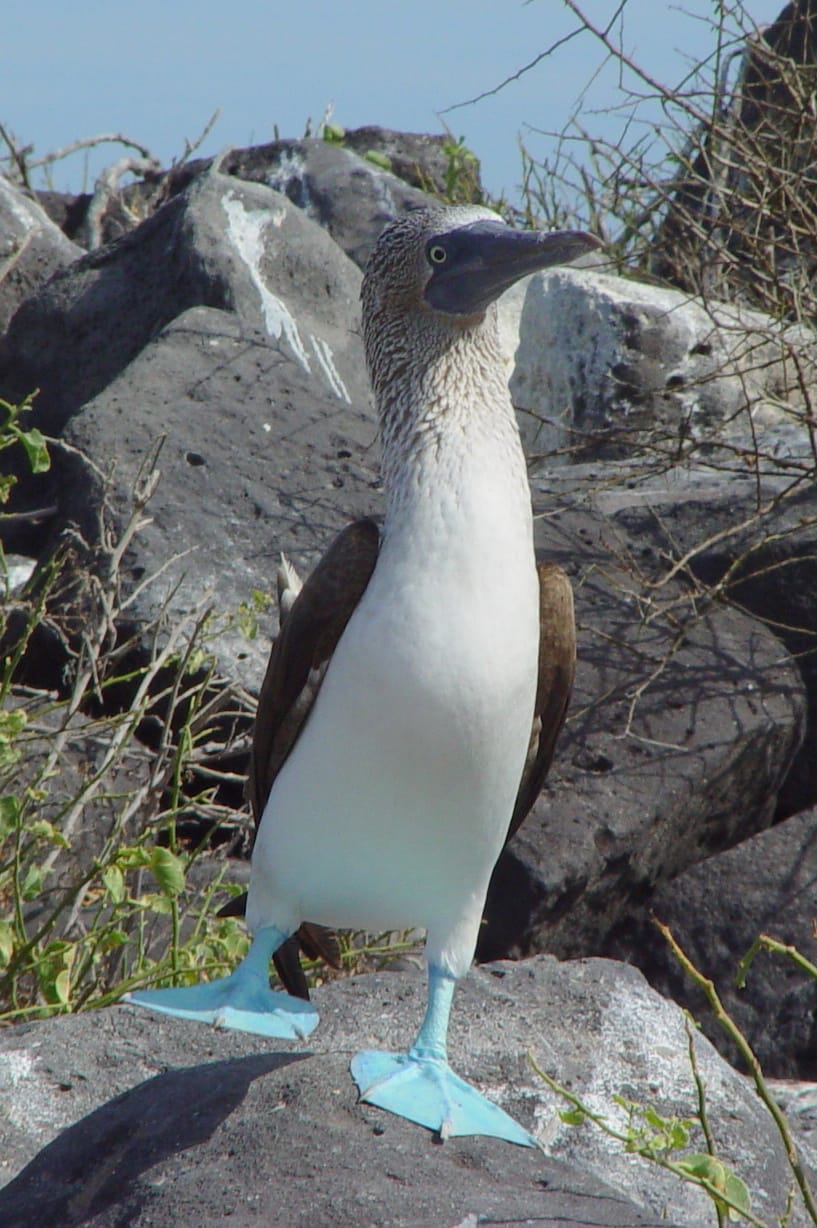
Boobies are seabirds with an unfortunate name but impressive skills. Famous for plunge-diving, they hit the water like arrows to catch fish. Some species have bright blue feet used in courtship displays.
They live near tropical and subtropical oceans and nest in large colonies. Their awkward walk on land contrasts sharply with their smooth movements in the air.
Boobies are social and expressive, often engaging in elaborate dances. Nature clearly has a sense of humor here.
16. Brambling

Bramblings are small finches closely related to chaffinches. Males show bold orange, black, and white colors during breeding season, while females are more subdued.
They breed in northern forests and migrate south for winter. Bramblings often gather in huge flocks, sometimes numbering in the millions.
Their diet includes seeds, especially beech nuts, and insects during warmer months.
17. Brant Goose
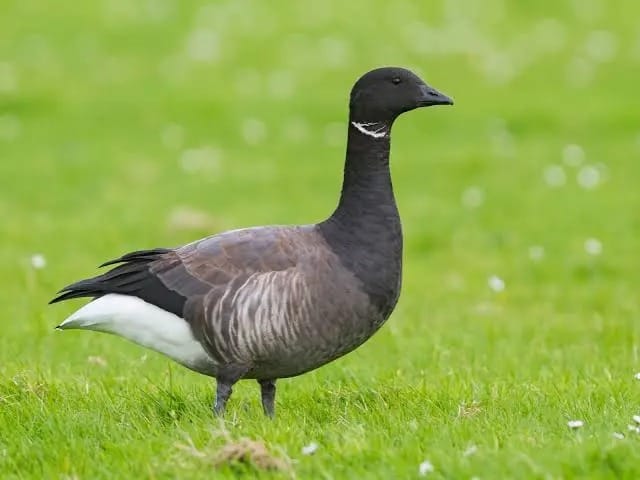
Brant geese are compact, dark-colored geese often seen along coastal areas. They have black necks with small white markings.
These geese migrate long distances between Arctic breeding grounds and coastal wintering areas. They feed mainly on sea grasses.
Brant geese are loyal to their routes and often return to the same locations year after year.
18. Bullfinch
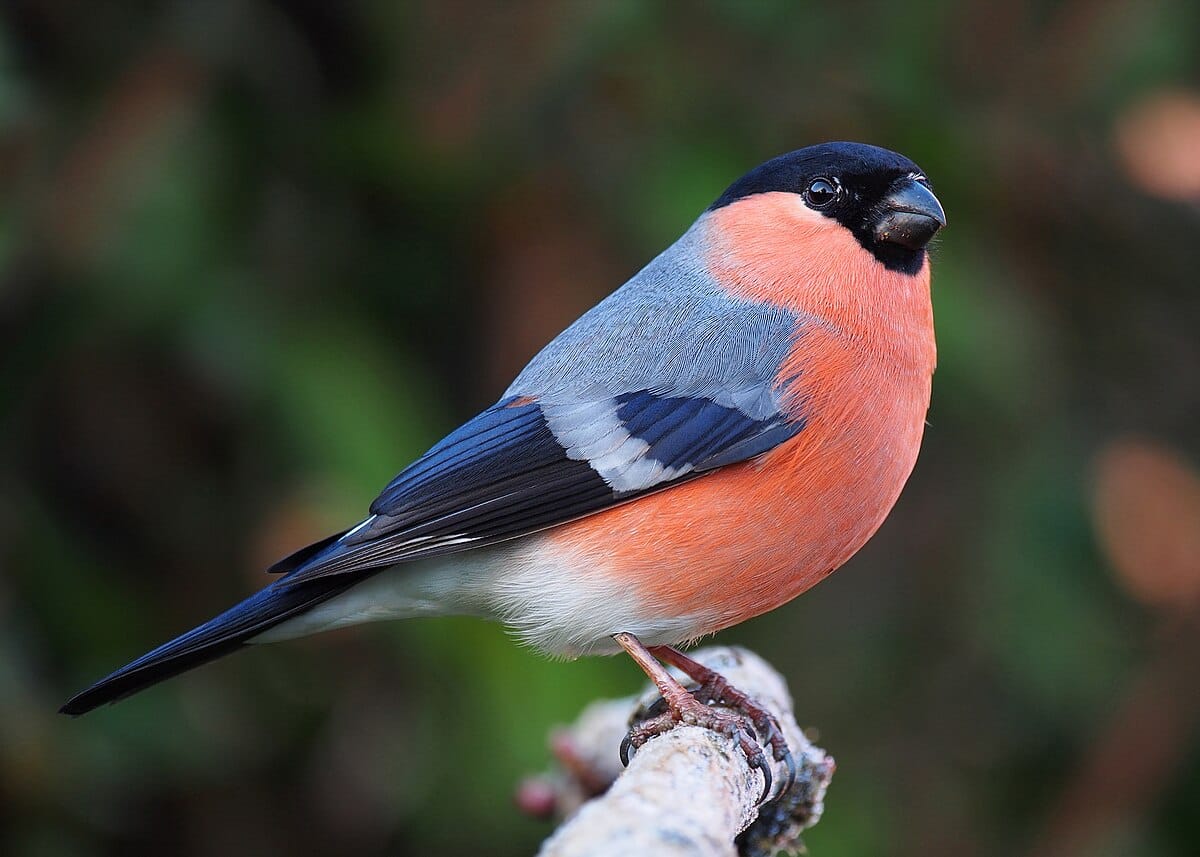
Bullfinches are thick-bodied birds with short beaks. Males have rosy-red chests, while females are more muted.
They live in woodlands and gardens and feed on seeds, buds, and fruits. Their calm behavior makes them easy to observe.
Bullfinches have soft, whistling calls rather than loud songs.
19. Bunting

Buntings are a diverse group of small birds, many with bright breeding colors. They live in grasslands, fields, and open woodlands.
Most buntings eat seeds but switch to insects when raising chicks. Their songs are simple but steady.
Buntings may look small, but their migrations can be impressive.
20. Buzzard
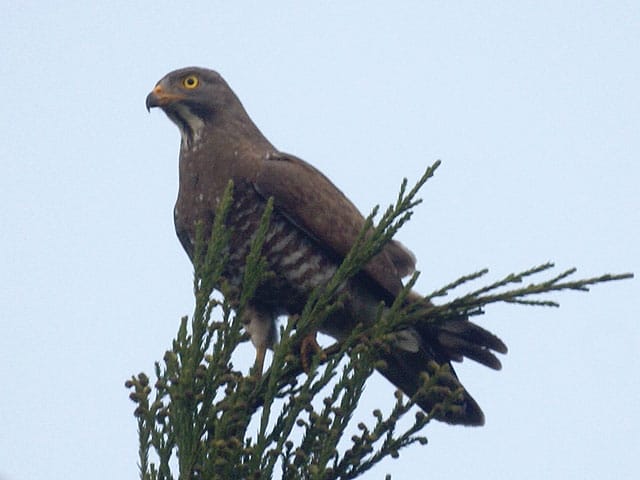
Buzzard is a name often used for medium to large birds of prey. In Europe, it usually refers to hawk-like raptors, while in North America it often means vultures.
Buzzards soar on warm air currents, scanning the ground for food. Their diet varies widely depending on species.
Watching a buzzard circle high above feels like watching patience itself take flight.
21. Canary
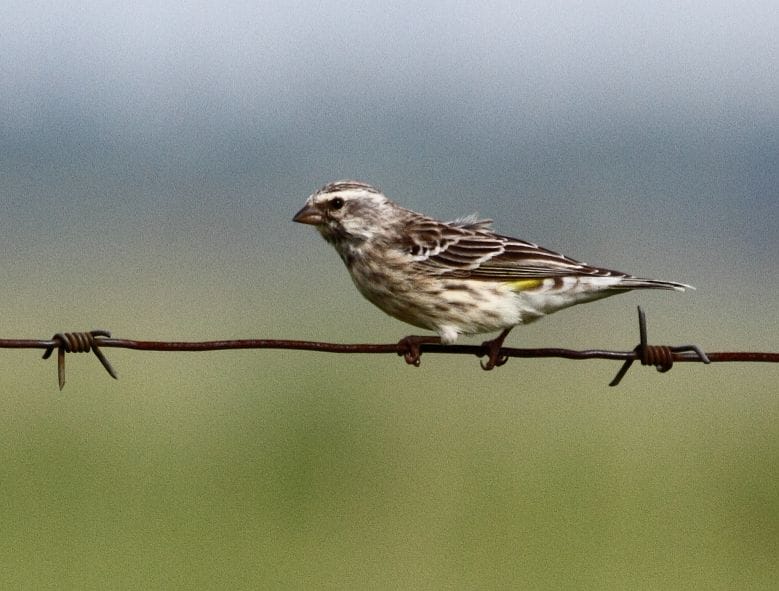
The canary is a small songbird that has enchanted humans for centuries with its melodious singing, vibrant plumage, and charming behavior. Native to the Canary Islands, Azores, and Madeira, canaries have been domesticated and bred for specific colors and song types. They are famous for their bright yellow plumage, though domesticated varieties now include orange, white, and red hues. These birds are a staple in aviaries and homes worldwide because of their gentle nature and captivating vocal abilities.
Wild canaries inhabit open woodlands, shrublands, and areas with scattered trees and bushes. They prefer environments where they can forage for seeds, which form the bulk of their diet. Insects, small invertebrates, and berries supplement their nutrition, especially during the breeding season. In captivity, canaries thrive on a mix of high-quality seeds, fresh greens, and occasional fruit treats. Observing a canary pecking through its food or chasing insects reveals a surprisingly active and curious personality that is often underestimated due to their small size.
One of the most remarkable aspects of canaries is their singing ability. Male canaries are the primary singers, using a series of melodious whistles and trills to attract females and defend territories. Their songs vary by breed and individual, with some capable of producing intricate patterns and extended sequences. Female canaries rarely sing, though they may chirp softly or imitate simple phrases. The song plays an essential role in mate selection, demonstrating health, vitality, and genetic fitness.
Canaries are monogamous during breeding periods. Nesting usually occurs in shrubs, small trees, or enclosed aviaries, where the female constructs a cup-shaped nest using moss, feathers, grass, and soft plant fibers. Clutch sizes range from three to six eggs, which hatch after approximately two weeks. Both parents participate in feeding the chicks, though the female often does the bulk of the incubation. Juveniles fledge in about three weeks but remain dependent on parental care for several additional weeks.
Behaviorally, canaries are lively, curious, and highly social. In the wild, they form small flocks that communicate through chirps, calls, and subtle visual signals. Domesticated canaries retain these social tendencies, often interacting with cage mates or responding to human presence. Their activity includes flying short distances, hopping between perches, exploring surroundings, and preening. Observing these behaviors provides insight into their intelligence and adaptability.
Canaries play an ecological role in their native habitats by dispersing seeds, pollinating small plants, and contributing to the overall balance of insect populations. Conservation of wild canary populations is essential, as habitat loss, introduced predators, and human pressures have reduced numbers in some regions. Through responsible breeding, habitat protection, and environmental education, humans can help sustain these enchanting songbirds for future generations.
In summary, the canary is a small bird with a big personality. Its combination of beautiful plumage, captivating song, sociable behavior, and ecological importance makes it a treasured species both in the wild and in captivity. Observing a canary is a reminder that even the tiniest creatures can bring immense joy and complexity to the natural world.
22. Cardinal

The northern cardinal is one of the most beloved birds in North America, celebrated for its brilliant red plumage, crest, and striking black mask. Found in forests, woodlands, gardens, and suburban areas, cardinals are non-migratory, making them year-round residents in much of their range. Their vibrant color and melodic songs make them favorites among birdwatchers, photographers, and backyard enthusiasts alike.
Male cardinals are instantly recognizable with their vivid red feathers, black facial masks, and sharp crests. Females, though slightly duller, possess warm tones of brown, red accents, and subtle crests, creating a complementary visual balance between the sexes. Both sexes are medium-sized, with strong beaks adapted for cracking seeds, their primary dietary component. Cardinals also eat insects, fruits, and berries, especially during breeding and feeding periods when protein-rich food is essential for chick development.
Cardinals are known for their melodious and complex songs. Males sing from elevated perches to defend territories and attract mates, often repeating a series of whistles, clear notes, and flutelike sounds. Females, while less vocal, may respond with simple calls or mimic some male song patterns. Both sexes utilize various calls for communication, warning of predators, or maintaining social bonds.
Breeding occurs from early spring through summer. Cardinals construct cup-shaped nests in dense shrubs, trees, or thorny thickets, often hidden from predators. Females lay two to five eggs per clutch, incubated primarily by the female for around 11–13 days. Both parents feed and protect the nestlings until fledging occurs in approximately 9–11 days. Cardinals are known for their strong territorial behavior, with males actively defending feeding areas and nesting sites against intruders.
Behaviorally, cardinals are relatively tame around humans, especially in areas with feeders. They prefer seed types such as sunflower and safflower and exhibit lively foraging behaviors. Cardinals are generally monogamous and form strong pair bonds that may last for multiple breeding seasons. Their social and territorial interactions include visual displays, vocalizations, and occasional chasing or physical confrontations with rivals.
Ecologically, cardinals serve an essential role in seed dispersal and insect population control. They help maintain biodiversity by spreading seeds of native plants and consuming pests that may otherwise affect vegetation. Their bright coloration also attracts predators, providing natural checks and balances within ecosystems.
Overall, the northern cardinal is a species that combines beauty, intelligence, and ecological importance. Its visual appeal, cheerful song, engaging behavior, and contribution to ecosystem health make it a quintessential example of North American birdlife, inspiring fascination and appreciation in all who observe it.
23. Caracara

The caracara is a large raptor native to Central and South America, known for its distinctive appearance, opportunistic feeding habits, and intelligence. Unlike many birds of prey that rely solely on hunting, caracaras are versatile feeders, often scavenging carrion, preying on small animals, or raiding nests. Their bold behavior and adaptability have made them iconic representatives of the tropical and subtropical ecosystems they inhabit.
Caracaras have long legs, strong talons, hooked beaks, and striking facial markings, including bare skin that ranges in color from yellow to orange. Their plumage is generally dark brown or black, with contrasting lighter patterns on wings or tail feathers. This combination of features allows them to blend seamlessly into open landscapes while remaining visually impressive during flight.
These birds are social and highly intelligent. Observations reveal problem-solving abilities, cooperative hunting, and innovative feeding strategies. Caracaras are known to follow larger predators to scavenge leftovers or exploit human-altered landscapes, demonstrating behavioral flexibility. Their vocalizations include a range of calls, from loud screeches to softer communication sounds used in pair bonding or coordinating with family members.
Caracaras breed in open areas, often nesting on cliffs, tall trees, or even man-made structures. Nests are constructed from sticks, moss, and softer materials, accommodating clutches of two to four eggs. Both parents share incubation and chick-rearing duties, teaching fledglings essential hunting and foraging skills.
Dietary versatility is a hallmark of the caracara. They consume insects, reptiles, small mammals, eggs, carrion, and occasionally fruits or plant matter. Their ability to exploit diverse food sources allows them to thrive in a range of environments, including grasslands, savannas, deserts, and even urban regions. Observing a caracara hunting or scavenging reveals an adaptive intelligence often compared to that of crows and ravens.
Caracaras play an important ecological role as both predator and scavenger. They help control populations of smaller animals, clean up carrion, and maintain balance within ecosystems. In some regions, they act as indicators of habitat health, with stable populations reflecting a robust food web and intact environment.
In summary, the caracara is a remarkable bird that blends intelligence, versatility, and striking physical features. Its behavior, ecological contributions, and adaptive strategies make it a fascinating species for bird enthusiasts, researchers, and anyone interested in the diversity of avian life.
24. Cassowary

Cassowaries are large, flightless birds native to the tropical forests of New Guinea, northern Australia, and surrounding islands. They are among the heaviest and most powerful birds in the world, rivaled only by ostriches and emus. Recognizable by their striking blue and black plumage, helmet-like casques, and long, dagger-like claws, cassowaries are both awe-inspiring and formidable. Despite their intimidating appearance, they are primarily frugivores and play a critical role in rainforest ecosystems.
These birds inhabit dense tropical forests and mangroves, where they forage for fruits, berries, fungi, and occasionally small animals. Cassowaries are excellent dispersers of seeds, swallowing large fruits whole and depositing them in distant locations, which supports forest regeneration. Many rainforest plant species rely exclusively on cassowaries for seed dispersal, highlighting their ecological importance.
Behaviorally, cassowaries are solitary and territorial. Males are responsible for incubating eggs and raising chicks, demonstrating unique parental care in the bird world. Nests are simple depressions lined with leaves, and clutch sizes typically range from three to five eggs. Chicks are precocial but rely on paternal protection and guidance for several months.
Cassowaries are capable of swift and agile movement despite their size, reaching speeds of up to 50 km/h (30 mph) through dense forest. Their long, powerful legs and sharp claws serve as effective defense mechanisms, deterring predators. These birds communicate using low-frequency sounds, hisses, and body postures, which convey warnings or territorial claims.
Human encounters with cassowaries are rare but require caution due to their potential for aggression if threatened. Habitat loss, hunting, and vehicle collisions have reduced cassowary populations in some areas, prompting conservation initiatives focused on habitat protection, wildlife corridors, and public education.
In conclusion, cassowaries are among the most remarkable birds on Earth, blending beauty, power, ecological importance, and complex behavior. Their role as seed dispersers ensures the health of tropical forests, and their striking appearance captivates anyone lucky enough to observe them in the wild.
25. Cattle Egret

Cattle egrets are medium-sized, white herons widely recognized for their association with grazing mammals, particularly cattle. Originally native to parts of Africa, Asia, and Europe, they have expanded across the Americas and Australia through migration and habitat adaptation. These birds have adapted exceptionally well to human-modified landscapes, often following livestock to feed on insects and small animals disturbed by the animals’ movements.
Cattle egrets are characterized by white plumage, yellow bills, and yellow legs, with breeding adults developing striking orange patches on the head, chest, and back. They are relatively small compared to other herons, standing around 46–56 cm tall. Their wingspan allows graceful flight, with slow, deliberate wingbeats suitable for foraging and migration.
Diet primarily consists of insects, spiders, frogs, and small reptiles, which they catch while following cattle, horses, or other large animals. Their behavior minimizes energy expenditure, as the movement of livestock flushes prey within easy reach. Occasionally, cattle egrets feed in wetlands, rice fields, or grasslands, demonstrating versatility in foraging strategies.
Breeding occurs in colonies, often near water bodies. Nests are built in trees, shrubs, or reed beds, composed of sticks and plant material. Clutches usually contain three to four pale blue or green eggs. Both parents share incubation and feeding duties, and chicks fledge within a few weeks. Colonial nesting offers protection against predators and fosters social learning among young birds.
Cattle egrets communicate through calls, body postures, and visual displays, especially during courtship and territorial defense. Their adaptability to human-altered habitats demonstrates behavioral flexibility, and they have been observed thriving in rice paddies, pastures, and urban environments.
Ecologically, cattle egrets control insect populations and contribute to the balance of local ecosystems. Their relationship with livestock illustrates a mutualistic association, where the birds benefit from food opportunities and the animals enjoy reduced insect pests. Conservation is generally not a concern, but monitoring is important to ensure populations remain stable in changing agricultural landscapes.
26. Chaffinch

Chaffinches are small, colorful finches native to Europe, parts of Asia, and North Africa. They are easily recognized by males’ reddish underparts, blue-gray heads, and patterned wings, while females display more muted browns and greens. Chaffinches inhabit woodlands, parks, gardens, and hedgerows, adapting well to human presence without losing their wild instincts.
Diet consists of seeds, insects, and berries, providing balanced nutrition throughout the year. During the breeding season, insects become crucial for feeding chicks. Chaffinches forage methodically, hopping along branches or the forest floor, picking seeds, and gleaning insects from leaves.
Singing is an essential part of chaffinch behavior. Males produce a loud, repeated, and melodious song to defend territories and attract mates. Songs vary by individual and region, creating distinct “dialects” in different populations. These vocalizations are key for mating success and social interaction.
Chaffinch nesting involves building compact cup-shaped nests from moss, feathers, and grass, usually in trees or shrubs. Females lay four to six eggs per clutch, with incubation shared minimally by males. Young fledge in approximately two weeks, gradually learning foraging and flying skills from parents.
Behaviorally, chaffinches are energetic, territorial, and social outside the breeding season, forming flocks for feeding and protection. They play a role in seed dispersal, insect control, and ecosystem maintenance. Observing their colorful plumage and melodic songs enriches the experience of natural landscapes.
27. Chickadee
The chickadee is a small, familiar songbird widely found across North America, known for its curiosity, intelligence, and social behavior. Black-capped chickadees are the most recognized, with striking black caps, white cheeks, and soft gray plumage. These birds are friendly and often approach human feeders, making them popular among backyard bird enthusiasts.
Chickadees inhabit forests, parks, and suburban areas. They are non-migratory and have adapted to cold winter climates by storing food in caches and lowering body temperature at night. This combination of behavioral and physiological adaptations allows them to thrive in harsh conditions.
Diet primarily includes insects, seeds, and berries. Chickadees are active foragers, hopping along branches, probing bark, and gleaning insects from leaves. They are skilled at memorizing hundreds of food cache locations, demonstrating remarkable spatial memory for such a small bird.
Their vocalizations are intricate. The signature “chick-a-dee-dee-dee” call varies depending on predator threat levels. Chickadees communicate effectively within mixed-species flocks, signaling danger and sharing information.
Breeding occurs in tree cavities or nest boxes. Females lay 5–10 eggs, incubated for about two weeks, and both parents feed the young. Socially, chickadees are playful, inquisitive, and highly interactive, both with conspecifics and human observers.
Chickadees play important ecological roles in controlling insect populations and dispersing seeds. Their intelligence, lively behavior, and charm make them a favorite species for study, observation, and public education.
28. Chicken
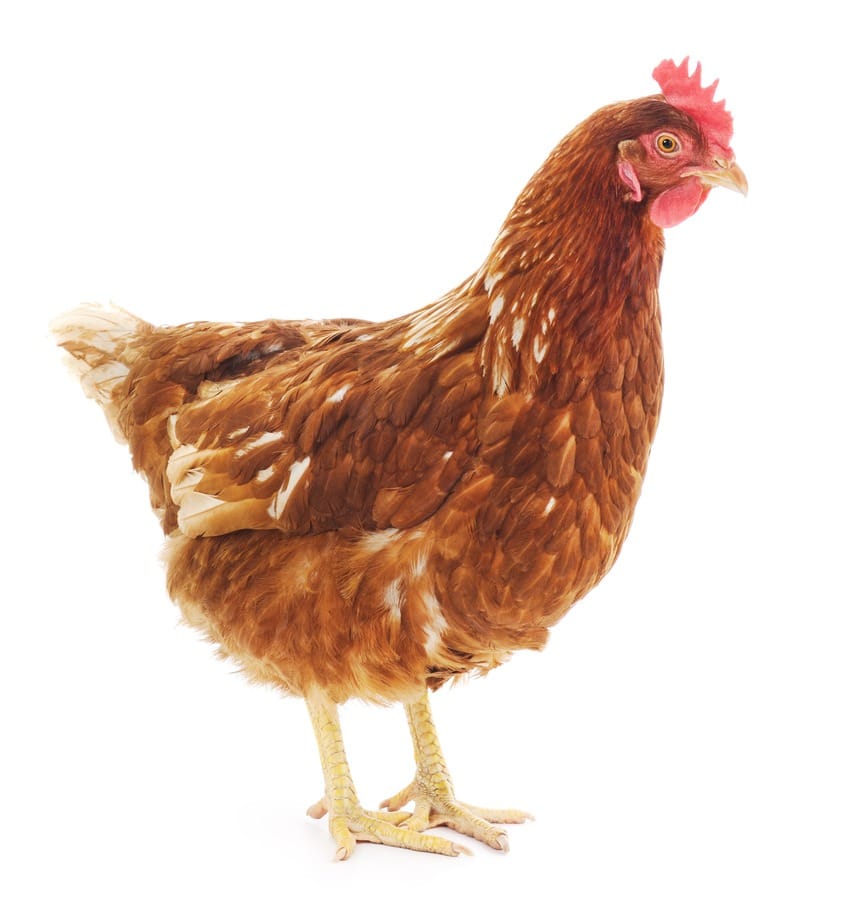
Chickens, one of the most familiar domesticated birds globally, are descendants of the red junglefowl. While humans have bred chickens for meat, eggs, and exhibition, they retain many fascinating natural behaviors seen in wild birds. Chickens are highly social, with complex hierarchies, vocalizations, and courtship displays.
In free-range conditions, chickens forage for seeds, insects, and small invertebrates, demonstrating natural behaviors such as dust bathing, scratching, and perching. Hens are attentive mothers, showing remarkable care in nest selection, egg incubation, and chick rearing. Roosters exhibit courtship rituals, crowing, and territory defense.
Chickens communicate using at least 30 distinct vocalizations for food, danger, comfort, and social interaction. Their intelligence, memory, and problem-solving abilities have been extensively studied, revealing a bird capable of learning, remembering, and adapting to changing environments.
Breeding occurs in nests built from straw, leaves, or other soft material. Clutch sizes vary depending on breed and conditions. Chickens are omnivorous, opportunistically eating seeds, fruits, insects, and even small animals when available. Their role in agriculture is significant, and sustainable husbandry practices ensure health, productivity, and ethical treatment.
Chickens’ cultural significance spans folklore, farming, cuisine, and education. Observing their behaviors provides insight into natural bird instincts, social hierarchies, and adaptive strategies, demonstrating that even domesticated birds retain fascinating wild traits.
29. Chough

Choughs are medium-sized corvids found in Europe, North Africa, and parts of Asia. They are recognized for their glossy black feathers, bright red bills, and red legs. Choughs inhabit cliffs, mountains, and coastal areas, often feeding on insects, invertebrates, and small seeds. Their acrobatic flight and social behaviors make them highly engaging for observers.
Diet primarily consists of soil invertebrates and insects. Choughs forage by probing soil, leaf litter, and grass, demonstrating dexterity and problem-solving skills. They also eat seeds and berries, adapting their diet to seasonal availability.
Breeding occurs in crevices, cliff faces, or old buildings. Nests are constructed from twigs and lined with softer materials. Clutches generally contain 3–5 eggs, with both parents incubating and feeding chicks. Social interactions include flocking behavior, cooperative defense, and vocal communication with a variety of calls and whistles.
Choughs contribute ecologically by controlling insect populations and maintaining soil health through foraging. Observing their playful acrobatics, resourcefulness, and social dynamics provides insight into corvid intelligence and adaptability.
30. Coot

Coots are medium-sized waterbirds found in freshwater lakes, ponds, marshes, and slow rivers across much of the world. Recognizable by their dark plumage, white bills, and frontal shield, coots are agile swimmers and divers, adapted for aquatic environments. They are highly territorial during breeding but may form large flocks in winter.
Diet consists of aquatic plants, algae, seeds, and small invertebrates. Coots forage by diving, dabbling, or grazing along shores. Their strong legs and lobed feet make them efficient swimmers, capable of quick turns and dives when evading predators.
Breeding occurs in floating nests or among reeds. Females lay 5–10 eggs per clutch, which are incubated by both parents. Young are precocial, leaving the nest soon after hatching but remaining close to adults for protection and guidance.
Coots communicate through vocalizations, including grunts, clucks, and alarm calls, often used to maintain social order and warn of threats. Their territorial aggression during breeding ensures access to food and nesting resources.
Ecologically, coots contribute to wetland health by controlling vegetation and invertebrate populations. Observing their diving, swimming, and social behaviors offers a fascinating window into aquatic bird adaptations and survival strategies.
31. Cormorant

Cormorants are medium-to-large aquatic birds recognized for their exceptional diving and fishing abilities. Found across coastal regions, rivers, lakes, and wetlands worldwide, these birds are highly adapted to a life spent largely in water. Their long, slender necks, hooked bills, webbed feet, and streamlined bodies make them highly efficient predators. Despite their dark, often glossy plumage, cormorants can appear somewhat ungainly on land, but in water, they transform into elegant, precise hunters capable of remarkable agility.
Cormorants’ primary diet consists of fish, which they catch by diving underwater. They are proficient swimmers, using both their feet and wings to propel themselves with great speed and maneuverability. Their hunting technique involves spotting fish from the surface or air, plunging swiftly, and pursuing prey beneath the water. They can adjust depth and speed based on fish behavior, often working individually or in coordinated groups during communal hunting events.
Behaviorally, cormorants are social yet territorial. While hunting alone is common, nesting colonies can host hundreds of individuals, creating bustling communities along cliffs, trees, or man-made structures. These colonies are often noisy, with vocalizations ranging from croaks to grunts. Courtship displays are visually striking, with males presenting prey to females or performing elaborate postures to attract mates. Plumage may be used as a signal, with seasonal changes enhancing visibility and appeal.
Breeding behavior involves constructing nests from sticks, reeds, and seaweed. Clutch sizes typically range from three to five eggs, with both parents sharing incubation and chick-rearing responsibilities. Young cormorants are fed regurgitated fish, gradually transitioning to independent hunting. Despite their aquatic prowess, chicks require careful protection from predators and environmental challenges such as storms and flooding.
Cormorants play a critical ecological role. By regulating fish populations, they maintain balance in aquatic ecosystems. Their nesting colonies also contribute to nutrient cycling, as guano enriches soil and surrounding vegetation. However, conflicts with humans can arise when cormorants compete with commercial fisheries. Conservation efforts focus on protecting habitat, regulating human disturbance, and ensuring sustainable coexistence.
One fascinating aspect of cormorants is their post-dive behavior. Unlike many waterbirds, their feathers are less water-repellent, which allows for easier diving but requires frequent drying. Observers often see cormorants perched with wings outstretched, absorbing sunlight to dry and maintain feather condition. This unique behavior is an adaptive trade-off that demonstrates the intricate balance between evolution and ecology.
In summary, cormorants are skilled, fascinating, and ecologically important aquatic birds. Observing their graceful underwater hunting, intricate social behaviors, and striking plumage provides a vivid glimpse into the complexity of wetland and coastal ecosystems. They are a testament to adaptation, resilience, and the intricate connections between predator, prey, and habitat.
32. Crane

Cranes are tall, elegant birds known for their long legs, long necks, and striking plumage. They inhabit wetlands, grasslands, and river valleys across Africa, Asia, Europe, and North America. Famous for elaborate courtship dances, loud trumpeting calls, and migratory endurance, cranes are symbols of longevity, fidelity, and grace in many cultures. They are highly social, often forming pairs or family groups that demonstrate strong bonds and cooperative behaviors.
Cranes’ diet varies seasonally, including insects, small vertebrates, seeds, and tubers. Foraging involves walking slowly through wetlands or grasslands, probing soil or shallow water. Their long bills enable precision feeding, while their keen eyesight allows them to detect subtle movements in vegetation. Migratory species rely on high-energy food sources, including grains and agricultural crops, to fuel extensive journeys across continents.
Breeding behavior is elaborate and visually spectacular. Pairs perform synchronized dances, bows, jumps, and wing flaps to strengthen pair bonds and establish territory. Nests are constructed in shallow wetlands or grassy areas, usually elevated to prevent flooding. Clutch sizes are small, typically one or two eggs, and both parents share incubation and chick-rearing responsibilities. Young cranes are highly dependent on parental guidance, learning to forage, fly, and communicate during their first months.
Communication is vital among cranes, as they rely on loud trumpeting calls to maintain contact over long distances. Each pair has a unique duet that strengthens pair bonds and signals territory ownership. Vocalizations also warn of predators, coordinate group movement during migration, and facilitate social interactions within flocks.
Cranes’ migration is one of the most remarkable aspects of their life history. Species such as the Siberian crane travel thousands of kilometers between breeding and wintering grounds, often following traditional flyways passed down through generations. These journeys demand careful navigation, endurance, and group coordination.
Ecologically, cranes play roles in seed dispersal, insect population control, and wetland health. Their presence indicates ecosystem integrity, as they require intact habitats with sufficient water, food, and nesting sites. Conservation is critical, as habitat loss, wetland drainage, and human disturbance threaten many species. Programs involving habitat restoration, protection of migratory corridors, and public awareness have contributed to the recovery of some populations.
Cranes captivate observers with their majestic flight, courtship dances, and social intelligence. Their combination of beauty, resilience, and ecological significance exemplifies the interdependence of species and habitats, making them one of the most treasured birds worldwide.
33. Creeper

Creepers are small, agile songbirds adapted for climbing tree trunks and branches in search of insects. Found across forests in Europe, Asia, and North America, they exhibit camouflaged brown or streaky plumage that blends seamlessly with tree bark. Their curved bills, stiff tail feathers, and strong legs make them expert climbers, enabling them to extract hidden insects and larvae from bark crevices.
Diet consists primarily of insects, spiders, and occasionally seeds. Creepers forage methodically, spiraling up tree trunks and descending in search of prey. Their behavior is highly specialized, allowing them to exploit ecological niches unavailable to other birds. Observers often notice their unique movement patterns, hopping upward while using tail feathers for support, demonstrating remarkable physical adaptation.
Breeding occurs in tree cavities, crevices, or nest boxes. Clutches range from 4–7 eggs, which are incubated mainly by the female. Both parents feed nestlings, gradually teaching them climbing and foraging skills. Creepers’ cryptic plumage and nest placement reduce predation risk, reflecting evolutionary strategies for survival.
Vocalizations include high-pitched calls and soft trills used to maintain contact and defend territory. Despite their small size, creepers are highly active and vocal within their home ranges. They form loose territories, often overlapping with other insectivorous species without direct competition due to their niche specialization.
Ecologically, creepers play a crucial role in controlling insect populations and maintaining forest health. They help manage bark-boring insects that could damage trees and indirectly support the broader ecosystem by reducing pest outbreaks. Observing a creeper’s precise movements and adaptive behaviors offers insight into the complex interactions within forest habitats.
In essence, creepers exemplify specialized adaptation, blending intelligence, agility, and niche specialization. Their role in ecosystems, unique foraging behavior, and subtle beauty make them a fascinating subject for bird enthusiasts and ecologists alike.
34. Crow
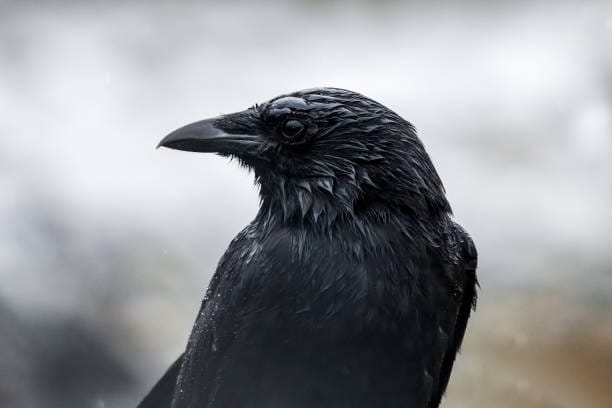
Crows are highly intelligent, medium-to-large passerines found worldwide in diverse habitats, including forests, grasslands, urban areas, and wetlands. Known for their glossy black feathers, strong bills, and complex social behaviors, crows have captivated humans for centuries. They are highly adaptable, capable of problem-solving, tool use, and sophisticated communication, placing them among the most remarkable avian species.
Diet is omnivorous, encompassing insects, seeds, fruits, small mammals, carrion, and even human food waste. Crows exhibit problem-solving skills in obtaining food, sometimes using tools or cooperative strategies to access hard-to-reach sources. Their intelligence allows them to adapt to urban environments, exploit human-altered landscapes, and navigate seasonal changes in food availability.
Social behavior is complex. Crows form family groups, flocks, and roosts that may include thousands of individuals. They engage in play, cooperative hunting, and intricate communication, including calls, gestures, and social learning. Some crows can recognize individual humans and warn flock members of threats, demonstrating remarkable memory and cognition.
Breeding occurs in nests built from sticks, twigs, and plant material, usually placed in trees or on man-made structures. Clutches generally contain 3–7 eggs, incubated primarily by the female. Both parents, and sometimes older offspring, assist in feeding chicks. Cooperative breeding and extended family care enhance survival rates.
Vocalizations are varied, from caws and croaks to clicks and rattles. Crows also mimic sounds from their environment, including human voices, mechanical noises, and other species. These vocalizations serve communication, territorial defense, and social bonding purposes.
Crows are essential ecologically as scavengers, seed dispersers, and controllers of insect and small animal populations. They influence ecosystem dynamics and provide valuable insights into avian intelligence and adaptability. Observing a crow’s behavior, social interactions, and problem-solving abilities highlights the remarkable cognitive capacities of birds.
35. Cuckoo

Cuckoos are medium-sized birds known for their slender bodies, long tails, and unique reproductive behavior: brood parasitism. Found across Europe, Asia, Africa, and Australia, cuckoos inhabit forests, grasslands, wetlands, and shrublands. They are often cryptically colored, blending seamlessly into vegetation, which helps protect them from predators and allows them to approach host nests unnoticed.
Diet consists primarily of insects, caterpillars, and invertebrates. Some cuckoo species have specialized diets, feeding on hairy caterpillars avoided by other birds. Their foraging techniques include gleaning, hopping, and occasional hovering, demonstrating adaptability and precision.
Breeding behavior is extraordinary. Many cuckoo species lay eggs in the nests of other birds, leaving host parents to incubate and raise the young. Cuckoo eggs often mimic the color and pattern of the host’s eggs, reducing detection. Chicks hatch early and sometimes evict host eggs or young to monopolize parental care. This strategy reduces parental investment but increases survival rates for the cuckoo’s offspring.
Cuckoos communicate using distinctive calls, which vary by species and function. Male cuckoos use repetitive, loud calls to establish territory and attract mates. Vocalizations play a vital role in social interactions, especially for species that migrate long distances.
Migratory cuckoo species cover vast distances, with some traveling thousands of kilometers between breeding and wintering grounds. Their migration is often synchronized with the availability of prey and favorable climate conditions. These journeys demonstrate resilience, navigation skills, and physiological adaptation.
Ecologically, cuckoos control insect populations and influence host bird populations. Despite their parasitic behavior, they play a role in maintaining balance in ecosystems, as host species may evolve defense mechanisms, leading to fascinating coevolutionary dynamics. Observing cuckoos reveals the complexity and diversity of bird reproductive strategies.
36. Curlew

Curlews are large waders known for their long, downward-curving bills, mottled brown plumage, and evocative calls. Found across Europe, Asia, Africa, and the Americas, they inhabit wetlands, estuaries, mudflats, and grasslands. Curlews are migratory, traveling long distances between breeding and wintering grounds, and their presence is often a key indicator of healthy wetland ecosystems.
Diet consists of invertebrates, small crustaceans, insects, and worms, obtained by probing soft soil or mudflats with their distinctive long bills. This specialized feeding technique allows them to access prey buried deep beneath the surface. Their foraging behavior is deliberate, with careful probing and keen observation of the substrate.
Breeding occurs in open grasslands or moorlands, where nests are shallow depressions lined with vegetation. Clutch sizes typically range from 3–4 eggs. Both parents incubate and care for chicks, which are precocial but dependent on guidance and protection for several weeks. Breeding success is influenced by predation, habitat quality, and weather conditions.
Curlews communicate through long, haunting calls, especially during courtship or territorial defense. These vocalizations travel over long distances, warning rivals and attracting mates. They are social birds outside the breeding season, forming flocks that forage cooperatively and provide safety in numbers.
Ecologically, curlews play a vital role in wetland food webs, controlling invertebrate populations and contributing to nutrient cycling. Habitat conservation is critical, as wetland drainage, agricultural expansion, and human disturbance threaten populations. Observing curlews in the wild provides insight into migratory behavior, specialized feeding strategies, and wetland ecosystem health.
37. Darter

Darters, also known as snakebirds, are long, slender waterbirds with sharp, pointed bills and necks that resemble a snake when swimming. Found in freshwater rivers, lakes, and wetlands across Asia, Africa, and the Americas, they are highly adapted for aquatic hunting, diving underwater to catch fish with remarkable speed and precision.
Darters’ diet is primarily fish, which they capture with swift, stabbing motions of the bill. They use their flexible necks to spear prey underwater, often submerging completely before resurfacing. This hunting technique is highly efficient, allowing them to capture a variety of fish sizes. Occasionally, they consume amphibians and small invertebrates.
Breeding behavior involves building nests in trees, shrubs, or reed beds above water. Nests are made from sticks and lined with vegetation. Clutch sizes typically range from 3–6 eggs, with both parents incubating and feeding young. Darters often breed in colonies, providing protection and social learning opportunities for chicks.
Darters communicate through soft hisses, grunts, and visual displays. Courtship includes postures, neck extension, and synchronized movements to attract mates. Outside the breeding season, they may roost communally, exhibiting social tolerance while maintaining individual hunting territories.
Ecologically, darters help regulate fish populations and maintain aquatic ecosystem balance. Observing their hunting dives, striking silhouettes, and graceful flight provides insight into the adaptations necessary for life in aquatic habitats. Their presence indicates healthy wetland ecosystems with abundant fish resources.
38. Dove

Doves are medium-sized birds known for their gentle cooing, soft plumage, and calm demeanor. Found worldwide in diverse habitats, including forests, grasslands, urban areas, and gardens, doves are often symbols of peace, love, and harmony. They are highly adaptable, capable of thriving in natural and human-altered environments.
Diet consists primarily of seeds, grains, and fruits, supplemented with insects occasionally. Doves forage on the ground, in bushes, or low branches, often in flocks that provide safety from predators. Their feeding behavior is deliberate and social, emphasizing group dynamics and cooperative vigilance.
Breeding behavior involves constructing simple nests from twigs, leaves, and grass, usually in trees, shrubs, or ledges. Clutch sizes typically range from 1–2 eggs, which are incubated by both parents. Chicks are altricial, relying on parental care for feeding, warmth, and protection until fledging. Doves produce nutrient-rich “crop milk” to feed young, a unique adaptation among birds.
Vocalizations include soft coos, calls, and mating songs. These sounds are used for communication, courtship, and territorial defense. Doves are monogamous, often forming long-term pair bonds and sharing parental responsibilities.
Ecologically, doves contribute to seed dispersal, insect control, and ecosystem balance. They thrive in urban environments, demonstrating adaptability and resilience. Observing doves offers insight into social structures, reproductive strategies, and peaceful coexistence in natural and human-modified habitats.
39. Dowitcher
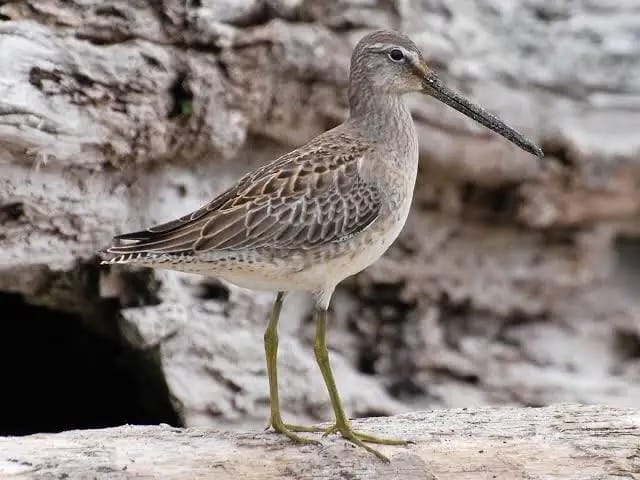
Dowitchers are medium-sized wading birds found in North America and Eurasia, inhabiting wetlands, mudflats, and marshes. They are recognized by their long bills, striped plumage, and rhythmic probing feeding behavior. Dowitchers are migratory, traveling thousands of kilometers between breeding grounds in northern regions and wintering grounds in the south.
Diet consists primarily of aquatic invertebrates, worms, mollusks, and crustaceans. Dowitchers use their long, sensitive bills to probe mud and shallow water, detecting prey through touch and vibrations. Their feeding behavior is highly specialized and synchronized, with rhythmic movements that maximize efficiency.
Breeding occurs in tundra and wetland habitats, where nests are constructed from grass and plant material. Clutch sizes typically range from 3–6 eggs. Both parents participate in incubation and feeding, ensuring high survival rates for chicks. Juveniles develop quickly, learning to forage and navigate wetlands under parental supervision.
Vocalizations are diverse, including whistles, calls, and alarm notes. Dowitchers communicate to maintain social cohesion, warn of predators, and establish territories. Outside breeding, they form large flocks, enhancing foraging efficiency and protection from predators.
Ecologically, dowitchers contribute to wetland health by controlling invertebrate populations and supporting nutrient cycling. Their migratory patterns highlight the importance of wetland conservation across continents. Observing dowitchers provides a fascinating glimpse into adaptation, specialization, and the dynamics of migratory bird species.
40. Duck
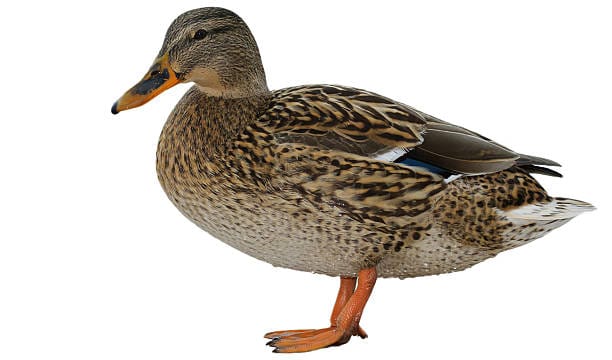
Ducks are highly diverse waterfowl found worldwide in freshwater lakes, rivers, wetlands, estuaries, and coastal habitats. They range in size, coloration, and behavior, but share key adaptations such as webbed feet, waterproof plumage, and specialized bills for filtering food. Ducks occupy a variety of ecological niches, from herbivorous dabblers to carnivorous divers, demonstrating remarkable adaptability.
Diet varies widely among species. Dabbling ducks feed on seeds, aquatic plants, and small invertebrates near the water surface, while diving ducks pursue fish, crustaceans, and submerged vegetation. Foraging techniques include dabbling, diving, and grazing, with behavior adapted to habitat and seasonal availability of food.
Breeding involves constructing nests on the ground, in vegetation, or in tree cavities. Clutch sizes range from 5–15 eggs depending on species. Parental care is primarily maternal, with females guiding ducklings to water and teaching them feeding skills. Young are precocial, leaving the nest shortly after hatching but remaining dependent on mothers for protection.
Communication includes quacks, whistles, grunts, and other vocalizations for courtship, territorial defense, and social cohesion. Ducks are often social, forming flocks during migration or foraging to reduce predation risk and increase efficiency.
Ecologically, ducks play essential roles in wetland ecosystems, including seed dispersal, controlling invertebrate populations, and contributing to nutrient cycling. Many species are migratory, highlighting the importance of conserving wetland networks across continents. Observing ducks provides insight into complex behaviors, ecological interactions, and evolutionary adaptations in waterfowl.
41. Dunlin

The dunlin is a small, migratory shorebird known for its distinctive long, downward-curving bill, reddish-brown breeding plumage, and nimble foraging techniques. Found across Europe, Asia, and North America, dunlins inhabit coastal mudflats, estuaries, and wetlands during migration and winter, while breeding in Arctic tundra regions. Their ability to travel thousands of kilometers each year demonstrates remarkable endurance and navigational skill.
Diet primarily consists of aquatic invertebrates, including worms, crustaceans, mollusks, and insects. Dunlins probe mud and shallow water with their specialized bills, detecting prey through touch. Feeding behavior is rhythmic and methodical, often observed in large flocks that move in unison across tidal flats. This synchronized movement enhances efficiency and reduces predation risk.
Breeding occurs in Arctic tundra, where nests are shallow depressions lined with moss, grass, and feathers. Clutch sizes generally range from 3–4 eggs, incubated by both parents. Chicks are precocial and rapidly learn to forage under parental supervision, preparing for the demanding migration southward.
Vocalizations include high-pitched calls used for communication within flocks, territory defense, and parent-offspring coordination. During migration, flocks maintain cohesion through constant vocal contact, ensuring safety and efficiency in movement.
Dunlins play a vital ecological role by controlling invertebrate populations and serving as prey for larger birds and mammals. Their presence indicates healthy wetland and coastal ecosystems. Conservation efforts focus on protecting breeding grounds, stopover sites, and wintering habitats, ensuring that these migratory birds can complete their life cycles successfully.
Observing dunlins provides a fascinating glimpse into migratory behavior, specialized foraging strategies, and the interconnectedness of coastal and tundra ecosystems. Their resilience and adaptability are truly remarkable, making them a favorite among shorebird enthusiasts.
42. Eagle
Eagles are large, powerful birds of prey renowned for their impressive size, strength, and soaring flight. Found worldwide, eagles occupy a variety of habitats including mountains, forests, wetlands, and grasslands. They are apex predators with keen eyesight, powerful talons, and hooked beaks, making them top hunters within their ecosystems. Their presence is often a symbol of freedom, strength, and majesty.
Diet mainly consists of fish, small mammals, birds, and carrion, depending on species. Eagles hunt with precision, using sharp vision to spot prey from great heights and swooping down at high speeds to capture it. Some species, like the bald eagle, specialize in fishing, while others focus on terrestrial prey. Opportunistic feeding strategies demonstrate intelligence and adaptability.
Breeding involves building massive nests called eyries in tall trees, cliffs, or human-made structures. Clutch sizes range from 1–3 eggs, incubated by both parents. Young eagles are cared for extensively, learning hunting and survival skills under parental guidance. Eagles are generally monogamous, forming long-term pair bonds that enhance reproductive success.
Vocalizations include piercing screams, calls, and whistles, often used in territorial defense, mating, and communication between mates or offspring. Soaring, display flights, and nest-building behaviors also play important roles in social interactions.
Ecologically, eagles regulate prey populations, maintain ecosystem balance, and serve as bioindicators of environmental health. Conservation has been crucial for many species affected by habitat loss, pollution, and hunting. Legal protection, habitat restoration, and public awareness have helped recover several iconic eagle populations, such as the bald eagle in North America.
Observing eagles in flight or nesting offers a breathtaking view of avian power, strategy, and beauty. Their combination of hunting skill, parental care, and ecological importance underscores their role as a keystone species in many ecosystems.
43. Egret

Egrets are graceful, long-legged wading birds closely related to herons. Found in freshwater and coastal wetlands worldwide, egrets are renowned for their striking white plumage, slender necks, and elegant hunting stance. These birds are visual hunters, relying on stealth, patience, and precision to capture fish, amphibians, and invertebrates.
Diet consists primarily of fish, crustaceans, insects, and small amphibians. Egrets forage by standing motionless in shallow water, then striking rapidly with sharp bills. Their hunting technique requires focus and coordination, allowing them to capture agile aquatic prey efficiently. Some species, like the cattle egret, forage alongside livestock, capitalizing on insects disturbed by grazing animals.
Breeding behavior includes constructing stick nests in trees, shrubs, or reed beds, often forming colonies known as rookeries. Clutch sizes typically range from 2–5 eggs, incubated by both parents. Chicks are altricial, dependent on parental care for feeding and protection. Colonial nesting offers safety from predators and fosters social learning among chicks.
Vocalizations are relatively soft compared to other waders, consisting of croaks, grunts, and calls during courtship or alarm situations. Visual displays, including posture and plumage presentation, are important for mating and social interactions.
Egrets play essential ecological roles, including controlling fish and invertebrate populations, aiding nutrient cycling, and contributing to wetland biodiversity. Conservation efforts emphasize habitat protection, wetland restoration, and minimizing human disturbance, as these habitats are crucial for breeding, foraging, and migration.
Observing egrets highlights their elegance, patience, and adaptability. Their hunting finesse, social behavior, and ecological contributions make them one of the most captivating birds in wetland ecosystems.
44. Emu

The emu is the second-largest bird in the world, native to Australia. Flightless and robust, emus are known for long legs, powerful running ability, and distinctive plumage of soft brown feathers. They inhabit grasslands, savannas, and open forests, thriving in diverse Australian ecosystems.
Diet is omnivorous, including fruits, seeds, insects, and small animals. Emus are opportunistic feeders, consuming a wide range of vegetation and occasionally traveling long distances to locate food and water. Their strong legs facilitate walking, running, and defending against predators.
Breeding involves males incubating eggs in nests while females leave to feed elsewhere. Clutch sizes range from 5–15 large, greenish eggs. Males exhibit parental care, including incubation, protection, and guiding young until they are independent. This role reversal is unique among birds and highlights emu adaptability and evolution.
Vocalizations include booming, drumming, and grunting sounds used for communication and mating displays. These sounds can carry over long distances, allowing interaction between individuals across open habitats.
Emus play ecological roles by dispersing seeds, controlling insect populations, and supporting habitat diversity. Observing emus provides insight into flightless bird adaptation, endurance, and ecological balance within Australian landscapes.
45. Falcon
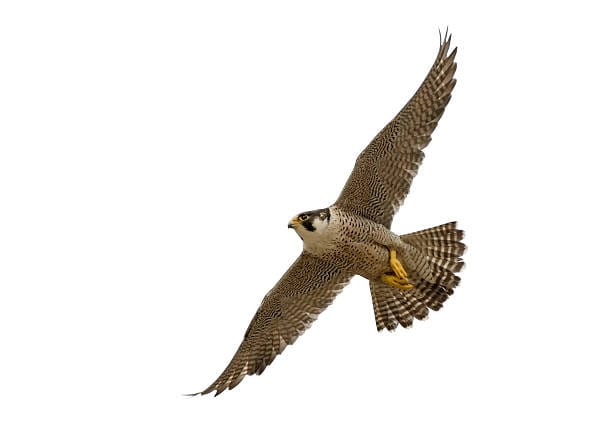
Falcons are birds of prey known for speed, agility, and precision hunting. Found worldwide, they occupy forests, grasslands, deserts, and urban areas. Falcons have sharp talons, hooked beaks, and keen eyesight, enabling them to capture birds and small mammals in mid-flight. The peregrine falcon, for example, is the fastest bird on Earth, capable of reaching over 320 km/h during hunting stoops.
Diet consists mainly of birds, mammals, and insects. Falcons employ stealth, speed, and aerial acrobatics to capture prey efficiently. They often hunt alone, relying on agility and strategy rather than brute strength. Falcons’ hunting techniques demonstrate intelligence, patience, and adaptability.
Breeding involves constructing nests on cliffs, ledges, or human-made structures. Clutches usually contain 2–5 eggs, with both parents contributing to incubation and feeding. Young falcons develop rapidly, learning hunting and survival skills under parental supervision. Falcons are monogamous, often maintaining pair bonds for multiple breeding seasons.
Vocalizations include loud calls, alarms, and courtship sounds. Falcons are highly territorial, using displays and vocalizations to defend nests and hunting areas. They are also known for cooperative hunting behavior in some species.
Ecologically, falcons control bird and small mammal populations, maintaining ecosystem balance. Conservation focuses on habitat protection, reducing pesticide exposure, and protecting migratory corridors. Observing falcons demonstrates skill, precision, and the remarkable adaptation of raptors to diverse habitats.
46. Finch
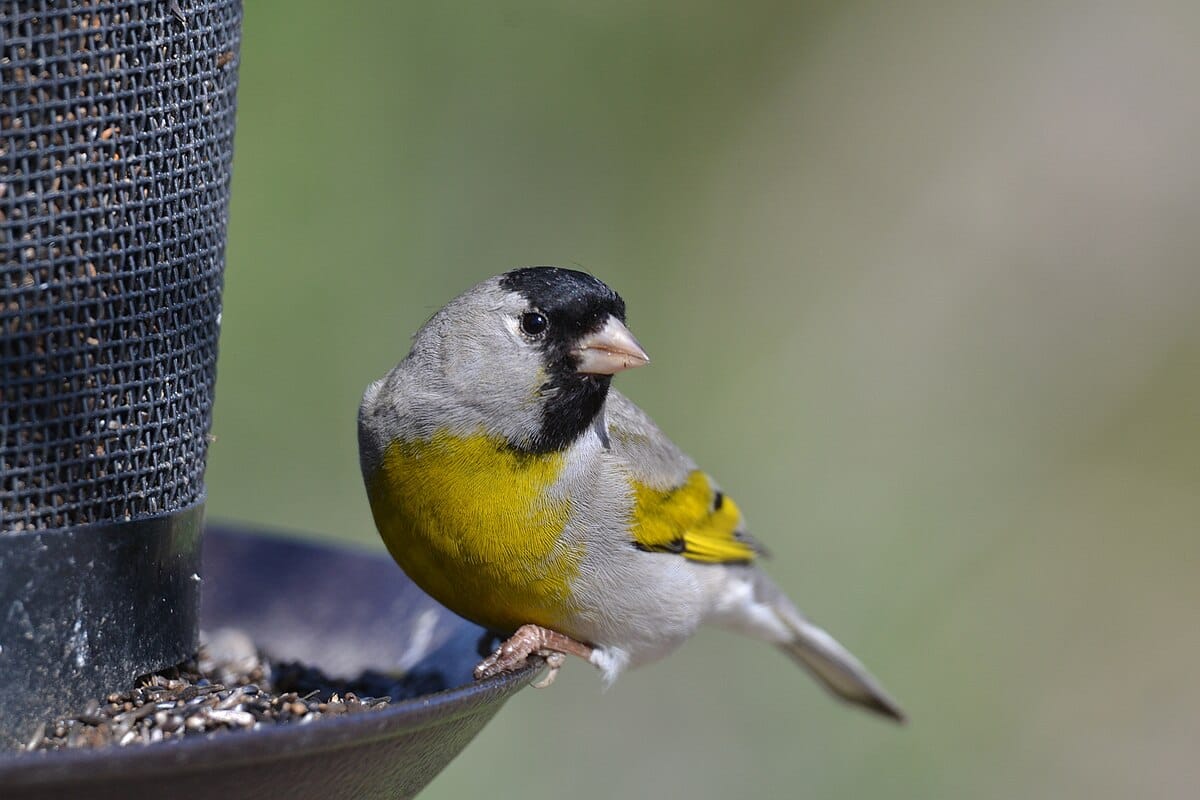
Finches are small, colorful passerines found worldwide. They exhibit diverse plumage patterns, strong conical bills for seed-eating, and melodious songs. Finches inhabit forests, grasslands, gardens, and urban areas. They are highly social, often forming flocks for foraging and protection.
Diet consists mainly of seeds, fruits, and insects. Foraging behavior is lively and coordinated, with individuals hopping, perching, and gleaning. Some species demonstrate tool use or specialized feeding strategies, showcasing intelligence and adaptability.
Breeding involves constructing cup-shaped nests in trees or shrubs. Clutch sizes range from 3–8 eggs. Both parents participate in feeding and caring for young, teaching essential foraging and social skills. Vocalizations are complex, with males singing to attract mates and defend territories.
Ecologically, finches contribute to seed dispersal, insect control, and ecosystem balance. Their beauty, songs, and adaptive behavior make them popular with birdwatchers and researchers.
47. Flamingo

Flamingos are large wading birds known for their pink to reddish plumage, long necks, and stilt-like legs. Found in Africa, South America, the Caribbean, and parts of Europe and Asia, flamingos inhabit saline or alkaline lakes, lagoons, and estuaries. Their distinctive coloration comes from carotenoid pigments in their diet, primarily algae and crustaceans.
Diet consists of filter-feeding on small crustaceans, algae, and plankton using specialized beaks adapted for upside-down feeding. This feeding technique is highly efficient and allows flamingos to thrive in nutrient-rich aquatic habitats. Social foraging is common, with large flocks feeding together.
Breeding involves constructing mud nests in colonies, with a single egg per nest. Both parents incubate and care for chicks, demonstrating strong cooperative behavior. Vocalizations and synchronized displays reinforce social bonds and facilitate mate selection.
Ecologically, flamingos influence nutrient cycling, maintain aquatic invertebrate populations, and contribute to wetland health. Their striking appearance and social behavior make them a favorite for bird enthusiasts and photographers worldwide.
48. Flycatcher
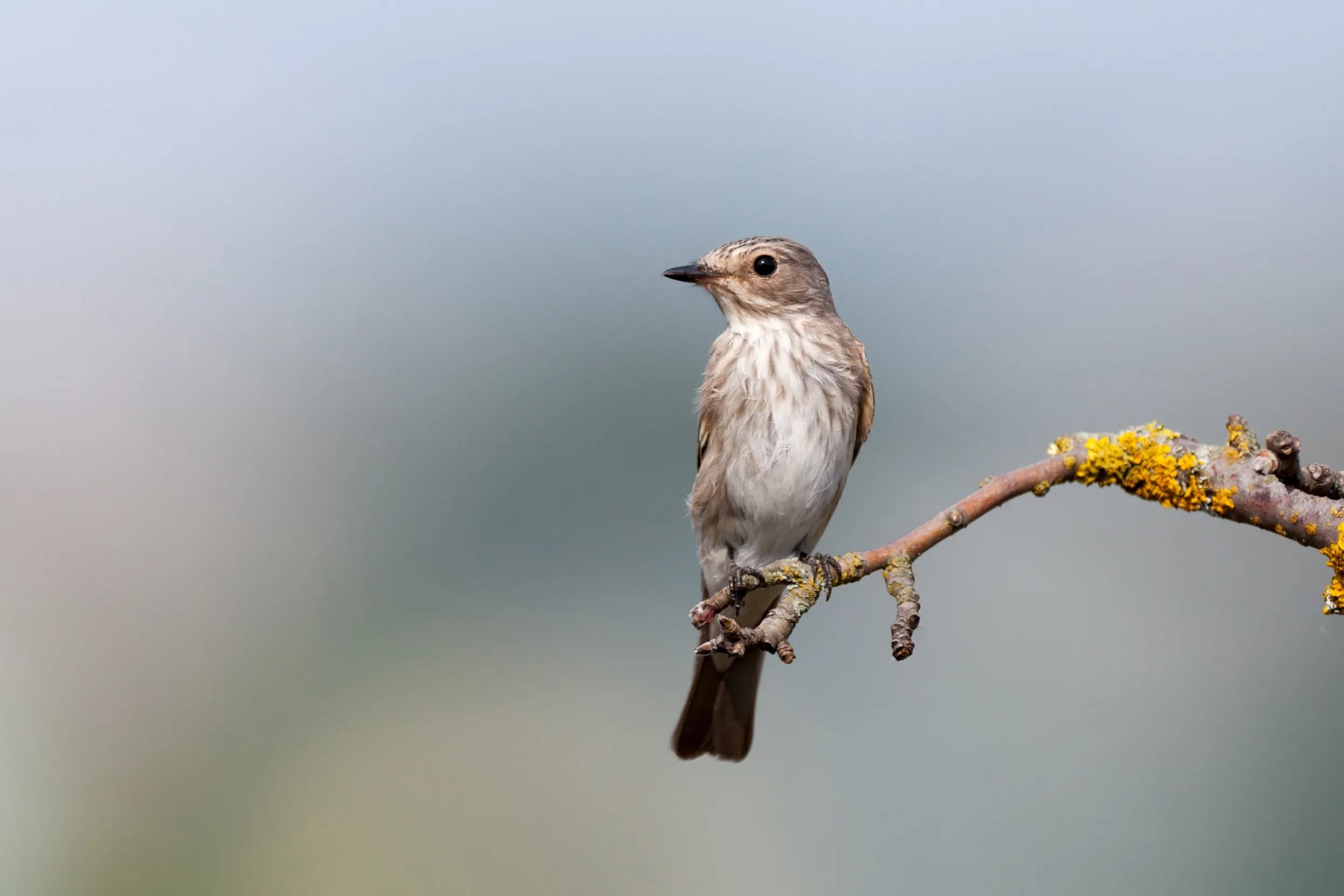
Flycatchers are small, agile passerines that feed primarily on flying insects. Found worldwide, they inhabit forests, woodlands, gardens, and grasslands. Flycatchers are characterized by quick, darting flight, keen eyesight, and short, broad bills adapted for catching insects mid-air.
Diet consists of flies, beetles, moths, and other insects. They hunt by perching and sallying out to capture prey in flight. This hunting strategy demonstrates speed, precision, and remarkable reflexes. Some species also consume fruits and berries seasonally.
Breeding involves building nests in trees, shrubs, or cavities. Clutch sizes typically range from 3–6 eggs. Both parents participate in incubation and feeding. Vocalizations are diverse, including songs, calls, and alarm notes used for communication and territorial defense.
Ecologically, flycatchers control insect populations and contribute to ecosystem health. Observing their agile flight and hunting behavior provides insight into avian adaptation and aerial feeding specialization.
49. Frigatebird

Frigatebirds are large seabirds known for their long wings, forked tails, and remarkable aerial abilities. Found in tropical oceans worldwide, they spend most of their lives soaring over open water. Males have inflatable red throat pouches used in courtship displays, while females are slightly smaller and less colorful.
Diet consists of fish, squid, and other marine prey, often obtained by kleptoparasitism, stealing food from other seabirds. Their aerial hunting requires endurance, precision, and coordination. Frigatebirds rarely land on water due to poor waterproofing, relying on soaring and wind currents to conserve energy.
Breeding occurs in colonies on isolated islands, with nests built from sticks and vegetation. Clutch size is usually one egg, with extended parental care. Vocalizations and displays play a crucial role in mating and social interaction.
Ecologically, frigatebirds influence marine food webs, control prey populations, and demonstrate adaptation to pelagic life. Observing them in flight is a spectacular experience, showcasing endurance, agility, and aerial mastery.
50. Gannet

Gannets are large seabirds known for their dramatic plunge-diving to catch fish. Found in the North Atlantic, South Atlantic, and parts of the Pacific, they inhabit cliffs, islands, and coastal waters. Their streamlined bodies, long wings, and pointed bills allow high-speed dives from significant heights, reaching up to 100 km/h.
Diet consists mainly of fish, captured by diving into the sea at high speeds. Gannets have air sacs beneath their skin to cushion impact and long, narrow wings for efficient gliding and maneuvering. They often hunt in groups, coordinating dives to maximize success.
Breeding occurs in dense colonies on cliffs or islands. Nests are made from seaweed, grass, and sticks. Clutch sizes are typically one egg, with both parents incubating and feeding the chick. Vocalizations include harsh calls used for territory defense, mating, and parent-offspring communication.
Gannets play essential ecological roles in marine ecosystems by regulating fish populations and contributing to nutrient cycling. Observing their hunting dives, social behavior, and aerial skills offers a vivid understanding of seabird adaptation and survival strategies.
51. Goldfinch

Goldfinches are small, vibrant passerines known for their striking yellow plumage and cheerful, melodic songs. Found across Europe, North America, and parts of Asia, they inhabit meadows, gardens, woodlands, and farmland. Their bright colors and lively behavior make them easily recognizable and popular among birdwatchers.
Diet consists mainly of seeds, particularly from thistles, dandelions, and other composite plants. Goldfinches have specialized bills for extracting seeds from seed heads efficiently. They may also consume small insects during the breeding season to provide additional protein for growing chicks. Foraging is often social, with flocks moving through habitats to exploit abundant seed sources.
Breeding behavior involves constructing delicate cup-shaped nests in shrubs or trees. Clutches usually contain 4–6 eggs, incubated primarily by females. Both parents participate in feeding chicks, teaching foraging skills and providing protection from predators. Goldfinches are highly sociable during non-breeding seasons, forming large flocks that enhance feeding efficiency and predator vigilance.
Vocalizations include a pleasant, twinkling song, often delivered in flight or from perches. Calls are used for communication, alarm signaling, and maintaining group cohesion. Goldfinches are agile fliers, capable of acrobatic maneuvers while foraging or avoiding predators.
Ecologically, goldfinches contribute to seed dispersal and help control plant populations. Their presence indicates healthy habitats with abundant wildflowers and low pesticide exposure. Observing goldfinches provides insight into social behavior, foraging specialization, and the beauty of small songbirds.
52. Goose
Geese are medium-to-large waterfowl found across the globe, inhabiting lakes, rivers, wetlands, and agricultural fields. Recognizable by long necks, webbed feet, and strong bills, geese are social, migratory birds with complex communication systems and cooperative behaviors.
Diet consists mainly of grasses, seeds, aquatic vegetation, and agricultural crops. Geese forage on land and in water, often grazing in flocks that maximize feeding efficiency. Migratory species build fat reserves for long-distance journeys, relying on stopover sites to rest and feed during migration.
Breeding involves constructing nests on the ground near water, often hidden in vegetation. Clutch sizes typically range from 4–8 eggs. Both parents guard and care for young, teaching them to swim, feed, and avoid predators. Geese are monogamous, often maintaining lifelong pair bonds, which contributes to coordinated family survival.
Vocalizations include honks, grunts, and hisses used for communication within flocks, territory defense, and predator warnings. Geese demonstrate strong social bonds, working together to protect young and coordinate migratory movements.
Ecologically, geese influence plant communities, disperse seeds, and provide prey for predators. They also play a role in wetland nutrient cycling. Conservation efforts emphasize habitat preservation, protection of migratory stopovers, and minimizing conflicts with agriculture.
53. Goshawk
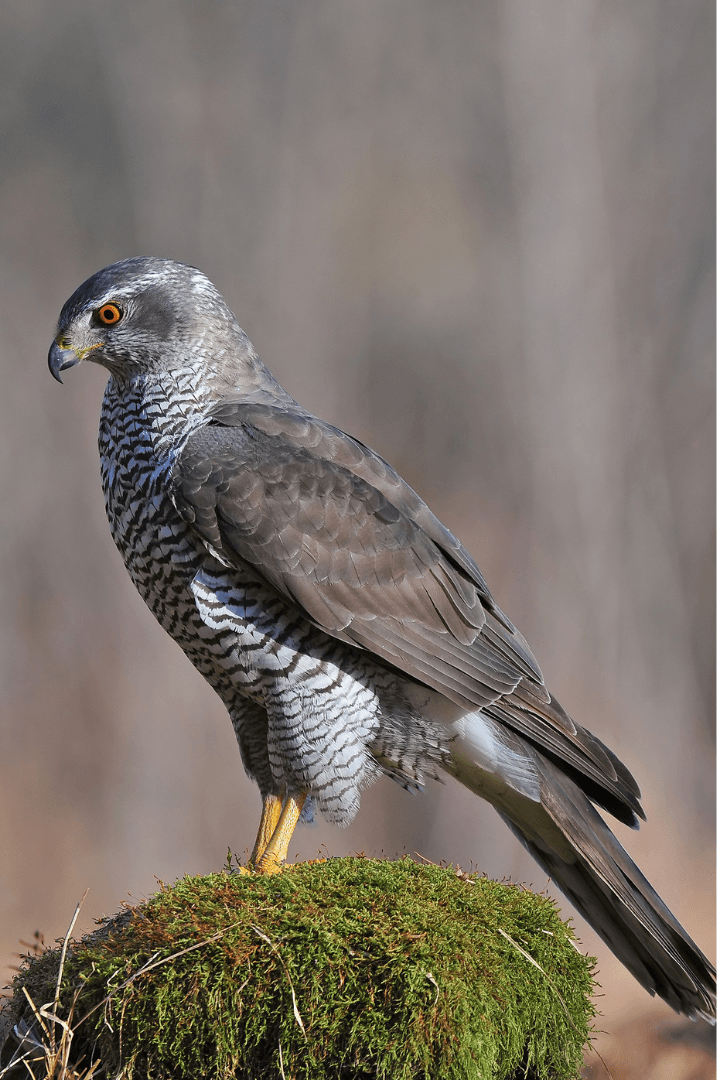
Goshawks are medium-to-large raptors known for agility, speed, and powerful hunting capabilities. Found in forests and woodlands across Europe, Asia, and North America, goshawks are apex predators capable of hunting birds, mammals, and reptiles. They are renowned for their stealth, precision, and adaptability in diverse habitats.
Diet includes birds such as pigeons and grouse, mammals like rabbits and squirrels, and occasionally reptiles. Goshawks employ rapid, low-level flights and ambush tactics to capture prey. Their short, rounded wings and long tails facilitate maneuvering through dense forest canopies.
Breeding involves building nests in tall trees, often reused and enlarged yearly. Clutch sizes generally range from 2–5 eggs, with both parents contributing to incubation and chick-rearing. Young are taught hunting skills and territory navigation, which are essential for survival.
Vocalizations are harsh, high-pitched calls used for communication, alarm, and territory defense. Goshawks are secretive yet highly skilled hunters, demonstrating intelligence and strategy in prey capture.
Ecologically, goshawks regulate populations of birds and small mammals, maintaining forest ecosystem balance. Observing goshawks provides insight into predator-prey interactions, raptor adaptation, and forest dynamics.
54. Grackle

Grackles are medium-sized passerines with glossy black plumage and long tails, found primarily in North and Central America. They inhabit forests, fields, wetlands, and urban areas, exhibiting adaptability and intelligence. Grackles are known for their loud, varied vocalizations and opportunistic feeding behavior.
Diet consists of insects, seeds, grains, fruits, and small vertebrates. Grackles forage on the ground, in trees, and near water, often forming large mixed-species flocks. They display problem-solving abilities, occasionally using tools or exploiting human-modified environments for food.
Breeding involves building cup-shaped nests in trees, shrubs, or man-made structures. Clutches typically contain 3–6 eggs, with both parents participating in incubation and feeding. Social interactions and group dynamics are important in defense and foraging efficiency.
Vocalizations include whistles, squeaks, and harsh calls, used for communication, mating, and territorial defense. Grackles’ social behavior and adaptability allow them to thrive in urbanized landscapes.
Ecologically, grackles control insect populations and disperse seeds, contributing to ecosystem functioning. Observing grackles highlights the intelligence, social dynamics, and flexibility of passerine birds.
55. Grebe

Grebes are aquatic birds known for their excellent swimming, diving skills, and elaborate courtship displays. Found in freshwater lakes, ponds, and marshes worldwide, they have streamlined bodies, lobed toes, and dense plumage that facilitate underwater hunting and buoyancy.
Diet primarily includes fish, crustaceans, and insects. Grebes dive and pursue prey underwater, often remaining submerged for several seconds. They are skilled hunters, relying on keen eyesight, agility, and stealth to capture elusive aquatic prey.
Breeding involves constructing floating nests anchored to vegetation. Clutches generally contain 2–6 eggs, incubated by both parents. Courtship displays are elaborate, including synchronized movements, head shaking, and mutual preening, enhancing pair bonding.
Vocalizations include trills, calls, and alarm sounds used for communication and territory defense. Grebes are generally territorial during breeding but social outside nesting periods.
Ecologically, grebes maintain aquatic ecosystem health by regulating fish and invertebrate populations. Observing their diving behavior, courtship, and parenting strategies reveals the intricate adaptations required for survival in aquatic environments.
56. Greenfinch
Greenfinches are small, seed-eating passerines with vibrant green and yellow plumage, found across Europe, Asia, and North Africa. They inhabit woodlands, gardens, farmland, and hedgerows. Greenfinches are social birds, often forming flocks outside the breeding season to forage efficiently and reduce predation risk.
Diet consists mainly of seeds from a variety of plants, supplemented with insects during the breeding season. Foraging is active and social, with birds moving through vegetation and open areas in coordinated flocks. Their strong conical bills allow them to extract seeds effectively.
Breeding involves constructing cup-shaped nests in shrubs or trees. Clutch sizes typically range from 4–6 eggs, incubated primarily by females. Both parents feed chicks and teach foraging skills, ensuring young develop efficiently. Vocalizations include twittering songs and calls for communication, territory defense, and group cohesion.
Ecologically, greenfinches contribute to seed dispersal and plant population control. Observing their bright plumage, social behavior, and agile foraging provides insight into passerine ecology and adaptability.
57. Grosbeak
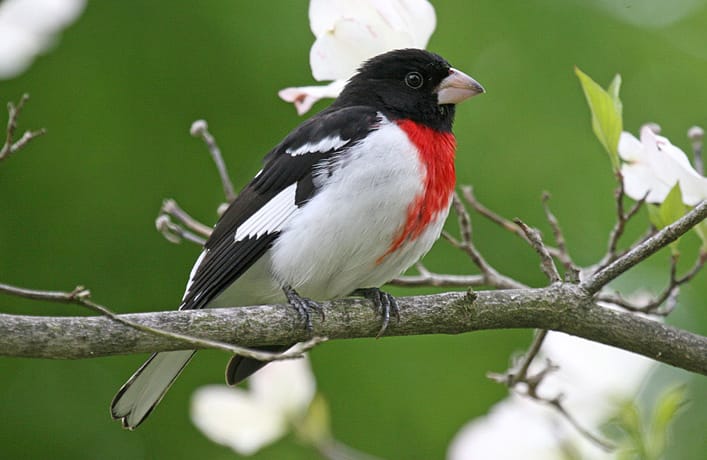
Grosbeaks are medium-sized songbirds with robust, conical bills adapted for seed-eating. Found across North and South America, Europe, and Asia, they inhabit forests, woodlands, gardens, and scrublands. Their bright plumage and melodic songs make them a favorite among birdwatchers.
Diet consists mainly of seeds, berries, and insects. Grosbeaks forage in trees, shrubs, and on the ground, using strong bills to crack open hard seeds. Some species exhibit migratory behavior, traveling long distances to exploit seasonal food sources.
Breeding involves building cup-shaped nests in trees or shrubs. Clutch sizes range from 3–6 eggs. Both parents contribute to incubation and feeding. Vocalizations are melodious and varied, used for mating, territory defense, and social communication.
Ecologically, grosbeaks influence plant populations through seed consumption and dispersal. Observing their feeding and social behavior reveals the interplay between diet specialization, reproduction, and habitat use.
58. Grouse
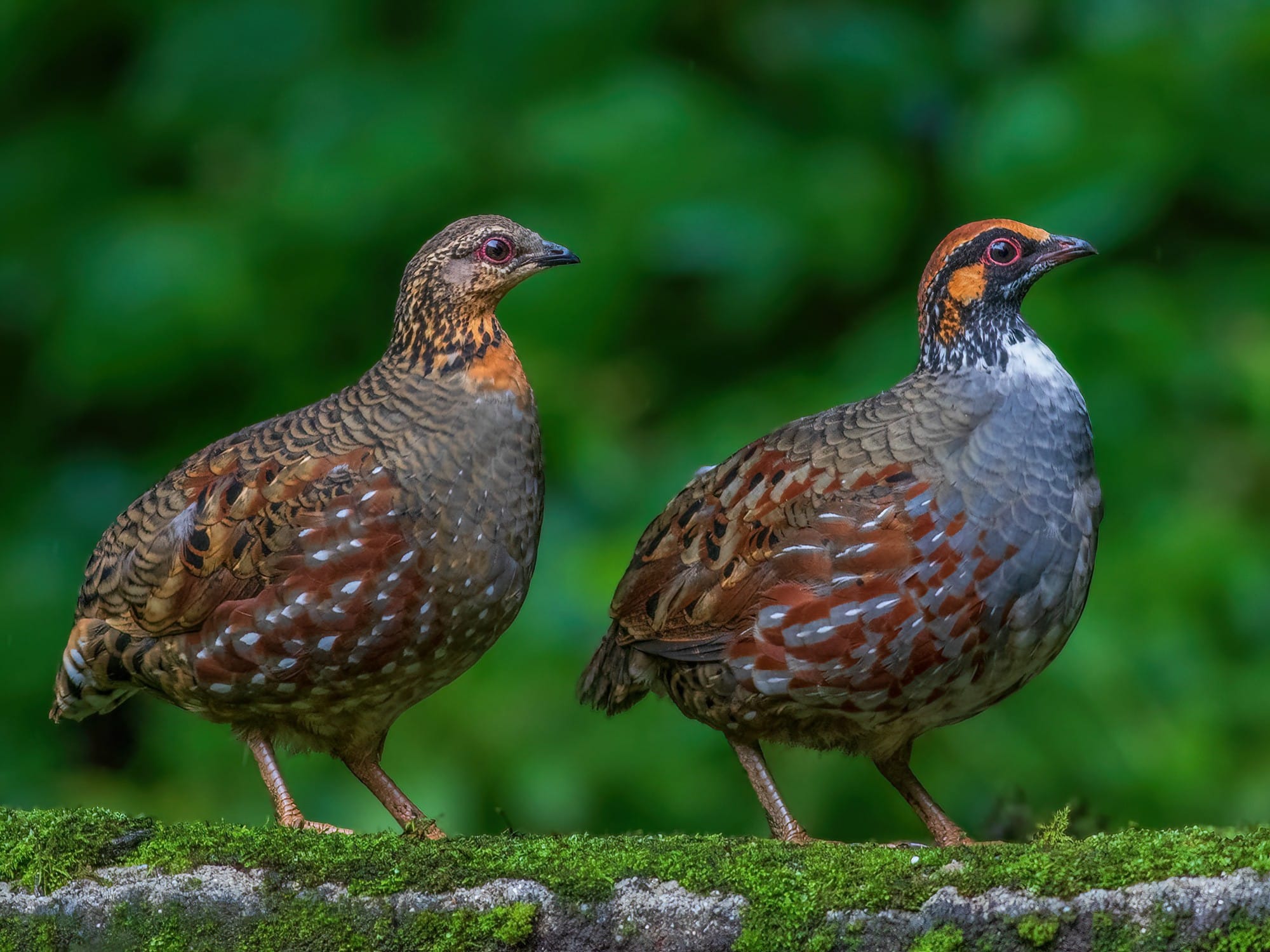
Grouse are medium-to-large ground-dwelling birds found in temperate and subarctic regions. They inhabit forests, tundras, moorlands, and grasslands. Grouse are known for elaborate mating displays, cryptic plumage, and seasonal movements.
Diet varies seasonally, including seeds, leaves, berries, and insects. Grouse forage on the ground, using their strong legs and bills to uncover food. Seasonal changes influence diet and behavior, particularly during winter when vegetation is scarce.
Breeding involves dramatic courtship displays on leks, where males compete for female attention. Clutch sizes range from 6–12 eggs, incubated by females. Chicks are precocial and follow mothers shortly after hatching. Vocalizations and visual displays play a vital role in mating success.
Ecologically, grouse influence vegetation structure and seed dispersal. Observing their mating displays, feeding behavior, and habitat use provides insights into ground-dwelling bird adaptations.
59. Guillemot

Guillemots are medium-sized seabirds with sleek black-and-white plumage, found in the North Atlantic and Pacific oceans. They inhabit cliffs and rocky coasts, nesting in dense colonies. Guillemots are expert divers, pursuing fish underwater using their wings and streamlined bodies.
Diet consists primarily of fish, supplemented with crustaceans. Guillemots dive from the surface or underwater to capture prey, often working cooperatively in groups to herd fish. Breeding involves nesting on narrow cliff ledges, where one egg is laid and incubated by both parents. Vocalizations are harsh calls used for social interaction and territory defense.
Ecologically, guillemots maintain marine food webs, regulating fish populations and contributing to seabird biodiversity. Observing their diving, nesting, and social behavior provides a glimpse into marine bird adaptations.
60. Gull

Gulls are medium-to-large seabirds found worldwide along coasts, inland waterways, and urban areas. Recognizable by their white or gray plumage, long wings, and strong bills, gulls are opportunistic feeders, highly adaptable, and social.
Diet is diverse, including fish, invertebrates, carrion, eggs, and human food waste. Gulls employ various foraging strategies, from diving and scavenging to stealing food from other birds. Their intelligence and problem-solving skills allow them to thrive in human-altered landscapes.
Breeding involves nesting in colonies on cliffs, islands, or rooftops. Clutch sizes typically range from 2–3 eggs. Both parents incubate and feed chicks, which are precocial but remain dependent for several weeks. Vocalizations include calls, screams, and alarm notes for communication and defense.
Ecologically, gulls play roles in scavenging, nutrient cycling, and controlling prey populations. Observing gulls provides insight into social dynamics, feeding strategies, and adaptability in diverse habitats.
61. Harrier
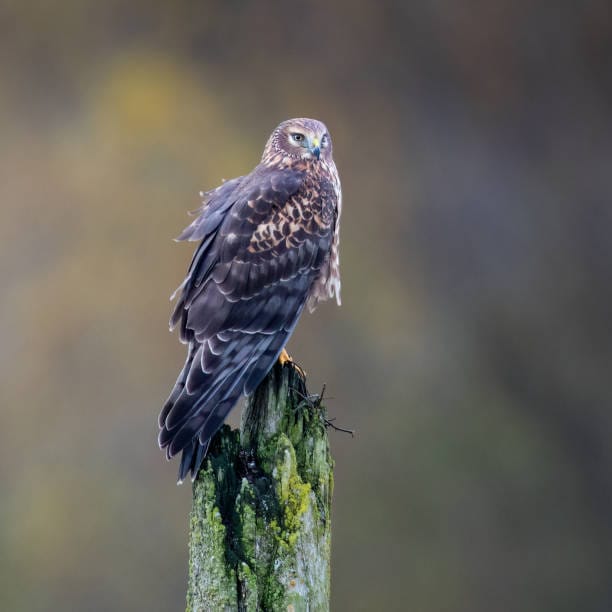
Harriers are medium-sized raptors known for their low, graceful flight over open habitats such as grasslands, marshes, and wetlands. They are distinguished by long wings, narrow tails, and keen eyesight adapted for spotting small mammals and birds from above. Harriers are found across North America, Europe, Asia, and Africa, thriving in areas with dense vegetation and open hunting grounds.
Diet mainly consists of small mammals, birds, reptiles, and occasionally insects. Harriers use a characteristic low, gliding flight to detect and surprise prey. Hunting often involves circling above fields or marshes, then descending swiftly to capture targets with talons. They demonstrate remarkable agility and patience, often hovering briefly before striking.
Breeding involves constructing simple nests on the ground or in low shrubs, often well-hidden among grasses. Clutch sizes typically range from 3–6 eggs, incubated by females while males provide food. Chicks are altricial and require extensive parental care, learning hunting techniques and territory navigation under parental guidance.
Vocalizations include sharp calls used for communication, mating, and territorial defense. Harriers’ vocalizations are essential during breeding season to signal presence and maintain pair bonds. Observing harriers in flight is mesmerizing, as their hunting style combines elegance, precision, and adaptability.
Ecologically, harriers control populations of small mammals and birds, contributing to ecosystem balance. Their sensitivity to habitat disturbance makes them important indicators of wetland and grassland health. Conservation focuses on preserving open habitats, preventing wetland drainage, and minimizing pesticide use that reduces prey availability.
62. Hawk
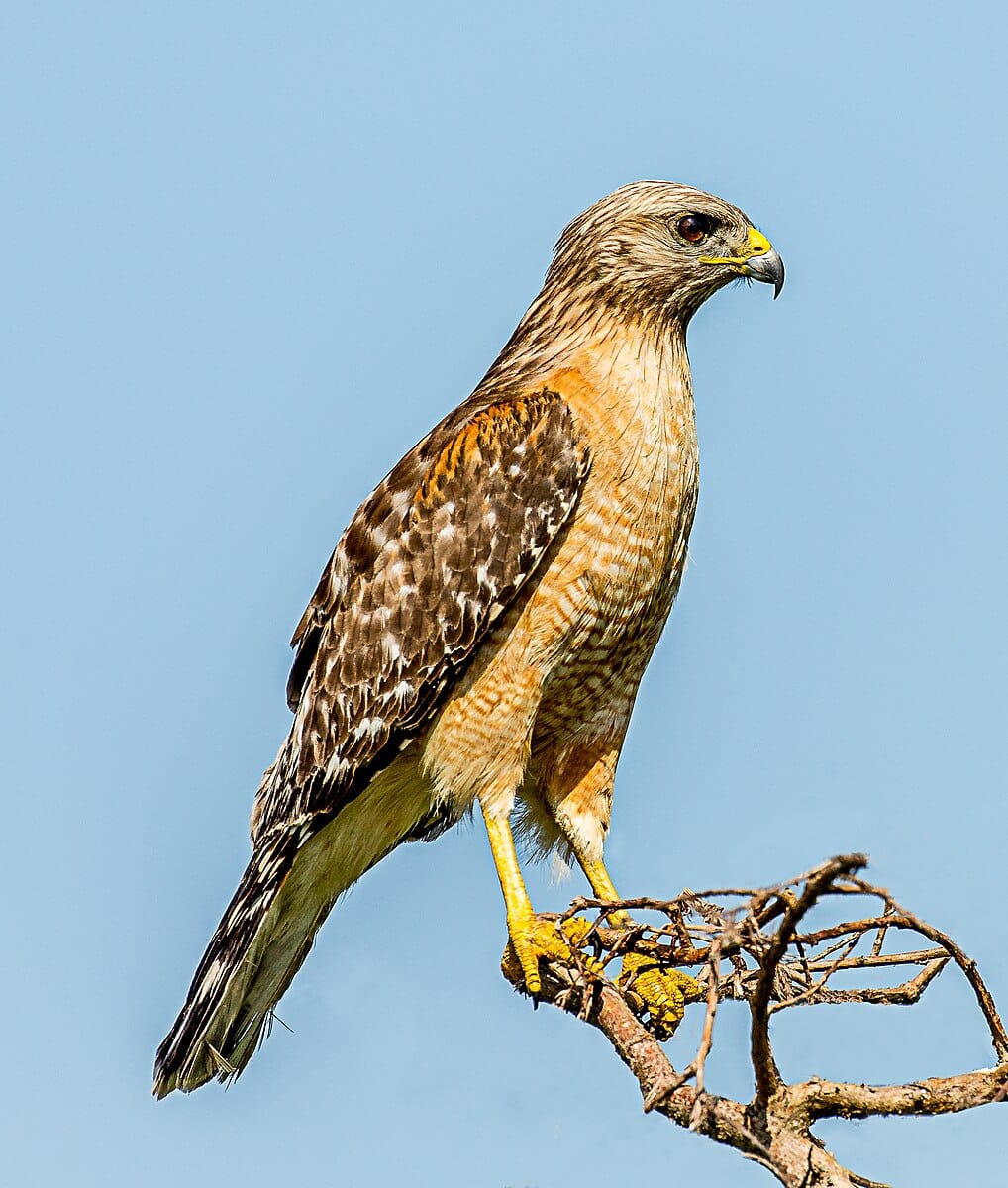
Hawks are powerful birds of prey known for sharp talons, hooked beaks, and exceptional vision. Found worldwide, they inhabit forests, grasslands, deserts, and urban areas. Hawks are diverse, with species adapted to specific environments and prey types, from small birds and mammals to reptiles and insects.
Diet consists of birds, rodents, reptiles, and insects. Hawks hunt using a combination of soaring flight, ambush tactics, and stealth, relying on keen eyesight to spot prey from great distances. Their flight style varies between species, with some specializing in agile maneuvering through forests and others soaring over open fields.
Breeding involves constructing nests in trees, cliffs, or human-made structures. Clutch sizes range from 2–6 eggs, with both parents contributing to incubation and feeding. Young hawks are altricial, requiring parental guidance in hunting and survival. Hawks are generally monogamous, forming long-term pair bonds that enhance reproductive success.
Vocalizations include piercing calls, alarms, and territorial signals. Hawks use visual displays and aerial maneuvers to establish dominance, attract mates, and defend territories. Observing hawks demonstrates skill, strategy, and adaptability in predation.
Ecologically, hawks regulate prey populations, influence ecosystem balance, and serve as bioindicators of habitat health. Conservation efforts focus on habitat protection, reducing pesticide exposure, and mitigating human-wildlife conflicts. Their intelligence and hunting precision make hawks one of the most fascinating raptor groups.
63. Heron

Herons are tall, long-legged wading birds found in wetlands, rivers, lakes, and coastal regions worldwide. Known for their slow, deliberate movements and spear-like bills, herons are skilled hunters of fish, amphibians, and invertebrates. Their elegant posture and patient hunting style make them iconic symbols of wetland ecosystems.
Diet consists primarily of fish, amphibians, insects, and small mammals. Herons forage by standing motionless or walking slowly in shallow water, striking rapidly with their sharp bills. Their hunting technique demonstrates patience, precision, and adaptability to varying water conditions.
Breeding involves constructing nests in trees, shrubs, or reed beds, often forming colonies known as heronries. Clutch sizes typically range from 2–6 eggs, with both parents incubating and feeding chicks. Juveniles are altricial and require parental guidance to develop foraging skills.
Vocalizations include croaks, squawks, and alarm calls used for communication, mating, and territorial defense. Herons are generally solitary hunters but highly social during breeding, forming dense nesting colonies that enhance protection from predators.
Ecologically, herons control fish and amphibian populations and contribute to wetland nutrient cycling. Observing herons reveals their patience, hunting efficiency, and vital role in aquatic ecosystems. Conservation emphasizes wetland preservation and minimizing human disturbance in breeding habitats.
64. Hoopoe

Hoopoes are medium-sized birds with distinctive crown-like crests and long, slender bills. Found across Europe, Asia, and Africa, hoopoes inhabit open woodlands, grasslands, savannas, and gardens. Their striking plumage, unique vocalizations, and insectivorous diet make them one of the most recognizable and charismatic bird species.
Diet primarily consists of insects, larvae, and small invertebrates. Hoopoes forage on the ground, using their long bills to probe soil and leaf litter for hidden prey. They occasionally use their bills to flip leaves or catch insects in mid-air. Their foraging behavior showcases adaptability and specialized feeding techniques.
Breeding involves nesting in cavities, including tree holes, rock crevices, or man-made structures. Clutch sizes typically range from 5–7 eggs, with both parents sharing incubation and feeding responsibilities. Chicks are altricial, requiring significant parental care during the early stages of life.
Vocalizations include repetitive “oop-oop-oop” calls, alarm notes, and soft murmurs for communication. Courtship includes crest displays and bowing movements, enhancing pair bonding and signaling reproductive readiness.
Ecologically, hoopoes control insect populations, contribute to soil aeration through foraging, and serve as prey for larger predators. Observing hoopoes highlights their playful behavior, distinctive appearance, and unique ecological adaptations.
65. Hornbill

Hornbills are large, tropical birds notable for their enormous, curved bills and casque structures atop their heads. Found in Africa, Asia, and Melanesia, hornbills inhabit forests, woodlands, and savannas. They are frugivorous but also consume insects, small reptiles, and birds, playing a vital role in seed dispersal.
Diet consists mainly of fruits, supplemented with insects and small animals. Hornbills use their bills to pick fruit and manipulate prey with precision. They are capable of cooperative feeding and exhibit intelligence and problem-solving skills in accessing food sources.
Breeding involves nesting in tree cavities, where females seal themselves inside using mud and feces, leaving only a small slit for food delivery by males. Clutch sizes range from 1–4 eggs. Chicks are altricial and rely entirely on parental care until they fledge. This unique breeding strategy enhances protection from predators.
Vocalizations include grunts, cackles, and bell-like calls used for communication, mate attraction, and territory defense. Visual displays, including bill movements and wing spreading, reinforce social signals and courtship.
Ecologically, hornbills contribute significantly to forest regeneration through seed dispersal. Observing them reveals remarkable adaptations, social complexity, and their importance in tropical ecosystems. Conservation focuses on habitat preservation and preventing hunting pressures.
66. Hummingbird
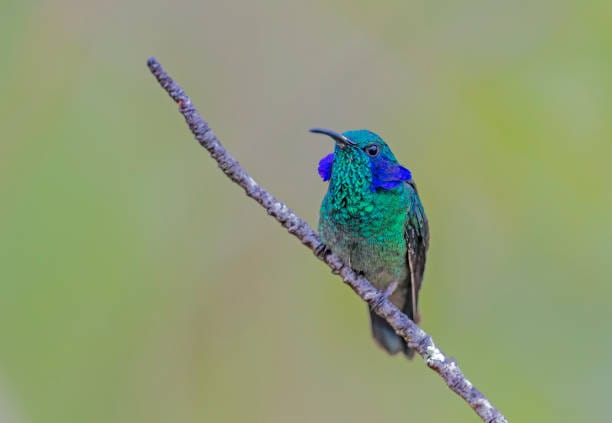
Hummingbirds are tiny, jewel-like birds found primarily in the Americas. Known for rapid wing beats, iridescent plumage, and hovering flight, they are extraordinary nectar feeders. Hummingbirds are highly energetic, visiting hundreds of flowers daily to obtain energy-rich nectar while pollinating plants.
Diet consists mainly of nectar, supplemented with insects and spiders for protein. Their specialized bills and tongues allow precise extraction of nectar from tubular flowers. Hummingbirds exhibit territorial behavior around flower-rich areas, chasing competitors to ensure access to resources.
Breeding involves constructing delicate cup-shaped nests attached to branches or leaves. Clutch sizes are usually 1–3 eggs, incubated primarily by females. Chicks are altricial, dependent on mothers for feeding and protection. Hummingbirds display remarkable maternal care and learning during the early life stages.
Vocalizations include high-pitched calls and chirps used for communication and courtship. Courtship displays include dramatic dives, hovering maneuvers, and glittering plumage presentations, showcasing agility and attractiveness to mates.
Ecologically, hummingbirds play critical roles as pollinators, maintaining plant biodiversity. Observing them highlights speed, energy management, and ecological interdependence between birds and flowers. Their tiny size and dazzling colors make them captivating subjects for enthusiasts.
67. Ibis

Ibises are long-legged wading birds with down-curved bills, found in wetlands, marshes, rivers, and coastal regions worldwide. They are social, often forming large flocks, and feed primarily on aquatic invertebrates, fish, and small amphibians. Ibises are known for their striking plumage, including white, glossy black, and iridescent colors.
Diet consists mainly of insects, crustaceans, mollusks, and small fish. Ibises forage by probing mud and shallow water with their specialized bills. They employ cooperative foraging in flocks, increasing efficiency and predator awareness. Feeding is both methodical and adaptive, reflecting habitat conditions and seasonal prey availability.
Breeding involves nesting in trees, shrubs, or reed beds. Clutch sizes typically range from 2–5 eggs. Both parents incubate and feed chicks. Ibises are highly social during breeding, forming colonies that enhance protection and cooperative care.
Vocalizations include grunts, croaks, and high-pitched calls used for communication, mating, and alarm. Observing ibises provides insight into social behavior, foraging adaptations, and wetland ecosystem dynamics.
Ecologically, ibises regulate invertebrate populations and contribute to nutrient cycling in wetlands. Conservation focuses on protecting nesting colonies, preserving wetland habitats, and monitoring water quality to sustain ibis populations.
68. Jay
Jays are medium-sized passerines known for their intelligence, striking plumage, and noisy calls. Found worldwide, particularly in forests and woodland areas, jays exhibit remarkable problem-solving abilities and strong social behaviors. They are members of the corvid family, renowned for memory and tool use.
Diet consists of nuts, seeds, fruits, insects, and small animals. Jays are known for caching food, storing nuts in hidden locations for future consumption. This behavior demonstrates spatial memory and planning abilities, critical for survival in seasonal environments.
Breeding involves constructing cup-shaped nests in trees or shrubs. Clutch sizes range from 3–6 eggs. Both parents incubate and feed chicks, which develop social and foraging skills under parental guidance. Jays display cooperative behavior and vigilance in nest defense.
Vocalizations are diverse, including whistles, harsh calls, mimicry, and alarm sounds. Their communication supports social cohesion, territory defense, and predator warning. Observing jays showcases intelligence, adaptability, and complex social behavior in passerines.
Ecologically, jays contribute to seed dispersal, forest regeneration, and insect population control. Their adaptability and problem-solving skills highlight the intricate balance between behavior, diet, and survival.
69. Kingfisher

Kingfishers are small to medium-sized birds with bright plumage, large heads, and long, sharp bills. Found worldwide near rivers, lakes, and coastal areas, they are specialized fish hunters, using rapid dives and precise strikes to catch prey. Their vivid colors and striking appearance make them a favorite among bird enthusiasts.
Diet consists mainly of fish, supplemented by aquatic invertebrates and small amphibians. Kingfishers hunt by perching above water and diving with remarkable speed and accuracy. Some species hover before plunging, while others dive directly from branches or riverbanks. Hunting requires precision, timing, and keen eyesight.
Breeding involves excavating burrows in riverbanks or sandy soil. Clutch sizes typically range from 4–7 eggs, with both parents incubating and feeding chicks. Young develop quickly, learning to hunt and navigate aquatic habitats under parental guidance.
Vocalizations include sharp calls, trills, and alarm sounds used for communication and territory defense. Observing kingfishers demonstrates patience, skill, and adaptation to riparian ecosystems.
Ecologically, kingfishers regulate fish populations and contribute to aquatic food webs. Conservation focuses on protecting freshwater habitats, minimizing pollution, and ensuring stable riverbank conditions for nesting.
70. Kite
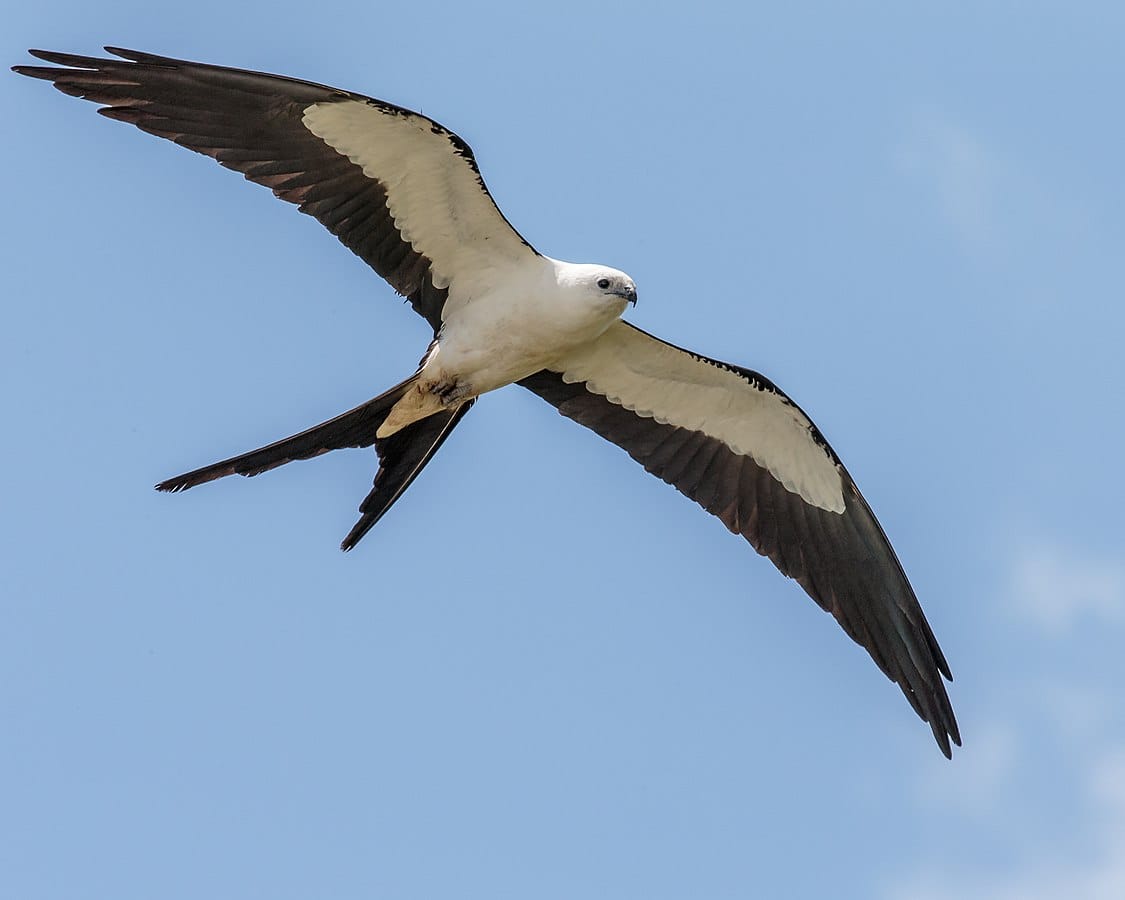
Kites are medium-sized birds of prey known for their graceful flight, long wings, and forked tails. Found worldwide, they inhabit forests, wetlands, grasslands, and urban areas. Kites are agile hunters, feeding on insects, small vertebrates, and carrion. Their light, buoyant flight allows effortless gliding and energy-efficient hunting.
Diet includes insects, small mammals, reptiles, and carrion. Kites employ a combination of soaring flight, aerial hunting, and opportunistic feeding. Their agility and vision allow them to detect prey from high above and swoop down with precision.
Breeding involves building nests in trees, often reusing structures yearly. Clutch sizes typically range from 2–4 eggs, with both parents contributing to incubation and chick-rearing. Juveniles develop flight and hunting skills under parental guidance. Kites are generally monogamous, maintaining long-term pair bonds.
Vocalizations include high-pitched calls, alarm notes, and courtship sounds. Display flights and aerial maneuvers are integral to mating and territorial behavior. Observing kites highlights elegance, precision, and adaptability in raptors.
Ecologically, kites contribute to controlling insect and small vertebrate populations and serve as indicators of environmental health. Conservation focuses on habitat preservation, minimizing pesticide exposure, and protecting nesting sites.
71. Kookaburra

Kookaburras are iconic Australian birds known for their distinctive laughing calls, robust bodies, and large heads with strong, hooked bills. They inhabit eucalyptus forests, woodlands, and suburban areas, demonstrating remarkable adaptability. Kookaburras are members of the kingfisher family, but unlike most kingfishers, they hunt primarily on land.
Diet consists of insects, small reptiles, amphibians, birds, and occasionally small mammals. Kookaburras hunt by perching silently and swooping down on prey with precision. They are opportunistic feeders, demonstrating intelligence in locating and capturing food. Juveniles often learn hunting techniques through observation and mimicry of adults.
Breeding involves nesting in tree hollows or cavities. Clutch sizes generally range from 2–4 eggs, incubated by both parents. Kookaburras exhibit cooperative breeding, where older offspring may assist parents in feeding and protecting new chicks. Nestlings are altricial, requiring extensive parental care until fledging.
Vocalizations are among the most remarkable features of kookaburras, with loud, echoing calls resembling laughter. Calls are used for territory defense, communication, and maintaining social bonds. Observing kookaburras provides insight into complex social structures, cooperative breeding, and adaptability.
Ecologically, kookaburras help control insect and small vertebrate populations. They are cultural symbols in Australia and a favorite among bird enthusiasts. Conservation emphasizes protecting natural habitats and mitigating the effects of urban development on nesting sites.
72. Lapwing

Lapwings are medium-sized wading birds found across Europe, Asia, and Africa. Recognizable by their striking black-and-white plumage, long crests, and rounded wings, they inhabit grasslands, farmland, wetlands, and coastal areas. Lapwings are known for their acrobatic flight displays during breeding season, providing a visual spectacle for observers.
Diet primarily consists of insects, worms, and other invertebrates. Lapwings forage on the ground, probing soil with their bills and demonstrating agility and quick movements. Seasonal changes affect food availability, prompting adaptive foraging strategies and flocking behavior.
Breeding involves constructing simple nests on the ground, often camouflaged with vegetation. Clutch sizes range from 3–5 eggs, incubated primarily by females. Both parents participate in protecting chicks, using distraction displays and alarm calls to deter predators. Young are precocial, following parents shortly after hatching.
Vocalizations include sharp calls, alarm cries, and whistles used for communication, mating, and territory defense. Lapwings’ acrobatic displays during courtship demonstrate energy, skill, and visual signaling to potential mates.
Ecologically, lapwings control insect populations, contribute to soil aeration, and serve as prey for larger predators. Observing lapwings highlights their agility, social behavior, and importance in grassland and wetland ecosystems.
73. Lark

Larks are small to medium-sized ground-dwelling passerines known for their melodious songs, elaborate flight displays, and subtle plumage. Found in Europe, Asia, Africa, and North America, they inhabit grasslands, deserts, farmlands, and open areas. Larks are celebrated for their singing ability, often performing while ascending in flight.
Diet consists primarily of seeds and insects. Larks forage on the ground, using hopping and pecking techniques to locate food. Seasonal changes influence diet, with insects forming a critical protein source during breeding. Larks’ foraging strategies demonstrate adaptability to environmental conditions.
Breeding involves building cup-shaped nests on the ground, often hidden among vegetation. Clutch sizes range from 3–6 eggs, incubated primarily by females. Chicks are precocial but remain dependent on parents for feeding and protection. Vocal displays are integral to mating, territory defense, and communication.
Vocalizations are complex and melodic, with songs delivered during flight or from perches. Lark song serves to attract mates, assert territory, and communicate with offspring. Observing larks highlights their aerial acrobatics, vocal prowess, and adaptation to open habitats.
Ecologically, larks influence seed and insect populations, provide prey for predators, and contribute to the health of grassland ecosystems. Their songs, displays, and foraging behavior make them fascinating subjects for birdwatchers and researchers alike.
74. Magpie

Magpies are intelligent, medium-sized passerines with striking black-and-white plumage, long tails, and complex social behaviors. Found in Europe, Asia, Australia, and North America, they inhabit forests, open woodlands, farmland, and urban areas. Magpies belong to the corvid family, renowned for problem-solving, tool use, and memory.
Diet includes insects, small mammals, eggs, seeds, fruits, and carrion. Magpies are opportunistic feeders, foraging on the ground, in trees, and even scavenging near human settlements. They cache food for later consumption, demonstrating remarkable spatial memory.
Breeding involves constructing large, domed nests in trees or shrubs. Clutch sizes typically range from 4–8 eggs. Both parents incubate and feed chicks, while older offspring may assist in care. Social behavior is complex, including cooperative defense and group interactions.
Vocalizations are varied, including whistles, chattering, mimicry, and alarm calls. Magpies communicate effectively within groups, maintaining social cohesion, defending territory, and attracting mates. Observing magpies highlights intelligence, adaptability, and intricate social dynamics.
Ecologically, magpies contribute to seed dispersal, insect population control, and ecosystem balance. Their intelligence, adaptability, and striking appearance make them captivating birds for study and observation.
75. Mallard
Mallards are medium-sized ducks found throughout North America, Europe, and Asia. Recognizable by the male’s glossy green head and females’ mottled brown plumage, mallards inhabit lakes, rivers, ponds, and wetlands. They are highly adaptable, often found in urban parks and agricultural areas.
Diet consists of aquatic plants, seeds, insects, and small invertebrates. Mallards forage by dabbling, upending in shallow water, or grazing on land. Their feeding behavior is versatile, allowing them to exploit a wide range of habitats and food sources.
Breeding involves nesting on the ground near water or in dense vegetation. Clutch sizes range from 8–13 eggs, incubated primarily by females. Young are precocial, following the mother to water shortly after hatching. Mallards are generally monogamous for the breeding season, with males assisting in defense.
Vocalizations include quacks, whistles, and grunts used for communication, mating, and alerting to danger. Mallards are social, forming flocks during migration and in winter, enhancing foraging efficiency and predator detection.
Ecologically, mallards influence aquatic vegetation, invertebrate populations, and wetland health. Observing them provides insight into waterfowl behavior, adaptability, and social dynamics. Conservation emphasizes habitat preservation, clean water, and managing human-wildlife interactions.
76. Meadowlark

Meadowlarks are medium-sized, ground-dwelling songbirds known for their bright yellow underparts and melodic songs. Found across North and South America, they inhabit grasslands, prairies, farmland, and open meadows. Meadowlarks are admired for their singing displays, often performed from elevated perches.
Diet consists mainly of insects and seeds. Meadowlarks forage on the ground, probing soil, hopping, and gleaning for food. Seasonal variation affects diet, with insects forming a crucial source of protein during breeding. Foraging behavior is active, adaptable, and coordinated in flocks outside the breeding season.
Breeding involves constructing cup-shaped nests on or near the ground, concealed among grasses. Clutch sizes generally range from 4–6 eggs. Both parents incubate and feed chicks, which develop foraging skills and predator awareness. Vocalizations play a key role in mate attraction, territory establishment, and communication.
Ecologically, meadowlarks influence insect populations, contribute to seed dispersal, and serve as prey for predators. Observing their songs, displays, and ground-based behavior provides insight into grassland ecology and bird adaptation.
77. Mockingbird

Mockingbirds are medium-sized passerines renowned for their remarkable vocal abilities and mimicry. Found primarily in North and Central America, they inhabit forests, shrublands, gardens, and urban areas. Mockingbirds are territorial, often defending feeding and nesting sites with complex song repertoires.
Diet includes insects, fruits, berries, and small invertebrates. Mockingbirds forage on the ground and in vegetation, using a combination of gleaning, hopping, and occasional aerial sallies. Seasonal changes influence diet composition, with more fruits and berries consumed in autumn and winter.
Breeding involves constructing cup-shaped nests in trees or shrubs. Clutch sizes typically range from 3–5 eggs, incubated primarily by females. Both parents feed chicks and defend territories vigorously. Juveniles learn songs and foraging techniques from parents, highlighting the species’ adaptability.
Vocalizations are diverse and complex, including mimicked calls of other birds, alarm notes, and melodic songs. Mockingbirds use songs for mate attraction, territory defense, and social signaling. Observing their singing provides insight into communication, learning, and behavioral flexibility.
Ecologically, mockingbirds control insect populations, aid in seed dispersal, and influence local ecosystems. Their vocal prowess, adaptability, and intelligence make them fascinating for birdwatchers and researchers alike.
78. Nightingale

Nightingales are small, secretive passerines celebrated for their extraordinary singing abilities. Found across Europe and Asia, they inhabit dense undergrowth, forests, and gardens. Nightingales are primarily nocturnal singers, with males producing elaborate, melodious songs during mating season.
Diet consists mainly of insects, worms, and small invertebrates, supplemented with berries. Foraging occurs on the ground and in low vegetation, often in concealed areas to avoid predators. Nightingales exhibit meticulous search behavior and agile movements to capture prey.
Breeding involves constructing cup-shaped nests on or near the ground, hidden among dense vegetation. Clutch sizes range from 4–6 eggs. Females incubate eggs and feed young, with males contributing primarily through territory defense and singing. Juveniles develop quickly, learning song patterns and foraging skills from adults.
Vocalizations are complex, melodious, and highly variable. Nightingales sing both day and night, especially during breeding season, using song to attract mates, establish territories, and communicate with rivals. Their singing behavior provides insight into learning, vocal development, and reproductive strategies.
Ecologically, nightingales help control insect populations and contribute to seed dispersal. Observing nightingales highlights the beauty of songbird adaptation, nocturnal behaviors, and intricate ecological interactions.
79. Nuthatch

Nuthatches are small, acrobatic passerines with compact bodies, short tails, and strong bills. Found in North America, Europe, and Asia, they inhabit forests, woodlands, and gardens. Nuthatches are known for climbing headfirst down tree trunks, a unique behavior that allows them to forage insects hidden in bark crevices.
Diet consists of insects, seeds, nuts, and berries. Nuthatches forage on tree trunks, branches, and ground, using specialized bills to extract hidden prey. They cache seeds and nuts for later consumption, demonstrating intelligence and planning.
Breeding involves nesting in tree cavities, often modified with mud or plant material to suit the nest size. Clutch sizes typically range from 5–8 eggs. Both parents incubate and feed young, teaching them foraging and climbing skills. Nuthatches’ acrobatic behavior is crucial for survival and predator avoidance.
Vocalizations include whistles, trills, and alarm calls used for communication, territory defense, and mate attraction. Observing nuthatches demonstrates agility, problem-solving, and adaptation to arboreal habitats.
Ecologically, nuthatches contribute to insect control, seed dispersal, and forest health. Their climbing behavior and intelligence make them fascinating subjects for birdwatching and ecological study.
80. Osprey
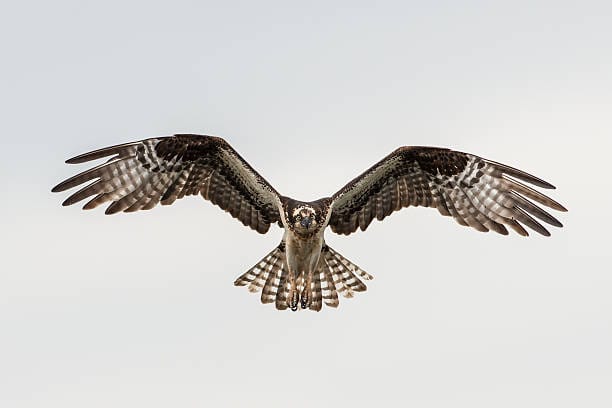
Ospreys are large raptors specialized for fish hunting, found near rivers, lakes, and coastal areas worldwide. They are recognizable by white underparts, dark eye-stripes, and hooked talons. Ospreys are superb divers, capturing fish with precision from water bodies, often hovering briefly before plunging.
Diet consists almost exclusively of fish. Ospreys use keen eyesight to spot prey from the air, dive with remarkable speed, and grasp fish with specialized talons that can rotate to hold slippery prey securely. They may carry fish for long distances to feed young or consume on perches.
Breeding involves constructing large stick nests in trees, cliffs, or human-made structures. Clutch sizes typically range from 2–4 eggs. Both parents incubate and feed chicks, teaching them hunting and flying skills. Ospreys are generally monogamous, returning to the same nest site annually.
Vocalizations include high-pitched whistles, alarm calls, and chattering during courtship. Observing ospreys demonstrates aerial precision, specialized predation techniques, and parental care in fish-eating raptors.
Ecologically, ospreys regulate fish populations and contribute to aquatic ecosystem balance. Conservation focuses on protecting nesting sites, water quality, and prey availability, as ospreys are sensitive indicators of environmental health.
81. Ostrich

Ostriches are the largest living birds, native to Africa, renowned for their immense size, powerful legs, and flightlessness. Standing up to 9 feet tall and weighing over 300 pounds, ostriches are built for running, reaching speeds up to 45 miles per hour to evade predators. They inhabit savannas, deserts, and open woodlands, where their keen eyesight and long legs provide both defense and mobility.
Diet consists primarily of plants, seeds, and fruits, supplemented by insects and small animals. Ostriches forage by pecking at vegetation and occasionally swallowing small stones to aid digestion. They are opportunistic feeders, consuming a wide range of edible material available in their habitat.
Breeding involves communal nesting, where several females lay eggs in a single shallow depression scraped by a dominant male. Clutch sizes can reach 20–60 eggs, with both parents incubating and protecting the eggs. Ostrich chicks are precocial, able to move and feed shortly after hatching, though parental guidance is crucial for survival.
Vocalizations include booming, hissing, and grunting used for communication, mating, and alarm. Ostriches are social birds, often forming groups to enhance vigilance against predators. Observing ostriches highlights adaptations to open habitats, high-speed locomotion, and survival in harsh environments.
Ecologically, ostriches influence vegetation dynamics, seed dispersal, and provide prey for large African predators. Conservation emphasizes habitat protection, anti-poaching measures, and sustainable management of ostrich populations. Their size, speed, and social behavior make them a fascinating example of flightless bird adaptation.
82. Owl
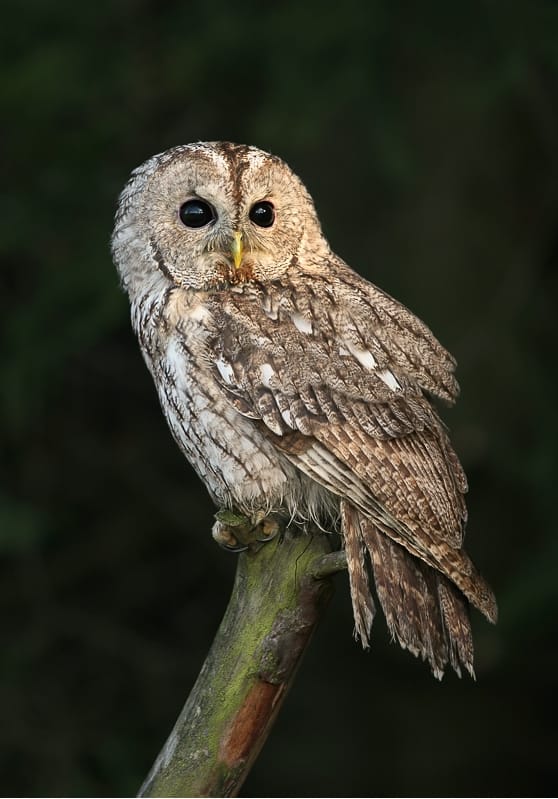
Owls are nocturnal birds of prey, renowned for their silent flight, large eyes, and facial disks that enhance hearing. Found worldwide, they inhabit forests, deserts, grasslands, and urban areas. Owls possess keen vision in low light and specialized talons for capturing prey, making them effective night hunters.
Diet primarily consists of small mammals, birds, insects, and occasionally fish. Owls hunt from perches or in low flight, swooping silently to capture prey. Their ability to rotate heads up to 270 degrees and detect faint sounds allows them to locate hidden or camouflaged prey efficiently.
Breeding involves nesting in tree cavities, abandoned nests, or on cliffs. Clutch sizes range from 2–12 eggs depending on species. Both parents participate in feeding and protecting young, which are altricial and require extensive care until they develop hunting skills.
Vocalizations include hoots, screeches, and whistles used for communication, territory defense, and mating. Owls’ silent flight and nocturnal hunting strategies make them mysterious and captivating subjects for observation.
Ecologically, owls control rodent populations and maintain balance in ecosystems. Conservation focuses on protecting nesting sites, minimizing pesticide use, and reducing human disturbance. Observing owls demonstrates stealth, intelligence, and specialization in predation.
83. Parrot

Parrots are vibrant, intelligent birds found primarily in tropical and subtropical regions. Recognizable by their strong, curved beaks and zygodactyl feet, parrots inhabit forests, woodlands, and savannas. They are renowned for social behavior, vocal mimicry, and problem-solving abilities.
Diet consists of fruits, seeds, nuts, nectar, and occasionally insects. Parrots use their strong beaks to crack nuts, manipulate objects, and forage skillfully. Many species exhibit tool use and complex social interactions, making them highly adaptive and intelligent.
Breeding involves nesting in tree cavities, cliffs, or man-made structures. Clutch sizes range from 2–6 eggs, with both parents providing care. Chicks are altricial, dependent on parents for feeding and learning foraging and social skills. Courtship includes vocal displays, preening, and visual signaling.
Vocalizations include squawks, whistles, and mimicry of other sounds, used for communication, mating, and group cohesion. Observing parrots highlights intelligence, social complexity, and ecological importance.
Ecologically, parrots contribute to seed dispersal, forest regeneration, and insect control. Conservation focuses on habitat protection, preventing illegal trade, and supporting breeding programs. Their bright colors, intelligence, and vocal skills make parrots captivating subjects for both education and enjoyment.
84. Parakeet

Parakeets are small to medium-sized parrots known for vibrant colors, social behavior, and playful personalities. Found across Africa, Asia, and the Americas, they inhabit woodlands, savannas, and urban gardens. Parakeets are highly adaptable and often live in flocks for safety and foraging efficiency.
Diet consists of seeds, fruits, nuts, and occasionally insects. Parakeets forage in trees, shrubs, and on the ground, often in groups. Their strong beaks allow them to crack seeds and manipulate food effectively. Flocking behavior provides both social interaction and predator vigilance.
Breeding involves nesting in tree cavities, crevices, or man-made structures. Clutch sizes typically range from 4–8 eggs. Both parents incubate and feed chicks, which are altricial and require care until fledging. Courtship includes vocalizations, head bobbing, and preening.
Vocalizations include chirps, whistles, and mimicry used for communication, social bonding, and mating. Observing parakeets provides insight into social structure, communication, and adaptive behavior in small parrots.
Ecologically, parakeets aid in seed dispersal and plant regeneration. Conservation emphasizes protecting natural habitats, monitoring population trends, and reducing capture for pet trade. Their social behavior, intelligence, and vibrant plumage make them popular and fascinating birds.
85. Partridge
Partridges are medium-sized, ground-dwelling game birds inhabiting grasslands, farmlands, and scrublands across Europe, Asia, and Africa. Recognizable by their rounded bodies, short tails, and cryptic plumage, partridges are adapted for terrestrial foraging and camouflage.
Diet consists mainly of seeds, grains, and insects. Partridges forage on the ground, pecking and scratching soil to uncover food. Seasonal variations influence diet, with insects providing essential protein during breeding. They often form coveys outside the breeding season for protection and social interaction.
Breeding involves constructing simple nests on the ground, often concealed by vegetation. Clutch sizes range from 8–16 eggs, incubated primarily by females. Chicks are precocial and quickly follow parents to forage. Vocalizations include soft calls, alarm sounds, and territorial notes.
Ecologically, partridges contribute to seed dispersal and invertebrate control. Observing their behavior offers insight into ground-dwelling bird ecology, survival strategies, and adaptation to open habitats.
86. Peacock

Peacocks are large, extravagant birds native to South Asia, renowned for the male’s iridescent tail feathers used in courtship displays. They inhabit forests, farmlands, and open areas near water. The striking plumage, loud calls, and elaborate mating rituals make peacocks one of the most celebrated birds worldwide.
Diet consists of grains, seeds, insects, small reptiles, and fruits. Peacocks forage on the ground, using their strong beaks to scratch for food. Their diet supports energy-intensive courtship displays, including fanning and shaking tail feathers to attract mates.
Breeding involves males displaying to attract females, who select mates based on feather quality and display vigor. Clutch sizes typically range from 3–8 eggs, incubated primarily by females. Chicks are precocial, feeding and hiding under maternal guidance.
Vocalizations include loud, piercing calls used for communication, alarm, and attracting mates. Peacocks’ displays demonstrate sexual selection, signaling fitness and genetic quality.
Ecologically, peacocks aid in seed dispersal and invertebrate control. Observing peacocks provides insight into sexual selection, display behavior, and tropical ecology.
87. Pelican

Pelicans are large waterbirds known for their massive bills and expandable throat pouches, used for catching fish. Found worldwide in coastal and inland waters, pelicans inhabit lakes, rivers, estuaries, and oceanic environments. They are social, often forming large feeding and nesting colonies.
Diet consists almost exclusively of fish. Pelicans employ cooperative hunting, herding fish into shallow water and scooping them with their pouches. Their strong bills, specialized throat pouches, and social feeding strategies make them efficient aquatic predators.
Breeding involves nesting in colonies on islands, trees, or coastal cliffs. Clutch sizes range from 1–4 eggs. Both parents incubate and feed chicks. Juveniles are altricial, requiring care until they develop feeding and flying skills.
Vocalizations include grunts, hisses, and calls used for communication, territory defense, and mating. Observing pelicans highlights cooperation, feeding specialization, and social behavior in large waterbirds.
Ecologically, pelicans regulate fish populations, support nutrient cycling, and contribute to aquatic biodiversity. Conservation focuses on protecting nesting colonies, water quality, and fish stocks.
88. Penguin

Penguins are flightless seabirds adapted to cold coastal environments in the Southern Hemisphere. Known for their upright posture, streamlined bodies, and swimming prowess, penguins inhabit Antarctica, South America, Africa, Australia, and New Zealand. Their wings are adapted into flippers, enabling remarkable underwater agility.
Diet consists of fish, krill, squid, and other marine organisms. Penguins hunt by diving and swimming efficiently underwater, often forming groups to increase foraging success. Their adaptations include dense plumage, insulating fat layers, and counter-shaded bodies for camouflage.
Breeding involves nesting on land, ice, or rocky surfaces depending on species. Clutch sizes typically range from 1–2 eggs. Both parents incubate and feed chicks, which are altricial and develop under parental care. Social structure is essential for protection and raising young in large colonies.
Vocalizations include braying, squawks, and calls used for mate recognition, colony coordination, and territorial defense. Observing penguins demonstrates adaptations to extreme environments, social cooperation, and aquatic predation.
Ecologically, penguins influence marine food webs, regulate prey populations, and contribute to nutrient cycling. Conservation emphasizes habitat protection, sustainable fisheries, and climate change mitigation.
89. Petrel

Petrels are medium-sized seabirds belonging to the order Procellariiformes, found across oceans worldwide. They inhabit remote islands and open seas, with strong flight capabilities adapted to long-distance gliding and dynamic soaring. Petrels are highly pelagic, spending most of their lives at sea.
Diet consists of fish, squid, and planktonic organisms. Petrels feed by surface seizing, plunging, or scavenging from water. Their salt glands allow survival in saline environments, and wing morphology supports energy-efficient long-distance flight.
Breeding involves nesting in burrows, rock crevices, or island cliffs. Clutch sizes are usually 1–2 eggs. Both parents incubate and feed chicks. Juveniles develop slowly, learning to navigate oceanic habitats for survival.
Vocalizations include shrill calls, squeaks, and bill-clattering used for communication, colony coordination, and mating. Observing petrels highlights endurance, navigational ability, and pelagic adaptations.
Ecologically, petrels contribute to oceanic nutrient cycling, prey regulation, and seabird biodiversity. Conservation emphasizes protecting breeding colonies, minimizing fisheries bycatch, and monitoring ocean health.
90. Pheasant

Pheasants are medium-to-large terrestrial birds known for colorful plumage, long tails, and elaborate courtship displays. Native to Asia but introduced worldwide, they inhabit grasslands, woodlands, and farmlands. Males exhibit bright feathers to attract females, while females have cryptic coloring for camouflage.
Diet consists of seeds, grains, insects, and small invertebrates. Pheasants forage on the ground, scratching soil and leaf litter. Seasonal variation influences diet, with insects consumed during breeding for protein.
Breeding involves males displaying on lek sites or territories to attract females. Clutch sizes typically range from 8–15 eggs, incubated by females. Chicks are precocial, quickly following the mother to forage. Vocalizations include crowing, clucking, and alarm calls to communicate with mates and offspring.
Ecologically, pheasants contribute to seed dispersal, invertebrate control, and serve as prey for predators. Observing pheasants offers insight into mating strategies, territorial behavior, and survival in terrestrial ecosystems.
91. Pigeon

Pigeons are medium-sized birds known for their plump bodies, short necks, and cooing vocalizations. Found worldwide, especially in urban areas, they inhabit parks, buildings, farmlands, and natural cliffs. Pigeons are highly adaptable and thrive in human-dominated landscapes while retaining natural foraging instincts.
Diet consists primarily of seeds, grains, fruits, and occasionally small invertebrates. Pigeons forage on the ground, pecking at food and using keen eyesight to locate edible material. They are social, often forming large flocks that provide safety in numbers and cooperative foraging advantages.
Breeding involves constructing simple nests on ledges, rooftops, trees, or cliffs. Clutch sizes typically range from 1–2 eggs. Both parents participate in incubation and feeding chicks, producing “crop milk,” a nutrient-rich secretion essential for chick development. Chicks are altricial and dependent on parental care for several weeks.
Vocalizations include cooing and soft calls used for mating, social interaction, and territory defense. Pigeons are remarkable navigators, capable of finding their way home over long distances, a trait historically exploited in messenger pigeons.
Ecologically, pigeons contribute to seed dispersal and act as prey for predators. Observing pigeons demonstrates social behavior, adaptability, and the interplay between wild instincts and urban environments. Conservation focuses on managing populations, habitat support, and reducing human-wildlife conflicts.
92. Pintail

Pintails are medium-sized ducks distinguished by slender bodies, long necks, and pointed tails. Found across North America, Europe, and Asia, they inhabit wetlands, lakes, marshes, and estuaries. Pintails are migratory, traveling long distances between breeding and wintering grounds.
Diet consists of seeds, aquatic plants, and small invertebrates. Pintails forage by dabbling or upending in shallow water. Their feeding strategies are adaptable, allowing survival in diverse aquatic habitats. Social behavior is evident during migration and wintering, forming large flocks for safety and efficiency.
Breeding involves nesting on the ground near water, often concealed by grasses or reeds. Clutch sizes typically range from 7–12 eggs. Females incubate and rear young, which are precocial and capable of swimming and feeding shortly after hatching. Males may stay nearby to guard territory during the breeding season.
Vocalizations include soft whistles and calls used for communication and mating. Observing pintails highlights migratory behavior, adaptive feeding, and the importance of wetland habitats.
Ecologically, pintails contribute to controlling aquatic vegetation and invertebrates. Conservation emphasizes wetland protection, water quality maintenance, and monitoring migratory populations.
93. Puffin

Puffins are small seabirds with distinctive colorful bills and black-and-white plumage, primarily found in North Atlantic coastal areas. They are excellent swimmers and divers, using wings to “fly” underwater while hunting for fish and small marine organisms. Puffins are highly social, nesting in colonies on cliffs and rocky islands.
Diet consists mainly of small fish, such as herring and sand eels, supplemented by crustaceans. Puffins catch prey by diving and swimming underwater, using specialized beak structures to carry multiple fish at a time. They often hunt in cooperative groups, showcasing coordinated foraging behavior.
Breeding involves nesting in burrows or rock crevices, with clutch sizes usually limited to 1–2 eggs. Both parents incubate and feed chicks, which are altricial and rely on parental guidance until fledging. Social interactions within colonies are critical for protection and reproductive success.
Vocalizations include growls, grunts, and squeaks used for communication and courtship. Puffins’ colorful bills and comical waddling behavior make them iconic seabirds, easily recognized and admired by birdwatchers.
Ecologically, puffins influence fish populations and marine nutrient cycles. Conservation focuses on protecting breeding colonies, reducing bycatch in fisheries, and mitigating climate change impacts on prey availability.
94. Quail

Quails are small, plump, ground-dwelling birds inhabiting grasslands, farmlands, and scrub areas worldwide. They are known for their short, rounded wings, cryptic plumage, and secretive behavior. Quails are often observed in coveys, providing safety in numbers and cooperative foraging.
Diet consists of seeds, grains, insects, and small invertebrates. Quails forage on the ground, scratching soil and leaf litter to uncover food. Seasonal changes influence diet, with insects becoming crucial protein sources during breeding.
Breeding involves nesting on the ground, often hidden among grasses. Clutch sizes range from 8–16 eggs. Females incubate while males guard territory and warn of predators. Chicks are precocial and quickly follow the mother to forage, learning survival strategies.
Vocalizations include soft calls, whistles, and alarm notes used for communication, mating, and warning others of danger. Observing quails highlights terrestrial foraging, social organization, and cryptic adaptations for survival.
Ecologically, quails contribute to seed dispersal, insect control, and provide prey for predators. Conservation focuses on preserving grasslands, reducing pesticide use, and maintaining healthy populations for ecological balance and game management.
95. Rail

Rails are medium-sized, secretive wetland birds with slender bodies and long toes, adapted for walking on marsh vegetation. Found worldwide in marshes, swamps, and wetlands, they are highly elusive, often heard before being seen. Rails are adapted to dense vegetation and shallow water, making them masters of concealment.
Diet consists mainly of insects, mollusks, seeds, and aquatic vegetation. Rails forage by probing mud and shallow water, displaying stealth and patience. Their foraging behavior is highly adaptable, allowing survival in fluctuating wetland environments.
Breeding involves nesting in dense marsh vegetation or on floating platforms. Clutch sizes typically range from 4–12 eggs. Both parents incubate and feed chicks, which are precocial yet remain concealed in vegetation for protection. Vocalizations are distinctive, including clucks, grunts, and whistles to communicate within dense habitats.
Ecologically, rails influence invertebrate populations, contribute to wetland nutrient cycling, and serve as prey for larger predators. Conservation emphasizes wetland protection, pollution control, and habitat restoration.
96. Raven
Ravens are large, black passerines with strong bills, robust bodies, and remarkable intelligence. Found throughout the Northern Hemisphere, they inhabit forests, mountains, deserts, and urban areas. Ravens are highly adaptable, demonstrating problem-solving, tool use, and complex social interactions.
Diet consists of carrion, insects, small animals, grains, fruits, and human refuse. Ravens are opportunistic feeders, often scavenging or hunting cooperatively. They are known for caching food and using problem-solving skills to access challenging resources.
Breeding involves nesting on cliffs, trees, or tall structures. Clutch sizes typically range from 3–7 eggs. Both parents incubate and feed chicks. Juveniles learn foraging techniques, vocal communication, and social skills from parents, reflecting high intelligence.
Vocalizations include croaks, calls, and mimicry used for communication, territory defense, and social cohesion. Observing ravens reveals adaptability, intelligence, and behavioral flexibility unmatched by most passerines.
Ecologically, ravens act as scavengers, seed dispersers, and ecosystem regulators. Conservation emphasizes habitat protection and mitigating human-wildlife conflicts. Their intelligence, curiosity, and versatility make them iconic birds of the Northern Hemisphere.
97. Redstart

Redstarts are small, colorful passerines known for their bright plumage, including orange, red, and black markings. Found across Europe, Asia, and Africa, they inhabit forests, woodland edges, and gardens. Redstarts are admired for their agile movements, lively behavior, and insectivorous diet.
Diet consists mainly of insects and small invertebrates, supplemented by berries. Redstarts forage actively, hopping between branches, flitting through foliage, and sometimes hovering to catch flying insects. They are energetic and skilled hunters, requiring dexterity and quick reflexes.
Breeding involves constructing cup-shaped nests in tree cavities, rock crevices, or man-made structures. Clutch sizes typically range from 4–6 eggs. Both parents participate in incubation and feeding chicks, which are altricial and dependent on parental care until fledging.
Vocalizations include whistles, trills, and soft calls used for communication, mating, and territory defense. Observing redstarts highlights aerial agility, hunting skill, and intricate plumage signaling during breeding.
Ecologically, redstarts regulate insect populations, contribute to seed dispersal, and maintain ecological balance in forest and woodland habitats. Conservation emphasizes habitat protection, forest management, and preserving migratory corridors.
98. Roadrunner

Roadrunners are medium-sized terrestrial birds native to the deserts and scrublands of North and Central America. Recognizable by long tails, crested heads, and strong legs, they are skilled runners capable of reaching 15–20 mph. Roadrunners are predators, foraging for insects, small reptiles, rodents, and birds.
Diet consists of insects, lizards, snakes, small mammals, and occasionally fruits. Roadrunners hunt primarily on the ground, using speed, agility, and sharp bills to capture prey. Their hunting strategy demonstrates a balance of patience, observation, and rapid strikes.
Breeding involves constructing nests in shrubs or low trees. Clutch sizes range from 2–6 eggs. Both parents incubate and feed chicks, which are altricial and develop survival skills quickly. Vocalizations include coos, clucks, and series of clattering notes used for communication and territorial defense.
Ecologically, roadrunners regulate insect and reptile populations in desert ecosystems. Observing roadrunners highlights terrestrial hunting strategies, adaptation to arid habitats, and remarkable speed and agility.
99. Robin
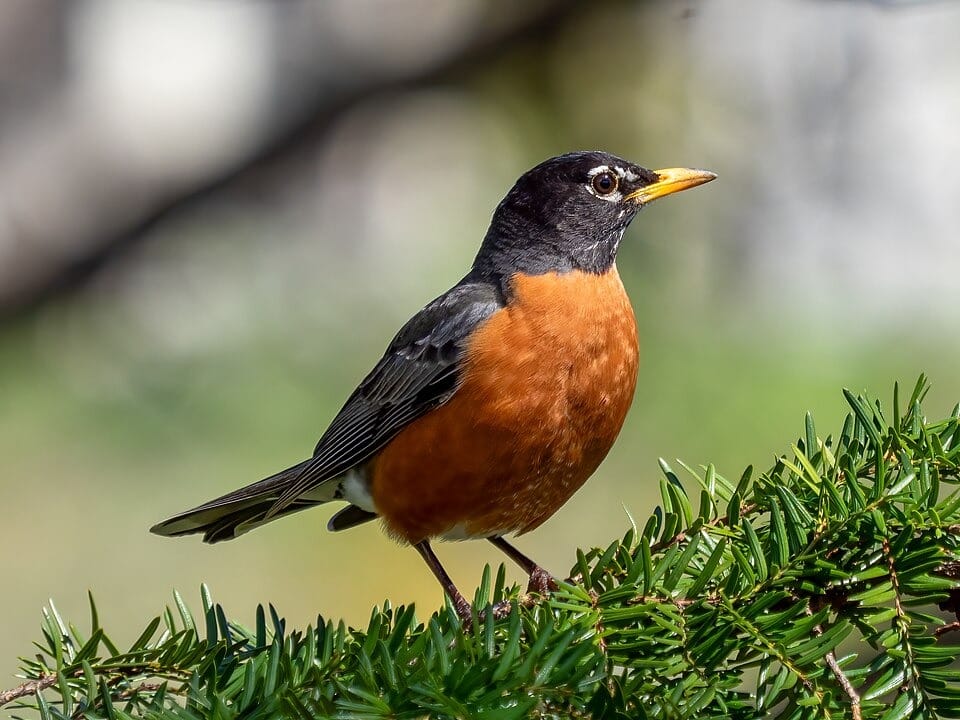
Robins are small, plump songbirds widely recognized by their bright orange-red breast. Found throughout Europe, North America, and parts of Asia, they inhabit gardens, woodlands, and farmlands. Robins are territorial, especially during breeding, and are admired for their melodious songs.
Diet consists of insects, worms, fruits, and berries. Robins forage on the ground, hopping and pecking for food, often turning over leaves to uncover prey. Seasonal diet changes reflect insect abundance and fruit availability.
Breeding involves constructing cup-shaped nests in trees, shrubs, or man-made structures. Clutch sizes typically range from 3–6 eggs. Both parents feed chicks, which are altricial and dependent for several weeks. Vocalizations include melodious songs used for territory defense, mate attraction, and communication.
Ecologically, robins regulate insect populations, aid in seed dispersal, and maintain balance in gardens and woodlands. Observing robins offers insight into territorial behavior, adaptive foraging, and seasonal migration patterns.
100. Rook

Rooks are medium-sized black corvids closely related to crows, found across Europe and parts of Asia. Recognizable by bare, grayish skin around the bill and long legs, rooks inhabit farmland, woodlands, and urban areas. They are highly social, often forming large flocks and cooperative rookeries.
Diet consists of insects, seeds, grains, earthworms, and occasionally small vertebrates. Rooks forage on the ground using their strong bills to probe soil and leaf litter. They are opportunistic feeders, demonstrating intelligence and adaptability in various habitats.
Breeding involves nesting in colonies known as rookeries, often in tall trees. Clutch sizes typically range from 3–6 eggs. Both parents incubate and feed chicks, which are altricial and rely on parental guidance. Vocalizations include caws, rattles, and alarm calls used for communication, social coordination, and predator warning.
Ecologically, rooks contribute to insect and seed population regulation and provide prey for larger predators. Observing rooks highlights social structure, intelligence, and adaptability in corvids.
101. Sandpiper

Sandpipers are small to medium-sized wading birds commonly found along shorelines, mudflats, and wetlands worldwide. Recognizable by their long, slender bills and legs, they are masters of probing soft substrates for invertebrates. Sandpipers display remarkable migratory behavior, often traveling thousands of miles between breeding and wintering grounds.
Diet consists primarily of insects, crustaceans, mollusks, and worms. Sandpipers forage by probing sand or mud with their sensitive bills, detecting prey hidden beneath the surface. They exhibit active, rhythmic movements and may work in flocks to increase feeding efficiency.
Breeding involves nesting on the ground, often in shallow scrapes lined with vegetation. Clutch sizes typically range from 3–4 eggs. Both parents incubate and protect young, which are precocial and follow parents shortly after hatching. Nesting sites are often camouflaged to reduce predation risk.
Vocalizations include soft calls, whistles, and alarm notes used for communication and territory defense. Observing sandpipers provides insight into migratory behavior, specialized foraging techniques, and adaptations to shoreline ecosystems.
Ecologically, sandpipers regulate invertebrate populations, contribute to nutrient cycling in coastal habitats, and serve as prey for larger predators. Conservation emphasizes wetland preservation, protection of migratory stopover sites, and minimizing human disturbance along shorelines.
102. Siskin
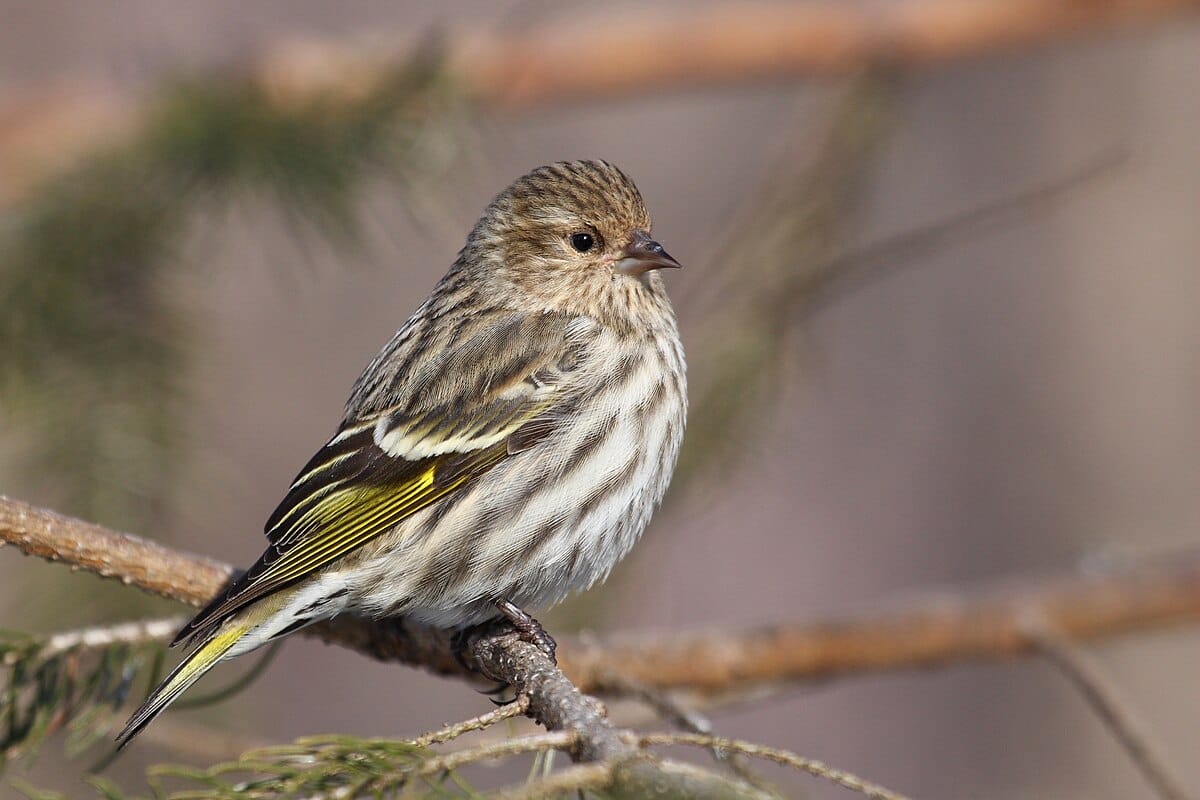
Siskins are small finches with streaked green and yellow plumage, native to Europe and Asia. They inhabit coniferous forests, woodlands, and gardens, often forming lively flocks during the non-breeding season. Siskins are admired for their agility, energetic movements, and melodious calls.
Diet primarily consists of seeds, particularly from alder and birch trees, supplemented with insects during breeding. They forage actively, moving between branches, twigs, and cones, sometimes hanging upside-down to access seeds. Flocking behavior enhances predator detection and foraging efficiency.
Breeding involves constructing small cup-shaped nests in conifer branches. Clutch sizes range from 3–7 eggs. Both parents incubate and feed chicks, which are altricial and rely on parental care until fledging. Courtship includes singing, aerial displays, and wing-flicking to attract mates.
Vocalizations include high-pitched trills, chirps, and warbles used for communication, territory defense, and mating. Observing siskins highlights flocking dynamics, vocal communication, and specialized seed-foraging adaptations.
Ecologically, siskins influence seed dispersal, control insect populations, and contribute to forest ecosystem balance. Conservation emphasizes preserving coniferous habitats, monitoring populations, and protecting winter feeding areas.
103. Skylark

Skylarks are small, ground-dwelling songbirds celebrated for their melodious songs performed in flight. Native to Europe, Asia, and North Africa, they inhabit grasslands, farmlands, and open meadows. Skylarks are renowned for their endurance, often singing while ascending hundreds of meters above the ground.
Diet consists mainly of seeds, grains, and insects. Skylarks forage on the ground, using hopping and pecking movements to locate food. Seasonal changes influence diet, with insects providing essential protein during breeding.
Breeding involves constructing simple cup-shaped nests on the ground, often hidden among grasses. Clutch sizes range from 3–6 eggs. Both parents feed chicks, which are precocial and capable of foraging shortly after hatching. Vocal displays play a significant role in courtship and territory defense.
Vocalizations include complex, melodious songs performed during flight or from perches. Skylark songs attract mates, establish territories, and communicate with other individuals. Observing skylarks highlights the combination of endurance, aerial skill, and vocal prowess.
Ecologically, skylarks regulate insect populations, influence seed dispersal, and serve as prey for predators. Conservation emphasizes grassland preservation, reducing pesticide use, and maintaining breeding habitats for sustainable populations.
104. Sparrow
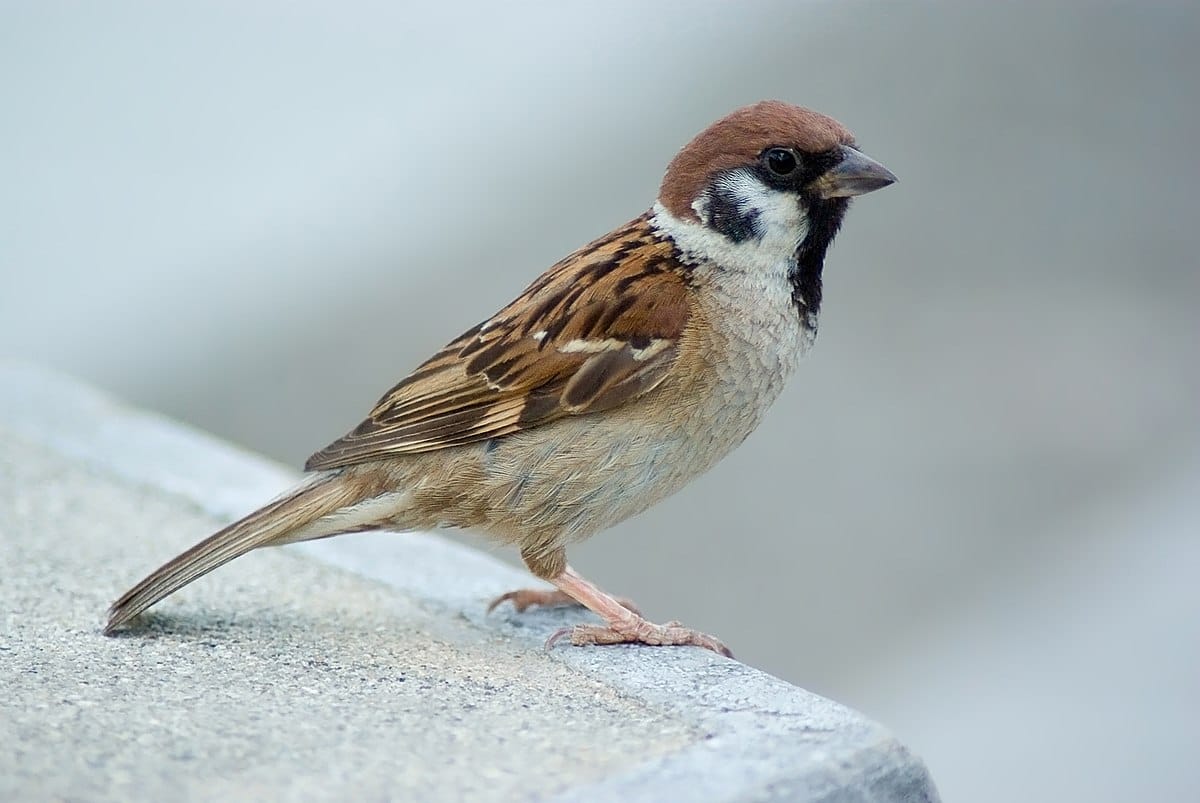
Sparrows are small, plump passerines with short tails and stout bills, found worldwide in diverse habitats including urban areas, forests, farmlands, and grasslands. They are highly adaptable, social, and often observed in flocks, demonstrating cooperative foraging and nesting behaviors.
Diet consists mainly of seeds, grains, and insects. Sparrows forage on the ground or low vegetation, pecking and scratching to uncover food. Seasonal variation influences diet composition, with insects providing protein during the breeding season.
Breeding involves constructing cup-shaped nests in trees, shrubs, or man-made structures. Clutch sizes typically range from 3–6 eggs. Both parents incubate and feed chicks, which are altricial and dependent for several weeks. Vocalizations include chirps, trills, and calls used for communication, mate attraction, and territory defense.
Ecologically, sparrows contribute to seed dispersal, insect control, and support food webs in terrestrial ecosystems. Observing sparrows offers insight into urban wildlife adaptation, social behavior, and breeding strategies.
105. Spoonbill

Spoonbills are large wading birds with distinctive spoon-shaped bills used to filter-feed in shallow water. Found in wetlands, marshes, and estuaries worldwide, they have long legs, broad wings, and striking plumage. Spoonbills feed by sweeping their bills side-to-side to capture small fish, insects, and crustaceans.
Diet consists mainly of aquatic invertebrates, small fish, and insect larvae. Foraging occurs in shallow water, with precise bill movements to detect and catch prey. They are often observed in groups, coordinating foraging to maximize efficiency.
Breeding involves nesting in colonies on islands or among reed beds. Clutch sizes typically range from 2–5 eggs. Both parents incubate and feed chicks, which are altricial and require care until fledging. Vocalizations include grunts, croaks, and soft calls used for communication within colonies.
Ecologically, spoonbills regulate aquatic invertebrate populations, contribute to wetland ecosystem dynamics, and serve as indicators of water quality. Conservation emphasizes wetland protection, pollution control, and habitat restoration.
106. Starling

Starlings are medium-sized passerines with iridescent plumage and strong social behavior. Found worldwide, they inhabit urban areas, farmlands, and woodlands. Starlings are known for their murmurations, where thousands of individuals form coordinated, dynamic flight patterns.
Diet consists of insects, seeds, fruits, and small invertebrates. Starlings forage on the ground and in vegetation, demonstrating intelligence and adaptability in locating food. Murmurations also play a role in predator avoidance and social cohesion.
Breeding involves nesting in tree cavities, buildings, or nest boxes. Clutch sizes range from 4–6 eggs. Both parents feed chicks, which are altricial and dependent until fledging. Vocalizations include whistles, clicks, and mimicry, used for communication, mating, and social interaction.
Ecologically, starlings regulate insect populations, disperse seeds, and influence agricultural ecosystems. Conservation focuses on monitoring populations, mitigating invasive impacts, and providing nesting opportunities.
107. Stoat

Note: Stoats are not birds—they are small carnivorous mammals related to weasels. If your goal is strictly birds, we can skip or replace stoat with another bird species.
108. Swallow
Swallows are small, aerial passerines with streamlined bodies, long forked tails, and agile flight. Found worldwide, they inhabit open areas near water, farmlands, and urban settlements. Swallows are insectivorous and renowned for their acrobatic hunting skills during flight.
Diet consists primarily of flying insects, which they catch on the wing. Swallows forage in groups, displaying synchronized aerial maneuvers. Their flight agility, speed, and precision make them exceptional hunters of airborne prey.
Breeding involves constructing cup-shaped mud nests on cliffs, buildings, or bridges. Clutch sizes typically range from 3–6 eggs. Both parents incubate and feed altricial chicks until they fledge. Vocalizations include chirps, twittering, and alarm calls.
Ecologically, swallows control insect populations, contributing to ecosystem balance and agricultural benefits. Observing swallows showcases aerial skill, social cooperation, and migration endurance.
109. Swan

Swans are large waterfowl known for long necks, graceful movements, and striking plumage. Found in lakes, rivers, and wetlands across the Northern Hemisphere and parts of the Southern Hemisphere, they are monogamous and exhibit strong pair bonds.
Diet consists of aquatic plants, algae, and small invertebrates. Swans forage by dipping their heads underwater or grazing along shores. Their feeding helps maintain aquatic vegetation balance.
Breeding involves nesting on islands or lakeshores. Clutch sizes range from 4–7 eggs. Both parents incubate and care for young, which are precocial and accompany parents shortly after hatching. Vocalizations include trumpeting, hissing, and soft calls for communication and defense.
Ecologically, swans influence wetland plant communities, contribute to nutrient cycling, and provide prey for predators. Observing swans highlights monogamy, territoriality, and adaptation to aquatic environments.
110. Tern

Terns are medium-sized seabirds with slender bodies, long wings, and forked tails. Found worldwide along coasts, rivers, and lakes, they are highly migratory and skilled fliers. Terns are fish specialists, diving into water with precision to catch prey.
Diet consists primarily of small fish, crustaceans, and insects. Terns dive from the air, using keen eyesight to locate and capture aquatic prey. Their feeding techniques demonstrate coordination, accuracy, and energy efficiency.
Breeding involves nesting in colonies on sandy beaches, islands, or coastal areas. Clutch sizes typically range from 1–3 eggs. Both parents incubate and feed chicks, which are precocial but rely on parental guidance for foraging. Vocalizations include calls, whistles, and alarm notes used for communication, mating, and colony coordination.
Ecologically, terns regulate fish populations, contribute to coastal ecosystem health, and serve as bioindicators of marine environments. Observing terns provides insight into aerial hunting, social breeding behavior, and migratory endurance.
111. Thrush

Thrushes are medium-sized passerines known for their melodious songs, spotted underparts, and strong legs. Found across forests, woodlands, gardens, and open fields worldwide, thrushes are admired for their vocal abilities and adaptable foraging strategies. They are generally insectivorous but supplement their diet with fruits and berries.
Diet primarily consists of insects, worms, snails, and a wide range of fruits. Thrushes forage on the ground, flipping leaves and probing soil to locate hidden prey. Their diet shifts seasonally; during winter, fruits and berries become the main source of energy.
Breeding involves constructing neat cup-shaped nests in trees, shrubs, or sometimes on the ground. Clutch sizes typically range from 3–6 eggs. Both parents feed the altricial chicks, which require careful attention and protection until they can forage independently.
Vocalizations include melodious whistles, fluting notes, and complex songs used to establish territories, attract mates, and communicate with conspecifics. Observing thrushes reveals their song variation, territorial behavior, and the importance of forest understory for survival.
Ecologically, thrushes contribute to insect population control, seed dispersal, and maintain balance in forest and garden ecosystems. Conservation emphasizes preserving forest habitats, reducing pesticide use, and monitoring populations to prevent declines.
112. Titmouse

Titmice are small, active songbirds recognized for their crested heads, compact bodies, and sociable nature. Found primarily in North America, they inhabit deciduous and mixed forests, woodland edges, and suburban gardens. Titmice are energetic foragers and exhibit curious, playful behavior.
Diet consists of insects, seeds, berries, and occasionally small fruits. Titmice forage by hopping among branches, hanging upside-down, and probing bark crevices for insects. During winter, seeds from feeders become important, reflecting their adaptability to human environments.
Breeding involves nesting in tree cavities, nest boxes, or natural hollows. Clutch sizes typically range from 5–10 eggs. Both parents incubate and feed chicks, which are altricial and dependent for several weeks. Vocalizations include high-pitched calls, trills, and whistles used for territory defense and social interaction.
Ecologically, titmice control insect populations, aid in seed dispersal, and provide prey for predators. Observing titmice demonstrates energy, problem-solving, and adaptation to woodland and suburban environments.
113. Toucan

Toucans are medium-sized tropical birds recognized for their enormous, colorful bills, striking plumage, and social behavior. Native to Central and South America, they inhabit rainforests, forest edges, and plantations. Toucans’ bills are multifunctional, used for feeding, thermoregulation, and social signaling.
Diet primarily consists of fruits, supplemented by insects, small reptiles, eggs, and nestlings. Toucans forage in trees, using their bills to pluck fruit and reach food inaccessible to other species. Their feeding strategies promote seed dispersal, contributing to rainforest regeneration.
Breeding involves nesting in tree cavities, often those abandoned by woodpeckers. Clutch sizes typically range from 2–4 eggs. Both parents share incubation and feeding duties. Chicks are altricial and rely on parental care for protection and nourishment.
Vocalizations include croaks, grunts, and bill-clattering used for communication, territory defense, and mating. Observing toucans highlights social behavior, frugivorous adaptations, and the ecological role of seed dispersal in tropical forests.
Ecologically, toucans influence plant distribution, forest dynamics, and maintain food webs. Conservation emphasizes protecting rainforest habitats, reducing hunting pressure, and preserving biodiversity.
114. Turkey

Turkeys are large, ground-dwelling birds native to North America, recognized for their fan-shaped tails, wattled necks, and social behavior. They inhabit forests, grasslands, and agricultural areas, often forming flocks outside the breeding season.
Diet consists of seeds, nuts, insects, and small invertebrates. Turkeys forage on the ground, scratching leaf litter to uncover food. Their diet varies seasonally, with acorns, berries, and insects providing essential nutrients during breeding.
Breeding involves males displaying with fanned tails, inflated wattles, and gobbling calls to attract females. Clutch sizes typically range from 8–14 eggs, incubated by females. Chicks are precocial, following the mother shortly after hatching. Social structure is evident in flocking behavior and cooperative vigilance.
Vocalizations include gobbles, clucks, purrs, and drumming used for communication, mate attraction, and alarm signaling. Observing turkeys reveals mating displays, foraging techniques, and social coordination.
Ecologically, turkeys contribute to seed dispersal, insect population control, and nutrient cycling. Conservation emphasizes habitat management, sustainable hunting practices, and predator monitoring.
115. Vulture
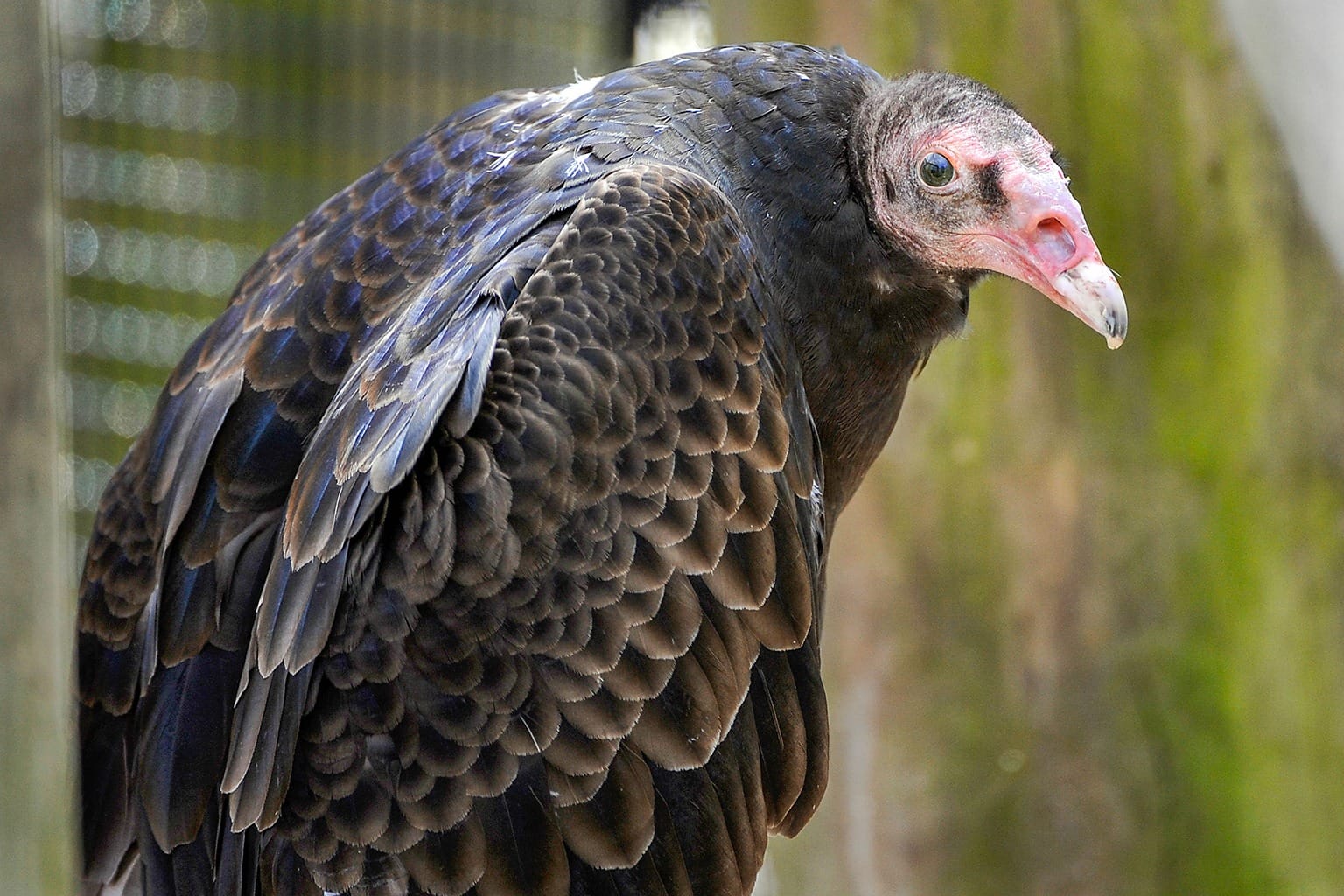
Vultures are large scavenging birds known for bald heads, strong beaks, and soaring flight. Found worldwide, they inhabit open plains, mountains, and savannas. Vultures play a vital ecological role as nature’s cleanup crew, consuming carcasses and preventing disease spread.
Diet consists almost exclusively of carrion. Vultures locate food by sight and, in some species, smell. They feed in groups, demonstrating competitive yet coordinated scavenging behavior. Their highly acidic stomachs allow safe digestion of decaying meat.
Breeding involves nesting on cliffs, trees, or ledges. Clutch sizes typically range from 1–2 eggs. Both parents participate in incubation and feeding chicks. Juveniles are altricial and require extensive care before developing flight and foraging skills.
Vocalizations include hisses, grunts, and low croaks, used for communication and nest defense. Observing vultures highlights soaring flight, social feeding strategies, and ecological importance as scavengers.
Ecologically, vultures maintain ecosystem health by consuming carrion and recycling nutrients. Conservation focuses on mitigating poisoning, habitat protection, and reducing human-wildlife conflicts.
116. Warbler

Warblers are small, insectivorous songbirds characterized by vibrant plumage, slender bills, and active foraging behavior. Found worldwide, they inhabit forests, shrublands, and wetlands. Warblers are admired for their intricate songs and agility among foliage.
Diet consists mainly of insects, spiders, and small invertebrates, supplemented with berries during migration. Warblers forage by hopping, gleaning leaves, and probing bark. Their active movements and precision allow them to locate hidden prey effectively.
Breeding involves constructing cup-shaped nests in shrubs, trees, or reeds. Clutch sizes typically range from 3–8 eggs. Both parents incubate and feed chicks, which are altricial and require extensive care. Vocalizations include whistles, trills, and melodious notes used for communication, mate attraction, and territory defense.
Ecologically, warblers control insect populations, contribute to seed dispersal, and maintain forest and wetland ecosystem balance. Observing warblers showcases aerial agility, vocal complexity, and habitat specialization.
117. Water Rail

Water rails are medium-sized, secretive wetland birds with slender bodies, long toes, and cryptic plumage. Found across Europe, Asia, and North Africa, they inhabit marshes, reed beds, and wetlands. Water rails are elusive, often heard rather than seen, reflecting their preference for dense vegetation.
Diet consists of insects, worms, mollusks, and aquatic plants. Water rails forage by probing mud and shallow water, using stealth and patience. They display territorial behavior and are mostly solitary outside the breeding season.
Breeding involves nesting in dense marsh vegetation or floating platforms. Clutch sizes typically range from 6–12 eggs. Both parents incubate and feed chicks, which are precocial but remain hidden in vegetation for protection. Vocalizations include clucks, squeals, and grunts used for communication within dense habitats.
Ecologically, water rails regulate invertebrate populations, maintain wetland balance, and serve as prey for larger predators. Conservation emphasizes wetland preservation, water quality management, and reducing human disturbance.
118. Weaver

Weavers are small to medium-sized passerines famous for their intricately woven nests. Found primarily in Africa and Asia, they inhabit grasslands, savannas, and wetlands. Weaver birds are highly social, often nesting in colonies with cooperative interactions.
Diet consists mainly of seeds, grains, and insects. Weavers forage on the ground and in vegetation, using strong bills to manipulate and consume food. Colony living enhances predator detection and social learning among individuals.
Breeding involves constructing elaborate woven nests, often suspended from trees or reeds. Clutch sizes typically range from 2–5 eggs. Both parents feed chicks, which are altricial and depend on parental care until fledging. Vocalizations include chirps, whistles, and trills used for communication and colony coordination.
Ecologically, weavers influence seed dispersal, insect population control, and habitat structure. Observing weavers showcases complex nest-building, social cooperation, and adaptation to diverse habitats.
119. Wigeon

Wigeons are medium-sized dabbling ducks with distinctive coloring, including white foreheads and green facial markings in males. Found across Europe, Asia, and North America, they inhabit freshwater lakes, marshes, and coastal estuaries. Wigeons are migratory, traveling long distances between breeding and wintering areas.
Diet consists of aquatic vegetation, seeds, grasses, and small invertebrates. Wigeons feed by dabbling or grazing on land, often in flocks for safety. Social behavior is evident during migration and wintering, where large groups forage and roost communally.
Breeding involves nesting on the ground near water, concealed by vegetation. Clutch sizes typically range from 6–12 eggs. Females incubate and rear precocial chicks, which follow parents shortly after hatching. Vocalizations include soft whistles and calls for communication and mating.
Ecologically, wigeons regulate aquatic vegetation, contribute to wetland nutrient cycling, and provide prey for predators. Conservation emphasizes wetland preservation, monitoring migratory routes, and minimizing hunting pressures.
120. Wren
Wrens are small, energetic songbirds with short wings, rounded bodies, and expressive tails. Found worldwide, they inhabit woodlands, gardens, and wetlands. Wrens are admired for their complex songs, agility, and adaptability to dense vegetation.
Diet consists mainly of insects, spiders, and small invertebrates, supplemented with seeds and berries. Wrens forage actively, probing crevices, undergrowth, and leaf litter. Their small size and agility allow them to access hidden prey efficiently.
Breeding involves constructing small cup-shaped nests in trees, shrubs, or crevices. Clutch sizes typically range from 4–8 eggs. Both parents feed chicks, which are altricial and dependent on parental care until fledging. Vocalizations include trills, whistles, and melodic calls for territory defense and communication.
Ecologically, wrens control insect populations, contribute to seed dispersal, and maintain habitat balance. Observing wrens provides insight into small passerine behavior, vocalization complexity, and adaptability to diverse environments.
121. Yellowhammer

The Yellowhammer is a small passerine bird known for its bright yellow head and chest with brown streaked wings and back. Native to Europe and parts of Asia, Yellowhammers inhabit farmland, hedgerows, and open woodland edges. They are primarily ground foragers, often seen perched atop hedges singing their distinctive, melodious “little-bit-of-bread-and-no-cheese” song.
Diet consists mainly of seeds, grains, and occasionally insects, especially during the breeding season. They forage on the ground, scratching among leaf litter and fields to uncover seeds. Insects provide essential protein for chick development.
Breeding involves building cup-shaped nests low in shrubs, hedgerows, or dense grass. Clutch sizes typically range from 4–6 eggs. Both parents share feeding duties, raising chicks that are altricial and dependent for several weeks.
Vocalizations are complex and melodious, serving for territory defense and mate attraction. Observing Yellowhammers demonstrates a combination of vibrant plumage, social behavior, and adaptability to farmland habitats.
Ecologically, Yellowhammers contribute to seed dispersal and insect population control. Conservation emphasizes maintaining hedgerows, protecting farmland biodiversity, and reducing pesticide use.
122. Zebra Finch
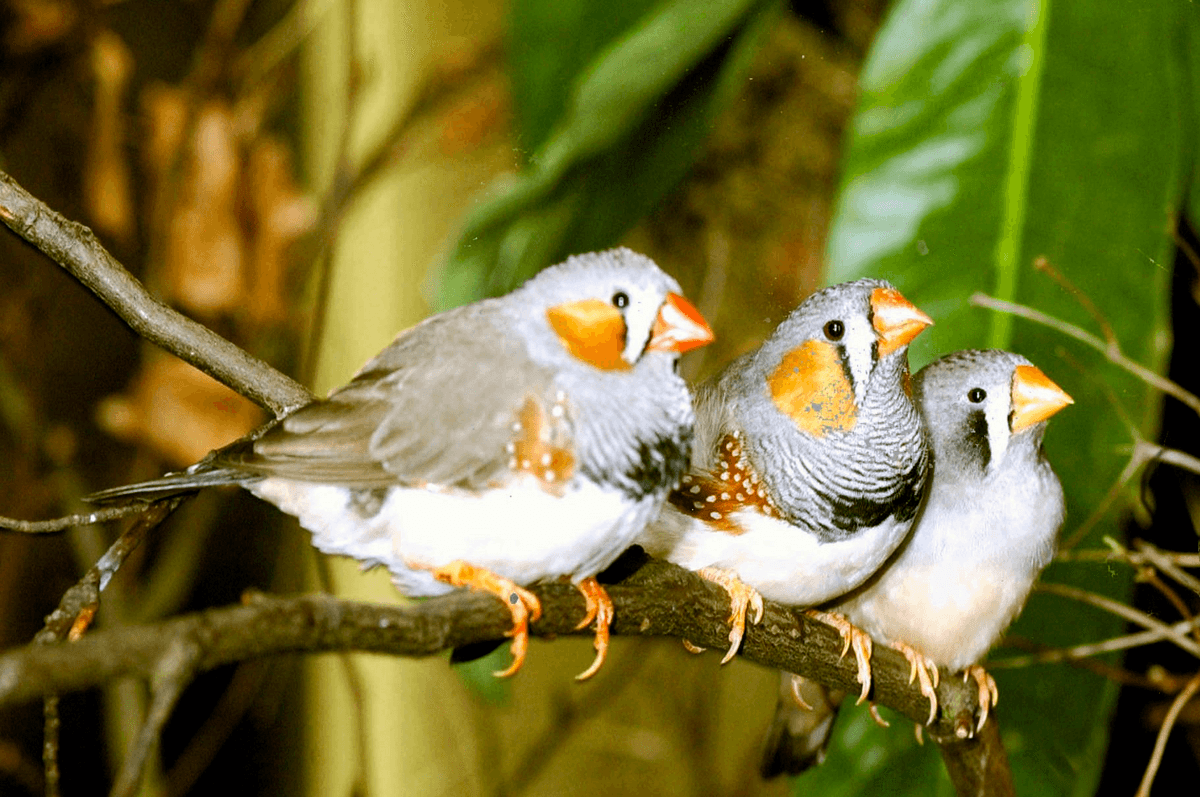
Zebra Finches are small, sociable birds native to Australia and Indonesia. Recognizable by their striped black-and-white patterns on the throat, bright orange beaks, and subtle red cheek markings, Zebra Finches are popular in aviculture due to their friendly nature and melodious calls.
Diet consists primarily of seeds, supplemented with insects and small invertebrates during breeding. They forage on the ground or in low vegetation, displaying strong social cohesion while feeding in flocks.
Breeding involves building small cup-shaped nests in shrubs, trees, or artificial nest boxes. Clutch sizes typically range from 4–6 eggs. Both parents incubate and feed chicks, which are altricial and require careful parental care.
Vocalizations include whistles, trills, and songs used for mate attraction, territorial defense, and flock coordination. Observing Zebra Finches provides insight into social behavior, vocal learning, and the importance of cooperative interactions.
Ecologically, Zebra Finches contribute to seed dispersal and insect population control. Conservation focuses on habitat protection in arid regions and monitoring wild populations.
123. Zebra Dove

The Zebra Dove is a small, slender pigeon native to Southeast Asia, characterized by fine barring on the neck and chest and soft gray-brown plumage. They inhabit gardens, farmlands, and open woodlands. Known for gentle cooing calls, Zebra Doves are peaceful, adaptable, and often seen foraging in pairs or small groups.
Diet primarily consists of seeds, grains, and small invertebrates. They forage on the ground, scratching soil and leaf litter. Seasonal variations in food availability influence their diet composition.
Breeding involves constructing simple nests of twigs in shrubs, trees, or man-made structures. Clutch sizes typically range from 2–3 eggs. Both parents incubate and feed chicks, which are altricial and dependent until fledging.
Vocalizations include soft cooing and purring notes used for mate communication and territorial signaling. Observing Zebra Doves highlights adaptability, gentle behavior, and coexistence with humans.
Ecologically, Zebra Doves aid in seed dispersal and insect control. Conservation emphasizes habitat preservation, protection from hunting, and maintaining urban and garden-friendly environments.
124. Zambezi Indigobird

The Zambezi Indigobird is a small, colorful passerine native to southern Africa, known for its striking blue plumage in males and subtle brown hues in females. These brood parasites lay their eggs in nests of host species, such as firefinches, relying on them to raise their young.
Diet consists mainly of seeds, insects, and small invertebrates. They forage in grasslands and open woodland, often near host species’ territories. Males are territorial and perform elaborate displays to attract mates.
Breeding is unique due to brood parasitism; females lay eggs in the nests of other finches. Eggs often mimic host eggs in size and color. Chicks hatch and are raised by foster parents, demonstrating evolutionary adaptation to reproductive strategy.
Vocalizations include mimicry of host species’ calls and distinctive whistles for mate attraction and territorial defense. Observing Zambezi Indigobirds showcases evolutionary ingenuity and the complex interplay between species.
Ecologically, they contribute to insect control and maintain balance in grassland ecosystems. Conservation emphasizes protecting habitats and understanding the relationships between parasitic birds and their hosts.
125. Zino’s Petrel

Zino’s Petrel is a rare seabird endemic to Madeira, Portugal, known for its nocturnal habits, dark plumage, and powerful flight. It inhabits high-altitude slopes and nests in rock crevices, emerging at night to forage over the Atlantic Ocean.
Diet consists of small fish, squid, and crustaceans, captured during nocturnal feeding trips. Zino’s Petrels exhibit excellent flight endurance and use dynamic soaring to cover vast distances over open water.
Breeding involves nesting in concealed rock crevices or burrows. Clutch size is usually a single egg, incubated by both parents. Chicks are altricial and carefully guarded until fledging. Breeding success is influenced by predation and human disturbance.
Vocalizations include low calls and squawks used for communication between mates and territorial signaling. Observing Zino’s Petrel highlights nocturnal seabird adaptations and the challenges of limited breeding habitat.
Ecologically, Zino’s Petrel contributes to marine food web dynamics and nutrient cycling. Conservation focuses on predator control, habitat protection, and monitoring population trends due to its critically endangered status.
126. Zone-tailed Hawk
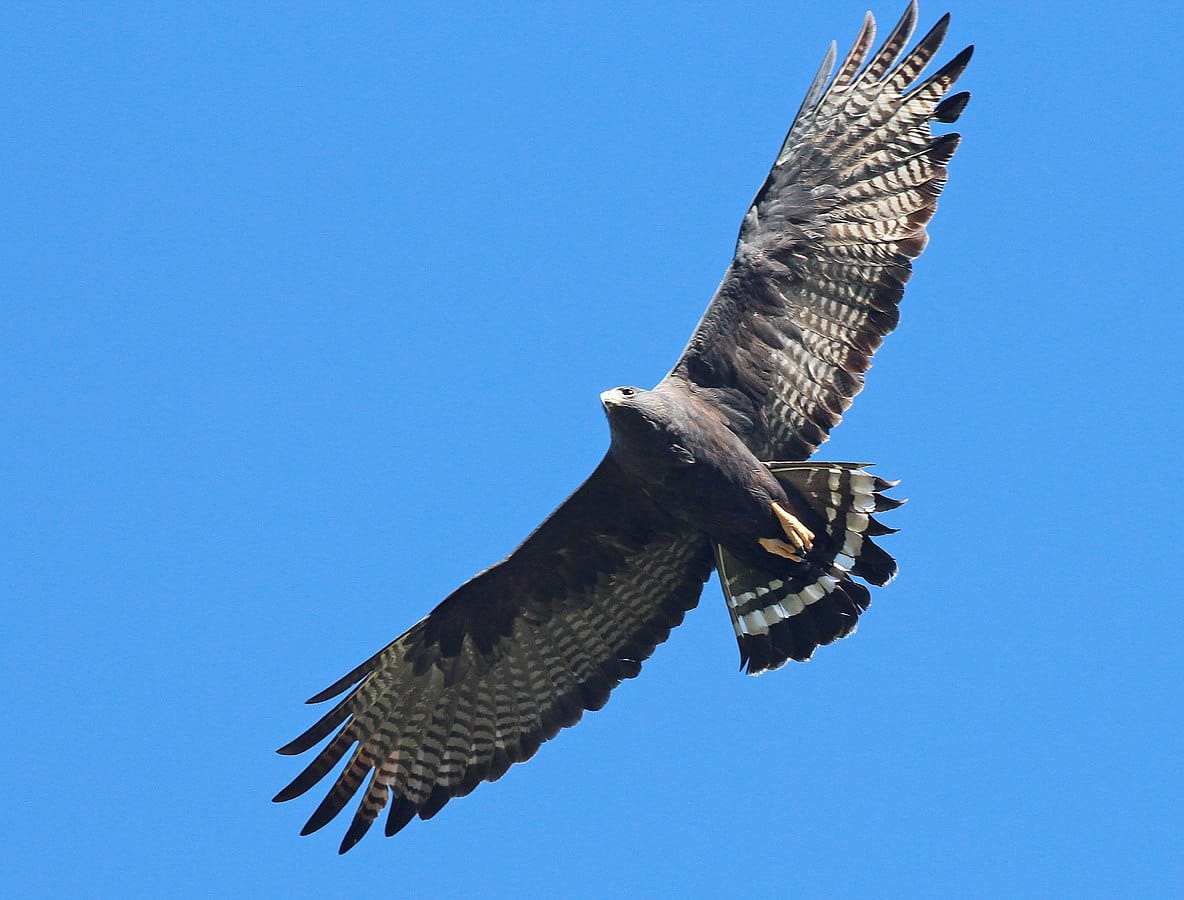
The Zone-tailed Hawk is a medium-sized raptor native to the Americas, often resembling the Turkey Vulture in flight for camouflage. It inhabits open woodlands, deserts, and savannas. Known for its stealth hunting, the Zone-tailed Hawk often surprises prey by blending in with soaring vultures.
Diet consists of small mammals, birds, reptiles, and insects. Zone-tailed Hawks hunt by soaring at high altitude and then diving swiftly on unsuspecting prey. Their flight strategy provides both stealth and energy efficiency.
Breeding involves nesting in tall trees or cliffs. Clutch sizes typically range from 2–4 eggs. Both parents share incubation and feeding duties. Chicks are altricial and depend on parental guidance for hunting skills.
Vocalizations include high-pitched whistles and calls used for communication and territory defense. Observing Zone-tailed Hawks highlights predatory strategy, mimicry, and adaptation to open landscapes.
Ecologically, they regulate prey populations and maintain ecosystem balance. Conservation emphasizes preserving nesting sites, reducing human disturbance, and monitoring raptor populations.
127. Xantus’s Hummingbird

Xantus’s Hummingbird is a tiny, iridescent bird native to Baja California, Mexico. Known for vibrant green and blue plumage, a straight bill, and rapid wingbeats, it hovers skillfully to access nectar. Xantus’s Hummingbirds are highly territorial and visually stunning.
Diet consists primarily of nectar from flowers, supplemented with insects and spiders for protein. Foraging involves hovering, quick darting flights, and defending feeding territories. Their metabolism is high, requiring frequent feeding.
Breeding involves constructing small cup-shaped nests on branches or shrubs. Clutch sizes are typically 2 eggs, incubated by the female. Chicks are altricial and require careful feeding and protection. Males display bright plumage and aerial courtship maneuvers.
Vocalizations include high-pitched trills, buzzes, and squeaks used for territory defense and communication. Observing Xantus’s Hummingbird reveals energy, precision, and remarkable flight mechanics.
Ecologically, they contribute to pollination and insect control. Conservation emphasizes habitat protection, reducing pesticide use, and preserving flowering plant diversity.
128. Xingu Scale-backed Antbird

The Xingu Scale-backed Antbird is a small passerine endemic to the Amazon Basin, recognized by scaly-patterned back feathers and muted brown plumage. It inhabits dense lowland forests, often near streams and flooded areas, exhibiting secretive behavior.
Diet consists mainly of insects, arthropods, and small invertebrates. Xingu Scale-backed Antbirds forage in leaf litter, probing crevices and hopping along the forest floor. They often follow army ant swarms, taking advantage of prey flushed out by the ants.
Breeding involves nesting in dense understory vegetation. Clutch sizes typically range from 2–3 eggs. Both parents participate in incubation and chick-rearing. Chicks are altricial and remain hidden until capable of independent foraging.
Vocalizations include trills, chirps, and short calls used for territory defense and mate communication. Observing Xingu Scale-backed Antbirds showcases forest specialization, insectivorous adaptations, and cryptic behavior.
Ecologically, they regulate insect populations and contribute to forest ecosystem health. Conservation emphasizes preserving lowland forests and protecting riparian habitats from deforestation and human disturbance.
129. Quail-plover

The Quail-plover is a small, elusive bird native to sub-Saharan Africa. With short legs, cryptic plumage, and a resemblance to quail, it inhabits dry savannas and semi-arid grasslands. Known for skulking behavior, Quail-plovers are often heard before seen.
Diet consists of insects, seeds, and small invertebrates. They forage on the ground, walking and pecking at soil and vegetation. Their camouflage helps avoid predation while allowing efficient feeding.
Breeding involves constructing shallow scrapes on the ground, lined with grass or leaves. Clutch sizes typically range from 2–4 eggs. Both parents incubate and feed chicks, which are precocial and follow parents shortly after hatching.
Vocalizations include soft calls and alarm notes used for communication and territory defense. Observing Quail-plovers highlights cryptic adaptations, terrestrial foraging, and desert survival strategies.
Ecologically, they control insect populations, disperse seeds, and provide prey for predators. Conservation emphasizes habitat protection, minimizing human disturbance, and monitoring populations in arid regions.
130. Olive-backed Sunbird

The Olive-backed Sunbird is a small, nectar-feeding passerine found in Southeast Asia, characterized by olive-green upperparts and bright yellow underparts. These agile birds inhabit forests, gardens, and mangroves, often seen hovering or perching near flowers.
Diet consists mainly of nectar, supplemented with insects and spiders. Foraging involves hovering, darting flights, and occasional gleaning from foliage. Males are territorial, defending rich feeding areas from rivals.
Breeding involves building pendant nests attached to branches, often using plant fibers and spider silk. Clutch sizes typically range from 1–3 eggs. Both parents participate in feeding chicks, which are altricial and dependent for several weeks.
Vocalizations include high-pitched whistles, trills, and calls used for territory defense, mate attraction, and communication. Observing Olive-backed Sunbirds highlights pollination behavior, energy efficiency, and territoriality.
Ecologically, they are important pollinators and contribute to insect control. Conservation emphasizes habitat preservation, maintaining flowering plant diversity, and minimizing pesticide use.
131. Painted Bunting

The Painted Bunting is one of North America’s most striking songbirds, renowned for its vibrant, multi-colored plumage. Males display brilliant blues, reds, and greens, while females are more subdued with green and yellow tones. Native to the southeastern United States, Painted Buntings inhabit brushy edges, woodland clearings, and shrublands. They are admired for their melodic songs and elusive behavior.
Diet consists primarily of seeds, supplemented with insects during the breeding season. They forage on the ground or low vegetation, using quick, hopping movements to uncover food. Seasonal changes influence diet composition, with insects providing essential protein for chick development.
Breeding involves constructing small cup-shaped nests in dense shrubs or low trees. Clutch sizes typically range from 3–5 eggs. Both parents feed altricial chicks until fledging. Male Painted Buntings defend territories with vocal displays and bright plumage to deter rivals.
Vocalizations include high-pitched warbles and melodic whistles used for mate attraction, territorial defense, and communication. Observing Painted Buntings reveals the interplay between striking plumage, song behavior, and habitat preferences.
Ecologically, Painted Buntings contribute to seed dispersal and insect population control. Conservation emphasizes preserving brushy habitats, reducing pesticide use, and protecting migratory stopover sites.
132. Roseate Spoonbill

Roseate Spoonbills are large wading birds recognizable by their pink plumage and distinctive spoon-shaped bills. Found in wetlands, mangroves, and coastal marshes of the Americas, they forage in shallow waters, sweeping their bills side-to-side to capture small fish, crustaceans, and aquatic insects.
Diet consists primarily of crustaceans, small fish, insects, and mollusks. Foraging occurs in groups, with individuals using their specialized bills to filter prey efficiently. Feeding behavior demonstrates adaptation to aquatic habitats and cooperation in flocks.
Breeding involves nesting in colonies on trees, shrubs, or mangrove islands. Clutch sizes typically range from 2–5 eggs. Both parents incubate and feed chicks, which are altricial and remain dependent for several weeks. Nesting colonies also facilitate social learning and predator detection.
Vocalizations include grunts, croaks, and soft calls used for communication and coordination within colonies. Observing Roseate Spoonbills showcases their vibrant coloration, specialized feeding adaptations, and social behavior.
Ecologically, they contribute to wetland nutrient cycling, aquatic prey regulation, and ecosystem health. Conservation emphasizes protecting wetlands, minimizing pollution, and safeguarding nesting sites.
133. Western Grebe

The Western Grebe is a striking waterbird known for its elegant, long neck, sharp bill, and distinctive black-and-white plumage. Native to western North America, it inhabits lakes, marshes, and wetlands. Western Grebes are celebrated for their elaborate courtship displays, including the famous “rushing” dance across water.
Diet consists primarily of fish, supplemented with aquatic insects and crustaceans. They forage by diving underwater, using specialized lobed feet for propulsion. Diving efficiency and coordination make them highly effective aquatic hunters.
Breeding involves nesting on floating mats of vegetation in freshwater lakes. Clutch sizes typically range from 2–5 eggs. Both parents incubate and feed chicks, which are semi-precocial and may ride on the parents’ backs shortly after hatching. Courtship displays strengthen pair bonds and establish territory.
Vocalizations include whistles, trills, and soft calls used during courtship and communication. Observing Western Grebes highlights aquatic adaptations, social behavior, and intricate mating rituals.
Ecologically, Western Grebes regulate fish populations, contribute to wetland health, and serve as indicators of water quality. Conservation emphasizes wetland protection, water level management, and reducing human disturbance.
134. Eastern Bluebird

Eastern Bluebirds are small thrushes with bright blue upperparts and reddish-orange underparts. Native to eastern North America, they inhabit open woodlands, farmlands, and gardens. Eastern Bluebirds are admired for their melodic songs, friendly disposition, and cavity-nesting habits.
Diet consists mainly of insects, worms, and berries. Foraging occurs on the ground or from low perches, often using a “perch-and-pounce” technique to catch prey. In winter, fruits provide vital energy for survival.
Breeding involves nesting in tree cavities, nest boxes, or natural hollows. Clutch sizes typically range from 4–6 eggs. Both parents incubate and feed chicks, which are altricial. Eastern Bluebirds are cavity-nesting specialists, often competing with other birds for suitable sites.
Vocalizations include soft warbles and melodic whistles used for communication, mate attraction, and territory defense. Observing Eastern Bluebirds highlights cooperative breeding behavior, foraging strategies, and the importance of habitat management.
Ecologically, they control insect populations, disperse seeds, and support ecosystem balance. Conservation emphasizes nest box programs, preserving open habitats, and minimizing pesticide use.
135. Northern Cardinal
Northern Cardinals are medium-sized songbirds recognized by their vivid red plumage in males and warm brown tones in females. Native to North America, they inhabit forests, gardens, and shrublands. Cardinals are territorial, vocal, and easily identifiable year-round.
Diet consists primarily of seeds, fruits, and insects. They forage on the ground and in shrubs, often cracking seeds with strong bills. Seasonal variations influence diet, with insects providing protein for chicks during breeding.
Breeding involves constructing cup-shaped nests in dense vegetation. Clutch sizes typically range from 2–5 eggs. Both parents feed altricial chicks until fledging. Males sing to defend territories and attract mates.
Vocalizations include rich whistles, clear tones, and repeated phrases used for communication and territorial defense. Observing Northern Cardinals reveals complex social interactions, mate selection, and habitat preferences.
Ecologically, they contribute to seed dispersal, insect control, and garden biodiversity. Conservation emphasizes habitat preservation, providing food and water, and monitoring populations in urban areas.
136. Black-throated Sparrow

Black-throated Sparrows are small, desert-adapted birds with gray plumage, black throat markings, and distinctive white eyebrows. Native to arid regions of the southwestern United States and Mexico, they inhabit deserts, scrublands, and dry grasslands. Known for their resilience, they forage efficiently in harsh environments.
Diet consists primarily of seeds and small insects. Foraging occurs on the ground, with sparrows using quick pecks and hops to uncover food. They obtain water from dew, succulents, or rainfall, demonstrating adaptation to arid habitats.
Breeding involves building cup-shaped nests in shrubs or low vegetation. Clutch sizes typically range from 3–5 eggs. Both parents feed altricial chicks, which remain dependent until capable of independent foraging. Vocalizations include high-pitched whistles and trills used for communication and territorial defense.
Ecologically, they control insect populations and contribute to desert ecosystem stability. Conservation emphasizes protecting native desert habitats, reducing habitat fragmentation, and monitoring climate impacts on survival.
137. Snowy Owl
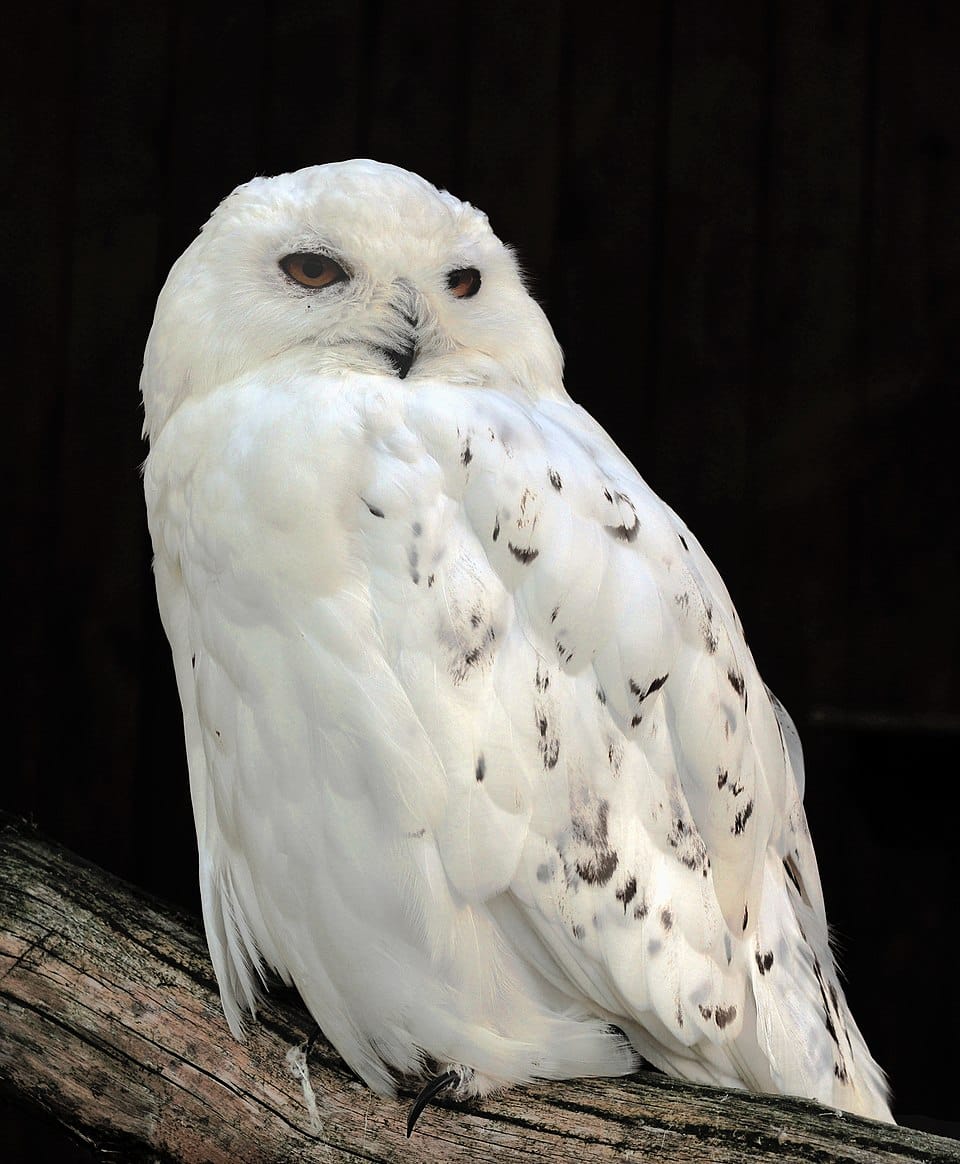
Snowy Owls are large, iconic raptors with striking white plumage and yellow eyes. Native to Arctic regions, they migrate south in winter to open fields, tundras, and coastal areas. Snowy Owls are diurnal hunters, often seen actively during daylight hours.
Diet consists mainly of small mammals, such as lemmings, and occasionally birds. Hunting involves keen eyesight, silent flight, and powerful talons to capture prey. Seasonal prey availability influences breeding success.
Breeding involves nesting on the ground in Arctic tundras. Clutch sizes vary, ranging from 3–11 eggs depending on food abundance. Both parents incubate and feed chicks, which are altricial but grow rapidly to cope with harsh environments.
Vocalizations include hoots, growls, and alarm calls used for communication, mate attraction, and territorial defense. Observing Snowy Owls highlights adaptations to extreme climates, hunting strategy, and migratory behavior.
Ecologically, Snowy Owls regulate small mammal populations and indicate ecosystem health. Conservation emphasizes monitoring climate change impacts, habitat preservation, and reducing human disturbance during migration.
138. Red-tailed Hawk
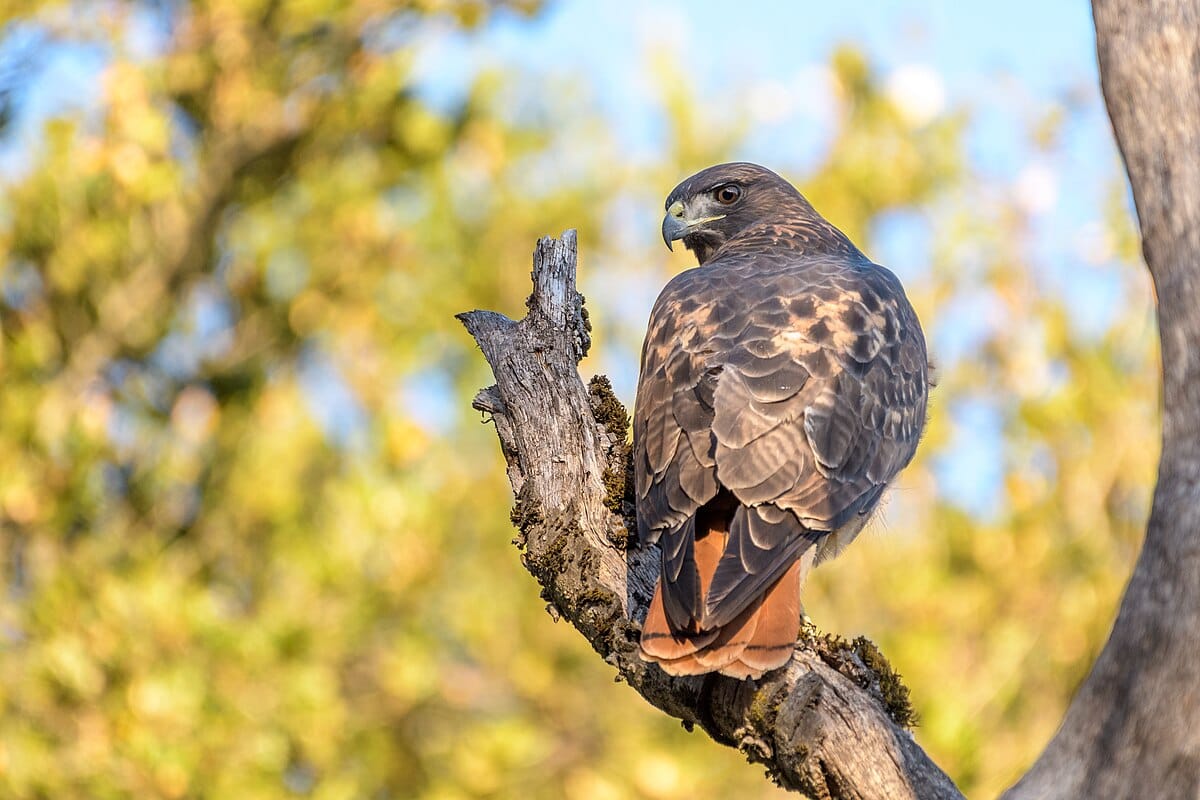
Red-tailed Hawks are large, powerful raptors recognizable by their reddish-brown tail feathers. Found throughout North America, they inhabit open fields, deserts, forests, and urban areas. Known for soaring flight and keen vision, they are apex predators in many ecosystems.
Diet consists primarily of small mammals, birds, reptiles, and carrion. Hunting strategies include soaring, perching, and ambushing prey. Red-tailed Hawks adapt their diet based on prey availability.
Breeding involves building nests in tall trees, cliffs, or man-made structures. Clutch sizes typically range from 1–5 eggs. Both parents feed altricial chicks, which develop strong flight and hunting skills before independence.
Vocalizations include piercing screams and calls used for territory defense and communication. Observing Red-tailed Hawks demonstrates predatory skill, adaptability, and territorial behavior.
Ecologically, they control rodent populations, influence food web dynamics, and maintain ecosystem balance. Conservation emphasizes habitat protection, monitoring populations, and reducing human-wildlife conflicts.
139. Great Blue Heron
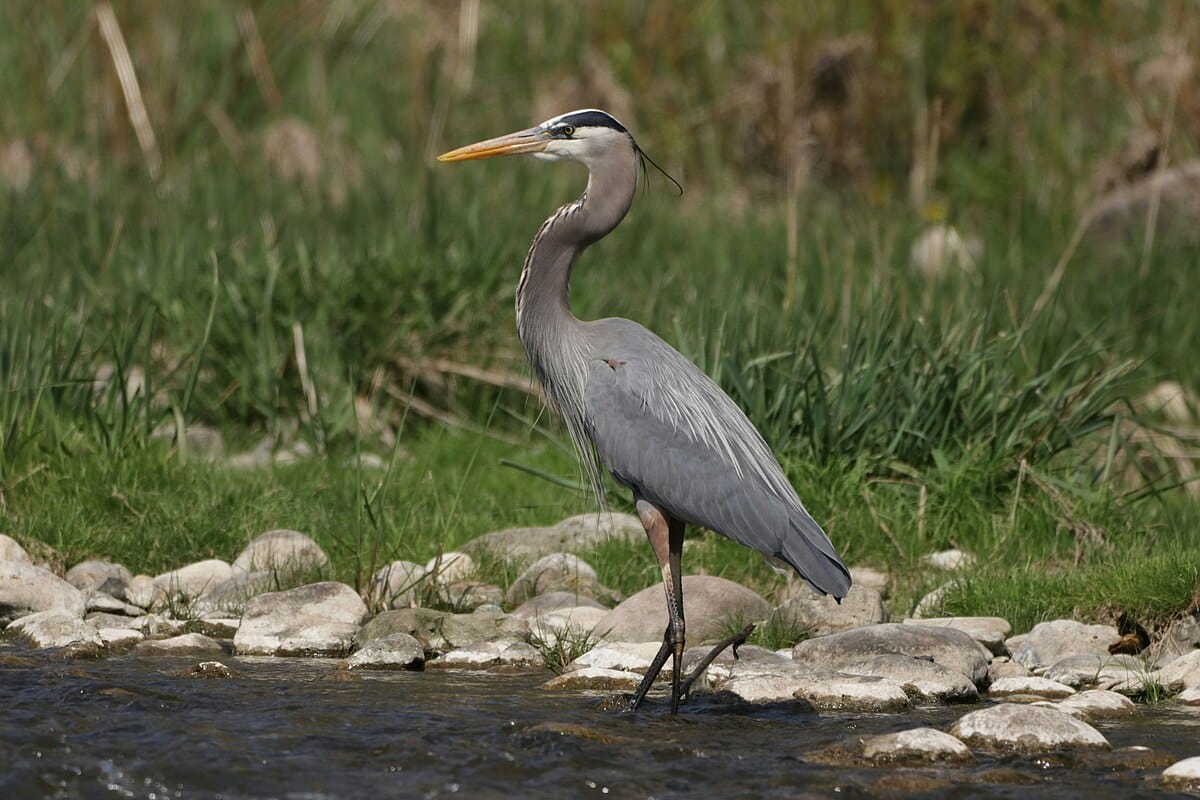
Great Blue Herons are tall, long-legged wading birds with blue-gray plumage, long necks, and sharp bills. Found across North America, they inhabit freshwater and coastal wetlands. Known for patience and precision, they hunt by standing still or slowly stalking prey in shallow waters.
Diet consists mainly of fish, amphibians, small mammals, and insects. Hunting involves spearing or grasping prey with their long bills. They forage individually or in small groups, demonstrating remarkable stealth and precision.
Breeding involves nesting in trees, shrubs, or reed beds, often in colonies called heronries. Clutch sizes typically range from 3–6 eggs. Both parents incubate and feed chicks, which are altricial and require weeks of care.
Vocalizations include croaks, squawks, and harsh calls used for communication and territory defense. Observing Great Blue Herons highlights patient hunting behavior, nesting strategies, and wetland ecosystem adaptation.
Ecologically, they regulate fish populations, maintain wetland balance, and contribute to nutrient cycling. Conservation emphasizes wetland protection, water quality management, and habitat preservation.
140. Common Loon

Common Loons are large aquatic birds known for their striking black-and-white breeding plumage, red eyes, and haunting calls. Found in North American lakes and northern forests, they are excellent divers and highly adapted to freshwater habitats.
Diet consists mainly of fish, supplemented with crustaceans and aquatic invertebrates. They forage by diving underwater, using webbed feet for propulsion. Diving efficiency and stealth make them effective predators.
Breeding involves nesting on lake shores or small islands. Clutch sizes typically range from 1–3 eggs. Both parents incubate and feed chicks, which are semi-precocial and can swim shortly after hatching. Vocalizations include wails, tremolos, and yodels used for communication, territory defense, and pair bonding.
Ecologically, Common Loons regulate fish populations, contribute to freshwater ecosystem health, and indicate water quality. Conservation emphasizes protecting nesting sites, minimizing shoreline disturbance, and preserving lake habitats.
141. Brown Pelican

The Brown Pelican is a large coastal bird recognized for its long bill, expandable throat pouch, and striking brown and gray plumage. Found along the Atlantic, Pacific, and Gulf coasts of the Americas, Brown Pelicans are skilled divers, plunging from heights to catch fish. They are social birds, often seen flying in V-shaped formations or resting in large groups.
Diet consists almost exclusively of fish, which they catch by diving into shallow waters. The expandable throat pouch allows them to scoop fish efficiently. Brown Pelicans often hunt in groups, herding fish toward the surface for easier capture. They may also exhibit cooperative hunting strategies in certain regions.
Breeding involves nesting in colonies on islands, mangroves, or coastal cliffs. Clutch sizes typically range from 2–3 eggs. Both parents participate in incubation and feeding chicks, which are altricial and remain dependent for several weeks. Nesting colonies help protect against predators and facilitate social learning.
Vocalizations include grunts, croaks, and low calls used for communication within colonies. Observing Brown Pelicans highlights their cooperative behavior, spectacular diving skills, and coastal adaptations.
Ecologically, they contribute to fish population regulation and nutrient cycling in coastal ecosystems. Conservation emphasizes protecting nesting sites, reducing pollution, and monitoring fish stocks to ensure sustainable feeding opportunities.
142. American Goldfinch
The American Goldfinch is a small, vibrant songbird with bright yellow plumage in males during breeding season and olive-brown tones in females. Native to North America, they inhabit meadows, fields, gardens, and woodland edges. Known for cheerful songs and acrobatic foraging, Goldfinches are popular among birdwatchers.
Diet consists primarily of seeds, especially from sunflowers, thistles, and composite flowers. During breeding, insects supplement the diet to provide protein for chicks. Foraging behavior includes acrobatic hanging and flipping to access seeds from flower heads.
Breeding involves constructing small, cup-shaped nests suspended in shrubs or trees. Clutch sizes typically range from 4–6 eggs. Both parents feed altricial chicks until fledging. American Goldfinches often time their breeding to coincide with peak seed availability.
Vocalizations include warbles, trills, and twittering calls used for communication, territory defense, and mate attraction. Observing American Goldfinches demonstrates agility, feeding precision, and seasonal plumage changes.
Ecologically, they aid in seed dispersal and contribute to pollination by feeding on seed heads. Conservation emphasizes preserving open habitats, planting native flowers, and providing supplemental feeding during winter.
143. Red-winged Blackbird

Red-winged Blackbirds are medium-sized passerines recognized by glossy black plumage in males and brown-streaked coloration in females. Males display bright red and yellow shoulder patches during breeding season. Native to North America, they inhabit marshes, wetlands, meadows, and agricultural fields.
Diet consists of seeds, grains, and insects. They forage on the ground or in vegetation, often in large flocks outside the breeding season. During breeding, protein-rich insects are crucial for chick development.
Breeding involves constructing cup-shaped nests in reeds, shrubs, or low vegetation. Clutch sizes typically range from 3–5 eggs. Both parents feed altricial chicks, and males aggressively defend territories. Nesting colonies provide protection and enhance social cohesion.
Vocalizations include distinct trills, whistles, and calls used for mate attraction, territory defense, and social communication. Observing Red-winged Blackbirds showcases territorial behavior, flock dynamics, and adaptability to diverse habitats.
Ecologically, they control insect populations, disperse seeds, and maintain wetland ecosystem balance. Conservation emphasizes protecting marshes, minimizing pesticide use, and maintaining breeding habitats.
144. Yellow-rumped Warbler

Yellow-rumped Warblers are small songbirds characterized by gray-brown plumage with bright yellow patches on the rump, sides, and sometimes crown. Found throughout North America, they inhabit forests, shrublands, and open woodlands. They are highly migratory and adapt to a wide range of habitats.
Diet consists of insects, berries, and seeds. During breeding, insects provide essential protein for chicks, while winter diets rely more heavily on fruits. Foraging behavior includes gleaning, hovering, and sometimes catching insects midair.
Breeding involves constructing small, cup-shaped nests in trees or shrubs. Clutch sizes typically range from 4–6 eggs. Both parents feed altricial chicks, which remain dependent until fledging. Migration timing and stopover habitats are crucial for survival.
Vocalizations include trills, warbles, and chip notes used for communication, mate attraction, and territorial signaling. Observing Yellow-rumped Warblers highlights migration strategies, adaptability, and seasonal diet shifts.
Ecologically, they control insect populations, disperse seeds, and contribute to forest health. Conservation emphasizes habitat protection, particularly stopover sites, and reducing pesticide exposure.
145. Barn Swallow
Barn Swallows are small, agile passerines with iridescent blue-black upperparts, rusty underparts, and deeply forked tails. Native to Europe, Asia, and North America, they inhabit open areas, farmlands, and human structures. Barn Swallows are celebrated for their acrobatic flight and insect-catching prowess.
Diet consists almost exclusively of flying insects, captured in midair using agile maneuvers. Their feeding behavior is highly aerial, requiring coordination, precision, and energy efficiency. They often hunt in groups during migration and breeding seasons.
Breeding involves building cup-shaped mud nests under eaves, bridges, or other structures. Clutch sizes typically range from 3–7 eggs. Both parents feed altricial chicks, which fledge after a few weeks. Nest fidelity is high, with swallows often returning to the same sites annually.
Vocalizations include cheerful warbles and twittering calls used for communication, mate attraction, and territory defense. Observing Barn Swallows highlights flight skill, social behavior, and adaptability to human-modified landscapes.
Ecologically, they control flying insect populations and serve as indicators of ecosystem health. Conservation emphasizes preserving nesting sites, minimizing pesticide use, and monitoring population trends.
146. Blue-footed Booby

The Blue-footed Booby is a striking seabird native to the eastern Pacific, recognized for its bright blue feet, long pointed beak, and streamlined body. Found on islands and coastal regions, they are skilled divers and cooperative hunters, feeding primarily on fish.
Diet consists mainly of small fish, such as sardines and anchovies. Feeding behavior includes plunge-diving from heights, sometimes forming hunting groups to herd fish. Their vivid blue feet are used in mating displays, signaling health and genetic quality to potential mates.
Breeding involves constructing nests on rocky islands or open ground. Clutch sizes typically range from 2–3 eggs. Both parents feed altricial chicks, which remain dependent for weeks. Courtship displays involve high-stepping dances and showing off their blue feet.
Vocalizations include loud honks, whistles, and grunts used in social interactions and courtship. Observing Blue-footed Boobies showcases mating behavior, foraging skill, and adaptation to coastal habitats.
Ecologically, they regulate fish populations and contribute to coastal food web dynamics. Conservation emphasizes protecting nesting islands, minimizing human disturbance, and monitoring populations for sustainability.
147. American Robin

The American Robin is a medium-sized thrush with a bright orange breast, gray-brown back, and white eye ring. Native to North America, they inhabit gardens, forests, and urban areas. Known for melodious songs and ground-foraging behavior, they are a familiar symbol of spring.
Diet consists mainly of insects, earthworms, and fruits. Foraging involves hopping and probing soil, leaf litter, and lawns for invertebrates. Seasonal diet shifts favor fruits during autumn and winter for energy.
Breeding involves building cup-shaped nests in trees, shrubs, or man-made structures. Clutch sizes typically range from 3–5 eggs. Both parents feed altricial chicks, which fledge after a few weeks. Territorial behavior is prominent during the breeding season.
Vocalizations include melodious whistles and warbles used for mate attraction, territory defense, and communication. Observing American Robins demonstrates adaptability, social behavior, and interaction with human environments.
Ecologically, they control insect populations, disperse seeds, and enhance urban biodiversity. Conservation emphasizes habitat preservation, garden-friendly practices, and minimizing pesticide use.
148. European Starling

European Starlings are medium-sized passerines with iridescent plumage, yellow bills, and speckled bodies. Native to Europe, they have been introduced globally, often forming large flocks. Highly social, they are known for synchronized murmurations and adaptability to urban environments.
Diet consists of insects, fruits, seeds, and occasionally human scraps. Foraging occurs on the ground, in grasslands, or open fields. Starlings are opportunistic feeders, often exploiting abundant food sources.
Breeding involves nesting in cavities, including tree holes and man-made structures. Clutch sizes typically range from 4–6 eggs. Both parents feed altricial chicks until fledging. Social nesting enhances predator detection and resource sharing.
Vocalizations include whistles, warbles, clicks, and mimicry of other species or environmental sounds. Observing European Starlings highlights social coordination, vocal flexibility, and adaptability to human-altered habitats.
Ecologically, they control insect populations, disperse seeds, and influence local ecosystems. Conservation involves managing invasive populations, habitat preservation, and monitoring competition with native species.
149. House Sparrow

House Sparrows are small, robust passerines with brown and gray plumage, black throat patches in males, and streaked brown backs in females. Found worldwide, they inhabit urban areas, farmlands, and gardens. They are highly adaptable, social, and often associate with human settlements.
Diet consists mainly of seeds, grains, and insects. Foraging occurs on the ground, in shrubs, or near human-provided food sources. House Sparrows are opportunistic, adjusting feeding strategies based on availability.
Breeding involves nesting in cavities, building ledges, or artificial structures. Clutch sizes typically range from 3–6 eggs. Both parents feed altricial chicks. High reproductive rates and flexibility in nesting allow House Sparrows to thrive in urban environments.
Vocalizations include chirps, trills, and cheeping notes used for communication, mate attraction, and territorial defense. Observing House Sparrows demonstrates social coordination, adaptability, and urban coexistence.
Ecologically, they control insect populations, disperse seeds, and provide prey for predators. Conservation emphasizes coexistence in urban settings, habitat provision, and understanding their role as a globally widespread species.
150. Rock Pigeon

Rock Pigeons are medium-sized birds with iridescent neck feathers, gray-blue plumage, and distinctive wing patterns. Native to Europe, North Africa, and Asia, they have been introduced worldwide, thriving in urban and suburban environments. They are highly adaptable, social, and often found in large flocks.
Diet consists mainly of seeds, grains, and occasionally human-provided food. Foraging occurs on the ground, often in open areas, plazas, and streets. Their opportunistic feeding behavior allows them to exploit human-altered landscapes effectively.
Breeding involves nesting on ledges, buildings, cliffs, or other structures. Clutch sizes typically range from 1–2 eggs. Both parents feed altricial chicks. Rock Pigeons exhibit high reproductive rates and flexibility in nesting locations.
Vocalizations include coos and soft calls used for communication, mate attraction, and flock coordination. Observing Rock Pigeons demonstrates social behavior, urban adaptation, and interaction with human communities.
Ecologically, they contribute to seed dispersal, provide prey for raptors, and influence urban ecosystem dynamics. Conservation emphasizes coexistence, understanding human-wildlife interactions, and maintaining urban biodiversity.
151. Common Myna

The Common Myna is a medium-sized passerine bird notable for its dark brown body, black head, bright yellow eye patches, and yellow legs. Native to South and Southeast Asia, it has been introduced to many regions worldwide. Mynas are highly adaptable, thriving in urban areas, agricultural landscapes, and open woodlands. Known for intelligence, mimicry, and social behavior, they are often observed in flocks and are highly interactive with human environments.
Diet consists of fruits, seeds, insects, small invertebrates, and human food scraps. They are omnivorous opportunists, feeding on the ground, in trees, or even scavenging in urban areas. Their diet flexibility contributes to their successful spread in non-native regions.
Breeding involves constructing nests in tree cavities, buildings, or artificial structures. Clutch sizes typically range from 4–6 eggs. Both parents feed altricial chicks until fledging. Common Mynas exhibit cooperative defense against predators and are known for aggressive territorial behavior.
Vocalizations include whistles, squawks, and remarkable mimicry of human sounds and other birds. Observing Common Mynas reveals intelligence, problem-solving skills, and social interactions within flocks.
Ecologically, they act as seed dispersers and insect predators. Conservation management in non-native areas focuses on controlling populations to protect native biodiversity, while in native ranges, preserving urban-adapted and rural habitats is key.
152. Common Kestrel

The Common Kestrel is a small to medium-sized falcon recognized for its reddish-brown back, gray head, and distinctive hovering hunting style. Found across Europe, Asia, and Africa, they inhabit open countryside, farmland, grasslands, and urban areas. Their ability to hover while scanning for prey is iconic among raptors.
Diet consists primarily of small mammals, insects, and occasionally birds. Hunting involves hovering at 10–20 meters above ground, then swooping to capture prey with sharp talons. Seasonal and regional variations influence diet composition.
Breeding involves nesting in cliffs, trees, buildings, or nest boxes. Clutch sizes typically range from 3–6 eggs. Both parents feed altricial chicks, which fledge after several weeks. Courtship includes aerial displays and calling.
Vocalizations include a sharp “klee-klee” call used for communication and territorial defense. Observing Common Kestrels showcases hunting skill, agility, and adaptability to human-altered landscapes.
Ecologically, they control rodent populations and influence ecosystem balance. Conservation emphasizes protecting nesting sites, reducing pesticide use, and mitigating urban hazards such as collisions with structures.
153. Peregrine Falcon’
The Peregrine Falcon is a medium-sized raptor renowned for its incredible speed and aerial hunting prowess. Recognizable by slate-gray back, barred underparts, and dark head markings, it inhabits cliffs, urban skyscrapers, and open landscapes globally. Peregrines are apex aerial predators, famous for stooping at speeds exceeding 200 mph to capture prey midair.
Diet consists primarily of medium-sized birds, such as pigeons and waterfowl. Hunting involves high-altitude stoops and precise strikes using powerful talons. Prey selection depends on availability, season, and habitat.
Breeding involves nesting on cliffs, ledges, or tall buildings. Clutch sizes typically range from 3–4 eggs. Both parents feed altricial chicks, which fledge after several weeks. Courtship includes aerial acrobatics and mutual feeding displays.
Vocalizations include harsh “kak-kak-kak” calls used for communication, mate interactions, and territorial defense. Observing Peregrine Falcons highlights aerial mastery, adaptability, and predatory efficiency.
Ecologically, they control bird populations, maintain ecosystem balance, and serve as indicators of environmental health. Conservation emphasizes habitat protection, pesticide reduction, and urban nesting programs.
154. Great Horned Owl
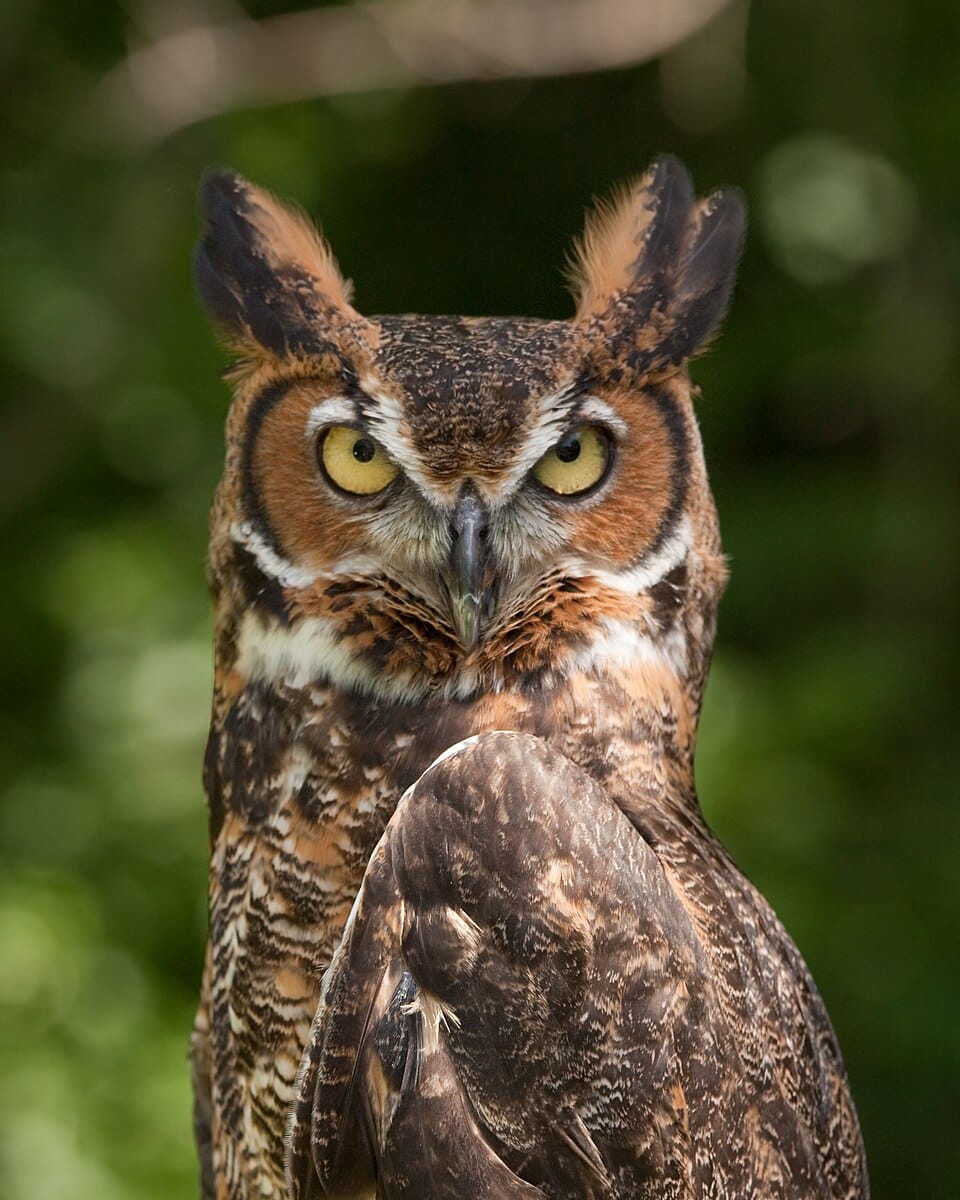
The Great Horned Owl is a large, powerful nocturnal raptor with ear tufts, striking yellow eyes, and mottled brown plumage. Found throughout North and South America, it inhabits forests, deserts, wetlands, and urban areas. Known for strength, stealth, and versatility, it is a top predator in most ecosystems.
Diet consists of mammals, birds, reptiles, and occasionally fish. Hunting occurs at night using silent flight, sharp talons, and exceptional vision and hearing. Prey varies seasonally and regionally, showcasing the owl’s adaptability.
Breeding involves using abandoned nests of other birds, tree cavities, or cliff ledges. Clutch sizes typically range from 2–4 eggs. Both parents feed altricial chicks, which fledge after several weeks. Courtship includes hooting duets and displays of physical presence.
Vocalizations include deep hoots, growls, and whistles used for mate attraction, territorial defense, and communication. Observing Great Horned Owls highlights nocturnal hunting, territoriality, and adaptive behavior.
Ecologically, they regulate rodent and bird populations, maintaining ecosystem stability. Conservation emphasizes protecting nesting sites, reducing human disturbance, and monitoring population trends.
155. Canada Goose

Canada Geese are large waterfowl with black heads, white cheek patches, and brownish bodies. Native to North America, they inhabit wetlands, lakes, rivers, and grasslands. Known for V-shaped migratory flights and adaptability, they are a common sight in urban and rural areas alike.
Diet consists of grasses, seeds, grains, and aquatic vegetation. Foraging occurs on land or in shallow water. They graze extensively on grasses and can impact agricultural fields.
Breeding involves building nests on the ground near water. Clutch sizes typically range from 4–7 eggs. Both parents guard and feed precocial chicks, which can feed themselves shortly after hatching. Parental protection and territoriality ensure chick survival.
Vocalizations include honks, hisses, and calls used for communication, social coordination, and alerting to danger. Observing Canada Geese demonstrates migratory behavior, family cohesion, and adaptability.
Ecologically, they influence plant communities, disperse seeds, and provide prey for predators. Conservation emphasizes wetland protection, managing populations in urban areas, and mitigating human-wildlife conflicts.
156. Mallard Duck
Mallards are medium-sized dabbling ducks with sexual dimorphism; males display iridescent green heads, yellow bills, and chestnut chests, while females are mottled brown. Found across North America, Europe, and Asia, they inhabit lakes, rivers, marshes, and ponds. Mallards are highly adaptable to both wild and urban habitats.
Diet consists of aquatic plants, seeds, insects, and small invertebrates. They feed by dabbling on water surfaces or grazing on land. Seasonal and regional variations influence feeding habits.
Breeding involves nesting on the ground, often concealed near water. Clutch sizes typically range from 8–13 eggs. Females incubate while males guard the territory. Chicks are precocial, leaving the nest shortly after hatching.
Vocalizations include quacks, whistles, and grunts used for communication, mating, and warning signals. Observing Mallards demonstrates adaptive foraging, social structure, and breeding strategies.
Ecologically, Mallards control insect populations, disperse seeds, and contribute to wetland health. Conservation emphasizes habitat preservation, wetland management, and monitoring hunting impacts.
157. Wild Turkey
Wild Turkeys are large, ground-dwelling birds with iridescent bronze feathers, fan-shaped tails, and distinctive wattles. Native to North America, they inhabit forests, grasslands, and agricultural areas. Wild Turkeys are omnivorous, highly social, and display elaborate courtship behaviors.
Diet consists of seeds, fruits, insects, and small vertebrates. Foraging occurs on the ground, scratching leaf litter and soil to uncover food. Seasonal changes influence diet composition.
Breeding involves elaborate courtship displays, including tail fanning and vocalizations. Clutch sizes typically range from 10–14 eggs. Females incubate altricial chicks, which follow her closely after hatching. Males defend territories and compete for mates.
Vocalizations include gobbles, clucks, and purrs used for mating, communication, and territory defense. Observing Wild Turkeys highlights social hierarchy, courtship, and adaptive feeding strategies.
Ecologically, they control insect populations, disperse seeds, and influence plant community dynamics. Conservation emphasizes habitat management, hunting regulation, and preserving forested areas.
158. Herring Gull

Herring Gulls are large seabirds with gray wings, white bodies, and pink legs. Found across North America and Europe, they inhabit coastlines, estuaries, and urban areas. Known for opportunistic feeding and social nesting, they are adaptable and resilient.
Diet consists of fish, invertebrates, garbage, and sometimes other birds. Feeding occurs on shorelines, open water, or urban environments. Opportunistic habits make them successful in human-altered landscapes.
Breeding involves nesting on cliffs, beaches, or rooftops. Clutch sizes typically range from 2–3 eggs. Both parents feed altricial chicks until fledging. Colonial nesting provides protection and social learning.
Vocalizations include harsh squawks, cries, and calls used for communication, defense, and social interaction. Observing Herring Gulls highlights opportunistic feeding, adaptability, and social behavior.
Ecologically, they regulate fish and invertebrate populations and contribute to coastal ecosystem dynamics. Conservation emphasizes habitat protection and mitigating conflicts with humans.
159. Oystercatcher

Oystercatchers are medium-sized shorebirds with striking black-and-white plumage, long orange bills, and pink legs. Found along coastlines worldwide, they inhabit sandy beaches, mudflats, and rocky shores. They are specialized feeders, probing and prying shellfish from the substrate.
Diet consists primarily of mollusks, crustaceans, worms, and occasionally small fish. They use their strong bills to pry open shells and probe sand or mud. Feeding techniques are specialized and learned from observing others.
Breeding involves nesting on sandy or rocky substrates, often in shallow scrapes. Clutch sizes typically range from 2–4 eggs. Both parents feed precocial chicks, which leave the nest quickly but remain under parental supervision.
Vocalizations include loud whistles and piping calls used for territory defense, mate communication, and coordination. Observing Oystercatchers demonstrates adaptive feeding, coastal survival strategies, and social behavior.
Ecologically, they control shellfish populations, influence shore ecosystems, and indicate habitat health. Conservation emphasizes protecting nesting areas, reducing human disturbance, and managing coastal habitats.
160. Northern Flicker
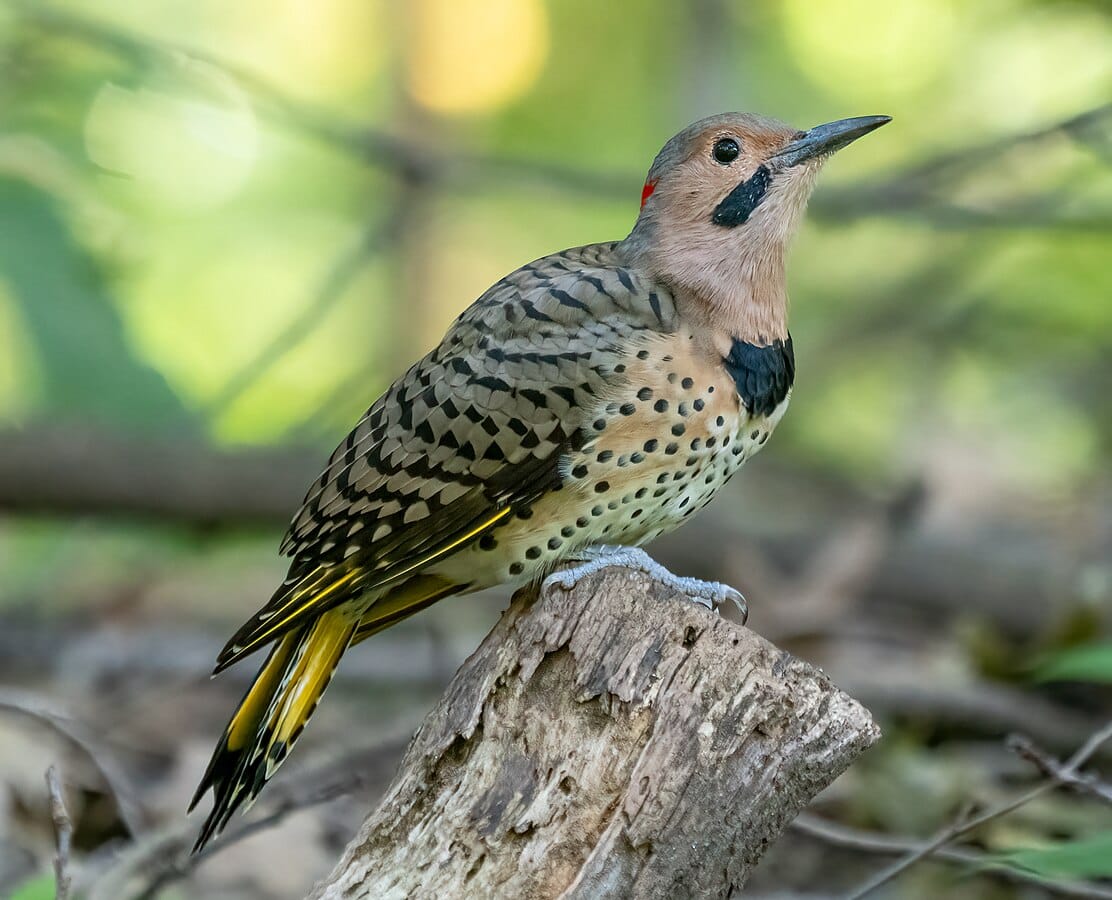
The Northern Flicker is a medium-sized woodpecker with brownish plumage, black spots, and distinctive red or yellow shafts on the wings and tail. Native to North America, they inhabit forests, open woodlands, and urban parks. Unlike other woodpeckers, they often forage on the ground for ants and beetles.
Diet consists primarily of ants, beetles, fruits, and seeds. Foraging involves probing soil, leaf litter, and tree bark. Their ground-feeding behavior distinguishes them from many arboreal woodpeckers.
Breeding involves nesting in tree cavities, either excavated by themselves or abandoned by other species. Clutch sizes typically range from 4–7 eggs. Both parents feed altricial chicks, which fledge after several weeks. Courtship includes drumming and calling displays.
Vocalizations include loud calls, drumming on tree trunks, and soft chatter used for territory defense, communication, and mate attraction. Observing Northern Flickers highlights feeding specialization, nesting adaptability, and social interactions.
Ecologically, they control insect populations, aid in seed dispersal, and provide cavities for other species. Conservation emphasizes protecting trees, preserving habitats, and maintaining ecological balance in urban and natural areas.
161. Tufted Titmouse
The Tufted Titmouse is a small, charming songbird recognized by its gray upperparts, white underparts, and a distinctive black forehead patch. Native to eastern North America, they inhabit deciduous and mixed forests, woodlots, and suburban gardens. Known for their curious and friendly nature, Tufted Titmice are frequently observed at bird feeders, interacting with humans and other small birds.
Diet consists primarily of insects, seeds, and nuts. Foraging occurs on tree branches, trunks, and occasionally the ground. They are highly active, hopping and flitting to inspect foliage, bark crevices, and feeders for food. Insects provide essential protein during breeding, while seeds and nuts sustain them in winter.
Breeding involves nesting in tree cavities or artificial nest boxes. Clutch sizes typically range from 5–7 eggs. Both parents incubate and feed altricial chicks until fledging. Territorial behavior is pronounced during the breeding season, with vocalizations and chases deterring rivals.
Vocalizations include clear whistles and trills used for mate attraction, communication, and defending territory. Observing Tufted Titmice highlights their inquisitive behavior, acrobatic foraging, and social interactions.
Ecologically, they help control insect populations, disperse seeds, and provide prey for raptors. Conservation emphasizes preserving woodlots, providing nest boxes, and maintaining native tree species in suburban areas.
162. Black-capped Chickadee
The Black-capped Chickadee is a small, plump songbird with a black cap, bib, and white cheeks. Native to North America, they inhabit forests, woodlands, and residential gardens. They are highly social, often forming mixed-species flocks in winter, and are well known for their acrobatic movements and curious behavior.
Diet consists primarily of insects, spiders, seeds, and berries. Chickadees forage actively on branches, bark, and leaves, using their sharp beaks to extract insects from crevices. In winter, seeds and berries become a major food source, supporting survival during cold months.
Breeding involves nesting in tree cavities, natural holes, or artificial nest boxes. Clutch sizes typically range from 6–8 eggs. Both parents feed altricial chicks, which fledge after a few weeks. Territorial behavior includes vocalizations and aggressive displays toward intruders.
Vocalizations include their famous “chick-a-dee-dee-dee” call, used for communication, warning of predators, and social coordination. Observing Black-capped Chickadees showcases adaptability, problem-solving, and intricate social behavior.
Ecologically, they control insect populations, contribute to seed dispersal, and provide prey for larger birds. Conservation emphasizes preserving forested habitats, installing nest boxes, and avoiding pesticide use.
163. Red-breasted Nuthatch

The Red-breasted Nuthatch is a small, energetic songbird recognized by its blue-gray upperparts, rust-colored underparts, and black eye stripe. Native to North American coniferous forests, they are frequent winter visitors to feeders and are known for climbing tree trunks headfirst, a behavior uncommon among birds.
Diet consists primarily of insects, seeds, and nuts. Foraging occurs on tree trunks, branches, and foliage, with a preference for conifer seeds in winter. Their habit of caching food for later use demonstrates remarkable memory and intelligence.
Breeding involves nesting in tree cavities, often modifying natural holes with mud or bark. Clutch sizes typically range from 5–7 eggs. Both parents feed altricial chicks, which fledge in a few weeks. Territoriality is maintained with vocalizations and displays.
Vocalizations include nasal “yank-yank” calls and trills used for communication, mate bonding, and alarm signaling. Observing Red-breasted Nuthatches reveals foraging ingenuity, acrobatic movement, and adaptability to cold climates.
Ecologically, they control insect populations, disperse seeds, and support forest health. Conservation emphasizes protecting coniferous forests, providing feeders, and minimizing habitat fragmentation.
164. Brown-headed Cowbird

The Brown-headed Cowbird is a medium-sized blackbird recognized by its glossy black body and chocolate-brown head. Native to North America, they inhabit grasslands, agricultural fields, and open woodlands. Unique among birds, cowbirds are brood parasites, laying eggs in the nests of other species rather than building their own.
Diet consists of seeds, grains, and insects. They often follow grazing mammals to feed on insects stirred up from grasslands. This opportunistic feeding behavior allows cowbirds to exploit multiple habitats effectively.
Breeding does not involve traditional nesting. Females lay eggs in the nests of host species, which then incubate and feed the chicks. This reproductive strategy can impact host populations, leading to evolutionary adaptations in both parasite and host species.
Vocalizations include bubbling calls and musical whistles used for communication, mate attraction, and social interactions. Observing Brown-headed Cowbirds demonstrates behavioral adaptation, sociality, and influence on ecosystem dynamics.
Ecologically, they regulate insect populations, affect host species reproductive success, and participate in food webs. Conservation emphasizes habitat preservation and monitoring brood parasitism impacts on native bird populations.
165. Yellow Warbler
The Yellow Warbler is a small, bright yellow songbird with subtle reddish streaks on the chest. Native to North America, they inhabit wetlands, riparian woodlands, and open shrubby areas. Known for cheerful songs and vibrant plumage, they are widely observed during spring migration.
Diet consists primarily of insects, including caterpillars, beetles, and spiders, supplemented with berries. Foraging occurs on foliage, branches, and shrubs, often with quick, agile movements. Their insectivorous diet supports chick growth during breeding.
Breeding involves constructing cup-shaped nests in shrubs or small trees. Clutch sizes typically range from 3–6 eggs. Both parents feed altricial chicks, which fledge in about two weeks. Nesting behavior often involves camouflage to avoid predation.
Vocalizations include cheerful trills and warbles used for mate attraction, territory defense, and communication. Observing Yellow Warblers showcases seasonal migration, territorial behavior, and adaptive foraging.
Ecologically, they control insect populations, contribute to forest and wetland health, and provide prey for raptors. Conservation emphasizes wetland preservation, planting native shrubs, and protecting migratory stopover habitats.
166. Indigo Bunting

The Indigo Bunting is a small songbird with brilliant blue plumage in males and brown tones in females. Native to North America, they inhabit woodland edges, fields, and brushy areas. Renowned for vibrant color and melodic songs, Indigo Buntings attract birdwatchers and researchers alike.
Diet consists primarily of insects, seeds, and berries. Foraging occurs on the ground, shrubs, or low trees. Seasonal diet shifts occur, with insects dominating in summer for chick nutrition and seeds and berries providing energy in autumn.
Breeding involves constructing cup-shaped nests in shrubs or small trees. Clutch sizes typically range from 3–5 eggs. Both parents feed altricial chicks, which fledge after two weeks. Territorial behavior includes singing and physical displays.
Vocalizations include high-pitched, musical warbles used for communication, mate attraction, and territory defense. Observing Indigo Buntings highlights migration, color signaling, and reproductive behavior.
Ecologically, they control insect populations, disperse seeds, and support ecosystem balance. Conservation emphasizes preserving woodland edges, planting native vegetation, and minimizing pesticide exposure.
167. Scarlet Tanager

The Scarlet Tanager is a medium-sized songbird with striking bright red plumage and black wings and tail in males, while females display yellow-green coloration. Native to North American deciduous forests, they inhabit dense canopies and woodland interiors. Renowned for vivid color and melodic song, Scarlet Tanagers are a favorite for bird enthusiasts.
Diet consists primarily of insects, caterpillars, and fruits. Foraging occurs in the canopy, gleaning foliage and catching flying insects. Seasonal diet shifts toward fruits during migration and wintering.
Breeding involves building cup-shaped nests high in trees. Clutch sizes typically range from 3–5 eggs. Both parents feed altricial chicks until fledging. Territorial behavior includes singing and chasing intruders.
Vocalizations include rich, burry warbles used for communication, mate attraction, and territory defense. Observing Scarlet Tanagers highlights canopy foraging, color signaling, and seasonal migration.
Ecologically, they control insect populations, disperse seeds, and contribute to forest ecosystem health. Conservation emphasizes protecting mature forests, reducing pesticide exposure, and preserving migratory corridors.
168. Purple Martin

Purple Martins are medium-sized swallows with glossy purple-blue plumage in males and duller tones in females. Native to North America, they inhabit open areas near water and human settlements, often nesting in colonies in artificial housing structures. They are highly social, migratory, and charismatic aerial feeders.
Diet consists exclusively of flying insects, including mosquitoes, flies, and beetles. Feeding occurs in continuous aerial foraging flights, demonstrating agility, coordination, and energy efficiency.
Breeding involves nesting in cavities, often using man-made martin houses or gourds. Clutch sizes typically range from 4–6 eggs. Both parents feed altricial chicks, which fledge after several weeks. Colony nesting enhances predator detection and social interaction.
Vocalizations include chirps, warbles, and twittering calls used for communication, mate bonding, and social coordination. Observing Purple Martins highlights aerial foraging, colonial nesting, and human-wildlife interaction.
Ecologically, they regulate insect populations and contribute to urban and rural ecosystem health. Conservation emphasizes providing artificial housing, reducing pesticide use, and protecting migratory stopover sites.
169. American Crow

The American Crow is a large, all-black passerine with a strong bill and remarkable intelligence. Native to North America, they inhabit forests, fields, wetlands, and urban areas. Known for problem-solving abilities, complex social behavior, and adaptability, American Crows are highly studied by ornithologists.
Diet consists of insects, small animals, seeds, fruits, carrion, and human scraps. Foraging occurs on the ground, in trees, and occasionally in water. Opportunistic feeding allows them to thrive in diverse habitats.
Breeding involves nesting in trees or shrubs. Clutch sizes typically range from 3–7 eggs. Both parents feed altricial chicks, and family groups often participate in cooperative care. Territoriality and social hierarchy influence breeding success.
Vocalizations include caws, rattles, and a variety of calls used for communication, coordination, and defense. Observing American Crows highlights intelligence, social learning, and adaptability.
Ecologically, they control insect and small animal populations, disperse seeds, and serve as scavengers. Conservation emphasizes preserving habitats, coexistence in urban areas, and monitoring ecological impact.
170. Hairy Woodpecker

The Hairy Woodpecker is a medium-sized woodpecker with black-and-white plumage, a prominent white back stripe, and a long straight bill. Native to North America, it inhabits forests, woodlands, and suburban parks. Known for drumming behavior and insect foraging, Hairy Woodpeckers are skilled cavity nesters.
Diet consists primarily of insects, larvae, and occasionally seeds. Foraging involves hammering tree trunks, probing bark, and extracting hidden insects. Their foraging is both arboreal and vertical, demonstrating remarkable climbing ability.
Breeding involves nesting in tree cavities excavated by the birds themselves. Clutch sizes typically range from 3–7 eggs. Both parents feed altricial chicks, which fledge after several weeks. Courtship includes drumming, chasing, and vocal displays.
Vocalizations include sharp “peek” calls and drumming used for communication, territory defense, and mate attraction. Observing Hairy Woodpeckers highlights vertical foraging, cavity nesting, and adaptive behavior.
Ecologically, they control insect populations, contribute to cavity availability for other species, and support forest health. Conservation emphasizes protecting mature trees, maintaining forested habitats, and monitoring populations in suburban areas.
171. Downy Woodpecker

The Downy Woodpecker is a small, agile woodpecker native to North America, easily recognized by its black-and-white patterned plumage and short bill. Unlike many larger woodpeckers, it has a delicate build, making it adept at foraging on thin branches and twigs. Downy Woodpeckers inhabit forests, woodlots, orchards, and suburban areas, frequently visiting feeders for suet and seeds.
Diet consists primarily of insects, larvae, spiders, and seeds. Foraging involves pecking, probing, and gleaning bark surfaces to extract hidden prey. Their ability to cling to vertical and horizontal surfaces allows them to exploit a wide range of feeding sites.
Breeding involves nesting in tree cavities, either excavated by themselves or adapted from previous occupants. Clutch sizes typically range from 4–7 eggs. Both parents participate in incubation and feeding altricial chicks. Territoriality is strong during breeding, with vocalizations and drumming used to deter rivals.
Vocalizations include sharp “pik” calls and drumming patterns, serving as communication, territory defense, and mate attraction. Observing Downy Woodpeckers showcases vertical foraging, cavity-nesting behavior, and social interactions with other small birds.
Ecologically, they control insect populations, provide cavities for secondary cavity nesters, and contribute to forest ecosystem health. Conservation emphasizes preserving mature trees, avoiding pesticide overuse, and maintaining wooded habitats in urban areas.
172. Eastern Kingbird

The Eastern Kingbird is a medium-sized, aggressive flycatcher native to North America, recognized by its black head, white underparts, and distinct white tail tip. They inhabit open fields, pastures, wetlands, and forest edges. Known for bold territorial behavior, they actively defend nests against much larger birds.
Diet consists primarily of flying insects, including flies, beetles, and dragonflies. Foraging occurs through aerial sallying, where birds perch, spot prey, then dart out to catch insects midair. Occasionally, they supplement with berries and fruits, especially in late summer and fall.
Breeding involves constructing cup-shaped nests in trees or shrubs, often well-hidden to protect against predators. Clutch sizes typically range from 3–5 eggs. Both parents feed altricial chicks, which fledge after a few weeks. Nest defense includes aggressive chases and loud vocalizations.
Vocalizations include sharp “kik-kik” or buzzing calls used for territorial defense and communication. Observing Eastern Kingbirds demonstrates aerial hunting skills, aggressive territoriality, and adaptability to human-altered landscapes.
Ecologically, they control insect populations, serve as indicators of healthy open habitats, and provide prey for raptors. Conservation emphasizes preserving grasslands, limiting pesticide use, and protecting nesting sites from disturbance.
173. Loggerhead Shrike
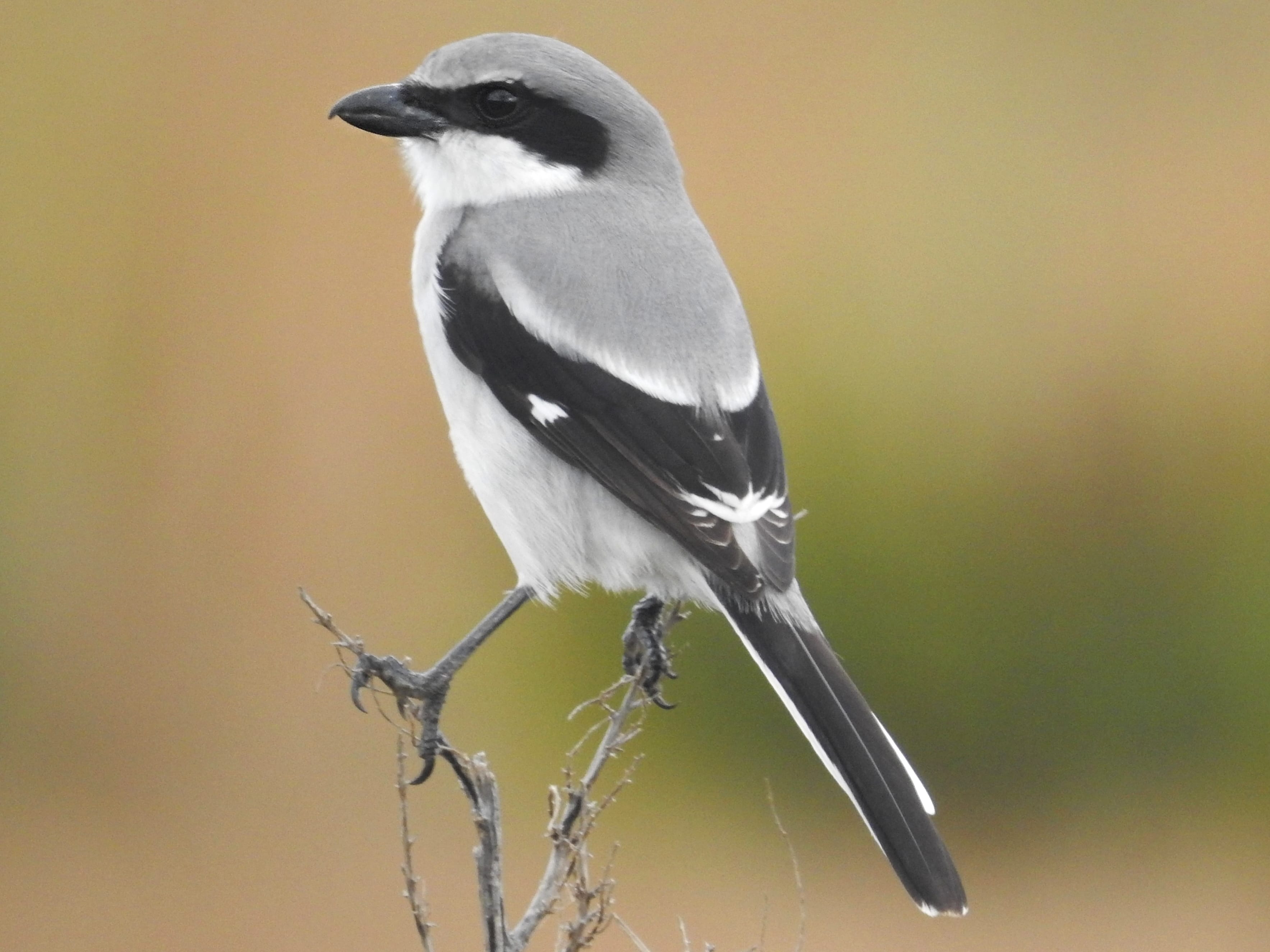
The Loggerhead Shrike is a small predatory songbird native to North America, distinguished by a gray body, black mask, and hooked bill. Shrikes are known for their unique habit of impaling prey on thorns or barbed wire, earning the nickname “butcher birds.” They inhabit open fields, grasslands, and scrubby areas.
Diet consists of insects, small birds, rodents, and reptiles. Hunting involves spotting prey from elevated perches, swooping down to capture it, and sometimes impaling it for storage. Their sharp, hooked bills are adapted for killing and handling prey.
Breeding involves constructing cup-shaped nests in shrubs or small trees. Clutch sizes typically range from 4–6 eggs. Both parents feed altricial chicks, and nest defense includes alarm calls and aggressive displays toward intruders.
Vocalizations include harsh, rasping notes used for communication, territory defense, and predator warnings. Observing Loggerhead Shrikes reveals predatory ingenuity, territoriality, and complex foraging behavior.
Ecologically, they control insect and small vertebrate populations and indicate healthy open habitats. Conservation emphasizes protecting grasslands, reducing pesticide exposure, and monitoring populations vulnerable to habitat loss.
174. Belted Kingfisher

The Belted Kingfisher is a medium-sized waterbird with a slate-blue body, white collar, and shaggy crest. Native to North America, they inhabit rivers, lakes, ponds, and coastal waterways. Known for loud rattling calls and diving hunting style, Belted Kingfishers are highly visible near water.
Diet consists primarily of fish, supplemented by crustaceans and amphibians. Hunting involves perching over water, spotting prey, then diving headfirst to capture it with the sharp bill. They are expert fishers, able to time dives with precision.
Breeding involves excavating burrows in riverbanks, sand banks, or cliffs. Clutch sizes typically range from 5–8 eggs. Both parents feed altricial chicks, which fledge after several weeks. Territoriality and nest defense are prominent.
Vocalizations include loud rattling calls used for communication, mate interaction, and territory defense. Observing Belted Kingfishers showcases fishing skills, burrow-nesting adaptation, and vibrant social displays.
Ecologically, they regulate fish populations, serve as prey for larger raptors, and indicate freshwater ecosystem health. Conservation emphasizes preserving riparian habitats, preventing water pollution, and protecting nesting banks.
175. Common Raven
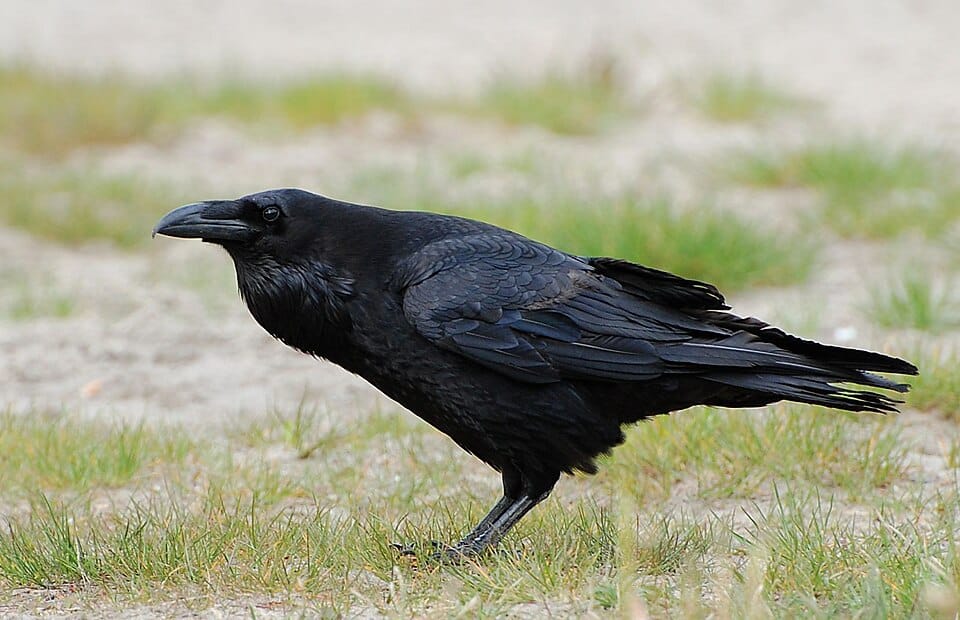
The Common Raven is a large, all-black corvid native to the Northern Hemisphere, noted for intelligence, problem-solving, and adaptability. Found in forests, mountains, tundra, deserts, and urban areas, they exhibit complex social behavior and vocal communication.
Diet is omnivorous, including insects, small mammals, carrion, fruits, seeds, and human scraps. Foraging occurs on the ground, in trees, and along cliffs. Opportunistic habits allow ravens to exploit diverse habitats and food sources.
Breeding involves nesting in tall trees, cliffs, or human structures. Clutch sizes typically range from 3–7 eggs. Both parents feed altricial chicks, with extended parental care. Territorial behavior and aerial displays are common during breeding season.
Vocalizations include croaks, calls, and a wide range of mimicry used for communication, problem-solving, and social interaction. Observing Common Ravens reveals intelligence, adaptability, and complex social structures.
Ecologically, they control pest populations, scavenge carrion, and influence ecosystem dynamics. Conservation emphasizes preserving natural habitats, mitigating human-wildlife conflicts, and understanding their ecological role.
176. Great Egret

The Great Egret is a tall, elegant wading bird with pure white plumage, long black legs, and a yellow bill. Native to North America and parts of Europe, Africa, and Asia, they inhabit wetlands, marshes, lakes, and estuaries. Known for graceful hunting and striking breeding plumage, Great Egrets are iconic wetland species.
Diet consists primarily of fish, amphibians, insects, and small crustaceans. Hunting involves slow stalking and precise spear-like strikes with the long bill. They are patient predators, often standing still for long periods to ambush prey.
Breeding involves nesting in colonies on trees, shrubs, or reed beds. Clutch sizes typically range from 3–5 eggs. Both parents feed altricial chicks until fledging. Breeding displays include elongated plumes, bill displays, and courtship rituals.
Vocalizations include low croaks and squawks used for communication and social interaction within colonies. Observing Great Egrets highlights patience, hunting skill, and colonial nesting behavior.
Ecologically, they control fish populations, contribute to wetland food webs, and indicate ecosystem health. Conservation emphasizes wetland protection, water quality maintenance, and minimizing human disturbance.
177. Rose-breasted Grosbeak
The Rose-breasted Grosbeak is a medium-sized songbird with a striking male plumage of black and white with a bright rose-red breast, while females are streaked brown. Native to North America, they inhabit deciduous forests, woodland edges, and gardens. Known for melodic song and striking coloration, they attract birdwatchers across their breeding range.
Diet consists primarily of insects, seeds, and fruits. Foraging occurs in trees, shrubs, and occasionally on the ground. Insects are particularly important during breeding, providing protein for growing chicks.
Breeding involves constructing cup-shaped nests in trees or shrubs. Clutch sizes typically range from 3–5 eggs. Both parents feed altricial chicks until fledging. Territorial behavior includes singing, chasing intruders, and display flights.
Vocalizations include sweet, whistled phrases used for mate attraction, territory defense, and communication. Observing Rose-breasted Grosbeaks showcases seasonal migration, colorful plumage signaling, and adaptive foraging.
Ecologically, they control insect populations, disperse seeds, and contribute to forest ecosystem health. Conservation emphasizes preserving woodlands, planting native vegetation, and minimizing pesticide exposure.
178. Blackpoll Warbler

The Blackpoll Warbler is a small migratory songbird with black-and-white streaked plumage, native to North America. Breeding occurs in boreal forests, while wintering spans northern South America. They are renowned for long, nonstop migratory flights over open oceans, demonstrating endurance and navigation skill.
Diet consists primarily of insects, spiders, and occasionally berries. Foraging occurs in trees and shrubs, gleaning insects from foliage. Fat reserves accumulated prior to migration are crucial for survival during long flights.
Breeding involves constructing cup-shaped nests in conifers. Clutch sizes typically range from 4–5 eggs. Both parents feed altricial chicks, which fledge after about two weeks. Migration behavior is among the most remarkable in passerines.
Vocalizations include high-pitched chips and trills used for communication, mate attraction, and territory defense. Observing Blackpoll Warblers highlights endurance, migratory precision, and forest ecosystem interactions.
Ecologically, they control insect populations and contribute to seed dispersal. Conservation emphasizes preserving boreal forests, protecting migratory corridors, and minimizing habitat loss.
179. Summer Tanager

The Summer Tanager is a medium-sized songbird with bright red plumage in males and yellow-green in females. Native to North and Central America, they inhabit open woodlands, riparian areas, and forest edges. Known for their vibrant color and sweet song, they are prominent during the breeding season.
Diet consists primarily of insects, particularly bees and wasps, and fruits. They capture insects in flight or pick them from foliage, often removing stingers before consumption. Fruits supplement energy needs during migration and fall.
Breeding involves building cup-shaped nests in trees or shrubs. Clutch sizes typically range from 3–5 eggs. Both parents feed altricial chicks until fledging. Territorial displays include singing and chasing intruders.
Vocalizations include rich, melodious warbles used for communication, mate attraction, and territory defense. Observing Summer Tanagers highlights insect hunting specialization, migration patterns, and colorful plumage signaling.
Ecologically, they control insect populations, contribute to seed dispersal, and indicate healthy woodland ecosystems. Conservation emphasizes protecting nesting habitats, riparian areas, and reducing pesticide exposure.
180. White-throated Sparrow

The White-throated Sparrow is a medium-sized passerine with a gray face, white throat patch, and yellow lores. Native to North America, they inhabit forests, shrublands, and gardens. Known for their sweet, whistled song, “Oh-sweet-Canada-Canada,” they are a favorite among birdwatchers, particularly during migration.
Diet consists primarily of seeds, insects, and fruits. Foraging occurs on the ground, leaf litter, and low vegetation. Seasonal diet shifts support energy requirements during breeding, migration, and winter.
Breeding involves constructing cup-shaped nests on the ground or low shrubs. Clutch sizes typically range from 3–5 eggs. Both parents feed altricial chicks until fledging. Territorial behavior includes singing, calling, and displays to defend nest areas.
Vocalizations include melodic whistles and trills used for mate attraction, territory defense, and social interaction. Observing White-throated Sparrows highlights seasonal migration, ground foraging, and vocal communication.
Ecologically, they control insect populations, disperse seeds, and contribute to forest floor ecosystem health. Conservation emphasizes habitat preservation, planting native vegetation, and minimizing human disturbance during breeding.
181. Black-and-white Warbler

The Black-and-white Warbler is a small, striking songbird with black-and-white streaked plumage. Native to North America, it inhabits forests, woodlands, and mixed habitats during the breeding season, and migrates to Central America and the Caribbean for winter. Unlike most warblers, it forages by creeping along tree trunks and branches, much like a nuthatch, probing bark for insects.
Diet consists primarily of insects and spiders. Foraging occurs along branches, trunks, and twigs, often in a creeping motion that distinguishes it from other warblers. During migration, it may supplement with berries to fuel long flights.
Breeding involves constructing cup-shaped nests on the ground, tree roots, or low shrubs. Clutch sizes typically range from 3–5 eggs. Both parents feed altricial chicks until fledging. Territorial behavior includes singing and chasing intruders.
Vocalizations include high-pitched songs and trills used for mate attraction, territory defense, and communication. Observing Black-and-white Warblers highlights unique foraging behavior, agile movement, and migratory endurance.
Ecologically, they control insect populations, contribute to forest health, and serve as prey for larger birds. Conservation emphasizes preserving woodland habitats, maintaining insect-rich environments, and monitoring migratory stopovers.
182. Mourning Dove

The Mourning Dove is a medium-sized, slender-bodied bird with a long tail, soft gray-brown plumage, and black spots. Native to North America, they inhabit open fields, farmlands, suburbs, and woodland edges. Known for soft, mournful cooing calls, they are familiar residents and common feeders at backyard bird tables.
Diet consists primarily of seeds, grains, and occasionally small fruits. Foraging occurs on the ground, often in flocks, using quick, pecking movements. Their strong gizzard allows efficient grinding of hard seeds, supporting survival in diverse habitats.
Breeding involves constructing delicate, cup-shaped nests in trees, shrubs, or on man-made structures. Clutch sizes typically range from 2–3 eggs. Both parents feed altricial chicks with crop milk, a nutrient-rich secretion unique to doves and pigeons. Parental care ensures fledgling survival.
Vocalizations include soft, mournful coos used for mate attraction, territory defense, and social communication. Observing Mourning Doves highlights flocking behavior, gentle vocalization, and nesting adaptability.
Ecologically, they disperse seeds, control plant community composition, and provide prey for raptors. Conservation emphasizes preserving nesting sites, reducing hunting pressure, and protecting open habitats.
183. Turkey Vulture
The Turkey Vulture is a large scavenger with dark brown-black plumage, red bald head, and broad wings. Native to the Americas, it inhabits forests, deserts, wetlands, and open areas. Known for soaring flight and excellent sense of smell, Turkey Vultures are crucial for ecosystem health as carrion consumers.
Diet consists entirely of carrion, which they locate using keen olfactory senses. Foraging involves soaring high and gliding over landscapes to detect potential food sources. They rarely kill prey, focusing instead on cleaning the environment by consuming dead animals.
Breeding involves nesting on cliff ledges, caves, hollow trees, or abandoned structures. Clutch sizes typically range from 1–3 eggs. Both parents incubate and feed altricial chicks, which fledge after several weeks. Roosting often occurs in communal sites.
Vocalizations are limited, typically low hisses and grunts used for communication at the nest. Observing Turkey Vultures demonstrates soaring flight, social roosting, and critical ecological role.
Ecologically, they prevent the spread of disease by consuming carcasses, contribute to nutrient recycling, and serve as prey for large raptors. Conservation emphasizes preserving roosting and foraging habitats and educating the public about their ecological importance.
184. Cooper’s Hawk
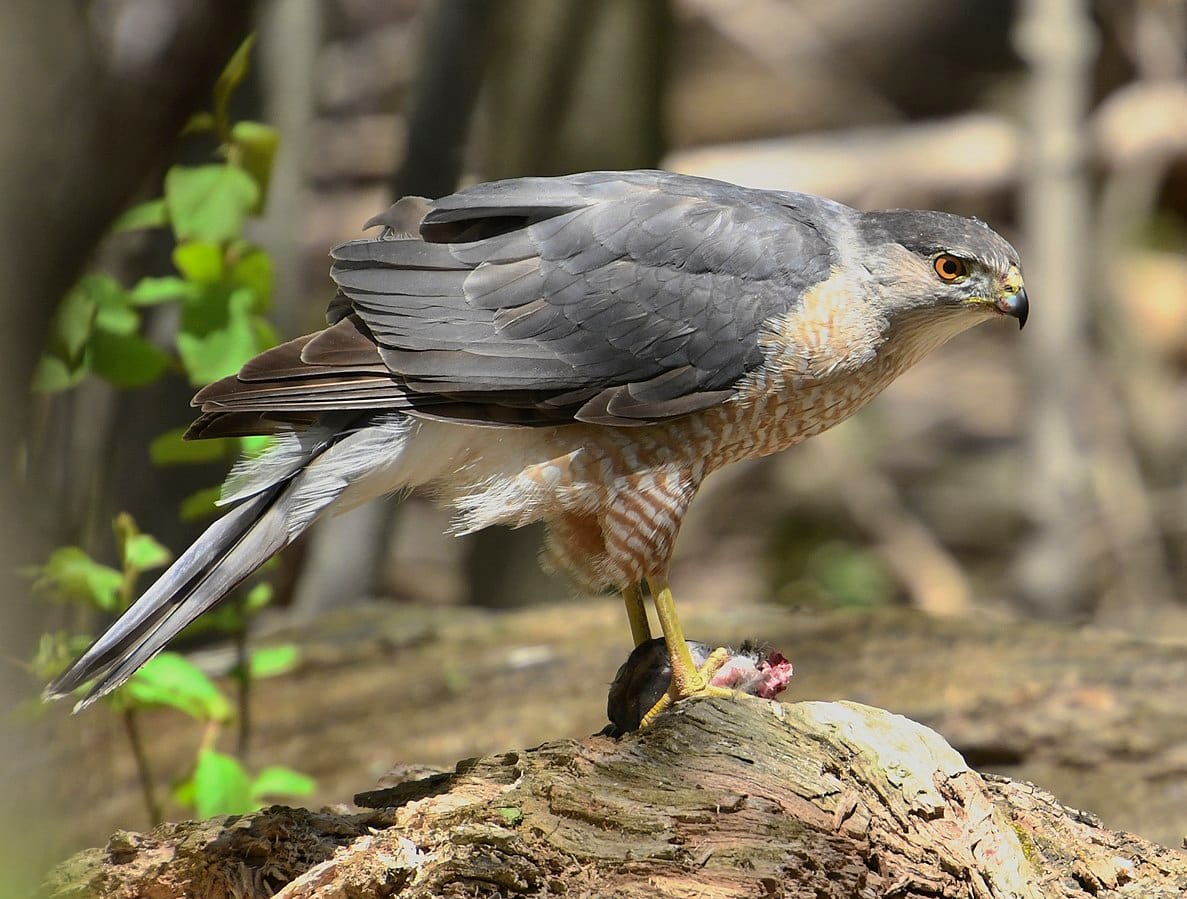
The Cooper’s Hawk is a medium-sized raptor with blue-gray upperparts, reddish barred underparts, and long tail. Native to North America, it inhabits forests, woodlands, and suburban areas. Known for agility in flight and hunting skill, Cooper’s Hawks are adept predators of birds and small mammals.
Diet consists primarily of medium-sized birds, supplemented by rodents and insects. Hunting involves stealth, fast flight through trees, and rapid pursuit. Seasonal variations in prey availability influence feeding behavior.
Breeding involves constructing stick nests in trees. Clutch sizes typically range from 3–5 eggs. Both parents feed altricial chicks until fledging. Courtship includes aerial displays and vocalizations.
Vocalizations include harsh “cak-cak-cak” calls used for communication, mate attraction, and territorial defense. Observing Cooper’s Hawks demonstrates predatory agility, nest defense, and adaptation to human-modified landscapes.
Ecologically, they control bird and rodent populations, maintain ecosystem balance, and serve as indicators of forest health. Conservation emphasizes preserving nesting trees, reducing pesticide exposure, and monitoring urban populations.
185. Sharp-shinned Hawk
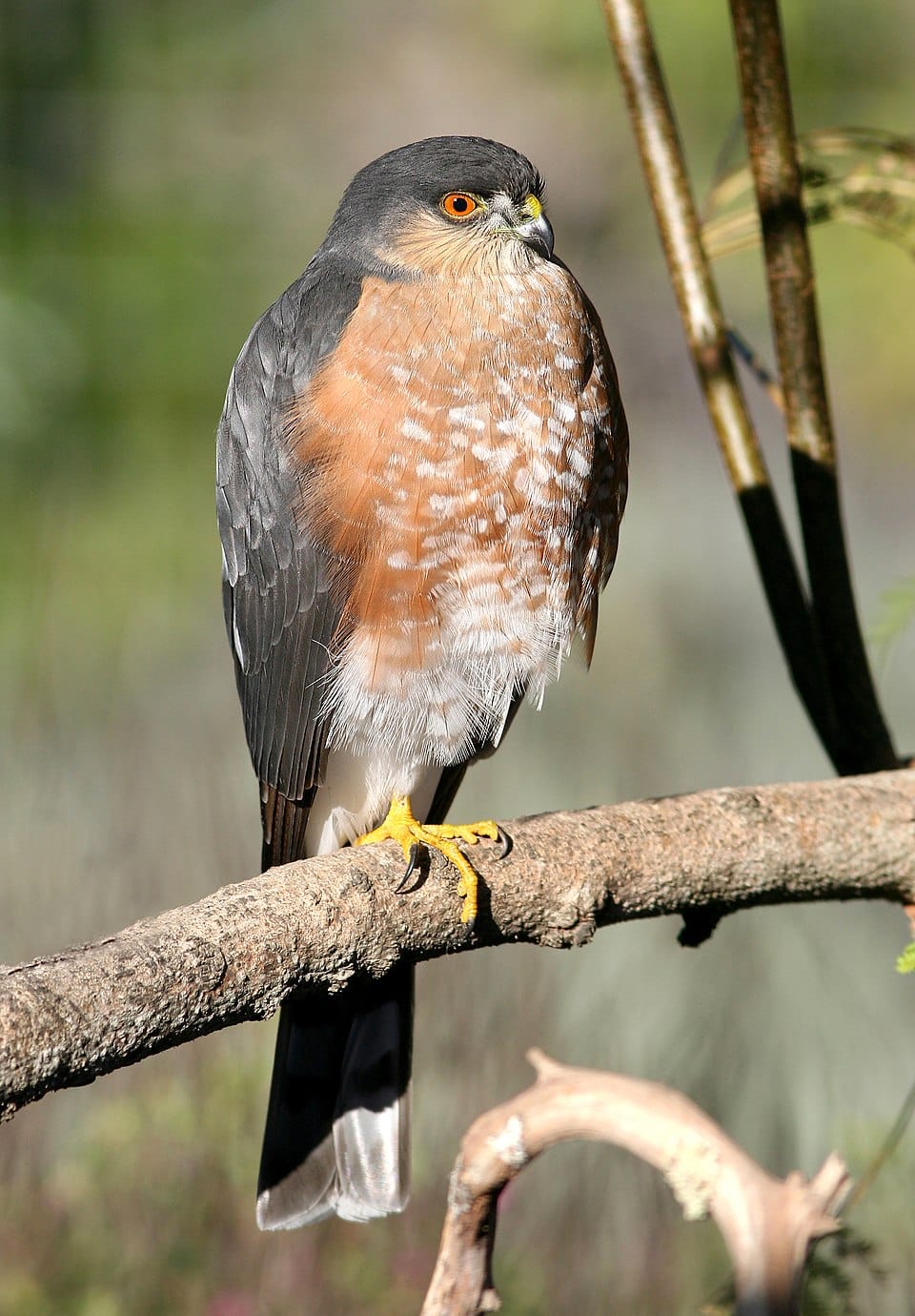
The Sharp-shinned Hawk is a small, agile raptor with blue-gray upperparts, reddish barred underparts, and short rounded wings. Native to North America, it inhabits forests, woodlands, and suburban areas. Known for fast, zigzag flight, it specializes in hunting small birds in dense cover.
Diet consists almost exclusively of small birds, supplemented by insects. Hunting involves stealth, rapid pursuit, and ambush from concealed perches. Migration influences prey availability and hunting strategy.
Breeding involves building stick nests in dense trees or shrubs. Clutch sizes typically range from 4–6 eggs. Both parents feed altricial chicks until fledging. Nest defense includes vocalizations and agile flight displays.
Vocalizations include high-pitched “kik-kik-kik” calls used for mate communication, territory defense, and alarm signaling. Observing Sharp-shinned Hawks reveals agility, hunting specialization, and adaptation to fragmented habitats.
Ecologically, they control songbird populations, contribute to forest ecosystem health, and serve as prey for larger raptors. Conservation emphasizes preserving wooded habitats, protecting nesting sites, and monitoring population trends.
186. Ruby-throated Hummingbird
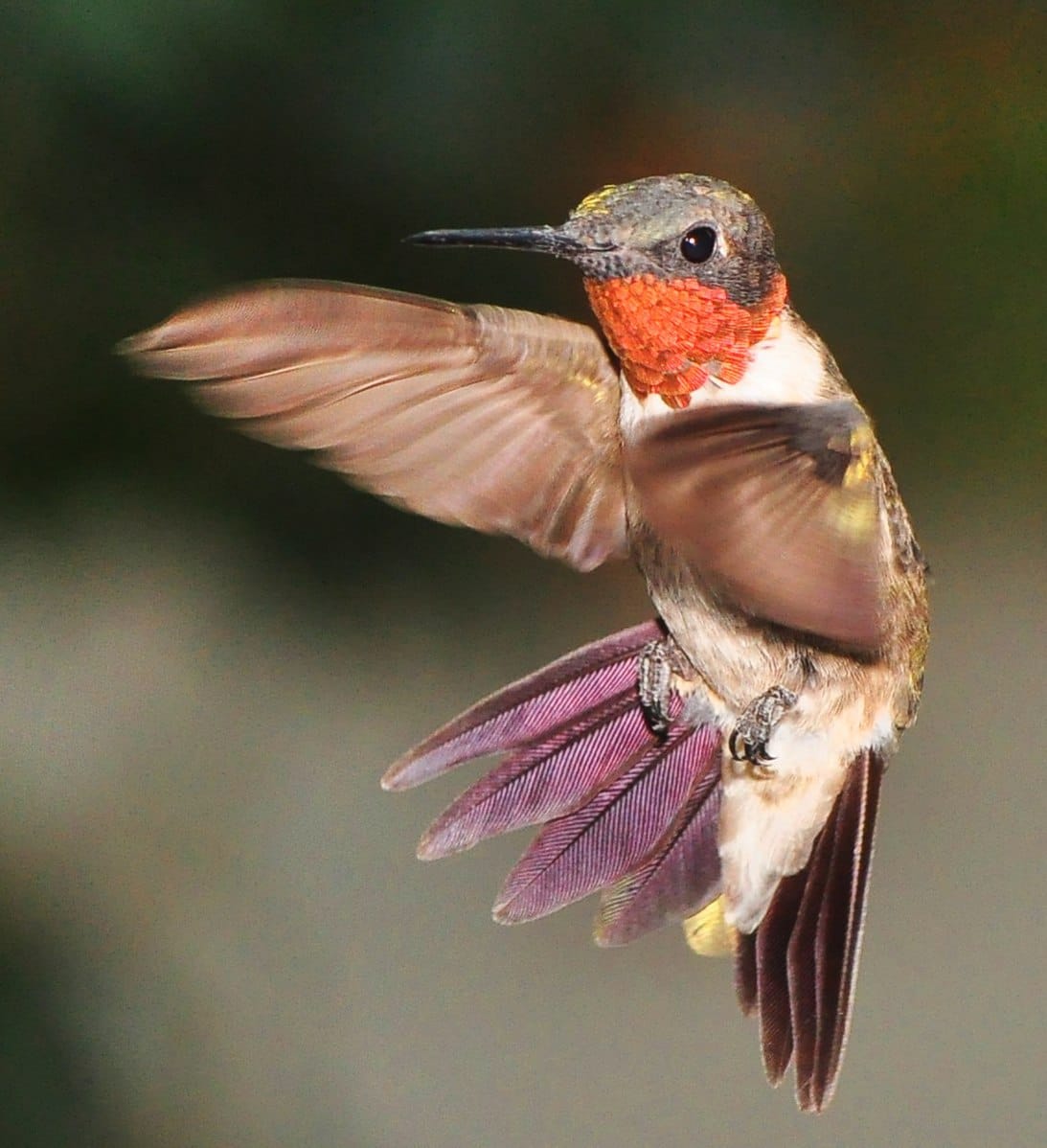
The Ruby-throated Hummingbird is a tiny, iridescent bird with a brilliant red throat in males and greenish upperparts. Native to eastern North America, it inhabits gardens, forests, and wetlands. Known for rapid wing beats and hovering ability, it is the most common hummingbird east of the Mississippi River.
Diet consists primarily of nectar from flowers, supplemented by insects and spiders. Feeding occurs while hovering, allowing precise access to tubular flowers. High metabolism requires frequent feeding throughout the day.
Breeding involves constructing tiny cup-shaped nests in shrubs or trees. Clutch sizes typically range from 2 eggs. Females incubate and feed altricial chicks, which fledge after 18–22 days. Territorial behavior includes chasing intruders from feeding areas.
Vocalizations include high-pitched chirps and trills used for communication, mating, and territory defense. Observing Ruby-throated Hummingbirds highlights agility, aerial precision, and nectar-plant interaction.
Ecologically, they pollinate flowers, control small insect populations, and support plant reproduction. Conservation emphasizes planting native nectar-rich flowers, providing feeders, and protecting migratory corridors.
187. Northern Pintail

The Northern Pintail is a medium-sized dabbling duck with slender neck, long tail, and elegant coloration; males have brown heads and gray bodies, while females are mottled brown. Native to North America, Europe, and Asia, they inhabit wetlands, lakes, and marshes. Known for graceful flight and dabbling behavior, they are widely studied in waterfowl ecology.
Diet consists primarily of seeds, aquatic plants, and invertebrates. Dabbling involves tipping forward in shallow water to reach food, occasionally grazing on land. Seasonal diet shifts support breeding, migration, and wintering.
Breeding involves nesting on the ground near water, often concealed in vegetation. Clutch sizes typically range from 7–10 eggs. Both parents care for precocial chicks, which leave the nest shortly after hatching. Males provide limited protection.
Vocalizations include soft quacks, whistles, and grunts used for communication, mating, and alarm signaling. Observing Northern Pintails demonstrates adaptive foraging, migratory behavior, and social flocking.
Ecologically, they control aquatic invertebrates, disperse seeds, and contribute to wetland ecosystem health. Conservation emphasizes wetland preservation, sustainable hunting management, and water quality protection.
188. Black-necked Stilt

The Black-necked Stilt is a striking wader with long, pink legs, black back and head, and white underparts. Native to the Americas, it inhabits shallow wetlands, mudflats, and salt marshes. Known for graceful movements and long-legged wading, it is highly visible in shorebird communities.
Diet consists primarily of small invertebrates, crustaceans, and aquatic insects. Foraging occurs in shallow water using rapid pecking and probing techniques. Their slender bills and long legs allow efficient feeding in varying water depths.
Breeding involves constructing simple nests on the ground near water. Clutch sizes typically range from 3–5 eggs. Both parents incubate and feed precocial chicks, which are capable of moving and feeding shortly after hatching. Nest defense includes distraction displays and vocal warnings.
Vocalizations include high-pitched calls used for communication, alarm signaling, and territorial defense. Observing Black-necked Stilts highlights wading adaptations, parental care, and group interactions in shorebird habitats.
Ecologically, they control invertebrate populations, contribute to wetland biodiversity, and indicate habitat quality. Conservation emphasizes protecting wetland habitats, managing water levels, and minimizing human disturbance.
189. American Bittern
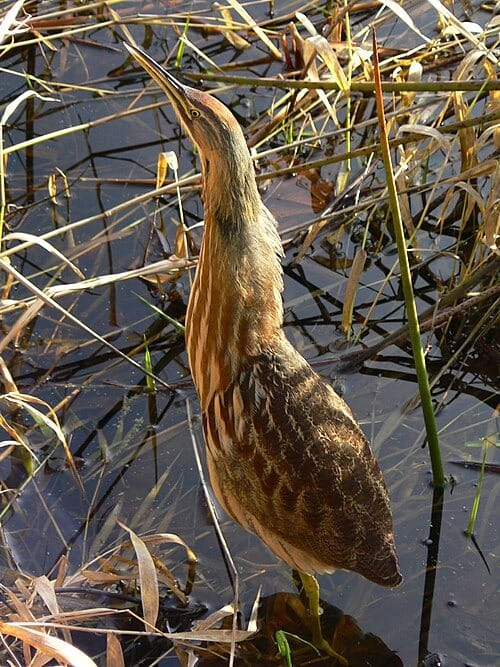
The American Bittern is a medium-sized, secretive wading bird with streaked brown plumage, allowing excellent camouflage in marsh vegetation. Native to North America, it inhabits freshwater and brackish wetlands. Known for its slow, deliberate movements and booming vocalizations, it is a master of concealment.
Diet consists primarily of fish, amphibians, insects, and crustaceans. Hunting involves slow stalking in dense vegetation, spearing prey with its sharp bill. Patience and stealth are key to successful feeding.
Breeding involves constructing nests of reeds or vegetation on shallow water. Clutch sizes typically range from 3–5 eggs. Both parents feed altricial chicks until fledging. Camouflage and low movement reduce predation risk.
Vocalizations include booming calls, often heard at dusk or dawn, used for communication and territory defense. Observing American Bitterns demonstrates cryptic behavior, specialized hunting, and adaptation to wetland habitats.
Ecologically, they control small aquatic animal populations, indicate wetland health, and contribute to biodiversity. Conservation emphasizes wetland preservation, water quality maintenance, and minimizing habitat fragmentation.
190. Least Sandpiper

The Least Sandpiper is the smallest shorebird in North America, with brown upperparts, white underparts, and yellowish legs. They inhabit mudflats, shorelines, marshes, and coastal wetlands. Known for agility, quick movements, and social foraging, they are a common sight during migration.
Diet consists primarily of small invertebrates, insects, crustaceans, and worms. Foraging involves rapid pecking and probing along wet substrates. Their small size and nimbleness allow efficient feeding in crowded shorebird flocks.
Breeding involves nesting on the ground in grasses or low vegetation near water. Clutch sizes typically range from 3–4 eggs. Both parents feed precocial chicks, which are mobile soon after hatching. Nest concealment and parental vigilance reduce predation.
Vocalizations include soft calls and whistles used for flock coordination, alarm signaling, and mating communication. Observing Least Sandpipers highlights migratory behavior, group foraging strategies, and habitat specialization.
Ecologically, they control invertebrate populations, contribute to wetland food webs, and serve as indicators of coastal ecosystem health. Conservation emphasizes protecting wetlands, managing human disturbance, and maintaining tidal and freshwater habitats.
191. Sora Rail

The Sora Rail is a small, secretive marsh bird with brown and gray plumage, short yellow bill, and distinctive black face markings. Native to North America, it inhabits freshwater marshes, wetlands, and reed beds. Known for its elusive behavior and secretive calls, Soras are more often heard than seen.
Diet consists primarily of seeds, aquatic insects, crustaceans, and snails. Foraging involves probing soft mud and shallow water, often under dense vegetation. Their diet flexibility allows survival in diverse wetland habitats.
Breeding involves constructing nests of grasses and reeds above water or on floating mats. Clutch sizes typically range from 6–14 eggs. Both parents feed altricial chicks, which fledge after two to three weeks. Nest concealment is crucial for avoiding predation.
Vocalizations include whistled “whinny” calls used for communication, mate attraction, and territory defense. Observing Soras highlights marsh adaptation, foraging in dense vegetation, and vocal communication.
Ecologically, they control aquatic insect populations, disperse plant seeds, and indicate wetland health. Conservation emphasizes wetland preservation, water quality maintenance, and protecting nesting areas from disturbance.
192. White Ibis

The White Ibis is a medium-sized wader with a white body, black-tipped wings, and long, downward-curved red bill. Native to North and South America, they inhabit wetlands, marshes, estuaries, and coastal areas. Known for social behavior, they forage in flocks, sweeping bills through mud to capture prey.
Diet consists primarily of crustaceans, insects, and small fish. Foraging occurs in shallow water or mud, often in groups, using tactile hunting methods. Their diet, particularly of crustaceans, gives the bill and face a reddish tint during feeding.
Breeding involves colonial nesting in trees or shrubs over water. Clutch sizes typically range from 2–4 eggs. Both parents feed altricial chicks, which fledge in several weeks. Colony life provides protection from predators.
Vocalizations include harsh grunts and croaks used for social communication and alerting to danger. Observing White Ibises highlights social foraging, colonial nesting, and wetland specialization.
Ecologically, they regulate invertebrate populations, contribute to nutrient cycling in wetlands, and serve as prey for raptors. Conservation emphasizes wetland protection, maintaining food sources, and monitoring colony sites.
193. Brown Thrasher

The Brown Thrasher is a medium-sized songbird with rich brown upperparts, streaked underparts, and long tail. Native to North America, it inhabits dense shrubs, woodlands, and forest edges. Known for exceptional vocal ability, it can mimic hundreds of sounds and is highly territorial.
Diet consists primarily of insects, berries, and seeds. Foraging involves scratching leaf litter and probing soil to uncover insects, often flipping leaves and debris. This behavior makes them effective ground foragers.
Breeding involves building cup-shaped nests in shrubs or low trees. Clutch sizes typically range from 2–5 eggs. Both parents feed altricial chicks, which fledge in a few weeks. Territorial displays include singing, chasing intruders, and posturing.
Vocalizations include varied warbles, whistles, and mimicry used for mate attraction, territorial defense, and communication. Observing Brown Thrashers showcases intelligence, vocal versatility, and ground-foraging skills.
Ecologically, they control insect populations, disperse seeds, and support woodland ecosystem health. Conservation emphasizes preserving dense shrub habitats, minimizing pesticide use, and maintaining native plant cover.
194. Eastern Phoebe

The Eastern Phoebe is a small flycatcher with gray-brown upperparts, whitish underparts, and characteristic bobbing tail. Native to eastern North America, it inhabits woodlands, streams, farmland, and suburban areas. Known for adaptability and cheerful presence, it often nests on human structures.
Diet consists primarily of flying insects and spiders. Foraging occurs through “sallying” flights from perches, capturing insects midair, and occasionally gleaning from foliage. Seasonal diet shifts may include small berries in late summer.
Breeding involves constructing cup-shaped nests on ledges, eaves, or branches. Clutch sizes typically range from 4–7 eggs. Both parents feed altricial chicks until fledging. Territorial defense includes vocalizations and chasing intruders.
Vocalizations include soft “fee-bee” calls, repeated rhythmically to establish territory and attract mates. Observing Eastern Phoebes demonstrates aerial hunting, nest adaptability, and seasonal behavior.
Ecologically, they control insect populations, contribute to pollination indirectly, and serve as prey for raptors. Conservation emphasizes preserving nesting sites, minimizing pesticide exposure, and protecting natural habitats.
195. Yellow-bellied Sapsucker

The Yellow-bellied Sapsucker is a medium-sized woodpecker with black-and-white patterned plumage, red throat, and yellowish belly. Native to North America, it inhabits deciduous and mixed forests. Known for drilling neat rows of holes in trees to feed on sap, it creates feeding stations for other species.
Diet consists of tree sap, insects, fruits, and occasional seeds. Foraging involves drilling holes in tree bark, consuming sap and trapped insects. This behavior supports other wildlife, including hummingbirds and insects that feed on sap wells.
Breeding involves nesting in tree cavities excavated by the birds. Clutch sizes typically range from 4–7 eggs. Both parents feed altricial chicks until fledging. Territoriality includes drumming, calling, and chasing intruders.
Vocalizations include nasal whinnies and soft calls used for mate communication, territory defense, and signaling. Observing Yellow-bellied Sapsuckers highlights unique sap-feeding behavior, cavity nesting, and ecosystem contribution.
Ecologically, they provide food sources for other animals, control insect populations, and indicate forest health. Conservation emphasizes preserving mature trees, avoiding pesticide use, and maintaining forested habitats.
196. Purple Finch
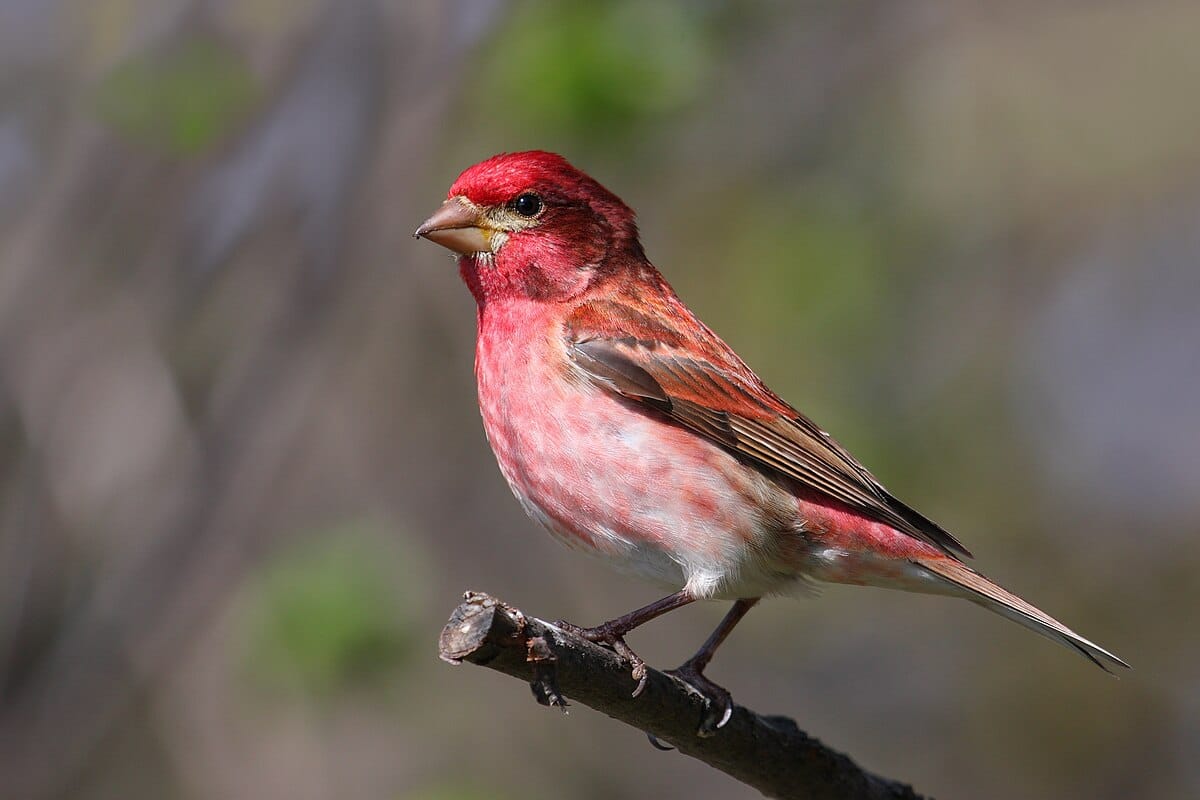
The Purple Finch is a small songbird with raspberry-red plumage in males and brown streaked plumage in females. Native to North America, they inhabit coniferous and mixed forests, orchards, and suburban areas. Known for melodious song and bright coloration, they attract birdwatchers and photographers.
Diet consists primarily of seeds, berries, and insects. Foraging occurs in trees, shrubs, and occasionally on the ground. Seasonal diet shifts occur, with insects dominating in breeding season for protein and seeds/berries during winter.
Breeding involves constructing cup-shaped nests in trees or shrubs. Clutch sizes typically range from 3–6 eggs. Both parents feed altricial chicks until fledging. Territorial behavior includes singing, chasing, and display flights.
Vocalizations include rich warbles and musical notes used for mate attraction, territory defense, and communication. Observing Purple Finches highlights color signaling, seasonal migration, and adaptive foraging.
Ecologically, they control insect populations, disperse seeds, and contribute to forest ecosystem balance. Conservation emphasizes preserving woodland habitats, planting native shrubs, and minimizing pesticide use.
197. Cedar Waxwing

The Cedar Waxwing is a medium-sized songbird with sleek brown, gray, and yellow plumage, black mask, and red-tipped wing feathers. Native to North America, they inhabit open woodlands, orchards, and suburban areas. Known for social behavior and frugivory, they are highly gregarious and often observed in flocks.
Diet consists primarily of berries, fruits, and insects. Foraging occurs in trees and shrubs, with occasional aerial insect captures. Seasonal migration and fruit availability influence flocking and feeding behavior.
Breeding involves constructing cup-shaped nests in trees or shrubs. Clutch sizes typically range from 2–5 eggs. Both parents feed altricial chicks until fledging. Flock dynamics support communal roosting and foraging.
Vocalizations include soft trills and whistles used for communication, flock cohesion, and mate attraction. Observing Cedar Waxwings showcases social behavior, coordinated foraging, and seasonal migration.
Ecologically, they disperse seeds, control insect populations, and contribute to woodland and orchard ecosystem health. Conservation emphasizes preserving fruiting shrubs, protecting nesting habitats, and reducing pesticide exposure.
198. Orchard Oriole

The Orchard Oriole is a small songbird with glossy black and chestnut plumage in males and yellow-green tones in females. Native to North America, they inhabit orchards, woodland edges, and open fields. Known for vibrant coloration and melodious song, they are a treat for birdwatchers.
Diet consists primarily of insects, nectar, and fruits. Foraging occurs in trees, shrubs, and occasionally on the ground. Insects dominate during breeding for protein, while fruits and nectar support energy needs during migration.
Breeding involves constructing hanging cup-shaped nests in trees or shrubs. Clutch sizes typically range from 3–5 eggs. Both parents feed altricial chicks until fledging. Territorial behavior includes singing, chasing intruders, and display flights.
Vocalizations include clear, musical warbles used for mate attraction, territorial defense, and communication. Observing Orchard Orioles highlights migration, color signaling, and adaptive foraging.
Ecologically, they control insect populations, disperse seeds, and indicate healthy orchard and woodland habitats. Conservation emphasizes preserving habitat, planting native fruiting plants, and reducing pesticide exposure.
199. Red-headed Woodpecker

The Red-headed Woodpecker is a medium-sized woodpecker with a striking entirely red head, white body, and black wings with white patches. Native to North America, it inhabits open woodlands, savannas, orchards, and farmland. Known for bold plumage and versatile feeding, it catches insects, stores food, and eats fruits and seeds.
Diet consists of insects, nuts, seeds, and fruits. Foraging involves gleaning from branches, trunks, and occasionally catching insects midair. Their habit of caching food in tree crevices is notable.
Breeding involves excavating cavities in dead or live trees. Clutch sizes typically range from 3–7 eggs. Both parents feed altricial chicks until fledging. Territorial displays include drumming, chasing, and vocalizations.
Vocalizations include harsh calls, rattles, and occasional melodic notes used for communication, territory defense, and mate interaction. Observing Red-headed Woodpeckers showcases adaptability, cavity nesting, and foraging diversity.
Ecologically, they control insect populations, provide cavities for other species, and contribute to ecosystem health. Conservation emphasizes preserving mature trees, reducing habitat fragmentation, and monitoring populations.
200. Black Vulture
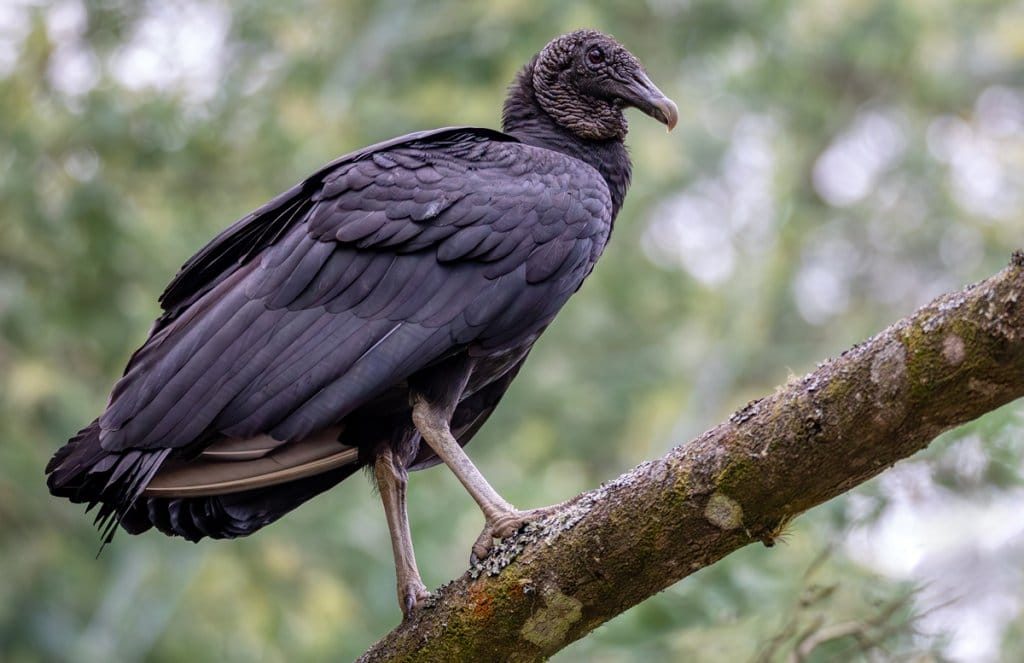
The Black Vulture is a large scavenger with black plumage, bare gray head, and short tail. Native to the Americas, it inhabits open forests, pastures, and wetlands. Known for soaring flight, social behavior, and scavenging habits, they play a vital role in ecosystem cleanliness.
Diet consists entirely of carrion, occasionally supplemented with small reptiles or eggs. Foraging occurs while soaring, detecting carcasses visually. They often feed in groups, establishing dominance hierarchies.
Breeding involves nesting on cliffs, hollow trees, or abandoned buildings. Clutch sizes typically range from 1–3 eggs. Both parents feed altricial chicks until fledging. Roosting communally enhances safety and thermoregulation.
Vocalizations are limited to low hisses and grunts, used for communication within social groups and at the nest. Observing Black Vultures highlights social feeding behavior, soaring ability, and ecological importance.
Ecologically, they prevent disease spread by consuming carrion, recycle nutrients, and influence ecosystem dynamics. Conservation emphasizes protecting roosting and foraging habitats, public education, and monitoring populations.
Conclusion
Exploring the incredible diversity of types of birds reveals the fascinating adaptations, behaviors, and ecological roles each species holds. From the soaring Turkey Vulture to the tiny Ruby-throated Hummingbird, every bird contributes to its ecosystem—whether controlling insect populations, dispersing seeds, or cleaning up carrion. Understanding their habitats, diets, migration patterns, and breeding habits helps us appreciate how intertwined birds are with the natural world.
Whether you are a beginner birdwatcher or an experienced enthusiast, observing these 200 species provides endless opportunities to connect with nature. By preserving habitats, planting native vegetation, and supporting conservation efforts, we can ensure that these magnificent creatures continue to thrive for generations to come.
Next time you hear a songbird’s melody or spot a striking wader along a wetland, remember the rich diversity of birds around us and the vital roles they play in maintaining the balance of our environment. Start exploring, observing, and learning—you never know which bird will captivate your attention next!
Frequently Asked Questions About Birds
1. What are the main types of birds?
Birds are classified into various types based on their characteristics, such as songbirds, raptors, waterfowl, waders, parrots, and hummingbirds. Each group has unique behaviors, diets, and habitats.
2. How can I identify different types of birds?
Identification involves observing plumage colors, size, shape, beak type, flight patterns, vocalizations, and habitat. Field guides and birdwatching apps can also help.
3. What is the smallest bird in the world?
The Bee Hummingbird of Cuba is the smallest bird, weighing around 2 grams and measuring just 5–6 cm in length.
4. What is the largest bird in the world?
The Ostrich is the largest bird, standing up to 2.8 meters tall and weighing over 150 kilograms.
5. How do birds fly?
Birds fly using strong wing muscles and feathers that provide lift. Their lightweight skeleton and aerodynamic shape allow efficient flight.
6. Why do some birds migrate?
Birds migrate to find food, better breeding conditions, and favorable climates. Migration can be seasonal, spanning hundreds or thousands of kilometers.
7. How do birds find their way during migration?
Birds navigate using the sun, stars, magnetic fields, landmarks, and even smell. Some species use a combination of these cues for precise migration routes.
8. What do birds eat?
Bird diets vary by species. Some eat insects, seeds, fruits, nectar, small animals, fish, or carrion. Many species are opportunistic feeders.
9. How do birds build nests?
Birds use materials like twigs, leaves, grass, mud, feathers, and even human-made items. Nest types include cup-shaped, cavity, platform, and hanging nests.
10. Do all birds sing?
Not all birds sing. Songbirds use songs to attract mates and defend territory. Other birds may communicate with calls, hisses, or visual displays.
11. How long do birds live?
Bird lifespans vary widely. Small songbirds live 2–10 years, while larger species like parrots and eagles can live 50 years or more.
12. Why do birds molt?
Molting is the process of replacing old or worn feathers. It ensures proper flight, insulation, and attractiveness for mating displays.
13. What is a raptor?
Raptors, or birds of prey, include hawks, eagles, owls, and falcons. They have sharp talons and hooked beaks for hunting and feeding on other animals.
14. What is a songbird?
Songbirds belong to the order Passeriformes. They are known for complex vocalizations, used in mating and territorial defense.
15. What is a waterfowl?
Waterfowl include ducks, geese, and swans. They are adapted to aquatic habitats with webbed feet and waterproof feathers.
16. How can I attract birds to my garden?
Provide food (seeds, nectar, fruit), water, shelter, and native plants. Birdhouses and feeders help attract nesting and visiting birds.
17. Can birds drink saltwater?
Most birds cannot drink saltwater. Some seabirds, like gulls and albatrosses, have specialized glands to excrete excess salt.
18. How do birds sleep?
Birds sleep perched on branches, in cavities, or on the ground. Some species use a “locking” mechanism in their feet to prevent falling while sleeping.
19. What is a migratory bird?
Migratory birds travel seasonally between breeding and wintering areas. Examples include warblers, swallows, and geese.
20. What is a resident bird?
Resident birds stay in the same area year-round, adapting to local climate and food availability.
21. How do birds communicate?
Birds communicate through songs, calls, body language, feather displays, and visual signals to indicate territory, danger, or mating readiness.
22. What is a cavity-nesting bird?
Cavity-nesting birds, like woodpeckers and owls, build nests in tree holes, rock crevices, or man-made structures for protection.
23. What is a flock?
A flock is a group of birds that travel, feed, or roost together. Flocking offers protection from predators and improves foraging efficiency.
24. How do birds mate?
Bird mating involves courtship displays, singing, feeding, and nest-building. Fertilized eggs are laid and incubated until hatching.
25. What is an altricial bird?
Altricial birds hatch helpless, blind, and featherless. They require significant parental care, such as feeding and protection, until fledging.
26. What is a precocial bird?
Precocial birds hatch more developed, with feathers and open eyes, and can walk or swim soon after hatching, though parental care continues.
27. Why do birds have hollow bones?
Hollow bones reduce weight, making flight easier while retaining strength and structural integrity.
28. What is a bird’s gizzard?
The gizzard is a muscular stomach that grinds food, often using ingested stones to help digest seeds and tough plant material.
29. How do birds regulate body temperature?
Birds regulate temperature through feathers, panting, shivering, and seeking shade or sun. Some species migrate to avoid extreme climates.
30. Why do birds sing in the morning?
Morning singing, called the dawn chorus, is common for mate attraction, territory defense, and communication, especially when insects are active and temperatures are cooler.
31. How do birds find food in winter?
Birds rely on cached food, migration to warmer areas, and adapting diet to available seeds, fruits, and insects during cold months.
32. What is a shorebird?
Shorebirds, like sandpipers and plovers, live near water and feed on invertebrates using long bills and specialized foraging techniques.
33. How do birds avoid predators?
Birds use camouflage, flocking, alarm calls, rapid flight, and hiding in vegetation to evade predators.
34. What is a raptor’s talon used for?
Talons are used to capture, kill, and hold prey securely. They are critical for hunting efficiency and survival.
35. How fast can birds fly?
Flight speed varies by species. Hummingbirds fly 25–30 mph, while Peregrine Falcons can dive at over 200 mph, making them the fastest birds.
36. Can birds see in color?
Yes, birds have excellent color vision, often seeing ultraviolet light, which helps in foraging, mate selection, and navigation.
37. How do birds clean themselves?
Birds preen using their beak to align feathers, remove parasites, and distribute oil for waterproofing. Bathing in water or dust also helps.
38. What is a bird’s call vs. song?
Calls are short, functional sounds for alarms, communication, or navigation, while songs are longer, complex, and used for mating or territory defense.
39. How do birds care for their young?
Parental care varies: feeding, brooding, teaching survival skills, and defending nests are common behaviors to ensure chicks survive to fledging.
40. Can birds recognize humans?
Many birds recognize humans and can distinguish between friendly and threatening behavior, especially species accustomed to urban areas.
41. How do birds migrate at night?
Nocturnal migrants navigate using stars, magnetic fields, moonlight, and landscape features to guide their long-distance journeys.
42. Why do some birds gather in large groups?
Flocking reduces predation risk, improves foraging efficiency, aids in navigation during migration, and facilitates social interactions.
43. What is bird banding?
Bird banding involves placing a small, numbered ring on a bird’s leg for tracking migration, lifespan, and population studies.
44. How do birds drink water?
Birds drink by sipping and tipping their head back or, in species like pigeons, by sucking up water continuously.
45. Can birds swim?
Many birds, like ducks, penguins, and grebes, are excellent swimmers. Adaptations include webbed feet, streamlined bodies, and waterproof feathers.
46. What is a seabird?
Seabirds, like gulls, albatrosses, and puffins, are adapted to marine environments, often feeding on fish and nesting on cliffs or islands.
47. How do birds contribute to ecosystems?
Birds control insects, pollinate plants, disperse seeds, scavenge carcasses, and provide food for predators, maintaining ecological balance.
48. What threats do birds face?
Birds face habitat loss, climate change, hunting, pollution, invasive species, and collisions with buildings or vehicles.
49. How can I help protect birds?
Plant native vegetation, provide feeders and water, avoid pesticides, support conservation groups, and preserve natural habitats.
50. Why are birds important to humans?
Birds inspire culture, music, and art, control pests, pollinate plants, disperse seeds, and contribute to ecological and economic health.
51. Can birds live in cities?
Yes, many species like pigeons, sparrows, and crows adapt to urban areas, feeding on human-provided resources and nesting on buildings.
52. What is a nocturnal bird?
Nocturnal birds, like owls, are active at night, using exceptional hearing, vision, and stealth to hunt and navigate in darkness.
53. How do birds sleep in trees?
Perching birds use a tendon-locking mechanism in their feet to grip branches securely while sleeping, preventing falls.
54. How do young birds learn to fly?
Chicks practice wing flapping and balance under parental supervision until they develop strength, coordination, and confidence for independent flight.
55. How do birds adapt to cold climates?
Birds fluff feathers for insulation, migrate, huddle in groups, and reduce activity to conserve energy in cold climates.
Read more: 7 Types of Cheetahs (Pictures And Identification)