

Wasps are fascinating insects that play a crucial role in ecosystems. Learning about types of wasps can help you identify them, understand their behavior, and appreciate their importance in nature. Unlike bees, many wasps are predators or parasitoids, keeping pest populations in check. Some build intricate nests, while others prefer solitary lives. In this guide, we’ll explore 40 types of wasps, each with distinct traits, habitats, and habits. Whether you’re a curious beginner or a nature enthusiast, this guide is designed to help you recognize and understand these amazing insects.
40 Types of Wasps: Social and Solitary Predators
1. Hornet
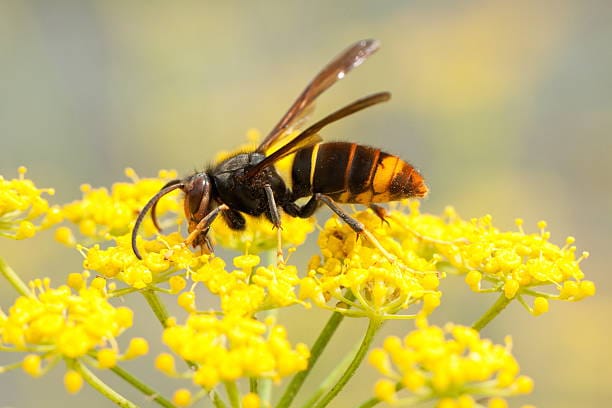
Hornets are among the largest wasps, known for their impressive size and potent sting. Typically ranging from 1 to 2 inches, hornets are social insects that build paper-like nests in trees, shrubs, or human structures. Their colonies consist of a queen, workers, and males, all cooperating to maintain the nest and forage for food. Hornets primarily feed on other insects, making them valuable natural pest controllers. They can also consume nectar and tree sap, which supplements their diet.
Hornets are protective of their colonies, and their stings can be painful, sometimes causing allergic reactions in humans. However, they generally sting only when threatened or if their nest is disturbed. They are intelligent hunters, coordinating attacks and defending their home efficiently. Observing hornets from a safe distance can reveal fascinating behaviors such as foraging flights, nest construction, and cooperative defense.
Hornets’ impact on ecosystems is significant. They help control populations of flies, caterpillars, and other insects that could otherwise damage crops or gardens. Despite their reputation for aggression, hornets are not unnecessarily hostile to humans. Awareness and cautious behavior prevent most negative encounters. Recognizing hornets among types of wasps allows you to appreciate both their ecological role and behavioral complexity.
2. Common Wasp
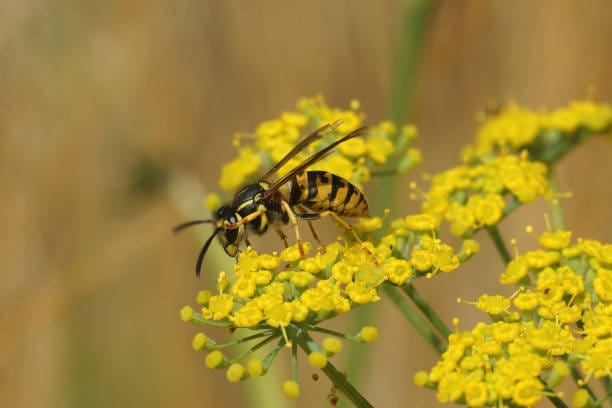
The Common Wasp, scientifically known as Vespula vulgaris, is one of the most recognizable types of wasps across Europe and North America. They are slightly smaller than hornets, usually about half an inch long, with bold yellow and black markings. These social wasps build papery nests in sheltered areas such as tree hollows, roof spaces, or underground burrows. Colonies can number in the thousands during peak season.
Common Wasps are predators and scavengers. They hunt insects like flies and caterpillars to feed their larvae, while adults consume sugary substances such as nectar, fruit juice, or human food scraps. This dual feeding strategy allows them to adapt to various environments, including urban areas. Their social organization is impressive, with a clear division of labor between the queen, workers, and males.
Despite their sometimes aggressive nature, Common Wasps are essential to ecosystems. By preying on pest insects, they naturally regulate populations, benefiting gardens and agriculture. Understanding their habits and recognizing their nests can help prevent unwanted stings. Observing them closely reveals interesting behaviors like aerial hunting, nest maintenance, and coordinated defense against intruders. For anyone studying types of wasps, the Common Wasp is a prime example of adaptability and ecological value.
3. German Wasp
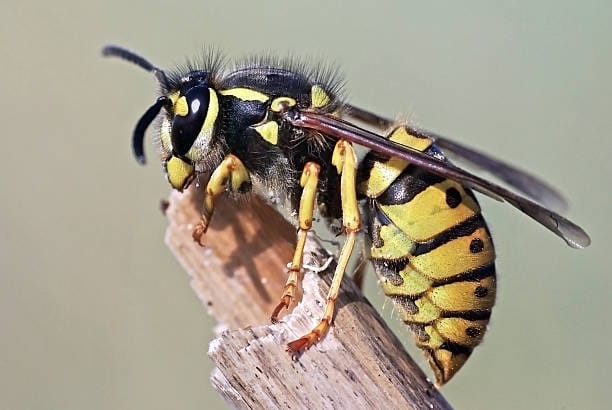
German Wasps (Vespula germanica) are similar to Common Wasps but have subtle differences in coloration and pattern. Slightly smaller, with a yellow body and black stripes, German Wasps are highly social and form large colonies, often nesting underground or within cavities in buildings. Their nests are constructed from chewed wood fibers mixed with saliva, forming a papery texture.
These wasps are omnivorous, hunting insects to feed their larvae while consuming carbohydrates for energy. German Wasps are known for their aggressive defense of the nest and their persistence around food sources, especially in late summer. They can become a nuisance around picnics, outdoor events, and trash bins, but understanding their behavior reduces risk.
Ecologically, German Wasps are important biological control agents. They prey on caterpillars, flies, and other insects, helping maintain balance in gardens and forests. Recognizing German Wasps among types of wasps allows you to distinguish them from similar species like Common Wasps or Hornets, enabling safer coexistence. By observing flight patterns, nest locations, and feeding behavior, enthusiasts can gain a deeper appreciation for their complex social structures and role in nature.
4. Eastern Yellowjacket
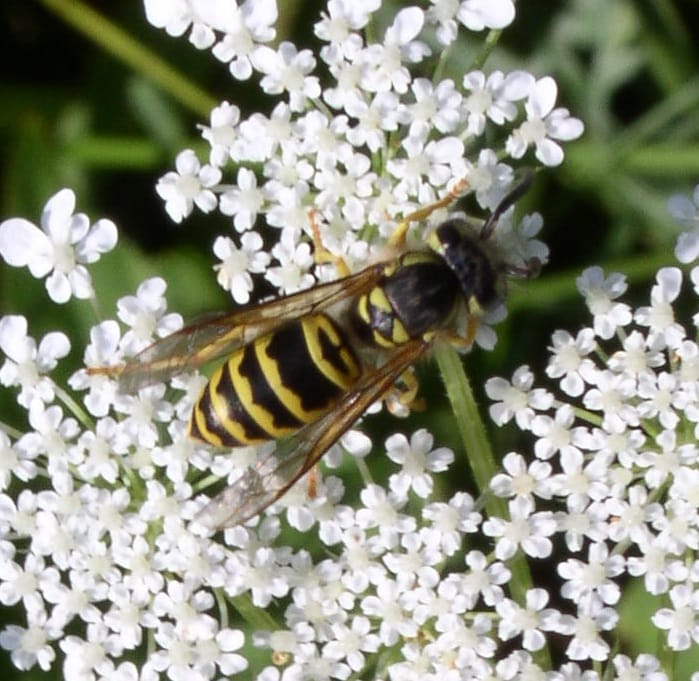
The Eastern Yellowjacket (Vespula maculifrons) is a common social wasp in North America. Recognizable by its striking black-and-yellow stripes, this wasp is slightly smaller than a hornet but equally industrious. Eastern Yellowjackets build paper nests, often underground, in tree stumps, or in man-made structures. Colonies can grow to several thousand individuals during peak summer months, with a single queen directing activity and reproduction.
These wasps are both predators and scavengers. They feed larvae with insects such as caterpillars, flies, and spiders while adults consume carbohydrates like nectar and fruit juice. Their keen hunting skills help control pest populations in gardens, fields, and forests. Yellowjackets are known for their teamwork; workers forage efficiently, defend the nest aggressively, and maintain the hive’s structural integrity.
Although Eastern Yellowjackets are social and defensive, they rarely sting without provocation. Understanding their behavior, such as recognizing foraging trails and nest entrances, helps prevent accidental encounters. In addition to ecological value, their nests can be a fascinating glimpse into insect engineering and social cooperation, highlighting the diversity among types of wasps.
5. European Paper Wasp
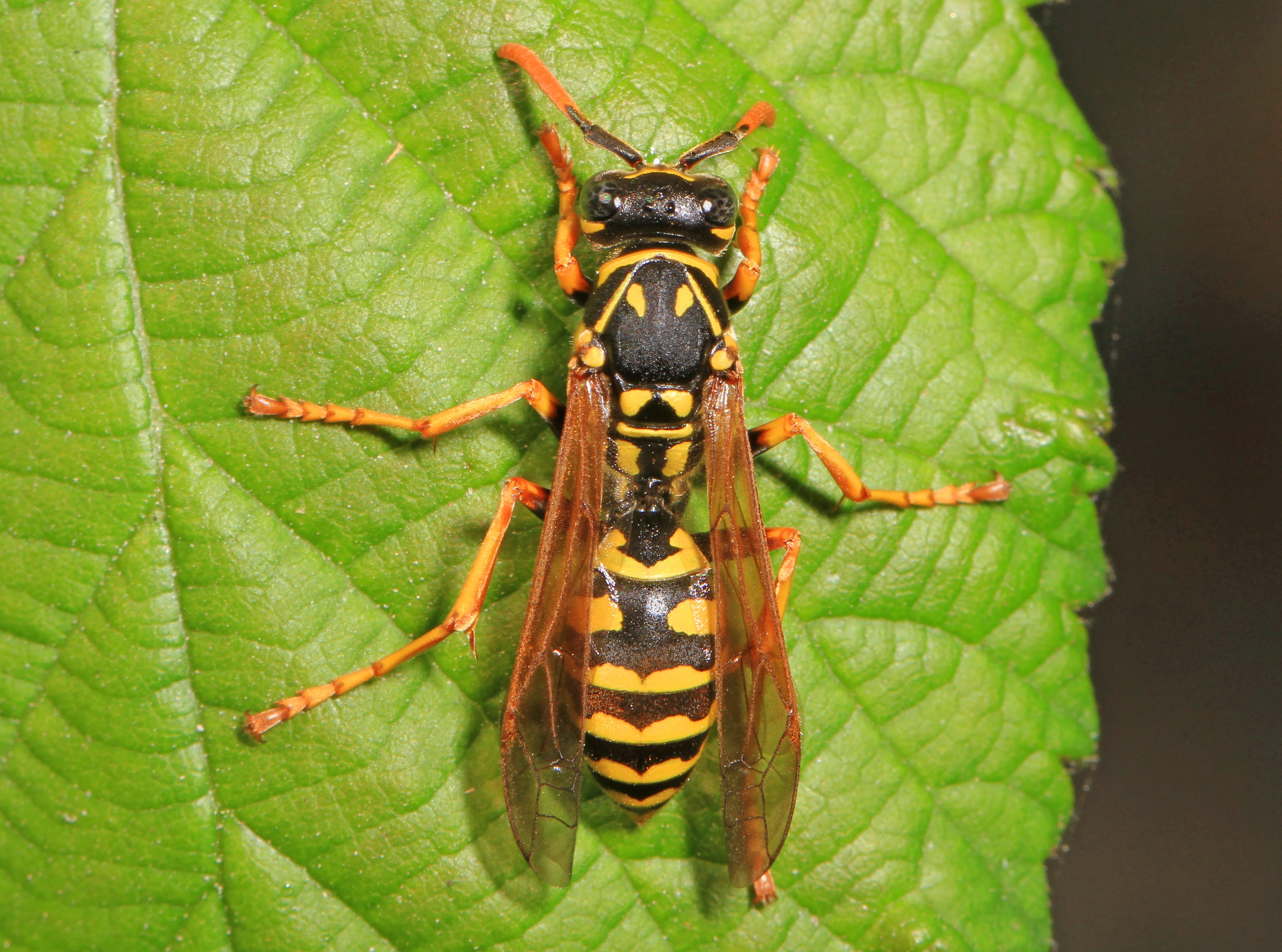
European Paper Wasps (Polistes dominula) are widespread across Europe and have been introduced to North America. They are slender, delicate wasps with elongated bodies and long legs that dangle in flight. Unlike many wasps, their nests are open, umbrella-shaped, and typically attached to tree branches, eaves, or other sheltered surfaces. The papery nest is made from chewed plant fibers mixed with saliva, forming a lightweight but sturdy structure.
Paper wasps are primarily predators of soft-bodied insects such as caterpillars, which they feed to their larvae. Adults consume nectar and sweet liquids for energy. Their presence in gardens and farms is highly beneficial, reducing pest populations without chemical intervention. Paper wasps are social but less aggressive than yellowjackets; they defend the nest mainly if disturbed directly.
Observing European Paper Wasps offers insight into their sophisticated social hierarchy. Each colony has a queen, workers, and males, all performing specific tasks such as nest building, foraging, and caring for larvae. These behaviors illustrate why European Paper Wasps are an essential example among types of wasps and how their ecological contributions extend beyond simple predation.
6. Velvet Ant
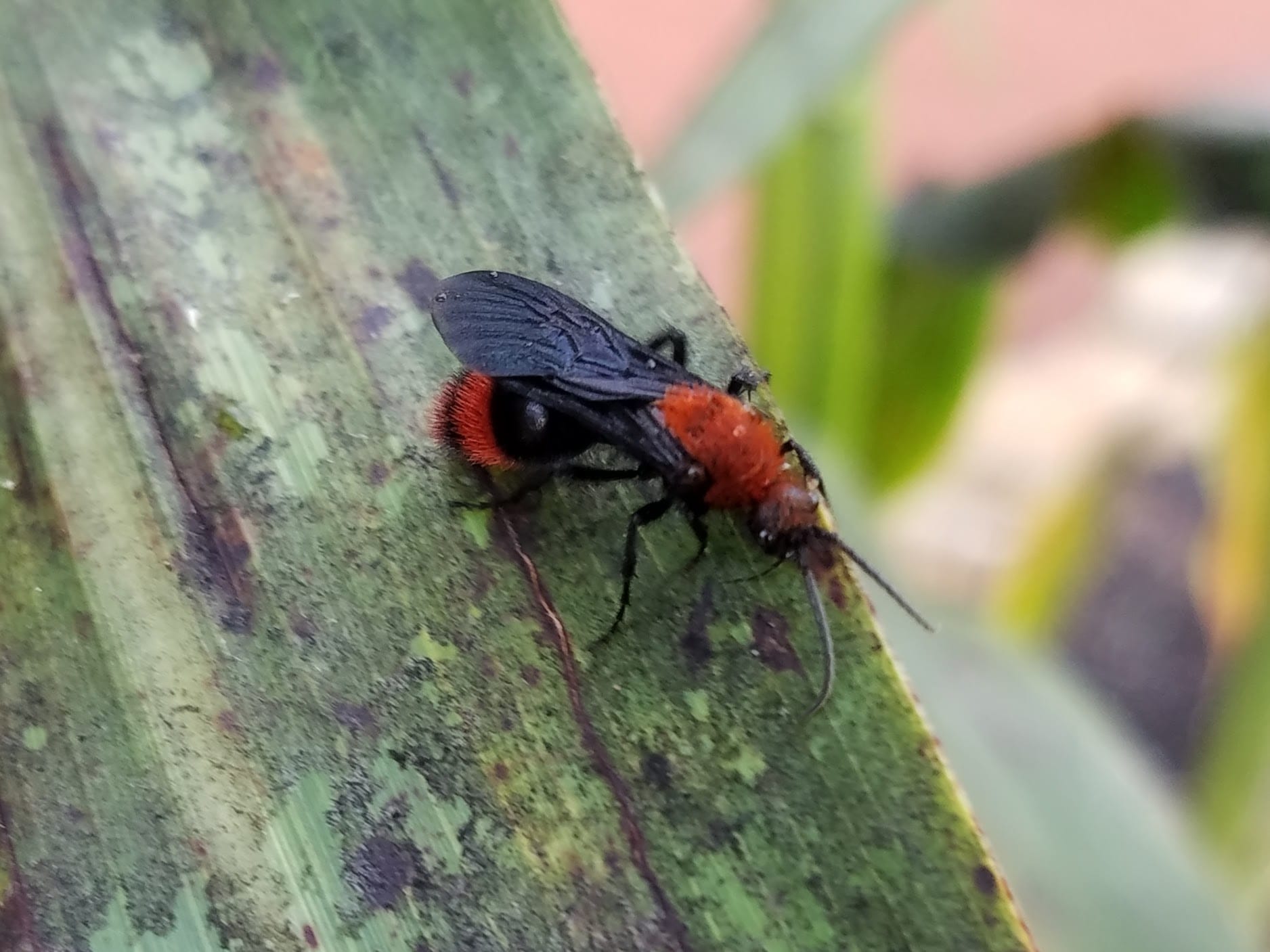
Velvet Ants are not true ants but are actually solitary wasps from the family Mutillidae. Females are wingless and covered in dense, brightly colored hair, giving them a velvet-like appearance. Males have wings and are less vividly colored. These wasps are known for their extremely painful sting, sometimes referred to as a “cow killer,” though they are not aggressive unless provoked.
Velvet Ants are parasitoids. Females lay their eggs in the nests of ground-dwelling bees or other wasps. The larvae feed on the host larvae, completing their development underground. This unusual lifestyle makes them an important biological control agent, indirectly regulating populations of other insects. Despite their intimidating appearance and sting, velvet ants rarely sting humans unless handled directly.
Studying velvet ants reveals fascinating adaptations among solitary wasps. Their coloration warns predators of their potent defense, and their lifecycle demonstrates the diversity of reproductive strategies in types of wasps. Observers can safely watch them in warm, sandy areas where they are most active during summer.
7. Cicada Killer Wasp

Cicada Killer Wasps (Sphecius speciosus) are large, solitary wasps found throughout the eastern United States. They are impressive in size, measuring up to 2 inches, with reddish-brown thoraxes and yellow-striped abdomens. These wasps dig burrows in sandy soil, where they provision their nests with cicadas for their developing larvae.
Cicada Killers are fascinating because of their specialized hunting technique. Females paralyze cicadas with a precise sting, then drag or fly them back to the nest. Each nest cell receives one cicada and a single egg, ensuring the larva has a ready food supply. Adult wasps feed on nectar and plant sap but never consume their prey directly.
Despite their intimidating size, Cicada Killer Wasps are rarely aggressive toward humans. Males defend territories but lack a sting, while females sting only if handled. Their impressive hunting and nesting behaviors make them a standout example among types of wasps, demonstrating how solitary species survive without colonies.
8. Red Velvet Ant
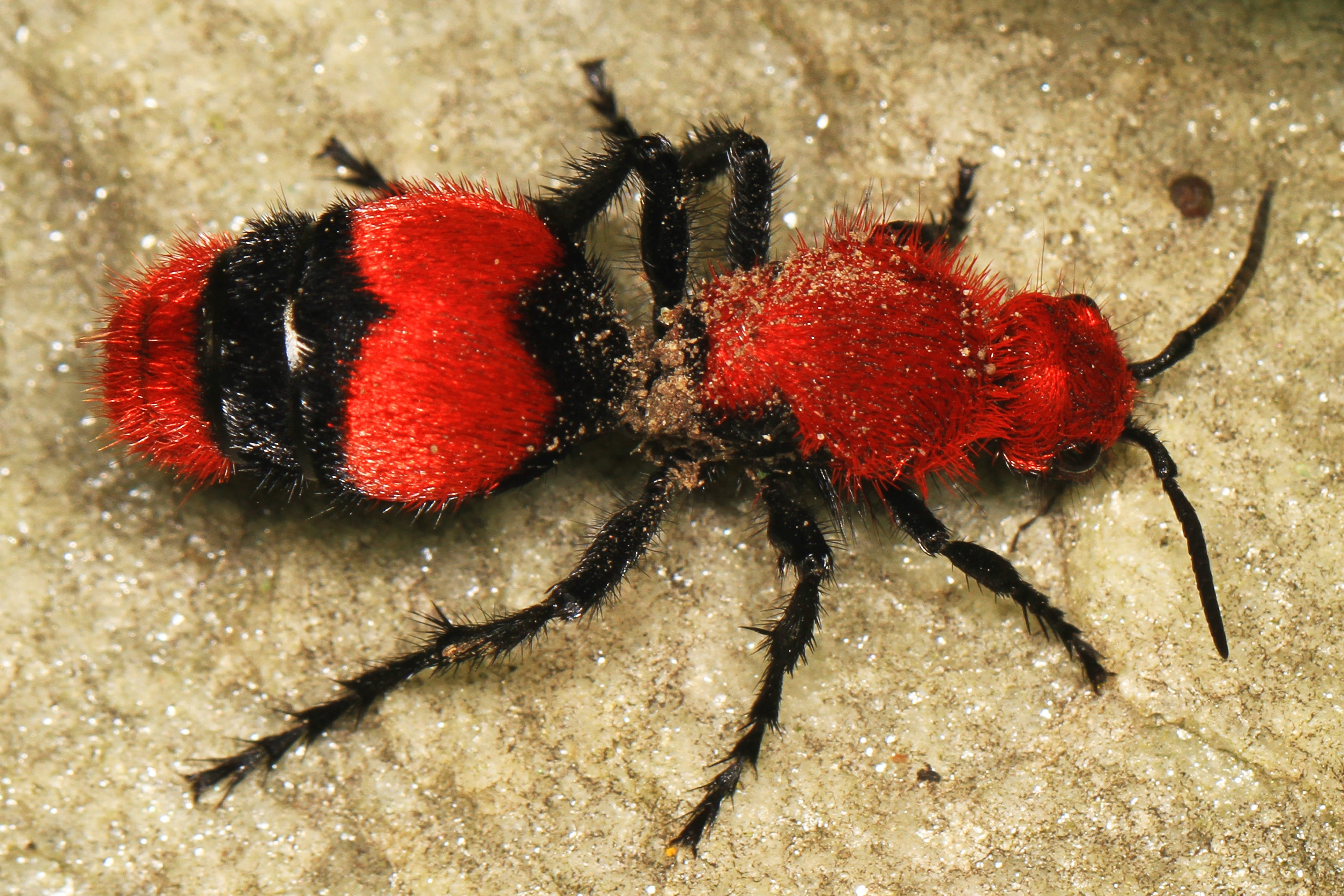
Red Velvet Ants are a striking type of velvet ant, with bright red hair covering their wingless bodies. Like other Mutillidae, they are parasitoids of other insects, laying eggs in host nests. Their vivid coloration serves as a warning to predators of their potent sting, which ranks among the most painful of any insect.
Red Velvet Ants are primarily solitary, spending their lives foraging and searching for host nests in sandy or open areas. They feed mainly on nectar as adults, providing them energy for their extensive movements and hunting. Observing these wasps from a safe distance can reveal interesting behaviors, such as their methodical search for hosts and interaction with their environment.
Among types of wasps, Red Velvet Ants exemplify effective warning strategies, solitary survival, and fascinating reproductive habits. Despite their fearsome reputation, they avoid unnecessary conflict and contribute indirectly to pest control.
9. Blue Mud Dauber
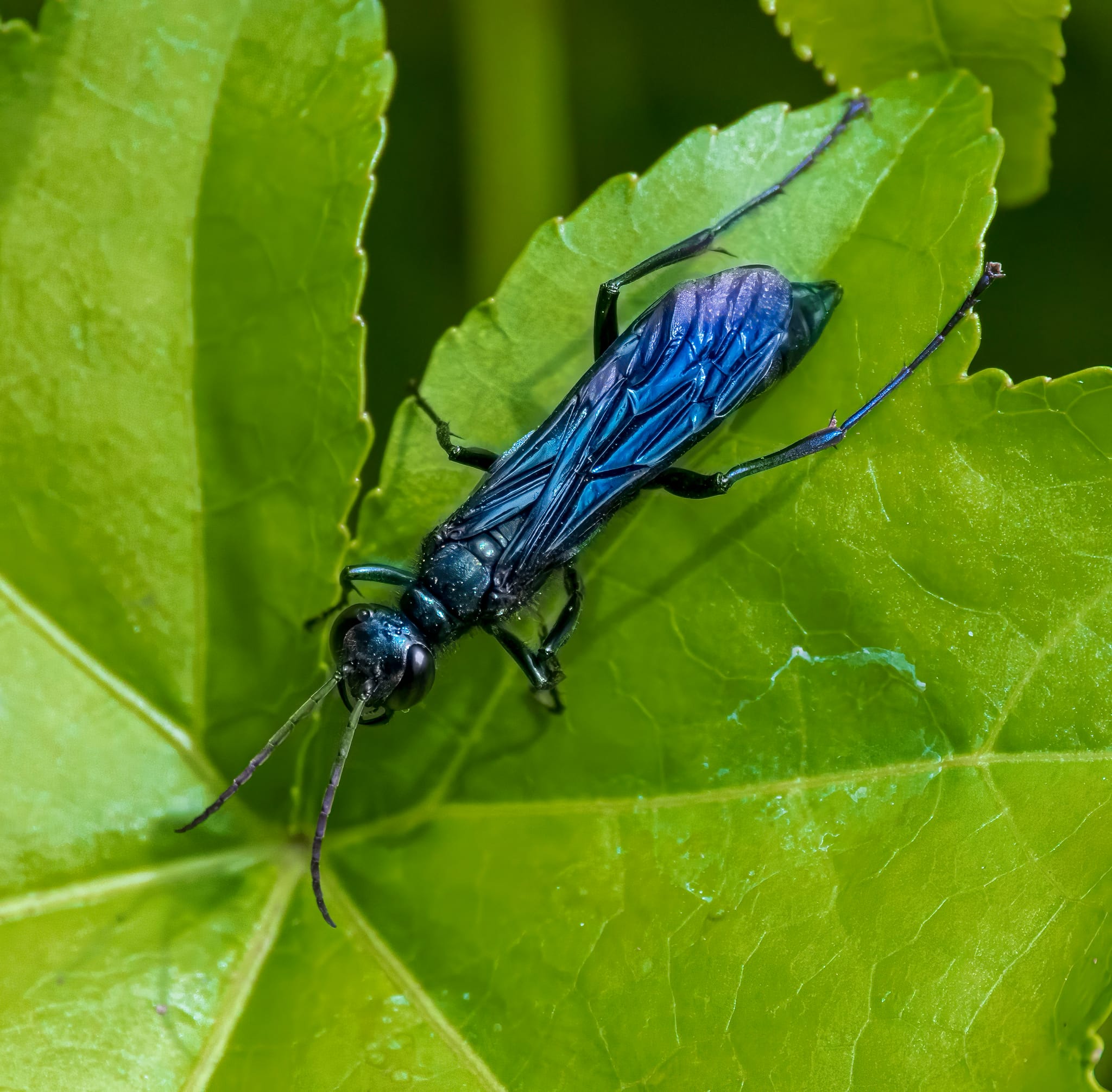
Blue Mud Daubers (Chalybion californicum) are solitary wasps known for their metallic blue bodies and slender shape. They construct mud nests on walls, rocks, and sheltered ledges, provisioning each cell with paralyzed spiders. This makes them helpful in controlling spider populations around homes and gardens.
These wasps are gentle and rarely sting unless directly threatened. Adult Blue Mud Daubers feed on nectar and water, while their larvae rely entirely on the spiders provided in the nest. Their careful hunting and precise nest-building behaviors are remarkable, reflecting the skill required to raise offspring alone.
Blue Mud Daubers demonstrate the value of solitary wasps among types of wasps. Their nests are easy to observe, and their peaceful behavior allows enthusiasts to study them safely. They are an excellent example of how solitary species differ in strategy and life cycle from social wasps.
10. Polistes Paper Wasp

Polistes Paper Wasps are slender, social wasps with long legs and dangling bodies in flight. They build umbrella-shaped, open nests under eaves, tree branches, and overhangs. Colonies are small, often fewer than 100 individuals, with a clear hierarchy including a queen and workers.
They hunt caterpillars and soft-bodied insects to feed larvae, while adults consume nectar and sweet substances. These wasps are less aggressive than yellowjackets and hornets, preferring to retreat when disturbed. Their cooperative nest-building and foraging demonstrate how social wasps can thrive with small colony sizes.
Recognizing Polistes Paper Wasps among types of wasps helps differentiate them from more aggressive or larger species. Their delicate nest construction, hunting techniques, and social behavior make them an accessible and educational subject for anyone interested in insects.
11. Horse Guard Wasp
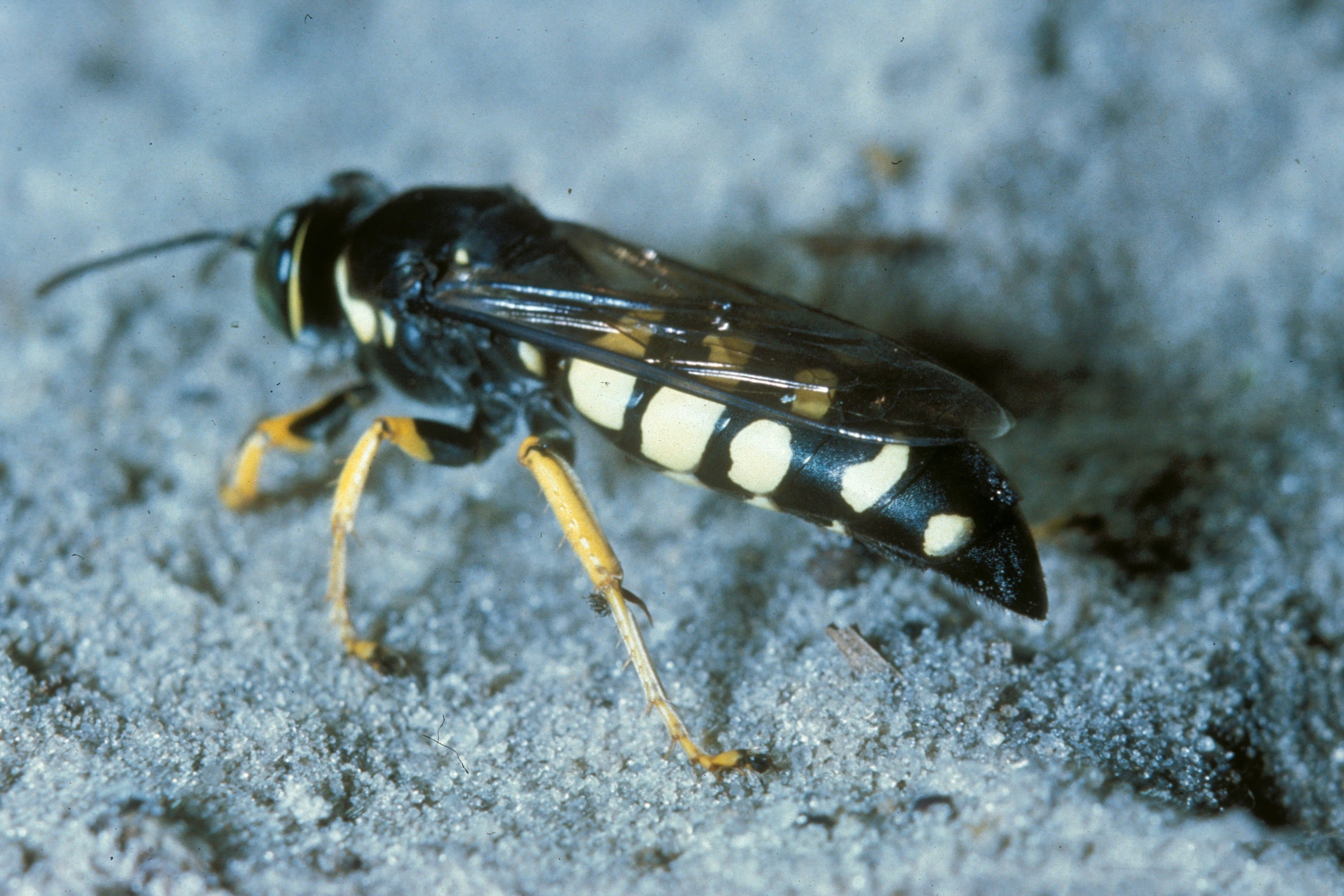
The Horse Guard Wasp (Stictia carolina) is a striking solitary wasp native to North America. It is easily recognized by its bright yellow and black coloration and agile flight. True to its name, Horse Guard Wasps are often seen around pastures, hunting for horse flies and other biting insects that bother livestock. Their predatory behavior benefits both animals and humans by reducing pest populations naturally.
Horse Guard Wasps are solitary, meaning each female constructs her own nest. She digs a burrow in sandy soil, provisions it with paralyzed prey, and lays eggs on top of the prey. Adult wasps feed mainly on nectar, but their larvae depend entirely on the captured insects. Despite their intimidating appearance, Horse Guard Wasps are not aggressive toward humans, stinging only when handled.
Observing these wasps reveals fascinating hunting strategies. They patrol open fields, hover near fly populations, and execute rapid captures with precision. Their role in ecosystems is significant, as they naturally control pest species while avoiding direct human conflicts. Horse Guard Wasps exemplify how solitary hunters contribute to the diversity among types of wasps.
12. Euspinolia militaris
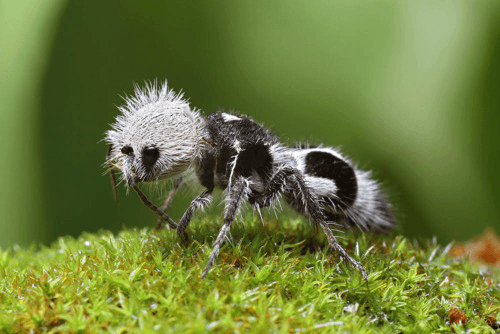
Euspinolia militaris, also known as the “Panda Ant,” is a visually striking velvet ant from Chile. Though called an ant, it is actually a wingless wasp. Females are covered in white and black hairs resembling a panda, and their stings are extremely painful. Males have wings and are less vividly colored, spending most of their lives seeking mates.
These wasps are parasitoids, laying eggs in the nests of other solitary bees. The larvae feed on host larvae, completing their development underground. Euspinolia militaris illustrates the fascinating range of survival strategies among solitary wasps. Despite their notorious sting, they avoid unnecessary confrontation and are rarely aggressive unless provoked.
Studying Euspinolia militaris highlights the unique adaptations of parasitoid wasps. Their striking appearance warns predators, and their reproductive strategy ensures the next generation can thrive. Among types of wasps, they demonstrate how beauty and danger can coexist in a single species.
13. Ropalidia marginata
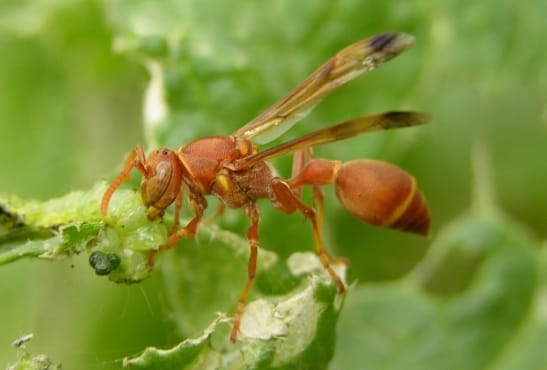
Ropalidia marginata is a social paper wasp native to India and Southeast Asia. Colonies are relatively small, typically under 100 individuals, and nests are made of paper-like material attached to branches or protected surfaces. These wasps are fascinating for their complex social structure, with a dominant queen, subordinate females, and workers coordinating nest maintenance, foraging, and brood care.
They are predators, feeding their larvae with caterpillars and soft-bodied insects, while adults consume nectar and plant sap. Despite their social organization, Ropalidia marginata is relatively docile and rarely stings humans. Their nests are small but well-organized, reflecting sophisticated construction techniques that allow airflow, protection, and space for developing larvae.
Ropalidia marginata provides an excellent example of social wasps in action. Observing these insects offers insights into teamwork, division of labor, and cooperative defense. Among types of wasps, they are a perfect illustration of small colonies functioning efficiently without large numbers or aggressive behavior.
14. Mexican Honey Wasp

The Mexican Honey Wasp (Brachygastra mellifica) is a social wasp that produces honey, similar to bees, though in much smaller quantities. Found in Mexico and parts of Central America, these wasps build nests in trees or shrubs and live in colonies ranging from hundreds to thousands of individuals. Their nests are typically paper-like structures composed of chewed plant material.
Mexican Honey Wasps are omnivorous. Adults consume nectar, fruit juices, and honey produced by their colony, while larvae are fed protein-rich insects. This combination ensures the colony thrives and maintains energy for construction, defense, and foraging activities. Their social system includes a queen, workers, and males, all performing distinct roles essential for colony survival.
Their ability to produce honey and control pest populations makes Mexican Honey Wasps ecologically valuable. Observing these wasps reveals their delicate balance of cooperation, hunting, and resource management. Among types of wasps, they are a rare example of species combining social behavior with honey production.
15. Polybia
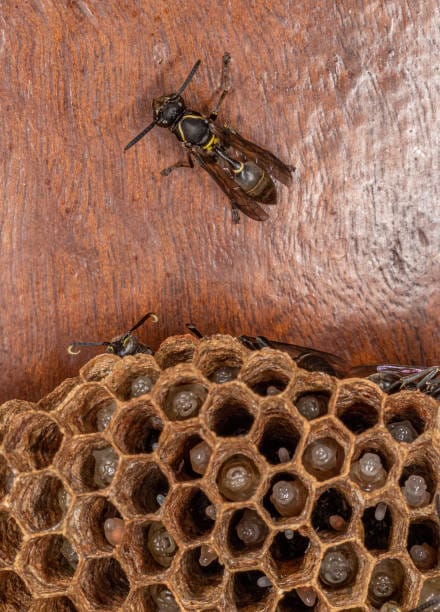
Polybia is a genus of social paper wasps found primarily in Central and South America. These wasps construct communal nests in trees, shrubs, or man-made structures, often forming long, hanging colonies. Their bodies are slender, usually dark brown with yellow or orange markings, and they are agile flyers.
Polybia wasps are predators of caterpillars, flies, and other soft-bodied insects, which they feed to larvae. Adults feed on nectar and sugary substances. Colonies demonstrate coordinated foraging, defensive strategies, and careful nest maintenance. They are known for their mild temperament but will defend nests when threatened.
Polybia species illustrate the diversity among social wasps. Their hunting techniques, nest construction, and cooperative behaviors highlight how small, organized colonies contribute to ecosystem balance. Observing Polybia reveals the subtle differences between tropical paper wasps and their temperate relatives among types of wasps.
16. Solitary Wasp

Solitary Wasps encompass a broad category of wasps that do not live in colonies. Each female builds and provisions her own nest. Examples include mud daubers, spider wasps, and cicada killers. These wasps are essential biological control agents, hunting various insects and spiders to provide for their larvae.
Solitary Wasps exhibit diverse nesting strategies. Some dig burrows in sandy soil, others use pre-existing cavities, and some construct mud or paper nests. Adult wasps feed on nectar, while larvae rely entirely on captured prey. Solitary behavior reduces competition and aggression, allowing these wasps to thrive in a wide range of environments.
Studying solitary wasps reveals incredible adaptations for hunting, nest construction, and reproduction. Among types of wasps, they represent the vast diversity of life histories and survival strategies that exist outside social colonies.
17. Vespula
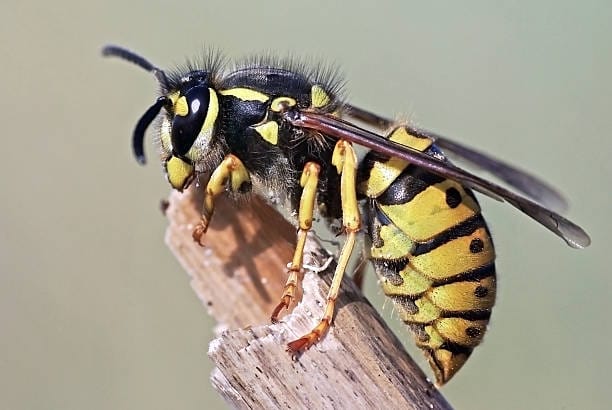
Vespula is a genus of yellowjackets widely distributed in North America and Europe. These social wasps are known for their black-and-yellow markings, aggressive defense of nests, and importance in controlling pest populations. Colonies can reach thousands of individuals in peak summer months.
Vespula wasps hunt insects and feed larvae protein-rich diets while adults consume sugary substances. Their nests are typically underground or in sheltered cavities. They are quick to sting if disturbed but play a crucial role in maintaining ecological balance. Observing Vespula highlights the coordination and efficiency of social hunting in wasps.
Among types of wasps, Vespula is an excellent example of species that thrive near humans, providing both challenges and ecological benefits. Recognizing their nests and understanding their behavior can prevent unnecessary conflicts.
18. Organ Pipe Mud Dauber
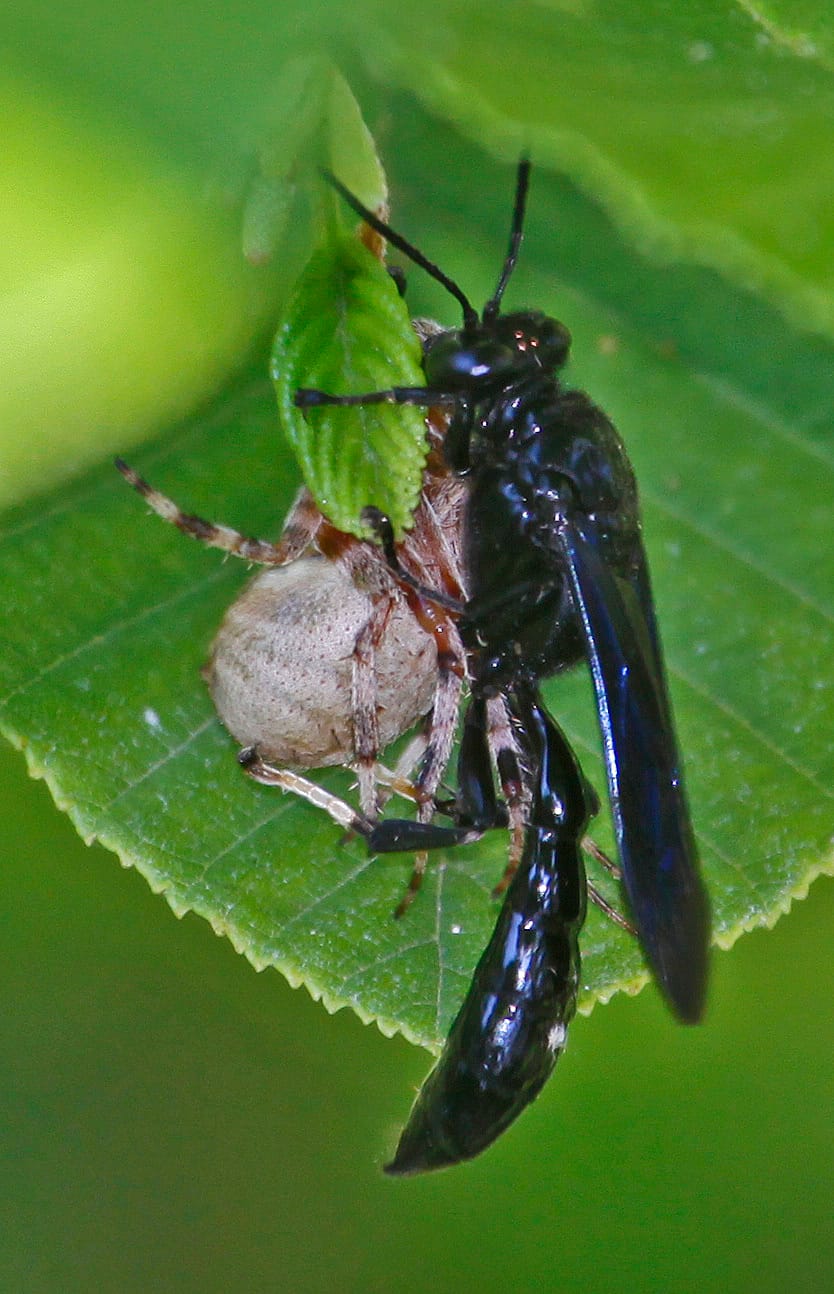
Organ Pipe Mud Daubers are solitary wasps that build cylindrical mud nests resembling organ pipes. Each nest contains multiple cells, with a single spider provisioned in each for larval development. These wasps are non-aggressive and rarely sting, making them easy to observe.
Adults feed on nectar, while larvae consume the paralyzed spiders provided by the mother. Their precise nest construction and hunting strategies demonstrate impressive skill for a solitary species. Organ Pipe Mud Daubers contribute to pest control by reducing spider populations around homes and gardens.
Observing these wasps highlights the engineering abilities and specialized hunting strategies that exist among solitary types of wasps. Their nests are often easy to spot and provide a fascinating glimpse into insect life.
19. Four-Toothed Mason Wasp
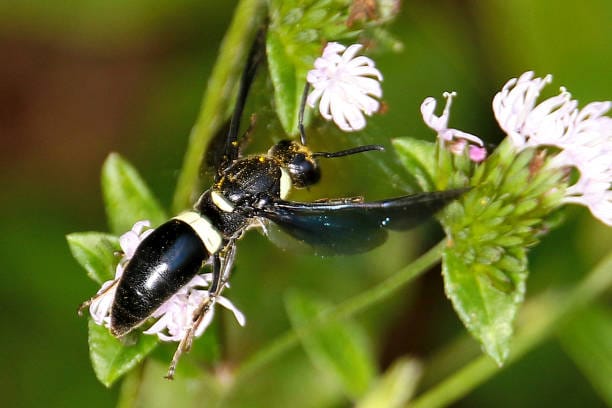
The Four-Toothed Mason Wasp is a small solitary wasp that nests in pre-existing holes or cavities. It is named for the four distinct teeth on its mandibles, used for cutting and shaping nesting materials. Adults feed on nectar, while larvae rely on captured prey for growth.
Mason Wasps are beneficial in gardens as they hunt caterpillars and other insect pests. They construct carefully sealed nests for their young, ensuring safety and proper development. Observing these wasps reveals meticulous hunting and nesting behavior despite their small size.
As an example of solitary types of wasps, the Four-Toothed Mason Wasp demonstrates how even small insects play a significant role in controlling pest populations and maintaining ecosystem health.
20. Common Thread-Waisted Wasp
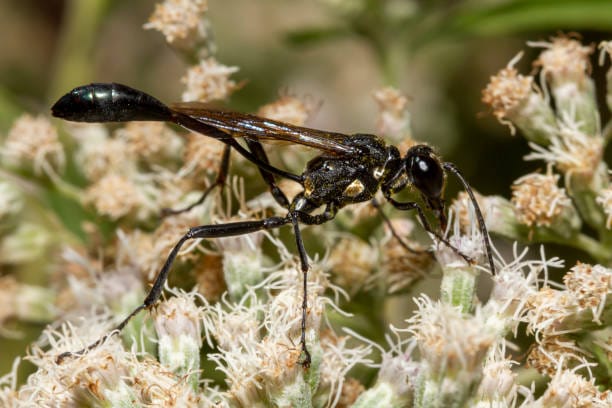
Common Thread-Waisted Wasps are slender, solitary wasps with a distinctively narrow waist connecting the thorax and abdomen. They hunt insects such as caterpillars, crickets, and spiders to provision their nests. Adults feed on nectar, while larvae consume the paralyzed prey provided.
These wasps often nest in sandy or loose soil, digging small burrows for their young. Their hunting efficiency and careful nest construction make them effective natural pest controllers. Thread-Waisted Wasps are rarely aggressive and can be observed safely with patience.
Among types of wasps, the Common Thread-Waisted Wasp exemplifies solitary hunting strategies, specialized body adaptations, and important ecological roles. Their behavior highlights the diversity and adaptability of wasps across environments.
21. Northern Paper Wasp
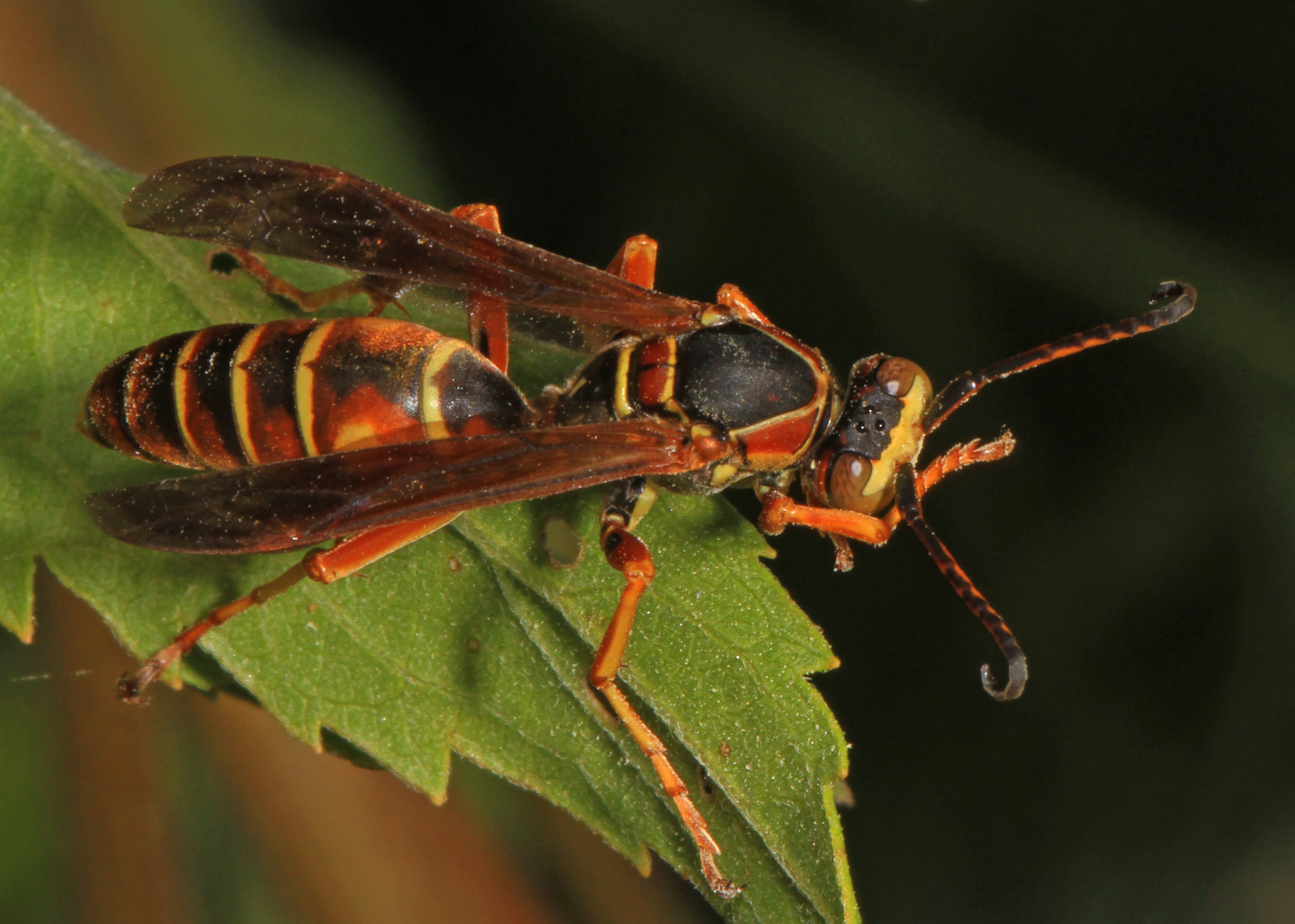
The Northern Paper Wasp (Polistes fuscatus) is a social wasp commonly found in North America. These wasps have slender bodies with reddish-brown or yellow markings and long dangling legs. Their nests are umbrella-shaped, made from chewed plant fibers mixed with saliva, and typically attached to sheltered surfaces such as eaves or tree branches.
Northern Paper Wasps are predators of caterpillars and soft-bodied insects, which they feed to their larvae. Adults consume nectar and sweet liquids for energy. Colonies are relatively small, usually fewer than 100 individuals, with a clear hierarchy including a queen and workers. Despite their social behavior, Northern Paper Wasps are less aggressive than yellowjackets and hornets, stinging only when disturbed.
Studying Northern Paper Wasps offers insight into coordinated nest-building, hunting efficiency, and social interactions. They demonstrate how small, cooperative colonies can thrive while contributing to pest control, making them a vital member of types of wasps in temperate regions.
22. Metric Paper Wasp
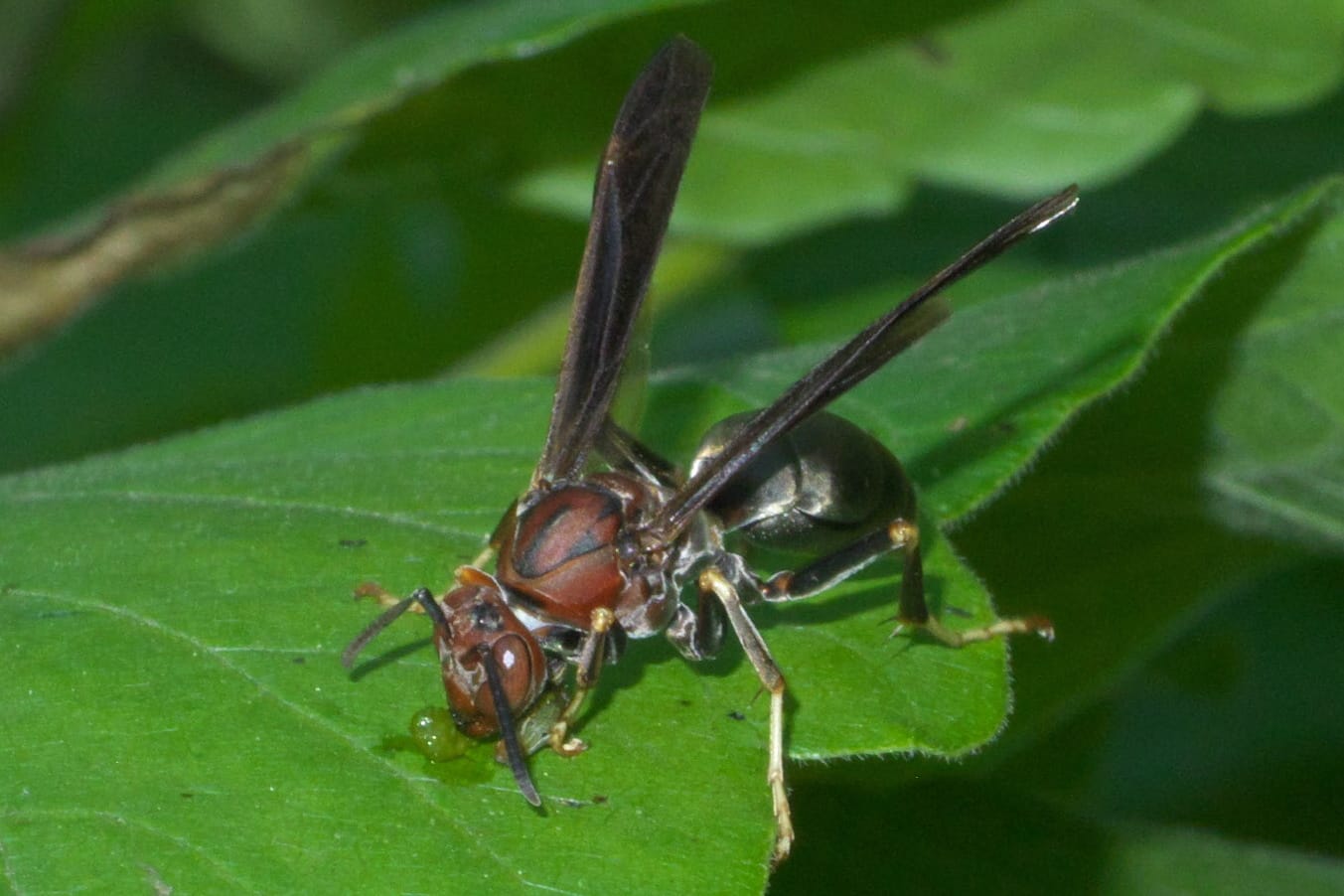
Metric Paper Wasps are a species of Polistes wasps with slender, elongated bodies and long legs. Native to parts of North and Central America, they construct open, paper-like nests that attach to plants, rocks, or buildings. Their nests are lightweight but durable, allowing for easy expansion as colonies grow.
These wasps feed their larvae with soft-bodied insects such as caterpillars and flies, while adults consume nectar. Metric Paper Wasps are known for their meticulous foraging and nest-building techniques. They demonstrate careful allocation of resources and cooperation among colony members, illustrating the benefits of small, organized social groups.
By observing Metric Paper Wasps, enthusiasts can learn how social wasps balance hunting, feeding, and nest maintenance. Among types of wasps, they provide an excellent example of efficiency, teamwork, and the balance between predatory and pollinating behaviors.
23. Guinea Paper Wasp
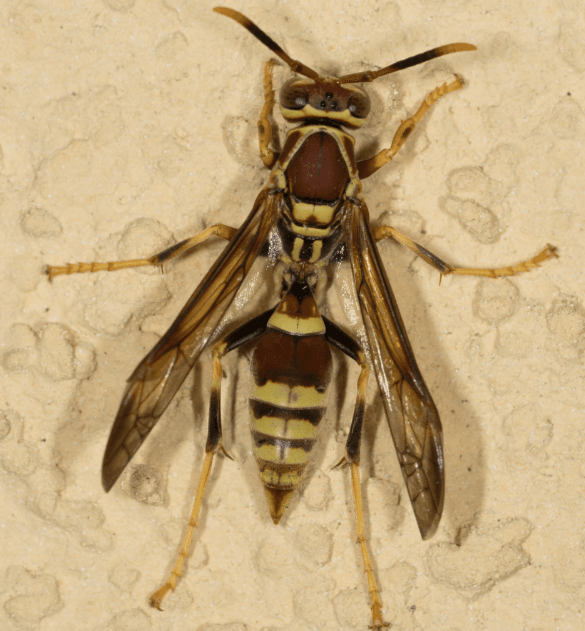
The Guinea Paper Wasp is a tropical species found in parts of Africa and Central America. These wasps are social, with colonies ranging from a few dozen to several hundred individuals. Their nests are open, papery structures attached to tree branches or sheltered areas. The coloration of Guinea Paper Wasps varies, with brown, yellow, and black patterns on their slender bodies.
They hunt caterpillars and other insects to feed larvae while adults feed on nectar and plant sap. Their social structure includes a dominant queen, subordinate females, and male members, each performing distinct tasks. Guinea Paper Wasps are less aggressive than some temperate wasps, focusing on foraging and nest maintenance unless directly threatened.
Studying Guinea Paper Wasps highlights the adaptability of social wasps in tropical environments. They provide natural pest control and illustrate the diversity of hunting strategies and social behaviors among types of wasps.
24. Ichneumon Wasp
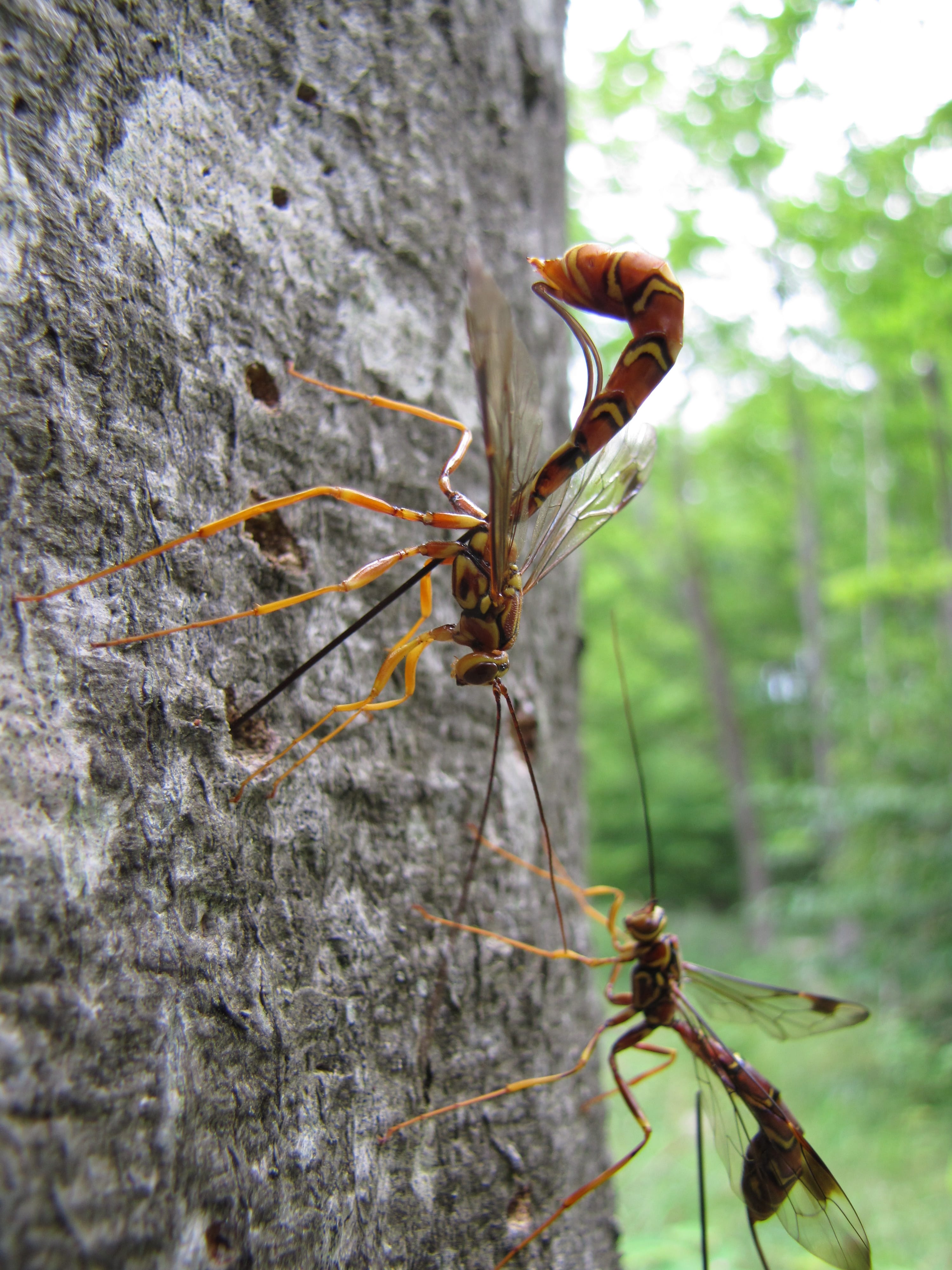
Ichneumon Wasps are a large family of parasitoid wasps, with over 25,000 species worldwide. They are slender, with long antennae and often brightly colored bodies. Females use specialized ovipositors to lay eggs inside or on host insects, such as caterpillars or beetle larvae.
The developing ichneumon larvae consume the host from within, eventually emerging as adult wasps. Adults feed on nectar or honeydew. Ichneumon Wasps are solitary and rarely sting humans, making them safe to observe. Their specialized hunting behavior makes them an important natural control agent, regulating populations of potential pest insects.
Among types of wasps, Ichneumon Wasps demonstrate the fascinating complexity of parasitoid lifestyles, showing how survival strategies differ from social or predatory wasps.
25. Braconid Wasp

Braconid Wasps are another large group of parasitoid wasps, commonly used in agriculture for biological pest control. They lay eggs in or on the bodies of caterpillars, aphids, or beetle larvae, ensuring that the developing wasp has a ready food supply.
Adult Braconid Wasps feed on nectar and sometimes honeydew. They are solitary and non-aggressive, posing no threat to humans. Their lifecycle is a perfect example of how wasps can influence ecosystems by naturally controlling insect populations. Observing Braconid Wasps provides insight into their precision hunting and reproductive strategies.
Braconid Wasps are a critical component of integrated pest management and showcase how specialized behaviors distinguish parasitoid species among types of wasps.
26. Cuckoo Wasp

Cuckoo Wasps (family Chrysididae) are known for their brilliant metallic colors, often green, blue, or red. They are kleptoparasitic, laying eggs in the nests of other wasps or bees. The cuckoo larvae consume the host’s provisions or larvae, relying entirely on the host species to raise their young.
Cuckoo Wasps are solitary and non-aggressive, using their armored exoskeletons for protection rather than stinging. They are fascinating examples of parasitic adaptation and evolutionary specialization among solitary types of wasps. Observing them highlights how diverse wasp strategies can be beyond hunting and nest-building.
27. Spider Wasp
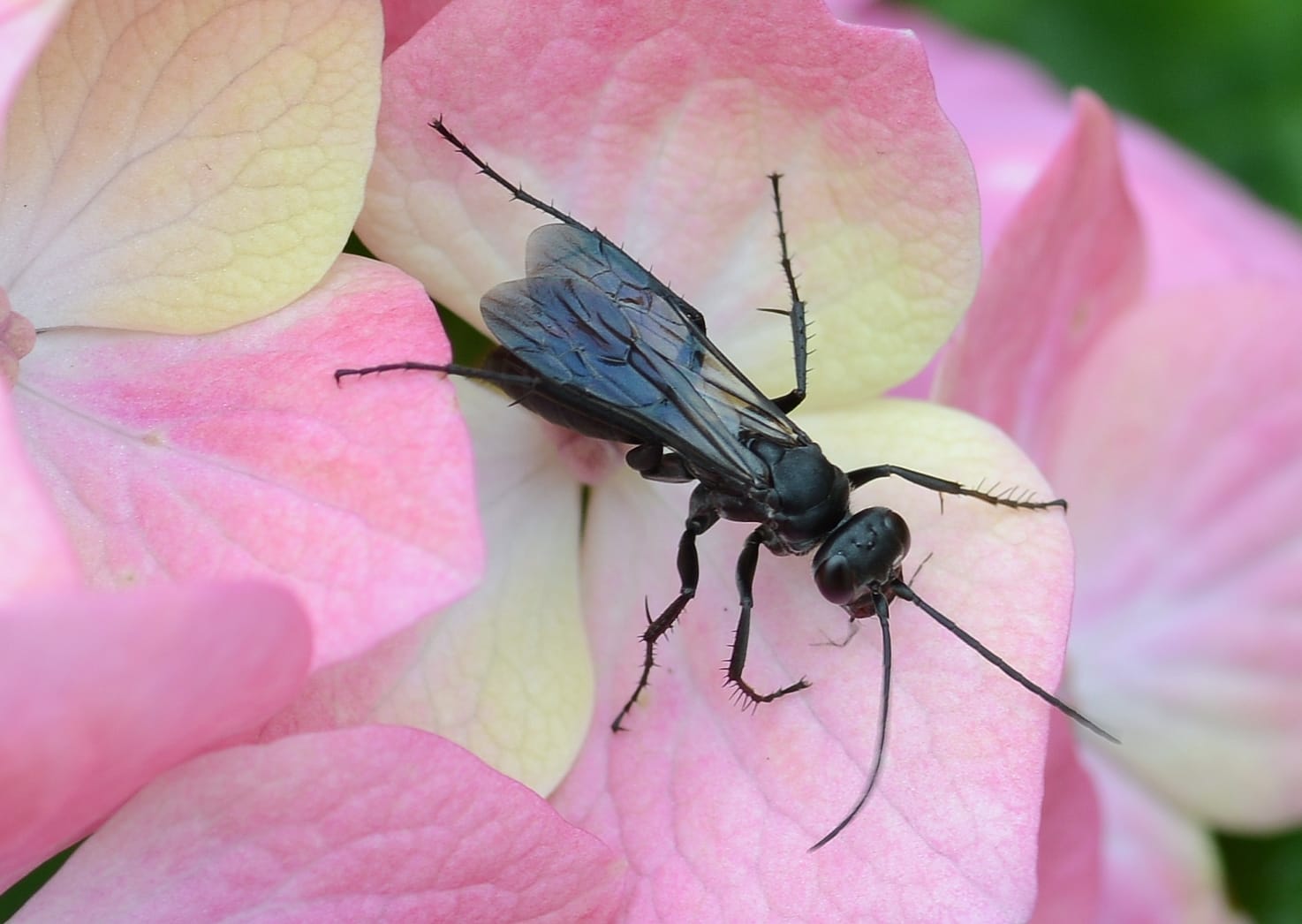
Spider Wasps (family Pompilidae) are solitary hunters famous for their habit of paralyzing spiders to feed their larvae. Females use a potent sting to immobilize spiders, drag them to carefully constructed burrows, and lay eggs on the prey. The larvae consume the spider gradually, completing development underground.
Spider Wasps feed on nectar as adults and are non-aggressive toward humans unless handled. Their hunting behavior is precise, with careful selection of prey and skillful transport to nests. Observing these wasps illustrates remarkable survival strategies among solitary species and highlights their role in controlling spider populations.
28. Fig Wasp
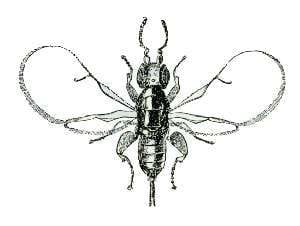
Fig Wasps are tiny insects with a mutualistic relationship with fig trees. They pollinate figs while laying eggs inside the fig’s inflorescences. The larvae develop within the fig, feeding on some of the seeds while allowing the plant to reproduce.
Fig Wasps are highly specialized, with a lifecycle tightly intertwined with their host plants. They are solitary and non-aggressive, playing a vital role in forest ecology and plant reproduction. Among types of wasps, fig wasps demonstrate how some species evolve highly specific ecological partnerships.
29. Gall Wasp
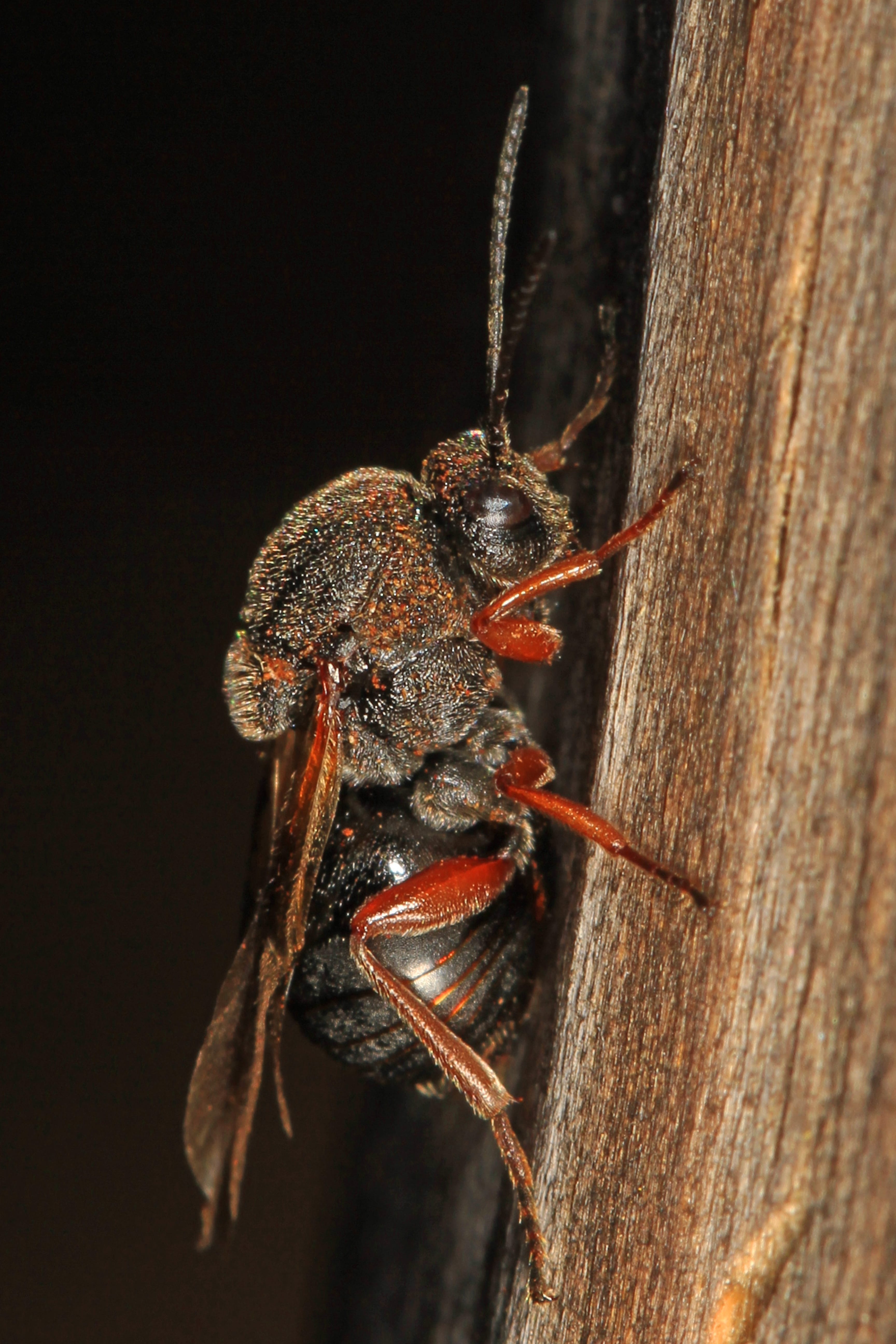
Gall Wasps (family Cynipidae) induce plants to form galls, specialized structures that house and feed their larvae. Females lay eggs into plant tissue, and the plant responds by creating a protective, nutrient-rich gall. Larvae feed safely within these structures until adulthood.
These wasps are solitary and non-aggressive, with adults feeding on nectar or honeydew. Gall Wasps showcase a remarkable adaptation among types of wasps, demonstrating how some species manipulate plant development to ensure survival and growth.
30. Sand Wasp
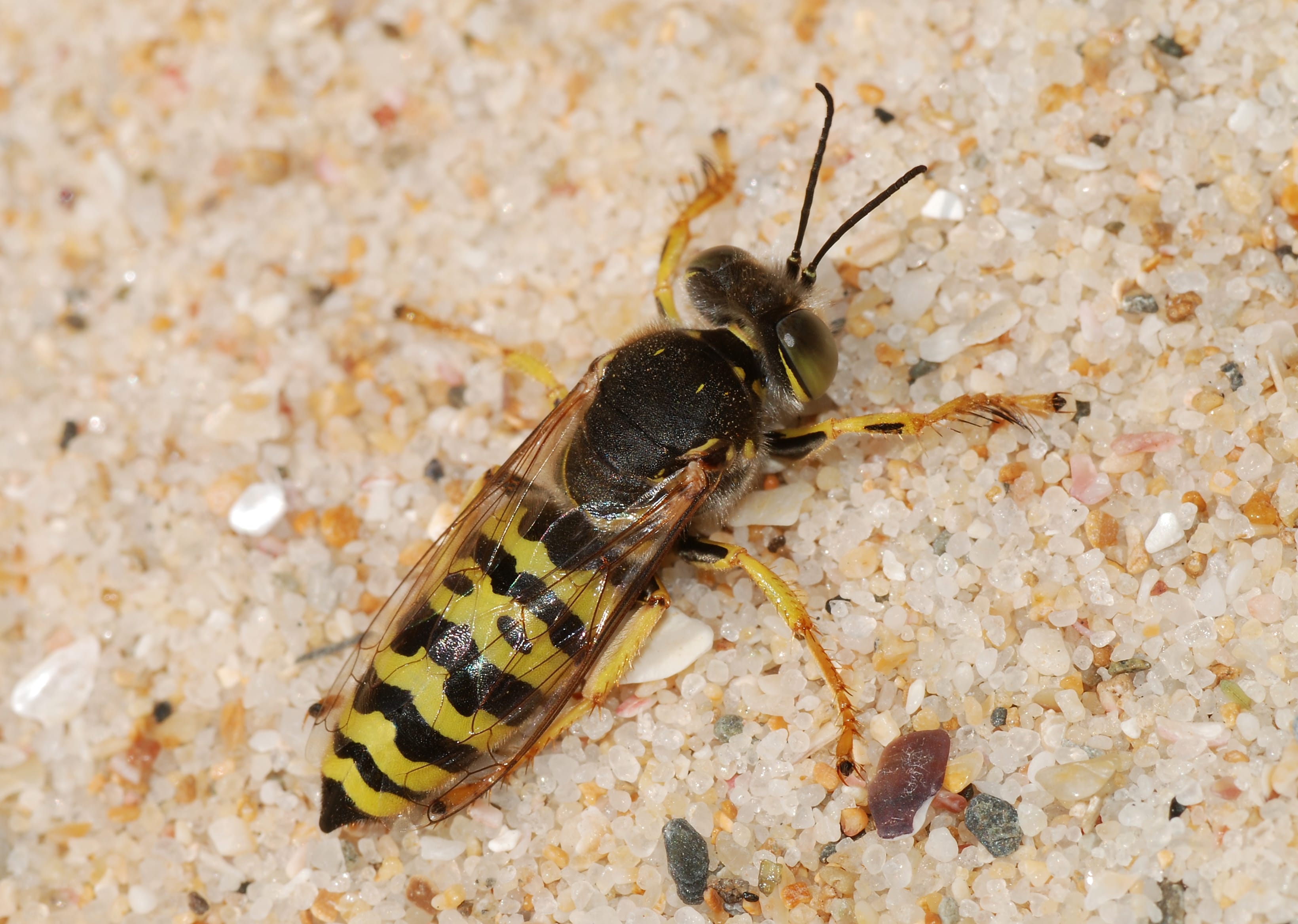
Sand Wasps (Bembix species) are solitary wasps that dig burrows in sandy soil. They provision each burrow with paralyzed insects, often flies, to feed their larvae. Adults feed on nectar and water, while larvae consume the captured prey.
These wasps are efficient hunters and skilled burrowers, with precise nest construction and careful provisioning. Observing Sand Wasps reveals how solitary species survive without colonies, relying on instinct and specialized behaviors. Among types of wasps, they demonstrate the diversity of hunting strategies and nesting habits.
31. Mud Dauber Wasp
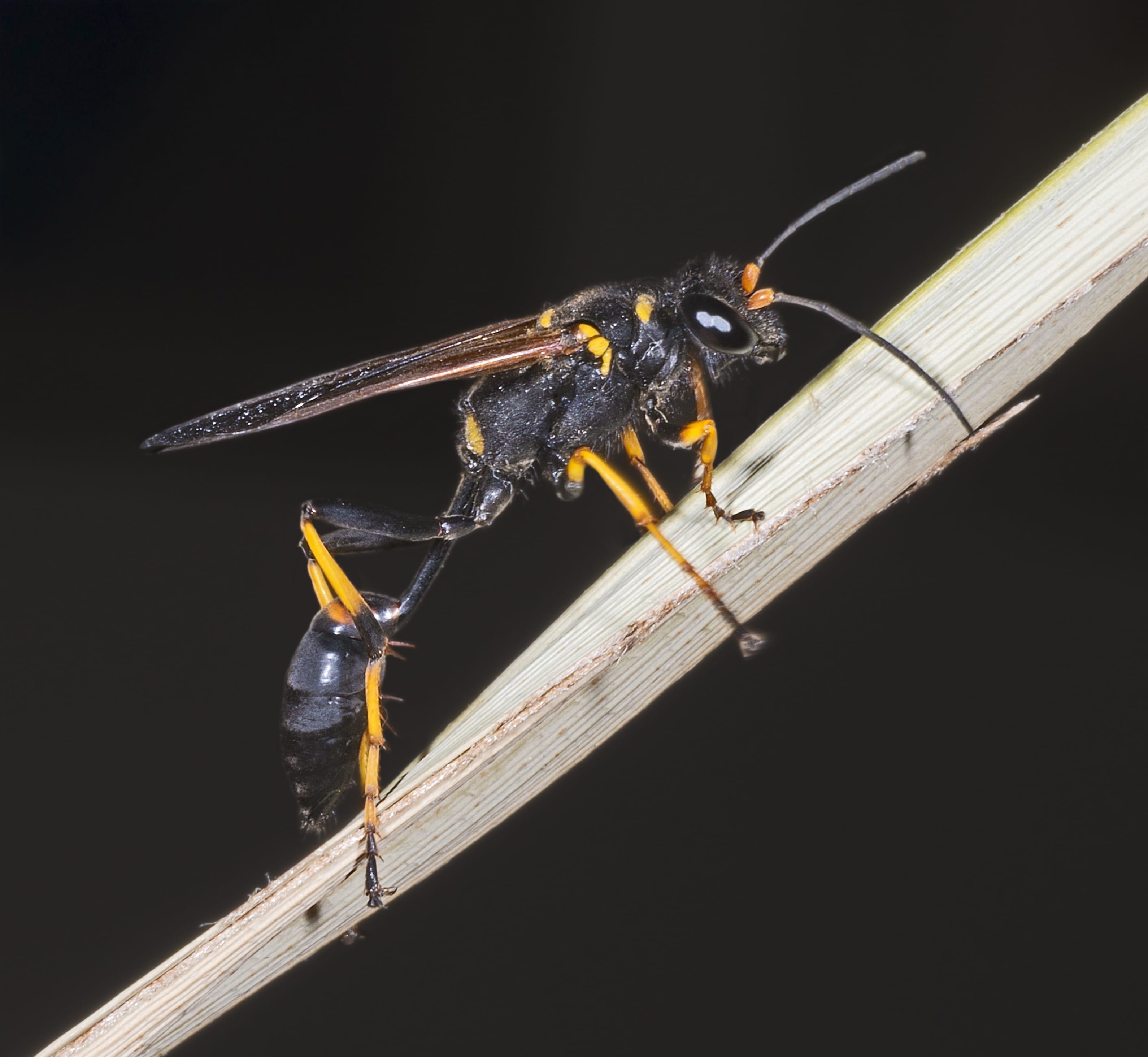
Mud Dauber Wasps are solitary wasps famous for building tube-like nests from mud. These nests are often attached to walls, ceilings, or tree branches. Adults feed on nectar, while the larvae are provided with paralyzed spiders or insects inside the mud tubes. This careful provisioning ensures the young have a reliable food source for development.
Mud Daubers are non-aggressive and rarely sting humans, making them easy to observe. Their nests are fascinating to watch, as they demonstrate impressive construction skills and precision in hunting. These wasps play a key role in controlling spider populations, highlighting the ecological value of solitary types of wasps.
32. Potter Wasp
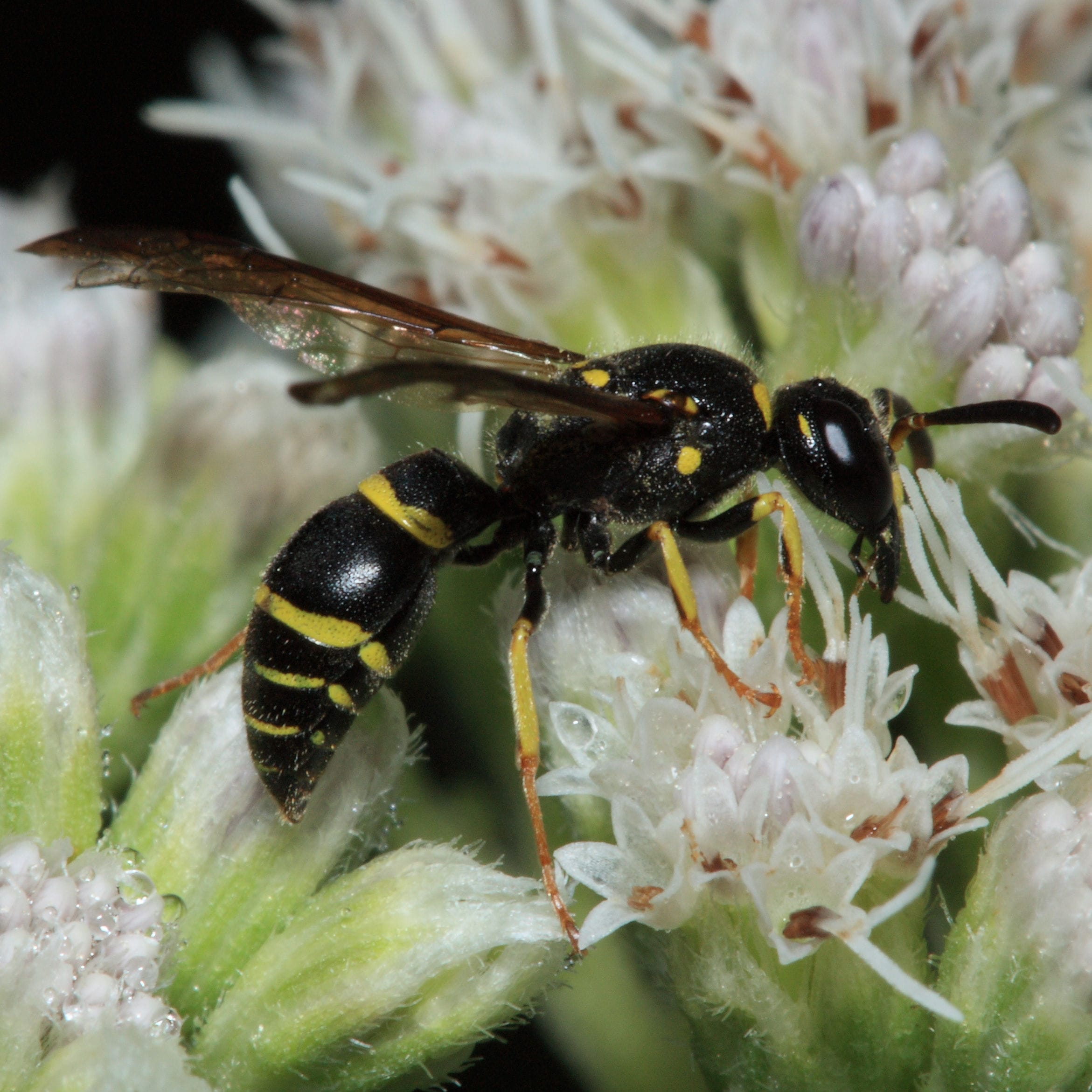
Potter Wasps are solitary, small-to-medium-sized wasps known for their pot-shaped clay nests. Each nest is provisioned with paralyzed caterpillars or insects for the larvae. Adults feed primarily on nectar, while larvae consume the captured prey. Potter Wasps are found worldwide, often in gardens, meadows, and forest edges.
These wasps demonstrate remarkable skill in nest construction. Each pot is carefully molded, filled, and sealed to protect the developing larva. Observing Potter Wasps reveals their precise hunting, construction, and provisioning behaviors, offering insight into the diversity of solitary types of wasps in nature.
33. Tarantula Hawk Wasp
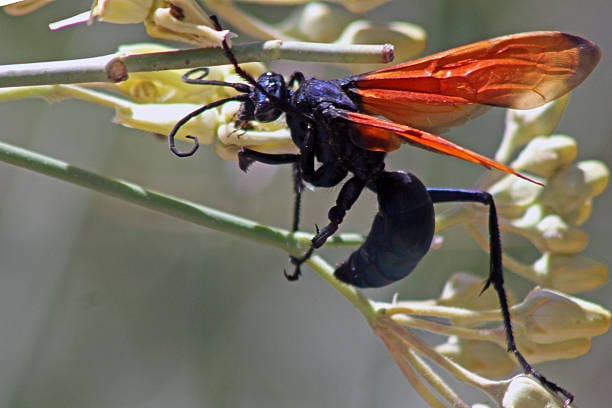
Tarantula Hawk Wasps (Pepsis species) are among the largest wasps in the world. Native to the Americas, females hunt tarantulas to provide food for their larvae. The tarantula is paralyzed with a powerful sting and dragged to a burrow where an egg is laid on its body. The larva consumes the spider gradually, completing its development safely underground.
Despite their intimidating size and potent sting, Tarantula Hawk Wasps are generally non-aggressive toward humans unless provoked. Adults feed on nectar and are important pollinators for certain desert plants. Their hunting behavior and life cycle make them a remarkable example of solitary wasp specialization among types of wasps.
34. Great Golden Digger Wasp
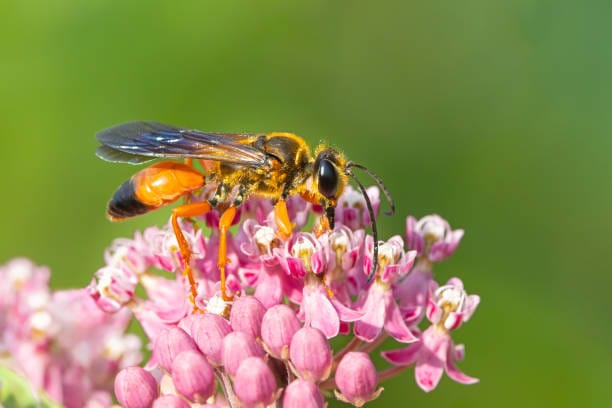
The Great Golden Digger Wasp (Sphex ichneumoneus) is a solitary wasp found throughout North America. Females dig burrows in sandy or loose soil and provision each burrow with paralyzed insects, often katydids or crickets. Adults feed on nectar, while larvae consume the captured prey.
These wasps are efficient hunters, capable of capturing prey larger than themselves. Their careful burrow construction and hunting strategies reflect impressive survival skills. Great Golden Digger Wasps illustrate the ingenuity of solitary types of wasps in utilizing their environment and resources effectively.
35. Blue Mud Dauber (distinct listing)
Blue Mud Daubers (Chalybion californicum) are solitary wasps with metallic blue bodies. They build tubular mud nests, often on buildings or rocks, and provision them with paralyzed spiders. Adults feed on nectar, while larvae consume the captured prey.
Blue Mud Daubers are gentle and rarely sting humans. Their precise nest construction and prey selection demonstrate remarkable skill and survival strategy. Observing them provides insight into solitary wasps’ methods of hunting, nesting, and raising offspring, highlighting their ecological role among types of wasps.
36. Bald-Faced Hornet

Bald-Faced Hornets (Dolichovespula maculata) are social wasps native to North America. They are large, with striking black-and-white markings, and build large, football-shaped paper nests, often in trees or shrubs. Colonies may contain hundreds of individuals during summer.
These hornets are predators, feeding larvae with insects, while adults consume nectar and sweet liquids. They are known for aggressive nest defense but rarely attack unprovoked humans. Bald-Faced Hornets play an important ecological role by controlling insect populations and pollinating plants. They are a prominent example of social types of wasps.
37. Asian Giant Hornet

The Asian Giant Hornet (Vespa mandarinia) is the largest hornet species in the world, native to Asia. They can grow over 2 inches long and have a potent sting. These hornets are predators, feeding on other insects and honeybees, which they attack to feed their larvae.
Asian Giant Hornets are social, building large paper nests in trees or underground. While their sting is dangerous, they avoid humans unless threatened. They play a dual role in ecosystems: controlling pest populations while posing a risk to beekeeping. Recognizing them among types of wasps is crucial for safety and ecological understanding.
38. European Hornet

European Hornets (Vespa crabro) are large, social wasps found in Europe and introduced to North America. They have reddish-brown heads and thoraxes with yellow and black striped abdomens. Their nests are papery and usually built in hollow trees, wall cavities, or attics.
European Hornets prey on insects to feed larvae and consume sugary substances as adults. They are generally less aggressive than their Asian counterparts but defend nests vigorously. Observing them provides insight into social behavior, hunting, and colony maintenance among types of wasps.
39. Yellow Jacket

Yellow Jackets are small, aggressive social wasps found across North America and Europe. They have distinctive black-and-yellow markings and build nests underground, in cavities, or wall voids. Colonies can reach thousands of individuals by late summer.
Yellow Jackets are predators of insects and scavengers, feeding larvae protein-rich prey and adults sugary foods. They are known for stinging repeatedly when disturbed, but their ecological role in controlling pests is significant. Yellow Jackets are among the most recognizable types of wasps for humans due to their visibility and behavior.
40. Asian Hornet
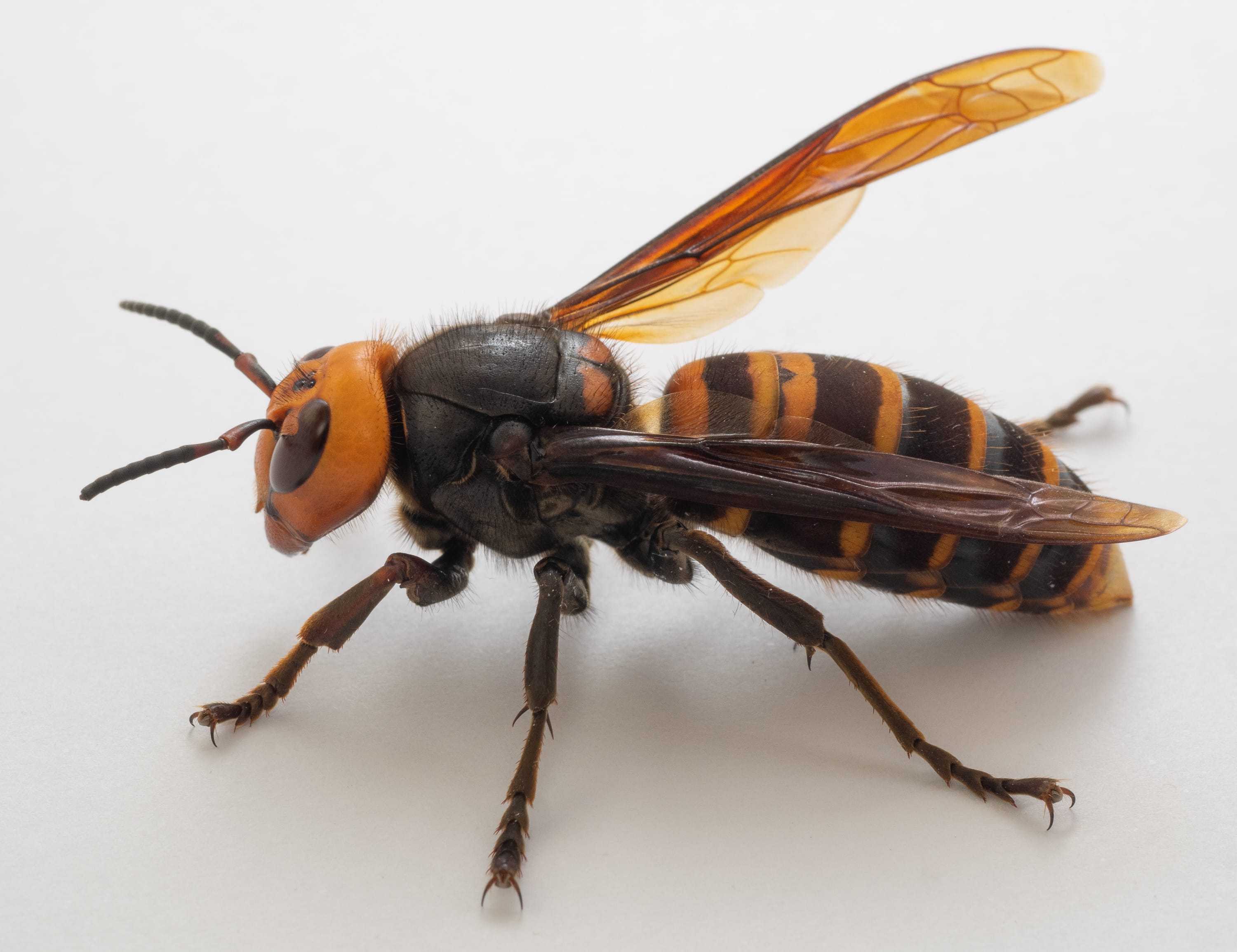
Asian Hornets (Vespa velutina) are medium-sized hornets native to Southeast Asia, now spreading to Europe. They have dark bodies with yellow-tipped legs and build large, papery nests in trees and shrubs. These hornets are predators of honeybees and other insects.
Asian Hornets are social, with colonies maintained by a queen and workers. They can impact local ecosystems and beekeeping due to predation on honeybees. Observing Asian Hornets highlights the diversity and ecological roles of hornets within types of wasps.
Conclusion: Understanding the Diversity of Types of Wasps
Wasps are far more than just stingers in our gardens—they are essential players in ecosystems worldwide. From solitary hunters like Mud Daubers and Tarantula Hawk Wasps to social species such as Yellow Jackets and Bald-Faced Hornets, each wasp exhibits unique behaviors, hunting strategies, and nesting habits. They control pest populations, pollinate plants, and demonstrate fascinating adaptations that make them one of the most diverse groups of insects.
By learning to identify and appreciate different types of wasps, we can better understand their ecological roles and reduce unnecessary fear or conflict. Whether observing the delicate nest-building of Paper Wasps or the impressive predatory skills of Spider Wasps, these insects showcase nature’s ingenuity in survival and cooperation. Next time you spot a wasp, take a moment to notice its behavior—you may gain a new appreciation for these remarkable creatures.
Exploring the world of wasps reminds us that every species, no matter how small or intimidating, contributes to the balance of nature. Understanding, respecting, and coexisting with wasps can enhance gardens, agriculture, and local biodiversity, making these insects both fascinating and valuable members of our environment.
Frequently Asked Questions About Types of Wasps
1. What are the different types of wasps?
There are hundreds of wasp species worldwide, but common types include Yellow Jackets, Paper Wasps, Mud Daubers, Hornets, Spider Wasps, and Velvet Ants.
2. How can I identify a wasp?
Wasps are generally slender with a narrow waist, long legs, and wings. Colors vary, but black and yellow patterns are common. Social wasps like Yellow Jackets have more aggressive behavior.
3. Are all wasps aggressive?
No. Many solitary wasps, like Mud Daubers or Potter Wasps, are gentle and rarely sting unless handled. Social species defend nests but usually avoid unprovoked encounters.
4. What is the difference between a hornet and a wasp?
Hornets are a type of wasp, generally larger, with stronger stings. Both build nests, but hornets often make large, enclosed paper nests in trees or attics.
5. Do wasps sting more than once?
Social wasps, like Yellow Jackets, can sting multiple times. Solitary wasps typically sting only in defense.
6. Why are wasps important for the environment?
Wasps control pest populations, pollinate plants, and provide food for other wildlife. Both solitary and social wasps play key ecological roles.
7. How do mud dauber wasps build nests?
Mud Daubers collect wet mud to form tubular nests, attach them to surfaces, and provision them with paralyzed spiders for their larvae.
8. What do paper wasps eat?
Adults feed on nectar and sugary liquids, while larvae are fed protein-rich insects like caterpillars and flies.
9. Can wasps pollinate plants?
Yes. While feeding on nectar, many wasps transfer pollen and help pollinate flowers, contributing to plant reproduction.
10. How do solitary wasps differ from social wasps?
Solitary wasps live alone, build individual nests, and hunt alone. Social wasps live in colonies, share tasks, and defend the nest collectively.
11. What is a velvet ant?
Velvet Ants are wingless female wasps covered in bright hair. They are solitary, parasitoid wasps known for their painful sting.
12. Are all wasps black and yellow?
No. While many have black-and-yellow patterns, some, like Blue Mud Daubers or Cuckoo Wasps, are metallic blue, red, or green.
13. Do wasps eat spiders?
Some species, like Spider Wasps and Mud Daubers, hunt spiders to feed their larvae. Adults usually feed on nectar.
14. Can wasps help with pest control?
Yes. Wasps hunt insects like caterpillars, flies, and beetles, reducing populations naturally in gardens and farms.
15. How do hornets build their nests?
Hornets use chewed plant fibers mixed with saliva to make large paper-like nests, often in trees, shrubs, or attics.
16. Are tarantula hawk wasps dangerous to humans?
They have extremely painful stings, but they are not aggressive and usually sting only if handled.
17. What is a cuckoo wasp?
Cuckoo Wasps are kleptoparasitic, laying eggs in other wasps’ or bees’ nests. Their larvae consume the host provisions or larvae.
18. Do all wasps live in colonies?
No. Many species, like Mud Daubers and Potter Wasps, are solitary and do not form colonies.
19. How can I safely remove a wasp nest?
It is best to contact pest control professionals. Attempting removal yourself can provoke stings, especially from social species.
20. What do ichneumon wasps do?
Ichneumon Wasps are parasitoids. Females lay eggs in host insects, and larvae consume the host from within, controlling pest populations.
21. Are bald-faced hornets aggressive?
Yes, they defend their nests aggressively but are generally not dangerous unless provoked.
22. How do fig wasps reproduce?
Fig Wasps lay eggs inside fig inflorescences. The larvae develop inside while pollinating the fig, forming a unique plant-insect partnership.
23. Do wasps hibernate in winter?
Social wasps like Yellow Jackets die off except for the queen, who hibernates. Solitary wasps usually overwinter as larvae inside nests.
24. How big can wasps get?
Most wasps are small, but species like the Asian Giant Hornet or Tarantula Hawk Wasps can grow over 2 inches long.
25. What is a sand wasp?
Sand Wasps dig burrows in sandy soil, provision them with paralyzed prey, and lay eggs inside. They are solitary hunters and non-aggressive.
26. Are Asian hornets a threat to honeybees?
Yes, Asian Hornets prey on honeybees and can impact local beekeeping operations if not monitored.
27. What is a braconid wasp?
Braconid Wasps are parasitoids used in agriculture to control pests. They lay eggs in or on other insects, which the larvae consume.
28. How do spider wasps hunt?
Spider Wasps paralyze spiders with a sting and drag them to a burrow to feed their larvae.
29. Do wasps eat humans?
No. Wasps are not predators of humans; they sting only in defense or when disturbed.
30. How can I tell a mud dauber from a hornet?
Mud Daubers are slender, non-aggressive, and build tubular mud nests. Hornets are larger, social, and build large papery nests.
31. What is a gall wasp?
Gall Wasps lay eggs in plant tissue, causing the plant to form galls, which house and feed their larvae.
32. Are blue mud daubers aggressive?
No, Blue Mud Daubers are gentle and rarely sting humans. They focus on hunting spiders for their larvae.
33. What is a polistes paper wasp?
Polistes Paper Wasps are social wasps that build open, umbrella-shaped nests. They hunt insects for larvae and feed on nectar as adults.
34. How do horse guard wasps protect livestock?
They hunt biting insects like horse flies, reducing pest annoyance for livestock in pastures.
35. Do potter wasps sting?
Potter Wasps are solitary and non-aggressive, stinging only if handled or threatened.
36. What is a metric paper wasp?
Metric Paper Wasps are social species that build open nests from chewed plant fibers. They feed larvae with insects and adults with nectar.
37. How do northern paper wasps behave?
They are social, cooperative nest-builders that defend nests but are less aggressive than Yellow Jackets.
38. Are bald-faced hornets considered wasps?
Yes, they are a type of large social wasp known for their distinctive black-and-white appearance and aggressive nest defense.
39. What is a great golden digger wasp?
These solitary wasps dig burrows in soil and provision them with paralyzed prey for larvae. Adults feed on nectar.
40. How do tarantula hawk wasps locate spiders?
They use keen eyesight and specialized hunting behavior to find and paralyze tarantulas for their larvae.
41. Can wasps coexist with humans safely?
Yes. Understanding their behavior, avoiding disturbing nests, and appreciating their ecological role allows humans to coexist safely with most wasps.
42. Why are wasps considered beneficial insects?
Wasps control pests, pollinate plants, and contribute to biodiversity, making them essential for ecosystem health.
Read more:
- 20 Types of Wild Snakes (Pictures And Identification)
- 45 Types of Bees (Pictures And Identification)
- What Do Bees Eat? 30 Foods They Love the Most (Complete Guide)
- 40 Types of Bumblebee (Pictures And Identification)
- 50 Types of Beetles (Pictures and Identification)
- What Do Wasps Eat ? 30 Foods They Love the Most