

New York is home to a fascinating diversity of weasels, small but highly effective predators that inhabit forests, wetlands, and even suburban edges. These animals, though rarely seen due to their secretive nature, play an important role in controlling rodent populations and maintaining ecological balance. From the tiny Least Weasel to the versatile Long-Tailed Weasel, the state hosts a variety of species, each with its own distinctive traits, behavior, and habitat preferences. In this guide, we’ll explore the 5 types of weasels in New York, providing detailed insights into their identification, lifestyle, diet, reproduction, and interactions with humans. Whether you’re a curious hiker, wildlife photographer, or simply passionate about nature, this guide will help you understand and appreciate these agile carnivores that quietly shape the ecosystems around us.
1. Long-Tailed Weasel (Neogale frenata noveboracensis)
Physical Characteristics & Identification Tips
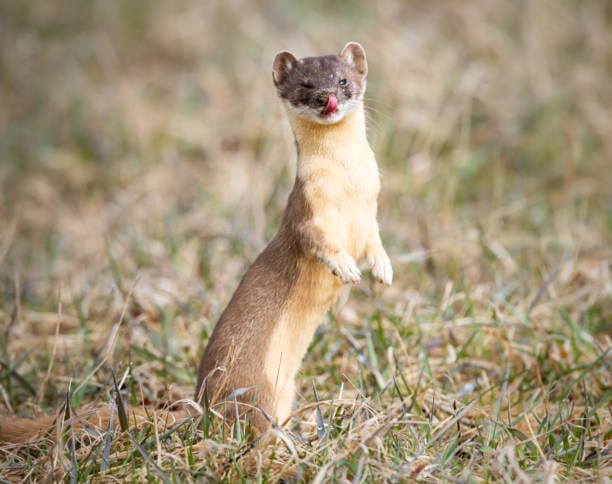
The Long-Tailed Weasel is arguably the most widespread weasel in New York, easily recognized by its elongated body, chestnut brown upper coat, and white underbelly. One of the most distinctive features is its long, black-tipped tail, which can comprise almost half its body length. Males are typically larger than females, averaging 14–16 inches long, while females range from 10–12 inches. Their slender, muscular build allows them to slip through tight spaces, making them highly effective hunters. During winter, their fur may turn completely white, blending seamlessly with snow, except for the tail tip which remains black—a helpful identification feature for the observant naturalist.
Behavior
Long-Tailed Weasels are energetic, curious, and highly territorial. They are primarily nocturnal but may be active during daylight, especially in quieter forested areas. Their hunting style is deliberate yet explosive: they stalk prey with silent precision before pouncing with remarkable speed. Interestingly, their movement sometimes resembles a dance, with twisting and darting motions that confuse their quarry. Observing one in action is like watching a coiled spring release—energy and focus combined in a tiny, agile package.
Habitat and Range
These weasels inhabit forests, farmland edges, and riverbanks throughout New York State. They prefer areas with dense vegetation and abundant prey, such as field mice or voles. Abandoned burrows, stone walls, and fallen logs serve as both hunting vantage points and protective dens. Their adaptability allows them to thrive in varied landscapes, from the Adirondack forests to the Hudson Valley woodlands.
Diet
The Long-Tailed Weasel is an opportunistic carnivore. Its diet mainly consists of small mammals, including mice, voles, and occasionally rabbits. They also consume birds, insects, and reptiles when available. They are known to cache surplus food near their dens, a behavior that helps them survive in harsh winters when prey is scarce.
Reproduction and Life Cycle
Breeding occurs in late summer, but the fertilized eggs undergo delayed implantation, allowing kits to be born during the spring when conditions are optimal. Litters typically range from 5 to 8 young. Kits are blind and helpless at birth but grow quickly under the mother’s care, becoming independent hunters within a few weeks.
Fun Facts / Traits
- Despite their small size, Long-Tailed Weasels are capable of taking down prey larger than themselves, showcasing remarkable strength and hunting skill.
- They are excellent swimmers and climbers, which helps them pursue prey across diverse terrains.
- The tail tip remains black even in winter, a distinguishing characteristic from similar weasel species.
Human Interaction
While they occasionally raid poultry coops, Long-Tailed Weasels are largely beneficial, keeping rodent populations in check. Wildlife enthusiasts value their presence for the ecological insight they provide. Spotting one is a rare treat, as they tend to vanish as quickly as they appear, leaving only tracks or signs of predation behind.
2. American Ermine (Short-Tailed Weasel, Mustela richardsonii)

Physical Characteristics & Identification Tips
The American Ermine is slightly smaller than its long-tailed cousin but equally impressive. It has a compact body, short tail with a black tip, and seasonal color changes—brown in summer, pure white in winter. Adults measure 7–13 inches, with males generally larger than females. The contrast between the white winter coat and black tail tip is a striking adaptation, providing both camouflage and a way to signal others of their kind.
Behavior
Ermines are stealthy, energetic hunters. They move with remarkable agility through undergrowth and tunnels, often following their prey directly into burrows. Their hunting is methodical and precise, combining patience with explosive bursts of speed. Observers have described their movements as a rapid “zigzag dance,” an apt metaphor for the unpredictable paths they take while pursuing prey.
Habitat and Range
These weasels are widespread across New York, inhabiting forests, wetlands, and farmlands. They often reside in areas with abundant rodent populations, using existing burrows or creating their own dens. The Ermine’s preference for dense cover allows it to avoid predators while hunting efficiently.
Diet
Ermines primarily feed on small mammals such as mice and voles, but will occasionally consume insects, frogs, and birds. Their small size allows them to exploit prey hiding in tight spaces, making them effective controllers of local rodent populations. They are also known to store food near their dens, an adaptive behavior for surviving lean winter months.
Reproduction and Life Cycle
Breeding occurs in midsummer, with delayed implantation allowing kits to be born in spring. Litters typically contain 4–9 young, which develop rapidly under the mother’s guidance. Within a few weeks, kits are practicing hunting skills, preparing for independence.
Fun Facts / Traits
- Ermines were historically prized for their white winter fur, often used in ceremonial garments in Europe.
- They are fearless hunters, capable of taking down prey several times their size.
- Despite being small, they play an essential ecological role by controlling rodent populations.
Human Interaction
Farmers value the Ermine for natural pest control. Sightings are rare due to their secretive behavior, making encounters with this tiny predator a memorable experience for wildlife observers.
3. Least Weasel (Mustela nivalis)
Physical Characteristics & Identification Tips
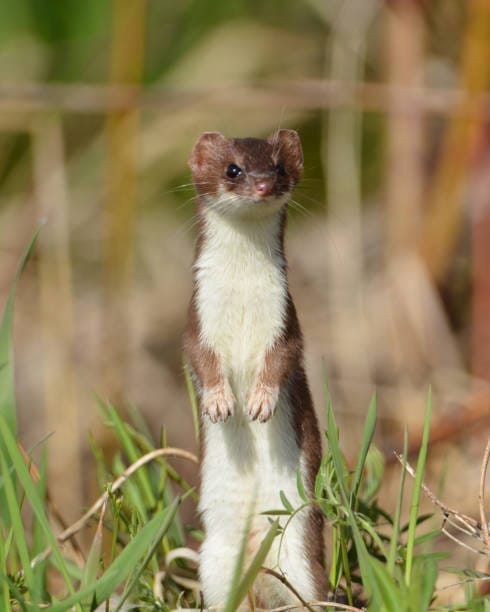
The Least Weasel is the smallest carnivore in North America, measuring just 6–8 inches with a short, stubby tail. Its fur is brown on top and white below during summer, turning completely white in winter. Unlike the Ermine, its tail lacks a black tip, making identification relatively simple. Despite its small stature, the Least Weasel is an efficient predator, relying on agility and speed to capture prey.
Behavior
Least Weasels are energetic, fearless, and solitary. They move quickly through underbrush, often slipping through holes that are too small for other predators. They are persistent hunters, chasing rodents into burrows and attacking with precision. Their energy seems inexhaustible, as if they are constantly in a state of purposeful play, testing their hunting skills and reflexes.
Habitat and Range
In New York, Least Weasels inhabit open fields, meadows, and forest edges. Their preference for areas with dense rodent populations helps them thrive even in fragmented habitats. They are less commonly seen than Ermines or Long-Tailed Weasels but are present throughout much of the state, especially in northern and central regions.
Diet
Primarily feeding on mice, voles, and other small rodents, Least Weasels consume up to half their body weight daily. They may also eat insects or small birds. Their hunting efficiency helps maintain ecological balance by controlling small mammal populations.
Reproduction and Life Cycle
Breeding occurs multiple times per year depending on food availability. Females produce litters of 4–6 kits, which mature rapidly. Within weeks, young weasels are hunting independently, continuing the cycle of these nimble predators.
Fun Facts / Traits
- Despite their tiny size, Least Weasels are formidable hunters, capable of killing prey larger than themselves.
- They can slip through holes no wider than a coin, exploiting spaces inaccessible to larger predators.
- Their incredible metabolism requires almost constant hunting, keeping them active year-round.
Human Interaction
Due to their small size and secretive nature, humans rarely encounter Least Weasels. Farmers appreciate their role in controlling pests, and wildlife enthusiasts treasure the rare chance to observe them in the wild. Their presence is a strong indicator of a healthy rodent population and functioning ecosystem.
4. American Mink (Neogale vison)
Physical Characteristics & Identification Tips
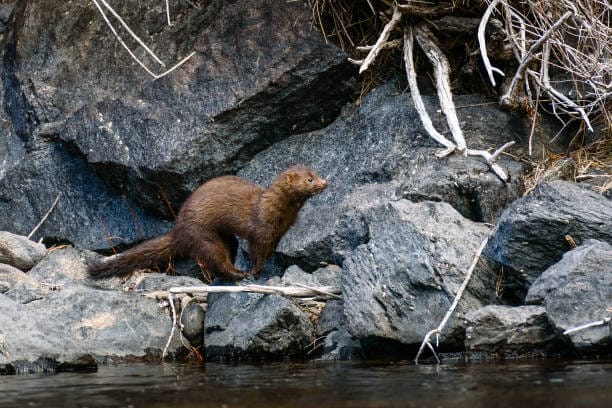
The American Mink is often mistaken for a weasel due to its elongated body and agile movements, but it is slightly larger, measuring 12–18 inches long, with a bushy tail adding another 4–6 inches. Its fur is dense, glossy, and dark brown, often with lighter patches on the throat or chest. Unlike other weasels, the mink’s fur has a waterproof quality, allowing it to navigate aquatic environments effortlessly. Males are noticeably larger and more muscular than females, a clear example of sexual dimorphism in mustelids.
Behavior
Minks are versatile hunters, equally skilled on land and in water. They are primarily nocturnal but can occasionally be observed at dawn or dusk. Their hunting involves stealth and patience, often stalking prey along riverbanks or slipping silently into burrows. They are solitary animals, fiercely territorial, and communicate through scent marking. Observers have described their movements as “liquid grace,” capable of sudden bursts of speed or diving maneuvers to catch fish or frogs.
Habitat and Range
American Minks inhabit wetlands, streams, rivers, and pond edges throughout New York. They favor areas with dense vegetation near water, which provides both cover and abundant prey. While they can survive in forested areas, proximity to water is crucial for feeding and nesting. In winter, minks remain active, often navigating through snow-covered banks and ice edges in search of small mammals or aquatic prey.
Diet
The American Mink is an opportunistic carnivore. Its diet includes fish, frogs, crayfish, small mammals, birds, and insects. Minks are also known to cache surplus food, an adaptive strategy to survive periods when prey is scarce. Their hunting is precise and efficient, capable of handling slippery or fast-moving animals with remarkable dexterity.
Reproduction and Life Cycle
Breeding occurs from February to April, with delayed implantation ensuring kits are born during spring. Litters typically consist of 3–6 young. Kits are born blind and helpless but grow rapidly under their mother’s care, learning to swim and hunt by the age of 6–8 weeks. Minks reach sexual maturity within their first year, ready to establish their own territories.
Fun Facts / Traits
- The American Mink is one of the few mustelids adapted for semi-aquatic life, making it a skilled swimmer and hunter of fish.
- Its fur has historically been highly valued for clothing, though today mink populations are protected and managed.
- Minks are fearless and have been observed taking on prey larger than themselves, displaying a surprising level of aggression and courage.
Human Interaction
Minks generally avoid humans but may occasionally prey on small domestic animals if given the opportunity. They are considered beneficial for controlling rodent populations and are admired for their adaptability and hunting prowess. Wildlife photographers often seek out their tracks along riverbanks, where evidence of their stealthy movement is more common than direct sightings.
5. Fisher (Pekania pennanti)

Physical Characteristics & Identification Tips
The Fisher is one of the largest members of the weasel family found in New York, with adults measuring 36–47 inches from nose to tail and weighing between 4–6 kg. Its thick fur is dark brown, often with a reddish sheen in sunlight, and the face features distinctive black markings around the eyes. Fishers have powerful limbs and sharp claws, making them excellent climbers and hunters. Despite their size, they are agile and can navigate forest canopies with surprising ease, combining strength and grace in equal measure.
Behavior
Fishers are solitary, crepuscular, and highly elusive. They are capable hunters, taking prey both on the ground and in trees. They are among the few predators that actively hunt porcupines, using speed and strategy to flip the spiny mammals onto their vulnerable undersides. Fishers communicate through scent marking and vocalizations, including high-pitched screams during mating season. Observing one in the wild is rare, but the tracks of their padded feet often betray their presence in deep snow.
Habitat and Range
Fishers inhabit dense forests, particularly in the Adirondacks and Catskills, but can be found in mixed hardwood and coniferous forests throughout the state. They require large territories with plenty of prey and denning opportunities, such as hollow logs, tree cavities, or abandoned burrows. Their preference for mature forests allows them to exploit complex habitats that offer both cover and hunting advantages.
Diet
Their diet is diverse, including small mammals, birds, insects, fruits, and even carrion. Fishers are unique among mustelids for their ability to prey on porcupines, a task requiring intelligence and agility. Seasonal shifts in diet occur, with more fruits consumed in summer and fall, and greater reliance on small mammals during winter months. Their versatility as hunters makes them top-tier predators within their ecological niche.
Reproduction and Life Cycle
Breeding occurs from late March to April, with delayed implantation leading to births in March the following year. Litters usually consist of 1–4 kits. Young fishers are born blind and grow rapidly, learning climbing and hunting skills from their mother. By autumn, they are independent and ready to establish territories of their own, continuing the cycle of these elusive carnivores.
Fun Facts / Traits
- Fishers are one of the few predators capable of hunting porcupines successfully, a rare skill among North American mammals.
- They are excellent climbers and swimmers, able to traverse both canopy and water with ease.
- Their elusive nature and vocalizations have earned them nicknames like “screamer” among forest trackers.
Human Interaction
Fishers rarely interact with humans, avoiding populated areas. They are valuable to the ecosystem, controlling rodent and porcupine populations. While fur trapping was historically significant, fishers are now primarily appreciated by wildlife enthusiasts and conservationists who monitor forest health and biodiversity in New York.
FAQ’s
1. Are there minks in NY?
Yes, the American Mink (Neogale vison) is found throughout New York. Minks live near rivers, lakes, and wetlands, and are semi-aquatic predators that hunt fish, frogs, and small mammals.
2. What kind of weasel are in the Northeast?
In the Northeastern U.S., the most common weasels are the Short-tailed Weasel (Ermine, Mustela erminea) and the Long-tailed Weasel (Neogale frenata). Both species are small, slender carnivores that feed mainly on rodents and birds.
3. What weasels live in NY?
New York is home to the Long-tailed Weasel and Short-tailed Weasel. These species occupy forests, brushy fields, and farmland, and are most active at dawn and dusk.
4. Are weasels legal in NY?
Yes, weasels are legal to observe in the wild, but it is illegal to capture or keep them as pets without a wildlife rehabilitation permit. They are protected native wildlife under New York state law.
5. Why were ferrets banned in NY?
Ferrets are illegal in New York because they are non-native predators that could disrupt local ecosystems if released or escaped. The law aims to protect native wildlife and prevent ecological damage.
6. Can I own a ferret in NYC?
No, it is illegal to own a ferret in New York City and in the state of New York without special permits. This restriction helps prevent invasive species issues and ensures public safety.
7. Do weasels keep rats away?
Yes, weasels are natural predators of rodents and can help control rat and mouse populations. However, they are elusive and not always present in areas where you might want rodent control.
8. What kind of weasels live in New York State?
New York hosts the Long-tailed Weasel and Short-tailed Weasel (Ermine). Both are agile hunters that thrive in forests, wetlands, and fields across the state.
9. Where are fishers found?
Fishers (Pekania pennanti) are large members of the weasel family found mainly in northern and western New York. They prefer dense forests and are excellent climbers and predators, feeding on small mammals, birds, and even porcupines.
Conclusion
Weasels in New York are small yet fascinating members of the mustelid family, each with unique adaptations, behaviors, and ecological roles. From the nimble Least Weasel to the powerful Fisher, these carnivores play a crucial role in maintaining the balance of forests, wetlands, and farmlands across the state. Observing them requires patience and a keen eye, as they are elusive, stealthy, and often active during dawn or dusk. Understanding their physical characteristics, behavior, diet, and reproductive cycles not only enhances our appreciation for these remarkable creatures but also highlights their importance in controlling rodent populations and supporting biodiversity.
Whether you are a wildlife enthusiast, hiker, or photographer, exploring New York’s forests and waterways with the knowledge of these weasels in mind adds a new layer of curiosity and respect for the natural world. By learning to identify and observe these species responsibly, you can witness firsthand how even the smallest predators contribute to the health and resilience of local ecosystems. Next time you spot a fleeting shadow darting across a forest floor or a riverbank, consider that it might be one of New York’s remarkable weasels, quietly shaping the environment around it.
Read more:
- 20 Types of Weasels: Species Identification with Pictures
- 5 Types of Weasels in Michigan (Pictures and Identification)
- 5 Types of Weasels in Ontario (Pictures And Identification)
- 5 Types of Weasels in Vermont (Pictures And Identification)
- 6 Types of Weasels in Maine (Pictures and Identification)
- 5 Types of Weasels in Alberta | Identification & Facts
- 5 Types of Weasels in Pennsylvania (Pictures and Identification)
- 5 Types of Weasels in Wisconsin | Identification & Facts
- 8 Types of Weasels in Minnesota | Identification & Facts
- 5 Types of Weasels in Ohio | Identification & Facts