
Chipmunks are small, agile rodents belonging to the squirrel family. They are known for their striped backs, expressive eyes, and lively behaviors. Across North America and parts of Asia, there are numerous species, each with unique traits, habitats, and adaptations. In this guide, we will explore types of chipmunks, providing detailed information about appearance, behavior, diet, and ecology. Whether you are a wildlife enthusiast, beginner, or researcher, this comprehensive review will help you identify and appreciate the diversity of chipmunks in the wild.
1. Eastern Chipmunk (Tamias striatus)
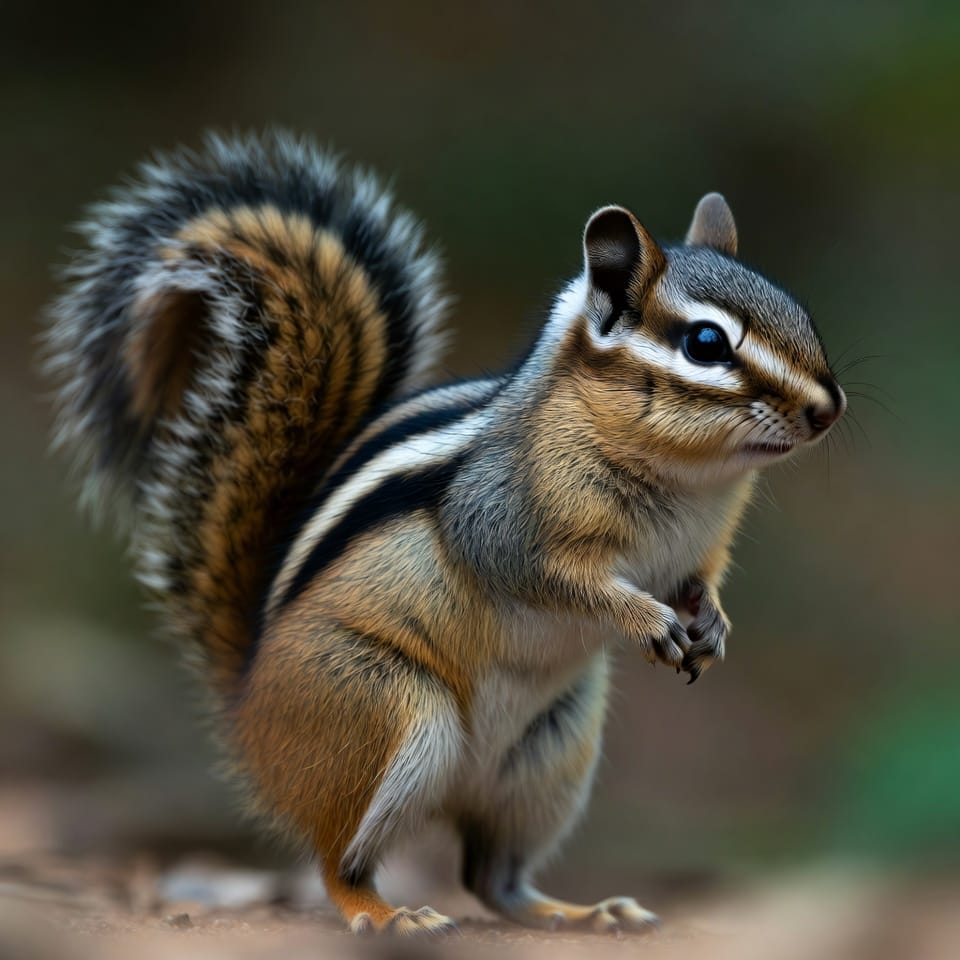
Appearance and Identification
The Eastern Chipmunk is one of the most well-known species of chipmunks in North America. Adult individuals measure about 9–10 inches in length, including a tail of 3–4 inches. Their fur is reddish-brown on the back, with five dark brown stripes running along the sides separated by lighter stripes. The belly is a soft, pale gray. Large dark eyes and small rounded ears give them a cute, alert appearance.
Habitat and Distribution
Eastern Chipmunks primarily inhabit deciduous forests, woodlands, and suburban areas in the eastern United States and southeastern Canada. They thrive in areas with plenty of cover such as shrubs, logs, and rocky outcrops. These chipmunks create extensive burrow systems underground, which provide shelter, nesting sites, and storage for food.
Diet and Foraging Behavior
These chipmunks are omnivorous, feeding on seeds, nuts, fruits, berries, fungi, and occasionally small insects. They are known for their cheek pouches, which allow them to transport large amounts of food to their burrows. Eastern Chipmunks are active during the day, particularly in the morning and late afternoon, spending hours foraging and caching food for winter.
Behavior and Social Structure
Eastern Chipmunks are mostly solitary outside of the breeding season. Males defend territories vigorously, while females focus on nesting and rearing young. Communication is achieved through chirping calls, tail flicks, and scent marking. Their burrows are complex, with multiple chambers for sleeping, food storage, and waste, illustrating remarkable engineering skills for such a small mammal.
Conservation Status
The Eastern Chipmunk is considered stable in population and is not currently threatened. Its adaptability to suburban environments and varied diet contribute to its resilience. Observing them in the wild offers insight into the intricate behavior of small rodents in forest ecosystems.
2. Least Chipmunk (Neotamias minimus)
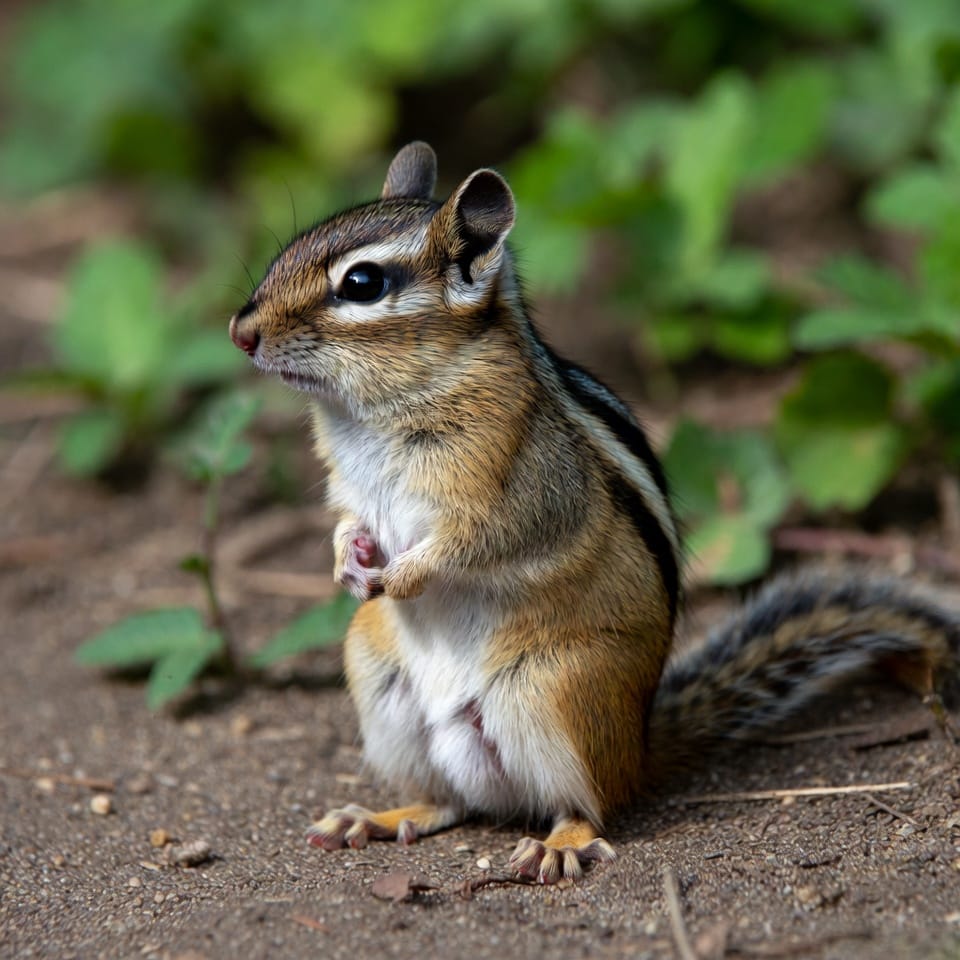
Appearance and Identification
The Least Chipmunk is the smallest North American chipmunk species, measuring only 7–9 inches long. It has a distinct pattern of stripes on a tawny brown back and a pale underbelly. Its small size, rapid movements, and high-pitched calls make it a charming subject for wildlife enthusiasts. Compared to larger chipmunks, it appears more delicate but is highly energetic.
Habitat and Distribution
Least Chipmunks occupy a wide range of habitats in western North America, including forests, grasslands, and rocky areas. They often nest in crevices or beneath logs and shrubs. Their ability to adapt to dry or mountainous environments allows them to survive in regions where larger chipmunks may be absent.
Diet and Foraging Behavior
These chipmunks eat seeds, nuts, berries, and occasionally insects. Their cheek pouches are used for transporting food back to burrows for storage, ensuring they have enough provisions for the winter months. Least Chipmunks display remarkable foraging efficiency, often visiting multiple feeding sites in a single day.
Behavior and Social Structure
Least Chipmunks are solitary, with each individual defending its territory. Communication occurs through vocalizations and tail flicking. They are active during the day and are skilled climbers, often moving into bushes or low trees to escape predators or forage for food.
Conservation Status
The population of Least Chipmunks is stable, and they are not considered at risk. Their adaptability and small size make them resilient to environmental changes, though habitat destruction could pose a future threat.
3. Siberian Chipmunk (Eutamias sibiricus)
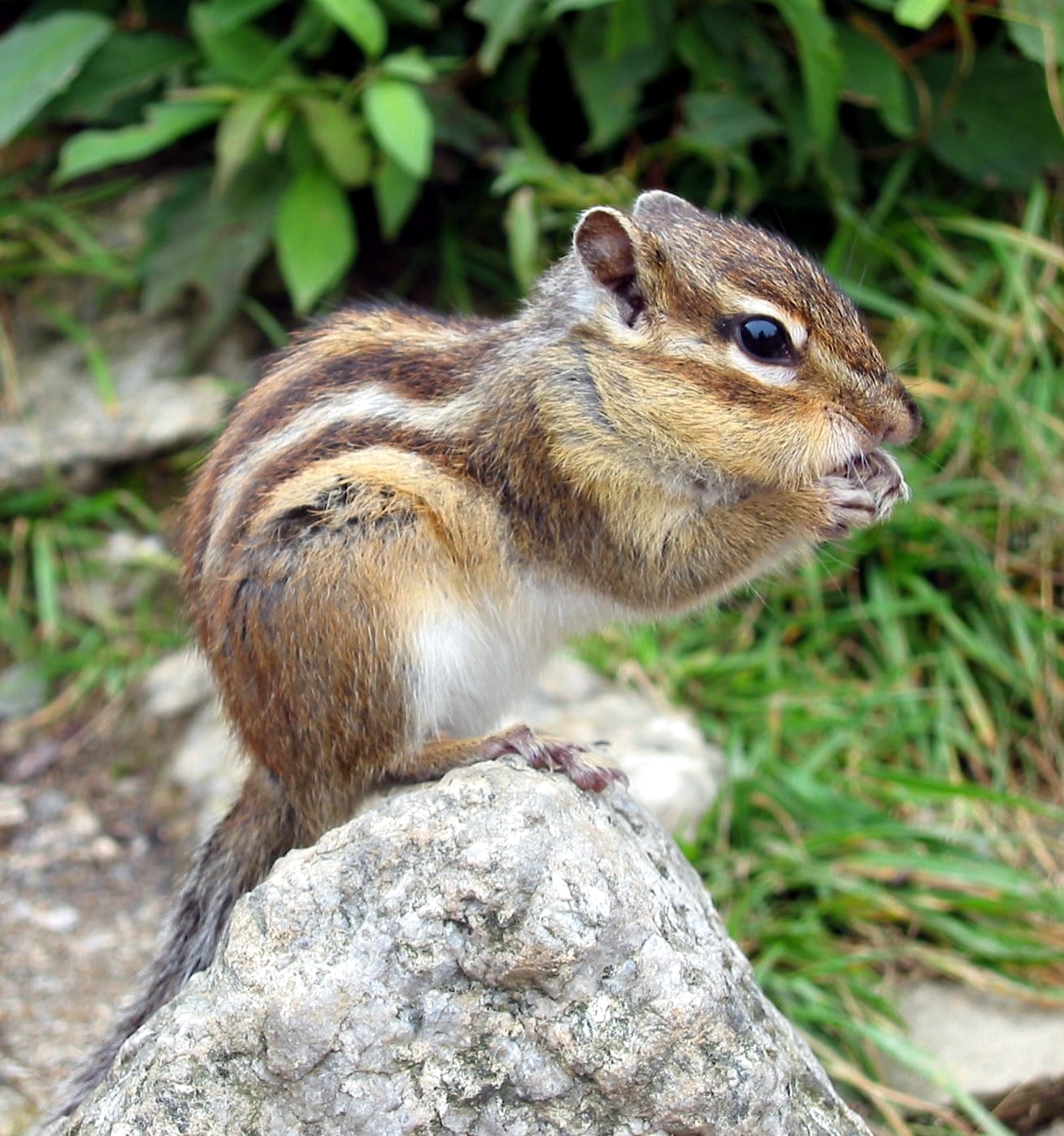
Appearance and Identification
The Siberian Chipmunk is native to Asia and features a reddish-brown coat with five dark stripes on the back and lighter stripes in between. It is slightly larger than the Least Chipmunk, measuring 8–10 inches including its tail. Its bushy tail, bright eyes, and swift movements are characteristic of the species.
Habitat and Distribution
This species inhabits forests, gardens, and mountainous areas across Siberia, China, Korea, and Japan. It is highly adaptable and can live in both wild and urban environments. They construct burrows or nest in trees, depending on available resources and safety from predators.
Diet and Foraging Behavior
Siberian Chipmunks feed on nuts, seeds, berries, fungi, and occasionally small insects. They are known to store food in burrows for the long, harsh winters of Siberia. Their foraging behavior is meticulous, and they can cover large areas daily to collect sufficient provisions.
Behavior and Social Structure
Generally solitary, Siberian Chipmunks communicate through vocalizations and scent marking. They are diurnal and active for most of the daylight hours, showing impressive agility in climbing and jumping. During winter, they hibernate in burrows with cached food to survive months of cold.
Conservation Status
The Siberian Chipmunk is not currently threatened. Its wide distribution and adaptability help maintain healthy populations, although illegal pet trade in some areas can pose localized threats.
4. Lodgepole Chipmunk (Neotamias speciosus)
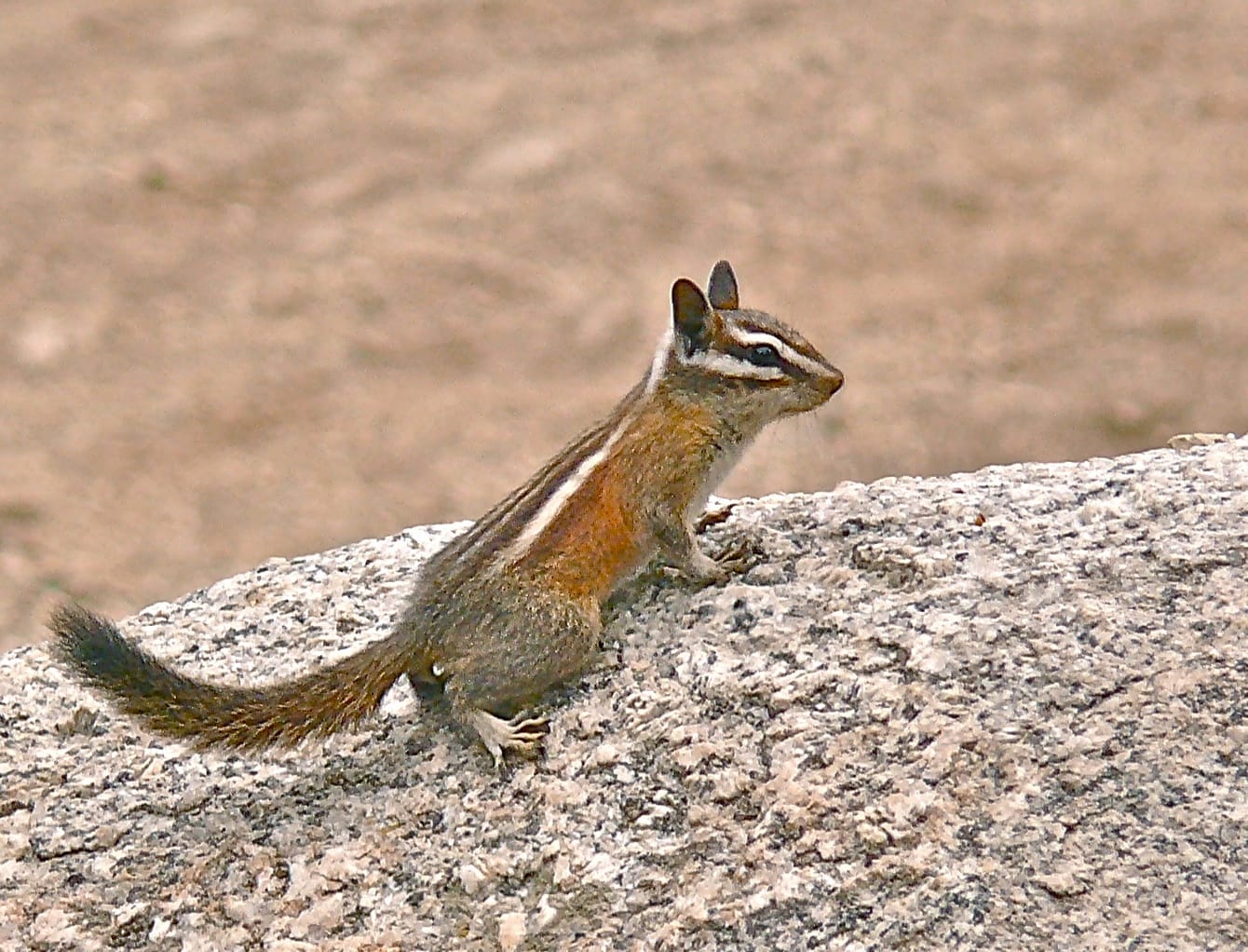
Appearance and Identification
The Lodgepole Chipmunk is recognized by its striking pattern of dark brown stripes along a reddish-brown back and a pale underbelly. It measures about 8–9 inches, with a slender body adapted for climbing and swift ground movement. Its alert expression and bushy tail make it highly visible during foraging.
Habitat and Distribution
Found primarily in the mountainous forests of western North America, Lodgepole Chipmunks inhabit pine and fir forests. They prefer areas with dense cover, rocky slopes, and fallen logs for nesting and protection. Burrows are constructed near tree roots or rock crevices, providing shelter and storage for food.
Diet and Foraging Behavior
They feed on seeds, pine nuts, berries, and occasionally insects. Food is transported using cheek pouches and stored in underground caches for the winter. Lodgepole Chipmunks exhibit careful food selection, often favoring high-calorie seeds to sustain themselves during colder months.
Behavior and Social Structure
These chipmunks are mostly solitary, except during breeding season. They mark territories with scent glands and communicate through chirps and tail flicks. Agile climbers, they can escape predators by quickly ascending trees or moving across rocky terrain.
Conservation Status
Lodgepole Chipmunks are stable in population and not considered threatened. Their ability to adapt to different forest types helps them thrive, although deforestation could impact local populations.
5. Yellow‑Pine Chipmunk (Neotamias amoenus)
Appearance and Identification
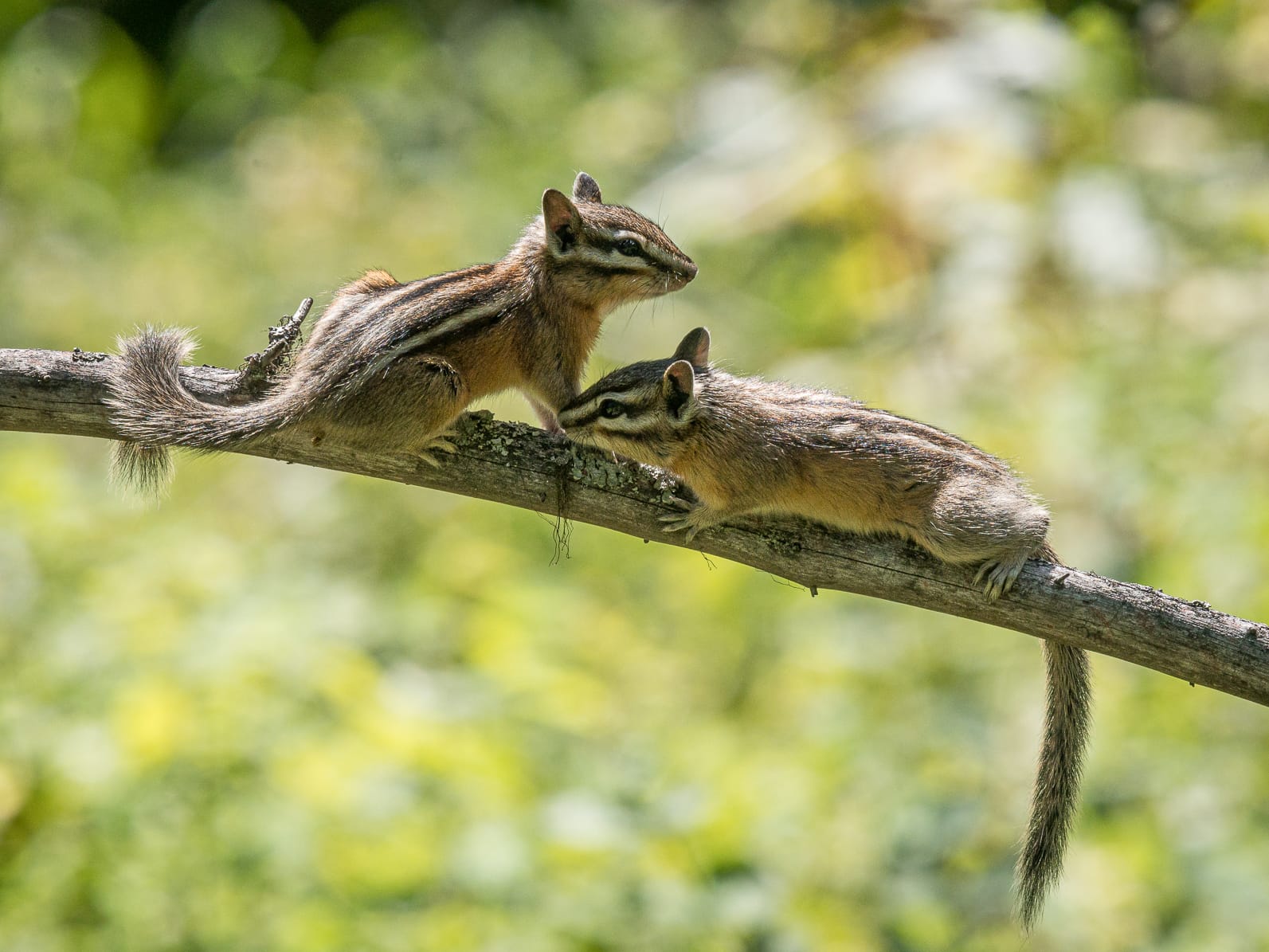
The Yellow‑Pine Chipmunk has a warm reddish-brown coat with five dark stripes separated by pale stripes. Adult size ranges from 7–9 inches. Its small, round ears and expressive eyes make it easy to identify in its natural habitat.
Habitat and Distribution
This species inhabits coniferous forests and montane regions of western North America, particularly in areas with abundant pine trees. They construct burrows under logs, rocks, or shrubs, often lining them with dried leaves for warmth and comfort.
Diet and Foraging Behavior
Yellow‑Pine Chipmunks primarily eat pine seeds, nuts, berries, and occasionally insects. Food is stored in burrows for winter survival. They forage actively during daylight hours and use their agility to move quickly between trees and ground cover.
Behavior and Social Structure
These chipmunks are generally solitary and territorial. Males may travel farther than females in search of mates. Vocal communication and scent marking are key methods of interaction. They are active and curious, often seen inspecting surroundings and gathering materials for nests.
Conservation Status
Populations are stable and not at risk. Their adaptability to forest habitats and versatile diet contribute to their resilience. Observing them provides insights into the ecological role of small rodents in forest ecosystems.
6. Uinta Chipmunk (Neotamias umbrinus)
Appearance and Identification
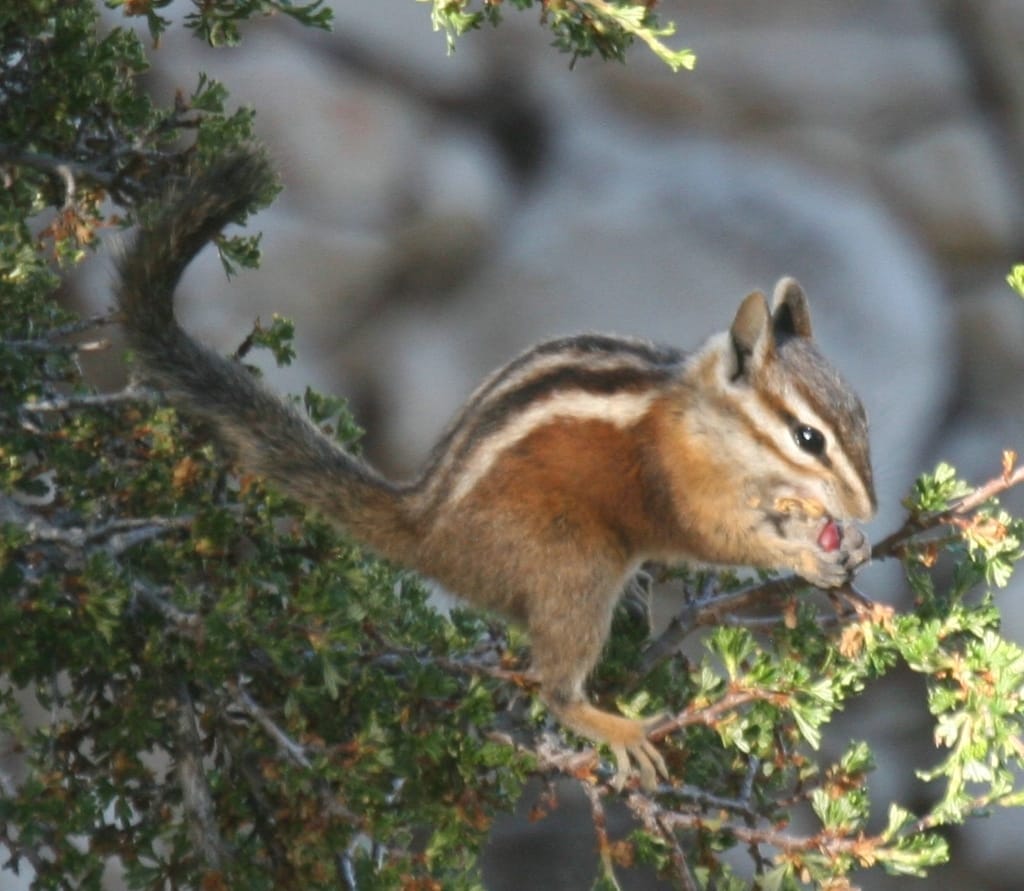
The Uinta Chipmunk is medium-sized, measuring around 8–9 inches in length including its tail. Its back is reddish-brown with five dark stripes running from head to tail, separated by paler stripes. The underbelly is a light cream color. It has a slightly elongated snout and large, expressive eyes, giving it a keen and alert appearance.
Habitat and Distribution
Native to the mountainous regions of the western United States, the Uinta Chipmunk primarily occupies coniferous forests, rocky slopes, and alpine meadows. They prefer elevations ranging from 6,000 to 12,000 feet. Burrows are often dug near rock formations, tree roots, or under logs to provide shelter and protection from predators.
Diet and Foraging Behavior
Uinta Chipmunks are omnivorous, feeding on seeds, nuts, berries, and occasionally small insects. They actively collect and store food in underground caches for winter. Foraging takes place mainly in the morning and late afternoon, with chipmunks moving rapidly across the forest floor and lower branches to gather sustenance.
Behavior and Social Structure
These chipmunks are mostly solitary, defending individual territories. Communication occurs through high-pitched chirps, tail flicks, and scent marking. Uinta Chipmunks are agile climbers and capable of navigating rocky terrain with ease. They display curiosity but are cautious around predators.
Conservation Status
The Uinta Chipmunk is considered stable in population and not currently threatened. Its adaptation to high-altitude forests allows it to thrive despite seasonal environmental changes.
7. Hopi Chipmunk (Neotamias rufus)
Appearance and Identification
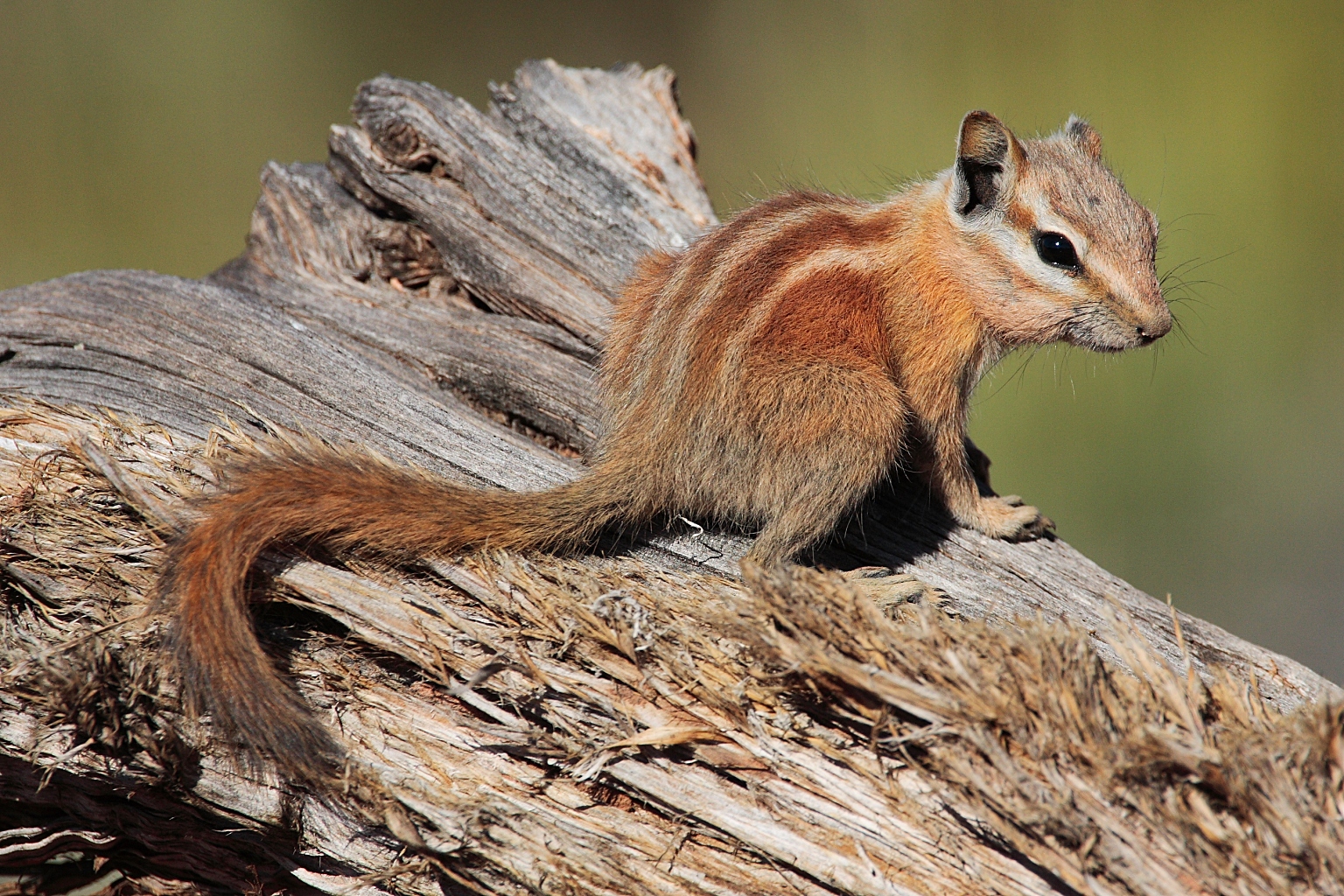
The Hopi Chipmunk is small, measuring about 7–8 inches in length. It has a reddish-brown coat with five dark stripes along its back, separated by lighter stripes. The face is marked with subtle white and black lines, and the tail is bushy but relatively short compared to other chipmunks.
Habitat and Distribution
This species is native to the arid regions of northern Arizona, New Mexico, and parts of Utah. They are commonly found in rocky canyons, desert scrub, and juniper woodlands. Burrows are often constructed in crevices or under boulders, providing protection from heat and predators.
Diet and Foraging Behavior
Hopi Chipmunks feed on seeds, nuts, berries, and occasional insects. They are excellent at storing food in underground chambers, especially seeds and nuts that can sustain them during scarce periods. Their foraging is active during daylight hours, and they exhibit remarkable agility while navigating rocky terrain.
Behavior and Social Structure
These chipmunks are primarily solitary and territorial. Vocal communication, tail flicking, and scent marking are used to establish boundaries and warn intruders. Hopi Chipmunks are highly alert and display rapid movements when threatened, often retreating to the safety of crevices or burrows.
Conservation Status
Populations of Hopi Chipmunks are stable, with no immediate threats identified. Their preference for rocky habitats protects them from human disturbances in most regions.
8. Colorado Chipmunk (Neotamias quadrivittatus)
Appearance and Identification
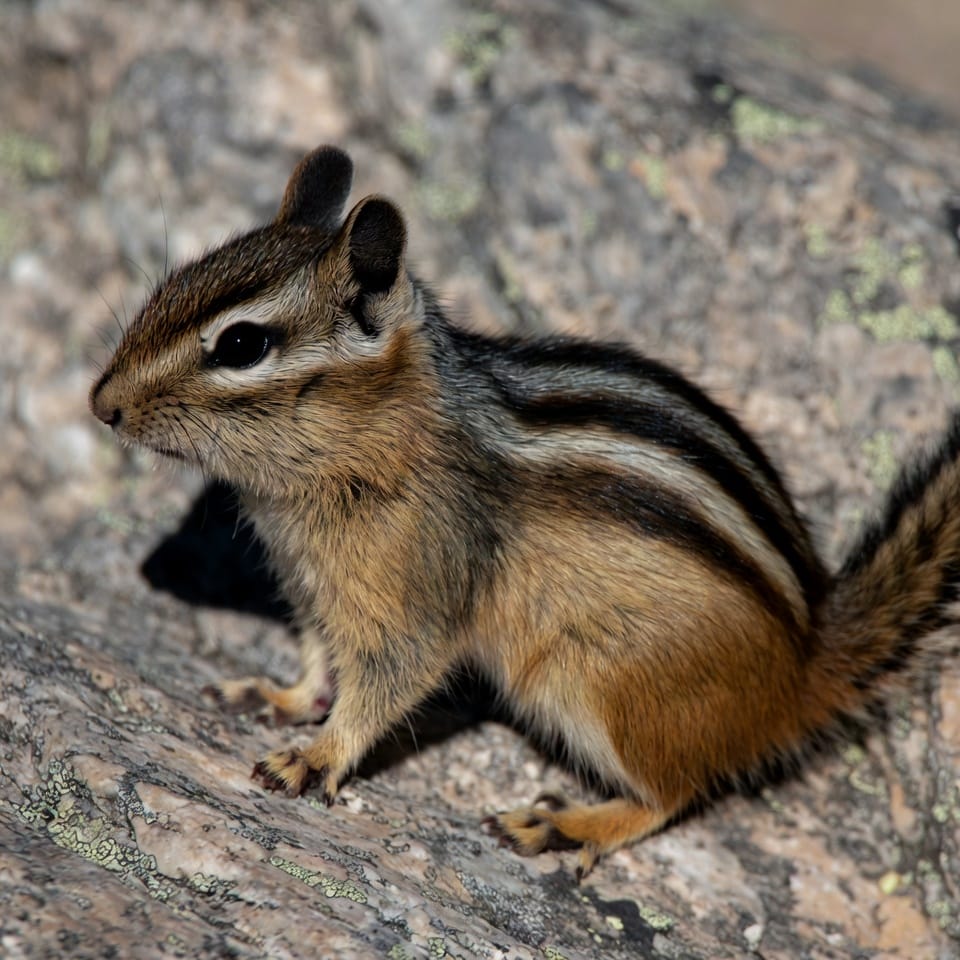
The Colorado Chipmunk is medium-sized, with a body length of 8–9 inches including its tail. Its fur is reddish-brown with four prominent dark stripes along the back, bordered by paler stripes. The belly is light gray, and its tail is bushy with a slightly darker hue. Large dark eyes and small rounded ears enhance its alert appearance.
Habitat and Distribution
This species is found in mountainous regions of Colorado, New Mexico, and Utah, particularly in ponderosa pine forests, oak woodlands, and rocky slopes. Burrows are dug near rock outcrops or dense vegetation, often lined with leaves for insulation and comfort.
Diet and Foraging Behavior
Colorado Chipmunks feed on seeds, nuts, berries, and occasionally insects. They actively store food in underground caches for use during winter. Their foraging activity peaks in the early morning and late afternoon, and they are known to move quickly between feeding areas while maintaining awareness of predators.
Behavior and Social Structure
These chipmunks are solitary and maintain well-defined territories. They communicate through chirps, tail flicks, and scent markings. Agile climbers, they use trees, shrubs, and rocks to escape threats. Colorado Chipmunks display curiosity and intelligence when exploring new environments.
Conservation Status
The Colorado Chipmunk is not currently considered threatened. Populations are stable due to its adaptability to forested and rocky habitats, although localized human development could impact some areas.
9. Gray‑Collared Chipmunk (Neotamias cinereicollis)
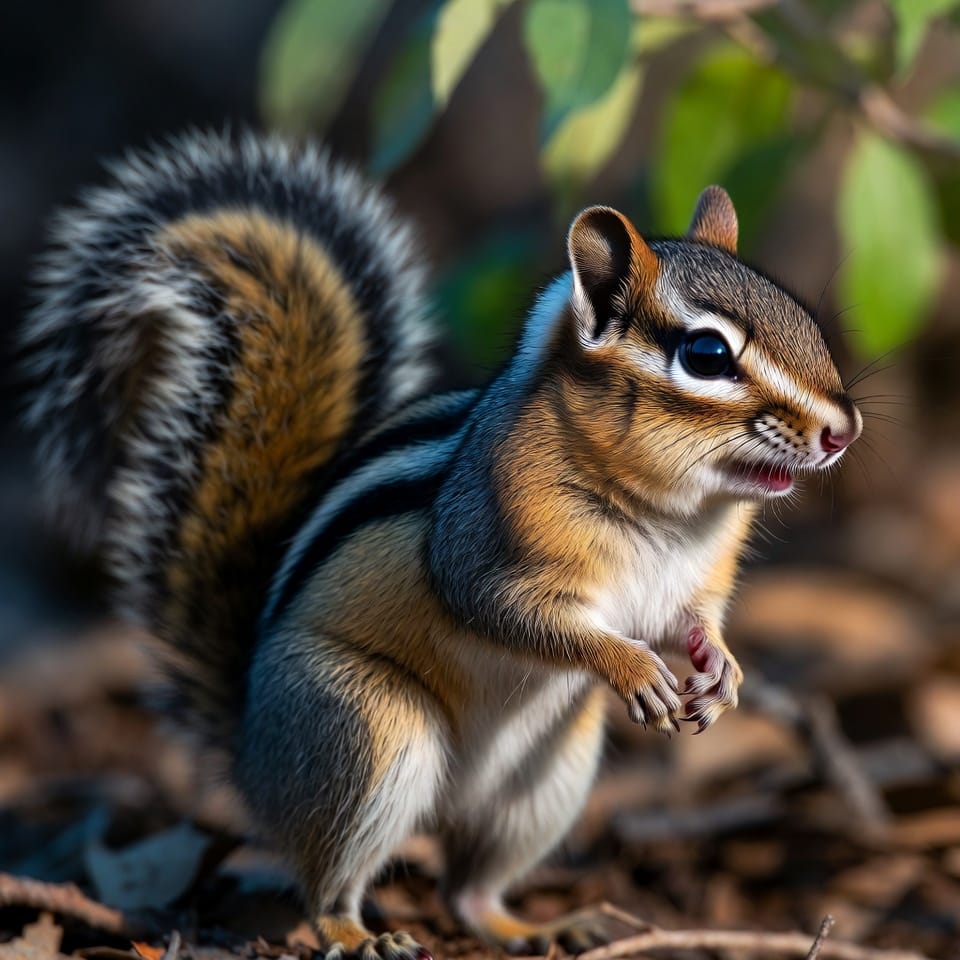
Appearance and Identification
The Gray‑Collared Chipmunk is a small species measuring approximately 7–8 inches. It is distinguished by its grayish collar around the neck and darker stripes along the back. The belly is pale, and the tail is bushy with subtle gray undertones. Its small size and distinctive collar make it easy to identify among other chipmunks in the region.
Habitat and Distribution
This species is native to the mountainous regions of Colorado and New Mexico, preferring coniferous forests with dense ground cover. Rocky outcrops and fallen logs serve as preferred nesting sites, where burrows provide shelter from predators and the elements.
Diet and Foraging Behavior
Gray‑Collared Chipmunks feed on seeds, nuts, berries, and insects. They are meticulous about storing food for winter and often move cautiously while foraging to avoid predators. Cheek pouches are used to transport food back to burrows efficiently.
Behavior and Social Structure
Solitary and territorial, Gray‑Collared Chipmunks communicate via high-pitched chirps, tail flicks, and scent marking. They are diurnal and highly agile, often climbing shrubs and low trees to access food or evade threats. Burrow systems are complex, including multiple chambers for food storage, nesting, and waste.
Conservation Status
Populations are stable and not considered threatened. Their preference for high-elevation forests provides natural protection from human disturbances.
10. Cliff Chipmunk (Neotamias dorsalis)
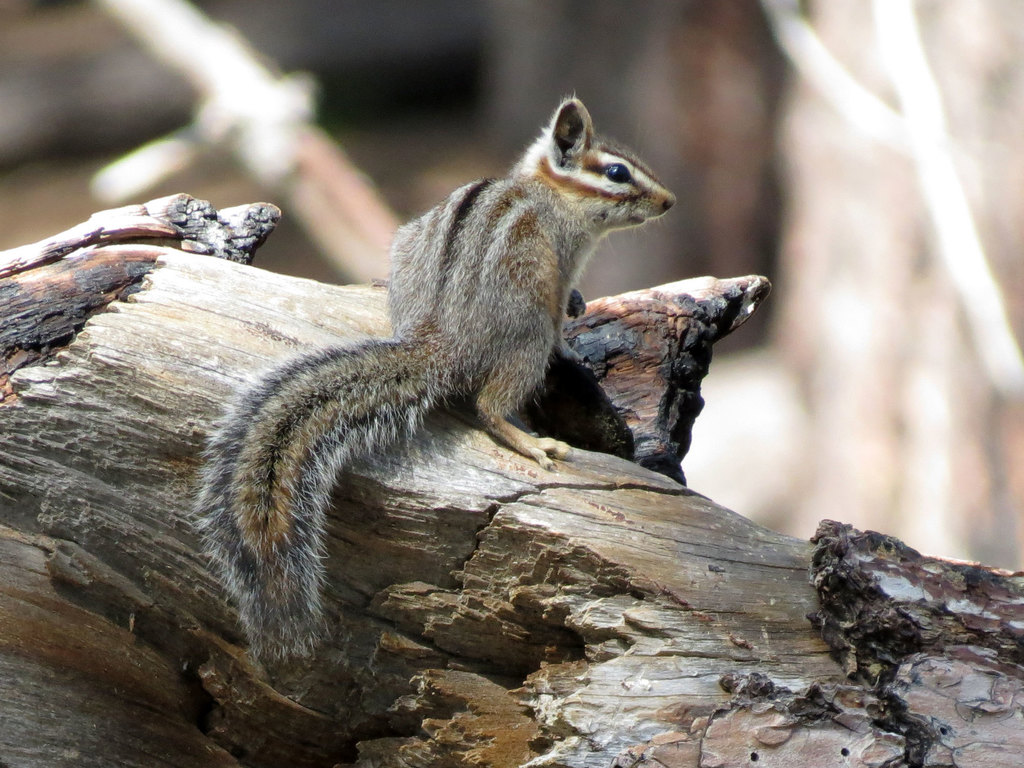
Appearance and Identification
The Cliff Chipmunk is medium-sized, about 8–9 inches long, with a reddish-brown coat and five dark stripes along the back separated by pale stripes. Its belly is light gray, and its tail is moderately bushy. Large, expressive eyes and a small, rounded snout give it an alert look. Its coloring blends well with rocky habitats.
Habitat and Distribution
As the name suggests, Cliff Chipmunks prefer rocky cliffs, canyon walls, and mountainous regions in the southwestern United States and northern Mexico. They build burrows in rock crevices or under boulders, providing safety from predators and harsh weather conditions.
Diet and Foraging Behavior
They feed on seeds, nuts, berries, and insects. Cheek pouches are used to transport food back to burrows for storage. Cliff Chipmunks are active during the day, hopping across rocks and ledges with incredible agility while foraging for sustenance.
Behavior and Social Structure
These chipmunks are solitary and territorial. They communicate through chirps, tail flicks, and scent markings. Cliff Chipmunks are excellent climbers, capable of moving across steep cliffs and rocky surfaces to avoid predators and explore for food.
Conservation Status
The population of Cliff Chipmunks is stable. Their specialized habitat on rocky cliffs reduces human interference, but habitat destruction could threaten local populations in the future.
11. Palmer’s Chipmunk (Neotamias palmeri)
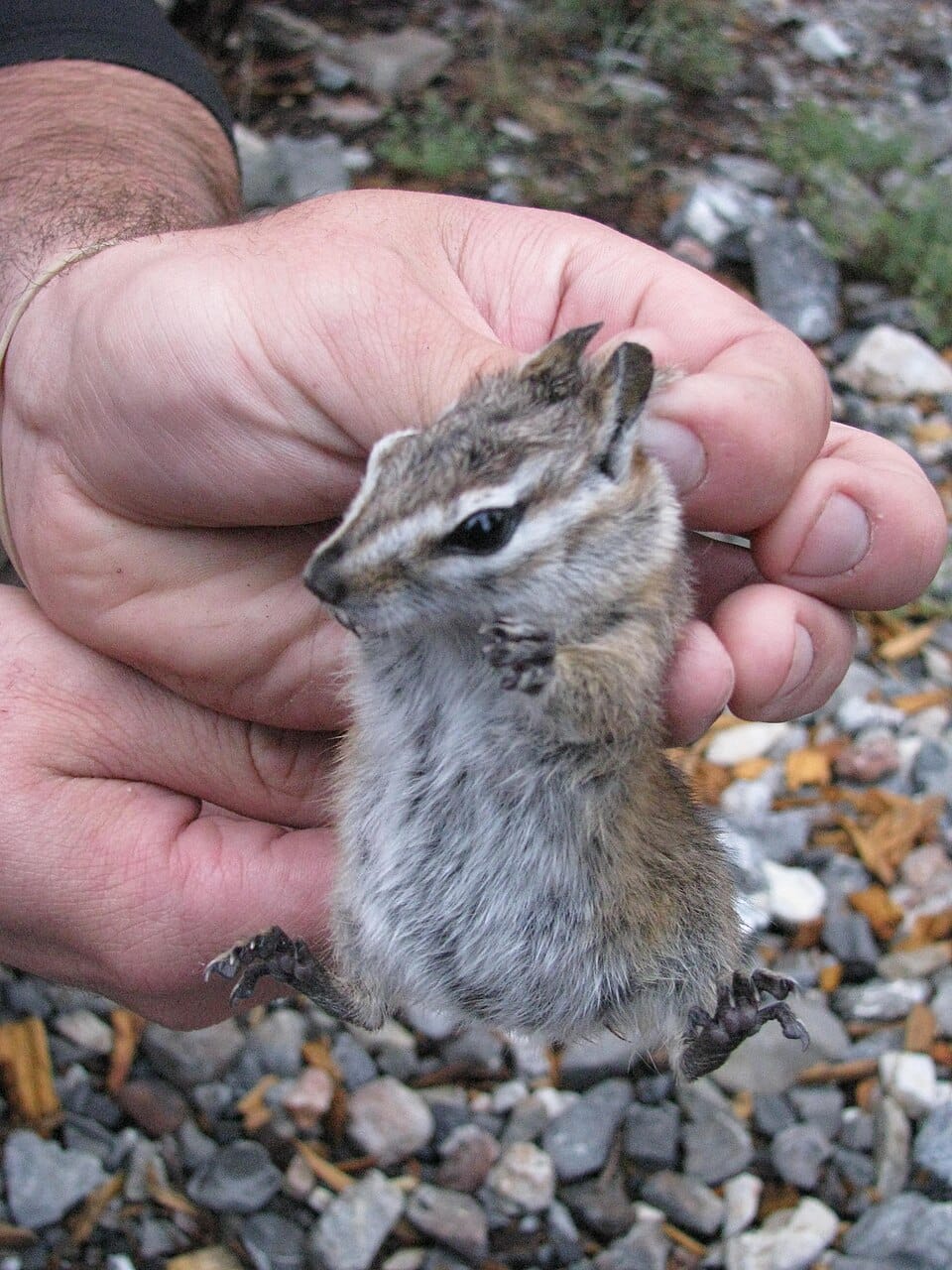
Appearance and Identification
Palmer’s Chipmunk is a small species, measuring 7–8 inches including its tail. It has reddish-brown fur with five dark stripes along its back, separated by lighter stripes, and a pale underbelly. Its alert eyes and delicate features make it easily distinguishable from other chipmunks in California.
Habitat and Distribution
Native to central California, Palmer’s Chipmunks inhabit oak woodlands, chaparral, and rocky areas. They prefer locations with abundant cover, such as shrubs, logs, and rocks, which provide shelter from predators and harsh weather.
Diet and Foraging Behavior
These chipmunks feed primarily on seeds, acorns, berries, and occasional insects. They store food in underground burrows or crevices to survive periods of scarcity. Their foraging is active throughout daylight hours, especially in the early morning and late afternoon.
Behavior and Social Structure
Palmer’s Chipmunks are mostly solitary. They communicate using chirps, tail flicks, and scent markings to establish territories. They are agile climbers and can navigate rocky terrain with ease, escaping predators quickly when threatened.
Conservation Status
Palmer’s Chipmunk is considered stable but localized due to its limited range in central California. Preservation of its oak woodland habitat is key to maintaining population health.
12. Panamint Chipmunk (Neotamias panamintinus)
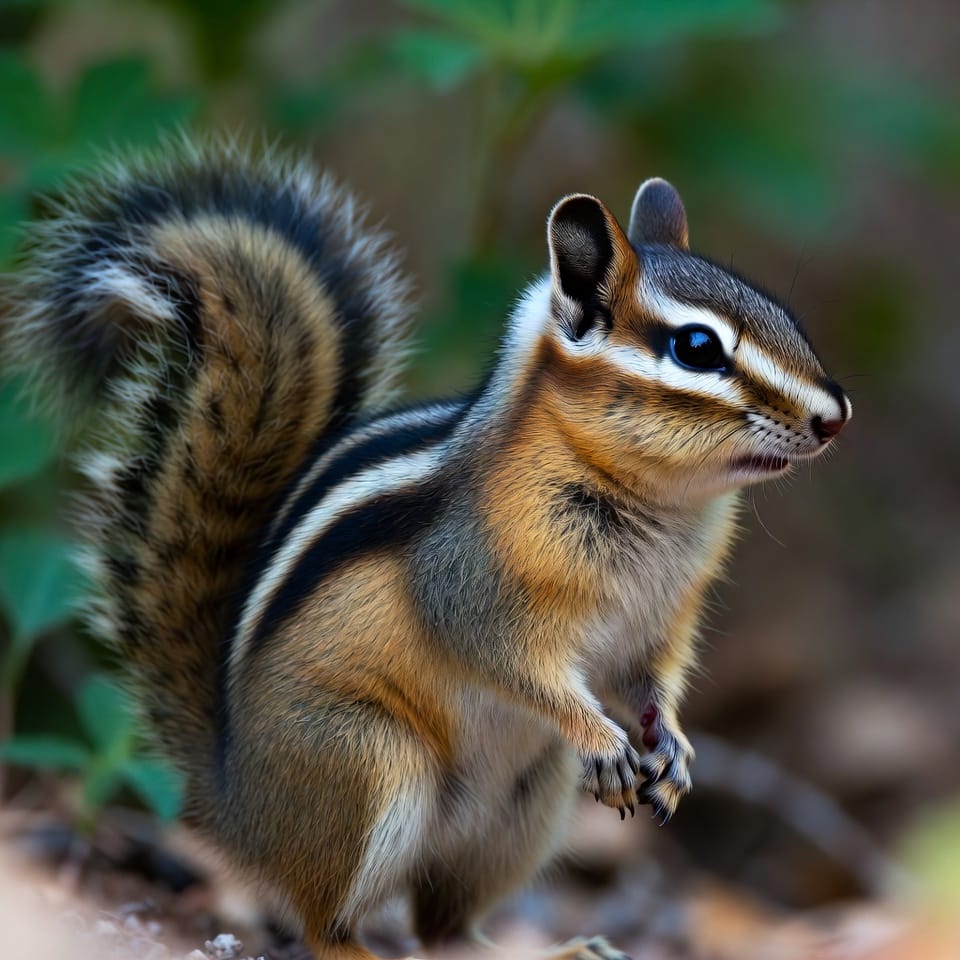
Appearance and Identification
The Panamint Chipmunk is medium-sized, with a body length of 8–9 inches. Its coat is reddish-brown with five dark stripes along the back and paler stripes in between. The tail is bushy and slightly darker at the tip. It has large, expressive eyes and small rounded ears.
Habitat and Distribution
Found in the Panamint Mountains and surrounding desert ranges in eastern California, this species prefers rocky slopes, canyons, and areas with sparse vegetation. Burrows are typically dug among rocks or under shrubs for protection and food storage.
Diet and Foraging Behavior
Panamint Chipmunks feed on seeds, nuts, berries, and insects. Cheek pouches are used to carry food back to burrows. They are active during daylight and move quickly across rocky terrain to avoid predators while foraging.
Behavior and Social Structure
This species is solitary and territorial. Communication occurs through chirping calls, tail flicks, and scent marking. Agile climbers, they are well-adapted to navigating steep cliffs and rocky landscapes.
Conservation Status
Populations are stable, but habitat fragmentation could impact local groups. Their adaptation to rugged terrain provides natural protection from human interference.
13. Sonoma Chipmunk (Neotamias sonomae)
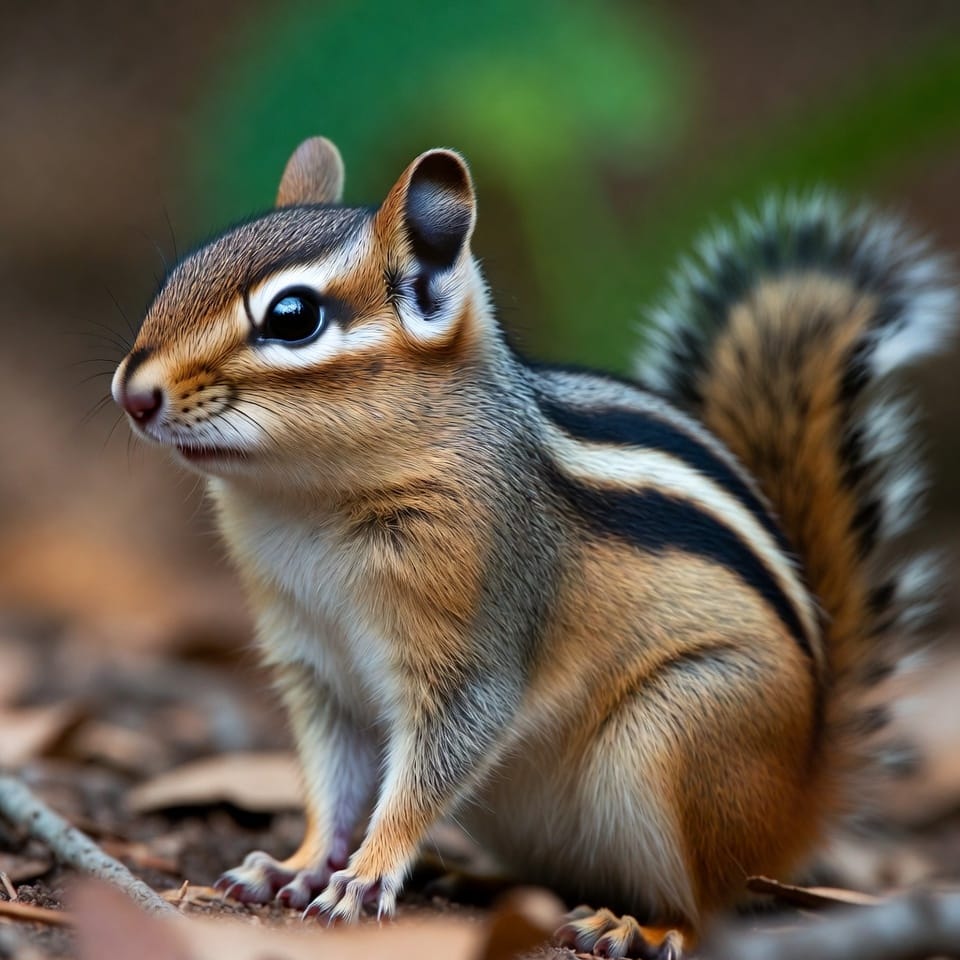
Appearance and Identification
Sonoma Chipmunks are small, measuring 7–8 inches including the tail. Their reddish-brown fur is patterned with five dark stripes along the back, separated by pale stripes. The underbelly is light gray, and the bushy tail helps maintain balance during climbing.
Habitat and Distribution
Native to Sonoma County and surrounding areas in California, this species inhabits oak woodlands, chaparral, and mixed forests. They often nest under logs, shrubs, or rock crevices for protection and food storage.
Diet and Foraging Behavior
Sonoma Chipmunks primarily eat seeds, nuts, berries, and small insects. They transport food to burrows using their cheek pouches and store it for lean periods. Foraging occurs mostly in early morning and late afternoon.
Behavior and Social Structure
These chipmunks are solitary, communicating through chirps and tail movements. Agile and curious, they explore surroundings but retreat quickly when threatened. Burrows often contain separate chambers for nesting and food storage.
Conservation Status
Sonoma Chipmunks are stable in population, but urbanization and habitat loss pose localized threats. Preservation of woodlands ensures their continued survival.
14. Long‑Eared Chipmunk (Neotamias quadrimaculatus)
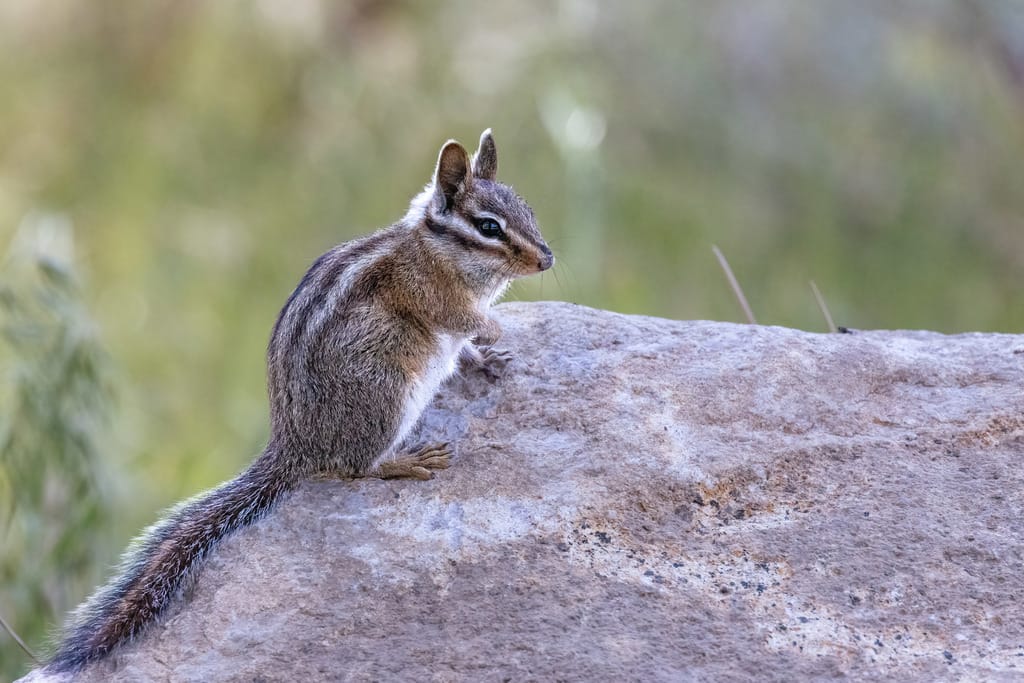
Appearance and Identification
The Long‑Eared Chipmunk is notable for its relatively larger ears compared to body size, measuring 8–9 inches overall. Its reddish-brown fur is marked by five dark dorsal stripes separated by pale stripes, and the belly is a soft cream color. The elongated ears give it a distinctive silhouette.
Habitat and Distribution
Found in high-elevation forests of the western United States, particularly in coniferous woodlands and montane regions. They prefer rocky areas with dense shrub cover, constructing burrows under logs or rocks.
Diet and Foraging Behavior
Long‑Eared Chipmunks feed on seeds, nuts, berries, and insects. Cheek pouches are used to transport food back to burrows for winter storage. Foraging is active during daylight, and they are adept at moving across uneven terrain.
Behavior and Social Structure
Solitary and territorial, they communicate with chirps, tail flicks, and scent markings. Their long ears enhance hearing, helping detect predators. They are skilled climbers and use rocks and shrubs to navigate safely.
Conservation Status
Populations are currently stable. High-elevation habitats provide natural protection, though climate change could impact food availability and seasonal behaviors.
15. Allen’s Chipmunk (Neotamias senex)
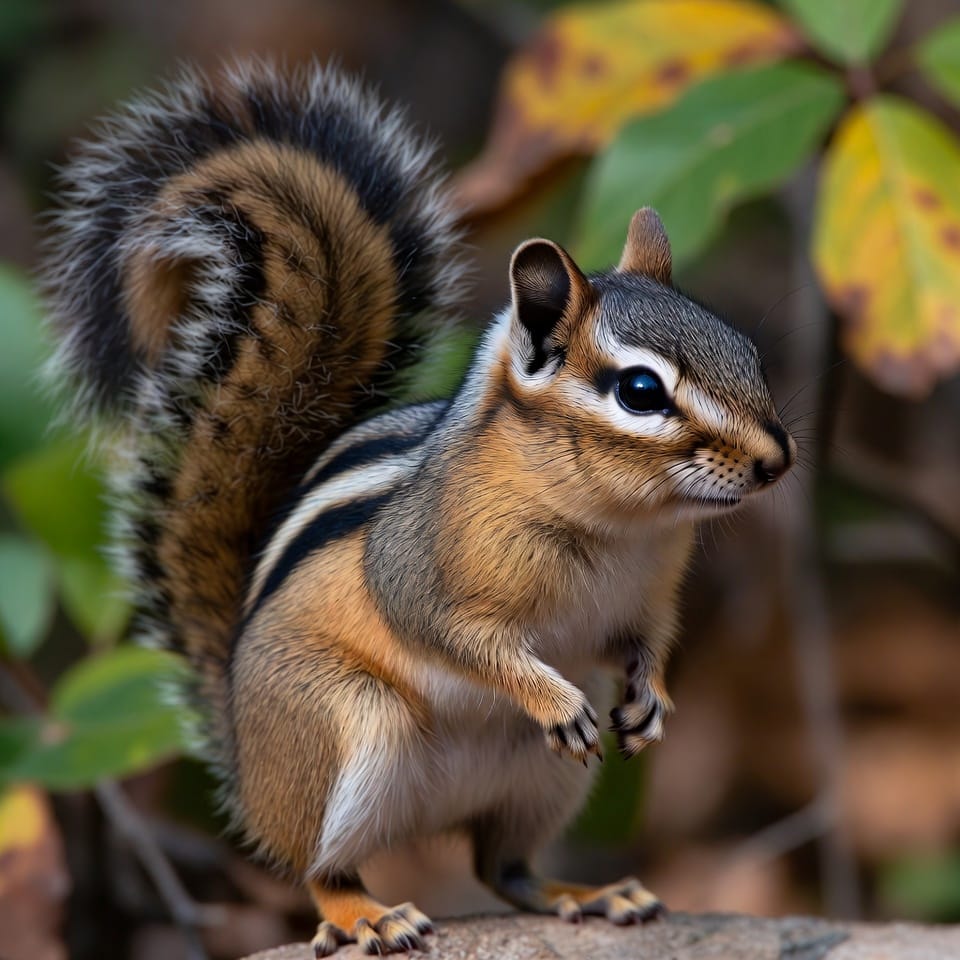
Appearance and Identification
Allen’s Chipmunk is small, about 7–8 inches long. It has a reddish-brown back with five dark stripes and pale interstripes. The underbelly is cream-colored. Its expressive eyes, small ears, and bushy tail are characteristic features that help distinguish it from similar species.
Habitat and Distribution
Allen’s Chipmunks are found in mountainous forests and rocky areas of western North America. They favor coniferous forests and often use fallen logs or rocky crevices for shelter and burrow construction.
Diet and Foraging Behavior
They feed on seeds, nuts, berries, fungi, and small insects. Food is gathered in cheek pouches and stored in burrows for winter. Foraging is active during daylight hours, particularly in the morning and late afternoon.
Behavior and Social Structure
These chipmunks are solitary and territorial. Communication occurs through vocalizations, tail flicks, and scent marking. Agile and alert, they are skilled at climbing and evading predators.
Conservation Status
Allen’s Chipmunk populations are stable, with no immediate threats. Their preference for high-elevation and forested habitats provides natural protection from human encroachment.
16. Townsend’s Chipmunk (Neotamias townsendii)
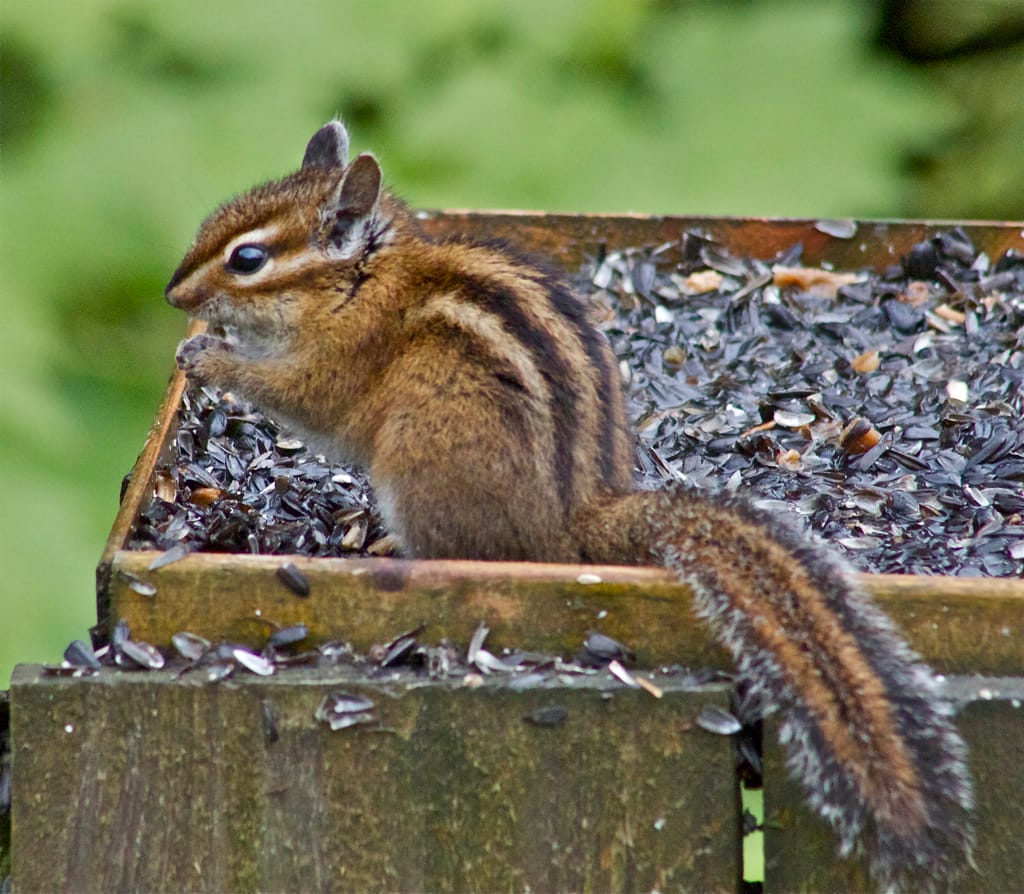
Appearance and Identification
Townsend’s Chipmunk is one of the larger chipmunks, measuring 8–10 inches including the tail. It has dark brown stripes along the back and a reddish-brown coat with pale underparts. Large eyes and bushy tail are prominent features, giving it an alert and agile appearance.
Habitat and Distribution
Native to the Pacific Northwest, Townsend’s Chipmunks inhabit forests, shrublands, and rocky slopes. Burrows are dug under logs, rocks, or dense vegetation for safety and food storage.
Diet and Foraging Behavior
They eat seeds, nuts, berries, fungi, and insects. Cheek pouches are used for transporting food to burrows. Foraging occurs mainly during daylight, with chipmunks showing agility and quick reflexes while avoiding predators.
Behavior and Social Structure
These chipmunks are solitary, using chirps, tail flicks, and scent marking for communication. They are excellent climbers and navigate both forest floors and low branches to gather food or escape threats.
Conservation Status
Populations are stable, benefiting from forest habitats and adaptability. Habitat conservation ensures their continued survival.
17. California Chipmunk (Neotamias obscurus)
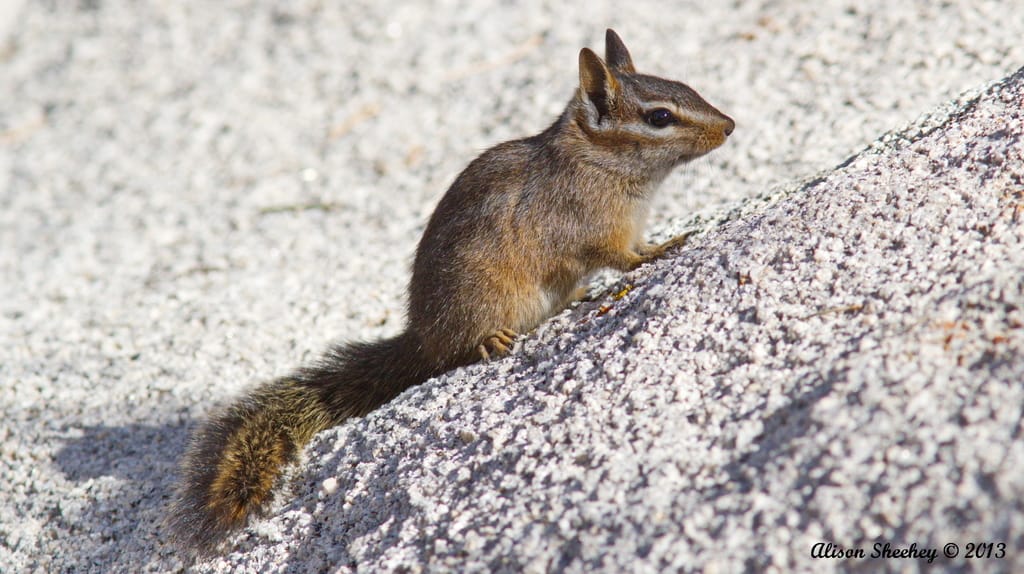
Appearance and Identification
The California Chipmunk is small to medium-sized, measuring 7–8 inches. Its reddish-brown back is marked with five dark stripes separated by pale stripes, with a cream-colored underbelly. Its bushy tail and alert eyes are characteristic features.
Habitat and Distribution
Endemic to California, this chipmunk inhabits oak woodlands, coniferous forests, and chaparral regions. They build burrows under rocks, logs, or shrubs for shelter and food storage.
Diet and Foraging Behavior
They feed on seeds, nuts, berries, and insects, storing provisions in burrows for winter. Foraging occurs primarily during daylight, and they are adept at navigating both ground and low vegetation.
Behavior and Social Structure
Solitary and territorial, they communicate through chirps, tail flicks, and scent marking. They are agile and cautious, quickly retreating to burrows when threatened.
Conservation Status
Populations are stable, with no major threats, though habitat loss could impact local groups.
18. Yellow‑Cheeked Chipmunk (Neotamias ochrogenys)
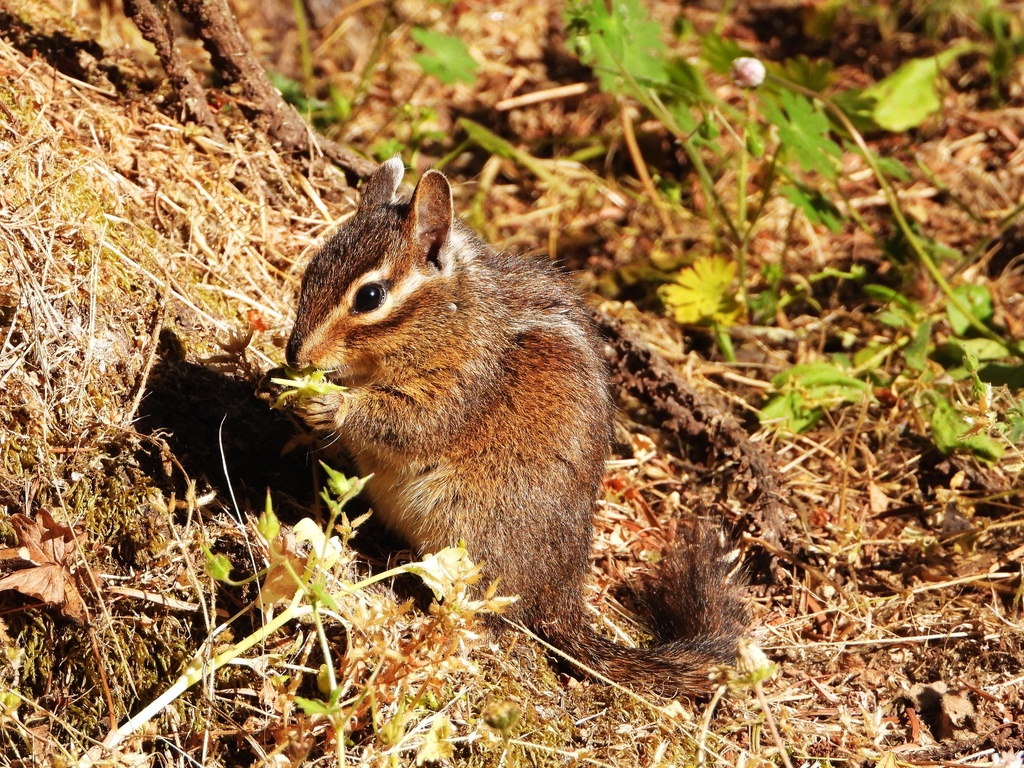
Appearance and Identification
The Yellow‑Cheeked Chipmunk is small, about 7–8 inches long. Its coat features reddish-brown fur with dark stripes on the back and pale interstripes. A distinguishing feature is its yellowish cheek markings, giving the species its name.
Habitat and Distribution
Found in western California, this chipmunk inhabits coniferous forests, oak woodlands, and rocky slopes. They prefer areas with dense cover and nesting sites under rocks or logs.
Diet and Foraging Behavior
They feed on seeds, nuts, berries, fungi, and insects. Cheek pouches are used to transport food to burrows, which are stocked for winter survival. Foraging is active during daylight, particularly in mornings and evenings.
Behavior and Social Structure
These chipmunks are solitary and territorial. Communication includes chirps, tail flicks, and scent markings. They are agile climbers, navigating both ground and shrub cover efficiently.
Conservation Status
Populations are stable. Habitat preservation is important to protect these unique regional chipmunks.
19. Durango Chipmunk (Neotamias durangae)
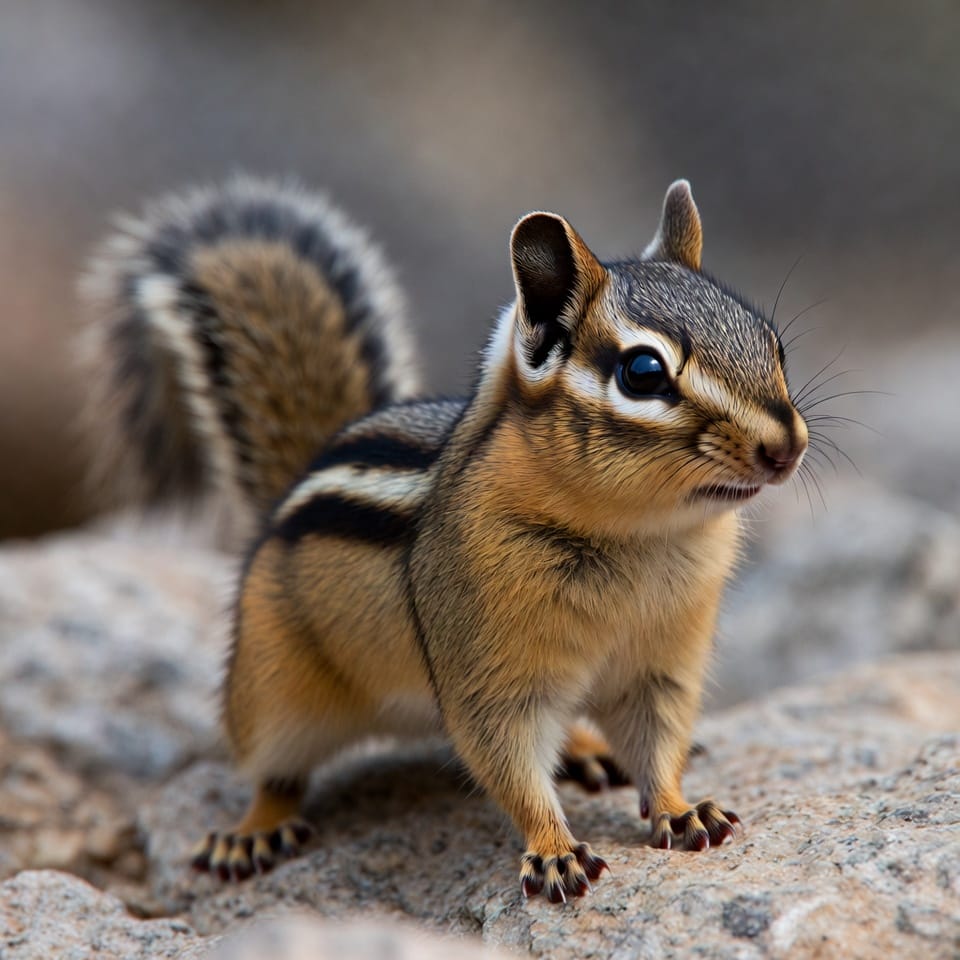
Appearance and Identification
The Durango Chipmunk is medium-sized, measuring 7–9 inches. Its reddish-brown coat has dark dorsal stripes with lighter interstripes. The belly is pale, and its tail is bushy. Large eyes and small ears give it an alert appearance.
Habitat and Distribution
Native to Durango, Mexico, this species inhabits pine-oak forests and rocky slopes. Burrows are dug under rocks, logs, or shrub cover for protection and food storage.
Diet and Foraging Behavior
They feed on seeds, nuts, berries, and insects. Food is carried in cheek pouches and stored in burrows. They forage actively during the day, moving quickly and cautiously to avoid predators.
Behavior and Social Structure
Solitary and territorial, communication includes chirps, tail flicks, and scent marking. Agile and alert, they use climbing and jumping skills to navigate rocky habitats.
Conservation Status
Populations are stable, but habitat loss could pose future threats. Protection of pine-oak forests ensures their continued survival.
20. Merriam’s Chipmunk (Neotamias merriami)
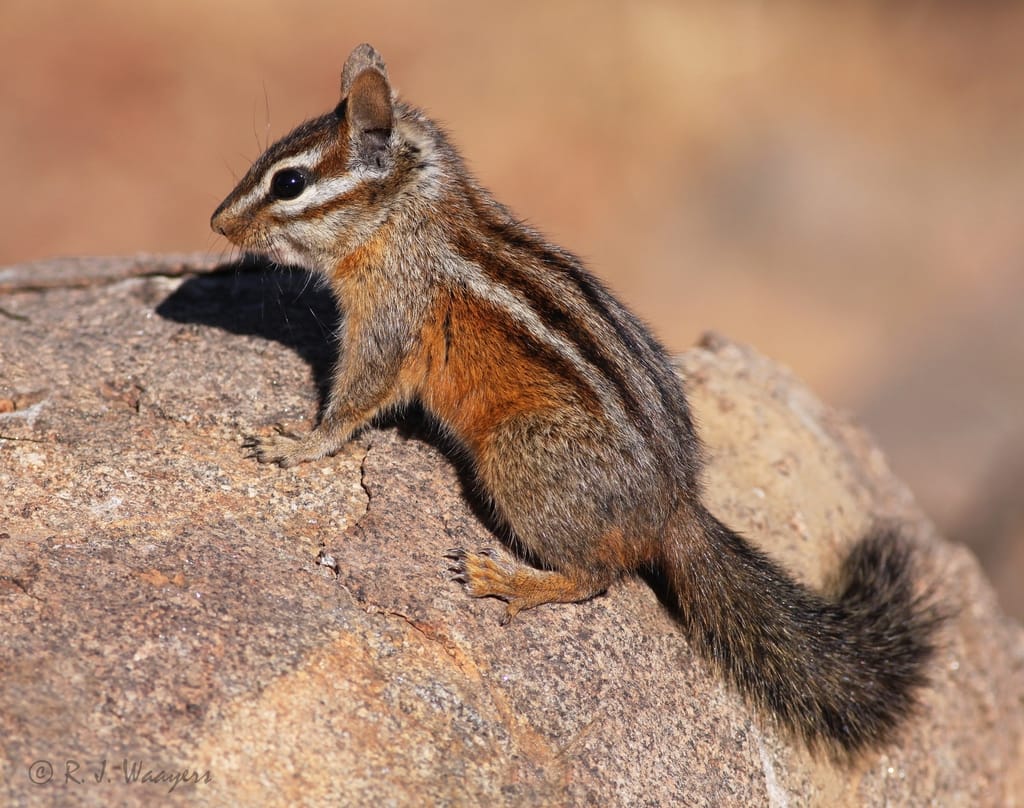
Appearance and Identification
Merriam’s Chipmunk is small, measuring 7–8 inches. Its reddish-brown back has five dark stripes separated by pale stripes, with a pale underbelly. The tail is bushy and expressive, aiding in balance and communication.
Habitat and Distribution
This species inhabits western North America, particularly California and Nevada. Oak woodlands, chaparral, and rocky slopes provide ideal nesting and foraging sites.
Diet and Foraging Behavior
Merriam’s Chipmunks feed on seeds, nuts, berries, fungi, and insects. Cheek pouches are used to transport food back to burrows. Foraging occurs primarily during daylight, with active exploration of the surrounding environment.
Behavior and Social Structure
Solitary and territorial, they communicate through chirps, tail flicks, and scent marking. They are agile climbers and use burrows or natural cover to evade predators.
Conservation Status
Populations are stable, and the species is not currently threatened. Preservation of natural habitats ensures their long-term survival.
21. Siskiyou Chipmunk (Neotamias siskiyou)
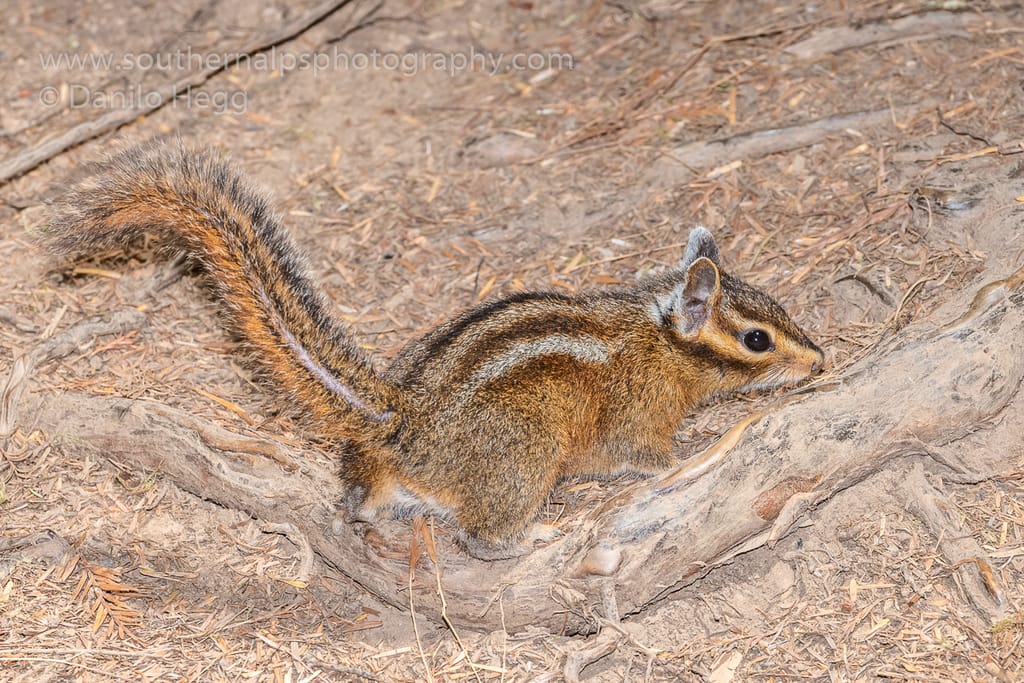
Appearance and Identification
The Siskiyou Chipmunk is small, measuring about 7–8 inches including its tail. Its reddish-brown coat is adorned with five dark dorsal stripes separated by lighter interstripes. A pale underbelly and bushy tail complete its distinctive look. Its bright eyes and alert posture make it easy to spot in the wild.
Habitat and Distribution
Endemic to the Siskiyou Mountains of northern California and southern Oregon, this species prefers coniferous and mixed forests. They nest under logs, rocks, or dense shrub cover, which provides safety and a stable microhabitat for their burrows.
Diet and Foraging Behavior
Siskiyou Chipmunks feed on seeds, nuts, berries, fungi, and insects. Cheek pouches allow them to carry food back to their burrows efficiently. They forage actively during daylight, particularly in the early morning and late afternoon, displaying impressive agility across rocky and forested terrain.
Behavior and Social Structure
These chipmunks are solitary and territorial. Communication occurs via chirps, tail flicks, and scent marking. Agile climbers, they skillfully navigate shrubs, rocks, and fallen logs to forage and evade predators.
Conservation Status
Populations are stable and not currently threatened. Their restricted range, however, emphasizes the importance of protecting Siskiyou forests and habitat corridors.
22. Alpine Chipmunk (Neotamias alpinus)
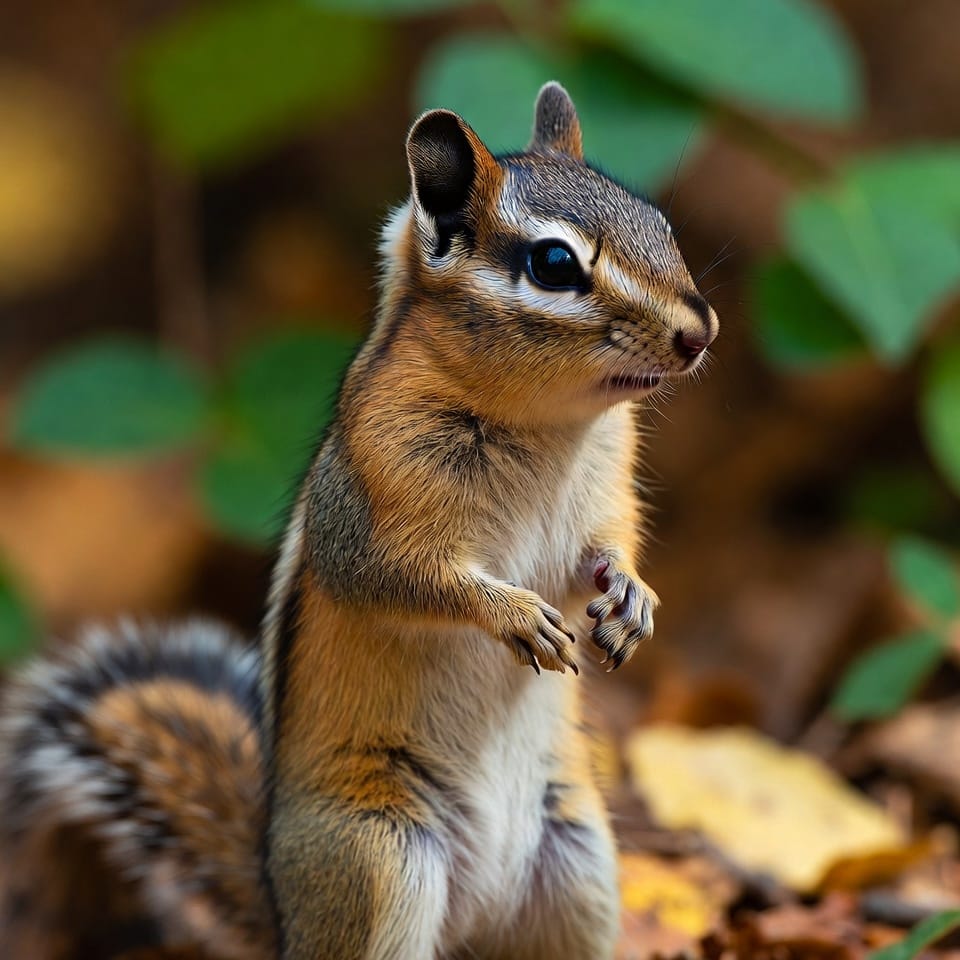
Appearance and Identification
The Alpine Chipmunk is small, measuring 7–8 inches including its tail. Its coat is reddish-brown with five dark stripes along the back and pale interstripes. A cream-colored belly and large, alert eyes give it a distinctive alpine appearance suitable for high-elevation habitats.
Habitat and Distribution
Native to high-altitude regions of the Sierra Nevada Mountains, Alpine Chipmunks inhabit coniferous forests, meadows, and rocky slopes above 7,000 feet. They construct burrows under rocks or logs to shelter from extreme weather.
Diet and Foraging Behavior
Alpine Chipmunks feed on seeds, nuts, berries, and insects. They are skilled at storing food in burrows to survive harsh winters. Foraging occurs mainly during the day, with chipmunks covering large areas to collect sufficient food for winter storage.
Behavior and Social Structure
These chipmunks are solitary and territorial. They communicate through chirps, tail flicks, and scent marking. Agile climbers and jumpers, they use rocks and shrubs to navigate challenging alpine terrain safely.
Conservation Status
Populations are stable, though climate change and habitat disruption could affect high-elevation food availability in the future.
23. Gray‑Footed Chipmunk (Neotamias canipes)
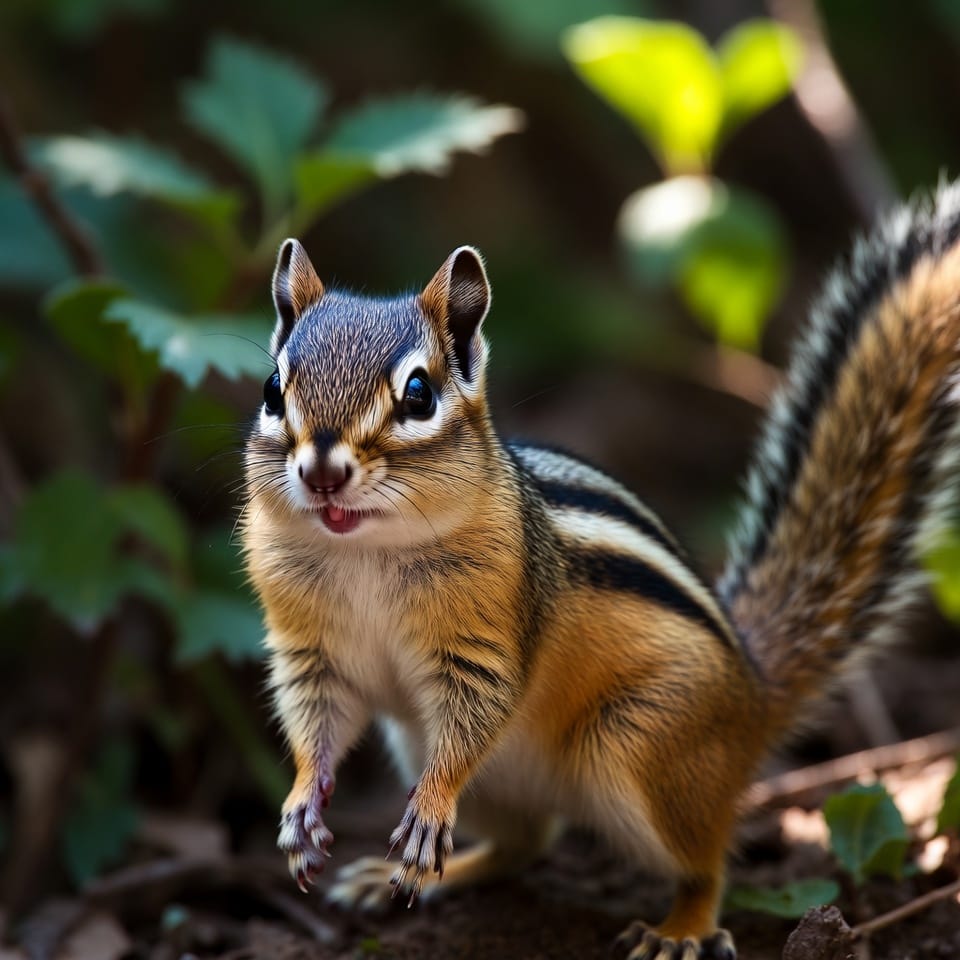
Appearance and Identification
The Gray‑Footed Chipmunk is medium-sized, about 8 inches long including the tail. Its reddish-brown coat has five dark stripes along the back and lighter stripes in between. Gray-colored feet distinguish it from other regional chipmunks, while a pale belly completes its appearance.
Habitat and Distribution
Found in parts of New Mexico and Arizona, Gray‑Footed Chipmunks inhabit pine-oak forests and rocky slopes. They build burrows under logs or rocks for shelter and nesting, often near water sources.
Diet and Foraging Behavior
They feed on seeds, nuts, berries, fungi, and small insects. Cheek pouches are used to carry food to underground storage chambers. Daytime foraging dominates their activity patterns, with careful movements to avoid predators.
Behavior and Social Structure
Solitary and territorial, they communicate with chirps, tail flicks, and scent marking. Agile climbers, they navigate trees and rocks effectively to collect food and escape threats.
Conservation Status
Populations are currently stable, though habitat destruction could impact isolated groups. Preserving native forests ensures continued survival.
24. Buller’s Chipmunk (Neotamias bulleri)
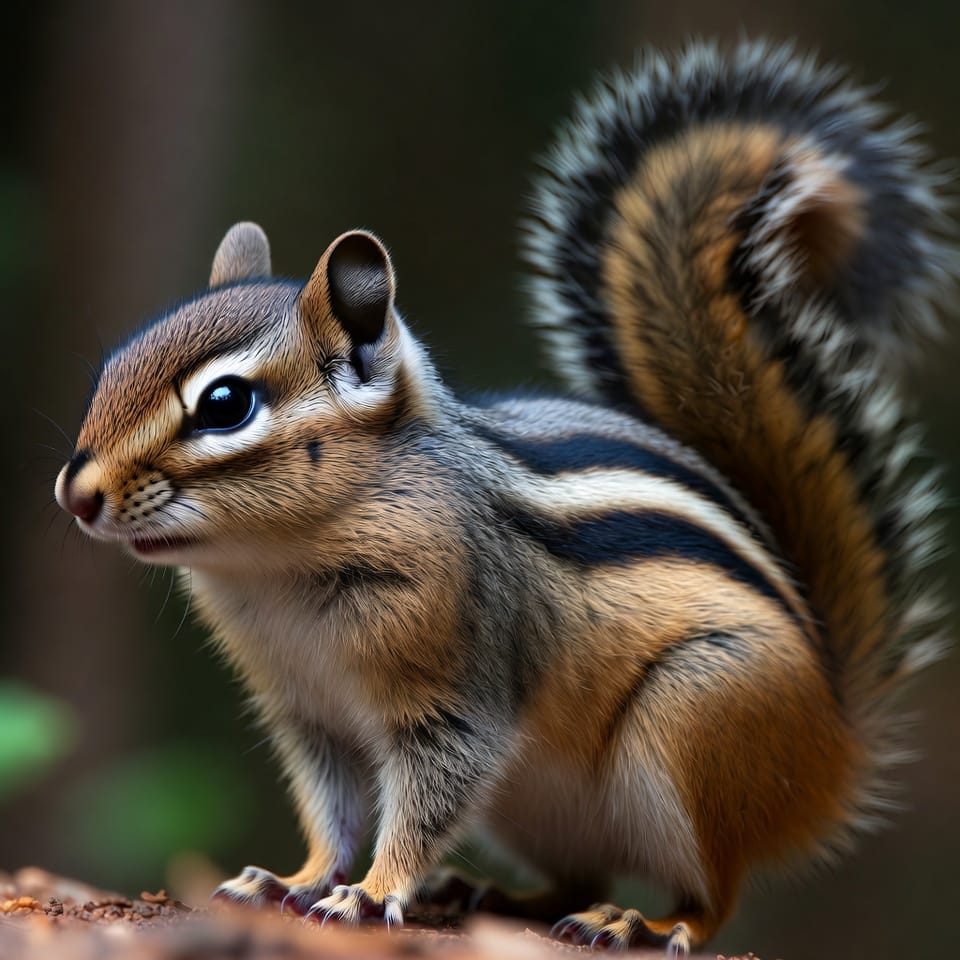
Appearance and Identification
Buller’s Chipmunk is small to medium-sized, about 7–8 inches in length. It has a reddish-brown back with five dark stripes separated by lighter interstripes. Its tail is bushy and expressive, while the underbelly is pale cream. Distinctive dark markings on the face help differentiate it from other regional chipmunks.
Habitat and Distribution
Native to western Mexico, Buller’s Chipmunks inhabit pine-oak forests, rocky slopes, and mountain meadows. They construct burrows under rocks, logs, or shrub cover, providing shelter and storage space for food.
Diet and Foraging Behavior
They feed on seeds, nuts, berries, fungi, and insects. Cheek pouches are used to transport food efficiently. Foraging is primarily during daylight hours, with rapid movements across terrain for safety and efficiency.
Behavior and Social Structure
These chipmunks are solitary and territorial. Vocalizations, tail flicks, and scent marking are used for communication. Their agility allows them to navigate forested slopes and rocky terrain with ease.
Conservation Status
Populations are stable, with their forested and rocky habitats offering natural protection. Conservation of pine-oak ecosystems is essential for long-term survival.
25. Red‑tailed Chipmunk (Neotamias ruficaudus)
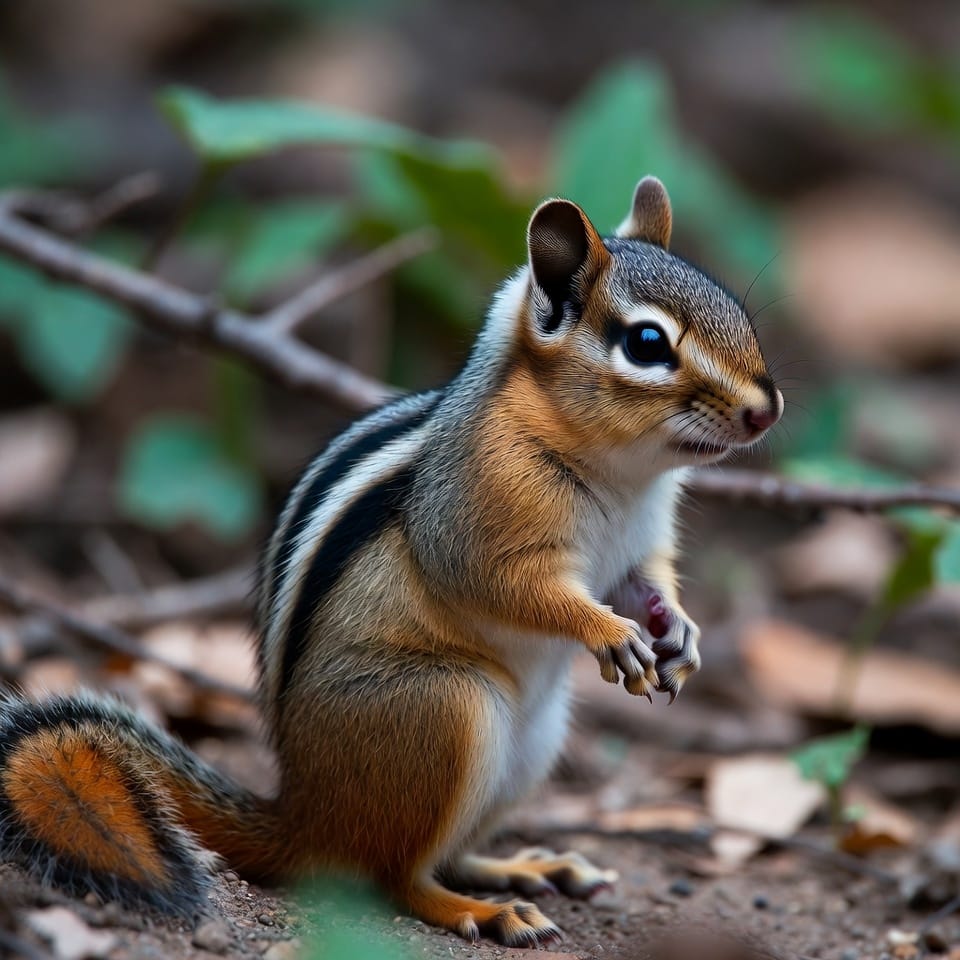
Appearance and Identification
The Red‑tailed Chipmunk measures 7–9 inches including the tail. Its reddish-brown back has five dark stripes with pale interstripes. The tail is notably reddish, which gives the species its name. A pale underbelly and expressive eyes complete the look.
Habitat and Distribution
Found in western North America, including parts of Canada and the U.S., Red‑tailed Chipmunks inhabit coniferous forests, rocky slopes, and alpine meadows. Burrows are dug under rocks or logs, providing shelter from predators and seasonal weather changes.
Diet and Foraging Behavior
They feed on seeds, nuts, berries, and insects. Food is stored in underground caches to survive winter. Foraging occurs during daylight, with chipmunks moving swiftly across forest floors and rocky terrain.
Behavior and Social Structure
Red‑tailed Chipmunks are solitary and territorial. They communicate via chirps, tail flicks, and scent markings. Their agility allows them to climb shrubs and rocks efficiently while foraging or evading predators.
Conservation Status
Populations are stable. Their adaptability to forested and mountainous habitats supports long-term survival.
26. Allen’s Big‑Eared Chipmunk (Neotamias albigula)
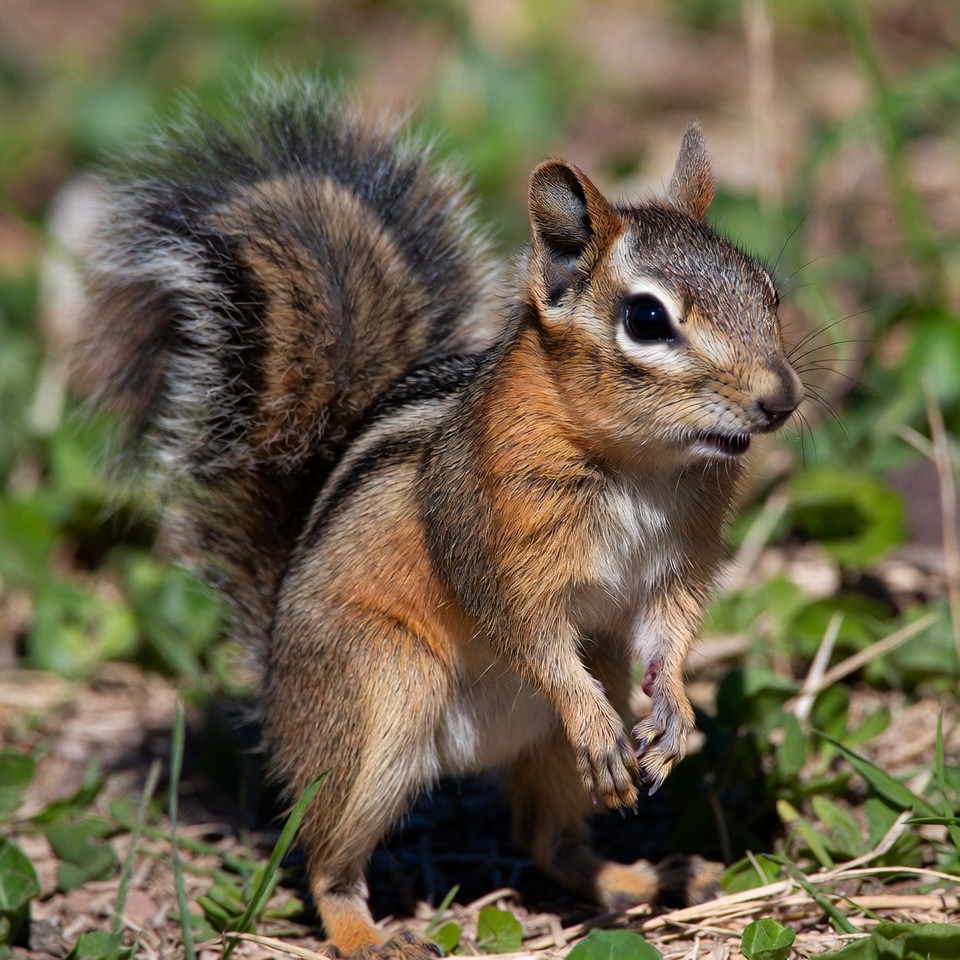
Appearance and Identification
Allen’s Big‑Eared Chipmunk is medium-sized, about 8 inches long. It has a reddish-brown back with five dark stripes, pale interstripes, and distinctive large ears. The underbelly is pale, and the bushy tail is proportionate to the body. Its alert appearance is accentuated by its prominent ears.
Habitat and Distribution
Found in southwestern U.S. forests, Allen’s Big‑Eared Chipmunks inhabit pine-oak woodlands and rocky slopes. They use burrows beneath rocks or dense shrub cover for protection and food storage.
Diet and Foraging Behavior
These chipmunks feed on seeds, nuts, berries, and insects. Cheek pouches are used for transporting food back to burrows. Daytime foraging allows them to collect sufficient provisions for winter.
Behavior and Social Structure
Solitary and territorial, communication occurs through chirps, tail flicks, and scent markings. They are agile climbers and capable of navigating rocky slopes and shrubs safely.
Conservation Status
Populations are stable. Their preference for undisturbed forests and rocky terrain protects them from human activity.
27. San Bernardino Chipmunk (Neotamias speciosus frater)
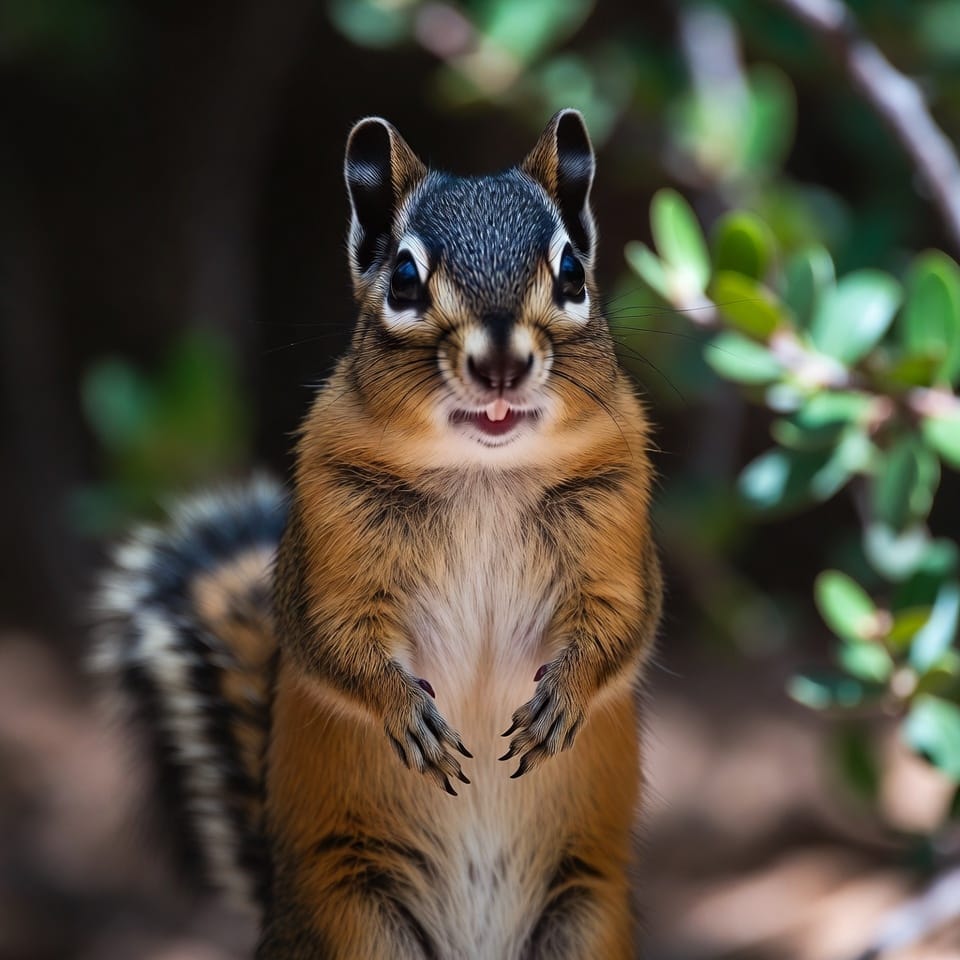
Appearance and Identification
The San Bernardino Chipmunk is small, measuring 7–8 inches including the tail. Its reddish-brown back has five dark stripes with pale interstripes, and the underbelly is cream-colored. The bushy tail and alert eyes are notable features.
Habitat and Distribution
Endemic to the San Bernardino Mountains of California, they inhabit oak woodlands, coniferous forests, and rocky slopes. Burrows are dug under rocks or shrubs for shelter and food storage.
Diet and Foraging Behavior
They feed on seeds, nuts, berries, fungi, and insects. Food is transported using cheek pouches and stored in burrows for winter. Foraging occurs mainly during daylight hours.
Behavior and Social Structure
These chipmunks are solitary and territorial. Communication occurs via chirps, tail flicks, and scent marking. Agile climbers, they navigate both ground and shrub areas efficiently.
Conservation Status
Populations are stable but localized. Conservation of mountain forests ensures their continued survival.
28. Mount Graham Chipmunk (Neotamias dorsalis grahamensis)
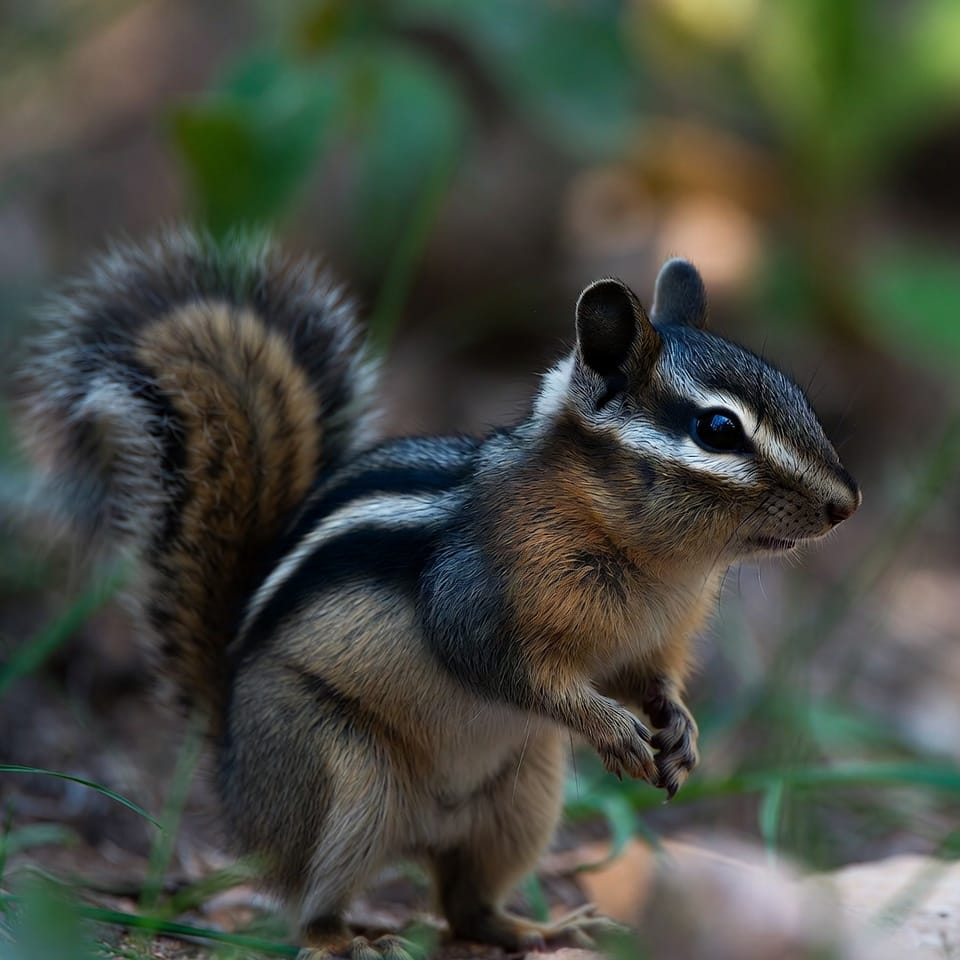
Appearance and Identification
The Mount Graham Chipmunk is small, measuring 7–8 inches. Its coat is reddish-brown with five dark dorsal stripes separated by pale stripes. Cream-colored underbelly and bushy tail complete the species’ appearance.
Habitat and Distribution
Endemic to Mount Graham in Arizona, they inhabit coniferous forests, rocky slopes, and high-altitude meadows. Burrows are dug under rocks or logs for protection and food storage.
Diet and Foraging Behavior
They feed on seeds, nuts, berries, and insects. Food is carried in cheek pouches to burrows. Daytime foraging is common, and they move quickly to avoid predators.
Behavior and Social Structure
Solitary and territorial, communication includes chirps, tail flicks, and scent marking. Agile climbers, they navigate forest floors and rocky areas efficiently.
Conservation Status
Populations are limited due to restricted range. Conservation efforts are crucial for long-term survival.
29. Peñasco Least Chipmunk (Neotamias minimus atristriatus)
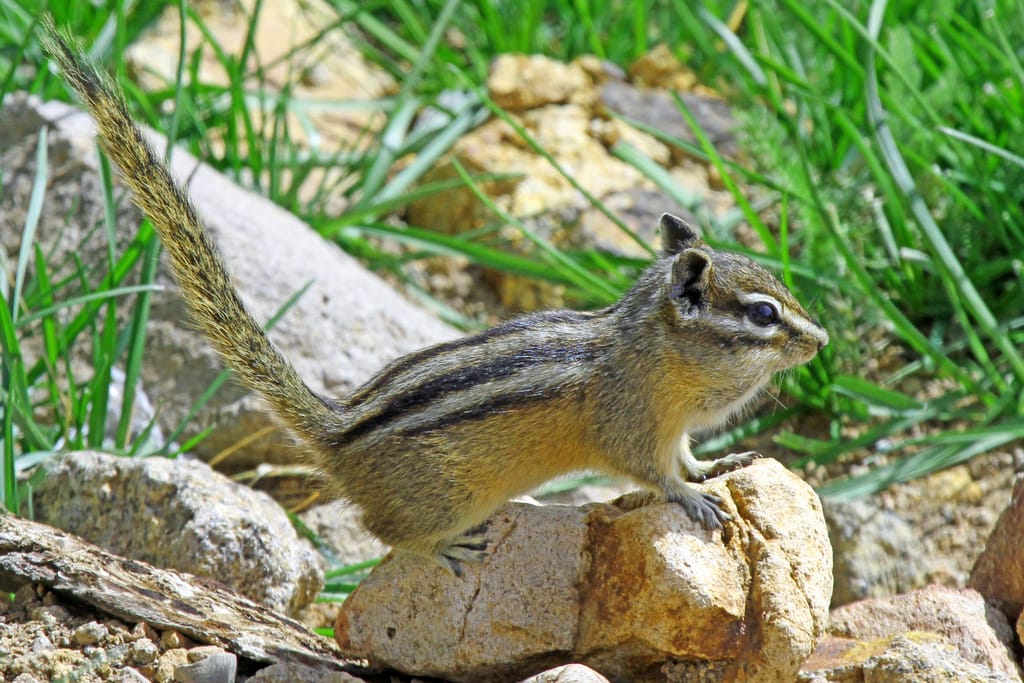
Appearance and Identification
Small, measuring 6–7 inches including the tail, Peñasco Least Chipmunks have a reddish-brown back with five dark stripes and pale interstripes. Their belly is cream-colored, and their small size distinguishes them from larger chipmunks in the region.
Habitat and Distribution
Native to southern New Mexico, they inhabit grasslands, forests, and rocky areas. Burrows are dug under rocks or dense shrubs for shelter and food storage.
Diet and Foraging Behavior
They feed on seeds, nuts, berries, fungi, and insects. Cheek pouches are used to transport food efficiently. Daytime foraging is common, and they are agile and cautious when moving through open areas.
Behavior and Social Structure
Solitary and territorial, they communicate with chirps, tail flicks, and scent marking. They rely on quick movements and agility to avoid predators.
Conservation Status
Populations are limited due to range restrictions. Conservation of habitats is essential for survival.
30. Gray‑Striped Chipmunk (Tamias laevidens)
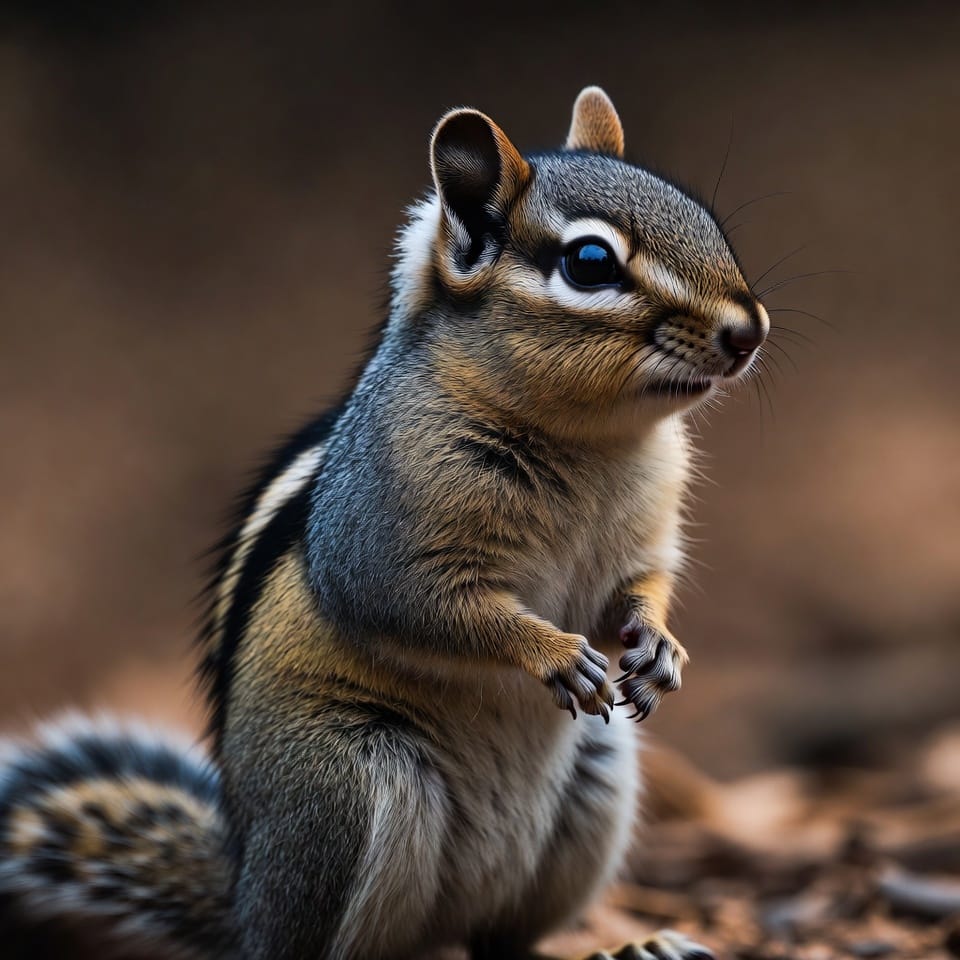
Appearance and Identification
The Gray‑Striped Chipmunk is medium-sized, measuring 7–8 inches. Its fur is grayish-brown with distinct dark dorsal stripes. The belly is pale, and its bushy tail aids in balance. Its subdued coloring blends well with rocky and forested environments.
Habitat and Distribution
Found in parts of western Mexico, it inhabits pine-oak forests, rocky slopes, and mountainous regions. Burrows are dug beneath rocks or logs for protection and nesting.
Diet and Foraging Behavior
They feed on seeds, nuts, berries, and insects. Cheek pouches are used to carry food to underground storage chambers. Foraging occurs during daylight, with careful movements to avoid predators.
Behavior and Social Structure
Gray‑Striped Chipmunks are solitary and territorial. Communication is via chirps, tail flicks, and scent marking. Agile climbers, they are well-adapted to navigate rocky and forested habitats.
Conservation Status
Populations are stable. Habitat protection is crucial to ensure long-term survival.
31. Eviensis Chipmunk (Tamias eviensis)
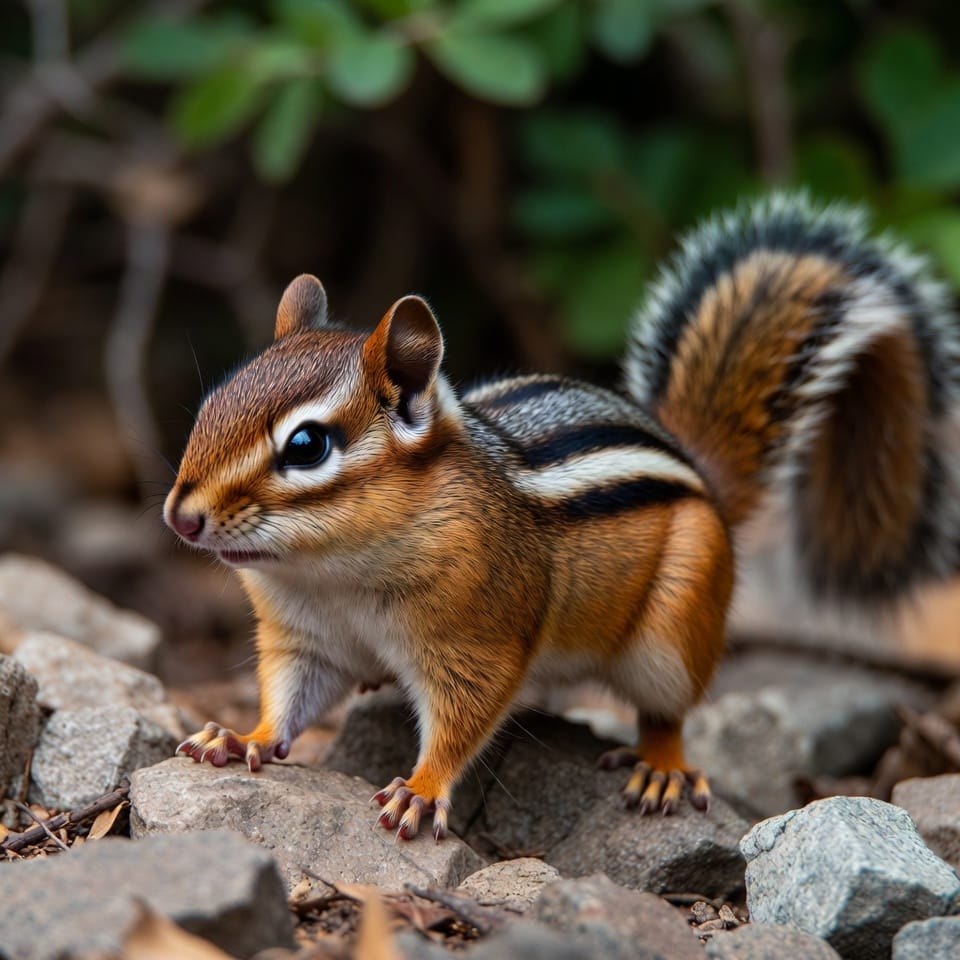
Appearance and Identification
The Eviensis Chipmunk is small, measuring 7–8 inches including its tail. It has reddish-brown fur with five dark dorsal stripes and pale interstripes, and a light cream-colored belly. Its eyes are large and expressive, and its bushy tail aids in balance and communication.
Habitat and Distribution
Found in parts of Central Mexico, Eviensis Chipmunks inhabit pine-oak forests, montane slopes, and rocky terrains. They build burrows under rocks or within dense vegetation for protection and nesting.
Diet and Foraging Behavior
Eviensis Chipmunks are omnivorous, feeding on seeds, nuts, berries, fungi, and insects. Cheek pouches are used to transport food to burrows for storage. Foraging occurs during daylight hours, with active exploration of forested slopes and rocky areas.
Behavior and Social Structure
They are solitary and territorial, communicating with chirps, tail flicks, and scent marking. Agile and alert, Eviensis Chipmunks navigate rocky terrain and dense shrubs efficiently, escaping predators when threatened.
Conservation Status
Populations are stable, but habitat loss could pose future risks. Conservation of pine-oak forests is essential to their continued survival.
32. Aristus Chipmunk (Tamias aristus)
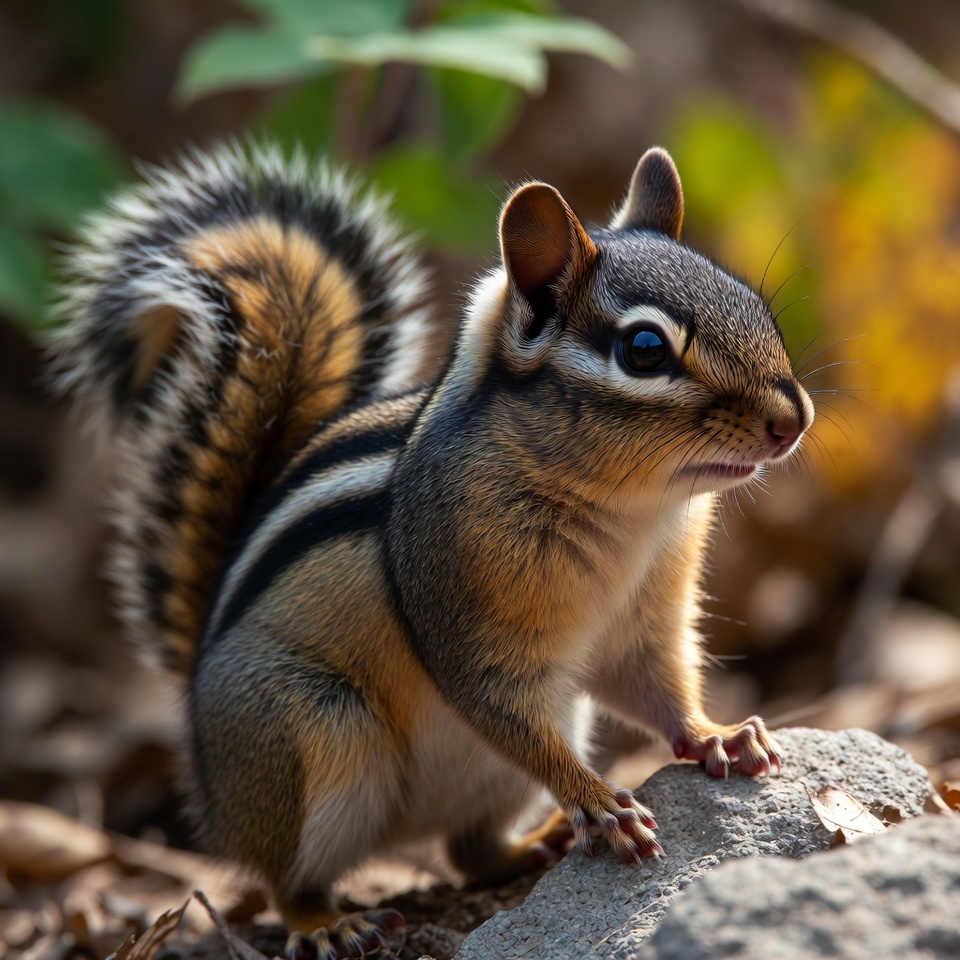
Appearance and Identification
Aristus Chipmunks are small, measuring 7–8 inches including the tail. Their fur is reddish-brown with dark dorsal stripes and pale interstripes. A light cream-colored belly and bushy tail complete the species’ appearance, along with large, alert eyes.
Habitat and Distribution
Native to Mexico, Aristus Chipmunks inhabit pine-oak forests, shrublands, and rocky hillsides. Burrows are constructed under rocks or logs to provide safety and storage for food.
Diet and Foraging Behavior
They feed on seeds, nuts, berries, fungi, and insects. Cheek pouches enable them to transport food efficiently to burrows. Foraging occurs during daylight, particularly in the early morning and late afternoon.
Behavior and Social Structure
These chipmunks are solitary and territorial. Communication occurs via chirps, tail flicks, and scent marking. Agile climbers, they move quickly through forested areas and rocky terrain to gather food or evade predators.
Conservation Status
Populations are currently stable. Protecting their forested and rocky habitats is vital to ensure long-term survival.
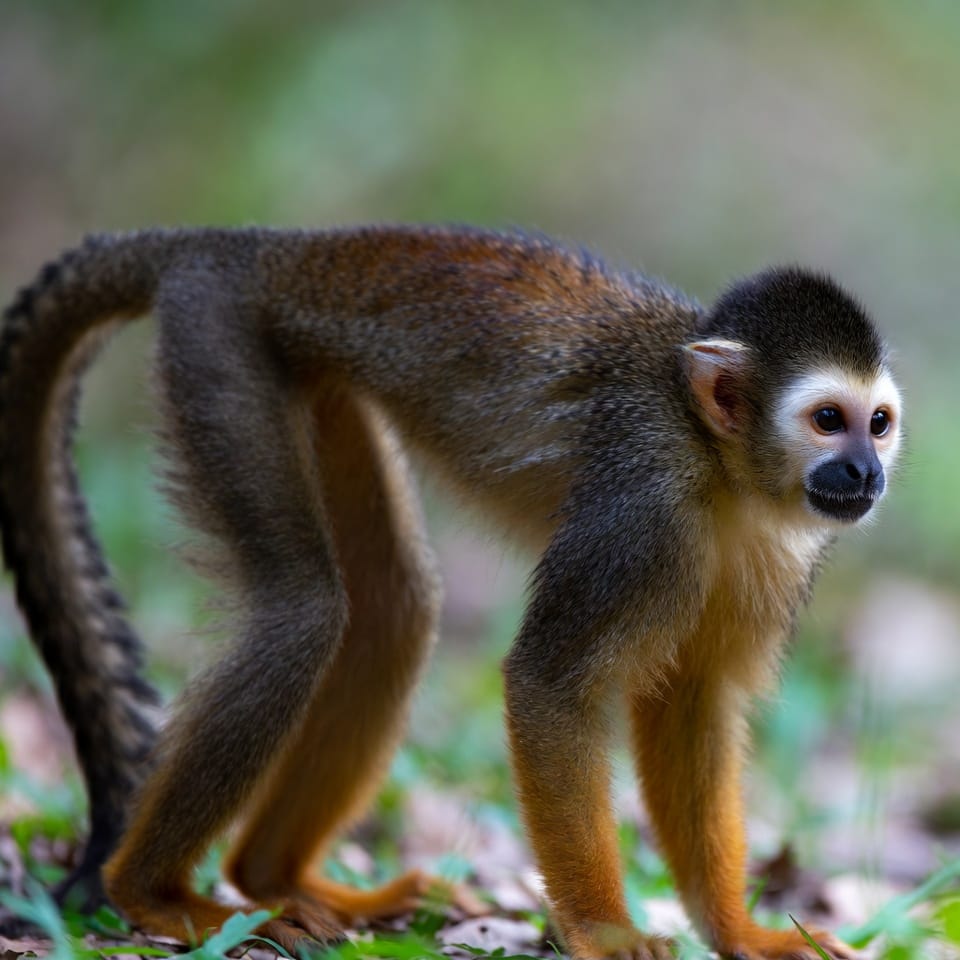
33. Tamias ateles
Appearance and Identification
Tamias ateles is medium-sized, measuring 7–9 inches including its tail. Its reddish-brown coat is marked with five dark dorsal stripes separated by pale interstripes. A pale underbelly and bushy tail complete its appearance, while large, alert eyes help detect predators.
Habitat and Distribution
Found in the mountainous forests of Mexico, it inhabits pine-oak woodlands and rocky slopes. Burrows are dug under rocks, logs, or shrub cover to provide shelter and storage for food.
Diet and Foraging Behavior
This species feeds on seeds, nuts, berries, fungi, and insects. Cheek pouches are used for transporting food to burrows. Daytime foraging allows it to gather sufficient resources while remaining vigilant.
Behavior and Social Structure
Tamias ateles is solitary and territorial. Communication occurs through chirps, tail flicks, and scent markings. Agile and quick, it navigates complex terrain efficiently while foraging or avoiding predators.
Conservation Status
Populations are stable, but habitat protection is crucial to prevent fragmentation and ensure continued survival.
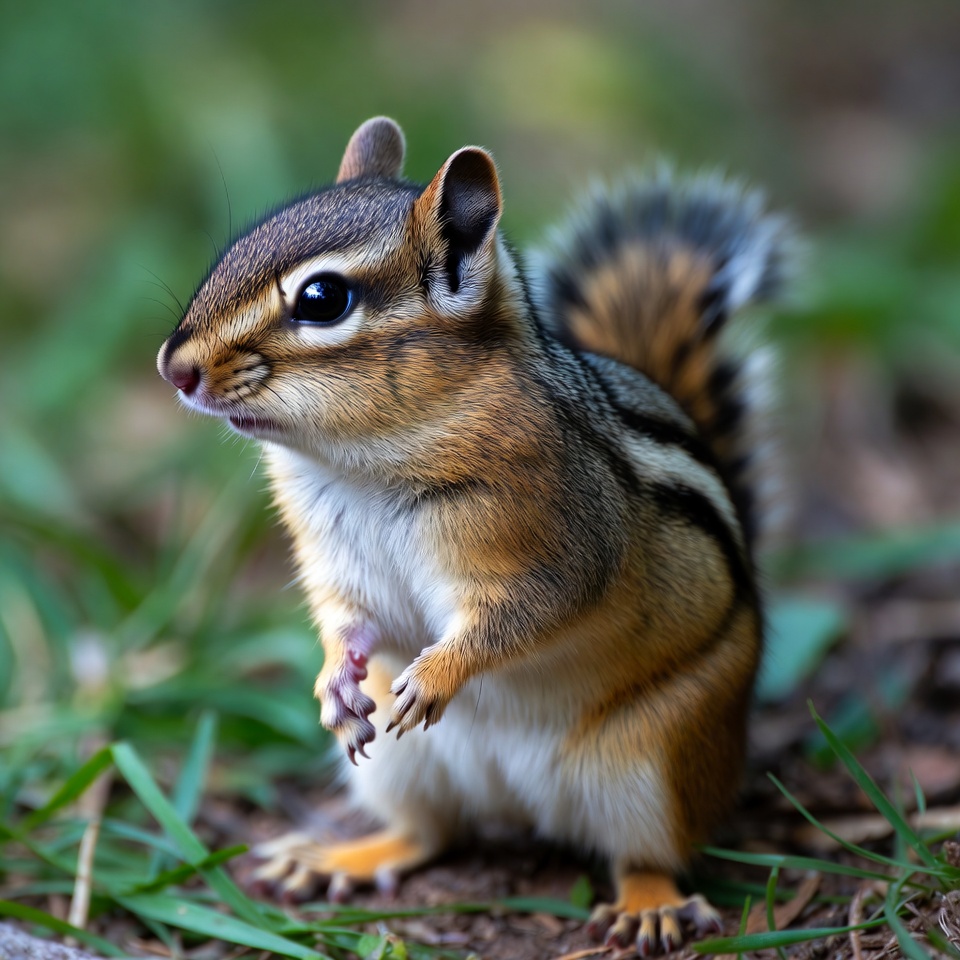
34. Island Chipmunk (Tamias sibiricus variant)
Appearance and Identification
The Island Chipmunk is small, measuring 7–8 inches including its tail. Its fur is reddish-brown with five dark dorsal stripes and pale interstripes, while the belly is cream-colored. Large eyes and a bushy tail aid in balance and awareness.
Habitat and Distribution
Endemic to select islands in East Asia, this chipmunk inhabits temperate forests, shrublands, and rocky outcrops. Burrows are dug under rocks or dense vegetation to provide shelter and food storage.
Diet and Foraging Behavior
Island Chipmunks feed on seeds, nuts, berries, fungi, and insects. Cheek pouches are used to carry food to burrows efficiently. Daytime foraging is active, with chipmunks moving cautiously across island forests.
Behavior and Social Structure
They are solitary and territorial. Communication includes chirps, tail flicks, and scent marking. Their agility allows them to navigate trees, shrubs, and rocky areas safely while foraging.
Conservation Status
Populations are relatively stable, but habitat restriction on islands makes them vulnerable to human disturbance and introduced predators. Conservation efforts focus on habitat protection.
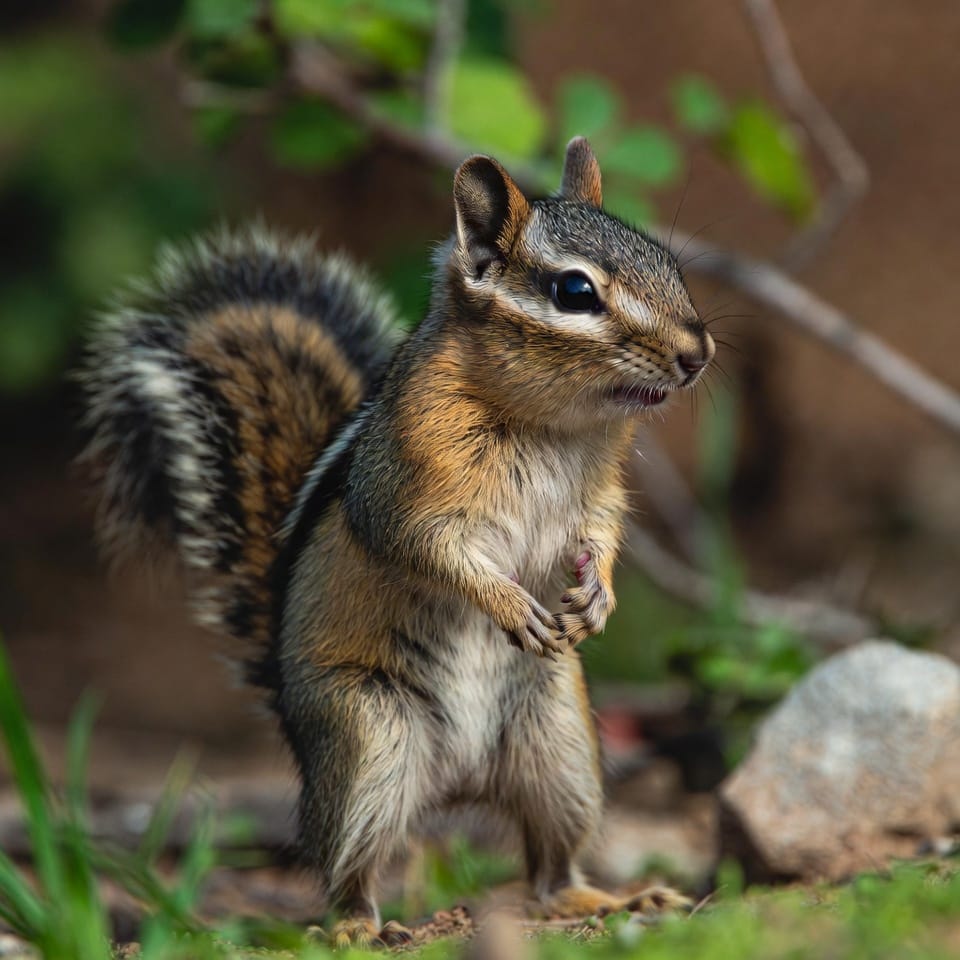
35. Western Chipmunk (Neotamias regional forms)
Appearance and Identification
Western Chipmunks vary slightly by regional forms but generally measure 7–9 inches including the tail. Fur coloration ranges from reddish-brown to grayish-brown with five dark dorsal stripes and pale interstripes. Pale underbelly and bushy tail are consistent traits.
Habitat and Distribution
Found across western North America, including forests, woodlands, and rocky slopes. Burrows are constructed under logs, rocks, or dense shrubs, providing safety and food storage.
Diet and Foraging Behavior
They feed on seeds, nuts, berries, fungi, and insects. Cheek pouches allow efficient transport of food to burrows. Daytime foraging is common, with agility and vigilance helping avoid predators.
Behavior and Social Structure
Solitary and territorial, communication occurs via chirps, tail flicks, and scent marking. Agile climbers, they navigate forested slopes, rocks, and shrubbery efficiently.
Conservation Status
Populations are stable, though habitat loss from urban development could affect some localized forms. Conservation of western forests and slopes ensures their continued survival.
Conclusion
These 35 Types of Chipmunks highlight the diversity and adaptability of this fascinating group of small mammals. From the Siskiyou mountains to islands in East Asia, chipmunks play an important ecological role, dispersing seeds, controlling insects, and serving as prey for predators. By understanding their habitats, behaviors, and conservation needs, we can better protect these lively, striped forest dwellers. Whether you are a nature enthusiast, a wildlife photographer, or simply curious, learning about chipmunks can enrich your appreciation of the natural world.
Frequently Asked Questions About Chipmunks
1. What are chipmunks?
Chipmunks are small, striped rodents in the squirrel family, native to North America and parts of Asia. They are known for their quick movements, bushy tails, and cheek pouches used for storing food.
2. How many types of chipmunks exist?
There are at least 35 recognized species of chipmunks, each with unique features, habitats, and behaviors. This includes species like the Uinta Chipmunk, Siskiyou Chipmunk, and Island Chipmunk.
3. What do chipmunks eat?
Chipmunks are omnivorous. They eat seeds, nuts, berries, fungi, and insects. Many species store food in cheek pouches to carry back to burrows for winter.
4. Where do chipmunks live?
Chipmunks inhabit forests, woodlands, rocky slopes, alpine meadows, and shrublands. Their preferred habitat often provides burrows for shelter and abundant food sources.
5. Are chipmunks solitary animals?
Yes, most chipmunk species are solitary and territorial. They use chirps, tail flicks, and scent markings to communicate with other chipmunks.
6. Do chipmunks hibernate?
Some species enter a form of hibernation or torpor during winter, surviving on stored food in their burrows. Activity levels decrease significantly during cold months.
7. How long do chipmunks live?
In the wild, chipmunks typically live 2–5 years, although some may survive longer depending on species, habitat, and predation levels.
8. Are chipmunks dangerous to humans?
No, chipmunks are not dangerous to humans. They may bite if cornered, but generally, they are shy and avoid human contact.
9. Can chipmunks climb trees?
Yes, many chipmunks are skilled climbers. They can climb trees, shrubs, and rocky surfaces to forage for food or escape predators.
10. How can I identify a chipmunk?
Look for small size, five dark dorsal stripes separated by pale stripes, bushy tail, large eyes, and cheek pouches used for food storage.
11. What is the difference between a chipmunk and a squirrel?
Chipmunks are smaller, have distinct stripes on their backs, and carry food in cheek pouches. Squirrels are larger, often without stripes, and store food in trees or underground caches.
12. Do chipmunks make sounds?
Yes, chipmunks use chirps, trills, and squeaks to communicate, especially when warning of predators or defending territory.
13. Are chipmunks active during the day or night?
Chipmunks are diurnal, meaning they are active during the day and rest at night in burrows or hidden areas.
14. How big do chipmunks get?
Most chipmunks measure 6–9 inches long, including the tail. Size can vary depending on species.
15. What is the purpose of chipmunk cheek pouches?
Cheek pouches allow chipmunks to carry seeds, nuts, and other food to their burrows for storage, especially before winter.
16. How do chipmunks build burrows?
Chipmunks dig burrows under rocks, logs, or dense shrubs. Burrows often have separate chambers for nesting, storing food, and hiding from predators.
17. Are chipmunks endangered?
Most chipmunk species are not endangered, though some with restricted ranges, like the Mount Graham Chipmunk, are vulnerable due to habitat loss.
18. Can chipmunks swim?
Chipmunks can swim short distances if necessary, but they generally avoid water and prefer dry habitats.
19. How fast can chipmunks run?
Chipmunks are agile and quick, capable of short bursts of speed to escape predators. Their exact speed varies by species and size.
20. Do chipmunks bite?
Chipmunks rarely bite humans unless cornered or provoked. They primarily use their teeth for chewing seeds, nuts, and other foods.
21. What predators eat chipmunks?
Common predators include hawks, owls, foxes, snakes, and domestic cats. Burrows and quick reflexes help chipmunks avoid predation.
22. How do chipmunks store food?
Chipmunks use cheek pouches to carry food to burrows, where they store it in separate chambers for use during winter or food-scarce periods.
23. Are chipmunks good for the ecosystem?
Yes, chipmunks disperse seeds, control insect populations, and serve as prey for predators, playing a vital role in their ecosystems.
24. How can I attract chipmunks to my backyard?
Provide nuts, seeds, and berries in feeders, create rock piles or shrubs for cover, and avoid disturbing natural burrows.
25. What is the lifespan of a chipmunk in captivity?
In captivity, chipmunks can live 5–8 years with proper care, food, and protection from predators and disease.
26. Can chipmunks climb rocks?
Yes, chipmunks are agile climbers, able to navigate rocky slopes and uneven terrain to forage or escape threats.
27. Do chipmunks hibernate in winter?
Some species enter torpor, reducing activity and relying on stored food. Others remain active, especially in milder climates.
28. How do chipmunks communicate?
Chipmunks use vocalizations like chirps, tail flicks, and scent markings to communicate with other chipmunks and signal danger.
29. What colors are chipmunks?
Most chipmunks are reddish-brown, gray, or tan with five dark stripes along the back and pale underbellies. Some species have distinctive cheek markings or tail colors.
30. Do chipmunks live in groups?
No, chipmunks are mostly solitary. They maintain territories and avoid direct interaction except during mating or occasional foraging overlap.
31. How do chipmunks reproduce?
Chipmunks breed once or twice a year, producing 2–8 offspring per litter. Mothers care for young in burrows until they are independent.
32. How long do chipmunks stay in their burrows?
Chipmunks return to burrows for shelter, sleeping, and food storage. Time spent varies with weather, predators, and food availability.
33. Are chipmunks nocturnal?
No, chipmunks are diurnal, meaning they are active during daylight hours and rest at night.
34. Can chipmunks climb trees?
Yes, many chipmunk species are excellent climbers and use trees to forage for seeds, berries, and insects.
35. Do chipmunks make nests?
Yes, chipmunks line burrows with grass, leaves, and other soft materials to create a safe, insulated nest for sleeping and raising young.
36. How far do chipmunks travel daily?
Chipmunks typically forage within a small territory, often 50–200 feet from their burrow, depending on food availability and habitat.
37. Can chipmunks be pets?
While some people keep chipmunks in captivity, they are wild animals and require special care. Captivity may stress them, so it’s often discouraged.
38. How do chipmunks avoid predators?
Chipmunks use quick bursts of speed, burrows, camouflage, and alert behavior to evade predators. Their small size and agility help them survive in the wild.
39. Are chipmunks nocturnal or diurnal?
They are diurnal, active during the day and resting in burrows at night.
40. Do chipmunks store food for winter?
Yes, chipmunks rely on stored seeds, nuts, and berries to survive the winter when food is scarce.
41. How big are chipmunk burrows?
Burrows can be 1–3 inches wide and up to 30 feet long, often with multiple chambers for nesting and food storage.
42. What is the smallest chipmunk?
The Peñasco Least Chipmunk is among the smallest, measuring only 6–7 inches including the tail.
43. What is the largest chipmunk?
The Townsend’s Chipmunk and Red-tailed Chipmunk are among the largest, reaching up to 10 inches including the tail.
44. Do chipmunks carry diseases?
Chipmunks can carry fleas, ticks, or pathogens like salmonella. Direct contact should be avoided, though they pose minimal risk to humans.
45. Can chipmunks swim?
Chipmunks can swim short distances if necessary, but they generally avoid water and prefer dry habitats.
46. Are chipmunks endangered?
Most species are not endangered, though some with restricted ranges, like Mount Graham Chipmunk, are vulnerable and require habitat protection.
47. How do chipmunks store seeds?
They use cheek pouches to carry seeds to burrows, where they are stored in separate chambers for winter use.
48. Do chipmunks eat insects?
Yes, insects complement their diet, providing protein along with seeds, nuts, and berries.
49. Are chipmunks good pets?
They are better appreciated in the wild. While they can be kept in captivity, their natural behaviors are best observed outdoors.
50. How do chipmunks affect the ecosystem?
Chipmunks disperse seeds, control insects, and serve as prey for larger predators, making them an essential part of forest and woodland ecosystems.
51. Can chipmunks climb rocks?
Yes, most species are excellent climbers and can navigate rocky slopes to forage or escape predators.
52. How do chipmunks communicate with each other?
They communicate using chirps, trills, tail flicks, and scent markings to signal danger, defend territory, or find mates.
Read more: 30 Types of Guinea Pig (Pictures And Identification)