

Cranes are some of the most iconic and elegant birds in the world. Known for their long legs, graceful necks, and elaborate mating dances, they belong to the family Gruidae and are found across diverse habitats from North America to Asia and Africa. In this article, we explore 15 types of cranes, offering detailed identification tips, natural history, and fascinating behaviors. This guide will help bird enthusiasts, students, and wildlife lovers alike to recognize, appreciate, and understand these magnificent birds. Learn about the unique features, calls, and conservation status of each species in the world of Types of Cranes.
1. Red‑crowned Crane (Grus japonensis)
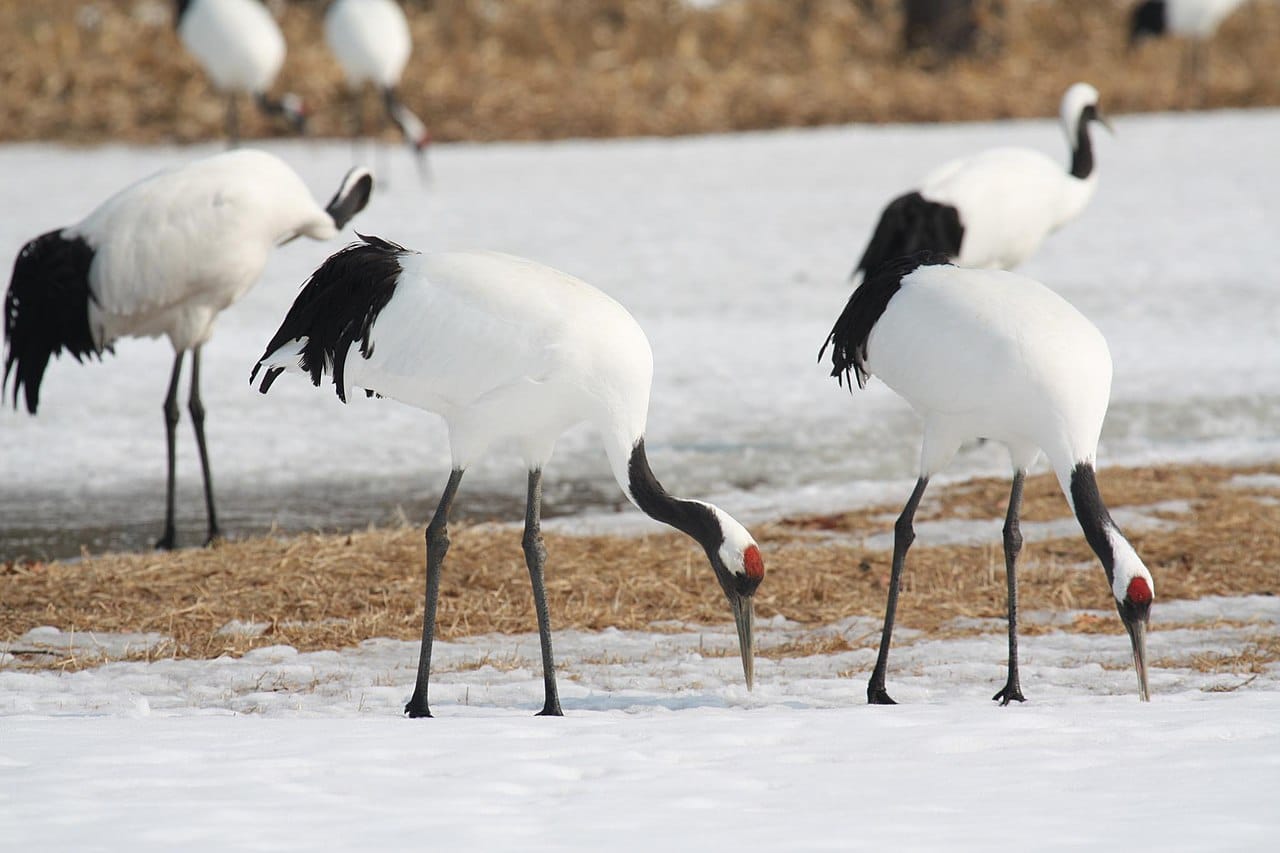
The Red‑crowned Crane, also called the Japanese Crane, is renowned for its striking white plumage with black secondary feathers and a bright red patch on the top of its head. Native to East Asia, particularly Japan, China, and the Russian Far East, these cranes inhabit wetlands, marshes, and river valleys. Adults can reach heights of 1.5 meters (5 feet) with a wingspan up to 2.5 meters, making them one of the largest crane species.
Red‑crowned Cranes are known for their elaborate courtship dances, which include bowing, jumping, and calling in synchronized pairs. Their diet is omnivorous, feeding on aquatic plants, insects, fish, and small amphibians. Social birds outside the breeding season, they migrate in flocks to find suitable feeding grounds. Conservation efforts have helped stabilize some populations, though habitat loss and wetland drainage remain ongoing threats. Observing the Red‑crowned Crane offers a glimpse into the cultural reverence and ecological importance of cranes in East Asia.
2. Whooping Crane (Grus americana)
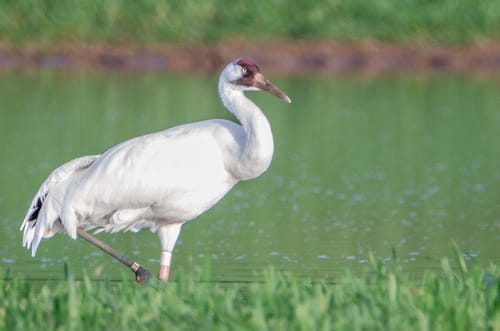
The Whooping Crane is North America’s tallest bird and one of its rarest, known for its pure white feathers, black wingtips, and distinctive loud “whooping” calls. Historically widespread across the continent, they now breed in Wood Buffalo National Park, Canada, and migrate to the Aransas National Wildlife Refuge in Texas. Adults can stand up to 1.5 meters tall with a wingspan of about 2.3 meters.
These cranes have a long lifespan, often exceeding 20 years in the wild. Whooping Cranes feed on aquatic organisms, seeds, and insects. They are migratory, flying hundreds of miles each year in V-formation to conserve energy. Captive breeding and reintroduction programs have increased numbers from critically low levels, but they remain endangered due to habitat destruction and human disturbances. Studying the Whooping Crane teaches lessons about perseverance, migration, and the importance of wetland conservation in North America.
3. Sandhill Crane (Antigone canadensis)
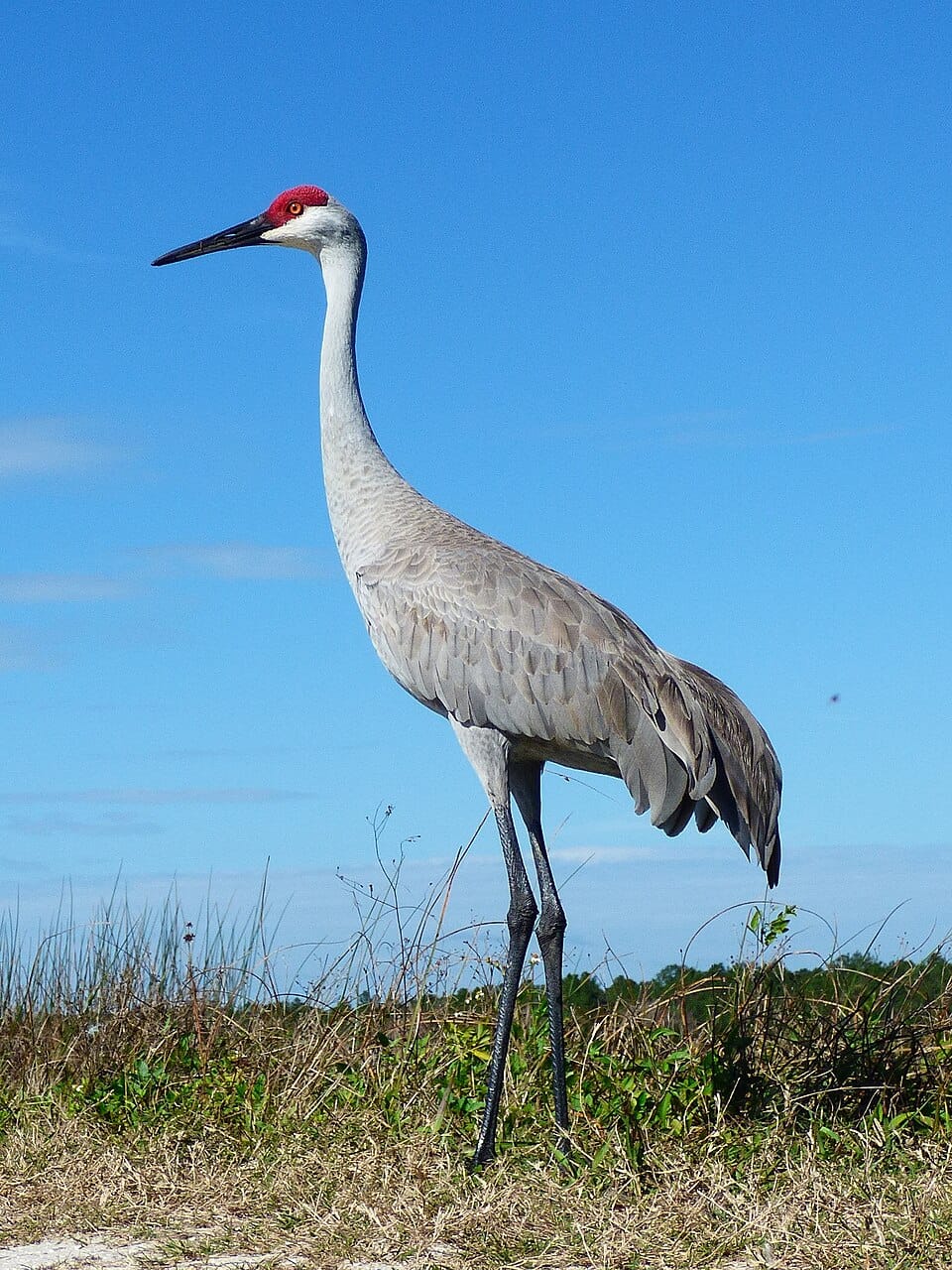
The Sandhill Crane is one of the most widespread and familiar crane species in North America. Characterized by grey plumage with rust-colored patches, red foreheads, and long legs, these birds are frequently seen in agricultural fields and wetlands. Adults measure up to 1.2 meters tall with wingspans around 2 meters.
Known for their loud, rolling calls and elaborate dances, Sandhill Cranes mate for life and perform synchronized duets that strengthen pair bonds. They feed on grains, insects, amphibians, and small mammals, often foraging in shallow water. Sandhill Cranes migrate in large flocks, sometimes numbering in the tens of thousands, creating dramatic aerial displays during the fall migration. Their adaptability to diverse habitats, including human-modified landscapes, demonstrates the resilience of many Types of Cranes.
4. Common Crane (Grus grus)
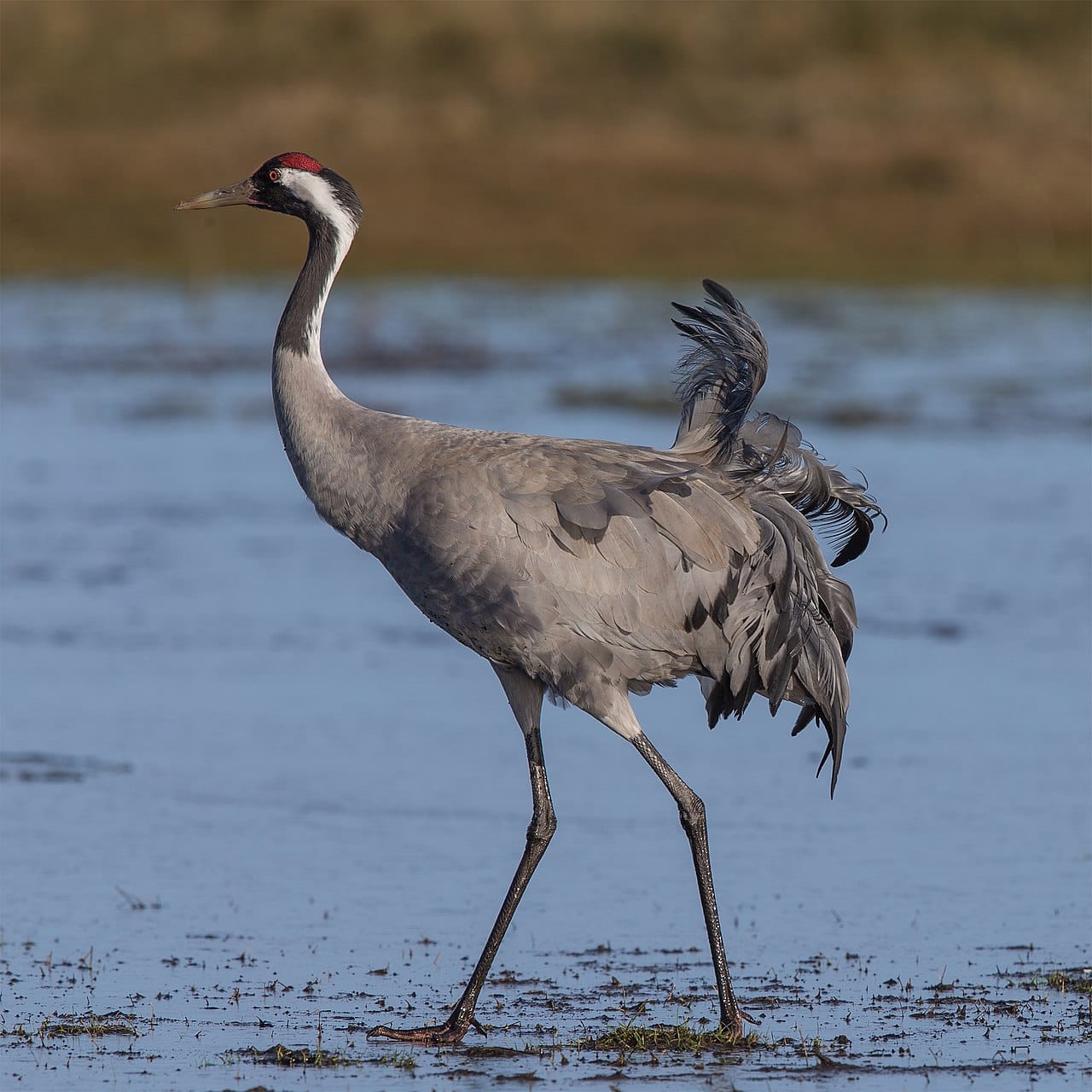
The Common Crane, or Eurasian Crane, is native to Europe and Asia, with a silver-grey body, black neck and head, and striking white cheeks. Adults can reach 1.2 meters in height with a wingspan of 2 meters. These cranes inhabit wetlands, meadows, and agricultural fields, often forming large migratory flocks.
Common Cranes are omnivorous, feeding on grains, seeds, insects, and small animals. During breeding season, they perform synchronized dances, leaps, and calls to establish pair bonds. Their migration routes span thousands of kilometers, making them one of the most visible and charismatic European cranes. The species’ adaptability and social behavior highlight important aspects of crane ecology and conservation, particularly the role of wetlands as critical stopover habitats.
5. Siberian Crane (Leucogeranus leucogeranus)
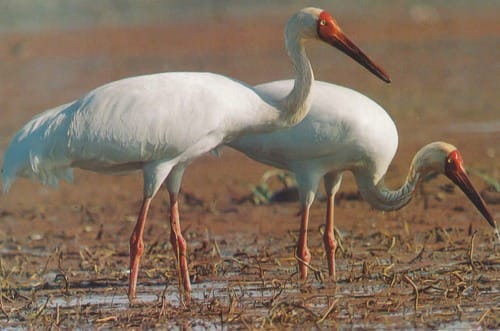
The Siberian Crane is a critically endangered crane species distinguished by its all-white plumage and black wing tips visible in flight. Native to Siberia, these cranes breed in Arctic tundra wetlands and migrate to wintering sites in China, Iran, and India. Adults are slightly smaller than the Red-crowned Crane but equally elegant, standing about 1.2 meters tall with wingspans up to 2 meters.
Siberian Cranes feed mainly on aquatic plants and tubers, using their long bills to probe soft mud. Their migratory journeys are perilous, and population declines are largely due to wetland drainage and hunting along migration routes. Conservation programs, including captive breeding and habitat protection, have been critical in preventing extinction. Observing the Siberian Crane demonstrates the challenges migratory birds face and underscores the importance of preserving wetlands for global biodiversity. This species exemplifies the delicate balance of ecosystems in the context of Types of Cranes.
6. White‑naped Crane (Antigone vipio)
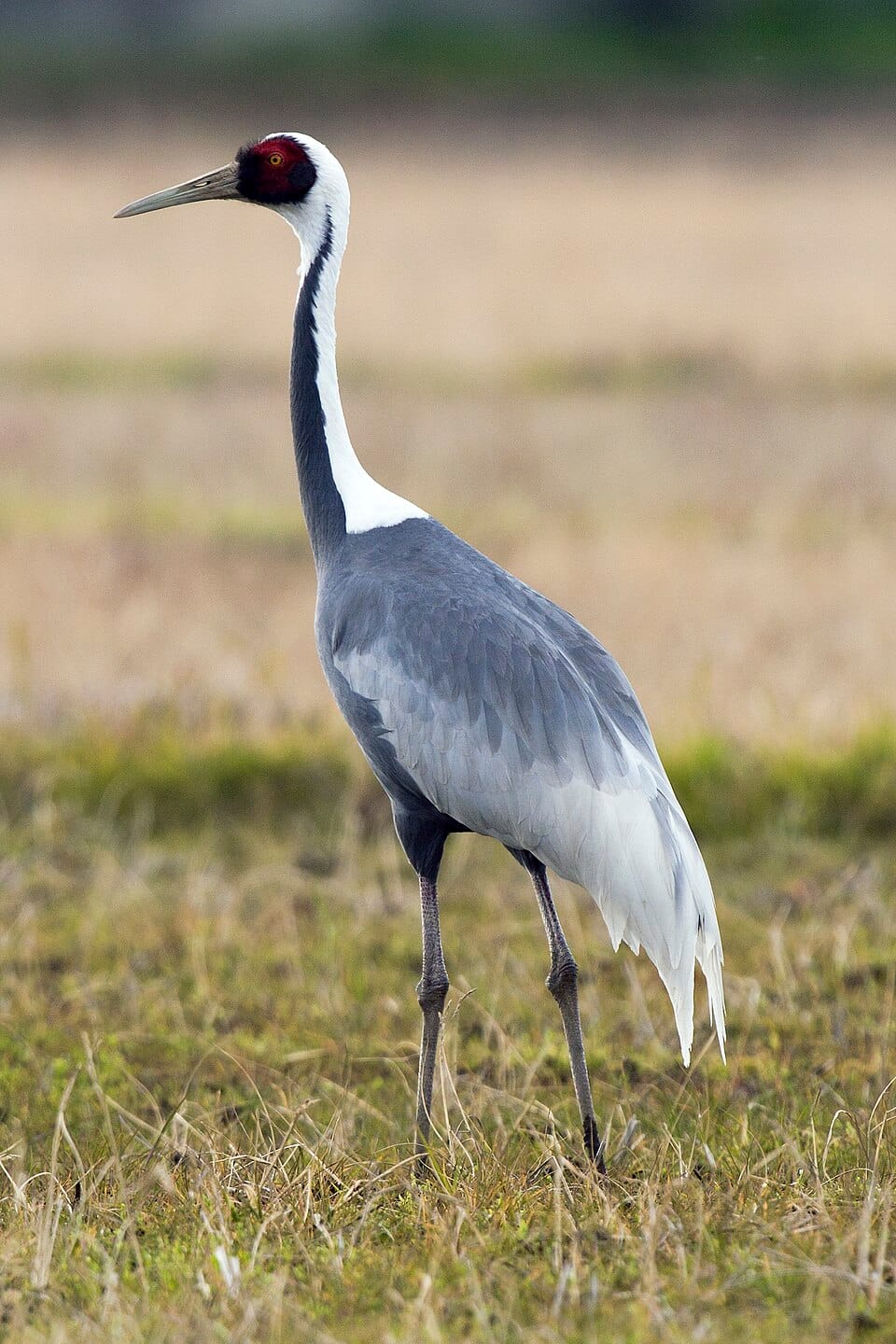
The White‑naped Crane is a medium-sized crane native to East Asia, particularly found in eastern Russia, Mongolia, China, and Korea. This crane is notable for its pale gray body, contrasting black face, and striking white stripe that runs from the back of its head down to its neck, giving it its name. Adults typically reach about 1.2 meters in height and boast a wingspan of roughly 2 meters. These elegant birds are often seen in wetlands, marshes, and grasslands, where they forage for a variety of food including seeds, grains, insects, and small aquatic animals.
White‑naped Cranes are migratory, spending the breeding season in northern regions and moving southwards in the winter to milder climates in China and the Korean Peninsula. They are social birds, often forming small flocks during migration and roosting in shallow water to avoid predators. Courtship involves synchronized dancing, bowing, leaping, and calling, with pairs often performing elaborate displays to strengthen pair bonds. Their distinctive calls are a mix of trumpeting and croaking sounds that can carry long distances across open wetlands.
Conservation-wise, White‑naped Cranes are classified as vulnerable due to wetland destruction, agricultural expansion, and human disturbance along migration routes. Several protected areas in China and Russia serve as critical stopover and wintering habitats. These cranes exemplify how habitat conservation is vital for migratory species and offer an incredible opportunity for birdwatchers and researchers to study ecological adaptation and social behavior. Understanding the White‑naped Crane provides insights into the complexity of crane migrations and the diversity within Types of Cranes.
7. Sarus Crane (Antigone antigone)
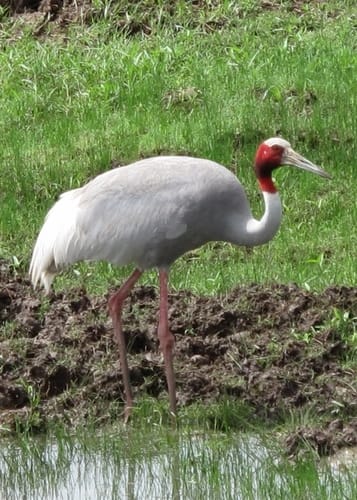
The Sarus Crane is the tallest flying bird in the world, native to South Asia, Southeast Asia, and parts of Australia. Recognizable by its gray body, striking red head and upper neck, and long legs, the Sarus Crane can reach up to 1.8 meters in height, making it a majestic sight in wetland habitats, paddy fields, and marshes. This species is renowned for its strong pair bonds, with many individuals mating for life and performing elaborate duet dances that include bowing, leaping, wing flapping, and trumpeting calls that resonate across fields and wetlands.
Sarus Cranes are omnivorous, feeding on aquatic plants, seeds, grains, insects, small reptiles, and amphibians. Their diet varies seasonally, allowing them to adapt to changing wetland ecosystems. These cranes are largely sedentary but may make local seasonal movements in response to rainfall and water availability. Their breeding behavior is fascinating: both parents actively build nests in shallow wetlands, incubate the eggs, and raise the chicks. Chicks are precocial, leaving the nest shortly after hatching but remaining under parental protection for several months.
Historically, the Sarus Crane was more widespread across the Indian subcontinent, but habitat loss due to agriculture, wetland drainage, and urbanization has reduced numbers in some regions. In India, however, conservation efforts have helped stabilize populations, especially in protected wetlands. Observing the Sarus Crane provides a remarkable view into the complex social behavior of cranes, their adaptability, and the importance of wetland conservation. The Sarus Crane remains a symbol of grace, longevity, and ecological resilience within Types of Cranes.
8. Brolga (Antigone rubicunda)
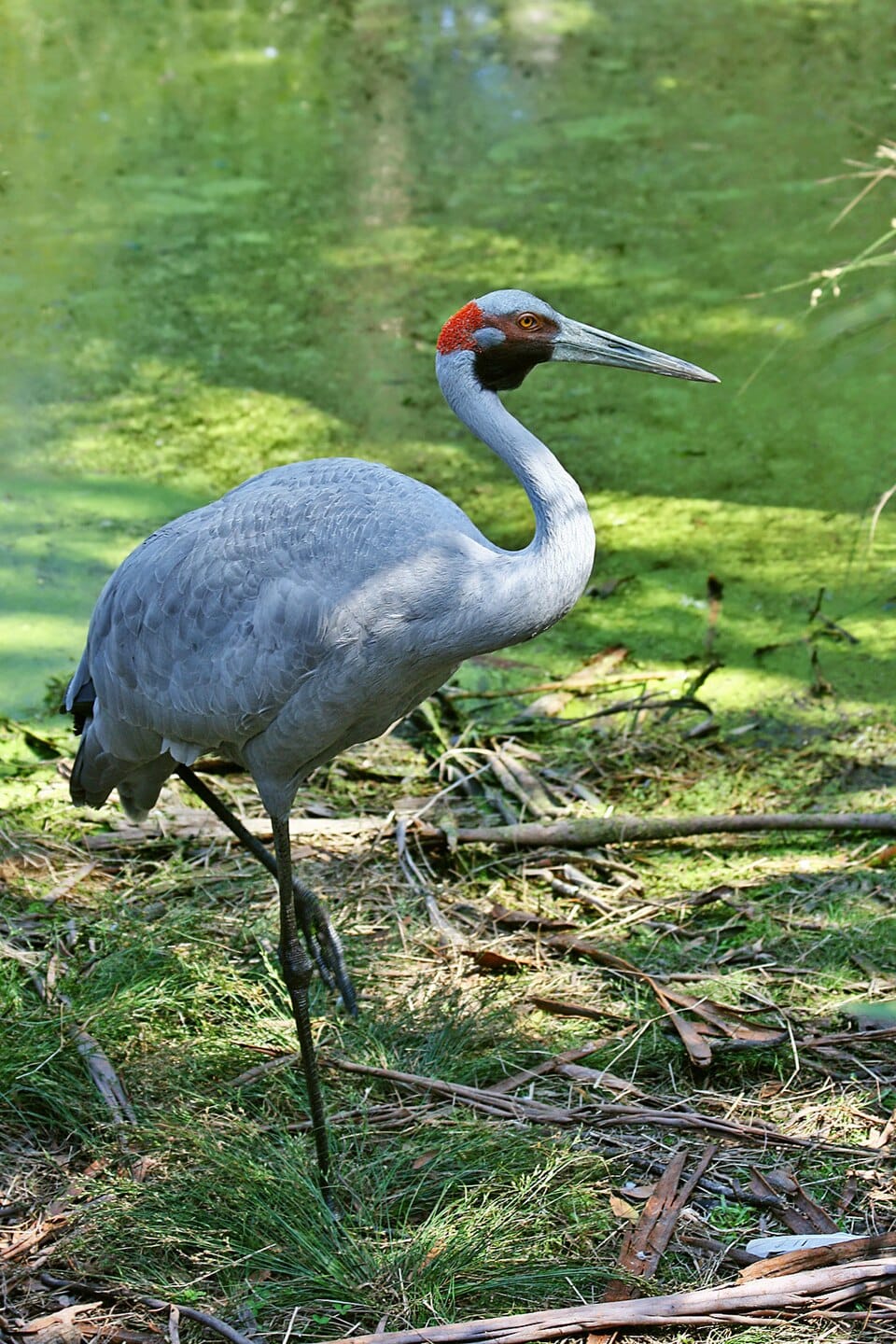
The Brolga, also known as the Australian Crane, is endemic to Australia and New Guinea and is celebrated for its striking gray plumage, red forehead, and long, slender legs. Adults typically stand between 1.2 and 1.3 meters tall with a wingspan of about 2.3 meters. They inhabit wetlands, floodplains, swamps, and grasslands, feeding on plant material, seeds, grains, insects, and small vertebrates. The Brolga is an iconic symbol of Australia’s unique wildlife, often featured in cultural depictions and conservation programs.
Behaviorally, Brolgas are well-known for their elaborate mating dances, which include wing flapping, head bobbing, and jumping while calling in unison with their mates. These displays are not only for courtship but also play a role in strengthening pair bonds and communicating territory. Brolgas are social birds, sometimes forming large flocks outside the breeding season, and their migratory movements are generally local, driven by seasonal water availability. Conservation concerns include wetland destruction, habitat fragmentation, and collisions with powerlines, though they are currently listed as least concern due to stable population numbers in protected areas.
Studying the Brolga offers valuable insights into the behaviors and adaptability of crane species in dry and variable climates. Observers often marvel at their coordinated dances, which are among the most sophisticated among Types of Cranes. The Brolga demonstrates how a species can thrive when natural habitats are preserved and protected, showcasing the importance of ecological stewardship in maintaining biodiversity.
9. Demoiselle Crane (Anthropoides virgo)
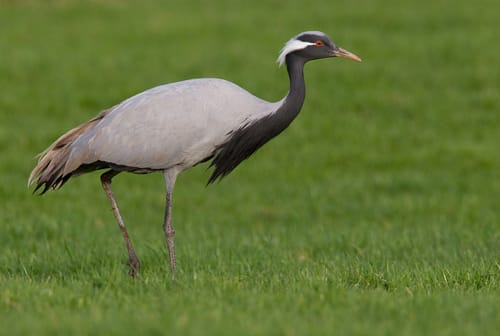
The Demoiselle Crane is the smallest crane species in Eurasia, standing at roughly 85 centimeters in height with a wingspan of 1.7 meters. It is easily identified by its slate-gray body, long black legs, black neck, and white feather tufts that extend from behind the eyes down to the chest. Native to Central Asia, the Middle East, and parts of Eastern Europe, these cranes prefer open grasslands, semi-deserts, and steppes for foraging. They are highly migratory, traveling thousands of kilometers to winter in India and Africa.
Demoiselle Cranes are social and often form large migratory flocks, creating spectacular aerial displays during seasonal movements. Their diet consists mainly of seeds, grains, insects, and small vertebrates. Courtship involves synchronized dancing, bowing, leaping, and vocalizations, which help establish and maintain long-term pair bonds. Conservation challenges include habitat loss from agriculture and human disturbance along migratory routes, though the species remains relatively abundant compared to other cranes. Observing Demoiselle Cranes offers insights into migration strategies, social coordination, and the diversity within Types of Cranes.
10. Blue Crane (Anthropoides paradisea)
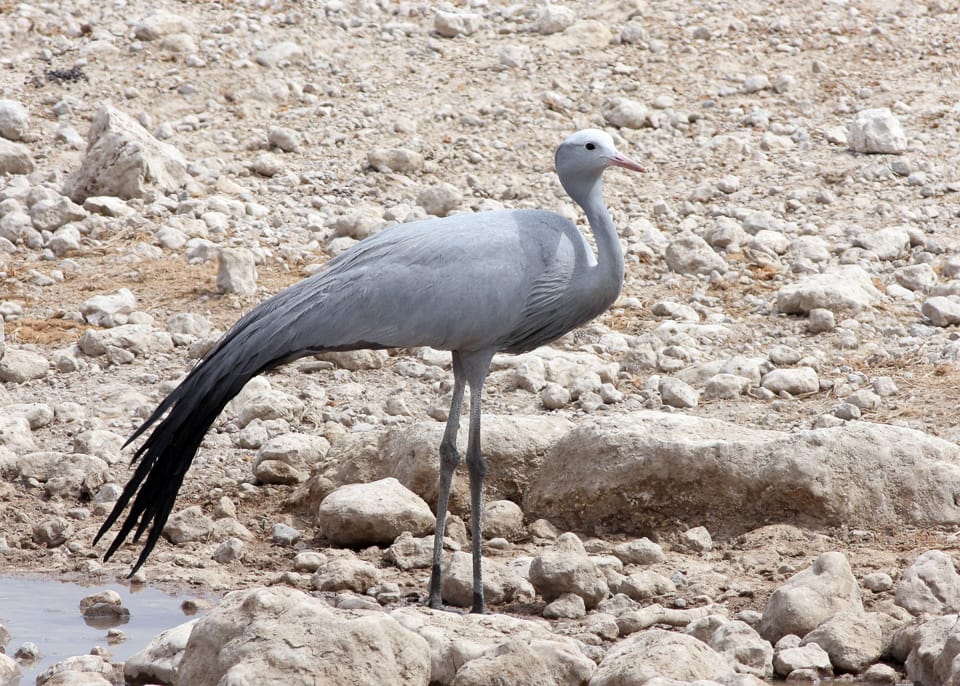
The Blue Crane, South Africa’s national bird, is renowned for its pale blue-gray plumage, long neck, elegant stature, and graceful movements. Standing up to 1 meter tall with a wingspan around 1.8 meters, this crane inhabits grasslands, wetlands, and agricultural areas. Its diet consists of seeds, grains, insects, and small invertebrates. Blue Cranes are often seen in pairs or small groups, and their social interactions include gentle dancing displays, bowing, and calling to communicate and maintain bonds.
Reproduction involves nest building on the ground in grassy areas, with both parents participating in incubation and chick rearing. Chicks are precocial but remain under parental care until they can forage independently. Conservation-wise, Blue Cranes face threats from habitat loss, powerline collisions, and agricultural expansion, though they are legally protected and benefit from conservation programs in South Africa. Studying the Blue Crane highlights the beauty and elegance of crane species, emphasizing the importance of habitat protection and sustainable land use. It remains a cultural and ecological icon among Types of Cranes.
11. Wattled Crane (Bugeranus carunculatus)
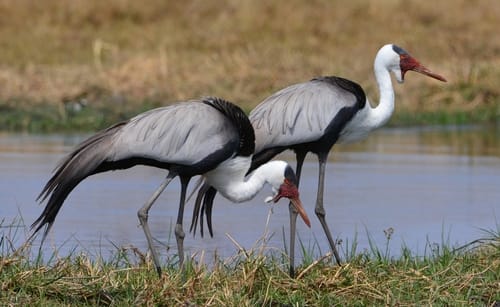
The Wattled Crane is Africa’s largest crane species, standing up to 1.5 meters tall with an impressive wingspan exceeding 2.5 meters. This elegant bird is easily identified by its grey body, white wings, black flight feathers, and distinctive red wattles that hang from its throat. Native to southern and eastern Africa, Wattled Cranes inhabit marshes, floodplains, and shallow wetlands, where they feed primarily on aquatic plants, tubers, and occasionally small invertebrates. Their long legs and necks allow them to forage efficiently in waterlogged habitats.
Wattled Cranes are known for their strong pair bonds, often mating for life. Courtship involves synchronized dancing, bowing, leaping, and trumpeting calls that echo across wetlands. They are largely sedentary but may make local movements in response to water availability. The species is considered vulnerable due to wetland drainage, agricultural encroachment, and human disturbance. Conservation programs in Botswana, South Africa, and Zambia have focused on protecting wetland habitats and monitoring populations. Observing the Wattled Crane in its natural habitat provides insights into the delicate balance of African wetland ecosystems and highlights the importance of Types of Cranes for biodiversity.
12. Grey Crowned Crane (Balearica regulorum)
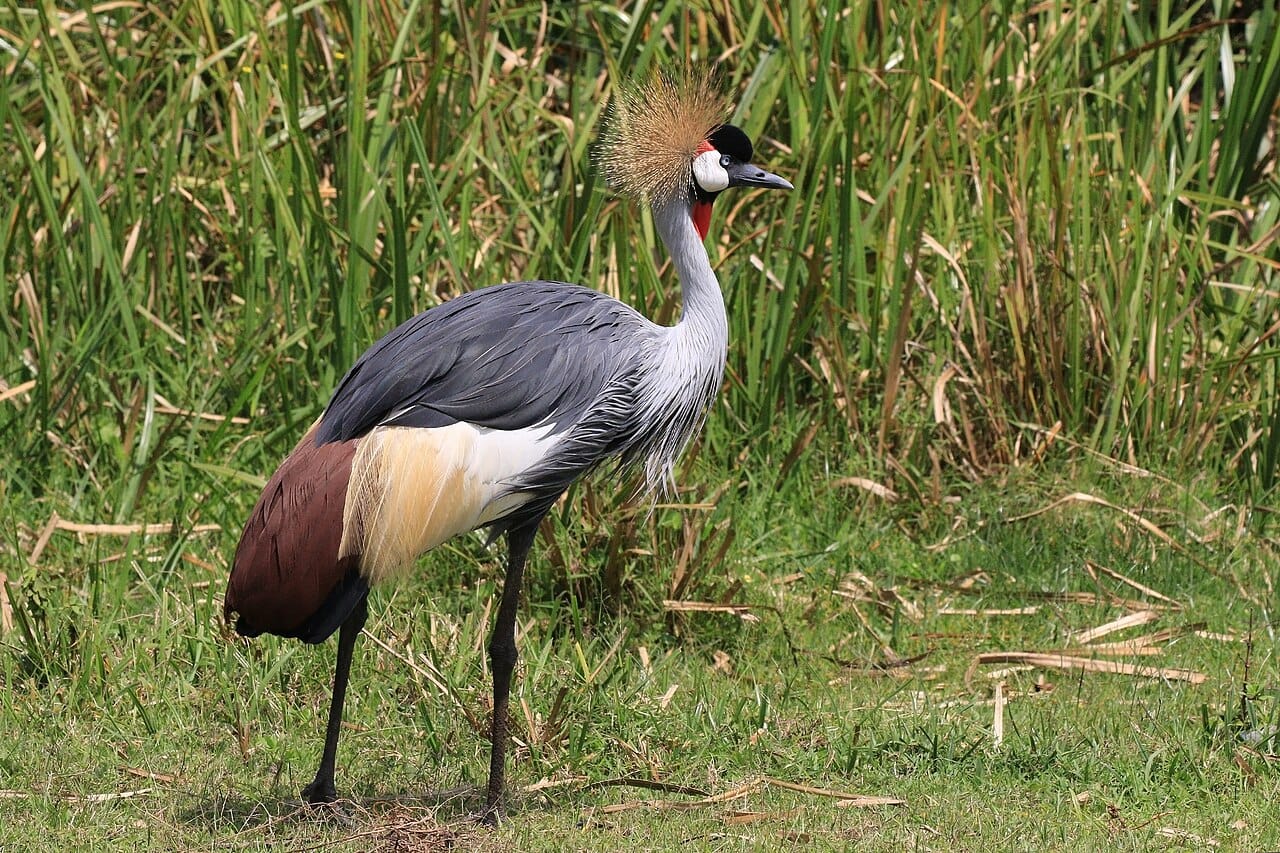
The Grey Crowned Crane, often called Africa’s “crowned crane,” is a striking bird distinguished by its golden crown of stiff feathers, grey body, white wings, and red throat pouch. Native to eastern and southern Africa, this crane inhabits wetlands, grasslands, and agricultural areas. Adults reach about 1 meter in height, with a wingspan around 2 meters, and are highly social, forming pairs or small family groups.
These cranes are omnivorous, feeding on seeds, insects, small reptiles, and amphibians. Their courtship displays are elaborate, including bowing, jumping, wing flapping, and vocalizations. Grey Crowned Cranes are also known for their dancing displays during territorial disputes or pair bonding. Although classified as endangered due to habitat loss, wetland degradation, and the pet trade, conservation efforts in Kenya, Uganda, and South Africa have improved local populations. Studying Grey Crowned Cranes provides a vivid example of ecological adaptation and social communication among Types of Cranes.
13. Black Crowned Crane (Balearica pavonina)
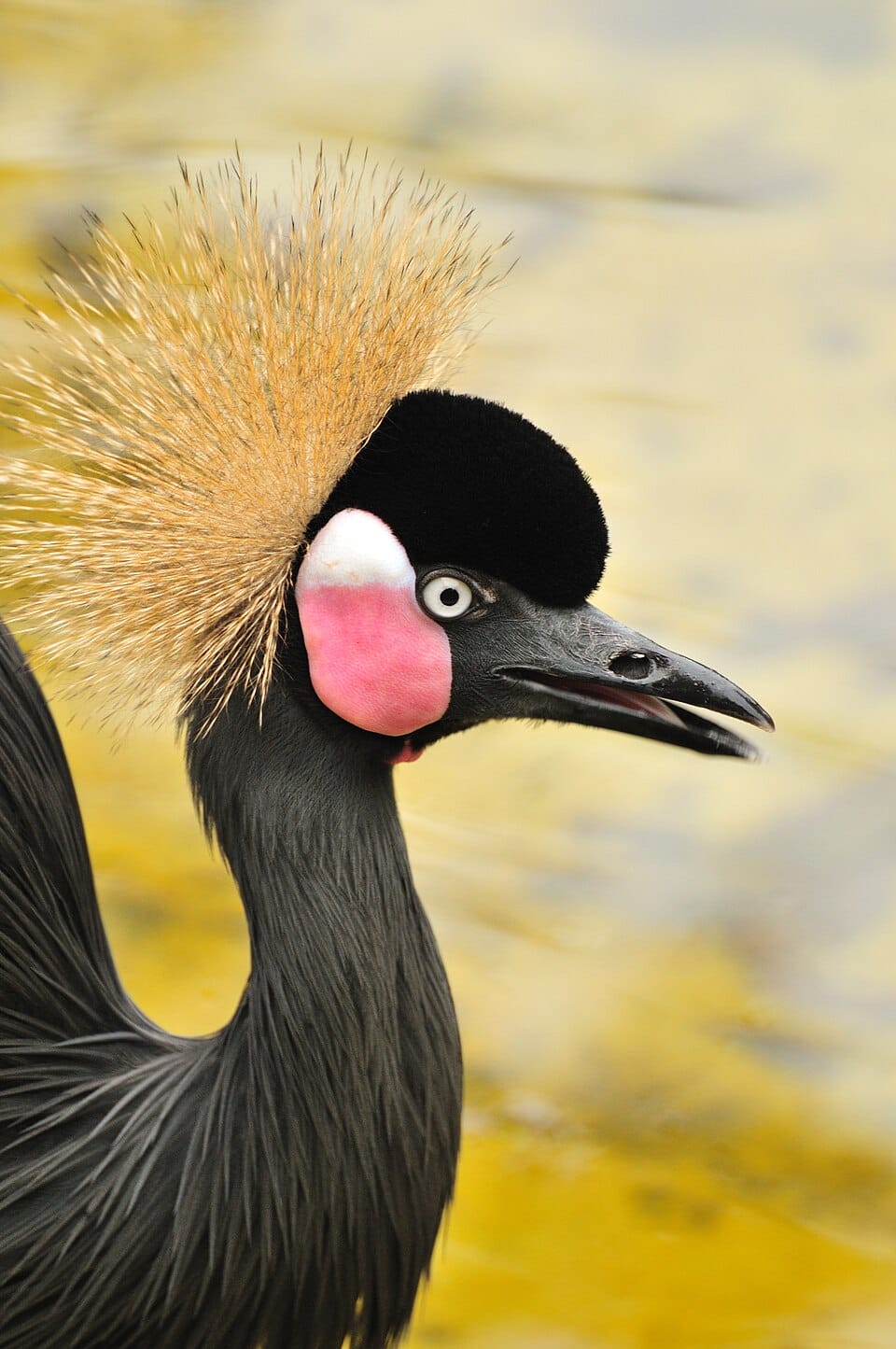
The Black Crowned Crane is similar in appearance to the Grey Crowned Crane but has darker body plumage, a black neck, and equally striking golden crown feathers. Found in western and central Africa, this crane prefers wetlands, floodplains, and river valleys. Adults reach heights of approximately 1 meter with a wingspan of 2 meters. They feed on a mixture of seeds, insects, small amphibians, and other invertebrates, often foraging in shallow waters and grasslands.
Social and vocal, Black Crowned Cranes communicate through a series of trumpeting calls and dances that help establish territory and maintain pair bonds. Courtship involves synchronized leaping, bowing, and wing spreading. Populations are under pressure due to wetland drainage, agriculture, and hunting, making them vulnerable in several regions. Conservation projects focus on habitat protection, anti-poaching measures, and community education. Observing Black Crowned Cranes emphasizes the diversity of African crane species and the importance of wetland ecosystems among Types of Cranes.
14. Hooded Crane (Grus monacha)
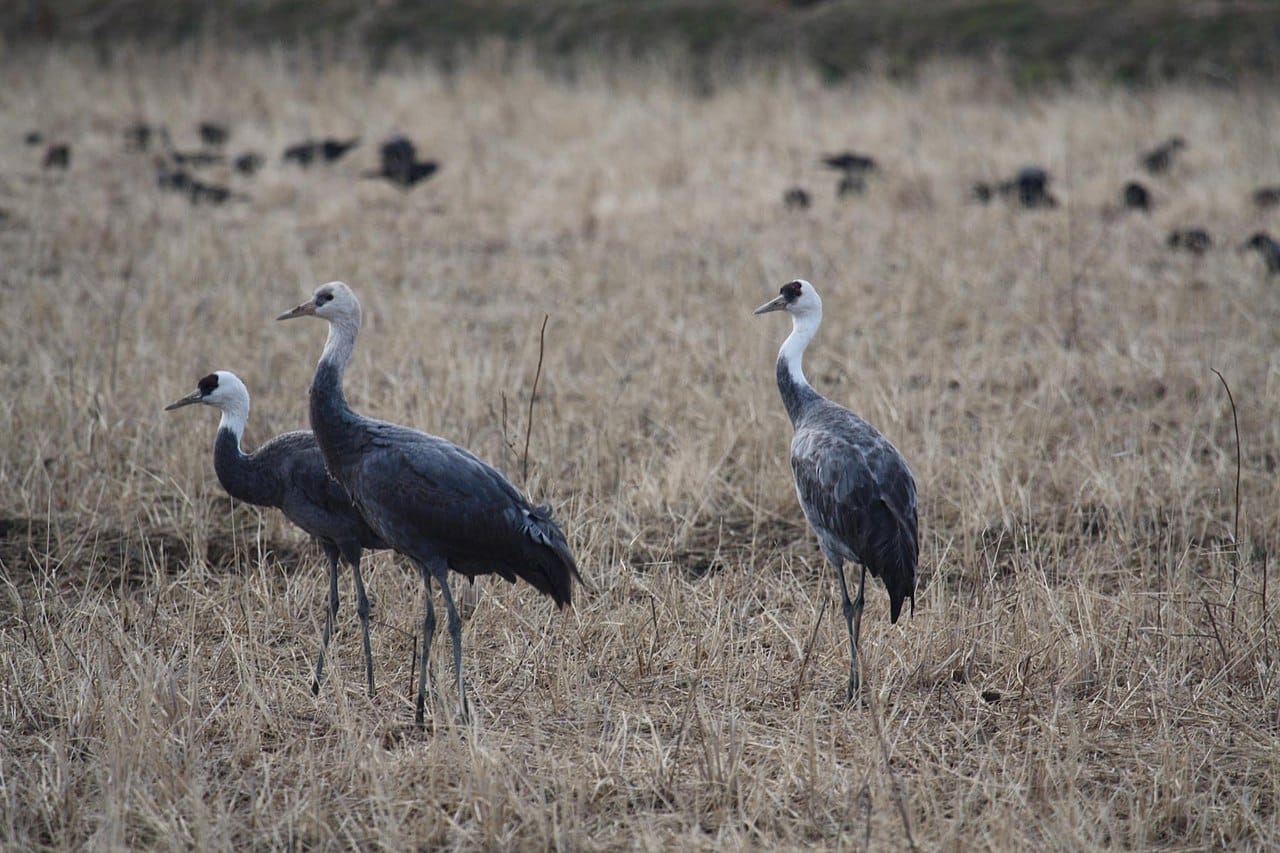
The Hooded Crane is a medium-sized Asian crane species, primarily found in eastern Russia, Japan, China, and Korea. Adults are characterized by their grey body, white face, and dark hood covering the head and upper neck. They stand about 1.2 meters tall and have a wingspan of roughly 2 meters. Hooded Cranes prefer wetlands, rice paddies, and shallow marshes, feeding on seeds, grains, insects, and small aquatic animals. Their feeding behavior involves foraging in shallow waters or along wet grasslands.
These cranes are migratory, wintering in Japan and southern China. Hooded Cranes form small flocks outside the breeding season, with synchronized flights and vocalizations strengthening social cohesion. Courtship involves intricate dances with bowing, leaping, and coordinated calls between pairs. Conservation concerns include habitat destruction, wetland drainage, and human disturbances along migratory routes. Captive breeding and habitat protection programs have helped maintain stable populations. The Hooded Crane exemplifies the adaptability and social complexity seen in many Types of Cranes.
15. Black‑necked Crane (Grus nigricollis)
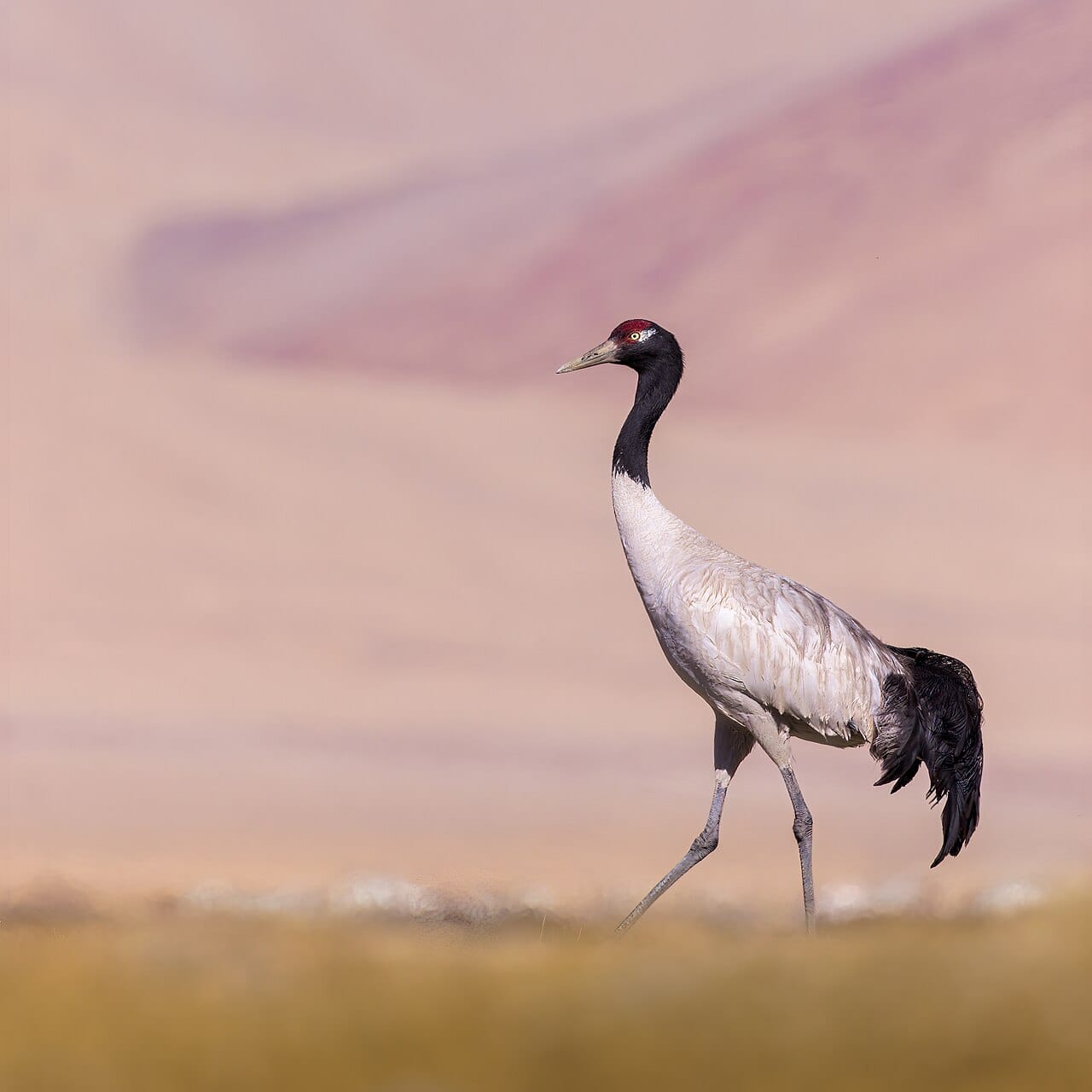
The Black‑necked Crane is a high-altitude crane species native to the Tibetan Plateau, Bhutan, India, and China. Recognizable by its grey body, black neck and head, and white wing patches, this crane stands about 1.2 meters tall with a wingspan around 2 meters. Black‑necked Cranes inhabit alpine wetlands, marshes, and highland meadows, feeding on tubers, seeds, insects, and small aquatic animals. Their diet is adapted to cold, high-altitude environments, and they often forage in shallow water or soft mud.
Black‑necked Cranes are highly social and monogamous, performing elaborate courtship dances that include bowing, jumping, wing flapping, and trumpeting calls. They migrate seasonally to lower-altitude valleys for winter, often forming large flocks. Conservation challenges include wetland drainage, agricultural expansion, and human disturbance. Protected areas in Tibet, Bhutan, and India serve as vital breeding and wintering grounds. Observing the Black‑necked Crane highlights the incredible adaptations of crane species to extreme environments and underscores the ecological diversity of Types of Cranes.
Conclusion
Cranes are among the most majestic and fascinating birds in the world, showcasing remarkable adaptations, elegant courtship dances, and diverse ecological roles. From the towering Sarus Crane of South Asia to the tiny Demoiselle Crane of Eurasia, each species offers unique insights into migration, social behavior, and habitat specialization. Conservation efforts across continents are crucial, as many crane populations face threats from wetland loss, agriculture, and human disturbance. By studying and appreciating these birds, we can better understand the importance of protecting wetlands, grasslands, and other ecosystems that sustain them. Whether observing the Blue Crane of South Africa, the Red-crowned Crane of Japan, or the high-altitude Black-necked Crane, enthusiasts gain a deeper connection to wildlife and biodiversity. This comprehensive guide to Types of Cranes highlights their beauty, ecological significance, and the ongoing need for global conservation initiatives.
Frequently Asked Questions About Types of Cranes
1. What are cranes?
Cranes are large, long-legged and long-necked birds in the family Gruidae, known for their elegant appearance, migratory behavior, and complex courtship dances.
2. How many types of cranes are there?
Globally, there are 15 recognized crane species, each with unique features, habitats, and behaviors. This article reviews 15 major Types of Cranes.
3. Where do cranes live?
Cranes inhabit wetlands, marshes, grasslands, agricultural fields, and river valleys across Asia, Africa, Europe, and North America.
4. What do cranes eat?
Cranes are omnivorous, feeding on seeds, grains, insects, small vertebrates, and aquatic plants depending on species and habitat.
5. Are cranes migratory?
Many crane species are migratory, traveling hundreds to thousands of kilometers between breeding and wintering grounds.
6. How tall are cranes?
Cranes vary in size. The Sarus Crane can reach 1.8 meters tall, while the Demoiselle Crane is smaller at around 85 cm in height.
7. What is the lifespan of cranes?
Cranes typically live 20–30 years in the wild, with some species living longer in captivity under protection.
8. How do cranes mate?
Cranes are generally monogamous, mating for life, and perform elaborate courtship dances including bowing, jumping, and synchronized calls.
9. Are cranes endangered?
Several crane species, such as the Whooping Crane and Siberian Crane, are endangered or vulnerable due to habitat loss and human disturbance.
10. What is the largest crane species?
The Sarus Crane is the tallest flying bird in the world, reaching up to 1.8 meters in height.
11. Which crane is the smallest?
The Demoiselle Crane is the smallest, standing around 85 cm tall with a wingspan of 1.7 meters.
12. What are crane calls like?
Cranes use loud trumpeting or whooping calls to communicate, attract mates, and establish territory.
13. How do cranes build nests?
Most cranes build nests in wetlands or grasslands using vegetation, and both parents share incubation and chick-rearing duties.
14. Can cranes fly long distances?
Yes, many cranes are long-distance migrants, flying in V-formations to conserve energy.
15. How do cranes defend themselves?
Cranes primarily rely on vigilance, flight, and group safety, though some use their strong bills and feet if threatened.
16. What are wattles on cranes?
Wattles are fleshy, hanging skin near the throat, used in visual displays and mating rituals, especially in species like the Wattled Crane.
17. Do cranes dance?
Yes, crane dancing involves coordinated movements, bowing, leaping, and wing spreading to communicate and strengthen pair bonds.
18. Where can I see Red-crowned Cranes?
Red-crowned Cranes are found in Japan, China, and the Russian Far East, primarily in wetlands and marshes.
19. Are cranes social birds?
Most cranes are social, forming flocks during migration and non-breeding seasons for protection and communal foraging.
20. What threats do cranes face?
Habitat destruction, wetland drainage, hunting, and human disturbance are major threats to crane populations.
21. Which crane is North America’s rarest?
The Whooping Crane is North America’s rarest crane, with intensive conservation programs to boost its population.
22. What is the national bird of South Africa?
The Blue Crane (Anthropoides paradisea) is South Africa’s national bird, known for its blue-grey plumage and elegance.
23. How do cranes communicate?
Cranes communicate with loud calls, dances, and visual displays to coordinate mates, territory, and flock movement.
24. What is unique about the Siberian Crane?
The Siberian Crane is critically endangered, all-white, and migrates between Siberia and China or India.
25. How long do crane chicks stay with parents?
Chicks are precocial but typically remain with parents for several months until capable of independent foraging.
26. Which crane is tallest in Africa?
The Wattled Crane is Africa’s tallest crane, with impressive height and long red wattles for display.
27. What are crane migrations like?
Some species, like the Demoiselle and Sandhill Cranes, migrate thousands of kilometers annually in large flocks.
28. How do cranes find food in wetlands?
They use their long bills and legs to probe shallow water for plants, insects, and small animals.
29. Which crane has a golden crown?
The Grey Crowned Crane has a distinctive golden crown of stiff feathers on its head, native to eastern Africa.
30. Can cranes adapt to agriculture?
Yes, species like Sandhill Cranes and Blue Cranes often forage in fields, though habitat loss remains a concern.
31. How do cranes mate for life?
Through lifelong pair bonds reinforced by synchronized dances, calls, and shared parenting responsibilities.
32. Which crane lives in high-altitude regions?
The Black‑necked Crane inhabits the Tibetan Plateau and high-altitude wetlands across Asia.
33. Do cranes have predators?
Yes, eggs and chicks are vulnerable to foxes, raccoons, and birds of prey, while adults rely on flight for safety.
34. Which crane is tallest in the world?
The Sarus Crane holds the record as the tallest flying bird globally, admired for its size and elegance.
35. Are cranes important ecologically?
Cranes play a key role in wetland ecosystems, controlling insect populations, dispersing seeds, and indicating habitat health.
36. Which cranes are endangered?
Species like the Siberian Crane, Whooping Crane, and Hooded Crane face high conservation risk due to habitat loss and human activity.
37. Do cranes migrate in V-formation?
Yes, cranes use V-formations during migration to conserve energy and maintain group coordination.
38. What is a crane’s wingspan?
Wingspans vary by species, ranging from 1.7 meters in Demoiselle Cranes to over 2.5 meters in Wattled Cranes.
39. How do cranes reproduce?
Cranes build ground nests, lay 1–3 eggs, and both parents incubate and feed the chicks until fledging.
40. Can cranes be seen in cities?
Rarely; cranes prefer wetlands and grasslands, though some may visit agricultural fields near urban areas.
41. What is unique about Brolgas?
Brolgas, native to Australia, are famous for their coordinated courtship dances and long legs suited for wetland habitats.
42. Which cranes have red head patches?
Red-crowned, Whooping, Sarus, and Wattled Cranes feature bright red patches used for display and identification.
43. How do cranes defend nests?
Parents guard nests vigorously, using calls and wing displays to deter predators.
44. Do cranes fly at night?
Most cranes migrate during daylight, using landmarks and thermals to navigate long distances.
45. How fast can cranes fly?
Cranes fly at speeds between 30–50 km/h, depending on species and wind conditions.
46. Are cranes culturally significant?
Yes, cranes symbolize longevity, fidelity, and prosperity in many Asian and African cultures.
47. Which cranes are social outside breeding?
Sandhill, Demoiselle, and Blue Cranes often form flocks during migration or in wintering grounds.
48. How do cranes survive winter?
Migratory species move to warmer regions, while resident species adapt by foraging and roosting in wetlands.
49. Can cranes coexist with humans?
Yes, especially in agricultural areas, though human disturbance and habitat conversion pose threats.
50. What is the main threat to cranes worldwide?
Habitat loss, wetland drainage, and human encroachment are the primary threats to crane survival globally.
Read more: 20 Types of Cuttlefish (Pictures And Identification)