

The ocean is filled with fascinating bivalve mollusks, and among them, scallops are some of the most recognizable and ecologically important. When exploring the types of Scallop, we are referring to a diverse group of marine animals belonging to the Pectinidae family. These creatures are famous not only for their fan-shaped shells but also for their unique ability to swim by rapidly opening and closing their valves. Unlike many other shellfish, scallops are active and responsive, making them one of the most interesting invertebrates in marine biology.
Scallops live in a wide range of habitats, from shallow coastal waters to deep ocean floors. They play an important ecological role as filter feeders, helping to clean seawater by consuming plankton and suspended particles. In addition, they serve as a food source for fish, starfish, and humans, making them a key part of marine food webs. In this guide, we will explore 15 different types of Scallop in detail, starting with the most widely known and commercially important species.
15 Types of Scallops
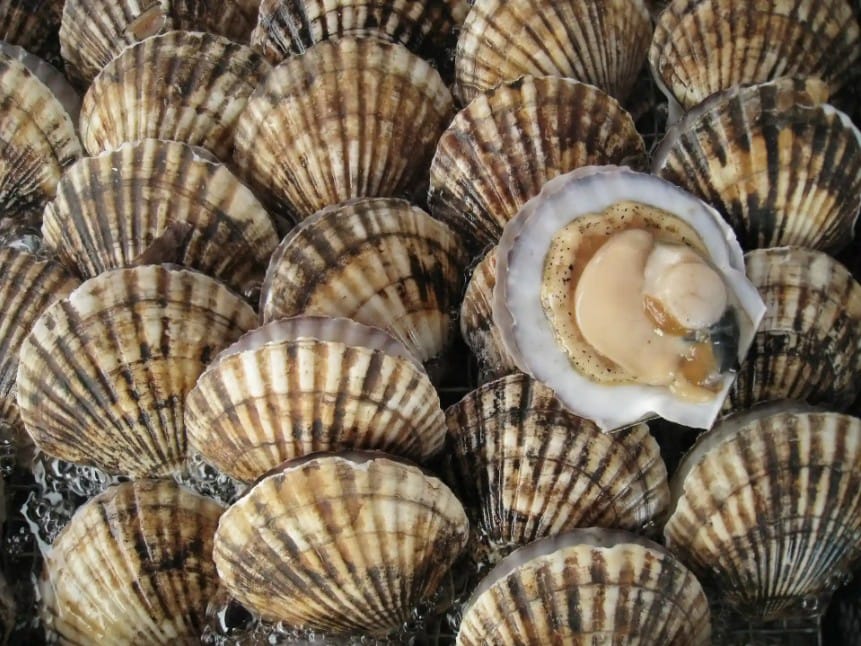
1. Atlantic Sea Scallop (Placopecten magellanicus)
The Atlantic Sea Scallop is one of the most economically important and well-studied types of Scallop in the world. It is found along the western North Atlantic Ocean, especially from Newfoundland in Canada down to North Carolina in the United States. This species is easily recognized by its large, fan-shaped shell with smooth ribs and a generally pale white or light brown coloration.
Unlike many smaller scallops, the Atlantic Sea Scallop can grow to a relatively large size, making it a major target for commercial fishing industries. Its adductor muscle, which is the part that allows the shell to open and close, is highly prized in global cuisine due to its sweet flavor and tender texture. This is the “scallop meat” commonly served in restaurants.
Ecologically, this scallop plays an important role in benthic ecosystems (sea floor habitats). It acts as a filter feeder, consuming plankton and organic particles suspended in the water. By doing so, it helps maintain water clarity and nutrient balance in coastal environments.
Atlantic Sea Scallops also have a fascinating life cycle. They begin as free-swimming larvae before settling onto the seafloor, where they develop their shells and begin adult life. They can even “swim” short distances by rapidly clapping their shells together, allowing them to escape predators like starfish.
Due to heavy fishing pressure in the past, management programs and marine conservation efforts have been implemented to ensure sustainable populations. Today, this species is considered one of the best examples of a well-managed seafood resource.
2. Bay Scallop (Argopecten irradians)
The Bay Scallop is one of the smallest and most delicate types of Scallop, commonly found in shallow coastal waters, bays, and estuaries along the eastern coast of North America. Unlike its larger Atlantic cousin, this species prefers warmer, protected environments such as seagrass beds, which provide shelter and food.
The shell of the Bay Scallop is rounded and fan-shaped with fine radial ribs. It often displays a beautiful range of colors including gray, blue, purple, and brown, making it visually distinct among scallop species. Its smaller size does not reduce its ecological importance; in fact, it is a key indicator species for coastal water health.
Bay Scallops are highly sensitive to environmental changes. Pollution, habitat loss, and water temperature fluctuations can significantly affect their populations. Because of this, scientists often study them to monitor ecosystem stability in coastal regions.
In terms of behavior, Bay Scallops are more active than many people expect. They can swim short distances by rapidly clapping their shells, especially when escaping predators like crabs and sea stars. However, they generally prefer to remain partially buried or hidden among seagrass.
From a culinary perspective, Bay Scallops are highly valued for their tender texture and slightly sweet flavor. They are often used in seafood dishes such as pasta, soups, and light sautés. Their smaller size makes them ideal for quick cooking methods.
3. Calico Scallop (Argopecten gibbus)
The Calico Scallop is one of the most visually striking types of Scallop, known for its colorful and patterned shell. It is found in warm Atlantic waters, particularly in the Caribbean Sea, Gulf of Mexico, and along the southeastern United States coastline.
Its shell is typically lighter in color, featuring a mix of orange, pink, purple, and brown patterns that resemble a “calico” fabric design—hence its name. This unique appearance makes it easy to identify among other scallop species.
Calico Scallops live on sandy or muddy ocean floors and often form large beds in deeper waters. Unlike Bay Scallops, they are not usually found in seagrass habitats. Instead, they prefer open seabeds where they can partially bury themselves for protection.
As filter feeders, Calico Scallops help regulate plankton populations and contribute to nutrient cycling in marine ecosystems. Their presence also supports biodiversity by providing habitat structure for smaller marine organisms.
4. Queen Scallop (Aequipecten opercularis)
The Queen Scallop is one of the most recognizable European types of Scallop, commonly found in the northeastern Atlantic Ocean, especially around the coasts of the United Kingdom, Ireland, and northern Spain. It thrives in both shallow and moderately deep waters, often on sandy or gravel seabeds where currents bring a steady supply of plankton.
This scallop is smaller than the Atlantic Sea Scallop but is highly valued in seafood cuisine due to its tender texture and slightly sweet flavor. Its shell is fan-shaped with pronounced ribs and can display a range of colors including pink, orange, and light brown. One of its most distinctive features is its ability to “swim” by rapidly clapping its shells together, creating short bursts of movement to escape predators such as starfish and crabs.
Ecologically, Queen Scallops play a key role in benthic ecosystems. As filter feeders, they help maintain water quality by removing plankton and organic particles from the water column. They also serve as prey for various marine animals, making them an important link in the food chain.
In commercial fisheries, Queen Scallops are harvested in several European countries, but their populations are carefully managed to prevent overfishing. Their sensitivity to environmental changes also makes them useful indicators of marine ecosystem health.
5. Japanese Scallop (Mizuhopecten yessoensis)
The Japanese Scallop is one of the most important cold-water types of Scallop in global aquaculture. Native to the northern Pacific Ocean, it is commonly found in Japan, Russia, and parts of Korea. This species is especially valued for its large size and fast growth rate, making it a cornerstone of commercial scallop farming.
Its shell is large, fan-shaped, and typically white to light brown with subtle ribbing. Unlike many other scallops, the Japanese Scallop can grow to impressive sizes in relatively short periods under ideal farming conditions. This rapid growth has made it one of the most economically important scallops in the world seafood industry.
Ecologically, Japanese Scallops are powerful filter feeders. They consume plankton and suspended organic matter, which helps improve water clarity in coastal ecosystems. In aquaculture systems, they are often cultivated on ropes or suspended nets, allowing them to grow efficiently while minimizing environmental disturbance.
Behaviorally, these scallops are capable of short bursts of swimming, although they are generally more sedentary compared to smaller scallop species. Their ability to respond quickly to predators is still an important survival trait in the wild.
Because of their importance in global seafood markets, Japanese Scallops are widely studied for sustainable aquaculture practices. Their farming methods are often considered environmentally friendly compared to other seafood production systems.
6. Peruvian Scallop (Argopecten purpuratus)
The Peruvian Scallop is one of the most important South American types of Scallop, found along the Pacific coast from Peru to Chile. It inhabits warm coastal waters and thrives in areas influenced by nutrient-rich ocean currents, which support abundant plankton growth.
This species is known for its relatively smooth, fan-shaped shell, which often displays light pink, white, or beige tones. It prefers shallow to moderately deep waters and is commonly found on sandy or muddy seabeds where it can partially bury itself for protection.
Peruvian Scallops are highly valued in international seafood markets due to their sweet flavor and soft texture. They are widely exported and play an important role in the economies of coastal South American communities.
From an ecological perspective, these scallops are essential filter feeders. They help maintain water quality by removing plankton and organic particles, contributing to balanced marine ecosystems. However, their populations can be influenced by oceanographic conditions such as El Niño events, which affect nutrient availability and water temperature.
Aquaculture of Peruvian Scallops has grown significantly in recent decades, with farming operations designed to support sustainable harvesting while protecting wild populations. This makes them a key species in discussions about responsible seafood production.
While not as commercially important as Atlantic Sea Scallops, they are still harvested in some regions. However, their populations can fluctuate significantly due to environmental conditions such as water temperature and ocean currents.
Calico Scallops also have the ability to swim short distances by clapping their shells, which is a defense mechanism against predators. This movement is often sudden and rapid, helping them escape threats in open water environments.
7. Iceland Scallop (Chlamys islandica)
The Iceland Scallop is one of the most resilient cold-water types of Scallop, found in the North Atlantic Ocean, especially around Iceland, Greenland, and parts of northern Europe. It thrives in deep, cold marine environments where temperatures remain low year-round. This harsh habitat has shaped a slow-growing but highly durable species.
Its shell is thick, rounded, and strongly ribbed, typically ranging from pale white to light brown or gray. Unlike shallow-water scallops, the Iceland Scallop is adapted to deep seabeds where light is limited and currents are strong. It often lives partially buried in sediment or attached to hard substrates.
This species is an important part of cold ocean ecosystems. As a filter feeder, it removes plankton and organic particles from the water, contributing to nutrient cycling in deep marine environments. Although it is not as widely harvested as warmer-water scallops, it still supports regional fisheries in northern countries.
Iceland Scallops grow slowly due to cold temperatures, but this also allows them to live longer compared to many tropical scallop species. Their slow growth makes them more sensitive to environmental changes such as ocean warming and habitat disturbance.
8. Lion’s Paw Scallop (Nodipecten nodosus)
The Lion’s Paw Scallop is one of the most visually striking types of Scallop, native to warm tropical waters of the western Atlantic, including the Caribbean Sea and Gulf of Mexico. It gets its name from its large, thick shell covered in nodules that resemble a lion’s paw.
This species is significantly larger than many other scallops and is often considered one of the most impressive in appearance. Its shell coloration varies widely, ranging from orange and red to deep purple and brown, making it highly distinctive in reef environments.
Lion’s Paw Scallops are typically found in deeper reef zones where they attach to hard substrates using strong byssal threads. Unlike shallow-water scallops, they are less frequently exposed to wave action, allowing them to grow larger and heavier shells.
Ecologically, they play a role in reef ecosystems by filtering water and providing microhabitats for smaller marine organisms. Their size and structure also make them an important prey item for larger predators such as fish and octopuses.
Although not a major commercial species due to their habitat depth, they are occasionally harvested and are considered a delicacy in some regions.
9. Smooth Scallop (Flexopecten glaber)
The Smooth Scallop is a unique member of the types of Scallop group due to its unusually smooth shell surface, which contrasts with the heavily ribbed shells of most scallop species. It is found in the Mediterranean Sea and parts of the eastern Atlantic Ocean.
This species prefers sandy and muddy seabeds where it can partially bury itself for protection. Its smooth shell helps it blend into sediment environments, reducing detection by predators.
Smooth Scallops are moderate-sized and display soft coloration, often in shades of cream, beige, or light brown. They are capable of short swimming bursts by clapping their shells, although they are generally less active than shallow-water species.
As filter feeders, they contribute to maintaining water clarity and nutrient balance in coastal ecosystems. They are also part of local fisheries in some Mediterranean regions, where they are harvested for food.
Their smooth shell structure makes them an interesting evolutionary contrast to more heavily armored scallop species, showing how environmental conditions influence shell morphology.
10. Zigzag Scallop (Pecten zigzag)
The Zigzag Scallop is a visually distinctive species among types of Scallop, named for the zigzag or wavy patterns found on its shell ribs. It is primarily found in the Mediterranean Sea and adjacent Atlantic waters, where it inhabits sandy and gravelly seabeds.
Its shell is fan-shaped with strong radial ribs that form irregular zigzag patterns, giving it a unique appearance compared to smoother scallop species. The coloration is typically light with hints of orange, pink, or brown.
Zigzag Scallops live in relatively shallow waters and often bury themselves partially in sediment for protection. They are capable of short swimming movements, which they use as a defense mechanism against predators such as starfish and crabs.
Ecologically, they function as filter feeders, helping to clean seawater by consuming plankton and suspended organic matter. Their presence contributes to the overall health of benthic marine ecosystems.
Although not heavily exploited commercially, they are occasionally harvested in small-scale fisheries and are valued for their ecological role in Mediterranean coastal habitats.
11. Mediterranean Scallop (Pecten jacobaeus)
The Mediterranean Scallop is one of the most iconic types of Scallop found in European waters, especially across the Mediterranean Sea. It is closely related to the Atlantic scallop but is generally smaller and adapted to warmer, more stable marine conditions. This species has been historically important in both ecology and human cuisine, particularly in coastal European cultures.
Its shell is fan-shaped with smooth, well-defined ribs and often displays warm tones such as cream, light orange, or pink. One of its key identification features is its symmetrical shape and relatively thick shell structure, which helps it withstand moderate water movement on sandy and muddy seabeds.
Mediterranean Scallops are filter feeders, consuming plankton and suspended organic particles from the water column. This feeding activity plays a crucial role in maintaining water clarity and balancing nutrient levels in coastal ecosystems. They are often found partially buried in sediment, where they remain stable while still accessing flowing water for feeding.
This species is also economically significant in southern Europe. It is harvested in regulated fisheries and is considered a high-quality seafood product. However, overharvesting and habitat degradation have led to population monitoring in several regions.
12. Variegated Scallop (Chlamys varia)
The Variegated Scallop is a visually diverse and colorful member of the types of Scallop, commonly found in the eastern Atlantic Ocean and Mediterranean Sea. Its name comes from the wide variation in shell colors and patterns, which can include combinations of orange, red, purple, brown, and white.
This species typically inhabits rocky seabeds and seagrass meadows at shallow to moderate depths. It often attaches itself to surfaces using byssal threads but can also lie freely on the seabed. Its vibrant shell coloration helps it blend into complex underwater environments such as reefs and algae-covered rocks.
Variegated Scallops are active filter feeders and contribute to maintaining ecosystem balance by removing plankton and organic particles from seawater. Their presence supports biodiversity by providing habitat complexity for small marine organisms.
Unlike some heavily commercial species, they are not widely harvested, but they are ecologically important in coastal ecosystems where they live. Their ability to survive in variable conditions makes them a resilient component of shallow marine habitats.
13. Pink Scallop (Chlamys rubida)
The Pink Scallop is a cold-water species and one of the more visually delicate types of Scallop, found mainly in the northern Pacific Ocean, including coastal regions of Alaska and Canada. It is known for its soft pink to reddish shell coloration, which distinguishes it from darker or more neutral-toned scallops.
This species prefers colder, nutrient-rich waters and is commonly found on sandy or gravelly seabeds. Its shell is fan-shaped with fine radial ribs, and it is generally smaller compared to commercially dominant scallop species.
Pink Scallops are filter feeders that play an important ecological role in cold marine ecosystems. By consuming plankton and suspended particles, they help regulate water quality and contribute to nutrient cycling in northern ocean environments.
They are also part of the food web, serving as prey for fish, sea stars, and other marine predators. Although not heavily exploited in global fisheries, they are important for regional biodiversity and ecosystem stability.
14. Rough Scallop (Aequipecten muscosus)
The Rough Scallop is a distinctive species among types of Scallop due to its heavily textured and irregular shell surface. It is found in warm western Atlantic waters, including the Gulf of Mexico and Caribbean Sea. Its rugged appearance helps it blend into complex seabed environments.
Its shell is thick and uneven, often covered in ridges or growth patterns that make it appear rough compared to smoother scallop species. This structural adaptation provides protection against predators and environmental stress.
Rough Scallops inhabit sandy and muddy substrates at varying depths. They are capable of short bursts of swimming by clapping their shells, although they are generally more sedentary than shallow-water scallops.
As filter feeders, they contribute to maintaining water quality and supporting marine food webs. While not a major commercial species, they play a valuable ecological role in coastal ecosystems.
15. Kamchatka Scallop (Mizuhopecten spp.)
The Kamchatka Scallop is one of the most cold-adapted types of Scallop, found in the northern Pacific Ocean near Russia’s Kamchatka Peninsula and surrounding Arctic-influenced waters. It thrives in extremely cold, nutrient-rich marine environments where few other scallop species can survive.
This species has a large, sturdy shell adapted to deep and cold waters. Its coloration is typically pale white, beige, or light brown, with strong radial ribs that provide structural strength against pressure and currents.
Kamchatka Scallops are slow-growing due to cold temperatures but are highly resilient. They inhabit deep seabeds where they filter plankton and organic matter from cold ocean currents. Their feeding activity supports nutrient cycling in some of the most extreme marine environments on Earth.
Although not as widely known commercially as other scallops, they are harvested in some northern fisheries and are valued for their size and flavor.
Conclusion
Exploring the types of Scallop reveals just how diverse and ecologically important these marine bivalves are. From cold northern waters to warm tropical seas and nutrient-rich coastal zones, scallops have successfully adapted to a wide range of marine environments. Despite their simple appearance, they play a major role in ocean ecosystems as natural filter feeders, continuously cleaning seawater by removing plankton and organic particles.
Throughout the 15 species covered in this guide, we can see clear differences in size, shell structure, color, and habitat preference. Some scallops, like the Atlantic Sea Scallop and Japanese Scallop, are highly important in global seafood industries, while others, such as the Lion’s Paw or Kamchatka Scallop, highlight the beauty and adaptation of life in specialized marine environments. Even smaller or less commercially known species contribute significantly to maintaining ecological balance in coastal and deep-sea ecosystems.
Scallops are also a reminder of how delicate marine ecosystems can be. Their populations depend heavily on water quality, temperature stability, and habitat preservation. Protecting them means protecting the health of entire marine food webs, from microscopic plankton to larger ocean predators.
In the end, studying types of Scallop helps us better understand the complexity and interdependence of ocean life. Each species, no matter how small or large, plays a role in shaping underwater ecosystems and supporting biodiversity across the planet. As we continue to learn more about marine species, one question remains: how many other hidden wonders of the ocean are still waiting to be discovered?
Frequently Asked Questions (FAQ) About Types of Scallop
1. What are scallops?
Scallops are marine bivalve mollusks known for their fan-shaped shells and ability to swim by clapping their shells together.
2. What are the main types of Scallop?
Common types of Scallop include Atlantic sea scallops, bay scallops, queen scallops, and Japanese scallops.
3. Where do scallops live?
They live in oceans worldwide, from shallow coastal waters to deep sea environments.
4. Are scallops animals or plants?
Scallops are animals belonging to the mollusk family.
5. Do scallops move?
Yes, scallops can swim short distances by rapidly opening and closing their shells.
6. How do scallops eat?
They are filter feeders that consume plankton and microscopic organic particles.
7. Are all scallops edible?
Not all species are commonly eaten, but many are safe and widely consumed.
8. What do scallops taste like?
They have a mild, sweet, and slightly buttery flavor.
9. Are scallops healthy?
Yes, they are rich in protein, omega-3 fatty acids, and minerals.
10. What is the most common scallop eaten?
The Atlantic sea scallop is one of the most commonly consumed species.
11. Where are scallops most popular in cuisine?
They are popular in Europe, Asia, and North America.
12. What is a bay scallop?
A small scallop found in shallow coastal waters and bays.
13. What is a sea scallop?
A larger scallop species found in deeper ocean waters.
14. What is a queen scallop?
A European species known for its colorful shell and sweet meat.
15. What is a Japanese scallop?
A cold-water species widely farmed in Japan and Russia.
16. Are scallops fast swimmers?
No, they only move in short bursts to escape predators.
17. What eats scallops?
Starfish, crabs, fish, and humans are common predators.
18. Do scallops have eyes?
Yes, many scallops have dozens of tiny blue eyes along their shell edge.
19. What are scallop eyes used for?
They detect light and movement to help avoid predators.
20. Can scallops see clearly?
No, their vision is simple but useful for detecting danger.
21. How long do scallops live?
Most live 2–10 years depending on species.
22. Are scallops endangered?
Some local populations are affected by overfishing and habitat loss.
23. Can scallops regenerate?
They cannot regenerate like some animals but can survive minor shell damage.
24. What is a scallop shell made of?
It is made of calcium carbonate.
25. Why are scallop shells fan-shaped?
The shape helps with movement and stability on the seabed.
26. Do scallops form groups?
Yes, many species form dense seabed beds.
27. What is a scallop bed?
A large population of scallops living close together.
28. Are scallops farmed?
Yes, scallop aquaculture is common worldwide.
29. Is scallop farming sustainable?
Yes, it is considered environmentally friendly compared to many fisheries.
30. What is the biggest scallop species?
The Atlantic sea scallop is among the largest.
31. What is the smallest scallop species?
Bay scallops are among the smallest commercially known species.
32. How do scallops reproduce?
They release eggs and sperm into the water for external fertilization.
33. Do scallops have bones?
No, they have soft bodies protected by shells.
34. Are scallops mollusks?
Yes, they belong to the phylum Mollusca.
35. What is a scallop’s habitat?
They live on sandy, muddy, or rocky seabeds.
36. Can scallops survive out of water?
Only for a short time; they need water to survive.
37. Why are scallops important?
They filter water and support marine food chains.
38. Do scallops migrate?
No, but they can move locally to avoid threats.
39. Are scallops sensitive to pollution?
Yes, water quality greatly affects their survival.
40. What is scallop farming called?
It is called scallop aquaculture.
41. What is the lifespan of farmed scallops?
Usually 1–3 years before harvesting.
42. Do scallops have blood?
They have hemolymph, a fluid similar to blood.
43. What color are scallops?
Shell colors vary from white and brown to pink, orange, and purple.
44. Why do scallops clap their shells?
To swim and escape predators.
45. Are scallops related to clams?
Yes, both are bivalve mollusks.
46. Do scallops have brains?
No, they have a simple nervous system.
47. What is the commercial value of scallops?
They are highly valuable in global seafood markets.
48. Are scallops wild or farmed?
They can be both wild-caught and farmed.
49. What is the ecological role of scallops?
They help filter water and support marine biodiversity.
50. Do scallops live in freshwater?
No, scallops are marine animals and live in saltwater.
51. What is the most expensive scallop?
High-quality sea scallops from cold waters are often the most valuable.
52. Can scallops survive climate change?
Some species are sensitive to temperature changes and may be affected.
53. Why are scallops considered sustainable seafood?
Because they filter feed and require minimal environmental input in farming.
Read more: