

If you are researching types of sea cucumber, you are exploring one of the most ecologically important and biologically unusual marine animals on Earth. Sea cucumbers are soft-bodied echinoderms related to sea stars and sea urchins. They live on ocean floors and act as natural recyclers, breaking down organic matter trapped in sand and sediment. This process helps maintain clean seabeds and healthy coral reef systems. Found in tropical reefs, deep oceans, and coastal environments, sea cucumbers vary widely in size, color, and behavior. In this detailed guide, we will explore 30 species of Sea cucumber, starting with the first 5 in Part 1, with in-depth identification, habitat behavior, feeding habits, and ecological importance.
30 Types of Sea Cucumber
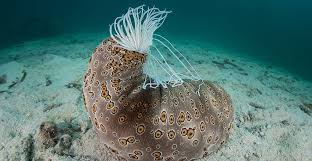
1. Tiger Tail Sea Cucumber
The Tiger Tail Sea Cucumber is one of the most visually distinctive species due to its long cylindrical body and striped pattern resembling a tiger’s tail. It is commonly found in shallow reef environments across the Indo-Pacific region, especially around coral rubble zones and sandy lagoons. This species can grow quite large, often reaching impressive lengths that allow it to move slowly but steadily across the seabed.
Ecologically, the Tiger Tail Sea Cucumber plays a vital role in sediment processing. It feeds by ingesting sand and extracting microscopic organic matter, algae particles, and decomposing material. This process helps recycle nutrients back into the marine ecosystem while improving water clarity in reef environments. By constantly moving and feeding, it also helps oxygenate the seabed, which benefits other marine organisms such as worms, crustaceans, and small fish.
One of the most interesting behavioral traits of this species is its defensive response. When threatened, it may release sticky tubules or contract its body to deter predators. Despite its simple appearance, it is highly adapted to survival in predator-rich reef ecosystems. For divers and marine researchers, the Tiger Tail Sea Cucumber is often considered an indicator species for healthy reef sediment systems.
2. Black Sea Cucumber
The Black Sea Cucumber is a dark-colored, elongated species commonly found in sandy and muddy seabeds across tropical and subtropical oceans. Its smooth, almost leathery texture allows it to burrow easily into sediment, making it less visible to predators. This camouflage is one of its most important survival adaptations.
In terms of feeding behavior, the Black Sea Cucumber is a detritivore, meaning it consumes decomposing organic matter found within sand. As it moves through sediment, it ingests large amounts of material and extracts nutrients while expelling cleaned sand. This process significantly improves sediment quality and supports nutrient cycling in marine ecosystems.
This species is also important for seabed stability. By continuously reworking sediment layers, it prevents the buildup of decaying organic matter that could otherwise lead to harmful bacterial growth. In many coastal ecosystems, the presence of Black Sea Cucumbers is a sign of balanced ecological activity.
Although it may appear simple, this species is highly efficient in its ecological role. Its ability to survive in low-oxygen environments and nutrient-poor sediments makes it one of the most resilient types of Sea cucumber in coastal ecosystems.
3. Pink Sea Cucumber
The Pink Sea Cucumber is a visually striking species found primarily in tropical coral reef ecosystems. Its soft, pink-toned body makes it relatively easy to identify compared to more cryptic species. It often inhabits shallow reef flats, lagoons, and sandy coral zones where sunlight reaches the seabed.
This species is a constant sediment recycler. It feeds by ingesting sand and organic debris, breaking it down through its digestive system, and releasing clean sediment back into the environment. This process helps maintain reef clarity and supports coral health by reducing excess organic buildup.
Unlike some deep-sea relatives, the Pink Sea Cucumber is more active during daylight hours, slowly crawling across reef surfaces using small tube feet. It may appear slow and simple, but its ecological impact is significant. By continuously processing sediment, it helps regulate nutrient distribution across reef systems.
Its bright coloration also serves as mild warning coloration, signaling to predators that it may contain chemical defenses. While not aggressive, it can release defensive compounds if disturbed. This combination of beauty and ecological function makes it one of the most fascinating types of sea cucumber in shallow reef ecosystems.
4. Sand Sifting Sea Cucumber
The Sand Sifting Sea Cucumber is one of the most important ecosystem engineers in shallow marine environments. It is commonly found in sandy coastal areas, coral lagoons, and reef flats where sediment accumulation is high.
This species is highly specialized for sediment processing. It continuously ingests sand, extracting organic matter such as decaying plant material, microorganisms, and algae. The cleaned sand is then expelled, helping maintain oxygen-rich and nutrient-balanced seabeds.
Its movement also plays a crucial role in aerating the ocean floor. As it travels through sediment layers, it creates small channels that allow oxygen and water to circulate more effectively. This supports the survival of other benthic organisms such as worms, small crustaceans, and juvenile fish.
From an ecological perspective, the Sand Sifting Sea Cucumber is considered a natural “cleaning machine” of coral reef systems. Without it, sediment buildup could disrupt coral growth and reduce biodiversity in shallow marine habitats.
5. Leopard Sea Cucumber
The Leopard Sea Cucumber is named for its spotted skin pattern, which resembles the markings of a leopard. It is typically found in coral reef environments, often resting among coral rubble, rocks, and sandy patches.
This species feeds primarily on detritus and organic particles trapped in sediment. As it moves slowly across the seabed, it processes large amounts of material, helping recycle nutrients and maintain clean reef surfaces.
Its spotted pattern is not just decorative but also functional. It provides camouflage against coral and rocky backgrounds, protecting it from predators such as reef fish and crustaceans. In some cases, it can also contract its body to reduce visibility when threatened.
The Leopard Sea Cucumber is an important contributor to reef ecosystem stability. By continuously processing sediment, it supports coral health and helps maintain the delicate balance of marine biodiversity.
6. Spiny Sea Cucumber
The Spiny Sea Cucumber is a visually defensive species characterized by its rough, spine-like projections covering the outer surface of its body. These spines are not sharp like those of sea urchins, but they create a textured armor-like appearance that helps deter predators. This species is commonly found in reef slopes, rocky seabeds, and deeper coral environments across tropical oceans.
Ecologically, the Spiny Sea Cucumber plays an important role as a sediment recycler. It feeds by ingesting sand and organic debris, extracting nutrients, and expelling cleaned sediment. This constant feeding activity helps maintain balanced seabed ecosystems by preventing excessive buildup of decaying organic matter. In reef systems, this function is especially important because it supports coral health by reducing sediment smothering on coral surfaces.
The spines also serve a secondary function beyond defense. They help trap fine organic particles in the surrounding water and sediment, making feeding more efficient in nutrient-poor environments. This adaptation allows the species to survive in habitats where food availability fluctuates. Despite its intimidating appearance, it is a slow-moving and non-aggressive organism that depends on camouflage and structural defense rather than active escape behavior.
From an ecological standpoint, this species contributes significantly to benthic biodiversity. By constantly processing sediment layers, it helps oxygenate the seabed and supports microorganisms that live within marine substrates. This makes the Spiny Sea Cucumber an essential component of coral reef and deep-sea ecosystems.
7. Yellow Sea Cucumber
The Yellow Sea Cucumber is a brightly colored species often found in shallow tropical waters and coral reef flats. Its yellow pigmentation makes it one of the more visually noticeable members among types of sea cucumber, especially during daylight dives in clear reef environments.
This species primarily feeds on organic matter embedded in sand and fine sediments. By ingesting large amounts of substrate, it extracts microorganisms, decomposing plant material, and detritus. This feeding behavior is essential for nutrient cycling, as it recycles organic waste into usable nutrients for other marine organisms.
One of the key ecological roles of the Yellow Sea Cucumber is sediment stabilization. As it moves slowly across the seabed, it prevents excessive sediment buildup and supports oxygen flow within marine substrates. This benefits small invertebrates, bacteria, and even coral larvae that depend on clean sediment conditions for survival.
Its bright coloration may also serve as a mild warning signal to predators, suggesting the presence of chemical defenses. While not dangerous to humans, it can release defensive compounds if disturbed. Overall, this species is a vital contributor to reef health and is often used as an indicator of balanced coastal ecosystems.
8. White Sea Cucumber
The White Sea Cucumber is a pale, often translucent species found in sandy seabeds and coral reef environments. Its light coloration allows it to blend seamlessly with its surroundings, making it difficult for predators to detect. It is commonly observed in shallow coastal waters where sediment composition is fine and soft.
This species is a classic detritivore, feeding on organic matter mixed within sand. As it processes sediment through its digestive system, it removes nutrients and microorganisms while expelling cleaned sand back into the environment. This process helps maintain sediment quality and supports healthy marine ecosystems.
Unlike more active marine animals, the White Sea Cucumber moves slowly and continuously, relying on steady feeding rather than speed or defense. Its soft body structure allows it to burrow slightly into sediment, which provides additional protection from predators and environmental stress.
In ecological terms, it plays an important role in nutrient recycling and sediment aeration. Its feeding activity enhances oxygen penetration into seabed layers, which benefits buried organisms such as worms and small crustaceans. Despite its simple appearance, it is a crucial component of benthic ecosystem stability.
9. Orange-footed Sea Cucumber
The Orange-footed Sea Cucumber is a distinctive species recognized by its bright orange tube feet, which are used for locomotion and attachment to the seabed. It is commonly found in coral reef systems and shallow tropical marine environments.
This species feeds on organic particles trapped within sand and reef sediments. It plays a major role in breaking down decomposing material and recycling nutrients back into the ecosystem. Its feeding behavior contributes to maintaining clean and oxygen-rich reef floors.
The orange tube feet are not only functional but also help with grip on uneven reef surfaces. This allows the species to move across coral rubble and rocky terrain efficiently. In addition, its coloration may help it blend into coral-rich environments where orange tones are common.
Ecologically, the Orange-footed Sea Cucumber is important for maintaining sediment balance and preventing organic accumulation in reef systems. Its continuous movement and feeding help support biodiversity by creating healthier conditions for other benthic organisms.
10. Giant Sea Cucumber
The Giant Sea Cucumber is one of the largest species in this group, capable of reaching impressive lengths compared to most other sea cucumbers. It is found in both shallow reef systems and deeper marine environments, depending on regional distribution.
Due to its size, this species has a significant ecological impact on sediment processing. It consumes large volumes of sand and organic material, making it one of the most efficient natural recyclers in marine ecosystems. Its feeding activity helps maintain large-scale sediment balance across reef and seabed environments.
The Giant Sea Cucumber also plays a role in nutrient redistribution. By breaking down organic matter and excreting processed sediment, it releases nutrients that support microbial life and small benthic organisms. This makes it a key species in sustaining deep and shallow marine food webs.
Despite its size, it is a slow and non-aggressive organism that relies on chemical defenses and camouflage for protection. Its ecological importance is substantial, as it influences sediment structure and water quality across wide marine areas.
11. Imitation Sea Cucumber
The Imitation Sea Cucumber is one of the more mysterious species among types of sea cucumber because of its remarkable ability to blend into its surroundings. Instead of standing out, it often mimics the shape, color, and texture of surrounding sand, rocks, or coral fragments. This camouflage strategy makes it extremely difficult for predators and even human observers to detect in the wild.
This species is commonly found in coral reef systems and shallow marine environments where visual predators such as reef fish are abundant. Its body is soft and flexible, allowing it to adjust its posture and partially bury itself in sediment for additional protection. Unlike more active marine animals, it relies entirely on stealth and environmental blending for survival.
From a feeding perspective, the Imitation Sea Cucumber is a detritivore. It consumes organic matter trapped in sand and sediment, extracting nutrients through its digestive system while releasing cleaned substrate back into the environment. This continuous feeding process supports sediment turnover and nutrient recycling in reef ecosystems.
Ecologically, this species contributes to maintaining healthy seabeds by preventing organic waste accumulation. Its presence also indicates a stable reef environment, as it requires relatively undisturbed sediment layers to thrive. Although not as well-known as larger sea cucumbers, its ecological role is equally important in sustaining marine biodiversity.
12. Red Sea Cucumber
The Red Sea Cucumber is a vibrant species found primarily in warm tropical waters, where its reddish coloration makes it visually distinctive against sandy or coral-covered seabeds. This species is typically associated with reef slopes, lagoons, and shallow coastal environments rich in organic material.
It feeds by ingesting sediment and extracting decomposing organic matter, including microorganisms and fine plant debris. This process is essential for maintaining nutrient balance in reef ecosystems, as it converts waste materials into usable nutrients for other marine life.
The red pigmentation may also serve as a form of warning coloration, signaling chemical defenses to potential predators. While not aggressive, it can release deterrent substances when disturbed. Its slow movement and constant feeding behavior help it remain relatively stable within its habitat.
Ecologically, the Red Sea Cucumber plays a critical role in sediment aeration and nutrient cycling. By continuously processing seabed material, it supports coral health and improves overall water quality in reef systems. It is considered an important contributor to ecosystem stability in tropical marine environments.
13. Brown Sea Cucumber
The Brown Sea Cucumber is one of the most widespread and adaptable species in marine environments. Its earthy coloration allows it to blend seamlessly into sandy and muddy seabeds across tropical and temperate oceans. It is commonly found in coastal waters, lagoons, and reef-associated sediment zones.
This species is a highly efficient detritivore, feeding on organic matter embedded within sediment. As it moves slowly across the ocean floor, it ingests large amounts of substrate, processes nutrients internally, and releases cleaned sediment. This natural recycling process is vital for maintaining seabed health.
The Brown Sea Cucumber is particularly important in coastal ecosystems where organic waste accumulation can be high. Its feeding activity reduces sediment pollution and supports microbial life that depends on oxygen-rich environments. It also helps prevent harmful bacterial growth in decomposing matter.
Because of its adaptability, this species is often found in disturbed or human-impacted environments, making it an important indicator of ecological resilience. Despite its simple appearance, it plays a major role in maintaining balance in marine ecosystems.
14. Green Sea Cucumber
The Green Sea Cucumber is a common reef-associated species found in shallow tropical waters. Its greenish coloration allows it to blend with algae-covered rocks and seagrass environments, providing effective camouflage against predators.
This species feeds on organic debris, algae fragments, and microorganisms found in sediment. Its feeding behavior contributes to maintaining clean reef floors and preventing excessive organic buildup that could negatively affect coral growth.
The Green Sea Cucumber is also an active sediment processor. As it moves across the seabed, it continuously ingests and expels sand, which helps aerate the ocean floor and support benthic life. This activity is especially important in coral reef ecosystems where sediment balance is crucial.
Ecologically, it plays a supportive role in nutrient cycling and habitat maintenance. By breaking down organic matter, it helps sustain microbial communities and small invertebrates that form the base of the marine food web. Its presence is often associated with healthy reef systems.
15. Purple Sea Cucumber
The Purple Sea Cucumber is a visually striking species known for its deep purple coloration, which makes it stand out among more neutrally colored seabed organisms. It is typically found in tropical reef environments and sandy lagoon systems.
This species feeds on sediment and organic detritus, playing a key role in recycling nutrients within marine ecosystems. Its digestive system extracts useful organic compounds while returning clean sand to the environment, contributing to seabed regeneration.
The purple coloration may serve multiple purposes, including camouflage in coral-rich environments and potential chemical signaling to predators. While slow-moving, it is well adapted to reef life and often remains partially buried in sediment during the day.
Ecologically, the Purple Sea Cucumber is important for maintaining sediment health and supporting coral reef stability. Its continuous feeding activity ensures nutrient redistribution and helps sustain the delicate balance of tropical marine ecosystems.
16. Sea Apple (Pseudocolochirus species)
The Sea Apple is one of the most visually striking organisms among all types of sea cucumber. Unlike typical sediment-feeding sea cucumbers, this species has a branching, flower-like appearance when fully extended. Its body is often brightly colored in shades of purple, orange, or red, making it highly noticeable in coral reef environments. Sea Apples are usually found in Indo-Pacific reefs where water flow is steady and rich in plankton.
What makes the Sea Apple unique is its feeding strategy. Instead of ingesting sand or sediment, it is a suspension feeder. It extends its feathery feeding tentacles into the water column to capture plankton and microscopic organic particles. This adaptation allows it to occupy a different ecological niche compared to most other sea cucumbers.
However, Sea Apples have a strong chemical defense mechanism. When threatened or stressed, they can release toxic compounds into the water that may harm nearby fish or even other reef organisms. This makes them both fascinating and potentially dangerous in confined aquarium environments.
Ecologically, Sea Apples help regulate plankton levels in reef ecosystems. Although they are not sediment recyclers like many other sea cucumbers, they still contribute to nutrient cycling in the water column. Their presence is often associated with healthy, nutrient-rich reef systems.
17. Dragon Sea Cucumber
The Dragon Sea Cucumber is named for its rough, armored appearance that resembles dragon scales. It is typically found in deeper reef zones and rocky seabeds where light penetration is limited. This species is less commonly observed by casual divers due to its preference for deeper habitats.
Its body texture is thick and rugged, providing protection against predators in low-visibility environments. Unlike more brightly colored species, the Dragon Sea Cucumber relies on camouflage and physical toughness rather than warning coloration.
It feeds on organic material within sediment, playing a role in breaking down detritus in deeper marine environments. Because deep-sea ecosystems depend heavily on nutrient recycling, this species contributes significantly to maintaining ecological balance in its habitat.
Although not as well studied as shallow-water species, the Dragon Sea Cucumber is believed to be an important part of deep benthic food webs. Its ability to survive in low-energy environments makes it a resilient component of ocean floor ecosystems.
18. Surf Redfish Sea Cucumber
The Surf Redfish Sea Cucumber is commonly found in shallow surf zones where wave action constantly reshapes sandy seabeds. Its reddish coloration helps it blend with shifting sediments and algae-covered rocks in coastal environments.
This species is adapted to dynamic conditions. Strong wave movement requires it to anchor itself effectively within sediment while continuing to feed. It accomplishes this using tube feet that grip and stabilize its position.
As a detritivore, it feeds on organic matter suspended in sand. The continuous movement of waves actually benefits this species by constantly refreshing sediment layers and bringing new nutrients into its feeding range.
Ecologically, the Surf Redfish Sea Cucumber helps stabilize coastal sediment systems. It reduces organic buildup in high-energy environments where debris can accumulate rapidly. This makes it an important species for maintaining healthy shoreline ecosystems.
19. Curryfish Sea Cucumber
The Curryfish Sea Cucumber is one of the most economically important species among types of sea cucumber, widely harvested in many Indo-Pacific countries. It has a firm body and distinctive surface texture, often appearing slightly wrinkled or patterned.
It is typically found in coral reefs, lagoons, and sandy seabeds where organic matter is abundant. Like many sea cucumbers, it feeds by ingesting sediment and extracting nutrients, making it a key contributor to reef cleaning and nutrient recycling.
Because of its commercial value, this species has faced significant harvesting pressure in some regions. Overfishing has led to population declines in certain areas, making sustainable management increasingly important.
Despite human exploitation, the Curryfish Sea Cucumber remains ecologically vital. It supports sediment turnover, improves seabed oxygenation, and helps maintain coral reef stability by preventing excessive organic accumulation.
20. Warty Sea Cucumber
The Warty Sea Cucumber is named for its uneven, bumpy surface covered with wart-like protrusions. It is commonly found in reef environments, rocky seabeds, and sandy lagoon floors where it blends well with irregular textures.
Its rough exterior provides excellent camouflage and may also help deter predators by making it less appealing or harder to swallow. This species is slow-moving and often partially buries itself in sediment during periods of inactivity.
It feeds on organic debris within sand, contributing to sediment recycling and nutrient redistribution. Its constant feeding activity helps maintain balanced seabed conditions in reef ecosystems.
Ecologically, the Warty Sea Cucumber plays a supportive role in maintaining biodiversity by improving sediment quality and supporting microbial life. Its presence is often associated with stable reef and lagoon environments.
21. Sea Pig (Scotoplanes globosa)
The Sea Pig is one of the most unusual and fascinating deep-sea organisms among all types of sea cucumber. Found at extreme ocean depths, often below 1,000 meters, this species lives on abyssal plains where sunlight never reaches. Its appearance is very different from shallow-water sea cucumbers, featuring a soft, translucent body and multiple tube-like legs that lift it slightly above the seafloor.
Sea Pigs feed on “marine snow,” which is a continuous fall of organic particles from upper ocean layers. This includes decaying plankton, tiny organisms, and organic debris. Their feeding method is highly efficient for deep-sea survival, where food is extremely scarce. By moving slowly across the ocean floor, they help redistribute nutrients across vast deep-sea sediment plains.
One of the most interesting adaptations of the Sea Pig is its sensitivity to environmental changes. It uses specialized sensory structures to detect chemical signals in sediment, helping it locate food sources in complete darkness. This makes it one of the most specialized deep-sea echinoderms.
Ecologically, Sea Pigs play a critical role in deep-ocean nutrient cycling. They break down organic material that would otherwise accumulate on the seafloor, supporting microbial communities and maintaining deep-sea ecosystem stability.
22. Sticky Sea Cucumber
The Sticky Sea Cucumber is named for its ability to produce a sticky or mucous-like substance when threatened. This defense mechanism helps deter predators and makes it difficult for other organisms to grasp or consume it. It is typically found in reef environments and sandy coastal zones.
This species feeds by ingesting sediment and extracting organic matter such as bacteria, algae fragments, and decomposing material. Like many sea cucumbers, it plays an essential role in nutrient recycling and sediment cleaning.
The sticky secretion is not harmful to humans but is highly effective in the wild. It can temporarily immobilize small predators or make the sea cucumber less appealing as prey. This chemical defense is a key survival adaptation in predator-rich reef ecosystems.
Ecologically, Sticky Sea Cucumbers contribute to maintaining clean seabeds and balanced nutrient cycles. Their feeding behavior supports sediment aeration and improves overall reef health.
23. Pineapple Sea Cucumber (Thelenota ananas)
The Pineapple Sea Cucumber is one of the most visually distinctive species due to its thick, textured body covered in large, scale-like structures resembling a pineapple surface. It is commonly found in Indo-Pacific coral reef environments.
This species is large and slow-moving, often resting partially buried in sand during daylight hours. It feeds on organic material within sediment, playing a significant role in nutrient cycling and seabed maintenance.
Due to its size and texture, it is sometimes harvested in certain regions, which has led to localized population declines. Conservation awareness is increasingly important for this species.
Ecologically, the Pineapple Sea Cucumber is a powerful sediment processor. It helps maintain reef stability by recycling organic waste and supporting microbial ecosystems within marine sediments.
24. Elephant Trunk Sea Cucumber
The Elephant Trunk Sea Cucumber is named for its long, flexible body that resembles an elephant’s trunk. It is typically found in tropical sandy seabeds and coral reef environments where sediment is soft and rich in organic material.
This species feeds by extending its body across the substrate and ingesting sediment particles. It extracts nutrients while cleaning the seabed and plays a vital role in sediment turnover.
Its elongated body allows it to cover larger areas while feeding, making it an efficient ecosystem recycler. It is slow-moving but highly effective in processing organic waste in marine environments.
Ecologically, this species contributes to sediment aeration and nutrient distribution, supporting coral reef health and benthic biodiversity.
25. Giant Red Sea Cucumber
The Giant Red Sea Cucumber is a large and visually striking species found in deeper reef systems and tropical marine environments. Its reddish coloration helps it blend into coral rubble and shaded seabed areas.
This species is a powerful detritivore, consuming large amounts of sediment and organic matter daily. Its size allows it to significantly influence sediment structure and nutrient cycling within its habitat.
It is slow but constant in its feeding behavior, ensuring continuous recycling of organic material on the ocean floor. This makes it an essential contributor to marine ecosystem balance.
Ecologically, the Giant Red Sea Cucumber supports coral reef stability by preventing organic buildup and improving sediment quality. It is an important species in maintaining long-term reef health.
26. Deep Sea Cucumber (Elasipodida group)
The Deep Sea Cucumber represents a broad group of species living in some of the most extreme environments on Earth—the abyssal and hadal zones of the ocean. These habitats are completely dark, under immense pressure, and extremely cold, yet deep-sea sea cucumbers have adapted remarkably well. Many species in this group belong to the order Elasipodida, which includes bizarre and highly specialized forms that look very different from shallow-water relatives.
Unlike reef-dwelling sea cucumbers that rely on abundant sediment, Deep Sea Cucumbers survive on “marine snow,” a constant but sparse rain of organic particles falling from upper ocean layers. This includes dead plankton, microscopic organisms, and decomposed organic debris. Their feeding strategy is slow but efficient, allowing them to survive in nutrient-poor environments.
One of the most interesting adaptations is their modified body structure. Some species have enlarged tube feet or fin-like extensions that help them glide across soft abyssal plains. These adaptations reduce energy use while maximizing their ability to search for food over large areas.
Ecologically, Deep Sea Cucumbers play a critical role in deep ocean nutrient cycling. They break down organic matter that would otherwise accumulate on the ocean floor, supporting microbial life and maintaining balance in one of Earth’s least understood ecosystems. Without them, deep-sea sediment would become less biologically active and less stable.
27. Snake Sea Cucumber (Synapta maculata)
The Snake Sea Cucumber is one of the most visually unusual species due to its long, slender, and highly flexible body that closely resembles a marine snake. It is commonly found in shallow tropical waters, coral reefs, and seagrass beds across the Indo-Pacific region.
This species is highly mobile compared to many other sea cucumbers. It can actively crawl across the seabed using its tube feet and even wrap its body around objects for stability. Its flexibility allows it to navigate through complex reef structures and seagrass environments with ease.
Unlike sediment-heavy feeders, the Snake Sea Cucumber often feeds on organic particles and microorganisms found on seagrass blades and sandy surfaces. It plays a role in cleaning reef-associated habitats by removing detritus and recycling nutrients.
A unique defense mechanism of this species is the presence of sticky, toxic tubules called Cuvierian tubules in some populations. When threatened, it can release these structures to confuse or deter predators. This adaptation makes it one of the more chemically defended sea cucumbers.
28. Surf Giant Sea Cucumber
The Surf Giant Sea Cucumber is a robust species adapted to high-energy coastal environments where strong waves constantly reshape the seabed. It is typically found in surf zones, shallow sandy beaches, and reef flats exposed to wave action.
Its body is thick and muscular, allowing it to withstand strong water movement without being easily displaced. It uses tube feet to anchor itself into shifting sand, maintaining stability even in turbulent conditions.
This species feeds on organic debris mixed within sand, playing a key role in cleaning coastal sediments. Because surf zones often accumulate organic waste from tides and wave action, this sea cucumber helps prevent buildup that could otherwise degrade water quality.
Ecologically, the Surf Giant Sea Cucumber is important for maintaining healthy coastal sediment dynamics. It helps stabilize beach ecosystems and supports nutrient cycling in one of the most physically dynamic marine environments.
29. Hairy Sea Cucumber
The Hairy Sea Cucumber is named for its surface covered in fine, hair-like papillae that give it a fuzzy appearance. It is found in coral reefs and sandy seabeds, often blending well with algae-covered surfaces and detritus-rich environments.
These hair-like structures are not actual hair but specialized skin extensions that help trap organic particles from the surrounding water and sediment. This adaptation improves feeding efficiency in nutrient-sparse environments.
It feeds by ingesting sediment and extracting organic matter, contributing to seabed cleaning and nutrient recycling. Its slow movement allows it to process large amounts of substrate over time.
Ecologically, the Hairy Sea Cucumber supports sediment aeration and microbial activity in reef ecosystems. Its feeding behavior helps maintain a balanced environment for other benthic organisms.
30. Surf Red Sea Cucumber Variant (Coastal Red Morph Group)
The final species in this list represents coastal red morph sea cucumbers often found in surf-exposed reef systems and sandy shorelines. These individuals typically display reddish pigmentation that helps them blend into algae-rich or iron-stained sediments.
They are highly adaptable detritivores, feeding on decomposing organic material, bacteria, and fine particulate matter within sand. Their continuous feeding supports nutrient cycling in coastal environments where organic matter accumulates quickly.
Because they live in wave-affected zones, they are adapted to constant sediment movement and shifting substrates. Their tube feet help them maintain position while feeding in unstable environments.
Ecologically, this group plays an essential role in maintaining coastal water quality and preventing organic buildup in surf zones. They are key contributors to nearshore ecosystem stability and sediment health.
Conclusion
Exploring the types of sea cucumber reveals just how diverse and ecologically important these unusual marine animals truly are. From shallow coral reefs to the darkest depths of the ocean, sea cucumbers play a silent but powerful role in maintaining ocean health. They recycle nutrients, clean sediments, and help stabilize marine ecosystems that support thousands of other species. Without them, seabeds would accumulate organic waste, coral reefs would suffer from poor sediment quality, and overall marine biodiversity would decline.
What makes Sea cucumbers especially fascinating is their wide range of adaptations. Some species like the Sea Apple filter plankton from the water, while others like the Sea Pig survive in deep-sea darkness by feeding on marine snow. Reef species continuously process sand to keep ecosystems clean, while deep-sea species maintain balance in some of the most extreme environments on Earth.
Although they are often overlooked compared to more charismatic marine animals, sea cucumbers are essential “ecosystem engineers” of the ocean floor. Their presence is a strong indicator of a healthy marine environment. Protecting them means protecting coral reefs, coastal waters, and deep-sea ecosystems alike.
As human activity and climate change continue to impact marine life, understanding and conserving these species becomes even more important. Sea cucumbers remind us that even the simplest-looking creatures can have a profound effect on the balance of nature. How many other hidden ocean species are still shaping the health of our planet without us even noticing?
50+ Frequently Asked Questions (FAQ) About Types of Sea Cucumber
1. What are types of sea cucumber?
Types of sea cucumber refer to different species of marine animals that live on the ocean floor and belong to the echinoderm family.
2. What is a sea cucumber?
A sea cucumber is a soft-bodied marine animal that lives on the seabed and feeds on organic matter in sand and sediment.
3. Are sea cucumbers fish?
No, sea cucumbers are not fish. They are echinoderms, related to starfish and sea urchins.
4. Where do sea cucumbers live?
Sea cucumbers live in oceans worldwide, especially in coral reefs, sandy seabeds, and deep-sea environments.
5. What do sea cucumbers eat?
They eat organic matter, decomposing material, plankton, and nutrients found in marine sediment.
6. Are sea cucumbers dangerous?
Most sea cucumbers are harmless to humans, though some species can release defensive toxins.
7. Why are sea cucumbers important?
They recycle nutrients, clean ocean floors, and help maintain healthy marine ecosystems.
8. How many types of sea cucumber exist?
There are over 1,700 known species of sea cucumbers worldwide.
9. Do sea cucumbers move?
Yes, they move slowly using tube feet or body contractions across the seabed.
10. Can sea cucumbers regenerate?
Yes, some species can regenerate body parts if damaged.
11. Are sea cucumbers edible?
Yes, some species are consumed as seafood in Asian cuisine.
12. What is a Sea Pig?
A Sea Pig is a deep-sea sea cucumber that lives on abyssal plains and feeds on marine snow.
13. What is a Sea Apple?
A Sea Apple is a colorful filter-feeding sea cucumber that eats plankton.
14. Do sea cucumbers have eyes?
No, they do not have eyes but can sense light and chemicals.
15. How do sea cucumbers breathe?
They breathe through a unique respiratory system called respiratory trees.
16. Can sea cucumbers swim?
Most cannot swim but some deep-sea species can float or glide slightly.
17. Are sea cucumbers plants or animals?
They are animals, not plants.
18. What eats sea cucumbers?
Predators include fish, crabs, sea stars, and turtles.
19. Are sea cucumbers endangered?
Some species are threatened due to overfishing and habitat loss.
20. What is the largest sea cucumber?
Giant sea cucumbers like Thelenota species are among the largest.
21. What is the smallest sea cucumber?
Some deep-sea species and juvenile forms are extremely small.
22. Do sea cucumbers have blood?
They have a simple circulatory system but no true blood like mammals.
23. Why do sea cucumbers release toxins?
To defend themselves from predators.
24. Can sea cucumbers hurt humans?
Generally no, unless handled improperly in rare toxic species.
25. What is a Tiger Tail Sea Cucumber?
A striped reef species known for its long, banded body.
26. What is a Sand Sifting Sea Cucumber?
A species that cleans sand by filtering organic matter.
27. Do sea cucumbers live alone?
Some live alone while others form loose groups.
28. How long do sea cucumbers live?
They can live from 5 to over 10 years depending on species.
29. What is a Deep Sea Cucumber?
A species living in abyssal zones feeding on marine snow.
30. What is a Snake Sea Cucumber?
A long, flexible species resembling a marine snake.
31. Are sea cucumbers useful to humans?
Yes, they are important for ecosystems and used in traditional medicine and food.
32. How do sea cucumbers clean the ocean?
They process sediment and remove decaying organic matter.
33. Do sea cucumbers have shells?
No, they have soft bodies without shells.
34. What is a Pineapple Sea Cucumber?
A spiny species with a textured body resembling a pineapple.
35. Can sea cucumbers be pets?
Some are kept in marine aquariums but require special care.
36. Do sea cucumbers have bones?
No, but they have tiny structures called ossicles in their skin.
37. Why do sea cucumbers eject organs?
As a defense mechanism to distract predators.
38. Can sea cucumbers regrow organs?
Yes, some species can regenerate lost internal organs.
39. Are sea cucumbers nocturnal?
Many are more active at night.
40. What is a Sea Apple used for in nature?
It filters plankton from water in coral reef ecosystems.
41. What is a Warty Sea Cucumber?
A species with a rough, bumpy surface for camouflage.
42. Do sea cucumbers help coral reefs?
Yes, they clean sediment and improve reef health.
43. What is a Giant Red Sea Cucumber?
A large reef species important for nutrient recycling.
44. Are sea cucumbers fast or slow?
They are generally very slow-moving animals.
45. What is a Hairy Sea Cucumber?
A species with hair-like structures that trap food particles.
46. Do sea cucumbers migrate?
Most do not migrate long distances.
47. Why are sea cucumbers overfished?
Because they are valued as seafood and traditional medicine.
48. Can sea cucumbers survive pollution?
Some species are resilient, but pollution still harms populations.
49. What is a Surf Sea Cucumber?
A species adapted to wave-heavy coastal environments.
50. How do sea cucumbers reproduce?
Most release eggs and sperm into the water for external fertilization.
51. Why should we protect sea cucumbers?
Because they are essential for ocean health and ecosystem balance.
Read more: