

If you are searching for Types of Vultures, you are about to explore one of the most important scavenger groups in the natural world. Vultures are large birds of prey known for feeding on dead animals, which helps keep ecosystems clean and disease-free. Although they are often misunderstood and sometimes seen as scary, vultures actually play a vital ecological role. They prevent the spread of bacteria and recycle nutrients back into nature. Found across Africa, Asia, Europe, and the Americas, vultures are highly adapted for soaring flight and efficient scavenging. In this guide, we will explore 30 fascinating vultures, starting with the first 10 species, focusing on identification, behavior, and natural habitat.
30 Types of Vultures
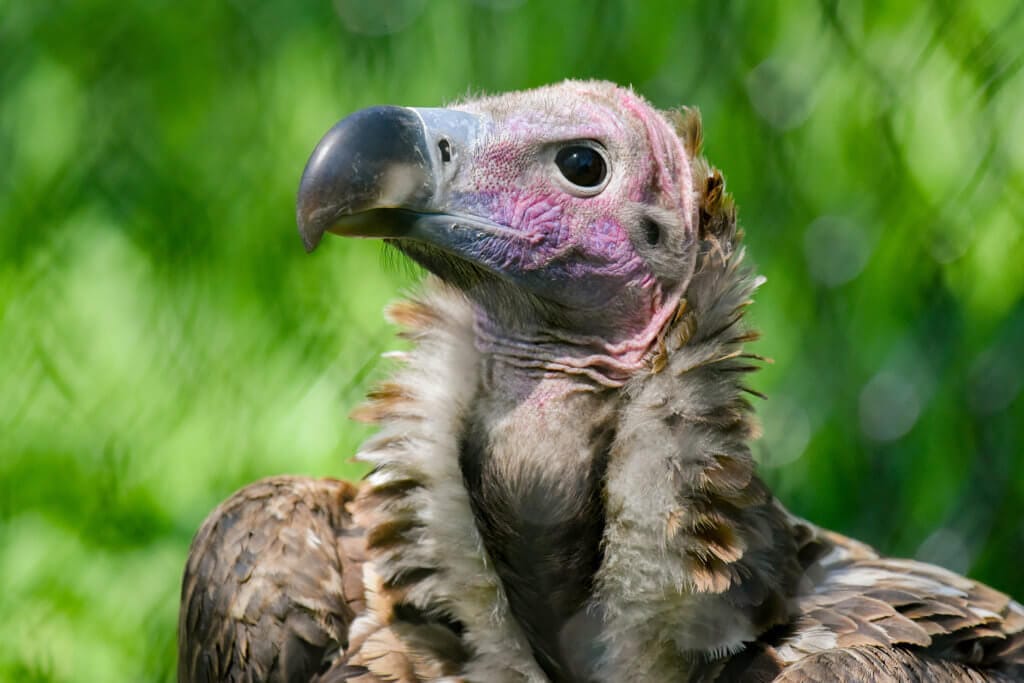
1. Griffon Vulture
The Griffon Vulture is one of the most widespread Old World vultures, found across Europe, North Africa, and parts of Asia. It is a large bird with a pale body, broad wings, and a distinctive ruffled neck collar of white feathers.
Griffon vultures are social birds that often gather in large groups when feeding. They rely heavily on thermal air currents, allowing them to soar for hours without flapping their wings. Their excellent eyesight helps them locate carcasses from great distances.
2. Bearded Vulture
The Bearded Vulture, also known as the Lammergeier, is one of the most unique vultures in the world. Unlike most vultures that eat soft tissue, this species specializes in bones.
It has a striking appearance with rust-colored feathers on its chest and a dark mask around its eyes. Bearded vultures drop bones from great heights onto rocks to break them into smaller pieces, making them easier to consume.
3. Cinereous Vulture
The Cinereous Vulture is one of the largest birds of prey in the world. It has dark brown to black plumage and a massive wingspan that can exceed 3 meters.
This species prefers mountainous and forested regions across Europe and Asia. It is a solitary feeder compared to other vultures, often feeding alone or in small groups.
4. Egyptian Vulture
The Egyptian Vulture is a small but intelligent vulture species found in Africa, Europe, and Asia. It has a white body, yellow face, and a thin, slender beak.
It is one of the few birds known to use tools, such as stones, to crack open eggs. Egyptian vultures are also opportunistic feeders, consuming carrion, insects, and even human waste in some areas.
5. White-headed Vulture
The White-headed Vulture is native to sub-Saharan Africa and is easily identified by its pale head and dark body plumage.
This species is highly dependent on intact savanna ecosystems and is now considered endangered due to habitat loss and poisoning. It typically feeds on medium-sized carcasses and often arrives early at feeding sites.
6. Lappet-faced Vulture
The Lappet-faced Vulture is one of the most powerful vultures in Africa. It has a massive bill designed for tearing through tough animal hides that other scavengers cannot penetrate.
It is often the dominant bird at carcasses, driving away smaller vultures. Despite its size and strength, it plays an essential role in quickly breaking down large carcasses.
7. Hooded Vulture
The Hooded Vulture is a smaller species commonly found in sub-Saharan Africa. It has a slender body and a thin, pinkish head covered with sparse feathers.
Unlike larger vultures, hooded vultures often feed in urban areas and near human settlements. They are highly adaptable scavengers that help clean waste in cities and villages.
8. White-rumped Vulture
The White-rumped Vulture is native to South Asia and is critically endangered due to poisoning from veterinary drugs. It has a dark body with a pale white patch on its lower back.
It is a social species that nests in colonies and relies heavily on large ungulate carcasses for food. Conservation efforts are ongoing to protect its rapidly declining population.
9. Red-headed Vulture
The Red-headed Vulture, also known as the Asian King Vulture, is a striking bird with a bright red head and dark plumage.
It is found in parts of India and Southeast Asia and prefers open forests and grasslands. This species plays an important ecological role but is now endangered due to habitat destruction and poisoning.
10. Indian Vulture
The Indian Vulture is a medium-sized Old World vulture native to the Indian subcontinent. It has pale feathers and a relatively small, slender head.
Once extremely common, its population has declined drastically due to veterinary drug poisoning. It feeds primarily on livestock carcasses and plays a crucial role in sanitation in rural ecosystems.
11. Slender-billed Vulture
The Slender-billed Vulture is a critically endangered species native to South Asia. It is known for its long, narrow beak and relatively small head compared to other vultures. Its body is dark brown with a pale neck ruff.
This vulture primarily feeds on large animal carcasses and plays an important role in cleaning ecosystems. Sadly, its population has declined sharply due to poisoning from veterinary drugs used in livestock.
Conservation programs are actively working to protect this species in protected reserves and breeding centers.
12. Rüppell’s Vulture
Rüppell’s Vulture is famous for being one of the highest-flying birds in the world, recorded at extreme altitudes above 11,000 meters. It is found across the Sahel region of Africa.
It has dark brown plumage with lighter feather edges and a strong, hooked beak. This species is highly social and often gathers in large feeding groups.
Despite its impressive flying ability, it faces serious threats from poisoning and habitat loss.
13. Cape Vulture
The Cape Vulture is one of the largest vultures in Africa, mainly found in southern regions. It has pale cream-colored plumage and a robust build.
This species prefers mountainous cliffs for nesting and relies on large carcasses for food. It often travels long distances in search of feeding opportunities.
Cape Vultures are important scavengers, helping maintain balance in grassland ecosystems.
14. Himalayan Vulture
The Himalayan Vulture is a massive bird found in high-altitude regions of the Himalayas. It has pale feathers and a thick neck ruff that helps it survive cold climates.
It feeds on carcasses of wild and domestic animals found in mountainous terrain. Its large wingspan allows it to glide efficiently in thin mountain air.
This species is closely related to the Eurasian Griffon Vulture but adapted to extreme elevations.
15. Palm-nut Vulture
The Palm-nut Vulture is unique because it does not rely primarily on carrion. Instead, it feeds mainly on the fruit of oil palms.
Found in sub-Saharan Africa, this species also eats small animals and fish when available. Its diet makes it one of the most unusual members among Types of Vultures.
It is often seen near rivers and coastal areas where palm trees grow abundantly.
16. White-backed Vulture
The White-backed Vulture is one of the most common vultures in Africa, although its population is declining rapidly. It has a dark body with a distinctive white patch on its lower back.
This species is highly social and often dominates large feeding sites with many other vultures present.
It plays a critical role in quickly disposing of large carcasses in savanna ecosystems.
17. African White-backed Vulture
Often considered the same species group as the white-backed vulture, this bird is widespread across African savannas and woodlands.
It is highly efficient at locating carcasses using its excellent vision and often arrives at food sources quickly after death occurs.
Its population is declining due to poisoning and habitat fragmentation, making conservation efforts urgent.
18. Turkey Vulture
The Turkey Vulture is one of the most common New World vultures, found across North and South America. It has dark feathers and a red, featherless head.
Unlike many birds, it relies heavily on its strong sense of smell to locate dead animals from long distances.
It is often seen soaring in circular patterns while searching for food.
19. Black Vulture
The Black Vulture is a stocky bird with black plumage and a short, hooked beak. It is found throughout the Americas and often associates with Turkey Vultures.
Unlike its relatives, it has a weaker sense of smell and often follows other vultures to food sources.
It is more aggressive at feeding sites and can dominate smaller scavengers.
20. King Vulture
The King Vulture is one of the most colorful vultures in the world, with bright orange, yellow, and red markings on its head. It is found in Central and South America.
It is not a frequent flier over large distances like other vultures but often waits for other scavengers to open carcasses before feeding.
Its striking appearance and dominant feeding behavior make it one of the most recognizable scavengers in tropical forests.
21. Andean Condor
The Andean Condor is one of the largest flying birds in the world, found along the Andes Mountains in South America. It has a massive wingspan that allows it to glide effortlessly for hours without flapping its wings.
This species feeds mainly on large carcasses such as deer, cattle, and wild mammals. It prefers open mountain landscapes where thermal currents help it stay airborne.
The Andean Condor holds cultural significance in many South American traditions and is considered a symbol of power and freedom.
22. California Condor
The California Condor is one of the rarest birds in North America and was once close to extinction. It has a huge wingspan and black plumage with white underwing markings.
It feeds on carrion in remote mountain and desert regions. Intensive conservation programs, including captive breeding and reintroduction, have helped its population slowly recover.
Despite its recovery, it remains critically endangered and requires ongoing protection.
23. Greater Yellow-headed Vulture
The Greater Yellow-headed Vulture is found in tropical regions of South America. It has a bright yellow head and dark body plumage.
Unlike many vultures, it often relies on smell as well as sight to locate food, especially in dense rainforest environments.
It plays an important role in cleaning up carrion in humid ecosystems where visibility is limited.
24. Lesser Yellow-headed Vulture
The Lesser Yellow-headed Vulture is similar to its larger relative but slightly smaller in size. It is commonly found in wetlands and forested areas of South America.
It feeds on fish, amphibians, and small carcasses, making it more adaptable to aquatic environments than many other vultures.
Its ability to thrive in wet habitats makes it unique among Types of Vultures.
25. Black-headed Vulture
The Black-headed Vulture is found across South Asia and Southeast Asia. It has a dark feathered head and broad wings suited for long-distance soaring.
It is a scavenger that feeds on livestock carcasses and wild animal remains, often seen in open fields and rural landscapes.
Its population has declined due to poisoning and habitat changes.
26. Eurasian Black Vulture
Also known as the Cinereous Vulture in some classifications, this species is one of the largest vultures in the Old World.
It prefers mountainous forests and open plains across Europe and Asia. It is more solitary than many other vultures and often feeds alone or in small groups.
Its massive size and dark plumage make it a dominant scavenger in its range.
27. Monk Vulture
The Monk Vulture is an alternative name sometimes used for the Cinereous Vulture in certain regions. It is known for its dark feathers and strong build.
It nests in large trees or cliffs and travels long distances in search of food.
This species is an important part of forest and steppe ecosystems, helping recycle nutrients from carcasses.
28. Savannah Vulture
The Savannah Vulture is commonly found in African grasslands and savannas. It has a light-colored body with darker wing feathers.
It is highly social and often seen feeding alongside other vulture species at large carcasses.
Its presence helps prevent disease spread in open ecosystems where large herbivores are common.
29. Forest Vulture
The Forest Vulture lives in dense tropical and subtropical forests. It is more secretive than savanna species and is less frequently seen in open areas.
It feeds on small to medium-sized carcasses and often follows forest predators to locate food sources.
Its adaptability allows it to survive in complex forest ecosystems.
30. American Black Vulture
The American Black Vulture is widespread across the Americas and is easily recognized by its black plumage and short, featherless gray head.
It often scavenges in groups and is known for its aggressive behavior at feeding sites. Unlike some vultures, it has a relatively poor sense of smell and relies on sight or other vultures to find food.
It plays a major role in cleaning urban and rural environments by consuming carrion efficiently.
Conclusion
These final examples of Types of Vultures demonstrate the incredible global diversity of scavenger birds, from towering Andean Condors to adaptable American Black Vultures. Each species is essential for maintaining ecosystem health by removing dead animals and preventing the spread of disease. Although often misunderstood, vultures are nature’s cleanup crew and play a critical ecological role across continents. Protecting these birds ensures healthier ecosystems worldwide, but how can we better support their survival in the future?
50+ Frequently Asked Questions (FAQ) About Types of Vultures
1. What are Types of Vultures?
Types of Vultures are different species of scavenging birds that feed mainly on dead animals and help clean ecosystems naturally.
2. Why are vultures important in nature?
Vultures prevent the spread of disease by quickly consuming carcasses and reducing bacteria in the environment.
3. How many Types of Vultures exist?
There are around 23–30 recognized vulture species depending on classification systems.
4. Where do vultures live?
Vultures live on every continent except Antarctica, especially in Africa, Asia, Europe, and the Americas.
5. Are vultures dangerous to humans?
No, vultures are not dangerous to humans because they do not hunt live prey.
6. What do vultures eat?
Vultures primarily eat dead animals (carrion), including mammals, birds, and reptiles.
7. Do vultures hunt live animals?
Most vultures do not hunt live animals and prefer feeding on already dead carcasses.
8. Why do vultures have bald heads?
Bald heads help keep vultures clean when feeding inside carcasses, preventing bacteria buildup.
9. How do vultures find food?
They use sharp eyesight and, in some species, a strong sense of smell to locate dead animals.
10. What is the largest vulture?
The Andean Condor is one of the largest vultures with an enormous wingspan.
11. What is the smallest vulture?
The Hooded Vulture is among the smallest vulture species.
12. Are vultures endangered?
Yes, many vulture species are endangered due to poisoning, habitat loss, and human activity.
13. Why are vultures declining?
Main causes include poisoning from livestock drugs, habitat destruction, and food shortages.
14. Do vultures have good eyesight?
Yes, most vultures have extremely sharp eyesight to detect carcasses from high in the sky.
15. Can vultures smell food?
Some New World vultures like Turkey Vultures have a strong sense of smell.
16. Do vultures migrate?
Some species migrate seasonally to find food and better weather conditions.
17. How long do vultures live?
Vultures can live 15 to 30 years in the wild, and even longer in captivity.
18. Are vultures social birds?
Yes, many vultures feed and roost in large groups called colonies.
19. What is a condor?
A condor is a type of large vulture found in the Americas.
20. What is the difference between Old World and New World vultures?
Old World vultures rely mostly on sight, while New World vultures may use smell to find food.
21. Do vultures attack humans?
No, vultures do not attack humans and are harmless scavengers.
22. Why do vultures circle in the sky?
They circle using thermal air currents to conserve energy while searching for food.
23. Can vultures fly long distances?
Yes, vultures are excellent gliders and can travel hundreds of kilometers.
24. Do vultures make nests?
Yes, they build nests on cliffs, trees, or rocky ledges depending on the species.
25. How many eggs do vultures lay?
Most vultures lay 1–2 eggs per breeding season.
26. How long do vulture eggs take to hatch?
Eggs usually hatch after about 30–60 days depending on the species.
27. What eats vultures?
Predators include eagles, large cats, and sometimes humans.
28. Are vultures clean animals?
Yes, vultures have strong stomach acids that kill harmful bacteria.
29. Why don’t vultures get sick from rotting meat?
Their digestive system destroys dangerous pathogens found in decaying flesh.
30. Do vultures have strong stomach acid?
Yes, their stomach acid is extremely strong and helps digest carrion safely.
31. Are vultures intelligent?
Yes, vultures show problem-solving skills and complex feeding behaviors.
32. Do vultures mate for life?
Many vulture species form long-term pair bonds.
33. What is the lifespan of a vulture?
Most vultures live between 15 and 30 years in the wild.
34. Can vultures be kept in captivity?
Yes, but only in wildlife reserves, zoos, or conservation centers.
35. Are vultures aggressive?
They are generally not aggressive except when competing for food.
36. What role do vultures play in ecosystems?
They act as natural cleaners by removing dead animals from the environment.
37. What happens if vultures disappear?
Ecosystems would suffer increased disease and carcass buildup.
38. Do vultures drink water?
Yes, they drink water but also get moisture from their food.
39. Why do vultures gather in large groups?
They gather to feed efficiently on large carcasses.
40. Can vultures recognize each other?
Yes, they can recognize individuals within their species.
41. Are vultures found in cities?
Some species adapt to urban environments where food is available.
42. Do vultures have predators as adults?
Adult vultures have few predators due to their size and flying ability.
43. What is a Turkey Vulture?
A Turkey Vulture is a New World vulture known for its red head and strong sense of smell.
44. What is a Black Vulture?
A Black Vulture is a scavenger bird that often feeds in groups.
45. What is a King Vulture?
A King Vulture is a colorful tropical scavenger bird found in Central and South America.
46. Why are vultures called nature’s cleaners?
Because they remove dead animals that could spread disease.
47. Do vultures help humans?
Yes, they help reduce disease risk by cleaning carcasses in the environment.
48. What threats do vultures face?
They face poisoning, habitat loss, and food scarcity.
49. Are vultures protected species?
Many vulture species are legally protected due to population decline.
50. Can vultures fly high?
Yes, some vultures can fly at extremely high altitudes using thermal currents.
51. Why should we protect vultures?
Protecting vultures helps maintain healthy ecosystems and prevents disease outbreaks.
Read more: