
Florida is home to some of the most fascinating crocodilians in the world. From the elusive American Crocodile to invasive caimans, understanding the types of crocodiles in Florida is essential for wildlife enthusiasts, conservationists, and anyone living near water. In this article, we explore five notable crocodilian species found in Florida, providing detailed information on their physical characteristics, behavior, habitat, diet, reproduction, and interactions with humans. Whether you’re a beginner or an experienced wildlife watcher, this guide will help you identify these incredible reptiles safely and responsibly.
1. American Crocodile (Crocodylus acutus) in Florida

Physical Characteristics & Identification Tips
The American Crocodile, often called the “Saltie’s cousin,” is a large, sleek reptile with a pale grayish-green coloration. Unlike alligators, their snout is long and V-shaped, and they have visible teeth even when their mouth is closed. Adult males can grow up to 15 feet, although most Florida individuals range from 10–13 feet. They have rough, scaly skin, ridges along the back, and webbed feet that make them excellent swimmers. One key identification tip is their narrower snout compared to alligators, which helps distinguish them during casual observation from a safe distance.
Behavior
American Crocodiles are primarily shy and secretive. Unlike the aggressive American Alligator, they tend to avoid humans and are most active at night. They are ambush predators, using stealth to capture fish, birds, and small mammals. Crocodiles are highly territorial during mating season and often engage in ritualized displays like head-slapping and hissing. Despite their fearsome appearance, American Crocodiles generally prefer to retreat when threatened rather than attack.
Habitat and Range
In Florida, American Crocodiles are mostly found in southern regions, including the Florida Keys, Everglades, and Biscayne Bay. They prefer brackish or saltwater habitats such as coastal lagoons, mangrove swamps, and estuaries. They rarely venture north, as cooler temperatures limit their survival outside subtropical zones.
Diet
These crocodiles primarily feed on fish, but their diet can include crabs, birds, and small mammals. They are opportunistic feeders, striking at prey near the water’s edge. Hunting often involves waiting motionless, blending into the surroundings, and lunging with incredible speed.
Reproduction and Life Cycle
Mating occurs during the wet season, typically from May to August. Females lay 40–60 eggs in sand or vegetation mounds, and temperature influences the sex of the hatchlings. Incubation lasts about 75–80 days. Hatchlings are vulnerable and rely on maternal protection to reach water safely. They grow rapidly, reaching maturity between 10–12 years.
Fun Facts / Unique Traits
American Crocodiles are excellent swimmers and can traverse coastal waters between islands. They can survive in saltwater thanks to specialized glands that excrete excess salt. Despite their size, they are often more elusive than the more commonly seen alligator.
Human Interaction
While encounters are rare, humans should maintain a safe distance. Conservation programs in Florida monitor populations to protect this threatened species. Unlike alligators, American Crocodiles rarely pose a danger unless provoked or cornered.
2. American Alligator (Alligator mississippiensis) in Florida

Physical Characteristics & Identification Tips
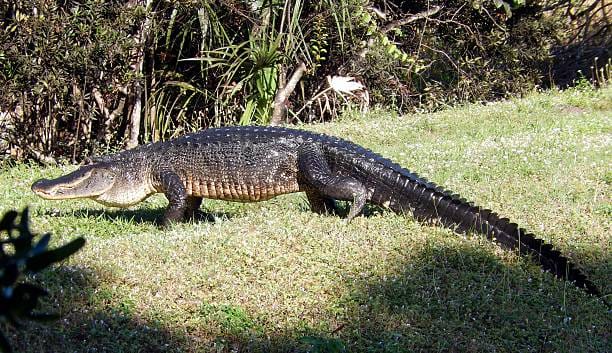
The American Alligator is one of Florida’s most iconic reptiles. They are darker in color, often blackish-grey, and have a broader, U-shaped snout. Adults commonly reach 10–13 feet, although individuals up to 15 feet exist. One identifying feature is that when their mouths are closed, their upper teeth are visible but lower teeth remain hidden. Alligators have heavily armored skin and a powerful tail that aids swimming.
Behavior
Alligators are opportunistic predators, feeding on fish, birds, turtles, and mammals. They are mostly solitary and territorial. Mating season occurs in spring, during which males produce deep bellows to attract females. They are primarily nocturnal hunters but may bask during the day. Alligators communicate using vocalizations such as hisses, grunts, and bellows, especially during the breeding season.
Habitat and Range
Alligators are found throughout freshwater habitats in Florida, including marshes, swamps, rivers, and lakes. They can tolerate brackish water for short periods but prefer freshwater environments. Alligators are widely distributed across the state, from the panhandle to the Everglades.
Diet
American Alligators feed on a variety of prey depending on age. Hatchlings eat insects and small fish, juveniles consume small amphibians and birds, and adults hunt mammals, fish, turtles, and occasionally waterfowl. They are ambush predators, striking quickly from underwater.
Reproduction and Life Cycle
Alligator mating occurs in spring, with females building nests of vegetation and mud. They lay 20–50 eggs, which hatch after about 65 days. Mothers often assist hatchlings to water and guard them for several weeks. Juveniles grow rapidly, reaching reproductive maturity around 10–12 years.
Fun Facts / Unique Traits
Alligators can survive freezing temperatures by sticking their snouts above water while the rest of their body freezes underwater. They play a crucial ecological role by creating “alligator holes” that provide habitats for fish and other wildlife during dry periods.
Human Interaction
Alligators are common in Florida and occasionally interact with humans, especially in residential areas near water. Education programs encourage safe distances, never feeding them, and reporting aggressive behavior. Most alligator attacks are preventable with proper awareness.
3. Spectacled Caiman (Caiman crocodilus) in Florida

Physical Characteristics & Identification Tips
Spectacled Caimans are small to medium-sized crocodilians, reaching 6–8 feet. They are olive green with dark bands and have a distinctive ridge between the eyes, giving the appearance of “spectacles.” Their snout is somewhat narrow and pointed compared to alligators. Spectacled Caimans are often confused with juvenile alligators but can be distinguished by the ridged ocular region and lighter color patterns.
Behavior
These caimans are opportunistic feeders and more aggressive than American Crocodiles in some circumstances. They are mostly nocturnal, hunting at night, and tend to be solitary except during the breeding season. Spectacled Caimans use hissing and tail slaps to communicate and defend territories.
Habitat and Range
Spectacled Caimans are non-native in Florida, mostly introduced through the exotic pet trade. Populations have been reported in southern Florida wetlands, canals, and some freshwater systems. Their spread is monitored due to potential ecological impact.
Diet
They feed on fish, amphibians, crustaceans, birds, and small mammals. Being opportunistic predators, they adjust their diet based on available prey.
Reproduction and Life Cycle
Breeding occurs during warmer months. Females construct nests of vegetation, and the eggs hatch after 75–90 days. Juveniles are vulnerable to predation from alligators, larger caimans, and birds. Survival rates are lower in Florida than in their native range.
Fun Facts / Unique Traits
Spectacled Caimans can tolerate cooler climates better than some other tropical crocodilians, which allows them to survive in Florida’s subtropical regions. They are agile swimmers and can move quickly on land over short distances.
Human Interaction
Being non-native, Spectacled Caimans are less familiar to most Floridians. They can compete with native species for food, and caution is advised when encountering them in the wild. Authorities monitor populations to prevent ecological disruption.
4. Nile Crocodile (Crocodylus niloticus) in Florida

Physical Characteristics & Identification Tips
The Nile Crocodile is one of the largest crocodilian species globally, and although native to Africa, occasional escapees have been reported in Florida, usually from private collections. Adults can reach lengths of 16–20 feet, with massive muscular bodies, thick tails, and powerful jaws. Their skin is dark brown to olive, with a rough texture and pronounced ridges along the back. Identification tips include their large size, V-shaped snout, and the pattern of black crossbands on the tail and body. Unlike alligators, both upper and lower teeth are visible when the mouth is closed, giving them a formidable appearance.
Behavior
Nile Crocodiles are apex predators with aggressive tendencies. They are ambush hunters, waiting patiently near water edges before striking prey. Unlike American Crocodiles, which are often shy, Nile Crocodiles are more confrontational and territorial. They communicate through bellows, hisses, and head-slapping, especially during mating season or territorial disputes. In Florida, any sightings of Nile Crocodiles are usually isolated incidents, as they are not native and do not form established populations.
Habitat and Range
In Africa, Nile Crocodiles inhabit rivers, lakes, and marshes. In Florida, they are occasionally seen in freshwater lakes, canals, or large ponds near urban or private properties. These reports are primarily escapees or releases from captivity rather than established wild populations. Authorities monitor these individuals closely due to their size and potential threat to humans and native wildlife.
Diet
Nile Crocodiles have a varied diet, feeding on fish, birds, mammals, and occasionally larger prey like antelope in their native range. In Florida, their diet consists mainly of fish, amphibians, and any small animals accessible within their limited habitat. Their ambush strategy allows them to conserve energy while waiting for the perfect strike.
Reproduction and Life Cycle
In their native range, Nile Crocodiles breed seasonally, with females building large nests of vegetation and soil. Clutch sizes range from 40–60 eggs, with incubation influenced by temperature determining the sex of the hatchlings. Hatchlings are protected by the mother for several weeks. In Florida, breeding is extremely rare, and there are no established reproducing populations of Nile Crocodiles.
Fun Facts / Unique Traits
Nile Crocodiles are known for their incredible bite force, one of the strongest in the animal kingdom. They can live over 60 years in the wild and are capable of swimming long distances to reach new habitats. Their social hierarchy is strict, with dominant males controlling prime territories.
Human Interaction
While encounters in Florida are extremely rare, Nile Crocodiles are considered dangerous due to their size and strength. Local wildlife authorities track reports and may remove these crocodiles to prevent accidents. These events highlight the risks associated with non-native species in Florida’s ecosystems.
5. Other Non-Native Crocodilians in Florida
Physical Characteristics & Identification Tips
Florida occasionally sees sightings of other non-native crocodilians, often escapees from private collections or exotic pet releases. These can include small species like Cuvier’s Dwarf Caiman (Paleosuchus palpebrosus) or the Morelet’s Crocodile (Crocodylus moreletii). Identification depends on size, snout shape, coloration, and scale patterns. These species are generally smaller than American Crocodiles and have distinguishing markings that differ from native alligators.
Behavior
Behavior varies widely depending on the species. Many are shy and avoid humans, while others can be aggressive when threatened. Most non-native crocodilians in Florida are solitary, nocturnal, and opportunistic feeders. Observers report cautious behavior, often retreating into water or dense vegetation when approached.
Habitat and Range
Non-native crocodilians in Florida are typically found near freshwater bodies such as lakes, ponds, canals, or artificial waterways. They do not generally establish stable populations, but isolated sightings are monitored. These habitats often overlap with native alligators and crocodiles, raising ecological concerns about competition for food and space.
Diet
The diet of non-native species is similar to other crocodilians: fish, amphibians, small mammals, and birds. Their opportunistic feeding habits allow them to survive in a new environment temporarily. However, their long-term survival in Florida is limited due to climate differences and human intervention.
Reproduction and Life Cycle
Most non-native crocodilians in Florida do not reproduce in the wild. They are either juveniles recently released, or adult individuals unable to find suitable mates. In their native ranges, these species typically lay 15–50 eggs per clutch, with maternal protection critical for hatchling survival.
Fun Facts / Unique Traits
Non-native crocodilians are often exotic and visually striking, making them popular in the pet trade. Some species have impressive climbing abilities, unique color patterns, or unusual snout shapes. Despite their size, many are better at avoiding predators than their larger native counterparts.
Human Interaction
Florida authorities take non-native crocodilian sightings seriously. Escapes or releases can pose safety risks and threaten local ecosystems. Residents are encouraged to report sightings and avoid attempting to capture these animals. Wildlife officials often relocate them to secure facilities.
Comparison of 5 Crocodilians in Florida
| Species | Scientific Name | Native/Non-Native | Average Length | Habitat | Diet | Behavior | Human Interaction |
|---|---|---|---|---|---|---|---|
| American Crocodile | Crocodylus acutus | Native | 10–15 ft | Brackish water, coastal estuaries, mangroves | Fish, birds, small mammals | Shy, territorial, mostly nocturnal | Encounters rare, protected species |
| American Alligator | Alligator mississippiensis | Native | 10–13 ft | Freshwater lakes, swamps, rivers, wetlands | Fish, amphibians, small mammals, birds | Mostly nocturnal, territorial, social hierarchy | Common sightings, regulated hunting allowed |
| Spectacled Caiman | Caiman crocodilus | Non-Native | 5–7 ft | Freshwater lakes, ponds, canals | Fish, amphibians, small mammals | Solitary, shy, nocturnal | Occasional sightings, removed by authorities |
| Nile Crocodile | Crocodylus niloticus | Non-Native | 16–20 ft | Occasionally seen in private water bodies | Fish, birds, mammals | Aggressive, ambush predator, territorial | Extremely rare, monitored closely |
| Other Non-Native Crocodilians | Varies (e.g., Morelet’s Crocodile, Dwarf Caiman) | Non-Native | 2–10 ft | Freshwater ponds, canals, lakes | Fish, amphibians, small mammals | Shy, nocturnal, opportunistic | Reported escapes, relocated by authorities |
Conclusion
Florida hosts a fascinating variety of crocodilians, from the native American Crocodile and American Alligator to non-native species like Spectacled Caimans and Nile Crocodiles. Understanding the types of crocodiles in Florida helps residents, wildlife enthusiasts, and conservationists identify these remarkable reptiles safely and responsibly. Each species has its own physical traits, behavior patterns, habitat preferences, and ecological role, contributing to Florida’s rich biodiversity. While encounters with these crocodilians can be thrilling, it’s important to respect their space and follow safety guidelines to prevent accidents.
Whether you’re exploring the Everglades, observing canals and wetlands, or learning about exotic species, knowing how to recognize and appreciate these crocodiles enhances both your safety and your wildlife experience. By staying informed and observing responsibly, you can enjoy Florida’s unique crocodilian population while supporting conservation efforts for native species. Keep learning, stay cautious, and enjoy the amazing wildlife that Florida has to offer!
Frequently Asked Questions about Crocodiles in Florida
1. What types of crocodiles are found in Florida?
Florida is home to the American Crocodile and American Alligator, along with occasional non-native species like Spectacled Caimans and Nile Crocodiles.
2. Are crocodiles in Florida dangerous to humans?
Yes, crocodiles in Florida can be dangerous, but most encounters are avoidable by keeping a safe distance and following wildlife safety guidelines.
3. Where can I see crocodiles in Florida?
You can see crocodiles in Florida in the Everglades, southern coastal areas, mangroves, canals, and some freshwater lakes and ponds.
4. How can I tell the difference between a Florida alligator and crocodile?
In Florida, alligators have a U-shaped snout and are darker, while American Crocodiles have a V-shaped snout and lighter, grayish-green skin.
5. When are Florida crocodiles most active?
Florida crocodiles are mostly nocturnal and tend to be more active at night, especially for hunting and territorial displays.
6. Do Florida crocodiles attack pets?
Florida crocodiles may pose a risk to pets near water bodies. Keep pets on a leash and away from swampy areas where crocodiles are present.
7. How big do Florida crocodiles get?
American Crocodiles in Florida typically grow up to 10–15 feet, while alligators often reach 10–13 feet, with some exceeding that size.
8. Are all crocodiles in Florida native?
No, Florida has native species like the American Crocodile and Alligator, but non-native species such as Spectacled Caimans and Nile Crocodiles have been reported.
9. How do Florida crocodiles hunt?
Florida crocodiles are ambush predators, often waiting motionless near water edges to capture fish, birds, or small mammals.
10. What do Florida crocodiles eat?
The diet of Florida crocodiles includes fish, birds, amphibians, and occasionally small mammals, depending on size and species.
11. How can I safely observe crocodiles in Florida?
Stay on marked trails, maintain a safe distance, do not feed them, and use binoculars or cameras to observe crocodiles in Florida safely.
12. Do crocodiles in Florida hibernate?
Florida crocodiles do not hibernate, but alligators and American Crocodiles may become less active during cooler months, slowing their metabolism.
13. Are there any Florida crocodile conservation programs?
Yes, Florida wildlife agencies actively monitor and protect native crocodiles through conservation programs and habitat management.
14. Can Florida crocodiles live in saltwater?
American Crocodiles in Florida can tolerate saltwater due to specialized glands, while alligators prefer freshwater but can tolerate brackish water temporarily.
15. How do Florida crocodiles reproduce?
Florida crocodiles reproduce by laying eggs in nests of sand or vegetation. Temperature determines the sex of hatchlings, and mothers often guard the nests.
16. When do Florida crocodiles lay eggs?
Breeding season is usually in the warmer months, from May to August, depending on the species and location.
17. How many eggs do Florida crocodiles lay?
Clutch sizes vary by species: American Crocodiles may lay 40–60 eggs, while alligators lay 20–50 eggs per clutch.
18. Do Florida crocodiles interact with humans often?
Encounters are rare, but Florida crocodiles may approach residential areas near water. Following safety rules minimizes risks.
19. Can Florida crocodiles be kept as pets?
No, it is illegal and unsafe to keep crocodiles as pets in Florida. They require specialized care and can be dangerous.
20. How long do Florida crocodiles live?
Florida crocodiles can live 50–70 years in the wild, with proper habitat and food availability.
21. Are Florida crocodiles protected by law?
Yes, native species like the American Crocodile are protected under state and federal laws, and harming them is illegal.
22. Can Florida crocodiles be found outside southern Florida?
American Crocodiles are mainly found in southern Florida, while alligators are widespread throughout freshwater habitats across the state.
23. Do Florida crocodiles compete with alligators?
Yes, in areas where habitats overlap, crocodiles and alligators may compete for territory and food resources.
24. How fast can Florida crocodiles swim?
Florida crocodiles can swim up to 20 miles per hour in short bursts, using their strong tails for propulsion.
25. Are Florida crocodiles nocturnal?
Yes, most Florida crocodiles are nocturnal hunters, although basking during the day is common for thermoregulation.
26. Can Florida crocodiles survive cold winters?
They can tolerate mild cold, but freezing temperatures limit their northern range. They become less active in winter months.
27. How do Florida crocodiles communicate?
They communicate through hisses, bellows, and tail slaps to warn rivals, attract mates, or signal distress.
28. What is the difference between Florida alligators and caimans?
Caimans are smaller, non-native species with narrow snouts and different scale patterns, while alligators are native with broad U-shaped snouts.
29. Can Florida crocodiles climb?
Yes, some smaller species like juvenile crocodiles and caimans can climb short distances, but large adults rarely leave the water.
30. How do Florida crocodiles impact the ecosystem?
They help control prey populations, maintain wetland health, and create habitats like “alligator holes” that support other wildlife.
31. What should I do if I see a crocodile in Florida?
Keep a safe distance, do not feed or approach it, and report the sighting to local wildlife authorities for monitoring and safety.
Read more: 5 Types of Crocodiles in India: Species, Identification, and Photos