

Wisconsin is home to a variety of deer species, each with distinct features, behaviors, and habitats. Observing deer in Wisconsin offers nature enthusiasts and hunters alike a fascinating glimpse into wildlife. From the familiar White-tailed Deer that roams forests and fields to exotic Sika and Fallow Deer in managed preserves, these species contribute significantly to the state’s ecological tapestry. This guide explores the main types of deer in Wisconsin, highlighting physical characteristics, behavior, diets, and human interactions. Whether you are curious about spotting deer in your backyard or want to understand their role in the ecosystem, this comprehensive overview serves as a beginner-friendly, yet informative, resource.
1. White-tailed Deer (Odocoileus virginianus)

Physical Characteristics
The White-tailed Deer is one of the most iconic species in Wisconsin. Its reddish-brown coat during the summer transitions to a grayish-brown in the winter. Adult males, called bucks, typically weigh between 130–300 pounds, while females, known as does, are slightly smaller. The most distinctive feature is the white underside of the tail, which is raised like a flag when the deer is alarmed. Bucks grow antlers annually, which can span up to 30 inches or more in large specimens.
Behavior
White-tailed Deer are crepuscular, meaning they are most active during dawn and dusk. They move gracefully through forests and open fields, often using scent marking to communicate. Bucks are territorial during the rutting season, engaging in sparring matches to establish dominance. Social structures vary seasonally, with females and their offspring forming small family groups, while males may roam solo or in bachelor groups.
Habitat and Range
White-tailed Deer inhabit a wide range of environments across Wisconsin, from dense woodlands and marshes to suburban parks and farmland. They are highly adaptable, thriving in fragmented landscapes where forests are interspersed with fields. Seasonal migrations within the state are minimal, but deer may move to more sheltered areas during harsh winters.
Diet
These deer are herbivorous generalists, feeding on leaves, twigs, acorns, corn, and grasses. Seasonal changes influence their diet, with leafy browse preferred in spring and summer, while woody vegetation and agricultural crops become staples in winter. They play a significant role in shaping forest undergrowth and plant community composition.
Reproduction and Life Cycle
The breeding season, or rut, occurs in the fall. Bucks compete for does, using antlers for dominance displays. After a gestation period of approximately 200 days, does give birth to one or two fawns in late spring. Fawns are born with white spots for camouflage and are hidden by the mother for the first weeks. They begin grazing after a few weeks while still nursing.
Fun Facts / Traits
White-tailed Deer are capable of running up to 30 mph and can jump over 8 feet in a single bound. Their keen sense of smell, hearing, and vision helps them evade predators. The white tail “flag” is an effective communication tool signaling danger to other deer.
Human Interaction
These deer are common game species in Wisconsin, contributing to hunting traditions and local economies. They are also frequent visitors to suburban yards, sometimes causing minor damage to gardens. Observing them responsibly offers educational and recreational opportunities while highlighting the balance between wildlife and human development.
2. Mule Deer (Odocoileus hemionus)

Physical Characteristics
Mule Deer are distinguished by their large, mule-like ears, a slender build, and a grayish-brown coat that blends well with arid landscapes. Bucks possess antlers that branch dichotomously, often forming a “Y” shape. Adult bucks may weigh 150–300 pounds, while does are slightly smaller. Their black-tipped tails and large ears make them easy to differentiate from White-tailed Deer.
Behavior
Mule Deer are crepuscular and highly alert, often freezing or bounding away when sensing danger. They have keen eyesight and hearing, enabling them to detect predators at a distance. Bucks are solitary or form small bachelor groups outside the breeding season, while does form maternal groups. Seasonal behaviors include shifting from open areas to sheltered forests during winter.
Habitat and Range
While native to western North America, some mule deer occasionally appear in western Wisconsin, usually along forest edges and prairies. Their presence is rare, and sightings are often exciting for wildlife watchers. They prefer open woodlands, grasslands, and shrublands where forage is abundant.
Diet
Mule Deer are browsers, feeding on shrubs, leaves, twigs, and fruits. Seasonal variation affects their diet, with a preference for succulent vegetation in spring and woody browse in winter. They are important for maintaining plant diversity in their habitats.
Reproduction and Life Cycle
The rut occurs in late fall, with bucks competing for females through displays and minor sparring. Gestation lasts approximately 200 days, resulting in one or two fawns in late spring. Fawns remain hidden and camouflaged while the mother forages nearby. Rapid growth ensures survival in a predator-rich environment.
Fun Facts / Traits
Mule Deer can leap over 10 feet in a single bound and are known for their distinctive “stotting” gait when alarmed. Their large ears not only aid hearing but also help regulate body temperature in warmer climates.
Human Interaction
Though rare in Wisconsin, Mule Deer are occasionally spotted by hunters, photographers, and naturalists. Observing these visitors highlights the diversity of deer species in the state and encourages appreciation for wildlife corridors that facilitate their movement.
3. Black-tailed Deer (Odocoileus hemionus columbianus)

Physical Characteristics
Black-tailed Deer are similar in size to Mule Deer but distinguished by the dark black border along their tails. Their coats are a dark gray-brown in winter and lighter in summer. Antler structure is similar to Mule Deer, branching in a “Y” shape, and bucks can weigh up to 250 pounds.
Behavior
These deer are cautious and secretive, often inhabiting dense forests. Like other deer, they are crepuscular and rely on heightened senses to avoid predators. Social groups are small, usually comprising does and fawns, while bucks are solitary or in bachelor groups.
Habitat and Range
Primarily native to the Pacific Northwest, Black-tailed Deer are extremely rare in Wisconsin, with occasional sightings in the western part of the state. They prefer coniferous forests and riparian areas with dense vegetation for cover.
Diet
As browsers, they consume leaves, twigs, berries, and grasses. Seasonal variations in diet occur, with more woody browse consumed in winter. Their selective feeding can influence forest regeneration and understory composition.
Reproduction and Life Cycle
The rut occurs in the fall, and does give birth to one or two fawns in late spring. Fawns are well-camouflaged, and mothers remain vigilant during early weeks. Bucks grow antlers annually, shedding them after winter.
Fun Facts / Traits
Black-tailed Deer are skilled swimmers and can cross rivers and lakes. Their black tail is a striking signal to other deer, especially when they are alarmed or fleeing predators.
Human Interaction
Encounters are extremely rare in Wisconsin. Wildlife watchers and photographers treasure these sightings, while hunters in other states pursue them as prized game animals. Their presence reminds us of the broader diversity of North American deer species.
4. Fallow Deer (Dama dama)
Physical Characteristics
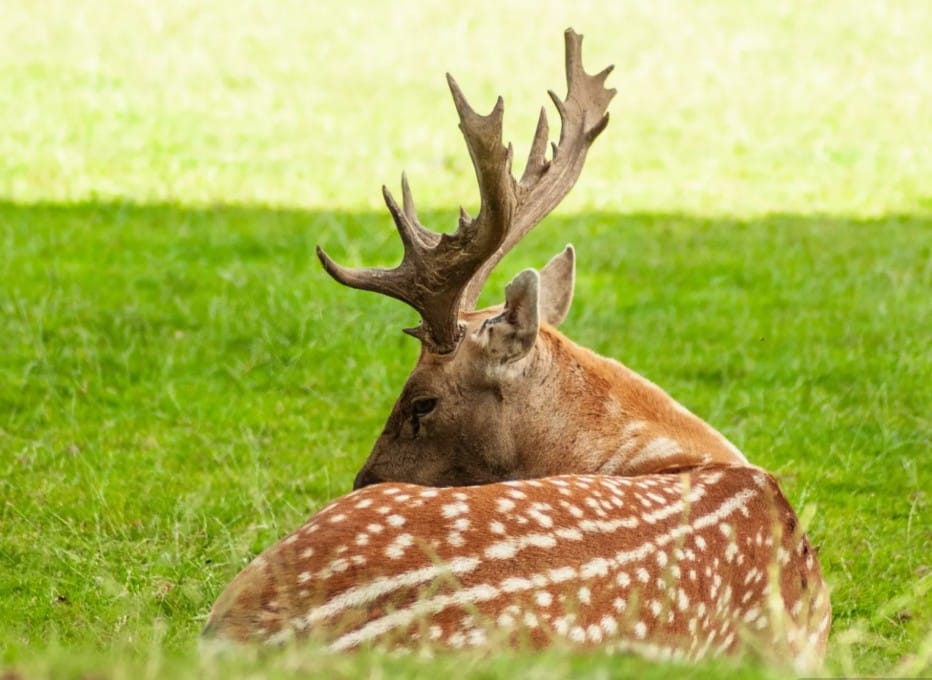
Fallow Deer are medium-sized with a distinct spotted coat in summer and a darker, uniform winter coat. Bucks have broad, palmate antlers resembling a shovel, unlike the branching antlers of native deer. They weigh 150–200 pounds, and females are slightly smaller. Coat coloration ranges from light brown to almost black, with white spots prominent in warmer months.
Behavior
Fallow Deer are social, forming herds of up to 30 individuals. They are primarily crepuscular, feeding during early morning and evening. Bucks can be territorial during the rut, engaging in displays and occasional combat to establish dominance over a harem of does.
Habitat and Range
Introduced to Wisconsin in managed preserves and hunting ranches, Fallow Deer are not naturally occurring. They prefer open woodlands, grasslands, and areas with mixed trees and shrubs. Their adaptability allows them to thrive in enclosures and semi-wild habitats.
Diet
They are herbivorous, grazing on grasses, leaves, and fruits. Supplemental feeding may occur in managed areas. Seasonal changes influence their diet, with more browse consumed in winter.
Reproduction and Life Cycle
The rut occurs in October, with bucks vocalizing and displaying antler prowess to attract does. Gestation lasts about 230 days, and does give birth to a single fawn in late spring. Fawns are spotted for camouflage and stay close to the mother until weaning.
Fun Facts / Traits
Fallow Deer are renowned for their elegant antlers and spotted coats, making them visually stunning. They exhibit social hierarchies and communicate through vocalizations, scent marking, and body posture.
Human Interaction
These deer are primarily observed in preserves, parks, and farms. They are popular in controlled hunting programs and wildlife photography. Responsible observation ensures minimal stress to the animals and allows educational opportunities for visitors.
5. Sika Deer (Cervus nippon)

Physical Characteristics
Sika Deer are smaller than White-tailed or Mule Deer, with a reddish-brown summer coat covered in white spots. Bucks possess antlers that curve backward with several small tines. Adult males weigh 100–150 pounds, while females are lighter. Their spotted coat provides camouflage in forested habitats.
Behavior
Sika Deer are crepuscular and highly alert. They are agile and can leap considerable distances to escape threats. Herds are usually small, with social interactions centered around feeding and protection from predators. Males become more vocal during the rut, producing high-pitched calls.
Habitat and Range
Introduced to Wisconsin in wildlife preserves and hunting ranches, Sika Deer are mainly found in forests, wooded areas, and grasslands. They prefer dense undergrowth for cover and open areas for feeding.
Diet
Herbivorous grazers and browsers, Sika Deer feed on grasses, leaves, fruits, and young shoots. Seasonal variation in diet is common, with more browse consumed in winter months.
Reproduction and Life Cycle
The rut occurs in the fall, and females give birth to a single fawn after about 230 days of gestation. Fawns have spots for camouflage, gradually fading as they mature. Males shed antlers annually.
Fun Facts / Traits
Sika Deer are known for their vocalizations, sometimes described as whistles or barks during the mating season. They are excellent swimmers and can adapt to diverse environments when introduced.
Human Interaction
Primarily observed in preserves and parks, Sika Deer are appreciated for photography, wildlife education, and controlled hunting. They are harmless to humans but require careful management to prevent overpopulation in confined areas.
FAQ’s
1. What kind of deer are in Wisconsin?
The main deer species in Wisconsin is the White-tailed Deer. They are found throughout the state in forests, fields, and suburban areas.
2. What’s the most common type of deer?
White-tailed Deer are the most common type in Wisconsin and across much of North America.
3. How many deer are in the state of Wisconsin?
Wisconsin has an estimated 1.2 to 1.5 million deer, though numbers vary yearly depending on hunting, weather, and habitat conditions.
4. Why are Wisconsin deer so big?
Wisconsin deer tend to be larger due to abundant food, good habitat, and proper management. Forests, farmland, and wetlands provide plenty of nutrition for strong antler growth.
5. What’s the difference between deer and whitetail?
“Deer” is a general term for the species, while “whitetail” specifically refers to the White-tailed Deer, the most common type in Wisconsin. They are named for the white underside of their tail, which they raise when alarmed.
6. What is the most hunted animal in Wisconsin?
White-tailed Deer are the most hunted animals in Wisconsin, with hunting being a major recreational activity and population management tool.
7. How rare is a white deer in Wisconsin?
White deer, often albino or leucistic, are very rare. It is estimated that there is only about 1 white deer for every 5,000–10,000 normal-colored deer.
8. Why is Wisconsin’s deer herd losing popularity?
“Losing popularity” may refer to declining sightings in some areas due to habitat loss, urbanization, and hunting pressures. Overall, the statewide herd remains strong thanks to management programs.
9. Is it legal to shoot a white deer in Wisconsin?
Yes, it is legal to shoot a white deer in Wisconsin if hunting regulations are followed. There are no special restrictions based solely on color, though some private lands may have rules protecting them.
10. Can you keep a deer if you hit it in Wisconsin?
If you accidentally hit a deer with your vehicle, you may be able to keep it, but only after contacting the Wisconsin Department of Natural Resources (DNR) and following their reporting and tagging procedures.
11. Is it illegal to put corn out for deer in Wisconsin?
Yes, in most counties, baiting deer with corn or other food is illegal during the firearm deer season. Some exceptions exist in northern counties, but it’s best to check local DNR rules.
12. Can you shoot on your own property in Wisconsin?
You can hunt on your own property if you have proper permits and follow regulations. There are restrictions near buildings, roads, and municipal boundaries.
13. How many deer are hit by cars each year in Wisconsin?
Wisconsin sees roughly 25,000–30,000 deer-vehicle collisions annually, with October and November being the peak months during mating season.
14. How many bucks are you allowed to shoot in Wisconsin?
Bag limits vary by county and season. In most areas, hunters are allowed to harvest 1–2 bucks per year, with antler restrictions depending on local regulations.
15. Why can’t you bait deer in Wisconsin?
Baiting is restricted to prevent unnatural concentrations of deer, which can spread disease like chronic wasting disease (CWD) and disrupt natural behavior.
16. Is it illegal to take roadkill in Wisconsin?
You can take roadkill, but only after reporting it to the Wisconsin DNR and following their tagging and handling rules. Unauthorized collection is illegal.
17. How rare is it to see an albino deer in Wisconsin?
Albino deer are extremely rare. Seeing one in the wild is unusual, with estimates of only a few per state population at any given time.
18. Can I shine deer in WI?
No, “shining” deer (using lights at night to hunt) is illegal in Wisconsin. Nighttime hunting is heavily regulated to ensure safety and fairness.
19. What is the average lifespan of a whitetail deer in Wisconsin?
Wild White-tailed Deer typically live 4–6 years, though some can survive up to 10–12 years if they avoid hunting and predators.
20. What is a pure white deer called?
A pure white deer can be called either an albino (red eyes, no pigmentation) or leucistic (normal eyes, white coat). Both are rare in the wild.
21. What is the deer capital of Wisconsin?
Central Wisconsin, especially areas like Marathon County, is often referred to as the “deer capital” due to high deer densities and popular hunting regions.
Conclusion
Wisconsin boasts a fascinating variety of deer species, each with its own distinctive traits, behaviors, and habitats. From the ubiquitous White-tailed Deer roaming forests and fields, to the occasional Mule and Black-tailed Deer visitors, and the introduced Fallow and Sika Deer thriving in preserves, these animals enrich the state’s ecosystems. Observing deer in Wisconsin allows us to appreciate their role in maintaining plant diversity, serving as prey for predators, and providing opportunities for recreation and wildlife study.
Whether you are a beginner wildlife enthusiast, an experienced hunter, or simply curious about nature, learning about the types of deer in Wisconsin helps foster a deeper connection to the outdoors. By understanding their feeding habits, social behaviors, and life cycles, we can enjoy and respect these creatures responsibly. Next time you spot a deer bounding through a meadow or grazing at the forest edge, remember each species has a story—highlighting the diversity and resilience of Wisconsin’s wildlife.
Read more:
- 30 Types of Deer (Pictures and Identification)
- 15 Types of Deer in North America (Pictures And Identification)
- 12 Types of Deer in USA (Pictures And Identification)
- 25 Types of Deer in Africa (Pictures And Identification)
- What Do Deer Eat? Complete Guide to Deer Diet, Foods, and Seasonal Feeding Habits
- 5 Types of Deer in Scotland (Pictures and Identification)
- 8 Types of Deer in UK (Pictures And Identification)
- 8 Types of Deer in Texas (Pictures and Identification)
- How to Hunt Deer from the Ground: Expert Tips for Successful Ground-Level Deer Hunting
- 8 Types of Deer in California (Pictures And Identification)
- 5 Types of Deer in Colorado: Species Identification with Pictures
- 5 Types of Deer in Illinois (Pictures And Identification)
- 5 Types of Deer in Oregon (Pictures and Identification)
- 5 Types of Deer in New Mexico (Pictures and Identification)
- 11 Moose Facts About the Majestic Herbivorous Giant
- 15 Types of Elk (Pictures And Identification)
- 5 Types of Deer in Montana (Pictures And Identification)