

Iowa is home to a variety of dove species that thrive in urban areas, farmland, and natural habitats. From the familiar Mourning Dove to the recently introduced Eurasian Collared-Dove, the southern White-winged Dove, and the tiny Inca Dove, each species brings unique traits and behaviors. Here’s a complete guide to the doves of Iowa, including identification tips, habitats, diets, and interesting facts.
1. Mourning Dove (Zenaida macroura)

Physical Characteristics
The Mourning Dove is a medium-sized bird, measuring about 9–13 inches in length. It has a soft gray-brown body, pinkish breast, and black spots on its wings. Its long, pointed tail with white edges is a key identification feature, visible when it flies. The eyes are dark with a subtle blue-gray ring.
Habitat and Distribution
Mourning Doves are highly adaptable and can be found across Iowa, from open farmland and grasslands to suburban backyards and parks. They prefer areas with scattered trees or shrubs for nesting, but they can also utilize man-made structures like fences or buildings.
Behavior
Mourning Doves are gentle, peaceful birds often seen perching in small groups. They are primarily ground feeders but can roost in trees or on ledges. They are known for their soft, mournful cooing calls that can be heard year-round.
Diet
These doves primarily feed on seeds, including millet, sunflower, and weed seeds. They may occasionally eat small insects, especially during the breeding season to provide extra protein for chicks.
Identification Tips
Look for the small black wing spots, long pointed tail with white edges, and gentle cooing. Juveniles are duller in color and lack some adult markings.
Conservation Status
Mourning Doves are abundant across Iowa and protected under the Migratory Bird Treaty Act. Populations are stable, thanks to their adaptability and reproductive capacity.
2. Eurasian Collared-Dove (Streptopelia decaocto)
Physical Characteristics
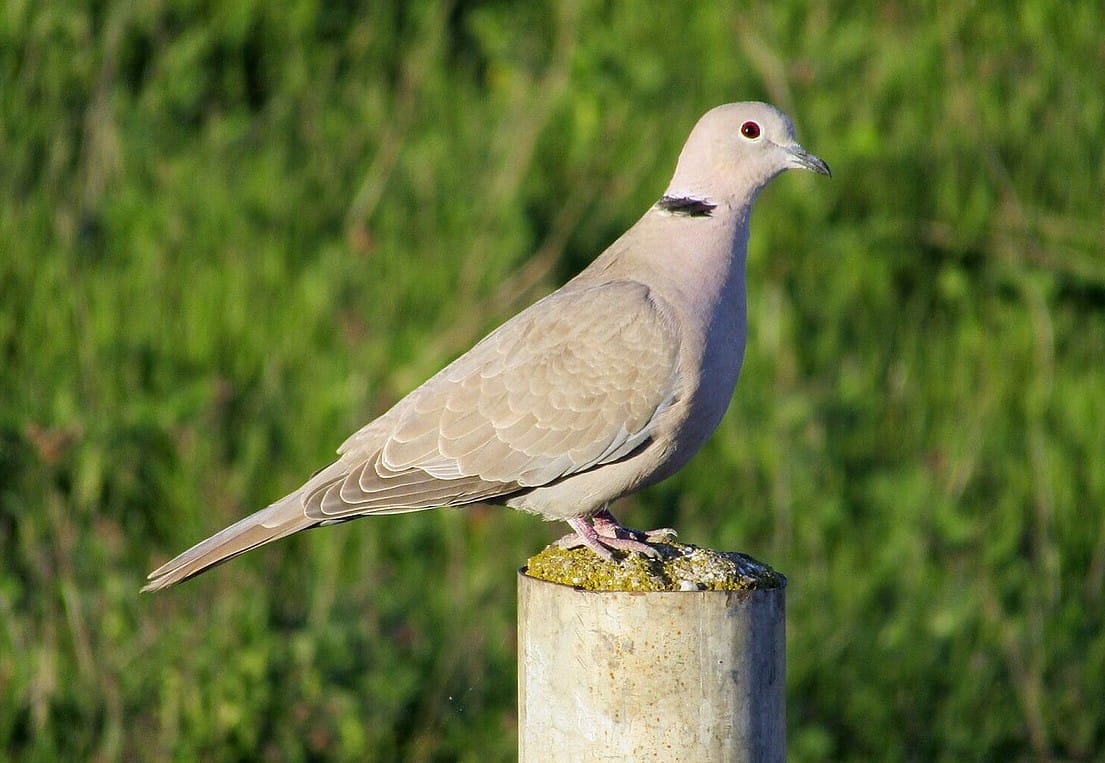
The Eurasian Collared-Dove is slightly larger than the Mourning Dove, measuring 12–14 inches. Its plumage is pale gray-tan with a distinctive black crescent collar on the back of the neck. The eyes are dark, and the tail is squared with white edges.
Habitat and Distribution
Originally introduced from Europe, Eurasian Collared-Doves have spread widely and can now be seen throughout Iowa, especially in towns, farmland, and suburban areas. They often nest on rooftops, trees, and other elevated surfaces.
Behavior
These doves are highly social, often seen in flocks. They are gentle and quiet, producing a soft “coo-coo” call. They are non-migratory and may remain in the same area year-round.
Diet
Their diet consists mainly of seeds, grains, and occasionally fruits. They are frequently seen feeding on the ground or at bird feeders.
Identification Tips
Look for the black collar at the nape, pale gray body, and slightly larger size compared to Mourning Doves. Juveniles lack a fully defined collar and are a bit duller in color.
Conservation Status
Eurasian Collared-Doves are not endangered and have rapidly expanded their range. They are protected under the Migratory Bird Treaty Act.
3. White-winged Dove (Zenaida asiatica)
Physical Characteristics
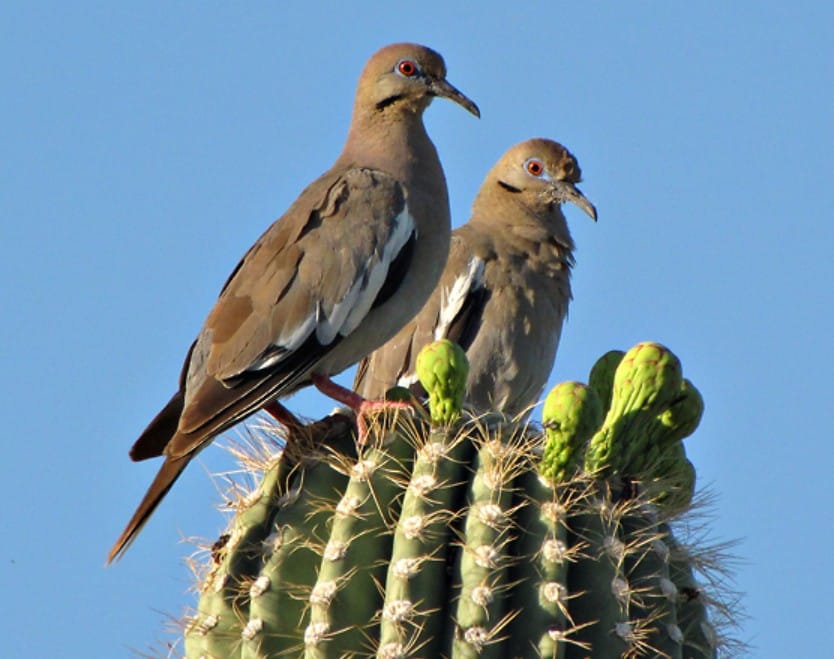
The White-winged Dove is slightly larger than the Mourning Dove, with gray-brown plumage and distinctive white wing patches visible in flight. Its eyes are surrounded by a light blue ring, and the tail has white edges. It has a more robust body and stronger beak compared to Mourning Doves.
Habitat and Distribution
White-winged Doves are less common in Iowa and mostly appear in the southern part of the state during summer. They favor open woodlands, riparian areas, and agricultural fields.
Behavior
These doves are social birds, often forming flocks. They are known for a distinctive, loud cooing call. They nest in trees, shrubs, or even on man-made structures, usually in colonies or loose groups.
Diet
White-winged Doves feed on seeds, grains, and fruits. They are particularly fond of cultivated grains in agricultural fields.
Identification Tips
Look for the white wing stripe, heavier body, and stronger flight compared to other doves. Their coo is more resonant and carries farther than that of Mourning Doves.
Conservation Status
White-winged Doves are considered stable, though uncommon in Iowa. They are also protected under the Migratory Bird Treaty Act.
4. Inca Dove (Columbina inca)
Physical Characteristics
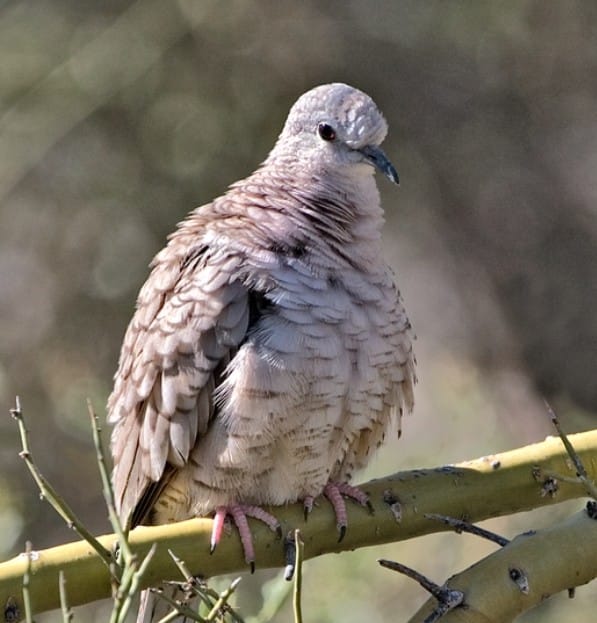
The Inca Dove is small, measuring only 6–7 inches, and has a scaly-looking plumage of brown and gray tones. It has a long, narrow tail and short, rounded wings. The eyes are dark with a subtle eye-ring, and the small beak is delicate.
Habitat and Distribution
Inca Doves are rare in Iowa, mostly appearing in the southernmost parts of the state. They favor open woodlands, residential areas, and desert-like environments.
Behavior
These doves are usually seen in pairs or small groups. They are fast, direct flyers and are shy compared to other doves. They often walk along the ground foraging and perch on low trees or shrubs.
Diet
Inca Doves mainly eat small seeds, grasses, and occasionally insects. They forage on the ground and feed in small flocks.
Identification Tips
Look for small size, scaly brown plumage, and distinctive tail shape. Their flight is rapid and low, unlike larger doves.
Conservation Status
Inca Doves are not threatened but remain uncommon in Iowa. They are protected under federal law.
Conclusion
Iowa hosts a variety of dove species, from the widespread Mourning Dove to the introduced Eurasian Collared-Dove, the southern White-winged Dove, and the tiny Inca Dove. Each species exhibits unique physical traits, habitats, and behaviors, making them fascinating for birdwatchers and naturalists alike. Observing and understanding these doves not only provides insight into Iowa’s ecosystems but also highlights the importance of habitat conservation to ensure healthy dove populations for the future.
Frequently Asked Questions (FAQs) about Doves in Iowa
- What types of doves are found in Iowa? Mourning Dove, Eurasian Collared-Dove, White-winged Dove, and Inca Dove.
- Which dove is the most common in Iowa? Mourning Dove.
- Are Eurasian Collared-Doves native? No, they were introduced from Europe.
- Where do White-winged Doves occur in Iowa? Mostly southern Iowa, especially near rivers and farmlands.
- Do Inca Doves live year-round in Iowa? No, they are rare visitors, mostly in the south.
- What is the diet of Mourning Doves? Seeds, grains, and occasionally small insects.
- Do Eurasian Collared-Doves form flocks? Yes, they are social and often feed in groups.
- How can I identify a juvenile Mourning Dove? Duller plumage, less defined tail markings, and smaller body size.
- Do doves migrate? Mourning Doves migrate south in winter, Eurasian Collared-Doves may remain year-round, White-winged Doves partially migrate, and Inca Doves are mostly rare visitors.
- How do doves communicate? Through cooing calls, tail flicking, and bowing displays.
- Can doves be attracted to backyard feeders? Yes, using millet, sunflower seeds, and cracked corn.
- Are doves protected by law? Yes, under the Migratory Bird Treaty Act.
- What is the average lifespan of Mourning Doves? 1–5 years in the wild.
- Which dove has a white wing patch? White-winged Dove.
- Do doves nest in urban areas? Yes, most species are adaptable to human habitats.
- What is the smallest dove in Iowa? Inca Dove.
- Do White-winged Doves eat grains? Yes, they often feed on cultivated grains.
- Which dove has a black collar? Eurasian Collared-Dove.
- How many eggs do Mourning Doves lay? Typically two per clutch.
- Do Inca Doves forage on the ground? Yes, they primarily walk along the ground for seeds.
- Are doves aggressive? No, they are peaceful birds.
- Can doves help with seed dispersal? Yes, they play a role in spreading seeds of plants.
- What is the flight pattern of Inca Doves? Rapid and direct, low to the ground.
- Do Eurasian Collared-Doves compete with native doves? They may compete for food and nesting sites.
- Do White-winged Doves form flocks? Yes, especially when feeding.
- What do juvenile White-winged Doves look like? Duller plumage with less defined white wing edges.
- Do doves bathe in water? Yes, they frequently drink and bathe in shallow water.
- Do doves have courtship behaviors? Yes, including bowing, cooing, and aerial displays.
- Which dove is most adaptable to urban areas? Eurasian Collared-Dove and Mourning Dove.
- Are doves common year-round in Iowa? Mourning Doves are common, Eurasian Collared-Doves mostly year-round, others are seasonal or rare.
Read more: 4 Types of Doves in Colorado (Pictures & Identification)