
Deer are some of the most iconic and widely recognized mammals in the world. With their graceful movements, antlered heads, and diverse habitats, they play a vital role in ecosystems while captivating humans for centuries. From the lush forests of North America to the tropical regions of Asia, deer species exhibit remarkable adaptability and diversity.
Understanding the types of deer is not only fascinating for wildlife enthusiasts but also essential for conservationists, researchers, and anyone interested in observing these animals in their natural environments. This guide explores 30 types of deer, including both North American species and those found across the globe. Each species is described in detail, covering their identification, habitat, diet, behavior, and interesting facts, providing a complete reference for anyone eager to learn about these majestic creatures.
1. White-tailed Deer (Odocoileus virginianus)

Identification
The White-tailed Deer is among the most widespread and recognizable deer species in North America. Adults typically measure 1.0–2.1 meters (3.3–6.9 feet) in length, with males weighing 68–136 kg (150–300 lbs) and females slightly smaller. Their coat is reddish-brown in summer and turns grayish-brown during winter. The species gets its name from the characteristic white underside of the tail, which it raises as a warning signal when alarmed. White-tailed deer have long, slender legs, large eyes, and ears adapted for keen senses of sight and hearing. Males grow antlers annually, which they shed each winter, and the shape and size can indicate age and health.
Habitat
White-tailed deer are highly adaptable and inhabit forests, grasslands, farmlands, and even suburban areas. They are native to most of North America, ranging from southern Canada to South America. They prefer mixed woodlands with dense underbrush for cover and open areas for foraging. Seasonal movements are common, with deer shifting to sheltered areas during harsh winter conditions and returning to richer feeding grounds in spring.
Diet
White-tailed deer are herbivorous, feeding on leaves, twigs, fruits, nuts, grasses, and agricultural crops. Their diet changes seasonally: tender shoots and leaves in spring and summer, acorns and other mast in autumn, and woody browse in winter. They are crepuscular feeders, active mostly at dawn and dusk to avoid predators and human disturbance.
Behavior
White-tailed deer are social but not highly gregarious. Females form matriarchal groups, while males may be solitary or form bachelor groups outside the mating season. They communicate through scent marking, vocalizations, and body language, particularly raising their white tails to signal danger. Rutting season occurs in late autumn, when males compete for females through antler sparring and displays of dominance.
Fun Fact
White-tailed deer are excellent swimmers, capable of crossing rivers and lakes to reach feeding grounds. Their tail-flagging behavior is so effective that it can alert nearby deer to danger from predators such as wolves and cougars.
2. Mule Deer (Odocoileus hemionus)

Identification
Mule deer are named for their large, mule-like ears and are slightly larger than white-tailed deer. Adult males can weigh up to 136 kg (300 lbs), and females up to 95 kg (210 lbs). They have a grayish-brown coat with a white rump patch, and their antlers are bifurcated, forming a forked structure rather than a single main beam. Mule deer have slender legs, powerful hindquarters for leaping, and keen eyesight.
Habitat
Mule deer primarily inhabit western North America, from Canada to Mexico. They are found in forests, grasslands, shrublands, and desert edges, often at higher elevations than white-tailed deer. They prefer areas with mixed cover for hiding and open spaces for feeding. Seasonal migrations are common, especially in mountainous regions.
Diet
These deer are browsers and grazers, feeding on shrubs, leaves, grasses, and twigs. In winter, they rely more on woody browse. They are crepuscular, feeding mainly at dawn and dusk to conserve energy and avoid predators.
Behavior
Mule deer are typically more solitary than white-tailed deer. Males establish territories during rut, competing through displays of antler size and physical sparring. Both sexes are agile, capable of running at high speeds and leaping long distances to escape predators.
Fun Fact
Mule deer are excellent jumpers, capable of clearing obstacles up to 3 meters (10 feet) in a single bound, which helps them evade predators in mountainous terrain.
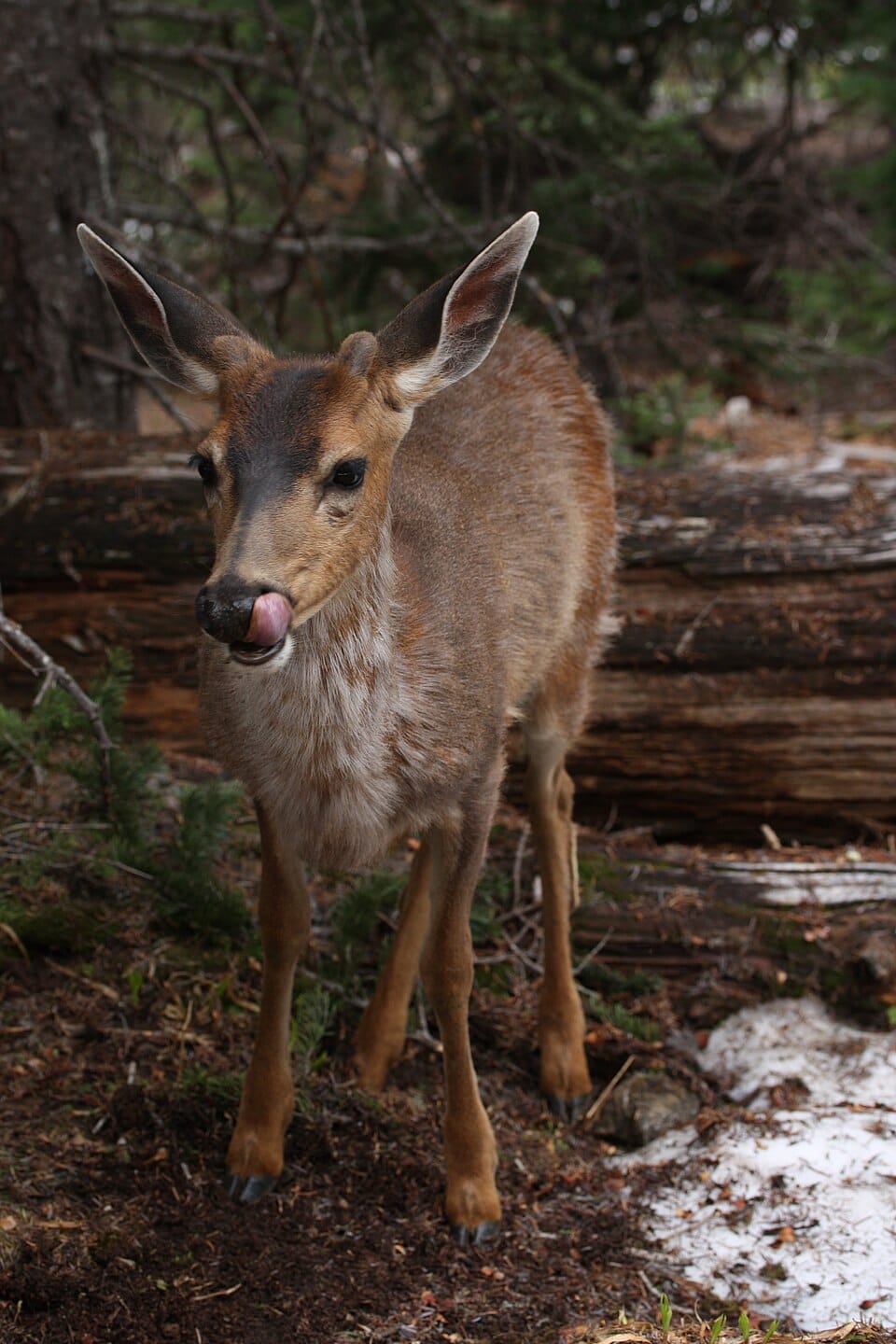
3. Black-tailed Deer (Odocoileus hemionus columbianus)
Identification
The Black-tailed Deer is a subspecies of the mule deer, easily distinguished by its black-tipped tail and slightly smaller stature. Adult males average 90–120 kg (198–265 lbs), while females are around 55–95 kg (121–209 lbs). Their coat is grayish-brown in winter and reddish-brown in summer. Unlike white-tailed deer, their antlers branch dichotomously, forming a forked structure, and typically have two to four tines on each side. Black-tailed deer have large, alert ears, keen vision, and a narrow, elongated snout adapted for selective browsing.
Habitat
Native to the Pacific Northwest of North America, including coastal regions of Oregon, Washington, and British Columbia, Black-tailed Deer thrive in temperate forests, coastal woodlands, and river valleys. They prefer dense undergrowth for protection against predators and open areas with abundant food sources. Seasonal migration is common in coastal and mountainous regions, particularly when snow covers food sources in higher elevations.
Diet
These deer are primarily browsers, feeding on shrubs, twigs, leaves, and fruits. Seasonal variations influence diet composition, with winter diets relying heavily on woody plants and conifer needles. Black-tailed Deer are crepuscular feeders, typically active during dawn and dusk to reduce predation risks.
Behavior
Black-tailed Deer are social yet display territorial behaviors during rutting season. Males engage in antler sparring and posturing to establish dominance and mating rights. Both males and females use scent marking to communicate territory boundaries. They are agile, capable of leaping over obstacles and swimming if necessary.
Fun Fact
Unlike other deer species, Black-tailed Deer are highly adapted to coastal environments and can tolerate salty marshes and beaches, where they forage on coastal vegetation.
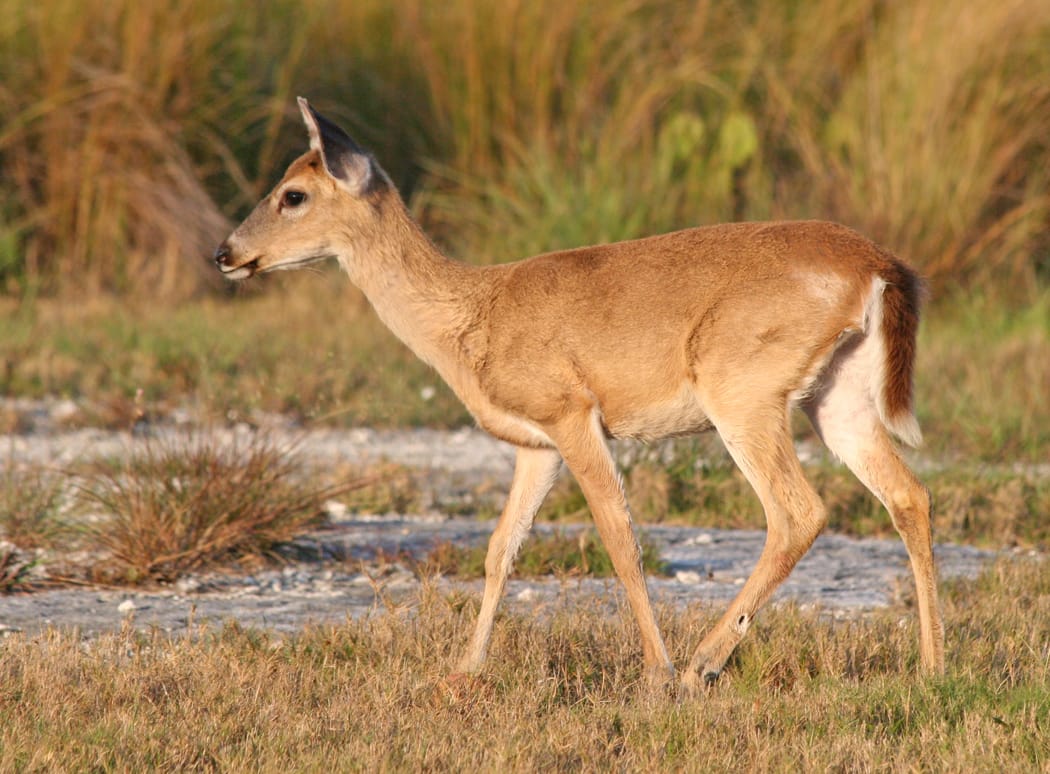
4. Key Deer (Odocoileus virginianus clavium)
Identification
Key Deer are the smallest subspecies of white-tailed deer, standing only about 0.7–1 meter (2.3–3.3 feet) in length and weighing 25–35 kg (55–77 lbs). Their coats are reddish-brown in summer and duller in winter. Antlers are small, usually less than 20 cm (7.9 inches), with two to three tines. Their delicate build, short legs, and large eyes give them a unique, gentle appearance.
Habitat
Endemic to the Florida Keys, Key Deer inhabit tropical hardwood forests, mangroves, and wetlands. They prefer dense vegetation for cover and nearby freshwater sources. Urban encroachment has reduced their natural habitat, making conservation efforts critical.
Diet
Key Deer are herbivores, feeding on leaves, flowers, fruits, and seeds. They rely heavily on native plants such as seagrape and cocoplum. Seasonal availability of food can influence foraging patterns.
Behavior
Key Deer are mostly diurnal, foraging during early morning and late afternoon. They are social, forming small herds led by females. Males compete during the rut through antler displays rather than physical combat, likely due to their small size.
Fun Fact
Despite their small stature, Key Deer can swim between islands to forage, making them excellent swimmers among deer species.
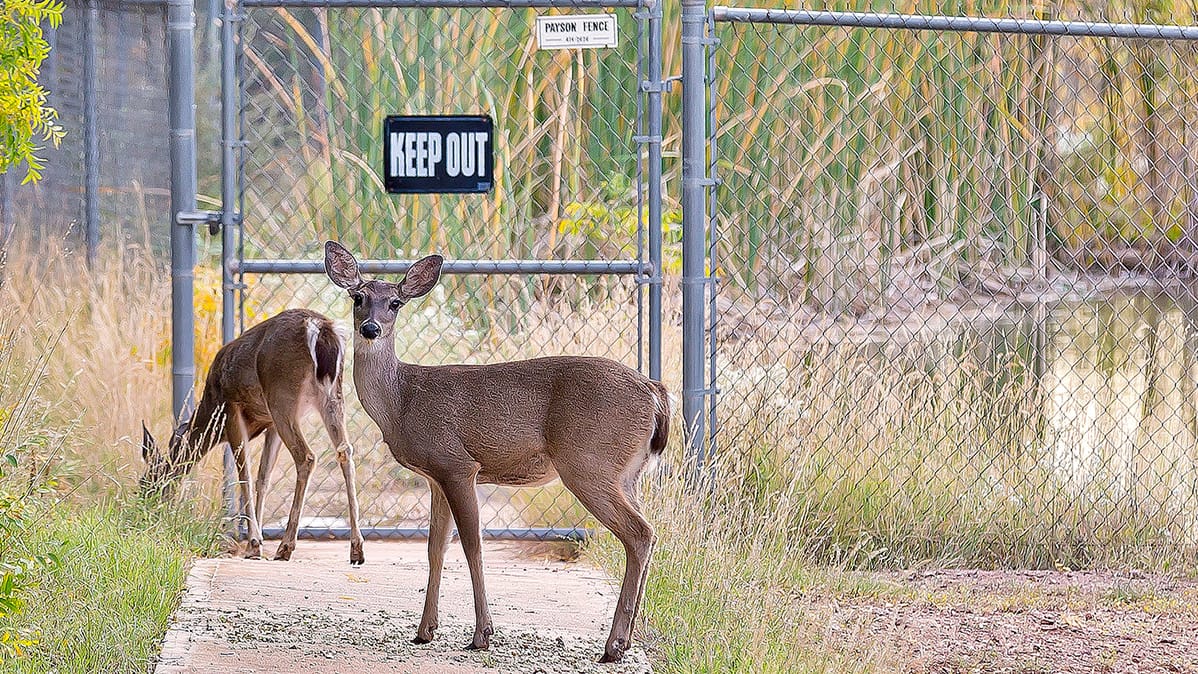
5. Coues Deer (Odocoileus virginianus couesi)
Identification
Coues Deer are a subspecies of white-tailed deer, smaller than the common white-tailed deer, averaging 45–70 kg (99–154 lbs). Their coat is reddish-brown with grayish tones in winter. Antlers are small, often with three points per side. They have large, dark eyes and delicate facial markings, distinguishing them from other white-tailed deer.
Habitat
Found in the southwestern United States and northern Mexico, Coues Deer prefer desert grasslands, scrublands, and oak woodlands. They are highly adaptable, thriving in arid environments where water sources may be limited.
Diet
Coues Deer are browsers and grazers, feeding on shrubs, leaves, grasses, and cacti. Their diet adjusts seasonally, with succulent plants favored during dry periods.
Behavior
Coues Deer are mostly nocturnal to avoid daytime heat. They are solitary or form small groups, with social hierarchies established among females. Males engage in antler displays and sparring during rut season.
Fun Fact
Coues Deer are exceptionally well-adapted to arid environments, able to survive on minimal water by obtaining moisture from their food.
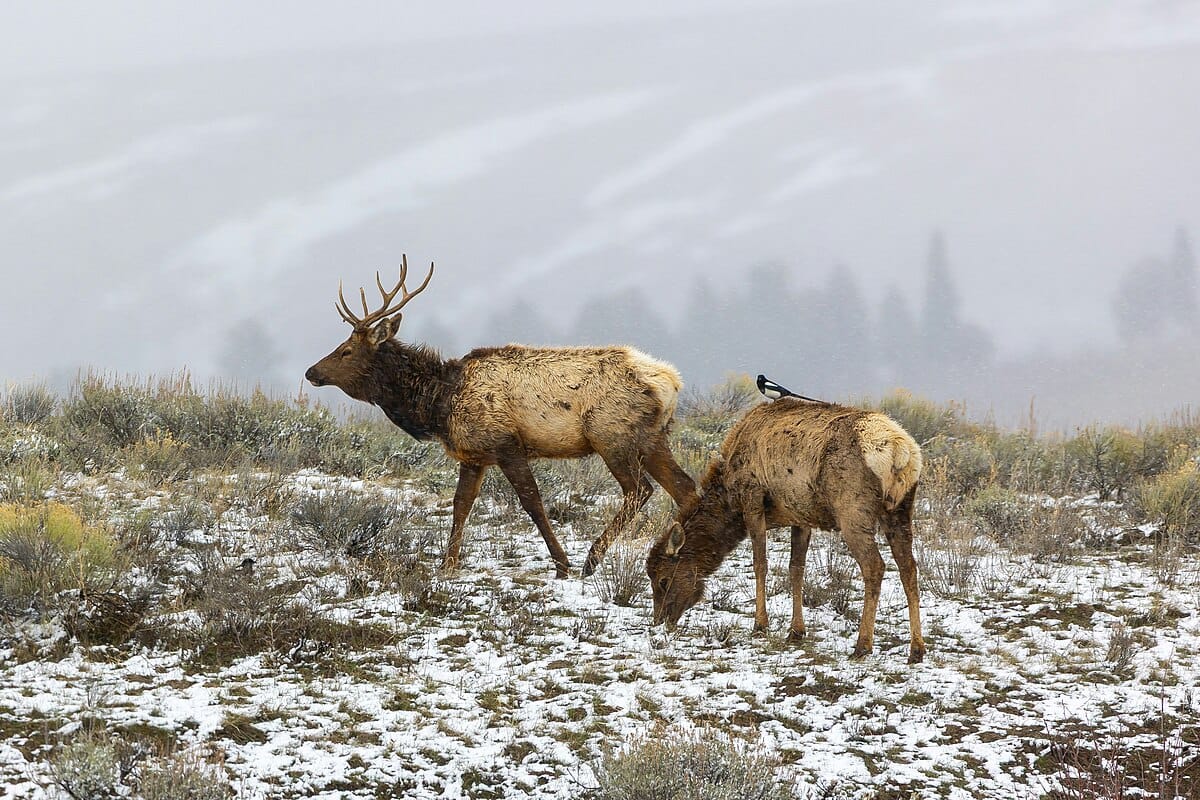
6. Elk (Cervus canadensis)
Identification
Elk are among the largest deer species in North America, with males (bulls) weighing 320–450 kg (705–992 lbs) and females (cows) 200–300 kg (441–661 lbs). Their coats are light brown with darker necks and large, branching antlers that can span up to 1.2 meters (4 feet). Elk have a prominent mane around the neck and a muscular, robust body built for endurance.
Habitat
Elk inhabit forests, meadows, and mountainous regions of North America. They prefer areas with abundant forage and cover for protection against predators. Seasonal migrations occur, with elk moving to lower elevations during winter for food and higher elevations during summer for breeding.
Diet
Elk are herbivores, feeding on grasses, leaves, bark, and forbs. Their diet varies by season, with woody plants consumed during winter. Elk are ruminants, allowing them to digest fibrous vegetation efficiently.
Behavior
Elk are social animals forming large herds, especially females with offspring. Males establish dominance during the rut through bugling calls, displays of antler size, and occasional sparring. They are strong swimmers and capable of long migrations.
Fun Fact
Elk bugling during the rut is one of the most iconic wildlife sounds in North America, used to attract females and warn rivals.
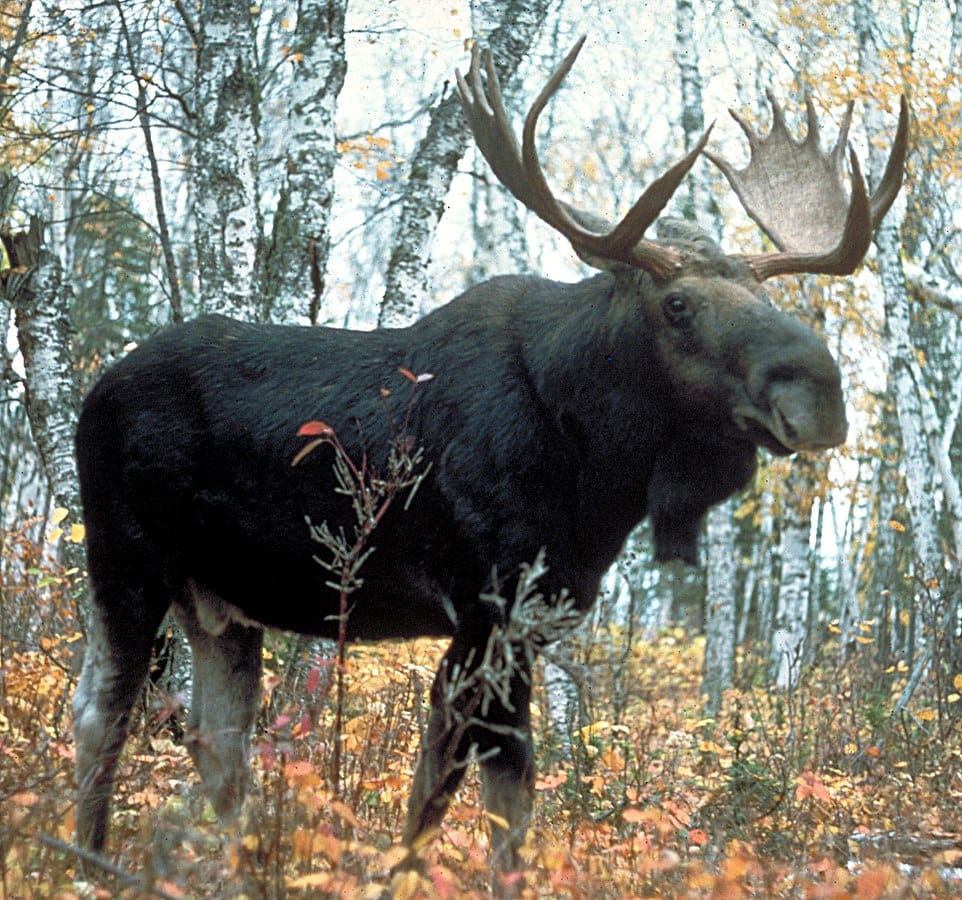
7. Moose (Alces alces)
Identification
Moose are the largest deer species in North America, with adult males weighing 380–700 kg (838–1,543 lbs) and females 200–360 kg (441–794 lbs). They have long legs, a hump on their shoulders, and broad, palmate antlers that can span up to 1.8 meters (6 feet). Their dark brown coat thickens during winter for insulation, and their long, flexible nose aids in browsing aquatic plants.
Habitat
Moose inhabit boreal forests, mixed woodlands, and wetlands across Canada, Alaska, and the northern U.S. They prefer areas near lakes, rivers, and marshes, which provide both food and protection from predators. Seasonal movement occurs with changes in forage availability, often migrating to lower elevations in winter.
Diet
Moose are herbivores, feeding on leaves, bark, twigs, and aquatic vegetation. They are one of the few deer species adapted to feed on submerged plants. During winter, they rely heavily on woody browse, such as willow and birch.
Behavior
Moose are mostly solitary except during the mating season (rut) or when mothers are with calves. Males engage in antler displays and vocalizations to compete for females. Despite their size, moose can run up to 56 km/h (35 mph) and swim long distances.
Fun Fact
Moose can dive underwater for up to 30 seconds to feed on aquatic plants, making them one of the most unique deer species in terms of feeding behavior.
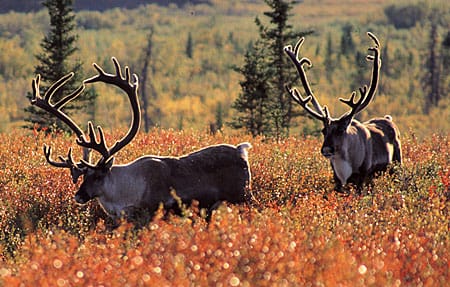
8. Caribou (Rangifer tarandus)
Identification
Caribou, known as reindeer in Europe, are medium-large deer weighing 160–300 kg (352–661 lbs). Both males and females grow antlers, although males shed theirs after the rut while females keep theirs through winter. They have a thick coat ranging from light brown to gray, with a distinctive white neck and rump patch, and large, broad hooves adapted for snow and tundra.
Habitat
Caribou inhabit tundra, boreal forests, and arctic regions across North America, particularly in Alaska, Canada, and northern U.S. states. They are migratory, covering thousands of kilometers annually in search of food and breeding grounds.
Diet
Caribou are herbivorous, feeding on lichens, mosses, grasses, and shrubs. Lichens form a crucial part of their winter diet. They have specialized teeth and stomachs to digest these fibrous foods efficiently.
Behavior
Caribou are highly social, forming large herds that can include thousands of individuals. Migration is a key behavior, helping them access seasonal food sources. Predators include wolves and bears, and caribou rely on speed, stamina, and herd safety.
Fun Fact
Caribou are one of the few deer species where both sexes grow antlers, with females using them to compete for food in winter.
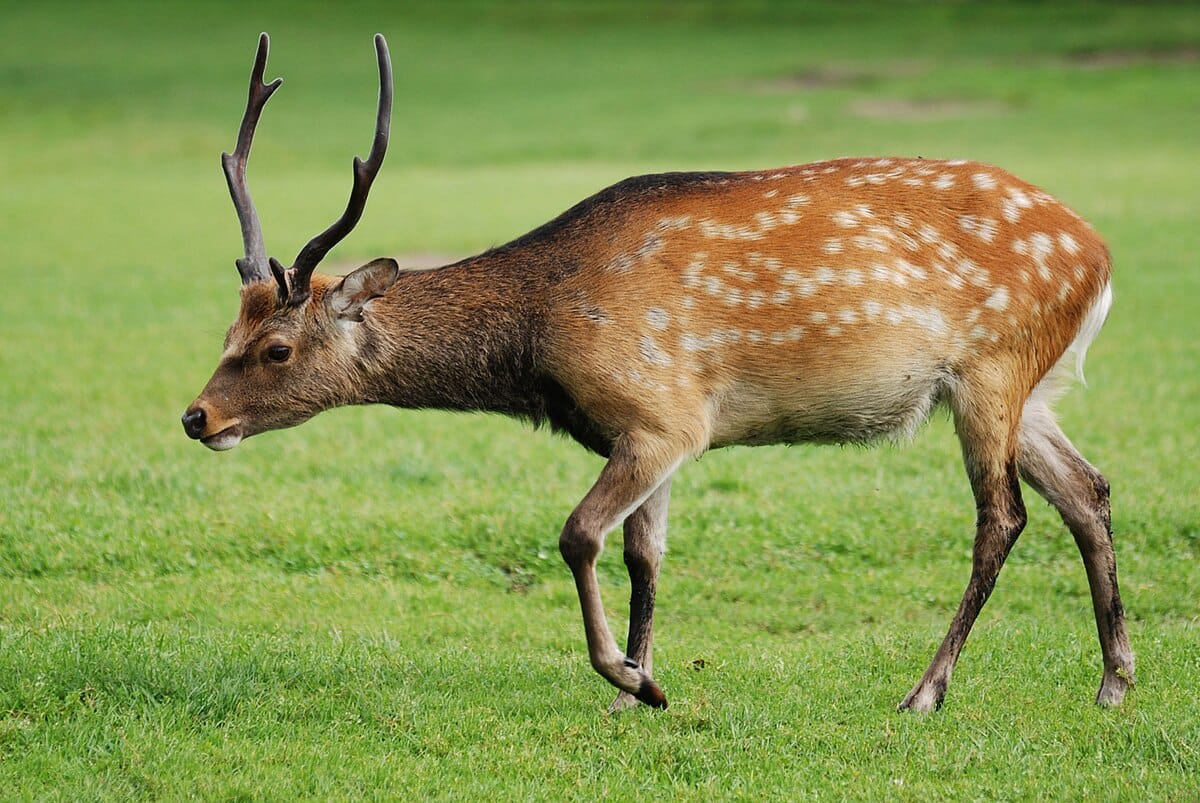
9. Sika Deer (Cervus nippon)
Identification
Sika Deer are medium-sized with a reddish-brown coat marked with white spots in summer. Adults weigh 45–100 kg (99–220 lbs), with males sporting antlers that grow in a three-pronged formation. Their tail is small, and their face has delicate, dark markings around the eyes.
Habitat
Native to East Asia but introduced to parts of North America, Sika Deer inhabit forests, grasslands, and wetlands. They prefer areas with dense vegetation for cover and open areas for grazing.
Diet
Sika Deer are herbivorous, feeding on leaves, grasses, fruits, and shrubs. They adapt their diet seasonally, foraging on fallen leaves and twigs during winter.
Behavior
Sika Deer are social, forming small herds. Males display rutting behaviors with vocalizations called “whistles” to attract females and establish dominance. They are alert and agile, capable of leaping high fences and swimming across rivers.
Fun Fact
Sika Deer can thrive in both wild and urban environments, often venturing near human settlements in search of food.
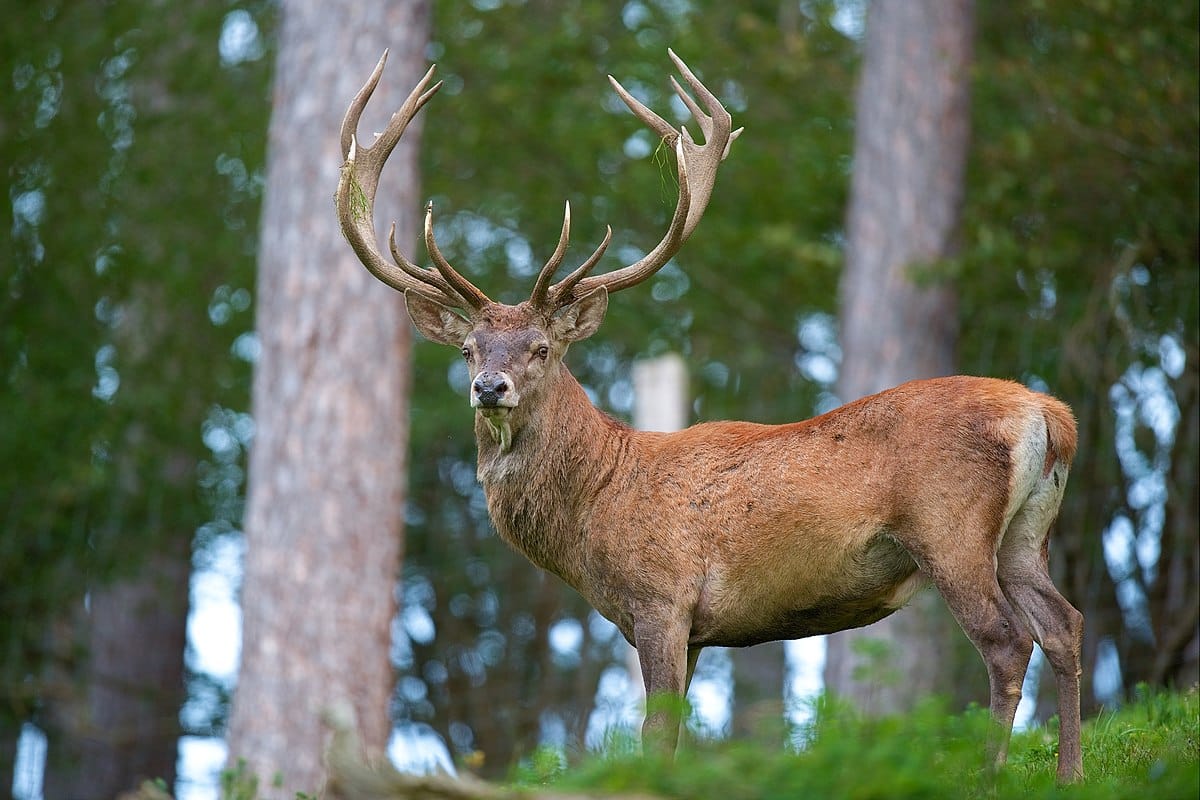
10. Red Deer (Cervus elaphus)
Identification
Red Deer are large, muscular deer weighing 160–240 kg (353–529 lbs) for males and 120–170 kg (264–375 lbs) for females. Their coats are reddish-brown in summer and darker in winter. Males possess large, branching antlers with multiple tines used during the rut.
Habitat
Native to Europe and parts of Asia, red deer are also introduced in North America. They inhabit forests, grasslands, and mountainous regions. They prefer open spaces for grazing and dense cover for protection.
Diet
Red Deer are herbivores, feeding on grasses, leaves, shoots, and bark. In winter, they rely on woody plants and shrubs. They are ruminants, efficiently digesting fibrous plant material.
Behavior
Red Deer are social, forming large herds, particularly females with young. Males establish dominance during the rut with antler clashes, vocalizations, and displays. They are alert and capable of fast running and swimming.
Fun Fact
Red Deer stags produce a deep, resonant roar during the rut, which can be heard over a kilometer away, serving as both a warning and an attractant.
11. Fallow Deer (Dama dama)

Identification
Fallow Deer are medium-sized, weighing 60–100 kg (132–220 lbs) for males and 30–50 kg (66–110 lbs) for females. Their coat varies from light tan to dark brown, often spotted, especially in summer. Males have broad, palmate antlers with multiple tines, unlike the pointed antlers of most deer. Fallow Deer have slender legs, large eyes, and a white rump patch that serves as a visual signal.
Habitat
Native to Europe but introduced to North America, Fallow Deer inhabit woodlands, grasslands, and parklands. They prefer mixed forests with open areas for grazing. Seasonal movements are minimal, as they can find adequate forage year-round in temperate climates.
Diet
Fallow Deer are herbivorous, feeding on grasses, leaves, shoots, and fruits. They adapt their diet seasonally, relying on woody browse in winter. Fallow Deer are ruminants, efficiently digesting fibrous plant material.
Behavior
Fallow Deer are social, forming large herds of females and their offspring. Males establish dominance during the rut through displays, antler clashes, and vocalizations called “groans.” They are agile, capable of fast running and jumping over obstacles to escape predators.
Fun Fact
Fallow Deer can swim to reach new feeding areas, and their palmate antlers are unique among deer species, giving them a distinctive silhouette during the rut.
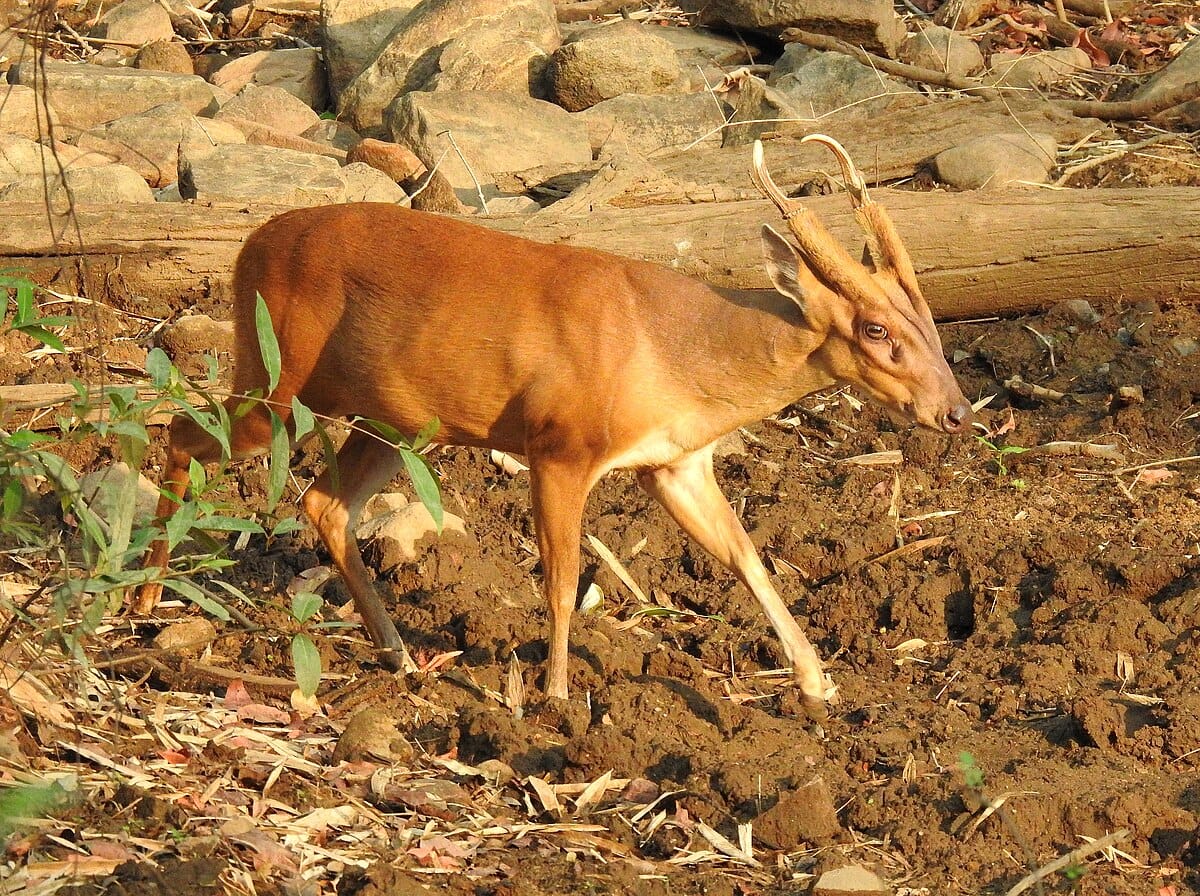
12. Muntjac Deer (Muntiacus spp.)
Identification
Muntjac Deer, also known as barking deer, are small, standing only 40–50 cm (16–20 inches) at the shoulder and weighing 10–18 kg (22–40 lbs). They have reddish-brown coats, short antlers, and prominent canine teeth used for sparring. Their rounded bodies and large eyes give them a delicate appearance.
Habitat
Native to Southeast Asia, Muntjac Deer inhabit forests, dense undergrowth, and bamboo thickets. They are highly adaptable and can survive near human settlements in rural areas.
Diet
Muntjac Deer are herbivorous, feeding on leaves, fruits, seeds, and shoots. They occasionally consume fungi. Their small size allows them to feed on low-lying vegetation that larger deer cannot reach.
Behavior
Muntjac Deer are solitary and highly territorial. They are named “barking deer” for their loud, dog-like calls used to warn others of predators. Males use their canines and short antlers to defend territories and during mating disputes.
Fun Fact
Despite their small size, Muntjac Deer are fearless and will confront intruders with surprising aggression.
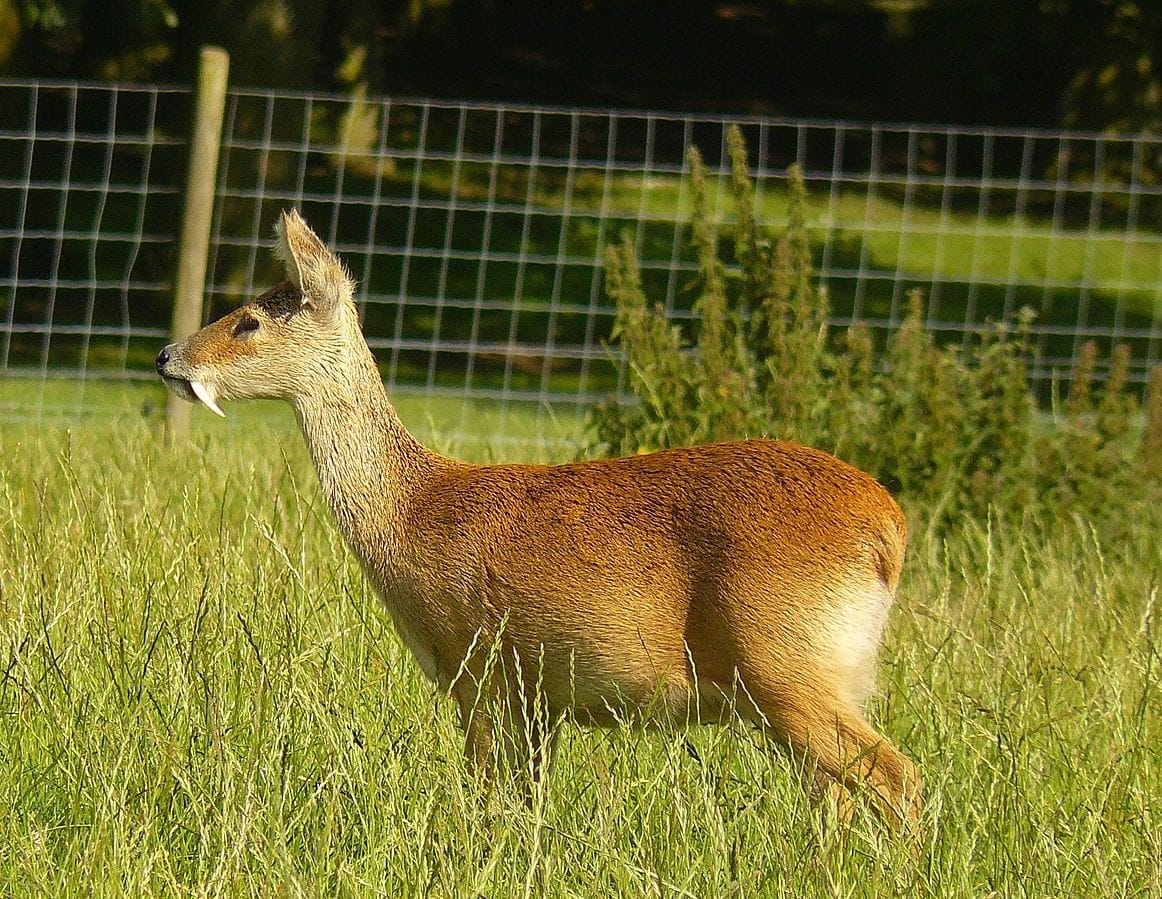
13. Chinese Water Deer (Hydropotes inermis)
Identification
Chinese Water Deer are small, weighing 12–14 kg (26–31 lbs), with a reddish-brown coat and a white underside. They are unique among deer for lacking antlers. Males have long, tusk-like canine teeth used for fighting during the rut. Their rounded ears and slender legs give them a delicate, almost rodent-like appearance.
Habitat
Native to China and Korea, Chinese Water Deer inhabit wetlands, marshes, riversides, and grasslands. They prefer areas with tall reeds and dense vegetation for cover.
Diet
These deer are herbivorous, feeding on grasses, aquatic plants, shoots, and leaves. They are adapted to forage both on land and in shallow water.
Behavior
Chinese Water Deer are mostly nocturnal and solitary, though they can sometimes be seen in small groups. Males use tusks to spar during mating season, and both sexes communicate through scent markings.
Fun Fact
Chinese Water Deer can swim effectively, using water bodies as escape routes from predators, a unique trait among small deer species.
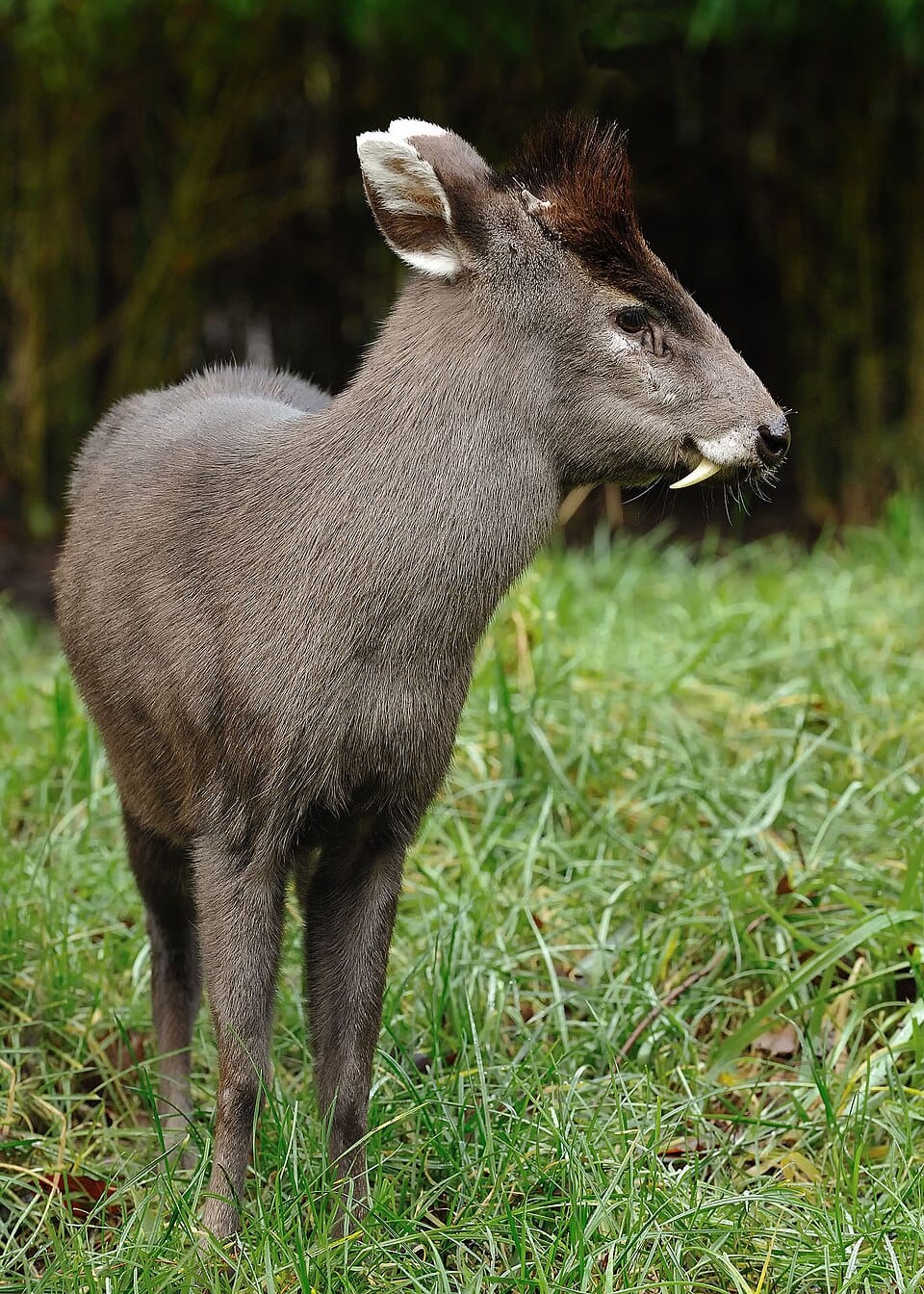
14. Tufted Deer (Elaphodus cephalophus)
Identification
Tufted Deer are small deer species weighing 15–25 kg (33–55 lbs). They are dark brown with a black tuft of hair on the forehead and long, fang-like canine teeth in males. Antlers are small and simple, usually only a single tine per side.
Habitat
Native to China and parts of Myanmar, Tufted Deer live in mountainous forests and dense undergrowth. They prefer steep slopes with thick vegetation for protection and cover.
Diet
Tufted Deer are herbivorous, feeding on leaves, shoots, grasses, fruits, and fungi. They are browsers that forage on understory plants.
Behavior
Tufted Deer are solitary and territorial. Males use their fangs for sparring, and both sexes mark territories with scent glands. They are elusive and rarely seen in open areas.
Fun Fact
Despite their small size, Tufted Deer can jump impressively high, navigating steep, forested slopes with agility.
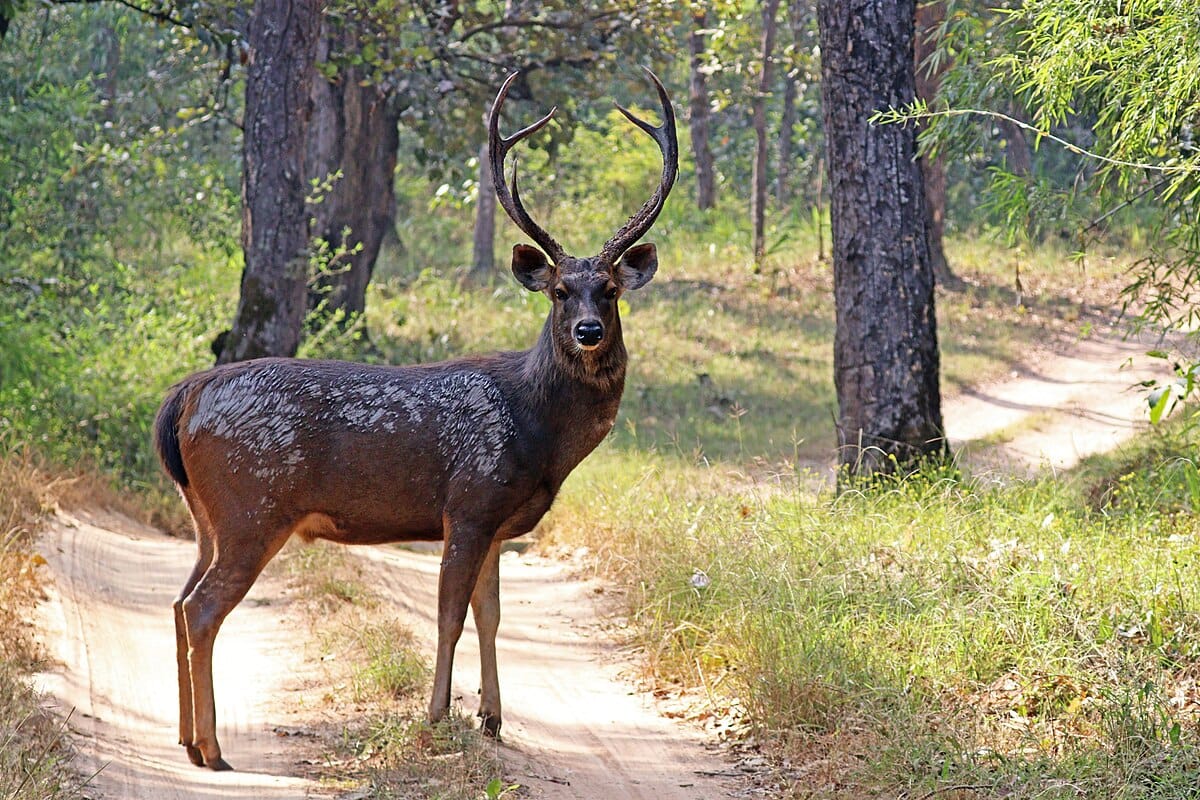
15. Sambar Deer (Rusa unicolor)
Identification
Sambar Deer are large deer species, with males weighing 180–350 kg (397–772 lbs) and females 120–180 kg (264–397 lbs). Their coat is dark brown and coarse, with long, rugged antlers branching into three tines per side. They have a distinctive dewlap under the throat.
Habitat
Native to Southeast Asia, Sambar Deer inhabit tropical forests, grasslands, and wetlands. They prefer areas with dense vegetation and nearby water sources.
Diet
Sambar Deer are herbivores, feeding on leaves, grasses, shrubs, and aquatic plants. Their diet is highly flexible depending on seasonal availability.
Behavior
Sambar Deer are mainly nocturnal and solitary or in small herds. Males establish dominance during the rut with vocalizations, antler displays, and occasional combat. They are strong swimmers and adept at navigating dense forest terrain.
Fun Fact
Sambar Deer are excellent swimmers and often enter water to cool off or escape predators, a behavior uncommon in many deer species.
16. Barasingha (Rucervus duvaucelii)

Identification
Barasingha, also known as swamp deer, are medium-large deer weighing 150–180 kg (330–397 lbs). Males have distinctive palmate antlers with 12–14 tines. Their coat is yellowish-brown, and they have white underparts.
Habitat
Native to India and Nepal, Barasingha inhabit grasslands, marshes, and swampy forests. They prefer areas with tall grasses and seasonal water sources.
Diet
Barasingha are herbivorous, feeding mainly on grasses but occasionally on leaves and shoots. Their diet makes them well-adapted to wet grasslands.
Behavior
They are social, forming herds of up to 20–30 individuals. Males compete during rut through antler displays and occasional sparring. Barasingha are alert and can run swiftly through grasslands to evade predators.
Fun Fact
Barasingha are considered excellent swimmers, often crossing rivers and flooded areas in their habitat, which is unique among deer of similar size.
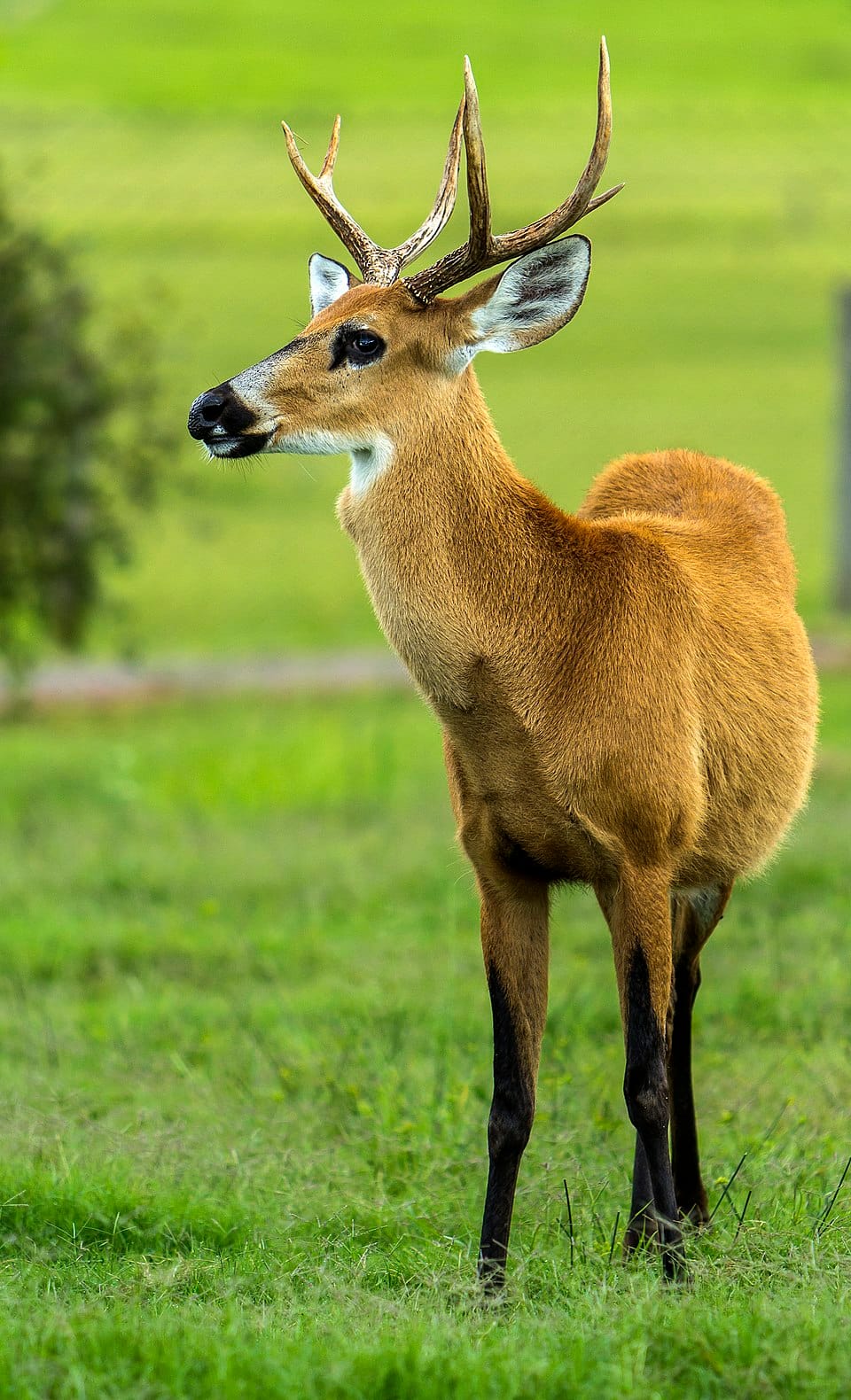
17. Marsh Deer (Blastocerus dichotomus)
Identification
Marsh Deer are the largest deer species in South America, weighing 120–180 kg (264–397 lbs). Their coat is reddish-brown, long, and coarse, with large ears and long legs adapted for marshy terrain. Males have rugged, three-pronged antlers.
Habitat
Native to the wetlands of Argentina, Brazil, and Paraguay, Marsh Deer inhabit swamps, marshes, and riverine forests. They are highly dependent on aquatic environments.
Diet
Marsh Deer feed on aquatic and semi-aquatic plants, grasses, and leaves. They are adapted to forage in shallow water and muddy terrain.
Behavior
Marsh Deer are mostly solitary or found in small groups. Males display antlers and scent marking during rut. They are good swimmers and can move efficiently through marshlands.
Fun Fact
Marsh Deer can wade through knee-deep water and swim across rivers to reach feeding areas, an unusual behavior among deer species.
18. Red Brocket Deer (Mazama americana)

Identification
Red Brocket Deer are small to medium-sized, weighing 24–48 kg (53–106 lbs). They have a reddish-brown coat and short, simple antlers in males. Their compact bodies and large ears make them well-adapted to dense forests.
Habitat
Native to South American tropical forests, they prefer dense understory and remote areas with minimal human disturbance.
Diet
Red Brocket Deer are herbivorous, feeding on fruits, leaves, shoots, and fungi. They are primarily solitary foragers.
Behavior
They are solitary, elusive, and mostly nocturnal. Males use scent marking to establish territories, and they are highly alert to predators.
Fun Fact
Red Brocket Deer are so elusive that they are rarely observed in the wild, earning them the nickname “ghost of the forest.”
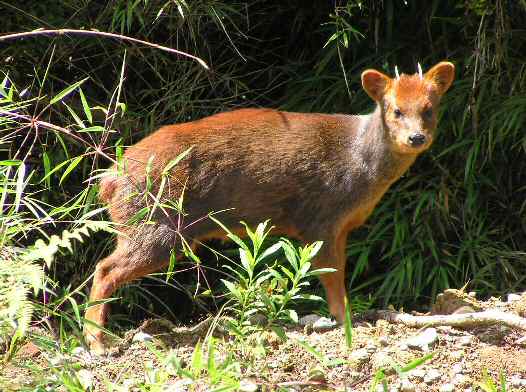
19. Pudu (Pudu spp.)
Identification
Pudus are the world’s smallest deer, weighing only 7–13 kg (15–29 lbs) and standing 30–45 cm (12–18 inches) tall. They have a reddish-brown coat, short antlers in males, and a rounded body with delicate legs.
Habitat
Native to South America, they inhabit dense temperate forests and bamboo thickets. They prefer secluded areas with thick cover.
Diet
Pudus feed on leaves, shoots, fruits, and bark. Their small size allows them to browse low-lying vegetation.
Behavior
Pudus are solitary, shy, and primarily nocturnal. They communicate through scent marking and soft vocalizations.
Fun Fact
Despite their tiny size, Pudus are agile and can leap over obstacles, escaping predators with surprising speed.
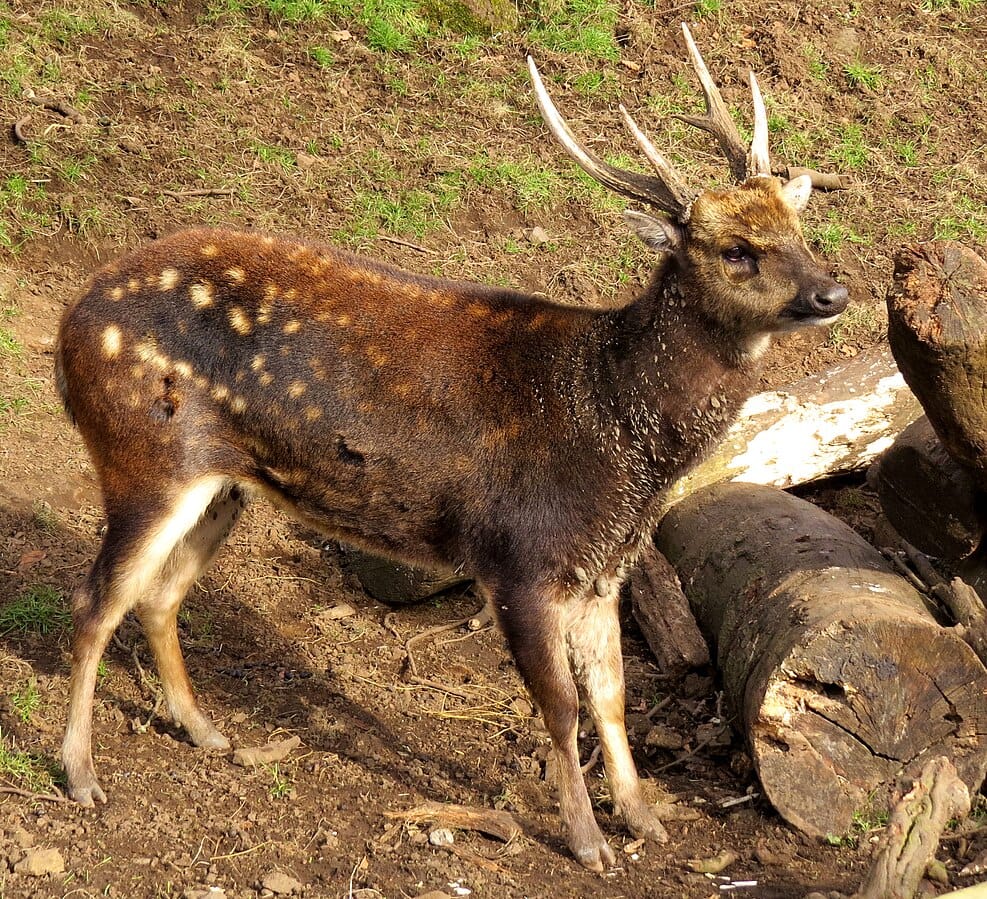
20. Philippine Spotted Deer (Rusa alfredi)
Identification
Philippine Spotted Deer are medium-sized, weighing 40–60 kg (88–132 lbs). They have a reddish-brown coat with white spots on the back and sides. Males have short antlers with three tines per side.
Habitat
Endemic to the Philippines, they inhabit lowland forests, grasslands, and areas near freshwater sources.
Diet
They feed on grasses, leaves, fruits, and shoots. Their diet varies seasonally with food availability.
Behavior
Philippine Spotted Deer are shy and mostly solitary. Males engage in antler displays during rut, while females form small family groups.
Fun Fact
Philippine Spotted Deer are critically endangered due to habitat loss and hunting, making conservation efforts crucial for their survival.
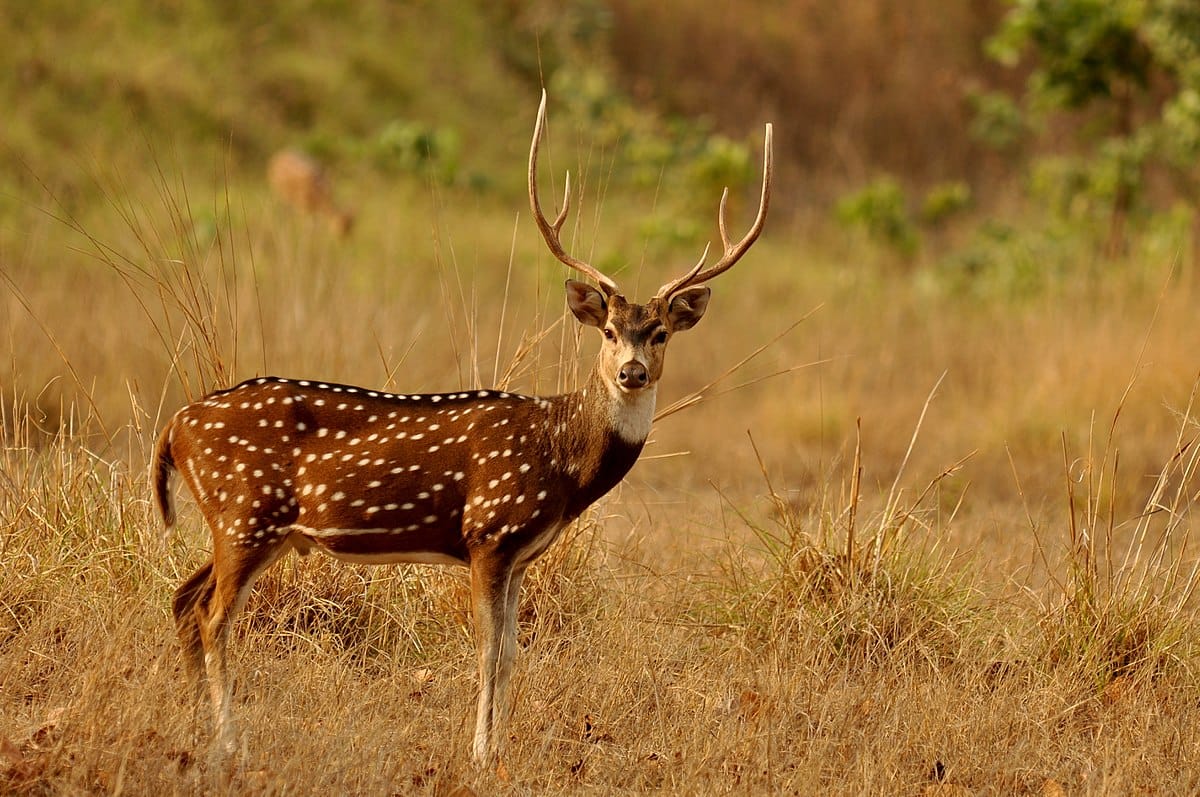
21. Chital / Axis Deer (Axis axis)
Identification
Chital, also known as Axis Deer, are medium-sized, weighing 30–75 kg (66–165 lbs). Their coat is reddish-brown with white spots, which become less prominent as they age. Males have three-pronged antlers that can reach up to 1 meter (3.3 feet) in length. They have slender bodies, long legs, and large, expressive eyes.
Habitat
Native to the Indian subcontinent, Chital Deer inhabit grasslands, deciduous forests, and lightly wooded areas. They are adaptable and can thrive near human settlements where grazing is available.
Diet
Chital are primarily grazers but will browse on shrubs and leaves. They feed on grasses, fruits, and fallen seeds. They are crepuscular feeders, active during early mornings and evenings.
Behavior
Chital live in herds ranging from small family groups to large aggregations of 50+ individuals. Males establish dominance through antler displays and occasional sparring during the rut. They are alert and use tail flagging to signal danger.
Fun Fact
Chital Deer are excellent swimmers and often cross rivers in search of forage or to escape predators.
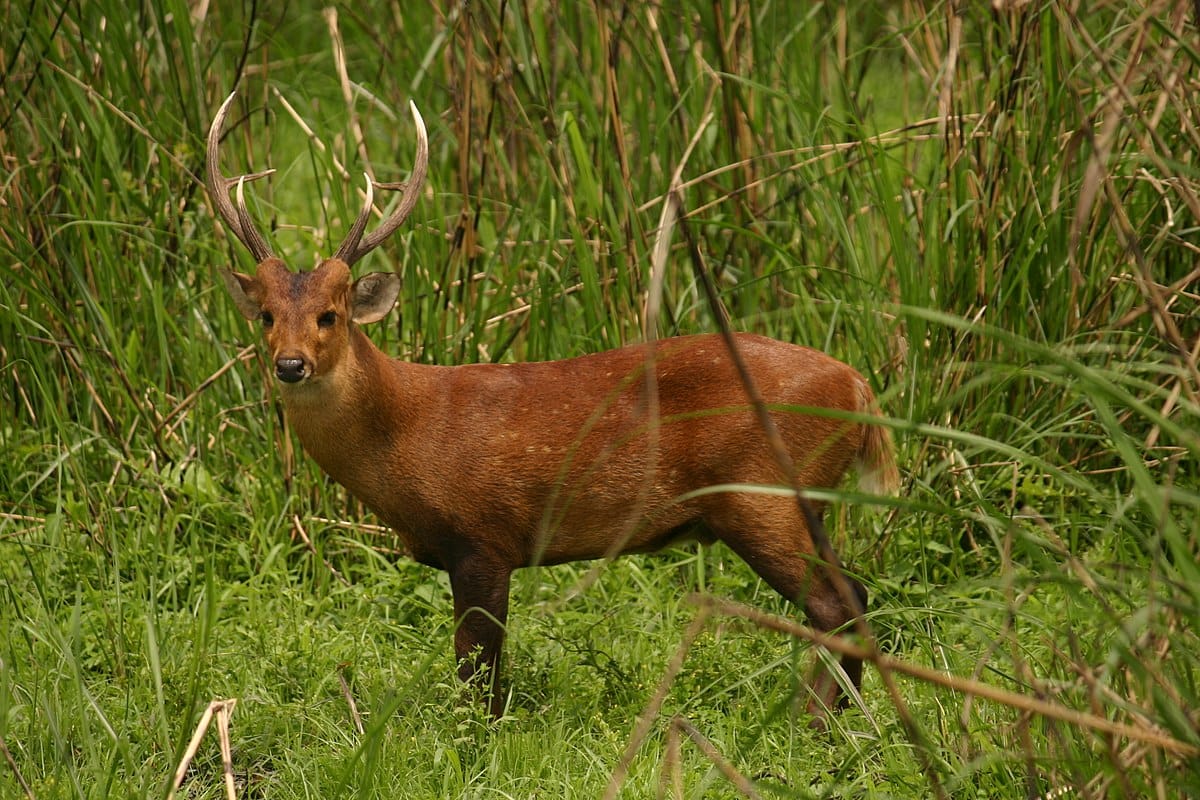
22. Hog Deer (Axis porcinus)
Identification
Hog Deer are compact, weighing 25–40 kg (55–88 lbs). They have a dark brown winter coat and lighter reddish summer coat. Males possess short, straight antlers, while females are antlerless. Their short stature and stocky build resemble a hog, hence the name.
Habitat
Native to South and Southeast Asia, Hog Deer inhabit grasslands, floodplains, and open woodlands. They prefer dense vegetation near water sources for cover.
Diet
Hog Deer feed on grasses, herbs, and leaves. They are primarily grazers but may browse shrubs occasionally. Seasonal diet variations depend on availability.
Behavior
These deer are solitary or live in small groups. Males spar during the rut, and all individuals are highly alert. Hog Deer rely on their agility to escape predators, often running through thick grass to stay hidden.
Fun Fact
Hog Deer are among the fastest deer species relative to their size, capable of reaching speeds up to 40 km/h (25 mph).
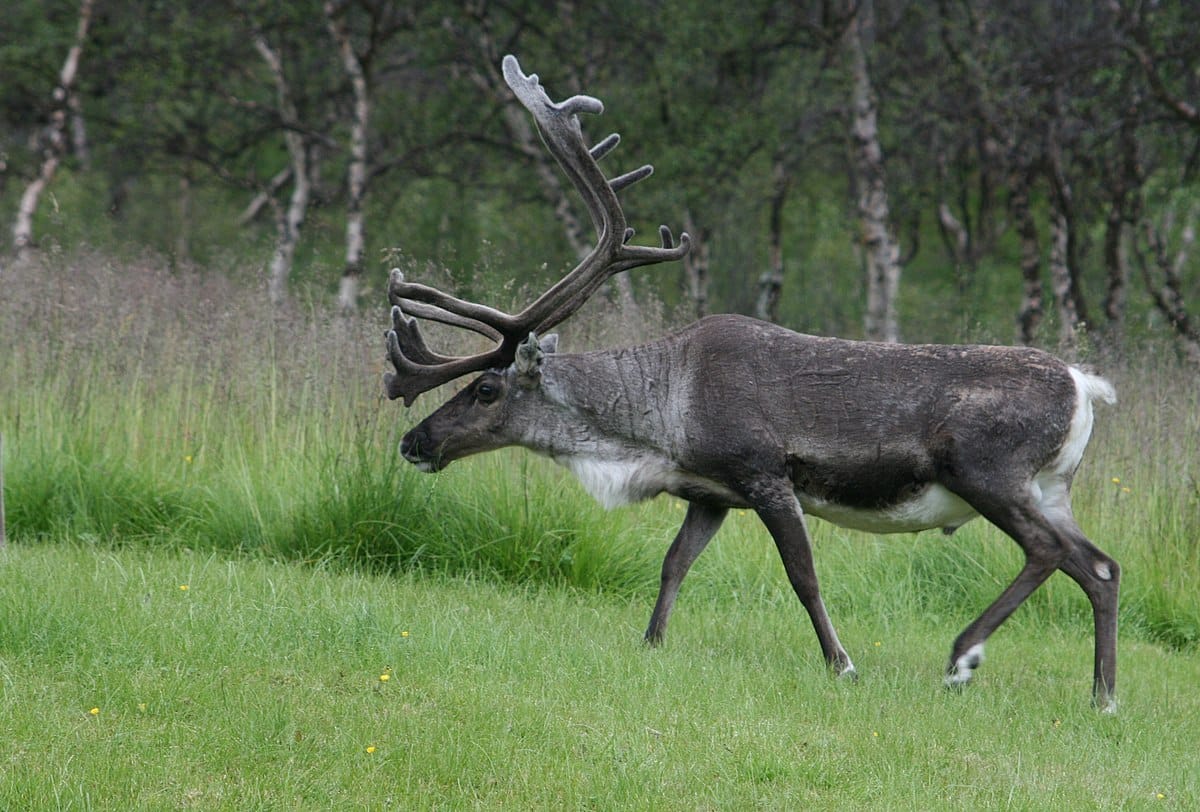
23. Reindeer (Rangifer tarandus)
Identification
Reindeer, the northern counterpart of Caribou, weigh 160–300 kg (352–661 lbs). Both males and females grow antlers, though males shed theirs after rutting. Their coat is dense, varying from light brown to gray, with white neck and underparts. Large, broad hooves support movement on snow and tundra.
Habitat
Reindeer inhabit arctic tundra, boreal forests, and mountainous regions of North America and Eurasia. They undertake long seasonal migrations to access food and breeding grounds.
Diet
Reindeer are herbivorous, feeding on lichens, mosses, grasses, and shrubs. Lichens are particularly crucial in winter. Specialized teeth and a multi-chambered stomach allow them to digest fibrous vegetation efficiently.
Behavior
Reindeer form large herds, often numbering in the thousands. Migration is a key behavior, helping them reach seasonal food sources. Predators include wolves, bears, and humans.
Fun Fact
Reindeer are uniquely adapted to cold climates, with hollow hair for insulation and the ability to see ultraviolet light, helping them detect lichens beneath the snow.
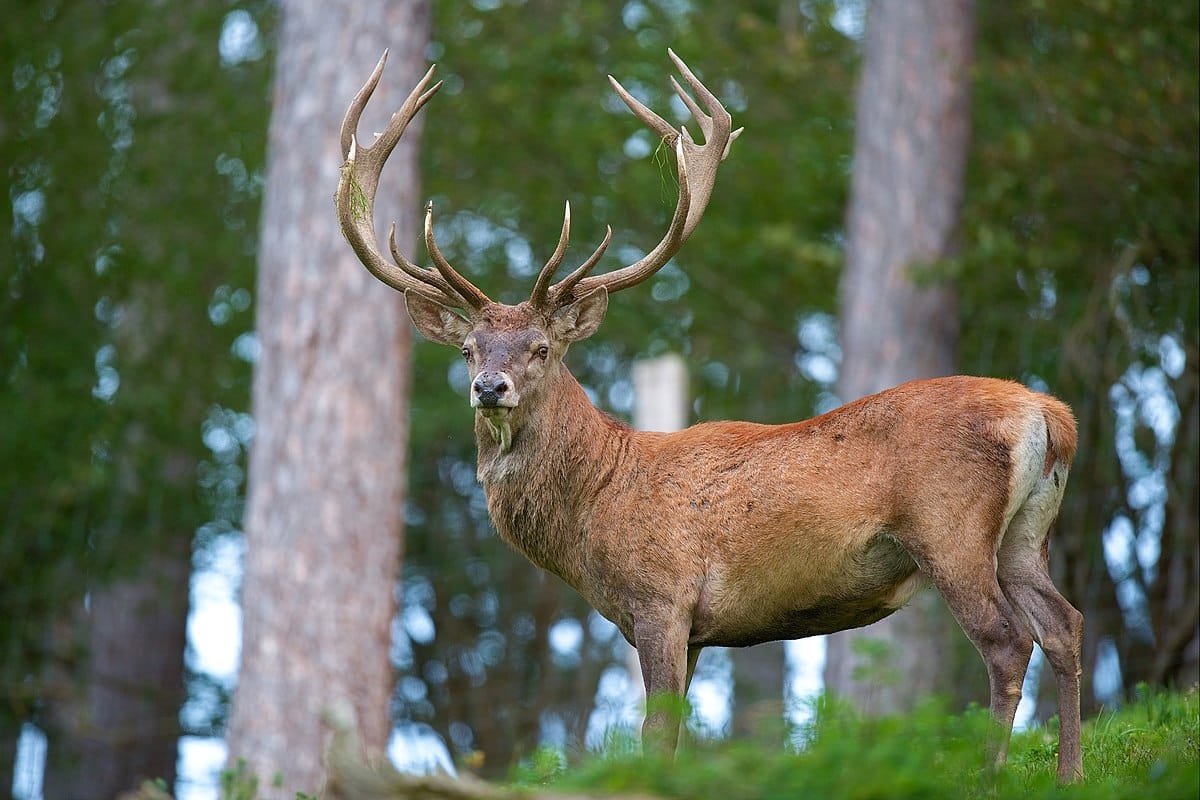
24. Red Deer (European Subspecies) (Cervus elaphus)
Identification
European Red Deer are large deer with males weighing 160–240 kg (353–529 lbs) and females 120–170 kg (264–375 lbs). Males grow large, branching antlers with multiple tines, while females lack antlers. Their coat is reddish-brown in summer and darker in winter.
Habitat
They inhabit forests, grasslands, and mountainous regions of Europe and have been introduced to North America. Open areas are used for grazing, while forests provide cover.
Diet
Red Deer feed on grasses, leaves, shoots, and bark. In winter, they rely more heavily on woody plants. They are ruminants, capable of digesting fibrous plant material.
Behavior
Red Deer form large herds, particularly females with calves. Males compete during the rut using antler clashes and vocalizations. They are alert and capable of fast running and swimming.
Fun Fact
Red Deer stags produce a loud, resonant roar during the rut, audible over a kilometer away, to attract females and warn rivals.
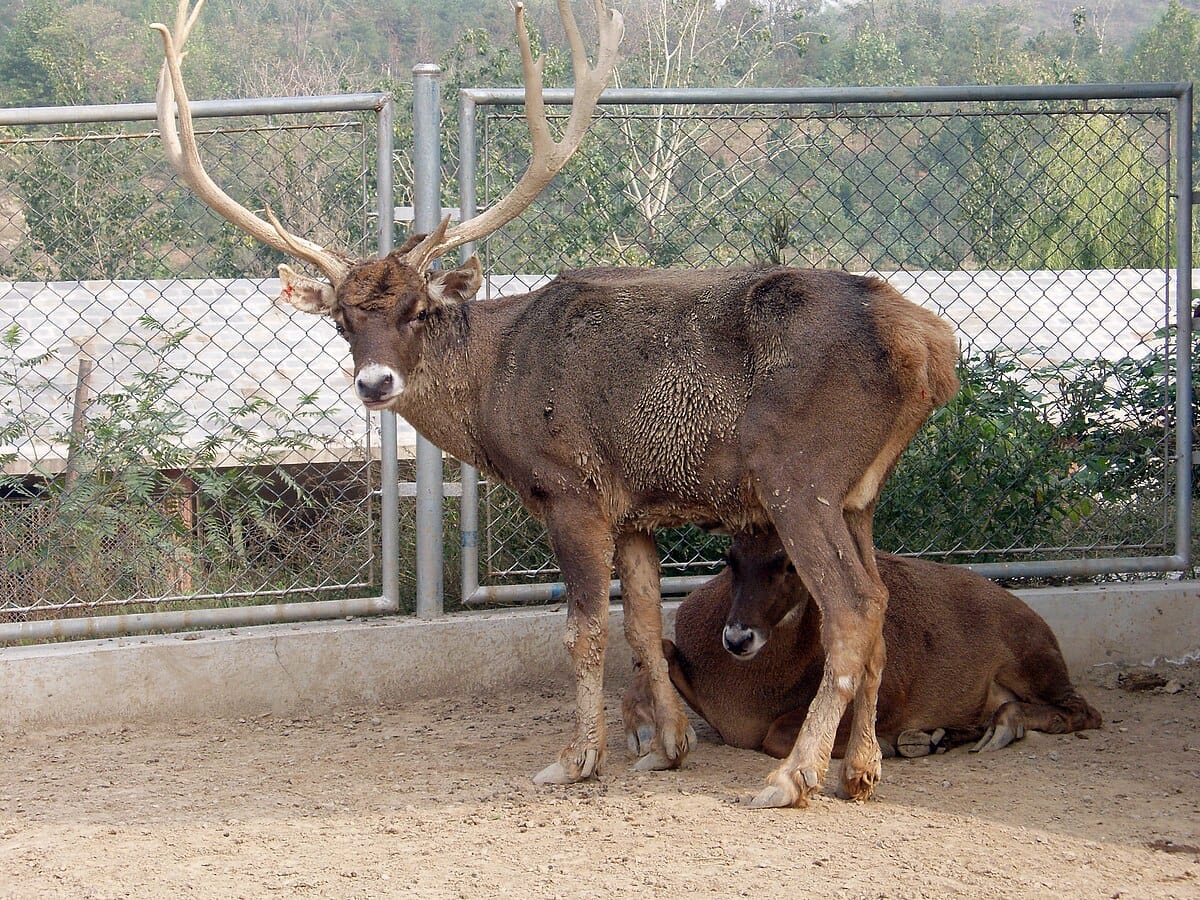
25. White-lipped Deer (Cervus albirostris)
Identification
White-lipped Deer are medium-large deer with a distinctive white muzzle and lips. Adults weigh 100–150 kg (220–330 lbs). Males grow antlers with three to four tines, and their coat is brownish-gray with lighter underparts.
Habitat
Native to the Tibetan Plateau and surrounding regions, they inhabit alpine forests, shrublands, and grasslands. They prefer steep, rugged terrain with sparse human activity.
Diet
They are herbivorous, feeding on grasses, leaves, shrubs, and lichens. Seasonal variations influence their diet based on availability.
Behavior
White-lipped Deer are mostly solitary or found in small groups. Males compete during rut using antler displays and vocalizations. They are agile and well-adapted to mountainous terrain.
Fun Fact
White-lipped Deer are excellent climbers, capable of navigating steep cliffs to escape predators and find food.
26. Pere David’s Deer (Elaphurus davidianus)
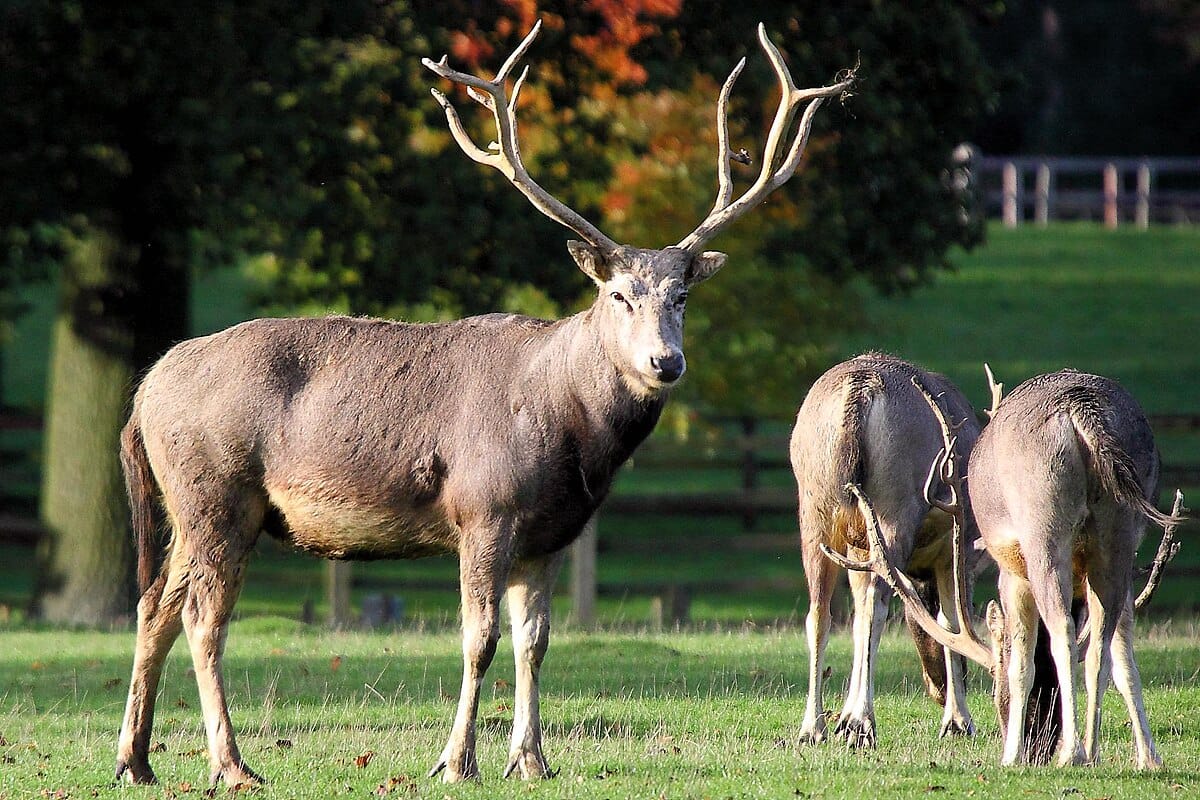
Identification
Pere David’s Deer are large, with males weighing 150–200 kg (330–440 lbs). They have long legs, a tawny coat, and distinctive branched antlers. Unique among deer, their hooves are splayed, helping them walk on marshy terrain.
Habitat
Originally from China, Pere David’s Deer inhabit wetlands, river valleys, and grasslands. Captive breeding programs have reintroduced them to protected areas.
Diet
They feed on grasses, leaves, shoots, and aquatic plants. Their diet is well-adapted to wetland environments.
Behavior
Pere David’s Deer are social, forming herds of 10–30 individuals. Males establish dominance with antler displays and occasional sparring. They are strong swimmers and adapted to marshy terrain.
Fun Fact
Pere David’s Deer went extinct in the wild in the late 19th century and survived only through captivity, making them one of the rarest deer species.
27. Eld’s Deer (Rucervus eldii)
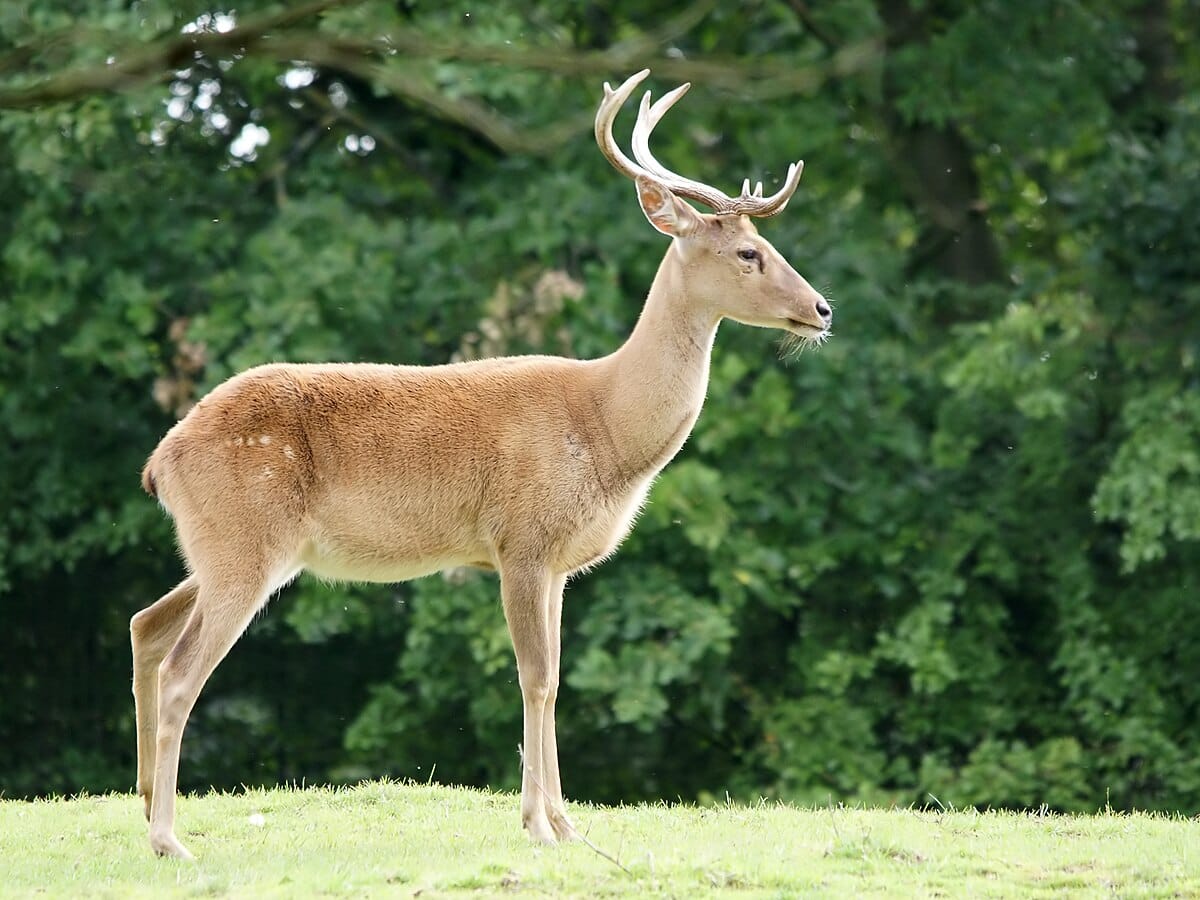
Identification
Eld’s Deer are medium-large, with males weighing 130–160 kg (287–353 lbs) and females 100–120 kg (220–264 lbs). They have long, lyre-shaped antlers and a golden-brown coat with a white rump patch.
Habitat
Native to Southeast Asia, Eld’s Deer inhabit grasslands, floodplains, and forest edges. They prefer areas with abundant grass for grazing and cover nearby for protection.
Diet
They feed on grasses, leaves, shoots, and herbs. Seasonal changes affect the availability of preferred forage.
Behavior
Eld’s Deer are social, forming herds of up to 50 individuals. Males compete during rut with antler displays and occasional sparring. They are alert and agile, evading predators efficiently.
Fun Fact
Eld’s Deer are excellent jumpers, capable of clearing obstacles up to 2 meters high, which helps them escape threats in open grasslands.
28. Thorold’s Deer (Cervus albirostris)
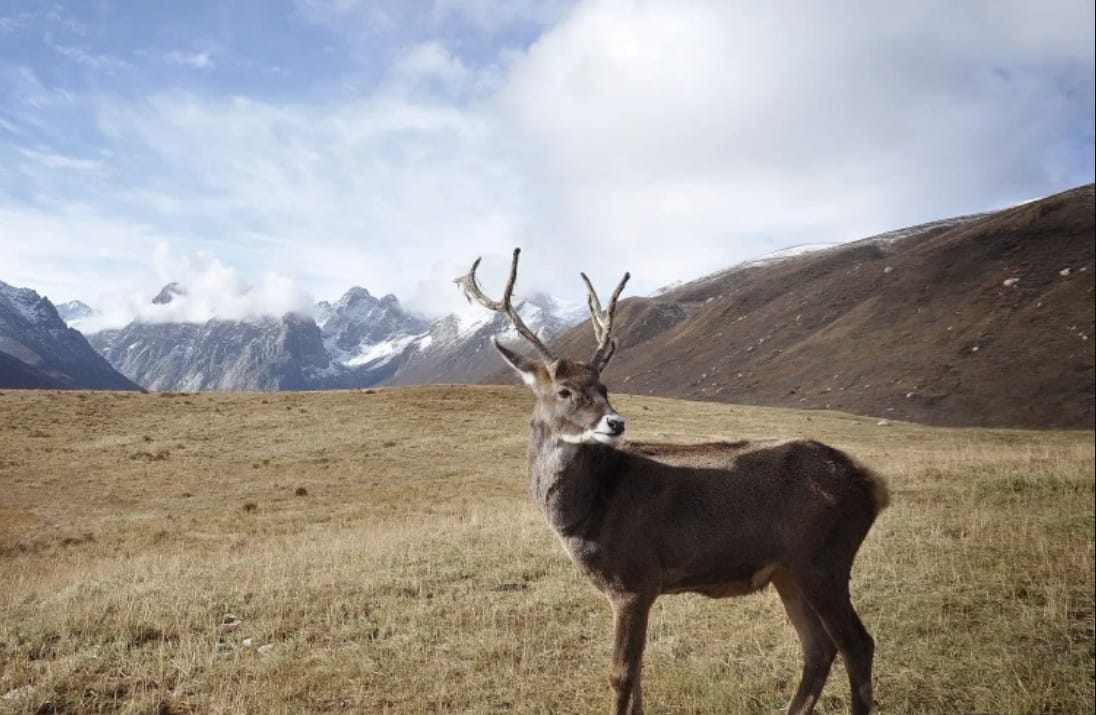
Identification
Thorold’s Deer are large, weighing 150–200 kg (330–440 lbs). They have a pale brown coat with a white face and muzzle. Males possess large, rugged antlers with three to four tines.
Habitat
Native to the Tibetan Plateau, they inhabit alpine meadows, high-altitude grasslands, and river valleys. They prefer steep slopes and rugged terrain.
Diet
They feed on grasses, herbs, and shrubs, particularly in alpine meadows. Seasonal availability dictates dietary shifts.
Behavior
Thorold’s Deer are mostly solitary, with males competing during the rut through antler displays. They are strong climbers, navigating steep terrain efficiently.
Fun Fact
Thorold’s Deer are highly adapted to high altitudes, with a larger lung capacity and hemoglobin levels suited for low-oxygen environments.
29. Reeves’s Muntjac (Muntiacus reevesi)
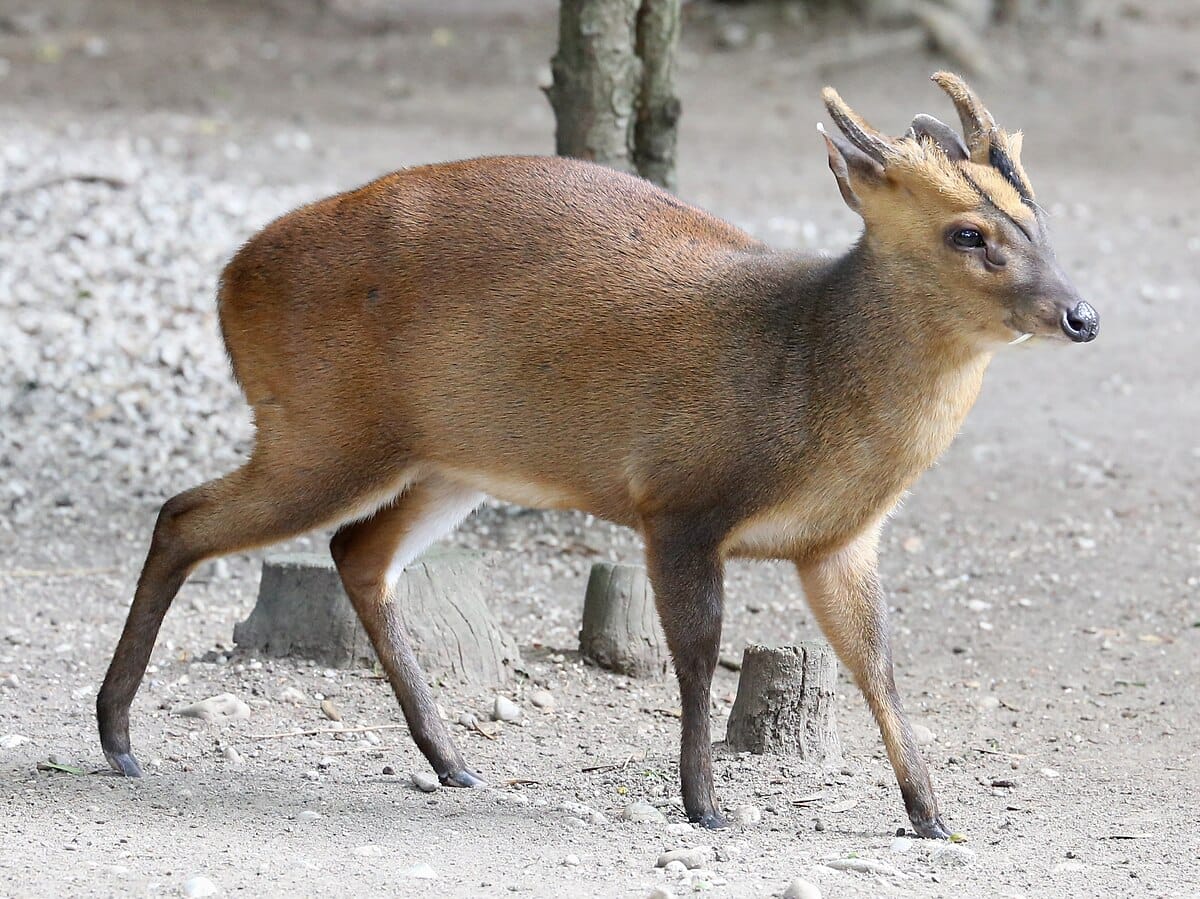
Identification
Reeves’s Muntjac are small deer, weighing 10–18 kg (22–40 lbs). They have reddish-brown coats and small antlers, with prominent canine teeth in males. Their rounded bodies and large eyes make them agile forest dwellers.
Habitat
Native to China, they inhabit forests, bamboo thickets, and hilly areas. They are highly adaptable and sometimes venture near human settlements.
Diet
They feed on leaves, shoots, fruits, and fungi. Their diet allows them to exploit forest understory vegetation effectively.
Behavior
Solitary and territorial, males use canines and antlers for sparring. They are alert, using bark-like calls to signal danger.
Fun Fact
Reeves’s Muntjac are prolific breeders, capable of reproducing multiple times a year, helping them maintain populations in dense forests.
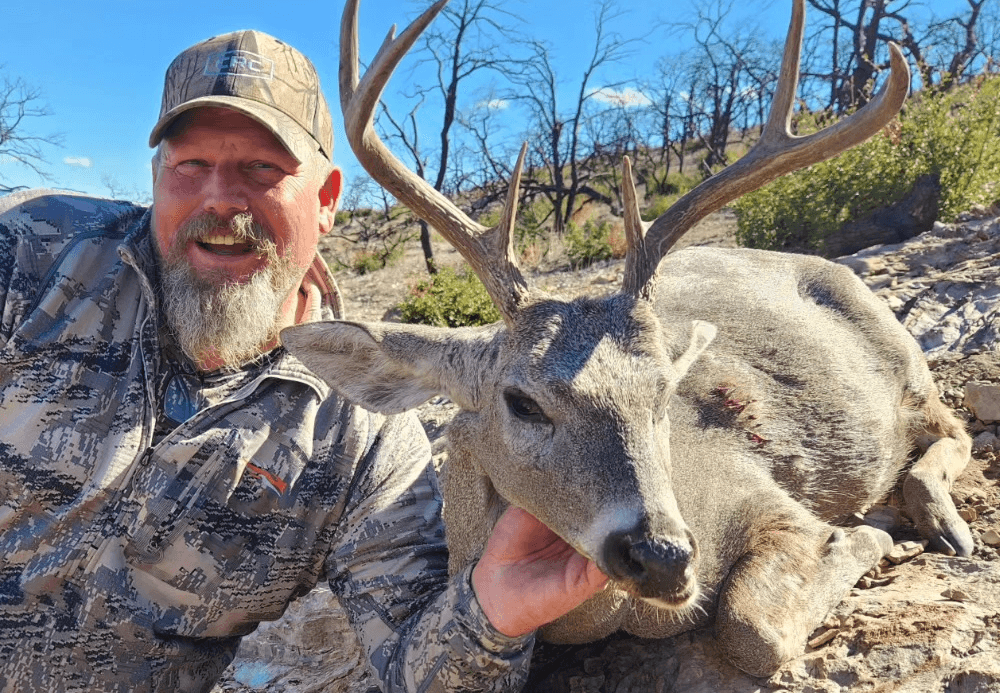
30. New Mexico Coues Deer (Odocoileus virginianus couesi)
Identification
The Coues Deer in New Mexico is a small subspecies of white-tailed deer, with adults weighing 45–70 kg (99–154 lbs). They have a reddish-brown coat with grayish tones in winter, and males have small, three-pointed antlers.
Habitat
They inhabit scrublands, desert grasslands, and oak woodlands of southwestern United States. Adapted to arid conditions, they seek areas with cover and sparse vegetation.
Diet
They feed on shrubs, leaves, grasses, and cacti. Seasonal diet changes depend on water availability and forage.
Behavior
Coues Deer are mostly nocturnal, solitary or in small groups. Males engage in antler displays during rut, while females form small family groups. They are highly alert and agile, able to evade predators efficiently.
Fun Fact
Coues Deer can survive long periods without water, obtaining moisture from the vegetation they eat, making them highly adapted to desert environments.
FAQ’s
1. How many types of deer are there?
There are about 90 recognized species of deer worldwide, all belonging to the family Cervidae. Deer species range from the tiny Pudu, which is only about 30–40 cm tall, to the massive moose, which can stand over 2 meters tall at the shoulder. Deer are found on every continent except Australia and Antarctica, though some species were later introduced to new regions.
2. What are the six species of deer in the UK?
The UK is home to six main deer species:
- Red deer – the largest native species, often found in Scotland and upland areas.
- Roe deer – smaller, agile, and common in woodlands.
- Fallow deer – introduced, medium-sized, and recognizable by their spotted coats.
- Sika deer – introduced from Asia, smaller than red deer, often darker in color.
- Muntjac deer – tiny, with short antlers, originally from Asia.
- Chinese water deer – no antlers, with prominent tusks, also introduced.
3. What kind of deer are in Australia?
Australia has no native deer, but several species were introduced for hunting. These include Fallow deer, Red deer, Rusa deer, Sambar deer, and Chital deer, each adapted to forests and grasslands in Victoria, Queensland, and New South Wales.
4. What kind of deer are in Ireland?
Ireland has mainly Red deer (native) and Fallow deer (introduced). Small populations of Muntjac deer also exist in some areas.
5. What is the most rare deer?
The Père David’s deer is extremely rare. Native to China, it became extinct in the wild by the early 20th century and survived only in captivity. Conservation programs have reintroduced some populations to protected areas.
6. What is a kind of deer called?
Each “kind” of deer is called a species. For example, Red deer, Roe deer, and Sika deer are all different species. Within a species, there may be subspecies, which differ slightly due to geography or genetics.
7. What are small deer called?
Small deer species include Pudus (the tiniest deer in the world), Muntjac deer (also called barking deer), and Brocket deer (South American forest deer).
8. What type of deer was Bambi?
In the original 1923 book by Felix Salten, Bambi is a European roe deer (Capreolus capreolus). Roe deer are small, agile, and live in European forests.
9. How to identify the type of deer?
You can identify deer by:
- Size and body shape – Red deer are large, roe deer small.
- Antler shape – branching patterns vary widely between species.
- Coat color and markings – Fallow deer have spots; Sika deer may be darker.
- Tail shape and markings – White-tailed deer show a prominent white underside.
- Habitat – Some deer prefer forests, others grasslands or mountains.
10. What is the Irish name for deer?
In Irish Gaelic, deer are called “fia” (pronounced “fee-a”).
11. What is the plural of deer?
The plural is simply deer. For example: “I saw three deer in the forest.”
12. How many species of sika deer are there?
The sika deer (Cervus nippon) has one main species, but it includes at least nine recognized subspecies found in Japan, China, Taiwan, and introduced populations elsewhere. They vary in size and coat color.
13. What kind of deer are in Victoria?
Victoria, Australia, has several introduced deer species: Fallow deer, Red deer, Rusa deer, Sambar deer, and Chital deer. They mostly inhabit forests and mountainous regions.
14. What is a male deer called?
A male deer is generally called a stag (for large species) or a buck (for smaller species). For example, a Red deer male is a stag, while a Roe deer male is a buck.
15. What is deer velvet?
Deer velvet is the soft, fuzzy skin covering growing antlers. It contains blood vessels and nerves, supplying nutrients for antler growth. Velvet is harvested in some countries for supplements or traditional medicine.
16. What is the rarest type of deer?
Aside from Père David’s deer, some rare species include Schomburgk’s deer (extinct) and rare South American brocket deer species, which live in dense forests and are hard to observe.
17. What is the most common type of deer?
The White-tailed deer is the most widespread, especially in North America. They thrive in forests, grasslands, and even suburban areas. In Europe, the Red deer is common.
18. Are there different types of reindeer?
Yes. Reindeer (Rangifer tarandus), also called caribou, have multiple subspecies, including Eurasian tundra reindeer, woodland caribou, and Svalbard reindeer, each adapted to its environment.
19. What type of deer is Rudolph?
Rudolph is a male reindeer, famous in Christmas folklore for his red glowing nose. Like all reindeer, he is a strong, antlered deer suited for pulling Santa’s sleigh.
20. What is the name of the Disney deer?
The Disney deer is Bambi, the main character of the 1942 animated movie, based on a European roe deer.
21. Is Thumper a boy or a girl?
Thumper, the rabbit friend of Bambi, is a boy. He is famous for his playful and mischievous personality.
22. What is a deer girl called?
A female deer is called a doe. Male deer are bucks or stags depending on the species.
23. What is the slang name for a deer?
Hunters sometimes refer to deer as bucks, does, or stags. In casual conversation, “fawn” may refer to a young deer.
24. What is a small graceful deer called?
Small, graceful deer include roe deer, muntjac, pudus, and brocket deer. They are quick, agile, and often live in forests or bushlands.
25. What type of deer does Santa use?
Santa’s sleigh is traditionally pulled by reindeer, including Rudolph and his companions. They are strong, antlered deer from cold northern regions.
26. What is a male reindeer called?
A male reindeer is a bull, while a female is a cow, and babies are called calves.
27. Are there 12 reindeers?
In the classic Christmas poem, there are eight reindeer. Later, Rudolph was added, bringing the total to nine. Some modern stories include twelve or more, including additional fictional reindeer.
28. What is the biggest type of deer?
The moose (Alces alces) is the largest deer. Adult males can weigh up to 700 kg (1,500 lbs) and have antlers spanning over 2 meters. They live in North America and northern Europe.
29. Is a gazelle a deer?
No. Gazelles are antelope, belonging to the Bovidae family, not Cervidae. They are similar in appearance but are unrelated.
30. Are deer herbivores, carnivores, or omnivores?
Deer are herbivores, eating leaves, grass, fruits, nuts, and bark. They do not eat meat.
31. Is impala a deer?
No. Impalas are antelope, native to Africa, and belong to the Bovidae family.
32. Is Bambi a deer or a gazelle?
Bambi is a roe deer, not a gazelle. Disney’s depiction exaggerates his size and features for animation.
33. Is an ibex a deer?
No. An ibex is a wild goat, known for climbing steep mountain cliffs. It is not a deer.
34. Is “bembi” a real word?
“Bembi” is sometimes used as a nickname or cute term for deer in some languages, but it is not an official term.
35. Is an antelope deer?
No. Antelopes belong to the Bovidae family, while deer are in the Cervidae family.
36. Is Dumbo a boy or a girl?
Dumbo, the flying elephant, is a boy in the Disney story.
Conclusion
From the tiny Pudu to the massive Moose, deer species display incredible diversity in size, behavior, and habitats. North America hosts iconic species such as White-tailed Deer, Mule Deer, and Elk, while Asia and South America offer unique varieties like Sambar, Pudus, and Barasingha. Understanding these species is essential for conservation, ecosystem balance, and appreciating the beauty of wildlife. By protecting their habitats and minimizing human disturbance, we ensure that these majestic creatures continue to thrive for generations to come.
Read more: 27 Types of Crocodiles: Species Identification with Pictures