

Australia hosts a wide variety of spiders, from tiny web-builders to large, fast hunters. This short guide introduces three well-known species to start: the Sydney Funnel-Web, the Redback, and several Huntsman spiders. Each entry gives clear identification points, habitat notes, behavior, and a few practical tips for safe observation. The goal is simple: help you recognise common spiders in Australia and appreciate how they fit into local ecosystems. You’ll see the phrase types of spiders in australia used as a wayfinder — it points to the groups we cover and helps this page show up in search results for readers wanting reliable, plain English info.
1. Sydney Funnel-Web Spider (Atrax robustus)
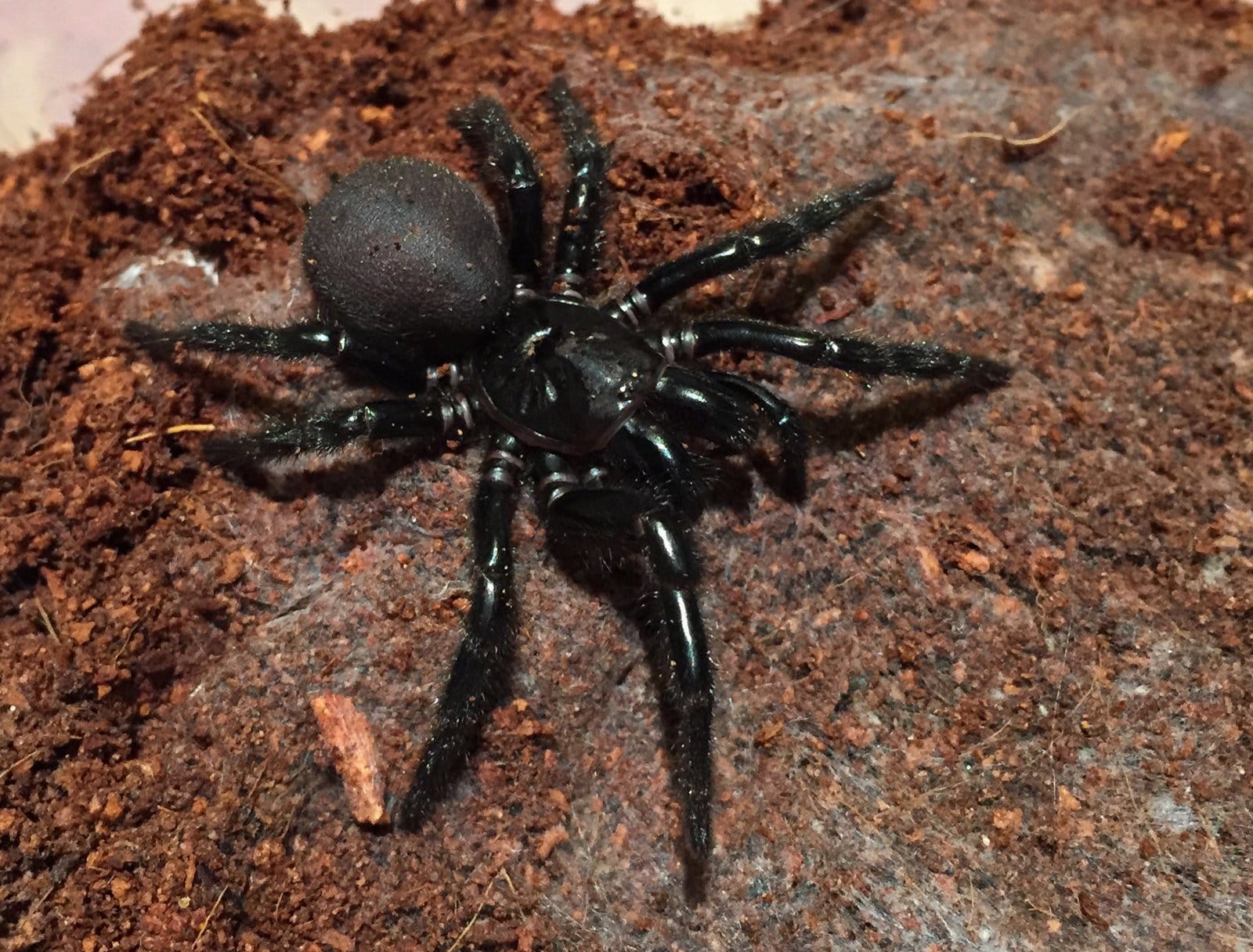
Quick facts
Common name: Sydney Funnel-Web
Scientific name: Atrax robustus
Size: Adult body length about 1.5–3.5 cm (not counting legs); legspan much larger.
Range: Eastern Australia, especially the Sydney-to-Wollongong region and nearby bushland.
What it looks like
The Sydney Funnel-Web is stocky and dark. Males are often glossy black, while females can appear deep brown. The carapace (the hard plate over the head) is broad and strong. Legs are thick and powerful; when the spider runs, it looks purposeful — like it has somewhere important to be. The fangs are large for a spider its size and can be seen if the mouthparts are examined closely.
Where you’ll find it
These spiders favour moist, sheltered microhabitats: rotting logs, leaf litter, garden mulch, and the edges of rock crevices. They build silk tunnels with a distinctive funnel entrance that leads to a silk-lined burrow. You’re more likely to stumble on one after rain or during warm humid weather.
Behaviour and diet
Sydney Funnel-Webs are mostly nocturnal hunters. They sit near the funnel mouth and wait for prey to stumble across the silk. When an insect or small vertebrate triggers the web, the spider rushes out to bite and drag the prey into the tunnel. They eat insects, other spiders, and occasional small frogs or lizards. Males may wander during the breeding season looking for females; this is when encounters with humans are slightly more likely.
Medical note and safety
This species is medically significant. Their venom can affect the nervous system, and bites have caused severe symptoms in people. That said, antivenom and modern treatment have made fatalities rare. If someone is bitten, keep them still, apply a pressure immobilisation bandage, and seek urgent medical care. Don’t try to suck out venom or cut the wound. For most observers, the best approach is respect: wear gloves when handling mulch or logs, use a torch at night, and move slowly near likely shelters.
Field tip
Look for the silk funnel and disturbed leaf litter. If you must move logs or rocks, use a stick or trowel and wear sturdy gloves. The funnel entrance is the most reliable sign you’re near one of these spiders.
2. Redback Spider (Latrodectus hasselti)
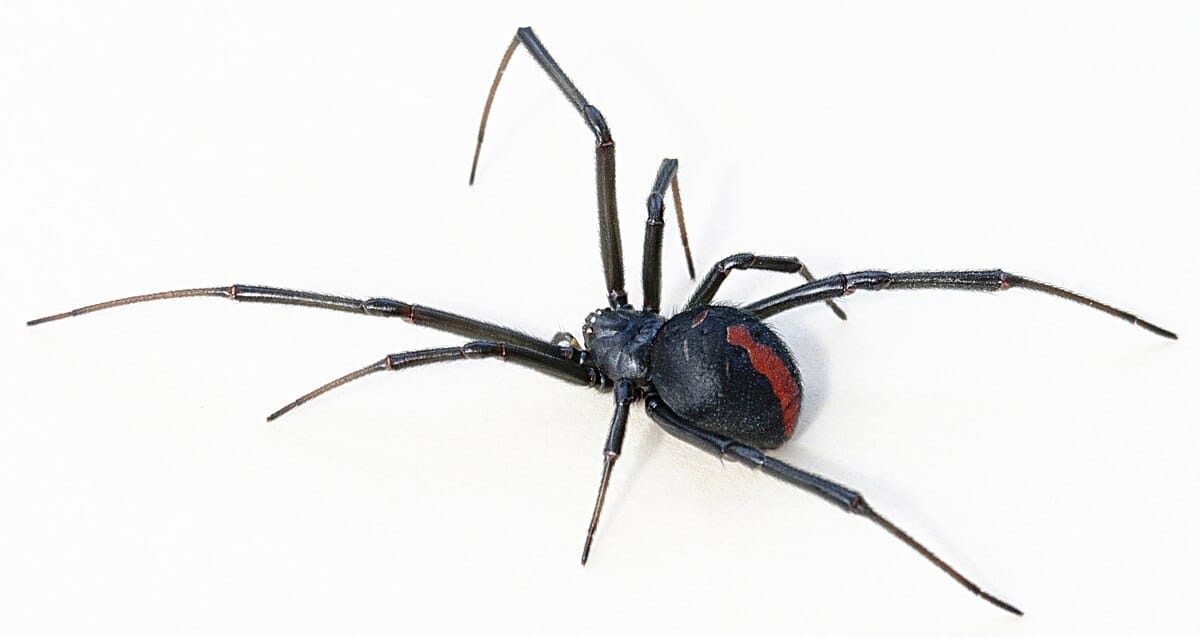
Quick facts
Common name: Redback Spider
Scientific name: Latrodectus hasselti
Size: Females ~1.1 cm body length; males much smaller.
Range: Widespread across mainland Australia and many urban areas.
What it looks like
The female Redback is easy to recognise. She has a rounded black abdomen with a neat red or orange stripe or hourglass mark on her upper back. Males are slimmer, lighter in colour, and often feature white or cream markings; they are much smaller and less dangerous. The silk is strong and messy — a tidy cobweb is not a Redback web.
Where you’ll find it
Redbacks thrive in disturbed habitats. Look under bricks, inside garden sheds, in outdoor toilets, under pot plants, or in piles of scrap material. They like dry sheltered spots near the ground. In urban areas they are common because humans create lots of cosy hiding places.
Behaviour and diet
Females sit in an irregular web and wait. They catch insects, small lizards, and other arthropods that stumble in. The female may eat the male after mating — a behaviour that is often blown out of proportion in popular accounts. The venom of the female is neurotoxic; bites can cause severe pain, sweating, nausea, and other symptoms. Modern first-aid and antivenom make serious outcomes rare, but quick medical attention is important.
Medical note and safety
If bitten, keep the bitten area still and seek medical help. Don’t apply a tourniquet or try folk remedies. Covering up likely sites (e.g., sealing gaps under outdoor structures) and wearing gloves when gardening reduces risk. Teaching children to look before they put hands into hidden spaces is a simple, effective practice.
Field tip
Check for messy, sticky silk around low structures. Where you see a female, eggsacs are often nearby as well. A torch at night can reveal active females sitting on their webs.
3. Huntsman Spider (Sparassidae family)
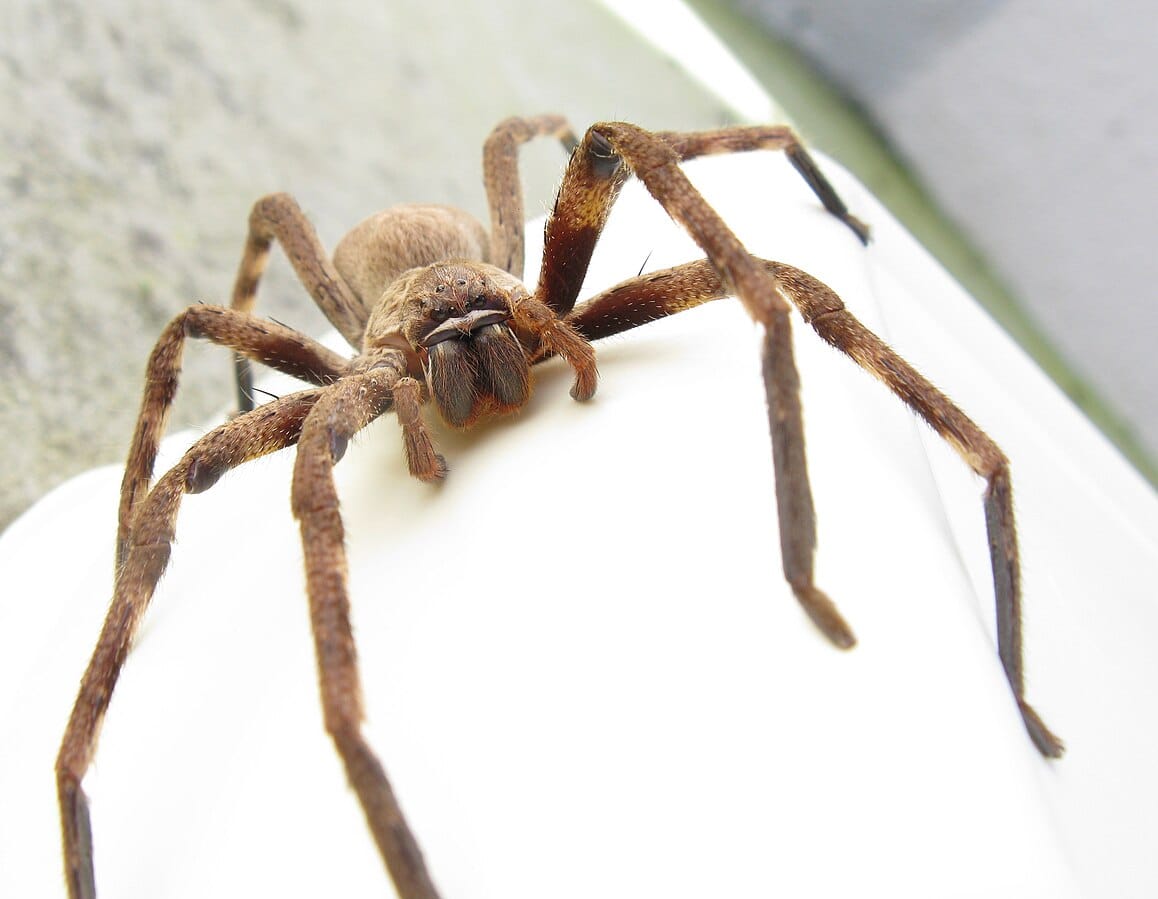
Quick facts
Common name: Huntsman Spider (group name for many species)
Scientific note: Several genera and species occur in Australia, e.g., Heteropoda, Isopeda.
Size: Large legspan — often 10–25 cm across when legs extended.
Range: Widespread across Australia, common in homes and bushland.
What they look like
Huntsman spiders are noticeably flat and long-legged. Their legs are oriented forward and outward, giving them a crab-like stance. Colour ranges from grey-brown to patterned tans and creams; some species have mottled camouflage that blends with bark. Their speed and leg reach are their defining traits rather than bright colours.
Where you’ll find them
Huntsmen like warm, sheltered spots: under loose bark, in rock crevices, behind window shutters, or inside garages and sheds. They often enter homes, where they may be seen clinging to walls or ducking behind curtains. They are also common on tree trunks and under rocks in native bush.
Behaviour and diet
These spiders are active hunters. They do not rely on webs to capture prey. Instead, they stalk and pounce on insects, small lizards, and even small frogs. They are fast and can appear startling when suddenly spotted in a house, but they are not aggressive toward people. Females guard egg sacs and may exhibit defensive posture if disturbed. Bites are rare and usually only cause local pain and swelling; they are not considered medically dangerous to healthy adults.
Human interactions and tips
Because huntsman spiders are large and move quickly, they can unsettle people. The humane approach is to guide them into a container and release them outside rather than kill them. If one is inside your home, open a door or window and encourage it out with a broom handle while wearing gloves. Remember, these spiders eat household pests like cockroaches, so they perform a tidy little service.
Field tip
Spotting a flat, fast mover on a wall at night is a good clue. If you like photography, huntsmen make dramatic subjects — but move slowly and avoid startling them; sudden moves can send them darting into hiding.
4. White-Tailed Spider (Lampona cylindrata & Lampona murina)
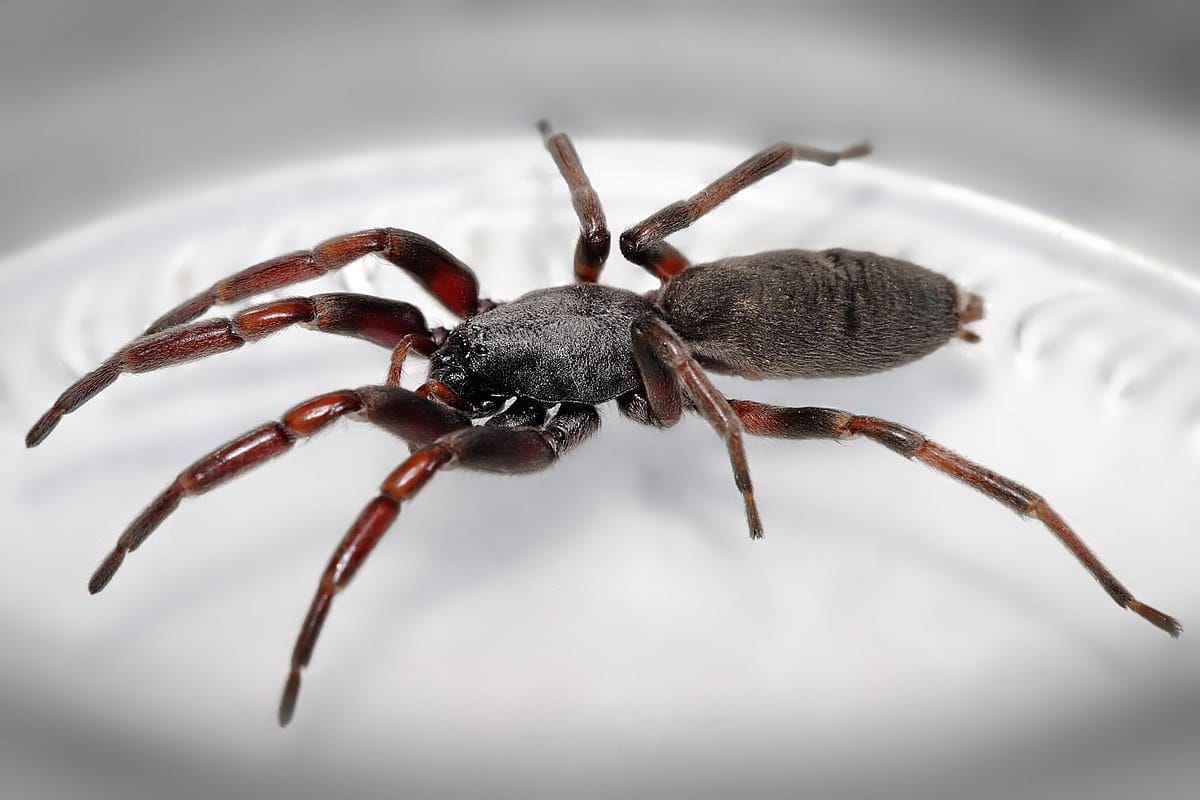
Quick facts
Common name: White-Tailed Spider
Scientific names: Lampona cylindrata, Lampona murina
Size: 1–1.8 cm body length
Range: Southern and eastern Australia, inside homes and outdoors
What it looks like
The White-Tailed Spider has a slender, cylindrical body with a dark grey or charcoal colour. The clearest feature is the pale white tip on the abdomen. It isn’t a bright dot, more like a gentle smudge of pale cream. The legs are long and slightly glossy, giving the spider a sleek appearance reminiscent of a tiny marathon runner. Unlike many Australian spiders, this one does not carry bold patterns or bulky shapes. Instead, its whole look feels smooth, quiet, and neat — exactly the kind of shape you might find slipping through a hallway at night.
Where it lives
White-Tailed Spiders are comfortable both indoors and outdoors. In nature, they hide under leaf litter, loose bark, garden debris, and stones. Indoors, they wander across walls, corners, clothes on the floor, and cupboards. They prefer warm, dry shelter and will often move around during summer nights. Many sightings happen inside bathrooms or bedrooms, where they explore for food. They do not build large webs. Their lifestyle is best described as “roaming hunter,” moving quietly from place to place rather than waiting in one spot.
Behaviour and diet
This species is an active predator. It moves with purpose, checking cracks, corners, and folds for prey. One of its favourite meals is other spiders, specifically household web-building spiders such as black house spiders. People often assume a simple wandering spider eats insects first, but this species behaves more like a specialist hunter that deals with other arachnids. This feeding habit helps keep cluttered corners free of long-lived web builders. Their hunting style is efficient and direct: once they locate a spider, they lunge with quick precision and end the struggle rapidly.
Human interactions and safety
The White-Tailed Spider is often surrounded by myths. Some older stories suggested they caused severe skin ulcers. Research does not support those claims. Bites generally lead to mild symptoms such as redness, stinging, or slight swelling. Most cases settle on their own. Despite the myths, they are not considered medically dangerous. Anyone who experiences concerning symptoms should still see a doctor, but the spider’s reputation is far worse than its actual impact. As with any spider, avoid handling it, shake out clothes left on the floor, and use simple household cleaning to reduce hiding spots.
Field tip
If you see a slim dark spider with a pale tip wandering across a wall at night, that’s likely it. They move smoothly and rarely freeze when a light hits them — they simply continue walking. This calm determination is one of their easiest behavioural identifiers.
5. Huntsman Spider (Representative species: Heteropoda jugulans — Brown Huntsman)
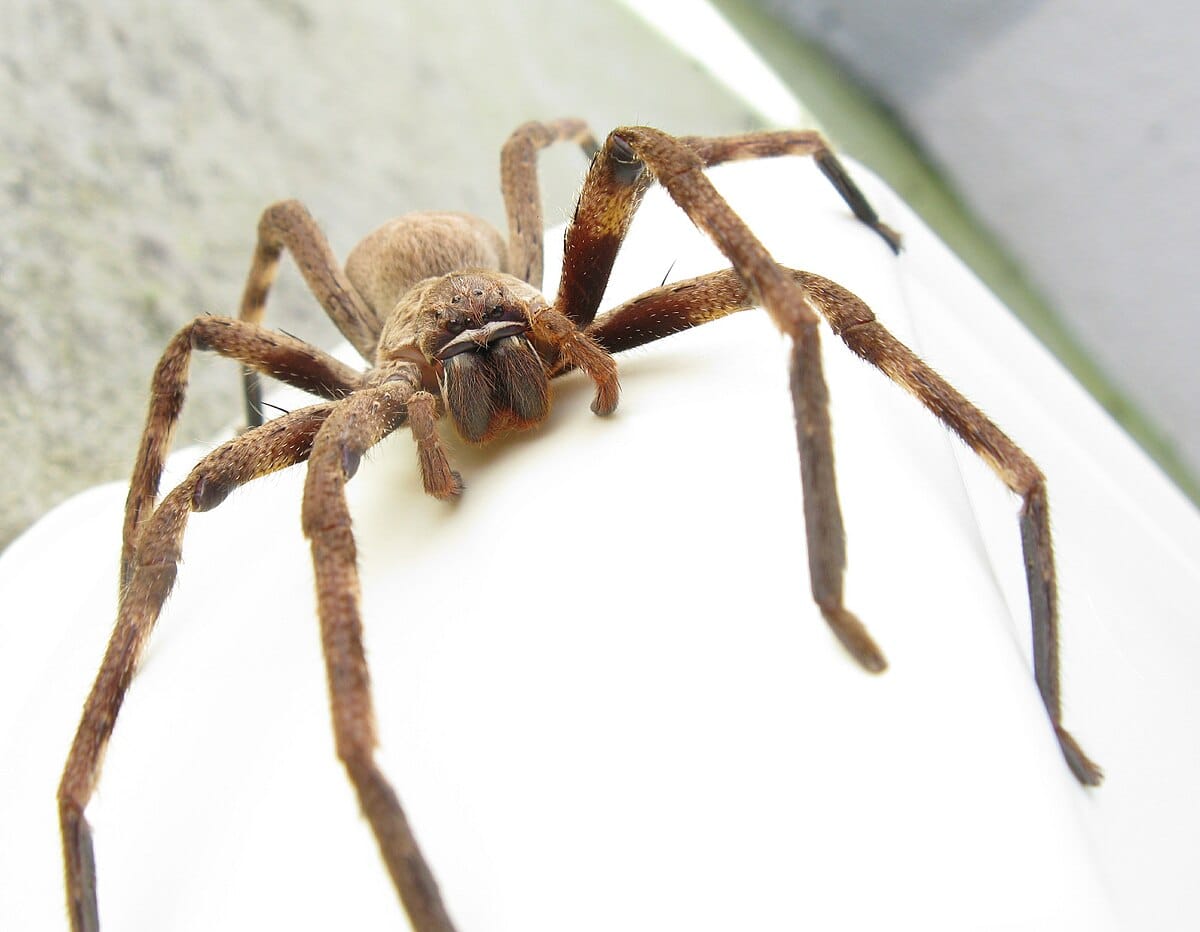
Quick facts
Common name: Huntsman Spider (Brown Huntsman as representative)
Scientific name: Heteropoda jugulans
Size: Up to 15 cm legspan
Range: Eastern Australia, common in homes and bushland
What it looks like
This Huntsman species has a sandy-brown, mottled pattern that matches tree bark and shed walls. Its body is flattened, allowing it to hide behind thin surfaces like picture frames and cupboards. The legs stretch outward, giving it a wide stance that helps it run across smooth surfaces silently. The eyes form a curved line across the top of the head region, well-spaced for detecting movement. Unlike the larger species covered earlier, this one has slightly softer colouring, making it blend extremely well with timber.
Where it lives
Brown Huntsman Spiders are seen in garages, outdoor toilets, porches, and behind storage boxes. They slip into homes through cracks in screens or small roof gaps. Outdoors, they live under bark sheets, inside hollow logs, and beneath loose roofing iron on sheds. They are highly adaptable and rarely stay in one hiding place for long. Each night, they move through their home range, checking each hiding spot before settling into another thin crevice. They do not build prey-catching webs; instead, they rely on stealth and speed.
Behaviour and diet
This species hunts at night, taking cockroaches, beetles, crickets, and small skinks. Their speed is startling, but their behaviour is usually gentle toward humans. If cornered, they may flatten themselves even further against a surface, relying on stillness as camouflage. Females produce a white egg sac that they guard carefully. While defending eggs, they may raise their body and legs defensively, but actual bites remain uncommon. Their quick reflexes help them catch agile insects, and many households appreciate their presence because they reduce pests naturally.
Human interactions and safety
Bites from this species are generally mild. Most people report sharp local pain followed by short-term swelling. They are far more likely to sprint away than defend themselves. If one appears inside a room, the usual method is to use a container and a piece of cardboard to catch and release it. Their size can cause a jump scare, yet they’re helpful house guests. Some homeowners even notice that huntsmen visit the same corner each night, almost as if checking in for their shift.
Field tip
If you see a flat spider racing sideways across a wall, that’s your sign. This species’ running style is quick, smooth, and rarely stops until it finds shelter. A torch beam often causes them to freeze for a moment, giving a brief window for identification.
6. Mouse Spider (Missulena spp.)
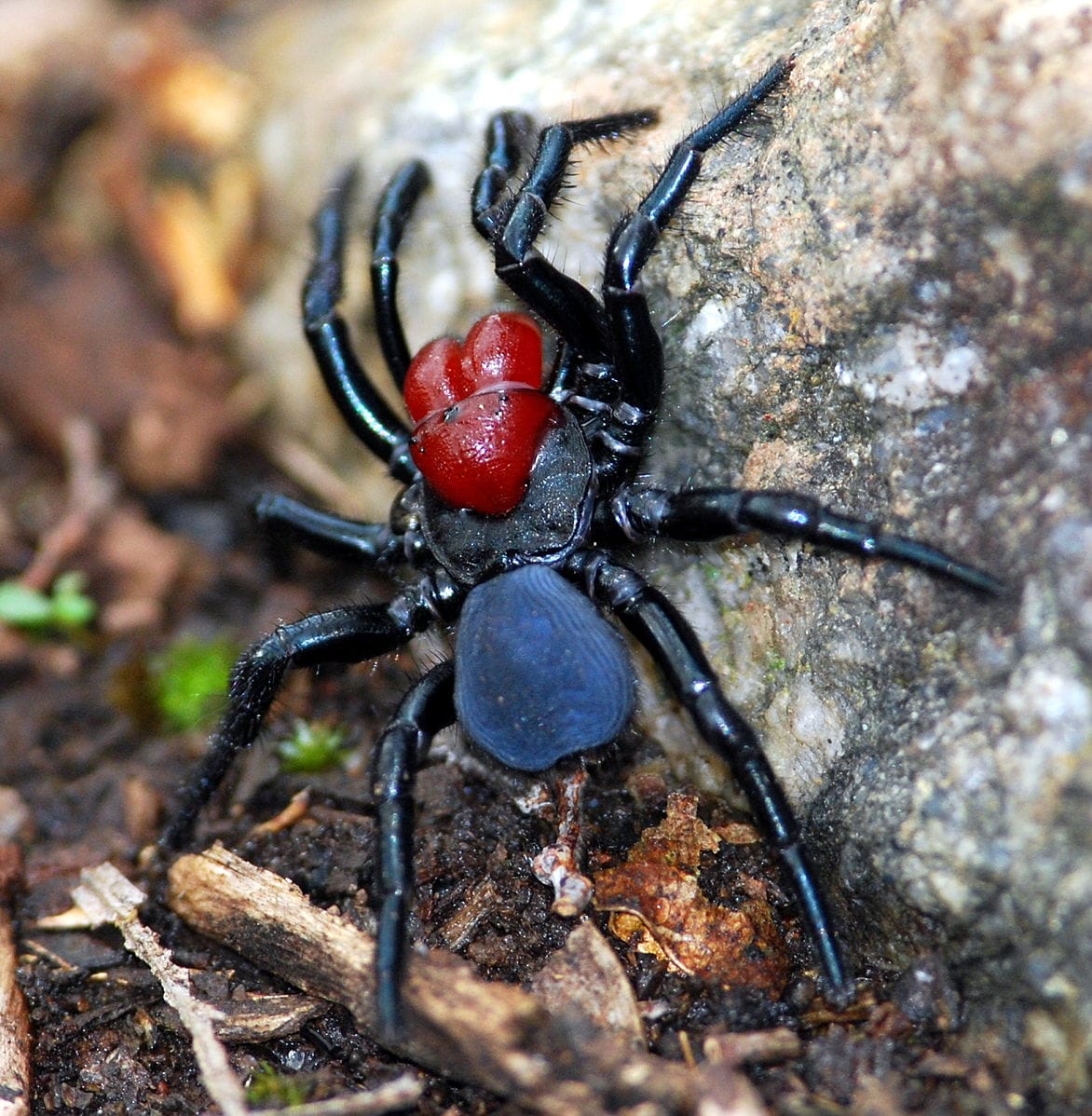
Quick facts
Common name: Mouse Spider
Scientific name: Missulena species (multiple in Australia)
Size: 1–3 cm body length
Range: Widespread across mainland Australia
What it looks like
Mouse Spiders are stocky and glossy. Their carapace is round and broad, and males often display bright blue or red patches depending on the species. Females tend to be darker, with deep black or charcoal colouring. Their strong jaws give the front end of the body a powerful look. Their legs are shorter and thicker than those of wandering spiders, creating an appearance somewhat similar to small trapdoor spiders. The “mouse” name is linked to early assumptions about burrow construction, not because they resemble actual mice.
Where it lives
These spiders live in burrows with a neat plug or trapdoor at the entrance. The burrow is usually surrounded by silk lines that alert the spider to nearby vibrations. They prefer heavy soil, clay areas, and inland bushland but are found in many suburban environments as well. After rain, males wander above ground searching for females, which is when people encounter them most often. Otherwise, they remain hidden deep in their burrows for long stretches of time.
Behaviour and diet
Mouse Spiders are ambush predators. They remain inside their burrow and wait for prey such as beetles, crickets, ants, and even small frogs. Their strike is forceful, using their jaws to secure prey before pulling it inside. Compared to funnel-web spiders, they are less likely to appear in human structures. The males, however, can cover long distances in one night, creating the common surprise of finding a glossy dark spider walking across a backyard path.
Human interactions and safety
Some Mouse Spider species have venom capable of causing significant symptoms, though serious cases are rare. Funnel-web antivenom has been effective in reported incidents. Bites occur infrequently because the spiders are less defensive and less associated with homes. If someone is bitten, keep the area still and seek medical attention. Wearing sturdy footwear and gloves when lifting stones or gardening reduces contact. Their glossy bodies sometimes lead to misidentification as juvenile funnel-web spiders, but the body proportions and jaw structure are different.
Field tip
Look for neat round burrow entrances with a thin silk lining. If you see a glossy spider wandering in daylight, especially after rain, there’s a good chance it’s a male mouse spider on the move.
7. Coastal Whistling Spider
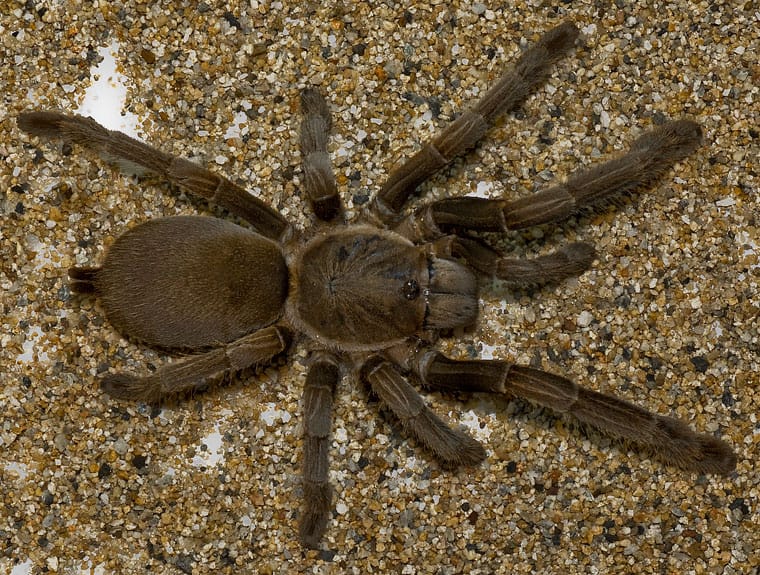
An Imposing Ground-Dwelling Hunter
The Coastal Whistling Spider is one of those Australian species that tends to surprise people with its sheer size and steady confidence. It belongs to the tarantula group often referred to locally as “whistling spiders” because of the faint hissing sound they sometimes make when disturbed. Even though they look intimidating, their behaviour is usually calm and straightforward. They spend most of their lives close to the ground, moving slowly through leaf litter or waiting near the entrance of their burrows for the right moment to strike prey.
Appearance and Identification
These spiders are stout and heavy-bodied, with thick legs and a coat of short, velvety hair. Their colouring can range from chocolate brown to an earthy tan, often blending in with the surrounding forest floor. The fangs are large and curved, a feature that always catches a bit of attention when people see photographs. Their overall silhouette looks powerful but not exaggerated, carrying more of a “steady bulldozer” look than a fragile web-spinner.
Habitat and Range
Coastal regions in eastern Australia are the core areas for this species. They tend to prefer humid, leafy environments where the soil stays soft enough for burrowing. You’ll find them under logs, within loose dirt, or resting in shallow retreats they scrape out for daytime cover. They are mostly nocturnal, stepping out after sunset for hunting opportunities.
Behaviour and Diet
Their hunting method relies on patience rather than fast chasing. They wait quietly until insects, small lizards, or other invertebrates move close enough. Once the moment is right, they launch forward with surprising speed. Despite their capability, they are not aggressive unless provoked. Their defensive behaviour typically involves raising the front legs and producing the faint whistle most Australians have heard at least once.
Are They Dangerous?
Bites can be painful because of the size of the fangs, but serious outcomes are rare. Most people describe the pain as similar to a strong bee sting that lingers longer than expected. They are not animals that seek confrontation; if left alone, they continue going about their quiet routine on the forest floor.
8. Australian Featherleg Spider
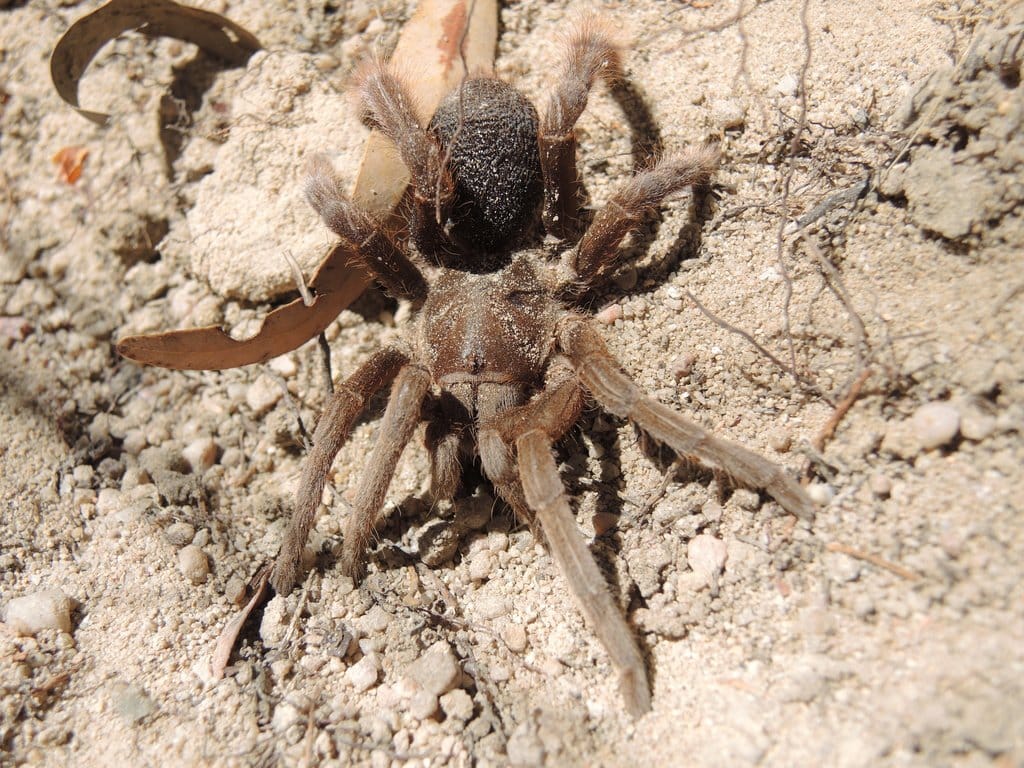
A Graceful and Slender Backyard Visitor
The Australian Featherleg Spider earns its name from the delicate hairs along its legs, giving it a soft, fringed outline. At first glance, the spider seems fragile, almost like it’s made of twigs and silk. Yet it is a capable hunter, using its elongated body to slide into tight spaces where many spiders wouldn’t attempt to crawl. Gardeners often see them moving across leaves early in the morning, taking advantage of cool air before the sun grows stronger.
Appearance and Identification
Thin legs are the hallmark of this species. Each joint is long and lightly feathered, creating a subtle shimmer when they move. Their bodies typically show muted brown or grey shades, sometimes with vague banding that helps them melt into their surroundings. Even at rest, they look alert — legs poised in a way that makes them resemble tiny walking sticks.
Habitat and Range
These spiders appear across much of eastern and northern Australia, particularly in gardens, woodlands, and light forest edges. They prefer spots with shrubs or tall grasses, where insects gather and moisture stays longer. Their flexibility allows them to squeeze between bark, stems, or outdoor furniture crevices, making them regular but harmless visitors around homes.
Behaviour and Diet
Featherleg Spiders use stealth instead of strength. They stalk small insects, creeping with slow, deliberate movements until they’re close enough to strike. Their webs are sparse and irregular, built more for catching the occasional passerby than for long-term trapping. They spend much of their day hiding beneath leaves or within cracks, stepping out when the air cools.
Are They Dangerous?
They pose little danger to people. Their size and delicate frame simply don’t allow them to deliver medically significant bites. In most cases, they retreat long before someone even notices them. Many households appreciate their presence because of the number of garden pests they help control.
9. Flat Huntsman Spider
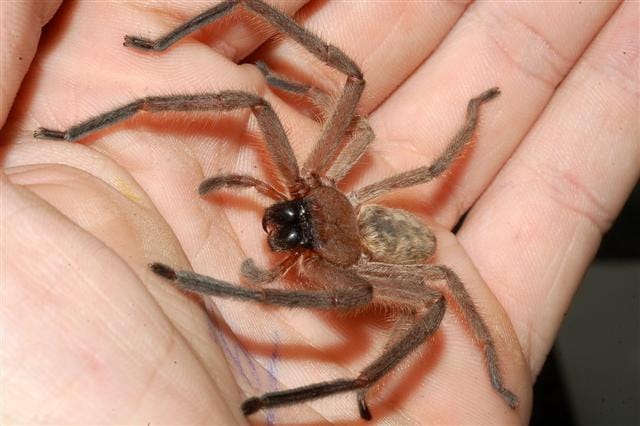
The Expert “Wall-Crawler” with Lightning Reflexes
The Flat Huntsman Spider is well known across Australia for its wide, pancake-like shape and uncanny ability to slip into impossibly narrow gaps. Many residents first meet one on a wall, sliding effortlessly behind a picture frame or door hinge. Despite the surprise factor, these spiders are calm, agile, and beneficial insect hunters.
Appearance and Identification
Their defining feature is the flattened body, which allows them to hide in thin crevices. The legs extend outward from the body in a crab-like arrangement, giving them excellent reach and impressive sideways speed. Colouration ranges from sandy beige to mottled brown, closely matching tree bark or interior surfaces. Their eyes sit in two rows that give them wide field vision for spotting prey.
Habitat and Range
Flat Huntsmen inhabit forests, woodlands, and urban areas throughout Australia. They especially like smooth surfaces, timber piles, storage sheds, and shaded outdoor walls. They do not build webs to catch prey; instead, they rely on their nimble legs and perfect timing. Indoors, they tend to stay near ceilings or corners where insects fly or crawl.
Behaviour and Diet
These spiders specialise in snatching fast-moving insects. They move quietly but strike with precision, making them excellent at catching cockroaches, moths, and flying insects. Their ability to flatten themselves makes them escape artists too — one second they’re visible, and the next they’ve slipped behind a thin panel as though performing a stage trick.
Are They Dangerous?
Flat Huntsmen are famous for startling people but rarely causing problems. Their bites are uncommon and typically mild. Their main effect is improving household insect control. A calm relocation outdoors is usually all that’s needed if one wanders inside.
10. Garden Orb-Weaving Spider
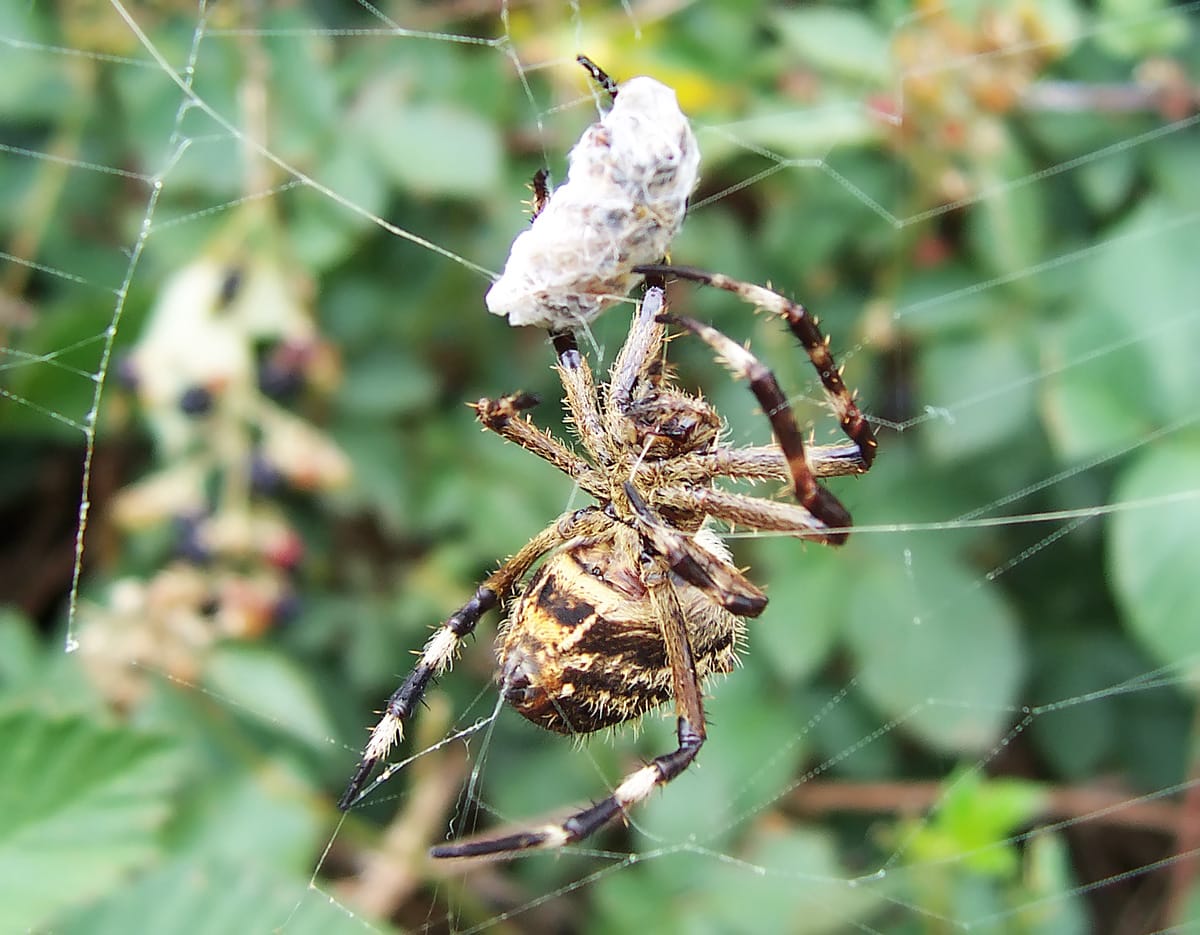
An Evening Architect with Impressive Web Designs
The Garden Orb-Weaving Spider is one of the most familiar species across Australia, often noticed when people walk through their large circular webs at dusk. These spiders are gentle builders that dedicate their nights to crafting symmetrical orbs strong enough to catch a wide range of flying insects. Their presence is a sign of a healthy garden ecosystem.
Appearance and Identification
Their bodies are round and plump, often decorated with patterns of white, brown, and rusty red. Many individuals show intricate markings on the abdomen, sometimes resembling leaves or petals. Their legs are banded and strong, helping them stretch threads and anchor new web sections with precision.
Habitat and Range
True to their name, Garden Orb-Weavers live in gardens, parks, farmland edges, and forest margins. They prefer spots that offer solid structures for anchoring webs — branches, fences, or porch beams. During the day, they hide in curled leaves or sheltered corners, stepping out after sunset to rebuild or repair their webs.
Behaviour and Diet
Each night, these spiders create a fresh web or repair the previous one. They sit in the centre or retreat to a side thread, waiting for vibrations that signal a trapped insect. Moths, flies, beetles, and even small wasps occasionally end up in their silk. Their efficiency makes them one of the best natural pest managers outdoors.
Are They Dangerous?
They are completely harmless to people. Their bite is extremely rare and mild. Most encounters involve someone accidentally walking through a web — an experience that surprises both human and spider equally.
11. Leaf-Curling Spider
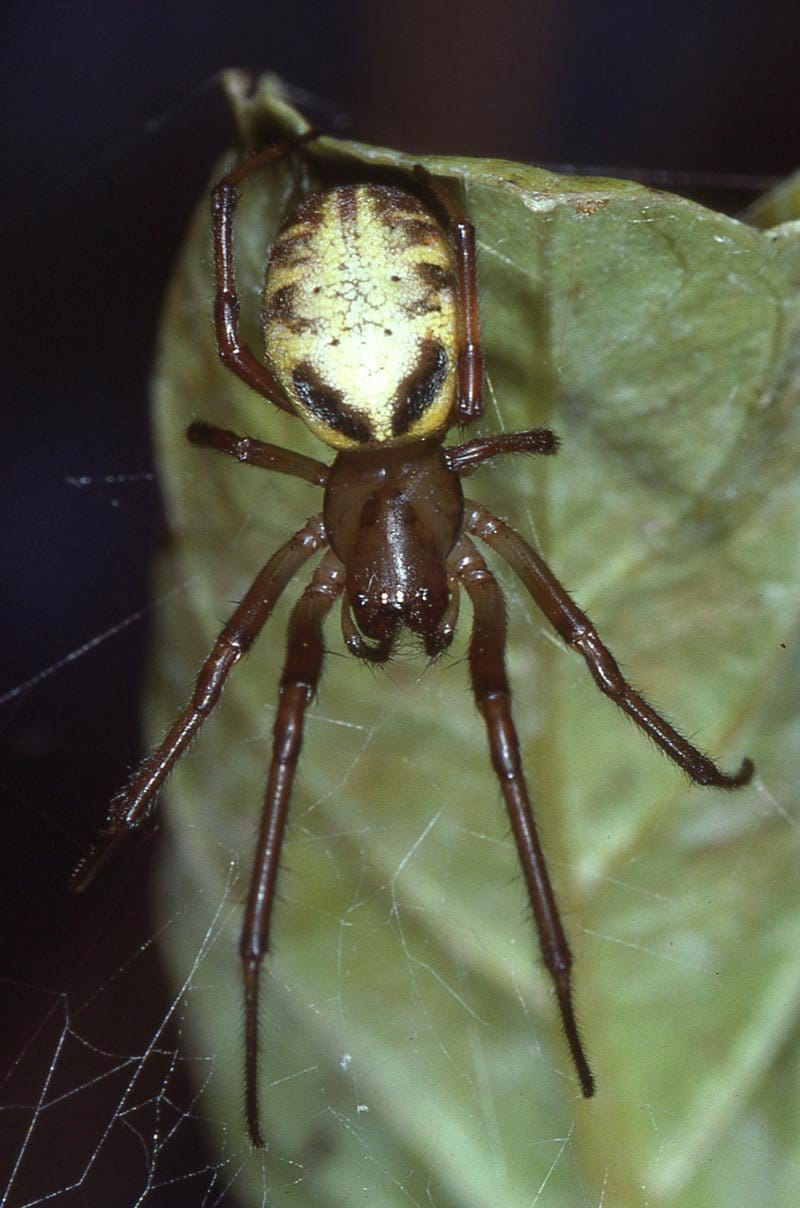
A Creative Architect That Recycles Nature
The Leaf-Curling Spider is a wonderful example of how resourceful Australian spiders can be. Instead of relying solely on silk shelters, this species pulls a fallen leaf into the centre of its web and folds it into a tiny “tent.” If you’ve ever seen a leaf mysteriously curled and suspended between branches, chances are this spider was the artist behind it. Inside that little hideout, it waits patiently for insects to stumble into the sticky strands outside.
Appearance and Identification
Leaf-Curling Spiders have slender legs, a compact abdomen, and earthy colours ranging from tan to reddish-brown. While the spiders themselves may look plain at first glance, the structure of their web is unmistakable. The curled leaf in the centre acts as their daytime refuge, giving them the perfect blend of camouflage and comfort. When disturbed, they disappear inside their leafy shelter faster than you might expect.
Habitat and Range
These spiders appear widely across Australia, especially in gardens, woodlands, and areas with plenty of shrubs. Their success depends on having access to leaves that drop often enough for building shelters. People frequently find their webs stretched between branches, garden stakes, or the corners of verandas.
Behaviour and Diet
The Leaf-Curling Spider is a patient hunter. After curling its chosen leaf, it anchors the structure securely and arranges its web around the edges. Small flying insects such as gnats, flies, and tiny moths become the usual prey. This spider tends to stay inside the leaf during the day, occasionally peeking out to check vibrations. At night, it often sits near the mouth of its shelter, ready to dash to any struggling insect.
Are They Dangerous?
They are completely harmless to people. Their fangs are small, and their behaviour is cautious, avoiding confrontation whenever possible. Gardeners appreciate them because their webs help reduce insect populations without interfering with plants.
12. St Andrew’s Cross Spider
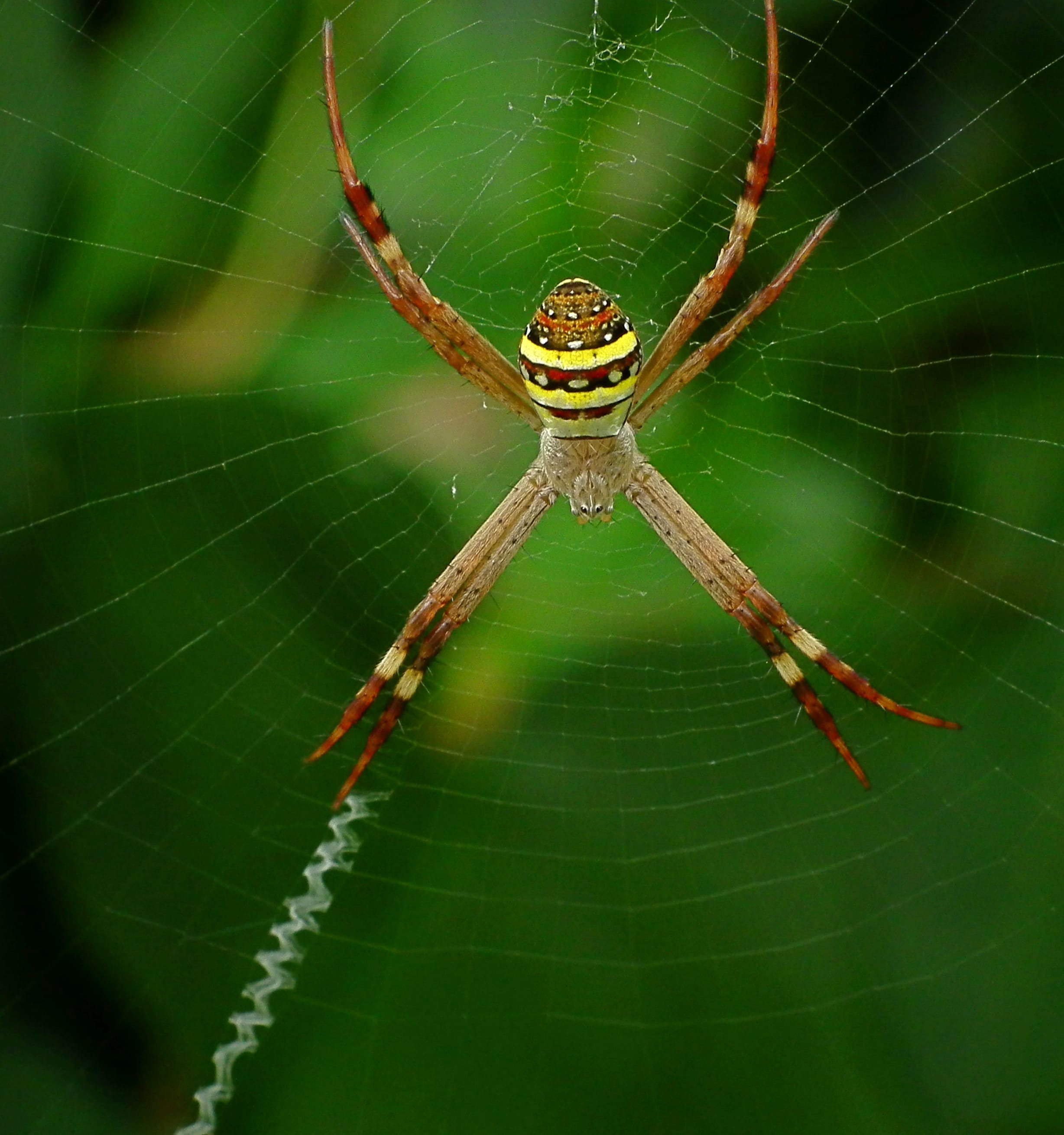
The Spider with a Signature X-Shaped Web
The St Andrew’s Cross Spider is famous for its striking web decorations — bright white zig-zag silk arranged in an X pattern, known as a stabilimentum. When the spider sits in the centre with legs stretched to each corner, its outline blends perfectly with the design, creating a natural optical illusion. Many Australians have spotted these webs hanging across garden pathways or between shrubs during summer.
Appearance and Identification
This species is colourful and eye-catching. Females have bold yellow, silver, and dark brown patterns across the abdomen, while males remain much smaller and less vivid. The legs are banded and slender, giving the spider a delicate look despite its impressive presence on the web. Once seen, their posture — legs forming a perfect cross — is unmistakable.
Habitat and Range
St Andrew’s Cross Spiders thrive in gardens, open woodland, and sunny areas where they can stretch their trademark webs. They prefer spots with good airflow because it increases the likelihood of flying insects landing in their trap. You’ll often see their webs strung between hedges, fence corners, and flowering shrubs.
Behaviour and Diet
Their web is their primary hunting tool. The stabilimentum may reflect UV light, attracting insects or simply reinforcing the web’s centre. Once an insect hits the silk, the spider rushes in with surprising speed. Common prey includes flies, small bees, wasps, and moths. Even though their web looks delicate, it is remarkably durable.
Are They Dangerous?
This species is harmless to humans. Their bite is mild and uncommon, and they tend to remain in the middle of their web without wandering indoors. They are considered beneficial garden residents thanks to their appetite for pests.
13. Wheel-Weaving Orb-Weaver
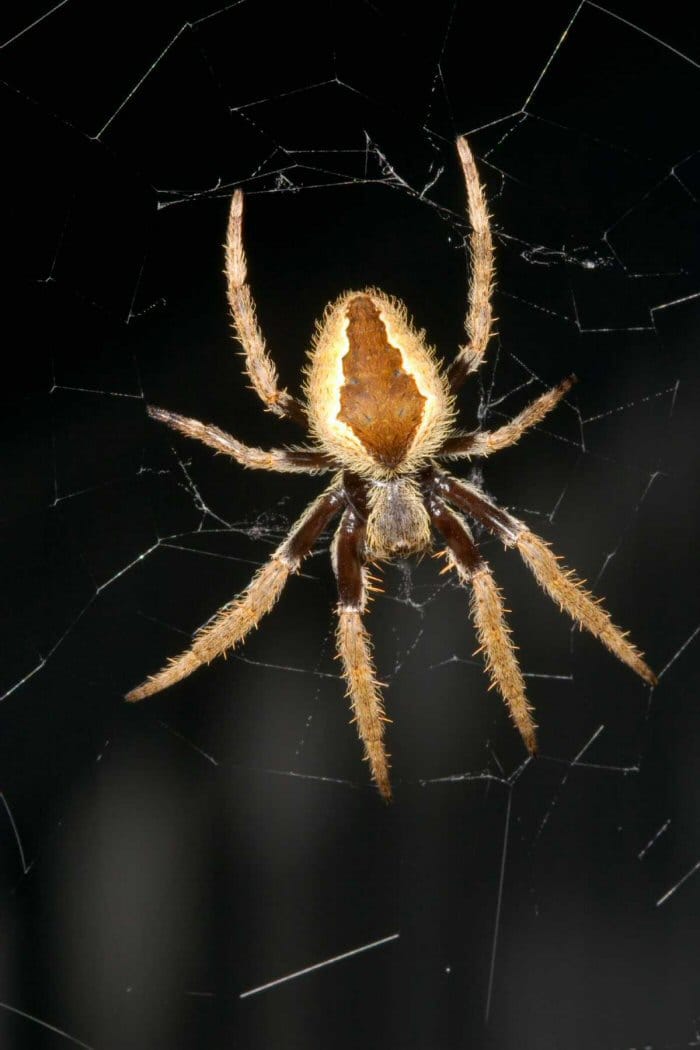
A Classic Orb Builder with Impressive Night-Time Activity
The Wheel-Weaving Orb-Weaver belongs to the wide family of orb-weavers known for crafting those traditional, perfect circular webs. As the name suggests, their webs resemble spoked wheels. These spiders are evening specialists, stepping out at dusk to repair or rebuild their designs with careful, rhythmic movements that many nature watchers compare to embroidery.
Appearance and Identification
Wheel-Weaving Orb-Weavers typically have rounded abdomens with subtle patterns, ranging from pale cream to warm brown. Their legs are long enough to manoeuvre easily across the web, and they often hold a restful posture during the day by folding themselves under leaves. Though they may not look flashy, their web work is what sets them apart.
Habitat and Range
They inhabit forests, suburban gardens, parklands, and bush edges throughout Australia. Their webs are usually built at eye level or slightly above, placed between branches, posts, or railings. They favour calm evenings when the air is stable enough for thread-laying.
Behaviour and Diet
These spiders capture insects such as beetles, mosquitoes, and moths. Large webs with sticky spirals do most of the work. After a catch, the spider wraps its prey neatly and stores it or consumes it immediately. If a web is badly damaged or the wind tears sections, they often rebuild the entire structure the next night — they’re persistent architects with a nightly work routine.
Are They Dangerous?
Wheel-Weaving Orb-Weavers are gentle and non-aggressive. Their small fangs and mild venom mean they pose no real risk to people. Most encounters involve someone noticing a web sparkling in the morning dew rather than meeting the spider itself.
14. Banded Orb-Weaving Spider
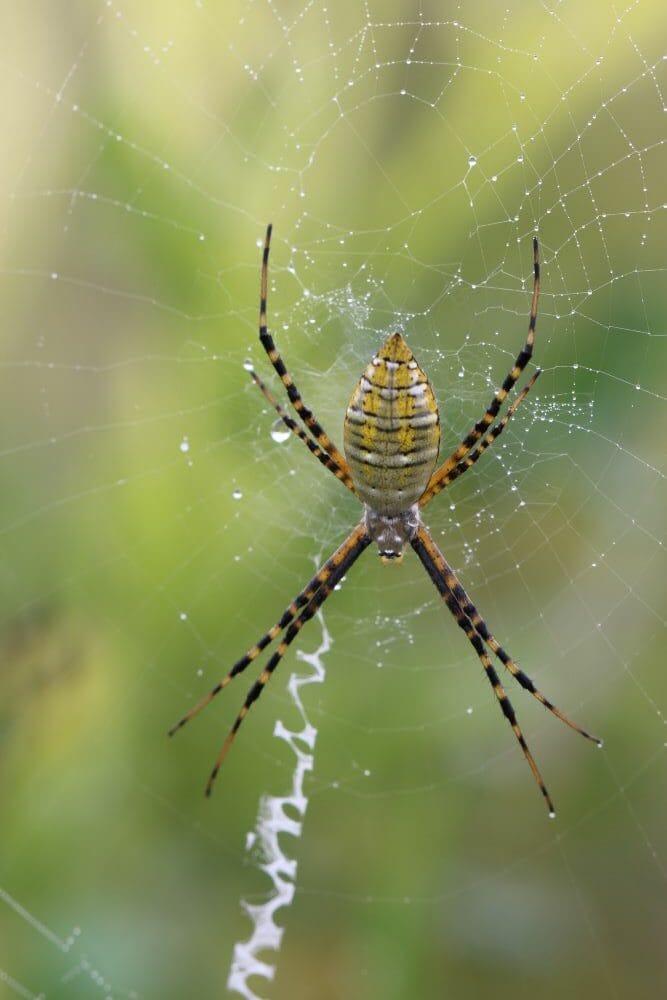
A Striking Spider with Bold Stripes
The Banded Orb-Weaving Spider is immediately recognizable thanks to the alternating light and dark stripes adorning its rounded abdomen. These patterns give the spider a distinctive look, especially when resting in the centre of its evenly spaced web. They are particularly active in warmer months, when insect activity peaks and food sources become plentiful.
Appearance and Identification
The spider’s abdomen shows crisp banding that may include white, yellow, black, and rusty orange. Its legs are strong and often display faint banding as well. Females are much larger and more robust than males, a common trait among orb-weavers. Since they sit prominently in the middle of their webs, people often spot them long before noticing the web threads.
Habitat and Range
This species is common in gardens, woodland clearings, and scrubby areas across Australia. They favour places with open space for web expansion. You’ll sometimes find them near outdoor lights because insects tend to gather there in the evening.
Behaviour and Diet
They construct large orb webs capable of trapping a wide variety of insects. Once prey becomes ensnared, the spider reacts quickly, moving along the radiating strands to subdue the catch. They generally rebuild or repair their webs each night. Their diet includes flies, moths, beetles, grasshoppers, and other small arthropods.
Are They Dangerous?
Banded Orb-Weaving Spiders are harmless and rarely leave their webs. They avoid confrontation and prefer staying focused on catching insects. A gentle relocation is enough if one builds a web across a walkway.
15. Bird-Dropping Spider
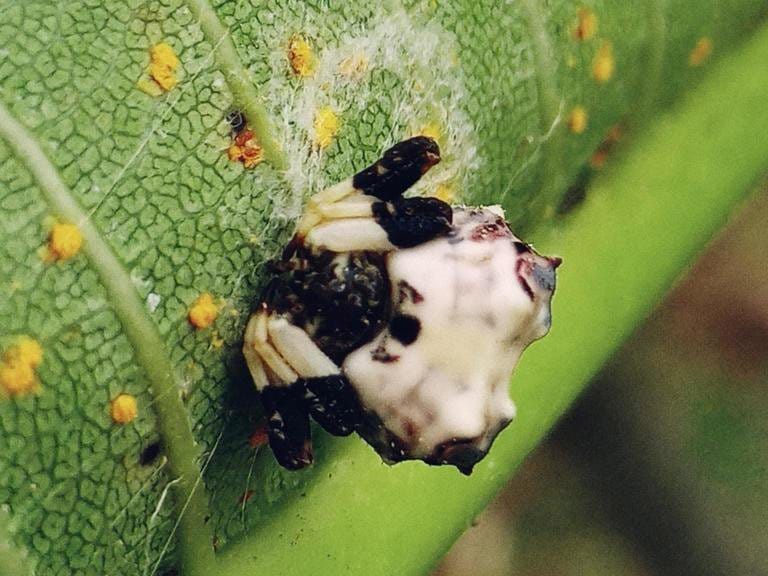
The Master of Disguise That Looks Exactly Like… Droppings
The Bird-Dropping Spider wins the award for creativity in camouflage. As the name suggests, its body pattern mimics a splatter of bird poop so convincingly that even predators overlook it. This odd disguise gives the spider a major survival advantage, letting it sit motionless in plain sight without attracting attention. Many people only notice it when they take a closer look at a “spot” on a leaf that suddenly sprouts legs.
Appearance and Identification
The abdomen is mottled white, brown, and grey in irregular patches that resemble dried droppings. The spider is compact, with small legs tucked close to the body during resting posture. Females occasionally change posture to appear even more blob-like. When they move, the illusion breaks, but when still, they’re extremely convincing.
Habitat and Range
Bird-Dropping Spiders are found in forests, gardens, and shrublands across much of Australia. They prefer vegetation with broad leaves where their disguise works best. You might notice them near flowering plants, since they position themselves strategically to catch pollinating insects.
Behaviour and Diet
These spiders are active hunters, relying on stealth and patience. Instead of building large webs, they create small, simple webs or ambush prey directly from leaves. The disguise helps them remain undetected by insects and predators alike. Their diet usually includes small flies, moths, and wandering insects visiting nearby flowers.
Are They Dangerous?
Completely harmless. They rarely bite and have mild venom. Their biggest strength is camouflage, not confrontation, and they prefer staying still rather than interacting with people.
16. Tent Spider (Cyrtophora)
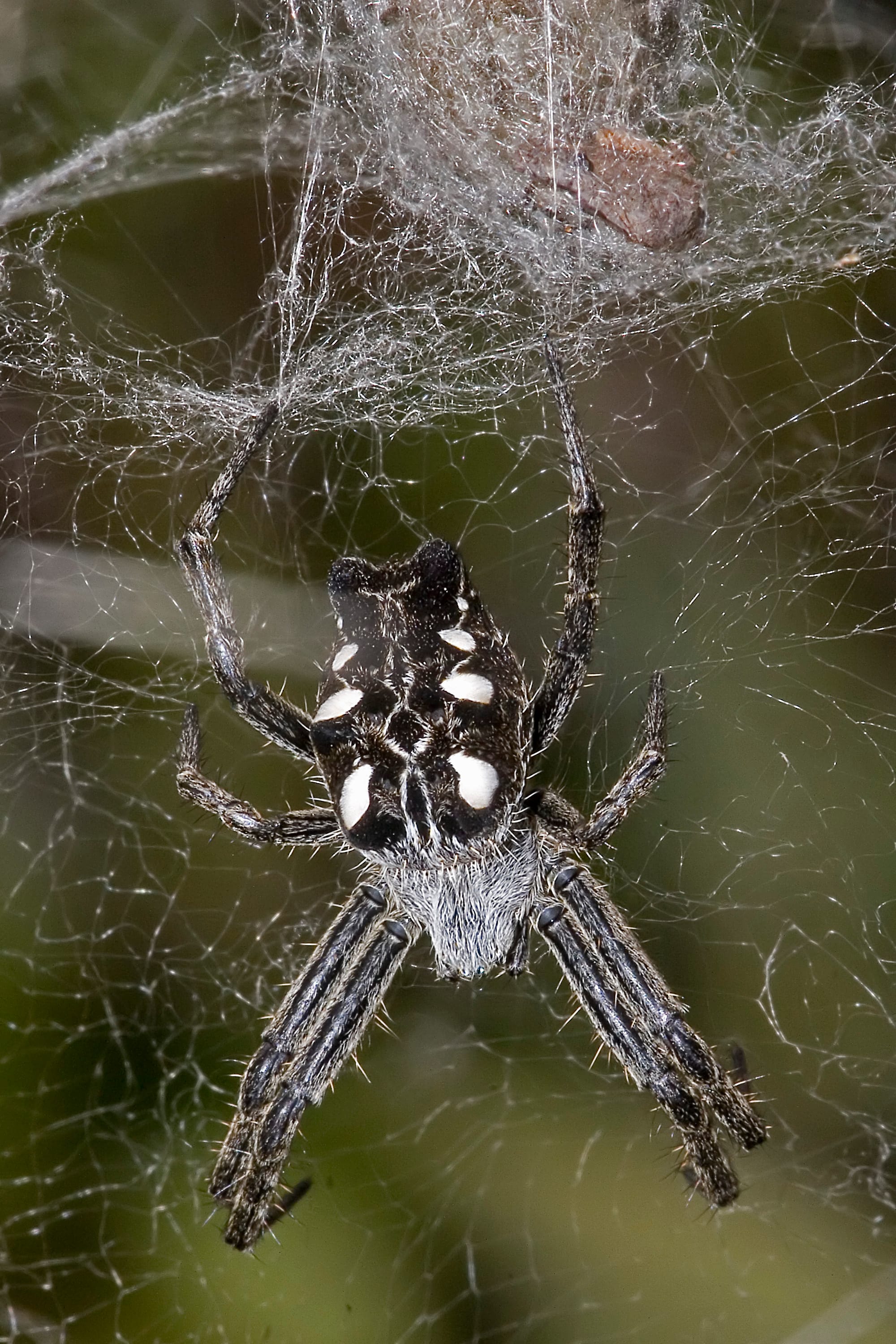
The Architect of Dome-Shaped Webs
The Tent Spider stands out in Australia for its remarkable web-building strategy. Instead of spinning the classic round, open orb like many other spider groups, this species produces a dome-shaped weave that resembles a miniature tent. These webs can stretch across shrubs and low branches, forming a layered mesh that looks a bit like a tiny circus canopy tucked inside a garden. It’s one of the easiest spiders to recognise simply because its web is so different from the delicate wheels spun by orb-weavers around the continent.
Appearance and Identification
The spider itself is slim-bodied with long legs, often coloured in shades of grey, pale brown, or even olive tones. The abdomen is typically patterned with lines or mottled patches, helping it stay hidden while it rests at the top of its mesh shelter. Because the web structure is the giveaway, observers usually spot the tent before the spider. The mesh is non-sticky, but its complexity traps prey through sheer density.
Habitat and Range
Tent Spiders appear in woodlands, coastal scrub, and suburban gardens across Australia. They favour areas with overlapping branches where their dome can anchor securely. Gardeners often find them stretched between bushes or between deck railings and shrubs. Although their webs can look messy, they are actually well-organised layers designed to funnel insects into specific capture points below the dome.
Behaviour and Diet
This spider doesn’t rely on sticky silk. Instead, its hunting success comes from speed and precision. When an insect pushes against the dense mesh, the vibrations alert the spider, which drops down swiftly to grab the struggling prey. They typically feed on moths, small flies, winged ants, and beetles. The spider remains calm and almost statuesque at the top of the tent throughout the day.
Are They Dangerous?
Tent Spiders are harmless. Their fangs are small, and they are quick to retreat. Many people leave them in gardens because they help maintain insect populations without causing any trouble to humans or pets.
17. Red-Legged House Spider
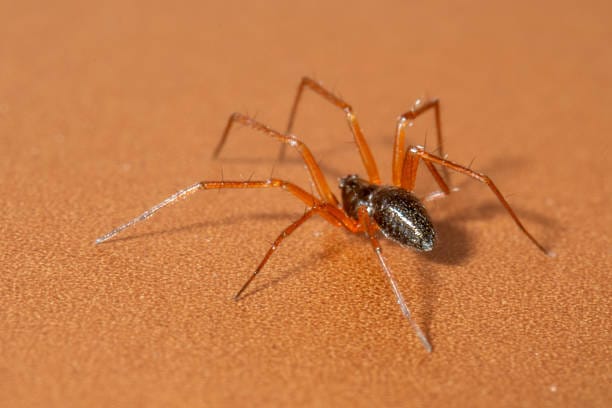
A Common Guest in Sheds and Quiet Corners
The Red-Legged House Spider is one of those quiet, reclusive species that prefer dark corners, window frames, or storage spaces. As the name suggests, their legs tend to show a reddish tint, especially near the joints. They spend much of their lives out of sight, creating small tangle webs that function as safe hunting stations.
Appearance and Identification
This spider is slim with a glossy abdomen, often charcoal or dark brown. The legs are long and thin, with rusty to red colouring that makes them easy to tell apart from other indoor species. Their webs are messy and irregular, but effective for trapping wandering insects. If you spot a faint reddish leg in a dusty corner, it might belong to this species.
Habitat and Range
Red-Legged House Spiders commonly live in homes, sheds, garages, and outdoor furniture gaps. They prefer dry, stable environments where their webs can remain undisturbed for long periods. Outdoors, they may hide in bark crevices or beneath rocks.
Behaviour and Diet
This species is a sit-and-wait predator. Once an insect wanders into its tangle, the spider responds quickly and efficiently. They target mosquitoes, small beetles, household flies, and even other tiny spiders. Although shy, they are important natural pest controllers inside homes.
Are They Dangerous?
They are considered harmless. Their venom is mild, and their temperament is gentle. Most bites occur only if they are handled roughly, which is rare.
18. Cupboard Spider
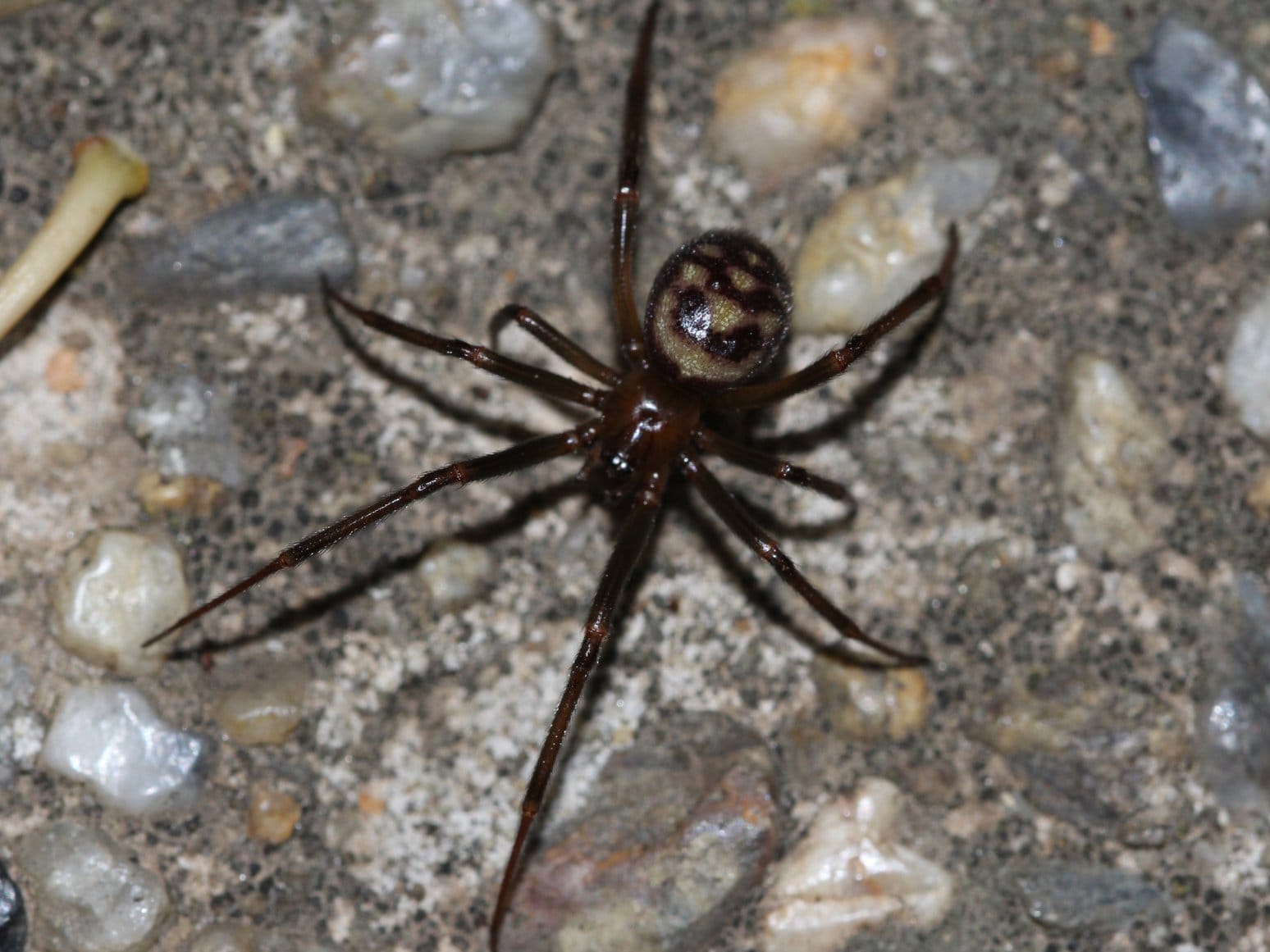
The Shy Crawler That Prefers Hidden Shelves
The Cupboard Spider, sometimes confused with small widow spiders due to its rounded abdomen, spends most of its life weaving messy webs inside sheltered spaces. It tends to occupy cupboards, corners of pantries, roof voids, or quiet garage shelves. Despite its dark colouring, it is not aggressive and usually tries to avoid any interaction with people.
Appearance and Identification
Its abdomen is usually smooth, shiny, and nearly spherical, coloured dark brown to black with thin reddish legs. Some individuals have faint markings on the underside of the abdomen. Although people occasionally mistake them for dangerous species, Cupboard Spiders lack the bold red markings that identify venomous widows.
Habitat and Range
They are found throughout Australia, thriving in both urban and rural environments. They prefer undisturbed indoor areas where insects wander through occasionally. Their webs resemble irregular stringy mats, often draped across corners or objects.
Behaviour and Diet
Cupboard Spiders hunt by ambushing insects that fall into their sticky web lines. Prey includes moths, beetles, pantry pests, and tiny crawling insects. They rarely leave their webs unless disturbed. They have a solitary nature and avoid conflict, even with other spiders.
Are They Dangerous?
Their venom is mild, and they pose no serious threat. While their appearance may alarm some people, they are slow to bite and generally non-aggressive.
19. Enamelled Spider
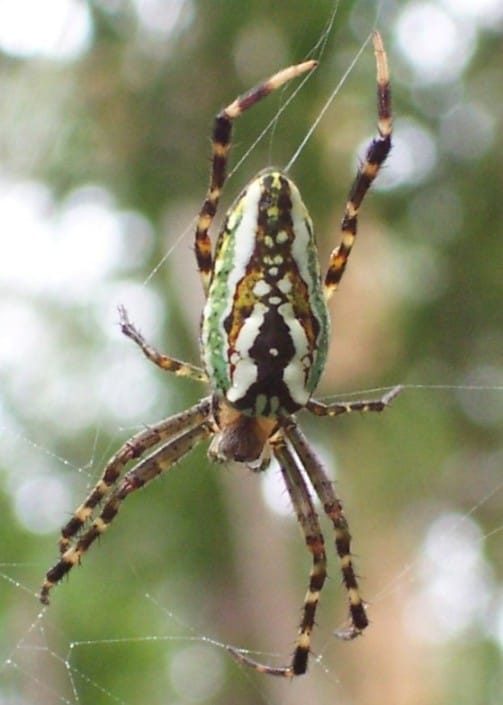
A Colourful Gem Among Australian Orb-Weavers
The Enamelled Spider is one of Australia’s most visually striking spiders. Its abdomen appears smooth and polished, almost as if coated with enamel paint—hence its name. These spiders often display bright colours such as orange, yellow, red, or green, decorated with bold patterns. Gardeners and bushwalkers often admire them simply for the splash of colour they bring to shrubbery.
Appearance and Identification
The abdomen is rounded and glossy, with intricate patterns resembling brush strokes. Their legs are typically banded, giving them a slightly striped look. The contrast between the glossy body and the delicate legs makes them easy to identify compared with other orb-weavers.
Habitat and Range
They are widespread across Australia, favouring gardens, forest edges, and shrublands. Their orb webs are usually built low to the ground, between garden plants or small shrubs. These webs are neat and symmetrical, often rebuilt each evening.
Behaviour and Diet
Enamelled Spiders are efficient hunters. They sit patiently in the centre of their web, waiting for insects like flies, beetles, and moths. When prey hits the sticky spirals, the spider darts in and immobilises it with a quick wrap of silk.
Are They Dangerous?
They are harmless and quite timid. Their bright colours may look dramatic, but they pose no threat to humans.
20. Sombrero Spider
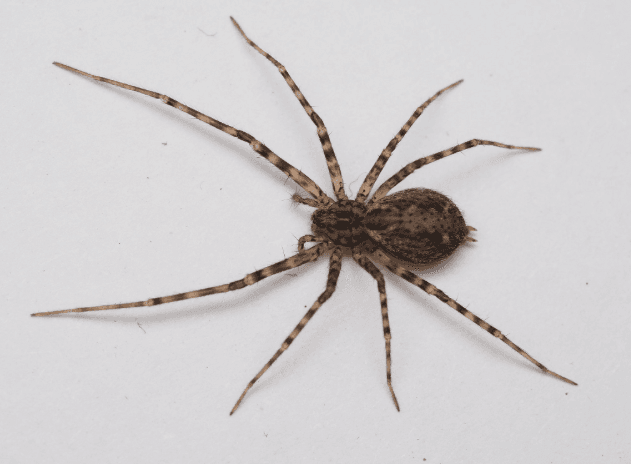
A Spider with a Hat-Shaped Abdomen
The Sombrero Spider gets its name from its unusual body shape. Its abdomen flares out slightly at the edges, giving it a profile that resembles a tiny sombrero. This shape helps it flatten against leaves and bark, blending in while it waits for prey. Because of its appearance, it often catches the attention of curious hikers who wonder what they’ve spotted.
Appearance and Identification
The broad, flared abdomen is the key feature. Colours vary from brown to pale grey or beige, sometimes with faint patterns. The spider’s legs are slim and long, giving it a delicate look. When resting, it presses its body flat to increase the hat-like effect.
Habitat and Range
Sombrero Spiders live in forested regions, bushland, and shaded garden areas. They build small, simple webs or hide under leaves, depending on the season. The shape of their body makes them particularly good at hiding on tree trunks.
Behaviour and Diet
They feed on flying insects such as small moths, gnats, and flies. Their hunting method is simple: remain motionless, react quickly, and retreat again. These spiders are wary and seldom wander into homes.
Are They Dangerous?
They are harmless to humans. Their bites are extremely rare, and their venom has little impact on people.
21. Black Wishbone Spider
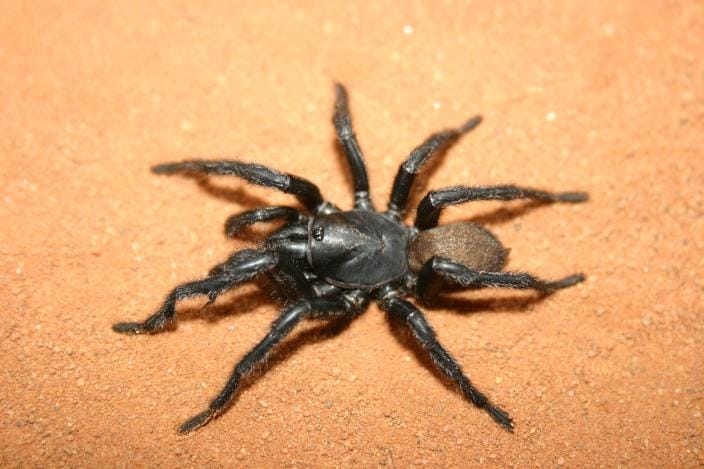
Overview
The Black Wishbone Spider is one of Australia’s lesser-known mygalomorph species, but it has earned a solid reputation thanks to its unusual burrow design, impressive strength, and nocturnal hunting habits. This spider gets its name from the distinctive “Y” or wishbone-shaped burrow it constructs beneath the soil, an architectural trait that sets it apart from other trapdoor and funnel-web spiders. Found mostly in eastern and southeastern Australia, this species inhabits forests, scrublands, and sometimes suburban gardens where soil quality allows it to engineer its complex underground retreat.
Identification
The Black Wishbone Spider typically displays a robust, glossy black or dark brown body with solid legs adapted for digging. Adults are medium to large in size, often reaching 2–3 cm in body length, with leg spans that add significantly to their presence. Their cephalothorax is heavily armored and their fangs are strong enough to subdue large invertebrates. Although their appearance may seem intimidating, they are far less aggressive than many people assume, and will retreat to their burrows at the first sign of danger.
Behavior & Habitat
What truly distinguishes this species is its engineering skill. Instead of a simple vertical tunnel, the Black Wishbone Spider constructs two branching entrances that merge deeper underground, creating a wishbone layout. This design helps the spider escape predators, ambush prey from multiple angles, regulate moisture, and manage heat efficiently. The burrow is often lined with silk to stabilize the walls. These spiders are sit-and-wait predators, spending daylight hours hidden and emerging around dusk to monitor vibrations at the burrow entrances.
Their diet includes beetles, cockroaches, centipedes, moths, and other ground-dwelling insects. They rarely wander far from the burrow, preferring to rely on its safety and strategic positioning. Their movement is surprisingly fast when disturbed, but they prefer flight over fight.
Venom & Safety
Despite their fierce look, the Black Wishbone Spider is not considered highly dangerous to humans. Their venom causes localized pain and swelling but is far milder than that of funnel-webs or mouse spiders. Bites occur infrequently because people rarely come into direct contact with them. Most encounters happen during gardening activities where burrows may accidentally be exposed.
Ecological Role
As efficient predators, they help regulate ground-dwelling insect populations, contributing to the natural balance within ecosystems. Their burrows also aerate soil and create microhabitats for other small invertebrates. Though they are not often seen, they play an important part in maintaining healthy environments throughout their range.
22. Melbourne Trapdoor Spider
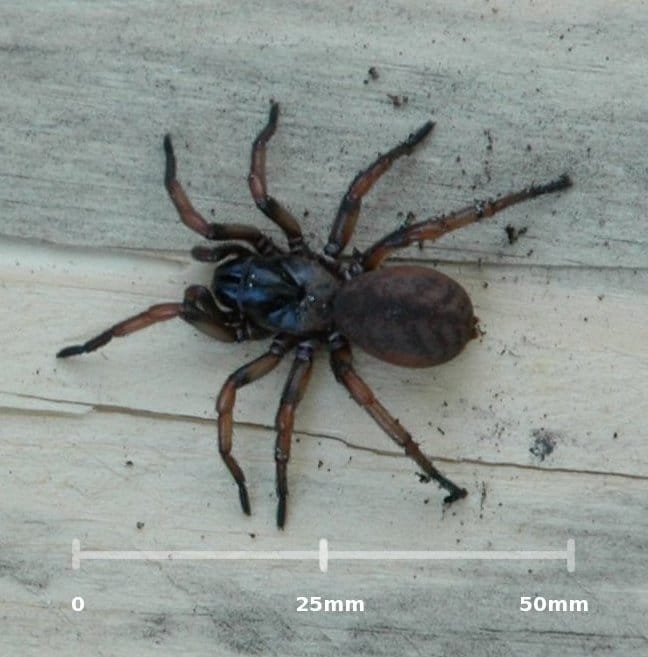
Overview
The Melbourne Trapdoor Spider is one of Australia’s iconic ground-dwelling mygalomorphs, recognized for its beautifully camouflaged burrow and ambush hunting strategy. These spiders inhabit temperate regions of Victoria, particularly around Melbourne and neighboring bushlands. They are often confused with funnel-web species due to their similar appearance, though they are less dangerous and much more reclusive. Known for their secretive lifestyle and exceptional burrow construction, the Melbourne Trapdoor Spider thrives in moist, shaded habitats where the soil is soft enough for digging.
Identification
This species features a sturdy, dark brown to black body with a polished cephalothorax and thick, powerful legs. Adults grow between 2–4 cm, making them moderately large spiders. Their abdomen tends to be rounded and covered with fine hairs. The Melbourne Trapdoor Spider displays long spinnerets and enlarged fangs typical of mygalomorphs. Their trapdoor burrows are often the best way to identify their presence—these doors are crafted from soil, silk, and leaf litter, blending perfectly into their surroundings.
Behavior & Habitat
The Melbourne Trapdoor Spider is a nocturnal hunter. Its burrow door is a masterpiece of natural engineering that not only conceals the burrow but also serves as a shield against predators. The spider sits directly behind the door, sensing vibrations through silk threads connected to the exterior. When an unsuspecting insect walks by, the spider lunges out with lightning speed, subduing its prey before dragging it inside.
These spiders prefer areas with consistent moisture—forest floors, garden beds, mulch piles, and suburban parks. They rarely travel far, spending nearly their entire lives in the same burrow. Males wander only during mating season, which is when humans are most likely to see them.
Venom & Safety
While the Melbourne Trapdoor Spider can deliver a painful bite, its venom is not considered medically significant. Symptoms may include mild to moderate pain, itching, redness, and localized swelling. They are non-aggressive and will almost always retreat behind their trapdoor rather than confront a threat.
Ecological Role
This species helps maintain healthy insect populations by consuming various arthropods. Their intricate burrow networks also contribute to soil turnover and moisture regulation. Though they remain hidden much of the time, Melbourne Trapdoor Spiders are vital components of the ecosystems they inhabit.
23. Eastern Tarantula
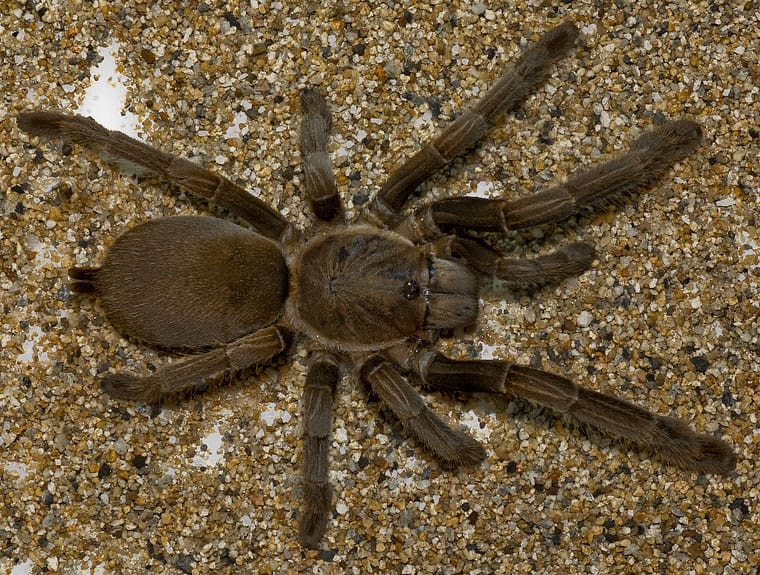
Overview
The Eastern Tarantula—also known as the Australian Tarantula or Bird-Eating Spider—is one of Australia’s most famous arachnids. Despite the dramatic nickname, these tarantulas rarely prey on birds; instead, they primarily consume insects, small reptiles, and even frogs. Found across Queensland and northern New South Wales, the Eastern Tarantula is the largest Australian spider by mass and one of the most impressive species due to its size, strength, and defensive behaviors.
Identification
Eastern Tarantulas are hefty, with bodies reaching 6 cm and leg spans up to 16 cm. Their coloration ranges from chocolate brown to dark reddish grey, complemented by thick velvety hairs covering their legs and abdomen. These hairs serve multiple purposes, including sensory detection and thermoregulation. Their fangs are powerful and can reach nearly 1 cm in length.
Behavior & Habitat
Eastern Tarantulas live in deep burrows, sometimes extending 30–60 cm underground. These chambers maintain stable temperatures and humidity levels crucial for molting and survival. They prefer tropical and subtropical climates, thriving in moist forest floors, grasslands, and even sugarcane fields.
Unlike many Australian spiders, Eastern Tarantulas are highly defensive. When threatened, they may raise their front legs, display fangs, and produce a loud hissing sound by rubbing specialized hairs together—a behavior called stridulation. Although they can climb, they spend most of their time on or below ground, hunting through ambush tactics.
Venom & Safety
The Eastern Tarantula delivers one of the most painful bites of any Australian spider. Though not typically life-threatening to humans, the venom contains compounds that can cause severe pain, sweating, vomiting, and muscle cramps. Dogs and cats are at particularly high risk, as the venom is dangerous to small animals.
Ecological Role
As apex invertebrate predators, Eastern Tarantulas play a crucial role in controlling insect populations. Their burrows also provide refuge for other species after abandonment. They are slow-growing and long-lived, with some individuals surviving more than 20 years in the wild.
24. Grey Wolf Spider
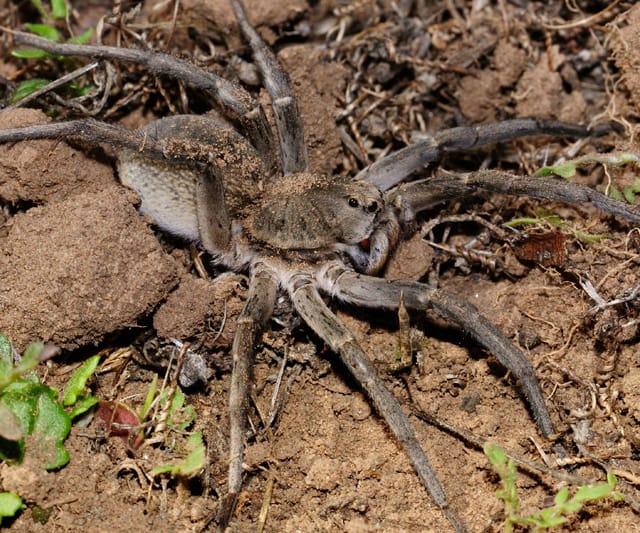
Overview
The Grey Wolf Spider is one of Australia’s most widespread and recognizable hunting spiders. Unlike web-building species, wolf spiders rely on speed, stealth, and sharp eyesight to chase down prey. Found in almost every type of habitat—from bushlands and deserts to farmlands and suburban lawns—these spiders are highly adaptive and resilient. Their behavior is often compared to that of small mammals because of their active hunting style and keen sensory abilities.
Identification
Grey Wolf Spiders typically display mottled grey, brown, and black patterns that provide excellent camouflage against sand, soil, and leaf litter. Adults can grow between 1–3 cm in body length, with females being significantly larger than males. Their eight eyes are arranged in three rows, with two large central eyes that give them exceptional night vision. Their bodies are agile and muscular, built for sprinting and maneuvering across uneven terrain.
Behavior & Habitat
These spiders do not rely on webs to capture prey. Instead, they use ambush or active pursuit hunting techniques. At night, they roam across the ground in search of insects, small arthropods, and sometimes even tiny vertebrates. Wolf spiders are known to dig shallow burrows or hide under rocks and logs during the day.
One of the most notable traits of the Grey Wolf Spider is its maternal care. Females carry their egg sacs attached to their spinnerets, and after the spiderlings hatch, they climb onto the mother’s abdomen and ride along until old enough to disperse. This remarkable behavior is rare among spiders and highlights their advanced survival strategies.
Venom & Safety
Wolf spider bites are typically mild but may cause redness, swelling, and localized pain. They are not aggressive and will flee when disturbed. Misidentifications sometimes cause unnecessary panic, as people may confuse them with more dangerous species.
Ecological Role
Grey Wolf Spiders play a vital role in controlling insect populations, especially in agricultural and suburban environments. Their presence helps regulate pests naturally, contributing to ecological balance without the need for chemical controls.
25. Bolas Spider
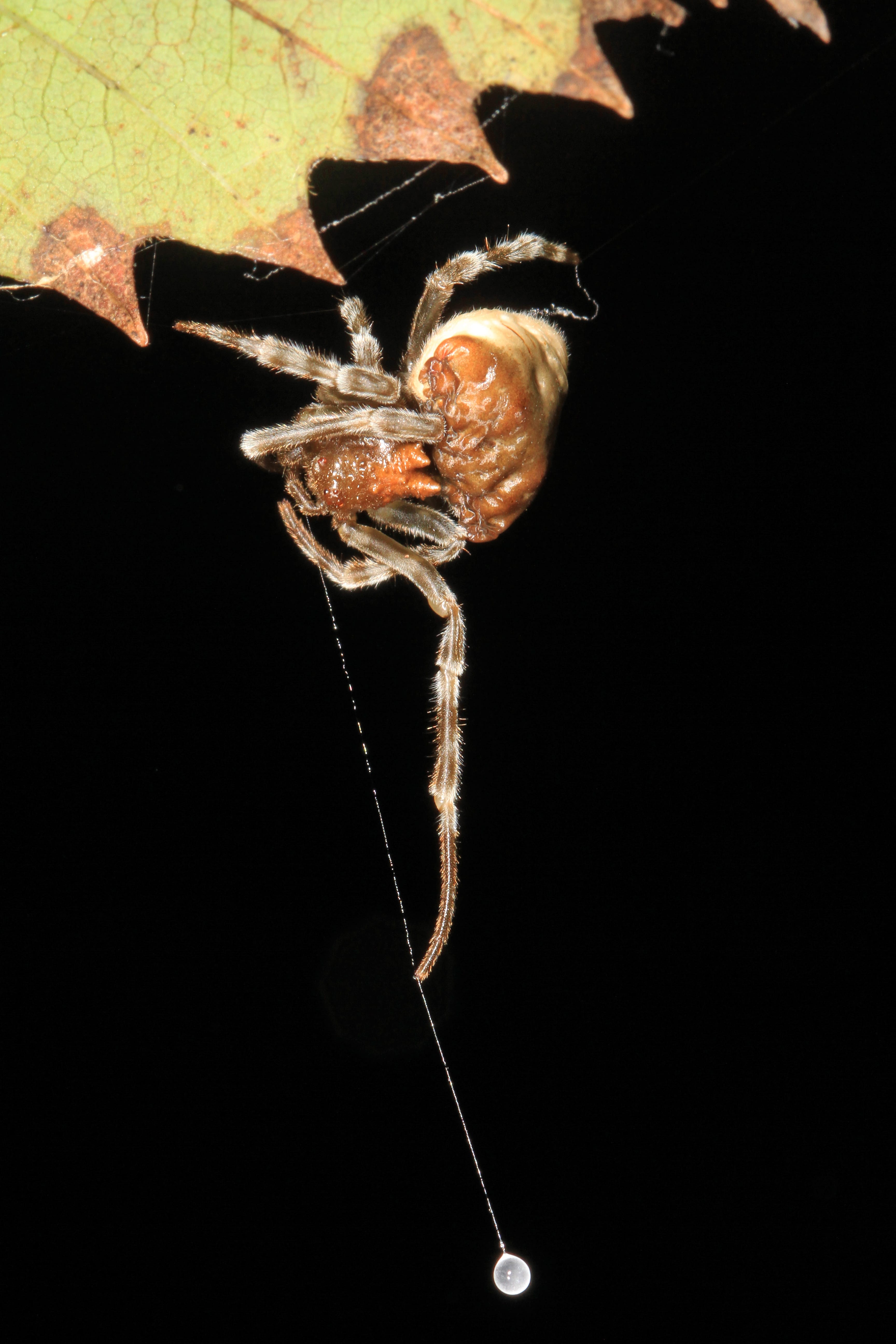
Overview
The Bolas Spider is one of Australia’s most fascinating and unusual arachnids, famous for its unique hunting method that resembles the use of a traditional “bolas”—a weighted cord used by ancient hunters. Rather than building a web, this spider produces a single sticky globule of silk attached to a thread. When a moth approaches, attracted by pheromone-mimicking chemicals released by the spider, the Bolas Spider swings the silk ball to capture its prey. This extraordinary strategy makes it one of the most specialized predators in the arachnid world.
Identification
Bolas Spiders are generally small to medium-sized, with females reaching about 1–2 cm in length and males much smaller. Their appearance varies, but many have bulbous abdomens with intricate patterns resembling bird droppings, providing excellent camouflage. Their legs are slender and adapted for manipulating their bolas thread with precision.
Behavior & Habitat
This species prefers warm habitats such as woodlands, gardens, and open forests. Bolas Spiders are nocturnal and spend daylight hours hidden on leaves, bark, or branches. At night, they create their silk bolas and release pheromone-like chemicals that mimic female moth scents. Unsuspecting male moths are drawn in, only to be snagged mid-air by the swinging sticky ball.
Unlike orb-weavers, they do not build large webs. Instead, their hunting strategy relies heavily on deception, timing, and chemical mimicry. They consume mostly moths but may opportunistically take other small flying insects.
Venom & Safety
Bolas Spiders are harmless to humans. Their venom is tailored for small insects and poses no medical threat. Bites are exceedingly rare due to their gentle disposition and low likelihood of contact.
Ecological Role
These spiders demonstrate one of nature’s most remarkable evolutionary adaptations. By targeting moth populations, they contribute to ecosystem balance and showcase the diversity of hunting methods among Australian spiders. Their presence highlights the complexity and creativity found within the natural world.
26. Yellow-Tailed Crab Spider
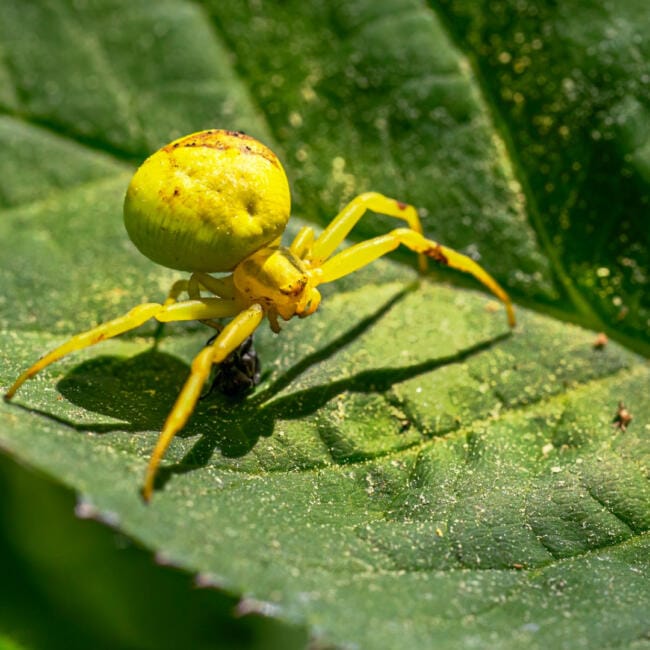
Overview
The Yellow-Tailed Crab Spider is one of Australia’s most distinctive ambush predators, known for its sideways crab-like movements and remarkable camouflage abilities. Like other members of the crab spider family, it does not rely on webs to catch prey. Instead, it blends perfectly into flowers, leaves, or bark and waits patiently for unsuspecting insects to wander within striking distance. This species is regularly found across eastern and northern Australia, thriving in gardens, bushlands, parks, and woodland understories where flowering plants attract pollinating insects.
Identification
This species gets its name from the distinctive yellow marking near the tip of its abdomen. Its body shape is squat and wide, giving it the appearance of a tiny crab—hence the name. Adults typically measure between 1–2 cm, though females are noticeably larger and more robust than males. Coloration can vary from pale cream and yellow to light brown, often depending on the surroundings. This ability to blend into the environment enhances their ambush efficiency and overall survival.
Behavior & Hunting Strategy
The Yellow-Tailed Crab Spider is a sit-and-wait predator. It chooses a strategic perch on flowers or foliage, where it can remain motionless for hours. When a bee, wasp, butterfly, or beetle lands within reach, the spider uses its powerful front legs to grab and immobilize the prey almost instantly. Its venom is fast-acting against insects, helping it secure meals larger than itself.
These spiders do not build webs for hunting, but they often use silk to create small retreats or anchor points on leaves. Their eyesight is strong compared to many web-building species, allowing them to react swiftly when prey comes close. Their sideways movement adds to their agility, making them impressive hunters despite their size.
Venom & Safety
The Yellow-Tailed Crab Spider is harmless to humans. Though capable of biting if provoked, it is reluctant to do so, and any bite would typically result in mild, localized symptoms. They are far more interested in capturing insects than interacting with people.
Ecological Importance
These spiders provide natural pest control, regulating pollinator populations and contributing to balanced ecosystems. Their presence is often a sign of healthy vegetation and insect life. They are an essential part of Australia’s biodiversity, demonstrating yet another creative hunting strategy found among native spiders.
27. Green Tree Ant-Mimicking Spider
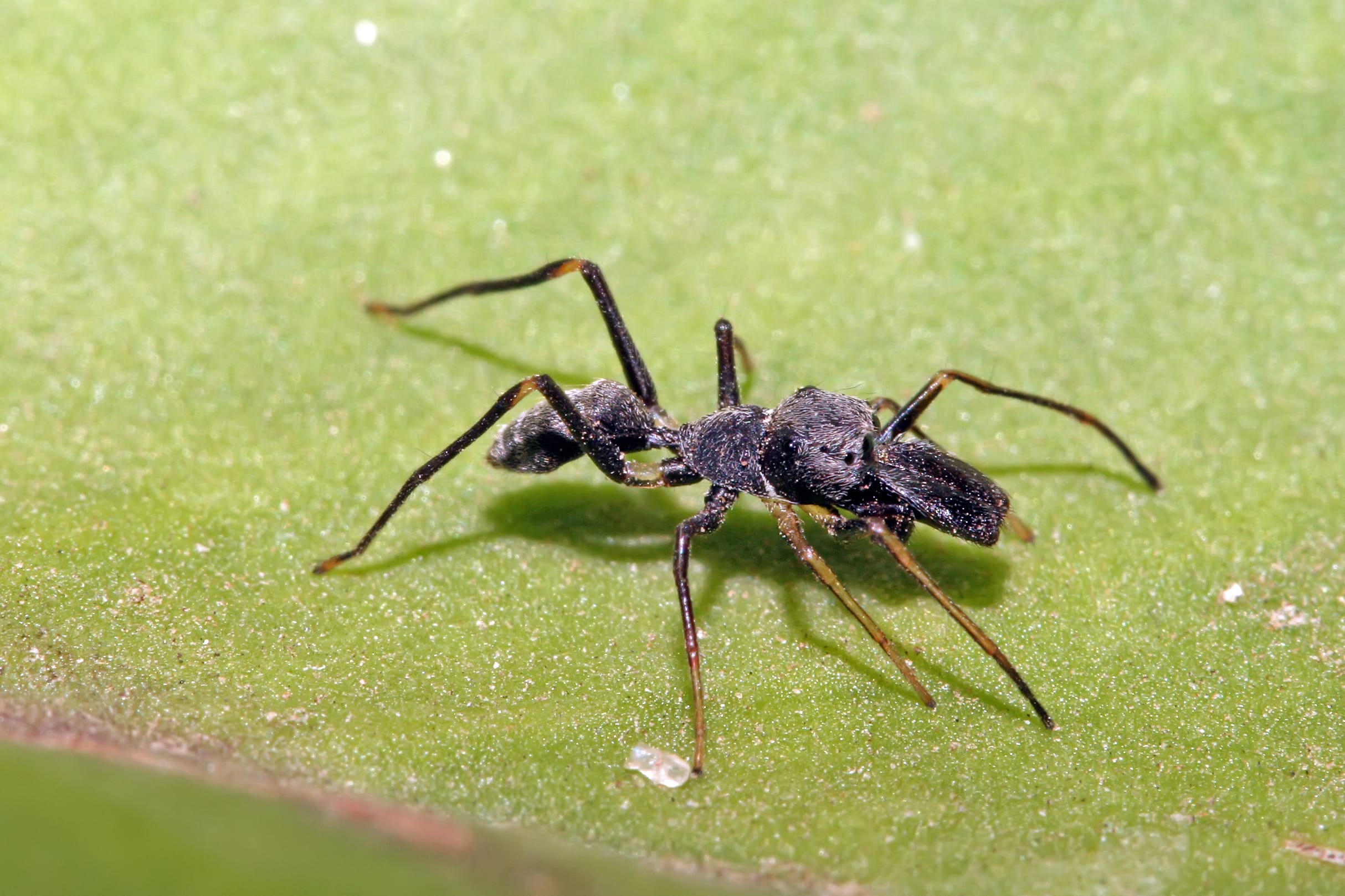
Overview
Among Australia’s many incredible examples of mimicry, the Green Tree Ant-Mimicking Spider may be one of the most convincing. These spiders have evolved to imitate the appearance and behaviors of green weaver ants (Oecophylla smaragdina)—a species known for its aggressive defense systems and complex colony structure. By imitating these ants, the spider gains a survival advantage, avoiding predators that typically avoid tangling with powerful ant colonies. Found across northern and northeastern Australia, especially in tropical and subtropical forests, this spider is a testament to evolutionary ingenuity.
Identification
This species displays a slender, elongated body, narrow abdomen, and long legs that mimic the proportions of a green tree ant. While the spider may not match the ant’s bright green coloration exactly, its gait, posture, and movement complete the illusion. Some individuals even hold their front legs upward to resemble antennae, enhancing the mimicry. Adults usually measure between 5–10 mm, making them similar in size to their ant models.
Behavior & Habitat
These spiders are found roaming the same trees, branches, and foliage where green tree ants build their nests. Their mimicry is so effective that they can move freely among ant territories without being targeted immediately. However, they maintain just enough distance to avoid close ant inspection.
Despite their ant-like appearance, these spiders are hunters. They rely on stealth and speed to capture small insects. In some cases, they may even prey on the ants they mimic—though this requires precise timing and escape skills due to the ants’ cooperative defense behavior.
Venom & Safety
The Green Tree Ant-Mimicking Spider is harmless to humans. Bites are extremely rare and insignificant medically. Their primary defensive mechanism is mimicry rather than aggression.
Ecological Role
This species demonstrates how mimicry shapes predator-prey dynamics. It contributes to insect population control while also showcasing evolutionary adaptation at its finest. These spiders play a subtle but important role in maintaining ecosystem complexity in Australia’s northern forests.
28. Lichen Huntsman Spider
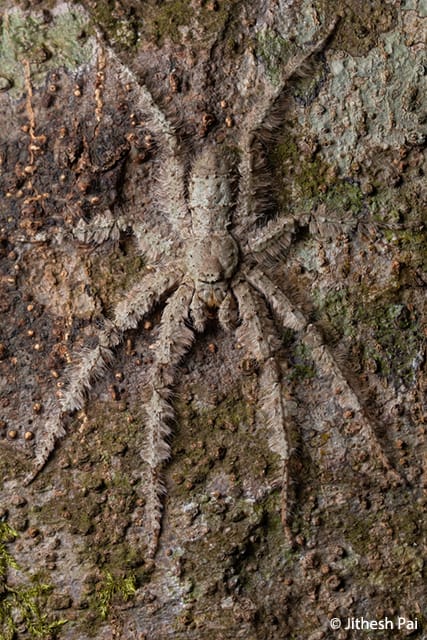
Overview
The Lichen Huntsman Spider is an extraordinary master of camouflage, blending seamlessly into tree bark, lichen patches, and mossy surfaces. Found primarily in rainforests and dense woodlands across Queensland and northern Australia, this species uses its cryptic coloration to remain invisible both to predators and prey. While many huntsman spiders are known for their speed, climbing ability, and impressive leg spans, the Lichen Huntsman stands out for its textured patterns and stillness, making it a ghostly presence in its natural habitat.
Identification
The Lichen Huntsman exhibits mottled shades of green, grey, white, and brown—colors that perfectly mirror lichen-covered surfaces. Its flattened body and long, laterally extended legs help it cling tightly to bark. Adults typically have a leg span of 8–12 cm, making them medium to large for huntsman standards. Their patterns can vary significantly, depending on the habitat, but nearly all individuals blend into vegetation remarkably well.
Behavior & Habitat
This huntsman spends most of its time motionless against tree trunks, waiting for insects to approach. When prey such as moths, beetles, or small spiders come close, the Lichen Huntsman moves with surprising speed. Unlike web-dwelling spiders, huntsman species rely on agility rather than silk structures for capturing prey.
They are nocturnal hunters, preferring the cover of darkness to remain hidden. During the day, their camouflage protects them from birds, reptiles, and larger predators. Their habitats are typically humid, dense, and full of large trees—conditions ideal for lichen growth, which in turn enhances their natural disguise.
Venom & Safety
Like other huntsman spiders, the Lichen Huntsman is not considered dangerous to humans. Its bite may cause mild discomfort, but it is generally shy and not inclined to bite unless provoked. Most encounters occur when the spider is accidentally discovered during outdoor activities.
Ecological Importance
Lichen Huntsman Spiders help regulate nocturnal insect populations within forest ecosystems. Their cryptic nature also highlights the importance of habitat health—lichens thrive in clean, stable environments, so the presence of this spider can indicate ecosystem quality.
29. Shield Huntsman Spider
Overview
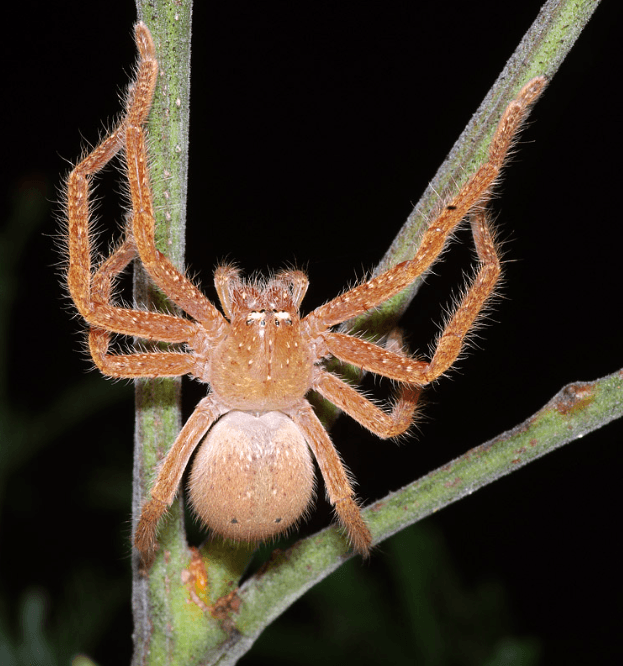
The Shield Huntsman Spider is one of Australia’s most visually striking huntsman species, named for the shield-like shape of its cephalothorax and distinctive body markings. Found throughout eastern and central Australia, this spider is especially common in eucalyptus forests, woodlands, grasslands, and occasionally suburban areas. Its impressive size, strong limbs, and bold coloration make it a standout among huntsman species, though it remains largely harmless and shy around humans.
Identification
This species often features earthy tones—reds, browns, greys, and occasionally soft greens—arranged in symmetrical patterns that resemble a shield or crest. Adults typically have a leg span of 10–15 cm, making them fairly large. Their legs are thick and powerful, adapted for climbing vertical surfaces like tree trunks and walls. One distinguishing trait is the presence of bright coloration on the underside of the legs, which the spider may display during defensive postures.
Behavior & Habitat
Shield Huntsman Spiders are primarily nocturnal. During the day, they hide under loose bark, inside tree hollows, or behind rocks. Their agility allows them to ambush prey effectively, catching insects, small spiders, and occasionally small vertebrates.
Females are dedicated mothers, creating silk egg sacs and guarding them until the spiderlings emerge. This protective behavior is typical of huntsman species and contributes to their survival in challenging environments.
Venom & Safety
While capable of delivering a painful bite, the Shield Huntsman is not considered medically significant. Symptoms are usually mild, involving localized swelling or redness. Their size may alarm people, but they are not aggressive unless cornered. Most individuals prefer to flee rather than fight.
Ecological Role
These spiders regulate insect populations and contribute to ecosystem balance. They are an important part of Australia’s natural pest control system, thriving in diverse habitats due to their adaptability.
30. Red-and-Black Spider (Nicodamus)
Overview
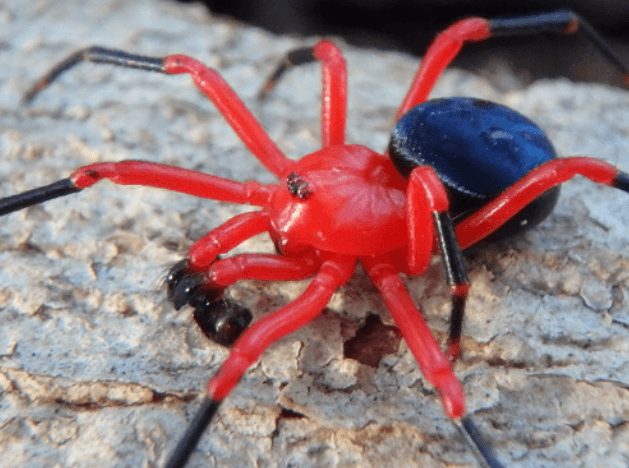
The Red-and-Black Spider is a small but eye-catching Australian species known for its vivid coloration and quick movement. Often found in eastern and southern Australia, this spider favors leaf litter, logs, bark, and rock crevices where it hunts small insects. Despite its bold colors—which may remind some people of dangerous spiders—this species is not related to redbacks and is harmless to humans. The contrast of its red cephalothorax and black abdomen makes it one of the most visually attractive ground spiders in Australia.
Identification
This spider typically displays a bright red or orange cephalothorax paired with a jet-black abdomen. Some individuals may also have subtle patterns on the abdomen or darkened legs. Adult size ranges from 5–12 mm, making it small but agile. Its compact body and long, thin legs help it navigate leaf litter and narrow gaps with ease.
Behavior & Habitat
The Red-and-Black Spider is an active forager rather than an ambush predator. It moves swiftly across the ground, searching for small insects, larvae, and arthropods. It may build simple retreats made of silk under bark or rocks but does not rely on webs for hunting.
These spiders are abundant in bushlands, woodlands, urban gardens, and grassy fields. Their bright colors may serve as a warning display, deterring potential predators from viewing them as easy targets. In reality, they rely more on speed and agility than defense mechanisms.
Venom & Safety
Though capable of biting, the Red-and-Black Spider is not dangerous. Its venom is mild and designed for subduing small invertebrates. Bites are rare and typically cause only minor localized symptoms.
Ecological Importance
These spiders contribute to the natural regulation of small insects, playing their part in maintaining the health of both natural and suburban ecosystems. Their vivid appearance also adds to the incredible diversity of Australia’s ground-dwelling spiders.
31. Spitting Spider (Scytodes)
Overview
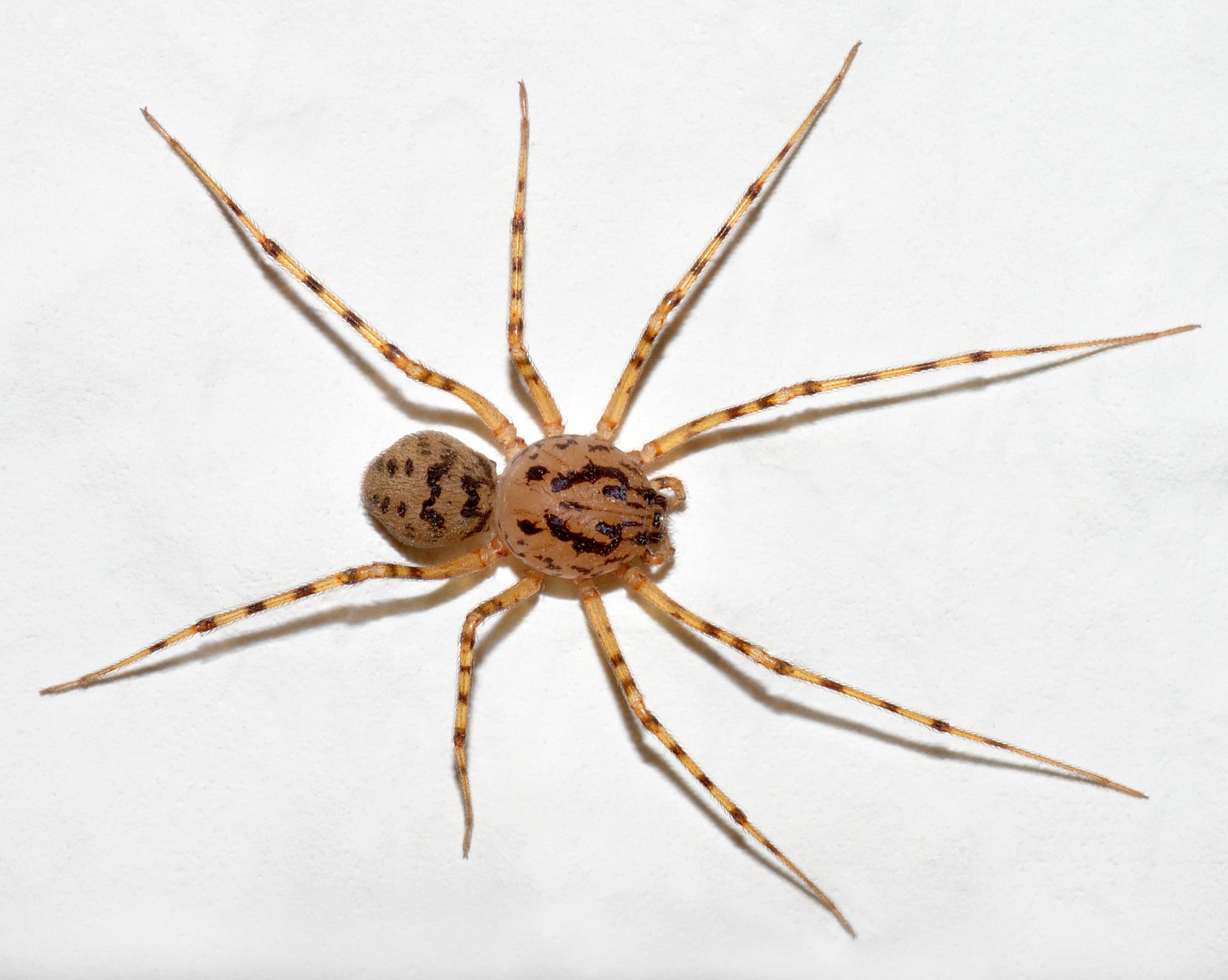
The Spitting Spider is one of Australia’s most intriguing arachnids, known for a hunting method that sounds like something out of a nature documentary. Instead of relying on fast attacks or strong webs, this spider immobilizes prey by ejecting a sticky, venom-laced silk from its fangs. The spray pattern resembles delicate threads crossed over each other, creating a quick trap that freezes insects in place. Found in homes, gardens, and natural bushland throughout Australia, this spider has adapted well to indoor living, likely because it prefers dark, dry corners similar to tree hollows or bark spaces found in the wild.
Identification
Spitting Spiders have a delicate appearance. Their bodies are dome-shaped with a pale yellow or tan color marked by black speckles. Their long, slender legs help them move quietly, making it easy for them to sneak up on prey. Adults measure around 4–7 mm, making them relatively small. Their most striking physical trait is their oversized cephalothorax, which houses the glands responsible for producing their sticky spray. This gives the front of the spider a slightly elevated and rounded look, similar to a tiny helmet.
Behavior & Hunting
The hunting strategy of the Spitting Spider is a marvel. When it identifies prey—usually a small ant, cockroach nymph, or soft-bodied insect—it steps within a few centimeters, pauses, and then releases two jets of sticky silk infused with venom. This action takes less than a second. The crossed strands land on the prey and bind it instantly. Once the prey is immobilized, the spider bites it and wraps it with regular silk for feeding.
This spider is nocturnal, wandering through quiet areas during the night. Indoors, it prefers ceilings, cupboards, and corners where it can hunt without disturbance. Outdoors, it hides under rocks, logs, and bark during the day, coming out after sunset to hunt among leaf litter or low shrubs.
Venom & Safety
The Spitting Spider is harmless to humans. Its spit is meant for tiny insects and is too weak to cause concern. The spider avoids confrontation and will retreat if disturbed. In homes, it actually helps reduce insect numbers and rarely becomes noticeable unless someone spots its tiny silhouette during nighttime.
Ecological Importance
By controlling insect populations, the Spitting Spider contributes to healthy ecosystems in both suburban and natural settings. Its unusual hunting method reflects the incredible diversity of survival strategies found among spiders in Australia.
32. Two-Tailed Spider (Hersiliidae)
Overview
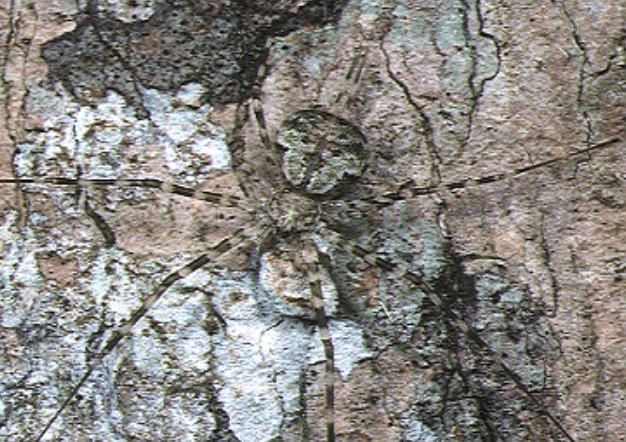
The Two-Tailed Spider is a master of camouflage and one of Australia’s most fascinating tree-dwelling species. It gets its name from its elongated spinnerets, which look like two tails extending from the end of its abdomen. These spinnerets allow the spider to rapidly circle prey and wrap it in a fine layer of silk without approaching too closely at first. They’re common across Australia, especially in eucalyptus forests and gardens where tree trunks provide perfect camouflage.
Identification
This spider’s flattened body, mottled brown or grey coloration, and textured patterning help it blend completely into bark. Adults typically measure 1–2 cm, but when their long spinnerets are included, the overall length appears much greater. They often lie completely flat against the trunk, legs extended outward in a radial pattern, making them nearly invisible to the untrained eye.
Behavior & Hunting
The Two-Tailed Spider does not spin a web to trap prey. Instead, it waits quietly on tree trunks until an ant, beetle, or other insect crawls within range. When prey approaches, the spider circles quickly, flicking silk from its spinnerets in a motion that resembles a lasso. This action forms a wide silk barrier around the target, preventing escape. After circling several times, the spider lunges in to bite and subdue the prey.
Their incredible camouflage makes it possible for Two-Tailed Spiders to remain undetected for days on a single patch of bark. They move slowly during the day and become more active at dusk, adjusting their position to match shadows on trees. Home gardens often host these spiders on fence posts, patio beams, and even brick walls, where their mottled pattern blends seamlessly with rough surfaces.
Venom & Safety
The venom of the Two-Tailed Spider is mild to humans. Bites are extremely rare, and symptoms, if any, remain localized. They avoid confrontation and rely mainly on their ability to disappear into their surroundings.
Ecological Role
These spiders help control insects that crawl on tree trunks and structures. Because they hunt without webs, they can manage prey species that other spiders may overlook. Their camouflage also serves as an excellent example of Australian wildlife adapting to harsh and diverse environments.
33. Tree Funnel-Web Spider
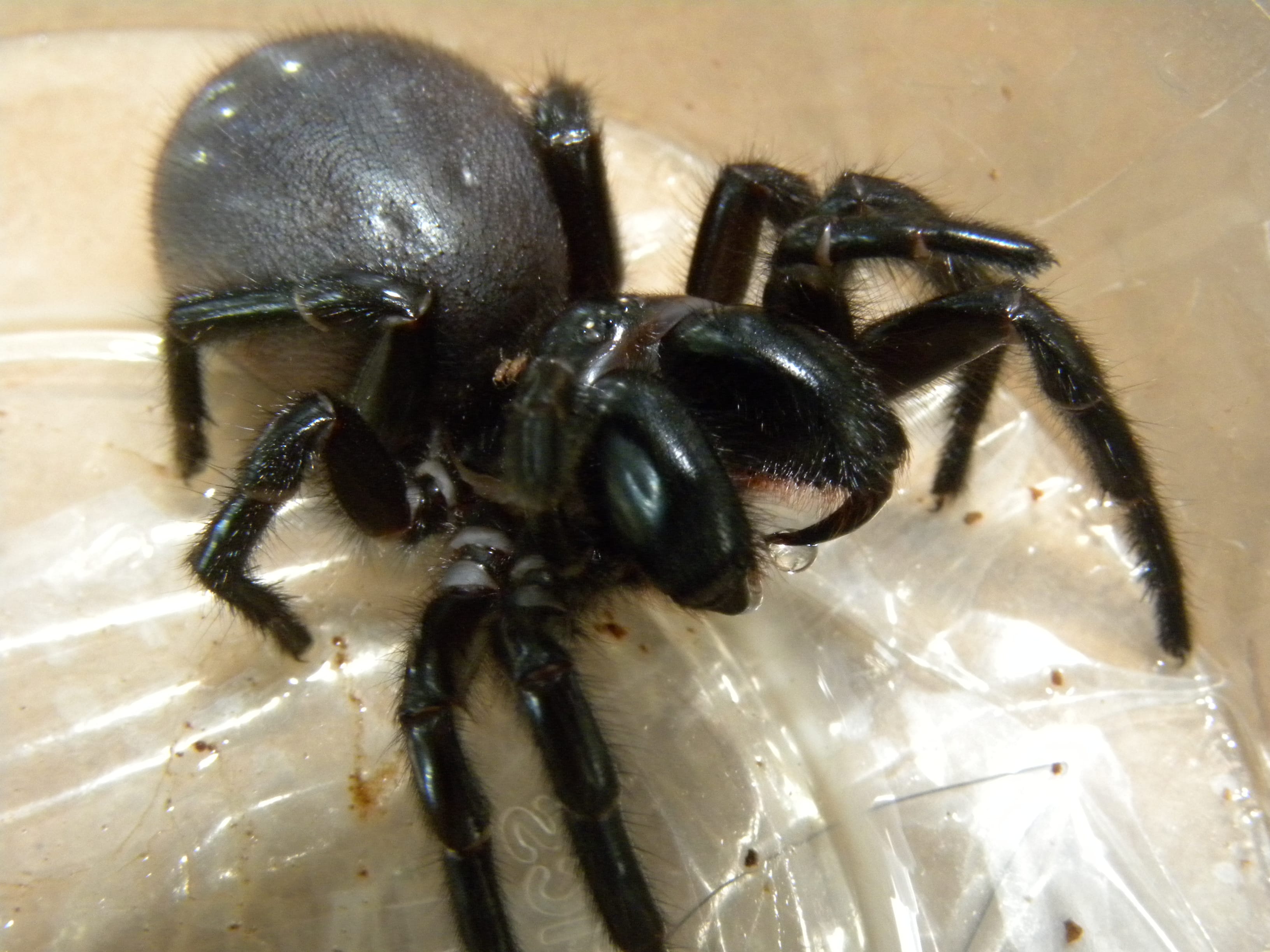
Overview
The Tree Funnel-Web Spider is a lesser-known relative of the infamous Sydney Funnel-Web, yet it shares many of the dramatic traits associated with the group. These spiders build silk-lined retreats high in tree hollows, under loose bark, or inside cracks. They are strong, fast, and capable hunters that thrive in moist forest areas across eastern Australia. Though not as medically significant as the Sydney species, they still possess potent venom and should be respected.
Identification
Tree Funnel-Webs exhibit a glossy, dark brown to black body with powerful legs and fangs capable of penetrating thick insect exoskeletons. Their size is impressive; females often reach up to 4–5 cm, not including legs. Males are smaller but more active, especially during warm and humid nights when they wander in search of mates.
Behavior & Web Structure
As their name suggests, they construct funnel-shaped silk retreats. The silk is thick and strong, with a narrow tube leading into deeper shelter within the tree. When prey brushes against the outer threads, the spider rushes out with incredible speed, grabbing the insect and pulling it inside.
These spiders rarely leave their shelters except to hunt briefly or search for mates. Their preferred habitats include rainforests, eucalyptus woodlands, and old-growth trees where cracks and hollows offer hidden chambers. The height of their retreats keeps them away from ground-dwelling predators, giving them a significant advantage in survival.
Venom & Safety
While not as dangerous as other famed funnel-webs, their bite should still be taken seriously. Symptoms may involve pain, swelling, sweating, or nausea. Encounters are rare due to their arboreal habitat, and they are not naturally aggressive without provocation.
Ecology
Tree Funnel-Web Spiders play an important role as predators of beetles, moths, and other insects that climb tree trunks. Their silk retreats also provide microhabitats for other tiny creatures once abandoned, contributing to the complex web of forest ecology.
34. Silver Dewdrop Spider
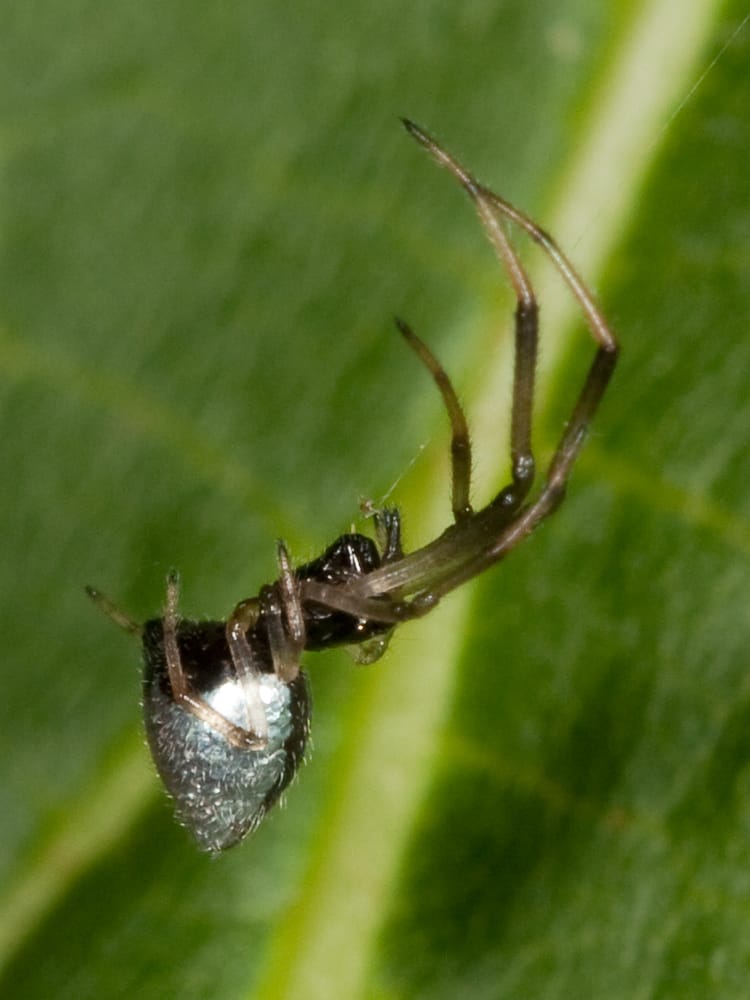
Overview
The Silver Dewdrop Spider is one of Australia’s most elegant arachnids. Belonging to a group known for their shimmering, metallic appearance, this species often catches the eye of careful observers. They inhabit the edges of larger spider webs—typically orb-weavers—and take advantage of leftover prey or small insects caught in the web. Their unusual feeding strategy has earned them a reputation as clever opportunists rather than aggressive hunters.
Identification
The abdomen of this spider has a smooth, reflective surface that can appear silver, white, or even slightly blue depending on the light. They are small, usually around 3–5 mm, with long, thin legs. Their size makes them difficult to spot unless one looks closely at large orb-weaver webs.
Behavior & Habitat
Silver Dewdrop Spiders are kleptoparasites—meaning they steal food from other spiders. They wait quietly near the outer portions of large webs, especially those built by garden orb-weavers. When small insects become trapped, the Silver Dewdrop Spider sneaks in, extracts its meal, and leaves before the host notices.
They are delicate creatures and avoid confrontation; the host spider is usually far larger and capable of overpowering them. Because of this, the Dewdrop Spider moves with extreme caution, often freezing when the host approaches.
Venom & Safety
The venom of the Silver Dewdrop Spider is harmless to people. Their tiny fangs cannot penetrate human skin easily, and they have no interest in interacting with humans.
Ecological Role
Although they steal food, they do not significantly harm orb-weaver populations. They contribute to overall biodiversity, showcasing the many different ways spiders survive in shared environments.
35. Bolas Orb-Weaver Spider
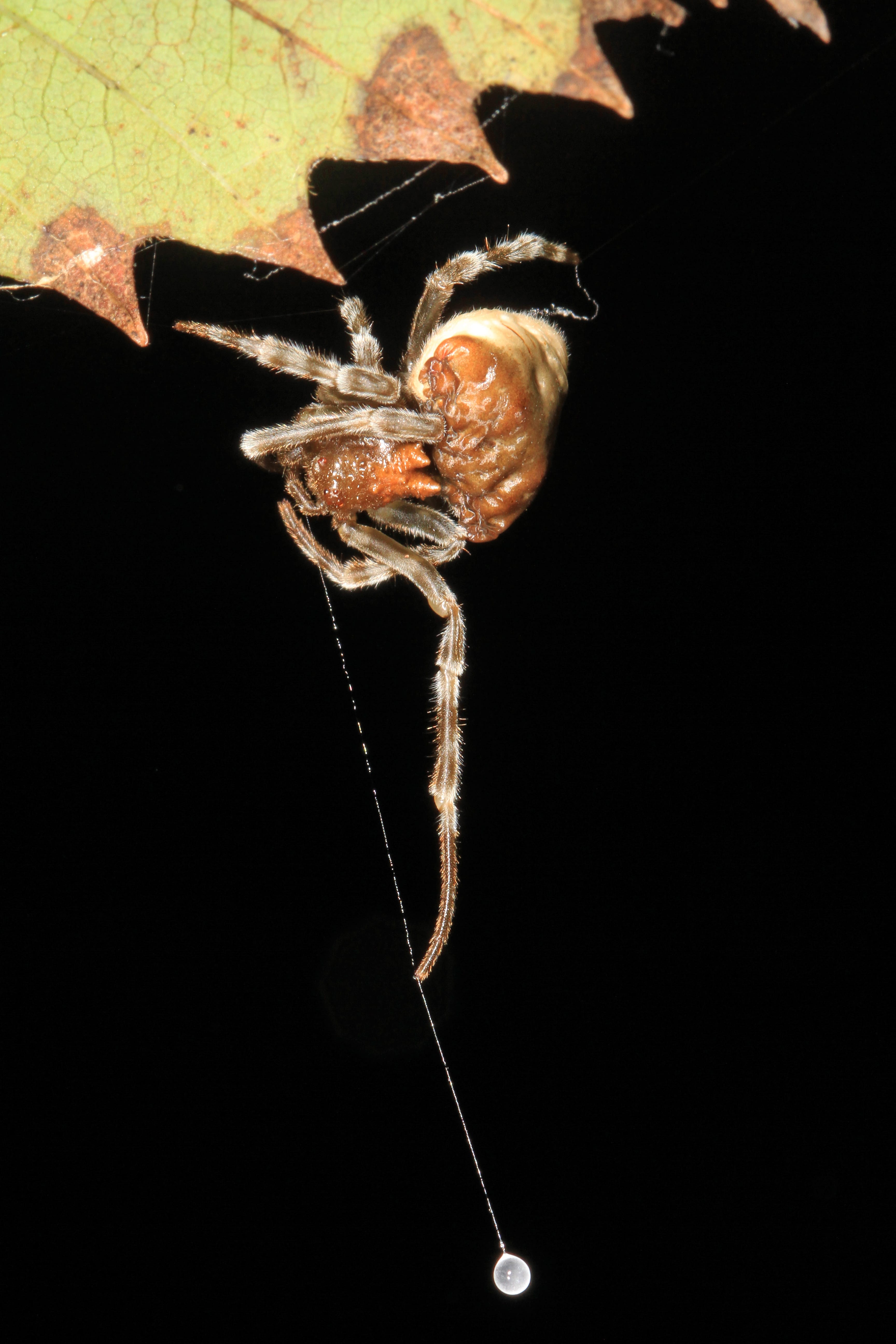
Overview
The Bolas Orb-Weaver Spider is one of Australia’s most extraordinary hunters. Instead of weaving a traditional web, this spider produces a single line of silk with a sticky globule at the end—called a “bolas.” It then swings the bolas like a miniature lasso to capture flying insects. Even more impressive, it releases chemical signals that imitate the pheromones of female moths, luring male moths close enough to strike. This sophisticated strategy makes the Bolas Orb-Weaver a standout example of spider ingenuity.
Identification
Females are plump with rounded abdomens that often display soft browns, creams, and subtle patterns that resemble bird droppings. This camouflage helps them remain unnoticed during the day. Males are tiny and almost unrecognizable compared to the large, elaborate females. Adults generally measure 1.5–2.5 cm, though their size varies depending on region.
Behavior & Hunting
The hunting behavior of the Bolas Orb-Weaver is unlike any other spider. At night, the female positions herself on a delicate silk thread, lowers her bolas, and waits for moths to approach. When the moth gets close, she flicks the sticky globule outward, catching the insect in midair. The precision required for this strike is remarkable and depends heavily on the moth being lured by the pheromone mimicry.
During the day, the spider remains motionless, relying on its disguise to avoid birds and other predators. They typically inhabit areas near lights, shrubs, trees, and garden edges where moths are abundant.
Venom & Safety
The venom of the Bolas Orb-Weaver is mild and not considered harmful to humans. They are gentle and not defensive, preferring to rely on camouflage rather than aggression.
Ecological Importance
These spiders help regulate local moth populations. Their hunting strategy also contributes to scientific understanding of chemical mimicry in animals, making them a species of interest for researchers studying predator-prey communication.
Conclusion
Australia’s spiders form one of the most fascinating wildlife groups on the planet, and spending time learning about them gives you a deeper appreciation for how rich the continent’s ecosystems truly are. From tiny mimics hiding in leaf curls to large, wide-legged hunters waiting quietly on tree trunks, each species plays a role in keeping insect populations balanced and habitats functioning smoothly. Many of these spiders look dramatic, and a few can be medically important, but most are surprisingly calm creatures that prefer retreating over confrontation.
As you explore different regions of the country—coastal forests, dry scrublands, backyard gardens, or humid northern rainforests—you’re almost guaranteed to cross paths with several of these species. They appear at night under porch lights, build webs between shrubs, or dash across warm walls during summer. And while their shapes, colors, and behaviours vary widely, the one thing they all share is how deeply woven they are into Australia’s natural story.
Whether you’re a casual nature enthusiast, a homeowner hoping to identify a visitor in the shed, or someone who simply enjoys reading about wildlife, understanding these spiders turns uncertainty into curiosity. Australia can seem like a “spider capital,” but once you begin recognizing them, the fear usually fades and fascination takes its place. If anything, these spiders quietly remind us that every corner of the environment—from a garden fence to vast eucalyptus forests—teems with small lives carrying out routines we rarely notice.
So the next time you see a web shining in the morning sun or catch a huntsman strolling across a wall with absolute confidence, take a moment to appreciate how intricate and surprising Australian wildlife can be. The more you learn, the more these creatures feel like neighbours rather than mysteries lingering in the shadows.
FAQs About Spiders in Australia
1. Are most spiders in Australia dangerous?
No. Although Australia hosts several medically significant spiders, most species are harmless and rarely bite unless provoked.
2. What is the most venomous spider in Australia?
The Sydney Funnel-Web Spider is widely regarded as the most medically important spider in the country due to its potent venom and defensive nature.
3. Do huntsman spiders bite humans?
They can, but it’s rare. Huntsman spiders prefer to flee, and their bites are usually mild, causing temporary discomfort.
4. Why are huntsman spiders so common inside homes?
They enter houses seeking warmth, shelter, or insects attracted to indoor lights.
5. Are Redback Spiders really dangerous?
Yes, Redbacks can deliver painful and medically significant bites, but antivenom and modern treatment make serious cases extremely uncommon.
6. Where do White-Tailed Spiders live?
They are often found in dark crevices, under clothes, in bedding folds, or hidden in bathrooms and garages.
7. Do White-Tailed Spiders cause necrosis?
Current research shows no strong link between these spiders and necrotic wounds; infections are usually the real cause.
8. Why are orb-weaver spiders seen mostly at night?
They rebuild their webs in the evening and catch nocturnal insects drawn to lights.
9. Are orb-weavers aggressive?
Not at all. Orb-weavers are shy, gentle spiders that rarely leave their webs unless disturbed.
10. Do Australian tarantulas make good pets?
Some people keep them, but they require careful handling, controlled habitats, and respect for their defensive behaviours.
11. Can wolf spiders bite?
Yes, but wolf spider bites are typically mild and cause temporary redness or swelling.
12. Are daddy long-legs spiders harmful?
No. Their venom isn’t dangerous to humans, and they rarely bite.
13. Do funnel-web spiders live only in Sydney?
No. Several funnel-web species live along Australia’s eastern coast, especially in moist forest habitats.
14. What time of year are funnel-web spiders most active?
They’re most active during warm, humid periods, especially after summer rain.
15. Why do male funnel-web spiders wander into homes?
Males roam during mating season and sometimes enter houses while searching for females.
16. Are Australian spiders really larger than spiders elsewhere?
Some species, like huntsman spiders, can grow quite big, but many Australian spiders are small or medium-sized.
17. Do spider bites in Australia often require hospital visits?
Rarely. Most bites are harmless, but bites from Redbacks or funnel-webs should be assessed by medical professionals.
18. Do spiders eat cockroaches?
Yes. Many house spiders help control pests like cockroaches, flies, and beetles.
19. Why do Australian spiders shed their skin?
Spiders molt to grow. Their exoskeleton doesn’t stretch, so they periodically shed it.
20. Can spiders swim?
Some can. Wolf spiders and fishing spiders glide across water or even dive briefly when threatened.
21. Are there jumping spiders in Australia?
Yes—Australia has many colorful jumping spiders known for bright patterns and impressive leaps.
22. Do jumping spiders bite?
They can, but they’re tiny and harmless. Bites are extremely rare and mild.
23. What is the biggest spider in Australia?
The Giant Huntsman Spider is one of the largest by leg span and is commonly found in forests and homes.
24. Why do spiders build webs in doorways?
Doorways channel airflow and insects, making them perfect for catching flying prey.
25. Are spiderlings dangerous?
No. Baby spiders are too small to deliver medically significant bites.
26. How long do Australian spiders live?
Most live one to two years, but tarantulas and trapdoor spiders can live for decades.
27. Do Australian spiders lay eggs?
Yes. Females produce egg sacs containing dozens or hundreds of tiny spiderlings.
28. Why do some spiders look like bird droppings?
It’s camouflage. The Bird-Dropping Spider uses this disguise to avoid predators.
29. Which spiders mimic ants?
Ant-mimicking spiders like the Green Tree Ant-Mimicking Spider imitate ants for protection and hunting.
30. Are trapdoor spiders aggressive?
They defend their burrows but rarely leave them, making encounters uncommon.
31. Why do trapdoor spiders build hinged doors?
The door helps them ambush prey, stay hidden, and regulate humidity inside their burrows.
32. Can Australian spiders jump on people?
Most can’t. Jumping spiders leap only short distances and mostly onto surfaces, not people.
33. Do spiders attack humans unprovoked?
No. Spiders usually bite only when threatened, cornered, or accidentally touched.
34. Why do spiders come inside during summer?
Warm weather increases insect activity, drawing spiders indoors in search of food.
35. Why do spiders come inside during winter?
Some enter homes for warmth or stable humidity during colder months.
36. Are Australian garden spiders safe?
Yes. Most backyard orb-weavers and web builders are harmless and keep insect numbers down.
37. Do spiders die after laying eggs?
Some species do, while others guard their egg sacs or continue living for another season.
38. Do certain spiders prefer outdoor environments?
Yes. Species like garden orb-weavers, wheel-weavers, and tent spiders thrive outdoors in vegetation.
39. What should I do if bitten by a spider?
Clean the area, apply ice, and monitor symptoms. Seek medical help if the spider might be a Redback or funnel-web.
40. Should I kill spiders in my house?
It’s better to relocate them. Many house spiders help reduce pests and stay hidden most of the time.
41. Do spiders reuse their webs?
Some recycle silk daily, while others maintain the same web for weeks.
42. Why do I see more spiders after rain?
Moisture boosts insect activity, attracting spiders. Heavy rain can also flood burrows, pushing spiders upward.
43. Do male and female spiders look different?
Often yes. Females tend to be larger, while males have longer legs or distinct palps for mating.
44. How many spider species live in Australia?
Scientists estimate more than 10,000 species, but many remain undescribed.
45. Which Australian spiders build funnel-shaped webs?
Species like funnel-web spiders and some grass spiders create deep, silk-lined tunnels to catch prey.
46. What should I do if I find a large huntsman inside my car?
Safely pull over, open the doors, and give it time to leave. Huntsmen often hide behind visors or dashboards.
47. Are there brightly colored spiders in Australia?
Yes—jumping spiders, peacock spiders, and orb-weavers often have vivid patterns and bold colors.
48. Why do spiders’ eyes shine at night?
Some species reflect light from a layer behind the retina, similar to cats.
Read more: 75 Types of Spiders in Florida (Pictures And Identification)