

Penguins are some of the most captivating and recognizable birds in the animal kingdom. Known for their upright posture, streamlined bodies, and distinctive black-and-white coloration, these flightless birds have adapted to life in aquatic environments across the Southern Hemisphere. From icy Antarctic coasts to temperate islands and even tropical Galápagos shores, penguins have diversified into multiple species, each with unique behaviors, diets, and habitats. This guide explores Types of Penguins, providing detailed reviews of five species at a time, highlighting their identification, natural history, and ecological significance. Whether you are a wildlife enthusiast, a student, or simply curious about these charming birds, this guide offers a thorough introduction to the fascinating world of penguins.
Types of Penguins
1. Emperor Penguin (Aptenodytes forsteri)
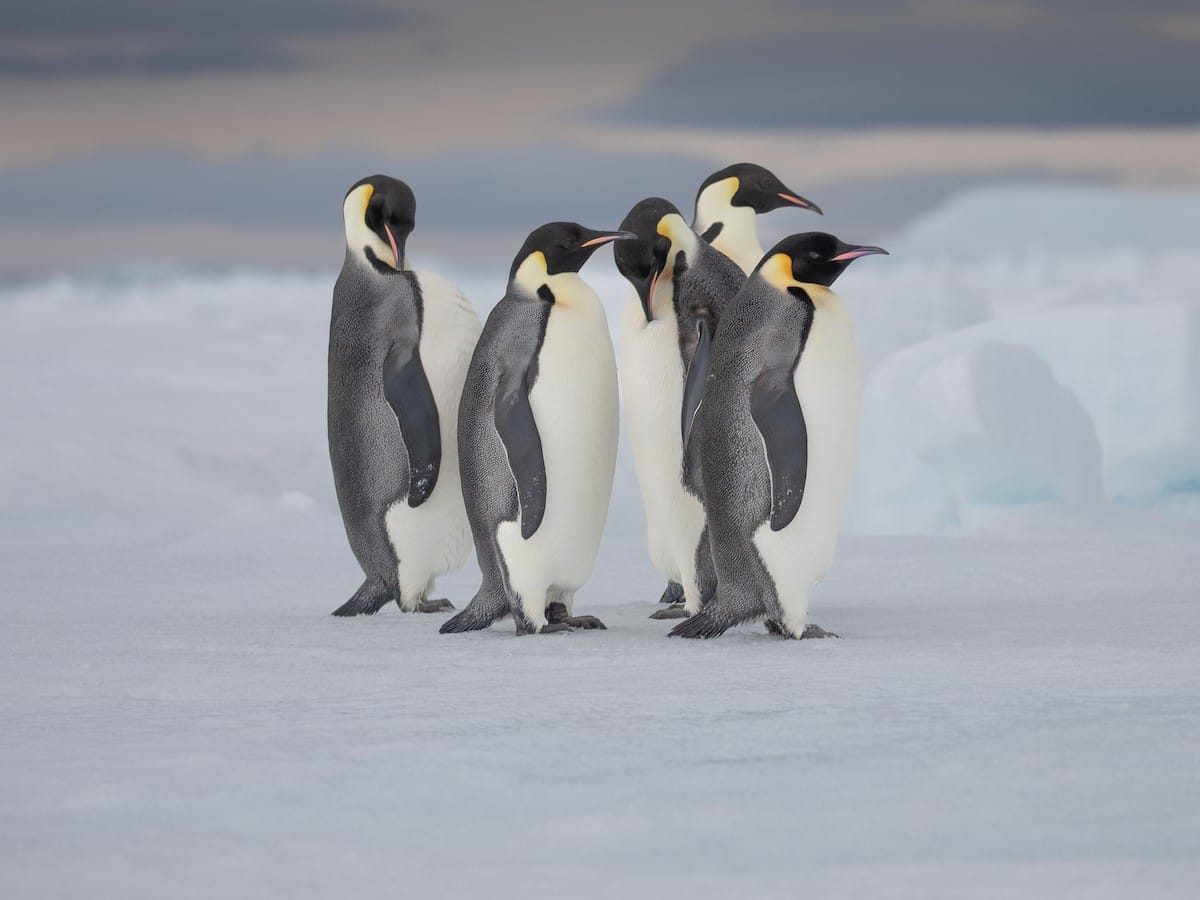
The Emperor Penguin is not only the largest penguin species but also an emblem of resilience in the harsh Antarctic environment. Standing over 1.1 meters (3.6 feet) tall and weighing between 22 to 45 kilograms (49–99 pounds), Emperor Penguins are remarkable for their ability to withstand extreme cold. Their black heads, white bellies, and yellow-orange neck patches make them instantly recognizable.
Emperor Penguins breed during the Antarctic winter, a period when temperatures can drop below -60°C (-76°F). Males incubate the eggs on their feet, covered with a flap of skin called a brood pouch, while females return from feeding trips at sea. This impressive parental dedication allows chicks to survive the frigid environment. Emperor Penguins are social birds, often forming large colonies called rookeries, which provide warmth and protection against predators.
Adapted for swimming, their streamlined bodies and strong flippers allow them to dive to depths exceeding 500 meters (1,640 feet) in search of fish, squid, and krill. They can remain underwater for over 20 minutes at a time. Despite their bulk, Emperor Penguins are agile in water, often gliding effortlessly beneath the ice. Conservation-wise, their populations are currently stable, though climate change poses long-term threats to sea ice habitats.
Emperor Penguins also serve as ambassadors for Antarctic wildlife, symbolizing the unique ecological balance of the frozen continent. Observing them in their natural habitat, whether via documentary footage or scientific expeditions, offers insight into one of nature’s most extraordinary adaptations to extreme cold. As one of the most iconic Types of Penguins, they remind us of the resilience and beauty of life in the harshest environments on Earth.
2. King Penguin (Aptenodytes patagonicus)
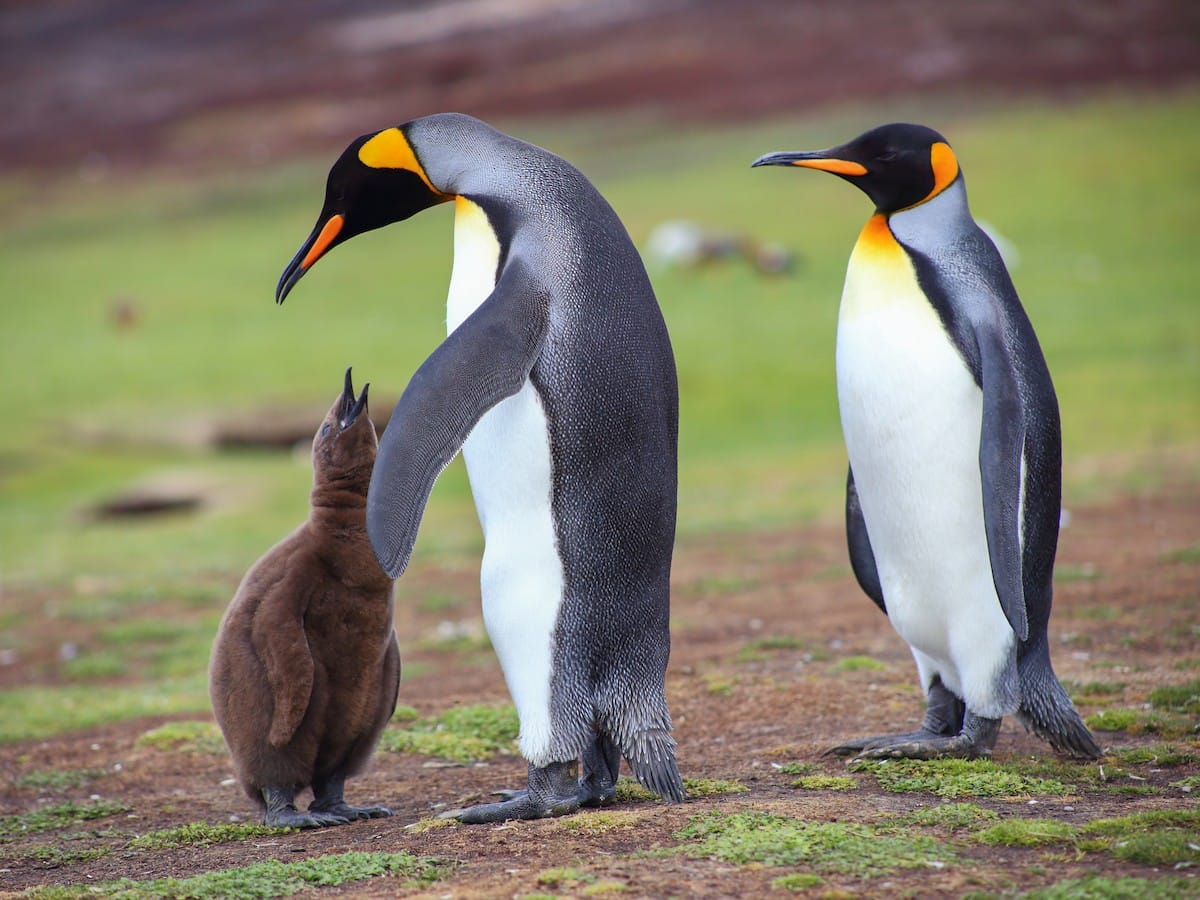
The King Penguin is the second-largest penguin species, slightly smaller than the Emperor, but equally striking. They typically stand about 90 centimeters (3 feet) tall and weigh 11–16 kilograms (24–35 pounds). With a colorful orange-yellow patch along the side of the head and upper chest, King Penguins are visually distinguished from their Emperor relatives.
King Penguins inhabit sub-Antarctic islands and the northern fringes of the Antarctic convergence. They breed on islands with pebbly beaches and sparse vegetation, often forming large colonies of tens of thousands of birds. Interestingly, they have a prolonged breeding cycle that can last over a year, with parents alternating foraging trips in the open ocean to provide sustenance for their chicks. Chicks are covered in a fluffy gray down that protects them from the cold until they develop waterproof adult feathers.
Dietarily, King Penguins primarily feed on small fish and squid, diving to considerable depths—sometimes exceeding 300 meters (984 feet)—to locate prey. Their sleek, streamlined bodies, powerful flippers, and webbed feet enable them to swim efficiently, sometimes covering tens of kilometers in a single day. Observing their courtship displays, which include synchronized movements and vocalizations, reveals a highly social and communicative species.
While not as extreme in their environmental challenges as Emperor Penguins, King Penguins also face threats from climate change and overfishing, which can affect their food supply. As one of the most recognizable Types of Penguins, they captivate wildlife enthusiasts with their elegance, social structure, and remarkable adaptability to sub-Antarctic life.
3. Adélie Penguin (Pygoscelis adeliae)
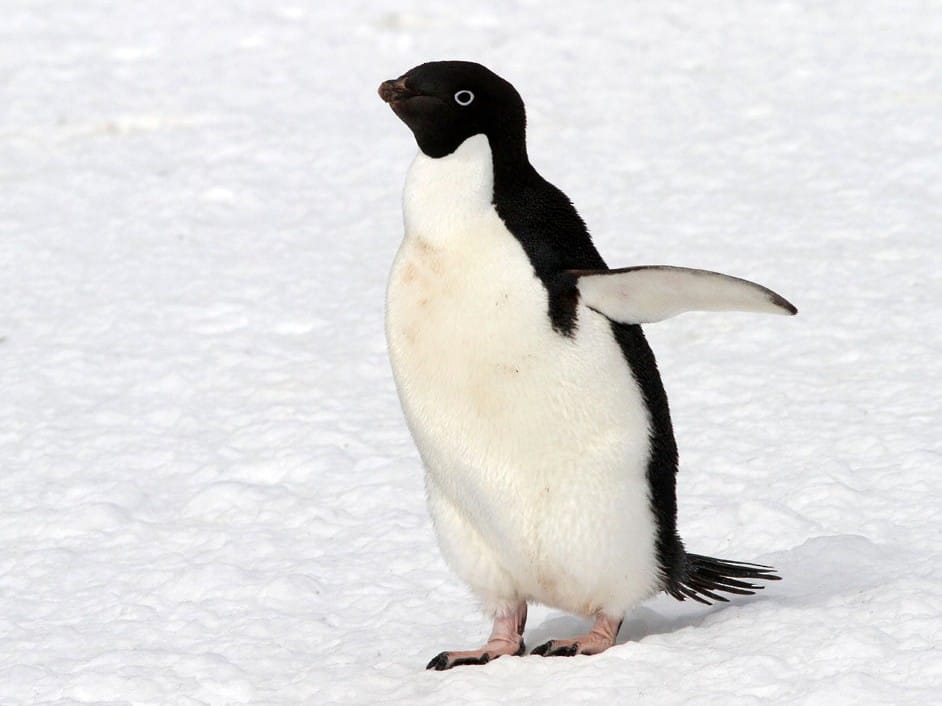
The Adélie Penguin is a medium-sized species, averaging about 70 centimeters (2.3 feet) in height and weighing between 3.6–6 kilograms (8–13 pounds). Their characteristic black head and back, contrasting with a white belly, create the classic “tuxedo” look commonly associated with penguins. A distinguishing feature is the white ring around the eyes, giving them an expressive, almost cartoonish appearance.
Native to the Antarctic continent and nearby islands, Adélie Penguins are highly dependent on sea ice for breeding and foraging. They are remarkable for their long migratory journeys, often traveling hundreds of kilometers between feeding and nesting grounds. Nests are constructed from stones, and both parents share incubation and chick-rearing responsibilities. The social structure is intense; colonies can host tens of thousands of individuals, creating a cacophony of calls and a bustling community of penguin activity.
Adélie Penguins feed mainly on krill, supplemented by small fish and squid. Their diving capabilities are impressive, with recorded depths exceeding 175 meters (574 feet). These penguins demonstrate exceptional stamina and navigational skills, often returning to the same breeding grounds year after year. Climate change and diminishing sea ice present significant challenges, making Adélie Penguins an important indicator species for environmental monitoring.
Observing Adélie Penguins in the wild offers a vivid display of endurance, social interaction, and adaptation. Their playful behavior, including sliding on ice and synchronized swimming, highlights a fascinating balance between survival and social bonding among the Antarctic penguins.
4. Chinstrap Penguin (Pygoscelis antarcticus)
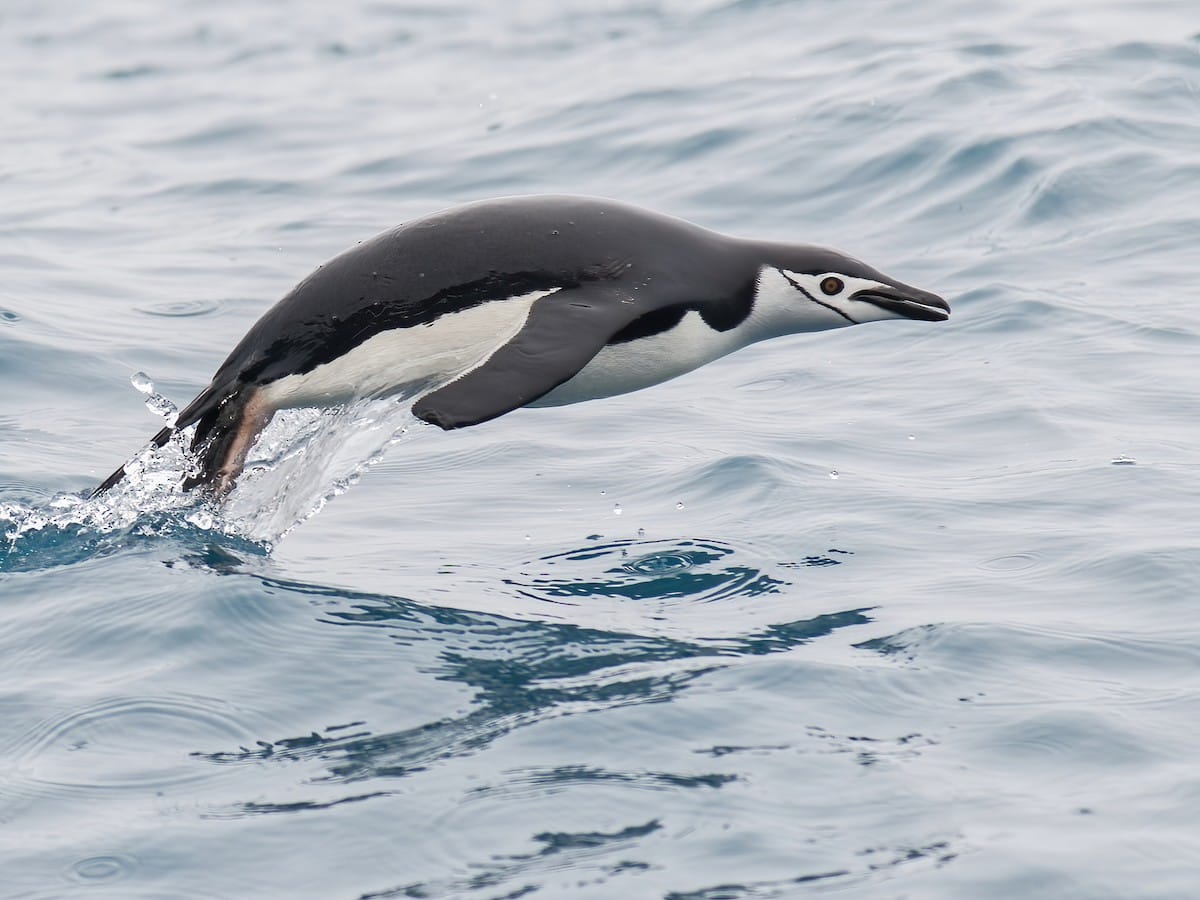
The Chinstrap Penguin is easily identified by the distinctive narrow black band that runs under its chin, giving it its name. Adults stand approximately 68–76 centimeters (2.2–2.5 feet) tall and weigh 3–5 kilograms (6.6–11 pounds). Their compact, streamlined bodies are adapted for efficient swimming and hunting in cold Antarctic waters.
Chinstrap Penguins breed on numerous islands in the Southern Ocean, including the South Shetland Islands and around the Antarctic Peninsula. They build stone nests and lay two eggs, with both parents sharing incubation duties. Social behavior is highly pronounced; colonies are dense and vocal, creating a bustling environment of overlapping calls and movement.
These penguins primarily feed on krill but also consume fish and small squid. Their strong flippers and hydrodynamic shape allow for swift, agile movements in water, often reaching speeds up to 8 kilometers per hour (5 mph). They are known for their stamina, diving repeatedly to catch prey during foraging trips. Predators include leopard seals and skuas, but Chinstrap Penguins rely on agility, colony density, and group vigilance for protection.
Chinstrap Penguins are a fascinating example of adaptation to harsh environments, showcasing endurance, social complexity, and remarkable swimming ability. Their striking facial markings and lively behavior make them a favorite among scientists and wildlife photographers alike, representing a key species in understanding Antarctic ecosystems.
5. Gentoo Penguin (Pygoscelis papua)
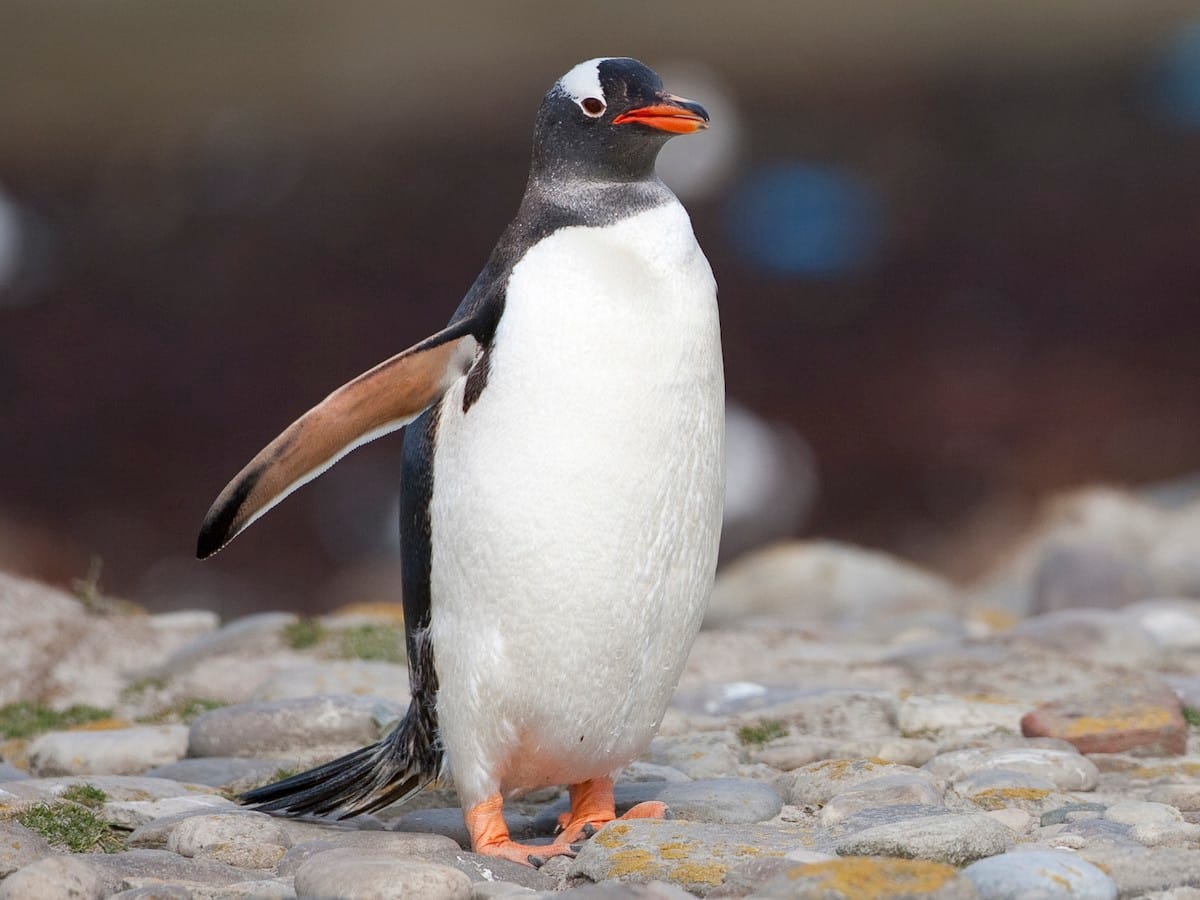
The Gentoo Penguin is notable for its bright orange bill, white eye patches, and robust, waddling gait. Standing about 75–90 centimeters (2.5–3 feet) tall and weighing 5–8.5 kilograms (11–18 pounds), Gentoos are medium-sized penguins, favoring rocky shorelines and sub-Antarctic islands for breeding. They are among the fastest underwater swimmers of all penguins, reaching speeds of up to 36 km/h (22 mph).
Gentoo Penguins construct nests from stones, often competing vigorously with neighbors for the best materials. Breeding pairs are monogamous for the season, sharing incubation and chick-rearing responsibilities. Chicks are covered in downy gray feathers, gradually transitioning to waterproof adult plumage as they mature. Gentoos feed primarily on krill, fish, and squid, diving repeatedly to catch prey with impressive agility and precision.
Their social behavior is less dense than some Antarctic species, allowing smaller colonies to thrive in scattered rocky outcrops. However, they remain highly social, communicating through vocalizations and flipper displays. Gentoo Penguins also demonstrate remarkable curiosity and intelligence, occasionally interacting with researchers or exploring nearby areas in playful ways.
As a prominent member of the Types of Penguins, Gentoos illustrate the balance between adaptability, social interaction, and efficient foraging. Their combination of speed, agility, and distinctive appearance makes them both ecologically important and highly photogenic, symbolizing the resilience of penguins in diverse Southern Hemisphere habitats.
6. Little Penguin (Eudyptula minor)
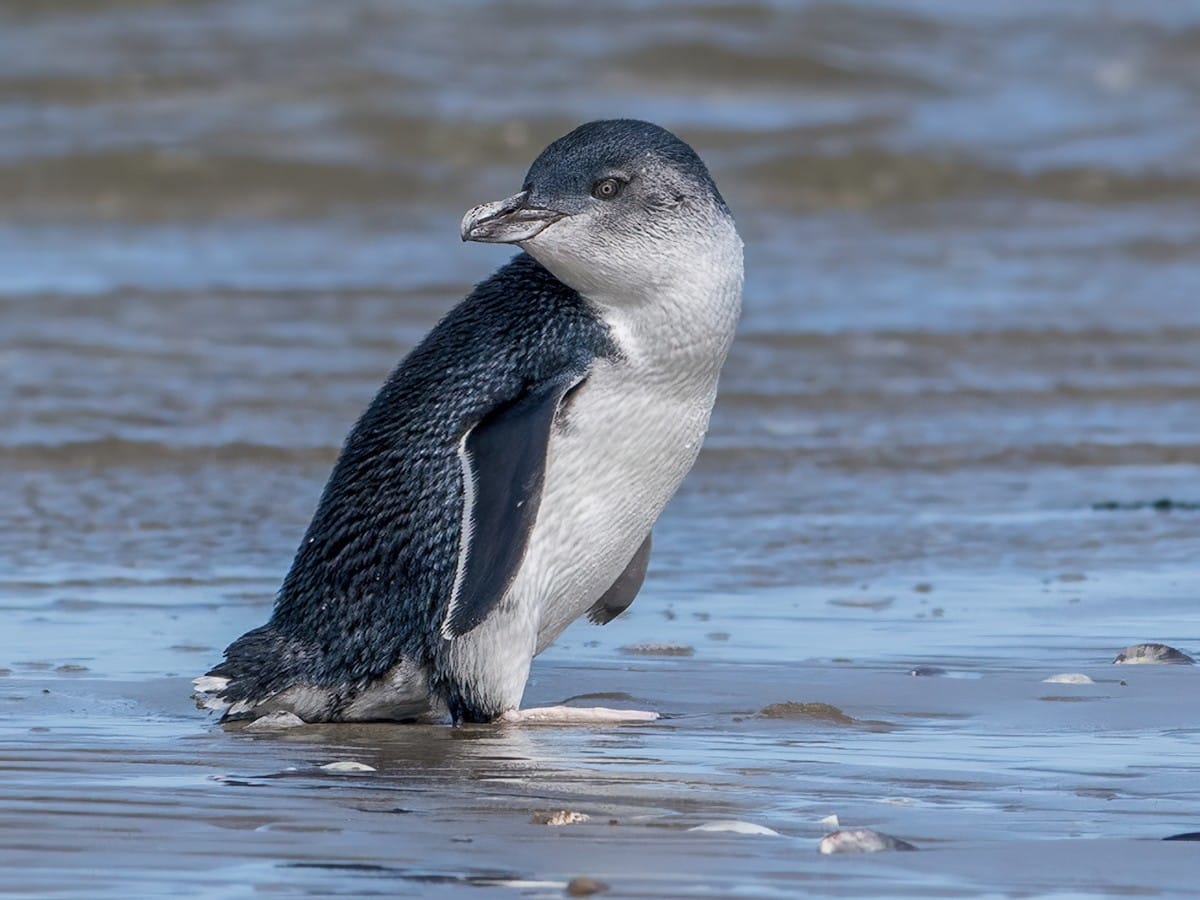
The Little Penguin, also called the Fairy Penguin, is the smallest penguin species in the world, standing just 33–43 centimeters (13–17 inches) tall and weighing 1–1.5 kilograms (2–3 pounds). Despite its diminutive size, this penguin is an accomplished swimmer, using its flippers to navigate the coastal waters of southern Australia and New Zealand with remarkable precision. Their slate-blue feathers, white underparts, and short beaks make them easily identifiable, yet they blend seamlessly into rocky shorelines during the day.
Little Penguins are nocturnal on land, emerging from burrows or rock crevices at dusk to feed in the ocean. Their diet consists mainly of small fish, squid, and crustaceans. These penguins exhibit strong pair bonds and often return to the same burrow year after year. Colony life is quiet during the day but bustling at night when penguins return from foraging trips. Their small size and quick movements make them agile, avoiding predators like gulls, seals, and introduced mammals.
Interestingly, these penguins are known for their soft, high-pitched calls, used for communication between mates and chicks. Observing a Little Penguin’s evening “parade” from sea to nest is a memorable wildlife experience. As one of the unique Types of Penguins, they highlight how size and adaptability can ensure survival in temperate coastal habitats.
7. Australian Little Penguin (Eudyptula novaehollandiae)
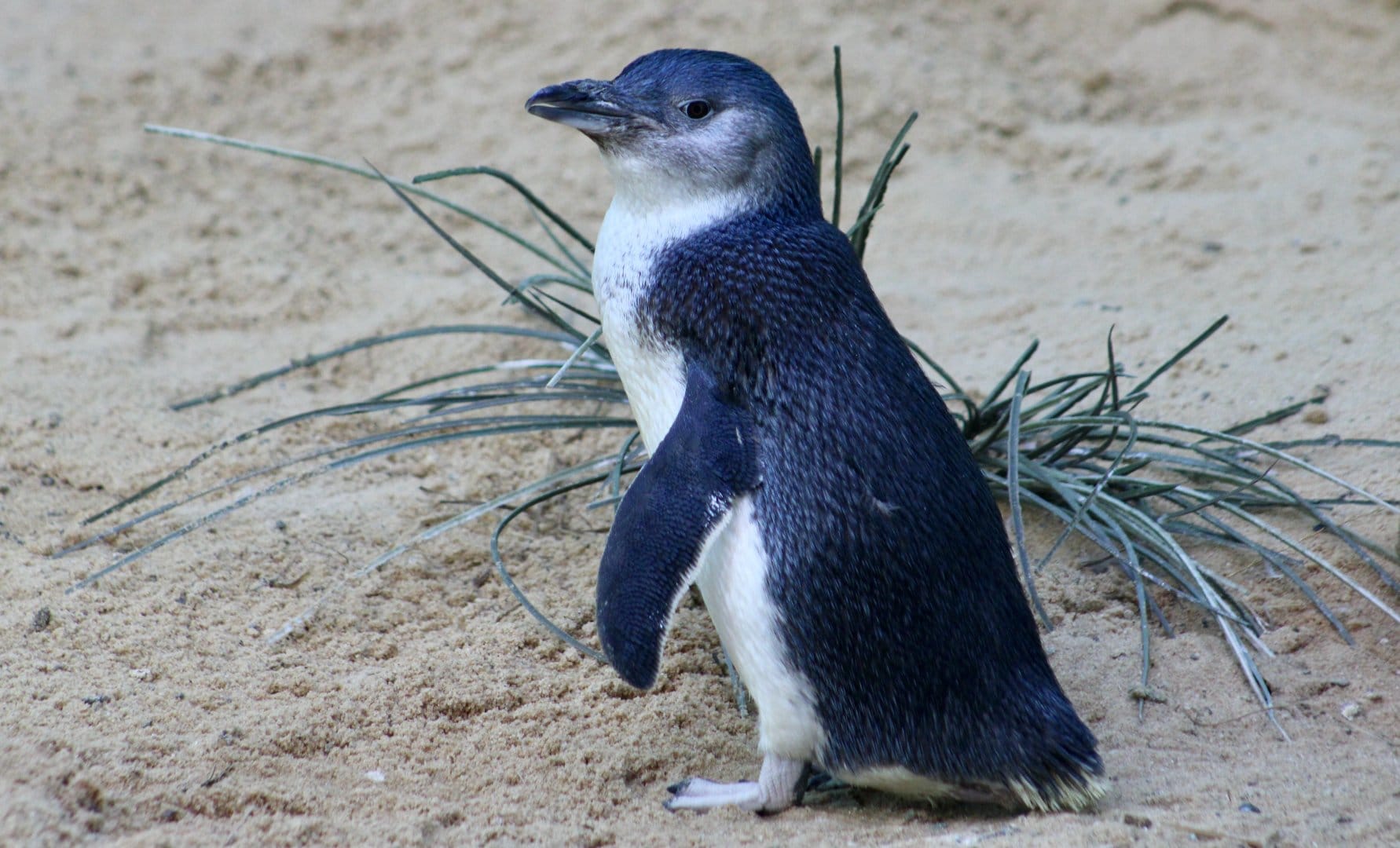
Often considered a distinct population of the Little Penguin, the Australian Little Penguin inhabits southern Australia, including Phillip Island, Kangaroo Island, and coastal Tasmania. Similar in size to other Little Penguins, they weigh 1–1.5 kilograms (2–3 pounds) and stand around 33–43 centimeters (13–17 inches) tall. Their bluish-gray plumage and white underside make them well-adapted for aquatic camouflage.
This penguin species exhibits fascinating nocturnal behavior, foraging offshore during the night and returning to their nesting burrows at dawn. Colonies may range from a few dozen to several thousand individuals. Australian Little Penguins feed on small schooling fish such as sardines, anchovies, and mackerel, diving repeatedly in swift, coordinated motions. Breeding pairs are monogamous for the season, sharing incubation of eggs and care of chicks, who hatch with soft downy feathers before developing waterproof adult plumage.
Predation from natural and introduced species, such as foxes and domestic cats, poses significant challenges. Conservation efforts, including protected colonies and guided ecotourism, have helped populations rebound in some areas. The Australian Little Penguin exemplifies resilience and adaptability, emphasizing the diversity within the Types of Penguins across different climates and regions.
8. White‑flippered Penguin (Eudyptula minor albosignata)
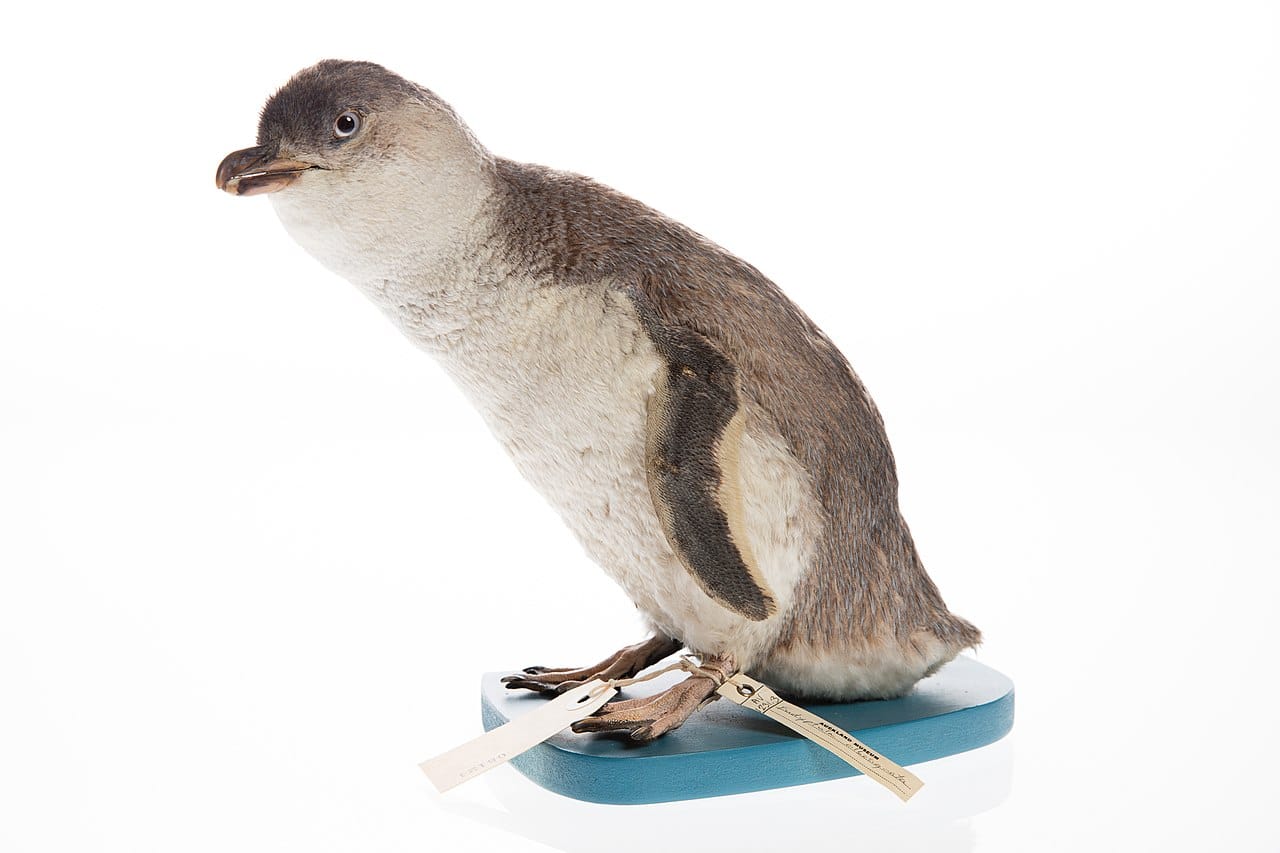
The White-flippered Penguin is a small, coastal penguin found exclusively on a few islands off New Zealand. Measuring around 35–40 centimeters (14–16 inches) tall and weighing 1–1.5 kilograms (2–3 pounds), this penguin is distinguished by its pale white edging on the flippers, setting it apart from other Little Penguin populations. These subtle markings serve as identification points for both researchers and ecotourists.
White-flippered Penguins are nocturnal foragers, feeding mainly on small fish, squid, and crustaceans in nearby coastal waters. They nest in burrows or under dense vegetation, often forming loose colonies that are quieter and less crowded than those of Little Penguins. Socially, these penguins are highly monogamous, maintaining strong pair bonds throughout the breeding season. Chicks are born covered in soft down and rely heavily on parental care before venturing to the sea.
As a highly localized species, the White-flippered Penguin is vulnerable to habitat disturbance, predation from introduced mammals, and human interference. Conservation programs have focused on habitat restoration and predator control, helping maintain stable populations. This species demonstrates how subtle variations in appearance and behavior can arise within closely related Types of Penguins, emphasizing the richness of penguin diversity.
9. Magellanic Penguin (Spheniscus magellanicus)
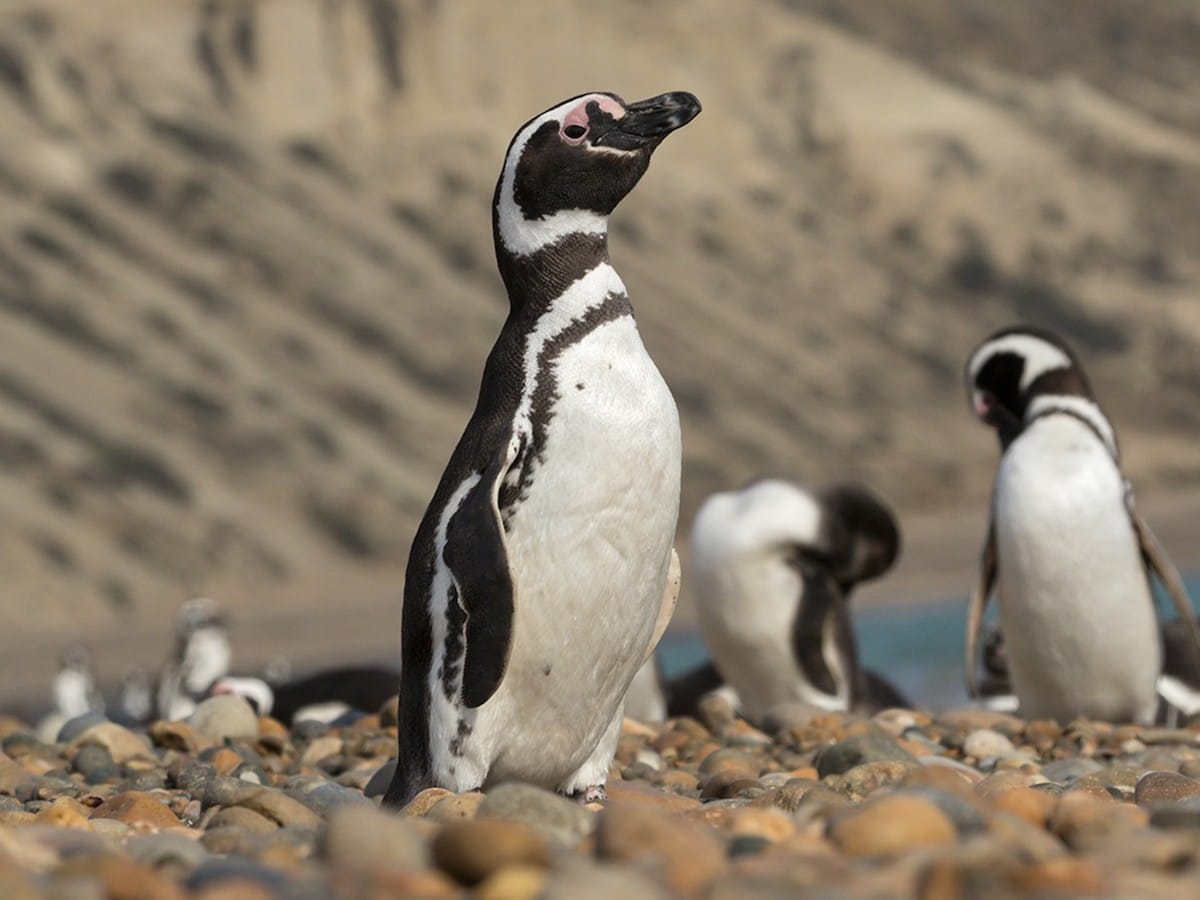
The Magellanic Penguin is a medium-sized penguin found along the coasts of Argentina, Chile, and the Falkland Islands. Adults measure 61–76 centimeters (24–30 inches) in height and weigh 2.7–6.5 kilograms (6–14 pounds). Recognizable by two black bands across their white chest, these penguins are robust, adapted to temperate climates, and capable swimmers and divers. Their diet includes small fish, squid, and krill.
Breeding occurs in burrows, rocky crevices, or under bushes, with both parents sharing incubation of two eggs. Colonies may range from a few hundred to tens of thousands of individuals, creating a lively and noisy social environment. Magellanic Penguins are highly migratory, traveling up to thousands of kilometers along the South American coasts in search of abundant food sources. They often form cooperative groups during foraging trips, showcasing teamwork and social coordination.
Predators include sea lions, skuas, and introduced foxes on land. Climate change and oil spills have posed additional threats to their populations, making conservation efforts crucial. The Magellanic Penguin exemplifies how penguins thrive in temperate zones, demonstrating adaptive strategies distinct from Antarctic species and adding to the diversity of Types of Penguins.
10. Humboldt Penguin (Spheniscus humboldti)
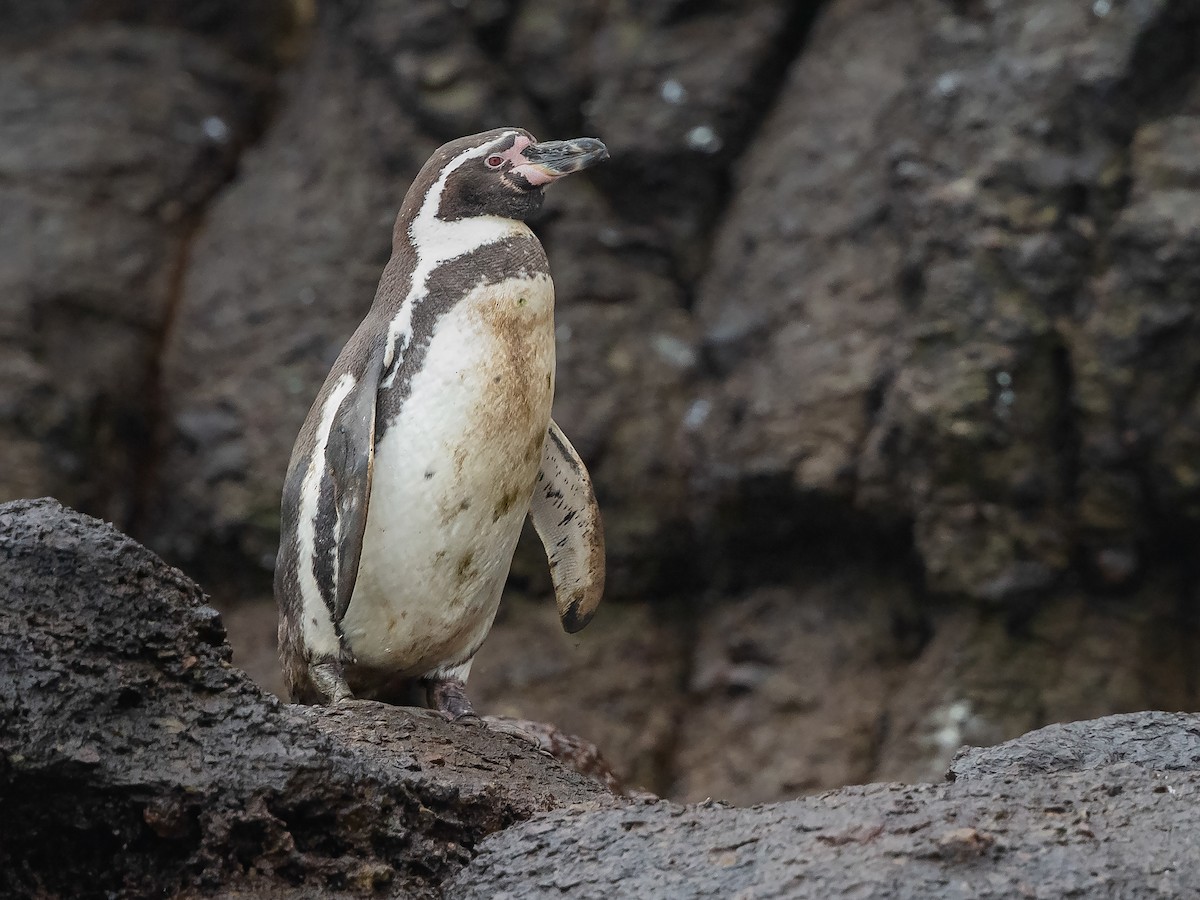
The Humboldt Penguin is native to the coasts of Peru and northern Chile, inhabiting rocky shores and islands influenced by the cold Humboldt Current. Measuring 56–70 centimeters (22–28 inches) tall and weighing 3–5 kilograms (6.6–11 pounds), Humboldt Penguins are easily recognized by their black bands and white facial markings. They are highly adapted to temperate marine environments, diving efficiently for fish and squid, often following upwellings rich in nutrients.
Breeding occurs in burrows, caves, and crevices, with parents sharing egg incubation and chick rearing. Colonies may range from a few hundred to several thousand birds. Social behavior is complex, including vocalizations and displays that strengthen pair bonds and maintain colony cohesion. Humboldt Penguins are threatened by habitat degradation, introduced predators, and overfishing, which reduces food availability. Conservation initiatives, including marine reserves and nest protection programs, have helped stabilize some populations.
This species highlights the adaptability of penguins to warmer, nutrient-rich coastal waters and the importance of marine conservation. Humboldt Penguins remain a key member of the Types of Penguins, offering insight into the diversity of penguin behavior, ecology, and habitat preferences beyond the icy Antarctic zones.
11. African Penguin (Spheniscus demersus)
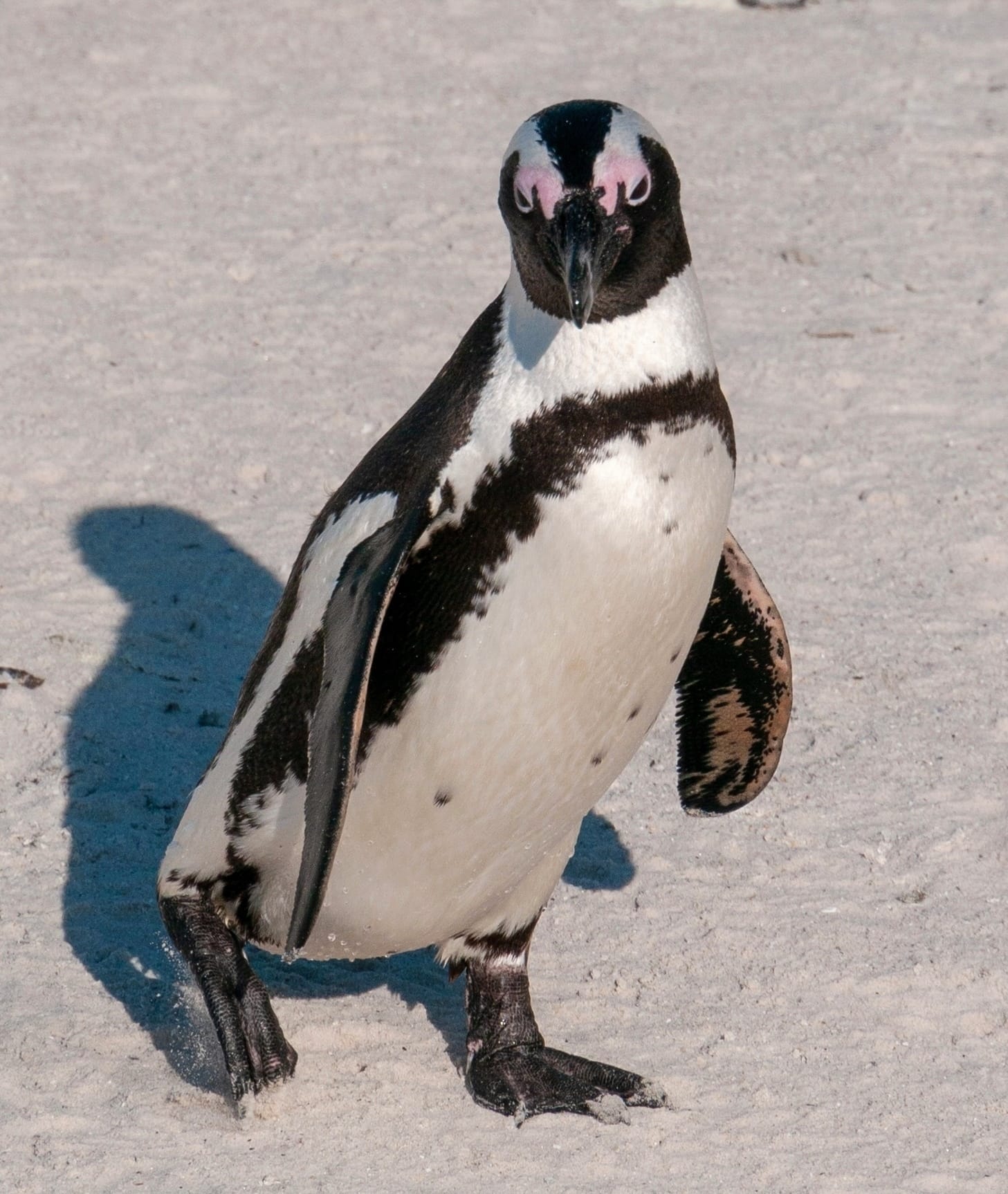
The African Penguin, also known as the Jackass Penguin due to its donkey-like braying call, is a medium-sized penguin standing 60–70 centimeters (24–28 inches) tall and weighing 2.2–3.5 kilograms (5–8 pounds). Found along the southwestern coasts of Africa, particularly in South Africa and Namibia, these penguins are adapted to warmer coastal climates and temperate marine environments. Their black and white plumage is complemented by a distinctive facial pattern and a black horseshoe-shaped chest band that sets them apart from other penguin species.
African Penguins breed in burrows, under bushes, or in rocky crevices, forming colonies that range from a few hundred to thousands of individuals. Both parents participate in egg incubation and chick-rearing duties. Chicks are covered in downy gray feathers, which are later replaced by waterproof adult plumage. Feeding primarily on small fish such as sardines and anchovies, African Penguins are skilled divers, reaching depths of up to 130 meters (426 feet) and remaining submerged for nearly two minutes. They hunt cooperatively in groups, which increases their success rate in finding prey.
These penguins face numerous challenges, including habitat destruction, oil spills, and reduced fish stocks due to commercial overfishing. Conservation efforts, such as the creation of marine protected areas and artificial nest boxes, have helped stabilize some populations, though the species remains classified as endangered. Observing African Penguins offers a glimpse into the adaptability of penguins beyond icy habitats, showcasing resilience and social complexity in warmer coastal ecosystems. As a prominent member of the Types of Penguins, African Penguins highlight the diversity of penguin life across the globe.
12. Galápagos Penguin (Spheniscus mendiculus)
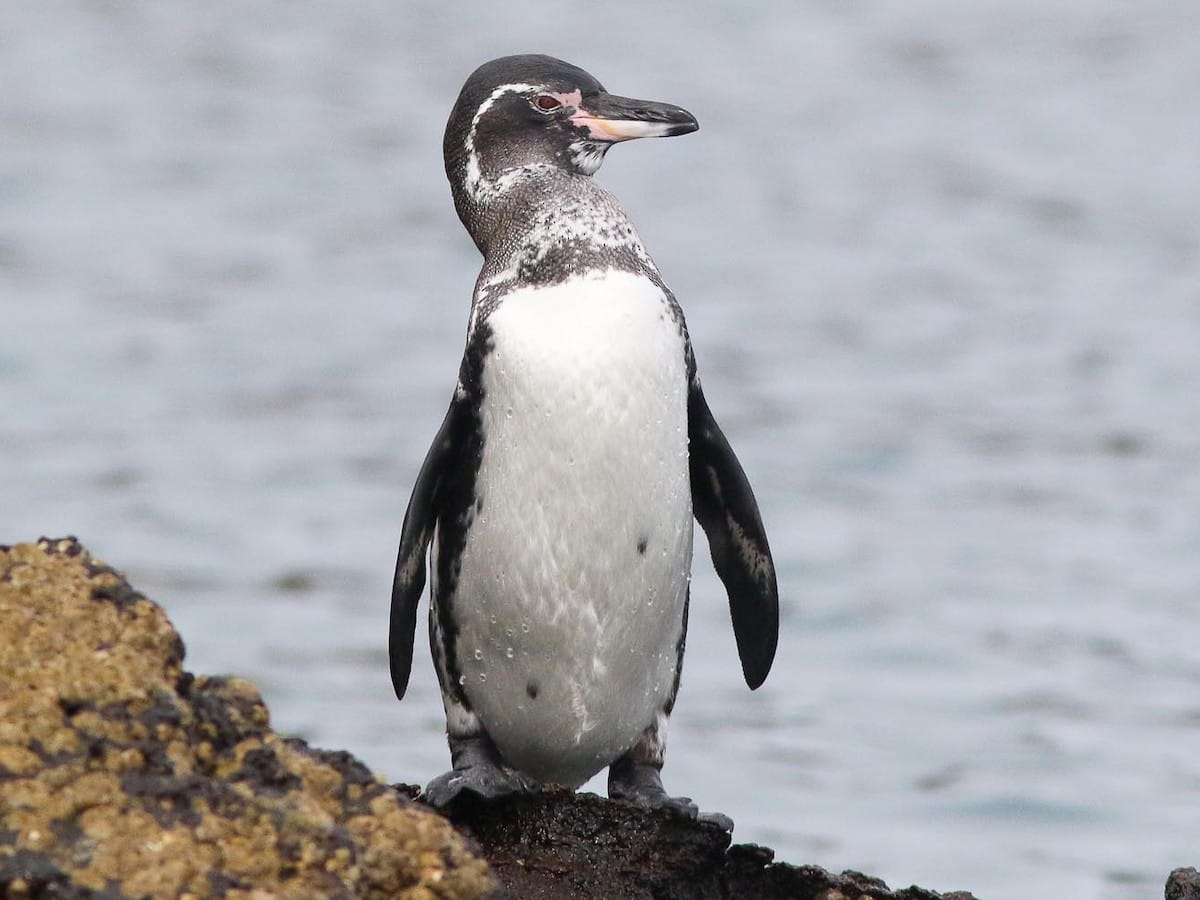
The Galápagos Penguin is unique for being the only penguin species that lives north of the equator, inhabiting the Galápagos Islands. They are small, averaging 49 centimeters (19 inches) in height and 2.5 kilograms (5.5 pounds) in weight. With a black head, white belly, and black band across the chest, these penguins are well-camouflaged in the rocky volcanic landscapes of their island home. Their adaptation to a tropical climate sets them apart from their Antarctic relatives, demonstrating the remarkable versatility within the Types of Penguins.
Galápagos Penguins are highly dependent on the cold nutrient-rich waters of the Humboldt and Cromwell Currents for food. They primarily feed on small fish and occasionally squid, diving expertly to catch prey. Due to the islands’ warm climate, they engage in behaviors like panting, holding wings away from their bodies, and bathing in the sea to regulate body temperature. Breeding occurs in sheltered crevices or lava tunnels, with both parents sharing incubation and chick-rearing responsibilities. Chicks are vulnerable to predators, including hawks and introduced animals like cats and rats.
Conservation efforts have become critical for the survival of this species, classified as endangered due to climate fluctuations and human impacts. Despite these challenges, Galápagos Penguins exhibit resilience, often nesting in hidden crevices and timing breeding with periods of food abundance. Their presence underscores the diversity and adaptability of penguins across both polar and tropical environments, providing a compelling example of ecological specialization.
13. Yellow-eyed Penguin (Megadyptes antipodes)
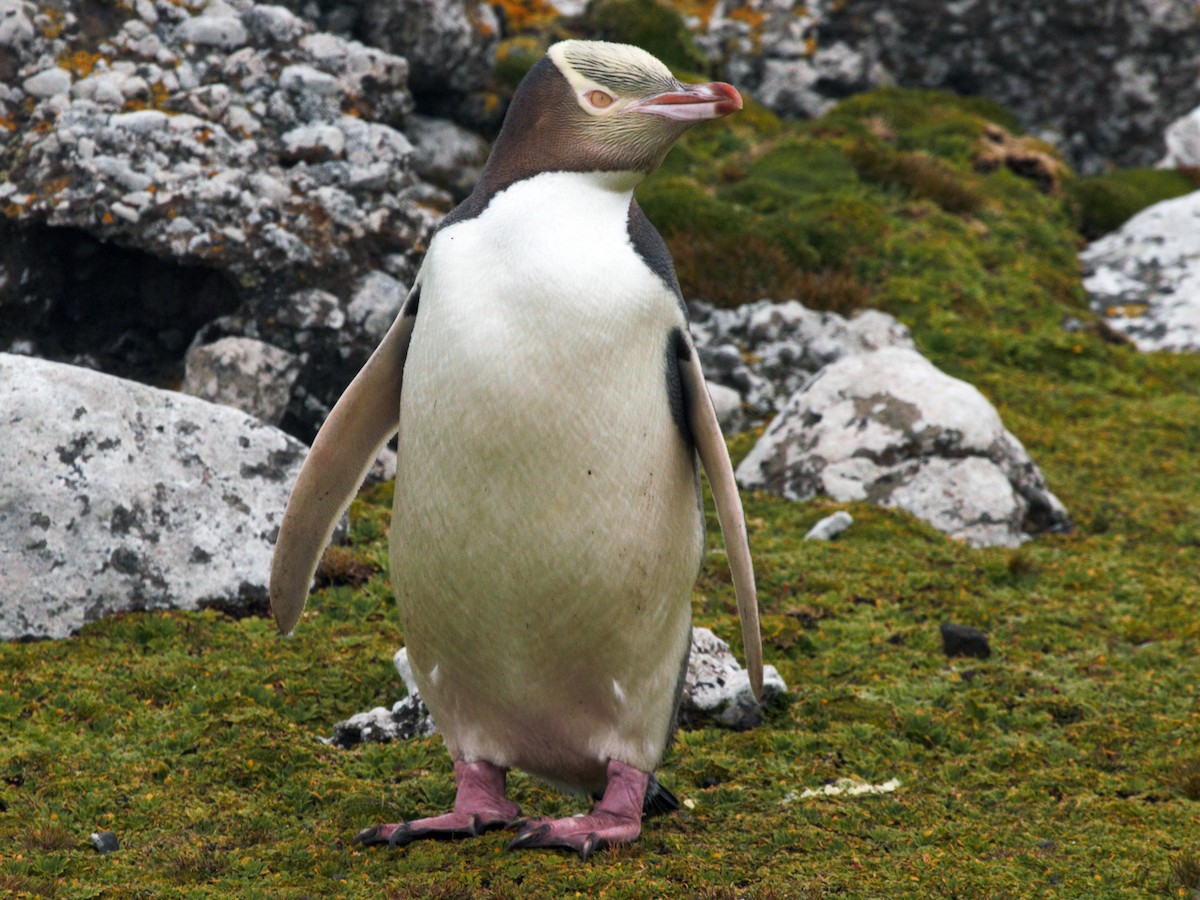
The Yellow-eyed Penguin, native to New Zealand, is one of the rarest and most visually striking penguins. Named for its pale yellow eyes and subtle yellow plumage on the head, it stands 65–70 centimeters (26–28 inches) tall and weighs 5–8 kilograms (11–18 pounds). Their distinctive coloring, combined with an upright posture, sets them apart from other penguin species, making them a highly sought-after sight for wildlife enthusiasts.
These penguins prefer temperate forested coastal areas for nesting, often choosing secluded beaches or dense vegetation to protect eggs and chicks from predators. Breeding pairs are monogamous, returning to the same nesting sites year after year. Both parents share incubation of two eggs and care for the chicks until they are independent. Their diet consists primarily of fish, particularly species like red cod and sprat, which they capture through skilled diving and coordinated hunting techniques.
Threats to Yellow-eyed Penguins include habitat destruction, introduced predators, human disturbance, and changing marine conditions that affect food availability. Conservation programs focusing on predator control, habitat restoration, and public awareness have been critical in supporting this species. Yellow-eyed Penguins serve as an important reminder of the fragility and specialization within the Types of Penguins, demonstrating the balance between environmental pressures and adaptive survival strategies in isolated ecosystems.
14. Fiordland Penguin (Eudyptes pachyrhynchus)
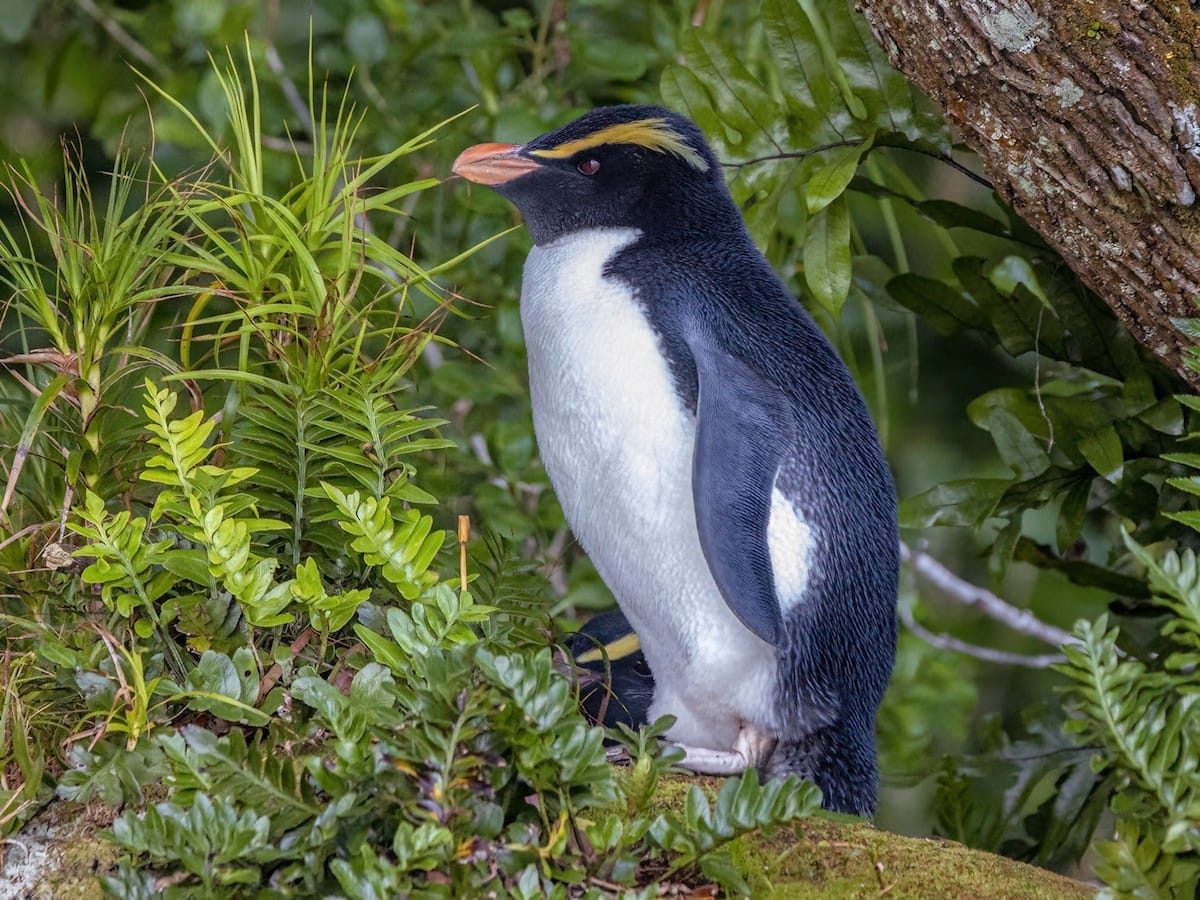
The Fiordland Penguin is a crested penguin species endemic to the southwestern coasts of New Zealand’s South Island and surrounding islands. Standing 60–70 centimeters (24–28 inches) tall and weighing 4–6 kilograms (9–13 pounds), these penguins are known for their yellow crests extending backward from the eyes, giving them a distinctive and striking appearance. Their black and white body plumage contrasts sharply with these golden feathers, aiding in both species identification and social signaling.
Fiordland Penguins breed in dense temperate forests, nesting in burrows or under fallen trees, often on steep, inaccessible slopes. Their diet primarily consists of small fish and squid, which they capture through agile and sustained underwater swimming. This species exhibits strong site fidelity, often returning to the same nesting areas each season. Chicks are cared for by both parents, who alternate foraging trips to the sea and protecting the young in the nest.
Population threats include habitat degradation, introduced predators, and human disturbance, though Fiordland Penguins are currently classified as vulnerable. Observing these penguins in their natural habitat reveals fascinating behaviors, including courtship displays and synchronized movements within the colony. They exemplify the diversity of Types of Penguins in temperate environments, illustrating adaptation to rugged coastal and forested habitats.
15. Snares Penguin (Eudyptes robustus)
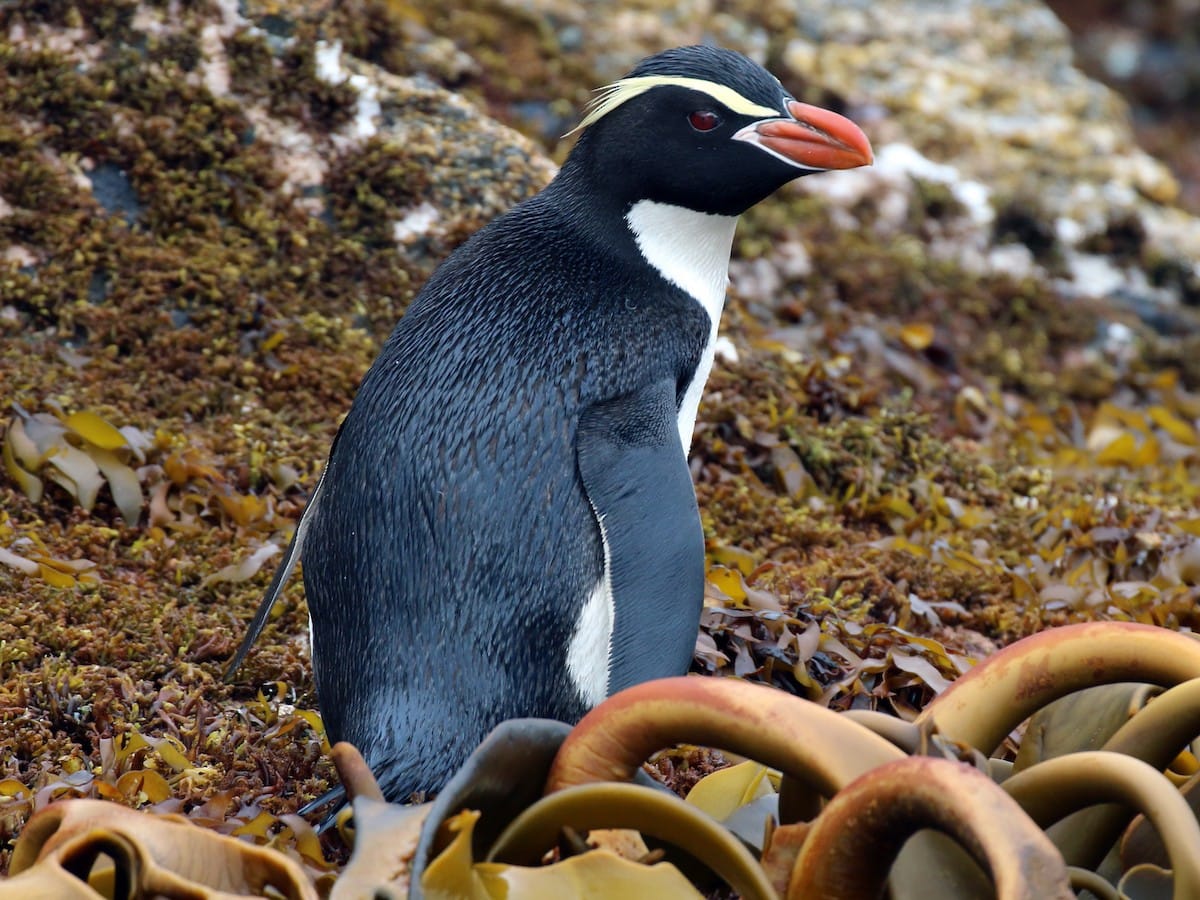
The Snares Penguin, also known as the Snares Crested Penguin, is a small, crested species native to the Snares Islands off southern New Zealand. Adults reach 50–70 centimeters (20–28 inches) in height and weigh 3–4 kilograms (6–9 pounds). Their prominent yellow eyebrow-like crests, combined with black heads and white underparts, create a visually striking appearance. These penguins are highly specialized for life on small, remote islands, emphasizing how geographic isolation can drive species differentiation within the Types of Penguins.
Snares Penguins breed in dense colonies among tussock grass and rocky terrain. Both parents share responsibilities for incubation and chick-rearing, often feeding chicks small fish and squid brought from nearby coastal waters. Their foraging dives are typically shallow compared to Antarctic penguins, but they are highly efficient hunters, taking advantage of abundant local prey. Chicks remain in the nest until they are strong enough to fledge and enter the sea.
Conservation-wise, Snares Penguins benefit from the islands’ protected status, which minimizes human interference and reduces predator pressure. However, they remain vulnerable to climate variability and potential ecological disruptions. These penguins highlight the evolutionary diversity and ecological specialization that exist among the Types of Penguins, demonstrating how isolated environments can produce distinct and remarkable species adaptations.
16. Erect-crested Penguin (Eudyptes sclateri)
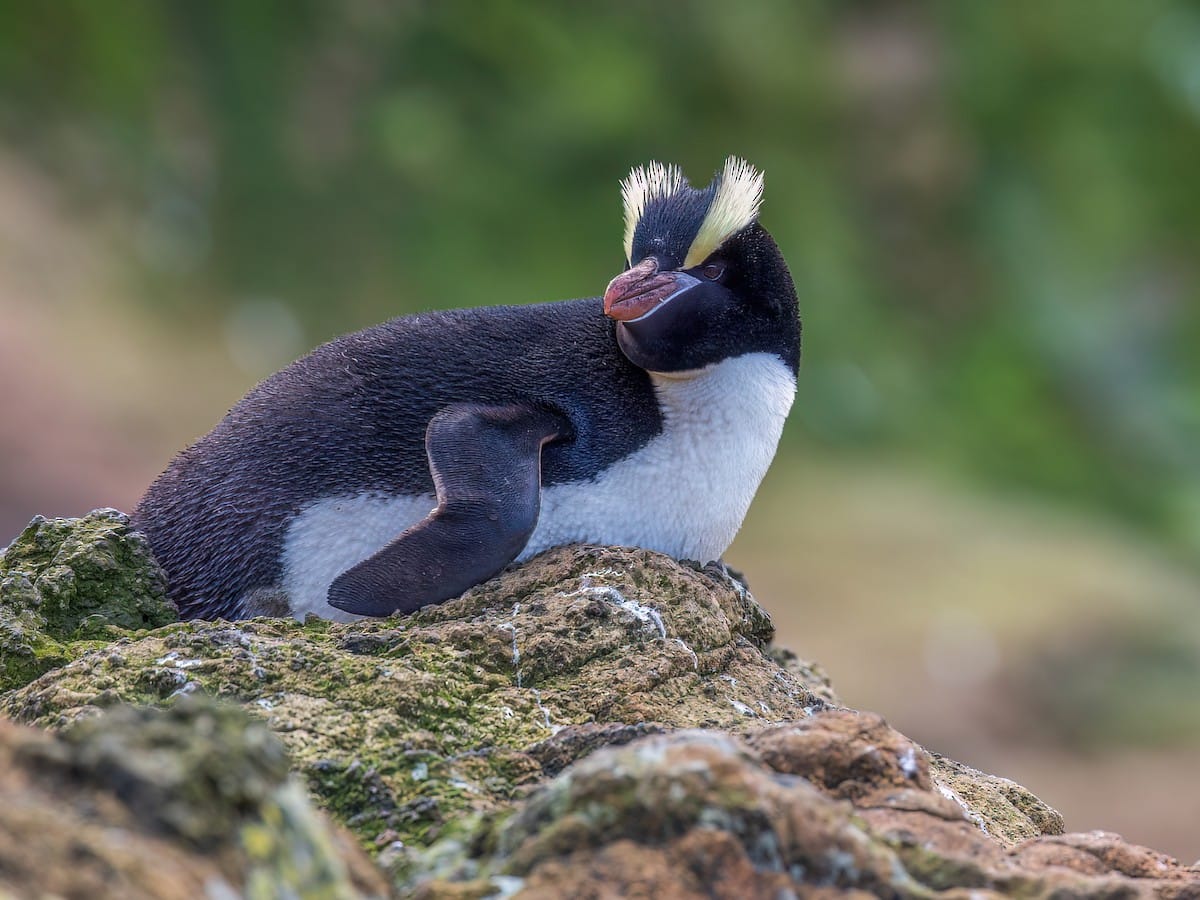
The Erect-crested Penguin is a medium-sized crested species, easily identified by its striking yellow crests that stand upright from the forehead. Adults typically reach 60–70 centimeters (24–28 inches) in height and weigh between 3.5–5 kilograms (8–11 pounds). They inhabit the remote Bounty and Antipodes Islands of New Zealand, showcasing remarkable adaptation to isolated sub-Antarctic ecosystems. Their black and white plumage, combined with the bold yellow crests, makes them one of the most visually dramatic among the Types of Penguins.
Erect-crested Penguins breed in colonies on rugged, rocky terrain and tussock-covered slopes. Both parents share responsibilities for incubating the two-egg clutch and feeding the chicks once hatched. Unlike some other penguin species, these birds often have asynchronous hatching, meaning one chick may be larger than the other, which affects feeding hierarchy. Their diet mainly consists of small fish and squid, which they capture through agile diving and coordinated swimming. These penguins are highly social within their colonies, with loud vocalizations and displays reinforcing pair bonds and territory boundaries.
Due to their remote habitat, Erect-crested Penguins face fewer threats from human activities compared to other species. However, climate change and variations in prey availability can impact breeding success. Observing these penguins provides insight into how isolation shapes the evolution of unique behaviors and physical traits within the Types of Penguins. Their upright crests are not just decorative—they play a role in communication, mating displays, and colony recognition, underscoring the intricate social dynamics of penguin life.
17. Southern Rockhopper Penguin (Eudyptes chrysocome)
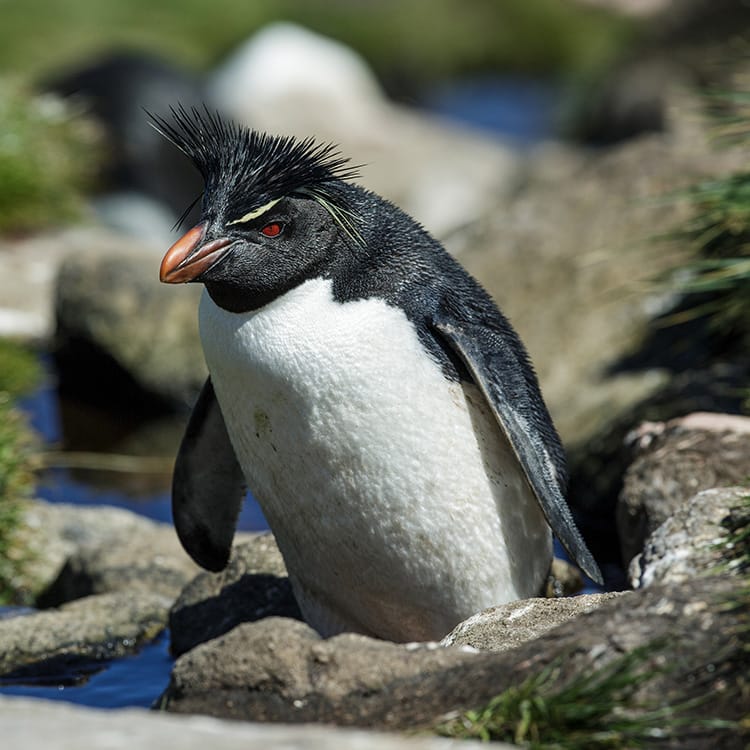
The Southern Rockhopper Penguin is one of the smaller crested penguins, standing around 55 centimeters (22 inches) tall and weighing 2–3 kilograms (4–7 pounds). They are distinguished by spiky yellow and black crests above the eyes, a red eye ring, and a black back contrasting with a white belly. Native to the southern Atlantic and Indian Oceans, including islands such as the Falklands, Macquarie, and Campbell Islands, these penguins are highly adapted to rocky coastal terrain and steep cliffs.
Rockhopper Penguins breed in large, densely packed colonies, often navigating precarious cliffs with agility and skill. Their nests are simple scrapes or clusters of stones, and both parents share incubation duties for typically two eggs. They are agile swimmers, feeding primarily on small fish, krill, and squid. These penguins are known for their distinctive hopping movements, leaping across rocks and boulders with remarkable coordination—hence the name “Rockhopper.”
Predators include seals, skuas, and larger birds, while climate change and overfishing of prey species pose additional challenges. Conservation programs have helped monitor populations, which remain relatively stable in protected areas. The Southern Rockhopper Penguin highlights the adaptability and energetic behavior characteristic of many crested Types of Penguins, making them a favorite subject for wildlife observation and research.
18. Northern Rockhopper Penguin (Eudyptes moseleyi)
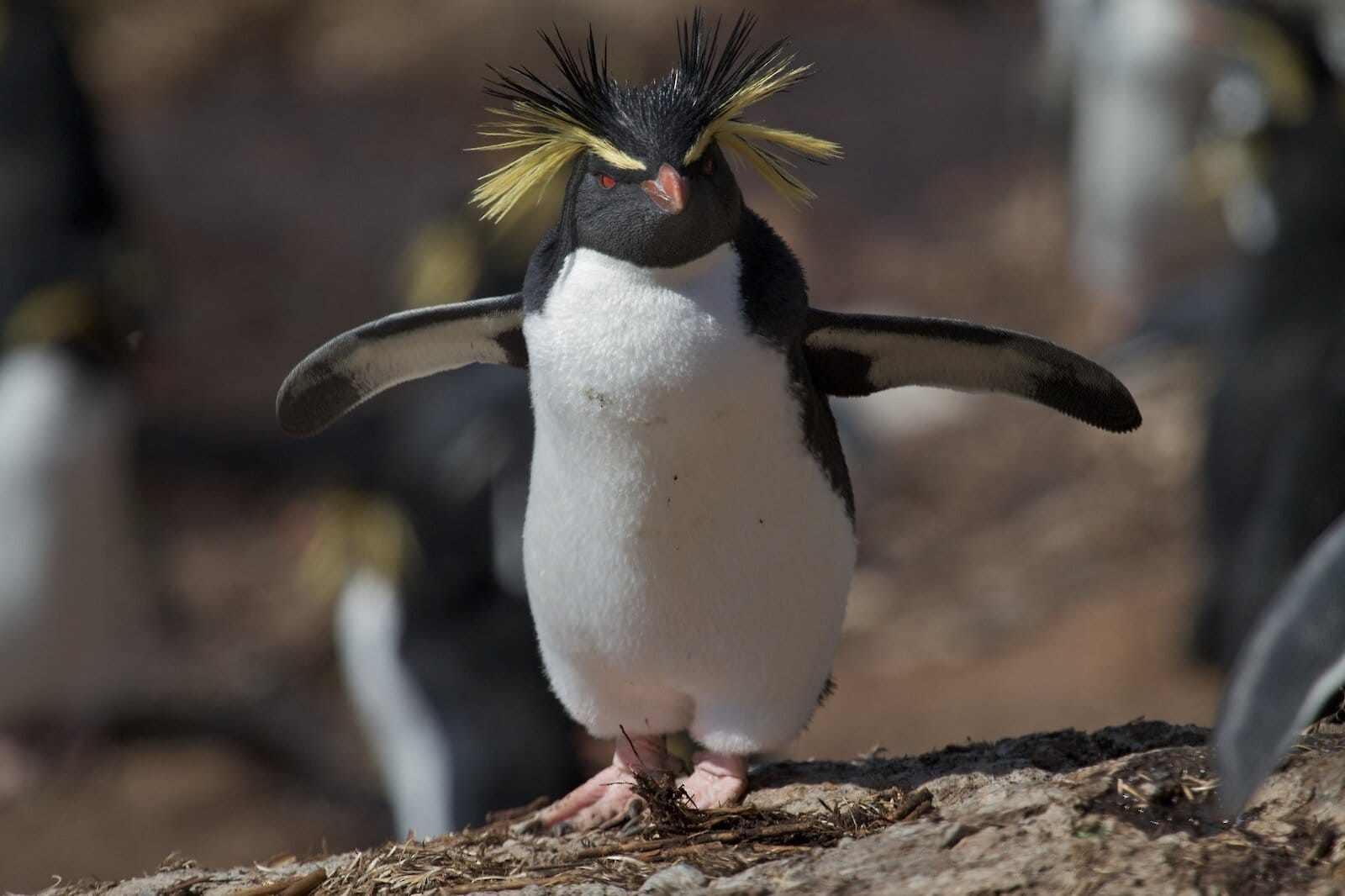
The Northern Rockhopper Penguin is closely related to its southern counterpart but is generally smaller and inhabits islands in the South Atlantic Ocean, such as Tristan da Cunha and Gough Island. Standing about 50–60 centimeters (20–24 inches) tall and weighing 2–3 kilograms (4–6 pounds), these penguins share the spiky yellow crest and red eyes typical of Rockhopper species. However, they are classified as a separate species due to genetic differences and distinct breeding locations.
Nesting occurs on steep cliffs and rocky outcrops, with colonies that can number thousands of individuals. Both parents are actively involved in incubation and chick rearing. Their diet consists mainly of krill, small fish, and squid, which they capture with swift, repeated dives. Northern Rockhopper Penguins exhibit energetic hopping behaviors, leaping across uneven terrain to reach nesting sites. Social interactions include vocalizations, mutual preening, and synchronized displays during courtship.
Population numbers have declined in recent decades due to climate shifts, oil spills, and introduced predators, leading to their classification as endangered. Conservation efforts focus on habitat protection, predator control, and monitoring of breeding success. Observing Northern Rockhopper Penguins reveals the remarkable energy, resilience, and social complexity that make crested penguins a captivating component of the Types of Penguins, demonstrating how isolated populations evolve unique traits over time.
19. Eastern Rockhopper Penguin (Eudyptes filholi)
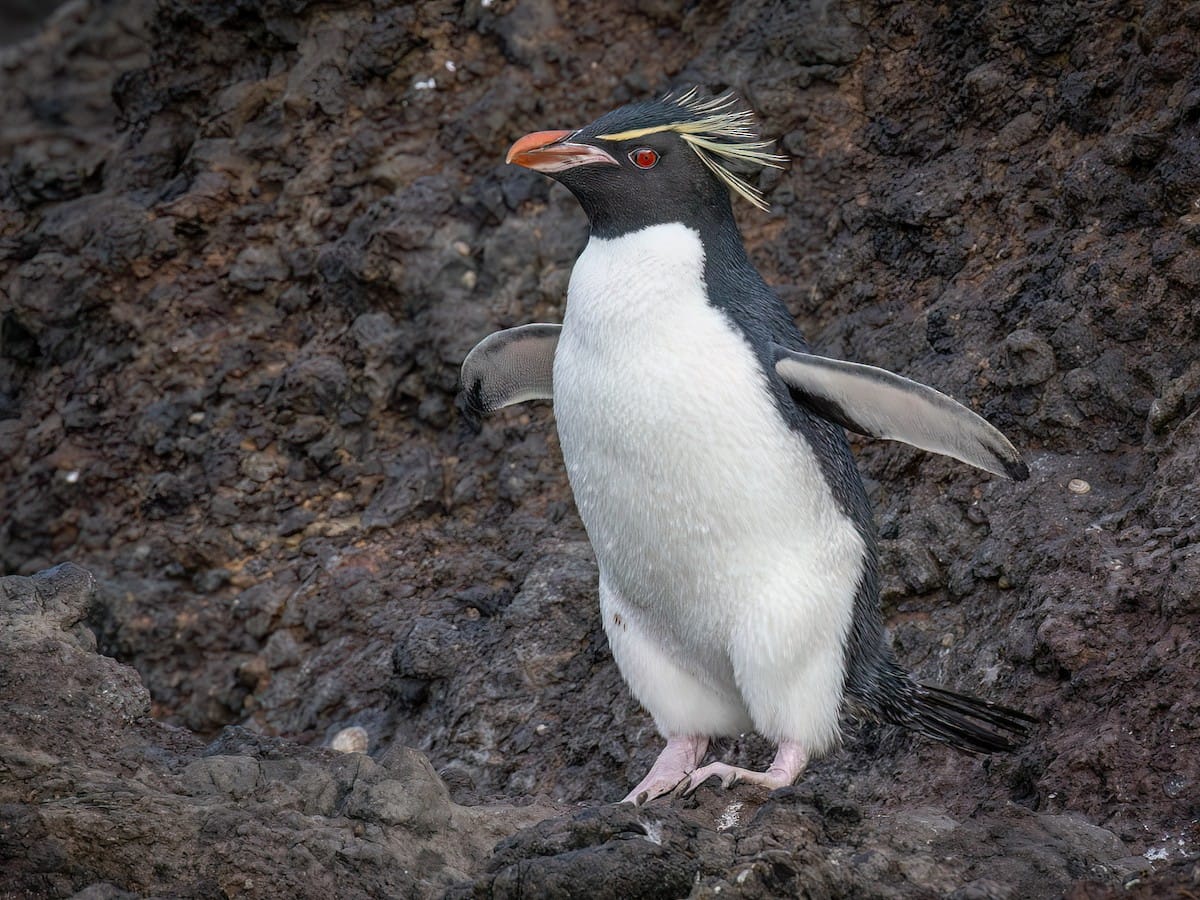
The Eastern Rockhopper Penguin is a variant of the crested penguins found on islands in the southwestern Pacific Ocean, including the Auckland and Campbell Islands. Adults are 55–65 centimeters (22–26 inches) tall and weigh around 2.5–3.5 kilograms (5–8 pounds). They share the characteristic yellow crests and red eyes of the Rockhopper group but are distinguished by subtle differences in crest length, plumage patterns, and vocalizations. These penguins are adept climbers and divers, thriving in rugged coastal landscapes.
Breeding takes place in dense colonies with nests built from stones or vegetation. Both parents take turns incubating eggs and feeding chicks, ensuring high survival rates in challenging environments. Eastern Rockhoppers feed on krill, small fish, and squid, diving repeatedly in coordinated foraging trips. Their hopping behavior allows them to navigate rocky and uneven terrain efficiently, a skill crucial for reaching nesting sites and escaping predators.
Environmental changes, including fluctuations in prey availability and habitat disturbance, pose risks to populations. Conservation measures aim to monitor colonies and protect breeding areas. The Eastern Rockhopper Penguin provides a fascinating example of how environmental pressures and geographic separation contribute to subtle differences among closely related Types of Penguins, highlighting the diversity within the crested penguin group.
20. Royal Penguin (Eudyptes schlegeli)
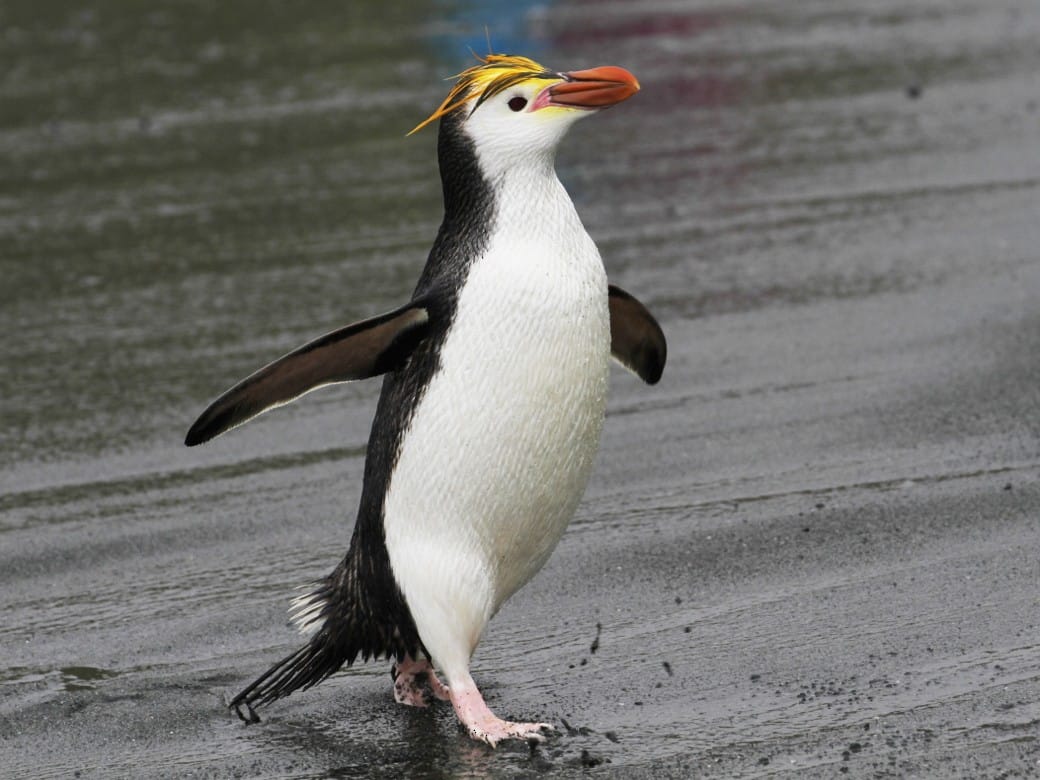
The Royal Penguin is easily recognized by its white face, yellow crests, and black crown. Found exclusively on Macquarie Island in the southwestern Pacific, adults reach 60–70 centimeters (24–28 inches) in height and weigh 3–5 kilograms (6–11 pounds). Unlike other crested penguins, the Royal Penguin’s distinctive facial markings make it particularly striking, and it is often considered a sub-species or close relative of the Macaroni Penguin. Their habitat consists of coastal tussock grasslands and rocky shores, providing shelter and nesting sites.
Royal Penguins breed in massive colonies, often numbering over 100,000 individuals. Nests are simple scrapes in soil or vegetation, and parents share incubation of two eggs and feeding of chicks. Their diet consists mainly of krill and small fish, which they pursue with remarkable diving agility. Social behavior is complex, including vocalizations and crest displays that communicate territory and mating readiness.
Despite their remote habitat, Royal Penguins face threats from climate variability, changes in food availability, and human disturbance. Conservation programs on Macquarie Island have focused on habitat protection and invasive species control. Observing Royal Penguins offers a glimpse into the social complexity and visual beauty that characterizes crested Types of Penguins, illustrating how evolution produces unique adaptations even among closely related species.
21. Macaroni Penguin (Eudyptes chrysolophus)
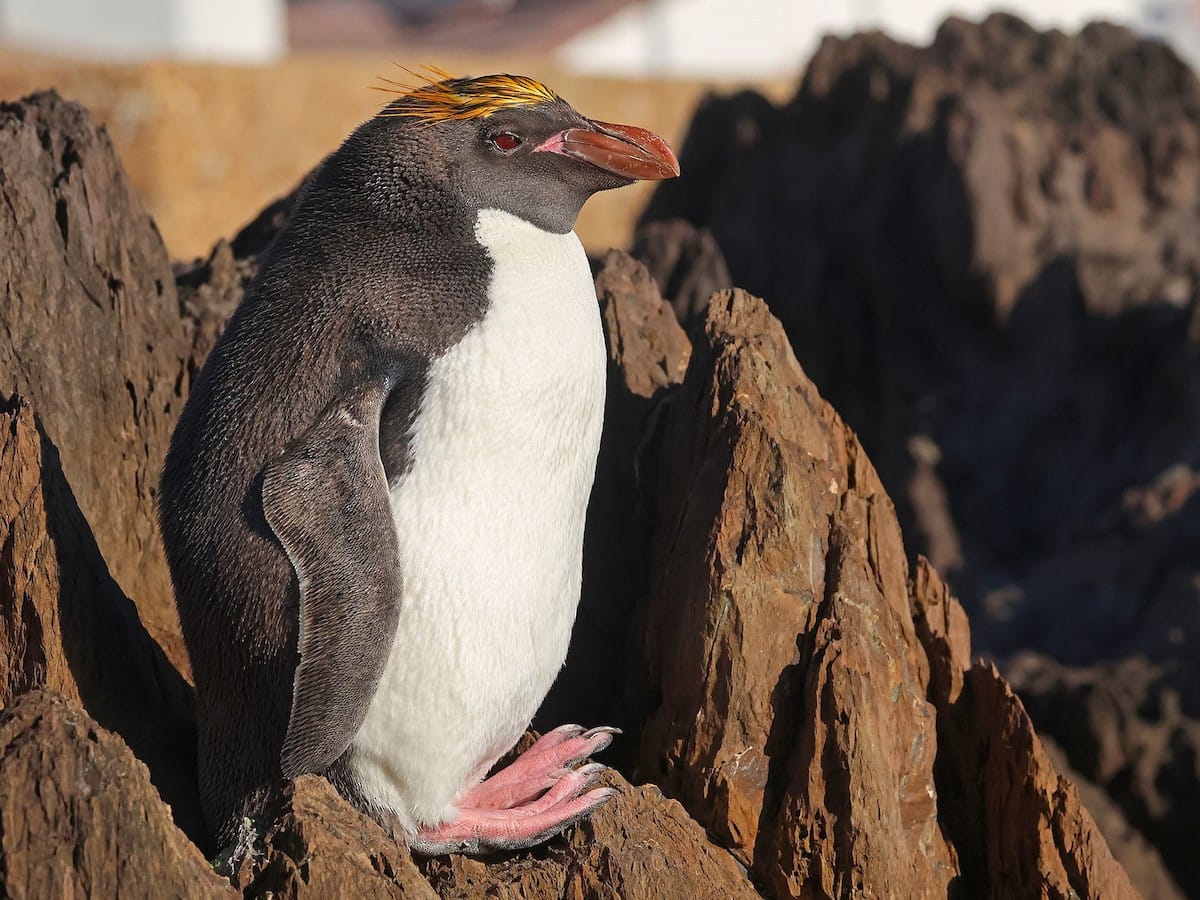
The Macaroni Penguin is one of the most abundant crested penguin species, easily recognized by its vivid orange-yellow crest feathers extending from the forehead. Adults stand 70–75 centimeters (28–30 inches) tall and weigh between 4–6 kilograms (9–13 pounds). Found on sub-Antarctic islands such as South Georgia, the South Sandwich Islands, and the Crozet Islands, Macaroni Penguins thrive in dense colonies on rocky slopes, showcasing remarkable adaptability and social organization among the Types of Penguins.
Macaroni Penguins breed in enormous colonies, often numbering hundreds of thousands of individuals. Nesting sites are simple scrapes in soil or vegetation, and both parents share incubation duties and chick-rearing responsibilities. Their diet primarily consists of krill, supplemented by small fish and squid, which they capture through coordinated foraging trips. Macaroni Penguins are agile divers, often reaching depths over 100 meters (328 feet) and spending several minutes underwater in pursuit of prey.
Social behavior is striking, with loud vocalizations, synchronized crest displays, and group movement reinforcing colony structure and mate selection. Environmental threats, including climate change affecting sea ice and prey availability, as well as historical hunting, have impacted populations, but conservation efforts are in place on several islands. Observing Macaroni Penguins highlights the intricate social dynamics, visual splendor, and ecological importance of this species, emphasizing the diversity within the Types of Penguins.
22. Waitaha Penguin (Megadyptes waitaha)
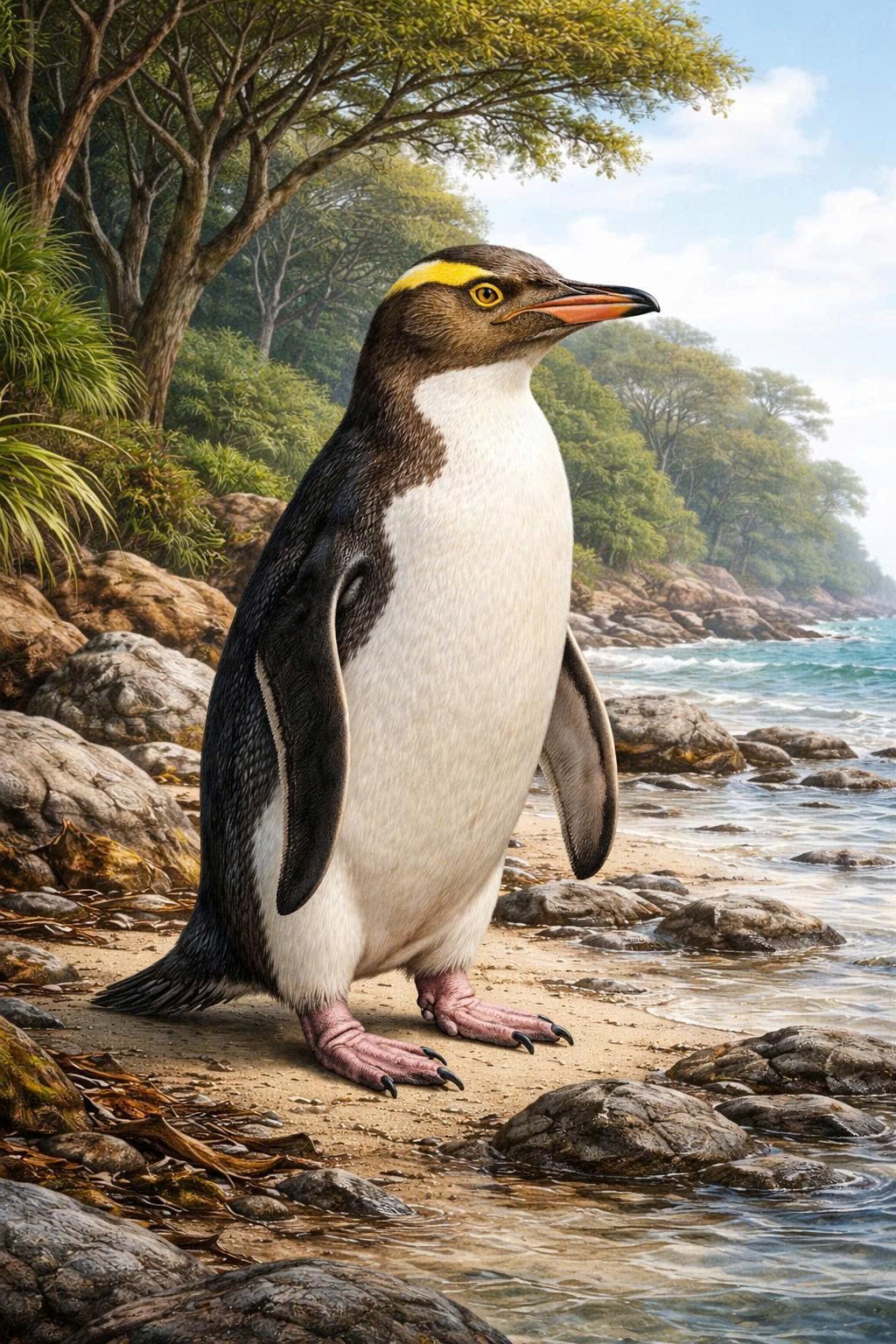
The Waitaha Penguin is an extinct species that once inhabited the coastal regions of New Zealand’s South Island. Adults were similar in size to the Yellow-eyed Penguin, standing about 65 centimeters (26 inches) tall and weighing around 5 kilograms (11 pounds). Genetic studies revealed that the Waitaha Penguin was replaced by the Yellow-eyed Penguin within the last 500–600 years, illustrating how environmental changes and human activity can dramatically affect penguin populations and biodiversity within the Types of Penguins.
Though extinct, the Waitaha Penguin offers crucial insights into penguin evolution and the impacts of habitat disruption. Fossil evidence indicates that they nested in coastal forests and fed on small fish and squid in nearby waters. Studying extinct species like Waitaha Penguins helps scientists understand the adaptive pressures that shape penguin behavior, breeding patterns, and ecological niches, providing a broader perspective on conservation strategies for surviving species.
23. Chatham Penguin (Eudyptes warhami)
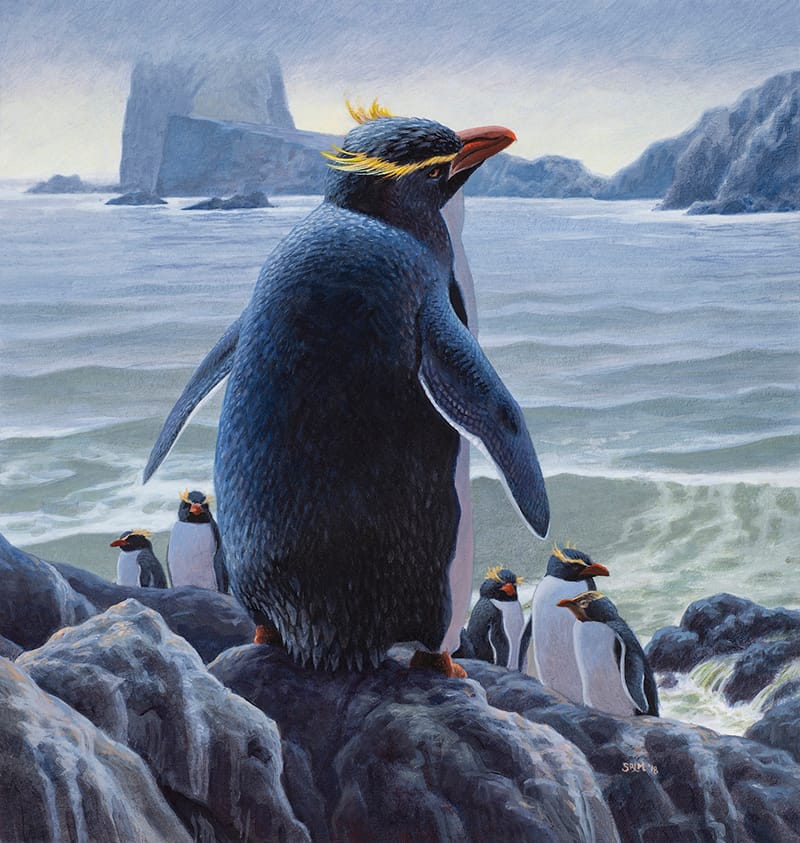
The Chatham Penguin is another extinct species that was native to the Chatham Islands of New Zealand. Adults were estimated to be similar in size to Snares Penguins, around 55–60 centimeters (22–24 inches) tall, and weighed 3–4 kilograms (6–9 pounds). Like other crested penguins, they likely had yellow crest feathers and shared the characteristic black and white body pattern. Their extinction, largely attributed to human colonization and introduced predators, highlights the fragility of isolated penguin populations within the Types of Penguins.
Fossil records suggest that Chatham Penguins nested in colonies along the coast, feeding on fish and squid in the surrounding waters. Their extinction serves as a cautionary tale, emphasizing the importance of preserving habitats and preventing invasive species introduction. Studying such extinct species helps contextualize the diversity and ecological challenges faced by penguins today, guiding conservation efforts for surviving relatives.
24. Western Rockhopper Penguin (Eudyptes chrysocome moseleyi)
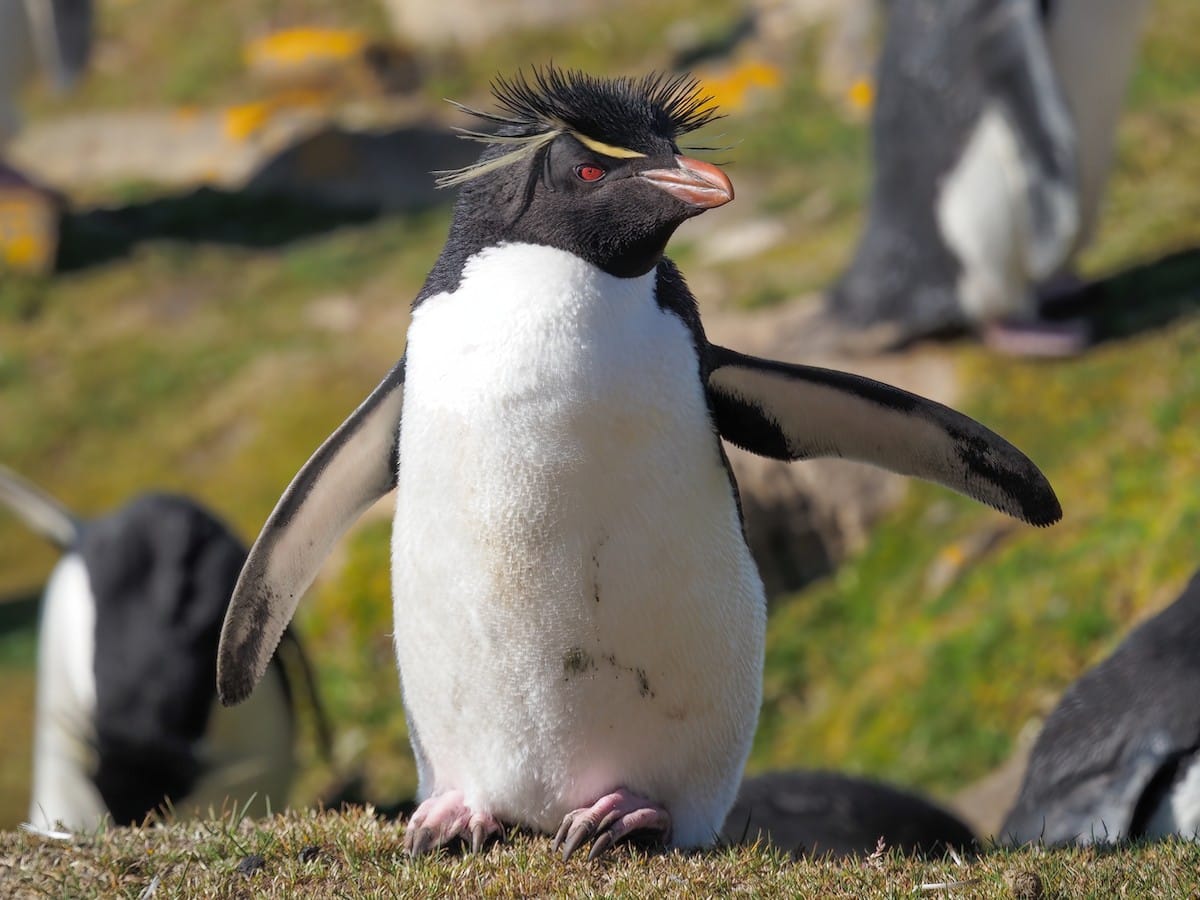
The Western Rockhopper Penguin is a subspecies of Rockhopper Penguins, found on islands in the South Atlantic Ocean such as Tristan da Cunha and Gough Island. Adults stand around 50–60 centimeters (20–24 inches) tall and weigh 2–3 kilograms (4–6 pounds). They are distinguished by spiky yellow crests, red eyes, and energetic hopping behavior, allowing them to navigate rocky nesting sites with agility. These traits make them a remarkable representative of crested Types of Penguins.
Western Rockhoppers breed in dense colonies on cliffs and rocky slopes. Both parents share incubation and feeding of chicks, which primarily consume small fish and krill. These penguins are excellent divers and swimmers, exhibiting synchronized foraging behaviors that enhance feeding efficiency. Predation from seals and skuas, along with climate variability affecting food sources, are ongoing threats. Conservation initiatives focus on habitat protection and population monitoring, ensuring the continued survival of this dynamic penguin population.
25. Southwestern Rockhopper Penguin (Eudyptes chrysocome chrysocome)
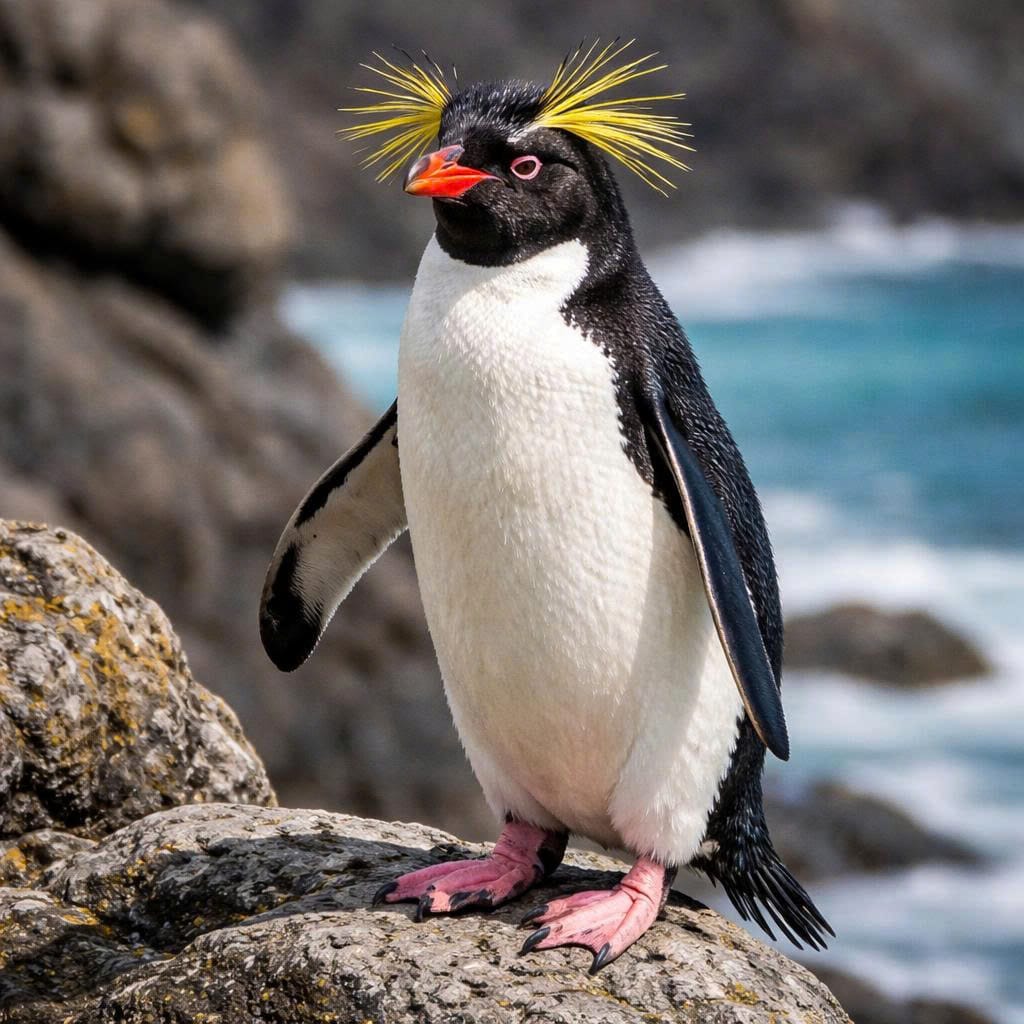
The Southwestern Rockhopper Penguin, another subspecies of Rockhoppers, is native to islands off southern South America, including the Falklands and Staten Island. Adults measure 55–65 centimeters (22–26 inches) in height and weigh 2.5–3.5 kilograms (5–8 pounds). Like other Rockhoppers, they feature yellow crest feathers, red eyes, and black-and-white plumage, making them highly visible and recognizable among the Types of Penguins.
Breeding occurs in dense colonies on rocky shores and cliff faces, with both parents taking turns to incubate eggs and feed chicks. Their diet consists primarily of krill and small fish, captured through efficient diving and underwater pursuit. Southwestern Rockhoppers are known for their agility in hopping across rocky terrain, a trait critical for reaching nests and avoiding predators. Environmental challenges include climate-induced changes in prey availability and human interference. Conservation efforts prioritize monitoring populations and protecting nesting habitats, highlighting the ongoing balance between penguin survival and environmental pressures.
26. Macquarie Island Penguin (Eudyptes schlegeli macquariensis)
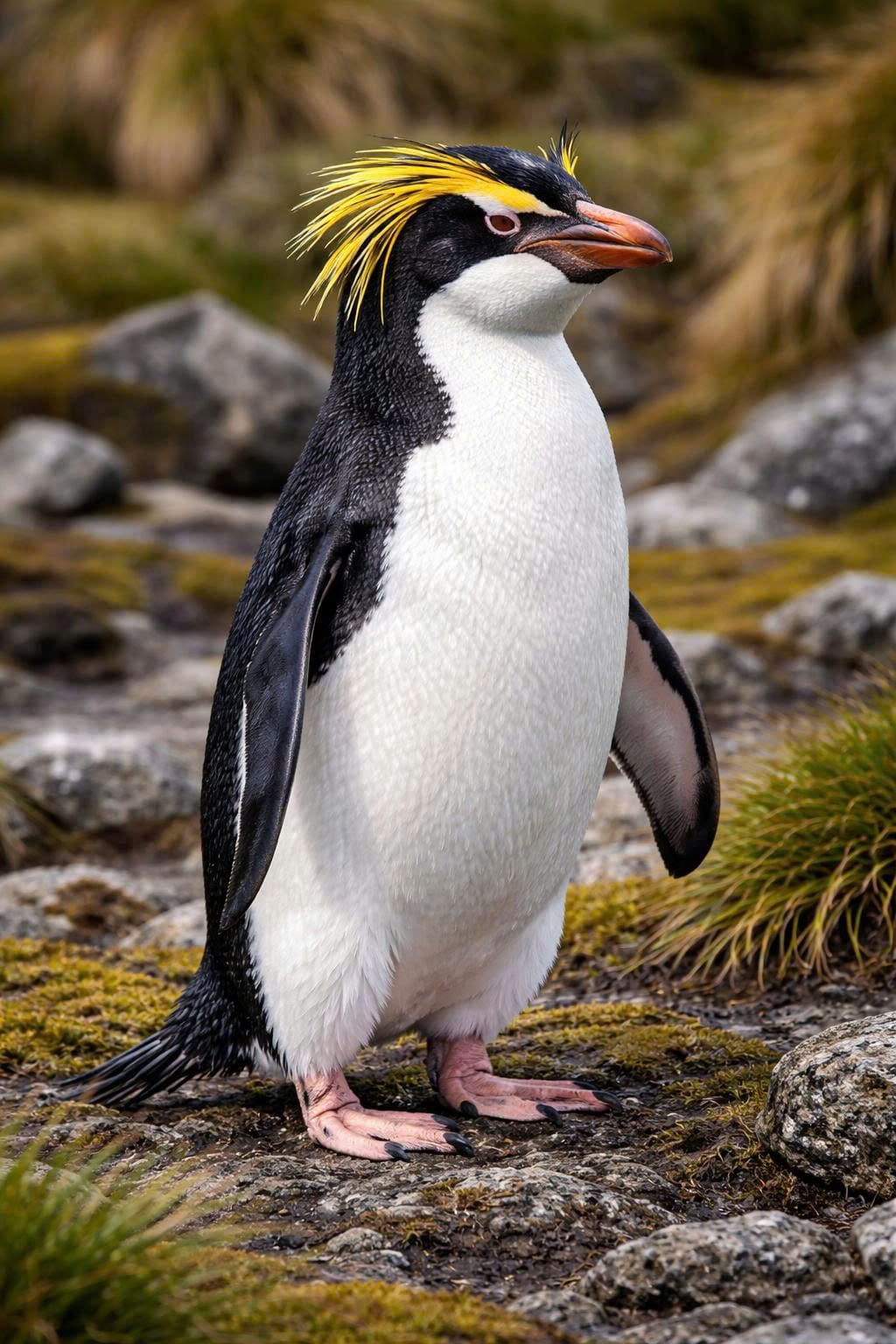
The Macquarie Island Penguin is a distinctive crested penguin subspecies, confined to Macquarie Island in the southwestern Pacific. Adults stand 60–70 centimeters (24–28 inches) tall and weigh 3–5 kilograms (6–11 pounds). They are characterized by their bright yellow crests, black crowns, and striking white facial patterns, which differentiate them from closely related Royal Penguins. This species thrives in sub-Antarctic conditions, nesting on tussock-covered slopes and rocky shores that provide shelter from harsh winds.
Breeding colonies are extremely dense, often numbering tens of thousands of birds. Both parents share incubation and chick-rearing responsibilities, feeding their young primarily on krill and small fish. These penguins are highly social, using vocalizations and crest displays to communicate and maintain territorial boundaries. Macquarie Island Penguins are excellent divers, sometimes reaching 100 meters (328 feet) underwater to hunt, showcasing agility and endurance in challenging marine environments. Conservation efforts on Macquarie Island, including habitat preservation and invasive species control, are crucial for maintaining this subspecies’ population within the broader Types of Penguins.
27. Northern Rockhopper Penguin (Eudyptes moseleyi)
The Northern Rockhopper Penguin inhabits remote islands in the South Atlantic, including Tristan da Cunha and Gough Island. Standing 50–60 centimeters (20–24 inches) tall and weighing 2–3 kilograms (4–6 pounds), they share the characteristic spiky yellow crest and red eyes of the Rockhopper group. This subspecies is distinguished by slight genetic and behavioral differences from southern populations, emphasizing the diversity within crested Types of Penguins.
These penguins nest on steep cliffs and rocky outcrops, often in densely packed colonies. Both parents participate in incubation and chick-rearing, feeding their young fish and krill caught during multiple daily foraging dives. Northern Rockhoppers are known for their energetic hopping across rocky terrain, a behavior critical for reaching nests and evading predators. Human impacts and climate change pose ongoing threats, leading to conservation initiatives focused on monitoring populations and preserving natural habitats.
28. Royal Macquarie Penguin (Eudyptes schlegeli royalis)
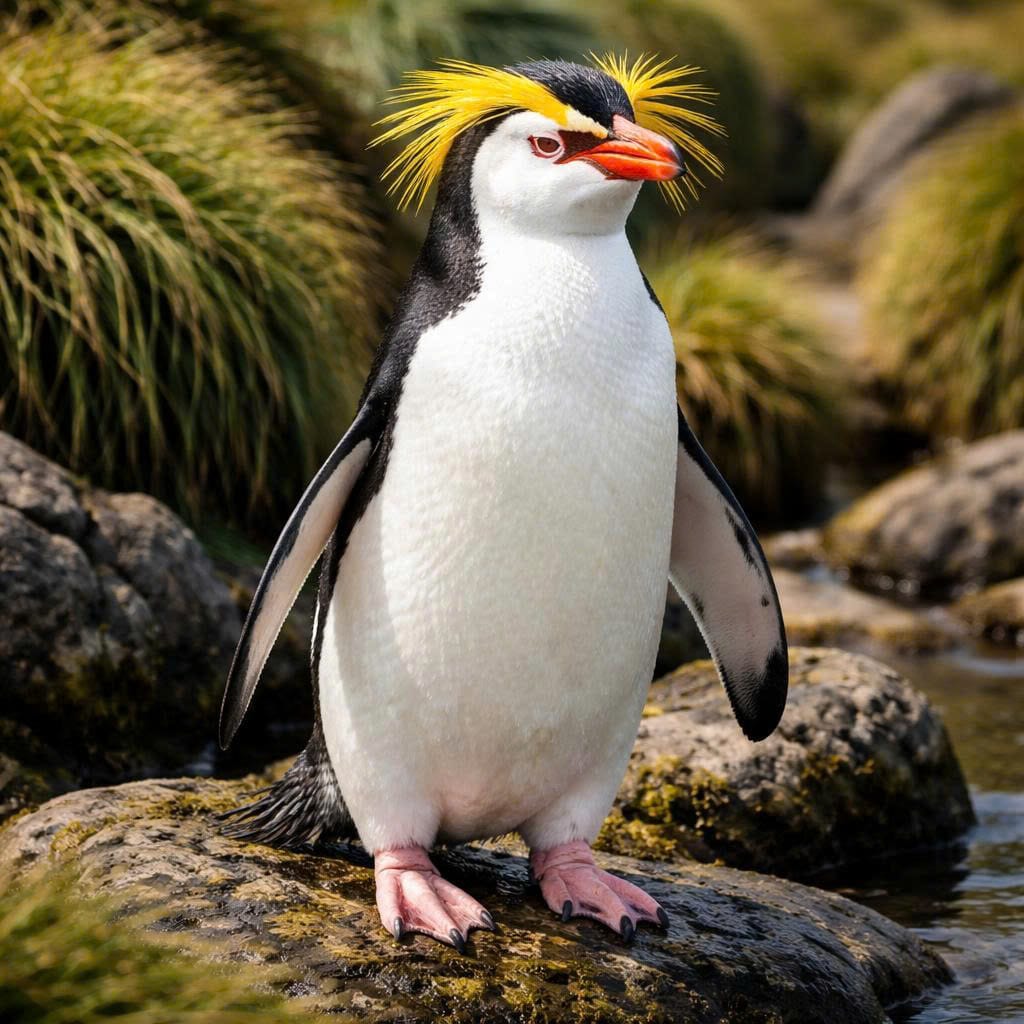
The Royal Macquarie Penguin is closely related to the Macquarie Island and Royal Penguin populations, endemic to Macquarie Island. Adults stand 60–70 centimeters (24–28 inches) tall and weigh 3–5 kilograms (6–11 pounds). Their white faces, yellow crests, and black crowns make them visually distinct and highly photogenic, a favorite for wildlife observers. Their habitats include tussock grasslands and rocky coasts, providing secure breeding grounds against predators and harsh weather.
Royal Macquarie Penguins form large colonies, sometimes exceeding 100,000 individuals. Both parents share incubation and chick-rearing, while foraging trips are coordinated to maximize feeding efficiency. They primarily consume krill and small fish, diving with agility and precision. Vocalizations, crest displays, and colony organization play vital roles in social cohesion and mate selection. Despite their remote habitat, these penguins face threats from climate variability, prey fluctuations, and human interference. Conservation programs emphasize habitat protection and invasive species control, ensuring their continued survival within the Types of Penguins.
29. Fiordland Crested Penguin (Eudyptes pachyrhynchus filholi)
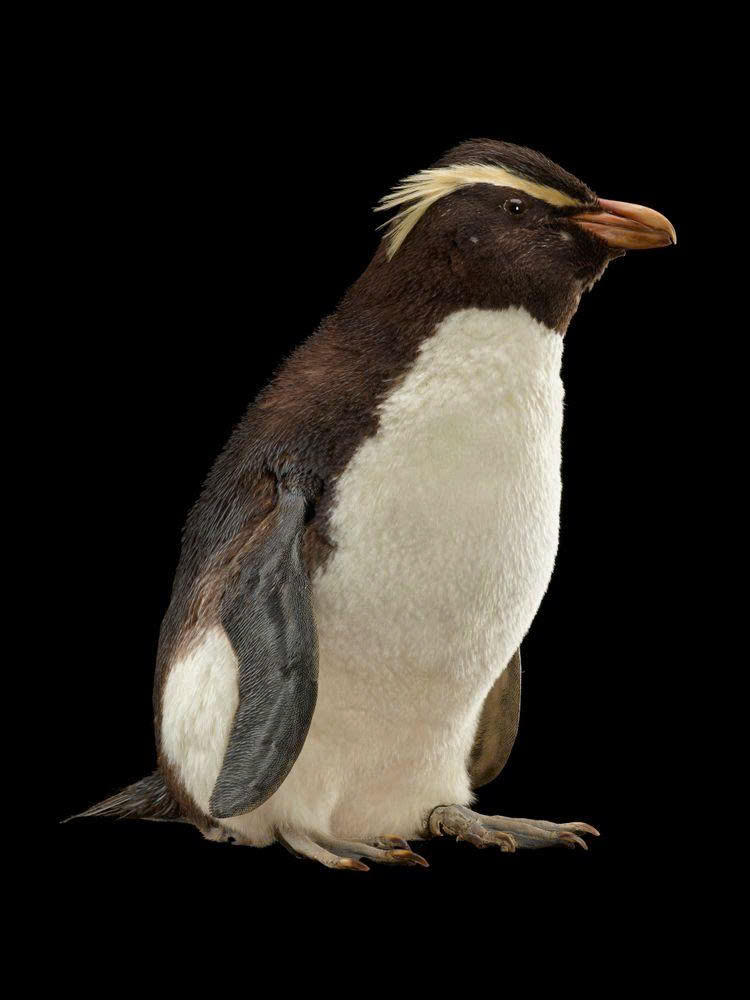
The Fiordland Crested Penguin is a subspecies of the Fiordland Penguin, found along the southwestern coasts of New Zealand’s South Island. Standing 60–70 centimeters (24–28 inches) tall and weighing 4–6 kilograms (9–13 pounds), these penguins are notable for their yellow crests and expressive facial markings. They inhabit temperate coastal forests and cliffs, often nesting in burrows or under natural vegetation.
Both parents share incubation and chick care, feeding their young fish and squid from foraging trips. Social behaviors include vocalizations, mutual preening, and synchronized displays, reinforcing pair bonds and colony cohesion. They are agile swimmers and capable divers, hunting efficiently in nearby coastal waters. Threats include habitat degradation, introduced predators, and climate-driven changes in prey availability. Fiordland Crested Penguins exemplify the unique adaptations of crested Types of Penguins in temperate regions, highlighting both resilience and vulnerability within their ecosystems.
30. Macaroni Crested Penguin (Eudyptes chrysolophus chrysolophus)
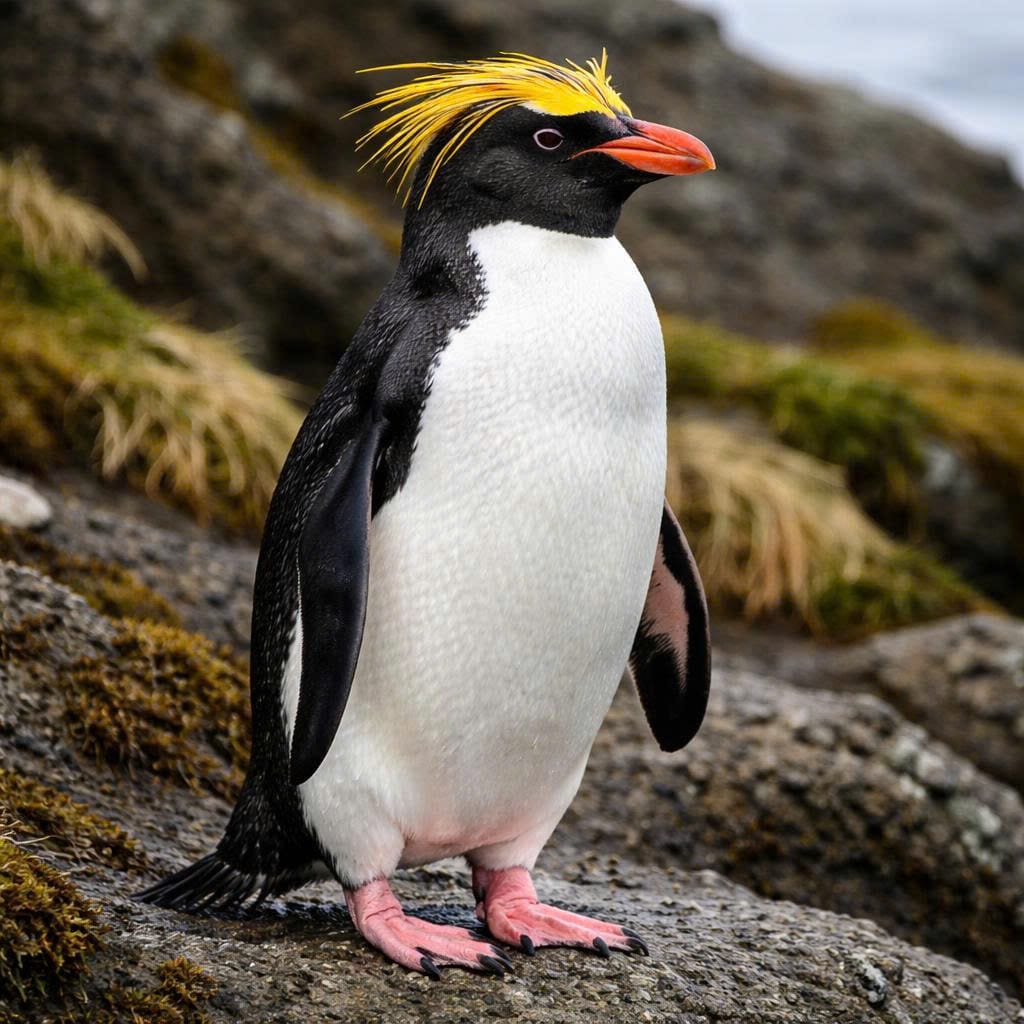
The Macaroni Crested Penguin is a prominent crested species inhabiting sub-Antarctic islands in the southern Atlantic and Indian Oceans. Adults measure 70–75 centimeters (28–30 inches) tall and weigh 4–6 kilograms (9–13 pounds). They are easily identified by their vibrant yellow-orange crests, contrasting black crowns, and white facial patterns. This species forms some of the largest penguin colonies in the world, exemplifying extreme social behavior and ecological coordination among Types of Penguins.
Macaroni Crested Penguins breed in massive colonies, nesting in shallow scrapes or amongst tussock vegetation. Both parents are involved in incubation and chick-rearing, feeding their young krill and small fish. Their diving and swimming skills are exceptional, allowing them to pursue prey at depths exceeding 100 meters (328 feet). Vocalizations and crest displays are essential for communication, mate selection, and territorial defense. Despite their abundance, Macaroni Penguins face threats from climate change and declining prey populations, making continued monitoring and conservation efforts crucial for their survival. They remain one of the most iconic and visually striking members of the Types of Penguins.
Conclusion
From the icy Antarctic coasts to temperate and tropical islands, penguins showcase an extraordinary range of adaptations and behaviors. Each of the 30 species covered here—from the towering Emperor Penguin to the petite Little Penguin, and the crested Rockhoppers to the endangered Yellow-eyed Penguins—demonstrates unique traits that enable survival in diverse habitats. Understanding these Types of Penguins helps highlight their ecological significance, the challenges they face from climate change and human activity, and the vital conservation efforts necessary to protect them. Penguins are not just charming and iconic birds—they are indicators of environmental health, social complexity, and evolutionary ingenuity, making them endlessly fascinating to scientists and wildlife enthusiasts alike.
Frequently Asked Questions about Types of Penguins
1. What are penguins?
Penguins are flightless seabirds adapted to life in the water. They have streamlined bodies, flippers for swimming, and typically live in the Southern Hemisphere. Penguins range from tiny Little Penguins to massive Emperor Penguins.
2. How many types of penguins are there?
There are 17–20 recognized living species of penguins, depending on classification. In this article, we reviewed 30 types, including extinct and subspecies, highlighting diversity among penguins.
3. Where do penguins live?
Penguins inhabit a wide range of climates, from Antarctica to temperate coasts in South America, Africa, Australia, New Zealand, and even the Galápagos Islands near the equator.
4. What do penguins eat?
Penguins primarily feed on fish, squid, and krill. Their diet varies by species and habitat. Coastal penguins like African Penguins eat small schooling fish, while Antarctic species focus heavily on krill.
5. Are all penguins black and white?
Most penguins have black-and-white plumage for camouflage while swimming, but some crested penguins have bright yellow or orange crests, such as Macaroni and Rockhopper Penguins.
6. Which is the largest penguin species?
The Emperor Penguin is the largest, standing up to 120 centimeters (47 inches) tall and weighing 22–45 kilograms (49–99 pounds).
7. Which is the smallest penguin species?
The Little Penguin, also called the Fairy Penguin, is the smallest, measuring about 33–43 centimeters (13–17 inches) tall and weighing 1–1.5 kilograms (2–3 pounds).
8. Can penguins fly?
No, penguins cannot fly. Their wings have evolved into flippers for swimming, allowing them to move efficiently underwater.
9. How fast can penguins swim?
Penguins can swim between 6–15 km/h (4–9 mph), depending on species. Emperor Penguins and Gentoo Penguins are among the fastest swimmers.
10. Do penguins live in cold climates only?
No. While many species live in Antarctica, some, like the Galápagos Penguin, live in tropical regions, adapting to warmer climates and coastal habitats.
11. How long do penguins live?
Penguins can live between 6–20 years depending on species, habitat, and environmental conditions.
12. What is a crested penguin?
Crested penguins, such as Rockhopper and Macaroni Penguins, have distinctive yellow or orange crest feathers on their heads used for communication and mating displays.
13. How do penguins breed?
Penguins breed in colonies, laying eggs in burrows, rock scrapes, or under vegetation. Both parents usually share incubation and feeding duties.
14. How many eggs do penguins lay?
Most penguins lay one or two eggs per breeding season, depending on species.
15. Do penguins have predators?
Yes. On land, predators include foxes, cats, and skuas. In water, they face threats from seals, sea lions, and sharks.
16. Why do some penguins have colored crests?
Colored crests help with mate recognition, communication, and territorial displays within colonies.
17. Are penguins social animals?
Yes, penguins are highly social, forming colonies ranging from a few dozen to hundreds of thousands, depending on species.
18. How do penguins stay warm in cold climates?
Penguins have dense waterproof feathers, a layer of fat (blubber), and huddle together to conserve heat in frigid conditions.
19. Can penguins drink seawater?
Yes, penguins have special salt glands near their eyes to excrete excess salt from seawater they ingest.
20. How do penguins communicate?
Penguins use vocalizations, calls, and body movements like flipper waving, head shaking, and crest displays to communicate with mates and colony members.
21. What is the difference between Emperor and King Penguins?
Emperor Penguins are taller and heavier, breeding during Antarctic winter, while King Penguins breed during the summer and have slightly different coloration patterns.
22. Which penguins live near the equator?
The Galápagos Penguin is the only penguin species living near the equator, adapted to tropical conditions.
23. How do penguins catch fish?
Penguins catch fish by diving underwater and using flippers for propulsion and agility. Some species hunt in groups for better success.
24. Do penguins migrate?
Some species, like the Magellanic Penguin, migrate seasonally to follow food availability, while others, like the Emperor Penguin, remain near colonies year-round.
25. How do penguin chicks develop?
Chicks hatch covered in downy feathers. Parents feed them regurgitated food until they develop waterproof adult feathers and learn to swim.
26. Why are penguins black and white?
Black backs provide camouflage from above in water, while white bellies hide them from predators below. This is known as counter-shading.
27. What is the lifespan of Emperor Penguins?
Emperor Penguins can live 15–20 years in the wild, depending on environmental conditions and predation.
28. Are all penguins endangered?
Not all penguins are endangered, but several species, including African, Galápagos, and Yellow-eyed Penguins, face threats and require conservation efforts.
29. How deep can penguins dive?
Penguins can dive up to 500 meters (1,640 feet) in extreme cases, but most species dive between 20–100 meters (65–328 feet) to catch food.
30. Do penguins sleep underwater?
No, penguins sleep on land, often in burrows, rocky crevices, or beaches. Some float on the water while resting, but they do not sleep while swimming actively.
31. Can penguins walk long distances?
Yes, some species, like Emperor Penguins, trek tens of kilometers across ice and snow to reach breeding sites.
32. Why are some penguins extinct?
Penguins like the Waitaha and Chatham Penguins went extinct due to human colonization, hunting, habitat loss, and introduced predators.
33. How do penguins huddle?
Penguins form tight groups, rotating positions to conserve heat in freezing temperatures, especially Emperor Penguins during Antarctic winter.
34. Do penguins mate for life?
Many penguin species are monogamous for the season, and some, like the Emperor Penguin, may reunite with the same mate over multiple seasons.
35. How do penguins recognize their mates?
Penguins recognize mates through unique vocal calls, visual cues, and sometimes scent, especially in large colonies where thousands of birds gather.
36. Which penguins live in colonies?
Most penguins live in colonies, from small groups of a few dozen to massive colonies of over 100,000 birds, depending on species and habitat.
37. How do penguins escape predators?
Penguins rely on swimming speed, group safety in colonies, camouflage, and agility in rocky terrain to evade predators on land and in water.
38. Can penguins survive without ice?
Yes, several species thrive in temperate and sub-Antarctic regions without ice, such as African, Humboldt, and Galápagos Penguins.
39. Are penguins strong swimmers?
Yes, penguins are among the most efficient swimming birds, using their flippers for propulsion and body shape for streamlined movement underwater.
40. How do penguins cope with climate change?
Penguins adapt by shifting foraging patterns, nesting timing, and sometimes moving colonies, but climate change remains a major threat to food availability.
41. Do penguins drink freshwater?
Yes, some penguins consume freshwater from melting ice or rainfall, but many rely on seawater, excreting excess salt through specialized glands.
42. Can penguins be kept as pets?
No, penguins are wild animals requiring specific marine and social conditions. Keeping them as pets is illegal and harmful to their welfare.
43. How fast can penguin chicks grow?
Penguin chicks grow rapidly in the first few weeks, gaining feathers and weight quickly to prepare for independence and swimming.
44. Do all penguins have crests?
No, only crested penguins, like Macaroni and Rockhopper Penguins, have yellow or orange crest feathers. Others, like Emperor and Adelie Penguins, do not.
45. How do penguins regulate body heat?
They use blubber, dense feathers, huddling, and behaviors like wing spreading and swimming to regulate body temperature in both cold and warm climates.
46. Which penguins live on sub-Antarctic islands?
Species like Macaroni, Erect-crested, Rockhopper, and Royal Penguins inhabit sub-Antarctic islands with dense colonies and rugged coastal terrain.
47. Can penguins be observed in the wild?
Yes, penguins can be observed in their natural habitats via guided tours in regions such as Antarctica, New Zealand, South Africa, and the Galápagos Islands.
48. What is unique about Galápagos Penguins?
The Galápagos Penguin is the only penguin species living north of the equator, adapted to warm climates and coastal volcanic islands.
49. How do penguins survive underwater?
Penguins have waterproof feathers, dense bones for diving, and efficient oxygen use, allowing them to swim and hunt underwater for several minutes at a time.
50. What conservation efforts protect penguins?
Efforts include marine protected areas, habitat restoration, predator control, population monitoring, and public awareness campaigns to ensure penguin survival.
51. Why are penguins important to the ecosystem?
Penguins play a critical role as indicators of ocean health, helping scientists monitor fish populations, climate changes, and marine ecosystem balance.
52. Can penguins live in zoos?
Yes, many penguins are kept in zoos and aquariums worldwide for education and conservation, simulating natural habitats to maintain health and behavior.
53. What is the difference between crested and non-crested penguins?
Crested penguins have colorful feather crests for communication and mating displays, while non-crested species rely more on vocalizations and body posture.
Read more: 15 Types of Dinosaurs (Pictures And Identification)