

Wild dogs are some of the most fascinating and ecologically important carnivores in the world. From the social African Wild Dog that roams the savannas in packs to the elusive Dhole of Asia, these canids display remarkable adaptations for survival. This article reviews 30 unique wild dog species, covering their habitats, behaviors, diets, physical characteristics, and conservation status. Whether you are a wildlife enthusiast, student, or researcher, this guide will help you identify and understand these incredible predators and their roles in ecosystems worldwide.
1. African Wild Dog (Lycaon pictus)
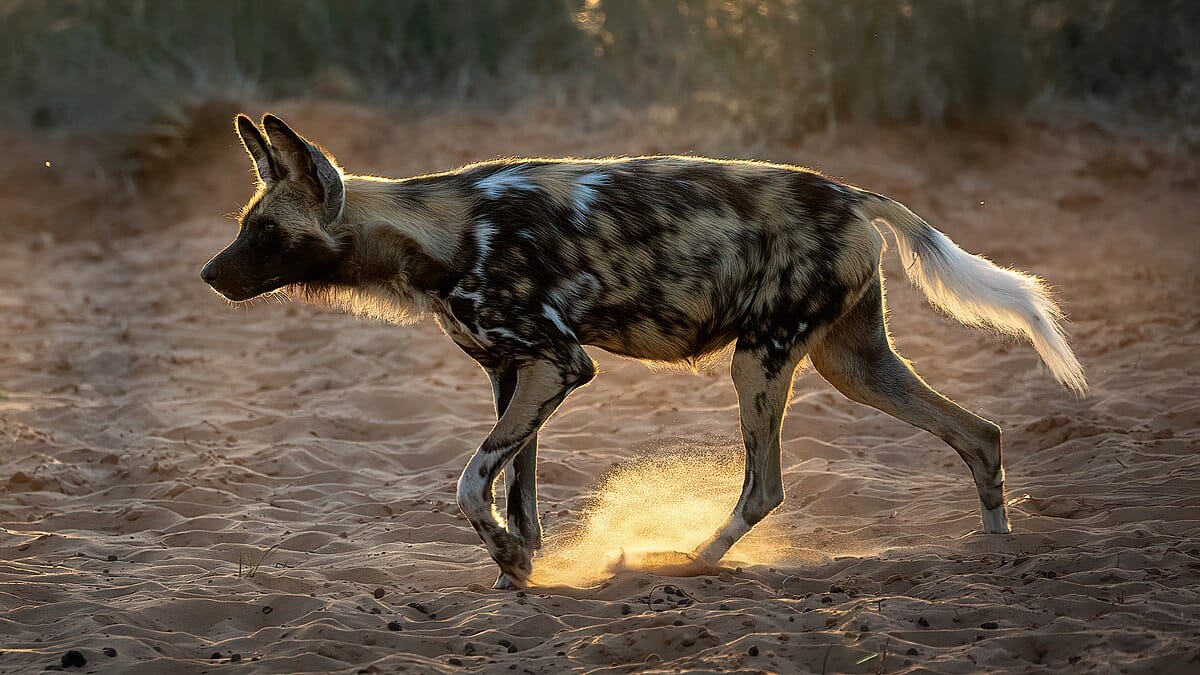
The African Wild Dog, also known as the Painted Wolf, is a highly social canid native to sub-Saharan Africa. Adults weigh 18–36 kg and are recognized for their irregular patchy coat of black, tan, white, and reddish markings, giving each individual a unique appearance. Their large rounded ears, slender legs, and long limbs make them exceptional runners and hunters in the savanna.
These dogs live in packs of 6–20 individuals, exhibiting strong cooperative hunting strategies. They rely on stamina rather than stealth, chasing prey such as impalas and wildebeest over long distances. African Wild Dogs communicate through vocalizations, body postures, and touch to coordinate hunts and maintain pack hierarchy.
Breeding is dominated by the alpha pair, and all pack members assist in caring for pups. Each female typically produces 2–20 pups, which are protected in a den for the first few weeks. Unfortunately, habitat fragmentation, human-wildlife conflict, and disease have caused dramatic population declines, classifying them as endangered.
Studying African Wild Dogs offers insights into social cooperation, communication, and ecological balance. They are keystone predators, helping regulate herbivore populations and maintain ecosystem health.
2. Dhole (Cuon alpinus)
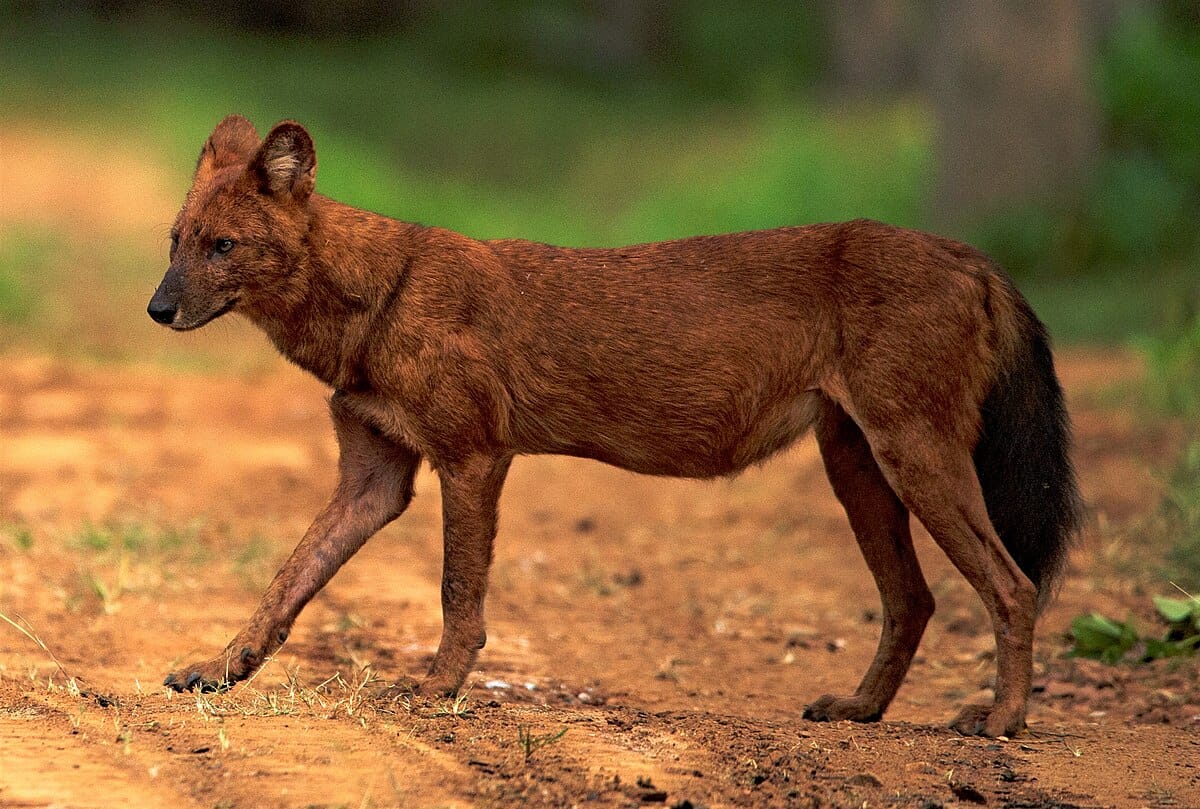
The Dhole, or Asiatic Wild Dog, inhabits forests and grasslands across South and Southeast Asia. Adults weigh 12–20 kg and have a striking reddish coat, bushy tails, and rounded ears. They are highly agile and capable of running long distances while hunting medium-sized ungulates like deer and wild boar.
Dholes are social pack hunters, with packs often consisting of 5–12 individuals. They rely on coordinated strategies and vocal communication to corner prey efficiently. Unlike African Wild Dogs, Dhole packs sometimes hunt in dense forests, relying on stealth and teamwork.
Breeding typically involves one dominant female per pack, but subordinate females may also reproduce. Pups are cared for collectively, with adults regurgitating food. Habitat loss, persecution, and diseases from domestic dogs have caused population declines, placing the Dhole on the endangered species list.
Dholes are fascinating for their complex social structures, hunting efficiency, and adaptability to forested environments. Understanding their ecology is vital for conserving Asian predator-prey dynamics.
3. Maned Wolf (Chrysocyon brachyurus)
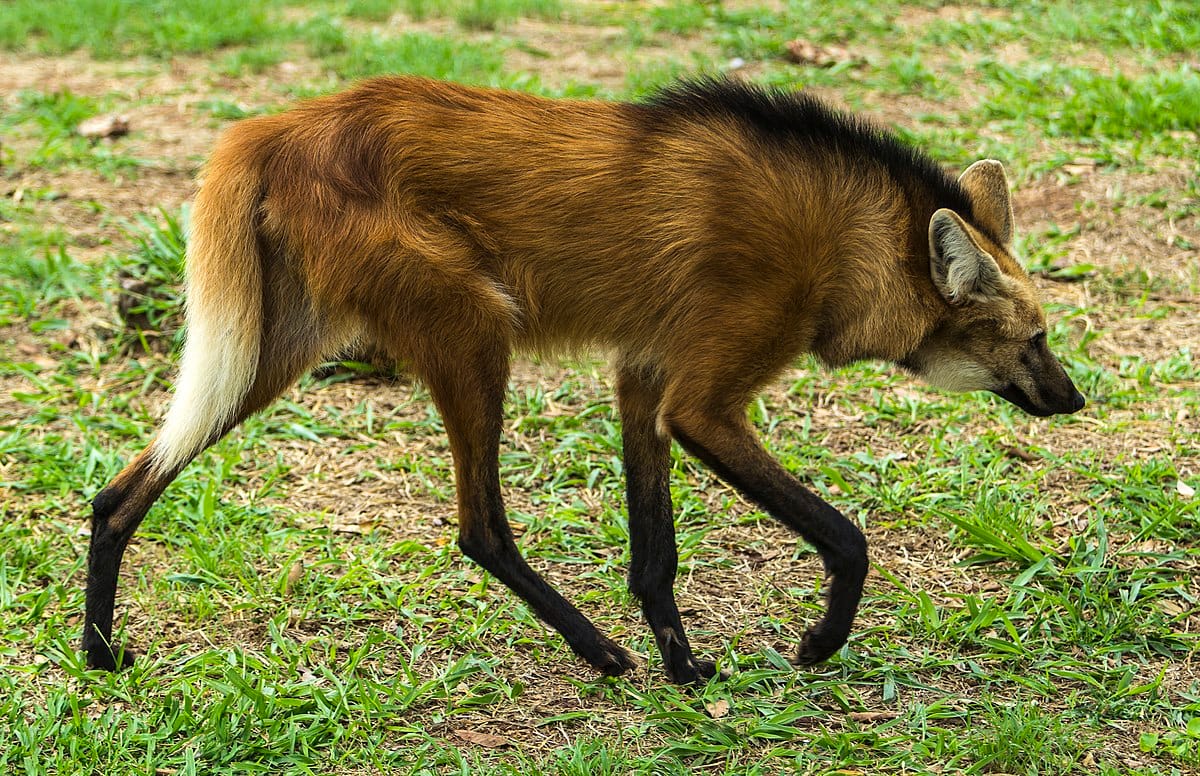
The Maned Wolf is a solitary canid native to the grasslands and scrublands of South America, particularly Brazil, Argentina, and Paraguay. Unlike other wolves, it has extremely long legs and a reddish-orange coat, which help it navigate tall grasses while hunting rodents, small birds, and fruits.
Despite its wolf-like name, the Maned Wolf is more closely related to foxes. It is primarily nocturnal and omnivorous, with a diet including fruits such as the “wolf apple.” Males and females are mostly solitary except during mating season. They mark territories with urine and use vocalizations, like a high-pitched roar-bark, to communicate.
Females give birth to 2–6 pups in dens hidden among vegetation. Habitat loss due to agriculture, road construction, and hunting has threatened their populations. Conservation efforts focus on habitat protection and reducing human-wildlife conflicts.
Maned Wolves are a unique example of morphological adaptation, ecological specialization, and solitary hunting behavior. They showcase the diversity of canid strategies in varying ecosystems.
4. Gray Wolf (Canis lupus)
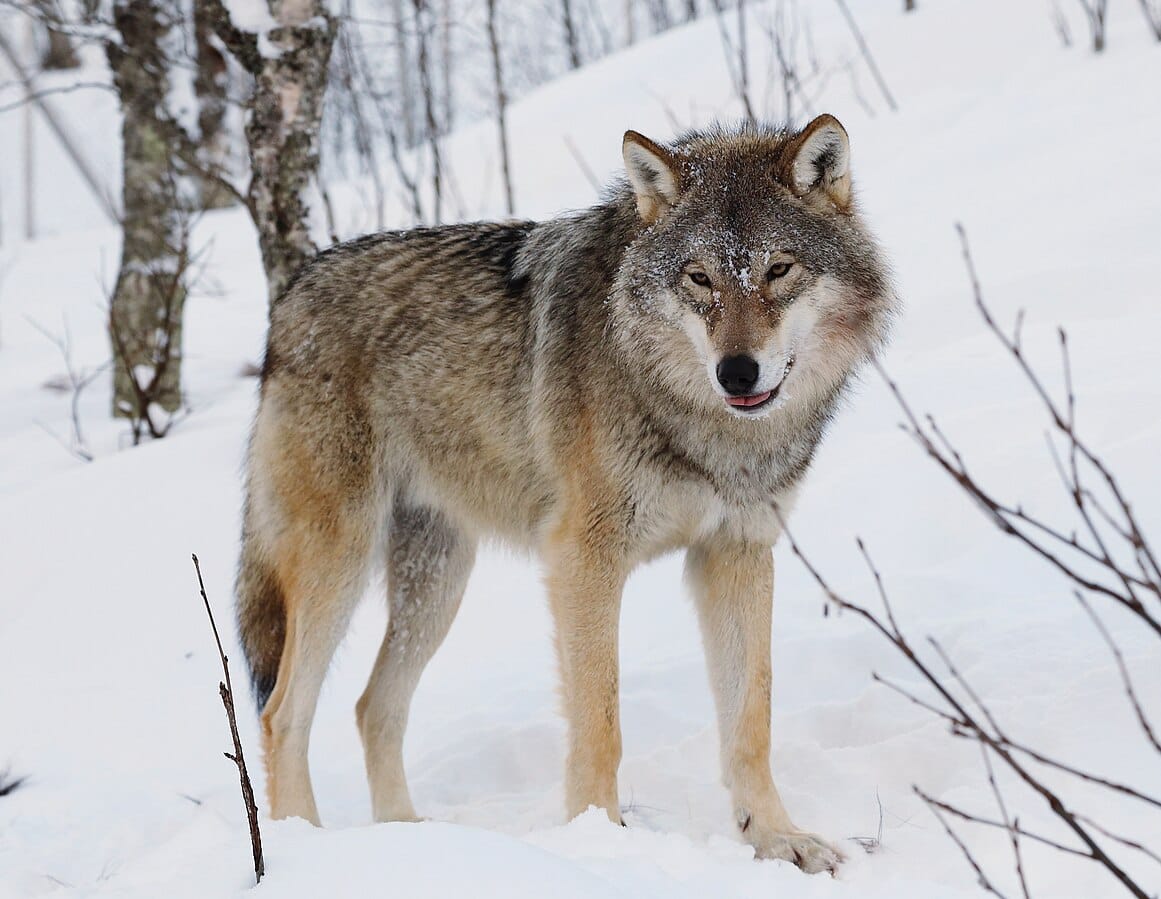
The Gray Wolf is the largest member of the canid family, native to North America, Europe, and Asia. Adults weigh 30–80 kg, with dense fur ranging from gray to white, black, or brown. They have powerful jaws, strong limbs, and keen senses, making them apex predators in their ecosystems.
Gray Wolves live in highly organized packs, typically 6–12 individuals, led by an alpha pair. They hunt cooperatively, primarily preying on large ungulates such as deer, elk, and moose. Communication includes howling, scent marking, and body language to coordinate hunts and maintain pack cohesion.
Pups are born in dens, and all pack members contribute to raising them. Gray Wolves play a vital role in regulating prey populations and maintaining biodiversity. They have faced historical persecution, but conservation and reintroduction programs have helped stabilize populations in some regions.
Studying Gray Wolves provides insights into social dynamics, apex predation, and ecosystem regulation. Their adaptability and complex social behavior make them one of the most iconic wild dogs globally.
5. Red Wolf (Canis rufus)
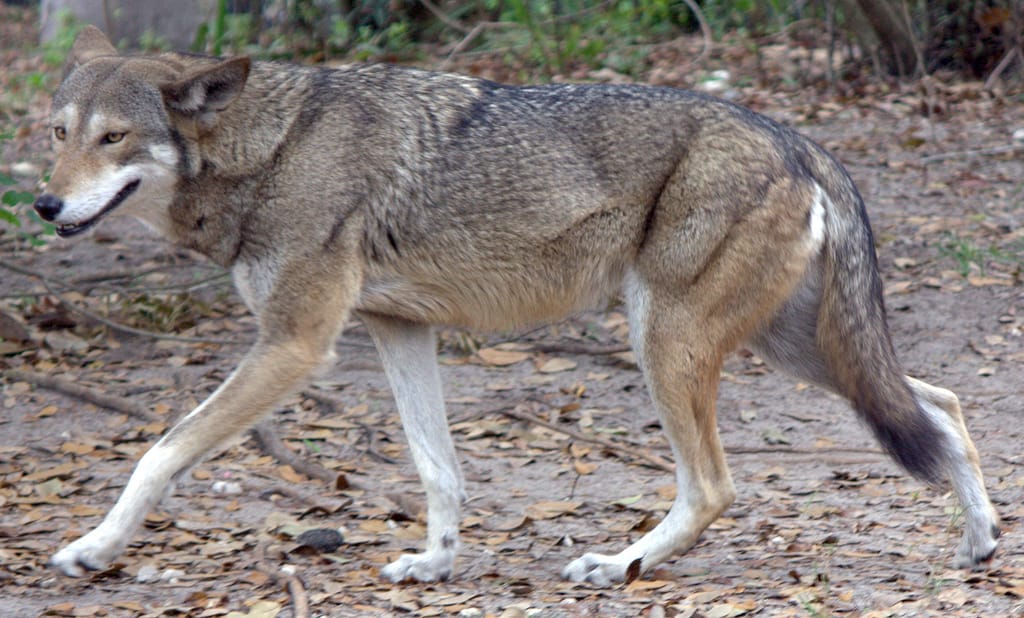
The Red Wolf is a medium-sized canid native to the southeastern United States. Adults weigh 18–36 kg, with reddish-brown fur and lighter underparts. They are smaller than Gray Wolves and have longer ears and narrower snouts, adaptations that help them hunt efficiently in dense forests.
Red Wolves live in small family groups and are highly territorial. Their diet includes deer, raccoons, rabbits, and rodents. Unlike Gray Wolves, Red Wolves are more solitary in their hunting behavior but remain social within their family units.
Breeding is dominated by a monogamous alpha pair, and pups are reared by the entire family. The species faced near-extinction due to habitat loss, hybridization with coyotes, and human persecution. Conservation programs, including captive breeding and reintroduction, have been critical to their survival.
Red Wolves are a compelling example of small-canid adaptation to forested habitats, showcasing unique social behavior and the importance of conservation to prevent species loss.
6. Ethiopian Wolf (Canis simensis)
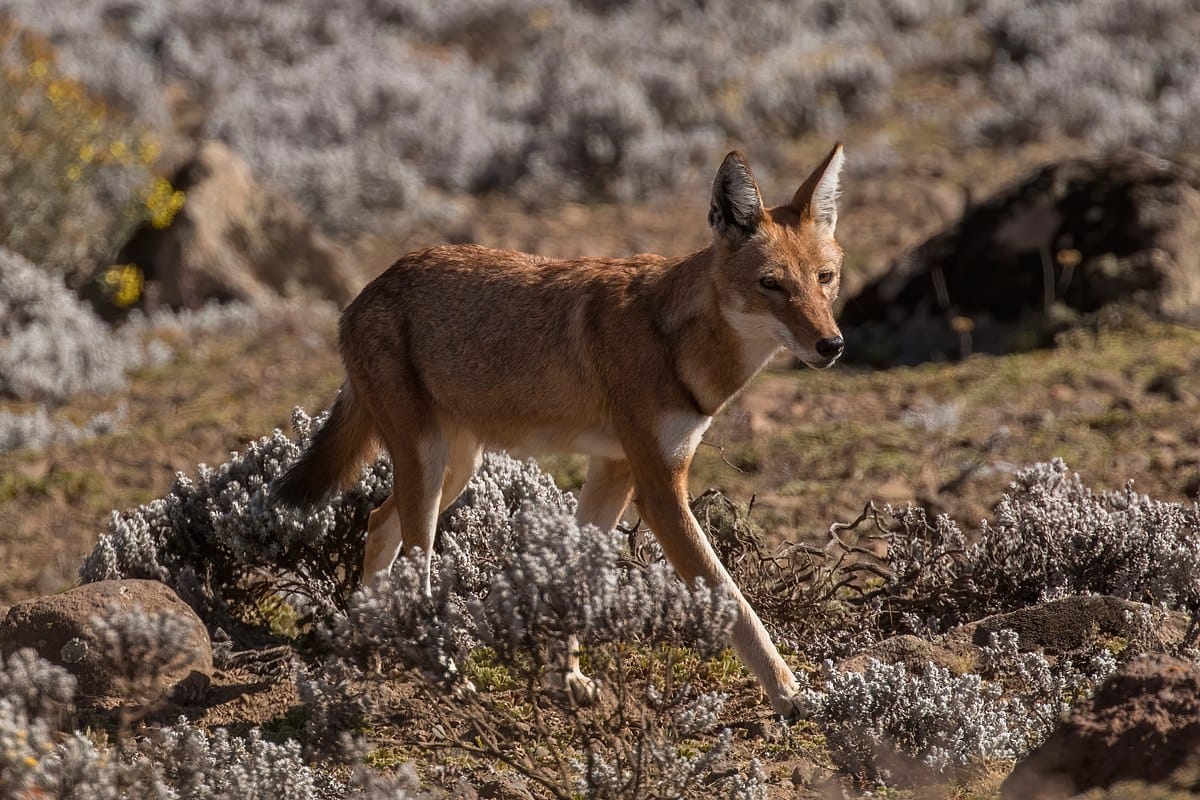
The Ethiopian Wolf is the rarest wild canid in the world, native to the Ethiopian Highlands. Adults weigh 11–19 kg and are characterized by slender bodies, long legs, narrow snouts, and striking reddish-brown coats with white markings on the chest, throat, and legs. They are adapted to high-altitude grasslands and Afro-alpine ecosystems.
Ethiopian Wolves primarily hunt rodents such as the giant mole-rat, using stealth and endurance to chase prey across open grasslands. Unlike pack-oriented wolves, they are more solitary hunters, though they often form small family groups for social cohesion. They communicate using whines, growls, and scent marking to maintain territories.
Females give birth to 2–6 pups in burrows or concealed dens. Entire family units participate in pup care, providing food and protection. Habitat loss due to agriculture, disease from domestic dogs, and human encroachment threaten their survival, classifying them as endangered.
Ethiopian Wolves are fascinating for their high-altitude adaptations, specialized diet, and unique social structure. Protecting their grassland habitats is essential to preserve this rare and iconic species.
7. Arabian Wolf (Canis lupus arabs)

The Arabian Wolf is a subspecies of Gray Wolf adapted to the deserts and arid regions of the Arabian Peninsula. Adults weigh 15–20 kg, with slender bodies, long legs, and sandy-colored coats that blend perfectly with desert environments. They are smaller than typical Gray Wolves, an adaptation to scarce resources.
Arabian Wolves are opportunistic hunters, feeding on small mammals, reptiles, birds, and carrion. They often hunt alone or in pairs, relying on stealth and endurance. Their communication includes howling, scent marking, and visual cues to maintain territories and social bonds.
Females give birth to 2–5 pups in dens dug under rocks or vegetation. Adults cooperate in feeding and protecting the young. Threats include habitat fragmentation, human persecution, and hybridization with domestic dogs.
Arabian Wolves provide a fascinating example of desert adaptation among canids, highlighting how wild dogs evolve in response to extreme environmental conditions.
8. Indian Wolf (Canis lupus pallipes)

The Indian Wolf is a subspecies of Gray Wolf inhabiting grasslands, scrublands, and semi-arid regions of India and Pakistan. Adults weigh 20–30 kg and have short, sandy-gray fur, long legs, and a narrow skull adapted to hunting small to medium-sized prey like hares, antelopes, and domestic livestock.
Indian Wolves are territorial and often hunt in pairs or small packs. They rely on speed and stealth to capture prey and are known for their high-pitched howls, which help maintain contact across vast territories. They play an essential role in controlling herbivore populations and maintaining ecosystem balance.
Females give birth to 3–6 pups in dens hidden among rocky outcrops or dense vegetation. Threats include habitat loss, persecution due to livestock predation, and hybridization with domestic dogs. Conservation efforts focus on habitat protection and conflict mitigation.
Studying Indian Wolves highlights the adaptability of canids to semi-arid environments, their social behaviors, and the importance of predator conservation for maintaining biodiversity.
9. Himalayan Wolf (Canis himalayensis)

The Himalayan Wolf is a high-altitude subspecies of Gray Wolf found in the Himalayas of India, Nepal, Bhutan, and Tibet. Adults weigh 25–35 kg, with thick fur in shades of gray, white, and brown to withstand freezing temperatures. They have long legs and large paws for navigating snow and rugged terrain.
These wolves are carnivorous, preying on blue sheep, marmots, and domestic livestock. They hunt in small packs or alone, using stealth and endurance to catch prey. Their communication includes howling, scent marking, and body postures for social coordination and territorial defense.
Females give birth to 2–6 pups in dens, usually located in rocky crevices or dense vegetation. Predation threats are minimal in their natural habitats, but human-wolf conflicts and habitat fragmentation pose significant risks. They are considered endangered due to low population numbers.
Himalayan Wolves are remarkable for their adaptations to extreme altitudes, social behaviors, and survival strategies in harsh environments, making them a key species for high-altitude ecosystem studies.
10. Mexican Wolf (Canis lupus baileyi)
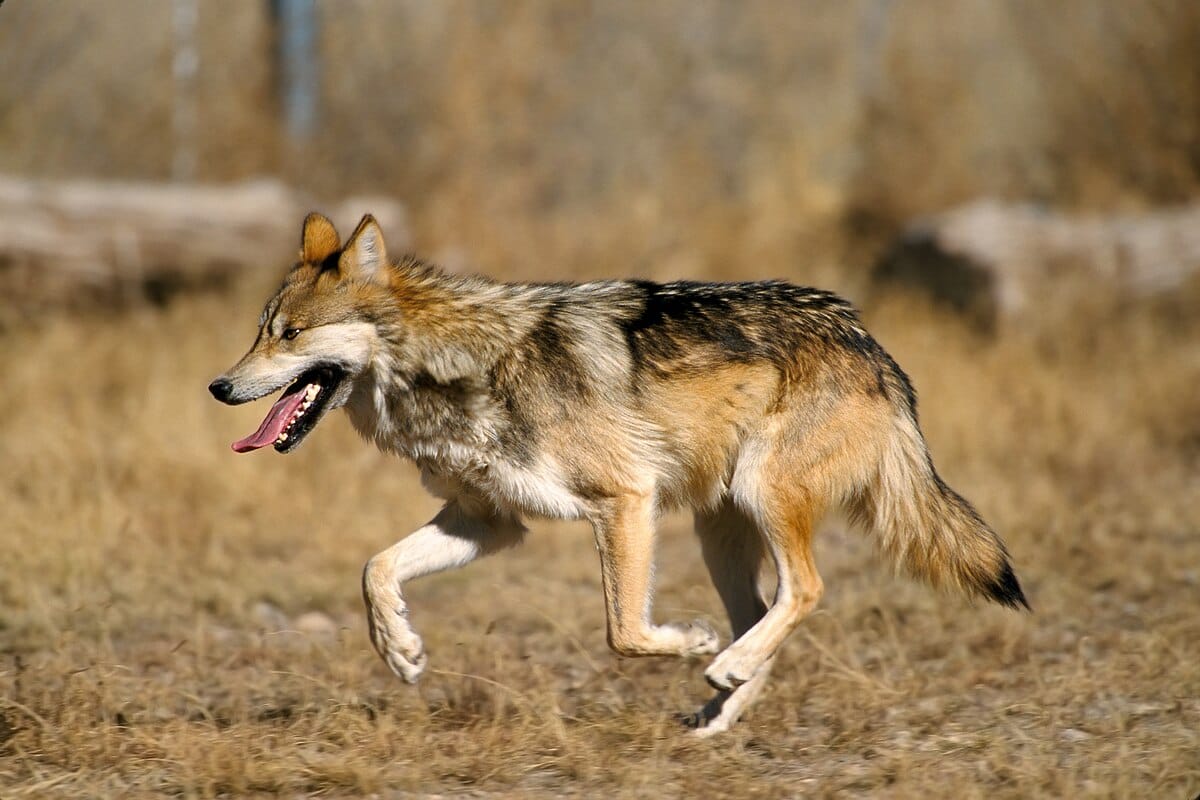
The Mexican Wolf is the smallest subspecies of Gray Wolf native to the southwestern United States and northern Mexico. Adults weigh 23–32 kg, with gray, brown, and cream-colored fur providing camouflage in desert and forested habitats. They have slender bodies and long legs, aiding in endurance hunting.
Mexican Wolves are social pack hunters, typically forming groups of 4–8 individuals. They prey on deer, peccaries, and small mammals, coordinating hunts with strategic teamwork and vocal communication. Historically, they were nearly exterminated due to human persecution, but captive breeding and reintroduction programs have helped their populations recover.
Females give birth to 4–7 pups in dens, with all pack members contributing to care and protection. Ongoing conservation efforts include habitat protection, conflict mitigation with humans, and genetic management to maintain population diversity.
Mexican Wolves are a prime example of predator reintroduction success, demonstrating the importance of conservation programs for restoring apex carnivores to ecosystems.
11. Eastern Wolf (Canis lycaon)

The Eastern Wolf, native to eastern Canada and the northeastern United States, is a medium-sized wolf species. Adults weigh 20–36 kg and have gray-brown coats with a mix of reddish tones along the legs, ears, and muzzle. They are slightly smaller and more slender than Gray Wolves, adapted to forested environments.
Eastern Wolves are social, forming packs that cooperate in hunting deer, beavers, and small mammals. Communication is crucial within packs, including howls, growls, and scent marking. Unlike some larger wolves, Eastern Wolves are highly adapted to mixed forest habitats, relying on stealth and speed rather than sheer strength.
Females give birth to 2–8 pups in dens, which are hidden among dense vegetation. All pack members participate in raising the young. Threats include habitat loss, hunting, and hybridization with Coyotes. Conservation programs focus on habitat protection and genetic management.
Eastern Wolves provide insight into forest-adapted canids, their social structures, and the ecological balance maintained through predator-prey interactions in temperate forests.
12. Golden Jackal (Canis aureus)
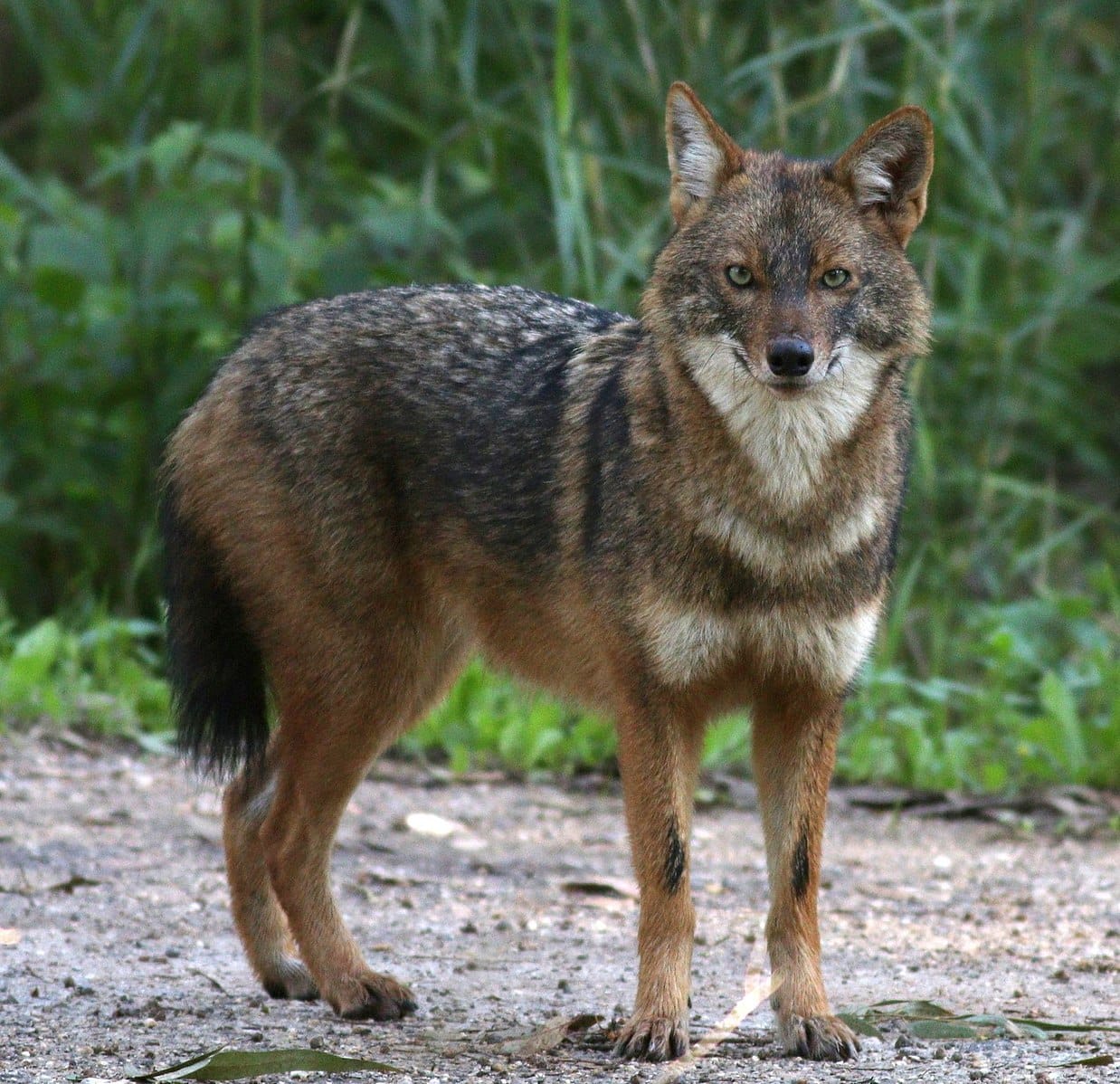
The Golden Jackal is a small wild dog species widely distributed across Africa, the Middle East, and South Asia. Adults weigh 7–15 kg and have golden-brown fur, long legs, and bushy tails. They are highly adaptable and thrive in grasslands, deserts, and human-altered landscapes.
Golden Jackals are omnivorous, feeding on small mammals, birds, insects, fruits, and carrion. They are territorial and can live solitarily or in small family groups. Vocalizations, scent marking, and visual cues are used for communication, hunting coordination, and territory defense.
Females give birth to 2–6 pups in dens or hidden burrows. Both parents and older siblings help rear pups. Threats include human persecution, habitat loss, and disease transmission from domestic animals. Despite this, Golden Jackals are resilient and maintain stable populations in many regions.
Golden Jackals exemplify adaptability, opportunistic feeding behavior, and social flexibility, making them one of the most widespread wild dogs globally.
13. Side-striped Jackal (Canis adustus)
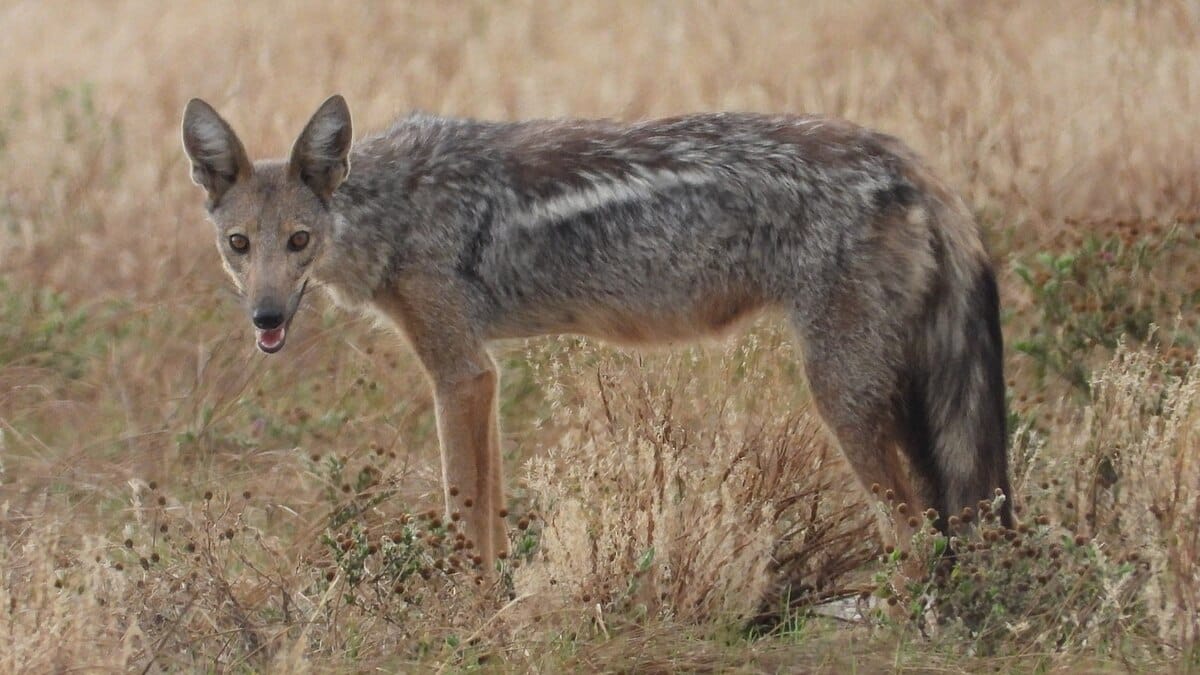
The Side-striped Jackal inhabits central and southern Africa, favoring woodlands, savannas, and grasslands. Adults weigh 6–10 kg and have a gray-brown coat with a distinctive white side stripe, long legs, and bushy tails. Their subtle coloration allows them to blend with dense vegetation.
They are opportunistic feeders, consuming rodents, insects, birds, fruits, and small reptiles. Side-striped Jackals are mostly nocturnal and hunt alone or in pairs. They communicate using howls, growls, and scent marking to maintain territories and social bonds.
Females give birth to 2–6 pups in dens hidden among roots or rock crevices. Threats include habitat destruction, hunting, and competition with larger carnivores. Conservation measures focus on protecting habitats and reducing human-wildlife conflict.
Side-striped Jackals provide insights into nocturnal hunting adaptations, territorial behavior, and the role of small canids in maintaining ecological balance.
14. Black-backed Jackal (Canis mesomelas)

The Black-backed Jackal is a small, agile wild dog found in southern and eastern Africa. Adults weigh 6–14 kg and are easily recognized by a characteristic black saddle along their back, reddish legs, and pointed ears. They are highly adaptable to savannas, deserts, and coastal plains.
Black-backed Jackals are opportunistic predators and scavengers, feeding on rodents, insects, small antelopes, birds, and carrion. They are territorial, often living in monogamous pairs, and communicate through howls, barks, and scent marking.
Females give birth to 2–6 pups in dens located in burrows or natural crevices. Adults cooperate to feed and protect the young. Human-wildlife conflicts and habitat fragmentation are primary threats, though they are currently listed as Least Concern due to their adaptability.
This species highlights small-canid intelligence, adaptability, and the balance between predatory behavior and ecological resilience in African ecosystems.
15. Island Fox (Urocyon littoralis)
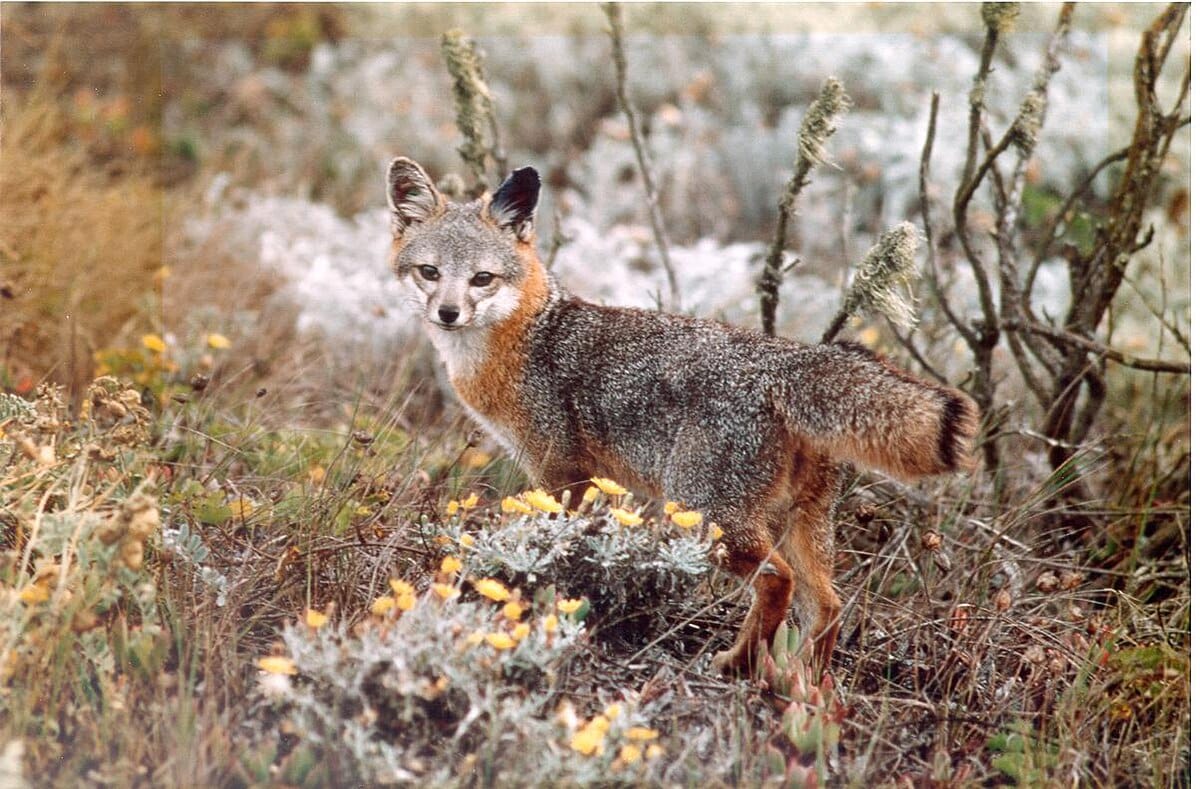
The Island Fox is a small wild dog endemic to six of the Channel Islands off the coast of California. Adults weigh 1–2.5 kg and have grayish-brown coats, bushy tails, and relatively small size adapted to island habitats. They are among the smallest fox species in the world.
Island Foxes are omnivorous, feeding on insects, small mammals, birds, fruits, and eggs. They are primarily nocturnal and live in monogamous pairs or small family groups. Their behavior and diet vary depending on the availability of island resources.
Females give birth to 2–5 pups in dens located in scrub, rocks, or burrows. Predators historically were few, but introduced species and habitat disturbance have threatened populations. Captive breeding and reintroduction programs have successfully restored many island populations.
Island Foxes are remarkable examples of island adaptation, illustrating how small wild dogs evolve unique traits and behaviors to thrive in isolated ecosystems.
16. Gray Fox (Urocyon cinereoargenteus)
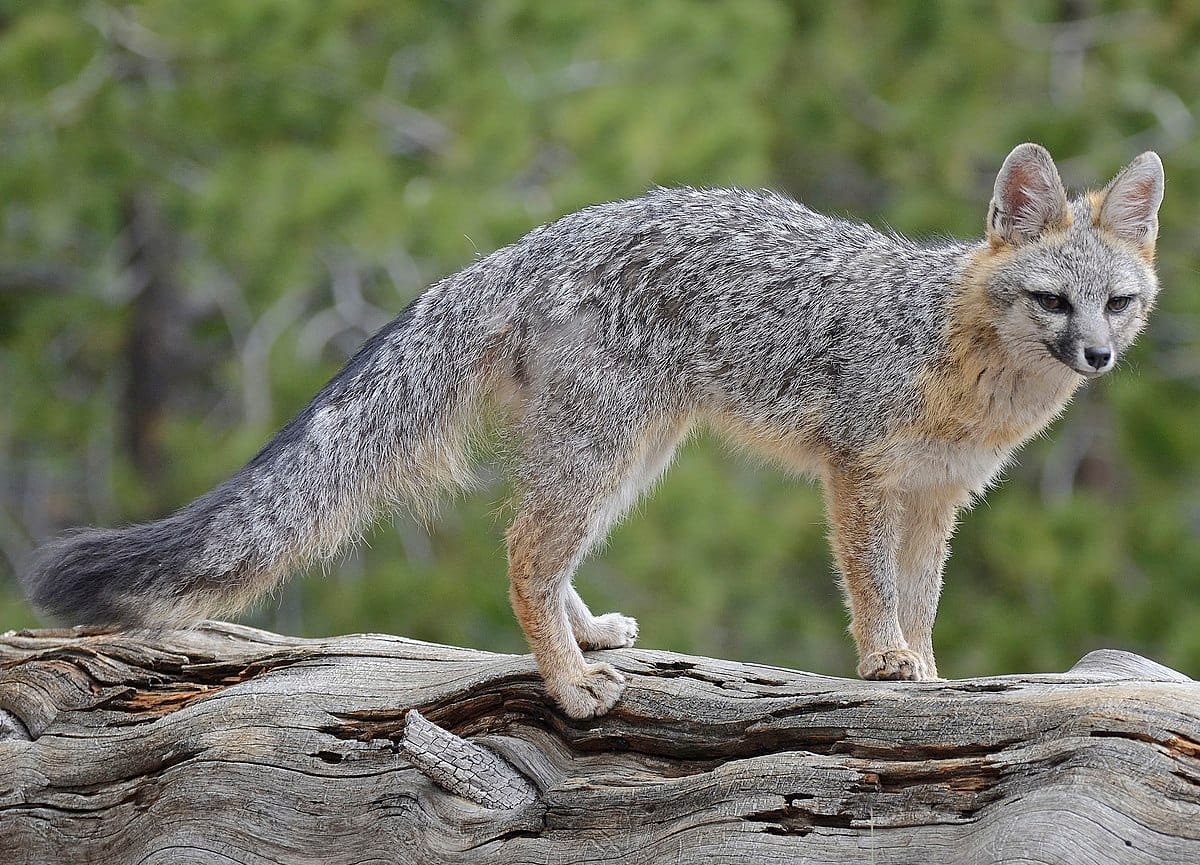
The Gray Fox is a small to medium-sized wild dog native to North and Central America. Adults weigh 3–6 kg and have grayish fur with reddish-brown patches on the neck, legs, and face, plus a distinctive black-tipped tail. Unlike most canids, Gray Foxes are excellent climbers and often escape predators by ascending trees.
Gray Foxes are omnivorous, feeding on small mammals, birds, fruits, insects, and carrion. They are primarily nocturnal and solitary hunters but communicate using vocalizations, scent marking, and visual cues to defend territories and find mates. Their climbing ability is unique among canids, allowing access to food sources and refuge from predators.
Females give birth to 3–7 pups in dens dug under logs, rocks, or hollow trees. Adults actively care for and protect the young until they become independent. Threats include habitat fragmentation, hunting, and vehicular collisions, though they are relatively adaptable and maintain stable populations in much of their range.
Studying Gray Foxes provides valuable insights into arboreal adaptations among canids, nocturnal hunting strategies, and the resilience of small wild dogs in human-altered landscapes.
17. Bat-eared Fox (Otocyon megalotis)
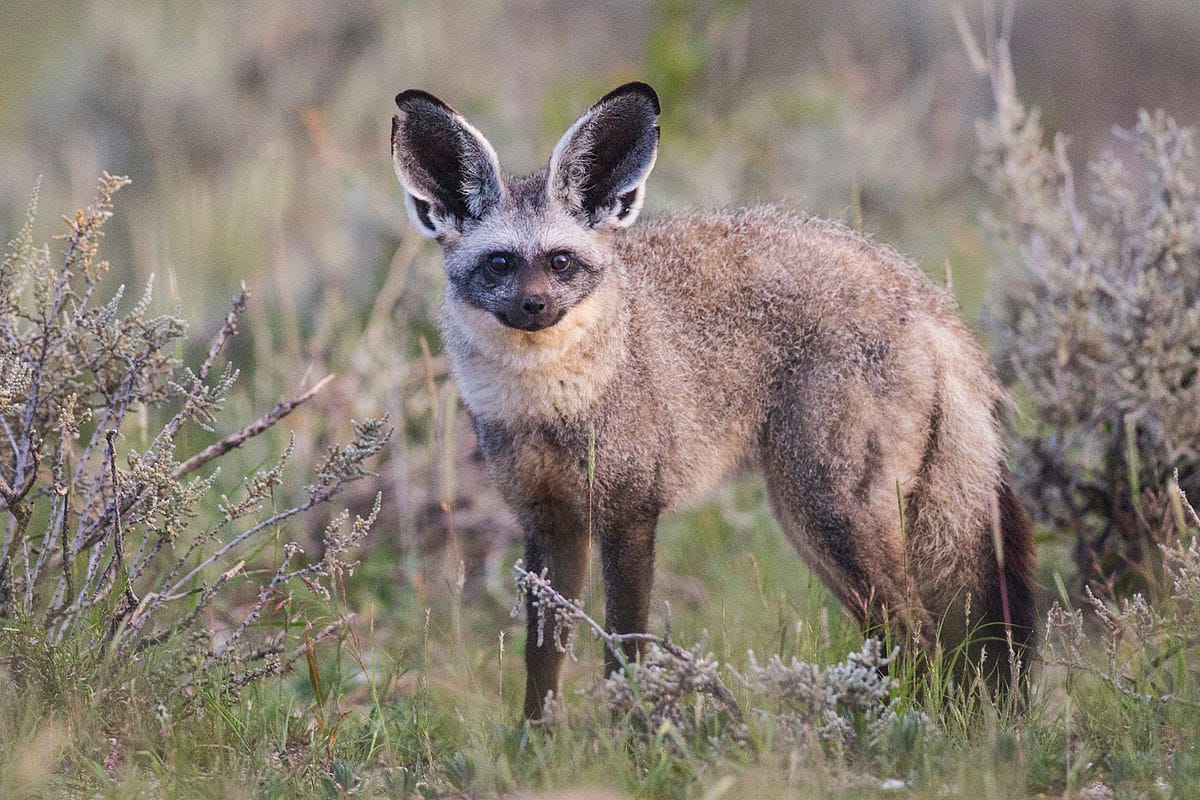
The Bat-eared Fox is a small, nocturnal canid native to sub-Saharan Africa, easily recognized by its enormous ears, which help detect insects underground. Adults weigh 4–7 kg and have grayish-brown fur with black markings on the face, legs, and tail. Their unique ear morphology enhances auditory hunting abilities.
Bat-eared Foxes are primarily insectivorous, feeding on termites, beetles, and other invertebrates, though they occasionally consume small vertebrates and fruits. They forage mainly at night, using keen hearing and digging skills to locate prey. They are generally monogamous, living in pairs or small family groups.
Females give birth to 2–5 pups in dens, often shared with the male for pup rearing. Threats include habitat destruction, human persecution, and predation by larger carnivores. Despite these challenges, they are adaptable and classified as Least Concern.
Bat-eared Foxes highlight specialized dietary adaptations, nocturnal survival strategies, and unique auditory skills, making them fascinating subjects for wildlife enthusiasts and researchers alike.
18. Bush Dog (Speothos venaticus)
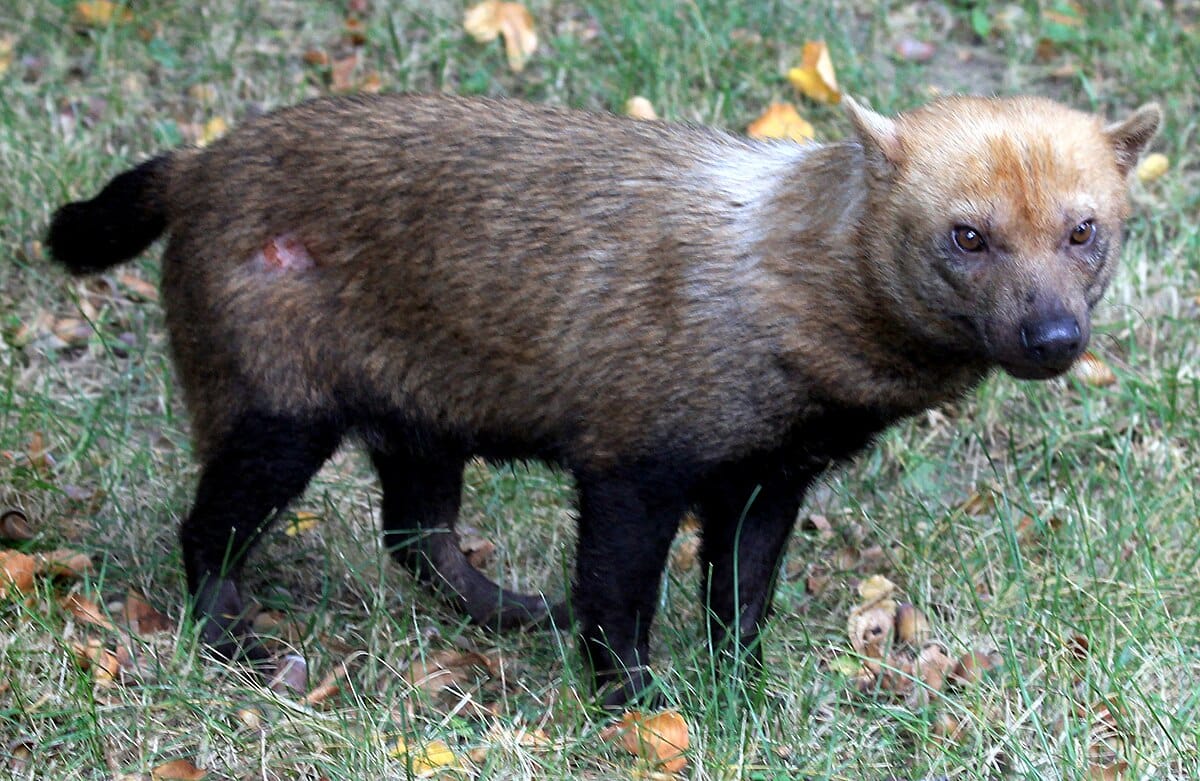
The Bush Dog is a small, elusive wild canid native to Central and South American forests. Adults weigh 4–8 kg and have short, dense brown fur, a stocky body, short legs, and webbed toes adapted for swimming. Their unique morphology supports hunting in wet and forested environments.
Bush Dogs are carnivorous and hunt cooperatively in packs, preying on rodents, birds, and small mammals. They are exceptional swimmers and often forage along rivers and wetlands. Social packs exhibit cooperative behaviors, including sharing food and caring for pups collectively.
Females give birth to 2–8 pups in dens dug underground or within fallen logs. Predators include jaguars, large snakes, and raptors. Habitat destruction, hunting, and human encroachment threaten their populations, though they remain relatively understudied.
Bush Dogs are notable for their cooperative hunting, semi-aquatic adaptations, and social dynamics, offering valuable insights into the diversity of wild dog behaviors in tropical forests.
19. Sechuran Fox (Lycalopex sechurae)
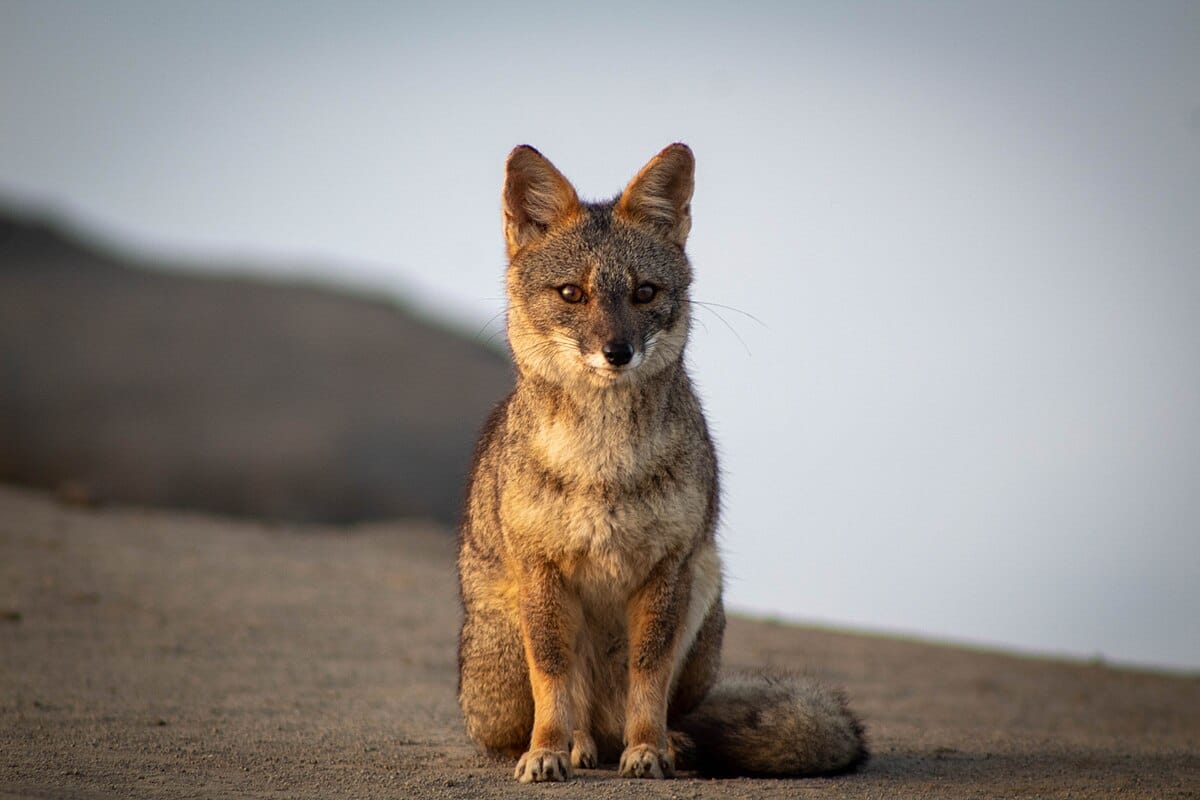
The Sechuran Fox is a small canid endemic to the arid deserts of western South America, particularly Peru and northern Chile. Adults weigh 2.5–4 kg and have sandy-gray fur, large ears, and a bushy tail. Their coloration and small size are adaptations to hot, dry desert environments.
Sechuran Foxes are omnivorous, feeding on insects, small mammals, birds, fruits, and seeds. They are mostly nocturnal to avoid daytime heat and hunt or forage alone or in pairs. They communicate through scent marking, vocalizations, and body language to maintain territories and social interactions.
Females give birth to 2–4 pups in dens dug among rocks or shrubs. Predators include larger carnivores and raptors. Human activities, such as agriculture and habitat modification, pose threats, but the species is currently classified as Least Concern due to its adaptability.
Sechuran Foxes illustrate the remarkable adaptations of desert-dwelling canids, demonstrating strategies for survival, thermoregulation, and foraging in arid ecosystems.
20. Pampas Fox (Lycalopex gymnocercus)

The Pampas Fox, also known as the Azara’s Fox, inhabits the grasslands, pampas, and shrublands of South America, including Argentina, Uruguay, and Brazil. Adults weigh 3–6 kg and have gray-brown fur with reddish tones along the legs and face, plus a bushy tail with a black tip. Their medium size and coloration help them blend into grassland habitats.
Pampas Foxes are omnivorous, feeding on small mammals, birds, insects, fruits, and seeds. They are primarily nocturnal but may forage during early morning or late afternoon. They are solitary hunters, although pairs may remain together during breeding season. Vocalizations and scent marking are essential for territory maintenance and communication.
Females give birth to 2–6 pups in dens hidden among grasses or burrows. Predators include larger carnivores and raptors, while human activities such as agriculture and hunting pose additional risks. Conservation efforts focus on habitat protection and minimizing human-wildlife conflict.
Pampas Foxes demonstrate adaptation to open grasslands, opportunistic feeding, and solitary hunting strategies, highlighting the ecological diversity of South American wild dogs.
21. Darwin’s Fox (Lycalopex fulvipes)
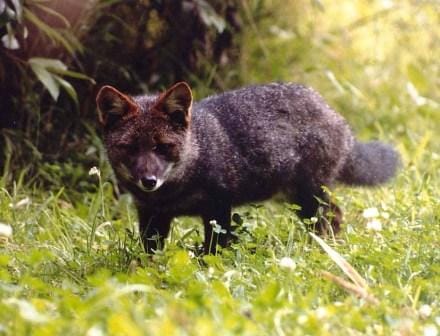
Darwin’s Fox is a rare and elusive canid endemic to the temperate forests of southern Chile and Chiloé Island. Adults weigh 3–6 kg and have dark brown to black fur with a bushy tail, short legs, and a compact body suited for dense forest habitats. Their small size and camouflaging coat make them highly adapted to stealth and forest life.
Darwin’s Foxes are omnivorous, feeding on rodents, birds, insects, fruits, and small reptiles. They are primarily nocturnal, moving quietly through dense undergrowth to hunt or forage. Solitary or found in small family units, they communicate using vocalizations, scent marking, and body postures.
Females give birth to 2–4 pups in dens hidden under fallen trees or dense shrubs. Predation is minimal, but habitat destruction, logging, and introduced species like domestic dogs pose serious threats. The species is classified as Endangered due to its small population and restricted range.
Darwin’s Fox exemplifies forest specialization among wild dogs, highlighting adaptation to dense habitats, nocturnal foraging, and conservation importance for rare canid species.
22. Culpeo (Lycalopex culpaeus)
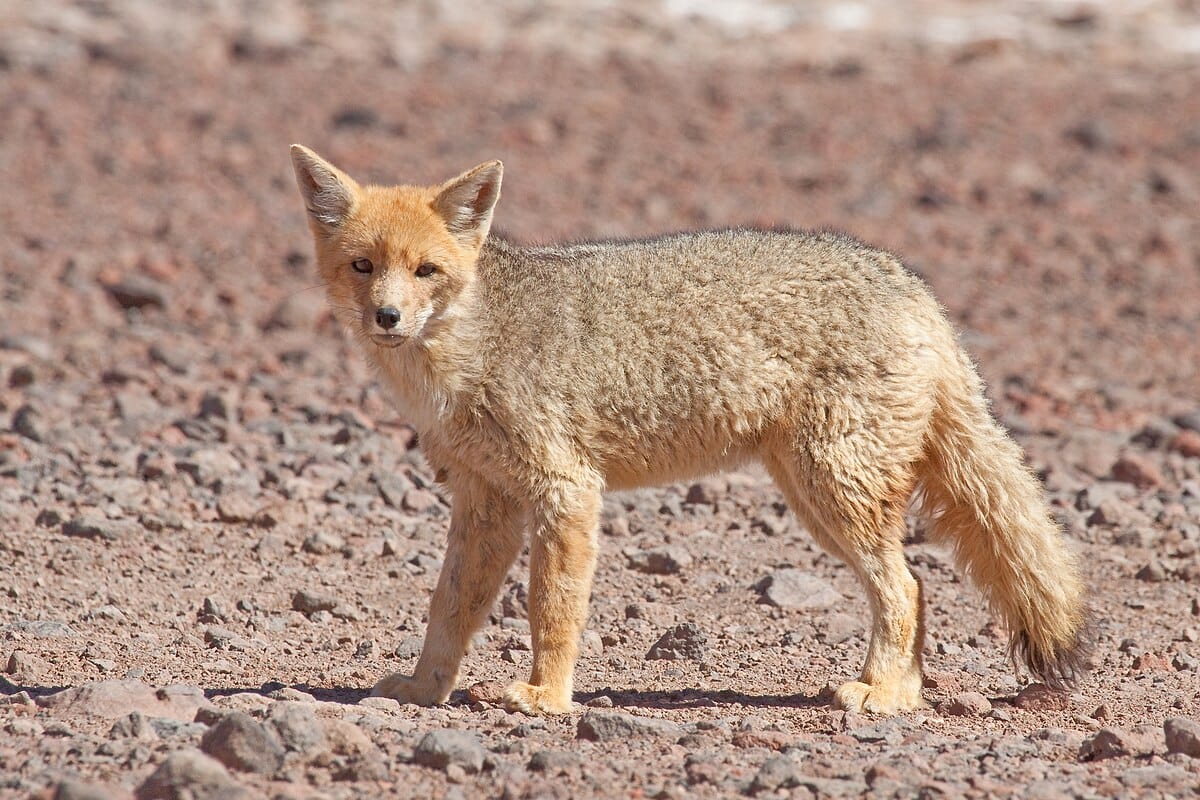
The Culpeo, also known as the Andean Fox, is a medium-sized canid native to the Andes Mountains of South America. Adults weigh 5–14 kg and have a reddish-gray coat, black-tipped tail, and pointed ears. They inhabit high-altitude forests, grasslands, and scrublands, adapting well to mountainous terrains.
Culpeos are omnivorous, feeding on rodents, rabbits, birds, insects, and occasionally fruits. They are primarily nocturnal but may be active during early morning hours. Solitary or in pairs, they rely on keen senses and stealth to capture prey and avoid larger predators.
Females give birth to 2–6 pups in dens located under rocks, shrubs, or burrows. Threats include hunting, habitat loss, and human-wildlife conflict, although they remain relatively widespread. Conservation efforts focus on monitoring populations and protecting habitats from encroachment.
Culpeos highlight the adaptability of wild dogs to mountainous environments, combining solitary hunting, omnivorous diets, and flexible activity patterns to survive diverse ecosystems.
23. Hoary Fox (Lycalopex vetulus)
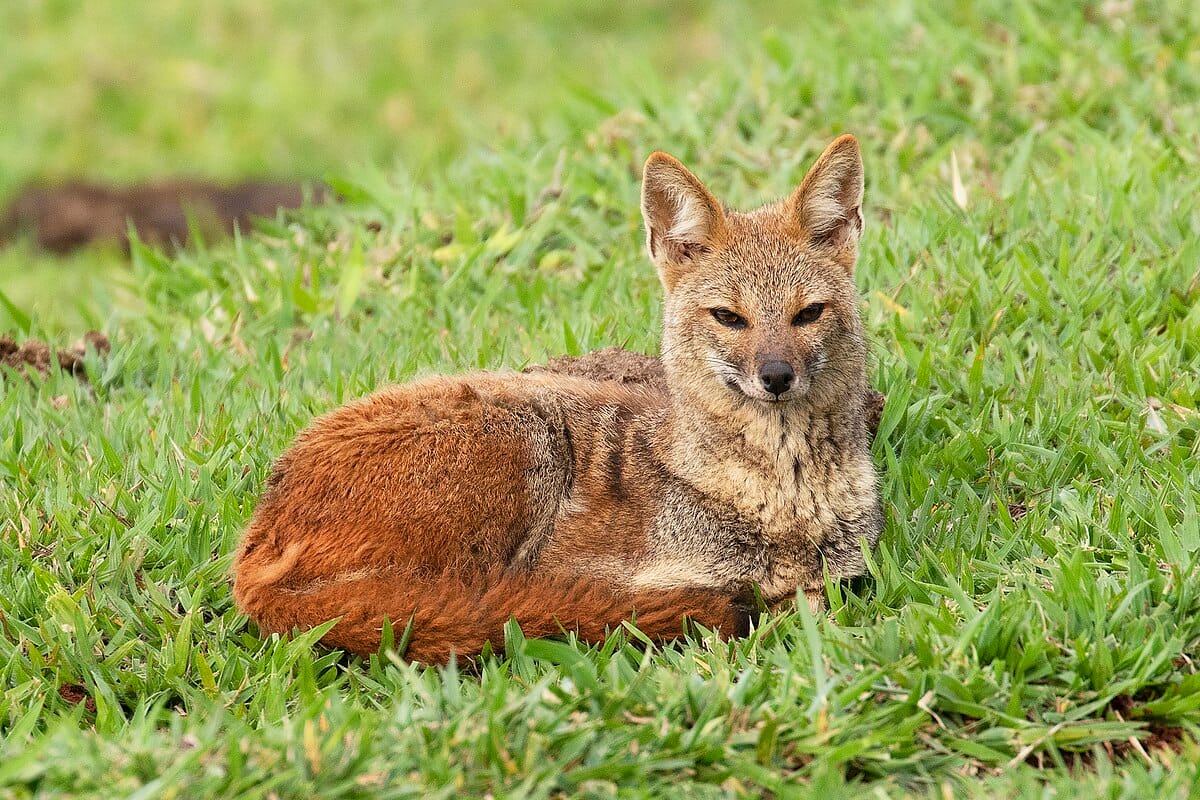
The Hoary Fox is a small canid native to central Brazil’s Cerrado savannas. Adults weigh 3–5 kg and have silver-gray fur, a slender body, and long legs adapted for running across open grasslands. Their small size and keen senses make them adept hunters of small prey.
Hoary Foxes are primarily insectivorous, feeding on termites, grasshoppers, and other invertebrates, though they occasionally consume small rodents and fruits. They are nocturnal, foraging alone or in pairs. Territoriality is maintained through scent marking, vocalizations, and occasional aggressive displays.
Females give birth to 2–4 pups in burrows or hidden vegetation. Predators include larger canids and raptors, while human-induced habitat loss presents additional threats. Conservation focuses on preserving Cerrado ecosystems and minimizing human-wildlife conflict.
Hoary Foxes demonstrate specialization in diet, nocturnal foraging, and adaptation to grassland environments, offering valuable insights into small-canid ecological roles.
24. Andean Fox (Lycalopex griseus)
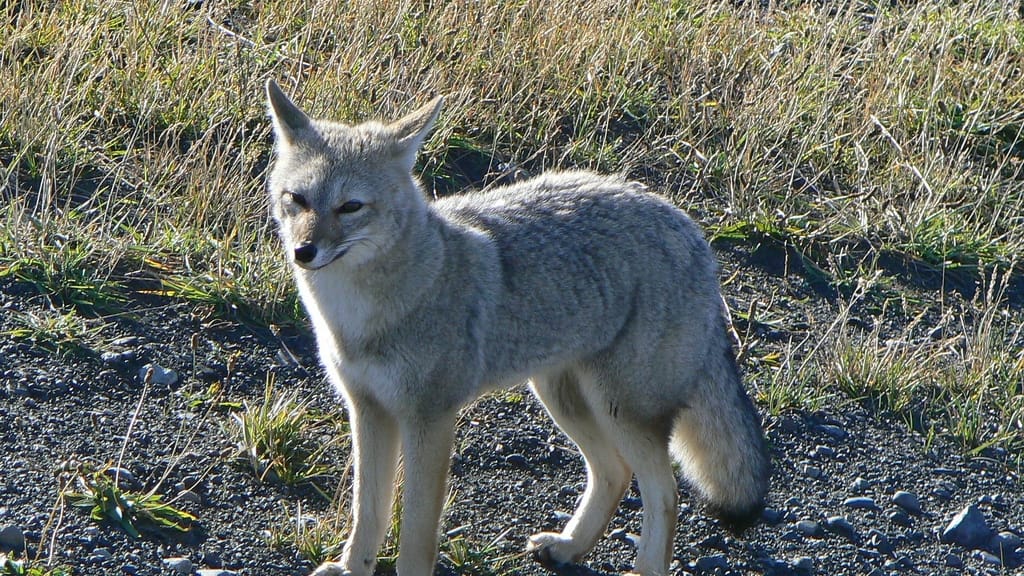
The Andean Fox, also called the Grey Zorro, is a medium-sized canid native to western South America, including Chile, Peru, and Argentina. Adults weigh 5–13 kg and have gray to brown fur with a black-tipped tail and slender legs suited for high-altitude terrains and rocky environments.
Andean Foxes are omnivorous, feeding on rodents, birds, insects, fruits, and carrion. They are primarily nocturnal but may forage during early morning or late evening. Typically solitary, they rely on stealth and agility to capture prey and avoid larger predators.
Females give birth to 2–6 pups in dens dug in rocky crevices or under shrubs. Threats include hunting, habitat fragmentation, and livestock conflicts, though they are currently classified as Least Concern due to their wide distribution. Conservation emphasizes coexistence with humans and habitat protection.
Andean Foxes showcase adaptation to high-altitude ecosystems, omnivorous feeding strategies, and the ability of wild dogs to thrive in diverse environmental conditions.
25. Crab-eating Fox (Cerdocyon thous)
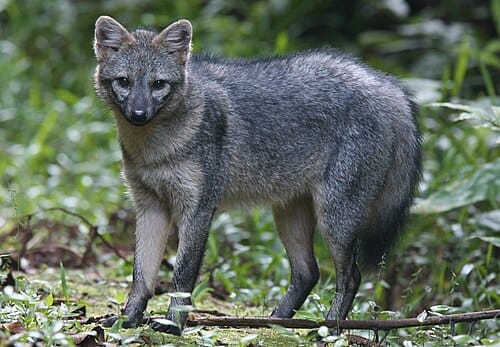
The Crab-eating Fox is a medium-sized wild dog native to South America, ranging from Venezuela to Argentina. Adults weigh 5–8 kg and have gray-brown fur with black markings along the tail and legs. They inhabit savannas, forests, and wetlands, displaying remarkable adaptability.
Crab-eating Foxes are omnivorous, feeding on crabs, insects, small mammals, birds, fruits, and occasionally amphibians. They are primarily nocturnal, foraging alone or in pairs. Communication includes vocalizations, scent marking, and body postures for territorial and social interactions.
Females give birth to 2–6 pups in dens dug among shrubs, rocks, or fallen logs. Predators include larger canids and raptors, while human encroachment and habitat loss are significant threats. Conservation efforts focus on habitat preservation and reducing human-wildlife conflicts.
This species illustrates wild dog adaptability to diverse habitats, dietary flexibility, and ecological importance in maintaining balanced predator-prey dynamics.
26. Corsac Fox (Vulpes corsac)
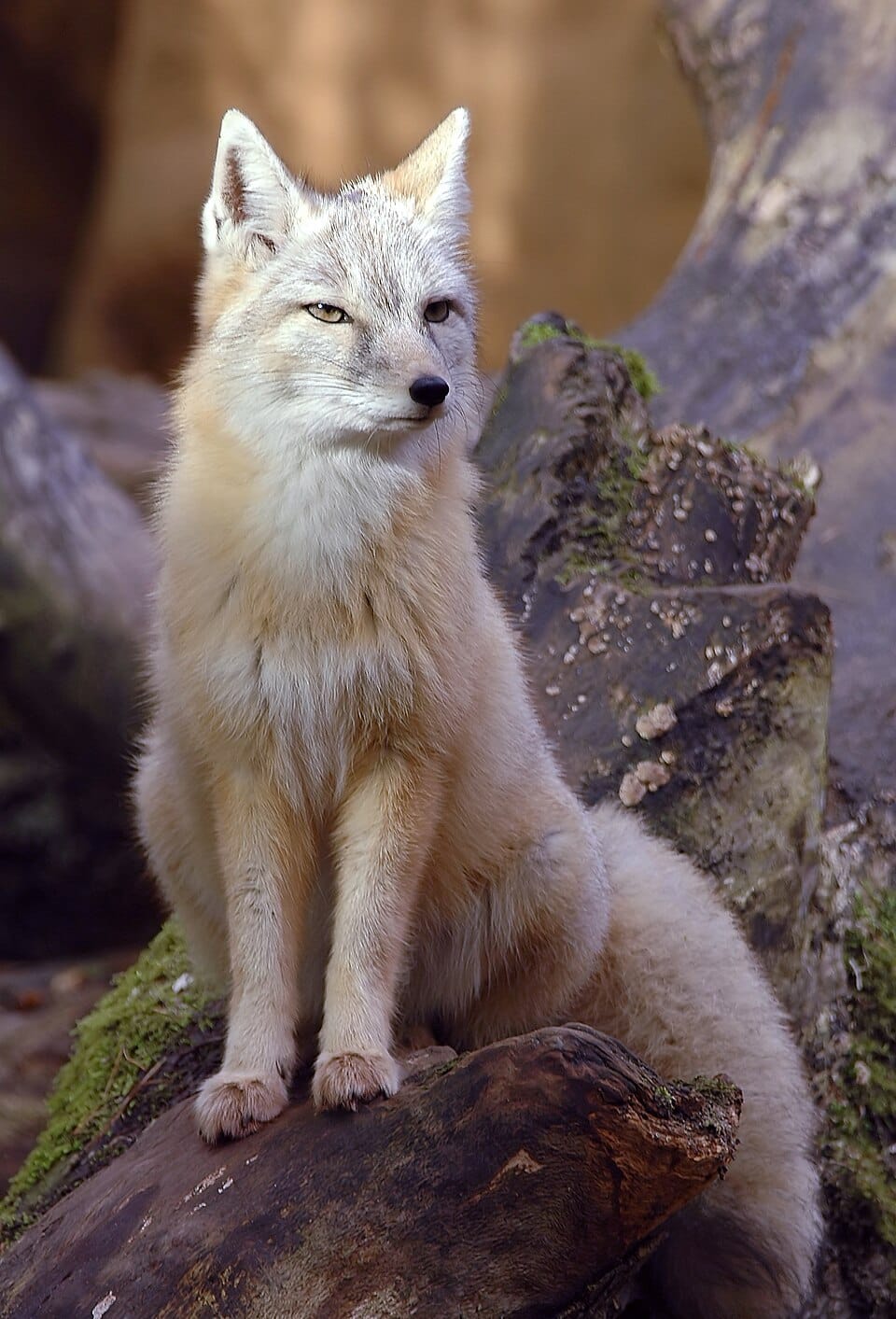
The Corsac Fox is a medium-sized canid native to the steppes and semi-deserts of Central Asia, including Mongolia, Kazakhstan, and Russia. Adults weigh 3–6 kg and have pale grayish-yellow fur, long slender legs, and bushy tails. Their coloration provides camouflage in arid grasslands and steppe environments.
Corsac Foxes are opportunistic hunters and omnivores, feeding on rodents, insects, birds, and fruits. They are primarily nocturnal and often hunt alone or in pairs, relying on speed, stealth, and acute senses to locate prey. During the day, they rest in shallow dens or natural shelters to avoid extreme temperatures.
Females give birth to 2–6 pups in dens dug in the ground or hidden among rocks and vegetation. Predators include larger canids and raptors, while human activities like hunting and habitat degradation pose additional threats. The species is currently classified as Least Concern due to its wide distribution.
Corsac Foxes highlight wild dog adaptations to open, arid landscapes, demonstrating hunting versatility, nocturnal activity, and survival strategies in harsh steppe ecosystems.
27. Arctic Fox (Vulpes lagopus)
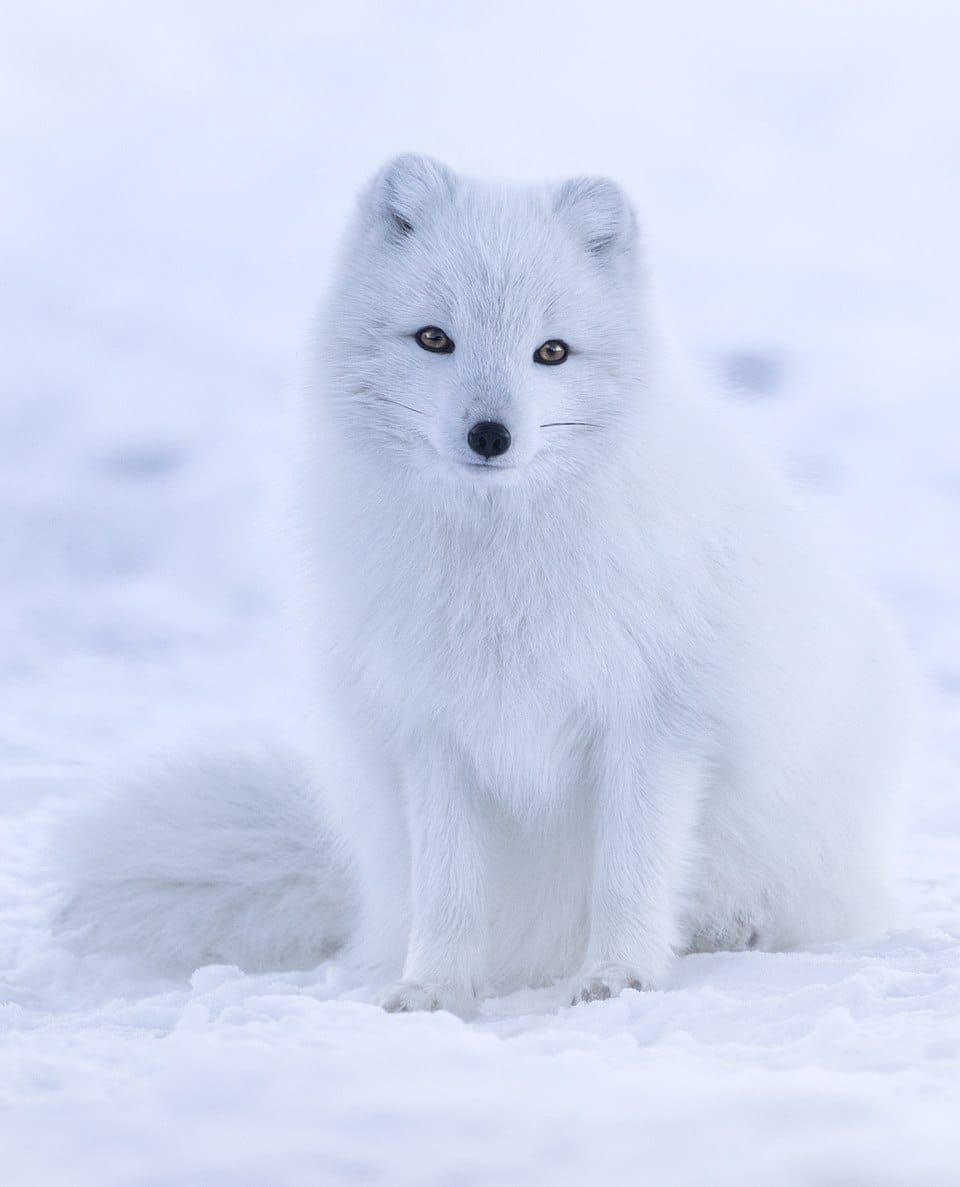
The Arctic Fox is a small, hardy canid native to Arctic tundra regions of North America, Europe, and Asia. Adults weigh 2.5–9 kg and have thick, seasonal fur—white in winter for camouflage in snow, and brown or gray in summer. Their short muzzle, compact body, and small ears minimize heat loss in freezing environments.
Arctic Foxes are opportunistic omnivores, feeding on lemmings, birds, eggs, fish, and carrion. They are solitary or found in small family groups and rely on keen hearing and smell to locate prey beneath snow. Denning sites often include complex burrows used for raising pups and sheltering from harsh weather.
Females give birth to 5–10 pups per litter. Predation is limited in remote areas, but climate change, food scarcity, and human encroachment are growing threats. Conservation efforts focus on habitat preservation and monitoring populations affected by environmental changes.
Arctic Foxes exemplify extreme cold adaptations, seasonal camouflage, and survival strategies in some of the harshest climates on Earth, making them a unique wild dog species.
28. Fennec Fox (Vulpes zerda)
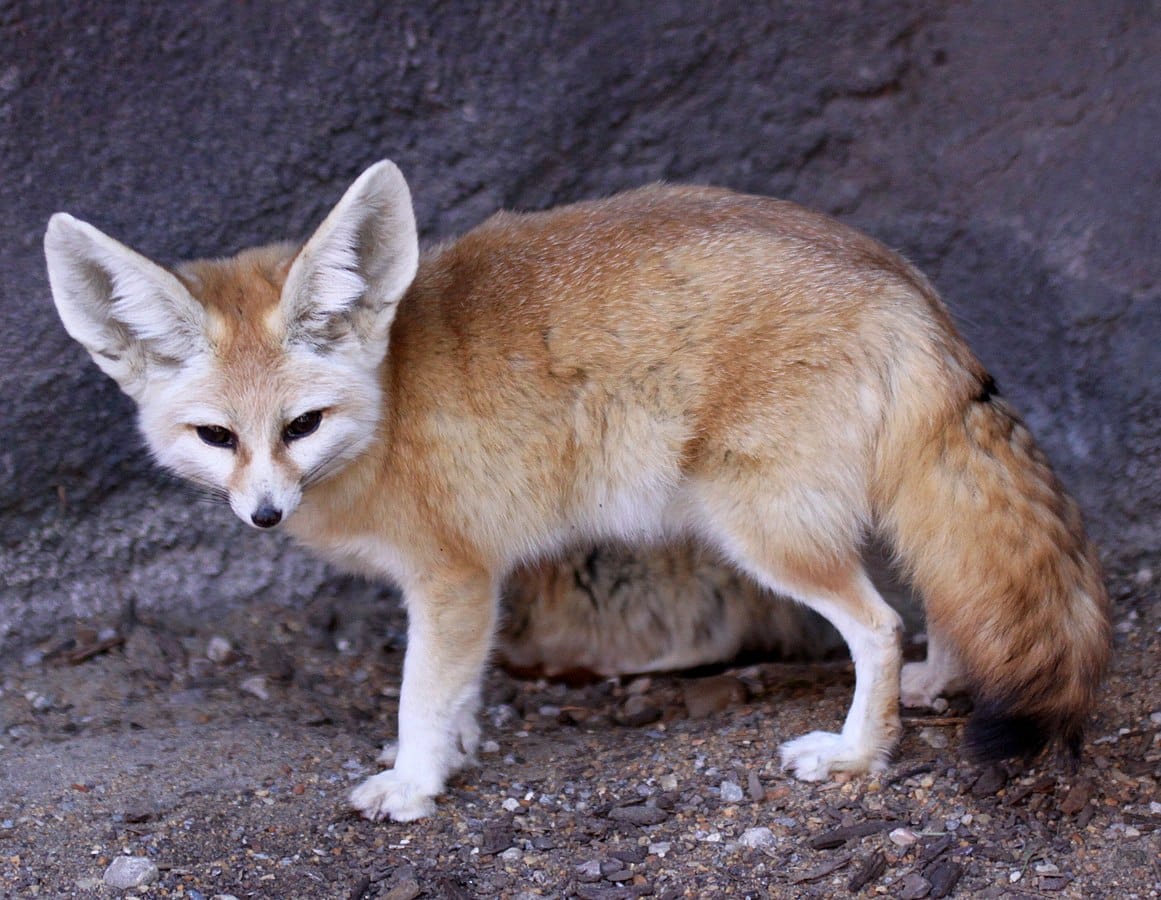
The Fennec Fox is the smallest wild dog, native to the deserts of North Africa. Adults weigh 1–1.5 kg and have large ears, pale sandy fur, and a bushy tail. Their oversized ears help dissipate heat and detect prey, while their compact bodies are adapted for extreme desert conditions.
Fennec Foxes are nocturnal omnivores, feeding on insects, small rodents, birds, fruits, and roots. They dig burrows in sand to escape daytime heat and raise pups. Socially, they live in small family groups and communicate with barks, growls, and whimpers.
Females give birth to 2–5 pups, which are cared for communally by parents. Predators include large birds of prey and humans. Despite these challenges, Fennec Foxes are relatively resilient due to their adaptability and nocturnal lifestyle.
Fennec Foxes highlight desert survival adaptations, exceptional hearing, nocturnal activity, and the diversity of wild dog lifestyles across extreme environments.
29. Red Fox (Vulpes vulpes)
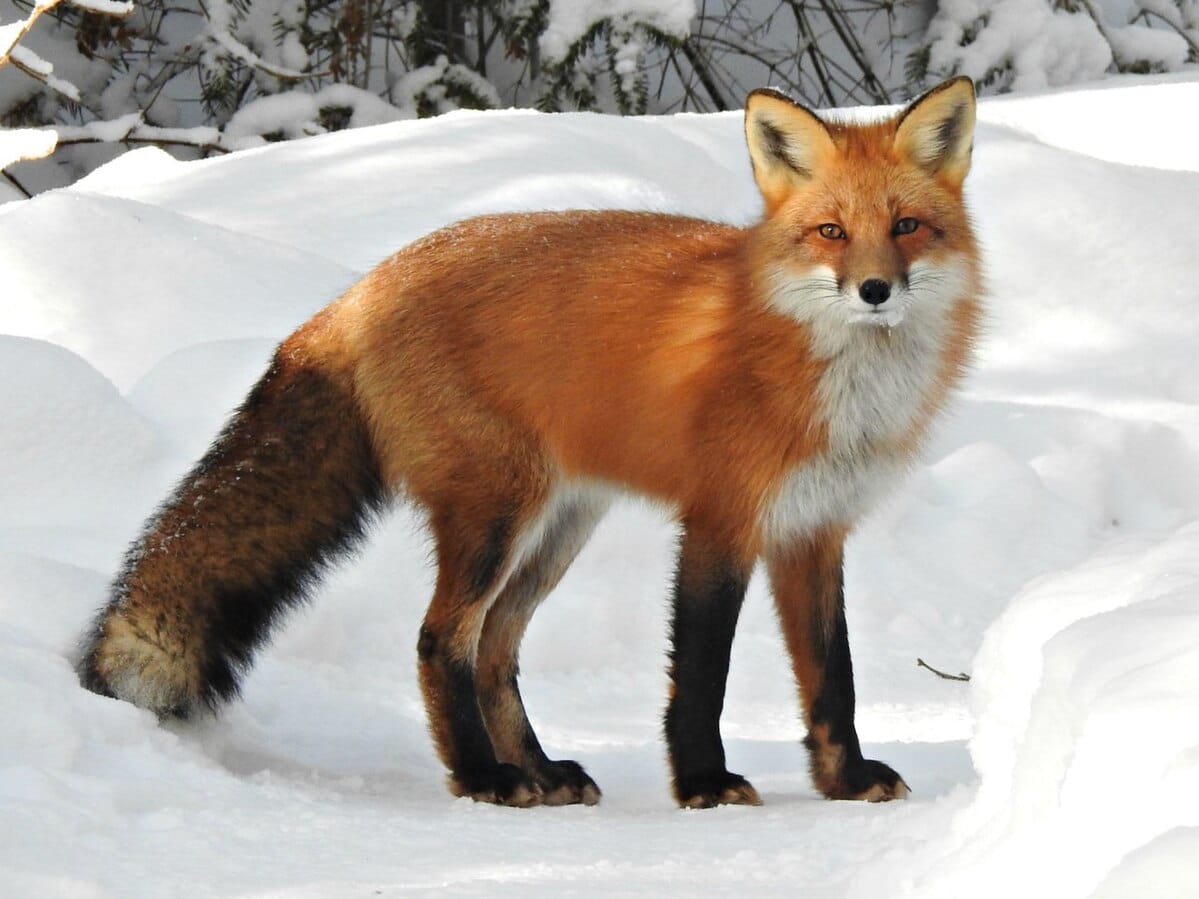
The Red Fox is the most widespread wild dog species in the world, found across North America, Europe, Asia, and North Africa. Adults weigh 4–14 kg and have striking reddish-orange fur with white underparts, black legs, and bushy tails with white tips. Their adaptability allows them to thrive in forests, grasslands, deserts, and urban areas.
Red Foxes are omnivorous and opportunistic, feeding on rodents, rabbits, birds, fruits, insects, and human scraps. They are solitary hunters, using stealth, speed, and cunning strategies to capture prey. Communication includes vocalizations, scent marking, and visual signals.
Females give birth to 4–6 pups in dens dug under rocks, tree roots, or man-made structures. Predators include wolves, large cats, and humans. Their remarkable adaptability has allowed Red Foxes to maintain stable populations worldwide.
Red Foxes exemplify versatility, intelligence, and survival skills, serving as an iconic example of wild dogs capable of thriving in diverse ecosystems and urbanized environments.
30. Kit Fox (Vulpes macrotis)
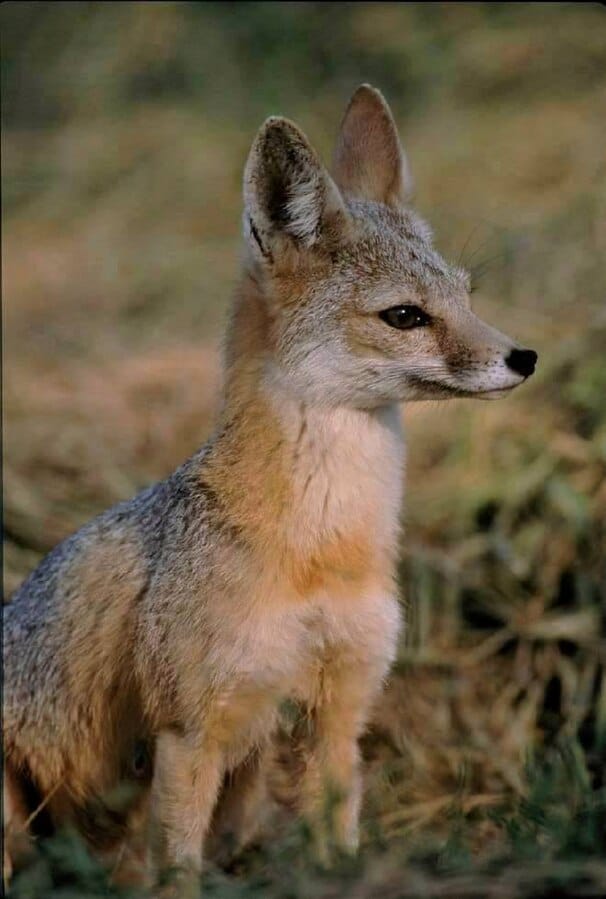
The Kit Fox is a small desert-dwelling canid native to the southwestern United States and northern Mexico. Adults weigh 2–4 kg and have large ears, sandy-gray fur, and a bushy tail, providing camouflage and thermoregulation in arid landscapes. Their long legs aid in quick, agile movements across desert terrain.
Kit Foxes are nocturnal omnivores, feeding on rodents, insects, birds, and fruits. They dig burrows to escape heat, predators, and to raise pups. Typically solitary or found in pairs, Kit Foxes use vocalizations, scent marking, and visual signals for communication.
Females give birth to 2–5 pups in dens, with parents sharing responsibilities in feeding and protection. Predators include coyotes, birds of prey, and human disturbances. Conservation focuses on habitat preservation and minimizing human-wildlife conflict.
Kit Foxes highlight desert specialization, nocturnal foraging, and the survival strategies of small wild dogs in extreme environments, completing the diversity of the 30 wild dog species covered in this guide.
Frequently Asked Questions About Wild Dogs
1. How many types of wild dogs are there?
There are around 35–40 species of wild dogs worldwide, including African wild dogs, dingoes, foxes, coyotes, and jackals.
2. What are the top 10 biggest wild dogs?
The biggest wild dogs include the Gray Wolf, Dhole, African Wild Dog, Maned Wolf, Dingo, Coyote, Jackal, Bush Dog, Black-backed Jackal, and Side-striped Jackal.
3. What type of dog is a wild dog?
Wild dogs belong to the Canidae family, which includes wolves, foxes, coyotes, jackals, and dingoes. They are generally undomesticated and live in packs.
4. What is the most common wild dog?
The Gray Wolf is the most widespread and common wild dog species, found across North America, Europe, and Asia.
5. What is the rarest wild dog?
The African Painted Dog, also known as the African Wild Dog, is among the rarest, with populations threatened by habitat loss and human conflict.
6. Is a hyena a dog?
No, hyenas belong to the Hyaenidae family and are more closely related to cats than to dogs, despite their dog-like appearance.
7. What is the deadliest wild dog in the world?
The African Wild Dog is considered very effective hunters with coordinated pack strategies, making them deadly predators in their ecosystem.
8. What is the biggest friendliest dog?
The Gray Wolf, while wild, can exhibit cooperative behaviors in packs and shows social intelligence, though it is not safe as a pet.
9. Can wild dog breeds be domesticated?
Some wild dog species, like dingoes, can be tamed to some extent, but most wild dogs remain naturally undomesticated and require specialized care.
10. Are wild dogs smart?
Yes, wild dogs are highly intelligent, capable of strategic hunting, social coordination, and learning from experience within their packs.
11. What are the four types of dogs?
The four main types of dogs are working dogs, herding dogs, sporting dogs, and hounds. Wild dogs fall outside these domestic categories.
12. Is a fox a cat or a dog?
A fox is a canine, part of the Canidae family, and is therefore more closely related to dogs than cats.
13. What’s the most harmless dog?
Among wild dogs, the Fennec Fox is harmless to humans due to its small size and shy behavior.
14. How many types of wild dogs are there in the world?
Globally, there are roughly 35–40 species of wild dogs spread across different continents.
15. What is the wild dog that looks like a fox?
The Maned Wolf and the Fennec Fox are examples of wild dogs that resemble foxes due to their pointed faces and bushy tails.
16. What is the most forgotten dog breed?
The Dhole, also known as the Asiatic Wild Dog, is one of the most overlooked wild dog species despite its widespread range in Asia.
17. Are wild dogs friendly to humans?
Wild dogs are generally wary of humans. While they may show curiosity, most species are not safe to approach or interact with.
18. What is the largest wild dog in the world?
The Gray Wolf is the largest wild dog, with males reaching up to 175 pounds and standing 32 inches at the shoulder.
19. Is a coyote a dog?
Yes, coyotes are part of the Canidae family and are closely related to wolves and domestic dogs.
20. What eats a hyena?
Adult hyenas have few natural predators, but lions may attack them. Young hyenas can fall prey to lions, leopards, and large snakes.
21. Is a lion a cat?
Yes, lions belong to the Felidae family, making them true cats, not related to dogs or wild dogs.
22. What is the nicest dog on Earth?
In terms of temperament toward humans, the African Painted Dog is social within its pack but cautious around people.
23. Can a fox and a dog breed?
No, foxes and domestic dogs cannot breed. They are different genera within the Canidae family, so reproduction is impossible.
24. What is the most hostile dog?
The Dhole can be aggressive when hunting or protecting territory, but hostility toward humans is rare if left undisturbed.
25. What is a feral dog vs. wild dog?
A feral dog is a domestic dog that has returned to the wild. A wild dog is a naturally undomesticated species that has never been domesticated.
26. Which dog is a hunting dog?
The African Wild Dog, Gray Wolf, and Coyotes are natural hunters in the wild, using packs or strategy to capture prey.
27. Is a dingo a wild dog?
Yes, dingoes are wild dogs native to Australia. They are descended from domestic dogs brought by humans thousands of years ago but now live independently in the wild.
28. Are hyenas wild dogs?
No, hyenas are not dogs. They are more closely related to cats, even though they share some behavioral traits with wild dogs.
29. What is the rare jungle dog?
The Dhole, or Asiatic Wild Dog, is sometimes called the jungle dog because it inhabits dense forests across Asia and is relatively rare.
30. What’s the most exotic dog?
The Maned Wolf is considered exotic due to its unique appearance, long legs, reddish coat, and solitary lifestyle.
31. What dog has killed the most humans?
Historically, feral dogs and domestic dog attacks have caused more human fatalities than any single wild dog species.
32. Are all foxes canines?
Yes, all foxes belong to the Canidae family, making them true canines along with wolves, jackals, and domestic dogs.
33. What dog is the most feared?
The African Wild Dog is feared by its prey due to highly coordinated pack hunting and endurance chasing capabilities.
34. Is Bluey a dingo?
Yes, Bluey, the popular Australian cartoon dog, is based on a dingo.
35. What is Steve Irwin’s favorite animal?
Steve Irwin loved many animals, but he had a particular fascination with crocodiles and wild Australian wildlife, including dingoes and wild dogs.
36. Are dingos friendly to humans?
Dingoes can be cautious around humans. In some cases, they show curiosity or tolerance, but they are wild animals and should not be approached or fed.
Conclusion
Wild dogs are among the most fascinating and ecologically important members of the canid family. From the elusive Ethiopian Wolf of the highlands to the adaptable Red Fox in urban landscapes, each species displays unique adaptations that allow them to survive in diverse ecosystems. They play critical roles in controlling prey populations, maintaining ecological balance, and contributing to biodiversity. Understanding their behavior, diet, habitat, and social structures helps conservationists and wildlife enthusiasts appreciate their significance and the challenges they face from habitat loss, human conflict, and climate change. Protecting wild dogs ensures the health and resilience of ecosystems worldwide, highlighting the need for informed conservation strategies and global awareness.
Read more: 29 Types of Wild Horses