
Missouri may not be the first state that comes to mind when thinking about hummingbirds, but these tiny jewels are a delight for birdwatchers across the region. From the well-known Ruby-throated Hummingbird to rare vagrants, Missouri hosts a fascinating variety during migration and breeding seasons. Observing these hummingbirds offers insight into their remarkable agility, feeding strategies, and vibrant colors. In this guide, we’ll explore 5 types of hummingbirds in Missouri, their physical characteristics, behaviors, habitats, diets, reproduction, and interactions with humans, helping you identify and appreciate these tiny avian wonders.
1. Ruby-throated Hummingbird (Archilochus colubris)
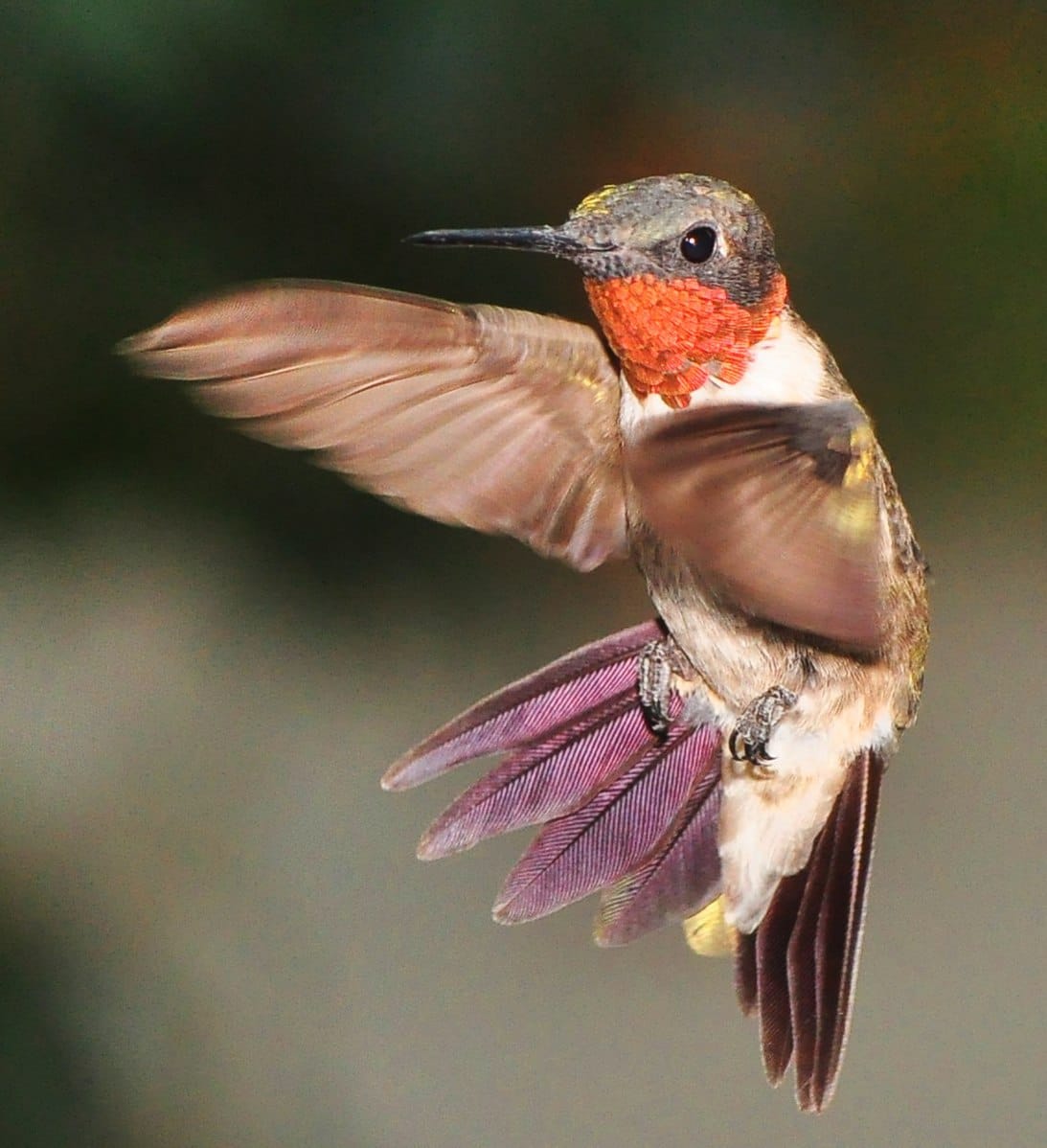
Physical Characteristics & Identification Tips
The Ruby-throated Hummingbird is a small bird, measuring 3 to 3.5 inches with a wingspan of around 3.1 inches. Males are instantly recognizable by their iridescent ruby-red throat, contrasting sharply with a green back and white underparts. Females lack the red throat, showing a speckled white chest and green back. One practical identification tip is to watch for rapid wingbeats, hovering ability, and long, slender bill designed for nectar extraction. Their tiny size combined with bright coloration makes them particularly noticeable at feeders.
Behavior and Nesting Habits
Ruby-throated Hummingbirds are energetic and territorial. Males aggressively defend feeding territories and chase away intruders with impressive aerial maneuvers. Females build delicate cup-shaped nests using plant down, spider silk, and lichens, often camouflaged on tree branches. These nests can appear surprisingly small, about the size of a walnut, yet they house developing chicks safely. Both sexes demonstrate exceptional hovering skills and can feed midair from flowers with pinpoint accuracy.
Habitat and Range
These hummingbirds are widespread throughout Missouri during summer breeding seasons. They prefer woodland edges, meadows, and gardens where flowering plants abound. Migration occurs annually from the eastern United States to Central America, covering thousands of miles despite their tiny size. In Missouri, they are often seen near rivers, woodland clearings, and suburban yards with abundant nectar sources.
Diet
Nectar forms the bulk of their diet, drawn from trumpet-shaped flowers such as cardinal flowers, bee balm, and honeysuckle. Small insects, spiders, and tree sap provide essential protein, particularly during nesting. They may visit backyard feeders filled with sugar water, which can help sustain them during migration. Their feeding pattern is rapid and repetitive, often visiting hundreds of flowers daily.
Reproduction and Life Cycle
Females lay two eggs per clutch, incubating them for roughly 12–14 days. Chicks fledge after about three weeks. Only the female tends to the young, providing feeding and protection until fledging. Ruby-throated Hummingbirds typically produce one to two broods per season. Their life cycle aligns with the flowering period in Missouri, ensuring adequate food for growing chicks.
Fun Facts / Unique Traits
Despite their size, these hummingbirds undertake remarkable migrations across the Gulf of Mexico, demonstrating stamina beyond expectation. Males perform a courtship “U-shaped” dive, displaying their ruby throats in dazzling sunlight. Their tiny hearts beat over 1,200 times per minute during flight, a testament to their energetic lifestyle.
Human Interaction
Ruby-throated Hummingbirds are frequent visitors to feeders in Missouri backyards. Planting native flowering plants or maintaining clean nectar feeders can attract them reliably. Birdwatchers often time visits to coincide with early summer when males display the brightest throat colors.
2. Rufous Hummingbird (Selasphorus rufus)
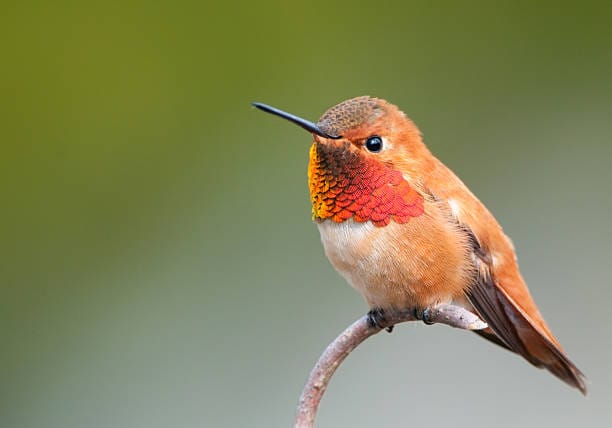
Physical Characteristics & Identification Tips
Rufous Hummingbirds are slightly smaller than Ruby-throated, measuring 2.75 to 3 inches. Males boast bright orange-red backs and rufous throats, with white underparts. Females are green-backed with lighter throats, sometimes showing orange streaking. A distinctive identification tip is the aggressive wingbeat and orange tail with a slight fork visible during flight displays.
Behavior and Nesting Habits
Rufous Hummingbirds are notorious for their feisty temperament. Males aggressively defend territories, often chasing other hummingbirds and insects. Females construct tiny, camouflaged nests on thin branches or shrubs, incorporating plant fibers and spider silk. They exhibit intense hovering and rapid darting while feeding, often visiting multiple flowers in quick succession.
Habitat and Range
These hummingbirds primarily breed in the northwestern U.S. but are regular vagrants in Missouri during migration. They favor open fields, gardens, and woodland edges. Their migratory range extends to Mexico for winter, passing through Missouri from late spring to early fall.
Diet
Nectar is the main dietary source, supplemented with small insects and spiders. Flowers with tubular shapes, such as columbines and trumpet creepers, are preferred. In Missouri, backyard feeders with sugar solutions are often visited during migration. Their high metabolism requires frequent feeding intervals.
Reproduction and Life Cycle
Females lay two eggs per clutch, incubated for approximately 14 days. Chicks fledge after 20–22 days. Females are solely responsible for raising the young. Migratory timing ensures that nesting aligns with peak flower availability.
Fun Facts / Unique Traits
Rufous Hummingbirds are famous for their aggressive territoriality, often called “the fighter jet of the hummingbird world.” Their vibrant orange plumage stands out vividly against Missouri’s green foliage during migration. They hold the record for longest migration relative to body size among North American hummingbirds.
Human Interaction
Missouri residents can attract Rufous Hummingbirds by placing red-colored feeders in gardens and maintaining native flowers. Sightings are often celebrated by local birding groups due to the species’ rarity in the region.
3. Black-chinned Hummingbird (Archilochus alexandri)
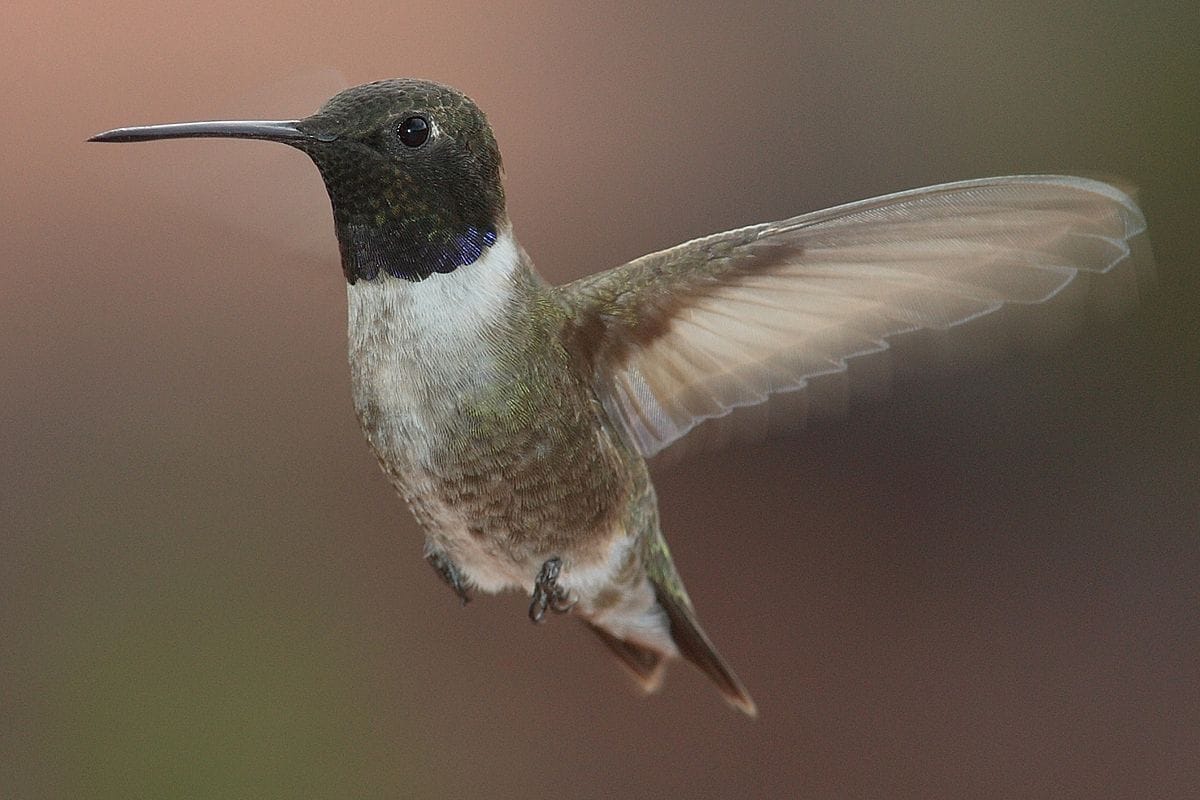
Physical Characteristics & Identification Tips
The Black-chinned Hummingbird is 3 to 3.25 inches long. Males feature a black throat with an iridescent purple base, green back, and gray underparts. Females are less vivid, with white underparts and subtle green backs. The slightly forked tail and black chin of males are key identification features. Observation of hovering near flowers can also aid in distinguishing them from similar species.
Behavior and Nesting Habits
These hummingbirds are agile fliers, often defending feeding territories with aerial chases. Females build tiny cup-shaped nests on tree branches using plant down and spider silk. They are versatile feeders, hovering to access flowers or occasionally gleaning insects from foliage. Males perform quick display flights to establish dominance and attract mates.
Habitat and Range
Black-chinned Hummingbirds are more common in the southwestern U.S., but rare vagrants reach Missouri during migration. They prefer semi-open woodlands, riparian areas, and gardens with ample nectar sources. Migration takes them south to Mexico, passing through Missouri under favorable conditions.
Diet
Nectar is the primary food source, with small insects and spiders providing protein. They feed from tubular flowers such as penstemons, honeysuckle, and trumpet creepers. Backyard feeders with fresh sugar water are often visited during migration, providing energy for long flights.
Reproduction and Life Cycle
Females lay two eggs per clutch in small, well-camouflaged nests. Incubation lasts 14–16 days, and fledglings leave the nest after roughly three weeks. The female continues feeding chicks briefly after fledging.
Fun Facts / Unique Traits
Despite being less colorful than some other hummingbirds, the Black-chinned Hummingbird’s purple throat sheen can be striking in sunlight. Their endurance during migration and ability to adapt to garden feeders make them a fascinating species for birdwatchers in Missouri.
Human Interaction
Backyard gardens with native flowers and nectar feeders can attract these rare vagrants. Birders often document sightings and share them in Missouri birdwatching communities, making them prized encounters.
4. Anna’s Hummingbird (Calypte anna)
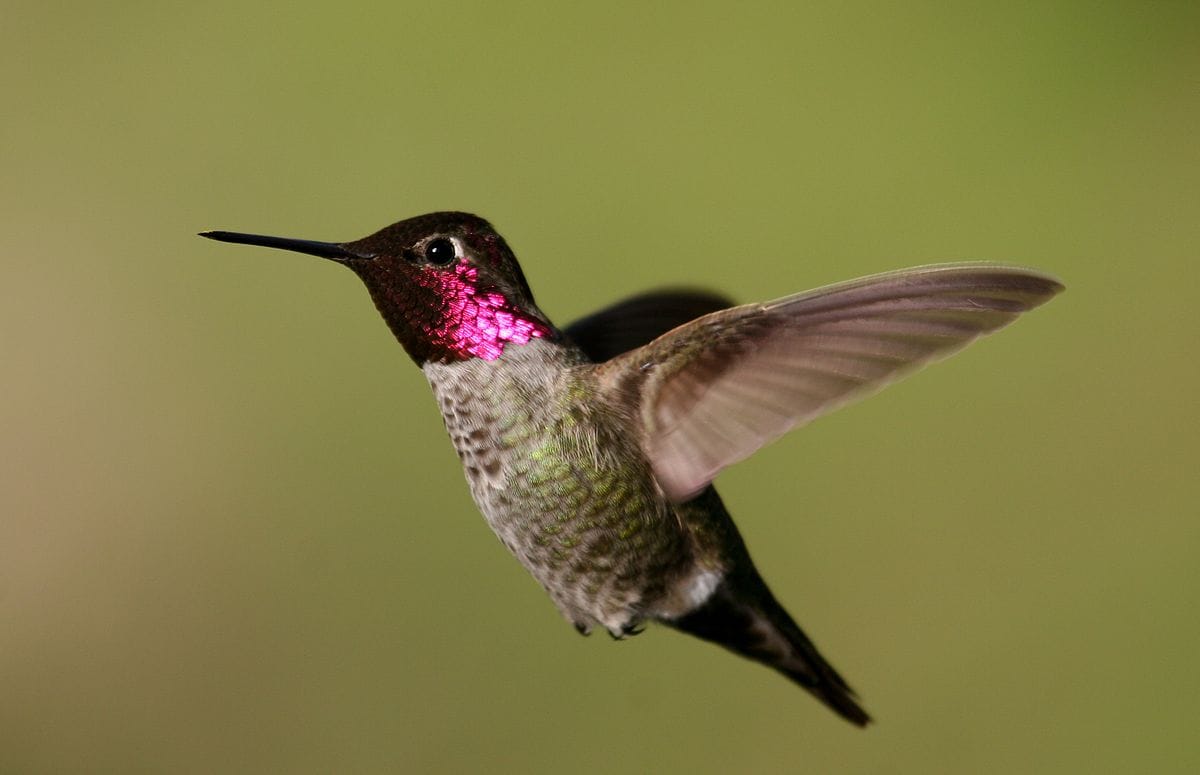
Physical Characteristics & Identification Tips
Anna’s Hummingbird is slightly larger than many common species, measuring about 3.75 inches. Males are known for their striking rose-pink gorget and crown, contrasted with metallic green back and grayish underparts. Females are more subdued, with green backs and pale gray chests. One key identification tip is the bright gorget on males, visible from a distance, particularly during display flights. Their compact yet robust body structure supports agile hovering and quick directional changes.
Behavior and Nesting Habits
Anna’s Hummingbirds are bold and can feed alongside humans with minimal disturbance. Males are territorial and perform dramatic display dives to impress females. Their hovering and darting are precise, enabling them to extract nectar from flowers while avoiding competitors. Females construct tiny nests on shrubs or tree branches using plant down and spider silk, often camouflaged with moss or lichen. One might notice their nests tucked neatly in shrubs in suburban gardens, a testament to their adaptability.
Habitat and Range
Although native to western North America, some Anna’s Hummingbirds have been documented as rare vagrants in Missouri, usually during winter or unusual migratory movements. They prefer urban gardens, parks, and riparian areas where flowers and feeders are abundant. Their presence in Missouri provides a fascinating opportunity to observe this species far from its typical range.
Diet
Nectar from tubular flowers such as columbines, honeysuckle, and salvias is their primary energy source. Small insects and spiders supplement their protein intake, particularly important for breeding females. In urban settings, backyard feeders with fresh sugar water are readily visited, allowing birders to witness their feeding behaviors up close.
Reproduction and Life Cycle
Females lay two eggs per clutch, incubating them for roughly 14 days. Chicks fledge after three weeks, with maternal care continuing briefly afterward. Unlike migratory hummingbirds, some Anna’s Hummingbirds overwinter in temperate areas where feeders and flowering plants provide adequate nutrition, which may extend their breeding opportunities in rare northern locations like Missouri.
Fun Facts / Unique Traits
Anna’s Hummingbirds are remarkable for their tolerance of colder climates, sometimes remaining in northern areas throughout winter. Males’ gorget feathers can reflect sunlight in brilliant shades, producing a dazzling visual effect. Their fearless nature makes them a favorite subject for backyard photography.
Human Interaction
Anna’s Hummingbirds adapt well to gardens with feeders and flowering plants. Residents of Missouri may attract these rare visitors by providing nectar solutions, planting native blooms, and offering sheltered feeding locations. Birdwatchers often celebrate their sightings as a special seasonal highlight.
5. Calliope Hummingbird (Selasphorus calliope)
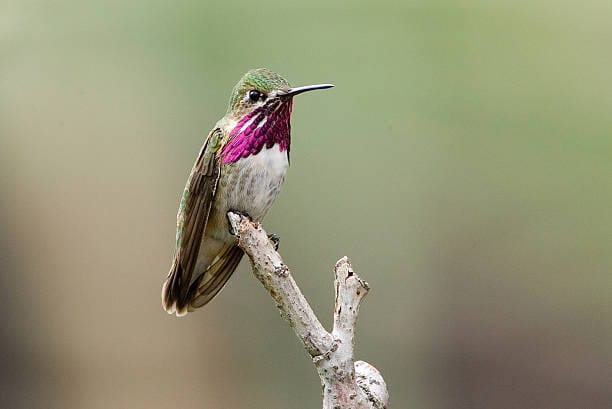
Physical Characteristics & Identification Tips
The Calliope Hummingbird is the smallest breeding hummingbird in North America, measuring just 2.75 inches. Males have a striking magenta throat with spiky streaks, green back, and white underparts. Females are less colorful, with green backs and pale throats marked with faint streaks. Identification relies on size, coloration, and rapid wing movement, especially during hovering at feeders or flowers. Their small, streamlined bodies make them highly maneuverable in tight spaces.
Behavior and Nesting Habits
Calliope Hummingbirds are energetic, often seen darting quickly among flowers and feeders. Males perform aerial displays involving rapid vertical dives while spreading their magenta gorget, a showy courtship behavior. Females construct small cup-shaped nests using plant fibers, spider silk, and lichen. These nests are typically attached to slender branches, carefully camouflaged to protect from predators. Despite their tiny size, they exhibit impressive territoriality, defending prime nectar sources vigorously.
Habitat and Range
Primarily found in the northwestern United States during breeding season, Calliope Hummingbirds are rare visitors in Missouri. They migrate to Mexico for the winter, passing through the central U.S. during spring and fall. In Missouri, they can occasionally be found in gardens, woodland edges, and areas rich in flowering plants.
Diet
Nectar remains the main source of energy, sourced from tubular flowers such as penstemons, columbines, and trumpet vines. Small insects and spiders supply vital protein, especially during breeding. Backyard feeders in Missouri can attract these tiny migrants during their brief appearances.
Reproduction and Life Cycle
Females lay two tiny eggs per clutch, incubated for approximately 14 days. Chicks fledge in roughly three weeks, with maternal care continuing briefly afterward. Their lifecycle is closely tied to the timing of flower availability along migration routes, ensuring adequate nutrition for the young.
Fun Facts / Unique Traits
Calliope Hummingbirds hold the record for the smallest breeding hummingbird in North America. Their gorget feathers sparkle vividly in sunlight, giving them a jewel-like appearance. Despite being diminutive, they display fierce territorial behavior, a fascinating contrast for bird enthusiasts observing them in Missouri.
Human Interaction
Gardeners can attract Calliope Hummingbirds by maintaining nectar feeders and planting native flowering plants. Due to their rarity in Missouri, sightings are particularly treasured, often reported to local birding networks as exciting seasonal events.
Conclusion
Missouri may not be the first place one imagines for hummingbirds, yet this state offers a fascinating glimpse of these remarkable little birds. From the bold and colorful Anna’s Hummingbird to the tiny, jewel-like Calliope Hummingbird, each species brings unique traits, behaviors, and adaptations to the diverse landscapes of Missouri. Whether in urban gardens, woodland edges, or riparian zones, hummingbirds enrich the local ecosystem by pollinating flowers and captivating birdwatchers with their dazzling aerial displays.
Exploring the types of hummingbirds in Missouri also highlights the importance of habitat, food sources, and human interaction. Backyard feeders, native flowering plants, and protected nesting areas can support these rare visitors during migration or seasonal movements. Observing these hummingbirds provides both educational and aesthetic rewards, offering a deeper appreciation for Missouri’s avian diversity.
Ultimately, the hummingbirds of Missouri, though few in number compared to western or southern states, serve as a reminder of nature’s resilience and adaptability. With patience, proper gardening, and awareness of their habits, residents can enjoy glimpses of these vibrant, energetic birds and contribute to their conservation, ensuring that future generations of bird enthusiasts can continue to marvel at their beauty.
Frequently Asked Questions About Hummingbirds in Missouri
1. What types of hummingbirds are commonly found in Missouri?
Missouri is home to several species including Ruby-throated, Black-chinned, Anna’s, Calliope, and occasional vagrants like Violet-crowned hummingbirds.
2. When is the best time to see hummingbirds in Missouri?
The peak season is late spring through early fall during migration and breeding periods.
3. How many species of hummingbirds visit Missouri each year?
Typically, 5 to 8 species are regularly observed in Missouri, with some rare visitors appearing occasionally.
4. Are Ruby-throated Hummingbirds the most common in Missouri?
Yes, Ruby-throated Hummingbirds are by far the most abundant and widely seen species in Missouri.
5. Can Black-chinned Hummingbirds be spotted in Missouri regularly?
Black-chinned Hummingbirds are less common but can be seen during migration or in favorable habitats.
6. What habitats do hummingbirds prefer in Missouri?
Hummingbirds in Missouri prefer gardens, woodlands, forest edges, and areas with abundant flowering plants.
7. Do hummingbirds migrate through Missouri?
Yes, Missouri is on the migration route for many hummingbirds traveling between breeding and wintering grounds.
8. How can I attract hummingbirds to my Missouri backyard?
Plant native flowering plants, use red feeders with fresh nectar, and provide water sources to attract hummingbirds.
9. What flowers are best to plant for hummingbirds in Missouri?
Trumpet vine, bee balm, columbine, cardinal flower, and honeysuckle are excellent choices for Missouri gardens.
10. Are Calliope Hummingbirds rare in Missouri?
Yes, Calliope Hummingbirds are considered rare visitors and are usually spotted during migration.
11. How do Anna’s Hummingbirds behave when they are in Missouri?
Anna’s Hummingbirds are bold and may feed alongside humans, often frequenting backyard feeders if available.
12. Where in Missouri are Rivoli’s Hummingbirds most likely to appear?
Rivoli’s Hummingbirds are extremely rare in Missouri, typically appearing in the southern and western regions during unusual weather events.
13. Can Violet-crowned Hummingbirds survive winter in Missouri?
No, they are vagrants in Missouri and generally cannot survive the cold winter months.
14. What is the diet of hummingbirds in Missouri?
They feed primarily on nectar from flowers, supplemented by small insects and spiders for protein.
15. How long do hummingbirds stay in Missouri during migration?
Migrating hummingbirds may stay a few days to a few weeks depending on food availability and weather conditions.
16. Are there hummingbird feeders specifically recommended for Missouri homes?
Simple red feeders with sugar water are effective; placement near flowering plants can increase visits.
17. Do hummingbirds in Missouri face any threats from local predators?
Yes, domestic cats, larger birds, and occasionally snakes may pose threats to hummingbirds in Missouri.
18. How can I identify different hummingbird species in Missouri?
Look at throat color, size, tail shape, and wing patterns. Ruby-throated males are easy to recognize by their red throat.
19. Are Blue-throated Mountain-gems ever seen in Missouri?
Blue-throated Mountain-gems are extremely rare in Missouri and are mostly recorded as accidental visitors.
20. How do hummingbirds in Missouri choose nesting sites?
Females select tree branches or shrubs in sheltered areas with abundant insect and flower availability.
21. Can Xantus’s Hummingbirds occasionally be found in Missouri?
Xantus’s Hummingbirds are rare vagrants and sightings in Missouri are infrequent.
22. What are some fun facts about hummingbirds in Missouri?
Hummingbirds can beat their wings over 50 times per second and some can travel over 500 miles during migration through Missouri.
23. How do Missouri hummingbirds differ from those in neighboring states?
The main difference is the species composition and migration timing, which can vary slightly due to local climate and habitats.
24. Do hummingbirds in Missouri prefer urban or rural areas?
They can thrive in both, as long as there are sufficient nectar sources and safe nesting sites.
25. Are there organized hummingbird-watching events in Missouri?
Yes, many birding clubs and wildlife organizations host annual hummingbird counts and garden tours in Missouri.
26. How can I photograph hummingbirds in Missouri effectively?
Use fast shutter speeds, position near feeders or flowers, and be patient for hovering shots.
27. What is the lifespan of hummingbirds that migrate through Missouri?
Hummingbirds can live up to 5 years on average, though many face hazards during migration through Missouri.
28. How do climate changes affect hummingbirds in Missouri?
Shifts in flowering seasons, temperature, and storms can alter migration timing and food availability in Missouri.
29. Are hummingbird populations in Missouri increasing or decreasing?
Populations fluctuate; habitat loss and climate factors affect numbers, but backyard feeding helps support local populations.
30. What are common behavioral traits of hummingbirds in Missouri?
They are territorial, agile fliers, and often defend feeders vigorously. Males perform display dives during breeding.
31. How do Missouri gardeners support hummingbird breeding?
Plant native nectar plants, provide safe nesting areas, and avoid pesticide use to protect insects they eat.
32. Can hummingbirds in Missouri coexist with other nectar-feeding birds?
Yes, though they may chase smaller competitors, they generally share habitats with bees, butterflies, and other nectar feeders.
33. Are there state-specific guidelines for protecting hummingbirds in Missouri?
Missouri encourages planting native flora, maintaining feeders, and monitoring bird populations through citizen science programs.
Read more: 15 Types of Hummingbirds in Alabama: Species, Identification, and Photos