
Weasels in Pennsylvania are agile, elusive, and surprisingly fascinating. Though small in size, they play a mighty role in the state’s forests, fields, and farmlands. If you’ve ever caught a glimpse of a slim, russet-colored blur darting across the snow or between ferns, chances are you’ve encountered one. In this guide, we’ll explore the types of weasels in Pennsylvania—their habits, habitats, and what makes each of them so captivating to watch. Whether you’re a curious hiker, a nature photographer, or just wondering who’s been leaving those tiny tracks in the snow, this detailed identification and behavior guide will help you recognize and appreciate these quick-footed predators.
1. Long-Tailed Weasel (Neogale frenata)

Physical Characteristics & Identification Tips
The Long-tailed Weasel is Pennsylvania’s most widespread species and the easiest to spot—if you’re lucky. It’s the largest of the state’s three native weasels, averaging 11–17 inches in total length, with a tail that takes up nearly half that measurement. Its most striking feature is the dark tip on the tail—like it dipped it in an inkwell. The summer coat is a warm brown with a creamy white underbelly, while in winter, individuals in northern Pennsylvania may turn nearly pure white for camouflage against snow. Males are significantly larger than females, a form of sexual dimorphism common among mustelids. Their slender body and short legs make them appear almost serpentine in movement—a design perfect for pursuing rodents through burrows.
Behavior
Long-tailed Weasels are energetic hunters with an appetite that could humble a fox. They’re mostly solitary and fiercely territorial, patrolling their home range daily. Don’t be fooled by their size—these animals can take down prey much larger than themselves, including rabbits and squirrels. They’re crepuscular, meaning most active at dawn and dusk, though hunger can override their schedule. Observers often remark on their playful nature: when excited, they perform a hopping, twisting “weasel war dance,” a display that’s equal parts intimidating and endearing.
Habitat and Range
Across Pennsylvania, the Long-tailed Weasel thrives anywhere there’s cover and prey. You’ll find them along hedgerows, stone fences, forest edges, and old barns. They favor mixed habitats where open ground meets woodland, giving them both hunting territory and shelter. Their range extends across most of North America—from Canada to Central America—so Pennsylvania represents just one cozy corner of their vast domain.
Diet
The Long-tailed Weasel’s diet reads like a small-mammal census: mice, voles, shrews, chipmunks, and occasionally birds, eggs, or frogs. They’re known for surplus killing—storing extra prey in caches for lean times. While that might sound grim, it’s part of a natural control system that keeps rodent populations balanced, especially around farms and grain stores.
Reproduction and Life Cycle
Mating usually takes place in summer, but like many mustelids, Long-tailed Weasels practice delayed implantation—the fertilized egg remains dormant for months. Kits are born in spring, often in old burrows or hollow logs, blind and helpless. By two months old, they’re already miniature hunters shadowing their mother. Lifespan in the wild rarely exceeds three years, but their quick maturity and high reproductive rate keep populations stable.
Fun Facts / Unique Traits
One of the more curious behaviors of this species is its tendency to stand upright on its hind legs, scanning the area like a meerkat. Farmers have long considered them both pest and ally—a single weasel can remove hundreds of rodents from a property in a season. Their body temperature and metabolism are astonishingly high, meaning they need to eat frequently—sometimes half their own body weight in a day!
Human Interaction
Historically, people misunderstood the Long-tailed Weasel, blaming it for poultry raids that were often the work of other predators. Today, they’re more often admired for their ecological value. Spotting one in the wild is still a rare privilege. For rural Pennsylvanians, a fleeting sight of that long, brown streak across a snowy field has become a quiet winter tradition.
2. Short-Tailed Weasel / Ermine (Mustela erminea)

Physical Characteristics & Identification Tips
The Ermine, or Short-tailed Weasel, might be small, but it’s the most famous of Pennsylvania’s weasels—thanks to its luxurious winter coat. In colder months, this species turns pure white except for the telltale black tail tip. Historically, that snowy pelt was prized in royal robes and ceremonial garments. In summer, the Ermine wears a chocolate-brown coat with a yellowish underside. It’s smaller than its long-tailed cousin, with a proportionately shorter tail and a more compact body, rarely exceeding 13 inches in total length.
Behavior
Energetic and curious, Ermines are like nature’s perpetual motion machines. They dart, twist, and disappear faster than your eyes can follow. Their hunting style is bold—they’ll invade rodent tunnels, climb trees, or swim across streams in pursuit of prey. When threatened, they emit a sharp, musky scent from anal glands, reminding potential predators that small doesn’t mean defenseless. Though solitary, they communicate through chirps, squeaks, and scent markings. Observers often find them surprisingly fearless for such small creatures.
Habitat and Range
In Pennsylvania, Ermines are most common in the cooler northern and central counties. They prefer woodlands interspersed with open fields or wetlands—habitats that provide ample prey and shelter. Dens are often taken over from voles or chipmunks, then lined with fur or feathers for insulation. The species’ range extends across northern North America, Europe, and Asia, but each regional population adapts to local climates. In PA, they sometimes remain brown year-round if snow cover is minimal.
Diet
Like all weasels, Ermines are carnivorous specialists. Small mammals make up the bulk of their diet, with field mice being a particular favorite. They also take insects, small birds, and occasionally amphibians. With their slender bodies, they can chase prey right into underground burrows—few other predators can follow that far. Watching one hunt is like watching a tiny athlete sprint a marathon underground.
Reproduction and Life Cycle
Ermines breed in midsummer, but like the Long-tailed Weasel, implantation is delayed until late winter. The female gives birth to 4–9 kits in spring, raising them alone. By six weeks, they begin to explore outside the den; by three months, they’re ready to strike out independently. The short lifespan (typically two to three years) is offset by their high reproductive success and adaptability.
Fun Facts / Unique Traits
Few animals undergo such a dramatic seasonal transformation as the Ermine. This color shift isn’t just for show—it’s a finely tuned camouflage response triggered by daylight length, not temperature. Interestingly, some individuals in southern PA remain partially brown even in winter, creating a “patchwork” coat that looks almost artistic. And yes, that iconic black tail tip isn’t decorative—it helps confuse predators during escape, drawing attention away from the body’s vital core.
Human Interaction
Once heavily trapped for the fur trade, Ermines are now protected in many regions. In Pennsylvania, they’re valued for their role in pest control and admired by naturalists. Their white winter coat has inspired folklore across cultures—symbolizing purity, cunning, and resilience. Spotting an Ermine dashing across snow feels like a brush with old legends, a reminder that nature still keeps secrets in the quiet corners of the forest.
3. Least Weasel (Mustela nivalis)

Physical Characteristics & Identification Tips
Meet the Least Weasel—the tiniest carnivore in Pennsylvania, and arguably the fiercest per ounce of body weight. Adults are rarely more than 8 inches long and weigh less than 2 ounces. Despite their delicate frame, their bite packs a punch. Their fur is chestnut-brown above and white below, with no black tail tip (a key feature distinguishing them from other weasels). In northern populations or high altitudes, they may turn white in winter, blending perfectly with snow-covered surroundings.
Behavior
Don’t let the name fool you: “Least” refers to size, not spirit. These little predators are bold, lightning-fast, and seemingly tireless. They live alone, defending their small territories fiercely against intruders. A Least Weasel on the hunt is all business—slipping through grass like liquid energy. They emit high-pitched squeaks when alarmed and may perform a jerky, hopping dance similar to their larger cousins. Their metabolism is incredibly fast; missing even one meal can be dangerous, so they hunt almost constantly.
Habitat and Range
In Pennsylvania, the Least Weasel tends to inhabit open fields, meadows, and the edges of woodlands. They often reuse old vole tunnels for nesting and hunting. Although less commonly seen than Long-tailed or Short-tailed Weasels, they’re widely distributed across the northern hemisphere. Their tiny size allows them to exploit microhabitats larger predators can’t access, making them true specialists of small spaces.
Diet
Their diet consists mostly of small rodents—especially voles and mice—but they’ll also consume insects and small birds. Because their energy requirements are so high, they may store extra prey in their burrows. Observers sometimes find neat piles of mouse remains—a grim but efficient pantry system. Their hunting style is swift and silent: a quick pounce, a bite to the neck, and the hunt is over in seconds.
Reproduction and Life Cycle
Least Weasels breed multiple times a year when food is abundant. After a short gestation, females give birth to 4–6 kits in a soft, fur-lined nest. The young grow rapidly, weaned at three weeks, and reach independence within two months. Lifespan is short—often under a year in the wild—but high fertility and adaptability keep their populations steady.
Fun Facts / Unique Traits
The Least Weasel’s small size gives it superpowers in tight quarters. It can slip through a hole barely wider than a pencil and twist inside tunnels no other predator can navigate. In folklore, its tiny stature earned it a reputation for cunning and resourcefulness—proof that bravery doesn’t come in only one size. Some farmers even regard their presence as a good omen, believing they protect granaries from rodent infestations.
Human Interaction
Because they’re so small and quick, Least Weasels are rarely seen by Pennsylvanians, though their tracks may betray their presence in snow or dust. Unlike their larger relatives, they seldom raid poultry houses, making them less controversial neighbors. Their contribution to rodent control is immense, quietly keeping ecosystems—and even farms—balanced.
4. American Mink (Neogale vison) – A Weasel Relative

Physical Characteristics & Identification Tips
While not a “true” weasel, the American Mink shares the same sleek build, quick reflexes, and carnivorous nature as its smaller cousins. Averaging 18–26 inches from nose to tail, it’s noticeably larger and heavier than the Long-tailed Weasel. Its glossy dark-brown coat is water-repellent, and the underfur is dense and velvety—once prized in the fur trade. Look for a distinctive white chin patch, rounded ears, and webbed feet built for swimming. Its tail is bushier than that of a true weasel, helping it maneuver gracefully in the water.
Behavior
American Minks are primarily nocturnal and semi-aquatic. They move silently along riverbanks, diving after fish or frogs, then vanish beneath overhanging roots. Unlike the tireless energy of an Ermine, minks hunt with calculated patience. They mark their territory with scent, and though solitary, they leave a trail of clues—tracks, slides, and scat—along their routes. Curious by nature, they sometimes watch humans from a distance, eyes glinting like polished stones before slipping away without a sound.
Habitat and Range
Across Pennsylvania, the American Mink favors wetlands, lake edges, and slow-moving streams. It thrives wherever clean water meets thick vegetation. Even near suburban ponds, its secretive habits keep it out of sight. Nationwide, minks inhabit nearly all of North America except the arid southwest, making them one of the continent’s most adaptable small carnivores.
Diet
The mink’s menu is diverse—fish, crayfish, frogs, muskrats, small birds, and even snakes. They’re opportunistic, taking whatever the habitat offers. With powerful jaws and sharp teeth, a mink can subdue prey almost its own size. They often stash surplus food in burrows or hollow logs, insurance against leaner nights.
Reproduction and Life Cycle
Breeding takes place in late winter. After a delayed implantation period of several weeks, the female gives birth in spring to 3–6 kits inside a nest lined with dried grass and feathers. By midsummer, the young begin exploring waterways under their mother’s watchful eye. In the wild, minks may live up to four years, though many fall victim to predators such as owls or coyotes.
Fun Facts / Unique Traits
Few animals embody both land and water quite like the American Mink. It can swim underwater for over 100 feet, using its tail as a rudder, then sprint through grass almost as fast as a rabbit. Because of their glossy coats and curious intelligence, escaped domestic minks from old fur farms have established wild populations in several states—proof of their resourcefulness. And yes, a mink’s musky scent is legendary; even a trace of it lingers near their dens long after they’ve moved on.
Human Interaction
Once trapped heavily for fur, minks are now valued as indicators of healthy wetland ecosystems. Their presence usually signals clean water and abundant life beneath the surface. For Pennsylvanians paddling a quiet stream, spotting a dark shape slip into the reeds is a reminder that wildness still thrives just beyond the paddle’s ripple.
5. Fisher (Pekania pennanti) – Another Weasel Family Member
Physical Characteristics & Identification Tips
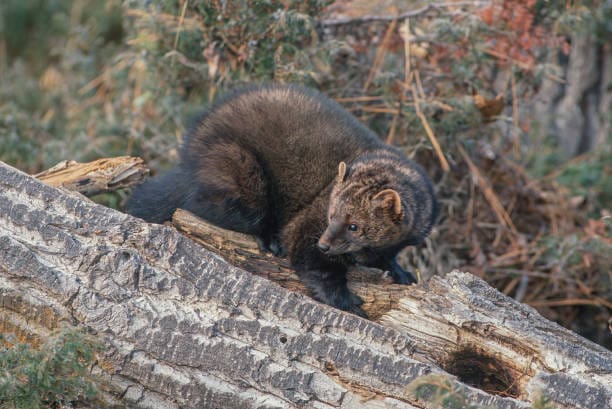
The Fisher is often mistaken for an oversized weasel or small otter. Belonging to the same mustelid family, it’s one of the larger members—males may reach 40 inches long and weigh up to 12 pounds. Its coat is rich brown, with lighter guard hairs giving it a grizzled look. Rounded ears, strong limbs, and a long bushy tail make it look powerful yet agile. Despite its misleading name, the Fisher rarely eats fish; early settlers simply misheard a French term for a similar European animal.
Behavior
Fishers are solitary forest dwellers that move with cat-like stealth. They’re excellent climbers and among the few predators capable of hunting porcupines, using quick bites to the face to avoid quills. On the ground, their rolling gait covers long distances effortlessly. Though primarily nocturnal, they’re sometimes active at dawn or dusk. Their curiosity can lead them close to human dwellings, especially near chicken coops or compost piles rich in scent.
Habitat and Range
Once nearly eliminated from Pennsylvania due to deforestation and trapping, Fishers have made a notable comeback. They’re now found in northern and central woodlands, particularly within large tracts of mixed forest. Their home ranges can stretch several square miles, often overlapping creeks and rocky hillsides. Reintroduction programs have helped restore balance to forest ecosystems, where Fishers keep rodent and porcupine numbers in check.
Diet
The Fisher’s diet is wonderfully varied: squirrels, rabbits, voles, birds, insects, carrion, and even fruit when available. Its hunting technique is a blend of stealth and strength—creeping close, then exploding into motion with lightning speed. Watching one hunt, you might think of it as a cross between a fox and a gymnast.
Reproduction and Life Cycle
Breeding occurs in late winter, but like other mustelids, implantation is delayed until spring. After roughly a year, the female gives birth to 2–4 kits in a hollow tree. The young open their eyes at about six weeks and start climbing soon after. Juveniles disperse by autumn, searching for their own territories in Pennsylvania’s expanding forests.
Fun Facts / Unique Traits
Despite their name, Fishers almost never fish—they’re better known for their acrobatics and problem-solving skills. They can descend trees head-first by rotating their rear ankles, just like squirrels. In winter, they sometimes follow snowshoe hares, matching each bound with astonishing precision. The combination of strength, flexibility, and audacity makes the Fisher one of Pennsylvania’s most underrated predators.
Human Interaction
Encounters between Fishers and people are rare, but their population rebound occasionally leads to sightings near suburban woodlots. They may raid chicken coops if given easy access, though such incidents are uncommon. Wildlife agencies emphasize coexistence: securing poultry at night and maintaining forest corridors helps these animals thrive without conflict. Seeing one dash across a dirt road at dusk is a moment most Pennsylvanians won’t forget—a glimpse into a once-vanished wilderness returning home.
FAQ’s
1. Are there weasels in Pennsylvania?
Yes, Pennsylvania is home to two types of weasels: the Long-tailed Weasel (Neogale frenata) and the Short-tailed Weasel, also known as the Ermine (Mustela erminea). Both species live in forests, fields, and farmlands throughout the state.
2. Which genus has the most weasel species?
The genus Mustela contains the most weasel species. This group includes true weasels, stoats, polecats, and ferrets, all known for their slim bodies and carnivorous habits.
3. What color is a weasel?
Weasels are typically brown on top and white or cream underneath during summer. In colder regions, such as northern Pennsylvania, the Short-tailed Weasel’s coat turns completely white in winter to help it blend into the snow.
4. What is a mountain weasel?
The Mountain Weasel (Mustela altaica) is a species found in central and eastern Asia. It doesn’t live in North America but is known for surviving in rocky, high-altitude environments with cold climates.
5. Where to find weasels?
Weasels in Pennsylvania can be found in wooded areas, farmlands, brushy fields, and near rivers or stone walls. They prefer places with plenty of rodents, which make up most of their diet.
6. What is the most common weasel in PA?
The Long-tailed Weasel is the most common weasel species in Pennsylvania. It’s slightly larger than the Short-tailed Weasel and is often seen hunting small mammals near barns or woodpiles.
7. What is the weasel-looking animal in Pennsylvania?
If you spot a small, sleek, brown animal near water or fields, it could be a weasel, mink, or even a fisher. Minks are especially common near streams and ponds and are often mistaken for weasels.
8. What does a Pennsylvania mink look like?
The American Mink has dark brown fur, a long slender body, and a white patch under the chin. It’s larger than a weasel and is semi-aquatic, often found near lakes, rivers, or wetlands.
9. How to tell the difference between a ferret and a weasel?
Ferrets are domesticated relatives of weasels. They’re larger, have longer bodies, and usually display more uniform, pale coloring. Wild weasels are smaller, with a brown-and-white coat and sharper hunting instincts.
10. Are there marmots in Pennsylvania?
No, true marmots do not live in Pennsylvania. However, the Groundhog (or Woodchuck) is closely related to marmots and is common across the state, often seen in fields and along roadsides.
11. How can you tell the difference between a mink and a weasel?
Minks are larger and darker than weasels, with sleek brown coats and webbed feet for swimming. Weasels are smaller, with brown backs and white bellies, and they live mostly on land.
12. What is the largest rodent in Pennsylvania?
The Beaver is the largest rodent in Pennsylvania. Adult beavers can weigh up to 60 pounds and are well known for building dams and lodges in rivers and ponds.
Conclusion
From the tiny Least Weasel darting through meadow tunnels to the lithe Long-tailed Weasel prowling hedgerows, Pennsylvania’s weasels embody energy and adaptability. Add their extended family members—the American Mink and the Fisher—and you have a portrait of a mustelid lineage finely tuned to every corner of the state’s landscape. Though they live fast and often unseen, their impact on ecosystems is profound. Each mouse caught, each tunnel explored, keeps nature’s balance intact. So next time you walk a quiet trail or follow snow tracks through a field, pause a moment—you may be sharing that space with one of these restless little hunters, masters of stealth and survival.
Read more: 6 Types of Weasels in Maine (Pictures and Identification)