

Furry caterpillars are some of nature’s most charming little enigmas — fuzzy, colorful, and full of surprises. They may look soft and harmless, but behind their fur lies a fascinating life story of transformation, survival, and color adaptation. In this guide, we’ll explore 25 types of furry caterpillars found across the world, helping you identify them by looks, habits, habitats, and fun facts that make each one stand out. Whether you’re a nature lover, gardener, or parent guiding a curious child, this is your friendly guide to spotting and understanding these fluffy wonders of the insect world.
1. Banded Woolly Bear Caterpillar (Pyrrharctia isabella)
Physical Characteristics
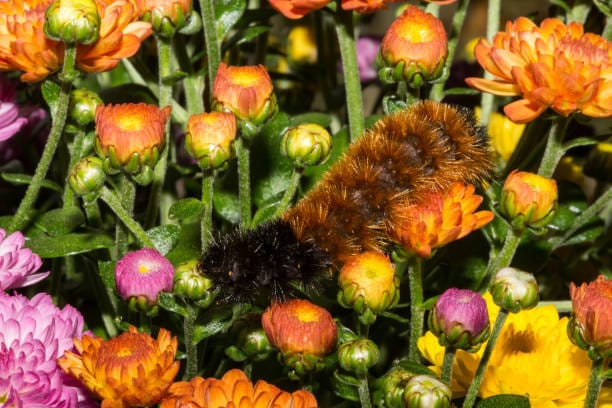
The Banded Woolly Bear is one of the most easily recognized caterpillars in North America. It has a coat of bristly black and rusty-brown hairs forming distinct color bands. Its fuzzy “woolly” appearance is not just for show — those stiff hairs help it survive chilly weather and discourage predators. On average, it grows about 2 inches long and has a surprisingly tough body for something so cuddly-looking.
Behavior
When threatened, this little caterpillar curls up into a tight ball, resembling a mini pom-pom. It’s harmless to humans, though some people might feel a mild itch if the hairs brush against sensitive skin. Unlike many species, the Woolly Bear doesn’t feed continuously; it actually pauses growth during cold spells and resumes when temperatures rise again.
Habitat and Range
These fuzzy wanderers are widespread across North America, from Canada to Mexico. You’ll often find them crossing roads in autumn, which sparked the old folk belief that they predict winter weather. According to legend, the wider the brown band, the milder the upcoming winter — though science has never backed that up!
Diet
The Woolly Bear’s diet is flexible — dandelions, nettles, plantains, and even clovers make it happy. It’s not picky and adjusts easily depending on the vegetation available, which is one reason it thrives almost anywhere.
Reproduction and Life Cycle
This caterpillar is the larval form of the Isabella Tiger Moth. After spending the winter under leaf litter or bark, it spins a silky cocoon in spring and emerges as a beautiful orange-yellow moth with black spots. The complete cycle showcases one of the most resilient adaptations in the insect world.
Fun Facts / Unique Traits
Woolly Bears produce natural antifreeze in their bodies to survive subzero temperatures — an incredible biological trick! In some Arctic populations, they can live several years, freezing solid each winter and thawing in spring to continue growing.
Human Interaction
People adore Woolly Bears for their cuteness and harmless nature. In fact, several small towns in the U.S. hold “Woolly Bear Festivals” every year to celebrate them. They’ve become a cultural symbol of curiosity and change — proof that even the smallest creatures can spark big fascination.
2. Sycamore Tussock Caterpillar (Halysidota harrisii)
Physical Characteristics
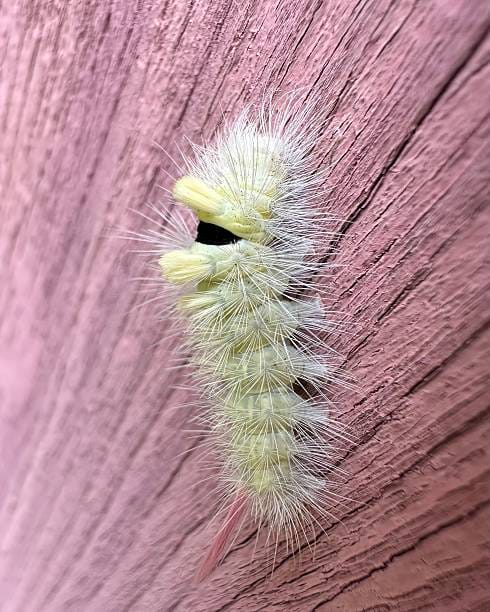
The Sycamore Tussock looks like a delicate bundle of cotton threads with little antenna-like tufts sticking out from both ends. Its creamy white to pale yellow coat makes it look almost angelic. Two small orange “horns” at the front and back give it a comically expressive appearance.
Behavior
This caterpillar prefers lounging on the undersides of sycamore leaves, munching quietly away from sight. When disturbed, it raises its body and waves those tiny tufts defensively, though it poses no real harm to humans. It can be mildly irritating if handled, so it’s best admired from a short distance.
Habitat and Range
As its name suggests, it lives primarily on sycamore trees, though it occasionally feeds on maples or willows. Its range stretches across the eastern and central United States, where sycamores thrive near rivers and wetlands.
Diet
Its preferred diet consists almost entirely of sycamore leaves, but younger larvae may feed on other deciduous species when food is scarce. Its feeding rarely causes significant tree damage, so it’s more of a charming guest than a pest.
Reproduction and Life Cycle
Adult females lay clusters of eggs on the underside of sycamore leaves in late spring. Within a week, the eggs hatch into tiny, fuzzy caterpillars that grow rapidly. After several molts, they spin grayish cocoons and emerge as pale yellow moths with spotted wings — dainty little night fliers that live for just a few days to mate and start the cycle anew.
Fun Facts / Unique Traits
The Sycamore Tussock’s twin tufts act like fake “antennae,” confusing birds and wasps. Interestingly, their fur density changes slightly with humidity, offering protection in both warm and damp conditions.
Human Interaction
While their numbers can spike occasionally, Sycamore Tussock Caterpillars rarely reach pest status. Gardeners often appreciate their presence as part of a healthy, biodiverse ecosystem.
3. Banded Tussock Moth Caterpillar (Halysidota tessellaris)
Physical Characteristics
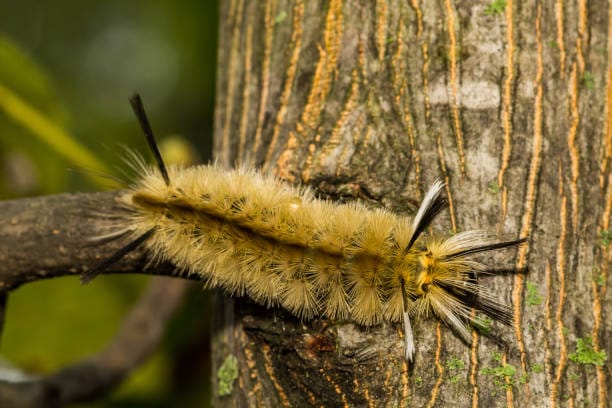
This caterpillar looks like a little piece of living art. Its long tufts of black, orange, and white hairs form a pattern reminiscent of a vintage paintbrush. Unlike the Sycamore Tussock, its colors are more vivid and shaggy, giving it a wild, “bad hair day” vibe.
Behavior
They’re mellow creatures, usually found on tree trunks or lower branches during the day. When touched, they might arch their bodies or stay perfectly still — a tactic that makes them blend in with bark or dead leaves.
Habitat and Range
Banded Tussocks inhabit much of North America east of the Rocky Mountains. They favor deciduous forests, especially those rich in oak, birch, and maple trees.
Diet
They enjoy a leafy buffet — oaks, elms, and willows are top choices. Despite their strong appetite, they don’t strip trees bare like some pest species, preferring moderate grazing.
Reproduction and Life Cycle
Females lay eggs in clusters on the undersides of leaves. The larvae feed for about a month before creating a silken cocoon mixed with their own hairs. The adult Banded Tussock Moth emerges in midsummer — pale brown with subtle geometric patterns, blending easily into tree bark.
Fun Facts / Unique Traits
Their colorful hairs aren’t just decoration — they can pick up and store toxins from plants, making the caterpillar unappealing to predators. That’s nature’s version of “don’t mess with me.”
Human Interaction
They’re safe to observe and photograph but shouldn’t be handled too often, as some people may find the bristles slightly irritating. Most nature enthusiasts love spotting them because of their striking look and calm behavior.
4. American Dagger Caterpillar (Acronicta americana)
Physical Characteristics
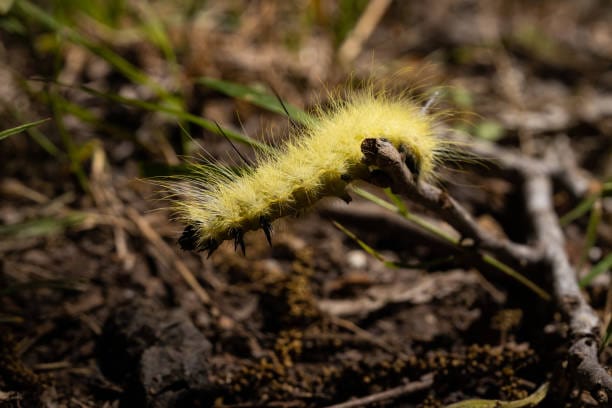
This caterpillar is an explosion of yellow fuzz, looking almost like a walking feather duster. It sports long black hair tufts near its head and tail, giving it a dramatic flair. Reaching lengths of nearly 2 inches, it’s one of the fluffiest species you’ll encounter in U.S. woodlands.
Behavior
American Dagger Caterpillars move slowly and deliberately, often pausing to curl slightly when disturbed. Despite their inviting appearance, the black tufts can deliver a mild sting or rash if touched — a reminder that not every fluffy thing should be cuddled!
Habitat and Range
They’re commonly found in forests and suburban parks across the eastern United States and southern Canada. You might see them crawling along sidewalks or tree trunks in late summer as they search for a place to pupate.
Diet
Their favorite meals include leaves from oak, maple, beech, and alder trees. They prefer broadleaf hosts and rarely damage plants beyond cosmetic nibbling.
Reproduction and Life Cycle
After feeding for several weeks, the caterpillar spins a tough, brownish cocoon in soil litter or under bark. The adult moth, appearing in spring, has silvery-gray wings with intricate black markings — hence the “dagger” name.
Fun Facts / Unique Traits
The bright yellow color is a warning — a natural “Do Not Touch” sign to predators. Birds have learned that lesson the hard way. This species also has seasonal color variations: cooler temperatures often produce paler, denser fur.
Human Interaction
These caterpillars often cause concern because of their stinging hairs, but reactions are usually mild. Observing them without touching is the best way to appreciate their golden beauty.
5. Sycamore Moth Caterpillar (Acronicta aceris)
Physical Characteristics
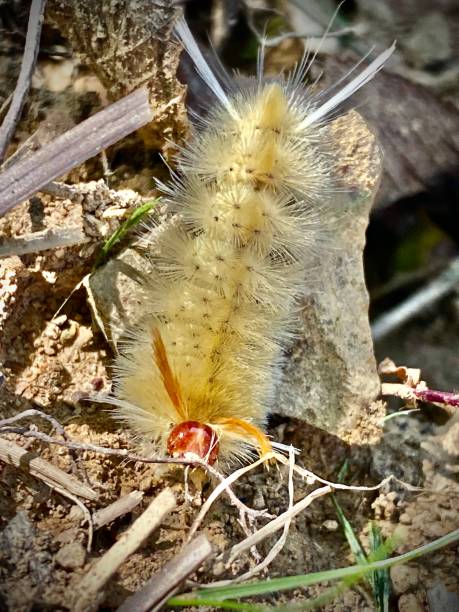
If flamboyance had a mascot, this would be it. The Sycamore Moth Caterpillar is a parade of orange, red, and white hairs with tufts so thick they look like velvet. Each side glows with white spots, and a line of bright blue dots runs down its back — a stunning contrast that would make any fashion designer jealous.
Behavior
Unlike its shy relatives, this species is quite bold, often seen sunbathing on leaves in daylight. When it feels threatened, it arches dramatically, exposing those brilliant colors as a visual warning to predators.
Habitat and Range
Native to Europe and parts of western Asia, this caterpillar thrives in gardens, parks, and woodlands where sycamore and plane trees grow. It’s especially common in the United Kingdom during late summer.
Diet
It feeds mainly on sycamore, but also happily nibbles on horse chestnut and maple leaves. Its slow feeding habits rarely harm trees, making it more of a showpiece than a pest.
Reproduction and Life Cycle
The adult moth is far less vibrant than its caterpillar form — a modest gray creature with dark lines and dots. After pupation, it spends the winter in its cocoon and emerges in spring. This dramatic transformation symbolizes nature’s quiet artistry.
Fun Facts / Unique Traits
The Sycamore Moth Caterpillar’s dazzling color combination warns predators of its distasteful chemical compounds. Interestingly, its fur refracts light differently depending on humidity, sometimes giving it a slightly iridescent sheen.
Human Interaction
Gardeners in Europe adore spotting this species because of its bright personality. While its looks scream “touch me,” it’s best admired visually — its hairs can cause minor irritation. Still, it’s a favorite subject for macro photographers and wildlife enthusiasts alike.
6. Milkweed Tiger Moth Caterpillar (Euchaetes egle)
Physical Characteristics
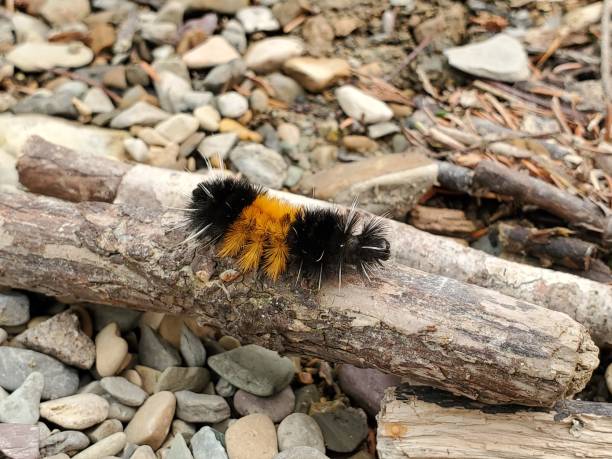
The Milkweed Tiger Moth Caterpillar, also known as the Milkweed Tussock, is a walking explosion of color. Covered in tufts of orange, black, and white hair, it looks like it’s wearing a wild fur coat from a rock concert. Each segment bears a bristly cluster that gives it a shaggy, unkempt charm. When fully grown, it measures about 1.5 inches long and moves with surprising agility for something that looks so fluffy.
Behavior
These caterpillars often live in small groups when young, stripping milkweed leaves together with synchronized appetite. As they mature, they become solitary, preferring to feed alone. When disturbed, they simply drop from the plant, hanging by a silk thread until the danger passes — a clever escape trick nature perfected long before spy movies did.
Habitat and Range
Found throughout North America, the Milkweed Tiger Moth Caterpillar favors open meadows, roadsides, and gardens where milkweed thrives. Because milkweed grows so prolifically, this species has adapted perfectly to suburban and rural habitats alike.
Diet
As the name implies, milkweed is their primary diet. The caterpillar consumes the plant’s toxic latex sap and stores its chemical compounds, which make it distasteful to predators. Even birds learn to avoid it after one unpleasant encounter.
Reproduction and Life Cycle
Adults emerge as elegant gray moths with small orange spots on their bodies. The female lays clusters of pale yellow eggs on milkweed leaves. After hatching, the young caterpillars feed communally until they’ve had their fill, then pupate in loose cocoons attached to stems or debris. The transformation from bold caterpillar to understated moth is a fascinating contrast of flamboyance and modesty.
Fun Facts / Unique Traits
These caterpillars can actually “regrow” some hair tufts if damaged — a rare trait in insects. The bright coloration and toxic defense make them a textbook example of aposematism, the biological term for “I look dangerous because I am.”
Human Interaction
They’re harmless to people and beneficial to milkweed ecosystems. Gardeners who grow milkweed for monarch butterflies often welcome these furry fellows as equally intriguing visitors.
7. White-Marked Tussock Caterpillar (Orgyia leucostigma)
Physical Characteristics
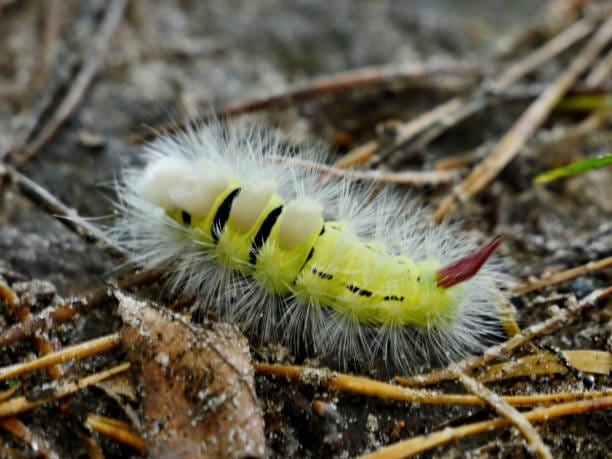
Few caterpillars look as eccentric as the White-Marked Tussock. With four toothbrush-like white tufts down its back, bright red head, yellow stripes, and long black “pencils” of hair at each end, it’s as if it raided a costume trunk. Each one looks slightly different — some lean toward golden hues, others toward grayish tones — but all are instantly recognizable.
Behavior
This species has attitude. When threatened, it raises its front and rear tufts, warning would-be predators that it’s not an easy snack. The bristles can irritate sensitive skin, so it’s best admired hands-off. It spends much of its time feeding on leaves of shade trees, sometimes causing light defoliation in late summer.
Habitat and Range
White-Marked Tussocks are widespread across North America. They thrive in forests, orchards, and city parks — basically anywhere leafy trees grow. You’ll often find them on oaks, maples, and birches, sometimes even on ornamental trees in front yards.
Diet
They aren’t picky eaters. Over 140 host plants have been recorded, from fruit trees to shrubs. This adaptability helps them survive changing seasons and environments with ease.
Reproduction and Life Cycle
Females are unusual — they’re flightless moths that stay near the cocoon, laying eggs directly on it. Males, on the other hand, sport feathery antennae and actively seek mates. The caterpillar stage lasts about a month, after which it spins a grayish-brown cocoon woven with its own hairs for added defense.
Fun Facts / Unique Traits
Scientists have nicknamed it the “punk rocker caterpillar” thanks to its hairdo. Those colorful tufts actually act as camouflage among flower clusters, blending surprisingly well despite their flashiness.
Human Interaction
Occasionally, they’re considered minor pests on ornamental trees, but outbreaks are short-lived. Many people are delighted by their funky appearance and take photos instead of reaching for pesticides — a win for both sides.
8. Southern Flannel Moth Caterpillar (Puss Caterpillar) (Megalopyge opercularis)
Physical Characteristics
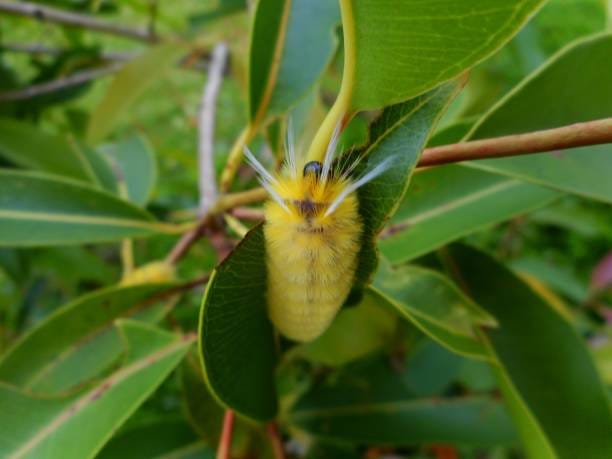
Don’t let its cuddly looks fool you — the Puss Caterpillar is the teddy bear of the insect world with a secret. Beneath its silky fur lie venomous spines capable of causing a painful sting. Its fur ranges from creamy beige to golden brown, resembling a tiny Persian cat. Fully grown, it measures about 1 inch long and looks disarmingly soft.
Behavior
The Puss Caterpillar is slow-moving and prefers to stay on the underside of leaves. When touched, it arches defensively, pressing its hidden spines outward. Its calm demeanor can be misleading, so handling it is never a good idea.
Habitat and Range
This southern beauty is found primarily in the southeastern United States, from Texas to Florida. It thrives in oak and citrus trees, often hiding among dense foliage in gardens or parks.
Diet
It feeds on a variety of hardwood trees, including oak, elm, and sycamore. Occasionally, it wanders onto ornamental shrubs. Its chewing style leaves small semicircular holes along leaf edges.
Reproduction and Life Cycle
Adult Southern Flannel Moths are striking — fluffy, yellowish moths with thick legs and plump bodies. Females lay eggs in small batches on leaves, and the larvae develop their signature fur during later instars. They pupate in sturdy cocoons, sometimes remaining dormant through winter before emerging in spring.
Fun Facts / Unique Traits
The sting from this caterpillar can cause swelling, nausea, and intense burning. Historical records even mention people comparing the sensation to “a jolt from a live wire.” Yet it remains a marvel of nature’s artistry — a creature that embodies both beauty and caution.
Human Interaction
Though it has a reputation as the most venomous caterpillar in North America, encounters are rare. Education and awareness have helped reduce accidental stings. Admire it visually — from a camera lens, not your fingertips.
9. Yellow Woolly Bear Caterpillar (Spilosoma virginica)
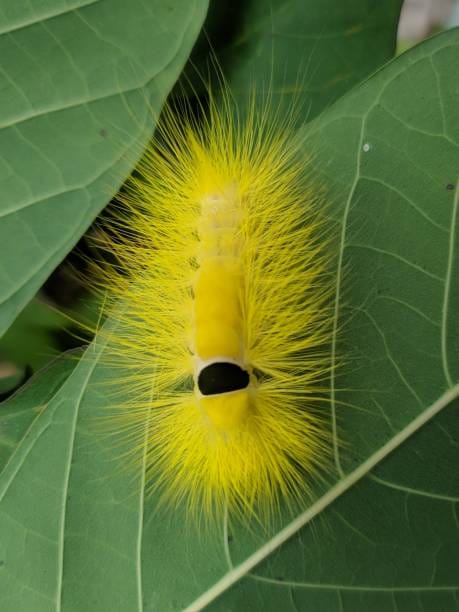
Physical Characteristics
This fuzzy little sunshine ball ranges from creamy white to deep golden yellow. It’s the larval stage of the Virginian Tiger Moth and features dense, uniform hairs covering its entire body. Occasionally, some individuals have black-tipped bristles scattered through the golden coat, giving them a slightly speckled look.
Behavior
Yellow Woolly Bears are mild-mannered and wander frequently, especially in fall. They’re known for curling up when touched, resembling tiny puffballs. Their hairs are not venomous, though sensitive individuals might experience mild irritation.
Habitat and Range
They occupy fields, gardens, and roadsides throughout North America. You might spot one crossing your driveway in autumn, heading for a sheltered place to overwinter. They prefer open, sunny environments where wildflowers abound.
Diet
These caterpillars are generalists — they munch on low-growing plants like dandelions, clovers, and grasses. Their flexible diet helps them thrive in disturbed areas and lawns.
Reproduction and Life Cycle
After feeding through summer and fall, they hibernate under leaves or soil until spring, then spin a tan cocoon to pupate. The adult moth is snowy white with small black dots, a simple but elegant contrast to its flamboyant youth.
Fun Facts / Unique Traits
The color of the Yellow Woolly Bear depends partly on temperature and food. Cooler climates often produce lighter individuals, while warmer regions bring out deeper yellows. That’s why no two seem quite alike.
Human Interaction
They’re harmless and even helpful in breaking down weeds and wild plants. Many people mistake them for their cousin, the famous Banded Woolly Bear, but these golden versions keep their color consistent all season long.
10. Garden Tiger Moth Caterpillar (Arctia caja)
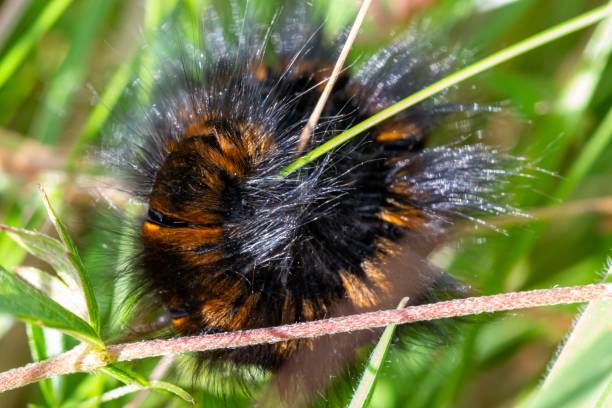
Physical Characteristics
The Garden Tiger Moth Caterpillar looks like it escaped from a painter’s palette. Its dense black and orange fur gives it the nickname “Woolly Bear of Europe.” The long outer hairs protect it from predators and weather, while shorter inner hairs keep it insulated. Adults can reach 2.5 inches long — quite the hefty fuzzball.
Behavior
It’s mostly nocturnal, feeding under cover of darkness and resting during the day in curled positions. When threatened, it rolls into a ball, exposing its bright orange underside as a warning signal. Birds quickly learn to avoid that color combination.
Habitat and Range
Native to Europe and northern Asia, this caterpillar thrives in meadows, moors, and gardens. It loves cool climates and can even survive light frost thanks to its thick coat. In some regions, it’s also found in Alaska and Canada.
Diet
It’s a generalist herbivore, feeding on nettles, dock, burdock, and a long list of garden weeds. Its ability to digest many plants makes it a resilient survivor in varied habitats.
Reproduction and Life Cycle
Adults emerge as spectacular moths with orange hindwings marked with dark blue spots and cream-brown forewings. The female lays eggs on low plants, and the young caterpillars feed for a while before hibernating through winter, emerging in spring to complete growth and pupate.
Fun Facts / Unique Traits
The Garden Tiger Caterpillar has one of the longest larval phases among European moths, sometimes lasting up to 10 months. Its bristles are mildly irritating but non-toxic, serving as armor rather than offense.
Human Interaction
Because of their vivid colors, these caterpillars are beloved by photographers and schoolchildren studying metamorphosis. Their population has declined slightly due to habitat loss, making every sighting a small victory for biodiversity.
11. Walnut Caterpillar (Datana integerrima)
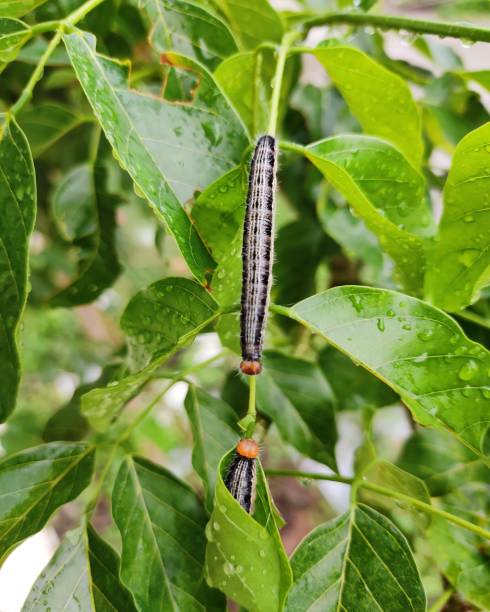
Physical Characteristics
The Walnut Caterpillar is an easily recognizable member of the moth family *Notodontidae*. It sports a coat of long, grayish-white hairs covering its dark brown body. As it grows, it develops distinctive black and yellow bands that seem to shimmer in sunlight. Mature larvae can reach up to two inches long, with a noticeably fuzzy appearance that makes them look almost soft—though they’re not ideal to touch!
Behavior
These caterpillars are sociable during their early life stages. They feed in clusters, often stripping entire branches of walnut or hickory trees before moving on. Once they mature, they wander individually in search of pupation sites. Interestingly, when disturbed, they raise their heads and tails in unison—a defensive behavior meant to startle predators.
Habitat and Range
Walnut Caterpillars are native to North America, ranging from Canada down through the southern United States. You’ll often find them in hardwood forests, orchards, and even suburban neighborhoods where walnut or hickory trees are present.
Diet
As the name suggests, their favorite menu includes walnut, pecan, and hickory leaves. Their feeding can defoliate trees if infestations are large, but healthy trees typically recover quickly once the caterpillars pupate.
Reproduction and Life Cycle
The adult moth lays clusters of eggs on the undersides of leaves, which hatch into small, gregarious larvae. They feed voraciously for several weeks before descending the tree to pupate in the soil. The cycle may repeat once or twice a year depending on climate conditions.
Fun Facts / Unique Traits
Unlike many fuzzy caterpillars that cause irritation, Walnut Caterpillars are harmless to humans. Their coordinated “head-lifting dance” is one of the most amusing sights for any backyard observer.
Human Interaction
These caterpillars rarely require control unless present in large numbers. Gardeners often let them be, as they support local moth populations and natural predators like wasps and birds.
12. Monkey Slug Caterpillar (Phobetron pithecium)
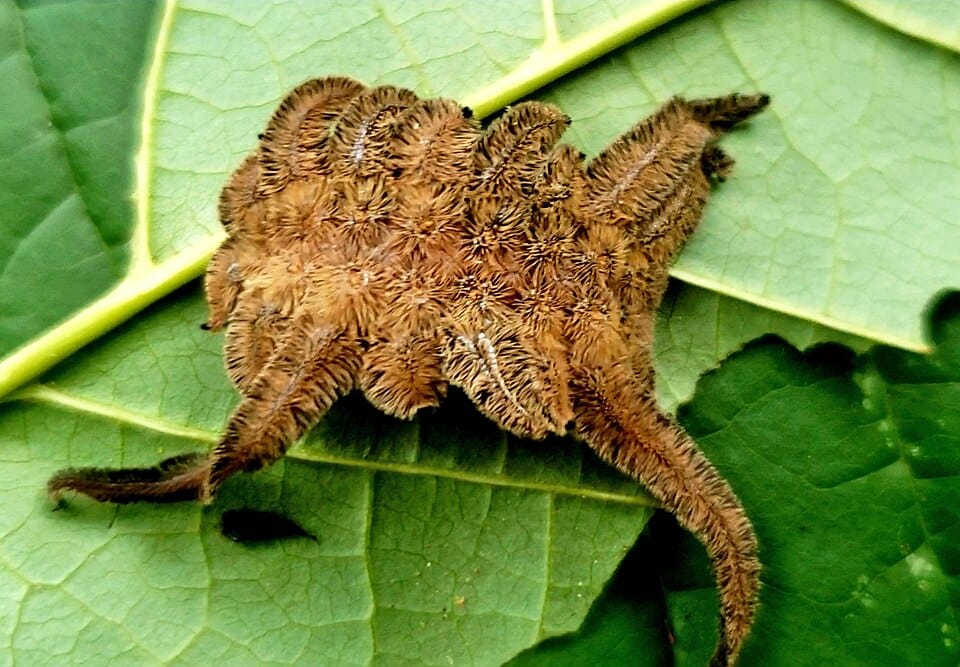
Physical Characteristics
The Monkey Slug Caterpillar might be one of the strangest-looking larvae in North America. It resembles a hairy brown leaf or a tiny tarantula, with multiple tentacle-like lobes covered in long, soft setae. Its camouflage is remarkable—making it appear as a lump of debris or a small spider to ward off threats.
Behavior
This odd creature moves slowly and deliberately, blending perfectly with bark or leaf litter. When threatened, it plays dead. Despite its cute fuzziness, those hairs can deliver a mild sting, causing irritation to sensitive skin.
Habitat and Range
The Monkey Slug can be found throughout the eastern United States and parts of Central America. It favors deciduous forests where it feeds on a wide variety of tree species.
Diet
This caterpillar isn’t picky. It feeds on oak, hickory, walnut, cherry, and apple trees. The diversity of its diet helps the species thrive across wide regions.
Reproduction and Life Cycle
Females lay small clusters of eggs on host leaves. Once hatched, the larvae spend several weeks feeding before forming a cocoon to overwinter as pupae. Adults emerge as beautiful Hag Moths the following season.
Fun Facts / Unique Traits
Its bizarre shape isn’t just for show—it’s a perfect example of “masquerade mimicry,” where the animal imitates inanimate objects to avoid predators. It’s also one of the few caterpillars that resemble a mammal (a monkey or spider) in outline.
Human Interaction
While fascinating to observe, it’s best admired from a distance. The Monkey Slug’s hair-like spines can sting slightly, but they’re harmless beyond a brief irritation. Wildlife photographers love capturing its alien-like form.
13. Salt Marsh Caterpillar (Estigmene acrea)
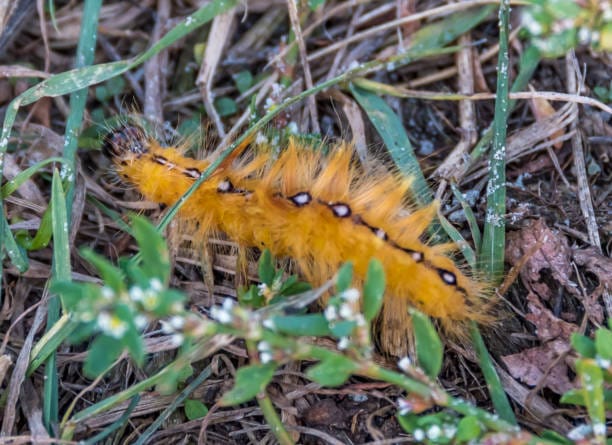
Physical Characteristics
The Salt Marsh Caterpillar is a furry bundle of orange, black, or white setae depending on its stage of growth. These colors often shift as the larva matures, giving it a striking, multicolored appearance. It’s a medium-sized species reaching around two inches long when fully grown.
Behavior
This species is known for its energetic crawling and tendency to cross open fields in search of food. When threatened, it curls tightly into a ball, hiding its head and vulnerable underside beneath its thick coat of hairs.
Habitat and Range
Despite its name, this caterpillar isn’t limited to salt marshes. It thrives across North and Central America, from coastal wetlands to inland grasslands. It’s a highly adaptable species that can tolerate varied climates.
Diet
The Salt Marsh Caterpillar feeds on over 60 plant species, including alfalfa, cotton, soybeans, and cabbage. Its adaptability has helped it become one of the more widespread “woolly bears” in North America.
Reproduction and Life Cycle
Adults lay eggs in clusters on host plants. The larvae feed for about a month before pupating in a silken cocoon near the soil surface. The moth that emerges—the Salt Marsh Moth—is large and white with small black spots on its wings.
Fun Facts / Unique Traits
Farmers sometimes call them “woolly bears of the field” due to their habit of wandering across crops. Despite their abundance, they’re not major pests and rarely cause serious damage.
Human Interaction
Because they thrive in agricultural landscapes, humans encounter them often. They’re safe to handle gently, though their bristles may cause mild irritation. Many gardeners simply relocate them away from tender crops.
14. Hickory Tussock Moth Caterpillar (Lophocampa caryae)
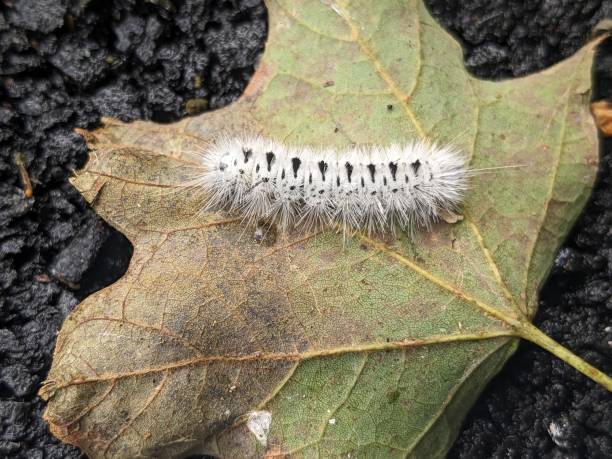
Physical Characteristics
With its white tufts and black spots, the Hickory Tussock Moth Caterpillar looks like a tiny polar bear on a twig. It’s covered with tufts of long, silky white hairs and clusters of stiff black ones. These black tufts are urticating, meaning they can cause mild skin irritation if touched.
Behavior
They tend to feed in small groups when young but become solitary as they mature. When disturbed, they rear up their heads and display their black tufts in a warning posture—a polite “stay back” signal to would-be predators.
Habitat and Range
Found mainly in the northeastern United States and southern Canada, they favor hardwood forests and orchards, especially areas with hickory, walnut, or ash trees.
Diet
These caterpillars are leaf eaters, with a preference for hickory, walnut, and ash trees. Occasionally, they’ll munch on pecan or oak leaves as well.
Reproduction and Life Cycle
Adult female moths lay eggs in clusters, and the larvae feed during summer before forming gray, fuzzy cocoons that overwinter. Adults emerge the following spring as tan, tiger-striped moths.
Fun Facts / Unique Traits
Despite their cuddly look, these caterpillars can cause mild rashes in sensitive individuals. Their appearance serves as a classic warning coloration in nature—white and black signaling “look but don’t touch.”
Human Interaction
They’re frequently spotted by children and gardeners, and while contact should be avoided, they play an important role in local ecosystems by feeding songbirds and parasitic wasps.
15. Yellow-Spotted Tussock Moth Caterpillar (Lophocampa maculata)
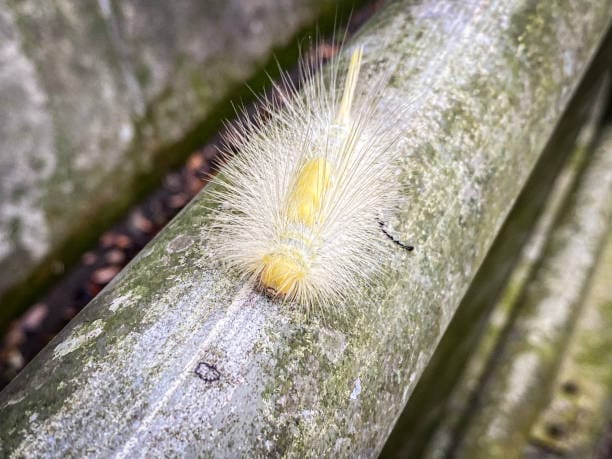
Physical Characteristics
This fuzzy caterpillar is a showstopper with a bright yellow middle band, black ends, and tufts of black and white hairs. It’s about 1.5 inches long, looking like a living piece of Halloween candy. The body’s pattern is a warning signal that says, “I’m not for touching.”
Behavior
They are most active in late summer and early fall, often seen crawling on trees or roadsides looking for a place to pupate. When disturbed, they roll into a tight ball, exposing only their bristly hairs.
Habitat and Range
The Yellow-Spotted Tussock Moth Caterpillar is found throughout Canada and northern parts of the U.S., particularly in forests with poplar, willow, or birch trees.
Diet
They dine on a wide range of deciduous trees, especially poplar, willow, birch, and alder. Their diet allows them to thrive across northern woodlands and wetlands.
Reproduction and Life Cycle
Females lay eggs on host leaves during midsummer. The larvae feed for several weeks before forming a cocoon attached to bark or leaf litter, where they overwinter before emerging as beautiful spotted moths in spring.
Fun Facts / Unique Traits
They’re part of the same family as the Hickory Tussock Moth, yet their color scheme is far more striking. Their bright yellow midsection acts as a warning to birds, hinting that they might taste unpleasant.
Human Interaction
People often spot them wandering across driveways in fall. Though safe to observe, their hairs can cause irritation if handled roughly. They’re a favorite subject for macro photographers thanks to their vivid coloring.
16. Pale Tussock Moth Caterpillar (Calliteara pudibunda)
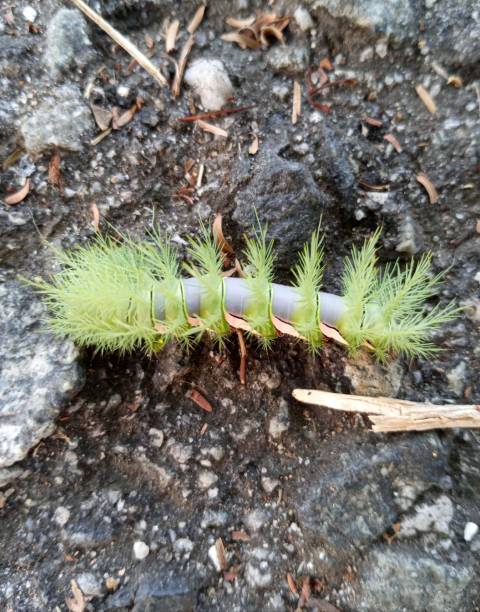
Physical Characteristics
The Pale Tussock Moth Caterpillar looks like a small neon brush, dazzling with tufts of lemon-yellow hair and four distinctive raised “toothbrushes” along its back. Near its head is a single red tail-like tuft that gives it a playful, almost punk-rock appearance. This caterpillar can reach about 4 cm (1.6 inches) long and is easily spotted due to its vibrant colors and fuzzy coat.
Behavior
Despite its flamboyant look, this caterpillar is rather calm. It tends to stay motionless during the day, blending into leaves, and becomes more active in the evening. When threatened, it curls into a tight ball, exposing its red tail as a warning sign. Its hairs can cause mild irritation if touched, a natural defense against curious birds or mammals.
Habitat and Range
The Pale Tussock Moth Caterpillar is native to Europe and Asia but has spread to parts of North America. It thrives in gardens, woodlands, and orchards—anywhere deciduous trees like oak, birch, or hazel grow.
Diet
It enjoys a wide-ranging vegetarian buffet, including hawthorn, apple, cherry, lime, and birch. Occasionally, it’s found feeding on rose bushes or fruit trees in gardens, where its bright coloration makes it easy to spot among green leaves.
Reproduction and Life Cycle
Adults emerge in late spring, and females lay clusters of eggs on leaves. The larvae develop through several instars before spinning a cocoon among fallen leaves or bark crevices to overwinter. Adults appear the following year, with males sporting distinctive feathered antennae.
Fun Facts / Unique Traits
Because of its fuzzy yellow coat, it’s sometimes called the “Vapourer Moth Caterpillar.” Its caterpillar form has become popular in school nature projects thanks to its cheerful color and easy visibility.
Human Interaction
While it’s harmless to observe, the Pale Tussock’s bristles can irritate sensitive skin, so hands-off photography is best. Many gardeners appreciate its beauty and allow it to thrive as part of the natural ecosystem.
17. Io Caterpillar (Automeris io)
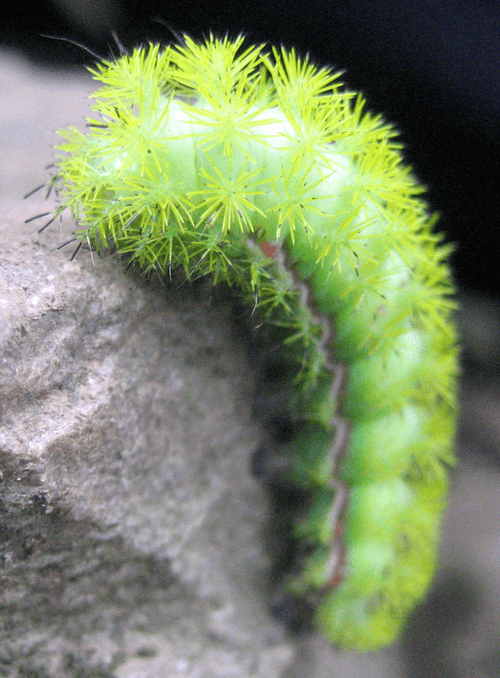
Physical Characteristics
The Io Caterpillar is a vibrant green beauty armed with sharp defensive bristles. Its body is decorated with bright yellow stripes running along its length, while clusters of branching spines make it look almost glittery under sunlight. Those spines, however, deliver a sting similar to a nettle burn—painful but temporary.
Behavior
This caterpillar is peaceful by nature, preferring to hide under leaves during the day. When disturbed, it arches dramatically, showing off its sharp spines. Its vivid green color helps it camouflage among foliage, making it surprisingly hard to spot despite its size.
Habitat and Range
The Io Caterpillar is found across the eastern and southern United States, particularly in areas with open woodlands, meadows, and backyard gardens. It’s a frequent resident of North America’s warmer regions.
Diet
It feeds on a diverse menu, from willows and maples to clover and corn. Its dietary flexibility means it adapts well to agricultural and suburban environments.
Reproduction and Life Cycle
Female moths lay eggs in clusters on the undersides of leaves. The gregarious young larvae feed together before dispersing as they grow. Pupation occurs in a dense silk cocoon near the soil. Adult Io Moths are easily recognized by the large, eye-like markings on their hindwings, which they flash to scare predators.
Fun Facts / Unique Traits
Those “eyespots” on the adult moth’s wings are among the most dramatic in the insect world—like a pair of owl eyes! They startle predators and have become a textbook example of visual defense in nature.
Human Interaction
While stunning, the Io Caterpillar’s sting earns it a place on the “look, don’t touch” list. Nature photographers adore capturing its vivid green coloration and the transformation into one of North America’s most spectacular moths.
18. Eastern Tent Caterpillar (Malacosoma americanum)
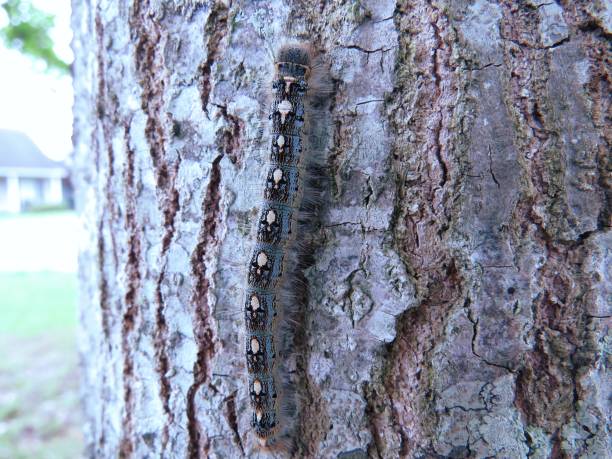
Physical Characteristics
The Eastern Tent Caterpillar is a social butterfly—well, caterpillar—known for building silky communal tents in tree branches. Its body is covered in fine, soft hairs, colored blue-black with a bright white stripe down the back and orange streaks along the sides. These little guys grow to about 2 inches long and often shimmer when sunlight hits their glossy setae.
Behavior
They’re famous for their teamwork. Each spring, hundreds of larvae spin silken “tents” in the forks of trees for warmth and protection. They venture out in organized trails to feed, then return home to digest and rest. This coordinated behavior is rare among caterpillars and has fascinated entomologists for centuries.
Habitat and Range
Common throughout eastern North America, they thrive in orchards, woodlands, and roadsides—anywhere cherry, apple, or crabapple trees grow. You can often spot their white tents glistening in early spring sunlight.
Diet
Eastern Tent Caterpillars love fruit trees. Their primary diet consists of cherry, apple, and plum leaves. Although they can cause partial defoliation, affected trees usually recover quickly.
Reproduction and Life Cycle
The adult moth lays a shiny egg mass that encircles a tree twig like a bracelet. Larvae hatch in early spring and begin constructing their tents immediately. After several weeks of feeding, they pupate in yellow silk cocoons. Adults emerge midsummer, completing the annual cycle.
Fun Facts / Unique Traits
Their silk tents act as tiny greenhouses, helping larvae regulate temperature during cool mornings. Some researchers even call them “little solar-powered insects.”
Human Interaction
While their tents can look messy, these caterpillars are part of spring’s natural cycle. Birds, wasps, and even small mammals rely on them as a seasonal food source, keeping ecosystems balanced.
19. Western Tent Caterpillar (Malacosoma californicum)
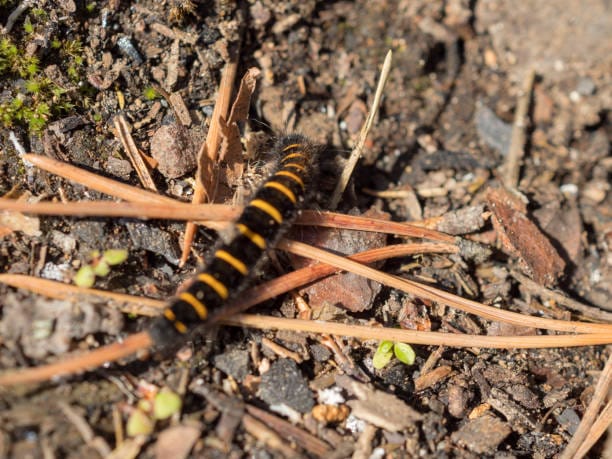
Physical Characteristics
The Western Tent Caterpillar looks like its Eastern cousin but sports a more orange-brown color palette. It’s furry with a pale blue stripe down its back, flanked by orange patches and tufts of fine white hair. Adults emerge as tan moths with faint diagonal lines on their wings.
Behavior
Like their eastern relatives, they’re communal builders, weaving silk tents in shrubs and trees. During feeding hours, they march in neat lines, leaving behind shimmering silk trails. When alarmed, they thrash in unison, a synchronized dance that deters predators.
Habitat and Range
They’re common across western North America—from British Columbia down to Mexico—favoring deciduous trees in dry valleys and foothills. They often appear cyclically, with population booms every few years.
Diet
These caterpillars feast on poplar, willow, cherry, and apple leaves. They may defoliate sections of trees during outbreaks but usually don’t cause lasting harm.
Reproduction and Life Cycle
Eggs overwinter on twigs, hatching in early spring. The caterpillars live communally in tents before spinning individual cocoons on leaves or bark. Moths emerge by midsummer, laying eggs for the next generation.
Fun Facts / Unique Traits
Western Tent Caterpillars are highly organized—scientists have even compared their silk trail-following behavior to ants navigating pheromone paths. They’re nature’s tiny engineers of teamwork.
Human Interaction
Although large infestations can appear alarming, they rarely harm trees permanently. Gardeners often leave them alone, knowing nature’s predators—like birds and parasitic flies—will quickly balance the population.
20. Drinker Moth Caterpillar (Euthrix potatoria)
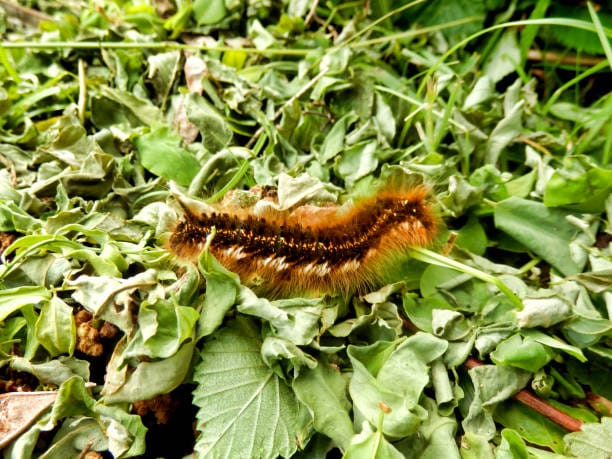
Physical Characteristics
The Drinker Moth Caterpillar is a charming, fuzzy creature with tufts of brown, orange, and white hair that look almost velvety. Its body features two bold white stripes along its sides and small blue spots running down the back. Adults emerge as soft brown moths with subtle eye markings on their wings.
Behavior
Named after its peculiar habit of sipping dew drops and water, the Drinker Caterpillar is mostly nocturnal. It prefers to feed under cover of night and rests curled up in grass during the day. When disturbed, it rolls tightly into a defensive coil.
Habitat and Range
Native to Europe and Asia, this species inhabits damp meadows, marshlands, and reed beds. In some regions, it’s even found along riverbanks and canals where grasses grow thick.
Diet
Its favorite foods are coarse grasses such as reeds, meadow grasses, and even some garden plants. Unlike many caterpillars, it doesn’t rely on trees—making it an important part of meadow ecosystems.
Reproduction and Life Cycle
Adults fly during midsummer, laying eggs on grass stems. The caterpillars overwinter while still young and resume feeding in spring before pupating inside a dense, silken cocoon hidden among reeds. Adults emerge in July and August.
Fun Facts / Unique Traits
The species’ name “Drinker” stems from its curious dew-drinking behavior, which inspired countless Victorian naturalists to write poetic notes about its manners. It’s a gentle creature and a favorite among macro photographers for its vibrant fur and peaceful habits.
Human Interaction
Completely harmless to humans and plants, Drinker Caterpillars symbolize balance in wetlands. Their populations indicate healthy grassland environments, making them small but vital ecological markers.
21. Giant Leopard Moth Caterpillar (Hypercompe scribonia)
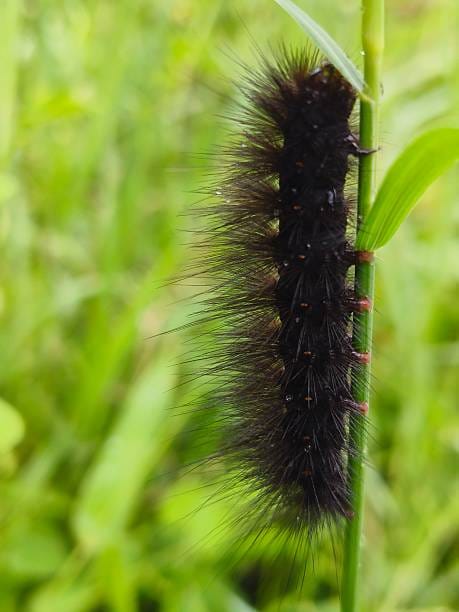
Physical Characteristics
The Giant Leopard Moth Caterpillar is one of the most iconic furry caterpillars in North America. It’s covered in dense black spines that form a bristly armor around its body. When curled into a ball, flashes of striking red or orange bands appear between the segments—a warning to predators that it’s not easy prey. Despite its fierce look, it’s harmless to humans and safe to observe up close.
Behavior
This caterpillar is mostly solitary and spends much of its time crawling slowly along the ground, especially in late fall. When touched, it rolls into a tight ball, exposing those bright red intersegmental rings to deter birds or lizards. Its behavior is calm and deliberate, as if it knows it’s already well-defended.
Habitat and Range
Found across the eastern and southern United States, the Giant Leopard Moth Caterpillar thrives in fields, gardens, woodlands, and suburban yards. It’s adaptable, often wandering into driveways and patios in search of a pupation site.
Diet
This fuzzy wanderer has a remarkably varied diet, feeding on violets, dandelions, plantains, and even citrus plants. It’s not picky, which explains why it’s found almost everywhere in its range.
Reproduction and Life Cycle
Adults emerge in summer as large white moths covered in striking black leopard-like spots. Females lay eggs on host plants, and the larvae feed through fall before overwintering as caterpillars. In spring, they spin cocoons and pupate, emerging as the distinctive adults.
Fun Facts / Unique Traits
Its ability to curl up and reveal warning colors is called “aposematic display”—a natural way to shout, “Don’t mess with me!” Many people mistake it for a stinging species, but it’s completely harmless and a favorite subject of backyard nature enthusiasts.
Human Interaction
Despite its intimidating look, this caterpillar is safe to handle gently. It’s often the first “woolly bear” children encounter in gardens, making it a small ambassador for insect curiosity and respect.
22. Fox Moth Caterpillar (Macrothylacia rubi)
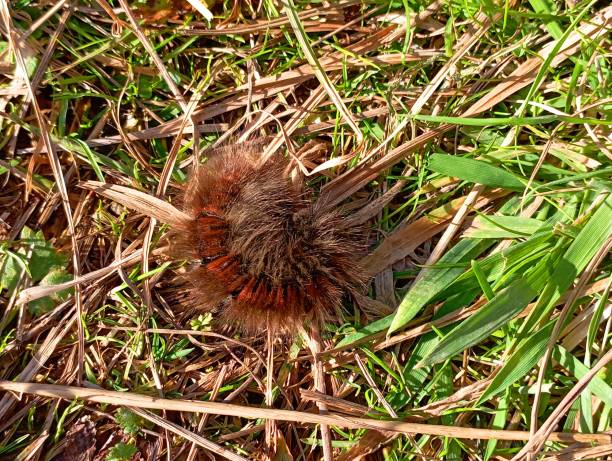
Physical Characteristics
The Fox Moth Caterpillar is a furry marvel dressed in shades of orange, brown, and black. Early in its life, it’s mostly black, but as it grows, it takes on a beautiful rusty color that looks like the fur of a fox—hence its name. Its body is covered in long, fine hairs that shimmer in sunlight, making it a standout among grassland insects.
Behavior
It’s a slow-moving, sun-loving caterpillar often found basking on footpaths and heathland trails during the day. When threatened, it curls tightly into a ring, relying on its dense fur to protect it from predators. The Fox Moth Caterpillar is most active in autumn and spring, hibernating through winter under leaf litter.
Habitat and Range
This species is native to Europe and common across heathlands, moors, and grassy meadows. It prefers dry, open areas with plenty of low-growing vegetation.
Diet
Its diet consists mainly of grasses, heather, and various herbaceous plants. It’s a generalist feeder, happily munching on anything green in its environment.
Reproduction and Life Cycle
Adult Fox Moths fly in late spring, and females lay eggs on host plants. The caterpillars hatch in early summer and feed before hibernating through the cold months. They pupate the following spring, emerging as fluffy brown moths.
Fun Facts / Unique Traits
This species has one of the longest larval stages among moths—spending nearly a year as a caterpillar! Its thick fur helps it survive chilly European climates where few other larvae dare to crawl.
Human Interaction
Often spotted sunbathing on trails, the Fox Moth Caterpillar is a favorite among hikers and photographers. Its velvety fur and gentle demeanor make it a beloved ambassador of heathland biodiversity.
23. Virginia Ctenucha Caterpillar (Ctenucha virginica)
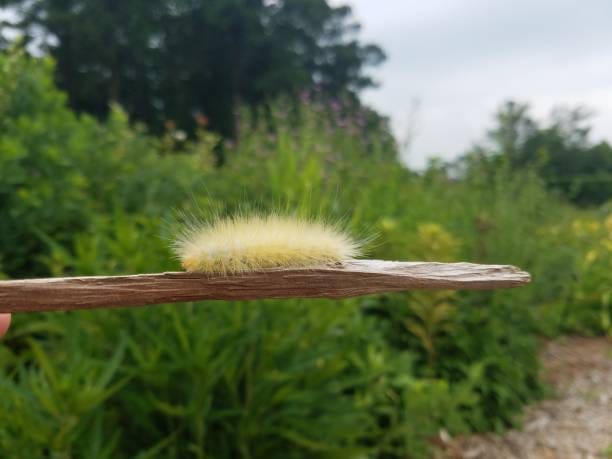
Physical Characteristics
The Virginia Ctenucha Caterpillar is a bundle of contrasting colors. Its body is dark brown to black, covered in golden or orange tufts of hair, giving it a warm, fuzzy appearance. Beneath the fur, its skin has a subtle bluish tint, which becomes more visible as it matures.
Behavior
This caterpillar is a peaceful grazer. It’s active in both fall and spring, often seen crawling on low vegetation in open fields. Unlike some species that feed only during the night, the Virginia Ctenucha is diurnal, enjoying daylight activity.
Habitat and Range
Native to North America, it thrives across the eastern United States and Canada. It favors meadows, grasslands, and forest edges—places where grasses and sedges grow abundantly.
Diet
It primarily feeds on grasses and sedges, making it an important part of meadow ecosystems. Its unpretentious diet allows it to flourish in both wild and cultivated environments.
Reproduction and Life Cycle
After overwintering as a caterpillar, it resumes feeding in spring and pupates in a silken cocoon. The adult Virginia Ctenucha Moth is striking—metallic blue with orange accents around the head, resembling a tiny jeweled creature of the night.
Fun Facts / Unique Traits
It’s one of the few day-flying moths in North America, often mistaken for a butterfly due to its bright colors and daylight habits. Its adults play an important role in pollination.
Human Interaction
Completely harmless and gentle, this caterpillar is often found in backyards and parks. Observers love its bright contrast and the iridescent adult moth it becomes—a small but brilliant gem of local ecosystems.
24. Miller Moth Caterpillar (Agrotis ypsilon)
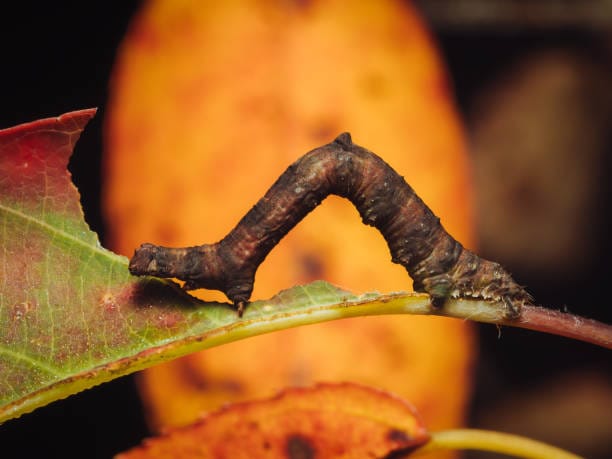
Physical Characteristics
The Miller Moth Caterpillar, also known as the “Army Cutworm,” is a gray-brown larva with a smooth yet slightly hairy texture. Its hairs are short and fine, giving it a subtle, velvety look rather than a thick coat. When disturbed, it curls into a C-shape, a behavior typical of many cutworms.
Behavior
These caterpillars are nocturnal feeders, emerging at night to graze on tender shoots and hiding in soil during the day. They’re known for their mass migrations, which can bring waves of adult moths (the infamous “Miller Moth” swarms) across the American Midwest each summer.
Habitat and Range
Widespread across North America, the Miller Moth Caterpillar favors open fields, grasslands, and agricultural lands. It thrives particularly in regions with cereal crops and native grasses.
Diet
Their diet includes grasses, wheat, barley, and garden plants. In large populations, they can cause minor agricultural damage, but most years their numbers remain balanced by natural predators.
Reproduction and Life Cycle
Females lay eggs on low vegetation in late summer. The larvae feed during fall and early spring before pupating in the soil. The adults emerge as drab gray-brown moths that are attracted to lights, often entering homes during migration seasons.
Fun Facts / Unique Traits
Though plain in appearance, their migration is extraordinary—covering hundreds of miles in search of cooler, high-altitude breeding areas. The adults become an important food source for birds, bats, and even bears in mountain regions.
Human Interaction
While Miller Moths can be annoying indoors, their caterpillar form is harmless and vital to local food webs. They’re a reminder of how interconnected even the smallest field creatures can be with larger ecosystems.
25. Oak Eggar Caterpillar (Lasiocampa quercus)
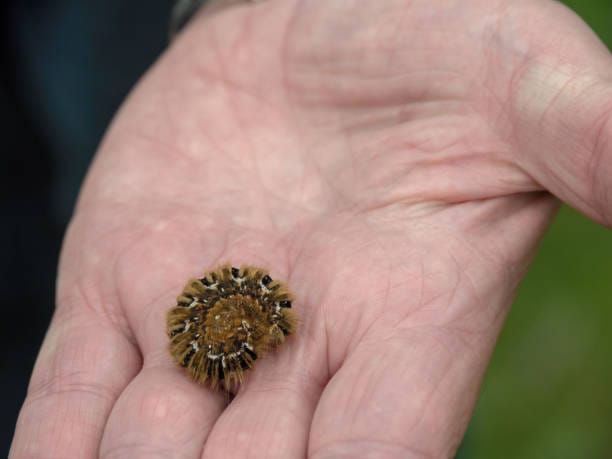
Physical Characteristics
The Oak Eggar Caterpillar is one of Europe’s most striking furry species. It’s thick-bodied, cloaked in rich brown and orange hairs, with small white spots sprinkled along its sides. The texture of its fur looks almost plush, earning it comparisons to a tiny woodland mammal.
Behavior
This caterpillar loves open, sunny places and often basks on heather and grass during warm days. It’s most active in late summer and autumn, then hibernates through the winter, curled up under moss or soil until spring.
Habitat and Range
Found throughout Europe, it inhabits moors, dunes, and woodland edges. Despite its name, it doesn’t rely solely on oak—it feeds on many low plants like heather, bilberry, and hawthorn.
Diet
Its diet is highly flexible, consisting of shrubs and wildflowers found in heathlands and meadows. This adaptability helps it thrive across diverse landscapes.
Reproduction and Life Cycle
Adults emerge in midsummer. Males are strong fliers that actively search for females, which release pheromones to attract mates. The caterpillars develop slowly, taking nearly a year to reach maturity before pupating in a dense silk cocoon.
Fun Facts / Unique Traits
The Oak Eggar Caterpillar is sometimes called “The Fluffy Wanderer” because of its habit of crossing paths and dunes in broad daylight. Its adults are large, golden-brown moths that flutter heavily in the warm evening air.
Human Interaction
People often encounter these caterpillars while hiking or gardening. They’re completely harmless and often a delight to spot—living proof that even the simplest meadow can harbor miniature wonders.
FAQ’s
1. What are furry caterpillars?
Furry caterpillars are caterpillars covered in hair-like bristles or tufts. These “hairs” help protect them from predators and can sometimes cause mild skin irritation. Many of them later turn into beautiful moths or butterflies.
2. What is the name of a fuzzy caterpillar?
Fuzzy caterpillars can belong to several species, but one of the most famous is the Woolly Bear Caterpillar, which eventually becomes the Isabella Tiger Moth. Other fuzzy types include the Hickory Tussock Moth Caterpillar and the Sycamore Tussock Moth Caterpillar.
3. What do you call a hairy caterpillar?
Hairy caterpillars are often called “woolly” or “fuzzy” caterpillars. The term “hairy” refers to the soft or spiky tufts of setae (tiny hairs) that cover their bodies, which act as defense mechanisms.
4. Are there different types of woolly bear caterpillars?
Yes, there are several types of woolly bear caterpillars. The most common is the Isabella Tiger Moth caterpillar, but there are others like the Yellow Woolly Bear and the Banded Woolly Bear. Each type can vary slightly in color and hair density.
5. What is a hairy molly?
“Hairy molly” is a nickname for woolly bear caterpillars, especially used in some regions. It refers to their furry appearance and slow, crawling movement.
6. What is the rarest caterpillar?
The rarest caterpillars are usually those of endangered species. One example is the Hawaiian Kamehameha butterfly caterpillar, which is extremely rare and found only in limited parts of Hawaii.
7. Are higad and caterpillar the same?
Yes, “higad” is the Filipino word for caterpillar, especially referring to hairy or spiny types that can cause skin irritation when touched.
8. Can I touch a black swallowtail caterpillar?
Yes, black swallowtail caterpillars are generally safe to touch. They are smooth and not poisonous, though they may release a harmless, smelly orange organ called an osmeterium when disturbed.
9. What does higad turn into?
A higad, or hairy caterpillar, eventually turns into a moth or butterfly after pupating in its cocoon or chrysalis, depending on the species.
10. What does it mean if you see a black fuzzy caterpillar?
Seeing a black fuzzy caterpillar, like a Woolly Bear, is often linked to folklore. Some people believe the color bands predict the coming winter’s severity, but scientifically, it’s just a natural variation in pigmentation.
11. Can you touch a woolly bear caterpillar?
Yes, you can gently touch a woolly bear caterpillar. They are harmless to humans, though their bristles can sometimes feel prickly. Just avoid rubbing your eyes or skin afterward to prevent irritation.
12. What is a small black and white fuzzy caterpillar?
A small black and white fuzzy caterpillar might be the Hickory Tussock Moth Caterpillar. While it looks cute, its hairs can cause mild itching or rash, so it’s best not to handle it directly.
13. What does it mean when a caterpillar visits you?
Many people see a caterpillar’s visit as a sign of transformation or personal growth. Spiritually, it can symbolize patience and change, reminding you that big transformations take time.
14. What is a black furry caterpillar?
A black furry caterpillar could be a Giant Leopard Moth Caterpillar or a Woolly Bear Caterpillar. They’re often covered in dense black hairs and curl up when touched.
15. What should I do if I find a woolly bear caterpillar?
If you find one, it’s best to let it continue its journey. You can gently move it off busy walkways or roads using a leaf. They are harmless and play an important role in the ecosystem.
16. What is a hairy worm?
People often call hairy caterpillars “hairy worms,” but they are not worms. Worms lack legs and hairs, while caterpillars are insect larvae with legs and visible body segments.
17. Should I get rid of black swallowtail caterpillars?
No, you shouldn’t. Black swallowtail caterpillars are beneficial—they become beautiful butterflies and help pollinate plants. If they’re eating your parsley or dill, just move them to another plant instead of removing them.
Conclusion
Furry caterpillars are some of nature’s most charismatic little creatures—each species a living work of art. From the flamboyant Pale Tussock Moth Caterpillar to the mysterious Monkey Slug, these larvae showcase the endless creativity of evolution. While their fuzzy coats may invite a gentle touch, remember that many use those hairs for protection, not cuddles!
By learning about their habitats, behaviors, and life cycles, we gain a deeper appreciation for their role in ecosystems. Each fuzzy crawler will one day transform into a moth or butterfly—proof that beauty often begins with a little fur and a lot of patience.
Read more:
- 25 Types of Moth Caterpillars (Pictures and Identification)
- 40 Types of Black and Yellow Caterpillars | Identification & Pictures
- 20 Black and Brown Caterpillars (Pictures And Identification)
- 35 Types of Horned Caterpillars (Pictures and Identification)
- 25 Types of Arizona Caterpillars (Pictures And Identification)
- 40 Types of Striped Caterpillars (Pictures and Identification)
- 45 Types of Moths (Pictures And Identification)
- 40 Types of Butterflies (Pictures And Identification)
- 50 Types of Beetles (Pictures and Identification)