
Massachusetts is home to several fascinating species of wild rabbits and hares. If you’re curious about the types of wild rabbits in Massachusetts, you’ve come to the right place. These animals are not just cute; they play essential roles in the ecosystem as prey for predators and as gardeners of native plants. From the elusive New England Cottontail to the adaptable Eastern Cottontail, each species has its own behaviors, habitats, and quirks that make it unique. In this guide, we’ll explore their physical traits, behaviors, diet, and interactions with humans. Whether you’re a beginner naturalist or just love wildlife, this overview will help you identify and understand these native creatures.
1. New England Cottontail (Sylvilagus transitionalis)
Physical Characteristics & Identification Tips
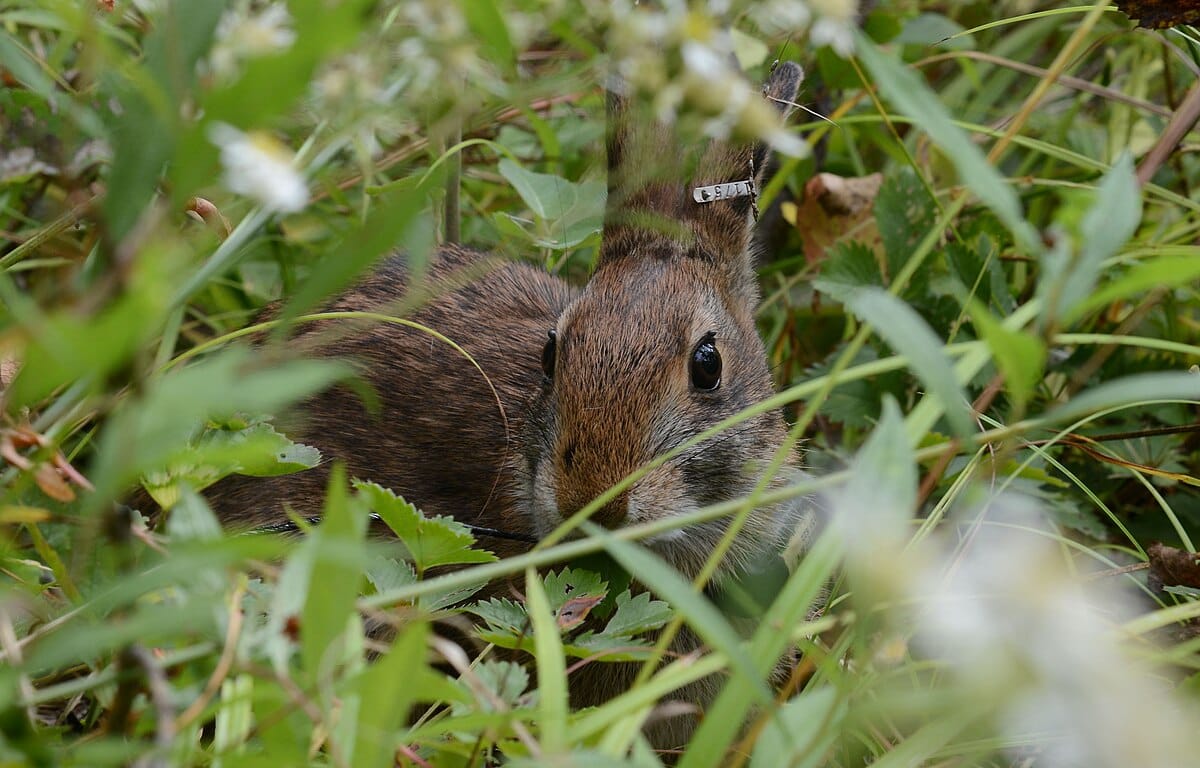
The New England Cottontail is a medium-sized rabbit, typically weighing between 1.5 and 2.5 pounds. Its fur is a mix of brown, gray, and black, offering excellent camouflage in dense brush. The most distinctive feature is its fluffy white tail, which it displays when startled. Compared to the more common Eastern Cottontail, it has slightly shorter ears and a more compact body. When identifying this species, look for the reddish coloring on the nape of the neck and the subtle graying on the sides.
Behavior
New England Cottontails are primarily crepuscular, meaning they are most active at dawn and dusk. They are shy and secretive, often staying hidden in dense thickets or brush piles. When threatened, they rely on quick bursts of speed and zigzag running patterns to escape predators. Unlike some other rabbit species, they do not venture far from protective cover and usually stick to familiar paths within their home range. Communication occurs through foot thumping, scent marking, and occasional soft vocalizations.
Habitat and Range
These rabbits are native to the northeastern United States and are found in Massachusetts mainly in areas with dense shrubs, young forests, and overgrown fields. They require a mix of thick cover for protection and open patches for foraging. Historically, habitat loss from urban development and agriculture has reduced their range, making them less common in some regions. Conservation efforts focus on restoring early successional habitats to support populations.
Diet
The New England Cottontail primarily eats a variety of plants, including grasses, sedges, herbaceous plants, and the leaves and twigs of shrubs. In winter, when fresh vegetation is scarce, they feed on woody browse like maple twigs, blueberry branches, and sumac. Their diet helps control vegetation and contributes to the overall health of the ecosystem.
Reproduction and Life Cycle
Breeding season usually runs from March through September, with females capable of producing two to three litters per year. Each litter contains two to six kits, born blind and hairless. Kits remain in a hidden nest lined with grass until they are ready to forage. Sexual maturity is reached within a few months, and adults maintain small home ranges that they defend from intruders.
Fun Facts / Unique Traits
One interesting trait of the New England Cottontail is its tendency to create multiple “forms,” or shallow depressions in the ground, to rest during the day. Unlike many rabbits that dig burrows, these forms are simple and rely on dense vegetation for protection. Additionally, this species is more elusive than the Eastern Cottontail, making sightings a special experience for wildlife enthusiasts.
Human Interaction
Human activities, especially land development, have significantly impacted New England Cottontail populations. Conservation programs encourage landowners to maintain brushy fields and plant native shrubs. While they rarely interact directly with humans, understanding and preserving their habitats helps sustain the species and maintain biodiversity in Massachusetts.
2. Eastern Cottontail (Sylvilagus floridanus)

Physical Characteristics & Identification Tips
The Eastern Cottontail is the most common rabbit in Massachusetts. Slightly larger than the New England Cottontail, it weighs 2 to 4 pounds. Its fur is a mix of brown, gray, and sometimes reddish tones, with a prominent white tail. Compared to its cousin, the Eastern Cottontail has longer ears and a slightly leaner body. You may notice a more noticeable white patch on the chin and a faint rusty color behind the ears.
Behavior
Eastern Cottontails are also crepuscular and are often active at dawn and dusk. They are more adaptable to human environments than the New England Cottontail and can be found in suburban yards, gardens, and parks. They feed, rest, and reproduce close to protective cover but are not as secretive. Like other rabbits, they use foot thumping and scent marking to communicate.
Habitat and Range
Widely distributed across Massachusetts, Eastern Cottontails inhabit meadows, pastures, forests, and suburban areas. They are highly adaptable, thriving wherever there is a combination of cover and open space. This flexibility has helped them remain abundant despite habitat changes caused by human development.
Diet
Eastern Cottontails are herbivores that feed on grasses, clover, garden plants, and leafy weeds. In winter, they consume twigs, bark, and buds from shrubs and small trees. They are important in controlling vegetation growth and serve as prey for many native predators.
Reproduction and Life Cycle
Breeding season runs from early spring through fall. Females can produce up to five litters a year, each with three to six kits. Kits are born in shallow nests lined with grass and fur. Young rabbits mature quickly, allowing the population to remain resilient despite predation.
Fun Facts / Unique Traits
Eastern Cottontails are well-known for their adaptability. They can thrive in both rural and suburban areas. Unlike the New England Cottontail, they are less shy and more likely to be spotted in open spaces, making them a common sight for birdwatchers and wildlife photographers.
Human Interaction
These rabbits often coexist with humans, sometimes feeding on garden vegetables and ornamental plants. While they can be considered minor pests in urban areas, they also provide an essential food source for local predators. Responsible landscaping and habitat preservation help maintain a balance between human activity and wildlife needs.
3. Snowshoe Hare (Lepus americanus)

Physical Characteristics & Identification Tips
The Snowshoe Hare is larger than cottontails, weighing 2.5 to 4.5 pounds. Its fur changes seasonally—brown in summer and white in winter—to blend with the surroundings. Its large hind feet, which give it the “snowshoe” name, allow it to move efficiently over snow. Long ears and powerful hind legs help it detect predators and escape quickly.
Behavior
Snowshoe Hares are primarily nocturnal, although they may be active during the day in winter. They are solitary and highly alert, using their white winter coat as camouflage. When threatened, they dart in unpredictable zigzag patterns. Like other hares, they do not dig burrows, instead relying on shallow depressions for resting.
Habitat and Range
In Massachusetts, Snowshoe Hares are mostly found in northern forests, especially in areas with dense undergrowth and abundant snow cover. They favor coniferous or mixed forests and occasionally venture into brushy fields. These hares require thick cover to hide from predators like foxes, bobcats, and hawks.
Diet
Snowshoe Hares are herbivores, feeding on grasses, ferns, buds, twigs, bark, and shrubs. In winter, they primarily consume woody vegetation such as maple, birch, and blueberry. Their foraging helps control plant growth and provides ecological balance in forested areas.
Reproduction and Life Cycle
Breeding occurs from late March to early September. Females may have up to three litters per year, with 2–6 leverets (young hares) per litter. Leverets are born fully furred but with eyes closed, ready to move within hours of birth. Snowshoe Hares grow quickly, developing adult features in just a few months.
Fun Facts / Unique Traits
One remarkable feature of the Snowshoe Hare is its seasonal coat change, which provides almost perfect camouflage. Their large hind feet not only help them move on snow but also serve as a defense mechanism by allowing them to sprint quickly when threatened. They are also capable of standing upright to scan for danger.
Human Interaction
Snowshoe Hares are rarely seen in urban areas, but they are important in maintaining forest ecosystems. They serve as prey for many predators and play a role in controlling vegetation growth. Conservation of northern forests helps sustain healthy populations.
4. Black-tailed Jackrabbit (Lepus californicus)
Physical Characteristics & Identification Tips
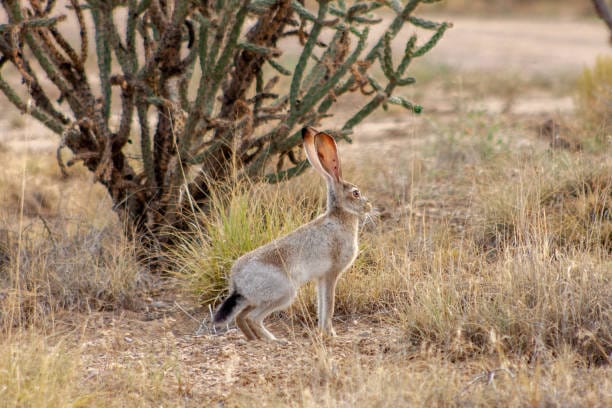
The Black-tailed Jackrabbit is one of the largest rabbits in Massachusetts’ historical records, though it is rare today. Adults can weigh 4 to 6 pounds and measure up to 20 inches long. Its fur is tawny to grayish-brown, blending well with open fields and scrublands. The most distinctive feature is the black stripe along the top of its tail, which contrasts sharply with the white underside. Its ears are long and tipped with black, aiding in heat regulation and predator detection.
Behavior
These hares are highly alert and fast, capable of running up to 35 mph in short bursts. They are primarily nocturnal but can be active at dawn and dusk. When threatened, they rely on zigzag running patterns to confuse predators. Unlike cottontails, Black-tailed Jackrabbits do not dig burrows; instead, they use forms—shallow depressions in the ground—for resting and hiding.
Habitat and Range
Historically, Black-tailed Jackrabbits were introduced into Massachusetts in certain counties. They favor open fields, grasslands, and scrub areas where they can spot predators from a distance. Today, sightings are rare and sporadic, often limited to historical records or isolated escapes from captivity.
Diet
Jackrabbits are herbivores that feed on grasses, shrubs, and other herbaceous plants. In winter, they consume twigs, bark, and buds. Their diet helps maintain plant diversity and supports the health of open habitats.
Reproduction and Life Cycle
Breeding occurs from spring to fall, with females producing up to three litters per year. Each litter can contain three to five leverets. Young are born fully furred and with their eyes open, allowing them to move quickly and evade predators. Adults maintain relatively large home ranges due to their preference for open habitats.
Fun Facts / Unique Traits
Black-tailed Jackrabbits are capable of remarkable bursts of speed and long leaps, sometimes covering more than 10 feet in a single bound. Their long ears not only help detect danger but also serve as a natural cooling system. They are considered among the most agile rabbits in North America.
Human Interaction
Due to their rarity in Massachusetts, Black-tailed Jackrabbits have minimal direct interaction with humans. Historically, introductions were attempts to provide game for hunters, but populations did not establish widely. Observing one today is a rare treat for wildlife enthusiasts.
5. European Hare (Lepus europaeus)

Physical Characteristics & Identification Tips
The European Hare is larger than cottontails, averaging 4 to 7 pounds and 22–28 inches in length. Its fur is a mix of brown and gray with lighter underparts, and its long legs and ears make it an excellent jumper and sprinter. The hare has a lean, athletic build, distinguishing it from the more compact cottontails. Its large eyes are positioned high on the head, providing a wide field of vision.
Behavior
European Hares are primarily nocturnal, although they may be active during the day in rural areas. They are solitary and highly cautious, relying on speed and agility to escape predators. When threatened, they run in a zigzag pattern to confuse attackers. Unlike rabbits, hares do not burrow, using shallow depressions or forms for resting.
Habitat and Range
Historically introduced to Massachusetts, European Hares were present in some areas in the early 20th century. Today, populations have disappeared or are extremely rare. They prefer open fields, meadows, and agricultural areas, where they can feed and spot predators easily. Dense cover is less critical for this species compared to cottontails.
Diet
European Hares are herbivores, feeding on grasses, herbs, and field crops. During winter, they consume twigs, bark, and buds of shrubs and trees. Their foraging supports the ecosystem by helping control plant growth and providing prey for predators.
Reproduction and Life Cycle
Breeding occurs in early spring and continues through summer. Females produce up to three litters per year, with 2–5 leverets per litter. Leverets are born fully furred and able to move soon after birth. Adults maintain large home ranges and often migrate short distances to find suitable food and cover.
Fun Facts / Unique Traits
European Hares are renowned for their running speed and stamina. They can cover long distances with impressive leaps, making them difficult for predators to catch. Unlike rabbits, their young are highly mobile at birth. This hare species also has a more upright posture when standing alert, which makes it easier to spot at a distance.
Human Interaction
While European Hares were introduced by humans, they are no longer a stable part of Massachusetts wildlife. Historically, they were intended for hunting and game purposes. Modern conservation focuses on native species, but these hares remain an interesting historical note and example of human impact on wildlife introduction.
Conclusion
Massachusetts is home to a small but fascinating group of wild rabbits and hares. From the elusive New England Cottontail to the adaptable Eastern Cottontail, the region’s species each have distinctive behaviors, habitats, and diets. Snowshoe Hares provide seasonal interest with their changing coats, while historical introductions like the Black-tailed Jackrabbit and European Hare remind us of how human actions have influenced wildlife populations. By understanding the types of wild rabbits in Massachusetts, enthusiasts and landowners can appreciate these animals and support efforts to conserve native species. Observing these rabbits responsibly and protecting their habitats helps maintain biodiversity and ensures future generations can enjoy these remarkable creatures.
Frequently Asked Questions About Wild Rabbits in Massachusetts
1. How many types of wild rabbits are found in Massachusetts?
Massachusetts is home to five main types of wild rabbits: New England Cottontail, Eastern Cottontail, Snowshoe Hare, Black-tailed Jackrabbit (rare), and European Hare (historical/rare).
2. Which rabbit is the most common in Massachusetts?
The Eastern Cottontail is the most common rabbit in Massachusetts, often found in suburban yards, parks, and open fields.
3. What is the difference between the New England Cottontail and the Eastern Cottontail?
New England Cottontails are shyer, prefer dense brush, and have shorter ears and a more compact body. Eastern Cottontails are more adaptable to human environments and often appear in open areas.
4. Are Snowshoe Hares found throughout Massachusetts?
No, Snowshoe Hares are mainly found in northern forests where dense undergrowth and snow cover provide shelter and camouflage.
5. Do Black-tailed Jackrabbits live in Massachusetts?
They are rare and historically introduced in some areas. Sightings today are sporadic and uncommon.
6. Is the European Hare native to Massachusetts?
No, the European Hare was introduced historically for hunting purposes and is no longer a stable population in the state.
7. What do wild rabbits eat in Massachusetts?
They eat grasses, herbs, garden plants, and shrubs. In winter, they feed on twigs, bark, buds, and woody vegetation.
8. How can I tell a rabbit’s species by its tail?
Cottontails have a prominent white tail visible when alarmed. The Black-tailed Jackrabbit has a black stripe along the tail, while hares have longer tails with subtle color differences.
9. Are rabbits nocturnal?
Most wild rabbits are crepuscular, active at dawn and dusk. Snowshoe Hares and some cottontails may be more nocturnal, especially in areas with human activity.
10. Do rabbits dig burrows?
Cottontails usually use shallow forms and dense cover rather than burrows. Hares, including Snowshoe and Black-tailed, do not dig burrows at all.
11. How can I attract rabbits to my backyard?
Plant native shrubs, provide brush piles for cover, and avoid using pesticides. Fresh grasses and clover also attract cottontails.
12. Are wild rabbits harmful to gardens?
They can eat garden plants, especially in winter when other food is scarce. Protective fencing and netting can help reduce damage.
13. How fast can rabbits run?
Eastern and New England Cottontails can reach speeds of 18–25 mph. Black-tailed Jackrabbits and Snowshoe Hares can sprint faster, up to 30–35 mph in short bursts.
14. How long do wild rabbits live?
In the wild, most rabbits live 1–3 years due to predation. Some may reach 5–6 years in protected areas.
15. When do rabbits breed?
Breeding typically occurs from spring through fall. Eastern and New England Cottontails may have 2–5 litters per year.
16. How many babies are in a litter?
Litters usually contain 2–6 young, called kits or leverets. Hares tend to have fewer but more mobile leverets.
17. Are rabbits prey for predators?
Yes, they are a primary food source for foxes, hawks, owls, coyotes, bobcats, and snakes.
18. Can wild rabbits swim?
Yes, rabbits can swim if necessary, but they usually avoid water unless threatened.
19. Do rabbits hibernate?
No, wild rabbits do not hibernate. They stay active year-round, adjusting their diet based on seasonal availability.
20. How do rabbits escape predators?
They use zigzag running, sudden jumps, and camouflage to evade predators. Snowshoe Hares use seasonal white coats to blend into snow.
21. Can rabbits climb trees?
No, rabbits cannot climb trees. They rely on speed, cover, and burrows/forms for safety.
22. What sounds do wild rabbits make?
Rabbits may grunt, squeak, or thump their hind feet to warn of danger. Hares are generally quieter than cottontails.
23. Do rabbits carry diseases?
Wild rabbits can carry tularemia or myxomatosis, but transmission to humans is rare. Always handle wildlife carefully.
24. How can I identify rabbit tracks?
Tracks usually show two larger hind prints ahead of two smaller front prints. The pattern may appear as a “Y” shape in snow or mud.
25. Do rabbits migrate?
Wild rabbits do not migrate long distances, but they may move locally to find food, cover, or avoid predators.
26. How can I help conserve New England Cottontails?
Maintain brushy fields, plant native shrubs, and protect early successional habitats to provide food and cover.
27. Why is the New England Cottontail declining?
Habitat loss, fragmentation, and competition with Eastern Cottontails have caused population declines.
28. Can rabbits be kept as pets?
Domestic rabbits differ from wild rabbits. Wild species should never be kept as pets; they are best left in their natural habitats.
29. Are Snowshoe Hares visible year-round?
They can be spotted year-round, but their white winter coat makes them harder to see in snow-covered landscapes.
30. How do rabbits affect local ecosystems?
They help control vegetation, serve as prey for predators, and contribute to soil health through foraging and waste deposition.
31. Can humans safely observe rabbits?
Yes, with patience and quiet observation. Avoid sudden movements and use binoculars for distant sightings to prevent stress to the animals.
32. What is the best time to see wild rabbits?
Dawn and dusk are ideal times, as most rabbits are crepuscular. Snowshoe Hares may also be visible during daylight in winter.
Read more: 5 Types of Wild Rabbits in New Jersey (Pictures And Identification)