
Wild Rabbits in New Mexico appear in open deserts, grassy valleys, rugged mountains, and quiet forests. They survive heat, snow, predators, and long droughts. If you’re looking for a clear, friendly guide to tell these rabbits apart, you’re in the right place. This article reviews eight species in detail. You’ll learn how they look, how they act, where they live, and simple clues to know which one you’re actually seeing. These details help beginners and nature fans who want a better understanding of the Types of Wild Rabbits in New Mexico.
1. Black-Tailed Jackrabbit
Physical Characteristics & Identification Tips
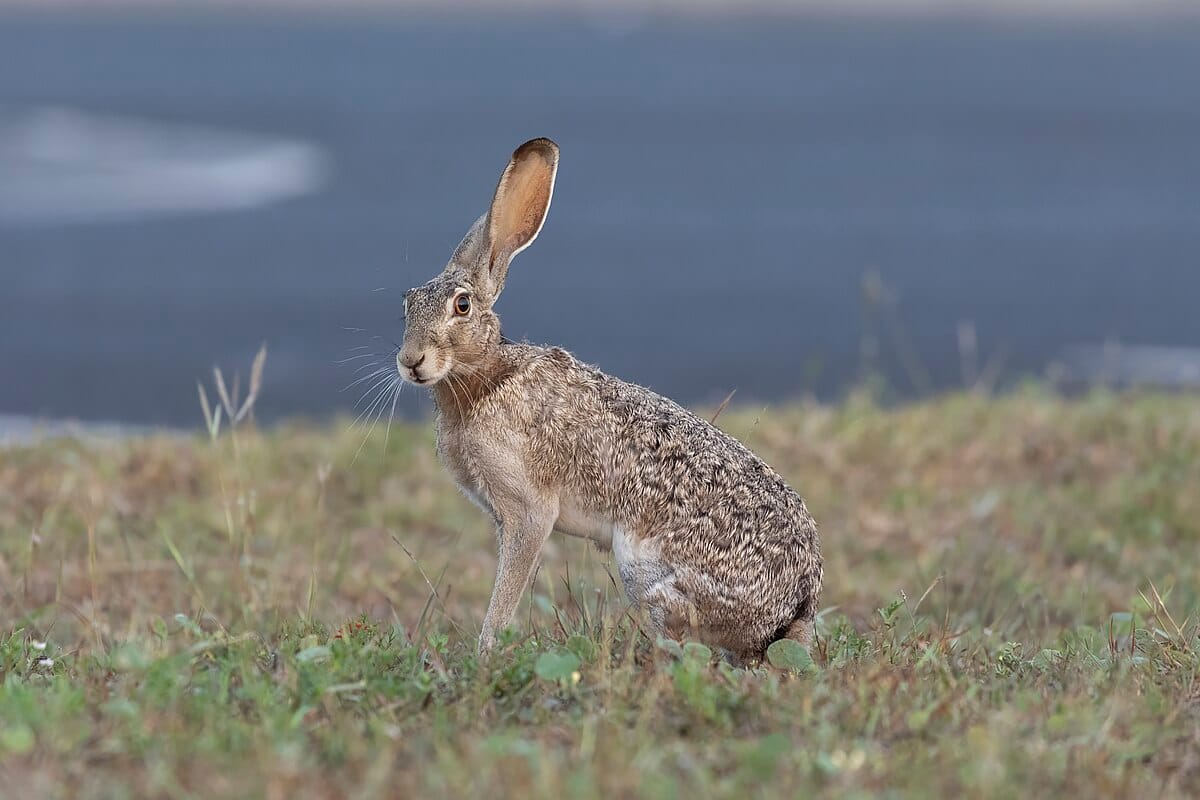
The Black-Tailed Jackrabbit is one of the most recognizable animals in the Southwest. If someone spots a rabbit-like shape sprinting across a desert road at dusk, chances are it’s this one. It has incredibly long ears that help with body temperature control. Its ears can look almost cartoonishly large, especially when sunlight shines through them. Their fur mixes brown, gray, and tan shades, which makes them blend well into dry landscapes. The tail is dark on top with a lighter underside, and this contrast gives the species its name.
They have long legs, and their body looks lean and built for speed rather than comfort. When still, they appear alert and tense, as if they’re ready to jump at any moment. One easy way to tell them apart from cottontails is their size. Jackrabbits are much larger and have longer limbs. The face also has a sharper, more defined look. If you see a “rabbit” that looks too tall and too fast to be an ordinary bunny, you’re likely looking at a Black-Tailed Jackrabbit.
Behavior
These jackrabbits spend a lot of time staying quiet and watching their surroundings. They often sit in shallow depressions they scrape into the ground. These spots are called “forms.” A jackrabbit will rest in its form during the day to avoid heat. If disturbed, they burst out with powerful leaps and zigzag moves that confuse predators. Their speed can reach over 40 mph, which is fast enough to escape coyotes and bobcats.
Despite their athletic look, they don’t enjoy long chases. They tire quickly, so their entire survival plan relies on quick bursts of energy. They are mostly solitary and only interact with others during breeding. You’ll rarely see them cuddling or grooming each other like domestic rabbits. Their life in the desert encourages independence.
Habitat and Range
The Black-Tailed Jackrabbit has a wide range across New Mexico. They favor open, dry areas: sagebrush flats, grasslands, farms, low desert scrub, and spots where vegetation is low enough to see predators from far away. You won’t usually find them deep in forests. They prefer space and visibility. Many residents notice them near rural roads during the evening, especially in summer when temperatures drop and the animals come out to feed.
The species adapts well to human-altered spaces. As long as there’s some natural cover and enough food, they can survive near fields and ranches. They do not build burrows like cottontails. Instead, they rely on their forms, natural shade, and quick reflexes.
Diet
Their diet depends on the season. During warm months, they feed on grasses, forbs, and leafy plants. In winter, when fresh greens become scarce, they switch to shrubs, buds, and even bark. They are picky eaters compared to some other rabbits. They graze selectively, choosing tender plants first. This habit sometimes brings them into conflict with farmers who grow young crops.
They can survive on very little water. Much of their moisture comes from the plants they eat. This allows them to live in regions where surface water barely exists.
Reproduction and Life Cycle
The breeding season is long, often stretching from January to August. Females may raise several litters per year. Unlike cottontails, jackrabbit young, known as leverets, are born with fur and with their eyes open. They are mobile within minutes. The mother doesn’t stay with them constantly. Instead, she nurses them briefly and leaves to avoid attracting predators. The leverets stay hidden in separate small dips in the ground for the first days of life.
Young jackrabbits grow quickly. Within a month, they’re able to move around confidently. Their life expectancy varies with predator pressure, but most survive about 1–5 years, though some live longer if conditions are safe.
Fun Facts / Traits
- Their ears can help them release heat like a built-in cooling system.
- The name “jackrabbit” comes from “jackass rabbit,” referring to their long ears, which reminded early settlers of donkey ears.
- They can leap more than 10 feet in a single bound.
Human Interaction
People see Black-Tailed Jackrabbits often near farms and ranches. Some folks enjoy spotting them because they look dramatic and elegant as they run. Others see them as minor pests because they nibble on crops or garden plants. They rarely cause serious damage unless large numbers gather in one area.
Drivers need to be careful around dusk. Jackrabbits tend to cross roads suddenly, and their speed can surprise anyone unfamiliar with local wildlife. Because of their ability to adapt, they remain common throughout New Mexico.
2. White-Tailed Jackrabbit

Physical Characteristics & Identification Tips
The White-Tailed Jackrabbit looks quite different from its black-tailed cousin once you observe it closely. It has a lighter coat, often grayish or buff-colored, which becomes even paler in northern or colder regions. Its ears are long, similar to other hares, but its body shape leans bulkier. When it hops away, you’ll notice the white underside of the tail flashing—this is one of its clearest features.
In winter, some individuals develop coats with more white patches, helping them blend into snowy areas of northern New Mexico or high elevations. These seasonal changes can be subtle in southern regions but are still noticeable with close attention. Their size is similar to Black-Tailed Jackrabbits, though their build seems slightly more muscular.
If you see a hare in a high meadow or mountain valley, it’s more likely to be this species. Their presence in cooler places gives you a strong hint during identification.
Behavior
White-Tailed Jackrabbits are mostly nocturnal. They move around more at night to avoid heat and avoid being seen. During the day, they hide in forms the same way other hares do. They depend heavily on stillness to avoid predators. If you walk near one without noticing it, it may suddenly jump up and sprint away, often startling hikers.
They don’t form groups. Their lives revolve around feeding, staying alert, and raising young. Their escape strategy uses both speed and distance. They prefer long, straight runs rather than the sharp turns Black-Tailed Jackrabbits use. This difference helps them on open plains and mountain slopes where sprinting in a straight line works better.
Habitat and Range
This species prefers cooler habitats. They favor high grasslands, foothills, mountain valleys, open forests, and alpine meadows. The further north and higher the elevation, the more common they become. In New Mexico, they appear in places where temperatures drop and snow is common in winter.
You won’t usually see them in hot, low deserts. Their biology suits milder climates. Sparse tree cover and tall grasses give them perfect places to hide and forage. Their range also overlaps with some human developments like ranch lands, though they remain less tolerant of disturbed ground than their black-tailed relatives.
Diet
White-Tailed Jackrabbits eat mainly grasses and other soft plants during warm seasons. In cooler months, they add woody plants, twigs, buds, and bark. Areas with seasonal moisture provide them with enough food even during late autumn. Their feeding style creates narrow paths through grass, which sometimes helps hikers identify their presence.
They drink water if it’s available, but like most hares, they rely heavily on moisture from vegetation. Their ability to handle cold climates helps them stay active even when food is limited.
Reproduction and Life Cycle
The breeding season usually starts in early spring and continues through summer. Females give birth to several leverets in each litter. These young hares are born well-developed with open eyes and fur. Mothers visit them briefly and keep their distance afterward. Leverets stay quiet and motionless in different hiding spots near each other.
The species has a moderate lifespan of around 1–6 years depending on predators and climate. Areas with harsh winters or heavy predator activity shorten their average life length.
Fun Facts / Traits
- Some individuals turn nearly white in winter at high elevations.
- They prefer long, straight escape routes instead of sharp zigzags.
- Their ears are so sensitive they can detect sounds far across quiet meadows.
Human Interaction
Encounters with White-Tailed Jackrabbits are less frequent because they avoid warmer regions with many people. Hikers, hunters, and campers are more likely to see them than city residents. They may cause minor crop damage in cooler agricultural zones, but they are rarely abundant enough to create serious problems.
People often admire them for their ghostlike look at dusk, especially when their pale coats glow in low light. They play an important role in mountain ecosystems by providing food for predators and helping maintain plant community balance.
3. Desert Cottontail
Physical Characteristics & Identification Tips
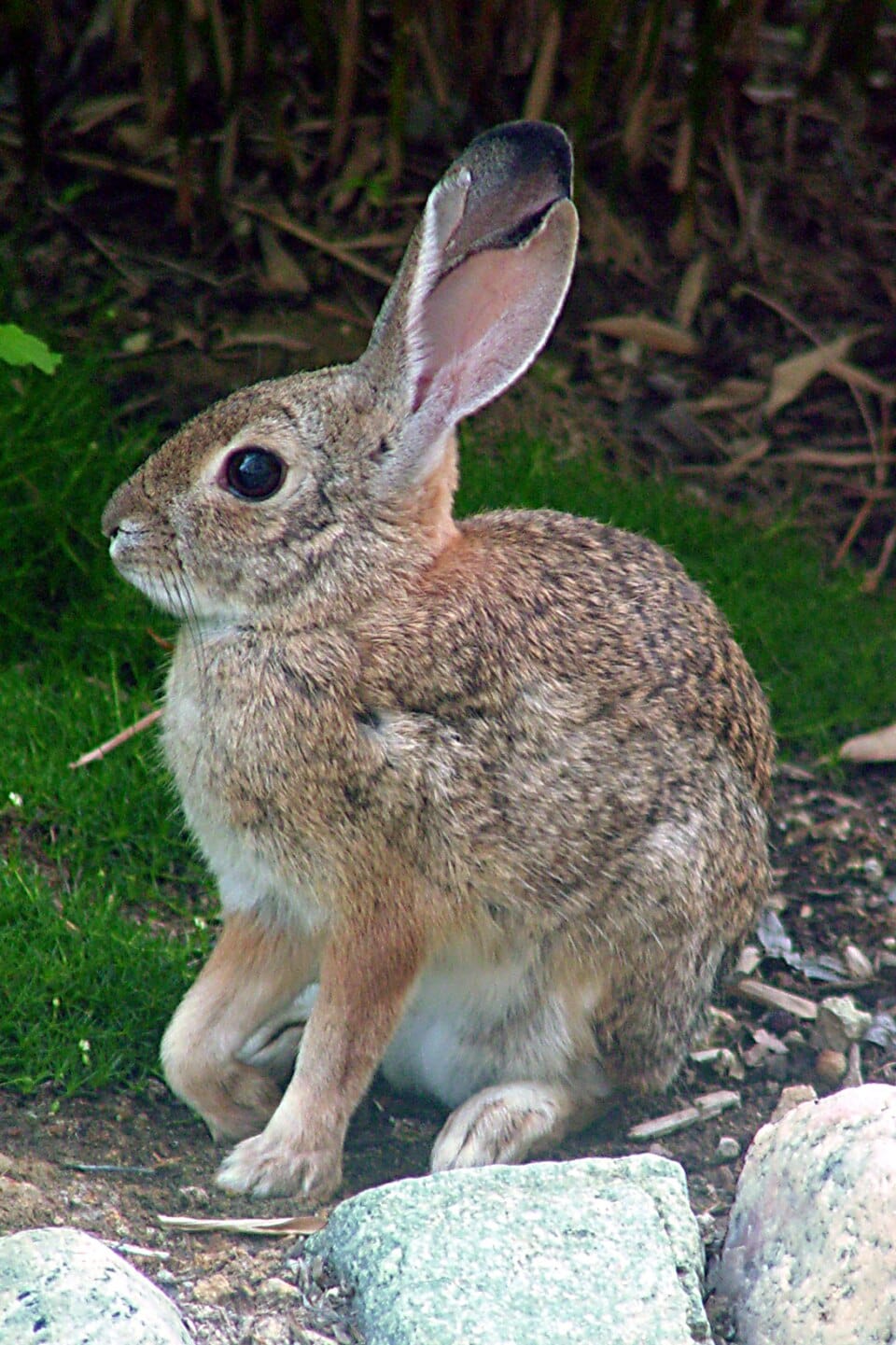
The Desert Cottontail (*Sylvilagus audubonii*) is smaller than jackrabbits and has a compact, rounded body. Its fur is a sandy brown with subtle gray patches, helping it blend seamlessly with desert and scrub landscapes. The most obvious feature is its fluffy white tail, which looks like a small cotton puff—hence the name “cottontail.” Its ears are shorter than those of jackrabbits but still stand upright, giving it a constant alert appearance.
Adult Desert Cottontails typically weigh between 2.5 to 4 pounds, making them noticeably smaller than jackrabbits. Their hind legs are strong but not as long as those of jackrabbits, so their movements are quicker bursts rather than long-distance sprints. When trying to identify them in the wild, look for their rounded ears, white tail, and their habit of hopping in short, quick bounds rather than long leaps.
Behavior
Desert Cottontails are mostly crepuscular, which means they are most active at dawn and dusk. They spend daylight hours resting in shallow forms or under bushes to escape the desert heat. When threatened, they freeze first to avoid detection, then bolt in a zigzag pattern to confuse predators. Their speed is impressive for their size, and their zigzag hopping helps them escape coyotes, foxes, and birds of prey.
These rabbits are social in the sense that they tolerate nearby neighbors, but they do not form tight-knit groups. Most interactions occur during mating or territorial disputes. They mark territory with scent glands located under the chin, which helps them maintain boundaries without physical confrontations.
Habitat and Range
As their name suggests, Desert Cottontails thrive in arid and semi-arid regions. They are common in New Mexico’s low deserts, scrublands, and grasslands, where brush and sparse vegetation provide cover. They avoid dense forests and heavily urbanized areas. A favorite habitat is a mix of open ground for feeding and scattered shrubs for hiding. These areas allow them to spot predators while staying close to shelter.
Desert Cottontails adapt well to human activity, often appearing near rural roads, fields, and gardens. They can survive in fragmented landscapes as long as there is sufficient cover and food. Because of their adaptability, they are one of the most frequently encountered rabbits in southern New Mexico.
Diet
Their diet consists mainly of grasses, herbs, and leafy plants, though they also nibble on shrubs and cacti during dry seasons. They prefer fresh, green vegetation but will switch to tougher plant material when necessary. Desert Cottontails are known to eat seeds and fruit occasionally. They get much of their water from the plants they eat, which allows them to survive in areas with little standing water.
Because they feed on young shoots and leaves, they can sometimes impact small agricultural plots, though they rarely reach numbers that cause serious damage. Their selective feeding also helps maintain the health of desert plant communities by trimming overgrown vegetation.
Reproduction and Life Cycle
The breeding season typically spans from late winter to early fall, with several litters possible in one year. Females dig shallow nests lined with grass and fur. The young, called kits, are born blind and hairless, which is different from jackrabbit leverets. The mother visits briefly to nurse them, often leaving them hidden for hours at a time. This strategy reduces the risk of predation.
Kits grow quickly, opening their eyes in about a week and beginning to explore their surroundings shortly after. They are independent within a month, capable of hopping and feeding on their own. Life expectancy averages 1–3 years in the wild, though some live longer if predation and environmental hazards are minimal.
Fun Facts / Traits
- The white cotton-like tail is not just for show—it can distract predators when the rabbit bolts.
- Desert Cottontails are excellent jumpers despite their smaller size, capable of clearing obstacles with ease.
- They groom themselves constantly, which keeps their fur clean and free of parasites.
Human Interaction
Desert Cottontails are a common sight for hikers, hunters, and farmers. They can nibble garden vegetables and small crops but rarely cause major damage. Many people enjoy spotting them because their small size and quick movements make them charming to watch. Responsible wildlife enthusiasts appreciate their role in the ecosystem as prey for predators and as grazers that help manage plant growth.
4. Mountain Cottontail
Physical Characteristics & Identification Tips
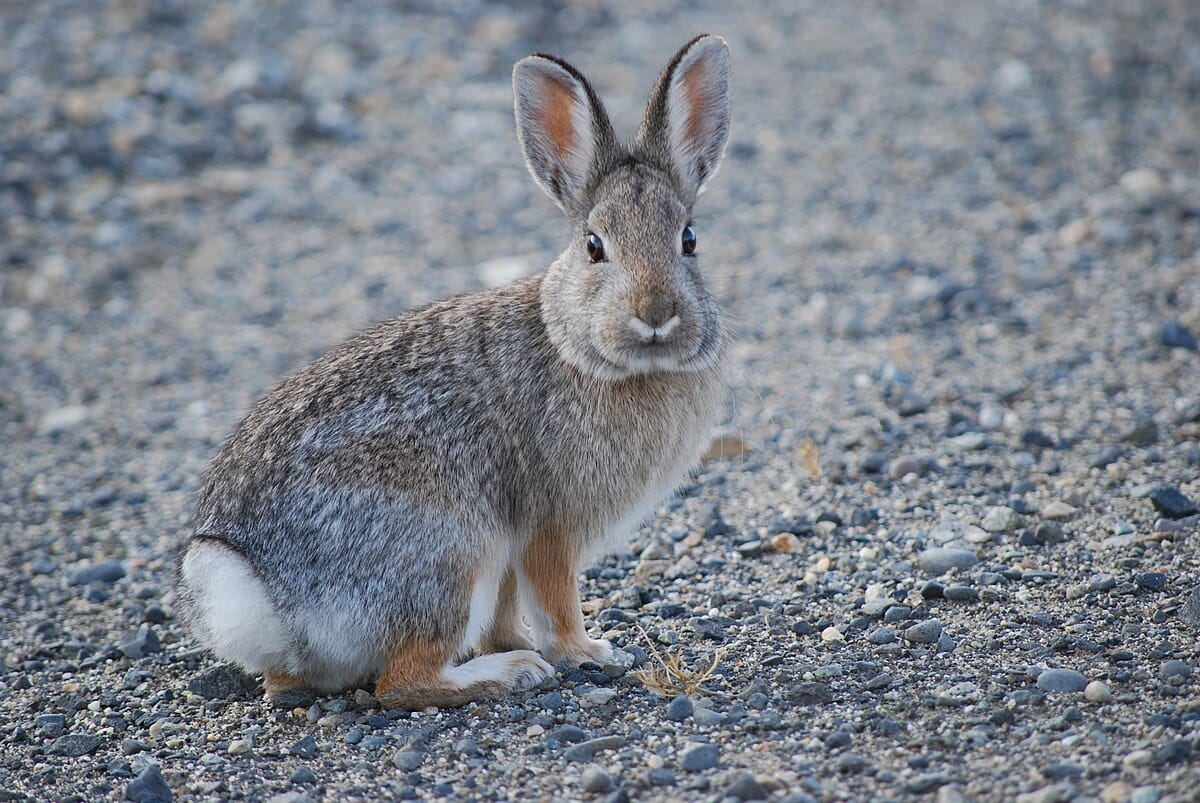
The Mountain Cottontail (*Sylvilagus nuttallii*) has a stocky build and is slightly larger than the Desert Cottontail. Its fur is a mix of brown, gray, and sometimes reddish hues, which provides excellent camouflage in rocky, forested, and mountainous habitats. Like other cottontails, it has a fluffy white tail, short ears, and strong hind legs for hopping among uneven terrain.
Adult Mountain Cottontails weigh around 3–5 pounds. They have robust legs for climbing rocky slopes and leaping between shrubs. One way to distinguish them from Desert Cottontails is by their darker fur along the back and a slightly longer, more angular face. Their ears are rounded at the tips compared to jackrabbits, which helps in identification.
Behavior
Mountain Cottontails are most active in early morning and late evening. During the day, they hide in crevices, under logs, or among rocks. They are alert and cautious, constantly scanning for predators. Their escape tactic is a mixture of freezing, zigzag hopping, and sometimes running uphill, which makes them harder to catch in mountainous terrain.
Unlike jackrabbits, Mountain Cottontails are more comfortable close to other rabbits. They may share feeding areas but still maintain personal space. They communicate subtly using scent and body language, such as thumping their hind legs to warn nearby rabbits of danger.
Habitat and Range
This species prefers high-elevation habitats: open forests, rocky hillsides, mountain valleys, and meadows. In New Mexico, they are common in northern mountains and foothills. They need areas that combine cover with open space for feeding. Dense forests are avoided unless there are clearings, while low desert regions are too sparse for their needs.
Mountain Cottontails are less likely than other species to adapt to human-altered landscapes. They thrive best where natural terrain provides hiding spots, climbing opportunities, and diverse vegetation for feeding.
Diet
Mountain Cottontails feed on grasses, leaves, shrubs, bark, and twigs, depending on availability. In winter, when green plants are scarce, they gnaw on bark and stems to get nutrients. They are opportunistic feeders, adjusting their diet based on season and location. Moisture from plants helps sustain them during dry periods.
They play an important ecological role by controlling plant growth and providing food for predators such as foxes, bobcats, and birds of prey. Observers may notice their feeding paths in meadows and rocky clearings.
Reproduction and Life Cycle
Breeding occurs from early spring through late summer. Females produce multiple litters per season, with 3–6 kits per litter. The kits are born blind and hairless, hidden in nests made of grass and fur. Mothers visit briefly to nurse them, leaving them hidden to avoid attracting predators.
Kits grow rapidly and can leave the nest in a few weeks. Mountain Cottontails generally live 2–4 years in the wild, though harsh winters and predators can shorten their lifespan. Those in safer, sheltered areas may survive longer.
Fun Facts / Traits
- Mountain Cottontails are agile climbers, able to navigate rocky slopes quickly.
- They use multiple shallow nests in their territory, moving kits frequently to avoid predators.
- Hiking observers often hear their signature thump warning before spotting them.
Human Interaction
Humans rarely encounter Mountain Cottontails in urban areas. Hikers and hunters are the main people to see them. They rarely damage crops because they inhabit less agricultural land. Many nature enthusiasts appreciate them as part of the mountainous ecosystem, serving as prey for predators and helping maintain vegetation balance.
5. Eastern Cottontail
Physical Characteristics & Identification Tips
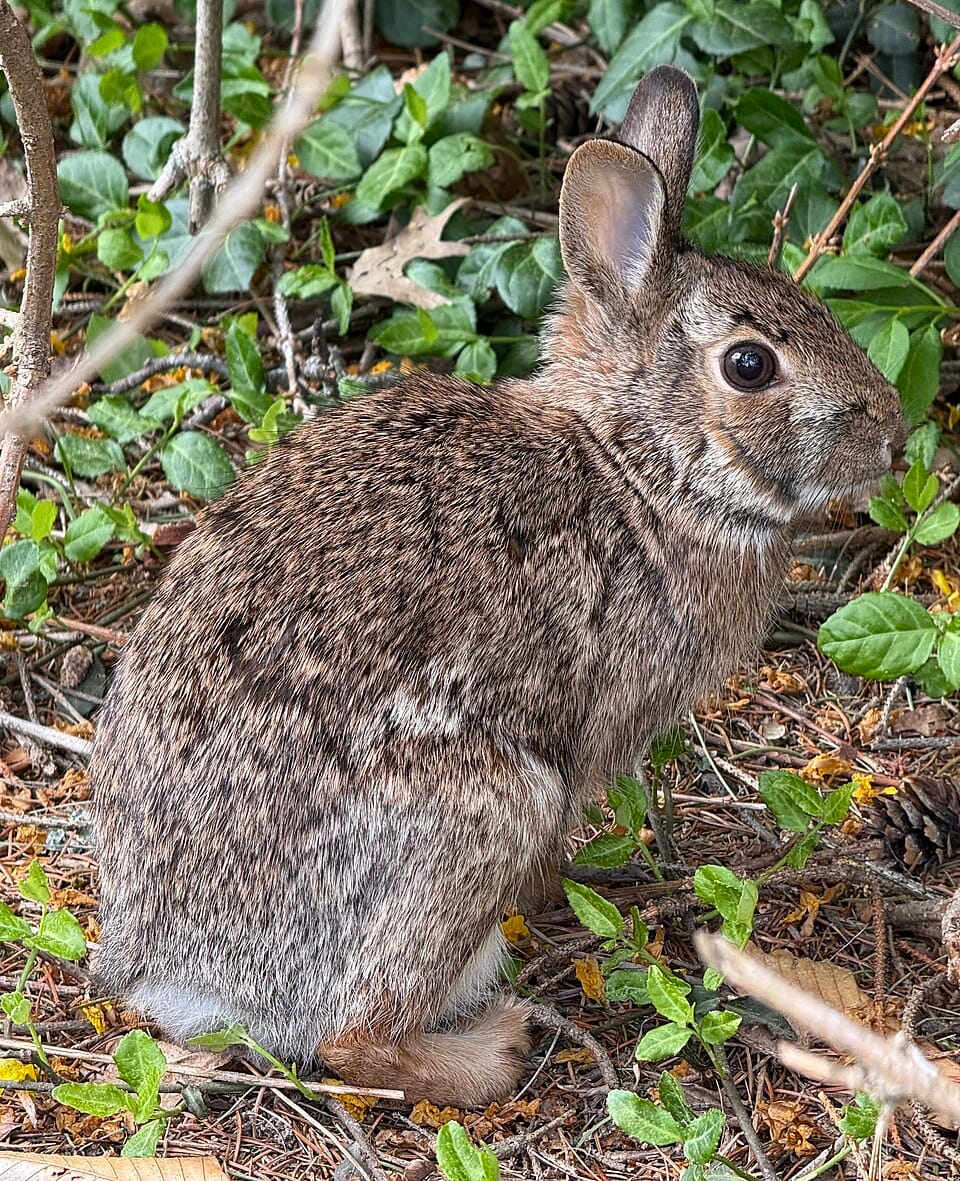
The Eastern Cottontail (*Sylvilagus floridanus*) is one of the most widespread rabbits in North America, and in New Mexico, it favors the eastern plains and river valleys. They have a medium-sized, rounded body covered in grayish-brown fur with a lighter belly. Their signature feature is the white fluffy tail, easily visible when they hop away. Their ears are moderately long, standing upright, and their eyes are large and dark, giving them an alert appearance.
Adults typically weigh 2.5–4 pounds. Compared to jackrabbits, Eastern Cottontails are smaller and less muscular. Their hind legs are strong enough for quick, short bursts of speed, usually in zigzag patterns. Unlike White-Tailed or Black-Tailed Jackrabbits, their movements are more compact and less dramatic, making them seem “gentler” in motion. You can identify them by their habitat, slightly smaller size, and distinctive tail flash when they flee.
Behavior
Eastern Cottontails are most active at dawn and dusk. During the day, they hide in small forms or under bushes to stay safe from predators. When approached, they first freeze, then dash off with short, quick hops, zigzagging to confuse threats. They are solitary for most of the year, meeting only during the breeding season.
They communicate mainly through scent and subtle body language. Thumping their hind legs is a common warning signal to nearby rabbits. They also leave droppings in characteristic spots, which helps mark territory and signal other rabbits.
Habitat and Range
In New Mexico, Eastern Cottontails are found in river valleys, meadows, grasslands, and lightly wooded areas. They prefer areas with a mix of open space for feeding and dense cover for hiding. Unlike Mountain or Desert Cottontails, they tolerate low-density human presence, sometimes appearing near gardens or parks in rural communities. They are adaptable but avoid heavily urbanized areas and dense forests.
Diet
Their diet is mainly grasses, herbs, and leafy plants. They also eat twigs, bark, and buds in winter when fresh vegetation is scarce. Eastern Cottontails are selective feeders, often choosing the most tender shoots. Their grazing can influence plant growth patterns and help maintain ecosystem balance. They get much of their hydration from the plants they consume, which allows them to survive in areas without standing water.
Reproduction and Life Cycle
Breeding occurs from early spring to late fall. Females can have multiple litters of 3–7 kits per year. Kits are born blind and hairless, relying on hidden nests lined with grass and fur. Mothers visit briefly to nurse them, leaving them alone most of the day to avoid attracting predators. Young cottontails grow rapidly and leave the nest within a few weeks.
Average lifespan ranges from 1–3 years, depending on predation and environmental conditions. They provide essential prey for foxes, hawks, and owls.
Fun Facts / Traits
- The Eastern Cottontail can jump over 3 feet high in a single leap.
- They have a strong preference for areas with mixed cover, helping them avoid predators.
- Their droppings and feeding tracks make it easy for nature watchers to detect their presence.
Human Interaction
Eastern Cottontails are often noticed by gardeners and hikers. They can nibble on vegetables and flowers but rarely become a major pest. They provide food for local predators and are an important part of the ecosystem. Observing them in the wild can be both entertaining and educational, especially for kids learning about local wildlife.
6. White-Sided Jackrabbit

Physical Characteristics & Identification Tips
The White-Sided Jackrabbit (*Lepus callotis*) is less commonly seen in New Mexico, but it’s an interesting species due to its distinctive coloration. Its back is grayish-brown, while the sides of its body and tail show striking white patches. Its ears are long and slender, similar to other jackrabbits, but the contrasting side coloration makes identification straightforward if you get a clear view. The White-Sided Jackrabbit is slightly smaller than Black-Tailed Jackrabbits but has a similar lean, elongated build.
Its long legs and powerful hind feet allow it to sprint rapidly across grasslands and open plains. Unlike cottontails, which rely on zigzag hops over short distances, White-Sided Jackrabbits favor long, straight runs to escape predators. When moving, the white flanks flash, which may startle predators or confuse them momentarily.
Behavior
These jackrabbits are primarily crepuscular, becoming active around dusk and dawn. They spend daylight hours resting in shallow depressions or forms. They are highly alert and rely on their speed to survive. If they sense danger, they freeze briefly and then take off in a burst of speed. Unlike the more social cottontails, White-Sided Jackrabbits are largely solitary except during mating season.
They communicate through body signals, like thumping their feet and raising their tails. They are agile and capable of sudden turns, though they usually prefer to outrun threats in straight sprints. Their alertness makes spotting them a challenge for casual observers.
Habitat and Range
White-Sided Jackrabbits inhabit high plains, meadows, and grasslands of northern New Mexico. They prefer open areas with minimal tree cover, which allows them to spot predators from a distance. They are less adaptable to urban areas than Desert Cottontails, relying more on natural landscapes. Grassy plains interspersed with shrubs provide cover while enabling foraging opportunities.
Diet
The diet is primarily grasses, herbs, and leafy plants. They also nibble on buds and twigs, especially in winter. Moisture in plants provides most of the water they need. They selectively feed on tender shoots, which can influence the composition of grassland vegetation. This species plays a subtle but important role in maintaining ecosystem health by grazing selectively and creating space for new plant growth.
Reproduction and Life Cycle
Breeding usually occurs from spring through summer. Females may have multiple litters per season, typically consisting of 2–5 leverets. Leverets are born fully furred with open eyes and are mobile almost immediately. The mother visits the young briefly for nursing and leaves them alone most of the time. Young grow quickly and are capable of independent survival within a month.
Average lifespan is around 2–4 years in the wild. Predation from coyotes, hawks, and foxes reduces life expectancy, but their rapid growth helps ensure that enough young survive to maintain population levels.
Fun Facts / Traits
- White-Sided Jackrabbits flash their side fur when running, which can confuse predators.
- They prefer high plains and open meadows, making them more visible to those exploring northern New Mexico.
- Their long ears help regulate body temperature in hot and cold conditions.
Human Interaction
Encounters with humans are rare due to their preference for open, undisturbed areas. They are sometimes observed by hikers or hunters in grasslands. While they may nibble on crops if present, they are generally not considered a pest. They are valuable in maintaining grassland ecosystems, serving as prey for predators and helping manage vegetation growth.
7. Robust Cottontail
Physical Characteristics & Identification Tips
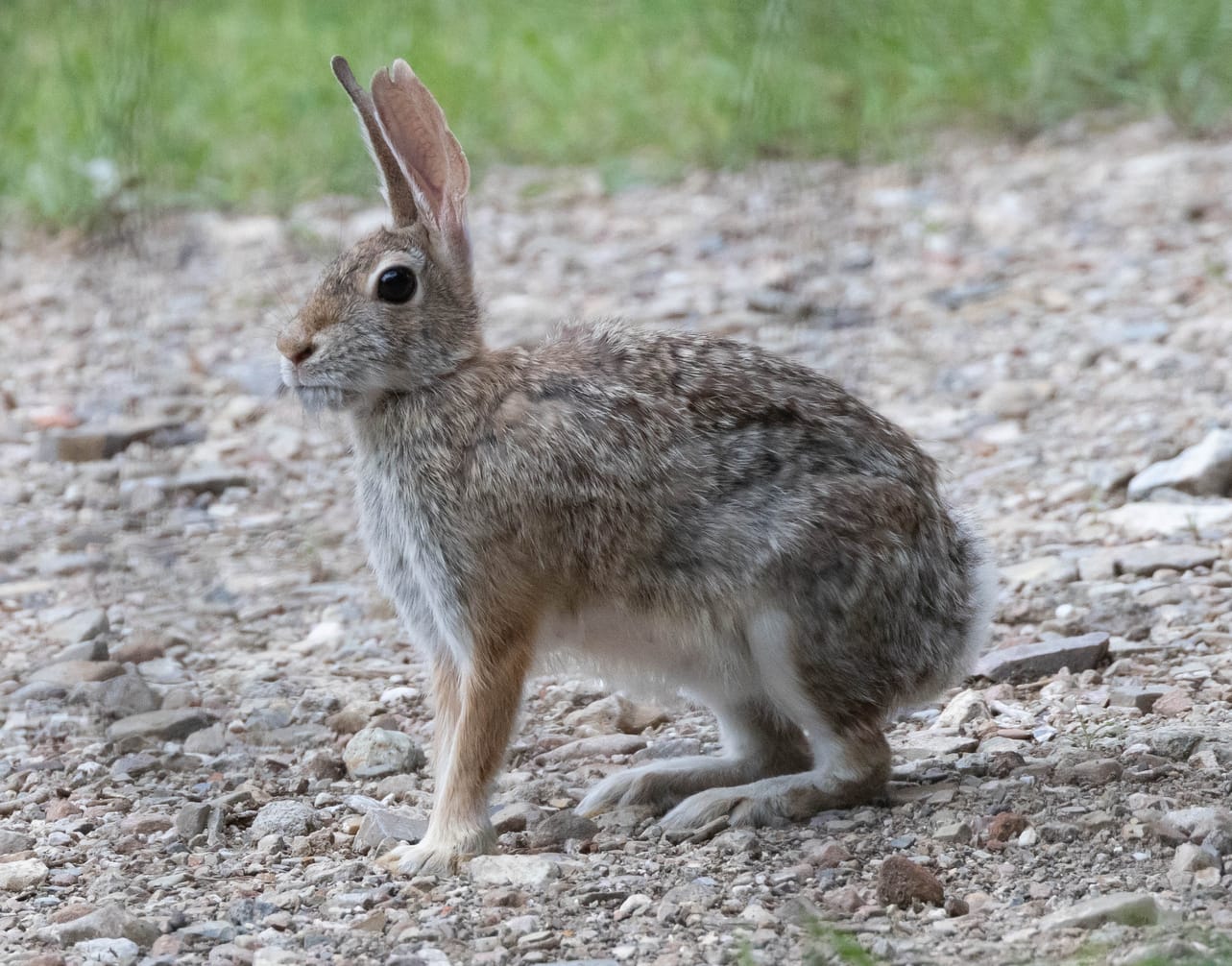
The Robust Cottontail (*Sylvilagus holzneri*) is slightly larger and sturdier than most other cottontails in New Mexico. Its fur is a mix of gray and brown, providing excellent camouflage in dense grasslands and brushy areas. As with other cottontails, it has a fluffy white tail, short ears, and strong hind legs. Its body appears stockier, which helps it maneuver through thick underbrush while escaping predators.
Adults weigh around 3–5 pounds and have a slightly rounded body shape compared to the lean jackrabbits. Their compact size and coloration make them hard to spot in tall grasses. Unlike jackrabbits, they rely more on hiding than running long distances, though they can make quick, sharp hops when startled.
Behavior
Robust Cottontails are mostly crepuscular and nocturnal. They hide during the day under shrubs, fallen logs, or grass clumps. When threatened, they first freeze to avoid detection, then bound in short, zigzag hops. This species is relatively solitary but may tolerate neighboring rabbits in overlapping territories. They communicate with subtle signals such as thumping hind legs, which alerts nearby rabbits of danger.
They are known for their cautious nature. Unlike the showy escape of jackrabbits, they move quietly and deliberately, relying on stealth before speed. Observers may notice them staying unusually still even when humans or predators are near.
Habitat and Range
Robust Cottontails prefer dense grasslands, river valleys, and lightly wooded areas. They avoid open deserts and high-elevation meadows. In New Mexico, they are more common in the central and eastern regions where grass cover and shrubs are abundant. Their habitat choice offers protection from predators while providing ample food sources.
Diet
They feed mainly on grasses, herbs, buds, and twigs. During dry seasons, they adapt by eating more woody material and shrubs. Moisture from plant material is usually sufficient for their survival. Their selective grazing helps maintain plant diversity and prevents certain species from dominating the area. This behavior also benefits other wildlife by keeping habitats balanced.
Reproduction and Life Cycle
Breeding typically occurs from early spring through late summer. Females may have multiple litters of 3–6 kits per season. Kits are born blind and hairless, hidden in a nest lined with grass and fur. Mothers nurse them briefly and leave them alone for long periods. Young cottontails develop quickly and are capable of independent movement within weeks.
Life expectancy averages 2–4 years in the wild. Predation from foxes, bobcats, and birds of prey is a primary limiting factor, while safe areas allow for longer lifespans.
Fun Facts / Traits
- They are excellent at hiding, making them difficult to spot in tall grass.
- Their short bursts of speed and zigzag hopping help them escape predators in dense vegetation.
- They groom themselves regularly to maintain clean fur and parasite-free coats.
Human Interaction
Encounters with Robust Cottontails are mostly limited to rural areas, hikers, or hunters. They occasionally nibble on crops and garden plants but are not major pests. Their presence supports predator populations and maintains grassland health, making them an important component of local ecosystems.
8. Snowshoe Hare

Physical Characteristics & Identification Tips
The Snowshoe Hare (*Lepus americanus*) is named for its large hind feet, which act like snowshoes and allow it to move easily over snow. Its fur changes seasonally: reddish-brown in summer and white in winter, providing camouflage against predators. Its ears are medium-long, tipped with black, and its tail is small and white. They are larger than most cottontails but smaller than jackrabbits, with an average weight of 3–5 pounds.
One of the easiest ways to identify them is their seasonal coat color change, especially in snowy regions of northern New Mexico. Their large hind feet leave distinctive tracks in snow or soft soil. The combination of white winter fur and unique tracks makes them easier to identify than many other rabbits.
Behavior
Snowshoe Hares are highly active at night and dusk. They feed, mate, and move during these hours to avoid daytime predators. When threatened, they freeze, relying on camouflage, and then use rapid, zigzag leaps to escape. They are solitary outside of mating season but share overlapping territories with others. They communicate using foot thumping, body posture, and scent.
These hares are agile and can jump great distances, which is especially useful in snowy terrain. Their alertness and camouflage are critical survival tools.
Habitat and Range
In New Mexico, Snowshoe Hares are found in higher elevations with cool, forested areas and snow-covered terrain. They prefer mixed conifer and deciduous forests with ample underbrush for cover. Unlike lowland cottontails, they are less adaptable to deserts or open plains. Their distribution is mainly in northern mountainous regions where seasonal snow is reliable.
Diet
Their diet changes with the seasons. In summer, they feed on grasses, leaves, and herbaceous plants. In winter, they rely on twigs, bark, buds, and conifer needles. Snowshoe Hares get most of their water from the vegetation they eat, which allows them to survive in snowy and cold conditions without needing open water sources.
Reproduction and Life Cycle
Breeding usually occurs from early spring through summer. Females produce 2–4 litters per season, with 2–6 leverets per litter. Young are born fully furred with open eyes and are capable of moving around quickly. They hide in shallow forms or dense brush to avoid predators. Lifespan varies but is generally 3–5 years in the wild, with predation being a major factor.
Fun Facts / Traits
- Their hind feet act like natural snowshoes, allowing them to travel efficiently over snow.
- Seasonal color changes provide perfect camouflage, reducing predation risk.
- They are an important prey species for lynx, foxes, and owls in northern New Mexico.
Human Interaction
Snowshoe Hares are rarely encountered in urban areas due to their preference for high, snowy forests. Hunters may target them, and wildlife enthusiasts enjoy observing their seasonal coat changes. They play a vital role in forest ecosystems by serving as prey and controlling vegetation growth.
Conclusion: Understanding Wild Rabbits in New Mexico
Frequently Asked Questions (FAQs) About Wild Rabbits in New Mexico
1. What are the most common types of wild rabbits in New Mexico?
New Mexico hosts several species of wild rabbits, including Black-Tailed Jackrabbit, White-Tailed Jackrabbit, Desert Cottontail, Mountain Cottontail, Eastern Cottontail, White-Sided Jackrabbit, Robust Cottontail, and Snowshoe Hare. Each species adapts to different habitats, from low deserts to high-elevation forests.
2. How can I identify a Black-Tailed Jackrabbit?
Look for its long ears, lean body, and black-tipped tail. They are larger than cottontails, with powerful hind legs built for fast running. Their fur is a mix of brown and gray, and they often appear in open deserts or grasslands.
3. What is the difference between a cottontail and a jackrabbit?
Cottontails are generally smaller, rounder, and have short ears, while jackrabbits are leaner with long ears and legs for fast running. Cottontails often hide in bushes, whereas jackrabbits rely on speed to escape predators.
4. Where do Desert Cottontails live in New Mexico?
They prefer arid regions, scrublands, deserts, and open grasslands in southern New Mexico. They need a combination of open space for feeding and brush or shrubs for cover.
5. What do White-Tailed Jackrabbits eat?
They feed on grasses, leaves, shrubs, twigs, and buds. In colder months, they rely on woody plants and bark. Their diet adapts to seasonal availability of food in higher elevations.
6. Are wild rabbits active during the day?
Most New Mexico rabbits are crepuscular, meaning they are active during dawn and dusk. They hide during the day to avoid predators and extreme temperatures.
7. How do rabbits escape predators?
They use camouflage, freezing, and sudden bursts of speed. Jackrabbits often run long distances in zigzag patterns, while cottontails rely on short hops and hiding in dense cover.
8. Can I see Snowshoe Hares in New Mexico?
Yes, but mainly in northern mountainous regions. Snowshoe Hares prefer high-elevation forests and are more commonly seen in areas with seasonal snow.
9. How long do wild rabbits live?
Life expectancy varies by species and predation, generally ranging from 1–5 years. High predation or harsh weather conditions can shorten lifespans.
10. Do wild rabbits dig burrows?
Most New Mexico rabbits do not dig burrows. Instead, they rest in shallow depressions called forms or hide under bushes and rocks.
11. What is a leveret?
A leveret is a baby hare, born fully furred with eyes open. Unlike cottontail kits, leverets are mobile almost immediately after birth.
12. How can I tell a Mountain Cottontail apart from a Desert Cottontail?
Mountain Cottontails are slightly larger, stockier, and have darker fur. They prefer high-elevation forests and meadows, whereas Desert Cottontails inhabit arid lowlands and scrub areas.
13. What predators hunt wild rabbits in New Mexico?
Coyotes, foxes, bobcats, hawks, owls, and snakes are common predators. Rabbits are an important part of the food chain and help sustain predator populations.
14. Do rabbits in New Mexico hibernate?
No, rabbits do not hibernate. They remain active year-round, adapting their diet and behavior to seasonal changes.
15. Are White-Sided Jackrabbits endangered?
White-Sided Jackrabbits are uncommon in New Mexico but not currently listed as endangered. Their population is stable in protected grassland habitats.
16. How do rabbits stay hydrated in the desert?
Desert rabbits get most of their water from the plants they eat, such as grasses, leaves, and succulents. They rarely need direct water sources.
17. Can rabbits survive in urban areas?
Some species like Eastern Cottontails and Desert Cottontails can adapt to rural and suburban areas, provided there is cover and vegetation. High-density urban areas are generally avoided.
18. What is the difference between a Black-Tailed and White-Tailed Jackrabbit?
Black-Tailed Jackrabbits have a dark top tail and prefer deserts and open grasslands. White-Tailed Jackrabbits have lighter fur with a white tail underside and are more common in cooler, higher elevation habitats.
19. How do rabbits communicate?
They use foot thumping, body posture, scent markings, and sometimes vocalizations to warn others or establish territory.
20. When is the breeding season for wild rabbits?
Most species breed from early spring through late summer. Some can produce multiple litters per year depending on food availability and environmental conditions.
21. How many babies does a rabbit have per litter?
Depending on the species, litter sizes range from 2 to 7 offspring. Jackrabbit leverets are born fully furred and mobile, while cottontail kits are born blind and hairless.
22. What is the role of wild rabbits in ecosystems?
They help control plant growth, disperse seeds, and provide prey for predators. Rabbits maintain the balance between vegetation and wildlife populations.
23. Why do Snowshoe Hares change color in winter?
Their fur turns white to provide camouflage in snowy habitats, reducing predation risk during winter months.
24. Can rabbits damage crops?
Yes, especially Desert Cottontails and Eastern Cottontails, which may nibble on vegetables and young plants. Damage is usually minor unless large populations are present.
25. How can I safely observe wild rabbits?
Use binoculars and stay quiet at dawn or dusk. Avoid approaching too closely to prevent stress or flight. Observing from a distance respects their natural behavior.
26. Do rabbits eat insects or meat?
No, they are herbivores. Their diet consists of grasses, leaves, buds, twigs, and occasionally seeds or fruits.
27. How fast can jackrabbits run?
Black-Tailed and White-Sided Jackrabbits can reach speeds over 40 mph in short bursts to escape predators.
28. What is a “form” in rabbit behavior?
A form is a shallow depression in the ground where a rabbit rests during the day. It provides camouflage and reduces heat exposure.
29. Why do rabbits thump their hind legs?
Thumping signals danger to nearby rabbits. It can warn others of predators or alert kits to take cover.
30. Are Snowshoe Hares solitary?
Yes, they are mostly solitary outside of mating season. They have overlapping territories but avoid close social interactions.
31. How do I know if I’m looking at a jackrabbit or a hare?
Jackrabbits are larger, have longer ears, and are adapted for fast, long-distance running. Hares, like Snowshoe Hares, are usually found in cooler regions, have fully furred young, and rely on camouflage in open terrain.
32. What time of year is best to spot wild rabbits in New Mexico?
Dawn and dusk are ideal. Spring and summer are best for active feeding and observing young, while winter is good for spotting Snowshoe Hares in snowy regions.
Read more: