
Oklahoma is home to several fascinating wild rabbit species that thrive across its diverse landscapes, from lush wetlands to dry plains. Understanding the Types of Wild Rabbits in Oklahoma is essential for wildlife enthusiasts, hunters, and naturalists who want to identify, observe, or protect these small mammals. In this article, we explore four verified rabbit species found in Oklahoma, covering their physical characteristics, behaviors, habitats, diets, reproduction, and interactions with humans. Each species is presented in detail, making it easier to spot them in the wild and appreciate their role in Oklahoma’s ecosystems.
1. Eastern Cottontail – The Classic Oklahoma Wild Rabbit

Physical Characteristics & Identification Tips
The Eastern Cottontail (Sylvilagus floridanus) is the most common wild rabbit in Oklahoma. Adults typically measure 14–18 inches in length and weigh 2–4 pounds. Their fur is a mix of brown and gray with a slightly reddish hue on the back. One of the most recognizable features is the white underside of the tail, which resembles a cotton ball, giving this rabbit its name. Their ears are medium-length, rounded at the tips, and help detect predators from afar. The eyes are large and dark, providing excellent vision during dawn and dusk.
Identification tip: Look for a small to medium-sized rabbit with brown-gray fur, a white tail underside, and slightly reddish fur along the back. Tracks usually show paired footprints with long hind marks behind shorter front prints, often along brush edges or open fields.
Behavior
Eastern Cottontails are crepuscular, meaning they are most active during dawn and dusk. During the day, they hide in tall grass, brush, or burrows abandoned by other animals. When threatened, they first freeze to blend with their surroundings, then dash in a zigzag pattern to confuse predators. Common predators include coyotes, foxes, bobcats, hawks, and snakes. Despite their small size, they are agile and alert, capable of rapid short bursts to evade danger.
These rabbits are largely solitary except during mating season. Foot thumping is a key form of communication, signaling danger to nearby cottontails. Their alert nature ensures they survive well in the varied Oklahoma landscapes.
2. Swamp Rabbit – The Water-Loving Wild Rabbit of Oklahoma
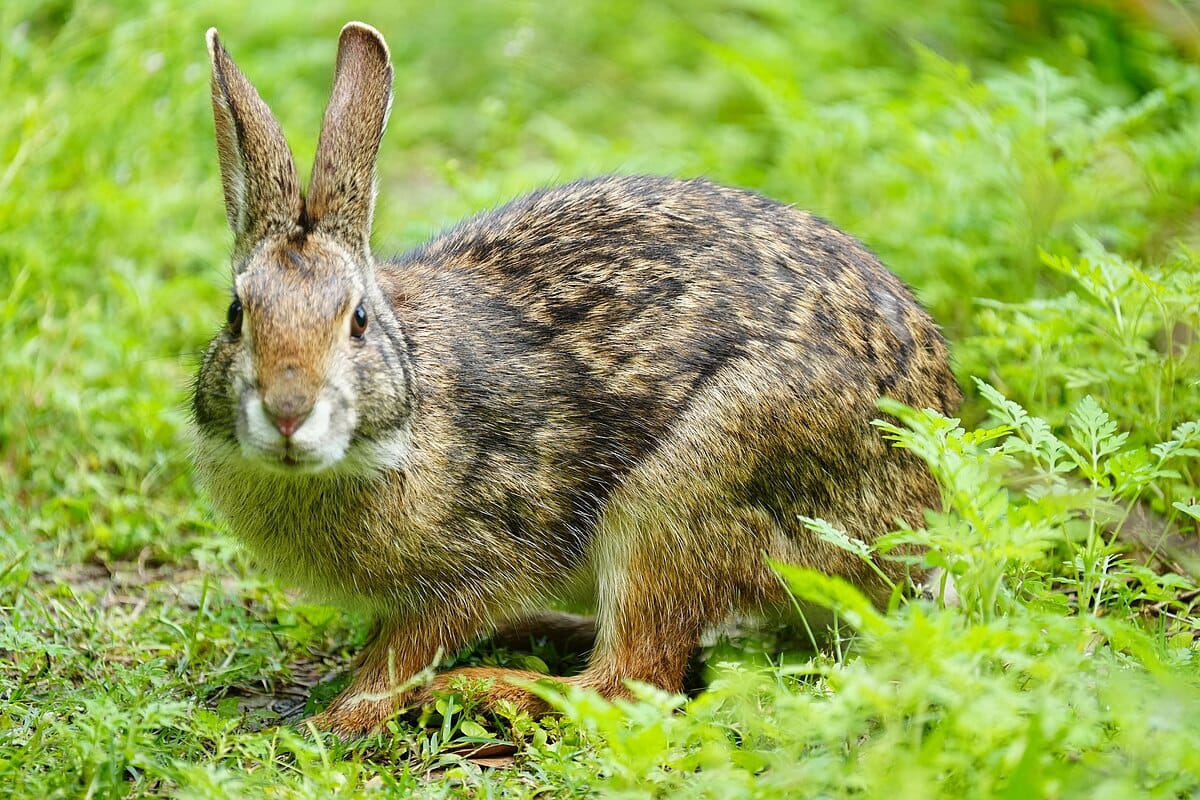
Physical Characteristics & Identification Tips
The Swamp Rabbit (Sylvilagus aquaticus) is larger than the Eastern Cottontail, averaging 16–20 inches in length and weighing 3–5 pounds. Its fur is coarse, dark brown on the back, fading to a lighter gray or tan on the belly. Unlike other cottontails, the Swamp Rabbit has noticeably longer hind legs and slightly longer ears, adapted for navigating wetland habitats. The tail is white underneath, similar to other cottontails, but slightly broader and often held erect when the rabbit runs.
Identification tip: If you see a robust, dark-brown rabbit near water with long legs and a white tail, it’s most likely a Swamp Rabbit. Tracks show long hind prints and distinctive webbed or wide pads, particularly noticeable in muddy areas near streams or wetlands.
Behavior
Swamp Rabbits are excellent swimmers, a rare skill among cottontails, allowing them to escape predators in watery habitats. They are crepuscular but may be seen during the day, especially in areas with thick cover. When threatened, they can leap into the water, swim across ponds or marshes, and reemerge on the opposite bank. They are generally solitary outside the breeding season, but their territory often overlaps with others.
These rabbits communicate through foot thumping, body postures, and scent marking. Predators include alligators (in southern range), snakes, coyotes, bobcats, and raptors. Their combination of swimming skills, camouflage, and speed makes them particularly adept at avoiding danger in Oklahoma’s wetland regions.
Habitat and Range
Swamp Rabbits inhabit lowland wetlands, marshes, and riverbanks in central and eastern Oklahoma. They prefer dense vegetation along streams, swamps, and ponds, where cover is plentiful, and water is readily accessible. Unlike other cottontails, they are rarely found in open fields, preferring areas that provide both protection and access to water for swimming and foraging.
Diet
Swamp Rabbits are herbivores, feeding on grasses, sedges, aquatic plants, and the bark of shrubs and small trees. In winter, they may chew on twigs and woody plants. Their diet reflects their wetland habitat, including water plants like cattails, which are rarely consumed by other rabbits. Nutrient-rich vegetation helps them maintain energy for swimming and rapid escape maneuvers.
Reproduction and Life Cycle
Swamp Rabbits breed from February to September, producing 2–4 litters annually, with 2–8 kits per litter. Nests are carefully hidden in dense vegetation near water. Kits are born blind and hairless, completely dependent on their mother for the first weeks of life. Juveniles begin exploring vegetation within 2–3 weeks and are fully independent by 5–6 weeks. Early mobility is essential for survival in areas with high predator density and watery escape routes.
Fun Facts / Traits
- Swamp Rabbits are strong swimmers and can remain submerged for several seconds to avoid predators.
- They are among the largest cottontail species in Oklahoma.
- Unlike many rabbits, they are often found near permanent water sources.
- They may climb low shrubs or tree branches to escape predators or reach food.
Human Interaction
Swamp Rabbits are rarely seen in urban areas due to their preference for wetlands and dense brush. However, they may occasionally wander near rural ponds or streams. Observing them requires patience and quiet movement, as they are sensitive to disturbance. Protecting wetland habitats in Oklahoma benefits these rabbits and a wide range of aquatic and terrestrial wildlife. They are considered game animals in some regions, but hunting is regulated to maintain healthy populations.
Habitat and Range
Eastern Cottontails are extremely adaptable and found throughout Oklahoma, from grassy fields to suburban areas with shrubs and cover. They prefer areas that provide a mix of open ground for feeding and dense vegetation for hiding. Brushy edges, hedgerows, and garden margins are ideal habitats, allowing them to forage while remaining concealed from predators.
Diet
Eastern Cottontails are herbivorous, eating grasses, clovers, herbs, and various plant shoots. In winter or during droughts, they may consume twigs, bark, and dried vegetation. They practice coprophagy, eating soft fecal pellets to extract extra nutrients, which helps them survive in times when food quality is low.
Reproduction and Life Cycle
Eastern Cottontails breed multiple times each year, typically from February through September. Each litter contains 3–8 kits. Nests are hidden in shallow depressions lined with grass and fur. Kits are born blind and hairless, relying on the mother for warmth and protection. They emerge after about two weeks to explore, and juveniles begin foraging independently around 4–6 weeks old. Rapid growth and early mobility are critical for survival, as predators often target young rabbits.
Fun Facts / Traits
- Their signature white tail is used to signal danger to other rabbits.
- They can jump up to 10 feet in a single bound to escape predators.
- Eastern Cottontails rarely dig their own burrows, often using brush piles or abandoned burrows for shelter.
- They are excellent at blending into grasses and fields, making them hard to spot during the day.
Human Interaction
Eastern Cottontails are frequently seen in suburban backyards and gardens in Oklahoma. While they are charming, they can sometimes feed on ornamental plants or vegetables. Observing them quietly from a distance is best to avoid disturbing their natural behaviors. Conserving brushy edges and small wooded areas supports healthy populations and allows humans to enjoy watching these rabbits without causing harm.
3. Desert Cottontail – The Adaptable Rabbit of Western Oklahoma
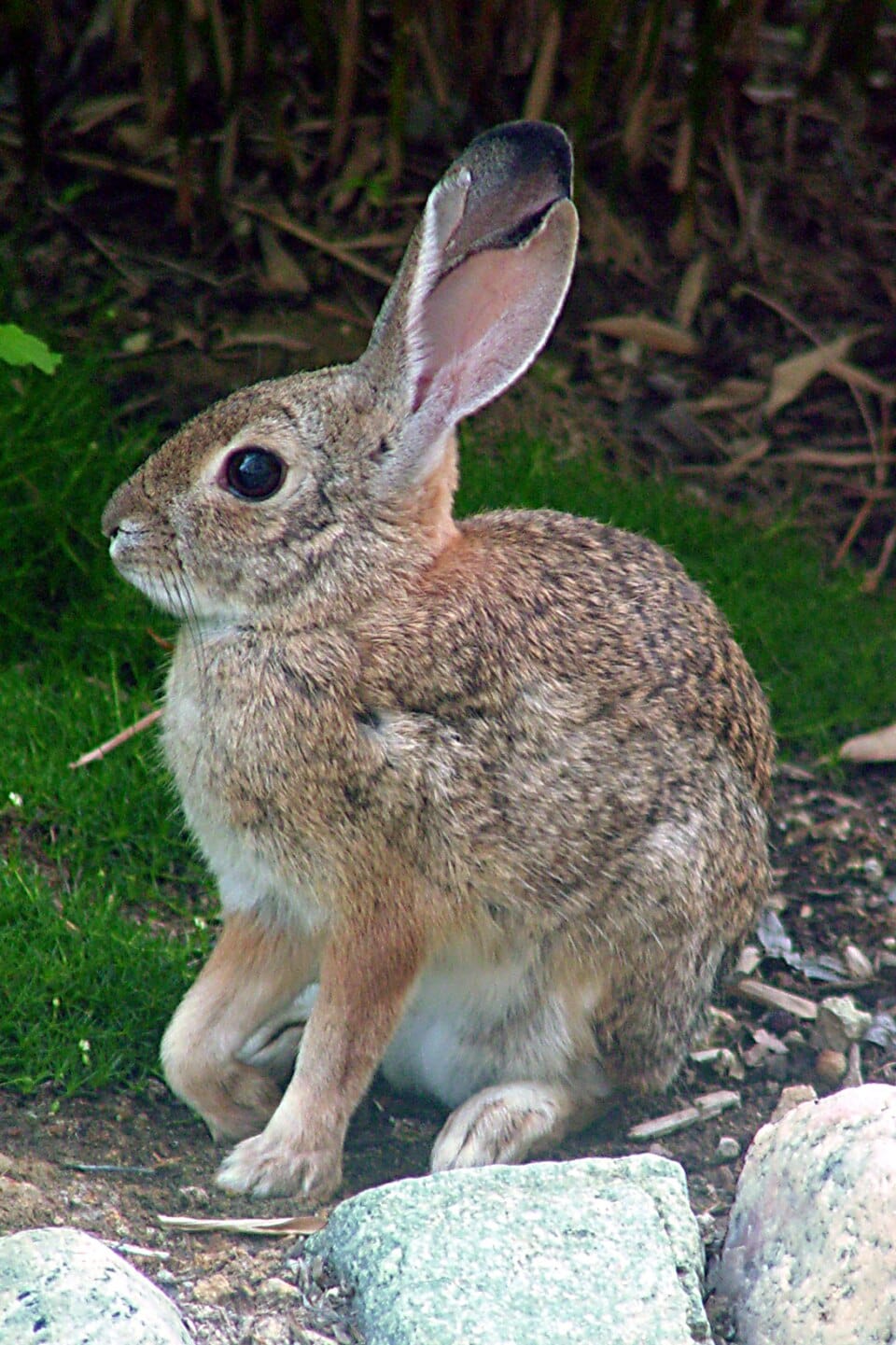
Physical Characteristics & Identification Tips
The Desert Cottontail (Sylvilagus audubonii) is medium-sized, measuring 14–18 inches in length and weighing 2–3.5 pounds. Its fur is a pale gray-brown, lighter than the Eastern Cottontail, with a slightly sandy hue that helps it blend into dry, open habitats. The belly is white, and the tail is white underneath, similar to other cottontails. Its ears are long and narrow, an adaptation for detecting predators in open terrain, and its hind legs are strong, allowing for long jumps when escaping danger.
Identification tip: Look for a rabbit with sandy-gray fur, long ears, and a white tail, especially in the western regions of Oklahoma. Their tracks show elongated hind prints compared to their front prints, typically found along grasslands, shrublands, or open plains.
Behavior
Desert Cottontails are primarily crepuscular, active at dawn and dusk, but they can sometimes be seen in shaded areas during the day. They rely on speed and agility to avoid predators, running in zigzag patterns to confuse attackers. They do not burrow but may use brush, rocks, or abandoned burrows for shelter. Predators include coyotes, foxes, hawks, owls, and snakes. Desert Cottontails are solitary and maintain small home ranges, marking territory with scent glands located under their chin.
Habitat and Range
Desert Cottontails are found mostly in western Oklahoma, including the Panhandle and drier plains. They thrive in open grasslands, shrublands, and areas with scattered vegetation, where they can quickly spot predators. Unlike swamp or Eastern Cottontails, they avoid wetlands and dense forests. The combination of open space for feeding and scattered cover for hiding makes this habitat ideal.
Diet
Like other cottontails, Desert Cottontails are herbivorous. Their diet consists of grasses, leaves, twigs, buds, and sometimes cultivated crops when available. They are adapted to arid conditions, capable of obtaining water from succulent plants and morning dew. During winter or dry spells, they may consume bark or woody stems to survive. Coprophagy is practiced to maximize nutrient absorption from low-quality vegetation.
Reproduction and Life Cycle
Breeding occurs from February through September, with multiple litters per year. Each litter contains 3–6 kits. Nests are shallow depressions lined with grass and fur, usually hidden under brush or in rocky areas. Kits are born blind and hairless and rely entirely on their mother for warmth and protection. Juveniles begin exploring within two weeks and are fully independent after four to six weeks. Rapid growth and alertness are essential for survival, especially in exposed habitats with many predators.
Fun Facts / Traits
- Desert Cottontails are highly agile and can leap up to 10 feet in a single bound.
- They can survive in drier, hotter conditions than Eastern Cottontails.
- They do not dig burrows but often use natural cover to hide from predators.
- Their sandy-gray coloration provides excellent camouflage in western Oklahoma plains.
Human Interaction
Desert Cottontails are occasionally spotted near farms or rural roads in western Oklahoma. They can feed on garden vegetables or field crops, which may cause minor conflicts with humans. Observing them from a distance is recommended to avoid stress or disturbance. Maintaining native grasslands and brush patches supports their populations and allows people to appreciate these adaptable rabbits in their natural habitat. Desert Cottontails are also considered small game animals, with regulated hunting in Oklahoma.
4. Black-tailed Jackrabbit – The Speedy Hare of Oklahoma
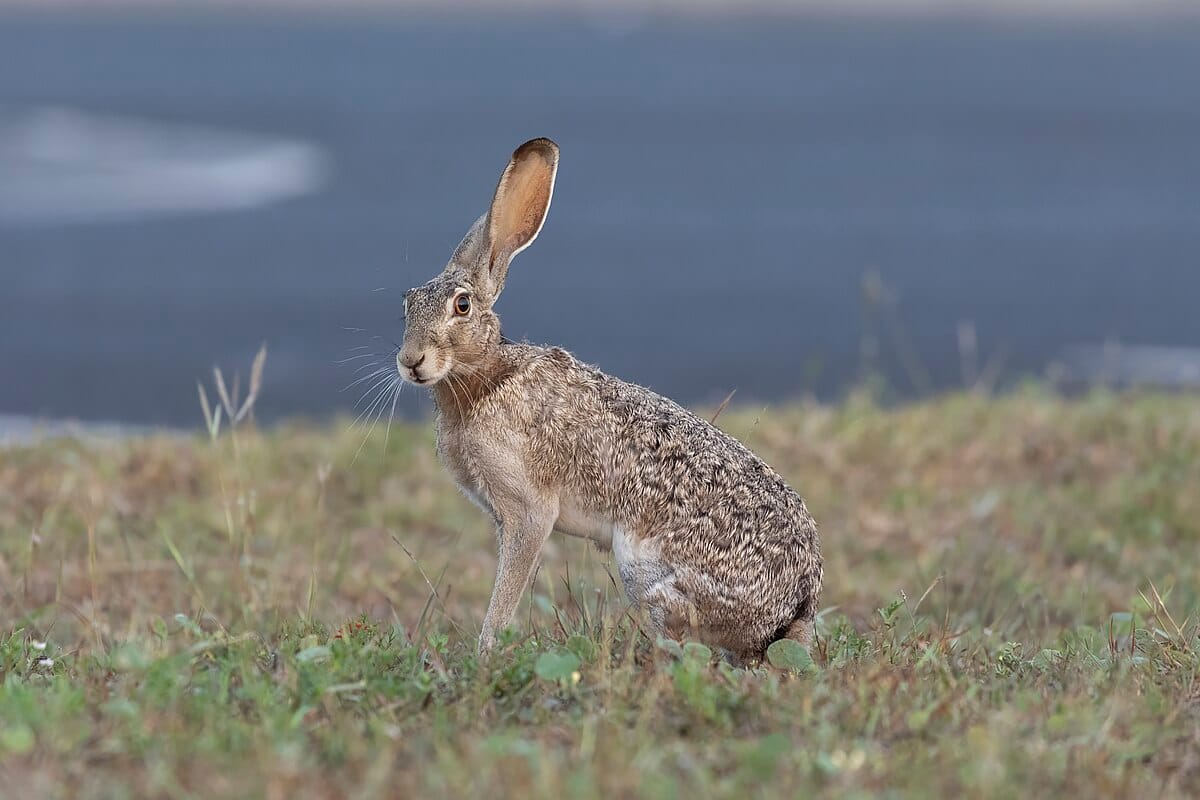
Physical Characteristics & Identification Tips
The Black-tailed Jackrabbit (Lepus californicus) is actually a hare, not a true rabbit, and is the largest wild lagomorph in Oklahoma. Adults measure 18–24 inches in length and can weigh 3–6 pounds. Their fur is sandy-brown to gray with a white underside and a distinctive black stripe along the top of the tail, which gives them their name. They have long, strong hind legs and large ears that help with thermoregulation in the hot, open plains of western Oklahoma.
Identification tip: If you see a large, long-eared rabbit with a black-tipped tail in open fields or plains, it is almost certainly a Black-tailed Jackrabbit. Tracks show elongated hind prints that are much larger than the front prints, reflecting their powerful leaping ability.
Behavior
Black-tailed Jackrabbits are crepuscular and highly alert. They rely on speed and endurance to escape predators, running in rapid zigzag patterns across open terrain. Unlike cottontails, they do not hide in dense cover for extended periods; instead, they depend on their acute senses and agility. Predators include coyotes, foxes, bobcats, hawks, and owls. Jackrabbits are largely solitary but may be seen in small groups in areas with abundant food.
They are mostly silent but communicate using foot thumping, a loud stomp to warn other jackrabbits of danger. Their keen hearing and eyesight make them extremely difficult for predators to catch in open habitats.
Habitat and Range
Black-tailed Jackrabbits are primarily found in western Oklahoma, including the Panhandle, grasslands, and semi-arid plains. They favor open, dry areas with scattered shrubs or low vegetation that provide both food and limited cover. Unlike cottontails, they do not prefer dense forests or wetlands and are rarely seen near urban areas.
Diet
These hares are herbivorous, consuming grasses, herbs, and shrubs. In winter, they may feed on twigs, bark, and dried vegetation. They are highly adapted to dry conditions and can obtain sufficient moisture from their food, reducing their dependence on water sources. Their diet helps maintain energy for long-distance sprints and rapid escape maneuvers.
Reproduction and Life Cycle
Breeding occurs from late winter through fall, with 2–3 litters per year. Each litter typically contains 2–5 leverets (baby hares). Unlike cottontail kits, leverets are born fully furred, with eyes open, and are able to move almost immediately after birth. This independence is critical for survival in exposed open habitats with many predators. Leverets begin feeding on vegetation within a few days, gradually becoming fully independent at 3–4 weeks old.
Fun Facts / Traits
- Black-tailed Jackrabbits can reach speeds up to 35 miles per hour to escape predators.
- They are excellent jumpers, capable of clearing 10–15 feet in a single bound.
- Unlike cottontails, their young are precocial, born fully developed and mobile.
- They rely on open plains and visibility rather than dense cover to survive, which is unusual for rabbits.
Human Interaction
Black-tailed Jackrabbits are occasionally seen in rural Oklahoma fields and along roadsides. They can browse on crops and ornamental plants, which may create minor conflicts with humans. Observing them from a safe distance is advised, as they are easily startled. Conservation of grasslands and semi-arid plains is essential to maintain healthy populations. Jackrabbits are also hunted in Oklahoma, with regulated seasons to ensure sustainable populations.
Conclusion: Observing and Protecting Wild Rabbits in Oklahoma
Oklahoma’s wild rabbits are a remarkable part of the state’s wildlife, offering both ecological benefits and enjoyment for people who love nature. From the common Eastern Cottontail to the water-loving Swamp Rabbit, the adaptable Desert Cottontail, and the fast and alert Black-tailed Jackrabbit, each species brings its own set of characteristics and behaviors that make them unique. Understanding the Types of Wild Rabbits in Oklahoma helps us appreciate their role in maintaining ecological balance, from seed dispersal to serving as prey for larger animals.
Observing these rabbits responsibly, conserving their habitats, and learning to recognize their signs in the wild can enhance outdoor experiences and support biodiversity. Whether you’re in urban areas, rural fields, or wetlands, taking a moment to notice these small mammals adds depth to your connection with nature. By respecting their space and supporting conservation efforts, we can ensure that Oklahoma’s wild rabbits continue to thrive for generations to come.
Frequently Asked Questions About Wild Rabbits in Oklahoma
1. What are the main types of wild rabbits in Oklahoma?
Oklahoma is home to four verified wild rabbit species: Eastern Cottontail, Swamp Rabbit, Desert Cottontail, and Black-tailed Jackrabbit. Each species has unique adaptations, behaviors, and preferred habitats across the state.
2. Where can I find Eastern Cottontails in Oklahoma?
Eastern Cottontails are widespread throughout Oklahoma, thriving in grassy fields, brushy edges, and suburban gardens. They prefer areas that offer both food and cover for hiding.
3. How do Swamp Rabbits differ from other wild rabbits in Oklahoma?
Swamp Rabbits are larger, prefer wetland habitats, and are excellent swimmers. Unlike other cottontails, they rely on water to escape predators and are commonly found along rivers, ponds, and marshes in Oklahoma.
4. Are Desert Cottontails common in Oklahoma?
Desert Cottontails are primarily found in western Oklahoma, including the Panhandle. They are adapted to dry plains and grasslands and are less common in eastern, wetter regions of the state.
5. What is the largest wild rabbit in Oklahoma?
The Black-tailed Jackrabbit is the largest wild lagomorph in Oklahoma, measuring up to 24 inches long and weighing up to 6 pounds. It is actually a hare and relies on speed for survival.
6. Can Black-tailed Jackrabbits be seen throughout Oklahoma?
Black-tailed Jackrabbits are mainly found in western Oklahoma’s grasslands and plains. They are rarely seen in eastern or urban areas of the state.
7. Which wild rabbit species in Oklahoma prefers wetlands?
Swamp Rabbits are the primary wetland-adapted species in Oklahoma. They inhabit marshes, riversides, and ponds where dense vegetation and water provide both food and safety.
8. How do I identify a wild rabbit in Oklahoma?
Look for features such as size, ear length, tail color, and habitat. Eastern Cottontails are smaller with reddish-gray fur, Desert Cottontails have sandy-gray fur, Swamp Rabbits are larger and darker, and Black-tailed Jackrabbits are the largest with a black stripe on their tails.
9. What do wild rabbits in Oklahoma eat?
All wild rabbits in Oklahoma are herbivores. Their diets include grasses, clovers, leaves, twigs, and sometimes crops. Swamp Rabbits also eat aquatic plants, while desert-adapted species can extract moisture from plants.
10. Are wild rabbits in Oklahoma active during the day or night?
Wild rabbits are generally crepuscular, meaning they are most active at dawn and dusk. Some species, like Swamp Rabbits, may be occasionally active during the day in well-covered areas.
11. Do wild rabbits in Oklahoma live in urban areas?
Eastern Cottontails are the most likely to appear near suburban yards and gardens. Other species, like Black-tailed Jackrabbits or Desert Cottontails, prefer rural or open areas.
12. How do Eastern Cottontails survive predators in Oklahoma?
They rely on camouflage, freezing, and rapid zigzag running to avoid predators. They also communicate with foot thumps to warn others nearby.
13. What habitats do Desert Cottontails prefer in Oklahoma?
Desert Cottontails favor dry grasslands, plains, and shrublands in western Oklahoma, where they have open space to spot predators and scattered vegetation for shelter.
14. Are Swamp Rabbits good swimmers in Oklahoma?
Yes, Swamp Rabbits are excellent swimmers. They often leap into water to escape predators and can cross ponds or streams effortlessly.
15. How many litters do wild rabbits have per year in Oklahoma?
Most wild rabbits in Oklahoma have multiple litters per year. Eastern and Desert Cottontails can have 3–5 litters, while Swamp Rabbits usually have 2–4, depending on food availability.
16. Are wild rabbits in Oklahoma considered game animals?
Yes, rabbits and hares are regulated game animals in Oklahoma. Hunting seasons and bag limits are set to maintain healthy populations.
17. How do Black-tailed Jackrabbits escape predators in Oklahoma?
Black-tailed Jackrabbits rely on their exceptional speed and long leaps. They run in zigzag patterns and can sprint at speeds up to 35 miles per hour to evade predators.
18. Can wild rabbits in Oklahoma climb or jump high?
Rabbits can jump well, typically 6–10 feet, depending on the species. Jackrabbits are especially powerful jumpers, while cottontails use short hops to navigate brush.
19. What are common predators of wild rabbits in Oklahoma?
Predators include coyotes, foxes, bobcats, hawks, owls, and snakes. Each rabbit species has unique strategies to avoid these threats.
20. Do wild rabbits in Oklahoma migrate or stay in one area?
Most rabbits are sedentary and maintain small home ranges. They do not migrate but may shift locally to follow food and cover availability.
21. How can I safely observe wild rabbits in Oklahoma?
Move quietly, stay downwind, and use binoculars to watch without disturbing them. Observing from a distance prevents stress and ensures natural behavior.
22. Do wild rabbits in Oklahoma eat garden plants?
Yes, Eastern Cottontails are the most likely to feed on vegetables or flowers in gardens. Using barriers or natural repellents can reduce conflicts.
23. Which wild rabbit species in Oklahoma is best adapted to dry regions?
Desert Cottontails are highly adapted to arid conditions and can survive with minimal water, obtaining moisture from plants and dew.
24. Are Swamp Rabbits in Oklahoma endangered or threatened?
No, Swamp Rabbits are not considered endangered in Oklahoma. Their populations are stable in suitable wetland habitats.
25. How do wild rabbits in Oklahoma communicate with each other?
Rabbits use foot thumping, scent marking, and body postures to communicate danger, territory, or mating readiness.
26. Do Oklahoma’s wild rabbits dig burrows?
Most cottontails do not dig burrows, instead using natural cover or abandoned burrows. Jackrabbits also rely on surface cover rather than digging.
27. What time of year do wild rabbits in Oklahoma breed?
Breeding season generally spans from February through September. Multiple litters per year are common, depending on food availability.
28. How can I tell the difference between cottontails and jackrabbits in Oklahoma?
Cottontails are smaller, with shorter ears and hind legs, and are usually found near brush or fields. Jackrabbits are larger, have long ears, long legs, and prefer open plains.
29. Are there any conservation efforts for wild rabbits in Oklahoma?
Yes, wildlife agencies maintain habitats, regulate hunting, and monitor populations to ensure rabbits remain abundant and ecologically balanced.
30. How do wild rabbits in Oklahoma contribute to the ecosystem?
Wild rabbits provide food for predators, disperse seeds, and help maintain vegetation balance. They are an essential part of Oklahoma’s food web.
31. Can I feed wild rabbits in Oklahoma safely?
Feeding wild rabbits is not recommended. It can create dependency, attract predators, and spread disease. Observing them in their natural habitat is safer.
32. Do wild rabbits in Oklahoma have seasonal coat changes?
Yes, some species like Eastern and Desert Cottontails grow thicker winter coats, providing insulation during colder months in Oklahoma.
Read more: 7 Types of Wild Rabbits in Texas (Pictures And Identification)