
If you’re exploring the outdoors in Wyoming, you may encounter several wild rabbit species hopping through fields, forests, and grasslands. Understanding the types of wild rabbits in Wyoming helps you identify them, observe their behaviors, and appreciate their role in the ecosystem. From the common Eastern Cottontail to the elusive Pygmy Rabbit, this guide covers six species, detailing physical traits, habitats, diet, and fun facts. Whether you’re a wildlife enthusiast or simply curious about what hops across Wyoming, this guide is a helpful companion for spotting and learning about these fascinating mammals.
1. Eastern Cottontail (Sylvilagus floridanus)

Physical Characteristics & Identification Tips
The Eastern Cottontail is Wyoming’s most frequently observed wild rabbit. Adults measure 14–19 inches long, with gray-brown fur and the characteristic white “cotton” tail. Rounded ears and strong hind legs make them excellent jumpers. Juveniles resemble adults but are smaller and more delicate. A cottontail’s tail often signals their presence as it flashes when the rabbit bolts.
Behavior
They are primarily crepuscular, active at dawn and dusk. Solitary by nature, Eastern Cottontails freeze when threatened or run in zigzag patterns to confuse predators. They communicate danger through foot thumping and occasionally through soft grunts.
Habitat and Range
Eastern Cottontails inhabit meadows, woodland edges, open fields, and even suburban yards. They adapt well as long as cover is nearby to hide from predators.
Diet
Herbivorous, they eat grasses, clovers, garden vegetables in summer, and twigs, buds, and bark in winter. They also consume fecal pellets for extra nutrients—a natural recycling process.
Reproduction and Life Cycle
Breeding occurs from spring to late fall. Females produce up to six young per litter, nesting in shallow depressions lined with grass and fur. Young are born blind and hairless, growing quickly to leave the nest within weeks.
Fun Facts / Unique Traits
The name “cottontail” comes from the distinctive white tail. They rely more on camouflage than burrows, making their sudden flash of tail a warning to other rabbits.
Human Interaction
Common in suburban areas, they may nibble garden plants but typically coexist peacefully with humans if left undisturbed.
2. Desert Cottontail (Sylvilagus audubonii)
Physical Characteristics & Identification Tips
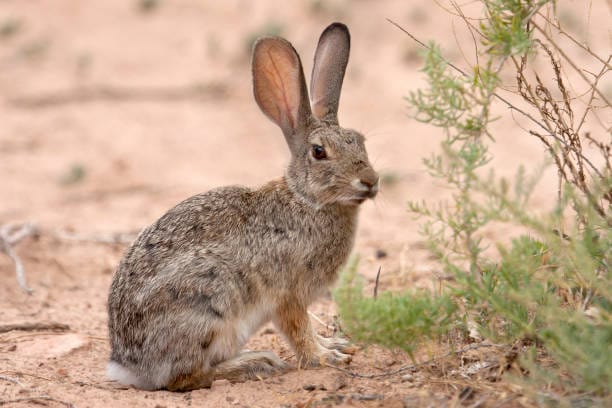
Desert Cottontails are slightly larger than Eastern Cottontails, measuring 15–18 inches. They have tan or light brown fur with subtle white markings on the tail and underbelly. Their ears are long and narrow, adapted for desert heat dissipation.
Behavior
They are mostly nocturnal, feeding at night to avoid daytime heat. Desert Cottontails are agile, relying on quick sprints to evade predators like hawks and coyotes.
Habitat and Range
Found in dry grasslands, scrublands, and semi-arid regions in southern and central Wyoming. They prefer areas with low shrubs for cover.
Diet
They feed on grasses, herbs, cacti, and desert shrubs. In winter, they may eat twigs and bark to supplement their diet.
Reproduction and Life Cycle
They breed from spring through fall, producing 3–5 young per litter. Young are born hairless and blind but develop rapidly.
Fun Facts / Unique Traits
Desert Cottontails can survive with minimal water, obtaining moisture from plants they consume.
Human Interaction
These rabbits are less commonly seen near towns due to their arid habitat preferences, but they play an important role in desert ecosystem food chains.
3. Mountain Cottontail (Sylvilagus nuttallii)
Physical Characteristics & Identification Tips
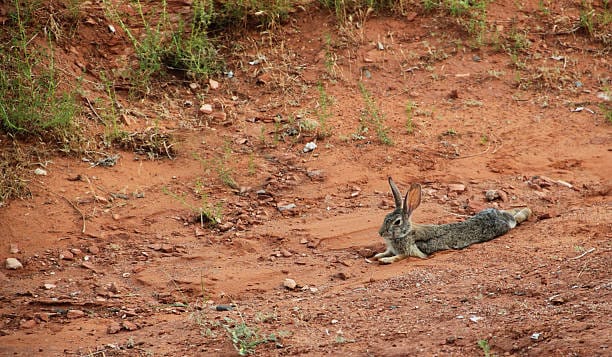
Mountain Cottontails are medium-sized, measuring 14–17 inches, with gray-brown fur and slightly darker backs. Their tails are white underneath and gray on top. Ears are shorter than other cottontails, aiding camouflage in rocky terrain.
Behavior
Mostly crepuscular and solitary, they dart among rocks to escape predators. They often freeze when spotted, blending into the mountainous terrain.
Habitat and Range
Found in rocky slopes, brushy valleys, and foothills in western Wyoming. They prefer areas with boulders or shrubs for hiding.
Diet
Herbivorous, they eat grasses, leaves, and shrubs. In winter, they eat twigs and bark, which provide necessary fiber and nutrients.
Reproduction and Life Cycle
Breeding occurs from spring to early fall, producing 2–5 young per litter. Nests are hidden under rocks or dense shrubs for protection.
Fun Facts / Unique Traits
Mountain Cottontails are excellent at blending into rocky landscapes, making them tricky to spot for predators and humans alike.
Human Interaction
Rarely encountered near towns; they mostly interact with humans through observation in natural settings or scientific studies.
4. White-tailed Jackrabbit (Lepus townsendii)

Physical Characteristics & Identification Tips
White-tailed Jackrabbits are large, measuring 20–26 inches. They have long ears with black tips and a white underside tail. Their powerful hind legs allow long jumps up to 10 feet.
Behavior
Mostly nocturnal and solitary. They rely on speed and zigzag movements to escape predators. In winter, they change fur color to white for camouflage in snow.
Habitat and Range
Found in open plains, prairies, and shrublands in Wyoming. They prefer areas with tall grasses for cover and hiding spots.
Diet
Primarily grasses, shrubs, and twigs. In winter, they consume bark and woody vegetation to survive.
Reproduction and Life Cycle
Breeding occurs from early spring to late summer, with 2–3 litters per year and 2–6 young per litter. Young are born fully furred and active shortly after birth.
Fun Facts / Unique Traits
Jackrabbits are known for incredible speed and large hind feet that act like snowshoes in deep snow.
Human Interaction
They are occasionally hunted for sport and food and are often seen by hikers in open landscapes.
5. Black-tailed Jackrabbit (Lepus californicus)
Physical Characteristics & Identification Tips
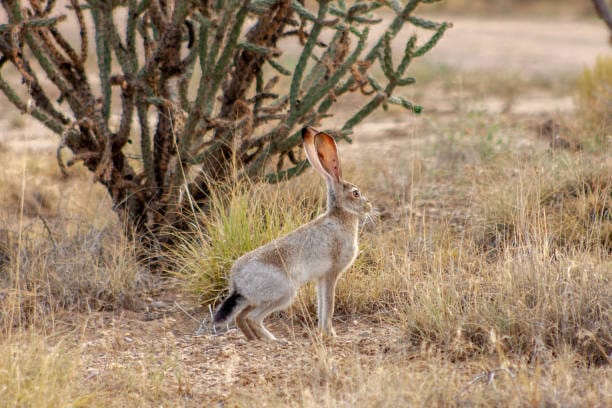
Similar to White-tailed Jackrabbits but with a black tail top. They are 18–24 inches long with long ears and muscular hind legs.
Behavior
Nocturnal and solitary, they rely on speed to escape predators. Often seen sprinting across prairies and grasslands.
Habitat and Range
Found in arid plains and sagebrush habitats across southern and central Wyoming. They prefer open areas for visibility and escape routes.
Diet
Grass, shrubs, and cacti. In winter, they feed on twigs and bark for fiber and nutrients.
Reproduction and Life Cycle
They produce 2–3 litters per year with 3–5 young per litter. Nests are shallow depressions in vegetation or under shrubs.
Fun Facts / Unique Traits
Black-tailed Jackrabbits can leap 10–15 feet in a single bound and are among the fastest rabbits in North America.
Human Interaction
Commonly seen in rural areas, sometimes hunted for sport or observed by wildlife enthusiasts.
6. Pygmy Rabbit (Brachylagus idahoensis)

Physical Characteristics & Identification Tips
The Pygmy Rabbit is the smallest rabbit in North America, measuring 9–12 inches. They have gray-brown fur, small ears, and short legs, making them hard to spot in dense sagebrush.
Behavior
Shy and mostly nocturnal. They dig extensive burrows for protection from predators and harsh weather. They are solitary and highly secretive.
Habitat and Range
Rare and localized, primarily in dense sagebrush areas in western Wyoming. They require thick vegetation for cover and burrow support.
Diet
Specialists on sagebrush leaves, stems, and bark. They may also eat grasses and herbaceous plants when available.
Reproduction and Life Cycle
Breeding occurs from late winter to early spring. Females produce 2–4 young per litter, which are fully furred at birth and able to hop within a few hours.
Fun Facts / Unique Traits
Pygmy Rabbits are the only North American rabbits that dig their own burrows. Their small size and secretive habits make them elusive and fascinating.
Human Interaction
Extremely rare encounters with humans. Conservation efforts focus on protecting sagebrush habitats to maintain populations.
Conclusion
Wyoming is home to six distinct types of wild rabbits: Eastern Cottontail, Desert Cottontail, Mountain Cottontail, White-tailed Jackrabbit, Black-tailed Jackrabbit, and the rare Pygmy Rabbit. Understanding types of wild rabbits in Wyoming allows enthusiasts to identify them, observe behaviors safely, and appreciate their role in the ecosystem. From common fields to sagebrush deserts, these rabbits add color, life, and fascinating stories to Wyoming’s wildlife.
Frequently Asked Questions about Wild Rabbits in Wyoming
1. How many wild rabbit species are found in Wyoming?
Wyoming is home to six main species: Eastern Cottontail, Desert Cottontail, Mountain Cottontail, White-tailed Jackrabbit, Black-tailed Jackrabbit, and the rare Pygmy Rabbit.
2. How can I identify an Eastern Cottontail?
Look for gray-brown fur, a white fluffy tail, rounded ears, and strong hind legs. The tail flashes when the rabbit runs, signaling danger.
3. What makes Desert Cottontails distinct?
They are slightly larger than Eastern Cottontails, have tan fur, long narrow ears, and are primarily nocturnal in arid areas.
4. Where do Mountain Cottontails live?
They inhabit rocky slopes, foothills, and brushy valleys in western Wyoming, blending into rocks and shrubs for camouflage.
5. How can I tell a White-tailed Jackrabbit apart?
They are large rabbits with long ears tipped in black, a white underside of the tail, and powerful hind legs adapted for long leaps.
6. What distinguishes a Black-tailed Jackrabbit?
Similar in size to the White-tailed Jackrabbit, but with a black top tail and slightly shorter ears. Found in open plains and sagebrush areas.
7. Are Pygmy Rabbits common in Wyoming?
No, Pygmy Rabbits are rare and localized, primarily in dense sagebrush habitats in western Wyoming.
8. What do Eastern Cottontails eat?
They eat grasses, clover, garden vegetables, twigs, buds, and bark depending on the season.
9. How do Desert Cottontails survive with little water?
They obtain moisture from the plants they eat, including grasses, shrubs, and cacti, reducing dependence on open water.
10. Do rabbits hibernate in Wyoming?
No, all six species remain active year-round, adapting their diets and seeking shelter in dense vegetation or burrows during harsh weather.
11. How do rabbits escape predators?
By freezing, running in zigzags, or diving into dense cover. Jackrabbits rely on speed, while Pygmy and Mountain Cottontails use burrows or camouflage.
12. What predators eat wild rabbits in Wyoming?
Coyotes, foxes, bobcats, hawks, owls, and domestic pets are common predators.
13. When do Eastern Cottontails breed?
From early spring to late fall, producing multiple litters of 3–6 young per year.
14. How often do Desert Cottontails reproduce?
They breed from spring through fall, with 3–5 young per litter.
15. How do Pygmy Rabbits reproduce?
They breed from late winter to early spring, producing 2–4 young per litter. Young are born furred and active shortly after birth.
16. How long do wild rabbits live in Wyoming?
1–3 years on average due to predation and environmental stress, though some Jackrabbits and Mountain Cottontails may live longer.
17. Are rabbits nocturnal or diurnal?
Eastern, Mountain, and Desert Cottontails are mostly crepuscular. Jackrabbits and Pygmy Rabbits are mostly nocturnal.
18. How far do rabbits travel each day?
Cottontails usually stay within 1–5 acres. Jackrabbits cover larger distances across open plains, and Pygmy Rabbits rarely leave their sagebrush habitat.
19. How do rabbits communicate?
They use foot thumping, soft grunts, and scent marking to warn others of danger or mark territory.
20. Can rabbits swim?
While not common, some species like Jackrabbits will cross water if necessary. Pygmy and cottontails usually avoid swimming.
21. Do rabbits affect crops or gardens?
Yes, cottontails and jackrabbits may nibble vegetables and young plants. Protective fencing helps minimize damage.
22. How do rabbits adapt to winter?
By eating bark and twigs, finding dense cover, and in the case of Jackrabbits, changing fur color to blend with snow.
23. What is the average litter size for wild rabbits?
Ranges from 2–6 depending on species. Cottontails usually have larger litters than Jackrabbits.
24. Are there rare visitor rabbits in Wyoming?
Pygmy Rabbits are considered rare and are highly localized in sagebrush regions.
25. How do rabbits affect Wyoming’s ecosystem?
They serve as prey for predators, control vegetation, and help disperse seeds through their diet.
26. Can humans safely observe wild rabbits?
Yes, using binoculars or cameras from a distance to avoid disturbing them is safe and recommended.
27. How do young rabbits develop?
Cottontail young are born blind and hairless. Jackrabbit and Pygmy Rabbit young are born fully furred and active shortly after birth.
28. How do Jackrabbits escape predators in open plains?
They use speed, zigzag running, and long leaps, sometimes reaching distances of 10–15 feet per jump.
29. What role do rabbits play in seed dispersal?
By consuming fruits and plants and then depositing seeds in different areas through droppings, rabbits help maintain plant diversity.
30. Are any Wyoming rabbits endangered?
Most species are stable. Pygmy Rabbits are rare and may require habitat conservation, but they are not officially listed as endangered in Wyoming.
31. How do rabbits react to humans?
They typically flee when approached but may tolerate distant observation. Pygmy Rabbits are extremely shy and rarely seen.
32. Can rabbits climb or jump obstacles?
They are strong jumpers but cannot climb trees. Jackrabbits can leap over fences and rocks with ease.
33. Do rabbits hibernate or store food?
No hibernation occurs. They rely on eating woody plants and twigs during winter and finding shelter in burrows or dense cover.
34. How do rabbits impact predator populations?
Rabbits are a key food source for many predators, supporting populations of foxes, coyotes, hawks, and owls.
35. How can I attract rabbits safely for observation?
Plant native grasses and shrubs, avoid pesticides, and provide quiet, undisturbed areas to encourage rabbits without endangering them.
Read more: 8 Types of Wild Rabbits in Arizona (Pictures And Identification)