
When people search for Types of wild Snakes, they are usually looking for clear names, easy identification tips, and honest explanations that make sense without a biology degree. Snakes live on nearly every continent and fill many roles in nature, from pest control to top predator. Some are fast and nervous, others calm and slow, and a few are famous for being dangerous. This guide explains wild snakes in plain language, with real-world details and practical facts. If you’re curious, cautious, or just plain fascinated, this article helps you understand Snakes without fear or hype.
20 Types of Wild Snakes: African Mambas
1. Black Mamba
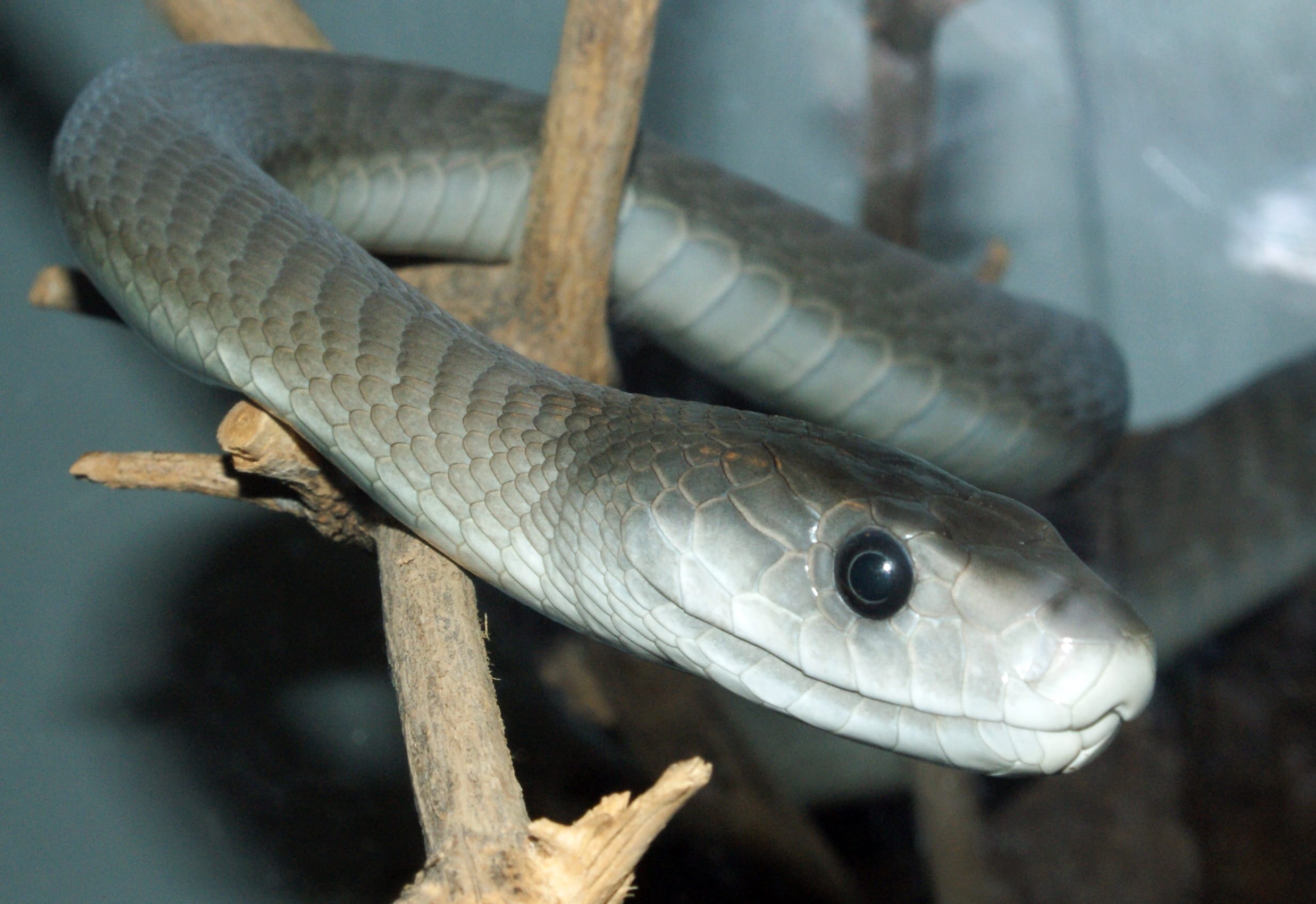
The Black Mamba is one of the most talked-about Snakes on Earth, and for good reason. Found mainly in sub-Saharan Africa, this snake prefers open savannas, rocky hills, and sparse woodlands. Despite its name, the Black Mamba is usually gray, olive, or brown. The “black” part comes from the dark interior of its mouth, which it may display when threatened.
This snake is long, slim, and built for speed. Adults often reach 8 to 10 feet, and some individuals grow even longer. When moving across the ground, the Black Mamba can move faster than most people can run for short distances. That speed helps it escape danger more than attack humans. Contrary to popular belief, it does not hunt people and avoids contact whenever possible.
Black Mambas hunt during the day and rely on sharp vision. Their diet includes small mammals like rodents, birds, and sometimes bats. They strike quickly, inject venom, and then wait for the prey to collapse before swallowing it whole. The venom affects the nervous system and works fast, which is why this species has such a serious reputation.
Even so, bites are rare. Most incidents happen when someone accidentally steps near one or tries to kill it. If left alone, a Black Mamba would rather flee than fight. Think of it like a sports car with a sensitive alarm system — impressive, powerful, and best admired from a safe distance.
In the wild ecosystem, Black Mambas help control rodent populations. Without them, farms and villages could face bigger pest problems. Fear often overshadows this role, but balance is what keeps nature working.
2. Eastern Green Mamba
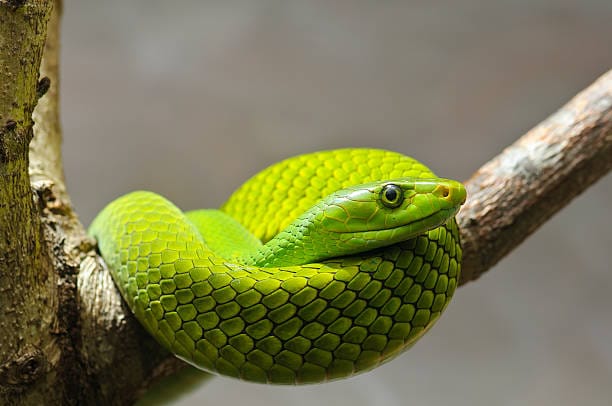
The Eastern Green Mamba lives in coastal forests and dense vegetation along eastern Africa. Unlike its darker cousin, this snake is bright green from head to tail. That color works like natural camouflage, allowing it to disappear among leaves and branches.
This species spends most of its life in trees. It has a slender body, smooth scales, and excellent climbing ability. Adults usually measure between 6 and 7 feet. Because it stays high in the canopy, many people live near Eastern Green Mambas without ever seeing one.
Eastern Green Mambas are shy and quiet. They prefer escape over confrontation and often freeze in place when disturbed. Their venom is strong, but bites are uncommon because the snake avoids ground-level contact. Most encounters happen when forests are cleared or when someone reaches into dense foliage.
Their diet includes birds, bird eggs, and small tree-dwelling mammals. They hunt using patience rather than speed, waiting for the right moment to strike. This calm hunting style matches their overall behavior — alert, cautious, and controlled.
If snakes had personalities, the Eastern Green Mamba would be the quiet neighbor who keeps to themselves. It plays an important role in forest ecosystems by keeping animal populations balanced while staying mostly unseen.
3. Western Green Mamba
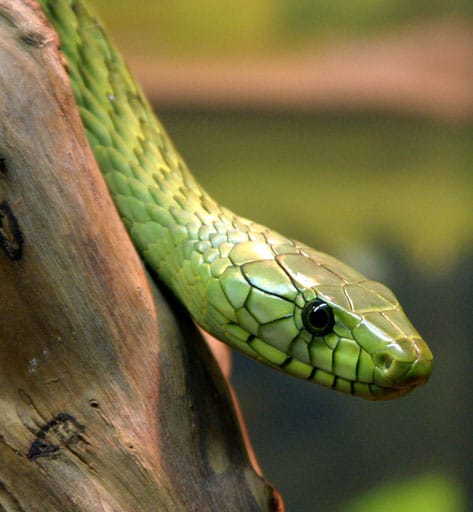
The Western Green Mamba is found in western Africa, living in rainforests, mangroves, and wooded coastal areas. At first glance, it looks similar to the Eastern Green Mamba, but its body is slightly shorter and thicker, and its behavior can be more defensive.
This snake is also tree-focused, spending much of its time above ground. Its green coloring blends well with thick foliage, making it difficult to spot even when nearby. Adults average around 6 feet in length.
Western Green Mambas are alert and quick to react if surprised. While they still prefer to escape, they may stand their ground more often than the eastern species. This doesn’t mean they are aggressive; it means they are cautious in tighter forest spaces.
Their diet is similar to other arboreal Snakes, including birds and small mammals. They rely on precision rather than brute strength. One quick bite is usually enough, and they retreat immediately after.
Human encounters are uncommon because these snakes live far from open settlements. Problems arise mainly when logging or farming pushes people deeper into forested areas. Like many wild animals, conflict usually starts with habitat loss, not hostility.
Among the Types of wild Snakes, the Western Green Mamba reminds us that danger often comes from surprise, not intent. Respecting distance is usually all it takes.
4. Cape Cobra

The Cape Cobra is one of southern Africa’s most well-known Snakes, not because it is common everywhere, but because it adapts easily to different environments. You can find it in dry savannas, scrublands, deserts, and even farmland. Unlike many snakes that avoid open spaces, the Cape Cobra is often active during the day, which increases human encounters.
This species varies widely in color. Some individuals are golden yellow, others dark brown, copper, or even nearly black. That color range often confuses people, leading to misidentification. Adults usually reach 4 to 5 feet in length, with a smooth, firm body and a well-defined hood that expands when the snake feels threatened.
Cape Cobras rely heavily on vision and are alert hunters. Their diet includes rodents, birds, frogs, and even other snakes. Farmers sometimes see them near barns or storage areas because rodents attract them. In that sense, they quietly help control pests, even though their presence can cause alarm.
When disturbed, a Cape Cobra may raise the front of its body, spread its hood, and face the threat directly. This display is meant to warn, not invite conflict. Bites usually happen only when the snake is cornered or stepped on. Its venom affects the nervous system and can be dangerous without medical care.
Despite the risk, the Cape Cobra does not chase people. Stories about pursuit usually come from situations where the snake was trying to reach cover and a person happened to be in the way. Like a startled cyclist swerving down a path, panic can look like aggression from the outside.
Among the Types of wild Snakes, the Cape Cobra stands out for its confidence and adaptability. Respect and distance go a long way with this species.
5. Egyptian Cobra
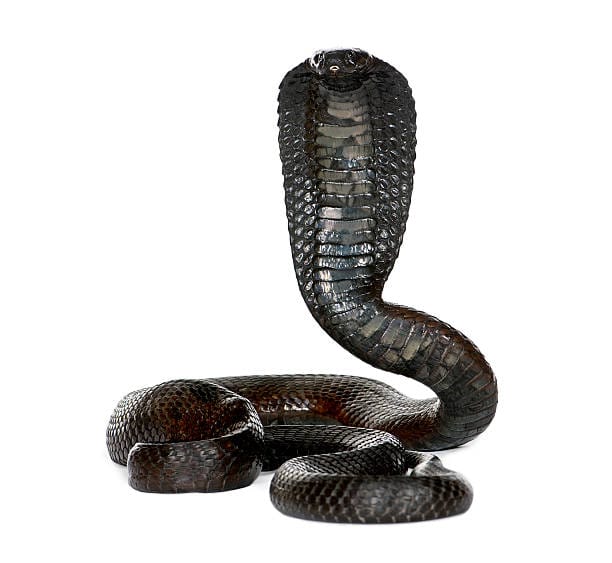
The Egyptian Cobra has a long history with humans, appearing in ancient art, myths, and royal symbols. Found across North Africa and parts of the Middle East, this snake prefers dry grasslands, river valleys, and areas near water. It often shelters in abandoned burrows, ruins, or rock crevices.
This cobra is medium to large in size, often reaching 5 to 6 feet. Its coloring ranges from pale brown to dark gray, helping it blend into sandy environments. When threatened, it raises its hood smoothly and steadily, a posture that has made it famous for centuries.
Egyptian Cobras hunt mainly at dusk and during the night. They feed on rodents, birds, lizards, and amphibians. Their hunting style is calm and controlled. A quick strike delivers venom, followed by patient waiting until the prey can no longer escape.
Unlike spitting cobras, this species relies on biting rather than projecting venom. Bites are serious and require immediate treatment, but the snake avoids confrontation when possible. Many bites occur when people attempt to kill or capture it.
Urban expansion has increased encounters, especially in rural villages near water sources. Still, the Egyptian Cobra often slips away unnoticed. It is not loud, flashy, or dramatic in daily behavior. Most of its life passes quietly in the background.
Among Snakes, the Egyptian Cobra shows how fear and legend can grow larger than reality. It plays its role without ceremony, keeping ecosystems balanced while staying mostly out of sight.
6. Indian Cobra
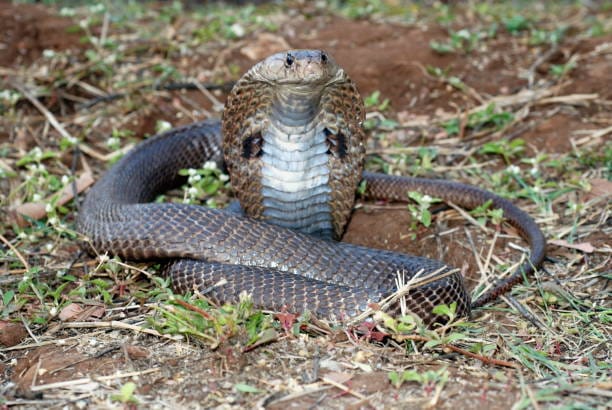
The Indian Cobra is one of the most recognized Snakes in Asia, partly due to its cultural presence and partly because of its wide distribution. Found throughout the Indian subcontinent, it lives in forests, fields, wetlands, and villages. It often adapts to human-altered landscapes.
This species usually grows between 4 and 6 feet. Its most famous feature is the hood marking, often resembling a pair of eyes. These markings may discourage predators by making the snake appear larger and more alert than it really is.
Indian Cobras feed on rodents, frogs, birds, and eggs. They are mainly active at dawn and dusk. In agricultural areas, they are frequently seen near grain stores and irrigation channels where rodents gather.
When threatened, the Indian Cobra raises its hood and sways slightly from side to side. This behavior is defensive, not aggressive. Bites typically occur when someone accidentally steps on one or tries to handle it.
Venom from this species affects the nervous system and can cause breathing problems without treatment. However, access to antivenom has reduced fatalities in many regions. Education has played a big role in lowering risk.
Among the Types of wild Snakes, the Indian Cobra shows how humans and Snakes can exist close together, sometimes uneasily, but often without conflict when awareness improves.
7. King Cobra
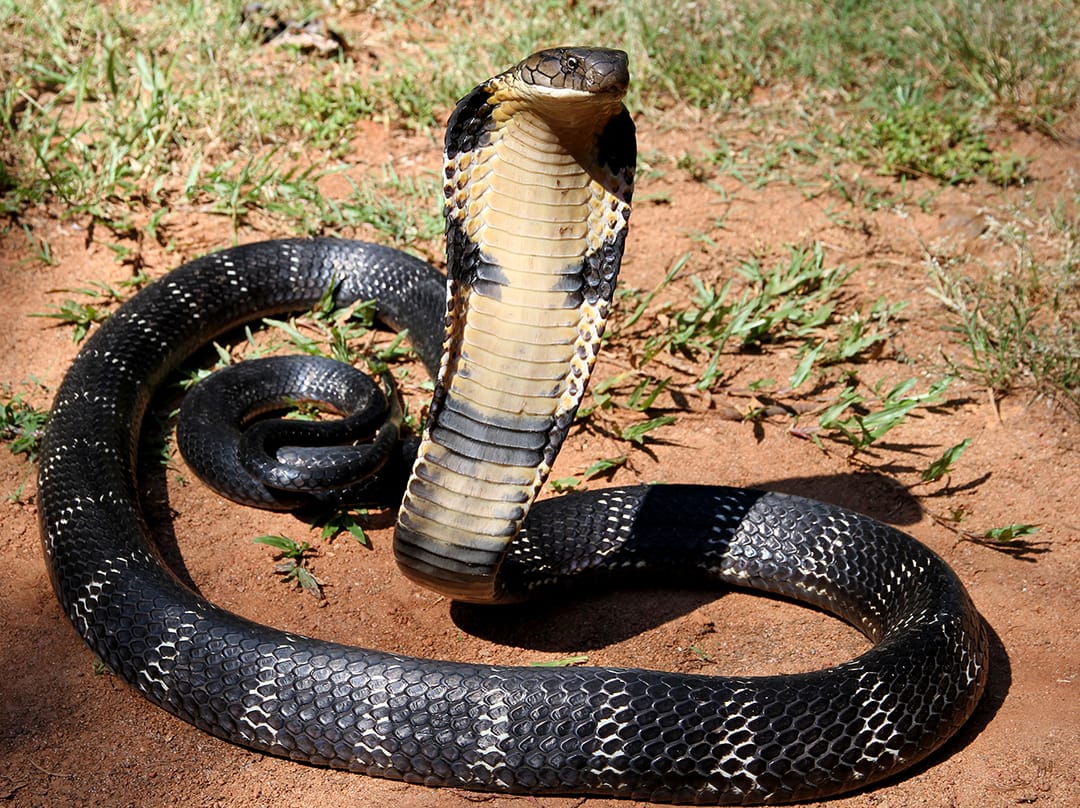
The King Cobra holds a special place among Snakes, both for its size and its behavior. It is the longest venomous snake in the world, with adults often reaching 12 to 15 feet. Found across South and Southeast Asia, this species prefers forests, bamboo thickets, and areas near streams. It avoids open land whenever possible.
Unlike most cobras, the King Cobra does not rely on rodents as its main food source. Instead, it hunts other snakes. This diet includes rat snakes, kraits, and even smaller cobras. Because of this, it helps regulate snake populations in its habitat. You could say it’s the traffic controller of the snake community.
The King Cobra’s hood is narrower than that of other cobras, and its body is thick and muscular. Color varies from olive green to brown or black, often with lighter bands. Young King Cobras are more boldly patterned and easier to spot than adults.
One of the most interesting behaviors of this species is nest building. Female King Cobras gather leaves and debris to form a mound where they lay eggs. They guard the nest until the eggs hatch, which is rare behavior among Snakes. During this time, the female is more defensive than usual.
When threatened, a King Cobra raises a large portion of its body off the ground, spreads its hood, and emits a deep hiss that sounds more like a growl. This display is meant to intimidate and discourage approach. Bites usually occur only when the snake feels trapped or when its nest is disturbed.
Despite its fearsome reputation, the King Cobra prefers distance. Many wildlife researchers describe it as alert but controlled. It does not waste energy on unnecessary conflict. Among the Types of wild Snakes, this species earns respect through presence, not aggression.
8. Monocled Cobra
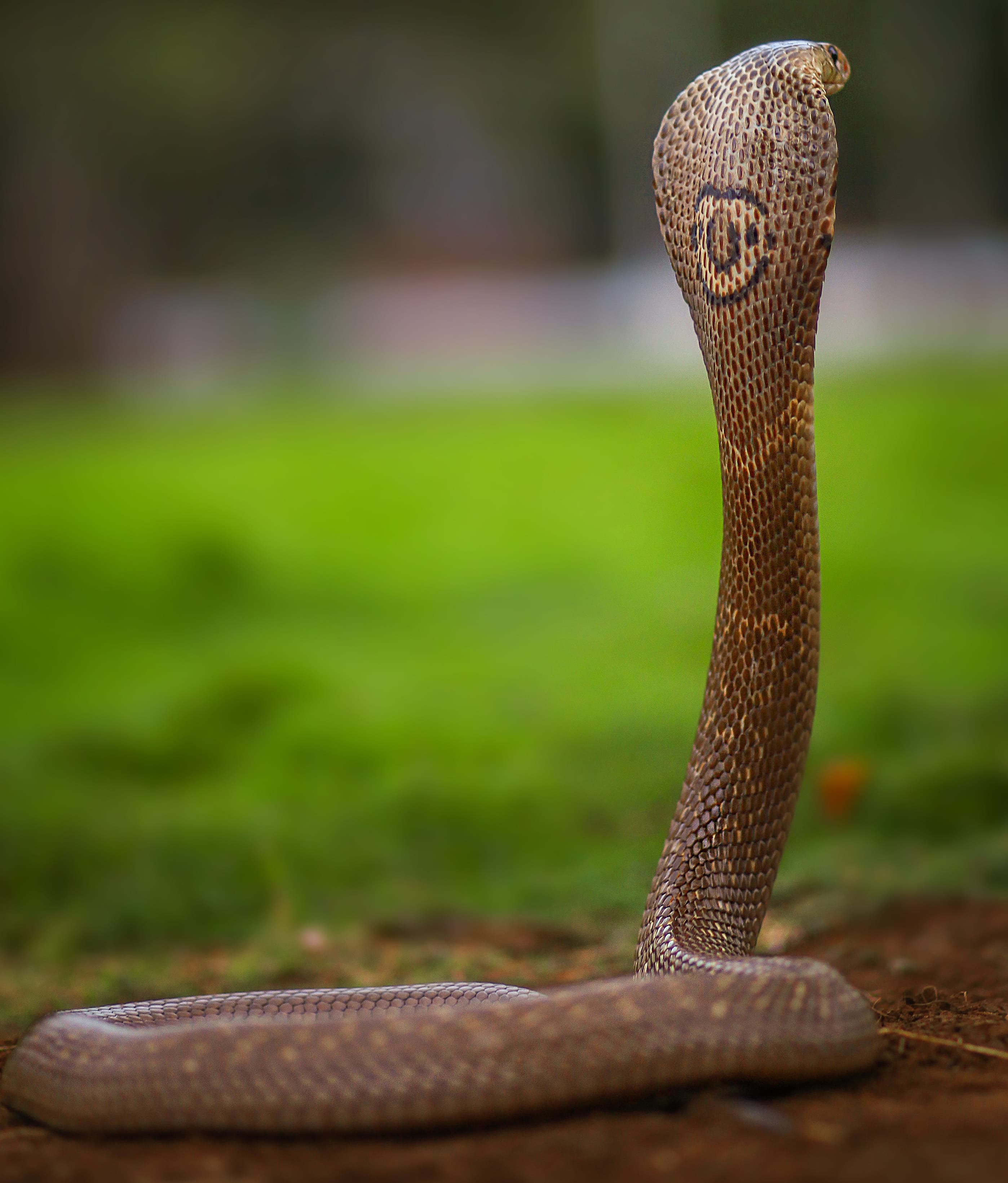
The Monocled Cobra is common across South and Southeast Asia, including India, Thailand, Cambodia, and Vietnam. It adapts well to different environments and can be found in forests, rice fields, wetlands, and villages. Its ability to live near people increases encounters.
This species gets its name from the single circular marking on the back of its hood, which looks like a small lens or eye. Not every individual has a clear marking, but when visible, it helps with identification. Adults usually grow between 4 and 5 feet.
Monocled Cobras feed on rodents, frogs, fish, birds, and eggs. They are active mostly at night, especially in warm, humid regions. During the day, they hide in burrows, drains, or piles of debris.
When threatened, the Monocled Cobra raises its hood and may strike quickly if approached too closely. It does not usually retreat as fast as some other cobras, which can surprise people. Still, it gives warning signs before biting.
Its venom affects the nervous system and can cause breathing failure without treatment. In rural areas, bites sometimes happen when people walk barefoot at night or sleep on the floor. Simple precautions like lighting paths and keeping sleeping areas raised reduce risk.
Among Snakes, the Monocled Cobra is a reminder that awareness matters more than fear. Most bites are preventable when people understand how and when these animals move.
9. Spitting Cobra
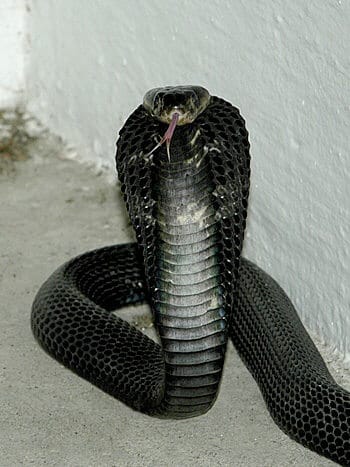
The term “Spitting Cobra” refers to several cobra species found mainly in Africa and parts of Asia. These Snakes are known for their ability to spray venom from their fangs as a defensive move. The venom is aimed at the eyes of a perceived threat.
Spitting Cobras are medium-sized, usually 3 to 5 feet long. Their coloring varies widely depending on species and habitat, ranging from black and brown to reddish or striped patterns. They live in savannas, grasslands, forests, and near human settlements.
When threatened, a Spitting Cobra raises its hood and sways slightly. If the threat continues, it can spray venom accurately over several feet. The venom causes intense pain and temporary blindness if it enters the eyes, but it is not injected into the bloodstream this way.
These cobras still bite if cornered, but spitting gives them an extra layer of defense. Think of it as a warning system that works at a distance. This behavior reduces the need for physical contact.
Their diet includes rodents, frogs, birds, and small reptiles. Like many Snakes, they help control pests around farms and villages. Encounters usually happen at night or early morning.
Among the Types of wild Snakes, Spitting Cobras stand out for creativity rather than force. Their goal is simple: stop the threat and escape.
10. African Rock Python
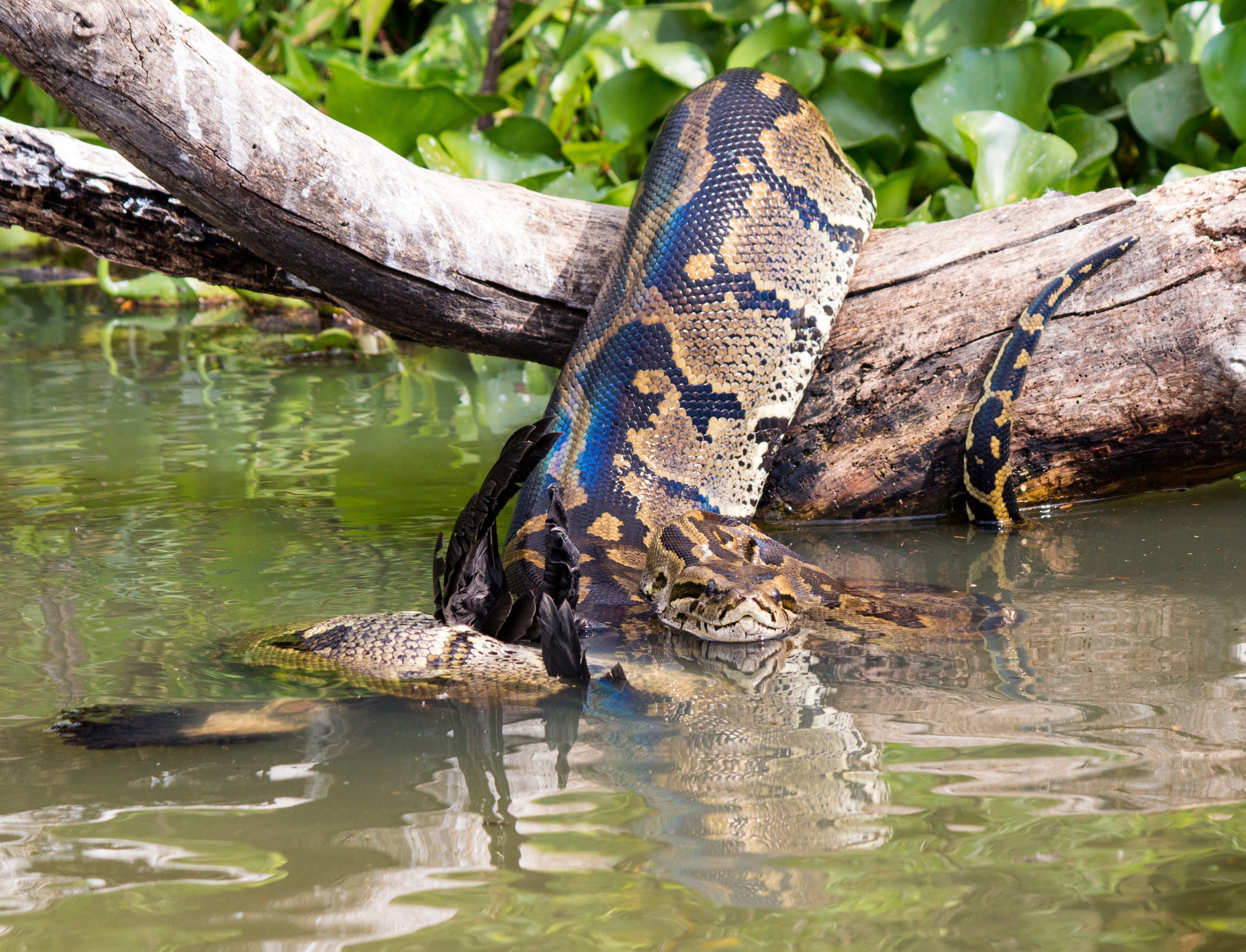
The African Rock Python is one of the largest Snakes on the planet and the biggest snake native to Africa. It lives across sub-Saharan regions, from grasslands and forests to rocky hills and wetlands. This species adapts well to different environments as long as water and prey are nearby.
Adult African Rock Pythons commonly reach 12 to 16 feet, with some growing longer. Their bodies are thick and muscular, built for strength rather than speed. Color patterns include dark brown blotches on a lighter background, helping them blend into rocks, soil, and vegetation.
Unlike venomous Snakes, this python kills prey through constriction. It grabs the animal with sharp backward-facing teeth, wraps its body around it, and tightens with each breath the prey exhales. This method is efficient and surprisingly quick.
Their diet includes rodents, antelope, monkeys, birds, and occasionally crocodiles near water. Young snakes eat smaller animals and gradually move up to larger prey as they grow. This gradual shift helps them survive at every stage of life.
African Rock Pythons are strong swimmers and often stay near rivers or lakes. They may lie still at the water’s edge for hours, waiting for animals to approach. This patience is one of their greatest hunting tools.
Although powerful, these Snakes avoid people when possible. Defensive behavior occurs mainly when they feel trapped or are protecting eggs. Females coil around their eggs and guard them until they hatch, using muscle contractions to help regulate temperature.
Stories about attacks tend to spread faster than facts. While capable of harming humans, incidents are rare and usually linked to surprise encounters. Among the Types of wild Snakes, the African Rock Python represents raw strength paired with quiet restraint.
11. Ball Python
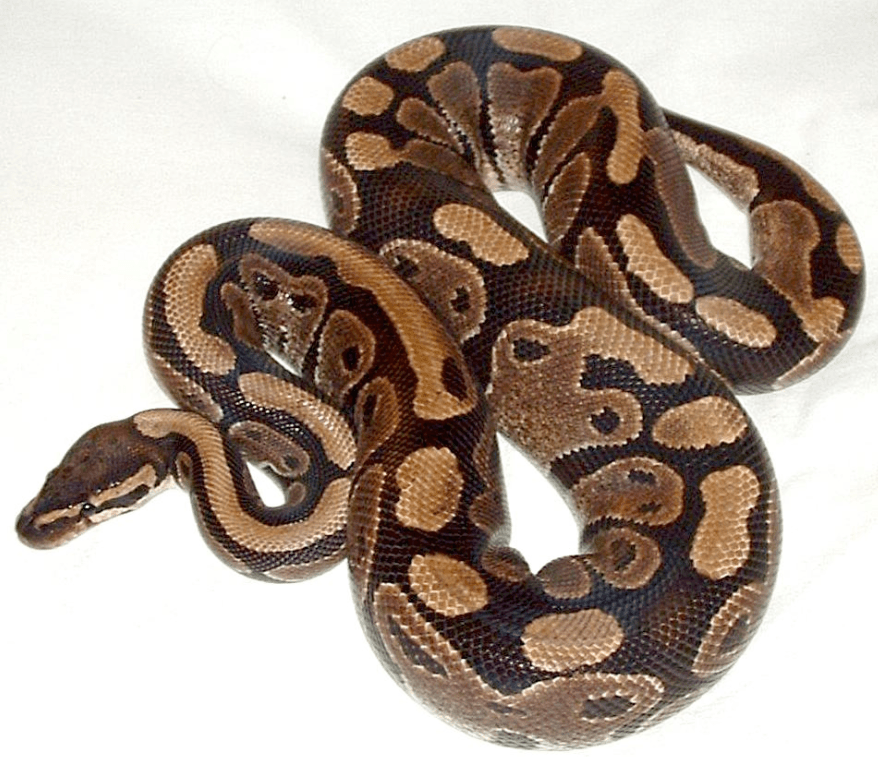
The Ball Python is one of the most recognizable Snakes in Africa and one of the calmest wild pythons by nature. Found mainly in West and Central Africa, it lives in grasslands, open forests, and agricultural areas. It often shelters in abandoned burrows during the day.
This species gets its name from its defensive behavior. When threatened, it curls into a tight ball with its head tucked inside. Instead of striking or fleeing, it waits for danger to pass. This strategy works well against predators.
Ball Pythons are much smaller than other pythons, usually reaching 3 to 5 feet. Their bodies are thick but compact, and their color patterns include dark brown patches outlined with lighter tones. This pattern helps them blend into dry grass and leaf litter.
They hunt mainly at night, feeding on rodents and small birds. Ball Pythons rely on heat-sensing pits along their lips to locate warm-blooded prey in low light. One controlled strike, followed by constriction, ends the hunt.
In the wild, Ball Pythons spend much of their time hidden. Many people live near them without knowing it. Because they avoid conflict and remain still when approached, encounters often go unnoticed.
Among Snakes, the Ball Python shows that survival does not always depend on aggression or size. Sometimes, staying calm and still works just as well.
12. Burmese Python
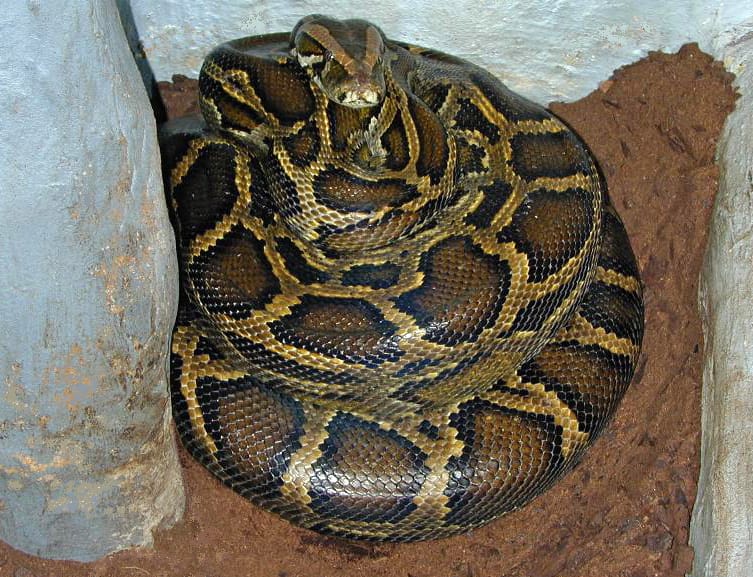
The Burmese Python is native to Southeast Asia and is one of the heaviest Snakes in the world. It lives in forests, marshes, grasslands, and near rivers. This species depends heavily on water and is an excellent swimmer.
Adults commonly grow 12 to 18 feet long, with thick bodies that can weigh over 150 pounds. Their tan base color is covered with dark brown blotches, giving them effective camouflage in forest environments.
Burmese Pythons hunt mammals and birds, including deer, pigs, and waterfowl. Like other constrictors, they rely on strength and patience rather than venom. After feeding, they may remain inactive for days or even weeks while digesting.
These Snakes are mostly active at night and prefer to stay hidden during the day. They use burrows, hollow logs, and dense vegetation for shelter. When disturbed, they may hiss loudly and coil defensively.
Females lay large clutches of eggs and guard them until hatching. During this period, they are more alert and defensive than usual. Outside of breeding season, they tend to avoid confrontation.
The Burmese Python has gained attention outside its native range, but in its natural habitat, it plays an important role in controlling animal populations. Among the Types of wild Snakes, it stands as a reminder that size alone does not define behavior.
13. Indian Python
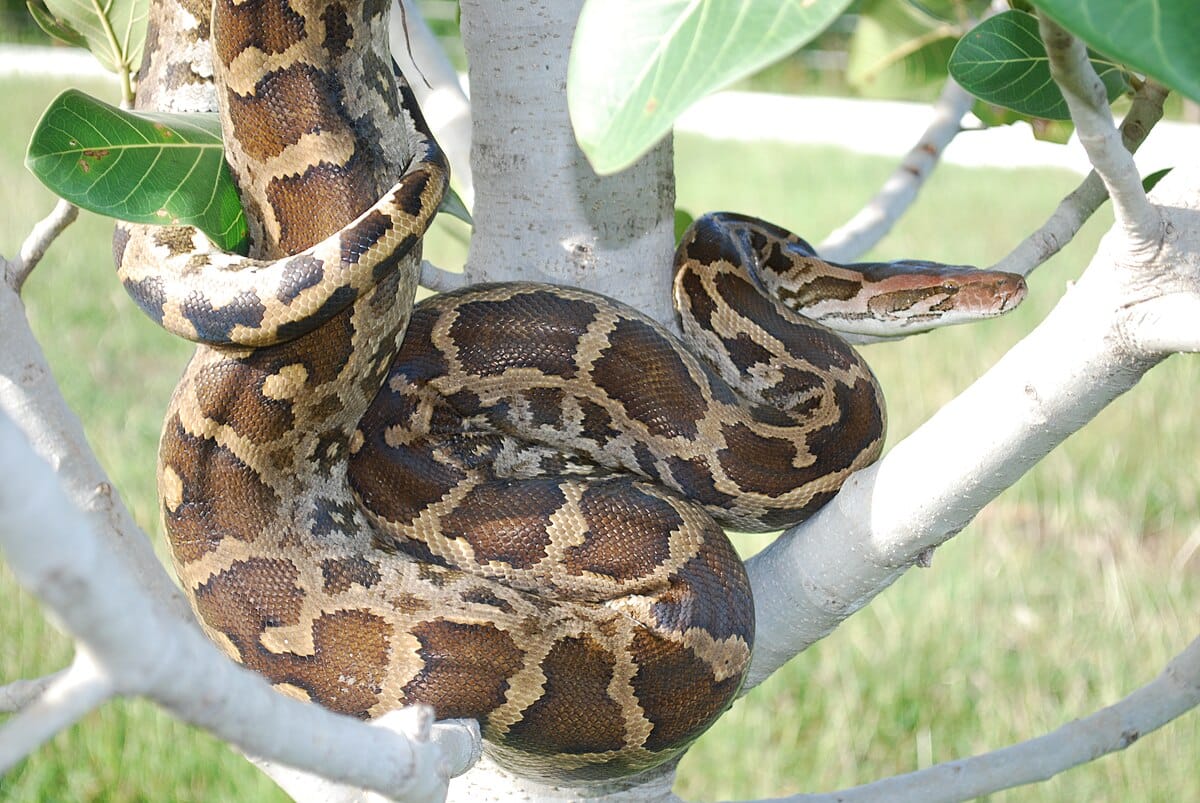
The Indian Python is one of the most impressive Snakes found on the Indian subcontinent. It lives across India, Sri Lanka, Nepal, and parts of Pakistan. This species prefers forests, grasslands, wetlands, and riverbanks, often staying close to water where prey is plentiful.
Adults usually reach 10 to 13 feet, with thick, heavy bodies built for power rather than speed. Their color pattern includes light brown or yellow tones with large dark blotches along the back. This pattern blends well with dry leaves, mud, and forest floors.
Indian Pythons are ambush hunters. They wait quietly near animal trails or water sources and strike when prey comes close. Once they bite, they wrap around the animal and tighten their coils with steady pressure. This method works on prey ranging from rodents to deer.
These Snakes are excellent swimmers and may stay submerged for long periods with only their nostrils above water. During hot weather, water helps them regulate body temperature and remain hidden.
Indian Pythons are mostly calm and slow-moving unless threatened. When disturbed, they may hiss loudly or strike defensively, but they prefer to retreat if possible. Human encounters often happen when people enter forested areas or farmland near rivers.
Among the Types of wild Snakes, the Indian Python plays a quiet but important role by controlling populations of mammals that could otherwise damage crops or spread disease.
14. Reticulated Python
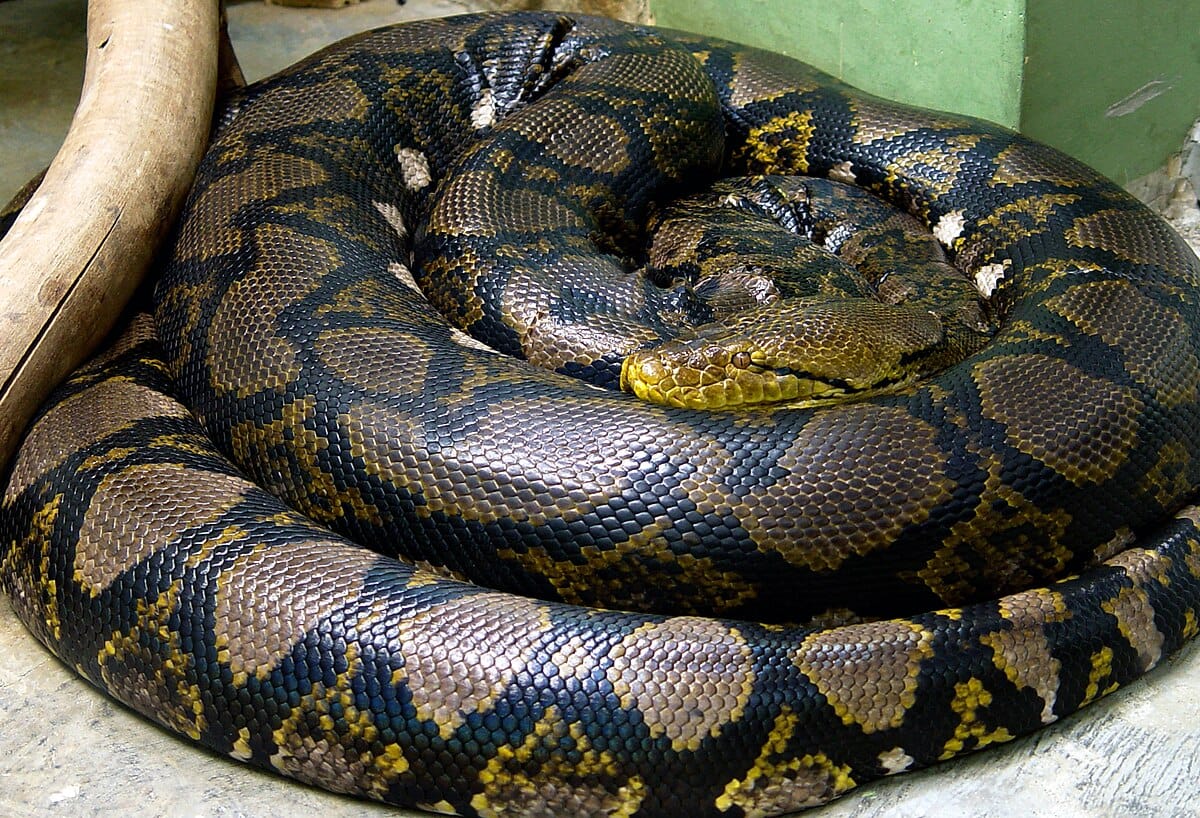
The Reticulated Python is the longest snake in the world and one of the most well-known Snakes in Southeast Asia. It lives in rainforests, swamps, grasslands, and near human settlements. Water is a key part of its habitat, and it swims with ease.
This species regularly exceeds 18 feet, with some individuals growing even longer. Its body is slender compared to other giant pythons, allowing it to move efficiently despite its size. The complex net-like pattern on its scales gives it its name.
Reticulated Pythons feed on mammals and birds, including pigs, deer, monkeys, and poultry. In rural areas, they sometimes enter villages searching for food, which can lead to conflict. Most incidents occur at night.
These Snakes are intelligent and highly alert. They react quickly to movement and can be defensive when surprised. Still, they avoid unnecessary conflict and retreat when given space.
Unlike many snakes, Reticulated Pythons can tolerate human-modified environments. This adaptability has helped them survive but has also increased encounters. Education and proper waste control reduce attraction to livestock and pets.
Among Snakes, this species stands out for its length and adaptability. It shows how survival often depends on flexibility, not just strength.
15. Green Anaconda
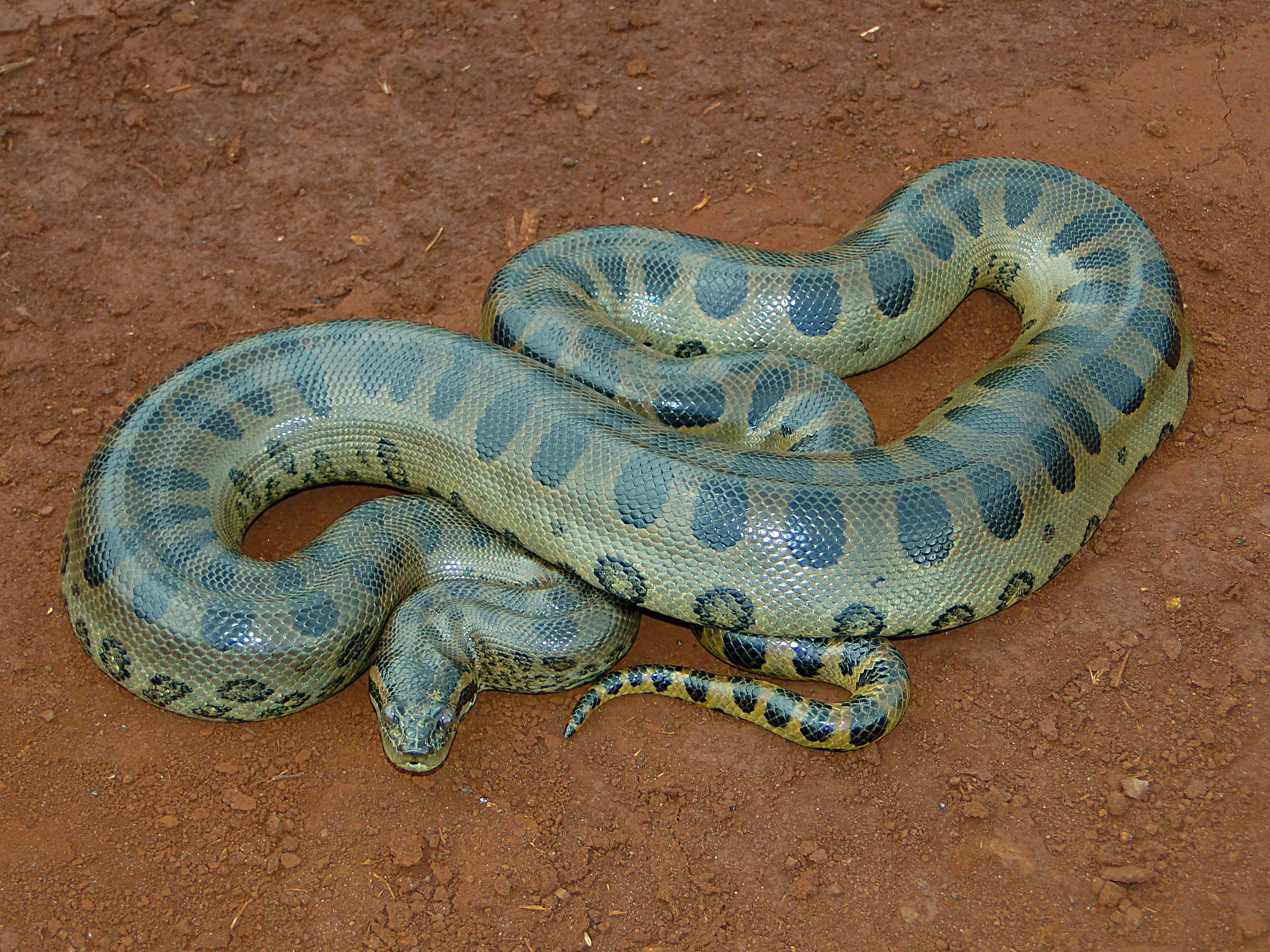
The Green Anaconda is the heaviest snake in the world and one of the most powerful Snakes alive today. Native to South America, it lives in swamps, marshes, slow-moving rivers, and flooded forests. Water is central to its life.
While not the longest snake, the Green Anaconda can weigh over 500 pounds. Its thick body allows it to overpower large prey. The olive-green coloring with dark spots provides excellent camouflage in muddy water and dense vegetation.
Green Anacondas hunt mostly in water. They wait submerged, strike suddenly, and drag prey underwater. Their diet includes fish, birds, capybaras, deer, and caimans. Once caught, prey has little chance to escape.
Despite their size, these Snakes are difficult to spot. They rely on stillness and patience rather than pursuit. Much of their day is spent motionless, conserving energy.
Stories often exaggerate aggression, but Green Anacondas avoid humans when possible. Defensive behavior usually happens when they feel trapped on land, where movement is harder.
Among the Types of wild Snakes, the Green Anaconda represents dominance through environment control. In water, it is unmatched.
16. Western Diamondback Rattlesnake
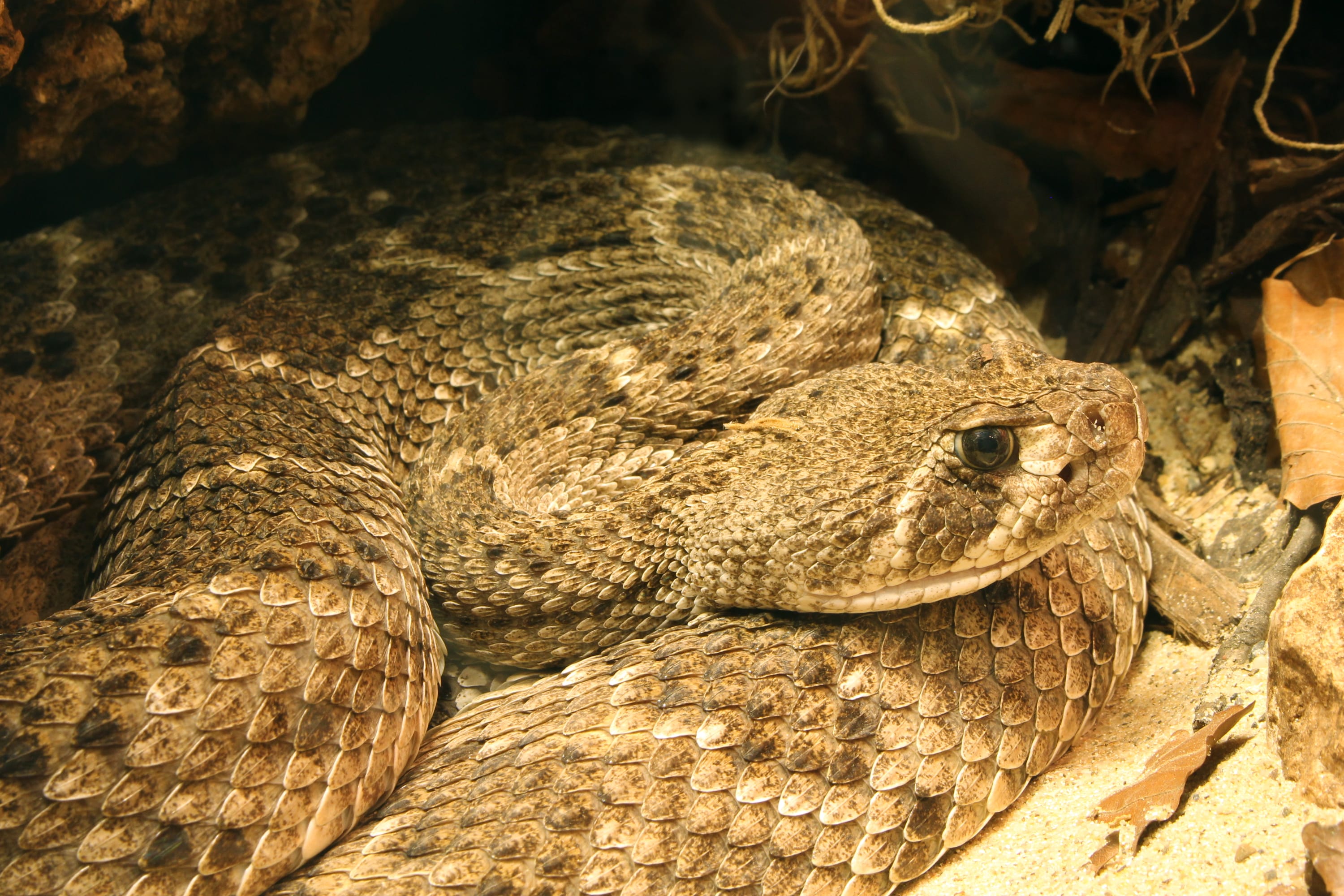
The Western Diamondback Rattlesnake is one of the most recognizable Snakes in North America. It lives across the southwestern United States and northern Mexico, favoring deserts, grasslands, rocky hills, and scrubby terrain. This species handles heat well and often shelters in burrows or under rocks during the hottest hours.
Adults usually measure between 4 and 6 feet, with thick bodies and a bold diamond-shaped pattern along the back. The black-and-white banded tail ends with a rattle made of keratin segments. Each segment adds with every shed, though the rattle does not reliably show age.
The rattle serves as a warning, not a threat. When disturbed, the snake vibrates its tail to signal danger and avoid physical contact. Many bites occur when this warning is ignored or when the snake is accidentally stepped on.
Western Diamondbacks hunt mainly at dusk and night. Their diet includes rodents, rabbits, birds, and ground squirrels. Heat-sensing pits allow them to detect warm-blooded prey even in complete darkness.
Venom from this rattlesnake affects blood and tissue, causing pain and swelling. Medical treatment is effective when delivered promptly. Fatal bites are rare and usually linked to delayed care.
Among the Types of wild Snakes, the Western Diamondback plays an important role in controlling rodent populations. Its warning system gives people a chance to step back, which is more than many animals offer.
17. Gaboon Viper
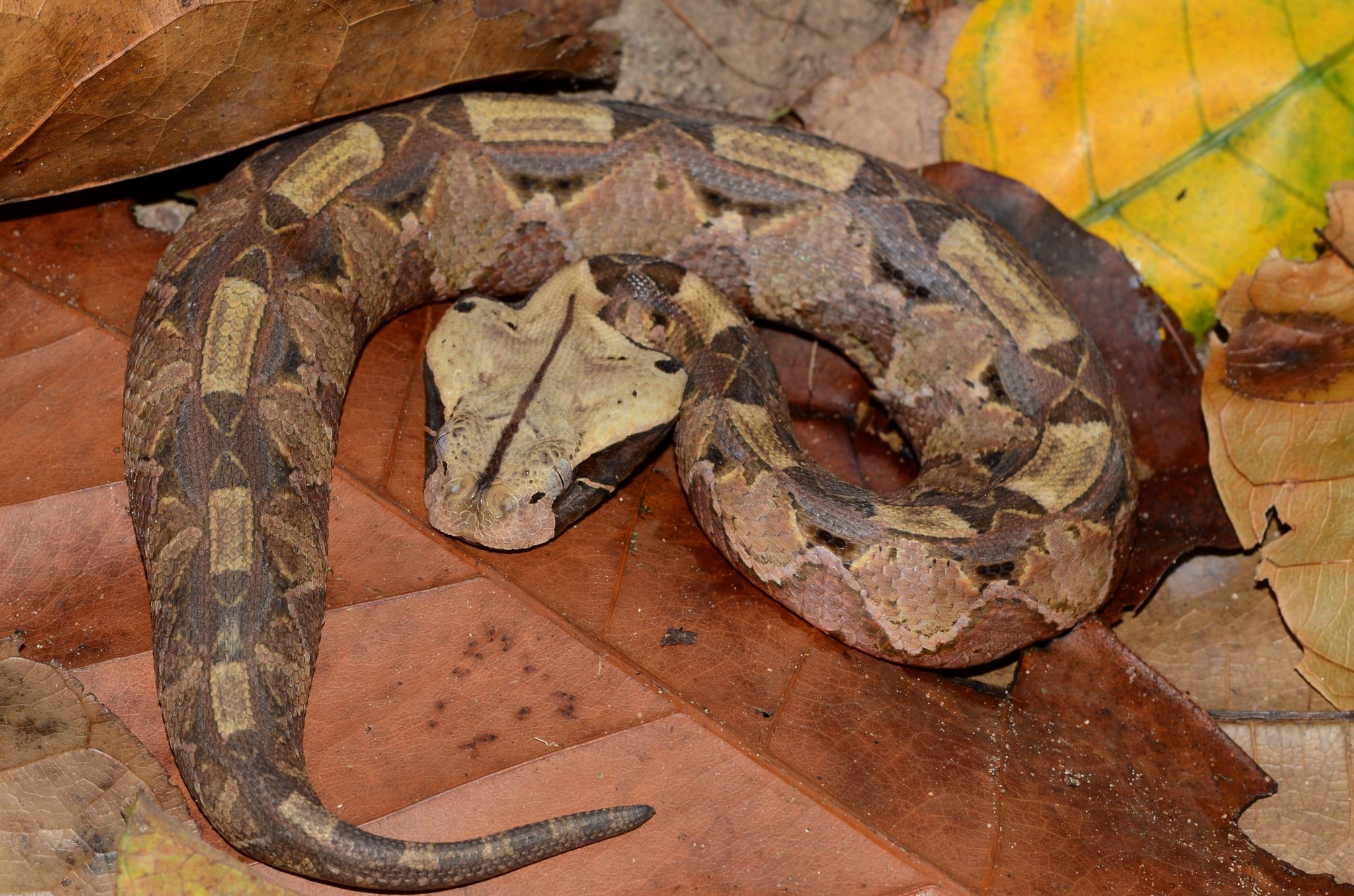
The Gaboon Viper is one of Africa’s most visually striking Snakes and also one of the heaviest vipers in the world. It lives in rainforests, woodlands, and plantations across central and western Africa. Its wide head and thick body give it a powerful appearance.
This species has long, hinged fangs that fold back when not in use. These fangs deliver a large amount of venom in a single bite. Despite this, the Gaboon Viper is calm and slow-moving, relying on camouflage rather than speed.
Its body pattern looks like fallen leaves and bark, making it nearly invisible on the forest floor. Many encounters happen because people fail to notice it. When left undisturbed, it rarely reacts.
Gaboon Vipers feed on rodents, birds, and small mammals. They wait motionless for prey to pass close, then strike with precision. After biting, they often release prey and wait for it to weaken.
Bites usually occur when the snake is stepped on or handled. The venom affects blood and tissues and requires urgent medical care. Still, this snake gives little trouble when respected.
Among Snakes, the Gaboon Viper shows that power does not require aggression. Stillness and disguise do most of the work.
18. Puff Adder
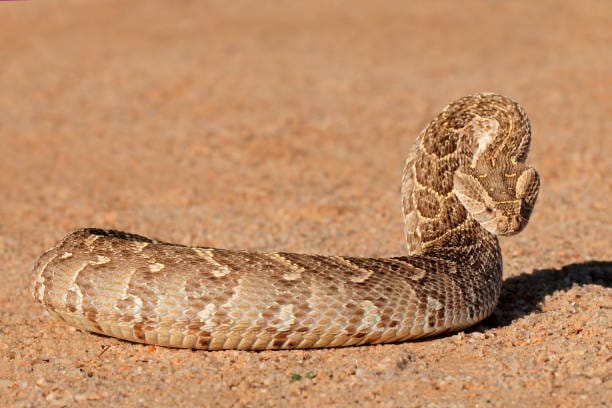
The Puff Adder is one of the most widespread Snakes in Africa. It lives in savannas, grasslands, forests, deserts, and farmland. This adaptability brings it into frequent contact with people.
Adults are thick-bodied and usually 3 to 5 feet long. Their yellow, brown, and black patterns blend perfectly with dry leaves and soil. This camouflage makes them hard to spot on paths and trails.
Puff Adders are ambush hunters. They rely on remaining still rather than fleeing. When disturbed, they inflate their bodies and release a loud hiss, which gives them their name.
Their diet includes rodents, birds, frogs, and small mammals. They strike quickly and release prey after injecting venom. The venom causes severe swelling and tissue damage without treatment.
Many bites occur because the Puff Adder does not move away when approached. It trusts its camouflage. Stepping carefully and watching the ground greatly reduces risk.
Among the Types of wild Snakes, the Puff Adder reminds us that still animals can be more dangerous than fast ones.
19. Russell’s Viper
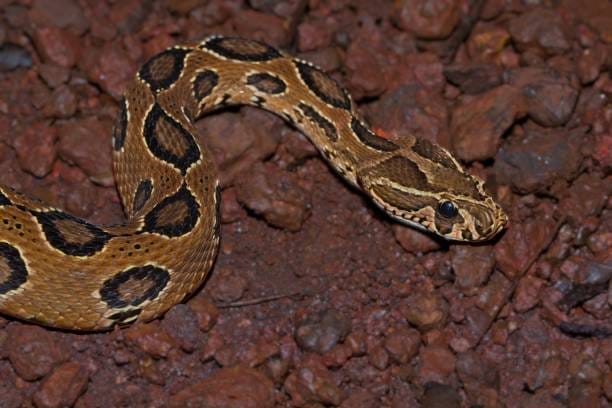
Russell’s Viper is one of the most widespread and medically significant Snakes in South Asia. It lives across India, Sri Lanka, Bangladesh, Nepal, and parts of Southeast Asia. This species thrives in open grasslands, farmland, scrub forests, and even near villages.
Adults usually grow between 4 and 5 feet. Their thick bodies are marked with bold dark oval patterns outlined in white or cream. These markings help them blend into dry grass and soil, especially during daylight hours when they remain still.
Russell’s Vipers are mainly active at night. They feed on rodents, frogs, lizards, and small mammals. Because rodents are common around farms and homes, this snake often appears close to people. Most encounters happen after dark.
When disturbed, the snake coils tightly and produces a loud, sustained hiss. This sound is a clear warning. If the threat continues, it may strike quickly. Bites often occur when people step on the snake or try to move it.
The venom affects blood clotting and internal organs. With modern medical care, survival rates are high, but quick treatment is critical. Education and awareness have reduced fatalities in many regions.
Among the Types of wild Snakes, Russell’s Viper stands out for adaptability. It survives not by speed or stealth alone, but by fitting into human-altered landscapes.
20. Saw-scaled Viper
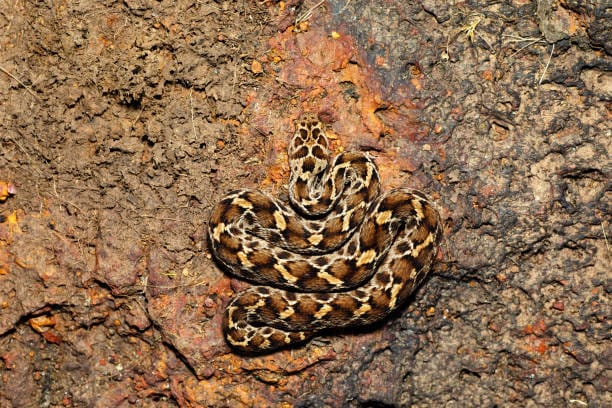
The Saw-scaled Viper is small compared to many other venomous Snakes, but it has a big reputation. Found across Africa, the Middle East, and South Asia, it lives in deserts, rocky plains, dry grasslands, and scrubby terrain.
Most individuals measure only 1.5 to 2.5 feet. Their bodies are covered in rough, keeled scales. When threatened, they rub their coils together, producing a dry rasping sound. This sound is often mistaken for insects or wind.
Saw-scaled Vipers are fast and alert. They strike quickly and repeatedly if cornered. Because they are small and well-camouflaged, people often notice them too late.
Their diet includes rodents, insects, frogs, and small lizards. They are active mainly at night and during cooler parts of the day. During extreme heat, they shelter under rocks or in burrows.
Venom from this species affects blood clotting and can be dangerous without care. Despite its size, this snake is responsible for many bites in its range due to its proximity to human paths.
Among Snakes, the Saw-scaled Viper proves that danger does not depend on size. Awareness and caution matter more than fear.
Conclusion: Understanding Types of Wild Snakes
Learning about Types of wild Snakes helps replace fear with understanding. Snakes are not villains or monsters. They are animals doing their jobs, controlling pests, balancing ecosystems, and surviving in environments that often overlap with ours.
From massive pythons to small vipers, each species covered in this guide shows a different strategy for survival. Some rely on speed, others on camouflage, and a few on warning signals. Problems usually begin when people misunderstand those signals.
If you live, travel, or work in snake habitat, simple habits like watching your step, using lights at night, and giving space can prevent most encounters. Snakes do not want conflict, and neither do we.
Understanding Snakes makes outdoor spaces safer and more interesting. And that knowledge turns fear into respect — which is exactly where it belongs.
Frequently Asked Questions about Types of Wild Snakes
1. What are the most common types of wild snakes?
The most common types of wild snakes include cobras, mambas, pythons, rattlesnakes, vipers, and anacondas, each adapted to different habitats worldwide.
2. How can I identify a venomous snake?
Venomous snakes often have triangular heads, elliptical pupils, heat-sensing pits, and distinctive coloration or patterns, but identification varies by species and region.
3. Are all wild snakes dangerous to humans?
No. While some snakes are venomous, most wild snakes are harmless and avoid human contact. Only a few species pose serious threats if provoked.
4. What is the difference between venomous and non-venomous snakes?
Venomous snakes inject toxins to immobilize or kill prey, while non-venomous snakes rely on constriction, speed, or camouflage to capture food.
5. Where do wild snakes usually live?
Wild snakes inhabit forests, grasslands, deserts, wetlands, rivers, and sometimes human-modified areas like farms or villages.
6. What do wild snakes eat?
Most wild snakes feed on rodents, birds, frogs, lizards, and sometimes other snakes, depending on size and species.
7. How long do wild snakes live?
Lifespan varies: small snakes may live 5–10 years, while large pythons and vipers can live 20 years or more in the wild.
8. How can I safely observe wild snakes?
Use binoculars, maintain distance, stay on paths, and avoid disturbing vegetation where snakes may hide.
9. Can snakes swim?
Yes, many snakes such as pythons, anacondas, and some cobras are excellent swimmers and spend time in rivers or marshes.
10. Do snakes attack humans unprovoked?
Rarely. Snakes usually bite only when threatened, stepped on, or cornered.
11. What is the largest snake in the world?
The Green Anaconda holds the record for weight, while the Reticulated Python is the longest snake species.
12. Are all cobras venomous?
Yes, all cobras are venomous, but not all are equally dangerous to humans. Their behavior and venom potency vary by species.
13. How fast can a Black Mamba move?
Black Mambas are among the fastest snakes, capable of moving up to 12 mph (20 km/h) in short bursts.
14. What is the diet of pythons?
Pythons primarily eat mammals and birds, using constriction to subdue prey before swallowing it whole.
15. How can I distinguish a rattlesnake from other snakes?
Rattlesnakes have a distinctive rattle at the tail tip, triangular head, and often a diamond pattern along their back.
16. Can snakes hear?
Snakes cannot hear airborne sounds but detect vibrations through the ground and use their jawbones to sense motion.
17. Do snakes lay eggs?
Some snakes, like pythons and cobras, lay eggs, while others, like vipers and some boas, give live birth.
18. How do snakes protect themselves?
They use camouflage, warning signals (like hissing or rattling), venom, or fleeing to avoid predators.
19. What is the role of snakes in the ecosystem?
Snakes control rodent populations, regulate other animal populations, and provide food for birds and mammals, maintaining ecological balance.
20. Can snakes climb trees?
Yes, many snakes such as green mambas and tree pythons are excellent climbers and spend much time in the canopy.
21. Are snakes cold-blooded?
Yes, snakes are ectothermic, relying on environmental heat to regulate body temperature.
22. Do snakes hibernate?
In colder climates, many snakes enter brumation, a dormant state similar to hibernation, during winter months.
23. How do snakes smell?
Snakes use their forked tongue to collect scent particles and transfer them to the Jacobson’s organ in the roof of their mouth.
24. What is a venomous bite?
A venomous bite injects toxins into the prey or threat. Effects vary from mild pain to severe tissue damage or death in humans.
25. How do snakes reproduce?
Most snakes reproduce sexually. Females lay eggs or give live birth, depending on the species, with some guarding offspring until independent.
26. Are Green Anacondas dangerous to humans?
Green Anacondas are powerful but rarely attack humans. Most encounters are accidental, and they prefer aquatic habitats.
27. Can snakes be pets?
Some non-venomous snakes like Ball Pythons are popular pets, but venomous species require specialized care and permits.
28. How do vipers hunt?
Vipers use heat-sensing pits and ambush tactics. They strike quickly, injecting venom to immobilize prey before swallowing.
29. Are snakes important to farmers?
Yes, snakes control rodents and pests, protecting crops and reducing disease transmission.
30. How long can snakes go without food?
Many snakes can survive months without eating, especially large constrictors after a big meal.
31. Can snakes regenerate lost tails?
No, snakes do not regenerate lost tails. Some lizards can, but snakes rely on survival skills to compensate.
32. Do snakes have teeth?
Yes, snakes have backward-facing teeth to hold prey. Venomous snakes also have specialized fangs for injecting venom.
33. How do snakes shed their skin?
Snakes shed periodically to grow and remove parasites. The old skin peels off, often in one piece.
34. Are all vipers venomous?
Yes, vipers are venomous, using their fangs to immobilize prey and for defense.
35. How dangerous is the Puff Adder?
The Puff Adder is highly venomous and camouflaged. Most bites occur when it is accidentally stepped on rather than from aggression.
36. What is the lifespan of a Ball Python?
Ball Pythons live around 20–30 years in captivity and slightly shorter in the wild, depending on food and predator exposure.
37. Can snakes be found in urban areas?
Yes, some species adapt to urban environments, especially where food sources like rodents are abundant.
38. How do Spitting Cobras defend themselves?
Spitting Cobras eject venom toward the eyes of threats, causing pain and temporary blindness, which gives them a chance to escape.
39. How do African Rock Pythons capture prey?
They use powerful constriction, wrapping around prey until it suffocates, then swallowing it whole.
40. What should I do if bitten by a venomous snake?
Stay calm, immobilize the affected area, seek immediate medical help, and avoid cutting or sucking the wound.
41. How do Reticulated Pythons differ from Burmese Pythons?
Reticulated Pythons are longer and more slender, with complex net-like patterns. Burmese Pythons are heavier-bodied and slightly shorter with blotchy coloration.
42. Can snakes survive in cold climates?
Some snakes survive mild cold by brumating in burrows or under rocks. Extreme cold usually limits their distribution.
43. Do snakes have predators?
Yes, snakes are preyed upon by birds of prey, mammals, other snakes, and humans, depending on size and habitat.
44. Why do snakes hiss?
Hissing is a warning signal to scare off predators and prevent physical confrontation.
45. How do snakes sense vibrations?
Snakes detect ground vibrations through their jawbones, allowing them to sense approaching animals or humans.
46. Can snakes jump?
Snakes do not jump like mammals, but some can strike and launch their upper bodies toward prey or threats.
47. How do saw-scaled vipers produce their warning sound?
They rub their keeled scales together to create a dry, rasping noise that signals danger to nearby animals and humans.
Read more: 5 Types of Giraffes (Pictures and Identification)