
Learning about different types of bears helps you understand how these animals live, survive, and shape their habitats. Many people know the famous species like the Polar Bear or the Panda, but there are far more bears worth exploring. This guide brings together twenty types of bears, including rare subspecies and lesser-known regional forms, so you can compare their looks, habits, and ranges in one place. The goal is to give you clear, friendly information that even beginners can follow. And by the end, you’ll see how varied bears truly are, from forest climbers to high-mountain wanderers. If you’re searching for reliable details about types of bears, this introduction sets the stage for everything that follows.
1. Polar Bear (Ursus maritimus)

You’ve probably seen Polar Bears in documentaries, standing on sea ice like calm, white statues. Up close, though, this bear is far from delicate. It’s the largest meat-eating land animal alive today, and everything about it feels built for a harsh life. When people search online for “types of bears,” the Polar Bear usually appears first, and for good reason. It’s an animal that looks peaceful from a distance but carries the strength of a heavyweight boxer.
The first thing most folks don’t realize is that Polar Bears aren’t truly white. Their fur is hollow and transparent, and their skin underneath is jet-black. This odd combination helps them stay warm and makes them look ghost-like when they move along snowdrifts. If you stood close enough—though it’s best not to—you’d notice that their coat changes with sunlight. On foggy days, the bear can look slightly yellow, like someone dipped it in tea.
Life for a Polar Bear revolves around sea ice. They aren’t forest wanderers like brown bears. Instead, they follow a rhythm ruled by freezing oceans. Most of their diet comes from seals, especially ringed seals that hide under snow-covered breathing holes. A hungry bear will sit for hours, almost meditating, until a seal pops its head up. Wildlife biologists call this “still-hunting,” but honestly, it feels more like patient ambush. One snap of those jaws, and dinner is served.
Polar Bears also have one of the best noses in the animal kingdom. They can smell a seal from nearly a kilometer away. Imagine trying to sniff out a sandwich two football fields away. That’s basically their daily routine. Their paws help too—they act like snowshoes, keeping the bear from sinking into powdery snow, and double as paddles when swimming.
Speaking of swimming, these giants can cross long stretches of open water. Some have been tracked swimming more than 60 miles without stopping. It sounds heroic on paper, but often it’s a sign of trouble. As sea ice melts earlier each year, they’re forced to swim longer distances to find hunting grounds. Scientists keep noting how their range shifts like a rug being pulled under their feet.
Despite their strength, Polar Bears aren’t unstoppable. Young bears often struggle when hunting on melting ice. A thin bear tells a sad story—too much swimming, not enough food. And although adult males look fierce, most conflicts happen when a starving bear approaches villages. The bear isn’t angry. It’s hungry. Locals often have to haze bears away from garbage areas, and sometimes things end badly.
If you ever watch a Polar Bear mother with her cubs, the scene changes from tough to tender. She’ll dig a snow den and stay inside for several months before emerging in spring with tiny, fuzzy youngsters clinging to her. The contrast is striking: a huge predator turning into a careful guardian. Cubs rely on her completely. She teaches them how to walk on thin ice, how to sniff out prey, and even how to roll in the snow to keep their fur in good condition.
Many travelers who visit Arctic regions describe meeting a Polar Bear as both thrilling and frightening. One person I met said, “It walked like it owned the horizon.” And honestly, that’s the perfect image. A Polar Bear stands in a landscape so empty that the silence rings in your ears. No roads. No trees. No landmarks. Just ice, sea, wind, and a white giant walking as if it belongs there more than anything else.
In identification, look for a long body, a small head, and a flatter skull than other bears. They also have furry feet—almost like slippers—which help with traction. And if you ever see one in the wild, give it the space it deserves. Polar Bears aren’t aggressive by nature, but they’re curious. Curiosity becomes dangerous when the explorer weighs 1,500 pounds.
As you learn about more types of bears, you’ll notice how different they are from each other. But the Polar Bear stands out for living in a place where mistakes are costly and survival takes cleverness, strength, and a little luck.
2. Grizzly Bear (Ursus arctos horribilis)

Grizzly Bears are the rugged mountain residents of North America. If the Polar Bear looks like a snow king, the Grizzly looks like a seasoned hiker who’s seen everything. People use the name “Grizzly” to describe a subspecies of the Brown Bear, but folks often treat it as its own star. And honestly, it deserves that spotlight.
A Grizzly Bear has a shoulder hump that stands out like someone stuffed a backpack under its skin. This hump is made of muscle, and it gives the bear impressive digging power. You can spot it even from a distance. When hikers identify bears, that hump is often the first clue. The second clue is their face. A Grizzly’s face slopes gently downward, giving it a dish-shaped profile.
Unlike Polar Bears, Grizzlies live in forests, meadows, river valleys, and mountain slopes. They’re excellent at switching diets depending on the season. In spring, they dig up roots and eat fresh vegetation. In summer, they switch to berries, insects, and sometimes young ungulates. When salmon migrate upstream in late summer, they turn rivers into feeding arenas. You can almost hear them thinking, “Why chase food when food swims straight at you?”
Grizzlies don’t rely on speed, but they’re surprisingly fast. If pressured, they can run faster than a racehorse for a short stretch. Watching a full-grown Grizzly sprint is like seeing a truck suddenly sprout legs. It’s impressive and slightly terrifying, even from a safe distance.
One thing people debate a lot is the bear’s personality. Some say Grizzlies are temperamental; others say they’re misunderstood. The truth sits somewhere in between. They don’t look for trouble, but they don’t avoid it either. A Grizzly expects respect. If a hiker gets too close to its cubs or food, the bear reacts quickly. Many encounters happen because the person didn’t notice the bear until the bear noticed them.
Identification also includes coat color, but that’s tricky. A Grizzly might look dark brown in shade and almost blonde in sunlight. Some have silver-tipped hairs that shimmer, giving them the “grizzled” appearance that inspired their name. One wildlife ranger once joked, “A Grizzly looks like it’s been sprinkled with dust after rolling in the wrong pile.”
Mothers with cubs behave differently. They watch everything. If something moves, they look. If something smells odd, they sniff. And if something feels unsafe, they leave. Cubs stay with their mother for two to three years, learning how to forage, fish, and stay out of danger. A cub climbing a tree looks clumsy at first, but they quickly turn into skilled escape artists.
Grizzlies also dig more than other bear species. They dig for roots, grubs, winter dens, and sometimes even gopher caches. A torn-up hillside is usually a sign a Grizzly has been grocery shopping underground.
In late fall, Grizzlies enter dens and settle in for months. They aren’t true hibernators. Instead, they go into a state where their heart rate slows but their body temperature stays fairly warm. They can wake up if disturbed. And yes, the stories are true: a huge male Grizzly waking up early is something no one wants to experience.
Every year, wildlife photographers flock to places like Alaska’s Katmai National Park to watch Grizzlies gather at waterfalls. The bears stand in rushing water and grab salmon mid-jump like athletes catching balls. Sometimes they miss. Sometimes they catch with surprising grace. The scene feels almost theatrical.
Grizzly Bears carry a mix of power, unpredictability, and charm. Spend a few days in their territory and you start to feel why they shape local cultures so strongly. They remind people of nature’s raw side—unfiltered and unapologetic.
3. Brown Bear (Ursus arctos)

The Brown Bear might be the most widespread of all types of bears, stretching from Europe through Asia and across North America. It’s a species with many faces. Some are massive giants like the Kodiak Bear; others are smaller mountain-dwellers. But they all share a common foundation: a body built for survival in almost any habitat.
Brown Bears adapt to grasslands, tundra, forests, and river valleys. A biologist once said they’re “opportunistic eaters,” which basically means they eat what’s available. They have a flexible food plan: berries, vegetation, insects, salmon, small mammals, carrion, and sometimes larger animals if the chance comes up. They also snack on nuts, which help them gain weight before winter.
A Brown Bear’s body is thick and muscular, especially around the shoulders. The size varies widely across regions. Bears living near salmon-rich rivers grow fat quickly, while those in drier areas stay leaner. Some males can weigh over 1,000 pounds. Even at that size, they move with a surprising rhythm—slow when relaxed, fast when needed.
Behavior also changes with region. European Brown Bears tend to avoid humans more than some North American populations. Bears in remote Siberian forests behave differently from bears in tourist-heavy national parks. Locals often know the differences. One hunter in Romania once told me, “Our bears vanish like smoke.” Meanwhile, those in more visited parks sometimes seem less shy, but that doesn’t mean they’re safe to approach.
A Brown Bear’s coat color varies too. Some are dark chocolate, others reddish, some almost blonde. The texture changes with the season, getting thicker in winter and shedding heavily in spring. During shedding season, the bear looks a bit scruffy, like someone who cut their own hair with dull scissors.
Brown Bears walk with a rolling gait, which makes their steps feel deliberate. Their long claws help them dig and turn over logs. In places rich with termites or beetle larvae, they spend hours flipping deadwood like pages of a book. Their sense of smell is powerful enough to locate hidden animal carcasses from long distances.
When identifying a Brown Bear, pay attention to body shape. They have a prominent shoulder area, but not as defined as the Grizzly’s hump. Their face profile is more rounded. If you see tracks, note that their hind footprints look a bit like oversized human feet. It’s slightly unsettling at first.
Brown Bears also play an important ecological role. By spreading seeds, digging soil, and moving nutrients, they subtly shape the environment around them. Some plants rely almost entirely on animals like bears to spread their seeds after being eaten.
Although Brown Bears are strong, they avoid conflict if possible. They prefer distance from humans. Most incidents happen when someone surprises a bear at close range or walks too close to a carcass the bear claimed as food.
They also have distinct personalities. Some individuals are bold, others shy. Wildlife researchers who study them long-term often describe them the way people describe neighbors: “This one is calm,” “That one is unpredictable,” and “The older male doesn’t like anyone near his fishing spot.”
Out of all types of bears, Brown Bears may be the most versatile. Their presence across continents shows how well they adapt to shifting landscapes. Learning about them gives you a better understanding of how many ways a bear can live.
4. American Black Bear (Ursus americanus) — One of the Most Widespread Types of Bears in North America

If you talk to hikers in North America, the American Black Bear is usually the first bear they mention. It’s common, adaptable, and surprisingly shy despite living close to people. When folks search for types of bears found in forests, campsites, and national parks in the U.S. or Canada, this species often comes up. And honestly, it deserves the attention. It’s a strong animal, but it carries itself with a gentle rhythm that makes it interesting to watch.
Many people think the American Black Bear is always black. That’s not true. This species comes in a whole buffet of colors — black, chocolate brown, cinnamon, blonde, even a bluish shade in Alaska’s Glacier Bay area. There’s also the famous Kermode Bear, or the “Spirit Bear,” a rare white-coated variant that draws photographers from around the globe. Color isn’t a reliable way to identify them, but their body shape offers clearer clues. They usually have a straight facial profile, tall pointed ears, and a lack of the muscular shoulder hump seen in Grizzlies.
These bears live in forests, swamps, deserts, and even mountainous regions. They are incredibly adaptable. Their diet reflects that too. In spring, they seek fresh greenery and insects. Later, they switch to berries, nuts, acorns, and occasionally small mammals. They do raid campsites and garbage bins if people leave food out. A ranger I once met said, “A fed bear is a dead bear,” pointing out how human food makes them bold and eventually gets them into trouble. The bear isn’t trying to bother anyone; it’s following its nose — and its nose happens to be one of the best in the animal world.
American Black Bears can climb trees better than most other bears. Cubs scurry up trunks with the speed of squirrels, and even adults can climb if needed. This helps them escape danger or rest in peace. Their claws are shorter and more curved than those of Grizzlies, which makes them perfect for gripping bark. If you ever see claw marks high on a tree, you might be looking at evidence of a bear trying to reach a beehive or just having fun.
Despite their size, American Black Bears usually avoid confrontation. They prefer to walk away rather than challenge anything. That said, mothers with cubs can be protective. Most encounters happen when a person gets between a mother and her young without noticing. Cubs often climb trees quickly when startled, while the mother stays below, watching with sharp focus.
Their winter dens can be found in hollow logs, caves, rocky crevices, or dug-out spots beneath tree roots. When they enter their den, their heart rate slows significantly, and they can go months without eating or drinking. What’s amazing is that the mother bear can give birth during this period and care for her tiny cubs without leaving the den.
Although American Black Bears are gentle compared to Grizzlies, they still command respect. They have the strength to flip rocks, break logs, and run faster than most people expect. Watching one move through the woods feels like watching a quiet shadow pass between trees. It’s peaceful but powerful.
This species teaches something simple: bears adapt, change, and survive as long as the landscape gives them space. When talking about different types of bears, the American Black Bear stands out as the one most likely to cross paths with people — and that makes learning about them important for both wildlife lovers and everyday hikers.
5. Asian Black Bear (Ursus thibetanus)

The Asian Black Bear, also known as the Moon Bear because of the pale crescent marking on its chest, is one of the most striking bears in the eastern hemisphere. It looks like someone painted a bright patch on a dark canvas. These bears live in forested mountains across China, Japan, Korea, Russia, Nepal, and Southeast Asia. Their wide range makes them a key part of discussions about types of bears found across Asia.
They have thick black fur, long limbs, and big ears that give them a slightly expressive look. Some people describe them as “curious-looking,” and I can see why. Their ears are large compared to their head size, which gives them a bit of a cartoonish charm. But don’t let the look fool you — they are strong climbers. They spend more time in trees than most large mammals. They climb to escape danger, rest, or find fruit.
The Moon Bear’s diet includes berries, nuts, insects, buds, honey, small animals, and sometimes livestock if food is scarce. In certain regions, they break open ant nests or termite mounds with impressive force. Their claws are sharp and curved, designed for gripping trunks and tearing into wood. One researcher once told me, “An Asian Black Bear can turn a rotting log into confetti in seconds.” It’s not far from the truth.
Behavior-wise, these bears can be bold when surprised. They rear up on their hind legs to inspect their surroundings. To a person unfamiliar with bear behavior, this looks threatening. In reality, the bear is simply trying to get a better view. Their sense of smell is excellent, but their eyesight is less reliable, so standing upright helps them gather information.
They are mostly nocturnal in warmer regions. In cooler climates, they may shift to daytime activity. Their flexibility helps them live in so many habitats, from tropical hills to snowy slopes. They den in tree hollows, rocky caves, or dug-out burrows during winter in northern areas. Bears living in warmer zones don’t always go dormant at all — food availability is what decides their routine.
Asian Black Bears often interact with human communities, especially in places where farms border forests. They may raid orchards or cornfields, which leads to conflict. Farmers sometimes use noise makers or dogs to scare them off, and in most cases, the bears retreat quickly. They aren’t looking for trouble; they’re looking for calories.
Cubs stay with their mothers for nearly two years. During that time, the mother teaches them to forage, climb, and avoid danger. Young bears practice their climbing skills constantly, going up and down trees like furry gymnasts.
In identification, the chest marking is the easiest clue. It varies in shape — some look like crescent moons, others like V-shaped streaks. Their snout is often lighter than the rest of the body. Their body shape is slimmer than a Brown Bear’s but more muscular than a Sun Bear’s.
The Asian Black Bear stands out not only for its looks but also for its adaptability. It lives in areas with ancient trees, steep slopes, and shifting seasons. Among different types of bears across Asia, it’s one of the most recognizable.
6. Sun Bear (Helarctos malayanus)

The Sun Bear is the smallest bear species on Earth, but don’t let its size fool you. It’s energetic, intelligent, and equipped with some of the most impressive claws in the bear family. This bear lives in Southeast Asian rainforests, including Malaysia, Indonesia, Thailand, Myanmar, and parts of Laos and Cambodia. It stays mostly hidden under thick canopy cover, which makes it harder for scientists to study compared to more famous types of bears.
Sun Bears have short, sleek fur that helps them stay cool in humid forests. Their chest patch — usually orange, cream, or yellow — looks like a rising sun, which is how they got their name. Each marking is different, almost like fingerprints. Their face has a lighter color, giving them a look that some describe as gentle or curious.
These bears are skilled climbers. Their long claws and strong forelimbs let them climb high to search for fruit, honey, insects, and young shoots. They also break into beehives with ease. If a bee colony can be opened, a Sun Bear will find a way. Their tongue is incredibly long — up to 25 cm — allowing them to reach deep into crevices for honey or termites.
Although small, Sun Bears are powerful. They can tear open logs, climb vertical trunks, and travel long distances through treetops. Their behavior is shaped by rainforest life: lots of rain, dense vegetation, and countless insects. They spend much of their time foraging. Their diet also includes figs, palms, and small animals.
They are mostly solitary animals. The only time they come together is during mating or when mothers raise cubs. Cubs cling to their mothers tightly, and mothers carry them through dense forests with surprising ease.
Sun Bears often avoid open areas. Instead, they stick to forests with thick shade. Their small size and quiet movements help them avoid larger predators like tigers or leopards. They move with a gentle, rolling walk that seems almost playful.
Identifying them is straightforward: small body, short black coat, pale muzzle, and a chest patch that looks painted on. Their claws are particularly noticeable — long, curved, and sharp, perfect for climbing. Their teeth are also strong enough to crack open coconuts, though they rarely do unless they live near human areas.
Among all types of bears, the Sun Bear has one of the warmest climates. It’s a forest specialist, shaped by tropical heat and constant rainfall. Watching one forage in the wild feels like watching a rare rainforest secret come to life — quiet, steady, and full of surprising strength.
7. Sloth Bear (Melursus ursinus)
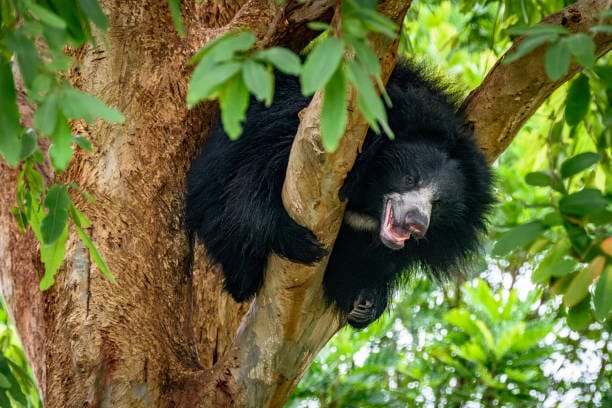
If you’ve ever seen a Sloth Bear in person, you might understand why early explorers thought it looked a bit odd. It has shaggy fur, long claws, and a relaxed, wobbling walk. But spend a few minutes watching it move, and you’ll realize it isn’t slow at all. This bear can turn from calm to fast in a heartbeat. It lives across India, Sri Lanka, and parts of Nepal, and it’s one of the most distinctive members of the bear family. Many people researching types of bears often underestimate it, but the more you learn, the more fascinating it becomes.
Sloth Bears have long, messy coats that make them look bigger than they really are. Their fur is longer around the shoulders and neck, giving them a mane-like appearance. They often have a pale “U” or “V” shape on their chest. Their snout is long and flexible, and they can stretch their lips forward in the funniest way. That stretchy snout has a purpose — it helps them Hoover up insects. If you’ve ever heard the sound they make while feeding, you might laugh. It’s a loud, slurping roar that echoes through the forest.
These bears are insect specialists. They love termites and ants more than almost anything else. When they find a termite mound, they rip it apart using their long claws and powerful legs. Then they inhale the insects with a series of sharp sucking sounds. This feeding behavior is so noisy that locals sometimes hear them before they see them. Their claws are long, curved, and shaped like pickaxes. They use them for digging, climbing, and tearing open logs.
Sloth Bears prefer dry forests, grasslands, and rocky hills. They rest in caves, under boulders, or in thick brush during the heat of the day. They are mostly active at night, especially in areas with lots of people. This lifestyle helps them avoid conflict. Still, encounters happen, and Sloth Bears have developed a reputation for being unpredictable when startled. Their reaction isn’t because they’re mean. It’s because they panic when surprised at close range. In most cases, they want to escape rather than fight.
Cubs are one of the cutest sights in the bear world. They often ride on their mother’s back like tiny passengers. The mother’s long fur gives them a perfect grip. Watching a mother run with two cubs hanging on is like watching an animal version of a family motorbike ride, minus the wheels. The bond between mother and cubs is strong, and she guards them carefully.
The Sloth Bear’s sense of smell is excellent, but its eyesight is weaker. When feeding, they move with a steady rhythm, sniffing constantly. They communicate through grunts, snorts, and huffs. And yes — they snore loudly when sleeping, just like some people I know.
In identification, the easiest clues are their shaggy fur, pale chest mark, and long claws. They also tend to sway side to side when they walk. Their face often looks dusty or pale compared to their dark body.
Among all types of bears found in Asia, the Sloth Bear stands out for its unusual feeding habits and dramatic look. It may not be graceful, but it has charm. And in its own way, it shows how wildlife evolves in creative ways to take advantage of whatever nature provides.
8. Spectacled Bear (Tremarctos ornatus)
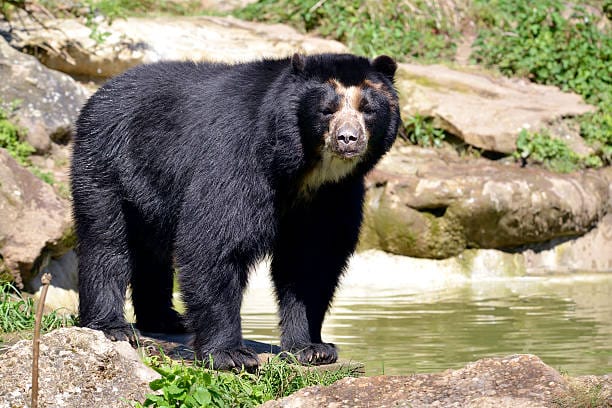
The Spectacled Bear, also known as the Andean Bear, lives high in the mountains of South America. It’s the only bear native to that continent, and it has a gentle, mysterious quality that makes people fall in love with it. The name comes from the pale markings on its face, which sometimes look like glasses. Not every individual has full “spectacles,” but most have creamy patches around the eyes and muzzle.
These bears live in cloud forests, grasslands, and steep slopes in countries like Peru, Ecuador, Colombia, Bolivia, and Venezuela. The terrain is rugged, wet, and often foggy. Imagine a place where the air feels cool and damp and where moss covers every rock. That’s where Spectacled Bears feel at home.
They are expert climbers. In fact, they climb so often that some locals call them “the mountain gardeners.” They break branches to reach fruit, and the leftover branch platforms sometimes stay in trees for months. If you spot a messy platform high up in a tree, there’s a good chance a Spectacled Bear made it.
Their diet is mostly plants. They eat fruits, bamboo, bromeliads, palm hearts, and even tree bark. In the dry season, they rely heavily on tough vegetation. They supplement their diet with insects or small animals when needed. This flexibility helps them survive in a landscape that changes with altitude and season.
Spectacled Bears are shy and prefer to avoid people. They move quietly, often disappearing into dense leaves before anyone can get a good look. Because they are so elusive, much of their behavior is still being studied. What researchers do know is that they walk with a gentle, almost thoughtful pace. Their claws are long and slightly curved, perfect for climbing vertical tree trunks.
Every Spectacled Bear’s face markings are different. Some look like they’re wearing big glasses; others have only small streaks. These patterns make identification easier for biologists. They photograph bears and compare the markings, much like reading a fingerprint.
Cubs stay with their mothers for more than a year. Mothers usually find sheltered dens in caves or thick vegetation, especially during the rainy season. Their cubs rely on them heavily, often wrestling or climbing around her. The mother, with the patience of a tired parent, nudges them around while searching for food.
Among all types of bears across the globe, the Spectacled Bear stands out for its gentle presence and mountain lifestyle. It doesn’t roar loudly or charge without reason. It moves quietly, shaped by the foggy cliffs and green valleys it calls home. Watching one in the wild feels like watching something rare — a careful reminder that high-altitude forests still hold secrets worth protecting.
9. Giant Panda (Ailuropoda melanoleuca)

The Giant Panda is probably the most famous bear on Earth. Children recognize it from cartoons, and adults know it from conservation campaigns. But behind the friendly appearance is a species with one of the strangest diets in the bear family. It eats mostly bamboo, a plant that isn’t exactly rich in nutrients. This makes the Giant Panda’s lifestyle slow, gentle, and centered around saving energy.
These bears live in mountain forests in China. Their habitat is cool and misty, filled with thick bamboo. If you picture green tunnels stretching through mountains, you’re close. Pandas move through these tunnels with quiet steps, stopping often to feed. They can eat for hours — sometimes up to 14 hours a day.
Their black-and-white pattern is instantly recognizable. The dark patches around their eyes make them look expressive, almost as if they’re wearing makeup. Their round body and thick fur give them a soft, plush look. But they’re still bears. They can break thick bamboo stems with strong jaws, and their forelimbs are powerful.
One of the most interesting things about Giant Pandas is their “false thumb.” It’s actually an enlarged wrist bone. They use it like a thumb to grip bamboo shoots. This clever adaptation lets them hold food while sitting upright, almost like a person enjoying a long meal.
Despite their heavy bodies, pandas can climb trees. Young pandas especially enjoy this. They hang upside down, roll around, and slide off branches like children at a playground. Adults climb mainly for safety or to rest. Watching a panda nap in a tree is both amusing and heartwarming.
Pandas are mostly solitary. They communicate using scent marks, bleats, honks, and soft calls. Their sounds aren’t always what you’d expect from a large animal. A panda can sound like a goat, a bird, or a squeaky toy depending on the situation.
Cubs are incredibly tiny at birth — roughly the size of a stick of butter. The mother cares for them with surprising gentleness. She cradles them, cleans them, and shelters them in a den for weeks. Pandas invest a lot of energy in raising young, which is part of why their reproduction rate is naturally low.
When people compare different types of bears, the Giant Panda always gets a special section. Its looks, diet, behavior, and conservation story make it stand out. And despite being treated as a soft, friendly mascot by the public, pandas are strong animals shaped by a rugged mountain habitat.
10. Kodiak Bear (Pictures and Identification)

The Kodiak Bear often shows up in wildlife stories as the “giant” of the bear family. And honestly, that reputation is well deserved. These bears live on the Kodiak Archipelago in Alaska, a place where the forests feel ancient and the coastlines carry the sound of constant wind. People often compare the Kodiak Bear to the coastal Brown Bears found in mainland Alaska, but the Kodiak is usually heavier and stands a bit taller. If you ever see a picture of one next to a fishing boat, it looks like someone edited the scale wrong. But that’s just the way these bears are built.
Most adults reach weights that make them some of the largest land mammals alive today. Males usually take that honor, especially in late summer and early fall, when salmon fill every stream. This season gives them a steady supply of calories. When a Kodiak Bear rises on its back legs, it can reach heights that feel unreal. Some people describe the impression as standing in front of a wall of fur. And even though that sounds intense, these bears behave with surprising calmness when left alone.
Kodiak Bears have thick coats that shift between brown, blonde, and dark chocolate shades. If you look closely at photographs, the fur often has lighter tips, almost like frost on a sunny morning. Young bears tend to have more uniform colors, but older ones usually show a mix. Their shoulder humps are easy to spot, and the shape helps you distinguish them from Black Bears. Observers tend to focus on the hump first because it creates that classic “bear silhouette.”
These bears live in a region where human contact is possible but not constant. Residents of the islands respect them deeply, and that relationship has shaped how biologists manage conservation. Kodiak Bears have lived separated from mainland Brown Bears for thousands of years. This isolation allowed their population to develop characteristics that set them apart. They still count as a subspecies of Brown Bear, but researchers treat the group as its own important lineage.
Their behavior shifts with the seasons. In spring, they move through coastal areas looking for early plants. Once the salmon runs start, they gather near rivers, often fishing in slow, deliberate movements. They don’t rush; they just wait for the right moment. That patience makes them fascinating to watch. Local guides sometimes say, “A Kodiak Bear isn’t in a hurry unless it wants to be.” And that kind of quiet confidence fits them well.
Identifying a Kodiak Bear from photographs usually depends on size, head shape, and overall build. They have wide muzzles, thick necks, and what some describe as a “heavy” presence. If you place a photo of a Kodiak and a mainland Brown Bear side by side, the Kodiak usually looks bulkier. But the differences aren’t only physical. Their personalities, at least from field notes, often show a calmer nature. Maybe it’s the environment, or maybe it’s the steady salmon supply.
People who visit the islands sometimes talk about how quiet the forests feel until a bear steps onto the riverbank. Even then, the moment is more peaceful than frightening. Observing a Kodiak Bear at a distance gives you a sense of how life works in their habitat — everything moves with purpose, nothing rushes, and survival follows seasonal rhythms. It’s a reminder that large animals can be both powerful and gentle at the same time.
If you’re researching types of bears, you’ll notice the Kodiak Bear often sits near the top of every list due to size and appearance. And while the numbers are impressive, the most interesting part is how they’ve adapted to an island world where salmon, berries, and local plants shape their entire year. They stand as one of the most iconic bears in North America and a favorite among wildlife photographers because they tell a story simply by existing.
11. Spirit Bear (Pictures and Identification)

The Spirit Bear, also known as the Kermode Bear, feels almost magical the first time you see a photograph of it. Its pale, creamy coat makes it look like something out of a storybook. But this bear isn’t a Polar Bear or an albino animal. It’s actually a subspecies of the American Black Bear. Only a small percentage carry the gene that gives them their light-colored fur. Because of that, many people think they are rare — and they are, but not in the legendary way people sometimes describe.
These bears live primarily along the central coast of British Columbia in Canada. The rainforest there is thick, green, and soaked with mist most of the year. Local First Nations communities have honored the Spirit Bear for generations. Their stories describe these pale bears as reminders of ancient times and symbols of balance. Biologists, meanwhile, study them as examples of how genetics influence wildlife populations in isolated habitats.
When you meet a Spirit Bear in a photo or video, the first thing that stands out is the coat color. It ranges from milk-white to a soft buttery yellow. Some individuals show darker patches around the eyes or paws. Their nose may be darker, and their eyes are usually brown. So, while the coat is pale, the bear doesn’t have the traits associated with albinism. This makes identifying them easier. If the eyes look normal, you’re likely looking at a true Spirit Bear.
In behavior, they follow the same rhythms as their darker relatives. They search for berries in late summer, dig for roots, and patrol rivers during salmon runs. Some scientists believe their pale color gives them a slight advantage when fishing in clear water. Salmon may not spot them as easily, which could improve success during peak runs. Whether that’s fully proven or not, it adds another layer to their story.
One of the most memorable things about the Spirit Bear is how photographers describe them. Many say watching one move through the rainforest feels like watching a soft light drift between the trees. The contrast between the pale fur and the dark forest floor is striking. Even people who’ve tracked wildlife for decades say the first sighting feels special, almost like hearing a rare song in the woods.
Identifying a Spirit Bear outside its native region is almost impossible because the gene responsible for their color appears mainly within that coast-dwelling population. Cubs may be born with the pale coat even if both parents are darker. This genetic twist keeps the appearance unpredictable, which adds even more interest for researchers.
From a conservation perspective, the Spirit Bear depends heavily on the health of its rainforest environment. Logging and habitat loss once posed threats, but protected areas now cover much of their range. The challenge lies in balancing human activity with the needs of these bears and the ecosystems they rely on. The stories about them may be old, but the responsibility to protect them belongs to today’s world.
They represent a fascinating example of how nature can surprise us. In a species usually known for dark fur, the Spirit Bear breaks the pattern. And that difference — rare but real — shows how wildlife can still spark curiosity in people who think they’ve seen it all. For anyone learning about bears, Spirit Bears offer a lesson in how diversity works even within a single species.
12. Cinnamon Bear (Pictures and Identification)

The Cinnamon Bear is another member of the American Black Bear family, but with a coat that stops people in their tracks. Instead of the classic dark-black fur, Cinnamon Bears show warm reddish-brown shades that look almost copper under sunlight. Some individuals carry deeper tones, which can make them appear similar to small Brown Bears at first glance. But once you look closely, the differences fall into place.
Their range spreads through the western United States, especially in areas with mixed forests, shrub-covered hills, and mountain slopes. Many hikers tell stories about spotting a “brown bear” only to later realize it was a Cinnamon Bear. This happens often because people expect all Black Bears to be black. Nature never signed that contract, though. And this color variation is one of the more common morphs in the species.
When you study photos of Cinnamon Bears, you’ll notice how the coat changes with lighting. In shade, the fur looks deeper and more muted. In daylight, especially morning sun, the fur shines with lighter amber tones. Cubs sometimes show darker spots that fade as they grow. The overall body shape still reveals their identity — shorter claws, a straight nose profile, and no pronounced shoulder hump like Brown Bears have.
Behaviorally, they follow the same seasonal routines as other Black Bears. Spring brings fresh greens. Summer is full of berries. Fall revolves around building fat reserves. The Cinnamon Bear doesn’t behave differently because of its color. But the color does influence how people perceive it. Some wildlife photographers prefer these bears because their coats create striking images without much effort. A Cinnamon Bear standing near golden leaves almost looks staged.
Identification becomes easier once you know what to look for. First, check the face shape. Black Bears, even cinnamon-colored ones, often have more pointed snouts than their Brown Bear relatives. Second, check the feet. Brown Bears usually have longer claws that curve differently. And third, look for the shoulder area. Brown Bears in North America show a raised muscle hump above the shoulders. Cinnamon Bears don’t.
The Cinnamon Bear’s coloration likely developed as an adaptation to the landscapes they inhabit. Open forests and semi-dry regions create light conditions where darker coats might stand out more. Whether that offered a survival advantage or simply became a stable trait through generations is still debated. Either way, their reddish fur makes them easy to remember.
For people learning about different types of bears, the Cinnamon Bear adds a nice twist to the broader picture. Many guides list it as a “color morph,” but some wildlife references treat it as an informal subtype. Either way, it’s worth knowing because sightings are common in western states. If you’re hiking in places like Utah, Colorado, or Wyoming, there’s a decent chance the bear you see might carry this warm reddish coat.
These bears tend to avoid conflict, and most encounters happen when a bear is busy feeding or crossing open ground. They move with steady steps and rarely rush unless they sense a threat. Watching one feed on berries can feel almost peaceful. Their calm presence sometimes surprises people, especially visitors who expect bears to be loud or aggressive.
The Cinnamon Bear reminds us that wildlife often bends the rules we assume are fixed. Color doesn’t define the species, and appearances can shift more than most people realize. And that simple idea makes studying them enjoyable. They’re a small example of how nature keeps things interesting, especially in places where humans and animals share space more often than they think.
13. Blue Bear (Pictures and Identification)

The Blue Bear, sometimes called the Glacier Bear, is one of those animals that makes people pause and question whether the picture they’re seeing has been edited. The coat often carries a smoky gray or bluish tint, something you don’t expect in a bear related to the American Black Bear. The color varies widely. Some individuals look almost silver, while others show darker blue-gray shades. This isn’t a separate species. It’s a rare color morph found mostly in southeastern Alaska, especially around areas with rugged mountains, cold rivers, and dense temperate rainforest.
Because sightings are limited, many people learn about Blue Bears through old stories from hunters, trappers, and local residents. Some of these early accounts made the bears sound mysterious, almost like they belonged to folklore. But science eventually confirmed that this color variation pops up in certain populations. Biologists think it may be linked to genetic drift in isolated habitats. Even so, the exact reason this coat color appears remains a bit puzzling. That’s part of what keeps the Blue Bear so interesting.
When you compare a Blue Bear to a standard American Black Bear, the physical build stays the same. They have a straight facial profile, rounded ears, and a body shape that’s less bulky than Brown Bears. They also lack the muscle hump seen on Grizzly Bears. The main difference is the coat. And that single feature creates a strong impression, especially when the bear walks across snowy ground or stands near a reflective riverbank. The contrast can make the color appear even stronger than it really is.
Behavior follows the usual Black Bear routines. They search for berries, grasses, and fish when the season allows. In coastal parts of Alaska, salmon runs form a major food source. Watching one of these bears fishing is a rare treat because the pale-blue coat stands out against dark rocks and green forest. It almost looks like a moving shadow wearing frost on its back. People sometimes describe the bear as blending into mist on cloudy days. And honestly, that description fits better than you might expect.
Identifying one in pictures depends mostly on lighting. Direct sunlight tends to reveal the blue-gray tones clearly, while cloudy conditions make the coat appear duller. Young bears may show slight silver hints that become stronger with age. Some individuals carry patches of darker fur, especially near the legs and shoulders. And because they are still Black Bears, they carry the same general expressions and movements. They walk with a smooth, steady pace and often pause to sniff the air for food.
Blue Bears live in a region where human activity shifts from season to season. Local guides know the valleys and rivers where sightings are most likely, but even then, spotting one can feel like a lucky break. Their population isn’t huge, and most individuals stick close to remote terrain. That limited distribution makes them a favorite topic for wildlife photographers who want something unusual for their portfolio. But photos are hard-earned, usually requiring long waits and careful observation.
From a conservation standpoint, the Blue Bear depends on the same habitats that support other coastal Black Bears. Forest health, salmon populations, and safe denning areas all matter. While they aren’t recognized as a separate species, they still hold value as a rare variation that highlights how diverse American Black Bears can be. For anyone studying different types of bears, the Blue Bear serves as an example of how nature sometimes adds its own artistic twist to familiar animals. Their appearance may surprise people, but it also sparks interest in understanding how wildlife adapts in isolated corners of Alaska.
14. Marsican Brown Bear (Pictures and Identification)

The Marsican Brown Bear lives in central Italy, mostly inside the Abruzzo, Lazio and Molise National Park. This bear is often described as one of the rarest large mammals in Europe. Its population stays small, and the group is isolated from other European Brown Bears. Because of this isolation, scientists consider the Marsican Bear a unique lineage with traits that differ from other Eurasian Brown Bears. These bears share some similarities with their relatives, but their behavior, size, and genetic details set them apart.
At first glance, the Marsican Bear looks like a typical Brown Bear. They have thick fur, a broad head, and the rounded ears usually seen in European populations. But their coat often shows softer brown tones. Some individuals carry lighter patches around the neck or chest. Field studies describe them as calm around familiar areas, especially within protected zones where they feed on fruit, nuts, and small insects. Their diet leans heavily on plants compared to other Brown Bears. They still eat meat when the chance appears, but plant foods make up most of their meals.
One thing that stands out about Marsican Bears is how they move. Their walking pace feels slow and steady. Rangers who monitor them often say these bears behave “like they’re thinking through every step.” That’s not a scientific description, of course, but it reflects the peaceful nature people observe in them. They tend to avoid conflict and usually stay far from human settlements, even though villages lie close to the park borders.
The population size makes conservation work important. There may be fewer than 70 individuals in the wild. This number shifts slightly each year based on births, natural losses, and habitat changes. The low population means each bear matters. Researchers track them closely, documenting travel routes, feeding areas, and denning sites. Locals have learned to respect these animals, partly because they represent a symbol of the region’s natural heritage.
Marsican Bears show the usual seasonal cycles. In spring, they visit meadows and feed on new vegetation. Summer brings fruit, and fall brings high-calorie foods like nuts and berries. Their winter dens sit in mountain areas that receive heavy snow. Some individuals reuse the same dens each year, while others move to safer or quieter spots.
Identifying a Marsican Bear from photos isn’t simple unless you already know its location. Their general appearance matches other Brown Bears, though they sometimes look slightly slimmer and rounder around the face. Because the population is small, most confirmed photos come from camera traps placed around the territory. Many images show the bears walking along quiet forest paths or feeding on apple trees near the edge of open clearings.
Studying the Marsican Bear teaches us how fragile some populations can become when cut off from larger groups. Habitat protection, safe corridors, and careful monitoring help them survive. And while the number remains low, the bears continue to raise cubs each year, offering hope for their future. When people talk about important bears in Europe, the Marsican Bear almost always appears, not because of size or fame, but because their survival story speaks for itself.
15. Syrian Brown Bear (Pictures and Identification)

The Syrian Brown Bear is one of the smallest Brown Bear subspecies. They live in parts of the Middle East, including Turkey, Iran, Iraq, and surrounding regions. Their range has changed over time because of habitat loss and human activity, but they still occupy mountain areas, rocky hillsides, and patches of forest where food remains available. Their size may surprise people who are familiar with big Alaskan or Russian Brown Bears. The Syrian Bear looks slimmer, with longer legs and a lighter build.
The coat varies from sandy beige to pale brown. Some individuals show darker streaks on the shoulders, while others keep a more uniform color. Cubs often appear even lighter, giving them a soft, teddy-bear-like look. Because the landscape they inhabit includes deserts, valleys, and high mountains, their coloration fits well with the environment. When you see photos of them climbing rocky slopes, the fur almost blends with the ground.
Behavior depends on the season. In spring, they search for greens and roots. Summer pushes them toward shaded areas or higher elevations where temperatures stay cooler. They feed on fruit when available and occasionally eat insects or small animals. Reports mention that Syrian Bears tend to be cautious, avoiding humans when possible. Most sightings happen at a distance, in rugged terrain where observers use binoculars to track movement.
Identifying this bear relies on its lighter coat and narrow face. Compared to other Brown Bears, the Syrian Bear has a slightly pointed muzzle and large ears that stand out more due to the slim head. They lack the massive shoulder hump seen in stronger northern populations. Their paws are also narrower and not as heavily built.
Of all the types of bears in Asia, the Syrian Brown Bear holds a special place because of its ancient history. Historical texts even mention bears in this region thousands of years ago. While their numbers have dropped, conservation groups continue working to protect them from further decline. Many populations live far from human settlements, tucked into remote mountains where they move quietly through cliffs and valleys.
In photos, Syrian Bears often carry a calm expression. Their lighter coat gives them a gentle look, especially when the sun hits the fur at an angle. Cubs stay close to their mothers for long periods, learning how to forage in a landscape that can be harsh and unforgiving. Even though these bears are smaller than many of their relatives, they adapt well to tough environments.
The Syrian Brown Bear reminds us that wildlife can thrive even in regions where conditions seem difficult. They move through rocky ground with ease, make use of whatever food appears, and keep a careful distance from danger. For those studying bears across continents, this subspecies stands out for its appearance, behavior, and the way it connects modern populations to ancient landscapes.
16. Himalayan Brown Bear (Pictures and Identification)

The Himalayan Brown Bear lives in some of the toughest environments on Earth. These bears stay in high-altitude regions across Pakistan, India, Nepal, and parts of Tibet. The mountains they call home are steep, cold, and often windy. When people talk about different types of bears, this one usually enters the conversation because of the dramatic terrain it survives in. Life in these mountains shapes everything about them—their body size, feeding habits, daily movements, and even their moods.
You can pick out a Himalayan Brown Bear by its thick coat. The fur usually ranges from light brown to a warm reddish-brown. Cubs often look fluffier than adults, almost like they’re wearing oversized jackets. The shoulders show a clear hump caused by strong muscles, which help the bear dig through rocky soil or climb steep slopes. Their heads are broad, and their muzzle is long enough to give them a slightly pointed look. When you see a close-up photo, you can notice how the fur around the face appears shorter than the body.
These bears live at elevations where oxygen levels drop and winters get intense. Some individuals stay above 3,000 meters, and a few wander even higher during feeding seasons. Snow covers the land for much of the year. Because of this, the bears move a lot to find food. They eat roots, grasses, fruit, insects, small animals, and anything they can locate. In some valleys, they also dig up meadows in search of plants hidden under soil. Locals sometimes spot uprooted patches left behind by bears searching for something edible.
Behavior often changes with the season. During spring, the bears appear more active because food becomes easier to find. Summer helps them gain weight, especially when berries ripen. Fall is a busy time, with the bears feeding heavily before winter. Their dens sit in caves, rocky shelters, or dug-out spots under boulders. Some dens stay in use for many years, handed down across generations. Winter forces the bears to rest for long periods. They don’t always withdraw completely, but they slow down, saving energy when the cold becomes too harsh.
Because they live close to rural communities in some areas, conflicts sometimes happen. Farmers may see them near livestock or near stored grain, especially in seasons when natural food decreases. But field studies show that these bears prefer staying away from people when possible. They move quietly along mountain trails, using hearing and smell to avoid trouble. Watching one from a safe distance, you might notice how often they stop to lift their heads and scan the air before continuing.
Identifying a Himalayan Brown Bear often comes down to color, body shape, and location. Their reddish tone is a common trait, especially around the back and sides. Their hump stands out clearly, even in young adults. Cubs stay with their mothers for about two years. During that time, the cubs learn important skills—how to dig for roots, how to find fruit patches, and how to recognize good den sites. Mothers show a protective side, guiding cubs along steep slopes with surprising patience.
These bears also make a variety of sounds. They grunt softly when feeding, huff when unsure about something, and sometimes produce low growls if they feel threatened. Their communication style stays simple but effective. In quiet mountain valleys, a single sound can travel far.
Despite the challenges, the Himalayan Brown Bear holds its place as one of the most iconic bears in Asia. Conservation groups keep a close eye on them. Habitat loss, climate change, and human activity affect where these bears can travel. Some populations remain small, so protecting their land becomes important. With the mountains rising behind them and valleys stretching for miles, they give people a strong reminder of how wildlife can survive in places that look almost impossible to live in.
When people compare the many types of bears found across continents, the Himalayan Brown Bear earns attention for its altitude, appearance, and character. It’s a bear shaped by cliffs, ice, strong winds, and short summers—conditions that test even the toughest animals. And yet, it continues to thrive where few large mammals can.
17. Eurasian Brown Bear (Pictures and Identification)

The Eurasian Brown Bear is the classic “big bear” many people picture when thinking about wildlife in Europe or northern Asia. These bears stretch across a huge range, from Scandinavia to Russia and parts of Central Asia. Because of this wide distribution, their size and appearance vary. Some individuals look bulky with dark coats, while others appear lighter or slimmer. But all of them share certain traits that make identification fairly easy once you know what to look for.
The fur color in this subspecies ranges from dark chocolate to pale sandy brown. In some areas, especially where temperatures drop below freezing, the coat grows thicker and softer. Bears living in forests often appear darker, while individuals in open, rocky landscapes may show lighter shades. Their heads are broad with strong jaws, and their shoulders display the familiar muscular hump. This hump helps with digging and climbing—two activities they rely on throughout the year.
Eurasian Brown Bears live in forests, meadows, mountains, and sometimes wetlands. Their adaptability explains why they cover such a large region. They eat plants, berries, roots, insects, and small animals. During certain seasons, they also fish or hunt when the opportunity arises. Because they have such a broad range, their behavior shifts depending on the local climate. A bear in Finland may live differently from one in the Caucasus Mountains, even though they belong to the same subspecies.
Their daily life follows a simple pattern: feed, rest, walk, and repeat. These bears walk with a steady, confident rhythm. They often follow trails created by generations of individuals, almost like wildlife highways. In thick forests, they leave claw marks on trees. Some claw marks are territorial signals, while others help stretch their bodies or sharpen their claws. These marks also serve as clues for researchers studying their movement.
Human encounters can be rare in some regions but common in others. In countries like Romania or Slovenia, observers sometimes see these bears near the edge of forests, especially during fruit season. In remote wilderness, however, the bears avoid people and move silently. They rely heavily on their sense of smell. When a Eurasian Brown Bear stops walking and lifts its nose into the wind, it’s gathering information the same way some people read signs on a map.
Winter changes everything. The bears slow down, choose den sites carefully, and spend long months resting. Mothers give birth during this period. Cubs come into the world tiny and helpless, much smaller than most people expect. The mother spends the entire winter caring for them, warming them, and feeding them. When spring arrives, she leaves the den with cubs trailing behind like a row of fluffy shadows.
Identifying a Eurasian Brown Bear in photos often depends on context. Their size and color vary so much that location can offer the best clue. Bears from northern forests tend to look darker and heavier, while those from warmer areas appear slimmer. Despite these differences, all Eurasian Brown Bears show the solid build and strong presence Brown Bears are known for.
This subspecies represents one of the most widespread bears on Earth. Its ability to adapt to different landscapes, climates, and food sources makes it a strong survivor. When comparing different types of bears around the world, the Eurasian Brown Bear shows how flexible a species can be. From snowy forests to mountain valleys, they continue living their quiet, predictable routines—feeding, walking, resting, and raising young.
18. Himalayan Black Bear (Pictures and Identification)
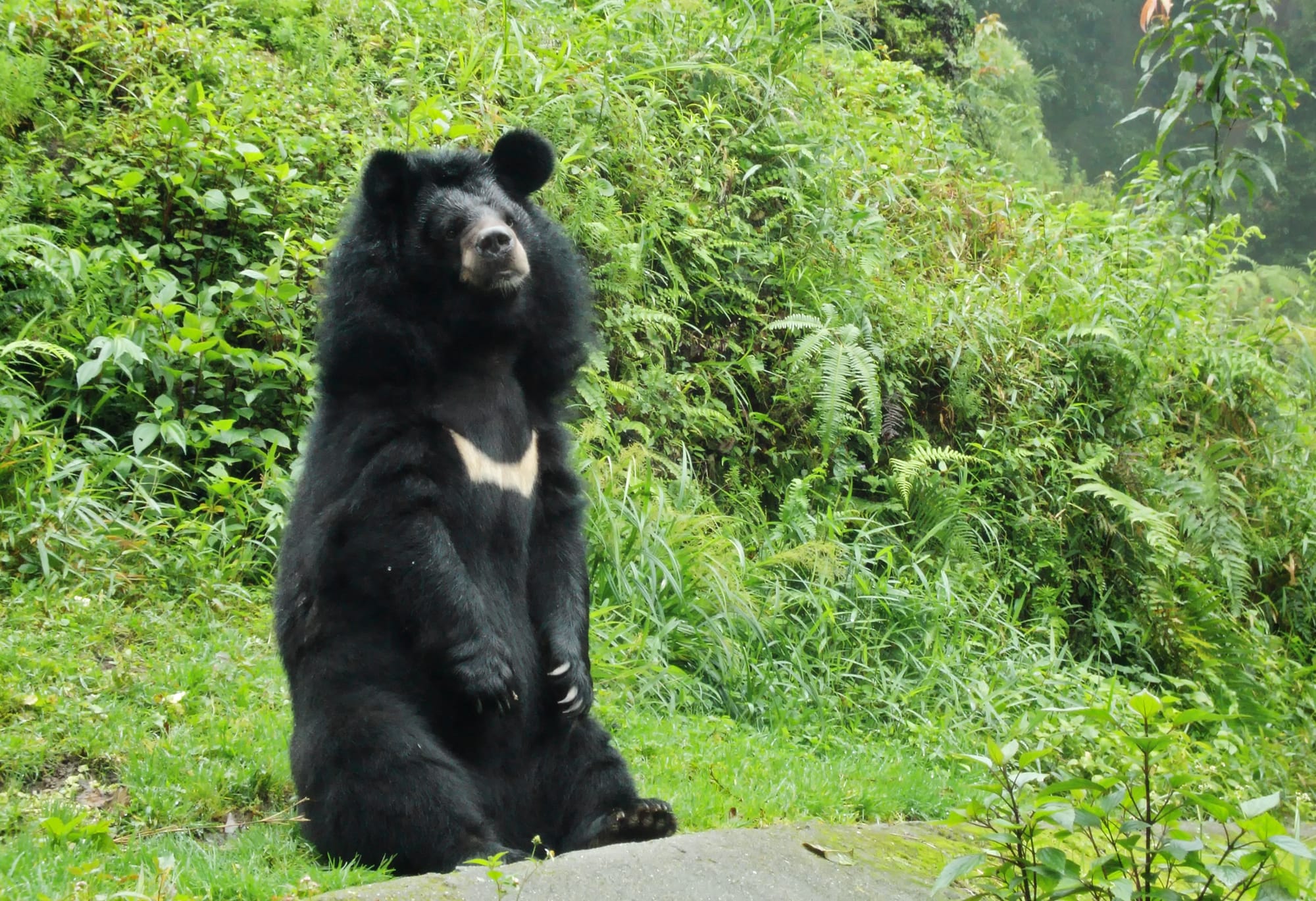
The Himalayan Black Bear lives in the foothills and mountains between Bhutan, Nepal, India, Pakistan, and parts of China. It’s a subspecies of the Asian Black Bear and carries the same general shape—rounded ears, dark coat, and a pale chest mark shaped like a crescent. They usually live in forests that sit between 1,000 and 3,600 meters in elevation. The landscape mixes dense woods, cliffs, and steep slopes, which suits the bear’s climbing ability.
The coat of a Himalayan Black Bear is thick and glossy. In colder regions, it becomes even fuller during winter. Adults often look larger than they really are because of the heavy fur around the neck and shoulders. When they stand on their hind legs, the chest mark becomes easier to see. It usually appears cream or white, forming a wide curve across the upper chest. Cubs may show smaller, sharper versions of this mark, which becomes clearer as they age.
These bears eat a wide range of foods. They feed on fruits, nuts, leaves, honey, insects, and small animals. During harvest seasons, they sometimes visit fruit trees near villages, which leads to conflict in certain areas. But overall, they prefer staying deep in forests where they can move with less disturbance. Their ability to climb makes them excellent at reaching food stored high in branches. Some individuals even rest in trees, creating nests of broken branches much like Spectacled Bears do.
Daily activity shifts with temperature. In warmer months, they move more at dusk or night. During colder weather, they might be active during the day, especially when searching for high-calorie foods. They keep a steady pace while walking, pausing often to sniff the ground. Their sense of smell guides them, helping them locate fruit piles, hidden beehives, or small animals.
Mothers show strong care for their young. Cubs stay with them for nearly two years, learning how to climb, forage, and avoid danger. Watching a mother guide cubs across uneven terrain shows just how balanced these bears can be. They make quick adjustments while climbing or running, using claws to grip bark or rocky surfaces.
Identifying a Himalayan Black Bear mostly involves the coat and chest mark. Their ears look proportionally larger than those of Brown Bears. Their body appears rounder, especially when the fur thickens in winter. Adults often weigh less than Brown Bears but still stand tall when they need to assess their surroundings. Some photographs show them perched on branches, looking almost comfortable despite the odd pose.
In terms of behavior, they show a mix of curiosity and caution. They explore new areas but remain alert around strange noises. They also use trees as both feeding platforms and safety points. If startled, they may climb quickly, relying on sharp claws and strong limb muscles.
Himalayan Black Bears play a key role in their environment. They spread seeds through their droppings, open tree bark while searching for insects, and help shape forest ecosystems. Farmers and wildlife groups work on reducing conflict by improving waste storage and guiding communities on safe practices. While some challenges remain, these bears continue living in forests that have supported them for thousands of years.
Among the many types of bears studied today, the Himalayan Black Bear stands out for its climbing ability, striking chest mark, and mountain lifestyle. It handles steep slopes, thick vegetation, and changing seasons with confidence, proving again that bears can adapt well when given space to move and feed.
19. Balochistan Black Bear (Asian Black Bear Subspecies)

The Balochistan Black Bear is one of the least familiar bears on the planet, and many people have never even heard its name before. It lives in the dry, rugged hills of Pakistan and Iran, where life is tough even for animals built for hardship. This bear is a subspecies of the Asian Black Bear, but it looks slightly different. Its body is slimmer, and its fur is often shorter because it lives in hotter climates. If you ever see a photo of one, you may spot a pale “V” shape on its chest. That marking is common among Asian black bears, but individuals in this region tend to have a thinner pattern.
People sometimes think bears only thrive in forests with tall trees and cold weather. The Balochistan Black Bear proves that thought wrong. It deals with heat, rocky canyons, and scarce food. During the hottest part of the year, it may spend long hours resting in shaded spots. Food choices shift with the seasons. In some months, it eats fruits, figs, and berries. At other times, it turns to roots, nuts, beetles, and whatever else it can find in the harsh landscape. When food is especially limited, it may approach villages in search of leftovers or crops. This is risky for both the bear and the people living nearby.
Groups working with wildlife in this region often worry about the future of the Balochistan Black Bear. Its habitat keeps shrinking, and the number of surviving individuals is small. Some local traditions also put pressure on the species, including the long-standing history of capturing bears for entertainment. Even though public awareness has improved, illegal capture still happens. The more these bears are pushed out of the mountains and into towns, the more conflicts occur. And conflicts rarely end well for a wild animal.
If you look at how this subspecies behaves, you’ll see it follows the same general habits as its relatives in the east. It is active mostly at night when the air is cooler. It climbs well, though not as naturally as Asian black bears in forested regions. It also tends to stay near water sources when possible. During the breeding season, males may travel long distances to find females. Mothers raise their cubs in rocky dens or small caves, keeping them hidden from predators. Cubs stay with their mother for more than a year while learning to forage.
Something interesting about this bear is how quietly it moves for its size. People who live near its habitat often describe it as “ghost-like,” appearing suddenly and then vanishing into the cliffs. This silent movement is a survival advantage in a place where threats are common. But the flip side is that it makes counting individuals very difficult for scientists. Because of this, population estimates are rough guesses at best.
Conservation teams argue that saving the Balochistan Black Bear means protecting water sources, stopping capture, and restoring wild areas. The more support the species receives, the more likely it is to recover. Its survival matters not just for biodiversity but for the cultural identity of the region. Bears have been part of local stories for centuries, and losing this subspecies would erase an important piece of that history.
People researching types of bears often overlook this one, but it deserves a place among the most important. It represents toughness, adaptation, and the constant struggle many wild animals face in today’s landscapes. When you study its story, you start to see how every species tells a different chapter in the larger picture of bear evolution across Asia.
20. Tibetan Blue Bear (Brown Bear Subspecies)
The Tibetan Blue Bear is a mysterious figure among all types of bears. Even scientists admit they do not know as much about it as they would like to. It lives in remote areas of the Tibetan Plateau, a region famous for high elevation, icy winds, and thin air. Not many animals manage to survive there year-round, but the Tibetan Blue Bear does. Its thick fur, often tinted silver or grayish-blue, helps it stay warm. That unusual coloring is the reason behind its name. Photos show a bear that looks almost mythical, like something out of old folktales.
Because its home is so hard to reach, very few people ever see this bear in the wild. Much of what we know comes from footprints, droppings, and rare camera-trap images. Even so, researchers have pieced together a general idea of its behavior. The Tibetan Blue Bear is usually solitary. It follows food sources across the plateau, shifting with the seasons. In summer, it eats roots, insects, small rodents, berries, and alpine plants. In colder months, it may travel to slightly lower elevations where food is easier to find.
The Tibetan Plateau creates an environment that pushes this bear to adapt in clever ways. It has a powerful sense of smell, which helps it track prey in windswept valleys. It can climb steep slopes filled with loose rock. And it has a slow, steady movement style that saves energy at high altitude. People living in remote Tibetan communities tell stories of seeing the bear passing far away on ridges. These sightings often become local legends.
One topic that often comes up is the link between the Tibetan Blue Bear and the yeti myths. For decades, explorers found strange hair samples or tracks and wondered if they belonged to a mysterious creature. Later DNA tests showed many of these samples matched this bear. Whether or not it inspired the legend, the Tibetan Blue Bear certainly has an otherworldly look.
Threats still exist, even in a place that feels untouched. Habitat loss from mining, livestock expansion, and growing human settlements has pushed the bear into smaller areas. Poaching adds more pressure. Its fur and body parts have been traded illegally, which has reduced its population. Because scientists rarely spot these bears, the exact number remaining is unclear. But most experts believe the population is shrinking.
The Tibetan Blue Bear deserves more attention than it receives. It is one of the rarest bears connected to the broader brown bear lineage. Studying it could help researchers understand how bears spread across Asia and adapted to different environments over thousands of years. Every scrap of data — even a single photo — helps fill in the picture of its life high above the plains. And while the bear keeps a low profile, its presence still shapes the plateau’s ecological balance.
As you wrap up this section, remember that both the Balochistan Black Bear and the Tibetan Blue Bear show how wide the range of bears truly is. From hot canyons to cold mountaintops, they find ways to survive. If you’re learning about types of bears for the first time, these two are perfect examples of how diverse the group can be and why conservation matters.
Conclusion
Learning about the many types of bears gives you a clearer picture of how wide their lives stretch across the planet. From cold Arctic shores to hot mountain valleys, each species deals with its own challenges. Some rely on thick fur and heavy bodies, while others depend on speed, climbing skill, or sharp senses. And even though their habitats look nothing alike, every bear plays an important part in keeping its ecosystem balanced.
One thing becomes obvious after exploring all twenty bears in this guide: no two species live the same way. Some prefer icy winds, while others stick to rainforests. Some survive through patience and long foraging days, and others take advantage of short growing seasons and quick meals. This mix of strengths helps them handle change, though many still face shrinking habitats and conflicts with people. Understanding them is the first step in helping them.
If you enjoy learning about wildlife, keep digging deeper into the bears that caught your attention. Read more studies, check conservation updates, or follow wildlife groups working to protect these animals. Curiosity goes a long way. And the more people learn, the more support these species receive.
FAQ’s
1. How many types of bears are there in the world?
There are eight main bear species and many subspecies, color forms, and regional variants. This guide covers twenty well-known types and subspecies.
2. Which bear is the biggest?
The Polar Bear is the largest. Some males reach weights close to 1,500 pounds during peak feeding season.
3. Which bear is the smallest?
The Sun Bear holds that title. It has short legs, a sleek body, and usually weighs under 150 pounds.
4. Are bears dangerous to humans?
Bears can be dangerous if threatened, surprised, or defending cubs. Most want to avoid people, and most encounters end without harm.
5. Do bears hibernate?
Some species do, some don’t. Polar Bears and Sun Bears do not fully hibernate, while Black Bears and Brown Bears enter deep seasonal sleep.
6. What do bears eat?
Most bears are omnivores. They eat plants, berries, insects, roots, and sometimes fish or small animals. Diet changes with the season.
7. Is the Giant Panda really a bear?
Yes. The Giant Panda is a true bear species, even though it eats mostly bamboo.
8. Where do Polar Bears live?
They live in the Arctic region around sea ice, mainly in areas near Canada, Alaska, Russia, Norway, and Greenland.
9. How long do bears live?
Most wild bears live 20–30 years. In captivity, they may live longer due to steady food and medical care.
10. Are Spirit Bears a separate species?
No. Spirit Bears are a rare white variation of the American Black Bear found in coastal British Columbia.
11. Why do some bears have different coat colors?
Genetics, climate, and regional adaptation all affect color. For example, Cinnamon Bears are a color form of the American Black Bear.
12. Do bears climb trees?
Black Bears and Sun Bears climb well. Brown Bears can climb as cubs but struggle as adults due to body size.
13. Which bear is the most aggressive?
Grizzly Bears have a strong reputation, but behavior varies by situation. Any bear can be aggressive if pushed.
14. Which bear is the calmest?
Spectacled Bears tend to avoid conflict and prefer staying hidden in cloud forests.
15. How fast can bears run?
Most large bears can run 30–35 mph. They may look slow, but they are surprisingly quick.
16. Do bears communicate?
Yes. They use vocal sounds, body posture, scent markings, and scratch marks on trees.
17. Are bears social animals?
Most bears are solitary except during mating season or when food sources are extremely rich, like salmon runs.
18. How many cubs does a bear have?
Most species give birth to one to three cubs. Some Brown Bears may have four.
19. Why are bear cubs so small at birth?
Female bears survive winter better if the cubs are tiny. They grow fast after birth while the mother nurses them.
20. Do bears have good eyesight?
Bears see well, similar to humans. Their sense of smell, however, is far stronger than their vision.
21. How strong is a bear’s sense of smell?
It is one of the best in the animal kingdom. Some scientists estimate it is several times stronger than a dog’s.
22. Why do bears stand on their hind legs?
They stand to get a better view or smell, not to threaten. It helps them check surroundings.
23. What habitats do bears prefer?
It depends on the species. Bears live in forests, tundra, mountains, wetlands, and even dry grasslands.
24. How do bears cool off in hot weather?
They rest in shade, swim in rivers, or shift activity to nighttime hours.
25. How smart are bears?
Bears have strong memory and problem-solving skills. They learn fast and can adapt to human behavior.
26. Should you run from a bear?
No. Running may trigger a chase. Back away slowly while facing the bear.
27. Do bears attack out of curiosity?
Not normally. Curiosity leads to sniffing or observing from afar, not aggression.
28. How do bears mark territory?
They scratch trees, rub against surfaces, and leave scent markings to communicate presence.
29. Why do bears love berries?
Berries offer easy calories and sugar, helping bears gain fat before winter.
30. Can bears swim?
Yes. Many are strong swimmers, especially Polar Bears, which swim long distances across icy water.
31. Do bears have predators?
Adult bears have few natural predators. Cubs are vulnerable to wolves, big cats, and other bears.
32. How far can a bear travel in a day?
Bears may walk 10–20 miles searching for food. Some roam even farther during mating season.
33. Why do some Brown Bears look so different?
Climate, diet, and genetics lead to variations such as Kodiak Bears, Syrian Brown Bears, and Himalayan Brown Bears.
34. Are bears active at night?
Many are most active at dawn and dusk, but some shift to nighttime activity near humans.
35. How do bears find dens?
They look for caves, hollow trees, root systems, or dig into hillsides depending on the region.
36. Do all bears roar?
No. Bears make many sounds: grunts, huffs, moans, or jaw pops. Roaring like in movies is rare.
37. Why do Polar Bears rely on sea ice?
Sea ice lets them reach seals, their main food. Without ice, hunting becomes difficult.
38. Can a Panda survive without bamboo?
No. Bamboo makes up most of its diet, and the species depends heavily on bamboo forests.
39. Why is the Sloth Bear’s face shaped differently?
It evolved a long snout and flexible lips to vacuum termites from mounds.
40. Do bears migrate?
Some species move seasonally, especially those that rely on specific food sources like salmon or berries.
41. Are Blue Bears and Tibetan Blue Bears the same?
No. The Blue Bear is a color variation of the American Black Bear. The Tibetan Blue Bear is a rare subspecies of the Brown Bear.
42. Why are bear populations declining?
The biggest threats include habitat loss, hunting pressure, climate change, and human conflict.
43. How can we help protect bears?
Supporting conservation groups, respecting wild spaces, and reducing human-wildlife conflict all help bear populations recover.
44. What is the rarest bear in the world?
The Tibetan Blue Bear and the Marsican Brown Bear are among the rarest. Both have very small remaining populations.
45. Which bear species is the most widespread?
The Brown Bear covers the widest range, living across North America, Europe, and Asia.
Read more: 5 Types of Weasels in Michigan (Pictures and Identification)