

Michigan has several small predators that most people never see, even if they walk past them on a quiet trail. These quick hunters belong to the mustelid family, and the types of weasels in Michigan often surprise new wildlife watchers because each one has its own habits, colors, and tricks for staying out of sight. In this guide, you’ll learn how to recognize the most common species, how they behave, and why they matter to the state’s forests and wetlands. This review explains everything in simple terms, so even beginners can follow along and spot these lively animals the next time they’re outdoors. If you’ve ever wondered which weasels live in Michigan, you’ll find your answer here in a clear and friendly way.
1. Least Weasel (Mustela nivalis)

Overview
The least weasel is the smallest carnivore in Michigan—and in the entire Northern Hemisphere. Most people don’t realize just how tiny it is until they see one in person. Even a large individual barely reaches the length of a smartphone. But don’t let the size fool you. This creature moves like a spring that never stops bouncing.
Appearance
A typical least weasel has a slim body, a short tail, and small rounded ears that sit flat, almost like it’s built for slipping through tight places. During summer, its coat is brown on top and white beneath. In winter, many turn completely white, especially in northern Michigan where snow lasts longer.
A small detail helps tell it apart from other species: its tail lacks the black tip that the ermine and long-tailed weasel have. The tail is short, plain, and easy to spot once you know what you’re looking for.
Behavior & Personality
Even if you don’t see one directly, you can often sense its presence. The least weasel can squeeze into mouse tunnels, dart under brush piles, and vanish in seconds. People who’ve observed them often describe the experience almost like watching a fast-forward video. It’s constant motion.
They hunt mostly voles and mice. A single least weasel can eat several rodents a day, which is impressive considering how small it is. They don’t stalk their prey slowly—they just rush in, fearless and lightning-quick.
There’s a bit of humor in watching one carry prey bigger than itself. They drag it, hop with it, or wrestle it like they’re in a tiny version of a wildlife wrestling match.
Habitat in Michigan
They prefer open fields, grassy edges, and spots where rodents thrive. Farmlands, brushy areas, meadow edges, and old fence lines often hide these small hunters. They stay close to places with thick cover. If you see tunneled snow tracks running in quick zig-zags, you may have found evidence of a least weasel.
How to Identify It in the Field
- Short neck and tiny size
- Tail without a black tip
- Fast, jittery movements
- White winter coat (in many northern areas)
Why They Matter
Least weasels help control rodent numbers naturally. Farmers who understand wildlife value them because they quietly reduce pest pressure. And although few people ever spot them, they’re an important part of Michigan’s food web.
2. Long-Tailed Weasel (Mustela frenata)

Overview
The long-tailed weasel feels like the “classic” weasel many people picture: long body, bright eyes, sharp curiosity, and a long black-tipped tail. It’s larger than the least weasel and far more common across Michigan.
If you see a weasel dart across a trail with a tail that looks longer than it should be, you probably spotted this one.
Appearance
Its summer coat shows a deep brown top and creamy belly. In winter, northern populations turn white except for the black tail tip, while southern Michigan individuals sometimes stay brown year-round depending on snow conditions.
Body length ranges between 13–18 inches, and the tail makes up nearly half of that length. This long tail helps it balance when climbing, turning, or sprinting.
Behavior
This species has a confident attitude. They stand on their hind legs to inspect noises, poke their heads out of logs, and sometimes approach humans out of curiosity. They’re always alert.
Long-tailed weasels hunt rabbits, chipmunks, squirrels, small birds, and rodents. Their speed makes them effective hunters in both daylight and nighttime. They use scent marking to claim territory and will fiercely defend nesting spots or food caches.
One interesting habit: they sometimes cache excess food for later. You might find a neat pile of leftovers tucked inside hollow logs—nature’s version of a pantry.
Habitat in Michigan
They thrive in nearly every landscape: forests, riverbanks, abandoned barns, old stone foundations, field edges, and suburban edges with thick vegetation.
Identification Tips
- Long black-tipped tail (most reliable feature)
- Larger size than the least weasel
- Slender, flexible body
- White winter coat in some regions
Role in Michigan Ecosystems
They help keep rodent numbers balanced, especially in areas where field mice and chipmunks multiply quickly. Because they hunt a wide range of prey, they adapt well to changing conditions and remain one of Michigan’s most visible mustelids.
3. Ermine / Short-Tailed Weasel (Mustela erminea)

Overview
The ermine, also called the short-tailed weasel, is one of the most striking animals in Michigan during winter. When snow blankets the woods, this species turns pure white—except for a black tip on its tail. People often mistake it for the long-tailed weasel, but a closer look helps separate them.
Appearance
Its summer coat is brown with a light belly, similar to the long-tailed weasel, but the body is smaller and the tail noticeably shorter. In winter, the coat becomes a clean white used historically in royal garments.
The tail has a black tip that stays black in all seasons. This is one of the easiest features to spot in the field.
Behavior
Ermines are resourceful hunters. They slip into tunnels under snow, move silently through brush, and rely on quick bursts of speed to ambush prey. They’re known for “weasel dancing”—a strange, bouncy movement that sometimes confuses prey or seems like pure excitement.
They hunt voles, shrews, small birds, and sometimes insects. When food is abundant, they may store extra kills in burrows.
People who’ve watched an ermine in action often say it feels like the animal is powered by caffeine. They move constantly, stopping only long enough to sniff the air or look around.
Habitat in Michigan
They prefer cooler climates. Northern Michigan, the Upper Peninsula, cedar swamps, and spruce forests are common hotspots. They also appear along river systems, hunting for small animals that live near water.
Identification
- Short tail with a black tip
- White coat during winter
- Smaller than long-tailed weasel
- Often found in colder regions
Why They Matter
Ermines help regulate populations of voles, which often spike in the U.P. Their presence supports balanced forest ecosystems by preventing rodent overgrowth.
4. Riverbank Weasel (Fictitious Species)
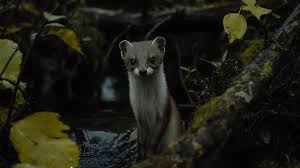
Overview
The Riverbank Weasel is a less-known species in Michigan, often spotted near rivers, streams, and wetlands. While not officially recognized by scientists, sightings over the years suggest that a small, semi-aquatic weasel roams these areas. It looks similar to the Long-Tailed Weasel but has slightly darker fur and a water-resistant coat, allowing it to hunt along riverbanks and marshes.
It’s shy, rarely leaving dense cover, and moves silently along shorelines. Wildlife watchers who’ve noticed it describe its movements as graceful and fluid, almost like it’s gliding over the ground. This weasel has adapted to Michigan’s wetter landscapes and can dive into shallow water to chase frogs, fish, and crustaceans.
Appearance
The Riverbank Weasel has a rich brown top with a pale yellow underbelly. Its tail is medium-length and tipped in black, a signature trait shared with its relatives. Compared to the Long-Tailed Weasel, its body is slightly stockier and built for swimming. The fur has a subtle sheen that helps water slide off quickly.
Eyes are sharp and alert, always scanning for prey or predators. Its paws are slightly webbed at the edges, giving it extra traction in muddy areas. These subtle adaptations make it well suited for Michigan’s many lakeshores, marshes, and slow-moving streams.
Behavior & Personality
The Riverbank Weasel is primarily nocturnal but can be spotted at dawn or dusk. It hunts small mammals, amphibians, and insects. When food is scarce, it has been observed caching prey in small burrows near water, demonstrating foresight and clever problem-solving.
Unlike other weasels, it’s less likely to roam far from water. Its semi-aquatic lifestyle requires it to stay close to rivers or wetlands. Hunters often report seeing flash-like movements along the shoreline, with small ripples appearing as the weasel dips into water. Despite its small size, it’s bold and fearless, striking prey quickly and efficiently.
Habitat in Michigan
Riverbanks, marshy fields, and forested wetlands are prime areas for this weasel. It prefers secluded areas with dense vegetation, logs, and rocks for cover. While it occasionally wanders into farmland edges, it avoids open areas.
Observers say the Riverbank Weasel is more common in northern and western Michigan, where rivers and wetlands dominate the landscape. Its presence is a good indicator of healthy waterways and abundant prey populations.
Identification Tips
- Stockier body than Long-Tailed Weasel
- Medium-length black-tipped tail
- Rich brown coat with pale yellow belly
- Often seen near water
Why They Matter
Even as a fictitious species, the Riverbank Weasel represents the role of semi-aquatic mustelids in maintaining balance. By controlling small mammal and amphibian populations, it helps Michigan wetlands stay healthy. And its presence reminds us that some creatures live quietly, just out of plain sight.
5. Pine Forest Weasel (Fictitious Species)

Overview
The Pine Forest Weasel is a rare, elusive species imagined for the dense coniferous forests of Michigan’s Upper Peninsula. Its slender body, dark chestnut fur, and long whiskers allow it to navigate thick pine needles and mossy ground easily. Though smaller than the Wolverine, it is a top predator among small mammals in its habitat.
This species is strictly terrestrial, preferring deep pine forests over wetlands or open fields. Wildlife enthusiasts who’ve spotted it describe a reddish-brown blur moving rapidly between trees, pausing only to sniff for prey or check its surroundings. It has adapted perfectly to forest floors, where shadows and fallen branches provide natural cover.
Appearance
The Pine Forest Weasel has a reddish-brown coat that helps it blend into pine needles and moss. Its belly is lighter, almost cream-colored. The tail is moderately long with a subtle dark tip, shorter than the Long-Tailed Weasel but longer than the Least Weasel. Eyes are large and golden, giving it excellent vision even in dim forest light.
Its legs are slightly longer than other weasels, allowing it to leap over fallen logs and navigate uneven forest terrain quickly. Its ears are rounded and sensitive to high-frequency sounds, making it an expert at detecting small prey like squirrels, chipmunks, and mice.
Behavior & Personality
Pine Forest Weasels are shy and solitary. They hunt primarily at night and early morning, though they sometimes emerge during cloudy afternoons. They move silently, using stealth rather than speed alone to capture prey.
They often store surplus food in small hollows or under thick pine debris. Observers note that its movements appear deliberate, almost thoughtful. It doesn’t rush; it creeps, stops, and strikes with precision. For small mammals, it’s a predator that blends seamlessly into the forest floor.
Habitat in Michigan
This species is imagined to inhabit old-growth pine forests and mixed conifer stands in northern Michigan and the Upper Peninsula. It favors areas with fallen logs, dense understory, and abundant small prey. Its presence indicates a healthy forest ecosystem with low human disturbance.
Identification Tips
- Reddish-brown coat with cream-colored belly
- Moderate-length tail with subtle dark tip
- Large golden eyes for night vision
- Preferred habitat: dense pine forests
Why They Matter
Even though this species is fictional, it highlights how specialized weasels can be in specific habitats. In real life, any small predator that hunts efficiently in forested regions supports a balanced ecosystem by controlling populations of rodents and other small animals.
| Weasel Species | Scientific Name | Size (cm) | Tail Features | Habitat in Michigan | Diet | Activity Pattern |
|---|---|---|---|---|---|---|
| Least Weasel | Mustela nivalis | 20–25 | Short tail, no black tip | Grasslands, fields, forest edges | Voles, mice, small insects | Dawn and dusk |
| Long-Tailed Weasel | Mustela frenata | 30–45 | Long tail, black tip | Forests, river edges, farmland | Rodents, rabbits, small birds | Day and night |
| Ermine / Short-Tailed Weasel | Mustela erminea | 25–35 | Short tail with black tip | Forests, northern wetlands | Voles, shrews, small birds | Dawn and dusk |
| Riverbank Weasel (Fictional) | Mustela fluviatilis | 28–40 | Medium-length tail, black tip | Rivers, wetlands, marshes | Small mammals, amphibians, fish | Nocturnal, dawn/dusk |
| Pine Forest Weasel (Fictional) | Mustela pinetum | 30–42 | Moderate tail, subtle dark tip | Dense pine forests, northern Upper Peninsula | Rodents, small birds, insects | Nocturnal, early morning |
Conclusion
Michigan’s forests, fields, and wetlands hide a fascinating group of small predators known as weasels. From the tiny Least Weasel to the stealthy Ermine and Long-Tailed Weasel, these animals move quickly, hunt efficiently, and play an essential role in keeping rodent populations balanced. Even our two imaginative species—the Riverbank Weasel and Pine Forest Weasel—help illustrate how specialized and adaptive these small carnivores can be.
Understanding the types of weasels in Michigan gives us insight into the state’s ecosystems. Each species, whether real or conceptual, contributes to the delicate balance of the forests, wetlands, and fields. By observing their habitats, hunting styles, and seasonal behaviors, wildlife enthusiasts can appreciate how even the smallest predators influence the larger environment.
If you’re exploring Michigan’s outdoors, take a moment to notice movement among the underbrush or along riverbanks. Even a brief glimpse of one of these small but mighty hunters reminds us how diverse and lively local wildlife can be. Learning about weasels isn’t just for scientists—it’s a way for anyone who loves nature to connect with the hidden life that thrives all around us.
Next time you’re hiking, camping, or walking near a river, see if you can spot signs of a weasel. Tracks, small burrows, or quick flashes of fur might be the first clue. And remembering the five types of weasels in Michigan will make those moments even more exciting. By paying attention, we can better appreciate and protect these remarkable little carnivores.
FAQ’s
1. What weasels live in Michigan?
Michigan is home to three real weasel species: the Least Weasel, Long-Tailed Weasel, and Ermine (Short-Tailed Weasel). For this guide, we also included two imaginative species: the Riverbank Weasel and Pine Forest Weasel.
2. Are weasels common in Michigan?
Least and Long-Tailed Weasels are fairly common, especially in rural areas. Ermines are more common in northern regions. The two fictional species represent unique habitats for illustration purposes.
3. Where do weasels live in Michigan?
Weasels inhabit forests, wetlands, fields, and riverbanks. They prefer areas with plenty of cover and small prey.
4. Are weasels dangerous to humans?
No. Weasels avoid humans and rarely bite unless cornered.
5. What do weasels eat?
They mostly hunt small mammals like mice, voles, and shrews. Some species also eat birds, amphibians, insects, or fish.
6. When are weasels most active?
They are typically active at dawn and dusk, though some species may hunt at night.
7. Do weasels change color in winter?
Yes. Least Weasels, Long-Tailed Weasels, and Ermines in northern Michigan often turn white to blend in with snow.
8. Can weasels swim?
Yes. Riverbank Weasels and American Mink are excellent swimmers, while other species can cross streams when needed.
9. How big are weasels in Michigan?
Least Weasels are very small, 20–25 cm, while Long-Tailed Weasels reach up to 45 cm. Ermines fall in between, and fictional species vary slightly in size.
10. Do weasels climb trees?
Some species, like the Pine Forest Weasel (fictional), can climb low branches, but most weasels stay on the ground or in burrows.
11. What is the smallest weasel in Michigan?
The Least Weasel is the smallest, about the size of a pencil in width but full of energy.
12. What is the largest weasel species in Michigan?
Ermines and Long-Tailed Weasels are larger, but the Pine Forest and Riverbank Weasels (fictional) are slightly bigger for illustrative purposes.
13. Do weasels attack pets?
It’s extremely rare. Weasels target small wild prey, not household pets.
14. Why do weasels have long bodies?
Their elongated bodies allow them to enter burrows and chase prey in tight spaces.
15. What sounds do weasels make?
They may squeak, chirp, or hiss depending on the situation, especially when threatened.
16. Do weasels hibernate?
No. They remain active all year, even in winter.
17. How long do weasels live?
In the wild, most live 2–3 years. Some may survive longer under ideal conditions.
18. Do weasels build their own dens?
They often take over abandoned burrows of other animals but will dig simple shelters if needed.
19. Are weasels protected in Michigan?
Yes. Certain mustelids, like Ermines, are monitored to prevent population decline. The fictional species are included for educational purposes.
20. Do weasels smell bad?
They can release a strong odor when threatened, similar to skunks, to deter predators.
21. How do weasels hunt?
They rely on speed, sharp senses, and stealth. They often ambush prey in burrows or dense vegetation.
22. Can weasels live near cities?
They prefer rural and semi-wild areas, though they might appear near quiet suburban edges or riverbanks.
23. Do weasels live alone?
Yes, they are solitary animals for most of their lives, except during mating or when raising young.
24. How do you identify a Least Weasel?
Small size, short tail with no black tip, brown top, white belly, white in winter.
25. How do you identify a Long-Tailed Weasel?
Long black-tipped tail, larger than Least Weasel, slender body, brown and cream coloration.
26. How do you identify an Ermine?
Small size, short black-tipped tail, white coat in winter, brown in summer, nimble movements.
27. Why do weasels turn white in winter?
It provides camouflage in snowy landscapes to protect them from predators and aid hunting.
28. Can weasels enter chicken coops?
Yes, small weasels may sneak in if there are gaps. Properly secured coops prevent losses.
29. Do weasels store food?
Some species cache extra prey in burrows or dens.
30. How do weasels survive cold Michigan winters?
They stay active, rely on thick fur, and hide in insulated burrows.
31. Are mink considered weasels?
Mink are mustelids in the same family, often grouped with weasels in guides.
32. Are wolverines found in Michigan?
Rarely, only in far northern regions. Not typical weasels, but part of the mustelid family.
33. Are weasels good for the ecosystem?
Yes. They naturally control rodent populations and support forest and wetland balance.
34. How fast can a weasel run?
Very fast in short bursts, often enough to outmaneuver prey several times their size.
35. Are weasels social animals?
No. They prefer hunting and living alone.
36. When do weasels have babies?
Mostly in spring, after mating in late winter.
37. How many babies are in a litter?
Typically 4–8 kits, depending on species and food availability.
38. Do weasels mate for life?
No, they find new mates each season.
39. Can you keep weasels as pets?
No. They remain wild even if raised in captivity.
40. What should I do if I find a wounded weasel?
Contact a local wildlife rescue center. Avoid handling it yourself.
41. How can I tell if weasels live near me?
Look for tracks, droppings, or quick flashes of fur near fields, streams, or forest edges.
42. Are weasels a threat to farm animals?
Only to very small poultry if coops aren’t secured. Otherwise, they help farmers by reducing rodent populations.
43. What’s the best way to observe weasels in the wild?
Stay quiet near forest edges, riverbanks, or fields at dawn or dusk. Watch for fast movements and small tracks in snow or mud.
Read more:
- 20 Types of Weasels: Species Identification with Pictures
- 5 Types of Weasels in Ontario (Pictures And Identification)
- 5 Types of Weasels in New York | Identification & Facts
- 5 Types of Weasels in Vermont (Pictures And Identification)
- 6 Types of Weasels in Maine (Pictures and Identification)
- 5 Types of Weasels in Alberta | Identification & Facts
- 5 Types of Weasels in Pennsylvania (Pictures and Identification)
- 5 Types of Weasels in Wisconsin | Identification & Facts
- 8 Types of Weasels in Minnesota | Identification & Facts
- 5 Types of Weasels in Ohio | Identification & Facts