

The types of Coati are fascinating members of the raccoon family (Procyonidae) found mainly across Central and South America, with one species extending into parts of North America. Coatis are highly intelligent, social, and adaptable mammals known for their long ringed tails, elongated snouts, and curious behavior. They spend much of their time foraging on the forest floor and climbing trees in search of food. In this guide, we explore 7 types of Coati, covering their identification features, habitats, diet, and behavior patterns. These animals play an important ecological role by controlling insect populations and dispersing seeds in tropical and subtropical ecosystems. Whether you are a wildlife enthusiast or a beginner learning about wild mammals, coatis offer an exciting glimpse into the complexity of forest life.
1. White-nosed Coati
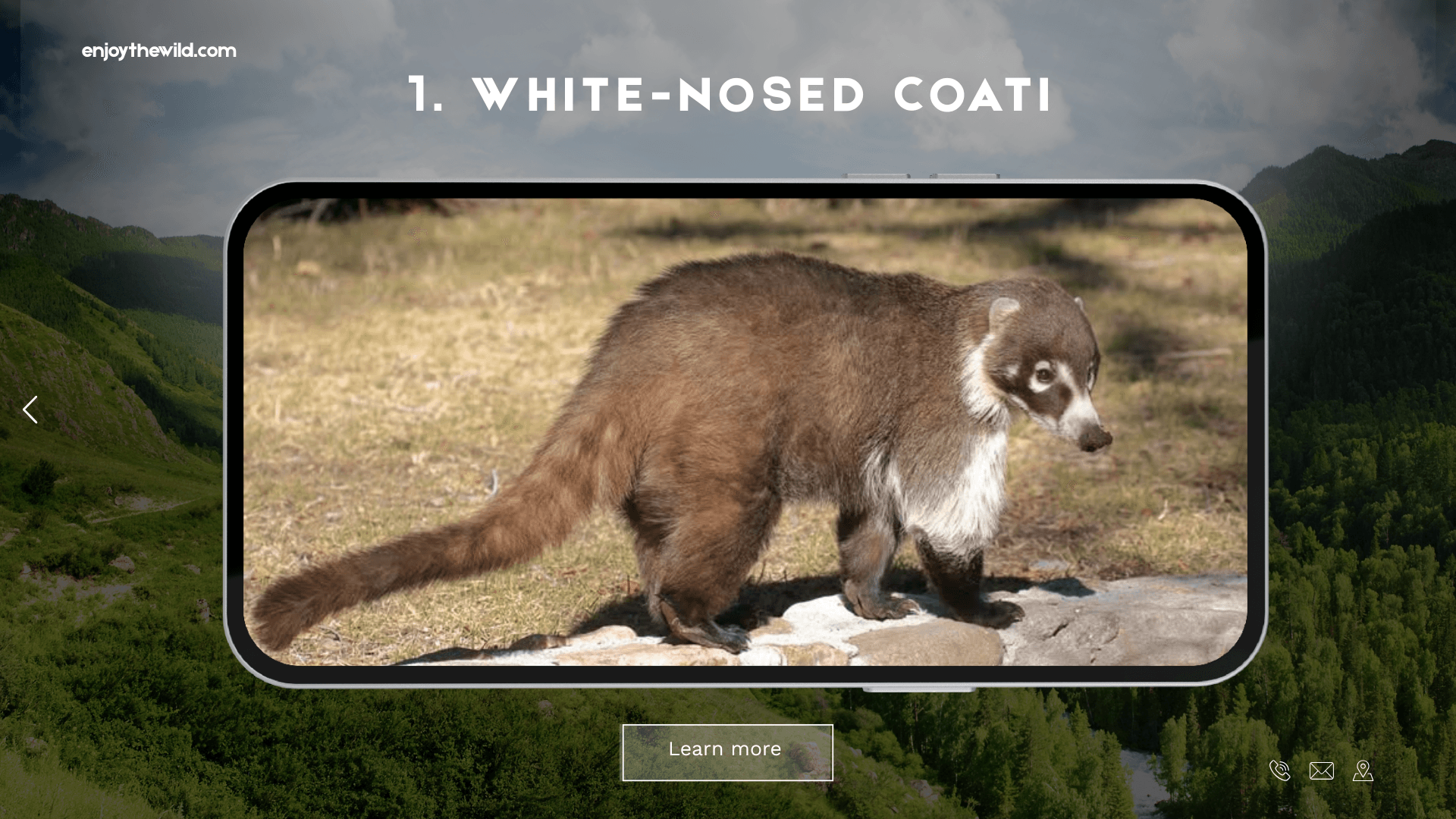
The White-nosed Coati is one of the most well-known types of Coati and is widely distributed across Central America, Mexico, and parts of the southwestern United States. It is named after the distinctive white markings on its snout, which contrast sharply with its darker facial fur.
This species has a slender body, strong limbs, and a long, ringed tail that helps maintain balance while climbing trees. White-nosed Coatis are highly social animals, often forming groups called bands that can include up to 20 or more individuals, usually females and juveniles.
They inhabit a wide range of environments including tropical forests, dry woodlands, mountainous regions, and even agricultural areas near human settlements. Their adaptability makes them one of the most successful coati species in terms of distribution.
White-nosed Coatis are omnivores with a highly varied diet. They feed on insects, fruits, eggs, small vertebrates, reptiles, and even carrion. Their long snouts and flexible noses allow them to dig into soil, leaf litter, and tree bark to locate hidden food.
During the day, they are active and constantly moving in search of food, while at night they often sleep in trees for safety from predators. Their social structure provides protection and increases foraging efficiency.
Because of their intelligence and adaptability, White-nosed Coatis are among the most frequently observed types of Coati in the wild.
2. South American Coati
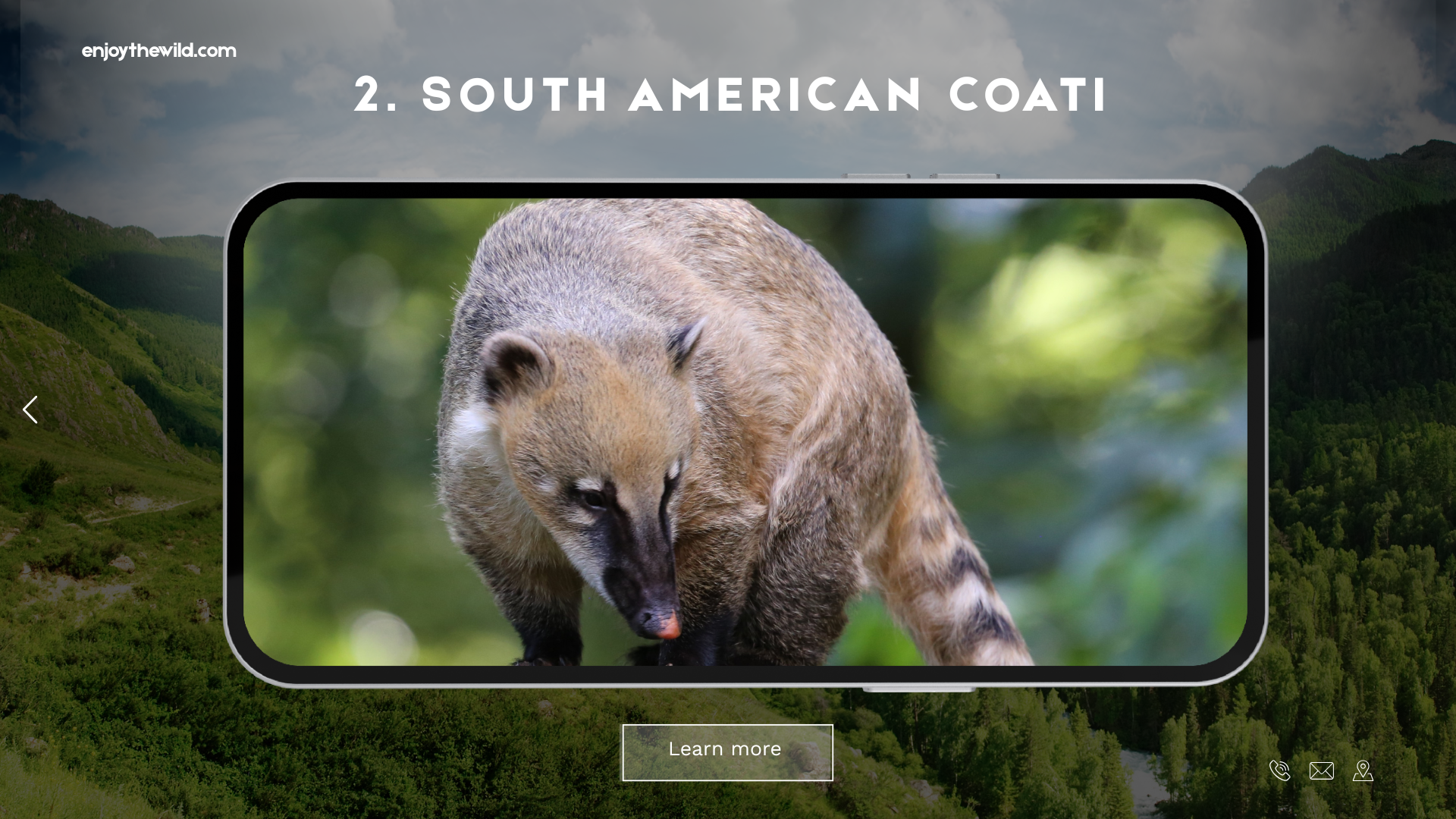
The South American Coati is one of the most widespread types of Coati found across the continent, especially in countries like Brazil, Argentina, Colombia, and Venezuela.
This species is similar in appearance to the White-nosed Coati but lacks the prominent white facial markings. Instead, it typically has a more uniform brown or reddish-brown coat, making it slightly easier to distinguish in the wild.
South American Coatis live in a variety of habitats including rainforests, savannas, and mountainous forests. They are excellent climbers and spend a significant portion of their time in trees, where they forage and rest.
They are omnivorous and opportunistic feeders. Their diet includes fruits, insects, spiders, small mammals, birds, and eggs. They are particularly important for seed dispersal in tropical forests, helping maintain plant diversity.
These coatis are generally diurnal, meaning they are active during the day. They often travel in groups, especially females and young individuals, while adult males tend to be more solitary outside the breeding season.
The South American Coati is an essential part of forest ecosystems and one of the most ecologically important types of Coati in South America.
3. Ring-tailed Coati
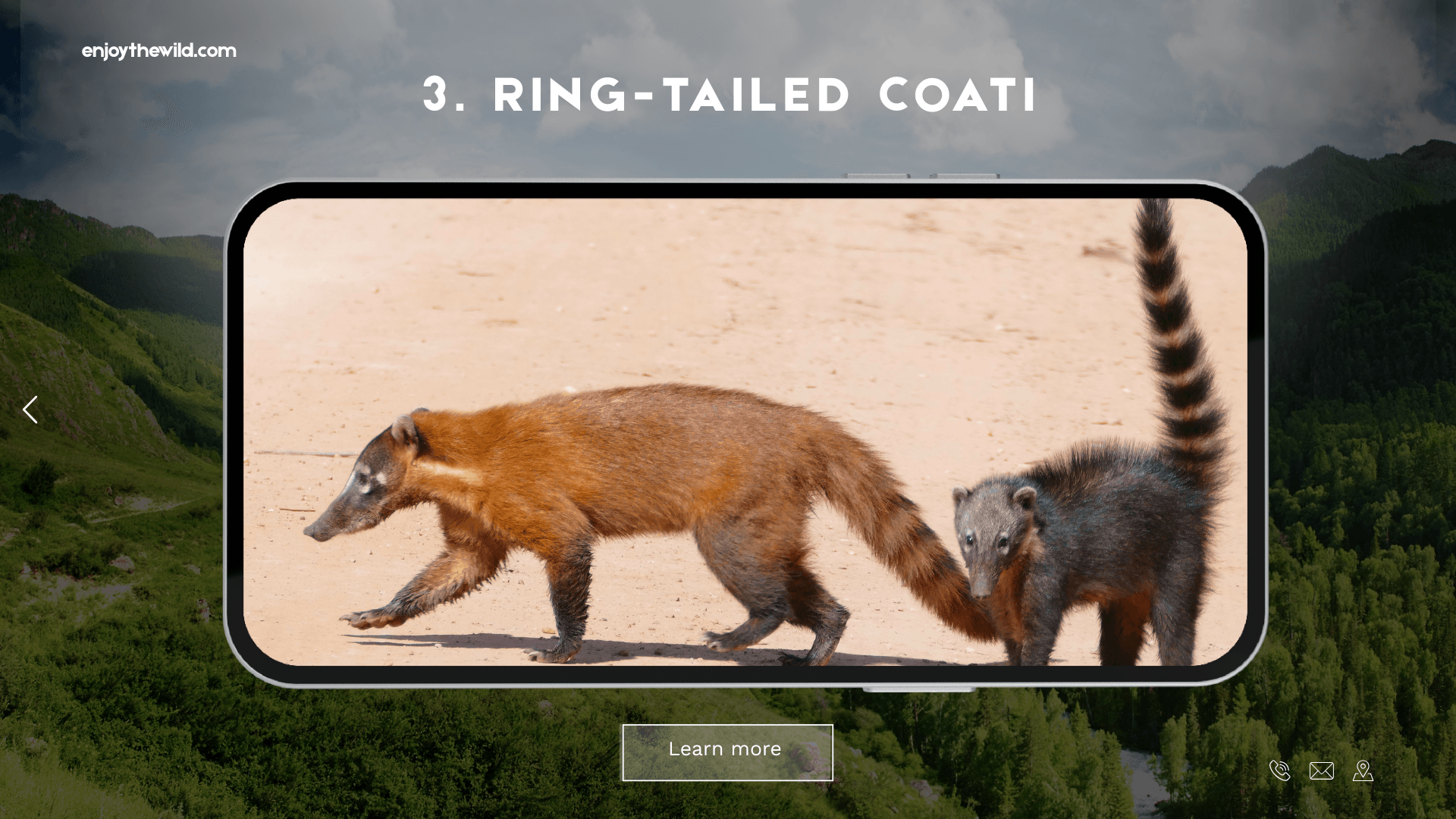
The Ring-tailed Coati is one of the most visually striking types of Coati, easily recognized by its long tail with alternating black and light rings.
This species is found mainly in Mexico and parts of Central America, particularly in forested and mountainous regions. Its tail is often held upright while walking, serving as a communication tool to keep group members together in dense vegetation.
Ring-tailed Coatis have slender bodies, long snouts, and strong claws that allow them to dig and climb efficiently. They are highly active during the day and are constantly foraging for food.
Their diet includes insects, fruits, small reptiles, eggs, and occasionally small mammals. They are skilled at turning over rocks and leaf litter to uncover hidden prey.
These coatis live in social groups, primarily consisting of females and their offspring. Males are usually solitary and only join groups during mating seasons.
The Ring-tailed Coati is one of the most recognizable types of Coati due to its distinctive tail and energetic behavior in the wild.
4. Eastern Mountain Coati
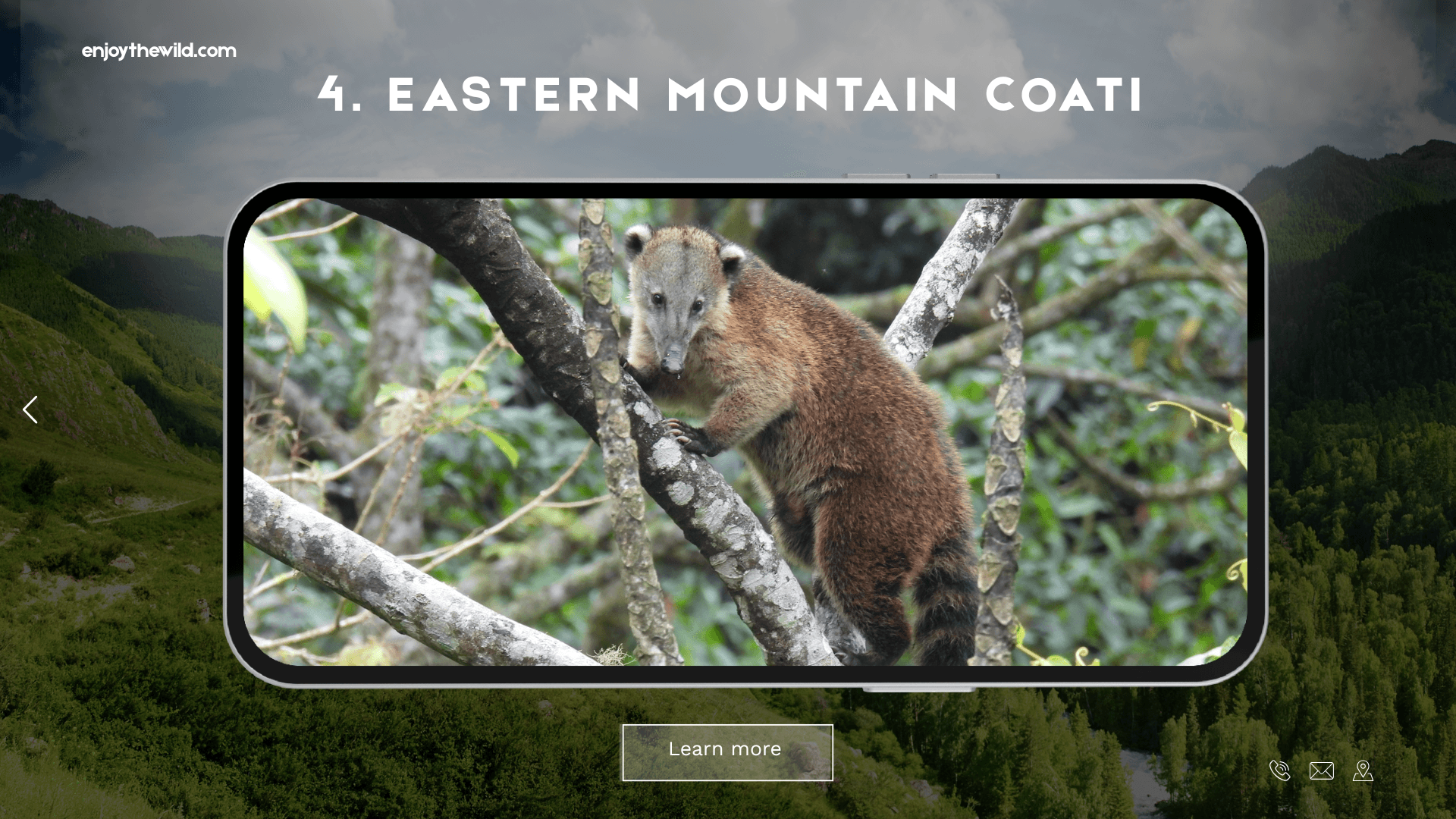
The Eastern Mountain Coati is one of the less commonly studied types of Coati and is found in high-altitude forests of South America, particularly in the Andean regions.
This species is adapted to cooler mountain climates and rugged terrain. It typically has thicker fur compared to lowland coatis, which helps it survive in colder environments.
Eastern Mountain Coatis are highly agile climbers and are often seen navigating steep forested slopes and rocky areas. They are primarily diurnal and spend their day searching for food.
Their diet consists of fruits, insects, small vertebrates, and plant material. In mountain ecosystems, they play an important role in seed dispersal and insect population control.
Because of their remote habitat, these coatis are less frequently observed than other species, making them one of the more elusive types of Coati.
Deforestation and habitat fragmentation in mountainous regions pose increasing threats to their populations.
5. Western Mountain Coati
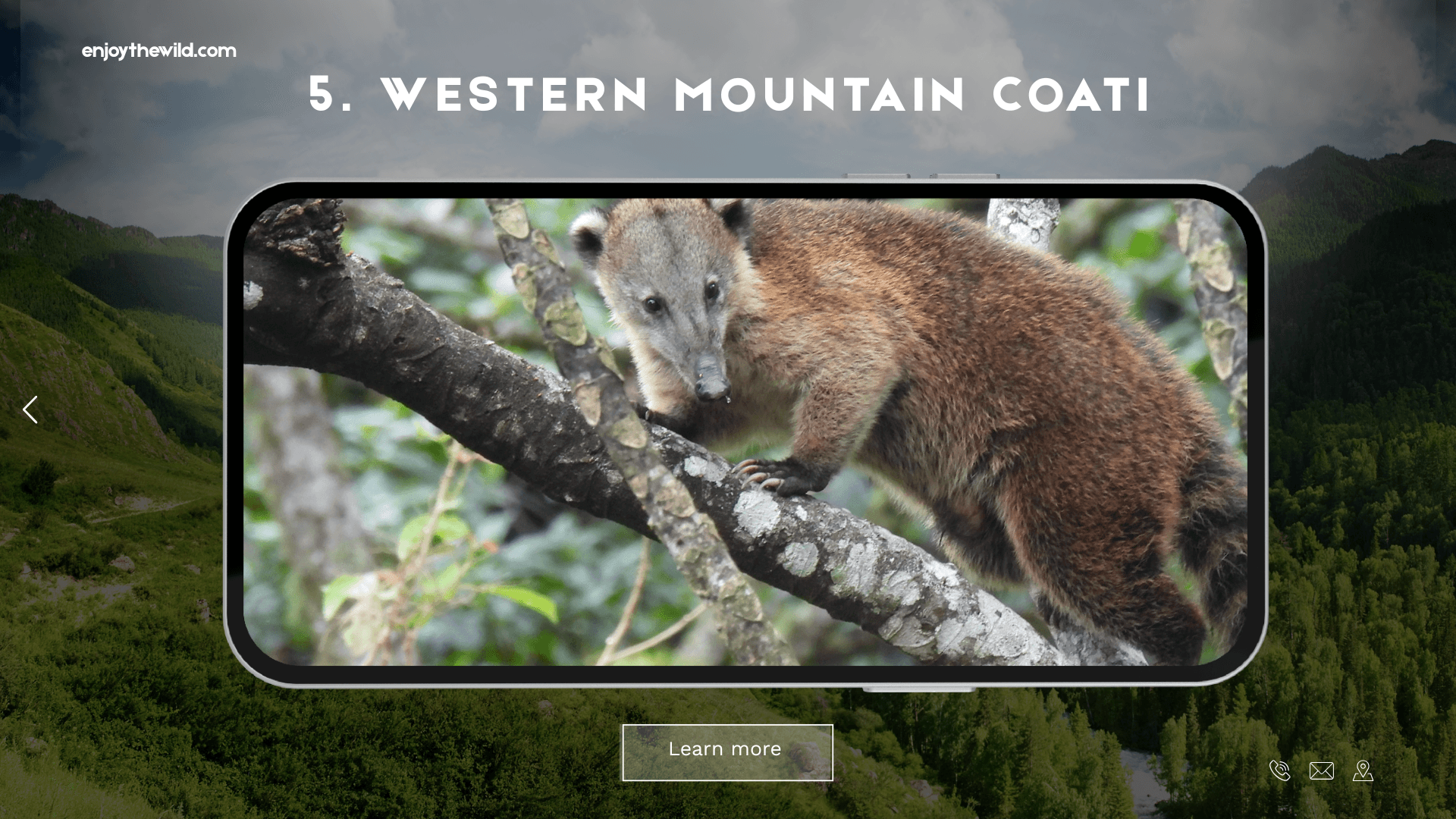
The Western Mountain Coati is another high-altitude member of the types of Coati, inhabiting mountainous forests in parts of western South America.
This species is similar to its eastern counterpart but may differ slightly in coloration and body size depending on regional conditions.
Western Mountain Coatis prefer dense cloud forests, where humidity and vegetation provide both food and shelter. They are highly adaptable to rugged terrain and steep forest environments.
They are omnivorous and feed on fruits, insects, small animals, and eggs. Their flexible diet allows them to survive in environments where food availability may change seasonally.
These coatis are typically social when young, but adults may become more solitary as they mature, especially males.
The Western Mountain Coati remains one of the least studied types of Coati, but it plays an important ecological role in Andean forest ecosystems.
These first five types of Coati show how adaptable and diverse this fascinating group of mammals can be, from tropical lowland forests to cold mountain environments. In the next section, we will continue exploring the remaining coati species, including island specialists and rare regional forms.
6. Cozumel Island Coati
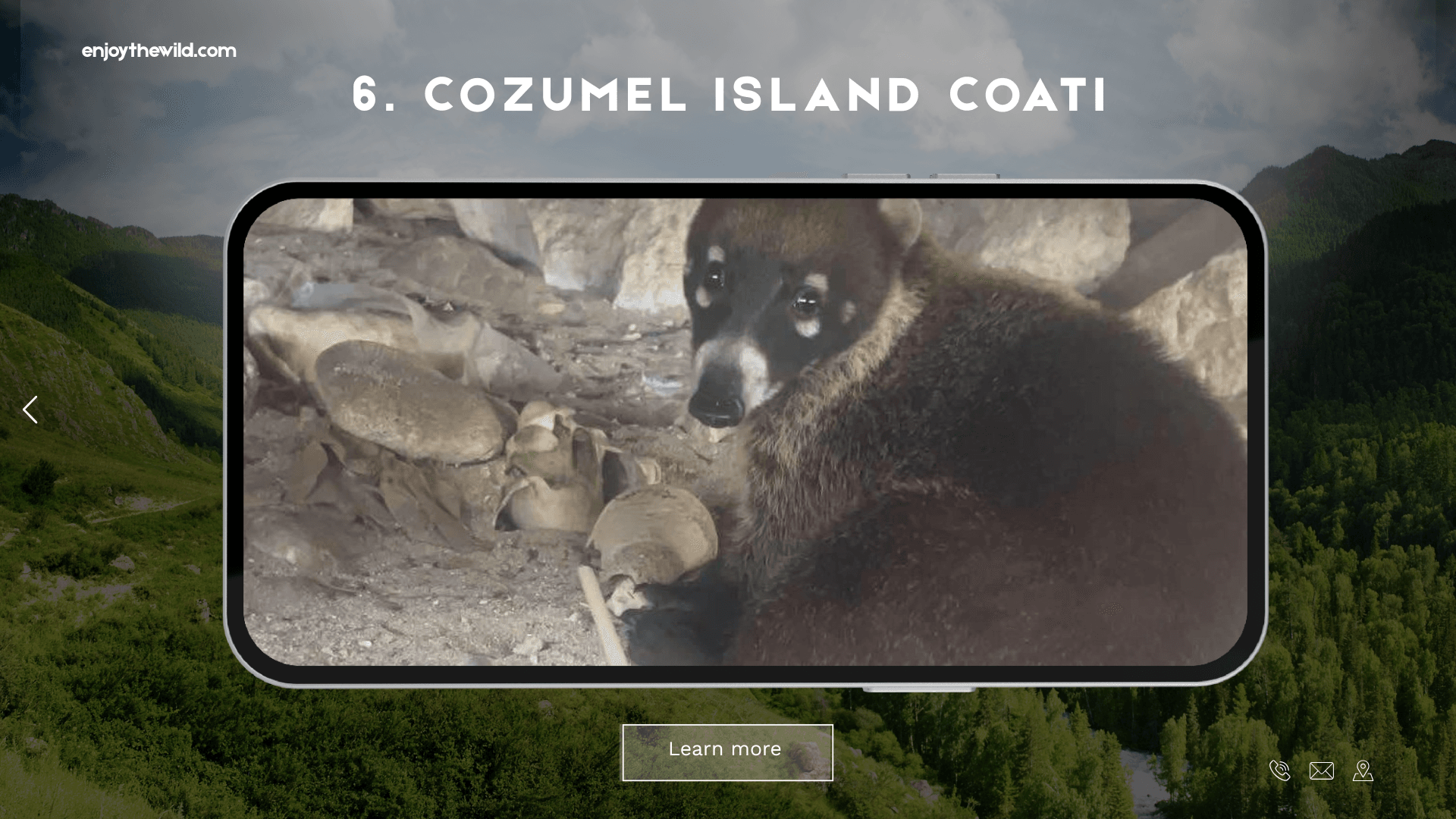
The Cozumel Island Coati is one of the rarest types of Coati and is found exclusively on Cozumel Island off the eastern coast of Mexico. Because of its limited range, it is considered highly vulnerable compared to mainland coati species.
This island-dwelling coati is smaller than its mainland relatives and has a more compact body. Its fur is generally brownish-gray with subtle facial markings, and its long tail helps it maintain balance while moving through dense coastal forests.
Cozumel Island Coatis inhabit tropical forests, coastal woodlands, mangrove edges, and scrub habitats. Their island environment shapes their behavior, diet, and movement patterns in unique ways.
They are omnivores and feed on fruits, insects, crabs, small reptiles, eggs, and occasionally small vertebrates. Coastal food sources such as crabs and marine carrion may play a more important role in their diet than in mainland species.
Unlike some highly social mainland coatis, Cozumel Island Coatis are often observed in smaller groups or even solitary individuals, likely due to limited space and resource distribution.
Habitat loss, tourism development, and introduced predators pose major threats to this isolated population. Conservation efforts are essential to protect this unique island species.
Because of its restricted range and ecological uniqueness, the Cozumel Island Coati is one of the most important types of Coati for conservation studies.
7. Nelson’s Coati
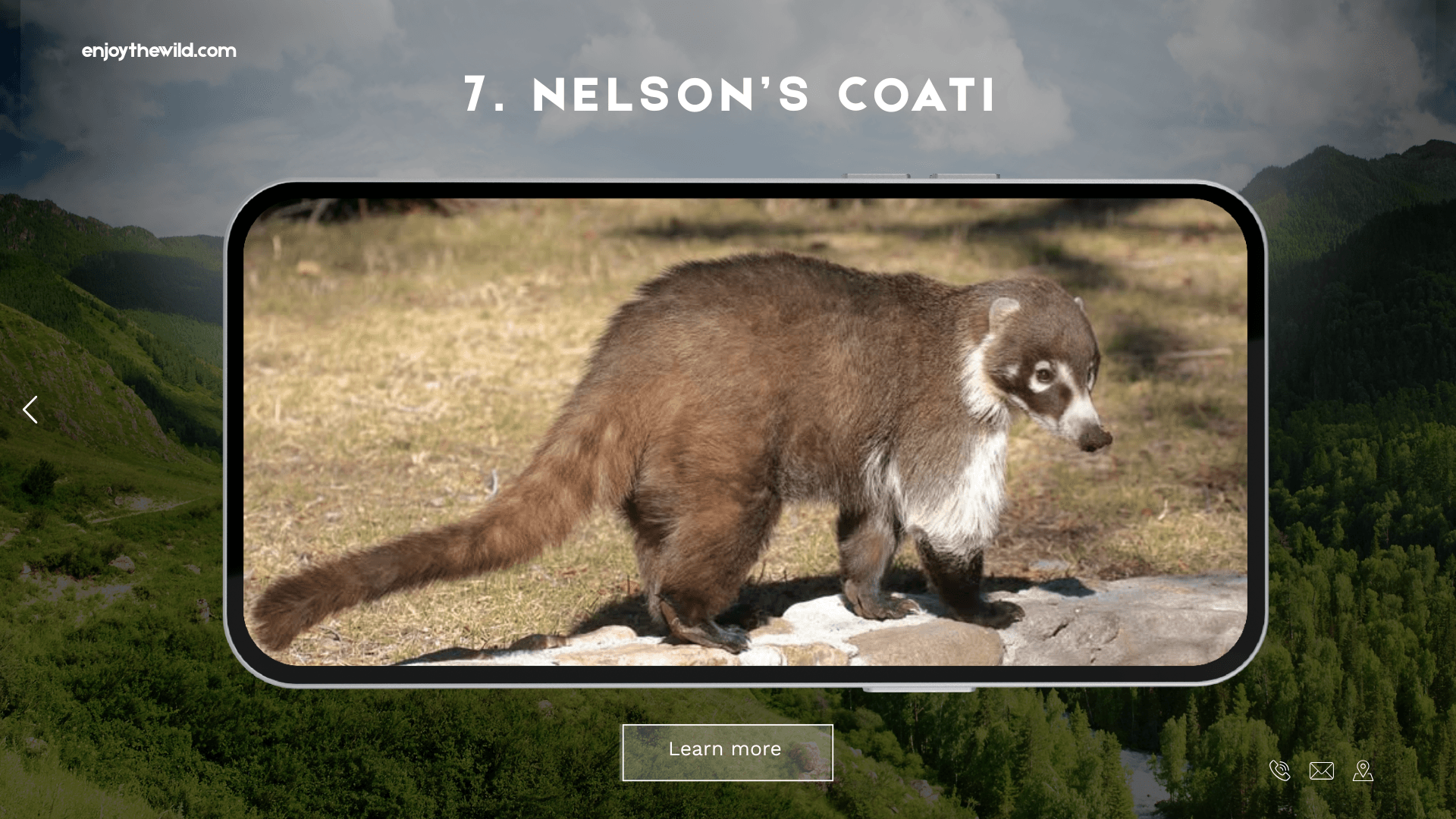
Nelson’s Coati is one of the least understood types of Coati and is believed to inhabit remote regions of Mexico. Due to its elusive nature, very little confirmed scientific data exists about its full distribution and behavior.
This species is thought to resemble other coatis in body shape, with a long snout, slender frame, and a long tail used for balance and communication. Its fur is typically brown or grayish with subtle facial markings.
Nelson’s Coati likely inhabits dry forests, mountainous regions, and transitional woodland areas. Its preference for remote and less accessible habitats makes sightings extremely rare.
Like other coatis, it is assumed to be omnivorous, feeding on fruits, insects, small vertebrates, and eggs. However, detailed dietary studies are still limited.
Behavioral patterns are also not well documented, but it is believed to be diurnal and possibly semi-social, depending on food availability and environmental conditions.
The lack of research highlights how much remains unknown about certain types of Coati, especially those living in isolated or fragmented habitats.
Conclusion: Understanding the Types of Coati
The diverse types of Coati highlight the adaptability and ecological importance of these intelligent mammals across the Americas. From the highly social White-nosed Coati to the rare Cozumel Island Coati and the mysterious Nelson’s Coati, each species plays a vital role in maintaining healthy ecosystems.
Coatis contribute to seed dispersal, insect control, and forest balance, making them key species in tropical and subtropical environments. However, habitat destruction, human expansion, and climate change continue to threaten several populations.
Protecting forests, preserving wildlife corridors, and supporting conservation research are essential steps to ensure their survival. As we learn more about these remarkable animals, one important question remains: how many more undiscovered secrets do the different types of Coati still hold in the wild?
50+ FAQs About Types of Coati (Complete Wildlife Guide)
1. What is a coati?
A coati is a medium-sized mammal in the raccoon family (Procyonidae). It is known for its long snout, ringed tail, and curious behavior. Coatis are highly intelligent and active animals that live in forests and woodlands across the Americas.
2. How many types of Coati are there?
There are 7 commonly recognized types of Coati, including White-nosed Coati, South American Coati, Ring-tailed Coati, and several mountain and island populations.
3. Where do coatis live?
Coatis are found in Central America, South America, and parts of North America. They live in tropical forests, dry woodlands, mountains, and sometimes near human settlements.
4. Are coatis related to raccoons?
Yes, coatis are closely related to raccoons. Both belong to the Procyonidae family and share similar traits like intelligence, omnivorous diets, and dexterous front paws.
5. What do coatis eat?
Coatis are omnivores. They eat fruits, insects, small animals, eggs, reptiles, and sometimes carrion. Their diet changes depending on habitat and food availability.
6. Are coatis dangerous to humans?
Coatis are generally not dangerous. However, like wild animals, they may bite or scratch if they feel threatened or cornered.
7. Do coatis live in groups?
Yes. Female coatis and their young often live in groups called bands, which can include up to 20 individuals. Males are usually solitary.
8. Are coatis nocturnal?
Most coatis are diurnal, meaning they are active during the day and sleep at night in trees for protection.
9. Why do coatis have long noses?
Their long, flexible snouts help them sniff out food hidden under leaves, soil, or bark. It is an important tool for foraging.
10. Can coatis climb trees?
Yes, coatis are excellent climbers. They use strong claws and flexible bodies to move easily through trees.
11. Why do coatis hold their tails up?
Coatis often hold their tails upright while moving through forests. This helps group members stay visually connected in dense vegetation.
12. How long do coatis live?
In the wild, coatis typically live around 7 to 8 years, but they can live longer in protected environments.
13. What is the largest type of coati?
The White-nosed Coati is among the larger and more robust species, especially males, which can be significantly bigger than females.
14. What is the smallest type of coati?
Some mountain and island coati populations tend to be smaller in size due to environmental conditions and limited resources.
15. Are coatis intelligent?
Yes, coatis are highly intelligent animals. They can solve problems, explore complex environments, and adapt quickly to new food sources.
16. Do coatis sleep in trees?
Yes, coatis often sleep in trees at night to avoid predators such as jaguars, ocelots, and large snakes.
17. What predators eat coatis?
Main predators include jaguars, pumas, ocelots, eagles, and large snakes. Young coatis are especially vulnerable.
18. Are coatis good climbers or ground animals?
They are both. Coatis are equally comfortable on the ground and in trees, making them very adaptable mammals.
19. Do coatis migrate?
No, coatis do not migrate. They stay within their home range but may travel long distances in search of food.
20. Why are coatis called “bandits” in some regions?
Coatis are sometimes called bandits because of their mask-like facial markings and curious behavior around human food sources.
21. Are coatis social animals?
Yes, especially females and juveniles. They live in groups that help protect against predators and improve foraging success.
22. How do coatis communicate?
They use vocal sounds, body language, and scent marking to communicate with each other.
23. Do coatis use scent marking?
Yes, coatis use scent glands to mark territory and communicate reproductive status.
24. Can coatis swim?
Yes, coatis can swim if necessary, although they prefer trees and land-based movement.
25. What habitats do coatis prefer?
They prefer forests, tropical jungles, and woodlands but can also adapt to farmland and disturbed areas.
26. Are coatis active year-round?
Yes, coatis do not hibernate and remain active throughout the year.
27. Do coatis make sounds?
Yes, they produce chirps, grunts, snorts, and alarm calls depending on the situation.
28. Why are coatis important to ecosystems?
They help control insect populations and disperse seeds through their fruit-eating habits.
29. Do coatis eat fruit?
Yes, fruit is a major part of their diet, especially in tropical forest environments.
30. Are coatis endangered?
Some coati species are stable, but others face threats from habitat loss and human activity.
31. What is the White-nosed Coati known for?
It is known for its white snout markings and wide distribution across Central America and parts of North America.
32. What is the Ring-tailed Coati known for?
It is famous for its ringed tail, which helps group members stay connected while moving through forests.
33. Do coatis have good eyesight?
Yes, coatis have good vision, especially useful for daytime activity and detecting movement.
34. Do coatis have good smell?
Yes, their sense of smell is highly developed and helps them locate food underground or under leaves.
35. How fast can coatis move?
Coatis can run quickly and climb rapidly to escape predators or chase food sources.
36. Are coatis herbivores or carnivores?
Coatis are omnivores, meaning they eat both plant and animal matter.
37. Do coatis live alone?
Males often live alone, while females live in groups with young coatis.
38. How do coatis raise their young?
Females care for young in tree nests and later join group bands for protection.
39. Why do coatis dig in soil?
They dig to find insects, larvae, and hidden food sources using their strong snouts.
40. Can coatis adapt to cities?
Yes, in some areas they adapt to urban environments where food is available.
41. What is the main threat to coatis?
Habitat destruction, road accidents, and human-wildlife conflict are major threats.
42. Are coatis nocturnal or diurnal?
They are mainly diurnal, active during daylight hours.
43. Do coatis have territories?
Yes, they maintain home ranges and use scent marking to define territory boundaries.
44. How do coatis find food?
They use smell, sight, and touch to locate insects, fruits, and small animals.
45. Do coatis fight each other?
Males may fight during mating season, but group members usually cooperate.
46. What makes coatis unique?
Their combination of intelligence, climbing ability, social structure, and long snout makes them unique mammals.
47. Are coatis aggressive?
They are generally not aggressive but may defend themselves if threatened.
48. Do coatis interact with humans?
Yes, especially in tourist areas, but feeding them is discouraged.
49. Why are coatis important for forests?
They help maintain forest health by controlling insects and spreading seeds.
50. What is the most important fact about coatis?
Coatis are highly adaptable, intelligent mammals that play a vital ecological role in maintaining balanced ecosystems.
51. Why should we study types of Coati?
Studying types of Coati helps us understand biodiversity, ecosystem balance, and the importance of protecting tropical forests and wildlife habitats.
Meta Description:
Discover 7 types of Coati with detailed identification, habitat, diet, and behavior facts. Learn about White-nosed Coati, Ring-tailed Coati, South American Coati, and more in this complete wildlife guide.