

If you are searching for types of Millipede, this guide will help you clearly understand the most common species found around the world. Millipedes are fascinating decomposer animals that play an important role in nature by breaking down dead plant material and enriching soil health. Many people confuse them with centipedes, but millipedes are completely different in behavior, movement, and diet. In this article, we will explore 15 well-known millipede types, their identification features, habitats, and interesting wildlife facts. Whether you are a nature lover, student, or wildlife researcher, this guide will help you easily recognize different Millipede species in the wild.
15 Types of Millipede
1. Giant African Millipede
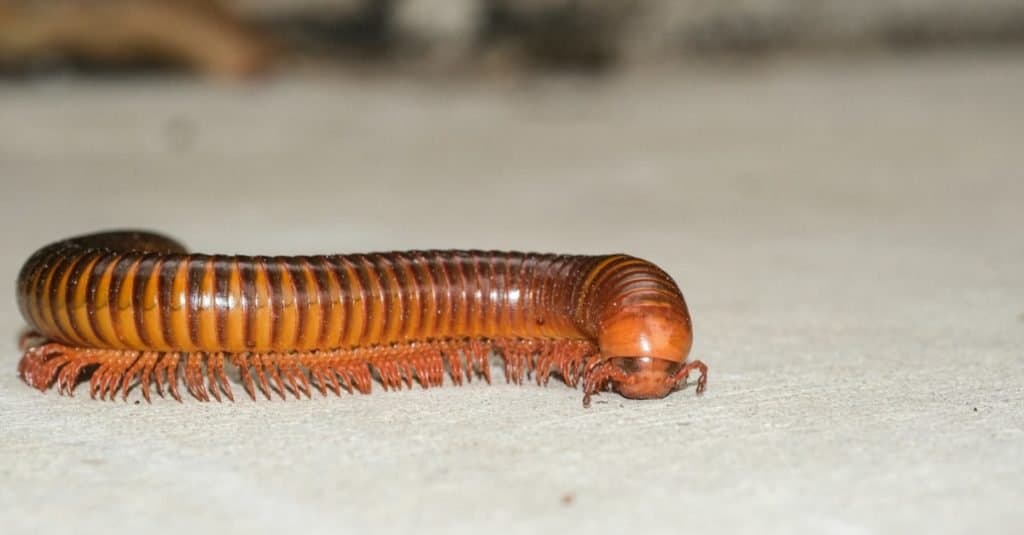
The Giant African Millipede is one of the largest and most well-known Millipede species in the world. It can grow up to impressive lengths and is commonly found in tropical regions of Africa where humidity and decaying plant matter are abundant. This species is often dark brown or black, with a shiny segmented body that helps it retain moisture in dry conditions.
One of its most interesting behaviors is its defensive mechanism. When threatened, it coils into a tight spiral and secretes a mild irritant fluid to deter predators. Despite its intimidating size, it is completely harmless to humans and plays a vital ecological role in breaking down organic material and improving soil fertility.
In the wild, the Giant African Millipede feeds mainly on decomposing leaves, wood, and plant debris. This makes it an essential decomposer in forest ecosystems. It is also sometimes kept in captivity by wildlife enthusiasts due to its calm nature and slow movement.
2. Greenhouse Millipede
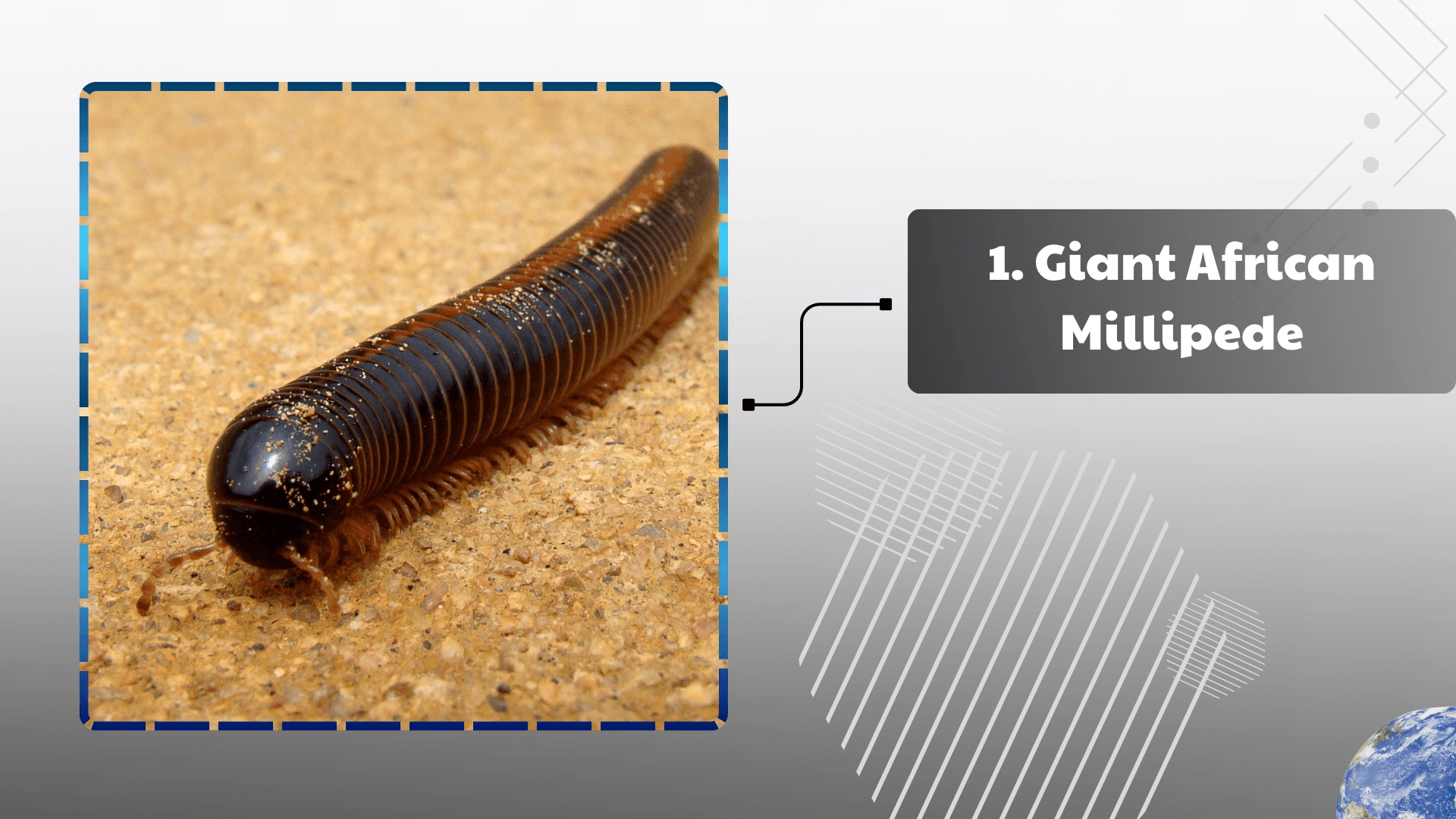
The Greenhouse Millipede is a small, thin-bodied species commonly found in damp indoor environments such as greenhouses, gardens, and basements. It is easily recognized by its brownish body and fast, wriggling movement when disturbed.
This species thrives in moist soil rich in organic matter. Although it may appear in large numbers indoors, it is harmless to humans and plants. In fact, it helps break down decaying plant material, contributing to natural recycling processes in soil ecosystems.
Greenhouse Millipedes are highly adaptable and can survive in both natural and human-altered environments. Their presence often indicates high humidity levels and abundant organic debris.
3. White-Legged Snake Millipede
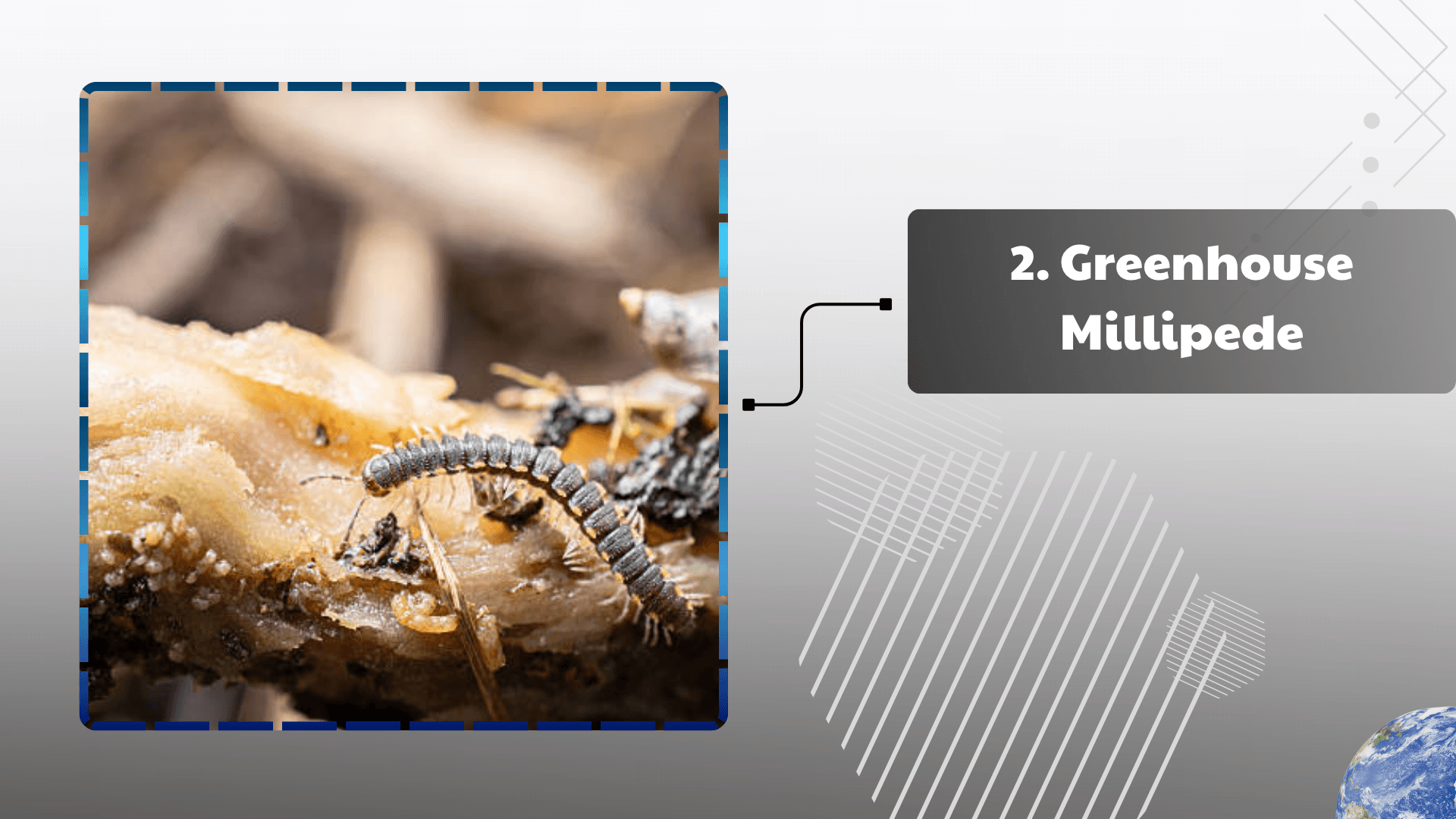
The White-Legged Snake Millipede is a striking species known for its contrasting body colors and long, cylindrical shape. It is often found in forest floors where it hides under logs, leaves, and decaying wood.
Its most recognizable feature is its bright white legs, which stand out against its darker body. When disturbed, it rolls into a tight spiral to protect its soft underside. This species is slow-moving but highly efficient in breaking down organic matter.
It plays an important ecological role in nutrient cycling by feeding on decomposing plant material. It is harmless and non-aggressive, making it an important part of forest biodiversity.
4. Flat-Backed Millipede
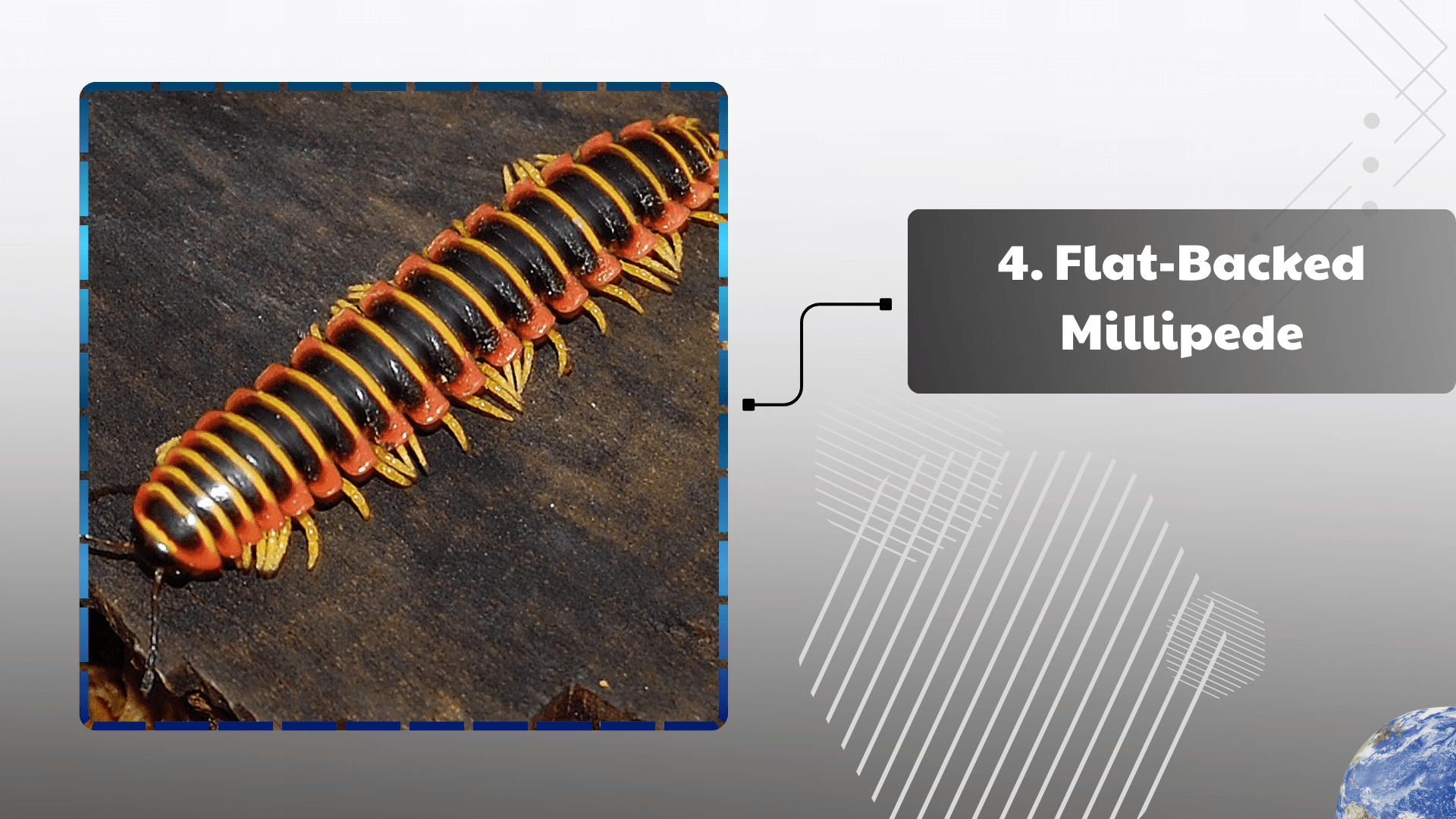
The Flat-Backed Millipede is easily identified by its wide, flattened body segments that give it a unique appearance compared to cylindrical species. It is commonly found in forests and moist woodland environments.
This species uses its flat body shape to hide under bark and leaf litter, avoiding predators effectively. Some species within this group can also produce chemical defenses when threatened.
Flat-Backed Millipedes are important decomposers and help maintain healthy forest soil. They feed on decaying plant matter and contribute to nutrient recycling in ecosystems.
5. Black-and-Red Millipede (Narceus americanus)
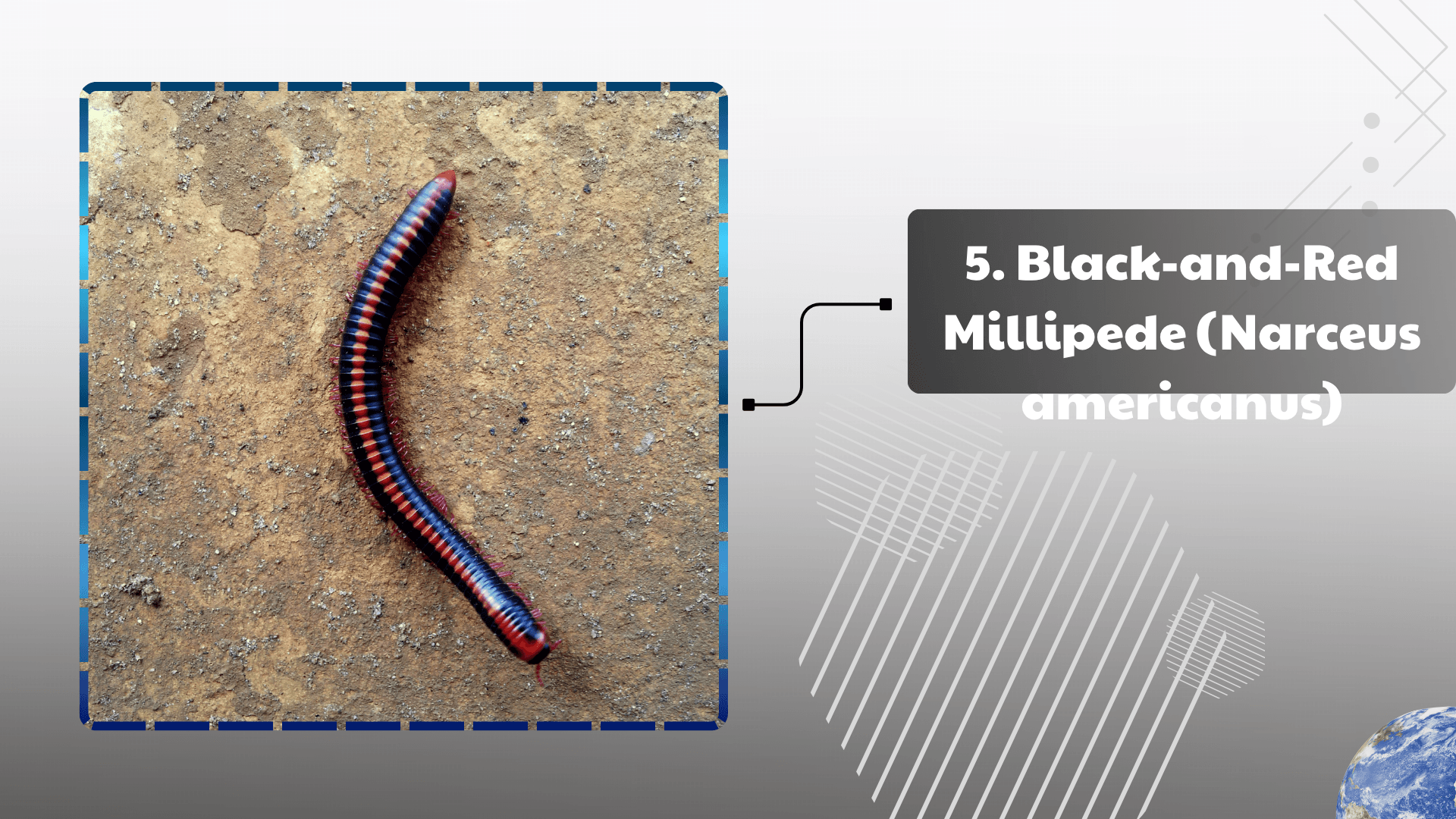
The Black-and-Red Millipede is one of the most visually distinctive Millipede species, commonly found in North America. It has a dark body with reddish edges that make it easy to identify in forest habitats.
This species is slow-moving and primarily nocturnal, often hiding under logs and stones during the day. When threatened, it releases a defensive chemical that may irritate predators but is harmless to humans.
It plays a critical ecological role as a decomposer, feeding on decaying leaves and organic matter. This helps maintain soil health and supports forest ecosystems.
6. Cylindroiulus Millipede
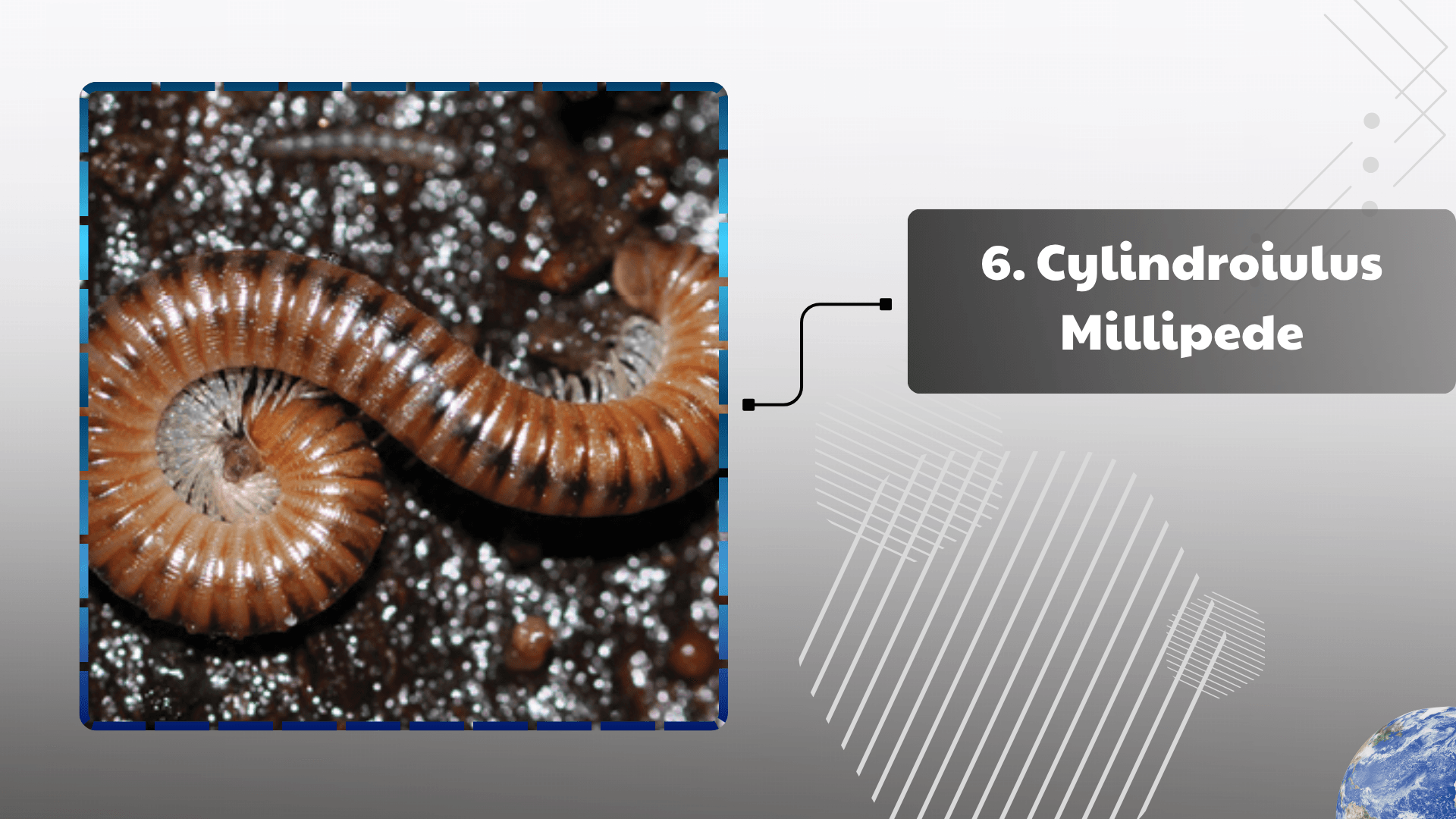
The Cylindroiulus Millipede is a widely distributed species commonly found across Europe and parts of North America. It is recognized by its long, slender, cylindrical body and dark brown to black coloration. This species often appears in gardens, forests, and damp soil environments where decaying plant material is abundant.
Cylindroiulus Millipedes are detritivores, meaning they feed primarily on decomposing organic matter such as dead leaves and wood. This feeding behavior makes them highly beneficial to ecosystems, as they help break down organic waste and return nutrients to the soil. They are slow-moving and spend most of their time hidden under logs, stones, or leaf litter.
When disturbed, this species may curl into a loose spiral or remain motionless to avoid detection. It does not pose any threat to humans and is considered completely harmless. Its ecological role is essential for maintaining soil fertility and forest health.
7. Shocking Pink Dragon Millipede
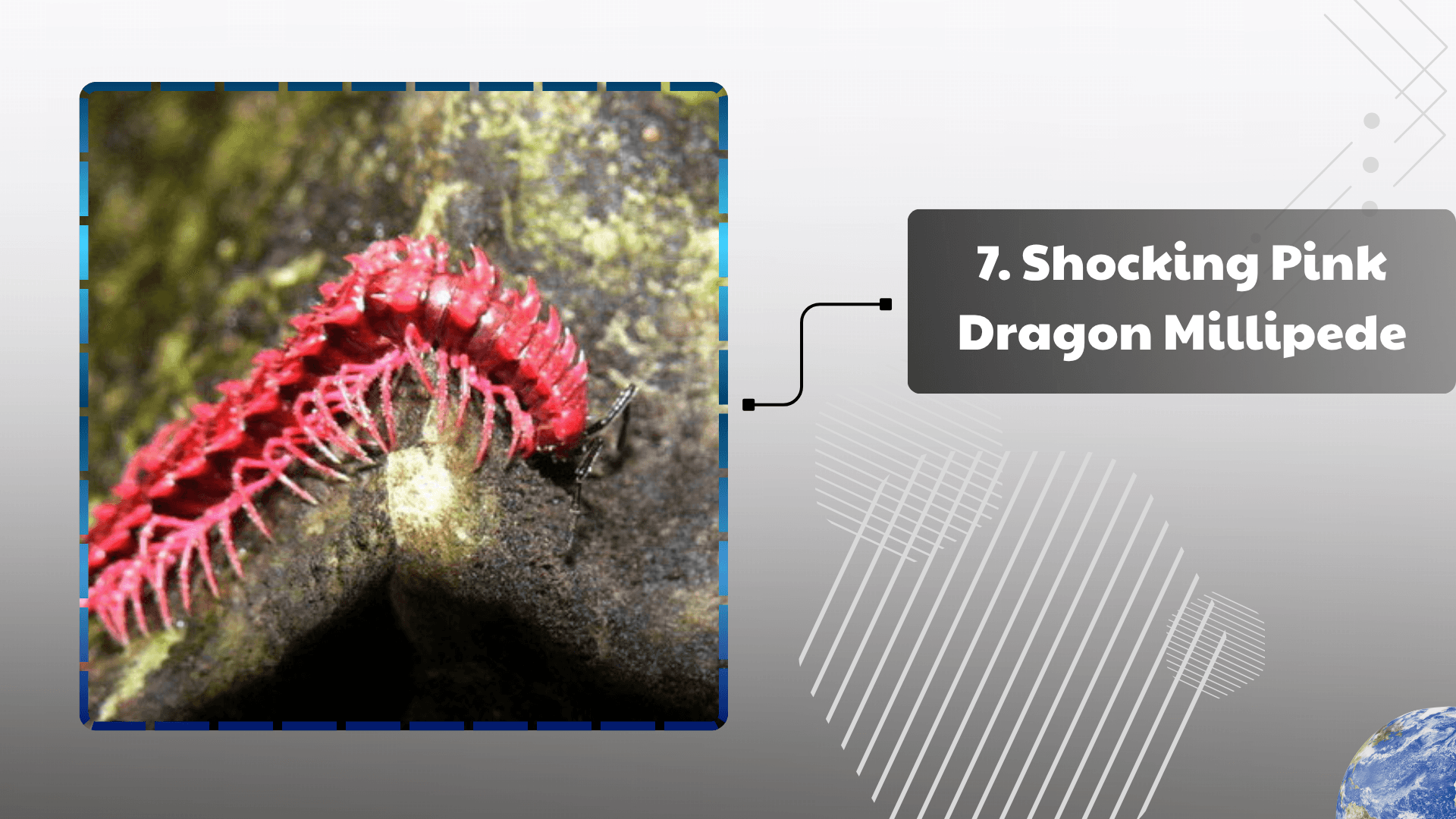
The Shocking Pink Dragon Millipede is one of the most visually striking Millipede species in the world. Native to parts of Southeast Asia, especially forested mountain regions, it is famous for its vibrant pink coloration combined with yellow or red highlights.
Unlike many dull-colored millipedes, this species uses bright coloration as a warning signal to predators. It produces chemical defenses that can deter attackers, making its bold appearance part of its survival strategy. Despite its dramatic look, it is completely harmless to humans.
It feeds on decomposing plant matter and plays a role in breaking down forest debris. Its rarity and unique appearance make it a favorite among wildlife enthusiasts and researchers studying tropical biodiversity.
8. Spirobolid Millipede
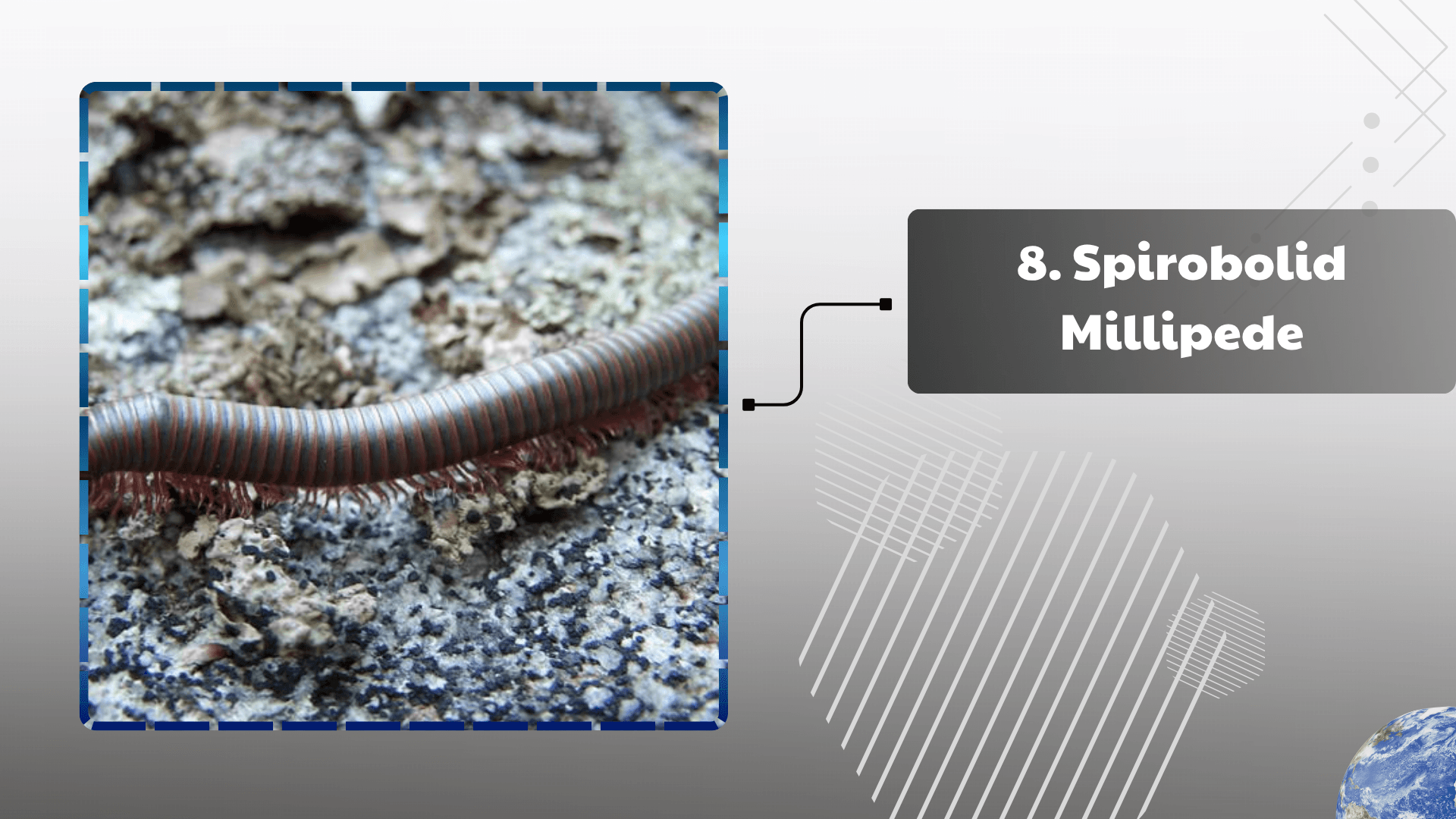
The Spirobolid Millipede is a common group of large, cylindrical millipedes found in tropical and subtropical regions. They are often dark brown or black and can grow relatively large compared to other millipede families.
These millipedes are slow and gentle decomposers, feeding on dead leaves, wood, and organic debris. Their segmented bodies are highly flexible, allowing them to curl tightly when threatened. This defensive behavior protects their soft underside from predators.
Spirobolid Millipedes are important contributors to soil health and nutrient recycling. They are frequently found in forest floors where moisture and organic material are abundant.
9. Spirostreptid Millipede
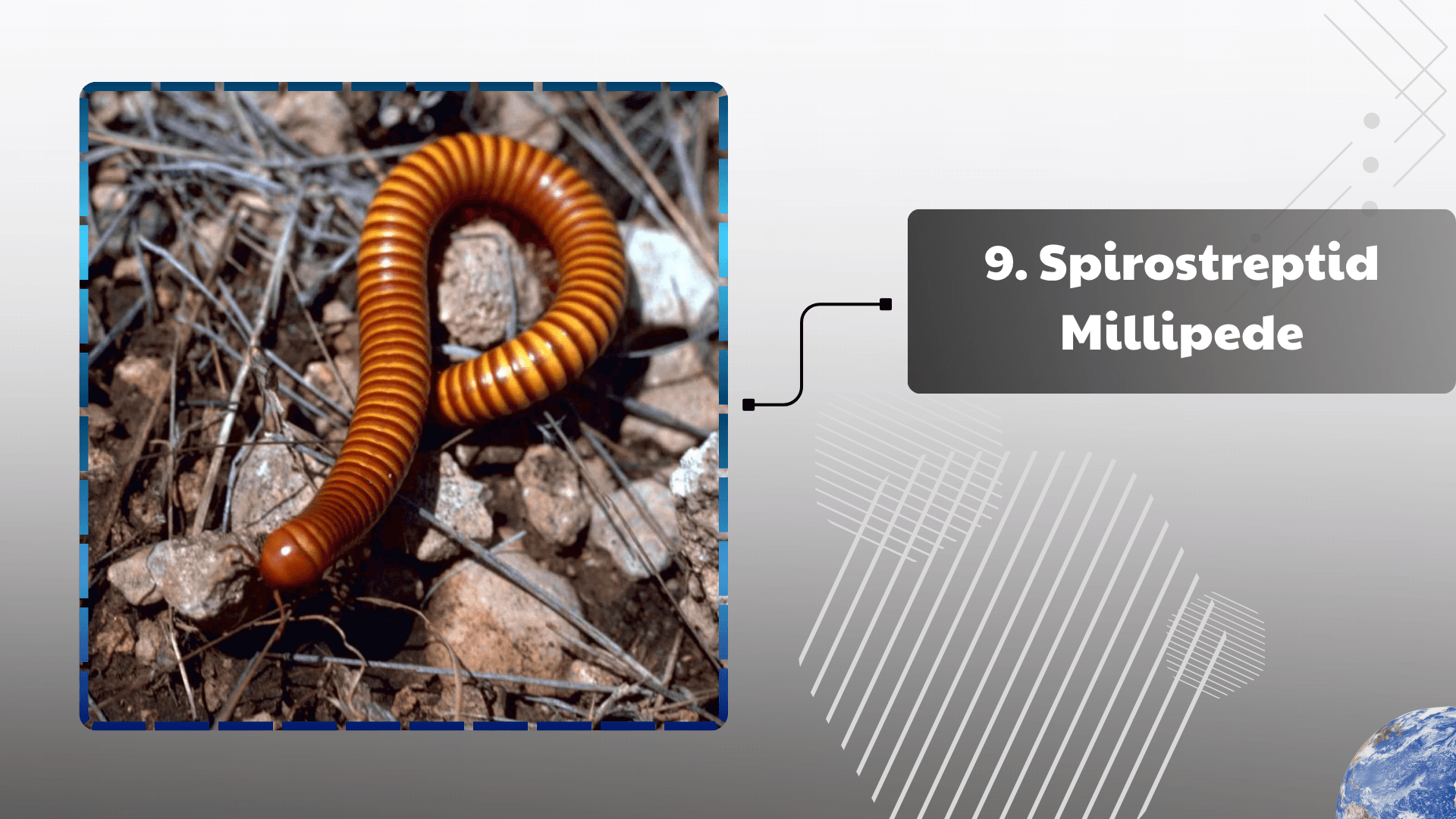
The Spirostreptid Millipede is another large tropical species known for its elongated body and strong segmented structure. It is commonly found in Africa, Asia, and parts of the Americas.
This species thrives in warm, humid environments and is often active at night. It feeds on decaying vegetation and plays an important role in breaking down forest organic matter. Its slow movement and nocturnal habits help it avoid predators.
When threatened, it coils tightly and releases defensive chemicals that can deter small predators. Despite its intimidating size, it is harmless to humans and beneficial to ecosystems.
10. Polydesmid Millipede
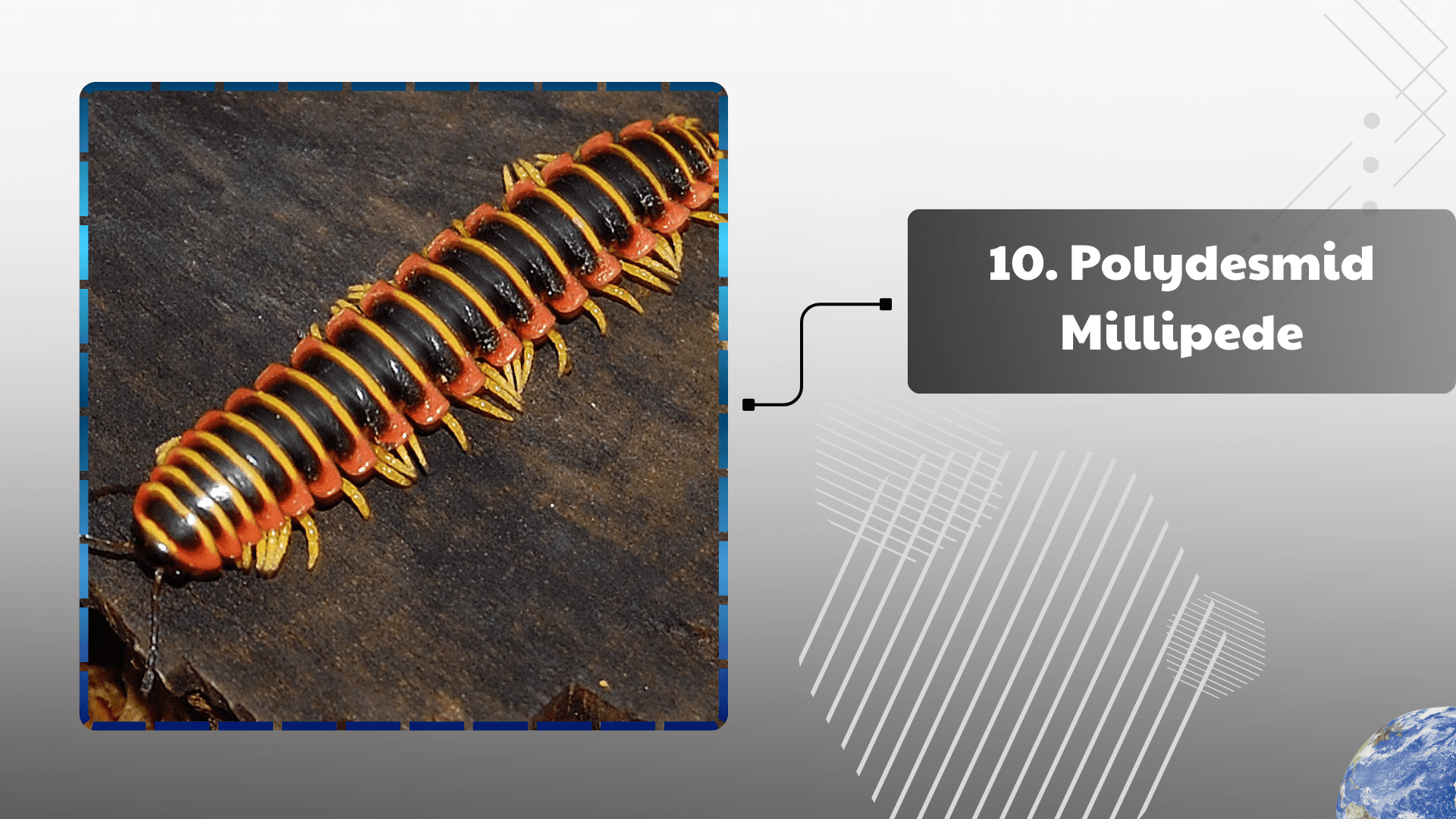
The Polydesmid Millipede is a flat-backed species commonly found in forests, grasslands, and leaf litter environments worldwide. It is easily recognized by its flattened body segments, which give it a wider appearance compared to cylindrical millipedes.
This species is highly diverse, with many variations in color and size depending on its habitat. Polydesmid Millipedes are efficient decomposers and feed on decaying organic matter, helping maintain soil structure and fertility.
Many species in this group are capable of producing defensive chemicals when threatened, which helps protect them from predators. Their ecological importance lies in their role as recyclers of forest organic material.
11. Julid Millipede
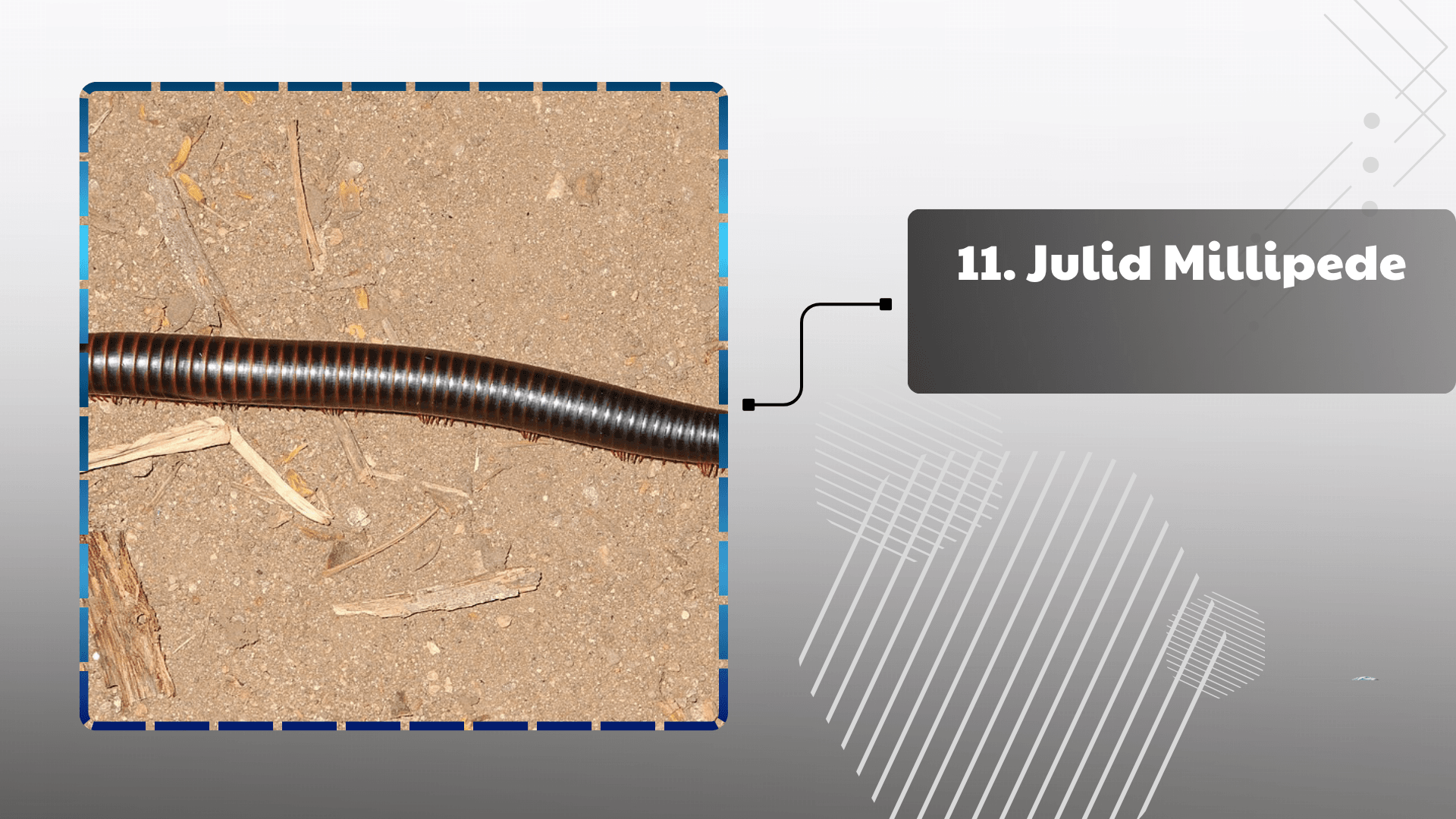
The Julid Millipede is one of the most widespread and commonly observed groups of millipedes, especially across Europe and parts of Asia. This group includes many cylindrical species that are often dark brown or black in color, making them well camouflaged against soil and decaying leaf litter. Julid millipedes are typically found in forests, gardens, parks, and agricultural areas where organic material is abundant.
One of the defining features of Julid Millipedes is their ability to coil into a tight spiral when threatened. This defensive posture protects their soft underside and reduces exposure to predators. In addition, some species can release mild chemical secretions that act as a deterrent to ants and small insects. Although these secretions may have a strong odor, they are harmless to humans.
Julid Millipedes are detritivores, meaning they feed primarily on decaying organic matter such as leaves, wood, and plant debris. This feeding behavior makes them extremely important in nutrient recycling within ecosystems. By breaking down dead plant material, they help enrich soil fertility and support plant growth indirectly.
These millipedes are generally slow-moving and prefer moist environments where humidity helps prevent dehydration. They are most active at night and spend daylight hours hidden under logs, stones, or soil. Their role in ecosystems is often underestimated, but they are essential contributors to healthy soil structure and decomposition processes.
12. Desert Millipede (Orthoporus ornatus)
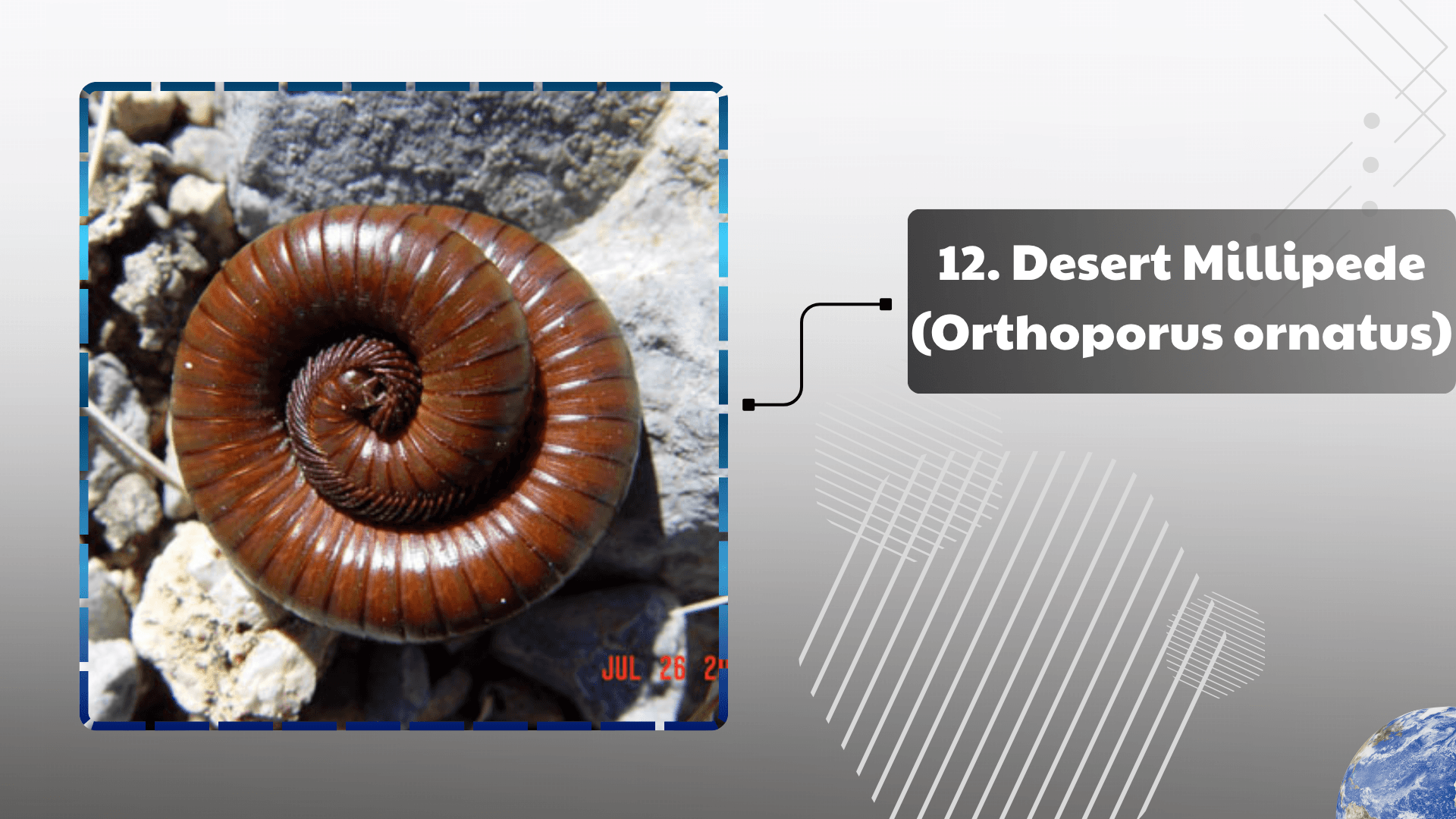
The Desert Millipede, scientifically known as Orthoporus ornatus, is one of the few millipede species adapted to survive in arid environments. It is commonly found in desert regions of the southwestern United States and northern Mexico. Unlike most millipedes that require high humidity, this species has evolved mechanisms to tolerate dry and hot conditions.
This millipede has a robust cylindrical body with a dark brown or black coloration. Its tough exoskeleton helps reduce water loss, allowing it to survive in harsh desert climates. During extremely hot or dry periods, it burrows underground to escape heat and conserve moisture.
The Desert Millipede feeds on decaying plant material, such as fallen leaves, cactus debris, and decomposed organic matter found in desert soil. Despite the harsh environment, it plays a crucial role in recycling nutrients and maintaining soil health in desert ecosystems.
When threatened, it releases a defensive fluid that may irritate predators but is harmless to humans. This chemical defense, combined with its ability to curl into a tight spiral, helps it survive in an environment where predators are abundant and resources are limited.
Its adaptation to desert life makes it one of the most fascinating examples of millipede evolution, showing how invertebrates can thrive even in extreme environments.
13. Cave Millipede
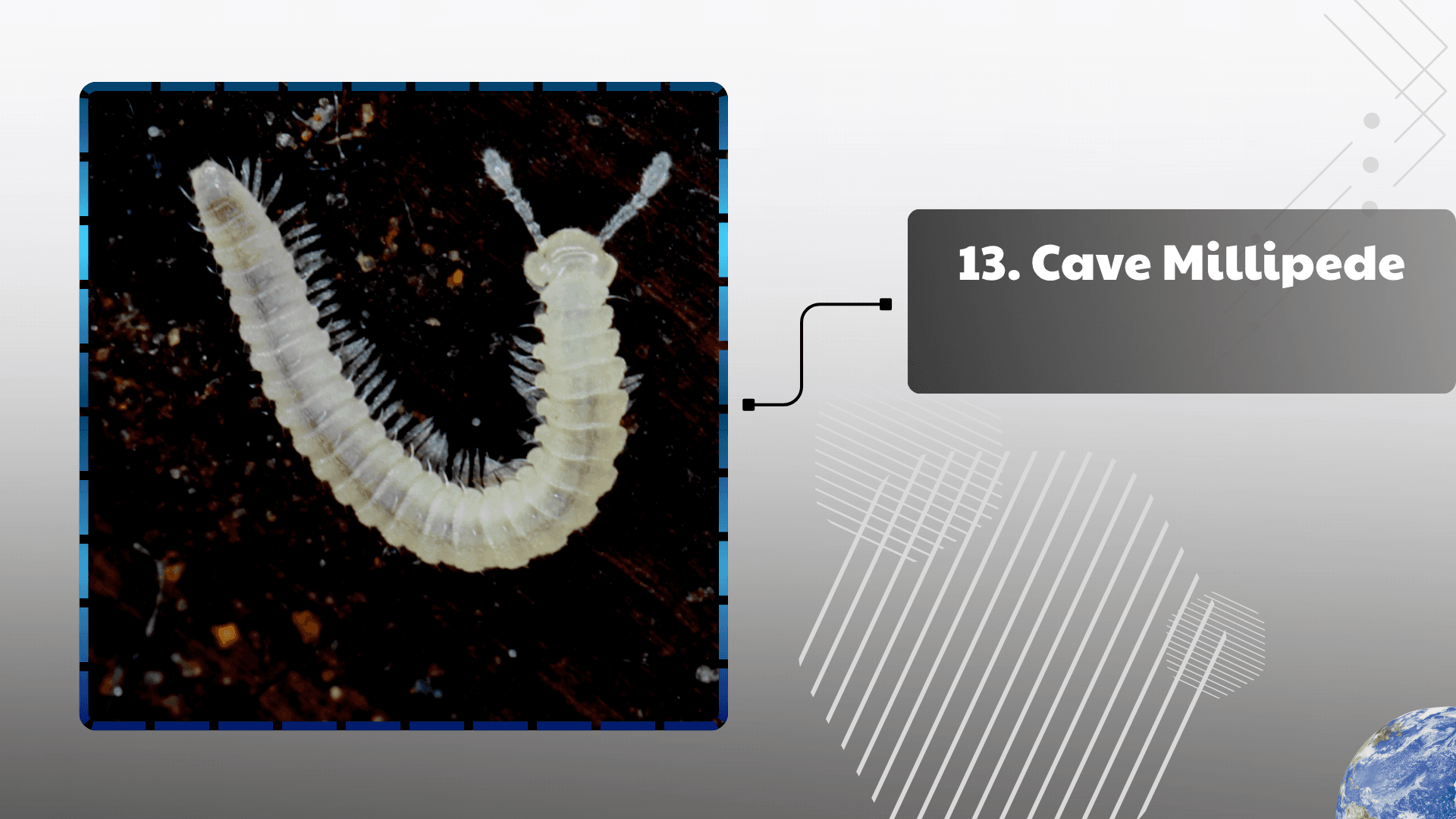
The Cave Millipede is a specialized species adapted to life in underground cave systems. These millipedes are typically found in dark, humid environments where sunlight does not reach. As a result, they have evolved unique physical and behavioral adaptations to survive in complete darkness.
Cave Millipedes often have pale or translucent bodies due to the lack of pigmentation, a common trait among cave-dwelling organisms. Their sensory organs are highly developed, allowing them to navigate using touch and vibration rather than vision.
These millipedes feed on decomposing organic matter that enters caves, such as fallen plant debris, bat guano, and decaying organic particles. This makes them an important part of cave ecosystems, where nutrients are often scarce.
Due to the stable but resource-limited cave environment, Cave Millipedes tend to grow slowly and have longer lifespans compared to surface-dwelling species. They are also highly sensitive to environmental changes, making them indicators of cave ecosystem health.
Their role in breaking down organic material helps sustain other cave-dwelling organisms, forming a delicate but important underground food web.
14. Bark Millipede
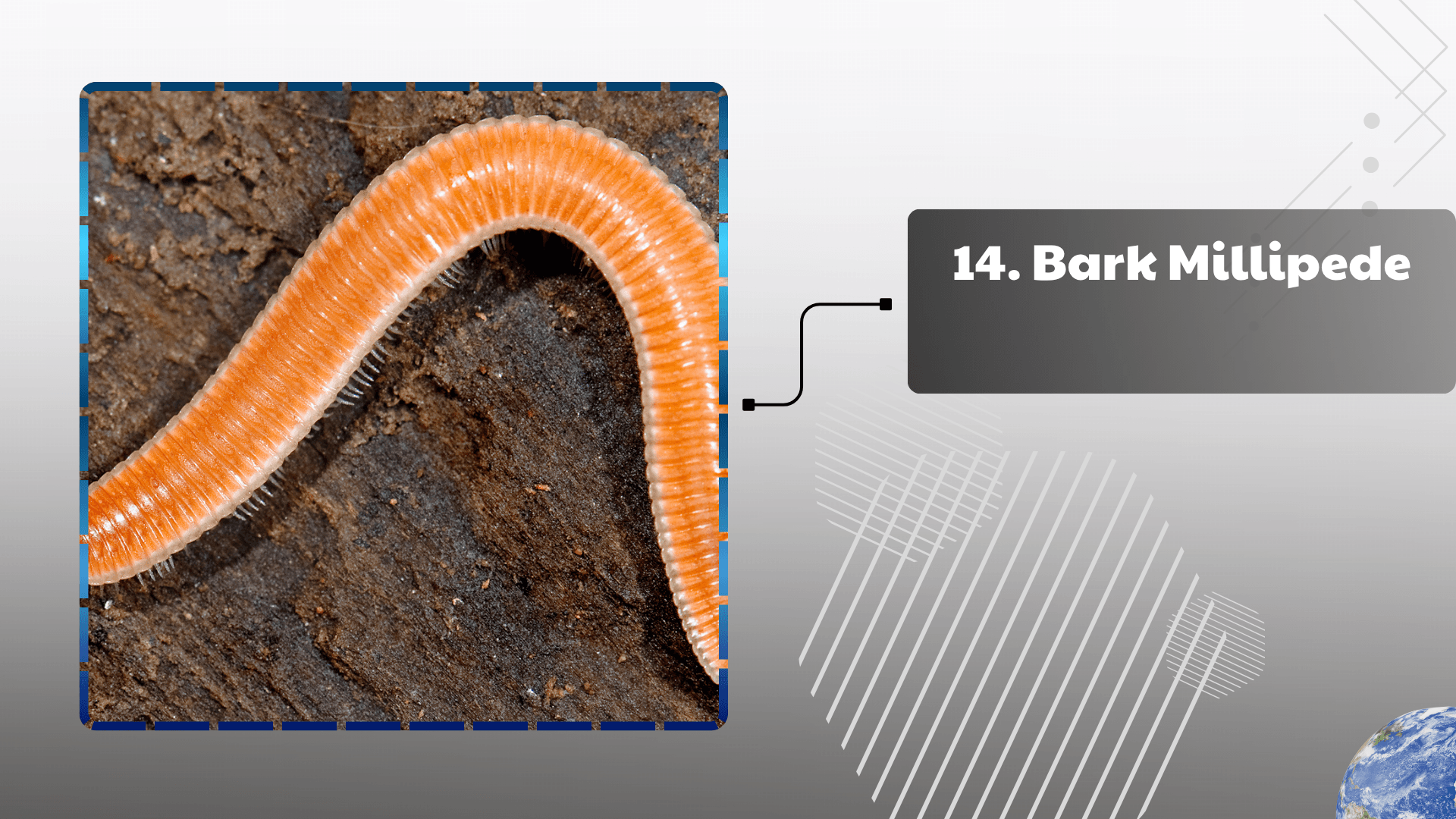
The Bark Millipede is a small to medium-sized species commonly found under tree bark, logs, and decaying wood in forest environments. Its flattened body allows it to squeeze into narrow spaces, making it highly adapted for life in tight, hidden habitats.
This species typically has a dark brown or gray coloration that blends well with bark surfaces, providing excellent camouflage against predators. Bark Millipedes are slow-moving and spend most of their time hidden beneath protective cover during the day.
They feed primarily on decomposing wood and organic matter found in bark crevices. By breaking down cellulose-rich materials, they contribute significantly to nutrient cycling in forest ecosystems. Their feeding activity also helps accelerate decomposition processes in wooded environments.
When disturbed, Bark Millipedes may remain motionless or curl slightly to protect themselves. They are not aggressive and pose no threat to humans or animals. Instead, they rely on stealth and camouflage for survival.
Their ecological role is essential in forest decomposition cycles, making them an important but often overlooked part of woodland biodiversity.
15. Garden Millipede
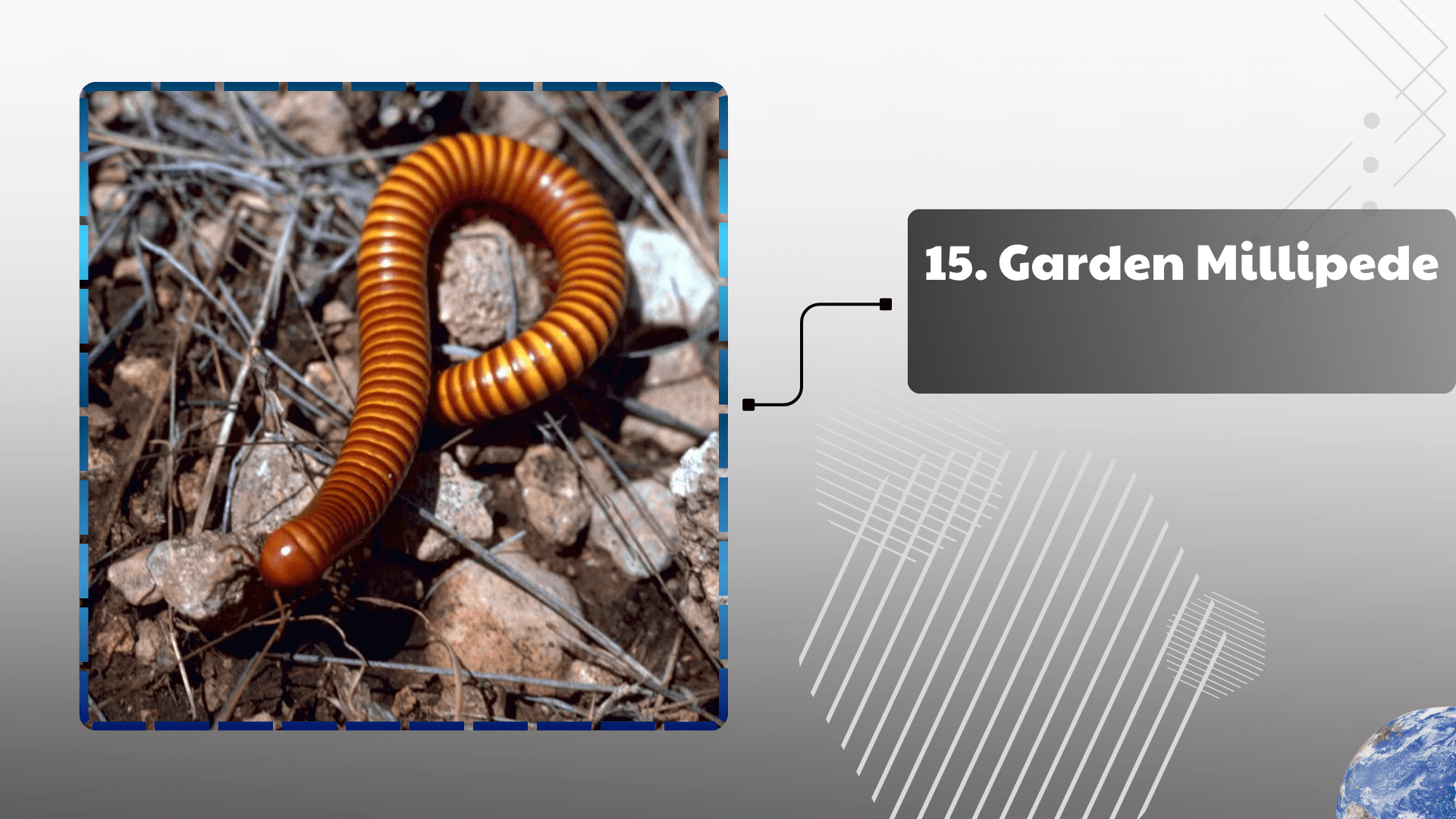
The Garden Millipede is a common species frequently found in home gardens, lawns, compost piles, and agricultural soils. It is one of the most familiar millipedes to humans due to its close association with cultivated environments.
This species is typically small, dark-colored, and cylindrical in shape. It thrives in moist, organic-rich soils where decaying plant material is abundant. Garden Millipedes are often seen after rain when they come to the surface in search of food and moisture.
They feed on decomposing leaves, grass clippings, and organic waste, making them beneficial decomposers in garden ecosystems. Their activity helps improve soil structure and fertility, which supports plant growth.
Although they may sometimes appear in large numbers, Garden Millipedes are completely harmless to plants and humans. In fact, they are considered beneficial organisms in composting systems.
Their presence is often a sign of healthy soil conditions with high organic content and good moisture levels. As natural recyclers, they play a key role in maintaining balanced garden ecosystems.
Conclusion
The Julid Millipede, Desert Millipede, Cave Millipede, Bark Millipede, and Garden Millipede demonstrate the incredible diversity of millipedes across deserts, forests, caves, and human environments. Each species has evolved unique adaptations to survive in its habitat while contributing to decomposition and nutrient cycling. Understanding these types of Millipede helps us appreciate their ecological importance and the essential role they play in maintaining soil health. Have you ever encountered any of these fascinating millipedes in the wild or in your garden?
FAQ’s
1. What are millipedes?
Millipedes are long, segmented arthropods belonging to the class Diplopoda. They are commonly found in soil, leaf litter, forests, and gardens. Unlike centipedes, millipedes are slow-moving decomposers that feed mainly on decaying plant material. Their ecological role is essential because they help break down organic matter and recycle nutrients back into the soil.
2. Are millipedes insects?
No, millipedes are not insects. They belong to a separate group of arthropods called myriapods. While insects have six legs, millipedes have many more legs, usually two pairs per body segment, which gives them their name meaning “thousand feet.”
3. How many legs does a millipede have?
Millipedes do not actually have a thousand legs, despite their name. Most species have between 80 and 400 legs depending on their size and species. The number of legs increases as they grow and molt throughout their life.
4. Where do millipedes live?
Millipedes live in moist environments such as forests, grasslands, gardens, and underground soil layers. They prefer damp areas because they need moisture to survive and avoid dehydration.
5. What do millipedes eat?
Millipedes are detritivores, meaning they feed on decaying organic matter such as dead leaves, wood, and plant material. They play a crucial role in breaking down organic waste and enriching soil nutrients.
6. Are millipedes dangerous to humans?
Most millipedes are completely harmless to humans. They do not bite or sting. Some species may release defensive chemicals that can irritate skin or eyes, but these are generally mild and not dangerous.
7. What is the difference between millipedes and centipedes?
Millipedes are slow-moving decomposers with rounded bodies and two pairs of legs per segment. Centipedes are fast predators with flat bodies and one pair of legs per segment. Centipedes can bite, while millipedes cannot.
8. Why do millipedes curl up?
Millipedes curl into a tight spiral when threatened to protect their soft underside. This defensive posture also helps them release protective chemicals more effectively.
9. Do millipedes bite?
No, millipedes do not bite humans. They lack venomous fangs and are not aggressive. Their main defense is curling up and releasing chemical secretions.
10. Why do millipedes appear after rain?
Millipedes are often seen after rain because moist conditions bring them to the surface. Rain also helps them avoid dehydration and makes it easier to move across the soil.
11. How long do millipedes live?
Most millipedes live between 1 to 10 years depending on species and environment. Larger tropical species tend to live longer than smaller temperate ones.
12. Are millipedes pests?
Millipedes are generally not pests. However, in large numbers, they may enter homes or greenhouses, especially during wet conditions. They do not damage structures or harm humans.
13. Can millipedes be kept as pets?
Yes, some species like the Giant African Millipede are popular exotic pets. They are low-maintenance and harmless, requiring a humid environment and decaying plant matter as food.
14. What eats millipedes?
Millipedes are eaten by birds, reptiles, amphibians, small mammals, and certain insects. Their chemical defenses help reduce predation.
15. How do millipedes defend themselves?
Millipedes defend themselves by curling into a spiral and releasing defensive chemicals. Some species also have tough exoskeletons for added protection.
16. Do millipedes have eyes?
Many millipedes have simple eyes called ocelli, which detect light and dark but do not form clear images. Some cave species have no eyes at all.
17. Can millipedes climb walls?
Yes, some millipedes can climb walls or vertical surfaces using their many legs and sticky foot pads, especially in humid environments.
18. Are millipedes nocturnal?
Most millipedes are nocturnal and prefer to be active at night when humidity is higher and predators are fewer.
19. Why are millipedes important in ecosystems?
Millipedes are essential decomposers that break down organic matter and return nutrients to the soil, improving soil fertility and ecosystem health.
20. Do millipedes carry diseases?
No, millipedes do not carry diseases harmful to humans. They are harmless decomposers and do not transmit infections.
21. How do millipedes reproduce?
Millipedes reproduce sexually, with males transferring sperm to females. Females lay eggs in soil or organic material, where young millipedes hatch and grow.
22. How fast do millipedes move?
Millipedes are very slow-moving creatures. Their movement is gradual and wave-like, controlled by coordinated leg motion.
23. Do millipedes live underground?
Yes, many millipedes spend most of their life underground or under leaf litter where moisture and food are abundant.
24. Can millipedes survive indoors?
Some species can survive indoors in damp areas like basements, bathrooms, or greenhouses if they find moisture and organic matter.
25. Why do millipedes smell bad?
Some millipedes release chemical compounds that produce a strong odor to deter predators. These chemicals are part of their defense system.
26. Are millipedes useful to farmers?
Yes, millipedes help farmers by breaking down organic matter and improving soil structure, which enhances crop growth.
27. Do millipedes have predators in caves?
Yes, cave millipedes may be preyed upon by spiders, beetles, and other cave-dwelling organisms adapted to dark environments.
28. Why are millipedes slow?
Millipedes are slow because they are decomposers rather than hunters. Their energy is used for feeding and survival rather than fast movement.
29. Can millipedes regenerate legs?
Some millipedes can regenerate lost legs during molting, especially in younger stages of development.
30. Do millipedes sleep?
Millipedes do not sleep like mammals but enter periods of inactivity, especially during daylight hours.
31. Why do millipedes come into houses?
They enter homes searching for moisture, shelter, or decaying organic matter, especially during wet weather.
32. Are millipedes good for compost?
Yes, millipedes are excellent for composting because they break down organic material and accelerate decomposition.
33. Can millipedes harm plants?
Millipedes rarely harm healthy plants. They prefer decaying material but may feed on seedlings in large numbers.
34. What is the largest millipede species?
The Giant African Millipede is one of the largest known species, reaching impressive lengths and thickness.
35. Why do millipedes roll into balls?
Rolling into a ball protects their vulnerable underside and reduces exposure to predators.
36. Do millipedes have blood?
Yes, millipedes have hemolymph, a fluid similar to blood that circulates nutrients and oxygen.
37. Can millipedes survive drought?
Most millipedes cannot survive long dry periods and require moist environments to avoid dehydration.
38. Are millipedes active all year?
Activity depends on climate. In warm, humid regions they may be active year-round, while in colder climates they become inactive in winter.
39. Do millipedes migrate?
Some species may move in large numbers during environmental changes, but true migration is rare.
40. Why are millipedes found in gardens?
Gardens provide moisture, soil, and decaying organic matter, which are ideal conditions for millipedes.
41. Can millipedes survive freezing temperatures?
Most millipedes cannot survive freezing conditions and either burrow deeper or enter dormant stages.
42. How do millipedes sense their environment?
They use antennae and sensory organs on their body segments to detect moisture, food, and vibrations.
43. Do millipedes have enemies in nature?
Yes, they are preyed upon by birds, reptiles, amphibians, and insects despite their defenses.
44. Why are millipedes important to soil health?
They break down organic matter into nutrients that plants can absorb, improving soil fertility and structure.
45. Can millipedes survive without food?
They can survive for some time without food by slowing metabolism, but they eventually require organic matter.
46. Are millipedes found worldwide?
Yes, millipedes are found on every continent except Antarctica, with thousands of species adapted to different environments.
47. Do millipedes have bones?
No, millipedes are invertebrates and do not have bones. Their bodies are supported by an external exoskeleton.
48. What is the role of millipedes in food chains?
They act as decomposers and also serve as food for many predators, making them an important link in ecosystems.
49. Are millipedes sensitive to pollution?
Yes, millipedes are sensitive to soil pollution and are often used as indicators of environmental health.
50. Why should we protect millipedes?
Protecting millipedes helps maintain healthy ecosystems, soil fertility, and natural decomposition processes that support plant life.
Read more: