

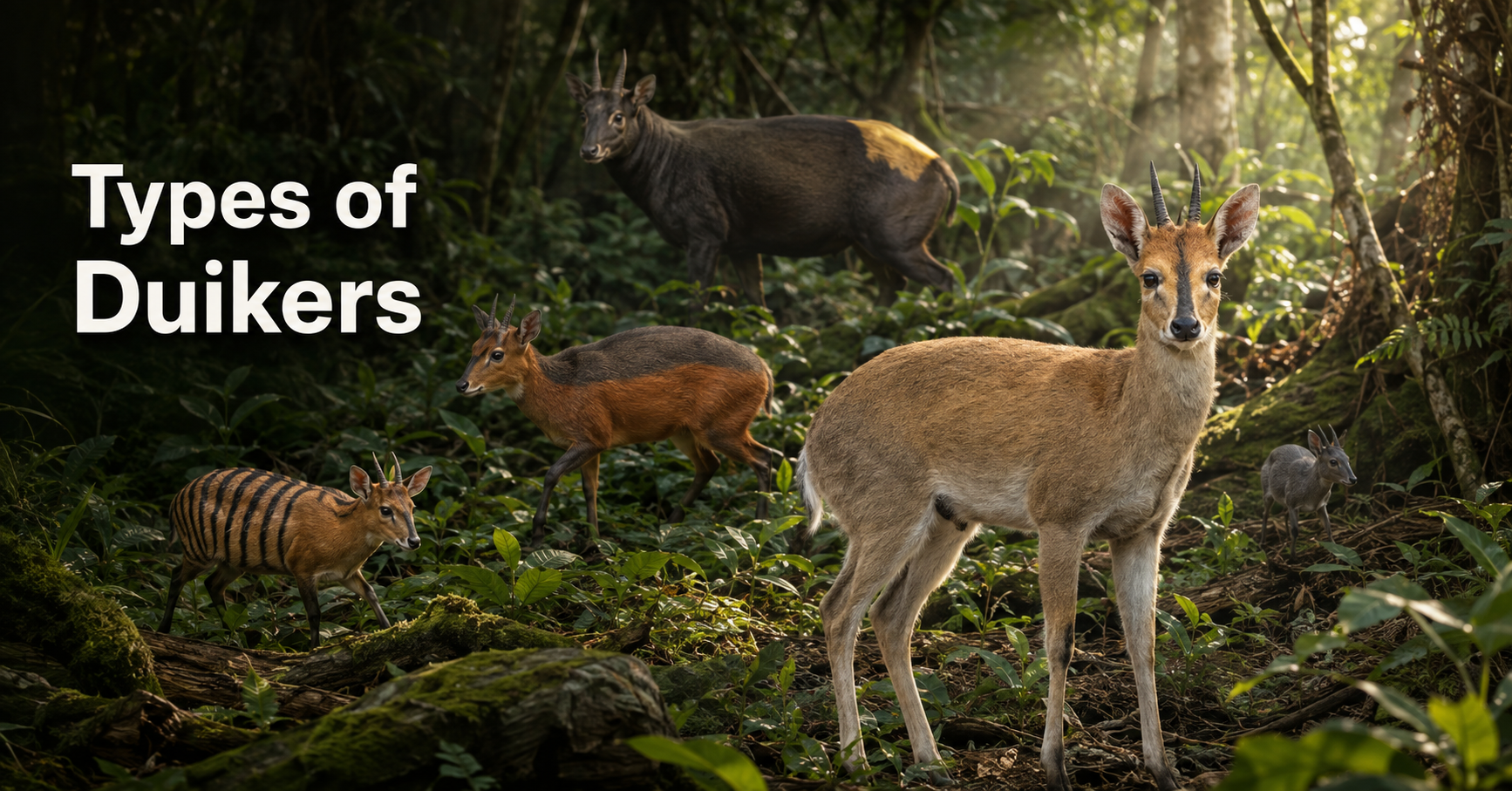
Duikers are small to medium-sized African antelopes famous for diving into dense vegetation when danger approaches. The 22 commonly listed types of duikers vary from the tiny blue duiker to the powerful yellow-backed duiker. Most inhabit tropical forests, but the widespread common duiker also thrives in savannas, shrublands, and other open habitats.
This guide covers the accepted and commonly recognized duiker species, including their scientific names, appearance, size, geographic range, habitat, diet, behavior, and conservation importance. Because several duikers are difficult to distinguish and their classification continues to be studied, location and habitat are often as important as coat color when identifying them.
What Are the Main Types of Duikers?
Duikers are commonly divided into forest duikers and bush duikers. Most species belong to the forest genus Cephalophus, while the smallest species are placed in Philantomba. The common duiker is the only living member of Sylvicapra and is much better adapted to open country. A broad modern list recognizes 22 species, although Brooke’s, Ruwenzori, and white-legged duikers are sometimes treated as regional forms of other species.
| Number | Duiker | Scientific Name | Main Range | Key Feature |
|---|---|---|---|---|
| 1 | Abbott’s duiker | Cephalophus spadix | Tanzania | Dark brown coat and restricted mountain range |
| 2 | Aders’s duiker | Cephalophus adersi | Zanzibar and coastal East Africa | Reddish coat with a white rump band |
| 3 | Bay duiker | Cephalophus dorsalis | West and Central Africa | Deep reddish coat and dark back |
| 4 | Black duiker | Cephalophus niger | West Africa | Mostly black coat |
| 5 | Black-fronted duiker | Cephalophus nigrifrons | Central and East Africa | Black facial stripe |
| 6 | Brooke’s duiker | Cephalophus brookei | Upper Guinea forests | Golden coat and dark dorsal area |
| 7 | Harvey’s duiker | Cephalophus harveyi | East Africa | Bright chestnut coat |
| 8 | Jentink’s duiker | Cephalophus jentinki | Upper Guinea forests | Gray body with black-and-white head |
| 9 | Ogilby’s duiker | Cephalophus ogilbyi | West and Central Africa | Golden chestnut coat |
| 10 | Peters’s duiker | Cephalophus callipygus | Central Africa | Rich reddish-brown body |
| 11 | Red-flanked duiker | Cephalophus rufilatus | West and Central Africa | Red sides with dark central stripe |
| 12 | Red forest duiker | Cephalophus natalensis | Southern and eastern Africa | Rust-red coat |
| 13 | Ruwenzori duiker | Cephalophus rubidus | Ruwenzori Mountains | Dark reddish mountain form |
| 14 | Weyns’s duiker | Cephalophus weynsi | Central and East Africa | Plain reddish or yellow-brown coat |
| 15 | White-bellied duiker | Cephalophus leucogaster | Central Africa | Pale belly and reddish body |
| 16 | White-legged duiker | Cephalophus crusalbum | Gabon and nearby forests | Contrasting pale lower legs |
| 17 | Yellow-backed duiker | Cephalophus silvicultor | West and Central Africa | Large body and yellow rump patch |
| 18 | Zebra duiker | Cephalophus zebra | Upper Guinea forests | Black vertical body stripes |
| 19 | Blue duiker | Philantomba monticola | Central, eastern, and southern Africa | Tiny size and blue-gray coat |
| 20 | Maxwell’s duiker | Philantomba maxwellii | West Africa | Small gray-brown body |
| 21 | Walter’s duiker | Philantomba walteri | Dahomey Gap region | Recently described small duiker |
| 22 | Common duiker | Sylvicapra grimmia | Widespread sub-Saharan Africa | Long legs and open-country habits |
1. Abbott’s Duiker
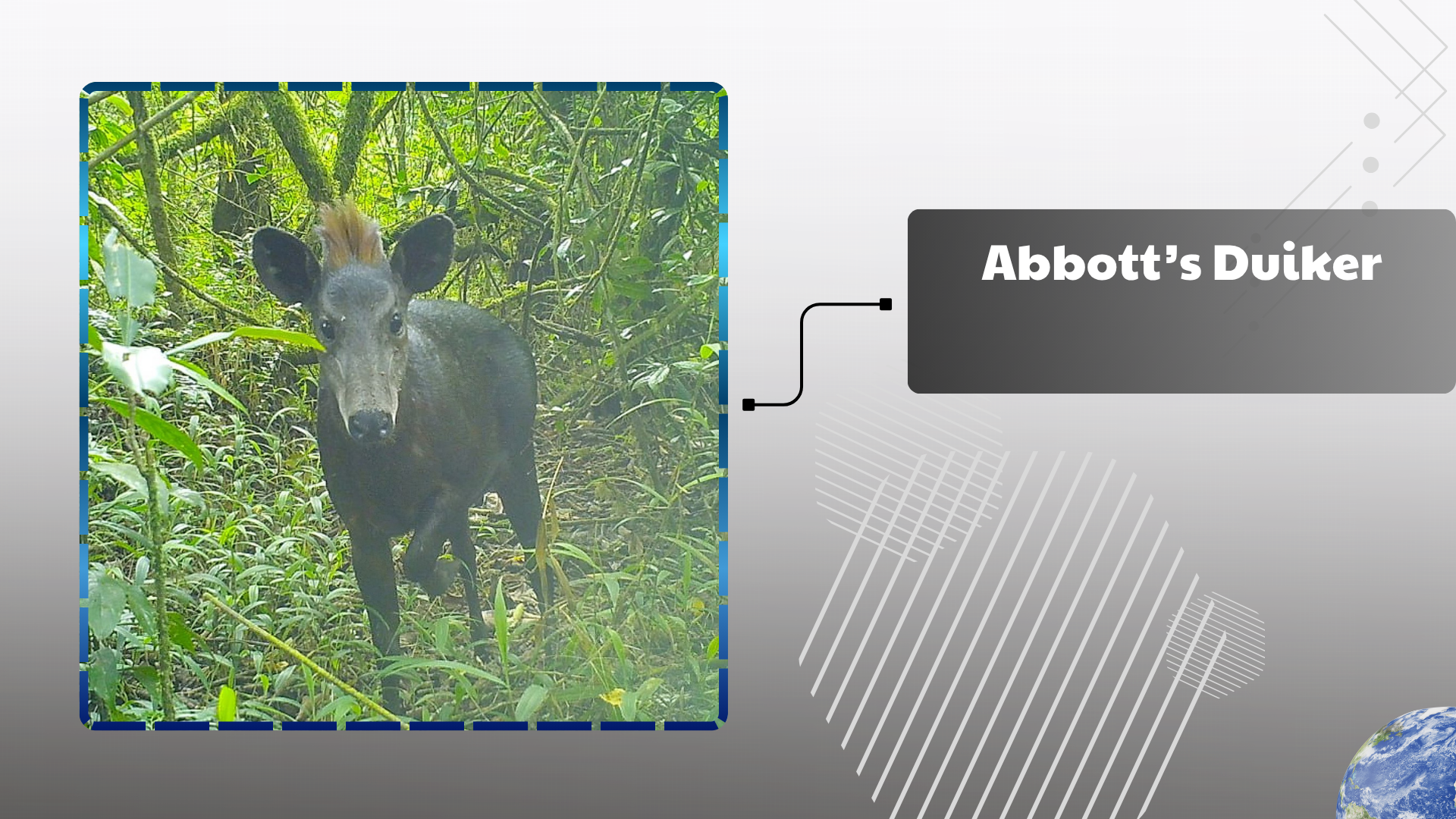
Abbott’s duiker, Cephalophus spadix, is a rare forest antelope found only in Tanzania. It is especially associated with high-elevation forests on mountains such as Kilimanjaro and in parts of the Eastern Arc region. Its restricted range makes it one of Africa’s least frequently observed antelopes.
This sturdy duiker has a dark chocolate-brown to nearly black coat, a reddish face, and a noticeable crest between its short horns. Adults are considerably larger than blue or red duikers but smaller than the yellow-backed duiker. They move quietly through dense montane vegetation and are most often detected by camera traps rather than direct observation.
Abbott’s duikers eat leaves, shoots, herbs, flowers, and fallen fruit. Habitat loss, forest fragmentation, snares, and hunting threaten the remaining populations. Field identification should be based on its dark coat, robust shape, mountain habitat, and location within Tanzania.
2. Aders’s Duiker
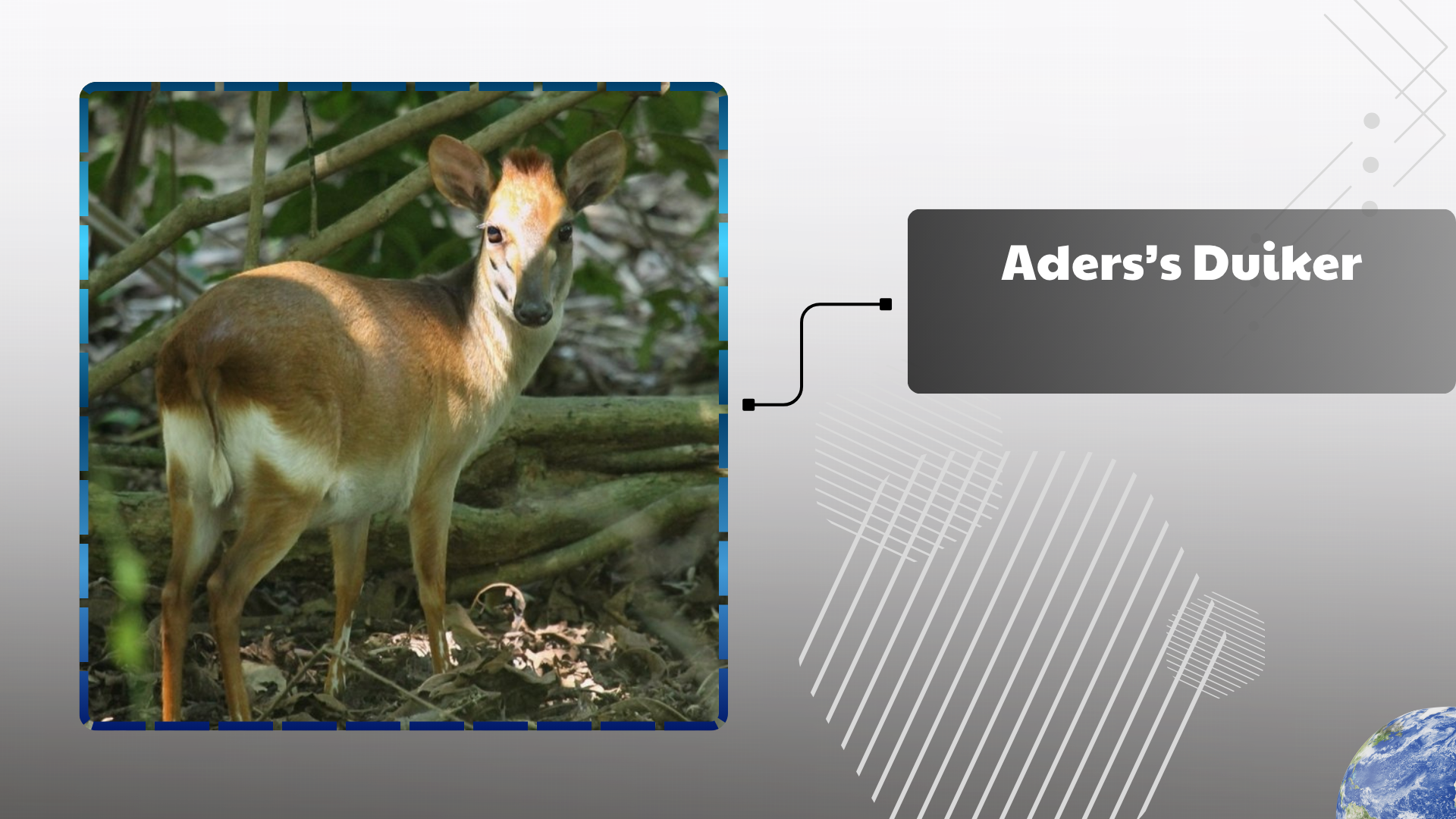
Aders’s duiker, Cephalophus adersi, is a small and highly distinctive East African duiker. Its best-known populations live on Zanzibar, particularly in protected and community-managed forest areas. Small mainland populations have also been reported in coastal Kenya.
The coat is reddish or chestnut, with a grayish neck and a broad white band across the rump. White markings may also appear on the legs. Short horns are usually more visible in males, while both sexes have the compact body and arched back typical of forest duikers.
Aders’s duikers use coastal thickets, coral-rag forests, and evergreen forest patches. They browse leaves, shoots, flowers, and fallen fruits. Habitat clearing, dogs, snares, and isolation of forest patches have contributed to serious population declines. The combination of a reddish body and conspicuous white rump band is its most useful identification feature.
3. Bay Duiker
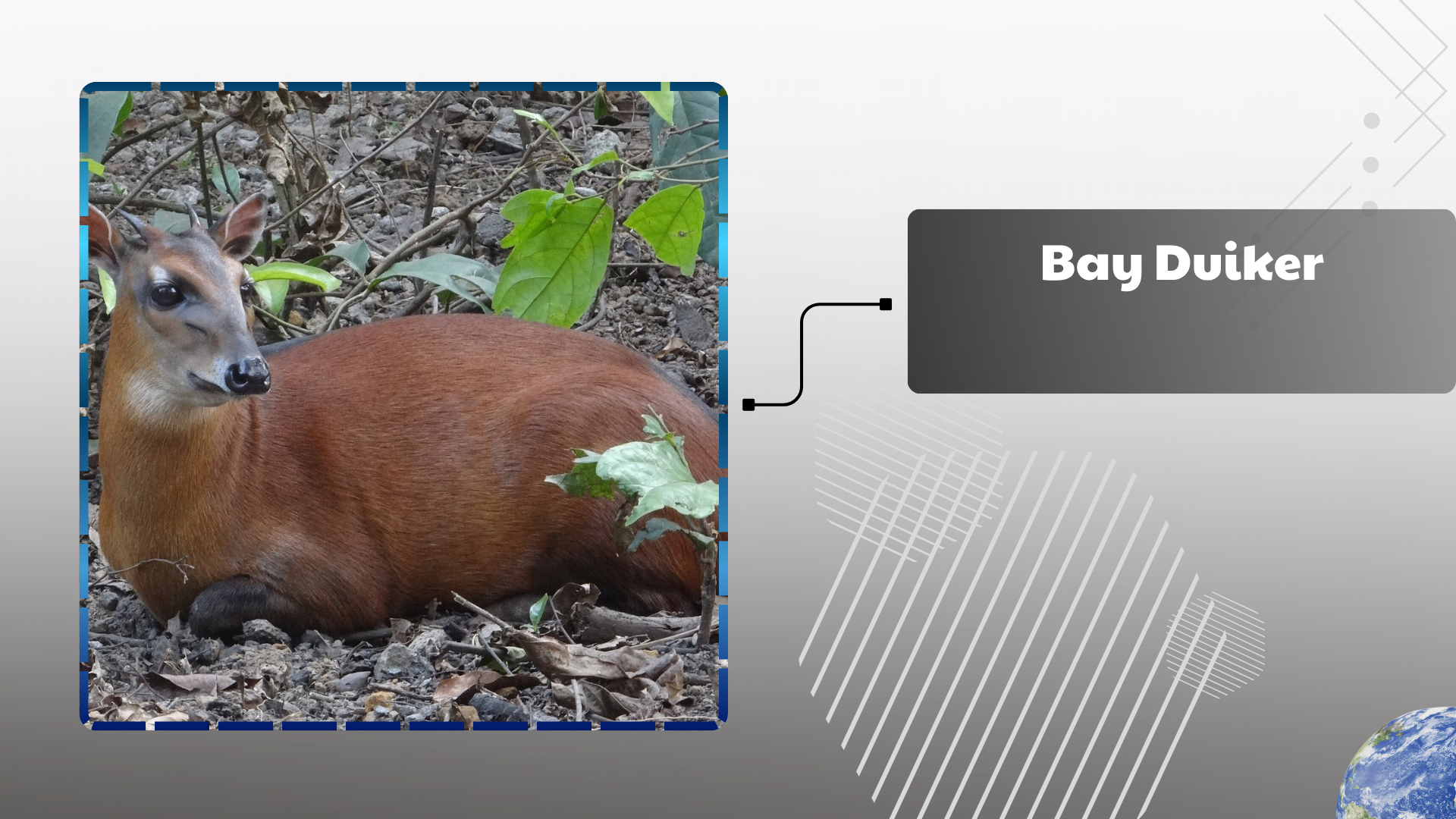
The bay duiker, Cephalophus dorsalis, is a medium-sized forest species distributed from West Africa into the Congo Basin. It favors mature lowland rainforest, swamp-forest edges, and dense secondary growth with adequate cover.
Its coat is usually a deep bay-red or chestnut color. A dark brown or black stripe runs along the back, while the face and lower legs may also appear dark. The contrast between the warm red sides and dark upper body separates it from many plain reddish duikers.
Bay duikers are predominantly nocturnal and secretive. They eat fruit, seeds, leaves, fungi, and other available forest foods. Individuals often visit fruiting trees after monkeys, birds, or wind have dropped food to the forest floor. Camera traps are the safest and most effective tools for studying this elusive species.
4. Black Duiker
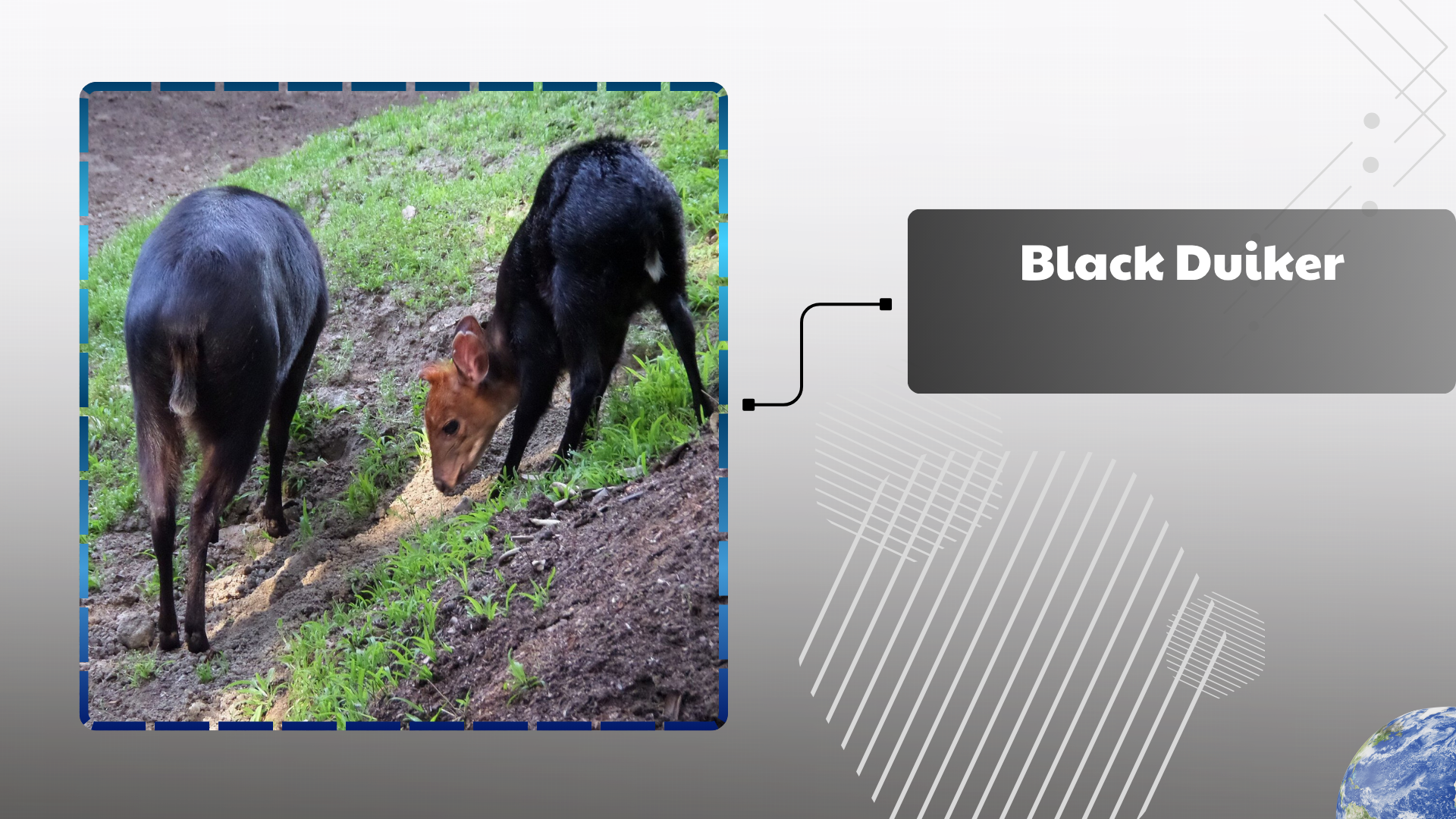
The black duiker, Cephalophus niger, inhabits forests and dense secondary vegetation in parts of West Africa. Its distribution extends through countries in the Upper Guinea forest region, where it may occur in both mature forest and regenerating habitat.
Adults have a dark brown or black body, although the head and underparts may be lighter. The forehead carries the characteristic duiker crest, and the short, pointed horns can be difficult to see in thick hair. Females may be slightly larger than males.
Black duikers feed mainly on fallen fruit, seeds, leaves, and tender shoots. They are generally solitary or found in pairs. A nearly black coat is a helpful clue, but observers should also consider the animal’s size and location because shadows can make other forest duikers appear darker than they really are.
5. Black-Fronted Duiker

The black-fronted duiker, Cephalophus nigrifrons, occurs in central Africa and parts of the East African highlands. It uses wet forests, swampy clearings, river edges, bamboo zones, and mountain vegetation.
This species has a reddish to mahogany body and a dark stripe extending from the nose toward the forehead. The lower legs are often blackish. Its compact build, rounded back, and preference for wet vegetation help distinguish it from more open-country species.
Black-fronted duikers browse leaves and shoots while also taking fallen fruit, seeds, and flowers. Some populations occur at high elevations and tolerate cool, wet conditions. Regional variation is substantial, which has contributed to debate about whether certain mountain forms should be recognized as separate species.
6. Brooke’s Duiker
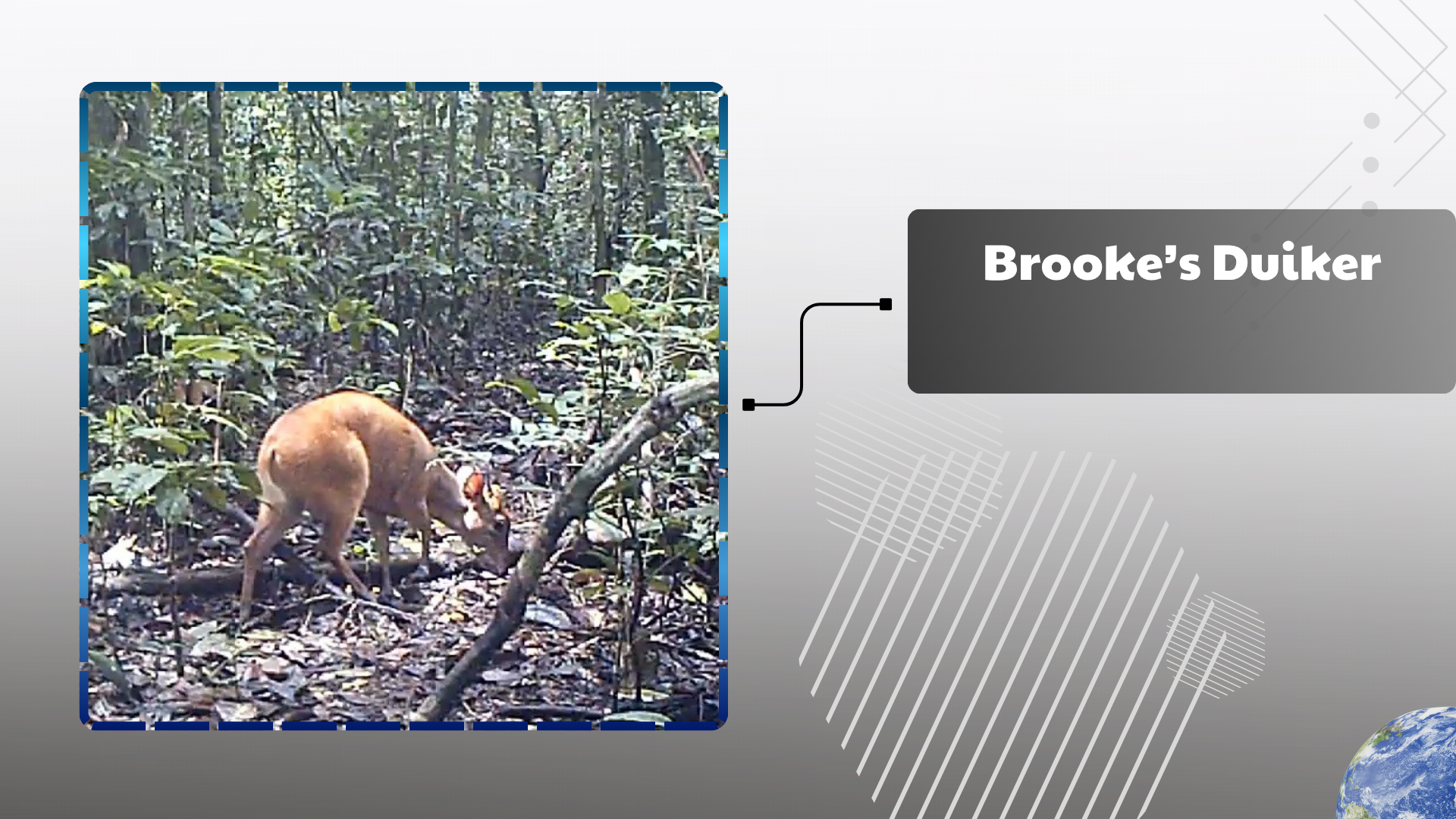
Brooke’s duiker, Cephalophus brookei, is found in the Upper Guinea forests of West Africa. Some authorities recognize it as a full species, while others classify it as a form of Ogilby’s duiker. It is included here because it is widely presented as one of the 22 types of duikers.
The coat is generally golden, tawny, or reddish brown, with darker coloring along the back and portions of the face. It has a compact body, short legs, and a noticeable forehead crest. Reliable identification can be difficult without location data or close photographs.
Brooke’s duikers occupy tropical forest and dense secondary growth. Fruit forms an important part of their diet, supplemented by leaves, shoots, seeds, and flowers. Forest loss and hunting pressure are important concerns throughout their restricted region.
7. Harvey’s Duiker
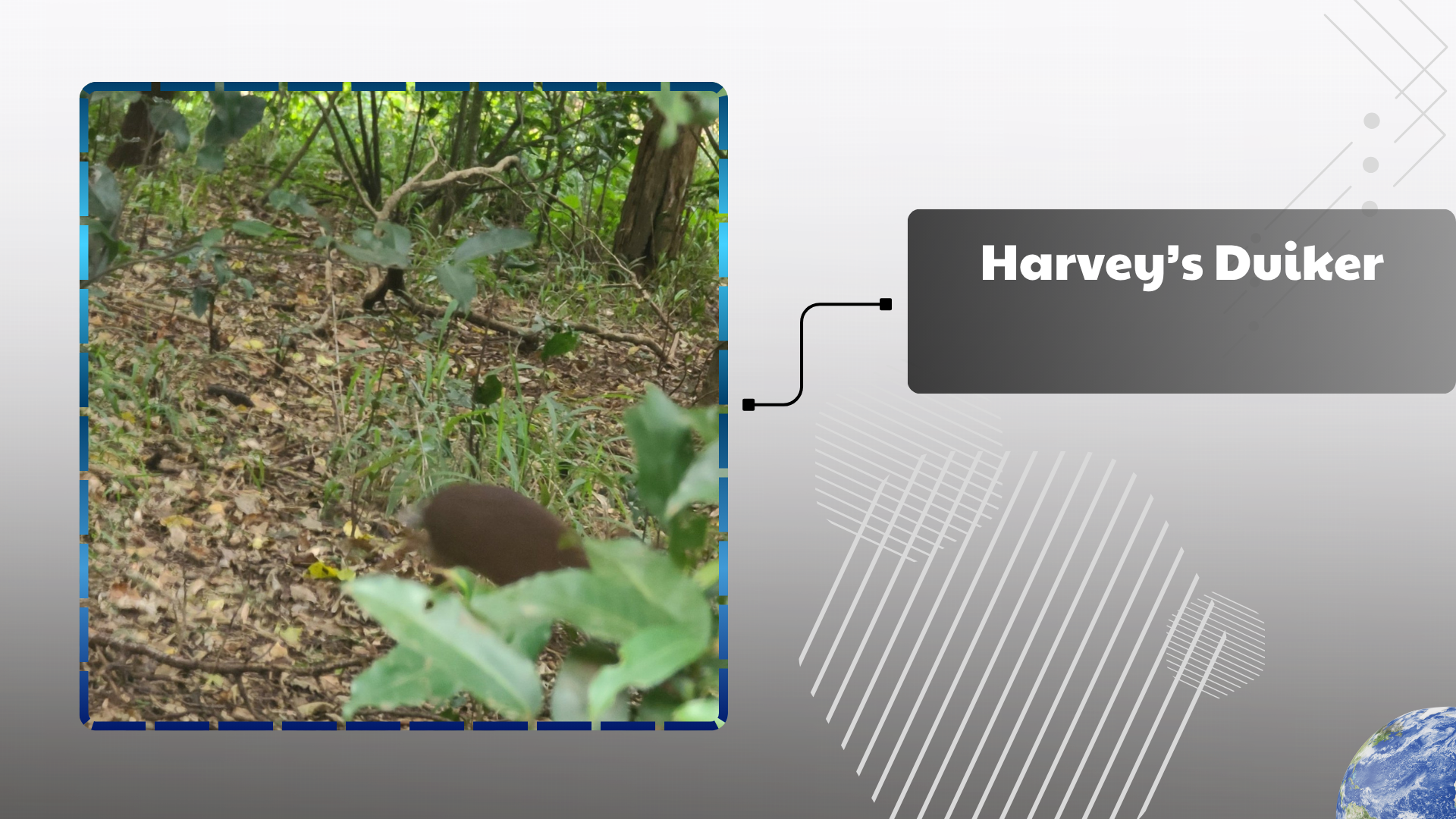
Harvey’s duiker, Cephalophus harveyi, is an attractive red duiker of eastern Africa. It occurs in parts of Tanzania, Kenya, Malawi, Zambia, and neighboring regions, although its distribution is fragmented.
Its coat is bright chestnut or reddish orange, with dark brown or black coloring on the legs and face. The forehead often has a dark crest. Harvey’s duiker resembles the red forest duiker, making geographic location particularly important for identification.
This species lives in coastal forest, montane forest, dense woodland, and thick secondary vegetation. It eats fallen fruits, leaves, shoots, and flowers. Harvey’s duikers normally remain solitary or in pairs and escape danger by rushing into dense cover rather than running long distances across open ground.
8. Jentink’s Duiker
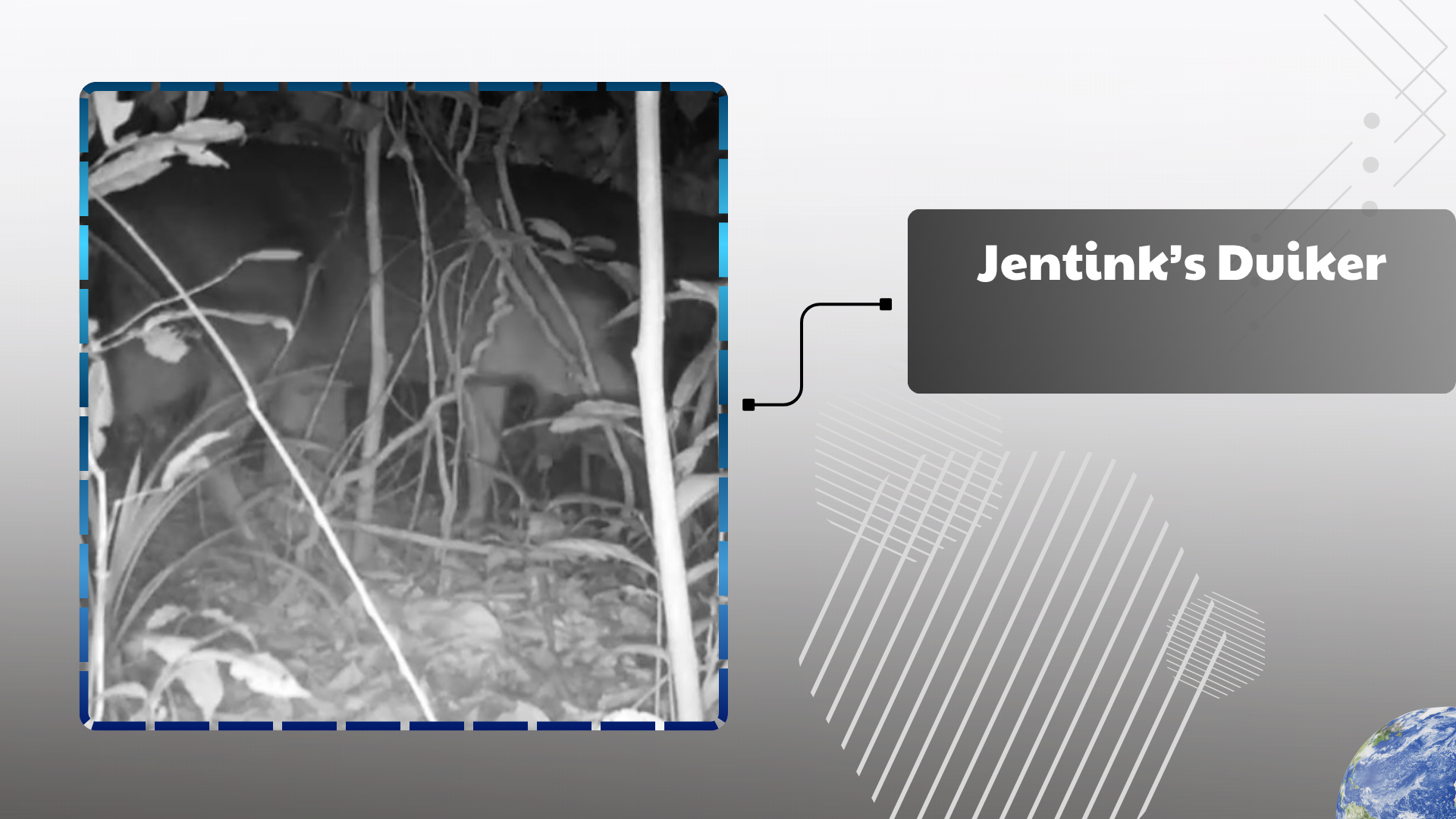
Jentink’s duiker, Cephalophus jentinki, is one of the rarest and most recognizable duikers. It survives in a limited portion of the Upper Guinea forest region, especially in Liberia, Sierra Leone, and Côte d’Ivoire.
Adults have a striking two-toned appearance. The head, neck, and shoulders are dark brown or black, while the middle and rear portions of the body are gray. A pale or whitish band separates some of these darker areas. Its large size and unusual pattern reduce confusion with other regional duikers.
Jentink’s duikers inhabit mature rainforest, forest mosaics, and dense secondary vegetation. They consume fallen fruit, leaves, shoots, and other plant material. Habitat fragmentation and hunting are serious threats because the remaining animals occur in a relatively small and divided range.
9. Ogilby’s Duiker
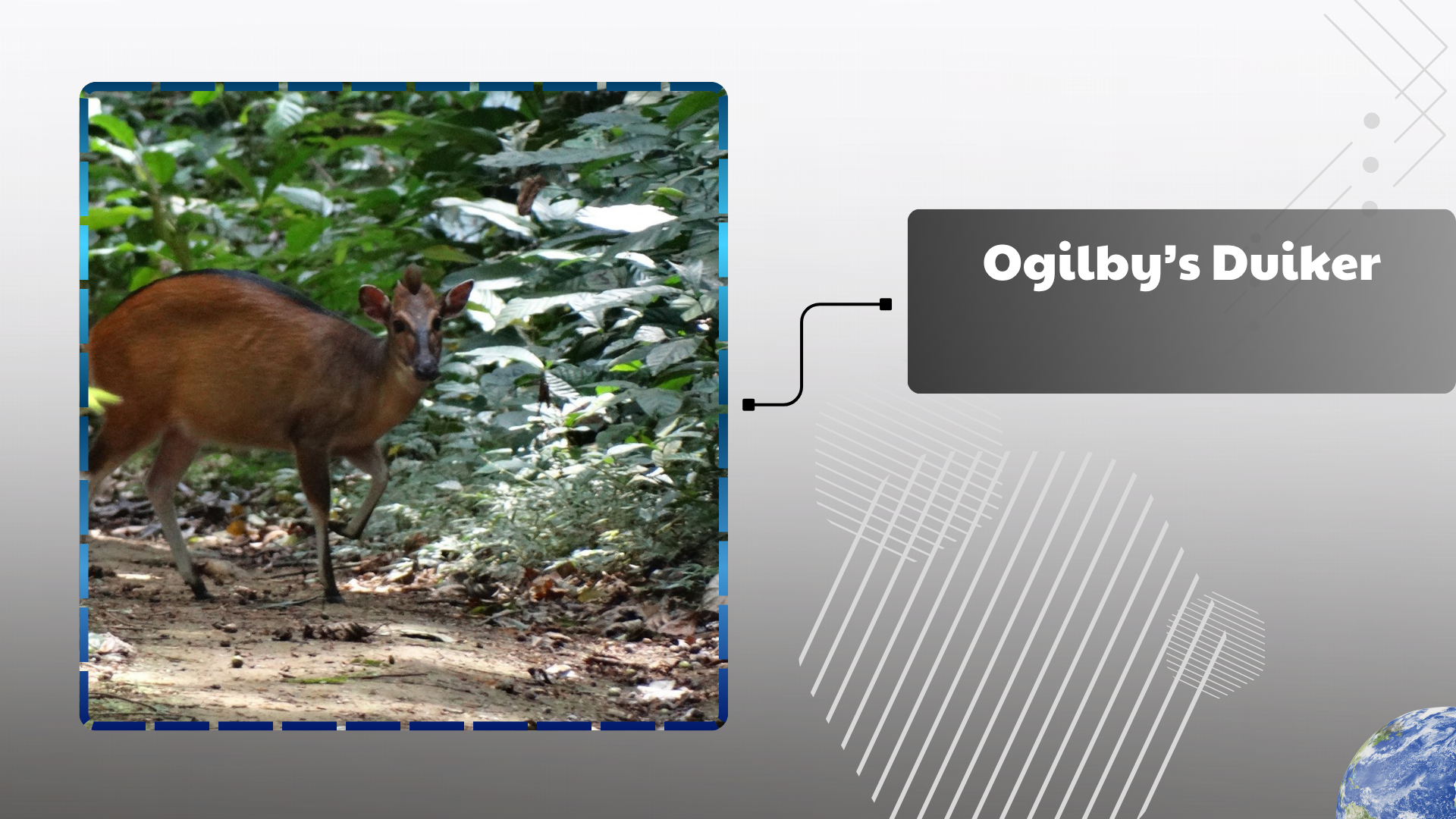
Ogilby’s duiker, Cephalophus ogilbyi, inhabits tropical forests in western and west-central Africa. The exact species boundaries have long been debated because Brooke’s and white-legged duikers are sometimes classified as its subspecies.
Typical Ogilby’s duikers have a rich golden-brown or chestnut coat with darker coloring along the back. The underparts may be paler, and the face carries a small dark crest. The body is compact and supported by relatively slender legs.
This duiker feeds on fruit, seeds, leaves, and shoots collected from the forest floor. It is shy, primarily solitary, and difficult to survey in dense habitat. Location, dorsal coloring, leg pattern, and high-quality photographs may all be needed for confident identification.
10. Peters’s Duiker
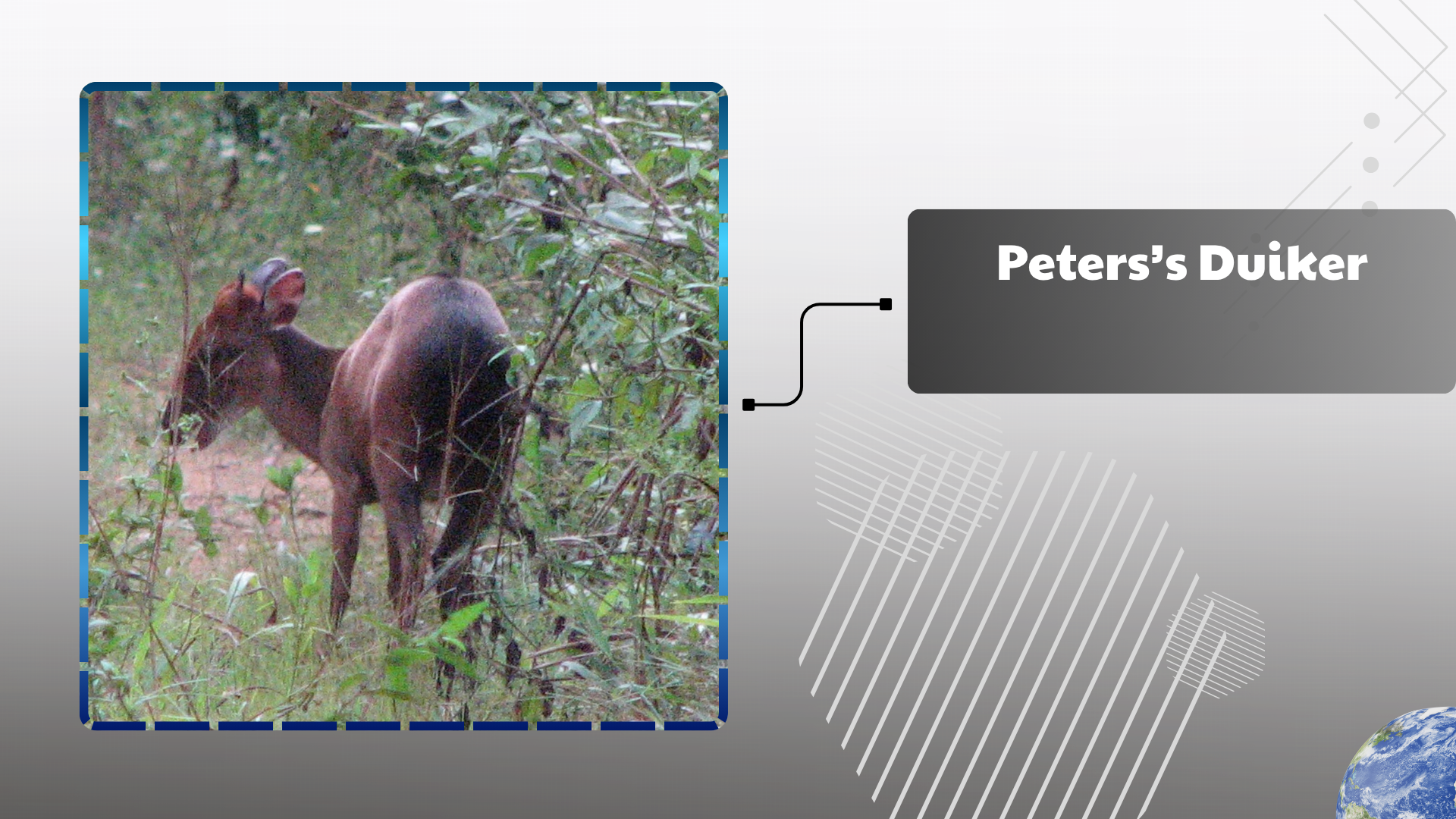
Peters’s duiker, Cephalophus callipygus, is a medium-sized red forest duiker of Central Africa. Its range includes much of the western Congo Basin, where it uses lowland rainforest and areas of dense secondary growth.
The coat is typically reddish brown, with a darker back, shoulders, and face. The rear portion can appear especially rich in color. Peters’s duiker resembles several other red duikers, and visual identification without knowing the location can be unreliable.
It feeds on fallen fruit, seeds, leaves, flowers, and fungi. Individuals usually travel alone and depend on dense vegetation for protection. Although it may remain locally common in suitable forest, heavy hunting and extensive habitat change can reduce populations.
11. Red-Flanked Duiker
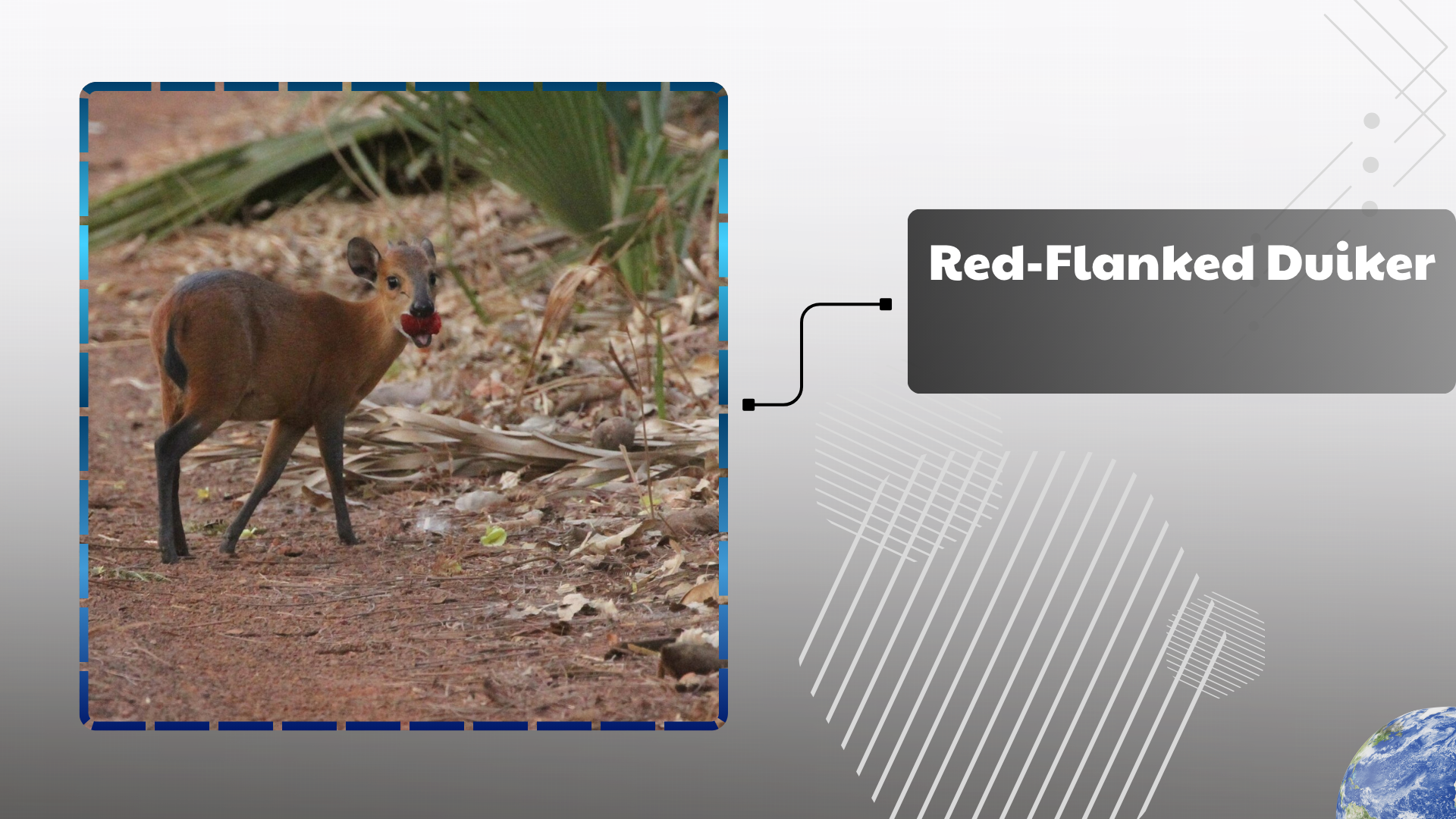
The red-flanked duiker, Cephalophus rufilatus, occurs across a broad belt of West and Central Africa. It frequently uses gallery forest, woodland thickets, forest-savanna edges, and vegetation near rivers.
Its bright red or orange sides contrast with a dark gray or black stripe running along the center of the back. The face and lower legs also show dark markings. This bold color pattern makes it one of the easier small duikers to recognize under good viewing conditions.
Red-flanked duikers eat fruits, leaves, flowers, seeds, and young plant growth. They may remain hidden for long periods before making a short, rapid dash across a trail or clearing. Habitat edges can support them, but uncontrolled hunting still causes declines in many areas.
12. Red Forest Duiker
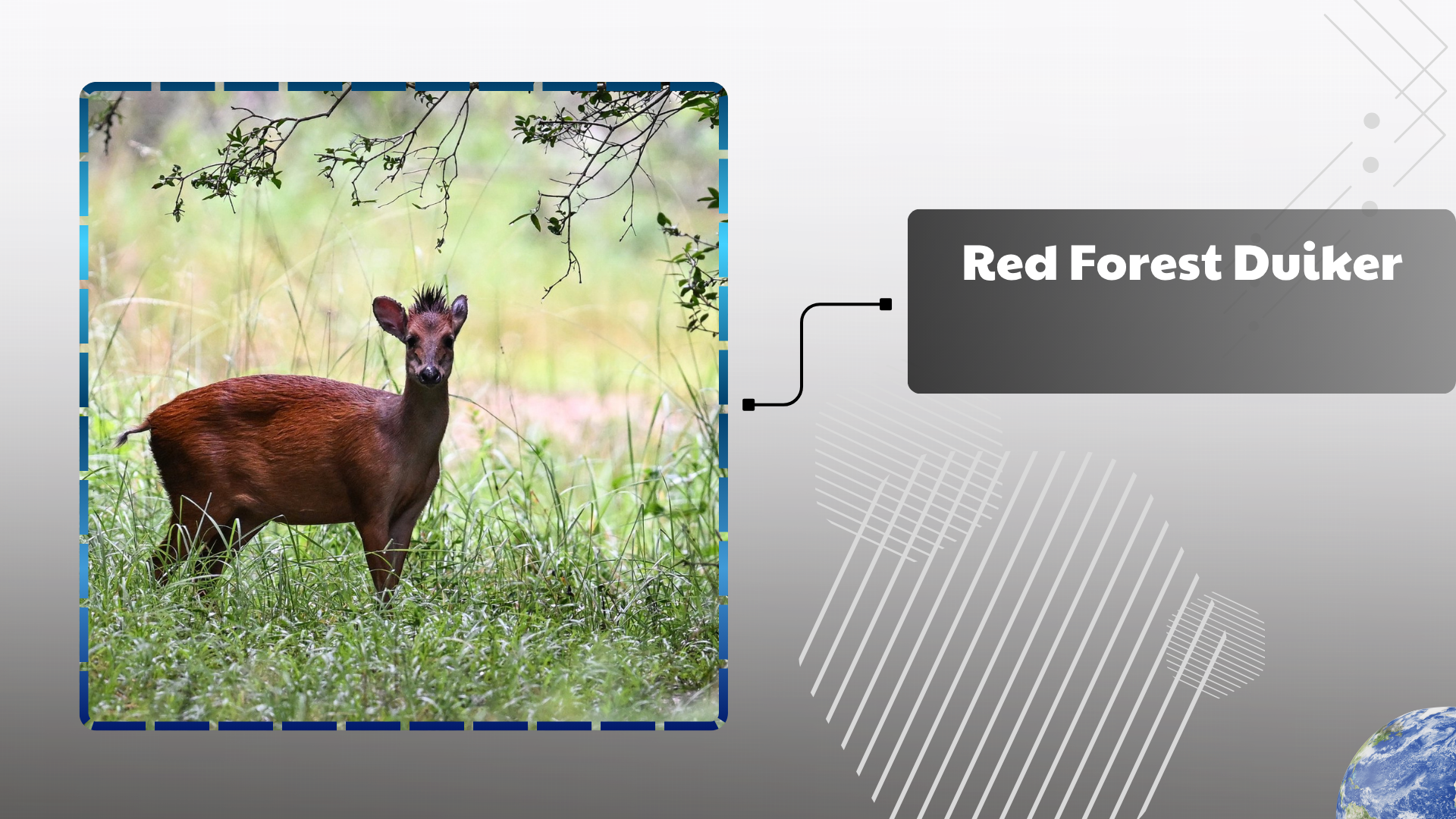
The red forest duiker, Cephalophus natalensis, is also called the Natal red duiker. It occurs in southeastern Africa, including parts of South Africa, Mozambique, Malawi, and Tanzania.
This small duiker has a warm rust-red to chestnut coat with darker lower legs and a darker forehead crest. Its ears are relatively short, and its hindquarters sit higher than its shoulders. Both sexes may carry short horns, although they can be hidden by the crest.
Red forest duikers inhabit coastal forest, evergreen thickets, woodland, and dense vegetation along waterways. They eat leaves, flowers, fruits, and seeds. They are usually solitary and often most active during the cooler parts of the day.
13. Ruwenzori Duiker
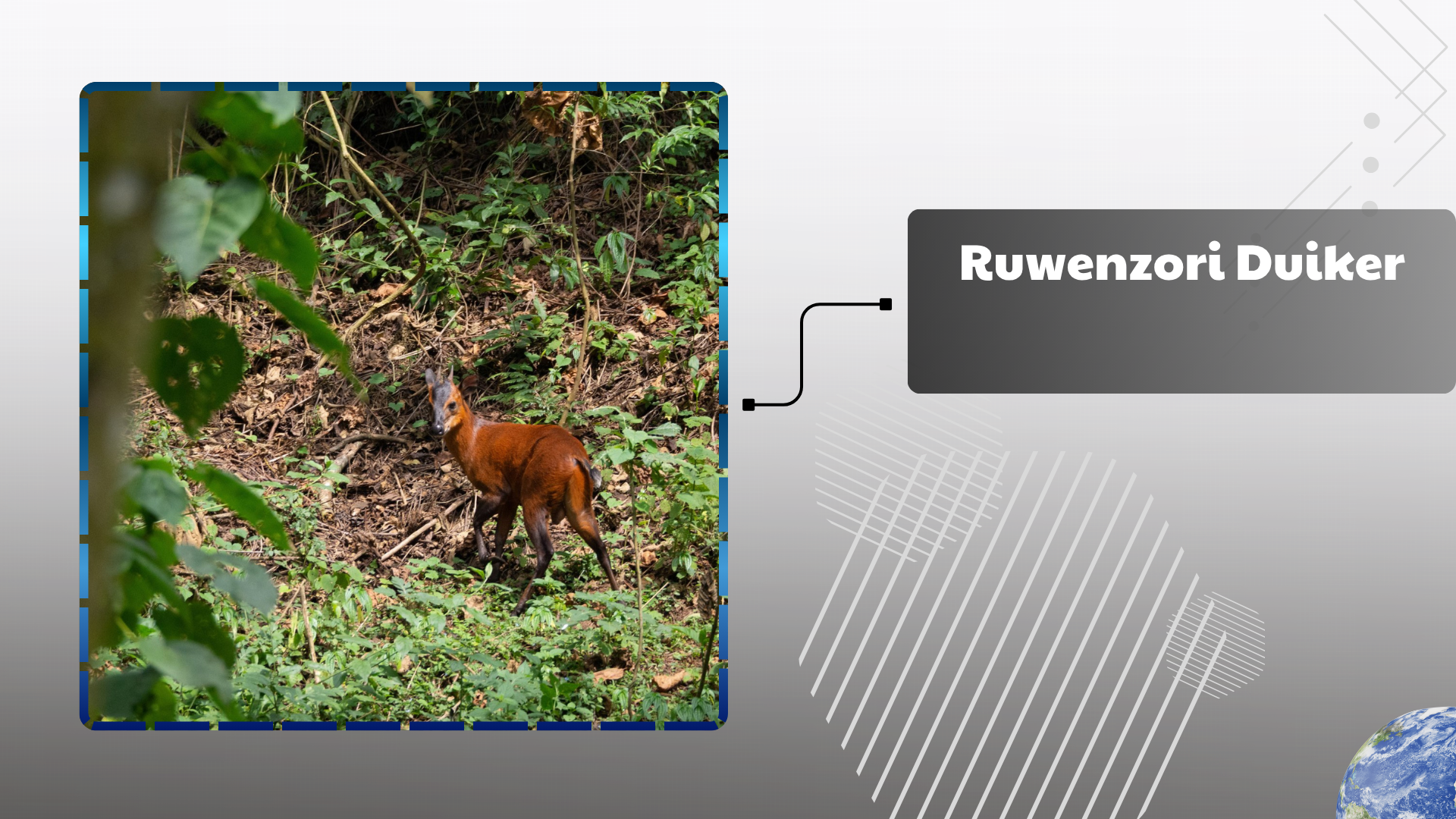
The Ruwenzori duiker, Cephalophus rubidus, is a poorly known mountain duiker associated with the Ruwenzori range along the border region of Uganda and the Democratic Republic of the Congo. Some classifications treat it as a full species, while others place it under the black-fronted duiker.
It has a dark reddish-brown coat, dark legs, a blackish facial stripe, and dense fur suited to cool mountain conditions. Its restricted high-elevation habitat is one of the most useful identification clues.
Ruwenzori duikers browse herbs, leaves, shoots, and other mountain vegetation. Their limited distribution makes them vulnerable to habitat disturbance, hunting, and environmental change. Observations should be documented carefully because confirmed field records are uncommon.
14. Weyns’s Duiker
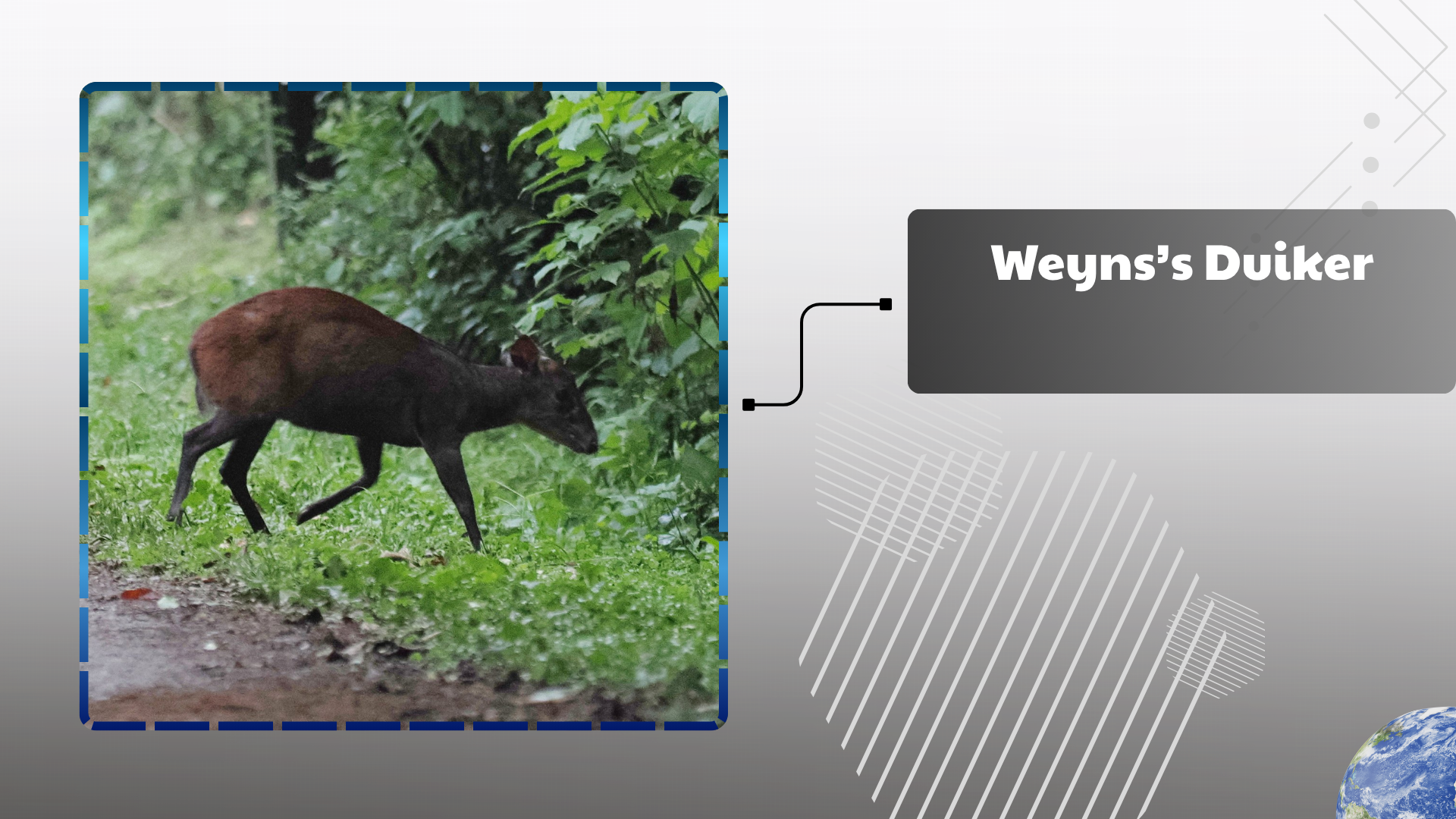
Weyns’s duiker, Cephalophus weynsi, occurs across parts of Central Africa and the western side of East Africa. It inhabits tropical rainforest, forest edges, and dense secondary vegetation.
The coat is usually reddish brown, yellow-brown, or tawny, with few dramatic markings. Its relatively plain appearance creates confusion with Peters’s, Harvey’s, and other red duikers. Distribution maps and camera-trap images are often required for dependable identification.
Weyns’s duikers eat fallen fruits, seeds, leaves, flowers, and shoots. Like most forest duikers, they are secretive and generally solitary. Populations can persist in some modified forests, but intensive hunting and complete forest removal remain significant threats.
15. White-Bellied Duiker
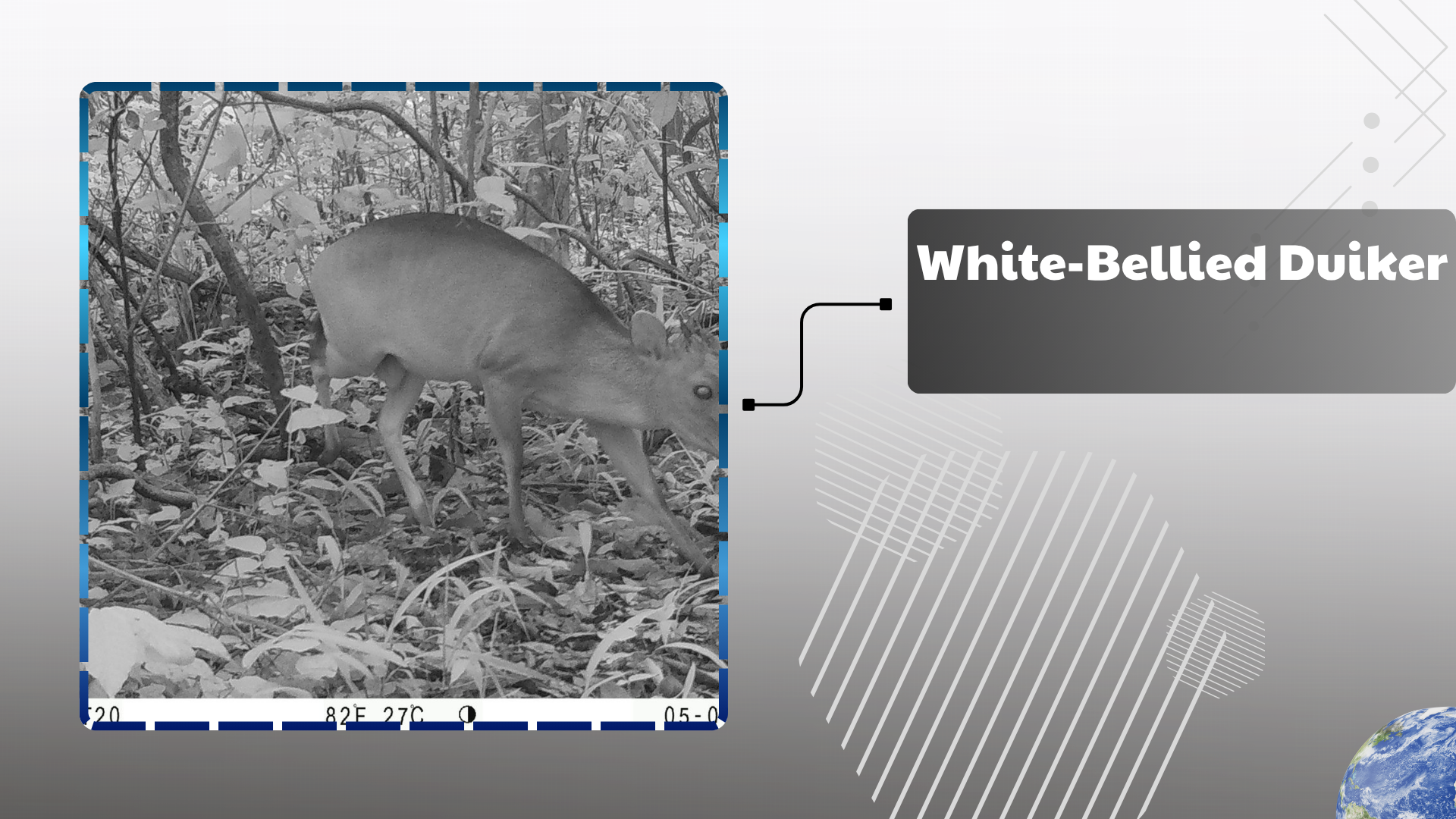
The white-bellied duiker, Cephalophus leucogaster, is a slender forest antelope of the Congo Basin. Its range covers parts of Cameroon, Gabon, Equatorial Guinea, the Republic of the Congo, and the Democratic Republic of the Congo.
It has a reddish or yellow-brown upper body with a noticeably pale belly. The face and legs may be darker, and a small crest sits between the short horns. The pale underside is helpful when visible, although it can be hidden by vegetation.
This duiker occupies lowland rainforest and feeds heavily on fallen fruit. Leaves, shoots, seeds, and flowers supplement its diet. It is difficult to observe directly, and much of what researchers know comes from tracks, local records, and camera traps.
16. White-Legged Duiker
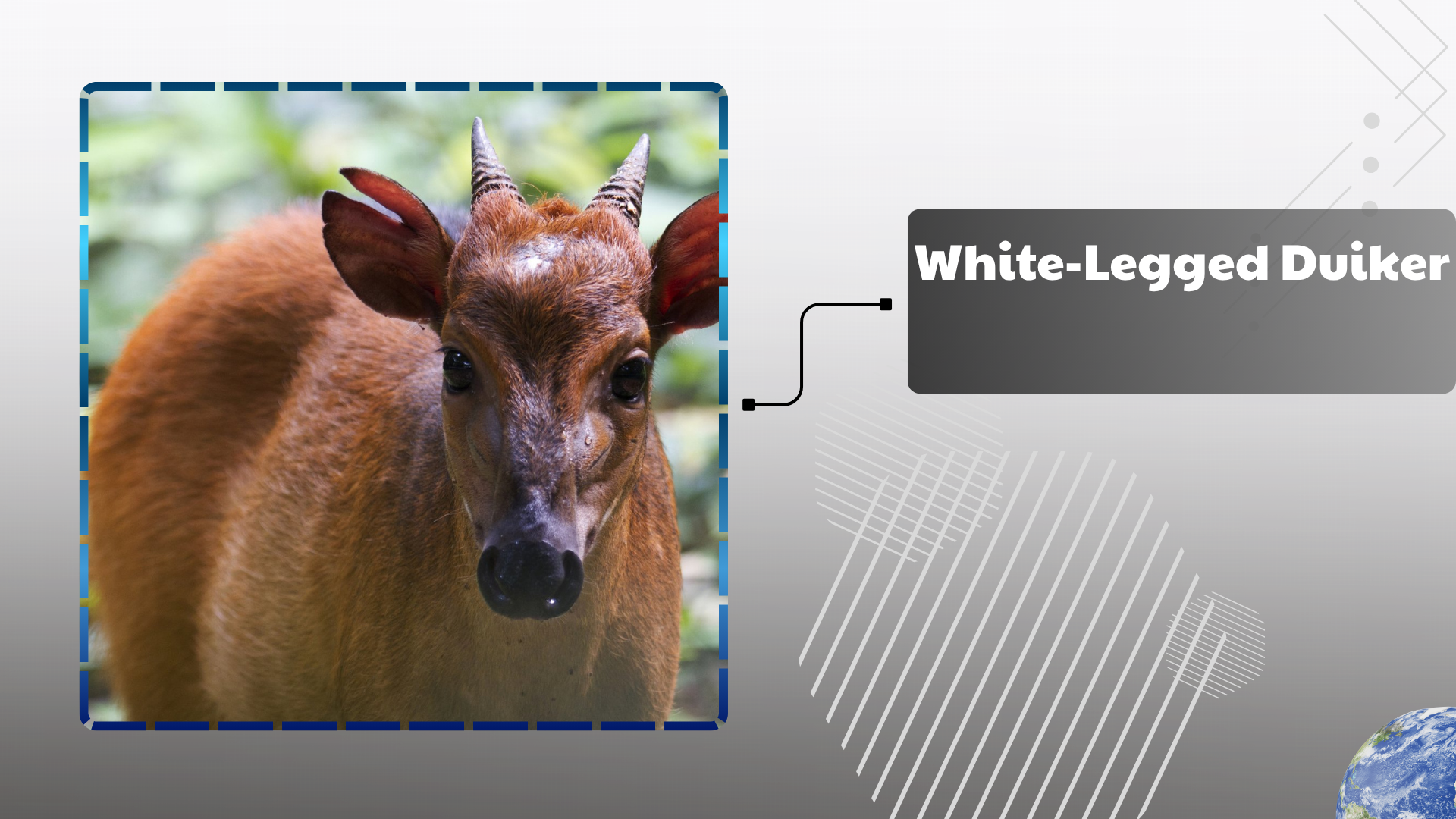
The white-legged duiker, Cephalophus crusalbum, is associated primarily with forests in Gabon and nearby parts of west-central Africa. It is sometimes treated as a distinct species and sometimes classified within Ogilby’s duiker.
Its body is golden brown or reddish, while the lower legs are noticeably pale or whitish. A dark stripe may extend along the back, creating a strong contrast with the legs. The exact pattern varies between individuals and lighting conditions.
White-legged duikers use tropical rainforest and feed on fallen fruit, seeds, leaves, and shoots. Their restricted distribution, uncertain taxonomy, forest dependence, and exposure to hunting make continued research and habitat protection important.
17. Yellow-Backed Duiker
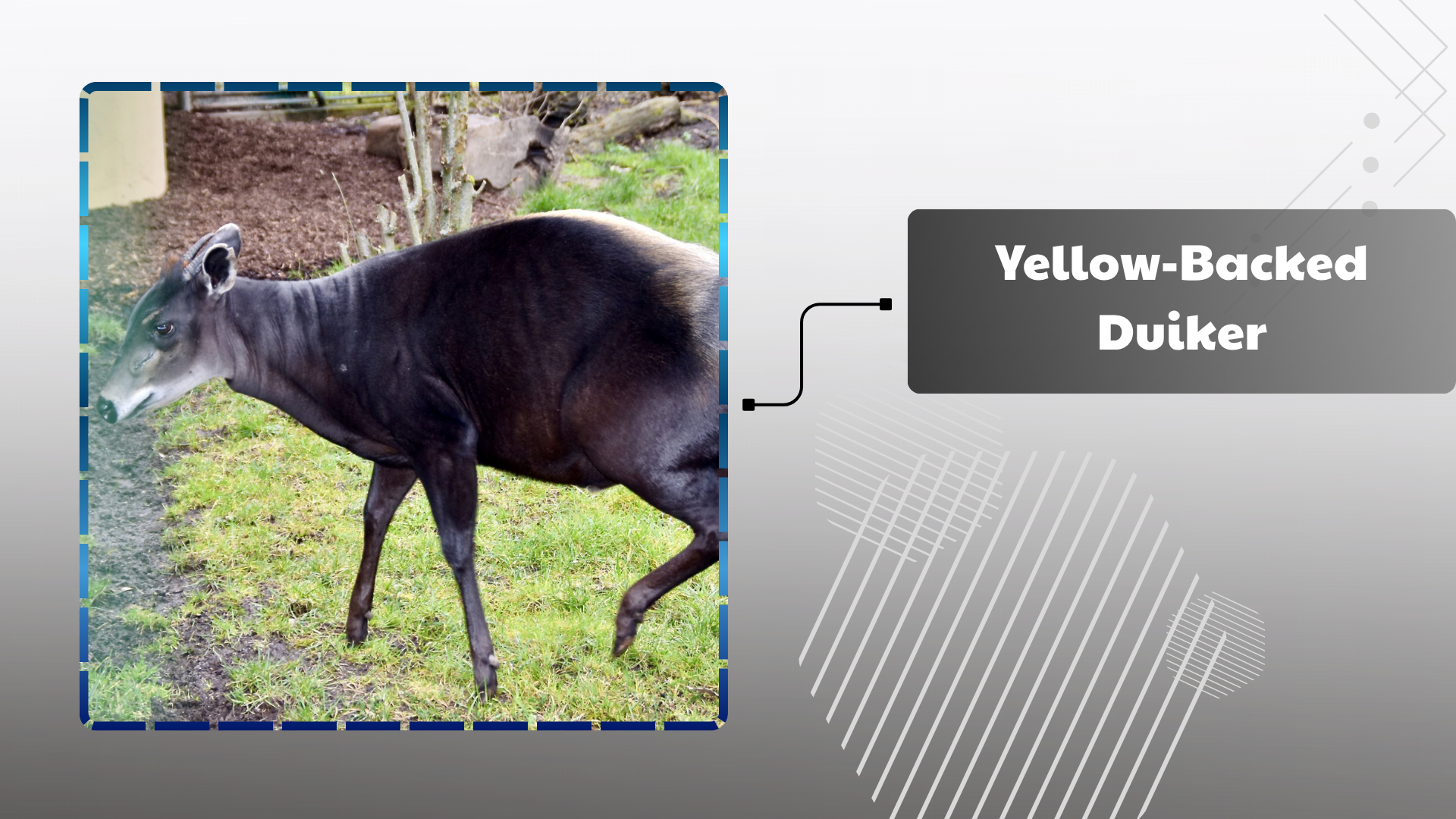
The yellow-backed duiker, Cephalophus silvicultor, is the largest duiker species. It is widely distributed through suitable forests in West and Central Africa, with additional populations extending into parts of East Africa.
Adults have a heavy, rounded body and a dark brown or nearly black coat. A large yellow or orange patch covers the rump and lower back. When alarmed, hairs in this patch may stand upright, making the bright area appear even more conspicuous.
Yellow-backed duikers eat fruit, seeds, leaves, shoots, bark, and other forest foods. Their powerful jaws allow them to process larger or harder items than many smaller duikers. They can be active by day or night and may travel substantial distances while feeding. Their size makes them especially vulnerable to hunting for wild meat.
18. Zebra Duiker
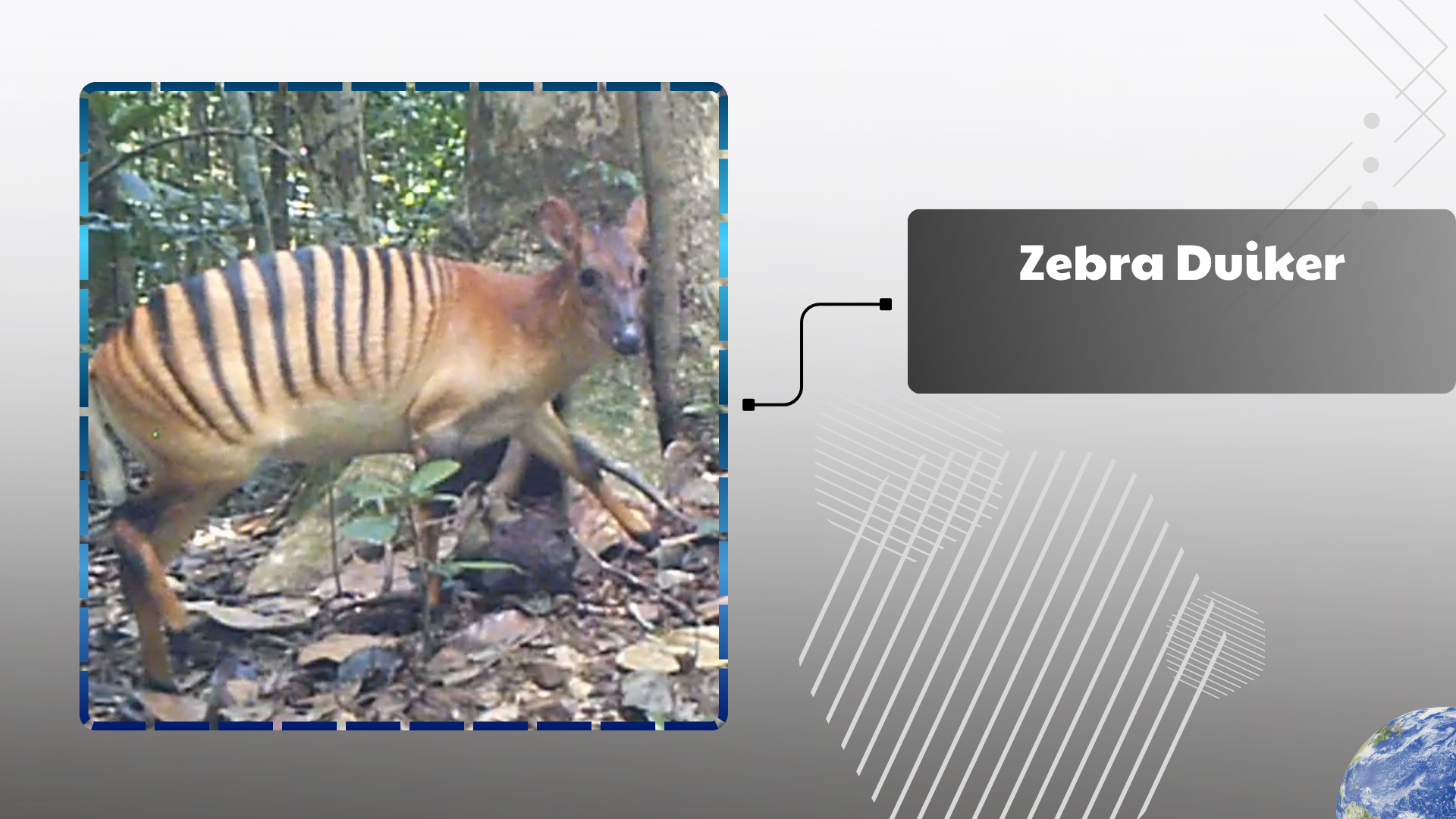
The zebra duiker, Cephalophus zebra, is one of the most visually distinctive antelopes in Africa. It lives in the Upper Guinea forests of Liberia, Sierra Leone, Guinea, and Côte d’Ivoire.
The coat is golden, reddish, or cream-colored, crossed by numerous black vertical stripes. The lower legs and face may also have dark markings. This pattern resembles sunlight and shadow passing through dense vegetation and provides effective camouflage.
Zebra duikers feed on fruit, seeds, leaves, and shoots. Their strong facial and jaw muscles help them handle relatively hard forest foods. Habitat loss and hunting have caused concern throughout their restricted range, making intact Upper Guinea forest essential to their survival.
19. Blue Duiker
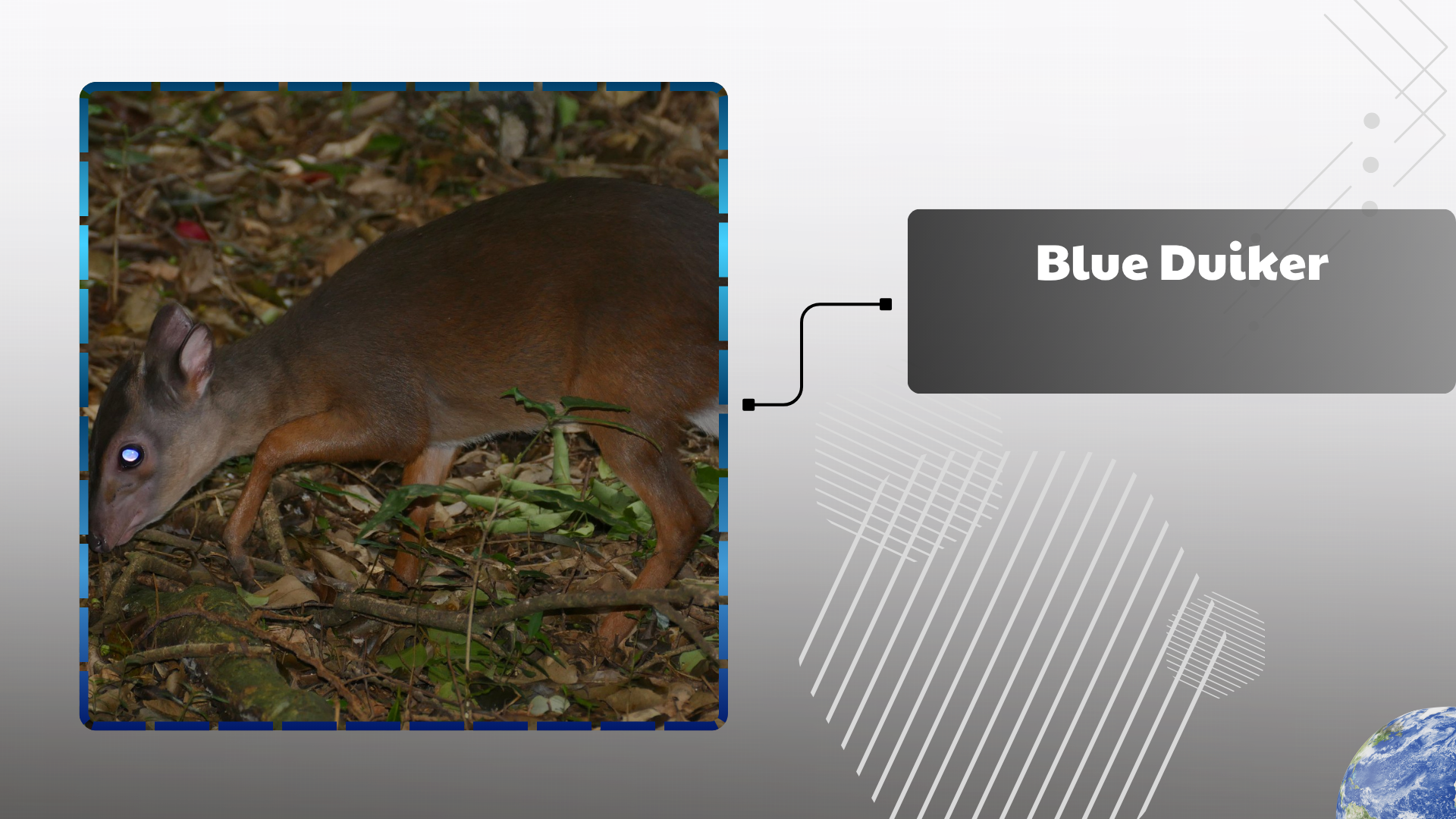
The blue duiker, Philantomba monticola, is the smallest duiker and one of the smallest African antelopes. It occurs in a wide but discontinuous range across forested regions of Central, East, and southern Africa.
Its coat may appear slate-gray, brown-gray, or blue-gray depending on the light. The underparts and tail markings are paler, while the legs are short and delicate. Adults can weigh only a few kilograms.
Blue duikers live in dense forest, coastal thicket, and woodland with thick ground cover. They eat fallen fruit, leaves, flowers, fungi, and seeds. Individuals often follow monkeys or fruit-eating birds to collect food dropped from the canopy. They commonly live alone or in stable pairs and may defend small territories.
20. Maxwell’s Duiker
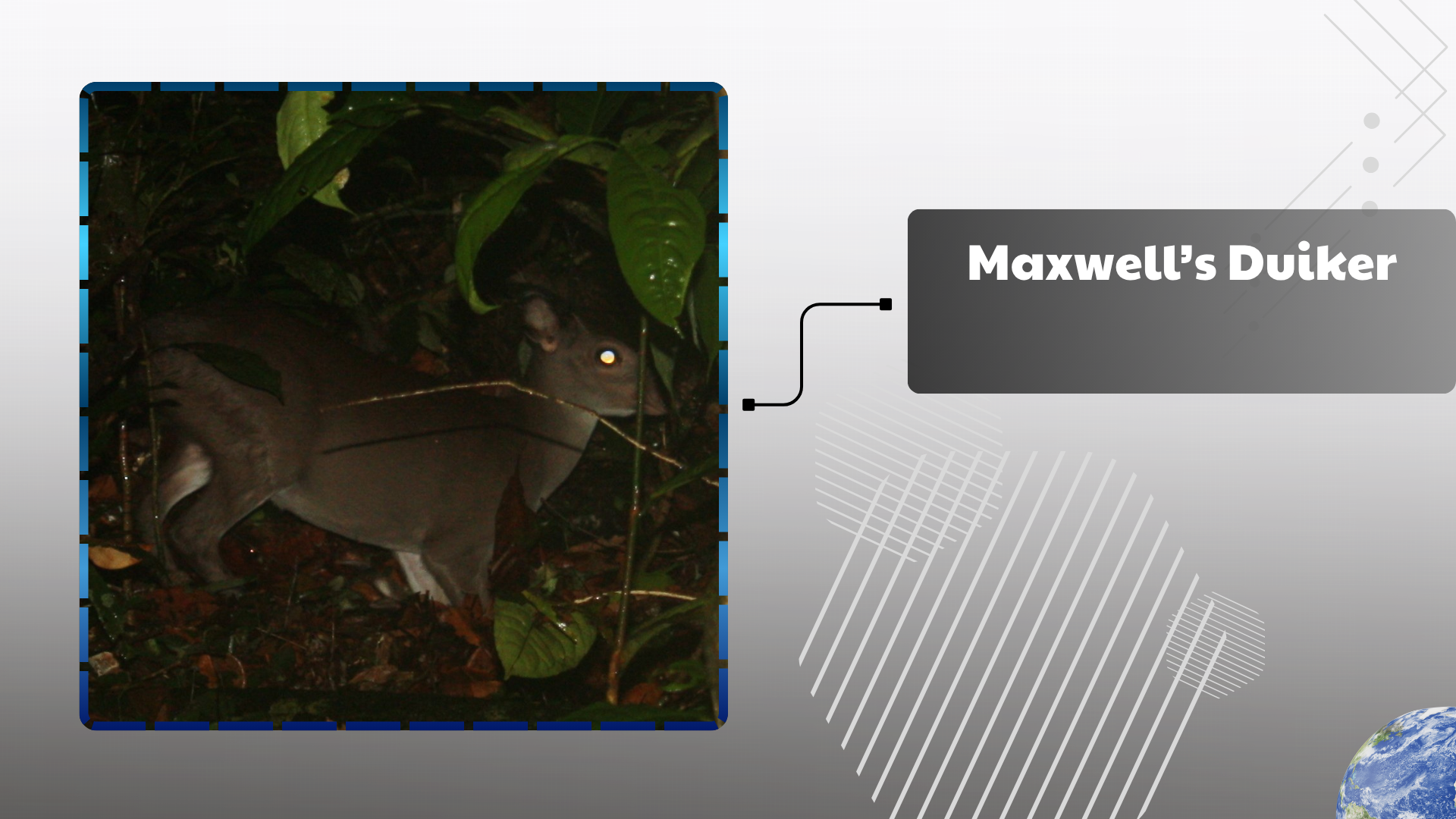
Maxwell’s duiker, Philantomba maxwellii, is a small West African forest antelope. It inhabits the Upper Guinea region and can use mature forest, secondary vegetation, plantations with cover, and forest-farm mosaics.
The coat is gray, gray-brown, or slightly bluish. The underside is paler, and a small forehead crest partially hides the horns. Maxwell’s duiker is larger and more robust than many blue duikers, but the two can still look similar.
It feeds on fruits, seeds, leaves, herbs, and flowers. Individuals are frequently solitary or paired and use scent to mark their territories. Maxwell’s duikers can tolerate some habitat modification, but heavy hunting may reduce them even where suitable vegetation remains.
21. Walter’s Duiker
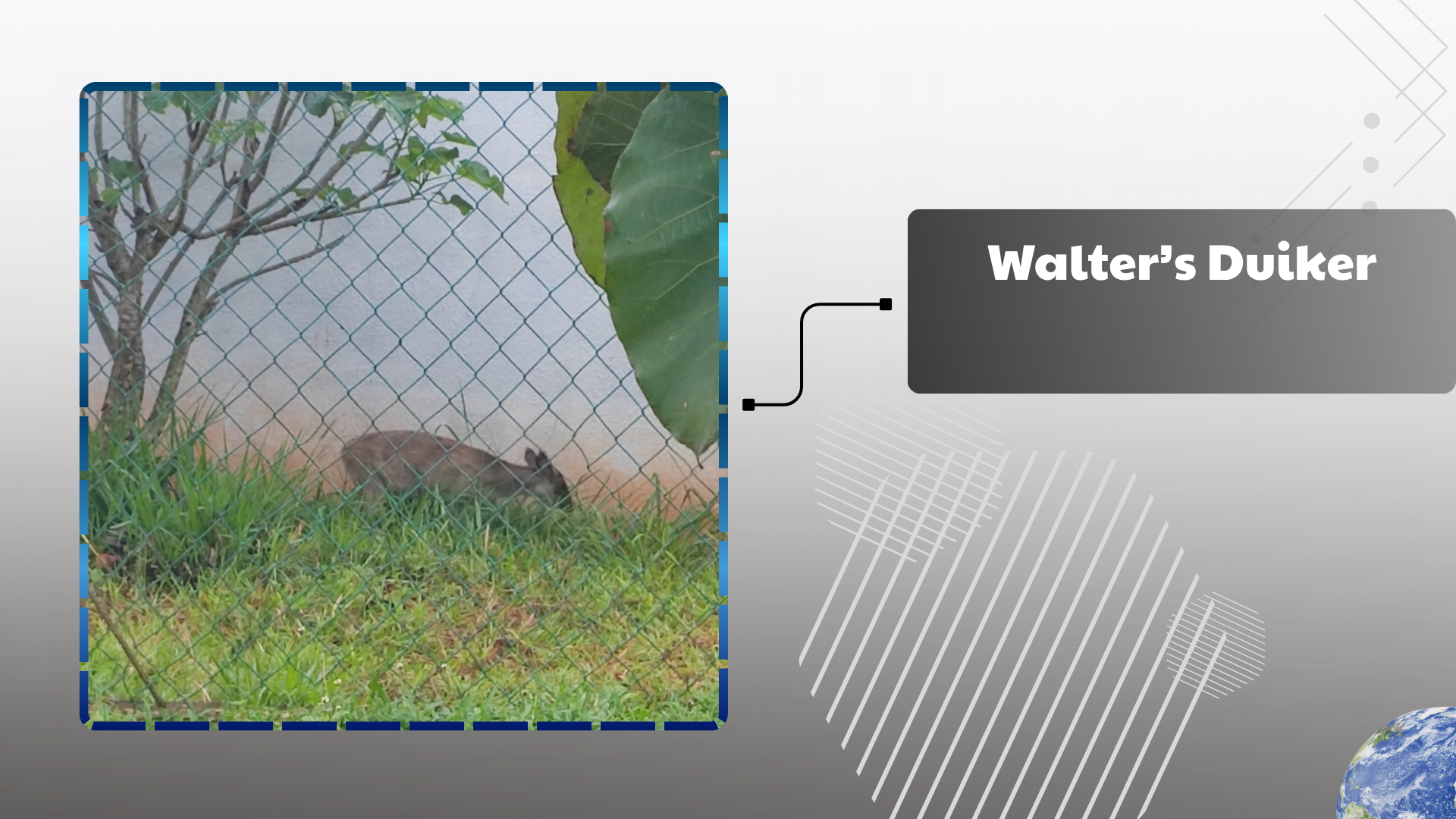
Walter’s duiker, Philantomba walteri, was formally described in 2010 after researchers examined specimens from the Dahomey Gap region of West Africa. Its recognition demonstrated that even relatively familiar African mammal groups may still contain overlooked species.
This small duiker resembles Maxwell’s and blue duikers. It has a compact body, short legs, a brownish-gray coat, and subtle facial and throat markings. Reliable separation may require skull measurements, genetics, or detailed knowledge of geographic origin.
Walter’s duiker is associated with Togo, Benin, and nearby areas. Information about its behavior, population, and exact distribution remains limited. Protecting remaining forest and woodland patches is important while researchers clarify its ecological requirements.
22. Common Duiker
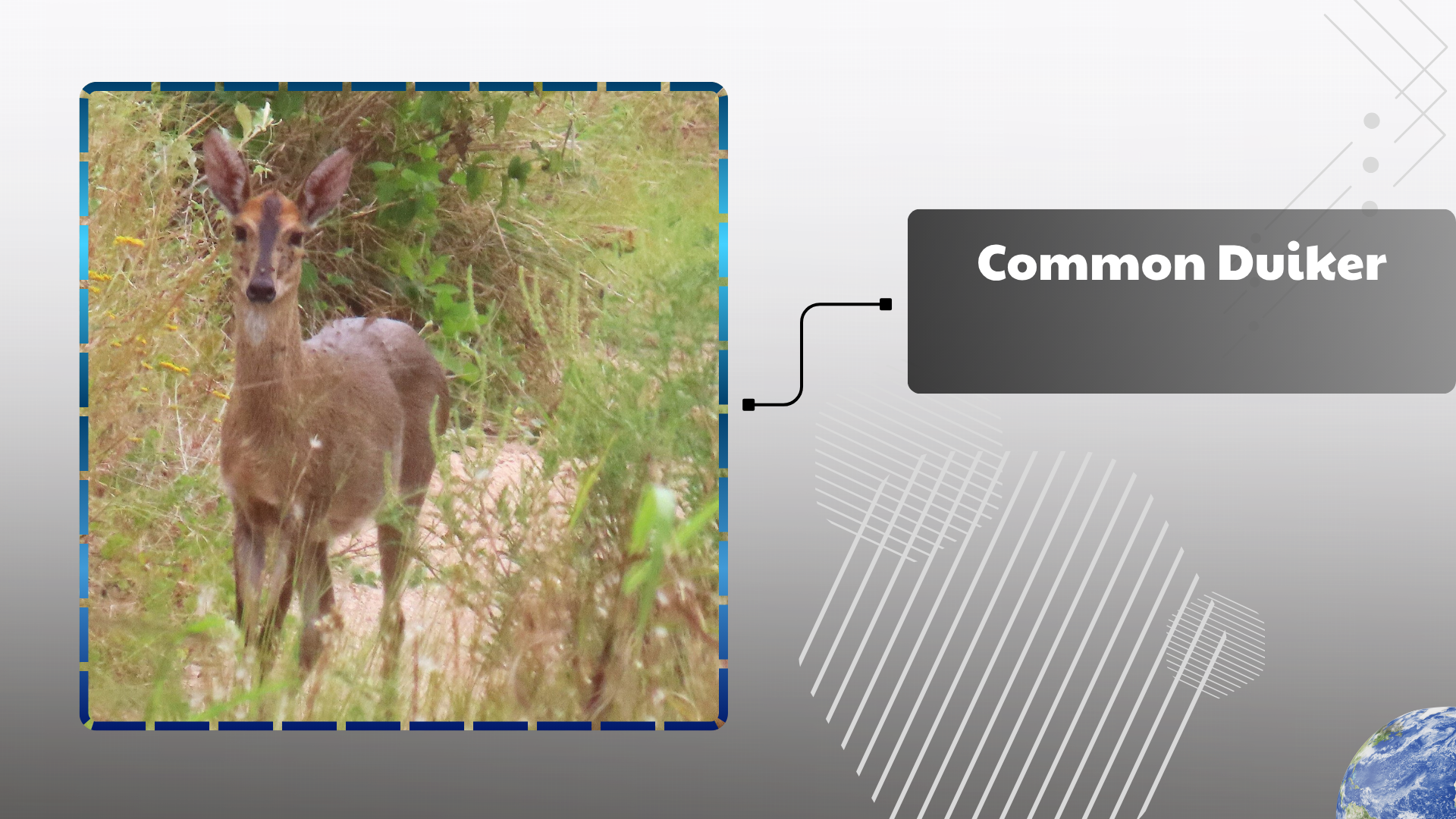
The common duiker, Sylvicapra grimmia, is also called the gray duiker or bush duiker. It is the most widespread duiker, occurring across much of sub-Saharan Africa outside the central rainforest core and the driest desert regions.
Unlike compact forest duikers, it has longer legs, a more slender body, and an upright posture suited to running through open country. Coat color varies from gray to reddish brown depending on region. A dark stripe often marks the face, and males normally have short vertical horns.
Common duikers occupy savanna, farmland edges, shrubland, woodland, rocky slopes, and grassland with nearby cover. Their flexible diet includes leaves, shoots, fruit, seeds, flowers, and occasionally other available organic material. They are usually solitary and escape by zigzagging toward bushes or rocky shelter.
How Are These Wild Animals Classified?
Duikers belong to the family Bovidae, which includes cattle, sheep, goats, gazelles, and other antelopes. Modern classifications generally place them in the tribe Cephalophini within the subfamily Antilopinae. Older books may refer to a separate subfamily called Cephalophinae.
| Genus | General Group | Species Included in This Guide |
|---|---|---|
| Cephalophus | Medium and large forest duikers | 18 broadly recognized species |
| Philantomba | Small forest duikers | Blue, Maxwell’s, and Walter’s duikers |
| Sylvicapra | Open-country bush duiker | Common duiker |
Taxonomy remains unsettled. A conservative classification may combine Brooke’s duiker with Ogilby’s duiker, Ruwenzori duiker with black-fronted duiker, and white-legged duiker with Ogilby’s duiker. This produces fewer species than the broad 22-species list. Genetic research may continue to split, combine, or rename regional populations.
Where Do These Wild Animals Live?
Duikers are native to sub-Saharan Africa. The greatest diversity occurs in the rainforests of West and Central Africa, where several species can share the same landscape by selecting different foods, activity periods, and microhabitats.
Forest duikers use lowland rainforest, montane forest, coastal thicket, swamp edges, gallery forest, and dense secondary growth. Small species may stay close to thick ground cover, while larger duikers travel farther between fruiting trees and feeding areas.
The common duiker is the major exception. It occurs in savannas, open woodland, grassland, farmland margins, rocky country, and shrublands. Even this adaptable species normally requires bushes, tall grass, rocks, or other nearby shelter.
How to Identify Different Types of Duikers
- Geographic range: Begin with the country and region because many similar species do not overlap.
- Habitat: Determine whether the animal is in rainforest, mountain forest, coastal thicket, savanna, or open woodland.
- Size: Compare the tiny blue duiker, medium red duikers, and much larger yellow-backed duiker.
- Body pattern: Look for stripes, rump patches, pale legs, dorsal bands, and contrasting shoulders.
- Coat color: Note whether the coat is red, golden, gray, blue-gray, dark brown, or black.
- Facial markings: Check for dark forehead stripes, pale brows, contrasting cheeks, and the shape of the crest.
- Leg length: Forest species usually have short legs, while the common duiker has longer legs for open-country movement.
- Horns: Record their length, angle, thickness, and whether they are present in one or both sexes.
- Activity time: Some species are mainly nocturnal, while others are active during daylight or twilight.
- Behavior: Forest duikers usually make a short dash into cover; common duikers may run farther through open terrain.
Outdoor Tips for Finding and Observing Duikers
- Walk quietly along forest trails during early morning or late afternoon.
- Watch beneath fruiting trees where monkeys and birds drop fruit.
- Scan forest edges, clearings, riverbanks, and dense vegetation beside roads.
- Use binoculars because duikers often appear for only a few seconds.
- Look for paired hoofprints, droppings, feeding remains, and narrow trails through undergrowth.
- Use camera traps where permitted to record nocturnal and highly secretive species.
- Photograph the animal’s sides, face, legs, and rump whenever possible.
- Record the exact habitat and approximate size instead of relying only on color.
- Do not chase a duiker into thick vegetation for a clearer photograph.
- Avoid publishing precise locations of rare species if that information could assist illegal hunting.
Safety, Sustainability, and Conservation Notes
Duikers are shy and rarely threaten people, but they should never be cornered or handled. A frightened animal can injure itself or strike with its horns. Wildlife observers should maintain distance and comply with reserve regulations.
The most serious threats are habitat loss, forest fragmentation, and unsustainable hunting. Snares are particularly harmful because they capture animals indiscriminately. Large forest species often decline quickly under heavy hunting because they reproduce more slowly and provide more meat than smaller species.
Protecting duikers also benefits tropical forests. These antelopes consume fruit and can help move seeds through the landscape. Conservation priorities include maintaining connected forests, supporting local communities, reducing illegal wildlife trade, enforcing hunting laws, and improving population monitoring.
Fun Facts About Duikers
- The name “duiker” comes from a word meaning “to dive.”
- Duikers escape predators by plunging into dense vegetation.
- There are 22 commonly listed living species.
- The blue duiker can weigh only a few kilograms.
- The yellow-backed duiker is the largest member of the group.
- Zebra duikers have bold black stripes across their bodies.
- Most duikers eat more fruit and browse than grass.
- Some follow monkeys to collect fruit dropped from trees.
- Scent glands near the eyes help them mark territories.
- Walter’s duiker was formally described only in 2010.
Final Thoughts on Types of Duikers
The 22 commonly recognized types of duikers reveal how African antelopes have adapted to habitats ranging from dense rainforest to open savanna. Color and markings provide valuable clues, but distribution, body size, habitat, and behavior are often more reliable for field identification. Learning about these secretive animals also highlights the importance of protecting African forests, limiting illegal hunting, and documenting wildlife responsibly.
Frequently Asked Questions
1. What is a duiker?
A duiker is a small or medium-sized African antelope adapted to escaping into dense vegetation. Most species are compact forest animals that feed on fruit, leaves, seeds, and shoots.
2. How many types of duikers are there?
A broad classification recognizes 22 living species. Some authorities recognize fewer because Brooke’s, Ruwenzori, and white-legged duikers may be classified as subspecies.
3. Where do duikers live?
Duikers live in sub-Saharan Africa. Most species inhabit tropical forests, while the common duiker occupies savannas, woodlands, grasslands, and shrublands.
4. Why are they called duikers?
The name refers to their habit of diving quickly into bushes or thick forest cover when threatened.
5. What is the smallest duiker?
The blue duiker is generally considered the smallest. Adults may weigh only a few kilograms and stand little higher than a small domestic dog.
6. What is the largest duiker?
The yellow-backed duiker is the largest species. It has a heavy body and a distinctive yellow or orange patch across its rump.
7. What do duikers eat?
Most eat fruit, seeds, leaves, shoots, flowers, fungi, and bark. The common duiker has an especially flexible diet suited to seasonal and open habitats.
8. Do duikers eat meat?
Duikers are primarily plant eaters. Occasional consumption of insects, eggs, carrion, or small animals has been reported in some species, but these foods are not the foundation of their diet.
9. Are duikers deer?
No. Duikers are antelopes in the family Bovidae, while true deer belong to Cervidae. Duiker horns are permanent and are not shed like deer antlers.
10. Do female duikers have horns?
Horn presence varies by species. In many forest duikers both sexes have short horns, while common duiker horns are usually associated with males.
11. Are duikers nocturnal?
Some are mainly nocturnal, while others are active during the day, at twilight, or at varying times. Activity may change in response to hunting and human disturbance.
12. Do duikers live in herds?
Most duikers live alone or in pairs rather than large herds. Their scattered food and territorial behavior favor small social units.
13. How fast can a duiker run?
Duikers can produce rapid bursts of speed, particularly through thick vegetation. Their main defense is reaching cover quickly rather than maintaining high speed over long distances.
14. Can duikers jump?
Yes. They can leap over fallen branches, low vegetation, and other forest obstacles. Their compact bodies and powerful hindquarters provide excellent agility.
15. What predators hunt duikers?
Duikers are preyed upon by leopards, African golden cats, eagles, pythons, crocodiles, hyenas, and other predators. The exact predator community depends on region and duiker size.
16. How do duikers avoid predators?
They freeze, remain hidden, and then make a sudden dash into dense cover. Their colors and patterns help break up their outline in forest light.
17. Are duikers endangered?
Conservation status varies. Some widespread species remain relatively secure, while restricted species such as Abbott’s, Aders’s, Jentink’s, and zebra duikers face serious threats.
18. What threatens duikers?
The main threats include forest clearing, habitat fragmentation, snares, illegal hunting, wildlife trade, road development, and isolation of small populations.
19. Which duiker has stripes?
The zebra duiker has the most prominent stripes, with multiple black bands across a golden or reddish body.
20. Which duiker has a yellow patch?
The yellow-backed duiker has a large yellow or orange patch across its rump and lower back.
21. Which duiker is mostly black?
The black duiker has a dark brown to nearly black coat. Abbott’s duiker and mature yellow-backed duikers can also appear very dark.
22. What is the most widespread duiker?
The common duiker is the most widespread. It occupies a large portion of sub-Saharan Africa and tolerates more open and modified habitats than forest species.
23. What is the rarest duiker?
Several species are exceptionally rare. Abbott’s, Aders’s, Jentink’s, and Ruwenzori duikers all have limited distributions or are difficult to document.
24. How can I tell red duikers apart?
Use geographic range, habitat, size, dorsal pattern, leg color, facial markings, and rump color. Coat color alone is usually insufficient.
25. Can different duiker species live in the same forest?
Yes. Several species can coexist by using different foods, forest layers, activity periods, and feeding areas.
26. Why are duikers important to forests?
They consume fallen fruit and may disperse seeds. They are also prey for forest carnivores and part of the nutrient cycle.
27. Are duikers aggressive?
They normally avoid people and other large animals. Territorial individuals may fight one another with their horns, especially when space or mates are contested.
28. Can duikers survive outside forests?
The common duiker thrives outside forests, and some forest species tolerate secondary growth or thickets. Most forest duikers still require dense cover and cannot survive complete habitat removal.
29. What is the best time to see duikers?
Early morning, late afternoon, and quiet nighttime camera-trap periods are productive. The best time depends on the species and local disturbance.
30. How should a duiker sighting be recorded?
Record the date, location, habitat, approximate size, coat pattern, facial markings, leg color, and behavior. Clear photographs from several angles make the record more useful.
31. Are duikers kept in zoos?
A limited number of species are maintained in specialized zoos and conservation breeding programs. Their shy behavior, diet, and sensitivity require carefully designed enclosures.
32. Can duikers be kept as pets?
Duikers are wild antelopes and are not suitable pets. Keeping one may be illegal and can create serious welfare, veterinary, and safety problems.
33. What is a forest duiker?
A forest duiker is a species adapted to dense woodland or rainforest. Most belong to Cephalophus or Philantomba.
34. What is a bush duiker?
Bush duiker is another name commonly applied to the common duiker. It describes the species’ preference for savanna, shrubland, and open habitat with nearby cover.
35. Is Walter’s duiker a newly discovered species?
Walter’s duiker was formally described in 2010 using museum specimens and evidence from the Dahomey Gap region. Local people may have known the animal long before its scientific description.
36. Why does the number of duiker species vary?
Researchers disagree about whether some regional populations are full species or subspecies. New genetic and anatomical studies can also change genus and species boundaries.