
Finches are among the most colorful, diverse, and fascinating small birds on Earth. With over 200 species scattered across continents, they’ve adapted to every habitat—from mountain forests to desert scrublands. Known for their cheerful songs, seed-cracking beaks, and striking plumage, finches have captivated bird lovers and scientists alike. This guide will help you identify 50 types of finches from around the world, including Darwin’s famous Galápagos finches, true finches of North America and Europe, and exotic tropical species. Whether you’re a beginner birdwatcher or a wildlife enthusiast, this detailed list covers their habitats, behaviors, and distinguishing features to make finch identification easier than ever.
1. House Finch (Haemorhous mexicanus)
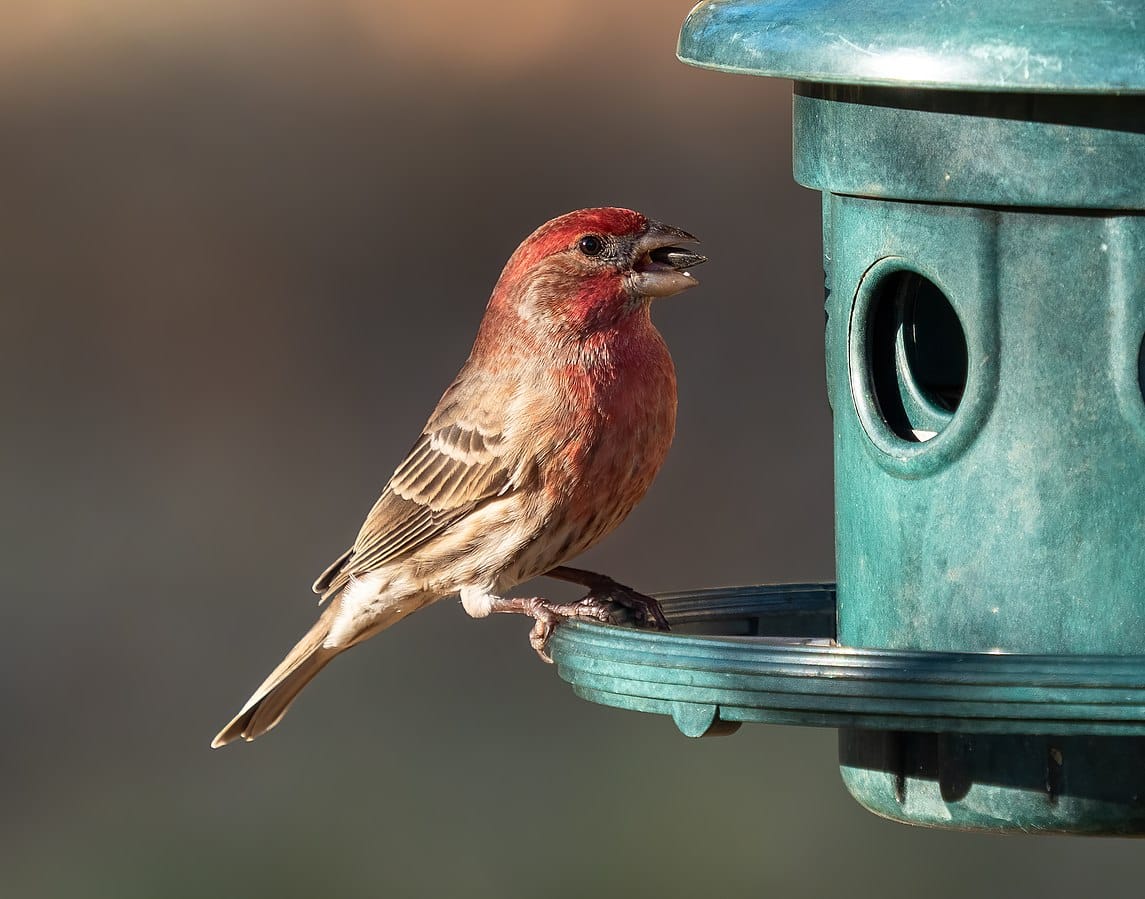
The House Finch is one of the most familiar and adaptable birds across North America. Originally native to the deserts and dry scrub of the western United States and Mexico, this species was introduced to the eastern states in the 1940s and quickly spread nationwide. Males are recognized by their vibrant red, orange, or even yellow-tinged plumage around the head and chest, while females are streaky brown with a subtle elegance that helps them blend into urban and suburban settings.
These finches thrive in human-dominated environments, often nesting in hanging planters, under awnings, or in streetlight fixtures. Their diet primarily consists of seeds, grains, and fruits, but they’re also known to visit backyard feeders, where they show little fear of people. The House Finch’s song is a cheerful, warbling melody, making it a delightful companion for any backyard birdwatcher.
One interesting aspect of the House Finch is the variation in male coloration, which depends on diet. The more carotenoid-rich food a male eats, the redder his plumage becomes—a natural sign of good health that females find irresistible. They’re social birds that often flock in large groups, especially in winter, when food becomes scarce. Despite facing occasional population declines due to a respiratory disease called conjunctivitis, the House Finch remains one of the most successful finches in North America. Their adaptability and friendliness make them a true urban survivor and a favorite among bird enthusiasts.
2. Purple Finch (Haemorhous purpureus)
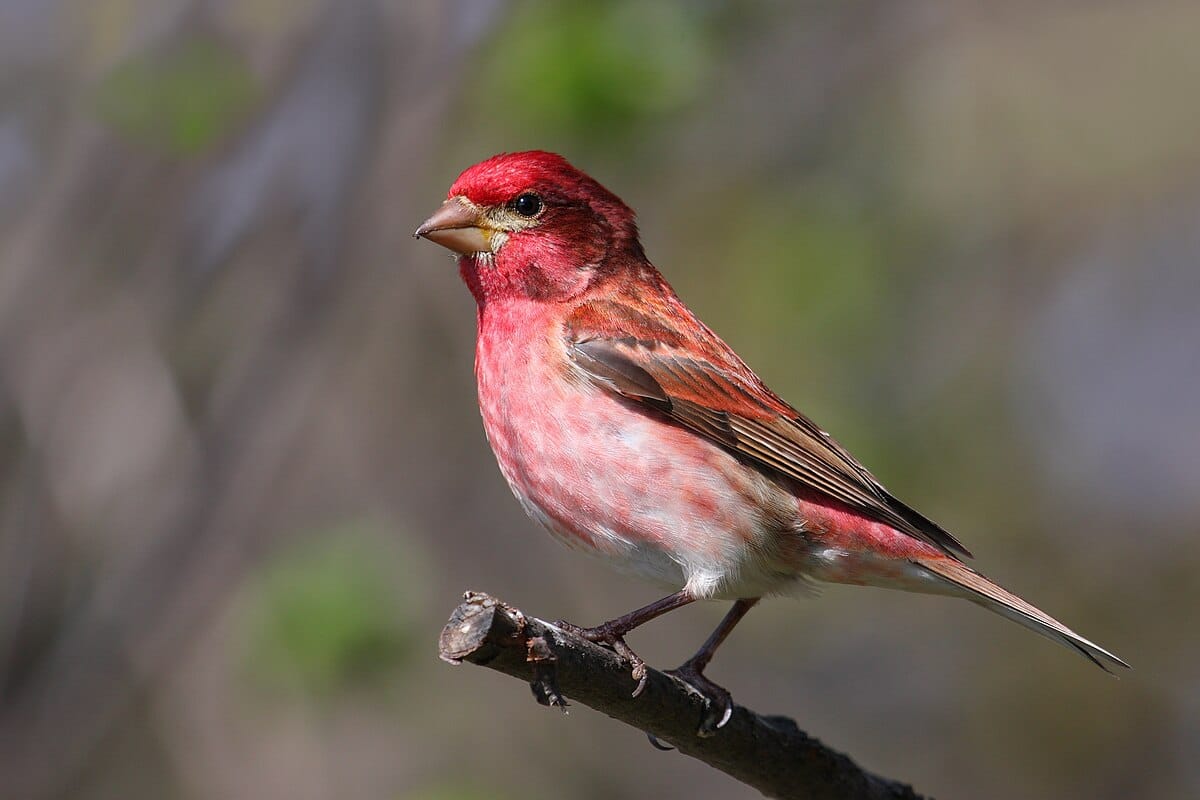
The Purple Finch, often described as “a sparrow dipped in raspberry juice,” is a stunning and slightly shyer relative of the House Finch. Found across Canada and the northern United States, this species prefers mixed forests, woodlands, and rural gardens. Males have a rich rose-red wash over their head, chest, and back, fading into brown streaks on the flanks. Females, on the other hand, lack the red hue and are heavily streaked with a bold white eyebrow line that helps distinguish them from other brown finches.
These birds migrate seasonally, moving southward into the United States during winter. Purple Finches are particularly fond of sunflower seeds, berries, and buds, often feeding high in the canopy or visiting feeders during cold months. Their flight call is a soft “pik,” and their song—a sweet, fluid series of warbling notes—echoes beautifully through the trees.
Unlike House Finches, Purple Finches are less tolerant of urban areas, preferring more natural settings. They compete with other finch species, especially the House Finch, for nesting sites and food sources. In fact, the House Finch’s aggressive spread in the eastern U.S. has led to local declines in Purple Finch populations. Nevertheless, these charming forest dwellers remain a symbol of northern woodlands and are beloved for their melodic presence and vivid colors that brighten any birding trip.
3. Cassin’s Finch (Haemorhous cassinii)
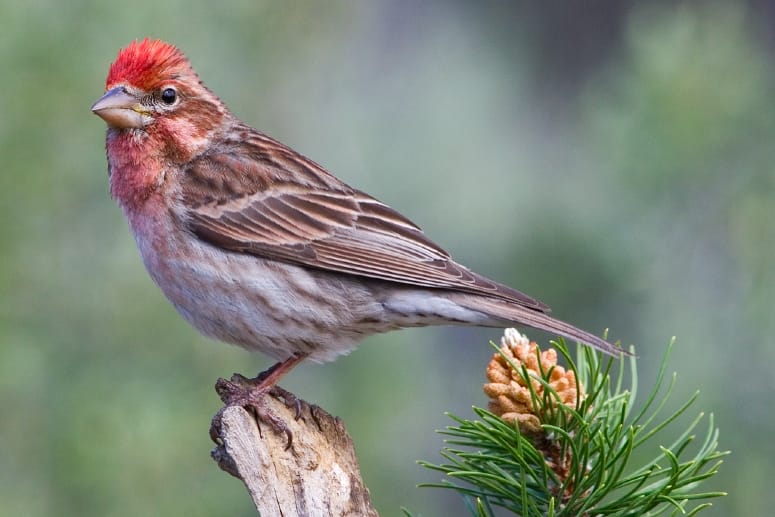
Cassin’s Finch is the mountain cousin of the House and Purple Finches. This bird inhabits the coniferous forests of the western United States and parts of southwestern Canada. Males are slightly larger and more pinkish than House Finches, with a rosy-red crown and pale pink chest, while females exhibit streaked brown plumage. A key identification feature is the male’s red cap, which looks like it’s been carefully painted on the top of his head.
These finches live at higher elevations, typically in pine and fir forests. In winter, they descend to lower valleys in search of seeds, buds, and berries. Cassin’s Finches are also frequent visitors to feeders, where they may form mixed flocks with Pine Siskins and Red Crossbills. Their song is rich and warbling, often more musical and less hurried than the House Finch’s tune.
Interestingly, Cassin’s Finches have a nomadic side. Their populations can fluctuate widely depending on the cone crop of conifers. In years when pine seeds are plentiful, large flocks can be seen feeding in mountain meadows; during lean years, they may wander farther south. This adaptability helps them survive in challenging alpine environments. Their preference for clean air and natural habitats makes them a strong indicator of forest health in the western mountains.
4. American Goldfinch (Spinus tristis)
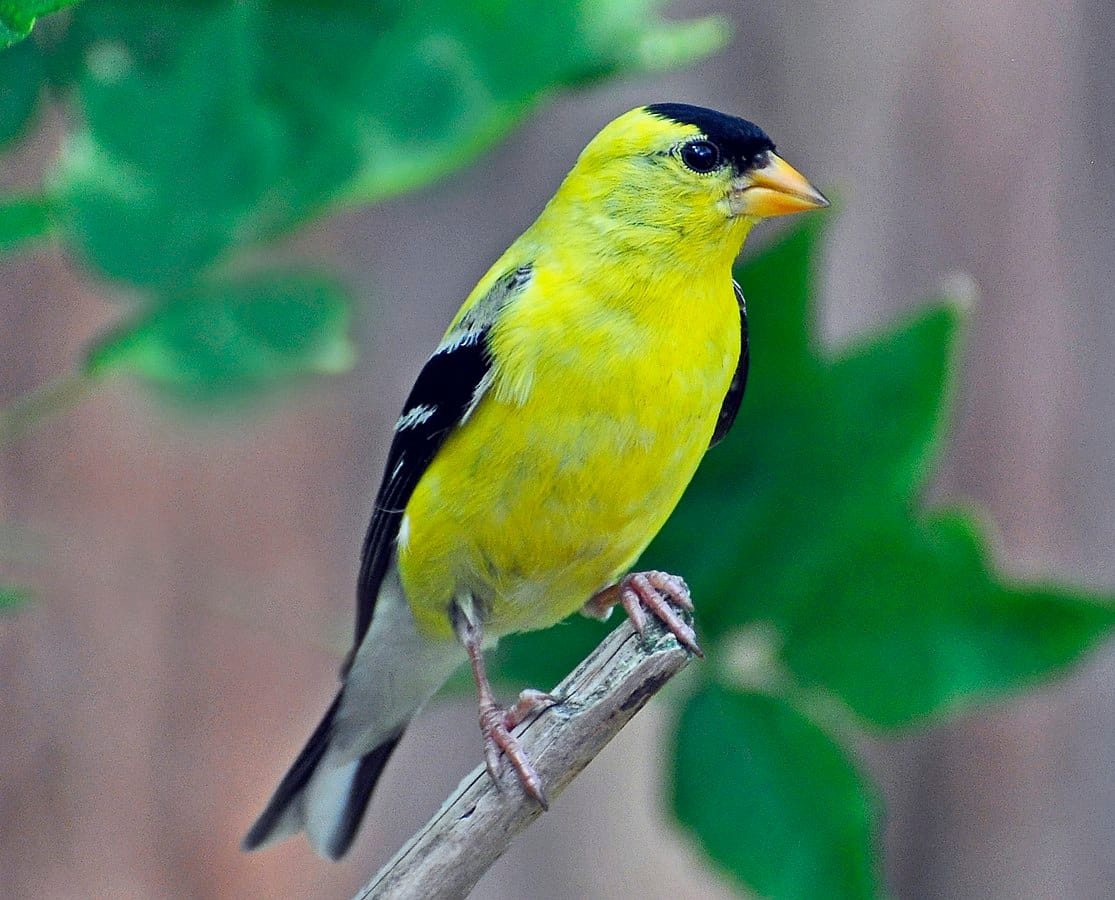
The American Goldfinch, also known as the “wild canary,” is a bright symbol of summer across North America. Males are a vivid lemon-yellow with a contrasting black cap and wings during breeding season, while females wear more subdued olive tones. In winter, both sexes molt into a duller brown plumage, helping them blend with bare trees and dry grasses.
These cheerful birds prefer open fields, meadows, and weedy areas where thistles and sunflowers grow in abundance. They are strict vegetarians—unusual among songbirds—feeding almost exclusively on seeds. Because of this, their breeding season coincides with the late summer seed boom, long after most other birds have nested. Their nests are woven tightly from plant fibers and lined with soft thistle down, sometimes so water-resistant that they can hold rain like a tiny cup.
American Goldfinches are acrobatic feeders, often seen hanging upside down from seed heads or nyjer feeders. Their flight is a distinctive roller-coaster pattern, accompanied by a lilting “per-chick-o-ree” call. Unlike many finches, they molt twice a year, giving them that brilliant yellow summer coat. Gentle, social, and easy to attract to backyard feeders, goldfinches are among the most beloved birds in North America. Their joyful presence brings a splash of color to any garden or countryside landscape.
5. Lesser Goldfinch (Spinus psaltria)

The Lesser Goldfinch is a tiny, lively bird found from the southwestern United States down through Mexico and Central America. Despite its name, it’s no less charming than its American cousin. Males are striking with black caps, olive-green or black backs, and bright yellow underparts, while females are a softer olive-yellow. Regional differences in plumage make them a fascinating bird for enthusiasts to identify—western populations often show dark backs, while eastern ones lean greener.
These goldfinches prefer scrublands, oak woodlands, and suburban areas. Their diet is dominated by seeds—especially from sunflowers and composites like dandelions and thistles—but they’ll also snack on buds and small insects. Lesser Goldfinches are active, agile, and rarely alone, forming tight flocks that flit through trees with constant chattering.
What makes the Lesser Goldfinch stand out is its complex song, a long, musical warble that can include imitations of other birds. Males sing from high perches to defend territory and attract mates. In many regions, they nest multiple times per year, especially where food is abundant. Their adaptability allows them to thrive near human settlements, and their bright energy makes them a favorite subject for bird photographers and nature lovers alike.
6. Lawrence’s Goldfinch (Spinus lawrencei)
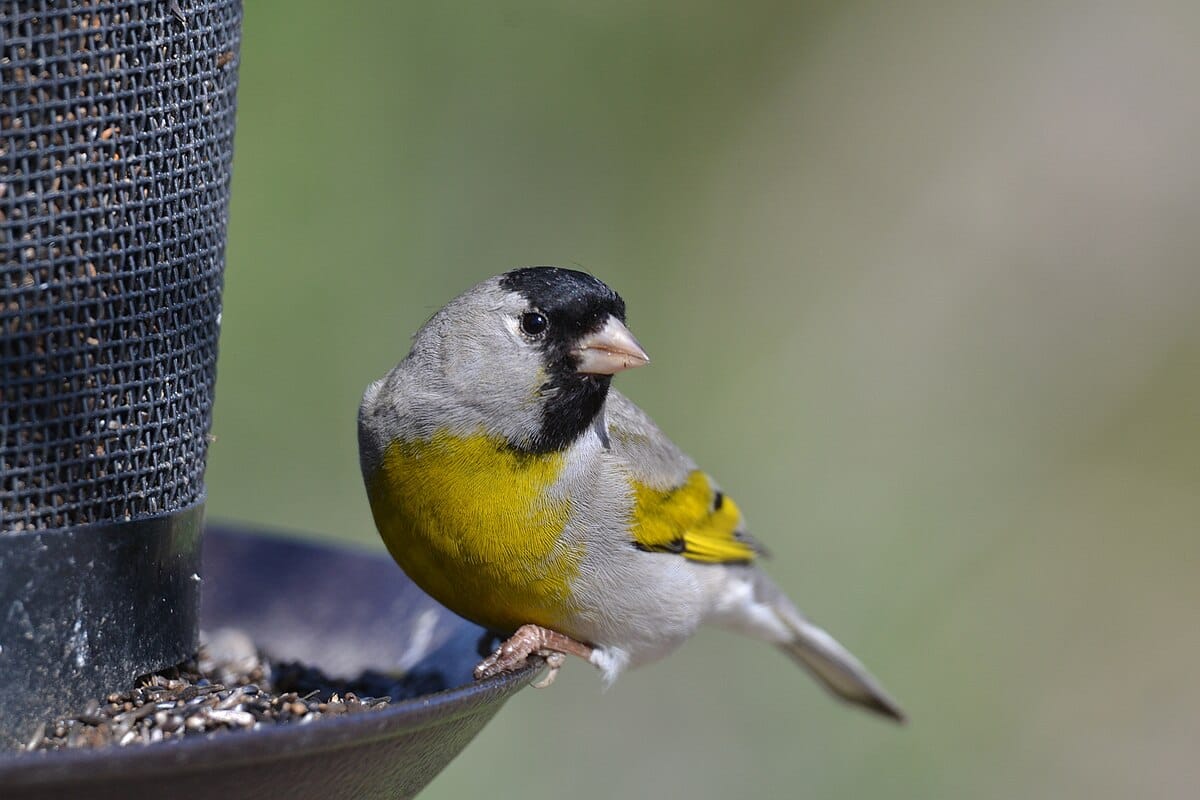
Lawrence’s Goldfinch is one of the most distinctive and unpredictable members of the finch family. Found mainly in California and parts of the southwestern United States, this species is known for its elegant silvery-gray body, black face mask, and bright yellow chest and wings. Unlike many other goldfinches that migrate north and south, Lawrence’s Goldfinches move erratically depending on rainfall and seed availability—a phenomenon that makes spotting them a delightful surprise for birdwatchers.
These finches prefer dry grasslands, oak savannas, and chaparral environments. They feed almost exclusively on seeds, especially those of fiddlenecks, chamise, and various composites. During spring, flocks can suddenly appear in large numbers where seed crops are plentiful, then vanish just as quickly once food runs out. This nomadic lifestyle, guided by environmental changes, shows their incredible adaptability to California’s variable climate.
Lawrence’s Goldfinches are peaceful and often form large, social flocks outside the breeding season. Their song is a delicate, metallic tinkle—soft, musical, and somewhat wistful. Males court females by fluttering in mid-air while singing and displaying their bright yellow patches. Nests are usually built in trees or shrubs near water sources, lined with fine plant fibers and soft materials. Though they may be less well-known than the American Goldfinch, Lawrence’s Goldfinches are treasured among birders for their beauty and mysterious movements—like golden-gray jewels of the western skies.
7. European Goldfinch (Carduelis carduelis)
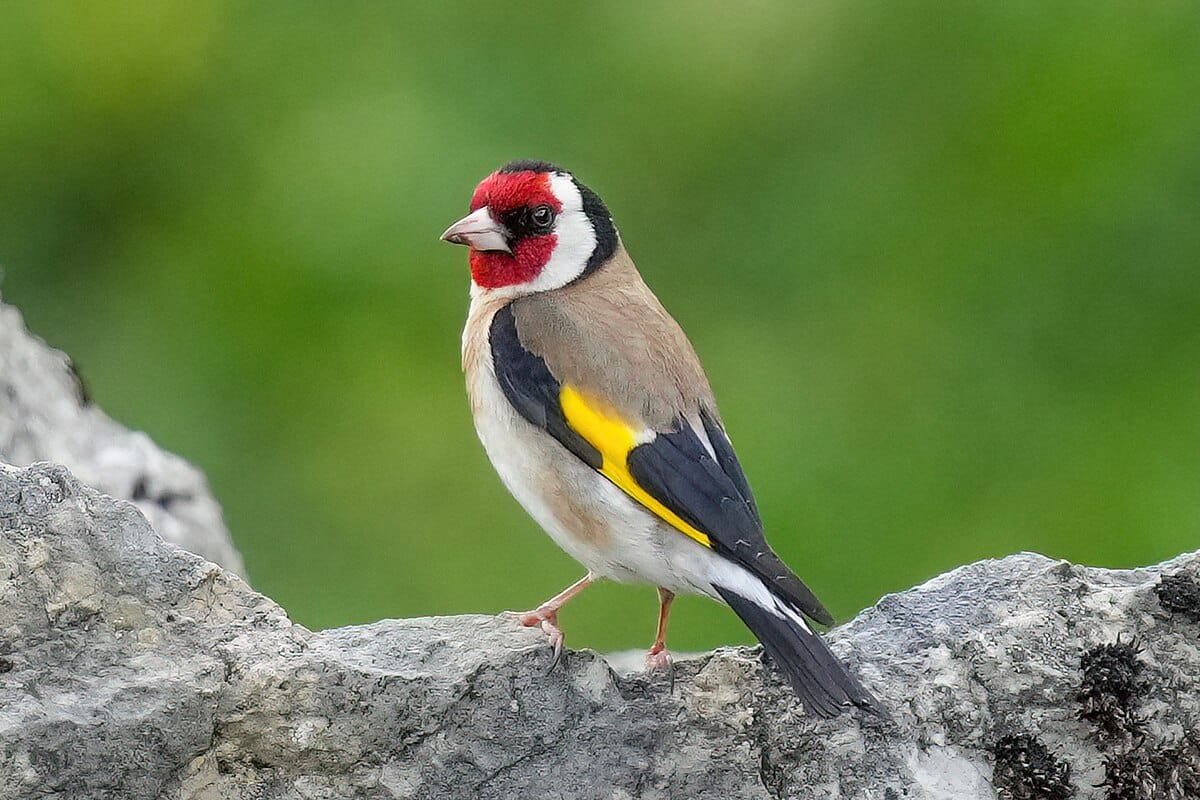
The European Goldfinch is one of the most striking finches in the world, easily recognized by its brilliant red face, black-and-white head, and golden-yellow wing bars. Found throughout Europe, western Asia, and North Africa, this bird has long been a symbol of joy and good fortune, often featured in art and folklore. Its graceful flight and melodic song make it a beloved garden visitor across its range.
These finches thrive in open woodlands, gardens, orchards, and meadows. They feed mainly on seeds—especially those of thistles and teasels—but also eat buds and small insects during breeding season. Their long, slender beaks are perfectly adapted for reaching deep into seed heads where other birds cannot. Because of their friendly and colorful nature, European Goldfinches were once popular cage birds, though trapping them is now illegal in most countries due to conservation efforts.
Social and highly active, European Goldfinches often gather in flocks called “charms,” filling the air with sweet, tinkling calls. During courtship, males perform graceful fluttering displays while singing complex, rippling songs. In winter, they may join mixed flocks with other finches and buntings. These birds are now spreading into new regions—including Australia and New Zealand—where they’ve successfully established wild populations. Their adaptability, vivid beauty, and cheerful presence make the European Goldfinch one of the most recognizable and admired finches on the planet.
8. Greenfinch (Chloris chloris)
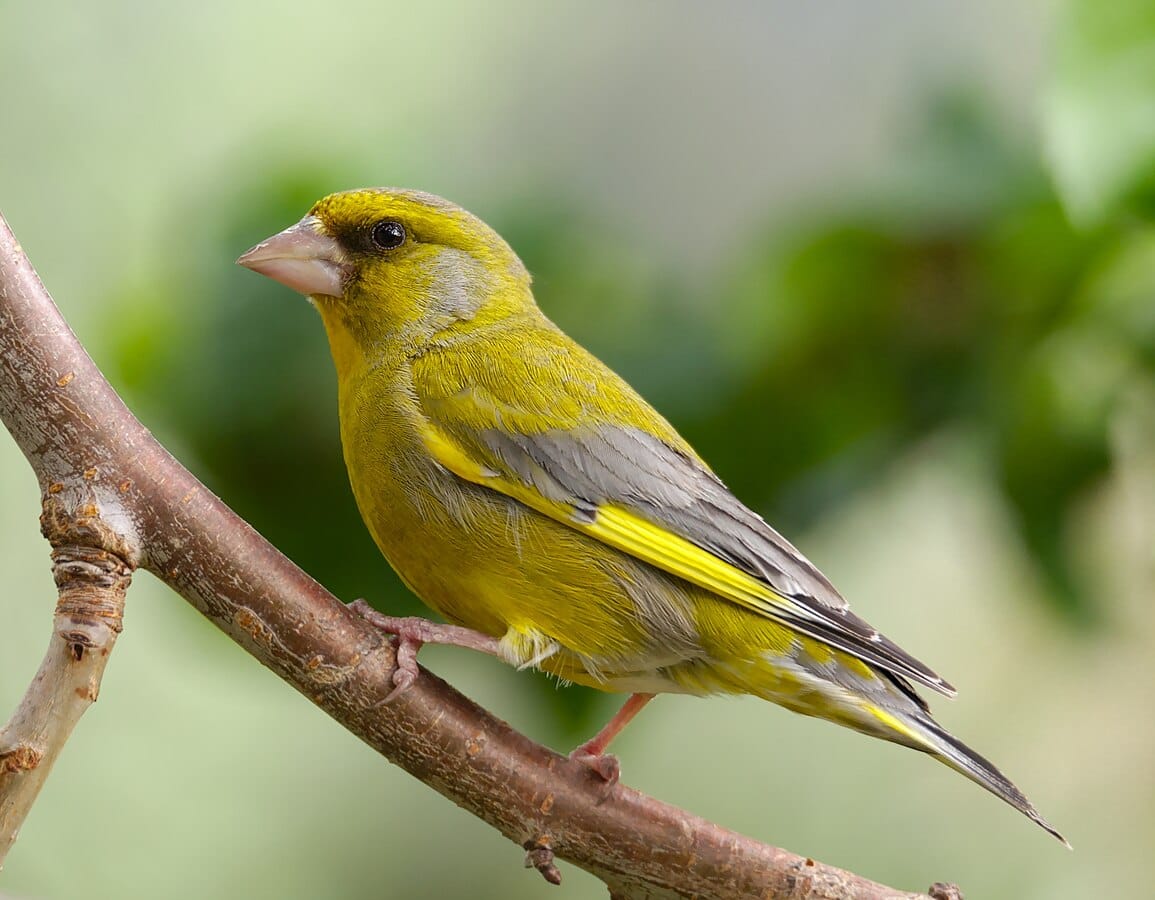
The European Greenfinch is a sturdy, olive-green finch with flashes of bright yellow on its wings and tail. Common across Europe and western Asia, it’s a frequent visitor to garden feeders and hedgerows. Males are more vibrantly colored than females, with stronger yellow tones that shine in sunlight. Their thick, conical beaks make them excellent seed crushers—especially for sunflower and grain seeds.
Greenfinches are birds of mixed habitats, preferring farmland edges, parks, and suburban areas. They form large flocks outside the breeding season, often mixing with other finch species. During spring, males perch prominently while delivering a nasal, wheezy song—a surprisingly charming sound that’s easy to recognize once heard. Their display flight, with fluttering wings and bright flashes of yellow, is one of the highlights of early spring birdwatching in Europe.
Although once very common, Greenfinch populations suffered declines in recent decades due to a disease called trichomonosis. Conservationists have since advised keeping feeders clean to prevent its spread. Thankfully, in many regions, populations are stabilizing again. The Greenfinch remains a symbol of resilience—an adaptable bird that continues to bring a splash of color and energy to European backyards and woodlands. Watching a group of these bright green birds squabbling playfully at a feeder is a joy for bird lovers everywhere.
9. Eurasian Siskin (Spinus spinus)
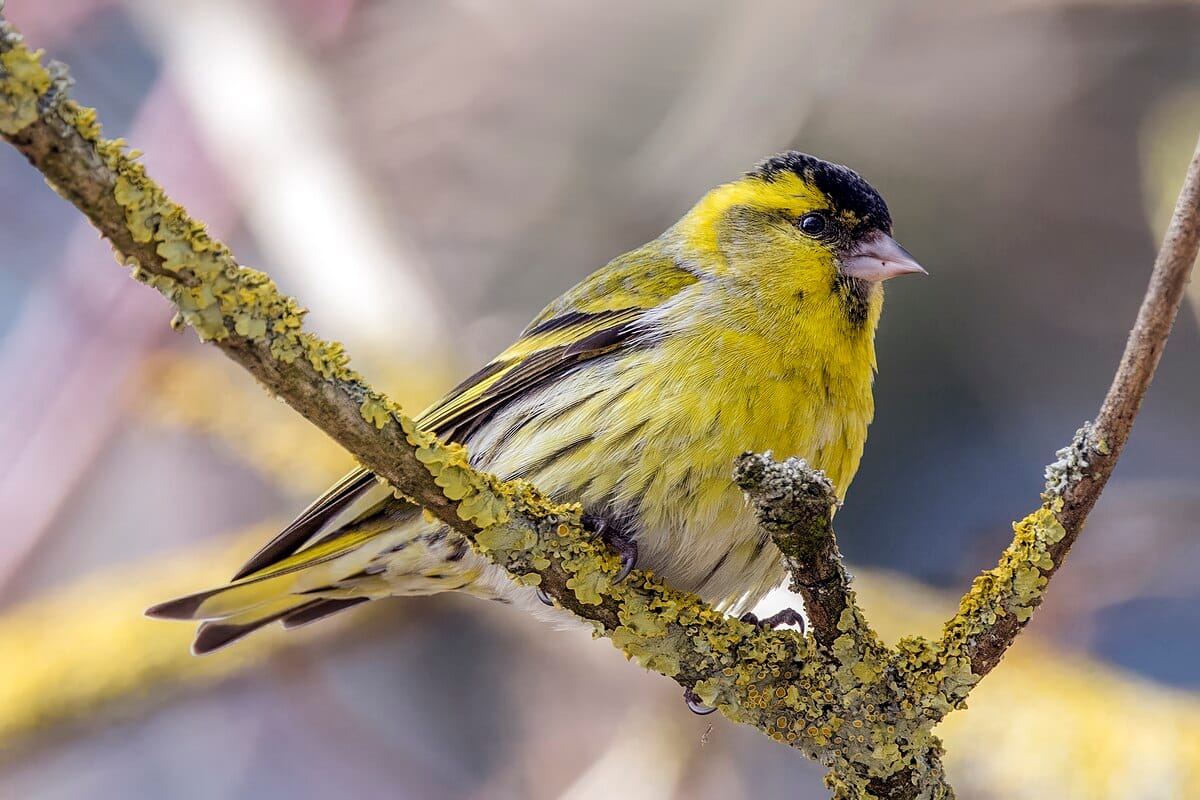
The Eurasian Siskin is a small, lively finch found throughout Europe and Asia, and it’s a favorite among winter birdwatchers. Males have bright yellow-green plumage with black caps and bibs, while females are more subdued with streaky olive tones. Both sexes share the distinctive yellow wing bar that flashes brilliantly during flight. These birds are often seen in flocks, especially in coniferous forests and birch woodlands where they feed on small seeds.
During winter, siskins roam widely in search of food and frequently visit backyard feeders stocked with nyjer or sunflower seeds. Their energetic behavior and soft, twittering calls make them easy to identify. Unlike some finches, they often hang upside down on seed heads, showing impressive agility for such tiny birds. They also play a crucial role in seed dispersal, helping maintain the health of their forest ecosystems.
When breeding, the Eurasian Siskin favors tall conifer trees, where nests are constructed high above the ground. Their breeding range expands northward during warm summers, while harsh winters may drive them south in large, irregular migrations known as irruptions. Despite their small size, these finches are hardy and resourceful. Their bright plumage, cheerful demeanor, and musical chatter have earned them a special place in the hearts of European birders.
10. Twite (Linaria flavirostris)
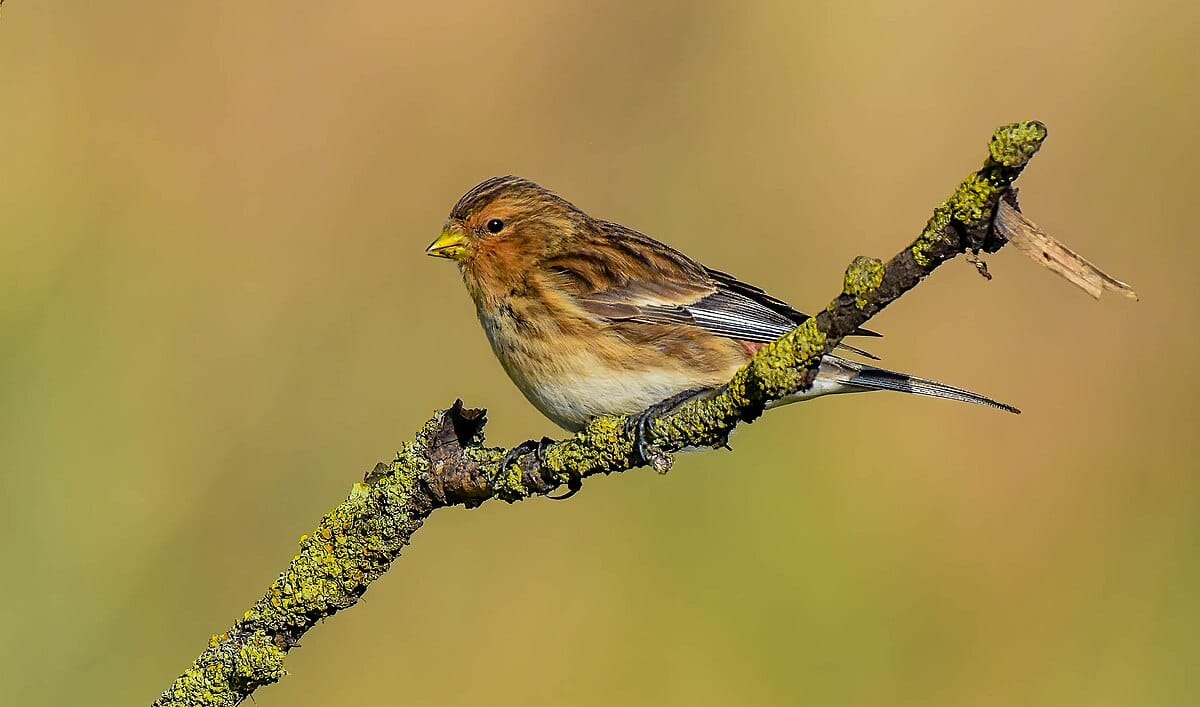
The Twite is a lesser-known but fascinating finch that inhabits the upland moors and coastal grasslands of Europe and western Asia. At first glance, it may appear plain compared to its colorful cousins, with warm brown plumage, a pale belly, and a subtle pink rump visible in flight. However, its soft, tinkling call—“twee-it”—gives this bird its charming name and helps birders locate it across windy hillsides.
Twites are highly specialized seed-eaters, thriving in rough grasslands where wild plants like dandelions and sorrels grow. In summer, they breed in northern Britain and Scandinavia, nesting in heather or grassy tussocks. During winter, they migrate to coastal regions, where they form large, sociable flocks that forage together on saltmarshes and farmlands. Their understated colors allow them to blend beautifully into the windswept landscapes they inhabit.
Unfortunately, habitat loss due to changes in grazing and agriculture has caused Twite populations to decline in many areas. Conservation efforts are underway to restore their breeding grounds by reintroducing traditional grazing patterns and protecting moorland vegetation. For dedicated birders, spotting a Twite remains a special experience—a reminder of the wild, open places that still echo with the quiet songs of these hardy little finches.
11. Common Redpoll (Acanthis flammea)
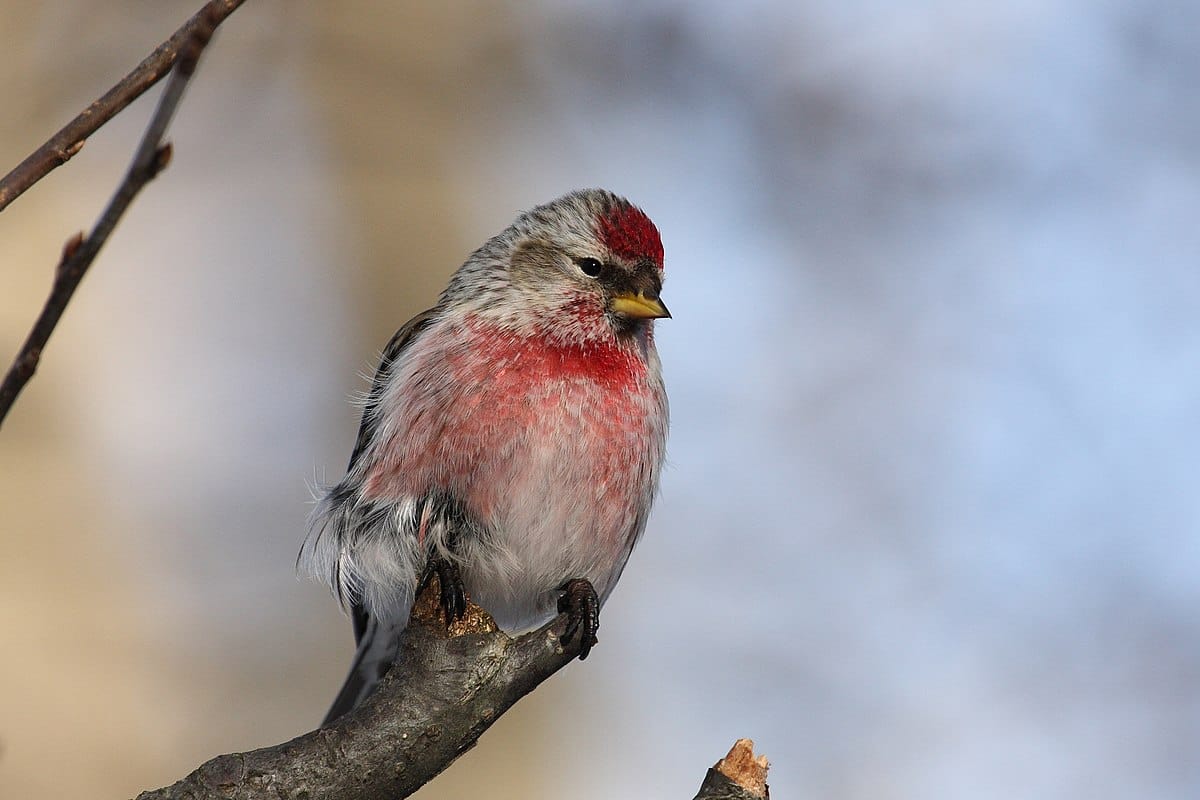
The Common Redpoll is a hardy little finch that thrives in some of the coldest regions of the Northern Hemisphere. Found across the Arctic tundra, boreal forests, and subalpine woodlands, it’s built for survival in freezing climates. With its fluffy plumage, streaky brown body, black chin patch, and distinctive red cap, the Common Redpoll stands out even among snow-covered branches. Males often display a pinkish flush on the chest during the breeding season, adding a touch of color to the white landscape.
These birds are energetic and social, often forming large flocks in winter that move southward in search of food. Their primary diet consists of birch, alder, and willow seeds, though they’ll happily visit feeders stocked with nyjer or sunflower seeds. Their specialized throat pouches allow them to store seeds temporarily while foraging—a clever adaptation for surviving harsh, windy days when feeding time is short.
During winter, Common Redpolls can be seen hanging acrobatically from seed heads, chattering with a cheerful “che-che-che” call. When irruptions occur (mass southward movements caused by food shortages up north), birdwatchers across the U.S., Canada, and Europe eagerly await their arrival. Despite their small size, these finches are incredibly resilient—able to withstand temperatures as low as -50°C by burrowing into snowbanks at night for insulation. Their toughness, charm, and endurance make the Common Redpoll one of the Arctic’s most remarkable songbirds.
12. Hoary Redpoll (Acanthis hornemanni)
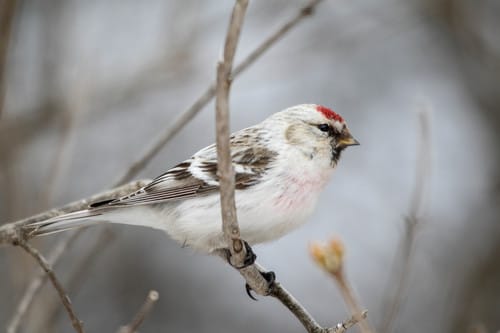
The Hoary Redpoll, sometimes called the Arctic Redpoll, is the paler cousin of the Common Redpoll and one of the northernmost breeding birds in the world. Its plumage is soft white with faint brown streaks and a small crimson crown. Males often show a delicate pink wash across the chest. This bird’s name—“hoary”—comes from its frosty, silvery appearance, which perfectly suits its snowy habitat.
Native to Greenland, northern Canada, and the Arctic Circle, Hoary Redpolls spend most of their lives in cold, treeless tundra regions. They migrate south only in extreme winters, occasionally mixing with flocks of Common Redpolls. Because the two species are so similar, identification can be tricky; however, the Hoary Redpoll is slightly larger, with a smaller bill and a more “frosted” look overall.
These finches are masters of cold adaptation. Their dense plumage and rapid metabolism help them endure freezing conditions that few other songbirds can tolerate. Like their relatives, they feed primarily on seeds, storing them in throat pouches for later consumption. Their flight call is a dry, rattling “chit-chit,” often heard as flocks move swiftly through open air. Watching a group of Hoary Redpolls flutter against a snowy backdrop is like witnessing living snowflakes—an unforgettable sight for bird lovers exploring the Arctic frontier.
13. Pine Siskin (Spinus pinus)
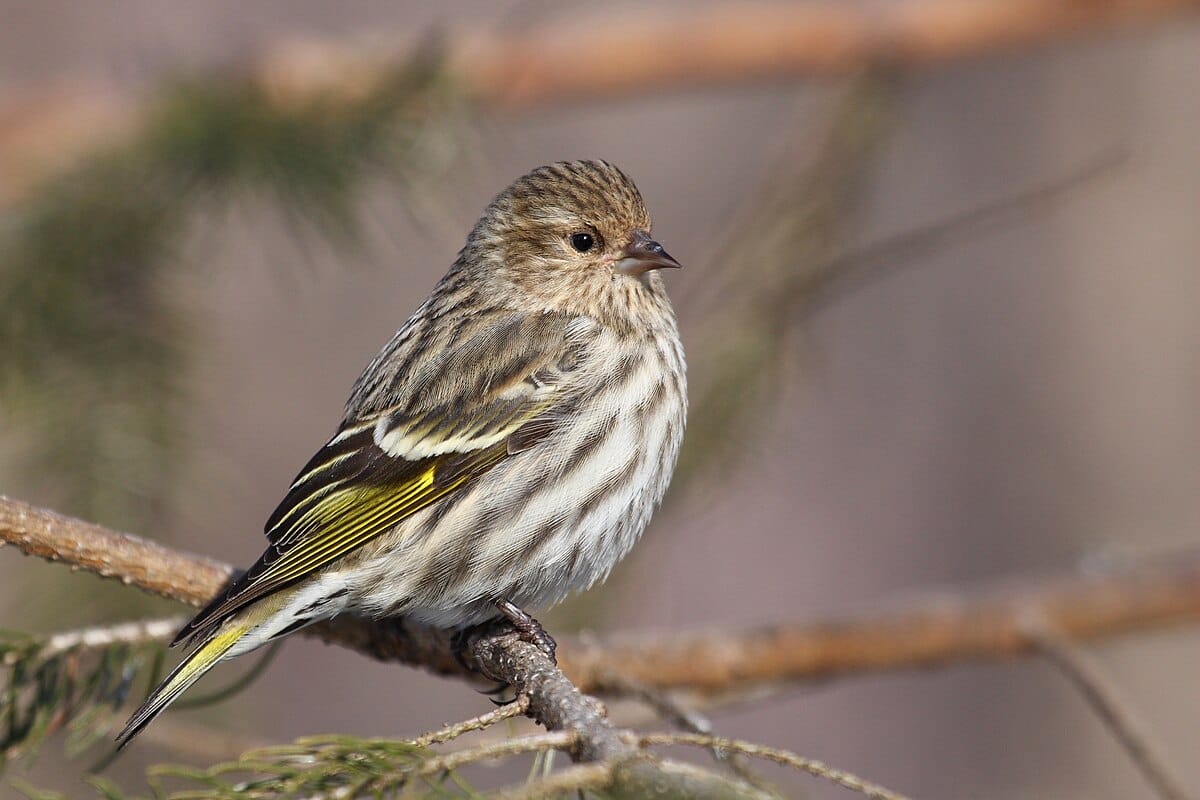
The Pine Siskin is a small, streaky finch with a surprising amount of character packed into its tiny frame. Found across North America, it’s known for its energetic movements and buzzy, chattering calls. Though not brightly colored like some of its relatives, the Pine Siskin’s subtle brown streaks and flashes of yellow on the wings and tail give it a distinctive beauty—especially when sunlight catches its feathers in flight.
True to its name, this bird loves coniferous forests and often follows cone crops as they ripen. It feeds primarily on pine, spruce, and cedar seeds, but also visits feeders for thistle, nyjer, and sunflower seeds. Pine Siskins are nomadic; their populations fluctuate dramatically depending on seed availability. In years of poor cone production, they may “irrupt” southward in massive numbers, appearing at feeders far beyond their usual range.
Social and restless, Pine Siskins rarely travel alone. They form large flocks that zip through treetops with boundless energy. Their song is a high-pitched jumble of twitters and trills—sometimes including mimicked phrases from other birds. Despite their delicate look, they’re resilient, capable of surviving freezing temperatures through efficient heat regulation and communal roosting. The Pine Siskin’s adaptability, charm, and unpredictable wanderings make it one of the most exciting finches to encounter during the winter months.
14. Eurasian Bullfinch (Pyrrhula pyrrhula)
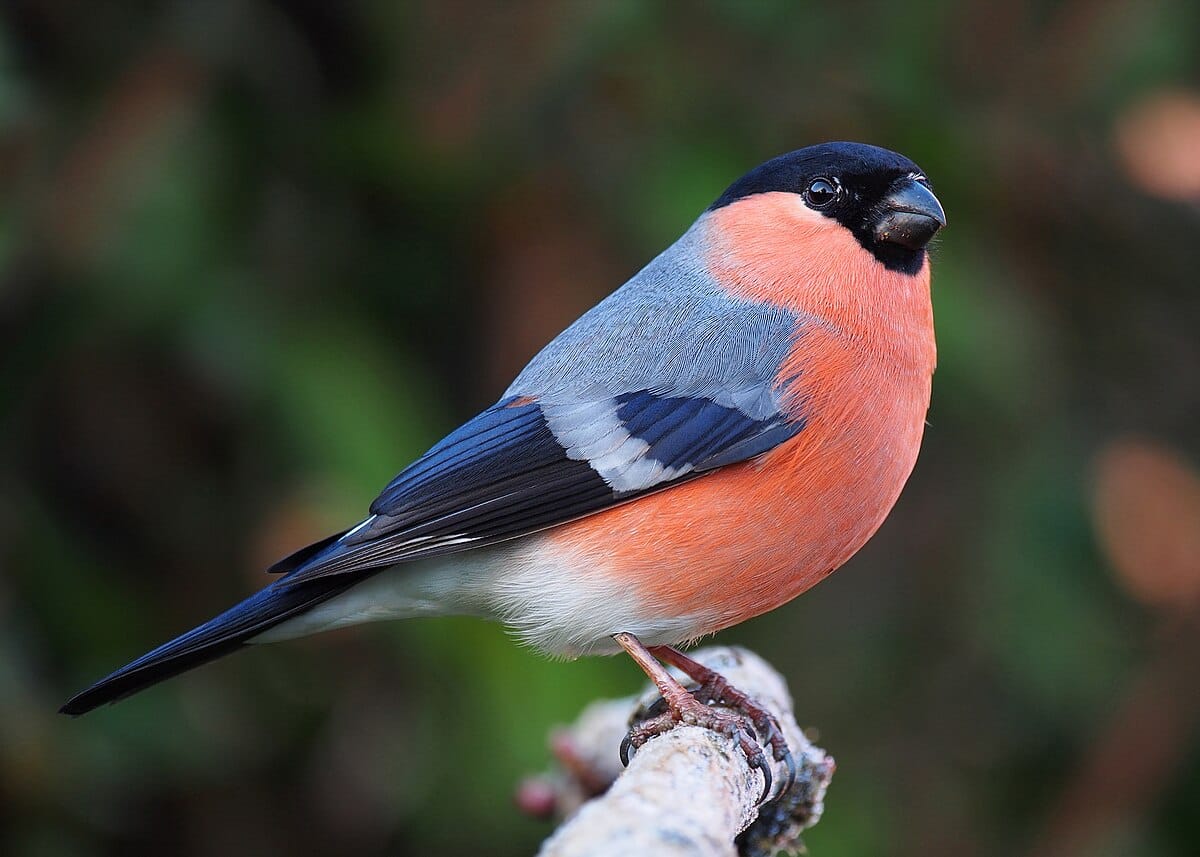
The Eurasian Bullfinch is a striking and quiet bird that graces the woodlands and gardens of Europe and Asia. Males are unmistakable with their deep rose-red underparts, black cap, and blue-gray back, while females have warm brown tones. Their thick necks and stout bodies give them a “bullish” appearance—hence their name. Despite their strong build, Bullfinches are gentle and rather shy, often feeding discreetly among foliage.
These finches prefer deciduous woodlands, forest edges, and orchards. They feed on seeds, buds, and fruit, with a special fondness for tree buds in spring. This habit once made them unpopular among orchard owners, though today they’re valued as part of the natural ecosystem. During winter, they often form quiet pairs or small family groups rather than large flocks.
The Bullfinch’s song is soft and mournful, consisting of low whistles that are hauntingly beautiful. They’re also capable of learning to mimic simple tunes—a fact that made them popular cage birds centuries ago. Modern conservation efforts have helped stabilize their numbers, and spotting a Bullfinch in the wild remains a magical experience. Their combination of vivid color, quiet dignity, and gentle presence has earned them a special place in European folklore and the hearts of bird enthusiasts worldwide.
15. Hawfinch (Coccothraustes coccothraustes)
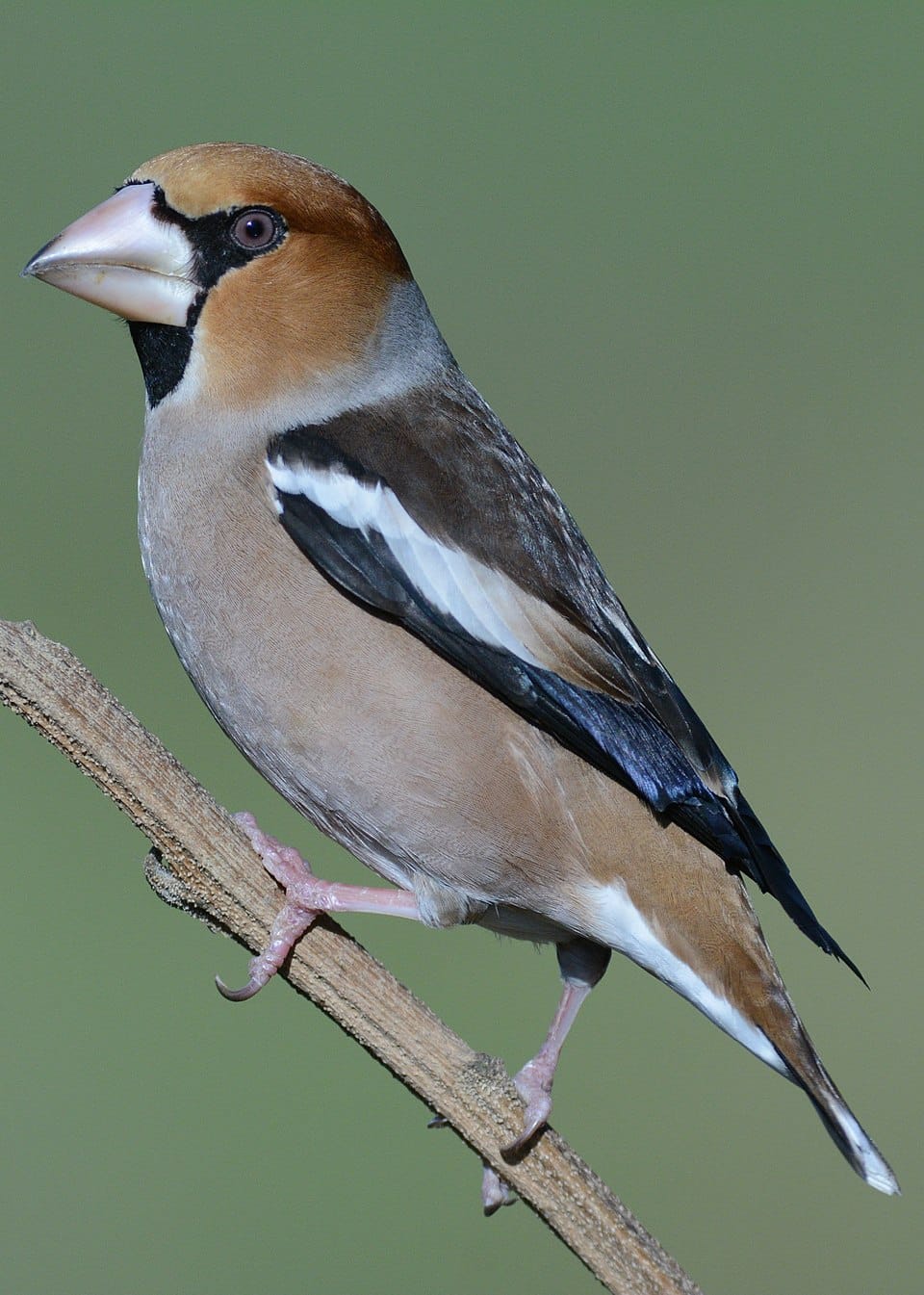
The Hawfinch is the heavyweight champion of the finch world—stocky, powerful, and equipped with an enormous beak capable of cracking cherry stones with ease. Found across Europe and parts of Asia, this bird is both beautiful and elusive. Adults have a rich combination of chestnut, orange, and slate-gray plumage, with a thick neck and robust head that give them a commanding presence.
Hawfinches inhabit mature deciduous forests, especially those with hornbeam, beech, and cherry trees. Their diet focuses on hard seeds and fruit pits, which they split effortlessly using immense jaw strength. This specialization allows them to exploit food sources inaccessible to other finches. Despite their size, Hawfinches are surprisingly secretive. They often remain high in the canopy, moving quietly and blending into the foliage. Only a sharp-eyed observer may catch their silhouette as they glide between treetops.
Though generally shy, Hawfinches are loyal to feeding areas and can be enticed to visit gardens with sunflower seeds. Their call—a short, metallic “tick”—is subtle but distinctive once recognized. Unfortunately, their populations have declined in some regions due to habitat loss and pesticide use. However, dedicated conservation efforts have helped them recover locally. With their striking looks, quiet confidence, and extraordinary strength, the Hawfinch stands as one of the most fascinating and dignified members of the finch family.
16. Evening Grosbeak (Coccothraustes vespertinus)
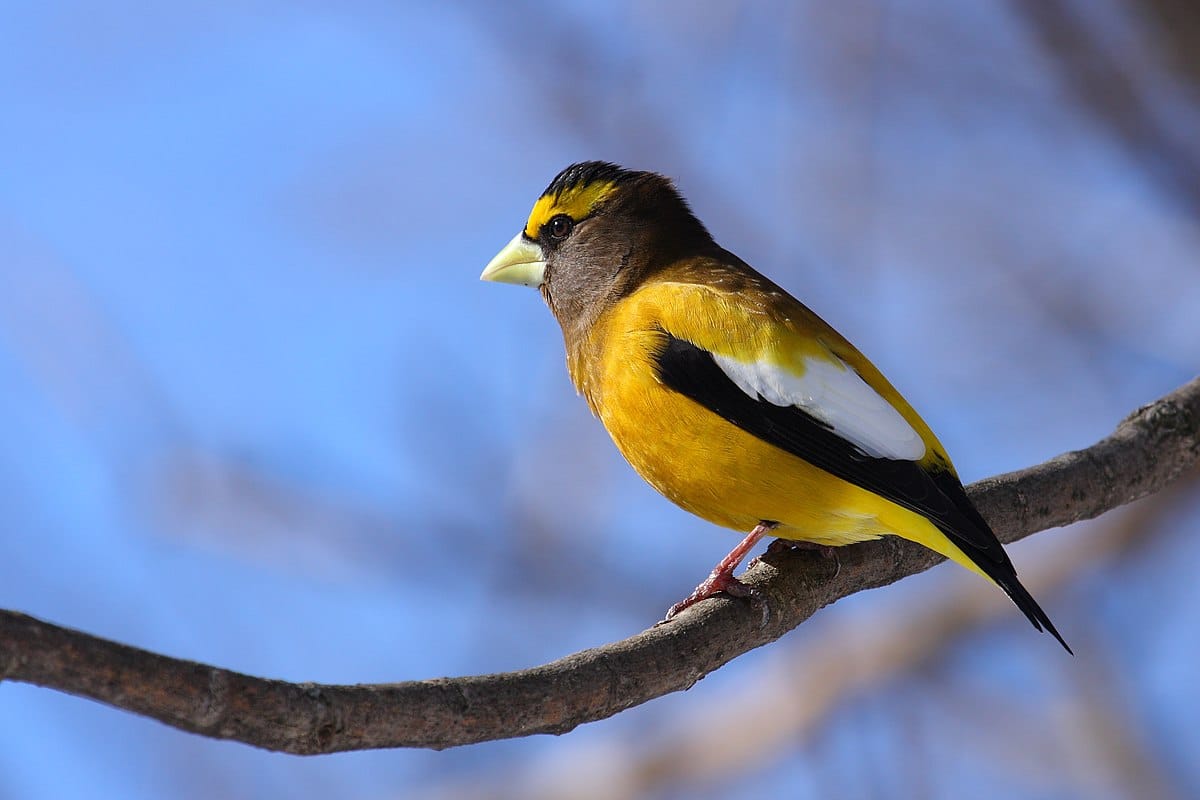
The Evening Grosbeak is a spectacular finch of North America’s forests, known for its bold colors and powerful beak. Males are striking, with bright yellow bodies, black wings marked by a white patch, and a dark head capped with a vivid golden eyebrow. Females are more subdued in gray tones but equally elegant. Their thick, conical bills are designed to crush even the hardest seeds and kernels—traits that give them both their name and reputation for strength.
These birds are most commonly found in coniferous forests across Canada and the northern United States. During winter, they may wander southward in flocks, visiting backyard feeders where they eagerly devour sunflower seeds. Their presence is often dramatic—large groups descend noisily, feed in bursts of energy, then take off in a flurry of yellow and black. Their loud, ringing calls—“cheer-cheer”—can be heard echoing through snowy forests, announcing their arrival long before they appear.
Evening Grosbeaks are social but nomadic, moving in unpredictable patterns depending on seed availability. Their diet includes seeds, buds, berries, and insects, especially during breeding season. Sadly, populations have declined over the past few decades due to habitat loss, pesticide use, and reduced food sources. Conservationists now monitor them closely as an indicator of forest ecosystem health. Despite these challenges, the Evening Grosbeak remains one of the most breathtaking finches of North America—a symbol of wild northern beauty and resilience.
17. Pine Grosbeak (Pinicola enucleator)
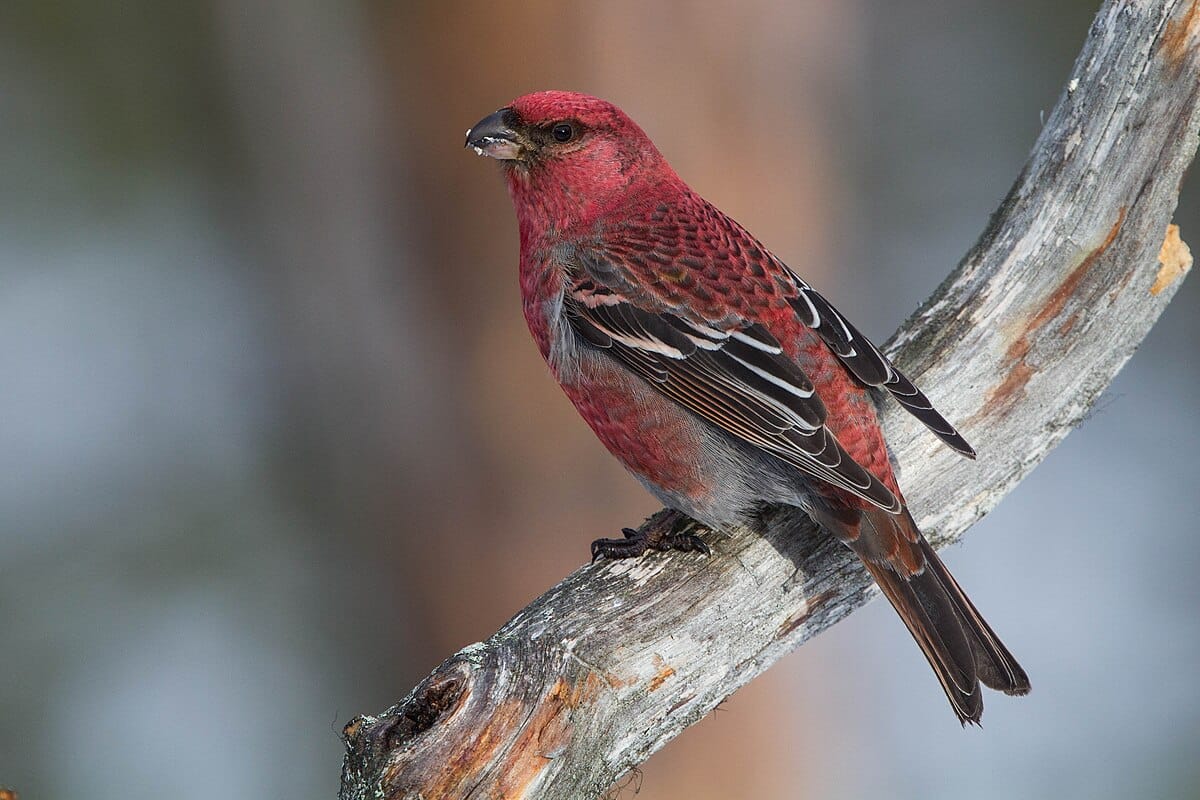
The Pine Grosbeak, often called the “gentle giant” of the finch family, inhabits the boreal forests of North America, Europe, and Asia. This large, soft-spoken finch has a peaceful nature and a sweet, flute-like song. Males wear a stunning rosy-red plumage with gray wings, while females and juveniles display a warm mix of yellow and olive tones. Their size, calm behavior, and beauty make them a favorite among winter birdwatchers.
Pine Grosbeaks prefer coniferous forests, especially spruce and pine stands, where they feed on seeds, buds, berries, and occasionally insects. In winter, they move southward in small flocks, often visiting feeders in northern towns. Their slow, deliberate movements and gentle demeanor set them apart from other finches. They often perch quietly, allowing observers a rare, close-up view of their gorgeous plumage.
Unlike most finches, Pine Grosbeaks are not aggressive around food sources. They feed with grace and rarely quarrel, reflecting their calm, almost serene disposition. Their call, a soft “tew-tew” or sweet whistle, carries beautifully through snowy forests. Although not globally threatened, these birds are sensitive to climate shifts that alter northern ecosystems. As ambassadors of the Arctic wilderness, Pine Grosbeaks remind us of nature’s quiet harmony and the fragile balance that sustains it.
18. Crimson Finch (Neochmia phaeton)
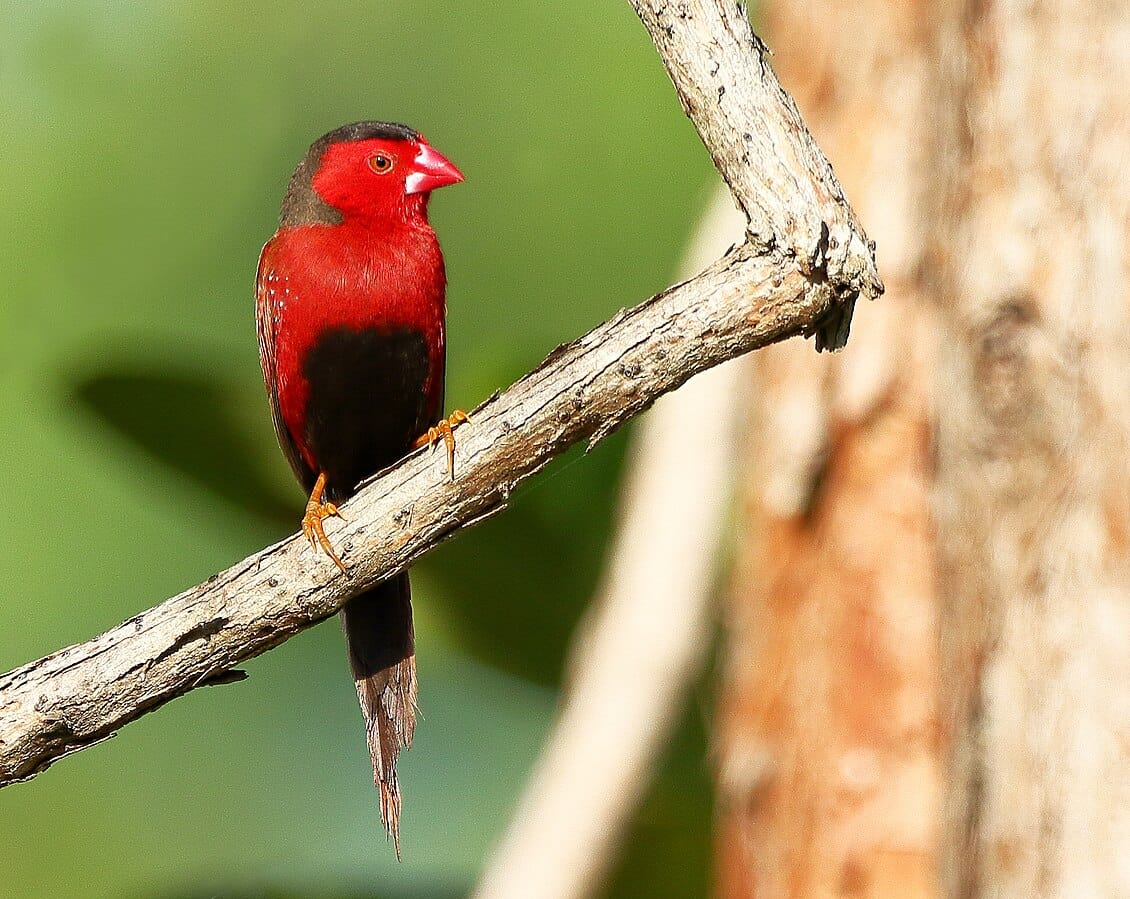
The Crimson Finch is a brilliant splash of red in the wetlands and riverbanks of northern Australia and New Guinea. Males are dazzlingly crimson from head to tail, with contrasting black markings on the belly and face. Females are paler, with a more washed-out red tone but still show the species’ signature fiery elegance. These finches are small, active, and often seen in pairs or small flocks flitting among reeds and grasses near water.
Crimson Finches thrive in tropical environments where they build intricate, dome-shaped nests hidden within dense vegetation. Their diet consists of grass seeds, small insects, and aquatic plants, which they collect with quick, precise movements. During breeding season, males perform lively displays, puffing their feathers and hopping energetically around females while uttering soft trills.
These birds are remarkably social and adaptable. In some regions, they live close to human settlements, taking advantage of agricultural areas for foraging. However, habitat destruction and predation by invasive species have put pressure on some populations. Still, the Crimson Finch remains a vivid symbol of Australia’s tropical biodiversity—its radiant red feathers lighting up riverbanks like living rubies against the green backdrop of the outback.
19. Zebra Finch (Taeniopygia guttata)
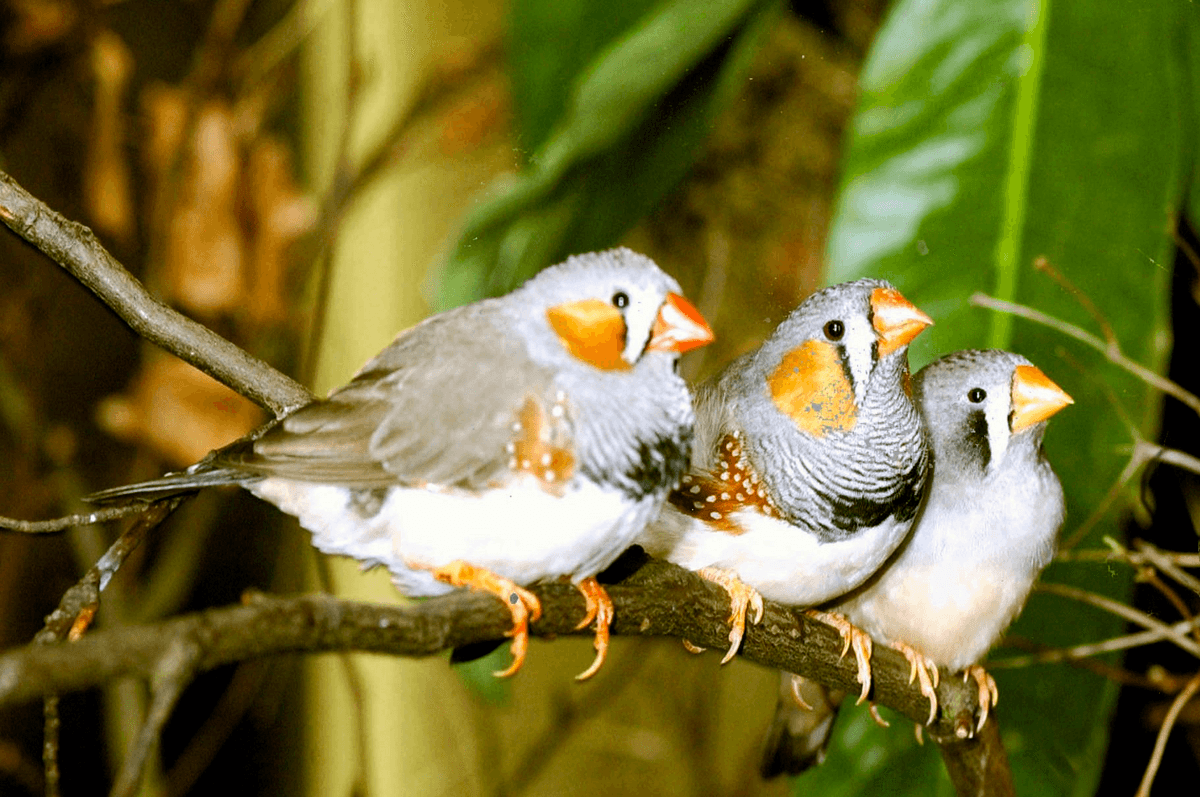
Perhaps the most famous finch in the world, the Zebra Finch is a small, energetic bird native to Australia and the islands of Indonesia. Easily recognizable, males sport bright orange beaks, black-and-white zebra stripes across the chest, and rusty cheek patches, while females are more modestly colored in gray and white. Despite their size, these birds have one of the most studied songs in avian science—so much so that they’ve become a model species for research on learning, communication, and brain development.
Zebra Finches inhabit open grasslands, savannas, and dry scrublands, often forming large flocks around water sources. They feed primarily on grass seeds but also eat small insects to feed their young. Their adaptability allows them to thrive in harsh, arid environments where other species might struggle. They build round, woven nests in shrubs or trees and can breed year-round when conditions are favorable.
Highly social and vocal, Zebra Finches communicate constantly through chirps and calls. Their song is not innate but learned—young males imitate the songs of their fathers, a behavior that fascinates scientists studying animal learning. In the wild, their resilience and cooperation ensure survival even during droughts. As pets and research subjects, they’ve become ambassadors of avian intelligence, adaptability, and charm. Their bright colors, friendly nature, and complex behavior make Zebra Finches one of the most beloved small birds on Earth.
20. Gouldian Finch (Erythrura gouldiae)
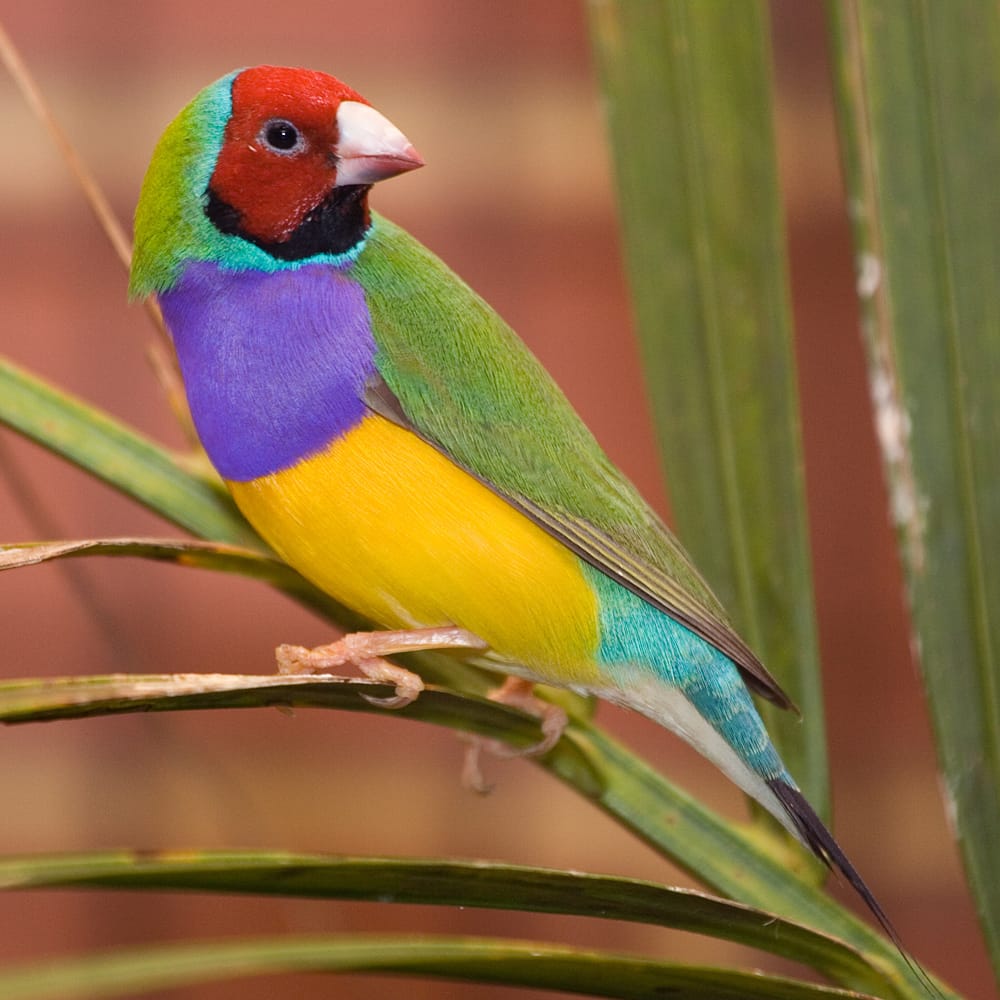
The Gouldian Finch, also known as the Rainbow Finch, is arguably one of the most beautiful birds in existence. Native to the savannas of northern Australia, it dazzles with its jewel-like plumage—males display a radiant mix of emerald green, purple, yellow, red, and turquoise. Females are slightly duller but still remarkably colorful. There are three natural color morphs—red-headed, black-headed, and yellow-headed—all equally stunning.
These finches prefer open woodlands and grassy plains, where they feed mainly on grass seeds. During the dry season, they gather in flocks near water sources, creating one of nature’s most dazzling displays of color. Breeding takes place in the wet season when food is abundant. They build dome-shaped nests in tree hollows or termite mounds, often nesting in colonies for safety and warmth.
Once widespread, Gouldian Finch populations have declined due to habitat loss, fires, and invasive predators. Today, conservation programs are working to protect their remaining wild populations and restore suitable habitats. Captive breeding has been highly successful, ensuring that these birds remain a common sight in aviaries worldwide. Watching a flock of Gouldian Finches in sunlight is like witnessing flying jewels in motion—a breathtaking reminder of the diversity and beauty of Earth’s birdlife.
21. Red Crossbill (Loxia curvirostra)
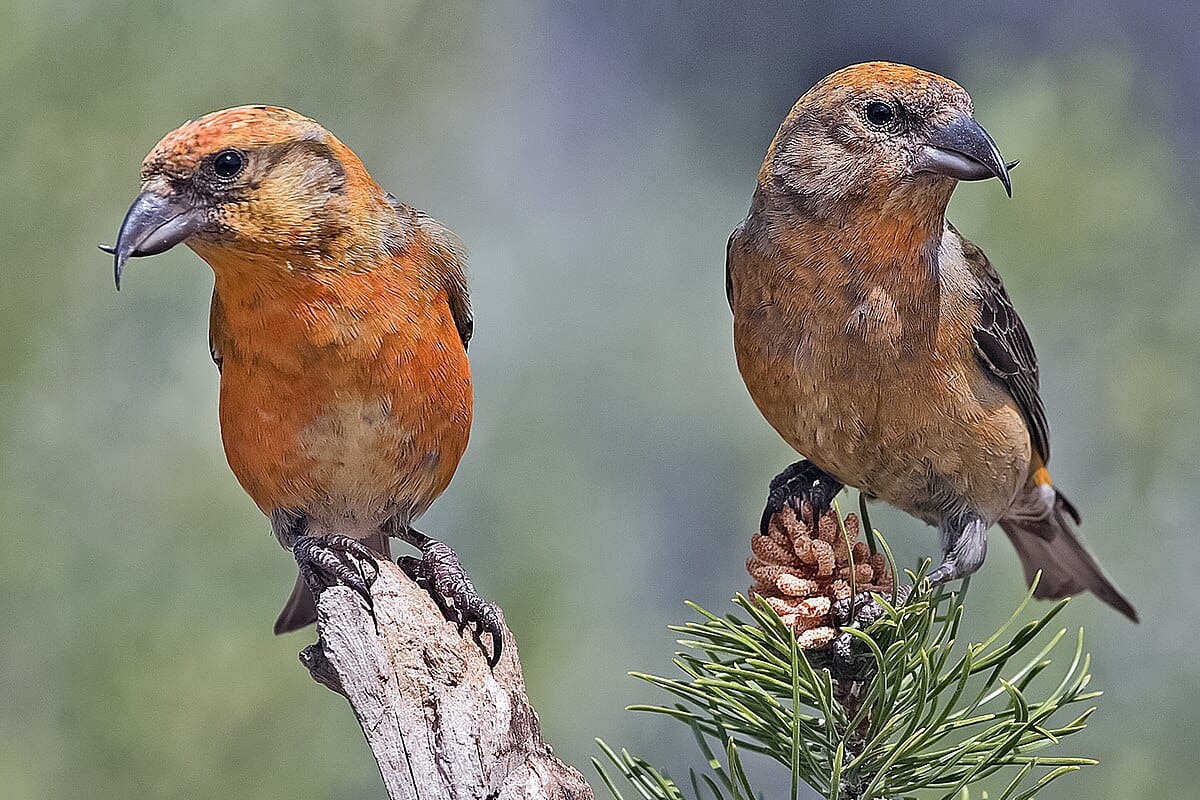
Among the most extraordinary types of finches, the Red Crossbill stands out for one very special feature — its crossed bill tips. This adaptation allows it to extract seeds from tightly closed conifer cones, something few other birds can do. Native to coniferous forests across North America, Europe, and Asia, Red Crossbills thrive where spruce, pine, or fir trees dominate the landscape.
The male typically sports a brick-red or orange body, while the female is more olive or yellowish. Both share that distinctive scissor-shaped bill, which is perfectly designed for prying open cones. Interestingly, scientists have identified several “call types” of Red Crossbills, each specialized to feed on certain conifer species — an ongoing example of evolution in action.
These finches move nomadically, often following cone crops rather than sticking to one territory. Their wandering behavior can make them a rare sight in some years and incredibly abundant in others. You’ll often hear their sharp, metallic “kip-kip” calls echoing through evergreen forests long before you spot them.
In terms of nesting, Red Crossbills are early breeders, sometimes nesting even in midwinter when cone supplies are high. Their sturdy nests are built with twigs and moss, often concealed among conifer branches.
For bird lovers, spotting a Red Crossbill is a thrill — a reminder of how resourceful nature can be. If you’re exploring mountainous pine regions, keep an ear out for that crisp, chattering call, and you might just witness this master seed extractor in action.
22. Two-barred Crossbill (Loxia leucoptera)
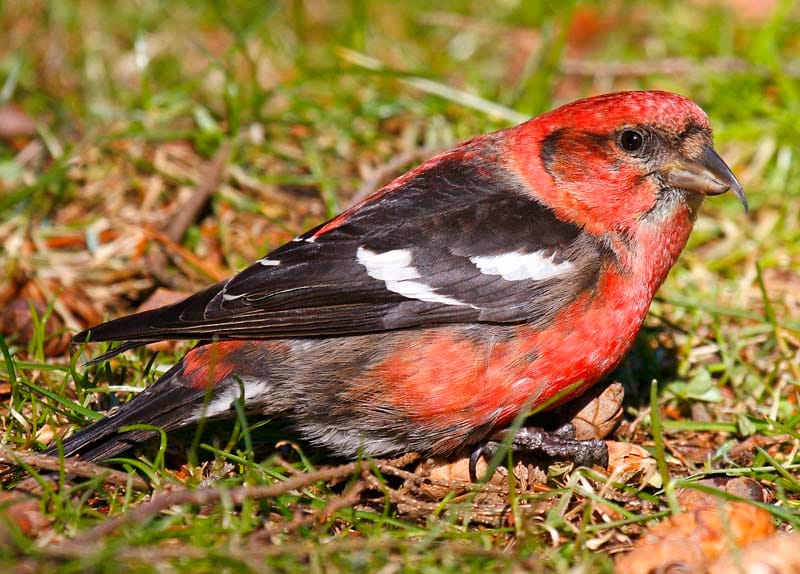
Closely related to the Red Crossbill, the Two-barred Crossbill — also known as the White-winged Crossbill — is a striking finch found across northern boreal forests. Its name comes from the two prominent white bars across its black wings, an eye-catching contrast against its deep red body in males or yellowish-green tones in females.
What makes this species fascinating among types of finches is its adaptability to harsh winter environments. Two-barred Crossbills are built for cold climates, feeding almost exclusively on the seeds of spruce and larch trees. Their crossed mandibles act like fine-tuned tools, enabling them to deftly pry apart cone scales and reach the nutritious seeds inside.
Unlike most finches that breed seasonally, this species breeds whenever food is plentiful — even during snowy months. Males court females by singing a high, tinkling song and offering food gifts. Nests are constructed of twigs, moss, and feathers, usually placed high in conifer trees to avoid predators.
Flocks of Two-barred Crossbills often move unpredictably, depending on cone availability. This irregular migration, known as an “irruption,” can bring them far south in certain winters — a delight for birdwatchers who rarely see them.
Their resilience and specialized feeding habits make them one of the most fascinating northern finches. If you ever find yourself in a frosty forest alive with bird chatter, look for a flash of white bars cutting through the evergreen canopy — a sure sign the Two-barred Crossbill is nearby.
23. Andean Siskin (Spinus spinescens)
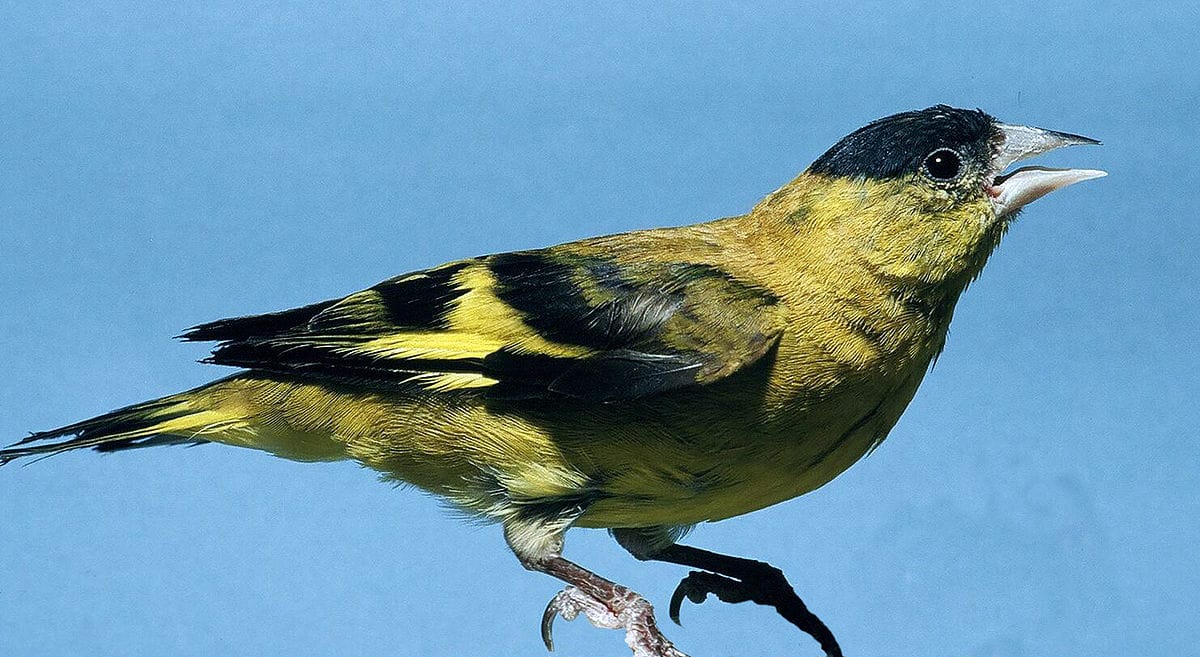
High up in the cloud forests of South America, the Andean Siskin reigns as one of the most striking types of finches native to the Andes. This small but energetic bird is recognized by its greenish-yellow plumage, black cap, and pointed wings — a combination that allows it to blend beautifully into its mossy mountain habitat.
These finches are typically found in countries like Colombia, Ecuador, and Venezuela, often between 2,000 and 3,500 meters in elevation. They favor open woodlands, edges of cloud forests, and shrubby slopes, where they flit between branches feeding on seeds, buds, and small insects.
One of the most charming aspects of the Andean Siskin is its musical nature. The males sing high-pitched, sweet trills that echo through misty valleys, often forming small flocks that move together in rhythmic flight. Their social structure is tight-knit, and they often feed communally, creating a lively scene in the treetops.
Breeding takes place during the rainy season when food is abundant. Nests are usually tucked away in dense foliage, built from grasses and plant fibers, with the female handling most of the construction and incubation duties.
The Andean Siskin’s resilience in such high-altitude environments highlights the adaptability of finches as a whole. These birds may be small, but their songs and presence add color and life to the cold, green world of the Andes.
24. Common Rosefinch (Carpodacus erythrinus)
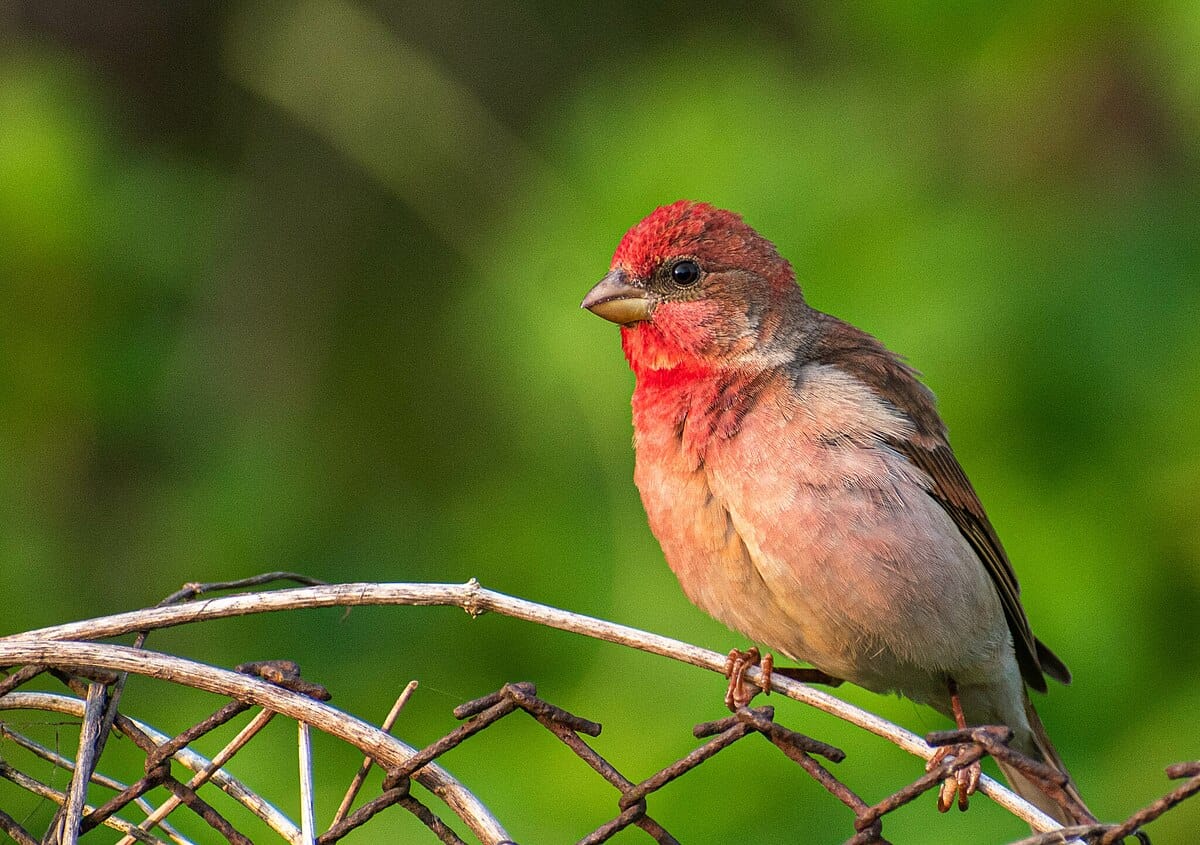
The Common Rosefinch, often called the “Scarlet Rosefinch,” is a bright and lively bird found across Europe and Asia. Males are stunning in their breeding plumage—rosy-red on the head, breast, and rump, contrasting with brownish wings and back. Females, in contrast, are olive-brown and streaked, allowing them to remain inconspicuous while nesting. This species’ cheerful song, a series of clear, whistled notes, is one of the most recognizable sounds of spring in many parts of its range.
Common Rosefinches prefer forest edges, river valleys, and scrublands rich in shrubs and fruiting plants. Their diet includes seeds, buds, and berries, especially during the breeding season. They often migrate long distances, spending winters in South Asia, where they inhabit farmlands and gardens. Their adaptability has helped them expand westward into Europe over the past century.
These finches are curious and active, often seen perched on top branches while singing or foraging in small flocks. Their vibrant red plumage and melodic voice make them favorites among bird enthusiasts and photographers. As their name suggests, they are “common,” yet their beauty and behavior remain extraordinary—a reminder that even the most widespread species can offer endless wonder to those who look closely.
25. Asian Rosy-Finch (Leucosticte arctoa)
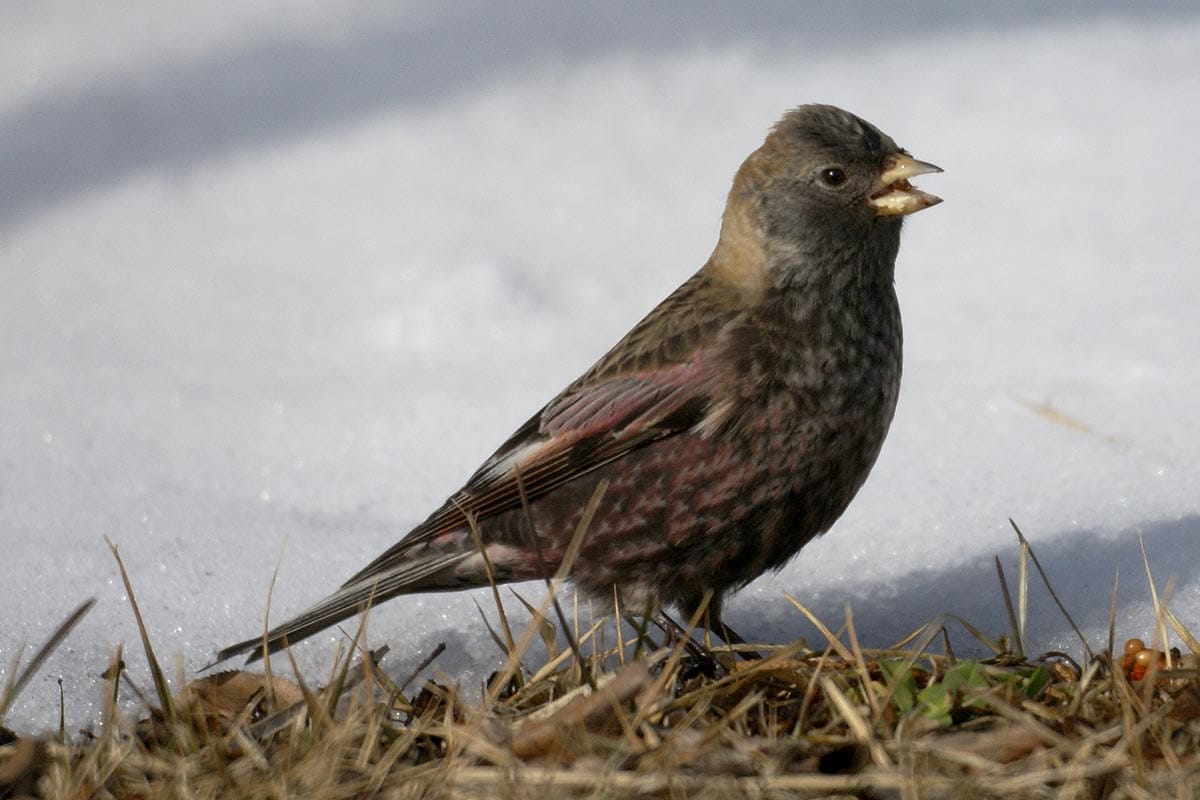
The Asian Rosy-Finch is a hardy, high-altitude bird that inhabits the cold mountains of Central and East Asia, from Mongolia to northern Japan. Its plumage is a gorgeous blend of brown, pink, and gray tones, creating a soft, frosted appearance perfectly suited to its alpine environment. Males tend to show more pinkish hues on the wings and belly, while females are subtler but equally elegant.
These finches live in some of the harshest environments on Earth—rocky slopes, tundra meadows, and snow-covered ridges. They feed mainly on seeds and small invertebrates, often foraging in loose flocks that move constantly in search of food. During winter, they may descend to lower altitudes, visiting villages and fields where food is more accessible.
Despite their rugged habitat, Asian Rosy-Finches are lively and social. Their calls—a mix of cheerful chirps and whistles—echo beautifully through the mountain air. Watching them dart across a snowfield in bright sunlight is an unforgettable experience for any birdwatcher. They embody resilience and grace in equal measure, thriving in places where few other songbirds can survive.
26. Black-headed Greenfinch (Chloris ambigua)
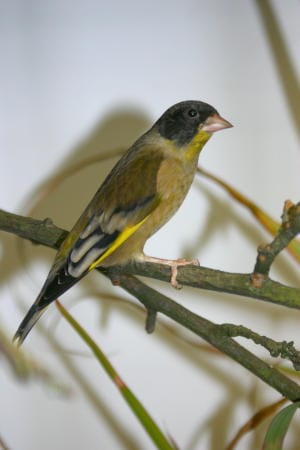
The Black-headed Greenfinch, also known as the Dark-headed Greenfinch, is a beautiful finch native to the mountain forests of Southeast Asia and the Himalayas. Its sharp contrast of a glossy black head against olive-green plumage gives it an instantly recognizable appearance among types of finches.
These birds typically inhabit elevations between 1,200 and 3,000 meters, preferring forest edges, bamboo thickets, and open woodland. They feed mainly on seeds, particularly those of grasses and shrubs, and are often seen in pairs or small family groups.
What sets this species apart is its distinctive call — a soft, musical “twee-twee” followed by a buzzing trill. Males are known to sing from exposed perches, especially during the breeding season, to defend their territory and attract mates.
During nesting, the female constructs a cup-shaped nest using twigs, roots, and moss, carefully hidden among dense vegetation. The clutch usually contains 3–4 eggs, which hatch into chicks covered in grayish down. Both parents share feeding duties, offering seeds and small insects to their young.
In many parts of Asia, the Black-headed Greenfinch is a seasonal visitor to lower elevations during winter. Its elegant plumage and cheerful song make it a favorite among local birdwatchers. If you’re exploring the foothills of the Himalayas, keep your eyes peeled for a flash of olive and black darting through the treetops — you’ve likely spotted this charming finch.
27. Azores Bullfinch (Pyrrhula murina)
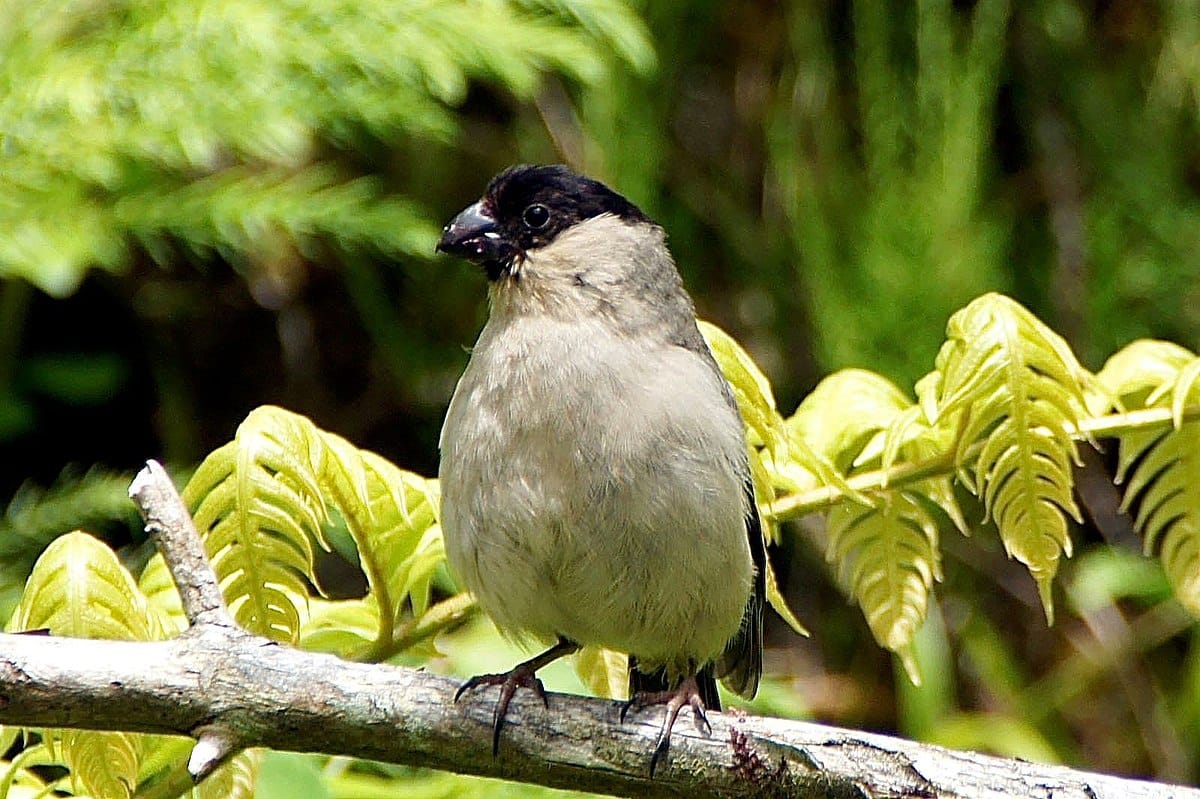
The Azores Bullfinch, or “Priolo,” is one of the rarest finches in the world and a true conservation success story. Endemic to the island of São Miguel in the Azores, this critically endangered bird is found only in a small patch of native laurel forest known as the “Laurisilva.” With its slate-gray plumage and subtle pinkish tones on the belly, the Azores Bullfinch may not be as vividly colored as its Eurasian cousin, but its rarity makes it a prized find for birdwatchers.
This finch feeds mainly on the seeds, buds, and fruits of native plants, many of which are also endangered. Its survival has been tightly linked to the preservation of this ancient forest habitat. In the past, deforestation and the spread of invasive plants pushed the species to the brink of extinction, with fewer than 100 individuals remaining in the 1990s.
Thanks to focused conservation efforts—including habitat restoration and control of invasive species—the population has rebounded to several hundred individuals. The Azores Bullfinch is now a symbol of ecological recovery and the importance of protecting unique island ecosystems. Observing one in the misty highlands of São Miguel is like glimpsing a living treasure—rare, resilient, and deeply connected to the history of its home island.
28. Desert Finch (Rhodospiza obsoleta)

Adapted to some of the harshest landscapes on Earth, the Desert Finch (also called Lichtenstein’s Finch) is a master survivor among types of finches. Found across the Middle East and Central Asia, from Israel to Kazakhstan, this finch thrives in arid scrublands, rocky wadis, and dry riverbeds where vegetation is sparse.
The Desert Finch has a subdued beauty — pale brown plumage, pinkish beak, and rose-colored wing patches that catch sunlight beautifully. Despite its gentle appearance, it’s remarkably tough, capable of enduring extreme temperatures and long stretches without water.
Unlike forest finches, Desert Finches feed on hardy desert plants, grass seeds, and the occasional insect. Their strong bills allow them to crack open tough seeds that few other birds can handle. During the hottest parts of the day, they rest in shaded areas or low shrubs, conserving energy until evening.
Breeding usually aligns with spring rains, when vegetation briefly flourishes. The female constructs a small cup-shaped nest of twigs and grass, often in thorny bushes. Parents are attentive and protective, raising multiple broods if conditions allow.
Social by nature, Desert Finches often gather in flocks outside the breeding season, creating a fluttering cloud of soft calls and muted color against the sandy landscape. Watching them reminds us that even the most barren environments can nurture beauty and resilience.
29. Tibetan Rosefinch (Carpodacus roborowskii)
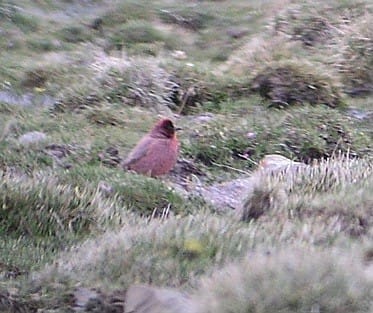
High on the windswept plateaus of Tibet, where oxygen is scarce and temperatures drop below freezing, lives the remarkable Tibetan Rosefinch — one of the most resilient types of finches on Earth. This hardy species is perfectly adapted to one of the harshest climates imaginable, surviving in altitudes above 4,000 meters.
The male Tibetan Rosefinch displays a striking rose-pink hue across its body, fading into grayish wings and tail feathers. Females, on the other hand, show a more subdued brownish-pink coloration that helps them blend into the rocky terrain. Their stocky bodies and thick bills are designed to endure strong mountain winds and help them crack open seeds of alpine plants.
Unlike most finches that prefer wooded habitats, Tibetan Rosefinches inhabit open grasslands, rocky slopes, and scrublands. They feed mainly on seeds, buds, and occasional small insects found among sparse vegetation. During the brief summer, they take advantage of the growing season to breed and raise their chicks before winter returns.
The breeding behavior of the Tibetan Rosefinch is simple yet strategic. Nests are built low to the ground among stones or shrubs to shelter from cold winds. Females lay three to five eggs, and both parents share the responsibility of feeding the hatchlings. Because food is limited at such elevations, cooperation is key to survival.
Watching these finches in their natural environment is awe-inspiring. They hop along rocky outcrops, their pink plumage glowing against the gray backdrop of the Himalayas. For birdwatchers lucky enough to encounter them, the Tibetan Rosefinch is a symbol of endurance — a living testament to how types of finches can thrive even at the roof of the world.
30. Beautiful Rosefinch (Carpodacus pulcherrimus)

True to its poetic name, the Beautiful Rosefinch is one of the most visually stunning types of finches in Asia. Native to the Himalayas, it inhabits mountainous regions stretching from northern Pakistan through Tibet, Nepal, and parts of China. Its habitat often includes alpine meadows, forest edges, and rhododendron thickets — places where color and life bloom amid rugged landscapes.
The male Beautiful Rosefinch boasts a rich crimson-pink plumage that glows brilliantly under sunlight, especially around its head, breast, and rump. Females are brownish with light streaking, blending more naturally with their surroundings. This dimorphism helps males attract mates while females remain camouflaged during nesting.
Diet-wise, Beautiful Rosefinches mainly consume seeds, berries, and buds, adjusting their feeding habits with the changing seasons. Their strong, conical bills allow them to handle a wide variety of seeds, making them versatile foragers in environments that can shift from lush to barren within weeks.
During breeding season, males perform a charming display flight accompanied by sweet, melodious songs — a musical invitation to potential mates. Nests are typically built close to the ground in dense shrubs or grass tussocks, offering protection from the cold mountain winds.
For bird lovers, spotting the Beautiful Rosefinch is often a highlight of any Himalayan expedition. It’s not only its radiant color that captivates but also its symbolic presence — a burst of warmth and vitality in the cool, thin air of the highlands. Among types of finches, few capture the wild beauty of mountain life quite like this one.
31. Large Ground Finch (Geospiza magnirostris)
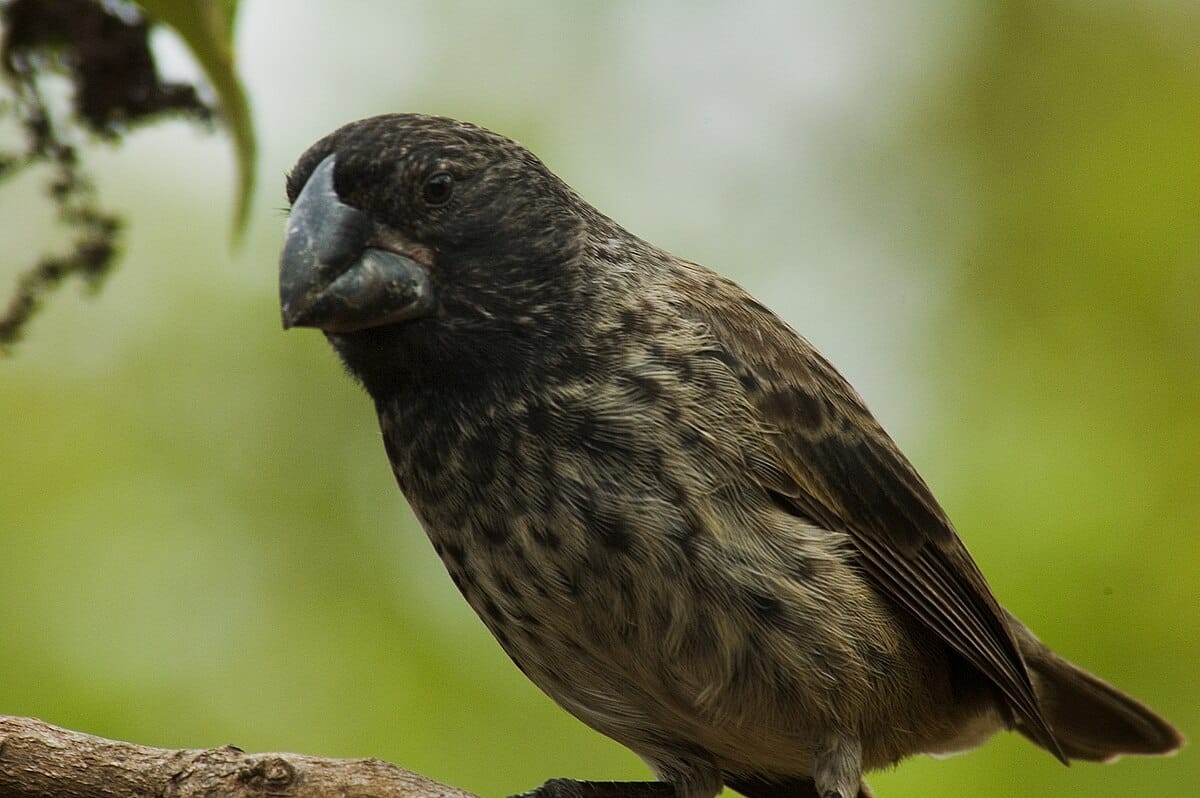
The Large Ground Finch is the heavyweight champion of Darwin’s finches, boasting the biggest beak of them all. Endemic to the Galápagos Islands, this bird has a thick, powerful bill capable of cracking open the hardest seeds and nuts — a skill that perfectly showcases the evolutionary adaptations that made Charles Darwin’s research famous. The male’s plumage is jet black, while females are streaked brown, blending with the volcanic landscape of their island homes.
These finches inhabit arid lowlands and dry scrub areas, where they forage on the ground for seeds and occasionally insects. Their diet depends on the availability of food; during droughts, their large bills give them a survival advantage, as they can handle seeds that smaller-beaked finches cannot. This adaptability is one of the reasons Darwin identified them as key examples of natural selection.
Despite their sturdy appearance, Large Ground Finches are surprisingly agile, using their powerful beaks with delicate precision. Males sing a series of rich, melodic whistles from exposed perches, marking their territories during the breeding season. They build small, dome-shaped nests lined with soft plant fibers and guard them fiercely against intruders.
Today, the Large Ground Finch remains an essential part of Galápagos biodiversity. Observing one cracking seeds under the sun offers a living glimpse into evolution in action — a reminder of how nature continuously shapes life to thrive in even the most challenging environments.
32. Medium Ground Finch (Geospiza fortis)
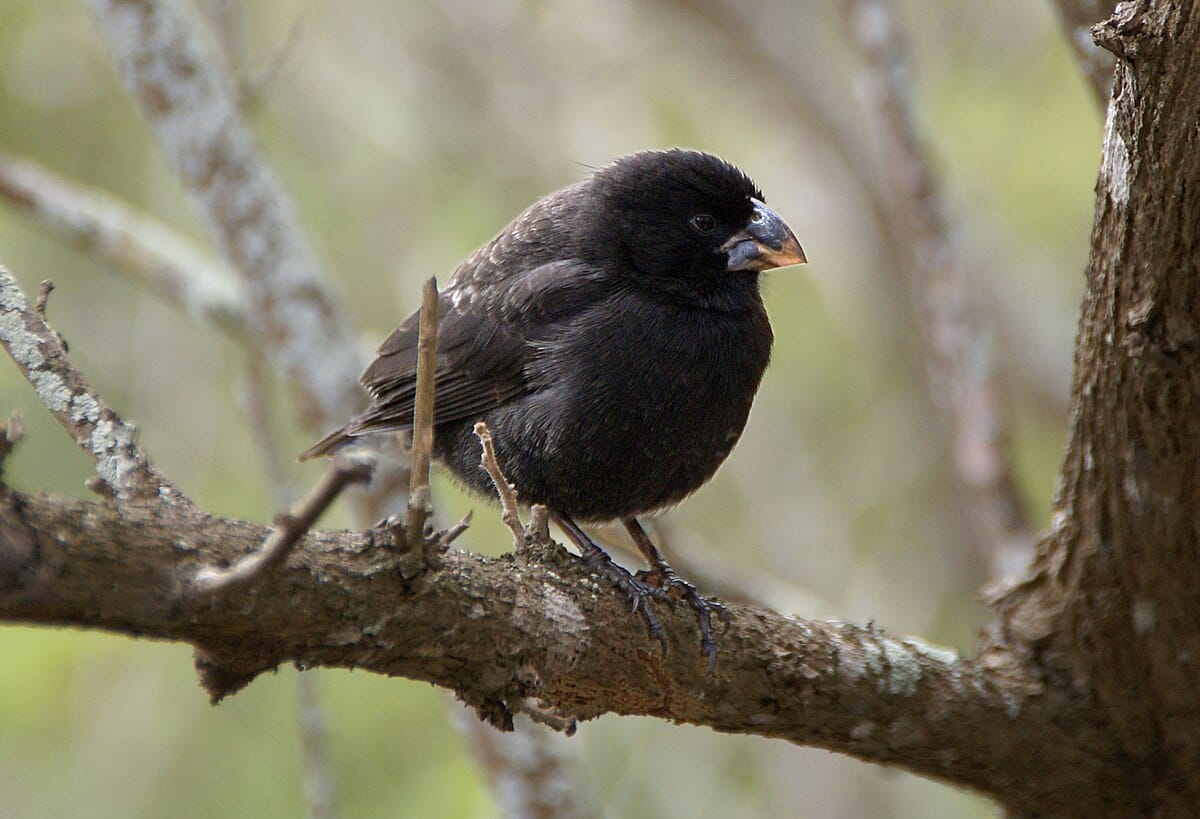
The Medium Ground Finch is perhaps the most famous of Darwin’s finches, known for its role in groundbreaking research on evolution. It’s a small, sturdy bird with a short, thick beak and plumage ranging from black in males to streaked brown in females. Found across several Galápagos Islands, this species is a perfect example of how slight changes in environment can drive evolutionary diversity.
The finch’s medium-sized bill is a compromise between strength and versatility. It allows the bird to eat a wide variety of seeds, insects, and fruits, depending on what’s available. During drought years, individuals with slightly larger beaks have a better chance of survival — a phenomenon that has been documented in real time by scientists studying natural selection.
Medium Ground Finches are social and curious, often seen in small groups hopping through bushes or foraging on open ground. Their song is a series of short trills and whistles, varying slightly from island to island. This subtle variation in song and morphology is part of what distinguishes the many Darwin’s finch species.
Though common, the Medium Ground Finch is a living emblem of evolutionary science. Watching it thrive on the same volcanic islands that inspired Darwin reminds us that adaptation is not just history — it’s happening every day, all around us.
33. Small Ground Finch (Geospiza fuliginosa)

The Small Ground Finch is the tiniest member of the ground finch group but among the most abundant across the Galápagos. Its delicate, pointed bill is adapted for feeding on small seeds and insects, proving that size isn’t everything when it comes to survival. Males are entirely black, while females and juveniles have soft brown plumage streaked with gray.
This finch thrives in dry scrublands and coastal zones, often forming flocks that forage together. Its diet shifts with the seasons — from seeds and fruits in the dry months to insects during the wet season. This flexibility allows the Small Ground Finch to inhabit nearly every major island in the Galápagos archipelago.
Though small, this bird plays a huge role in the ecosystem, helping control insect populations and disperse plant seeds. Its cheerful, high-pitched song can often be heard echoing through the volcanic rocks and cacti where it nests. The species is also one of the most approachable of all Darwin’s finches, often perching curiously near humans.
In the grand story of evolution, the Small Ground Finch represents the subtle yet powerful influence of adaptation — showing how even the tiniest variations in beak shape can mean the difference between survival and extinction in the harsh Galápagos landscape.
34. Sharp-beaked Ground Finch (Geospiza difficilis)
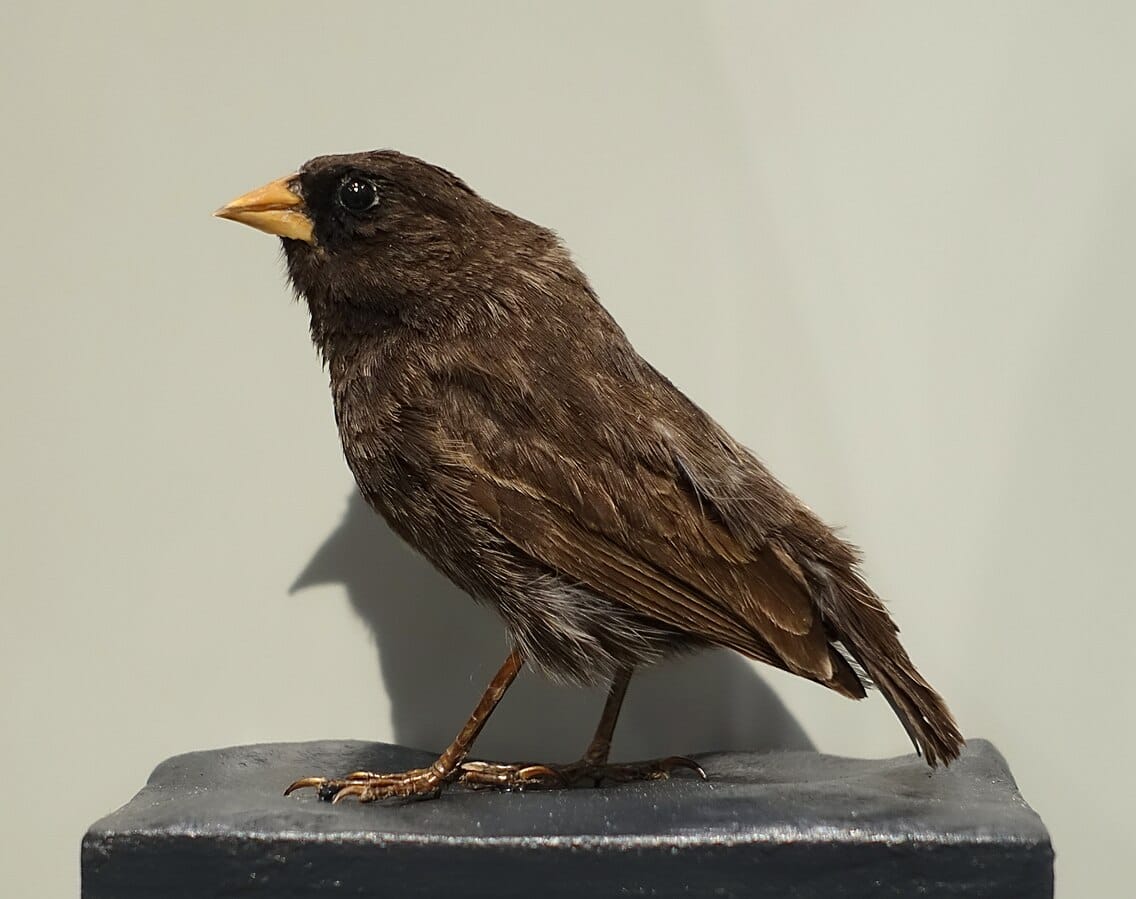
The Sharp-beaked Ground Finch is one of the most intriguing of Darwin’s finches, best known for its unusual behavior on certain islands. While most of its relatives are seed eaters, populations on Wolf and Darwin Islands have adapted to feed on the blood of seabirds — earning them the nickname “vampire finch.” This unique adaptation highlights how extreme environmental pressures can lead to extraordinary behaviors.
Physically, the Sharp-beaked Ground Finch is small and dark, with a long, pointed beak perfectly suited for probing eggs, fruits, or even the skin of other birds. On islands where food is scarce, these finches peck gently at the tails of large seabirds like boobies to drink small amounts of blood — a behavior that provides essential nutrients during dry seasons.
Beyond its infamous feeding habits, this finch still consumes seeds, insects, and fruits when available. Its diet and behavior vary dramatically between islands, showing an impressive level of adaptability. The males sing a soft series of rising and falling notes, while females build well-hidden nests among cactus spines or dense shrubs.
The Sharp-beaked Ground Finch is a fascinating reminder that evolution isn’t just about physical traits — it’s also about innovation and survival. Its bold feeding strategy might seem shocking, but in the Galápagos, it’s a brilliant example of nature’s resourcefulness at work.
35. Large Cactus Finch (Geospiza conirostris)
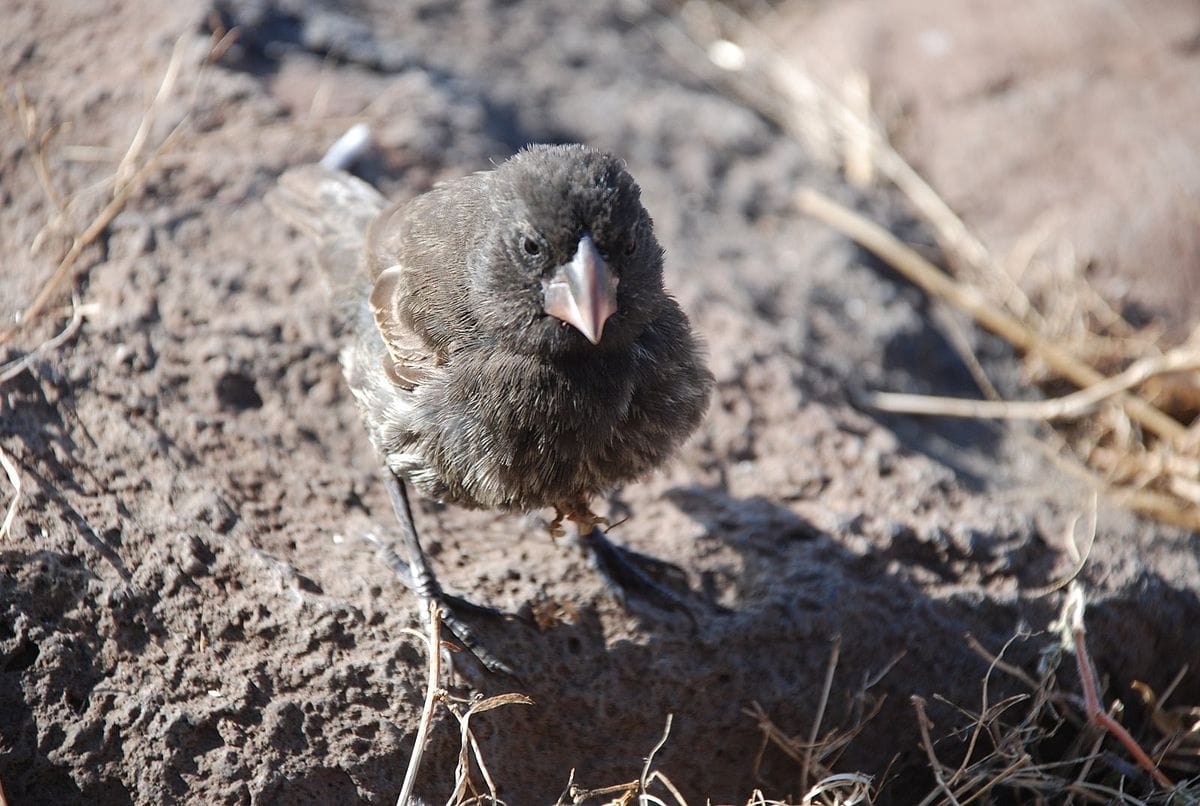
The Large Cactus Finch is another marvel of evolution, uniquely adapted to the arid, cactus-covered landscapes of the Galápagos Islands. It sports a long, powerful bill designed to feed on the seeds and flowers of prickly pear cacti, as well as the insects that inhabit them. Males are entirely black, while females are streaked brown with a sturdy build.
This finch plays a crucial ecological role — it pollinates cactus flowers while feeding, transferring pollen between blooms as it moves from plant to plant. During dry periods, it also drinks the moisture from cactus fruits, a vital survival strategy in its desert-like habitat. Observing one of these birds balancing delicately on a cactus pad, expertly avoiding spines, is a masterclass in precision.
Large Cactus Finches prefer lowland areas where Opuntia cacti dominate the landscape. Their calls are loud and sharp, often echoing across the dry valleys of Española and Genovesa Islands. Males build several potential nests to attract females, who select their favorite for raising their young.
In many ways, this finch exemplifies the beauty of specialization. Every detail of its body and behavior has evolved to fit perfectly within its niche. It’s not just a bird — it’s a living testament to how isolation and adaptation can sculpt life in remarkable ways.
36. Black Rosy-Finch (Leucosticte atrata)
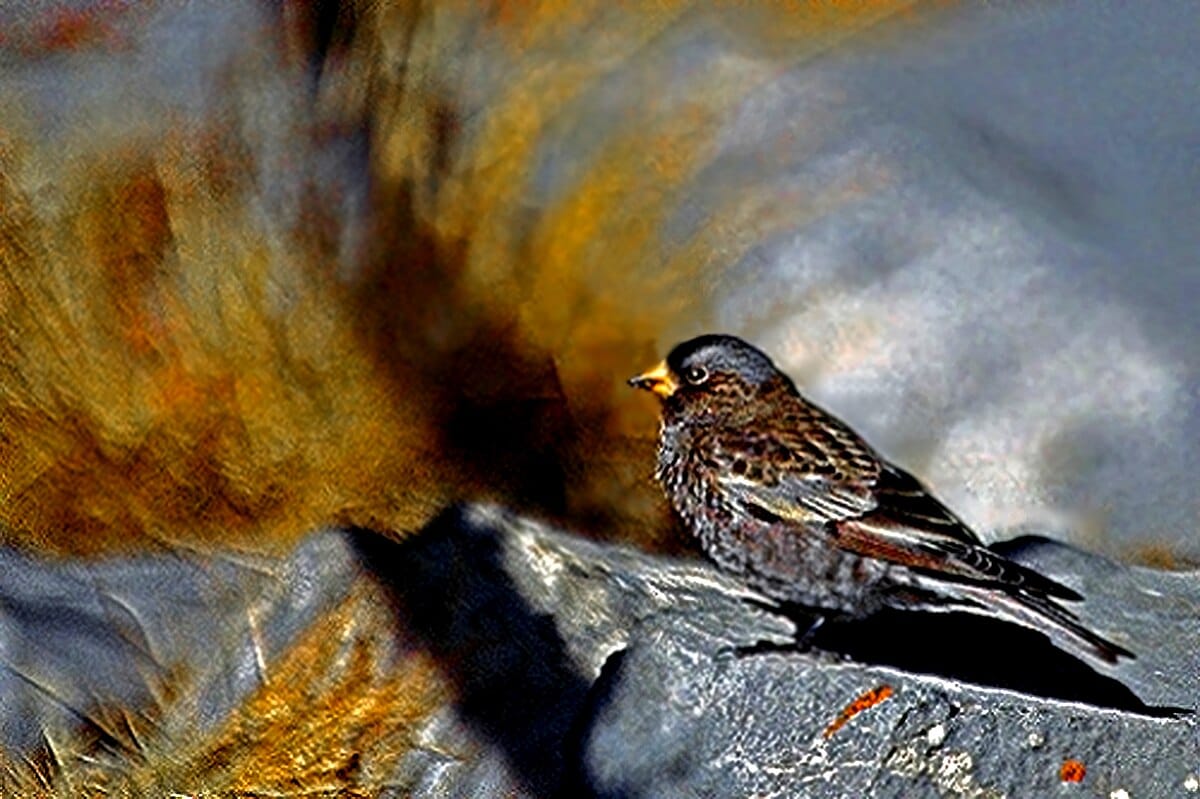
The Black Rosy-Finch is one of the highest-dwelling birds in North America, found primarily in the alpine zones of the Rocky Mountains. This hardy finch thrives where few other birds dare to live — in icy cliffs, snowfields, and barren rock slopes. Males are mostly dark brown to black with a rosy tinge on their wings and lower body, while females are slightly duller.
During the breeding season, these birds nest in crevices or behind boulders, often near melting snowbanks where insects are abundant. They feed mainly on seeds and small arthropods, which they skillfully pick from the snow surface. Their adaptation to cold, harsh climates makes them a fascinating study in survival biology.
In winter, Black Rosy-Finches descend to lower elevations, sometimes visiting feeders in mountainous towns. Their appearance in winter flocks, mixed with Gray-crowned and Brown-capped Rosy-Finches, is a spectacular sight. Sadly, their populations are sensitive to climate change, as melting snow and warmer temperatures threaten their specialized habitats. Bird enthusiasts admire them not only for their beauty but also for their resilience in some of Earth’s most extreme environments.
37. Brown-capped Rosy-Finch (Leucosticte australis)
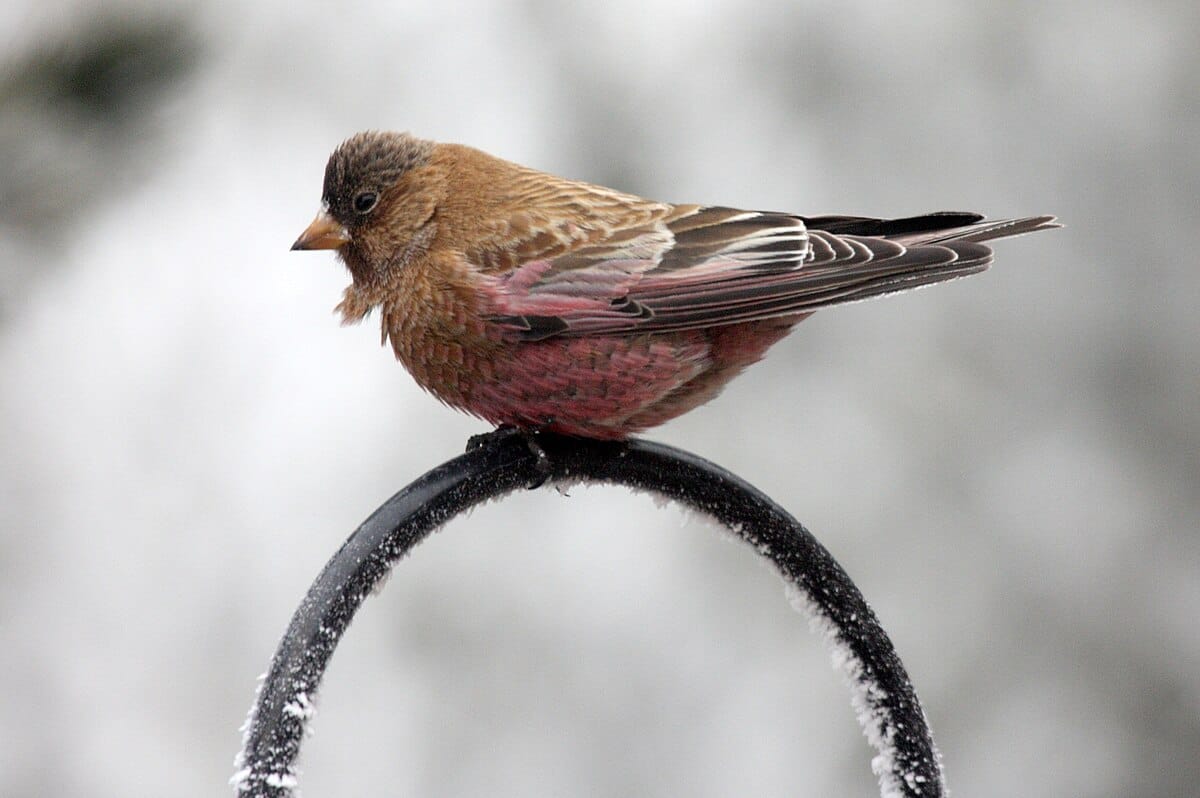
The Brown-capped Rosy-Finch is an elegant alpine bird found in the high peaks of Colorado and New Mexico. With its warm brown plumage accented by a pink wash on the wings and belly, it blends beautifully with rocky landscapes. This species is often seen at elevations above 10,000 feet, feeding among tundra vegetation and snow patches.
Brown-capped Rosy-Finches are among the few birds that can survive in year-round freezing conditions. Their thick plumage provides excellent insulation, and they rely on windblown seeds and insects for nutrition. They’re also known to forage in large, swirling flocks, sometimes joined by other rosy-finch species.
Conservationists monitor this bird closely since it occupies a narrow range. Climate change poses a serious risk, reducing the size of its alpine habitat. Birdwatchers often describe spotting a Brown-capped Rosy-Finch as a once-in-a-lifetime experience due to its rarity and remote habitat.
38. Dark-breasted Rosefinch (Carpodacus nipalensis)

The Dark-breasted Rosefinch is another dazzling representative of the Himalayan types of finches. With its combination of deep rosy-red plumage and distinctive dark chest band, this bird adds elegance to the alpine and subalpine zones it calls home.
Found across Nepal, Bhutan, northern India, and southwestern China, this species prefers high-altitude forests and shrubby slopes. It often shares its habitat with other finches and small songbirds, creating a colorful chorus in the crisp mountain air.
The male is a blend of rich crimson and chocolate-brown tones, while the female is patterned with streaks of brown and gray for effective camouflage. Their feeding habits are typical of finches — seeds, berries, and buds — but they also take small insects during breeding season to provide extra protein for their chicks.
Breeding begins with the arrival of spring thaw when snow starts melting and food becomes abundant. Males are known to perch on exposed rocks or shrubs, singing soft warbling notes to attract mates. Once paired, the female constructs a compact nest made of grass, moss, and fine roots, often sheltered within dense shrubs.
These finches are shy and prefer secluded areas, making them a rare find even for experienced birdwatchers. But for those who do manage to observe one, the Dark-breasted Rosefinch embodies the quiet beauty of the Himalayas — resilient, graceful, and perfectly adapted to its challenging environment.
In the world of types of finches, this species stands out as a true mountain specialist, thriving where few others can.
39. Yellow-fronted Canary (Crithagra mozambica)
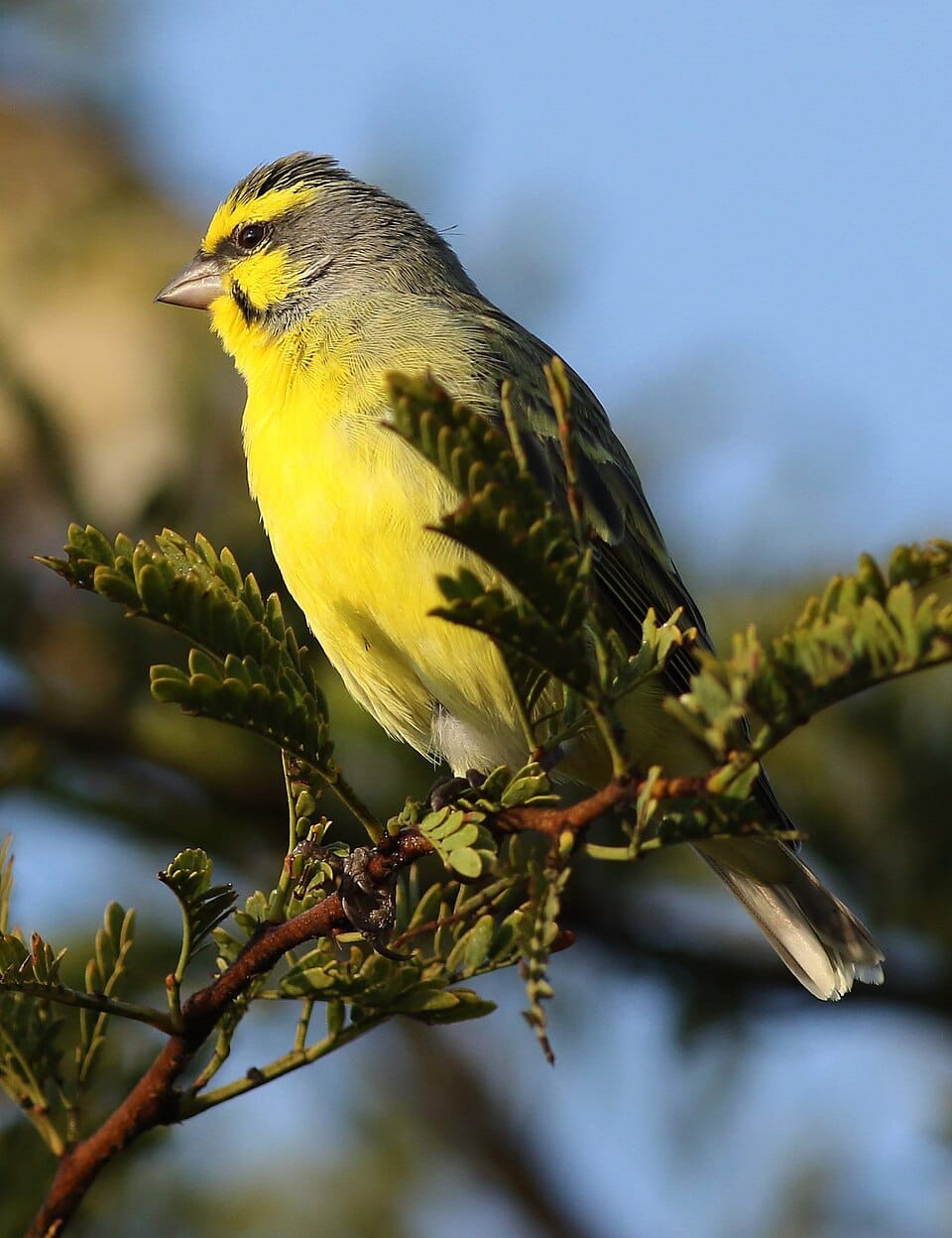
If there’s one finch that truly radiates joy, it’s the Yellow-fronted Canary, one of Africa’s most cheerful types of finches. With its bright yellow plumage, olive-green wings, and black facial markings, this bird is a burst of sunshine across savannas, gardens, and open woodlands throughout sub-Saharan Africa.
This small, lively species is often seen in flocks, especially outside the breeding season, feeding on grass seeds and small insects. It is a familiar sight around villages, farmlands, and city parks, showing how adaptable finches can be to human-altered landscapes.
Males are particularly noticeable during the breeding season when they perch on exposed branches, singing lively trills and whistles that can brighten even the driest African afternoon. Females respond with softer calls, often joining males in short display flights.
Breeding occurs mainly after the rainy season when food is abundant. The female builds a neat, cup-shaped nest made of fine grasses and plant fibers, tucked into a bush or low tree. After laying 3–4 eggs, she incubates them for about two weeks, while the male provides food and guards the territory.
Beyond its beauty, the Yellow-fronted Canary plays an ecological role by spreading seeds of native grasses, helping regenerate habitats. It’s also one of the few types of finches successfully thriving in both rural and urban environments.
For many bird enthusiasts, the Yellow-fronted Canary is a symbol of joy and freedom — a perfect reminder that nature’s music is often closest to home.
40. Black-throated Canary (Crithagra atrogularis)
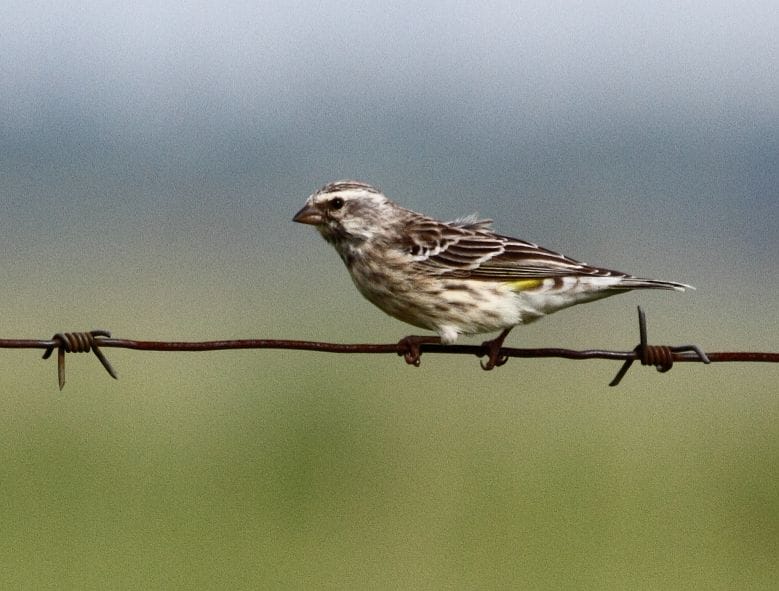
The Black-throated Canary is another fascinating African member of the types of finches family. Named for the distinct dark patch on its throat, this small, slender bird is found across much of southern and eastern Africa, including Angola, Zambia, and Tanzania.
Though less vividly colored than its Yellow-fronted cousin, the Black-throated Canary has its own subtle beauty — a grayish body, pale underparts, and of course, that unmistakable black throat marking that distinguishes it from other canaries.
This species thrives in dry savannas, open woodlands, and agricultural areas, often perching on shrubs and small trees. It feeds mainly on grass seeds, occasionally adding small insects to its diet during breeding. Its strong, tapered bill is well-adapted to cracking hard seeds typical of semi-arid regions.
During courtship, the male performs an elegant aerial display, singing sweet, warbling notes as he circles above his mate. The female builds a neat, cup-shaped nest made of dry grass, lined with soft feathers or animal hair, usually hidden within a low bush.
Socially, these canaries are often seen in small groups or mixed-species flocks, especially outside the breeding season. Their gentle calls and constant activity make them an integral part of the African soundscape.
What makes the Black-throated Canary especially interesting is its adaptability. Despite habitat loss and climate fluctuations, it continues to thrive across a wide range of environments — a true testament to finch resilience.
For wildlife enthusiasts, this bird is a reminder that beauty isn’t always found in bright colors; sometimes it’s in the quiet persistence of life in the wild.
41. Common Cactus Finch (Geospiza scandens)
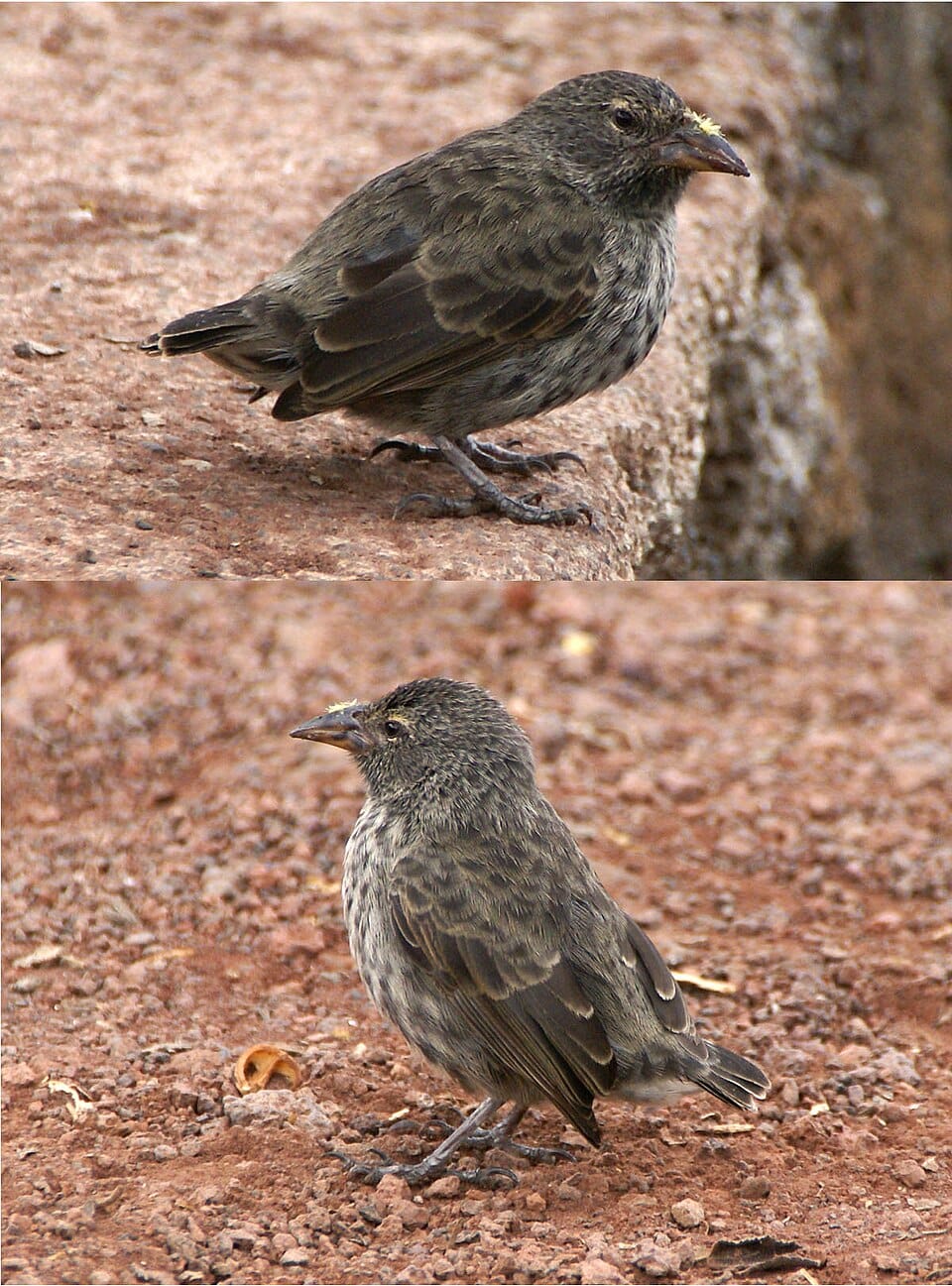
The Common Cactus Finch is a fascinating member of Darwin’s finches, perfectly adapted to the arid, cactus-rich environments of the Galápagos Islands. Males are black with a slightly glossy sheen, while females are brown and streaked, providing excellent camouflage among the dry terrain. Their large, pointed beaks are specialized for feeding on the seeds and pulp of Opuntia cacti, making them essential pollinators in their ecosystem.
These finches are often seen hopping from cactus pad to cactus pad, probing flowers and fruit for sustenance. During dry seasons, the cactus becomes their primary water source, illustrating their remarkable adaptation to a harsh environment. They also eat insects occasionally, which supplements their diet, especially when raising young.
Common Cactus Finches are highly social, forming flocks during non-breeding seasons and performing elaborate courtship displays in the spring. Their calls are a series of high-pitched trills, often delivered from perches atop cacti or rocks. Observing them in action provides a vivid demonstration of evolutionary specialization — each detail of their behavior and morphology is perfectly tuned to survival in the Galápagos.
42. Española Cactus Finch (Geospiza conirostris)
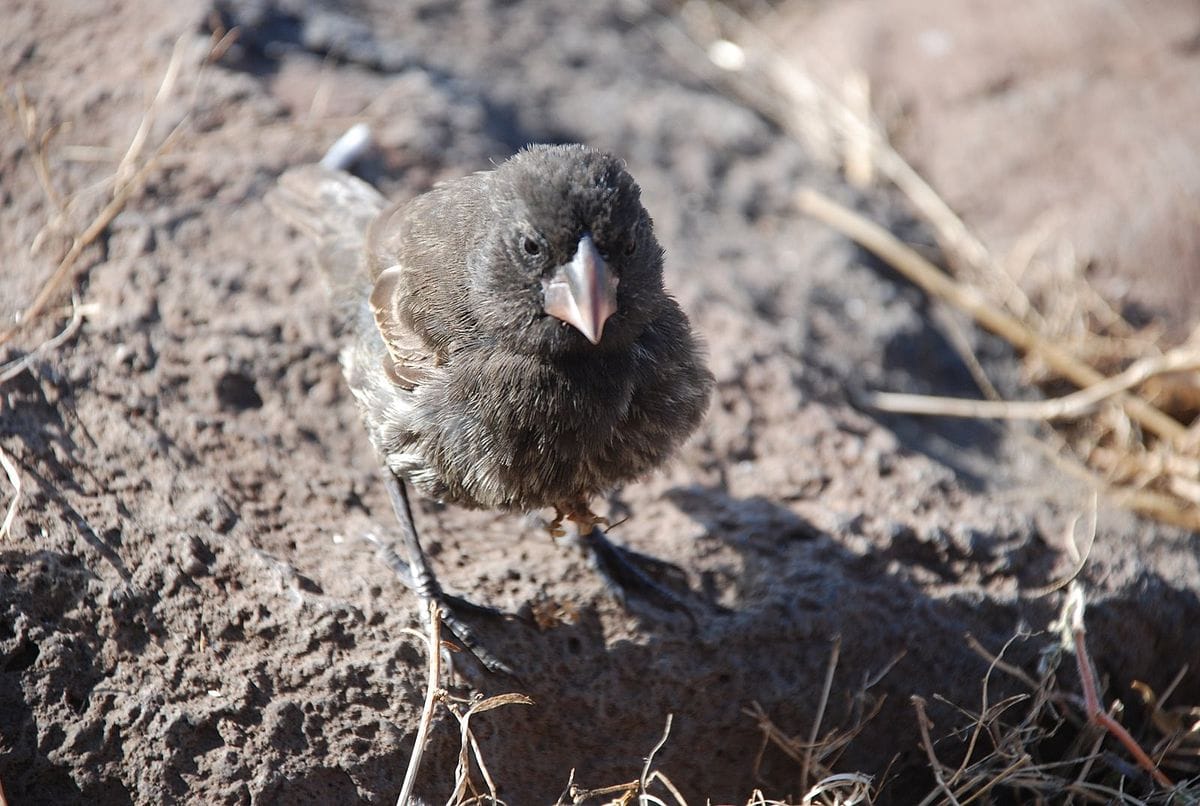
The Española Cactus Finch is a large, robust finch endemic to Española Island in the Galápagos. Males are solid black, while females are brown and streaked, similar to other cactus finches but larger in overall size. Their beaks are particularly strong, allowing them to feed efficiently on cactus seeds and flowers, even prying into the tougher Opuntia pads that other birds avoid.
This species plays a vital ecological role as both a pollinator and a seed disperser. During breeding season, males perform impressive displays, puffing their feathers and singing from high perches to attract mates. Females build sturdy nests in cactus branches, often hidden among thorns to protect from predators.
Despite their resilience, Española Cactus Finches face threats from invasive species and habitat changes. Conservation efforts, including habitat restoration and population monitoring, have helped stabilize numbers. Observing a flock foraging among towering cacti is an unforgettable experience — a living demonstration of Darwin’s theory of adaptive evolution in action.
43. Woodpecker Finch (Camarhynchus pallidus)
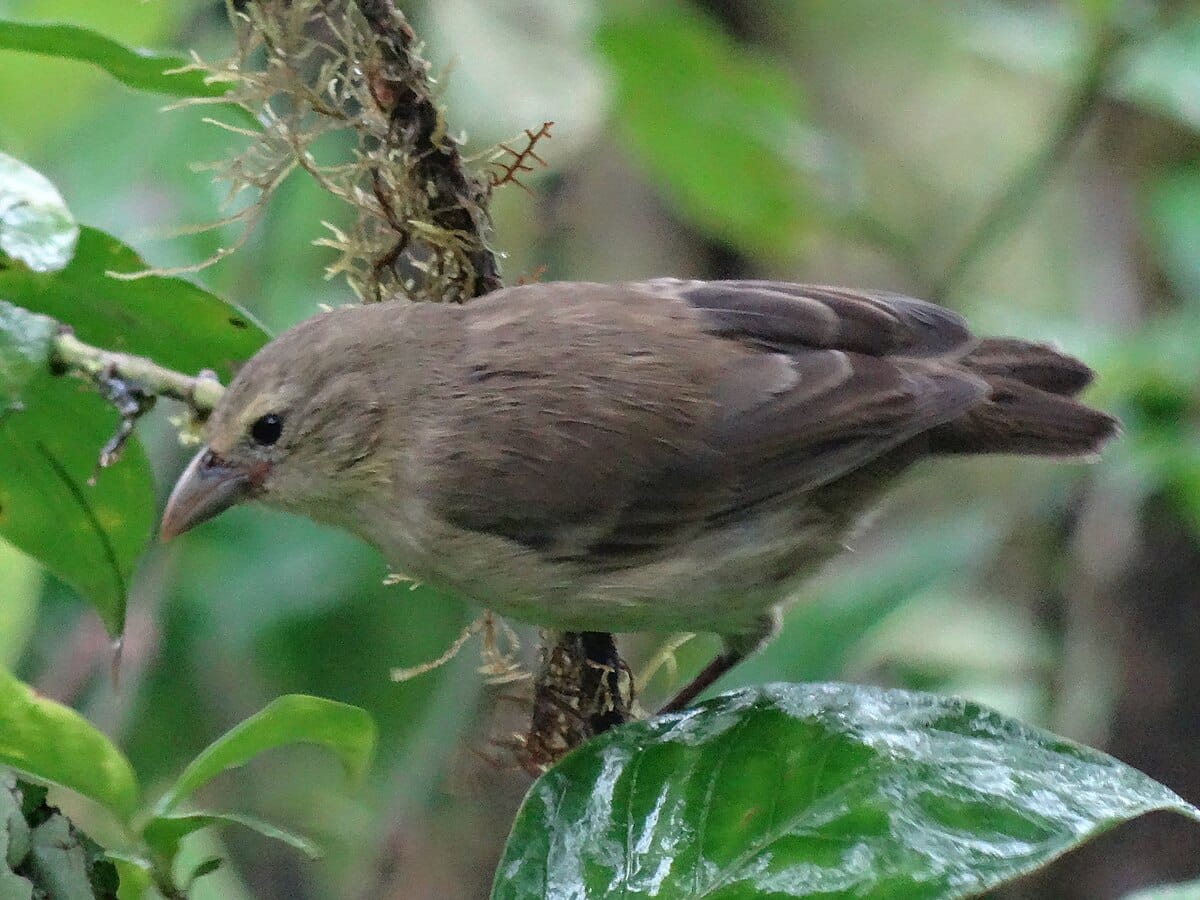
The Woodpecker Finch is one of the most ingenious of Darwin’s finches, renowned for its tool-using behavior. Endemic to the Galápagos, this small finch feeds primarily on insects hidden in tree bark and crevices. It uses sticks, cactus spines, or twigs as tools to extract prey — a behavior rare among birds and a remarkable example of intelligence in the wild.
Males are mostly gray-brown with subtle streaks, while females are slightly duller, helping them stay inconspicuous while foraging. Their beaks are straight and moderately long, ideal for manipulating tools. The Woodpecker Finch inhabits arid lowlands and dry forest areas, often seen hopping among branches in search of insects or nectar.
Their innovative feeding techniques have fascinated scientists for decades, providing insights into problem-solving and tool use in non-human species. They also help control insect populations, contributing to the health of Galápagos forests. Watching a Woodpecker Finch select, shape, and use a twig to capture hidden prey is a striking testament to the intelligence and adaptability of Darwin’s finches.
44. Mangrove Finch (Camarhynchus heliobates)
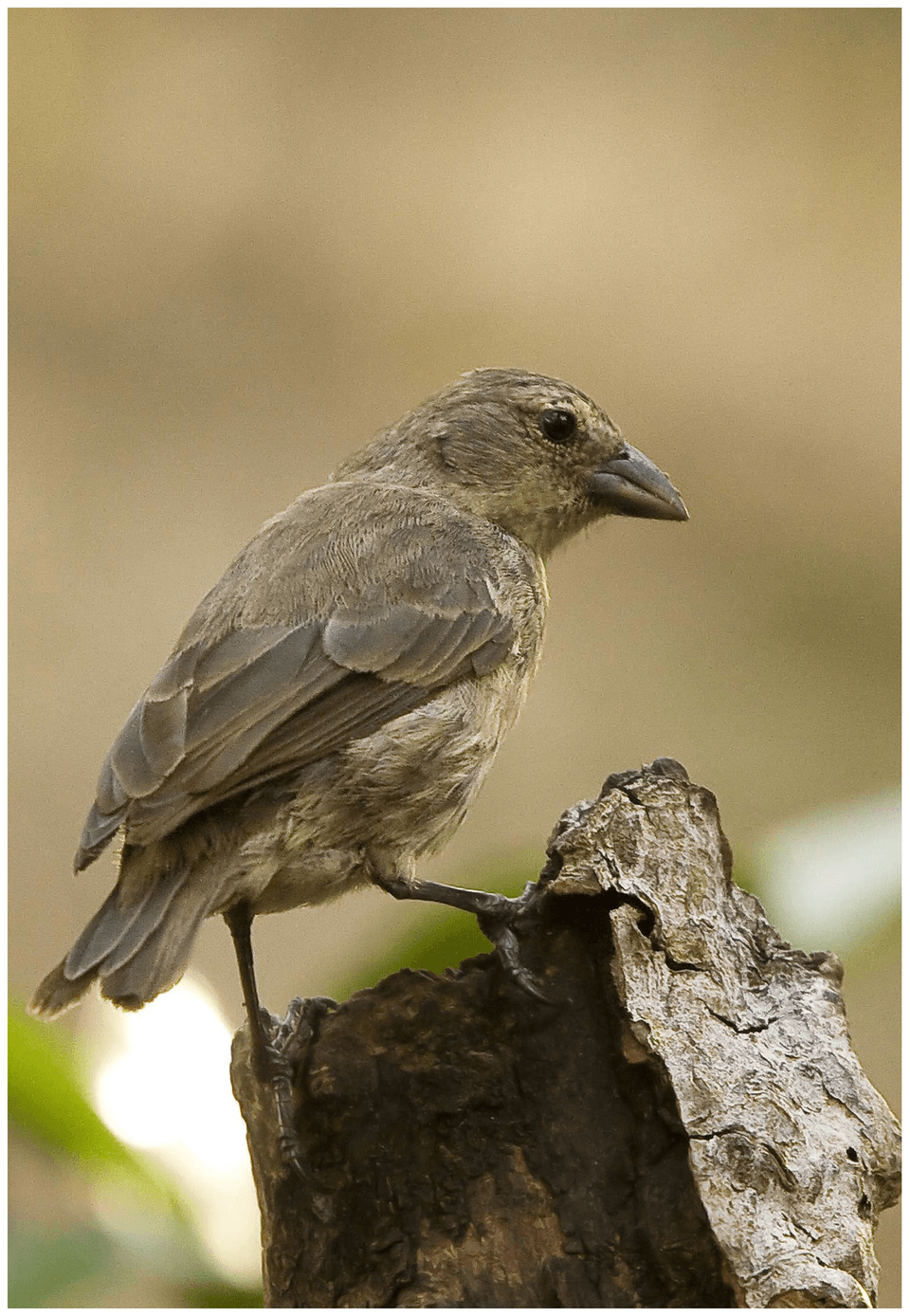
The Mangrove Finch is one of the rarest finches in the world, found exclusively in the mangrove forests of Isabela Island, Galápagos. Males are dark gray with subtle black markings, while females are slightly lighter. This critically endangered species has a highly specialized diet, feeding on insects among mangrove roots and bark, and its survival is tightly linked to the conservation of its fragile habitat.
Mangrove Finches are small and shy, often remaining hidden within dense foliage. Their beaks are delicate yet precise, allowing them to pick insects from tight crevices. During breeding season, males perform short songs and elaborate movements to court females, while females construct small nests in mangrove branches.
With fewer than a few hundred individuals remaining, the Mangrove Finch is under intense conservation management. Captive breeding and habitat protection are crucial for its survival. Observing one is an extraordinary privilege, highlighting the delicate balance of island ecosystems and the importance of protecting endemic species from extinction.
45. Small Tree Finch (Camarhynchus parvulus)

The Small Tree Finch is a tiny yet highly adaptable species native to the Galápagos Islands. Males are dark gray to black, while females are brown and streaked, blending perfectly into forested habitats. These finches primarily feed on insects, picking them from tree bark, leaves, and occasionally flowers, demonstrating remarkable agility and precision.
They inhabit arid and moist forests, often moving in small family groups or loose flocks. The Small Tree Finch is known for its short, sharp song, a series of quick trills that carry through the trees. Their breeding behavior includes building cup-shaped nests in shrubs or low trees, carefully hidden to avoid predators.
Despite their small size, these finches are vital to the ecosystem, controlling insect populations and contributing to plant health. Observing them forage actively among branches reveals the fine-tuned adaptations that make Darwin’s finches such iconic examples of evolutionary specialization. Their resourcefulness, intelligence, and charm make them a highlight of Galápagos birdwatching.
46. St. Helena Waxbill (Estrilda astrild sanctaehelenae)
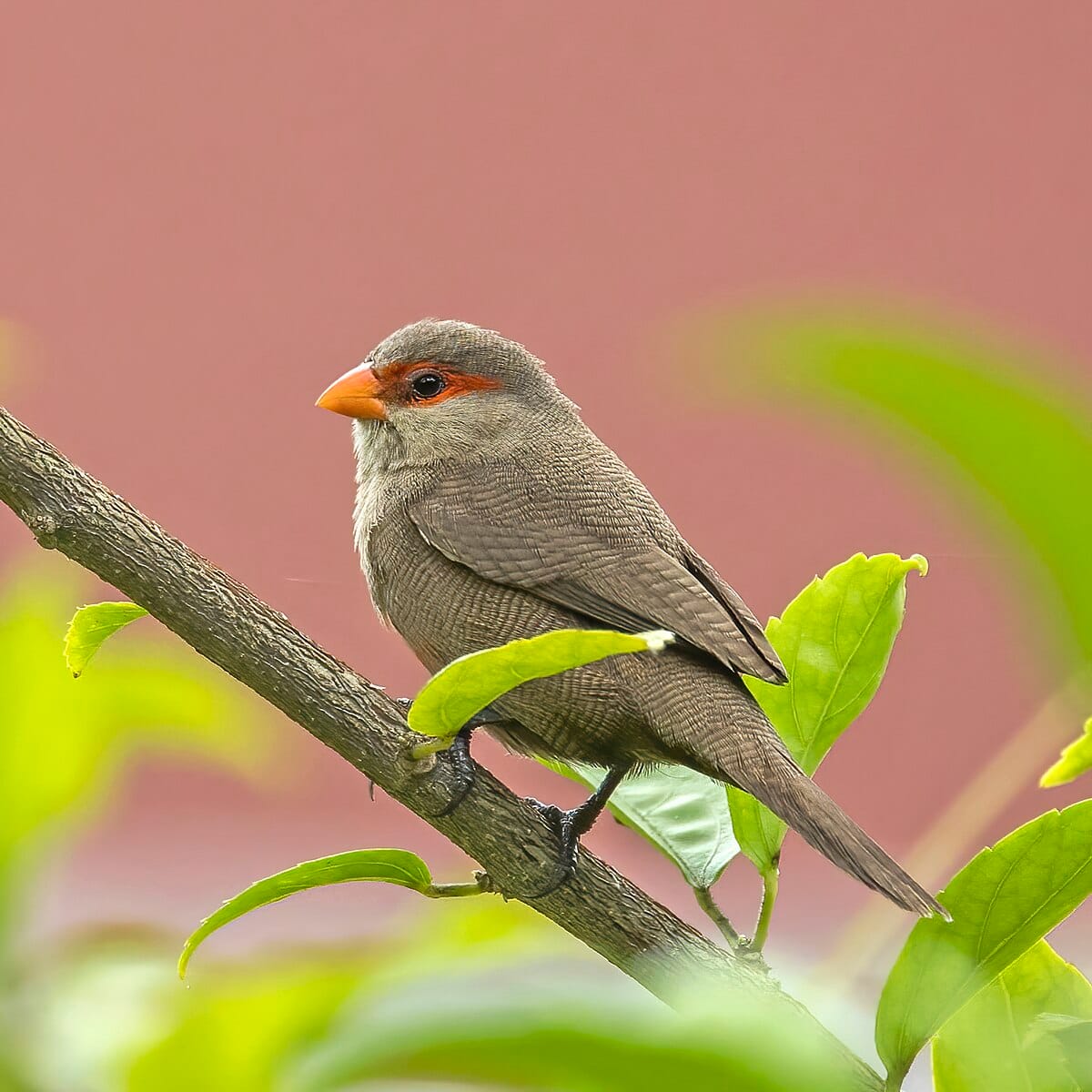
Hidden away on one of the world’s most remote islands, the St. Helena Waxbill is a rare gem among types of finches. Native to the isolated island of St. Helena in the South Atlantic Ocean, this charming little bird is a close relative of the common waxbill but has evolved subtle differences that make it unique to its environment.
Measuring only about four inches long, the St. Helena Waxbill features a delicate combination of soft brown feathers, fine barring on its body, and a vivid red bill that gives the species its name. The males and females are similar in appearance, though males may display a slightly richer tint on their underparts.
This species thrives in grasslands, wetlands, and areas with dense reeds or shrubs. Unlike many mainland finches, the St. Helena Waxbill has adapted to a limited habitat and relies heavily on the island’s native grasses for both food and nesting material. They feed primarily on grass seeds, tiny insects, and occasionally nectar — an impressive variety for such a small bird.
One of the most endearing features of this waxbill is its social nature. These finches are almost always seen in pairs or small flocks, constantly communicating with soft, high-pitched “tsee” calls. Their cooperative behavior extends to nesting as well; pairs often help each other build spherical nests made of fine grasses and feathers, usually tucked safely within low vegetation.
Breeding typically coincides with the wetter months, when seed abundance is highest. Females lay four to six eggs, which both parents take turns incubating. Chicks fledge within two weeks, but they stay close to their parents for several days, learning to forage efficiently.
Sadly, habitat loss and the introduction of non-native species have threatened the St. Helena Waxbill’s natural range. Conservationists are working to protect its remaining grassland habitats and control invasive predators. Despite these challenges, the waxbill remains a symbol of resilience and island biodiversity — proof that even tiny species can tell profound ecological stories.
Among the many types of finches worldwide, this island specialist stands as a reminder of the importance of protecting unique habitats that exist nowhere else on Earth.
47. Java Finch (Padda oryzivora)
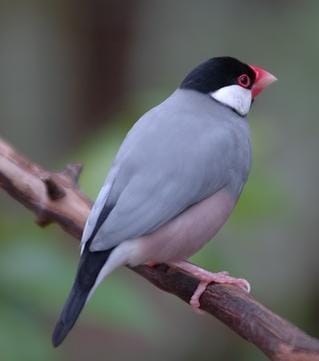
Elegant, sociable, and undeniably charismatic, the Java Finch — also known as the Java Sparrow or Rice Bird — is one of the most recognized types of finches in the world. Native to the Indonesian islands of Java, Bali, and Bawean, this bird has become a symbol of good fortune and beauty throughout Southeast Asia.
The Java Finch’s appearance is nothing short of striking. It has a sleek gray body, a black head, and bright white cheeks, highlighted by a thick pink bill that looks perfectly sculpted for cracking rice grains and seeds. Its soft pink legs and red eye-rings add to its refined look. In the wild, these birds form large flocks that shimmer like gray clouds above rice paddies and grasslands.
Behaviorally, Java Finches are extremely social. They communicate with gentle chirps and whistles, maintaining strong pair bonds even outside the breeding season. These bonds are strengthened through mutual preening, synchronized movements, and shared feeding activities. It’s this affectionate behavior that has made them beloved pets for centuries.
Their diet centers around grains — especially rice, from which they get one of their common names. In agricultural areas, they can sometimes be seen feeding on leftover rice grains, earning both admiration and irritation from farmers. However, their role in spreading seeds and controlling small insects contributes positively to the local ecosystem.
During breeding season, males perform charming courtship rituals, puffing up their feathers and singing rhythmic songs while offering nesting materials to the female. Once paired, they build their nests inside tree cavities, palm fronds, or even in human structures. A clutch typically contains 4–6 eggs, and both parents diligently share incubation and feeding duties.
Unfortunately, due to habitat loss and capture for the pet trade, wild populations have declined significantly across their native range. Yet, through conservation efforts and breeding programs, the Java Finch continues to thrive in captivity and has been introduced successfully to other regions such as Hawaii and the Philippines.
Beyond its beauty, this finch carries cultural meaning — representing happiness, harmony, and companionship. It stands as a graceful ambassador for the finch family, illustrating how types of finches have adapted not only to wild landscapes but also to coexist with humans.
48. Blue-faced Parrotfinch (Erythrura trichroa)
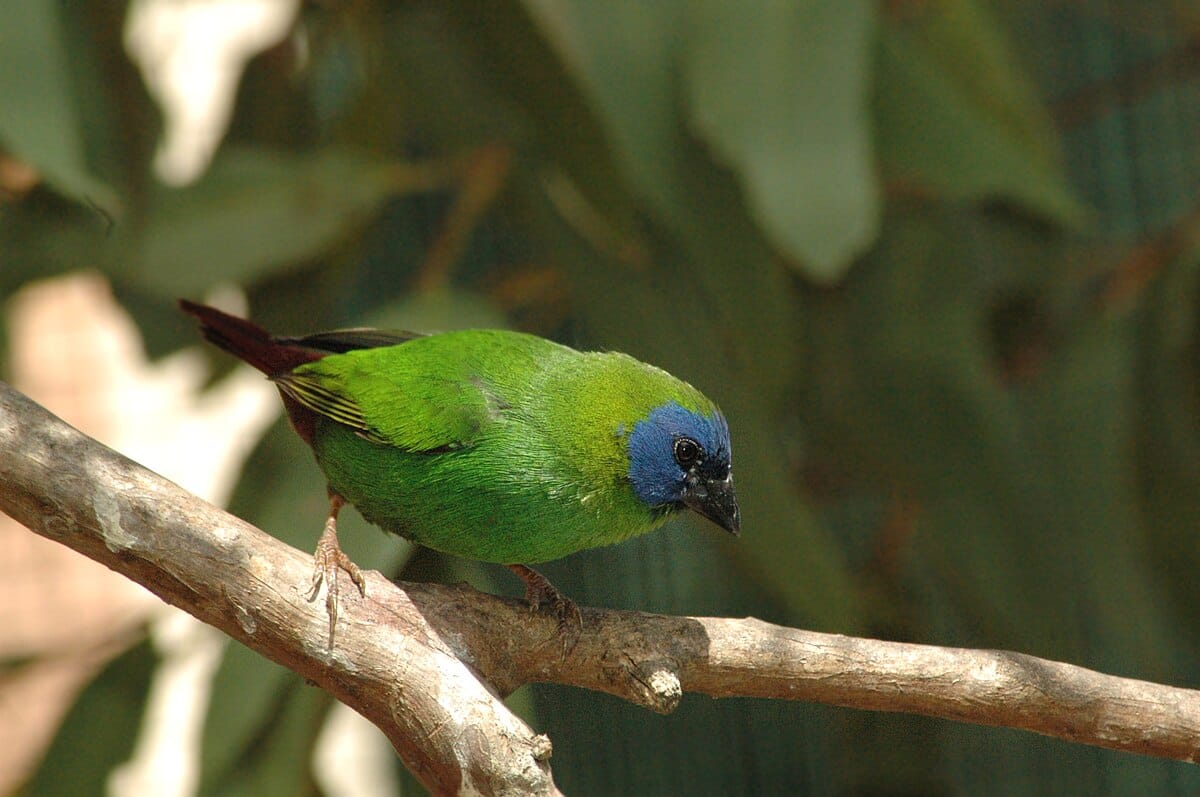
The Blue-faced Parrotfinch is a stunning tropical bird that easily earns its place among the most colorful types of finches in the world. Native to the forests of Southeast Asia, Indonesia, Papua New Guinea, and northern Australia, this tiny gem thrives in lush environments where fruiting trees and tall grasses abound.
True to its name, the Blue-faced Parrotfinch wears a dazzling combination of colors: a vivid turquoise-blue face, emerald-green body, and red tail feathers. This radiant blend gives it a parrot-like appearance, which inspired its name. In good light, its plumage glows like living jewels in the canopy.
Unlike many other finches that prefer open habitats, the Blue-faced Parrotfinch spends much of its time among dense vegetation. It feeds mainly on grass seeds, fruits, and occasionally small insects. Its diet is highly flexible, allowing it to thrive even in changing forest conditions. The finch’s short, strong bill helps it crack open hard seeds, while its nimbleness allows it to forage among thick leaves and branches with ease.
Social by nature, these birds are often found in small flocks or pairs. Their high-pitched chirps and fluttering flights make them easy to hear but not always easy to see — they blend perfectly into the greenery. During courtship, males display their vibrant faces proudly, hopping and singing to attract females.
Nesting occurs in the rainy season when food is most abundant. The pair builds a small, dome-shaped nest from grass and leaves, often hidden within ferns or low shrubs. Both parents share the work of incubating eggs and feeding the chicks.
The Blue-faced Parrotfinch is a favorite among birdwatchers for its vivid beauty and cheerful presence. It’s a reminder of the tropical richness of the finch family — a group that has adapted from deserts to rainforests with incredible versatility. Among types of finches, this species truly showcases nature’s love for color and variety.
49. Crimson-collared Finch (Haemorhous collaris)
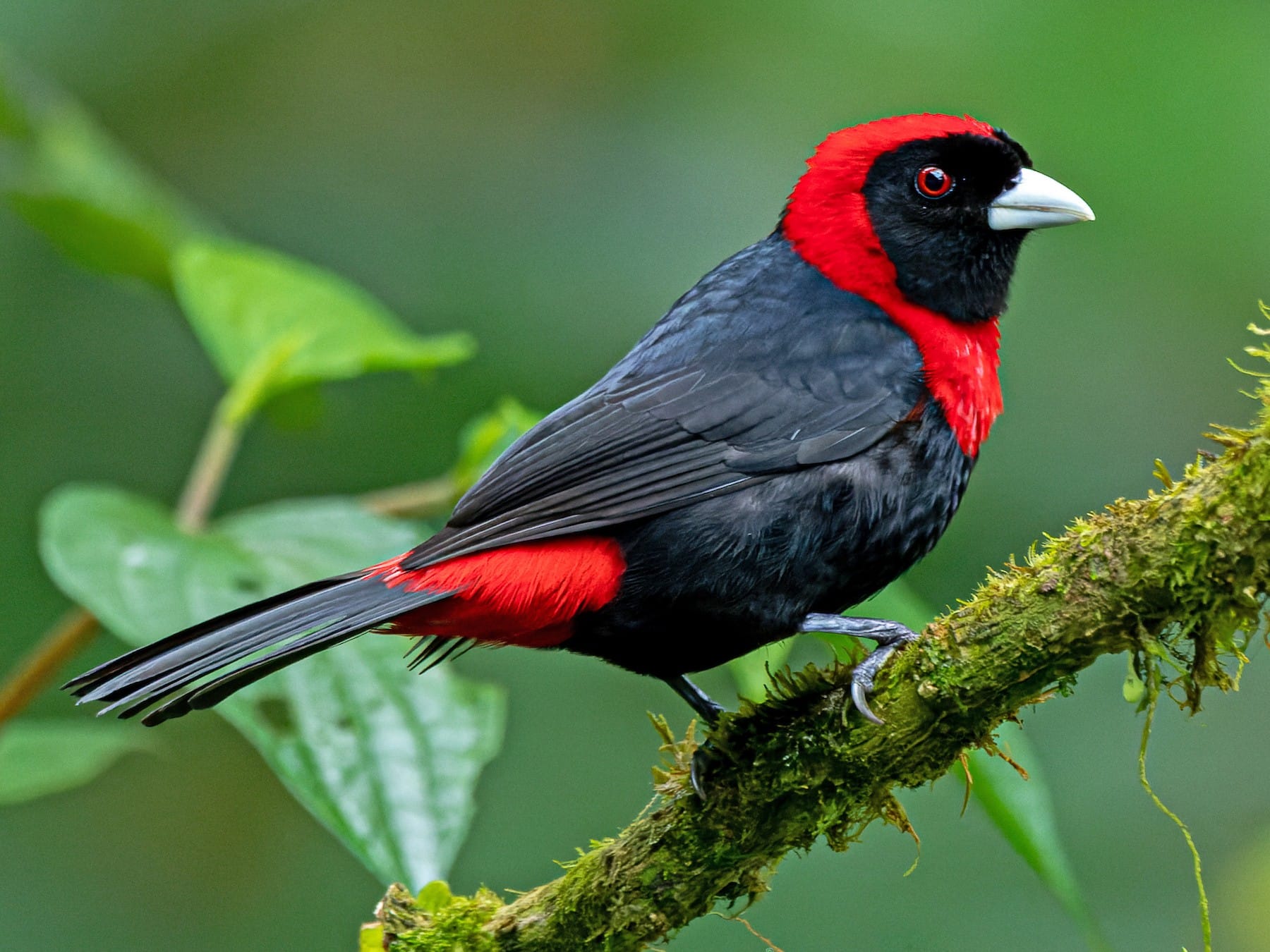
The Crimson-collared Finch is one of Central America’s most eye-catching types of finches. Found mainly in southern Mexico and Honduras, this bird stands out with its intense crimson-red plumage contrasted by jet-black wings and tail — a striking color combination that commands attention in the wild.
Unlike many finches that live in open habitats, the Crimson-collared Finch prefers tropical lowland forests and secondary growth areas. It’s often seen foraging along forest edges, plantations, and even gardens, adapting well to areas where human activity has modified the landscape.
This finch’s diet consists primarily of seeds, fruits, and insects. Its thick bill is perfectly designed to handle both plant and animal matter, giving it a balanced nutritional intake. During the breeding season, it becomes even more active, searching for insects to feed its growing chicks.
The male’s behavior is particularly fascinating. To attract a mate, he performs small display flights, puffing his red chest feathers and singing rich, fluty notes that echo through the trees. Once paired, the female builds a nest of roots, twigs, and moss — often concealed in low shrubs or small trees.
Crimson-collared Finches are not particularly aggressive, but they are highly territorial during breeding. They fiercely defend their nesting sites from intruders, ensuring safety for their offspring. Outside of the breeding season, however, they may form loose flocks and even join mixed groups with other seed-eating birds.
Their vivid coloring and gentle temperament have made them a favorite among bird enthusiasts in their native regions. Seeing one is a moment of joy — a burst of red life against the deep green of Central American forests. This finch represents the vibrancy and adaptability that make the types of finches family so endlessly fascinating.
50. African Firefinch (Lagonosticta rubricata)
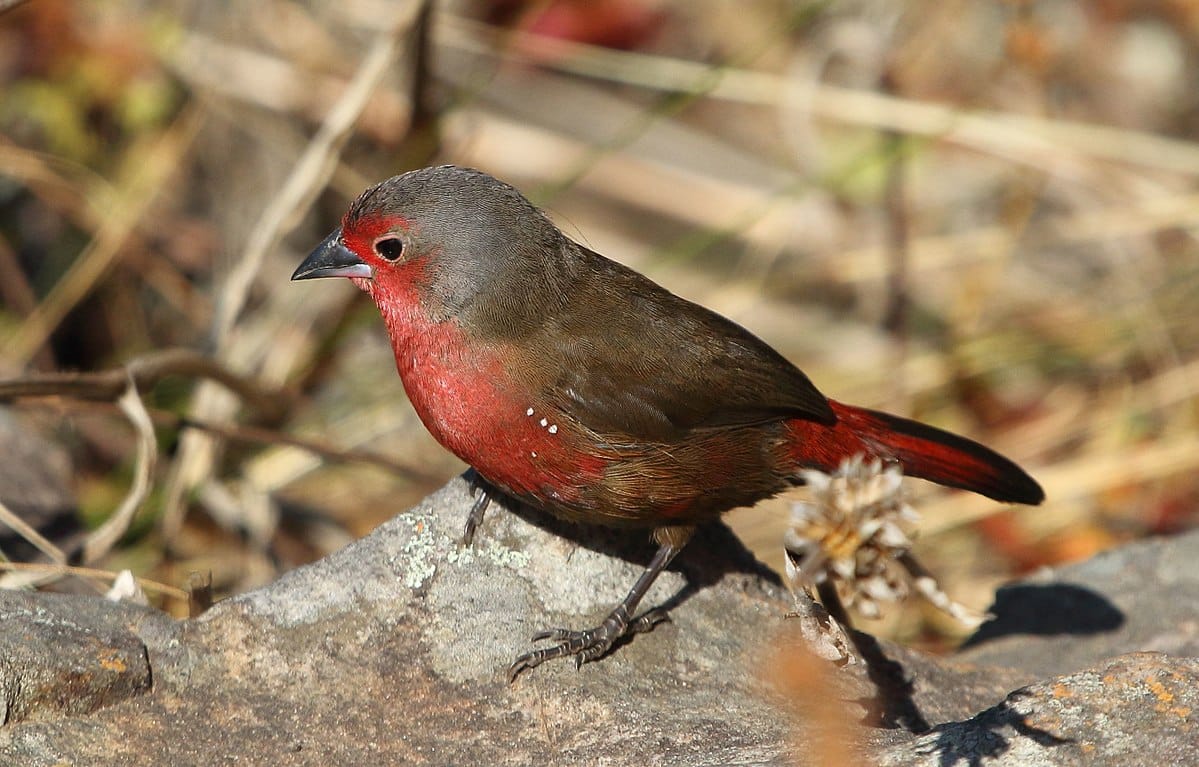
Few birds embody the beauty of the African savanna like the African Firefinch. With its deep crimson plumage, soft gray back, and gentle nature, it’s one of the most beloved types of finches across sub-Saharan Africa. Its name perfectly reflects its fiery coloring, which seems to glow like embers in the tall golden grasses where it lives.
The African Firefinch favors habitats near water — riverbanks, woodland edges, and grassy thickets. These areas provide both food and shelter from predators. Its diet mainly consists of grass seeds, small insects, and occasionally termites. The firefinch’s delicate bill is adapted for precision, allowing it to pluck seeds from tight clusters with remarkable skill.
This species is often seen in pairs or small family groups. Its behavior is gentle and cautious; it prefers to forage quietly close to cover rather than in open spaces. You’ll often notice them flicking their tails or hopping low among grass stems, occasionally flashing their bright red undersides in the sunlight.
Breeding season coincides with the rainy months when the savanna bursts into life. Males are devoted partners, performing fluttering dances and singing soft trills to woo females. Once bonded, the pair builds a round nest hidden within dense grass or low shrubs. The female lays about 3–5 eggs, and both parents share the duty of feeding the chicks.
One fascinating aspect of the African Firefinch’s life is its relationship with brood parasites like the Village Indigobird, which lays eggs in firefinch nests. Despite this challenge, the species continues to thrive thanks to its adaptability and strong parental instincts.
Their quiet presence, brilliant color, and resilience make them one of the most captivating types of finches on the continent. Observing a Firefinch in the wild feels like witnessing a flicker of living flame — a delicate balance of beauty and endurance in Africa’s vast landscapes.
Frequently Asked Questions About Finches
1. What are Darwin’s 14 finches?
Darwin’s 14 finches are a group of finch species found in the Galápagos Islands. Charles Darwin studied them and noticed how their beaks adapted to different food sources, which helped him develop his theory of evolution.
2. How many species of finch are there?
There are over 140 species of finches worldwide, including popular ones like zebra finches, goldfinches, and canaries. They vary greatly in size, color, and habitat.
3. How many types of finch are there in the UK?
The UK has around 9 native finch species, including the chaffinch, greenfinch, goldfinch, siskin, and linnet, among others.
4. What kind of bird is a finch?
Finches are small to medium-sized passerine birds. They are known for their conical beaks, which are perfect for eating seeds, and their bright, often colorful plumage.
5. What is the rarest finch bird?
The Spix’s macaw finch is extremely rare, but among common finches, species like the Black-faced or Blue Finch are considered very rare in the wild.
6. Do finches like to be petted?
Most finches are not fond of being petted. They are small and delicate, and prefer interaction through observation, talking, or gentle hand-feeding.
7. Are canaries a finch?
Yes! Canaries belong to the finch family. They are well-known for their singing ability and bright yellow plumage.
8. What is the most colorful finch?
The Gouldian finch is often considered the most colorful. Males have bright red, green, yellow, and blue feathers, making them extremely striking.
9. Can a finch bird fly?
Yes, finches are strong flyers. They use their wings to travel in flocks, escape predators, and search for food.
10. What is the top 1 rarest bird?
While not all finches are rare, globally, the Spix’s macaw is considered one of the rarest birds, and among finches, some species like the Black-faced or Blue Finch are critically endangered.
11. How rare is a blue finch?
Blue finches are quite rare in the wild and are mostly found in specific South American regions. Habitat loss has made them vulnerable in some areas.
12. What is the biggest finch?
The Large Ground Finch, part of Darwin’s finches, is one of the largest. Some species in captivity, like the grosbeak-type finches, also grow fairly large compared to typical small finches.
13. Is a budgie a finch?
No, budgerigars (budgies) are part of the parrot family. While they share some similarities with finches, like small size and social behavior, they are not true finches.
14. Can you touch a canary?
Yes, canaries can be gently touched if they are hand-tamed, but they are delicate birds and generally prefer to perch and interact without being handled too much.
15. Are parakeets a type of parrot?
Yes! Parakeets are small parrots. They are not finches, but both are popular in homes due to their bright colors and social behavior.
16. Can finches recognize you?
Yes, finches can recognize individual people, especially if they interact daily. They remember feeding routines and may respond to your presence with chirps or activity.
17. What are signs of a stressed finch?
Signs of stress include fluffed feathers, lethargy, loss of appetite, pacing, excessive chirping, or aggression toward cage mates. Changes in behavior should be addressed promptly.
18. What is the lifespan of a finch?
Most finches live 5–10 years in captivity, though some species, like Gouldian finches, may live up to 12 years with proper care.
19. What kind of toys do finches like?
Finches enjoy swings, ladders, mirrors, and small bells. Toys encourage exercise and mental stimulation, keeping them happy and healthy.
20. What size cage do finches need?
Finches need wide, horizontal cages for flying. A minimum of 24 inches long and 18 inches high is recommended for a pair, with larger cages preferred for multiple birds.
21. Which finch is male or female?
Males often have brighter, more colorful plumage and sing more frequently. Females are usually duller in color and quieter, but this can vary by species.
22. Do finches need a special feeder?
Finches do best with small, shallow feeders suitable for seeds. Hanging feeders and seed trays are popular options, ensuring seeds don’t spill excessively.
23. How do finches drink?
Finches drink by dipping their beaks into water and tilting their heads back. Fresh, clean water should always be available in a shallow dish or bottle feeder.
24. Can I keep finches outside?
Yes, finches can live outside in mild climates, but the enclosure should protect them from predators, extreme temperatures, and bad weather.
25. Can female finches lay eggs without a male?
Yes, females may lay eggs without a male, but these eggs will not be fertile and won’t hatch.
26. Are finches noisy?
Finches are generally not very loud. They chirp and sing, especially in the morning, but their sounds are usually pleasant and not disturbing.
27. What do finches like to eat?
Finches eat seeds, grains, fruits, vegetables, and specialized finch pellets. Fresh water and occasional treats like egg food help keep them healthy.
28. What is the best finch for a pet?
Bengalese finches and Gouldian finches are popular pets. They are easy to care for, social, and colorful, making them ideal for beginners.
29. Why is it called a purple finch?
Male purple finches have a reddish-purple hue on their heads and chest, which gives the species its name.
30. What is a mule finch?
A mule finch is a hybrid between two different finch species. These hybrids are often bred in captivity for color variations and novelty.
31. Do finch birds sing?
Yes, many finches sing, especially males. Singing is used to attract mates, mark territory, or communicate with other finches.
32. Why are they called canaries?
Canaries are named after the Canary Islands, where they were originally found. They belong to the finch family and are famous for their singing.
33. Is a saffron finch a canary?
No, the saffron finch is a separate species, native to South America. It is bright yellow like a canary but not the same species.
34. How many varieties of finches are there?
Worldwide, there are over 140 finch species and many color morphs in captivity, giving bird lovers a huge variety to choose from.
35. Is there a bird called a zebra finch?
Yes! Zebra finches are small, popular pet birds with black-and-white stripes on their tails and orange beaks. They are social and easy to breed in captivity.
36. Is there a red finch?
Yes, male red finches have bright red plumage, especially around the head and chest. Examples include the House Finch and Purple Finch.
37. Is there a black finch?
Yes, species like the Black-faced Finch and the Black-headed Munia have dark plumage and are sometimes referred to as black finches.
38. Is there such a thing as a blue finch?
Yes, some finches, like the Blue Finch (Porphyrospiza caerulescens), have blue feathers. They are rare and mainly found in South America.
39. What is a finch that drinks blood?
The “vampire finch” is found in the Galápagos Islands. It pecks at the skin of other birds to drink a tiny amount of blood, mainly during dry periods when food is scarce.
40. What is a gallows bird?
The term “gallows bird” is not commonly used for finches. Historically, it was slang for criminals or birds that hung around execution sites.
41. Is a Twite a finch?
Yes! The Twite is a small, brownish finch found in Europe, closely related to the linnet and other small seed-eating birds.
42. Do finch birds have emotions?
Finches do show basic emotions like curiosity, fear, and excitement. They can bond with each other and respond to environmental changes, indicating social and emotional awareness.
43. What bird sings loud?
Among finches, canaries are known for their loud and melodious singing. Some other species like the Gouldian finch also sing frequently but less loudly.
44. Are finch birds smart?
Yes! Finches are intelligent birds. They can learn simple routines, recognize people, navigate complex environments, and communicate with each other effectively.
Conclusion
Finches are some of the most diverse and fascinating birds in the world, ranging from common backyard visitors to rare species found only on remote islands. Across their 50 unique types, we see an incredible variety of sizes, colors, and behaviors — from the brilliant red of the Purple Finch to the ingenious tool-using Woodpecker Finch of the Galápagos. Each species demonstrates remarkable adaptations, whether it’s a beak specialized for cracking seeds, probing cactus flowers, or even sipping blood from seabirds.
Studying finches offers more than just aesthetic enjoyment; it provides valuable insights into evolution, ecological balance, and conservation. Many of these birds face challenges such as habitat loss, climate change, and competition from invasive species, making awareness and conservation efforts crucial for their survival. Observing finches in the wild or even at a backyard feeder allows us to connect with nature, appreciate the complexity of ecosystems, and witness evolution in action.
Whether you are a beginner birdwatcher or an experienced ornithologist, exploring the world of finches is both educational and rewarding. Their beauty, intelligence, and adaptability remind us of the endless wonders of wildlife and the importance of protecting these remarkable birds for generations to come.
Read more: