

Mantis are fascinating insects that have captivated scientists and hobbyists for centuries. Known for their distinctive front legs, which fold as if praying, mantis exhibit a wide variety of shapes, sizes, and behaviors. Understanding the different Types of Mantis can help nature enthusiasts identify species, observe their hunting habits, and appreciate their role in ecosystems. From the delicate Orchid Mantis to the imposing Giant Asian Mantis, each species has something interesting to teach us about survival, camouflage, and predator-prey interactions.
1. Chinese Mantis (Tenodera sinensis)

The Chinese Mantis is one of the most recognizable mantis species in the world. Originally from Asia, it has now spread to North America, where it thrives in gardens and fields. Adults can grow up to 11 centimeters long, with a light green or brown body that blends well into foliage. Its forelegs are equipped with spines for gripping prey, making it a deadly hunter despite its calm appearance.
Chinese Mantis are ambush predators. They remain still for long periods, waiting for insects, spiders, and even small amphibians to come close. When prey appears, they strike with lightning speed. Observing them can feel like watching a miniature ninja in action. Their behavior provides insight into how Types of Mantis balance patience and power.
Female Chinese Mantis are notorious for sexual cannibalism. After mating, they may eat the male, which seems shocking but actually provides nutrients for egg production. This behavior highlights the intricate survival strategies present in mantis species.
Chinese Mantis also show fascinating interactions with humans. Gardeners often appreciate them because they control pest populations naturally. However, their predatory habits extend to beneficial insects too, so they are not selective in their diet. Their life cycle begins with eggs laid in a frothy case called an ootheca, which protects them during winter. Nymphs emerge in spring, resembling miniature adults and growing through several molts.
The Chinese Mantis embodies both elegance and efficiency, serving as a perfect example of the delicate yet lethal nature seen across many Types of Mantis.
2. European Mantis (Mantis religiosa)

The European Mantis is widespread across Europe and parts of North America. Named for its “praying” posture, it is slightly smaller than the Chinese Mantis, usually measuring 6–8 centimeters long. Its body ranges from pale green to brown, which provides excellent camouflage in meadows, hedgerows, and gardens.
European Mantis are skilled hunters and are known to consume a variety of prey including flies, moths, and small grasshoppers. Their front legs are fast and precise, allowing them to capture prey that comes within striking distance. Watching them move is like observing a perfectly timed trap in nature.
Interestingly, European Mantis exhibit remarkable patience. They often stay motionless for hours, waiting for the perfect moment. This patience is a common trait among many Types of Mantis and is crucial for their survival. Like the Chinese Mantis, females sometimes engage in sexual cannibalism after mating, a behavior that can seem brutal but serves an evolutionary purpose.
The European Mantis is also popular in classrooms and scientific studies due to its size, ease of observation, and striking appearance. By understanding its habits and adaptations, enthusiasts gain insights into predator-prey dynamics, camouflage, and the lifecycle of mantis species. From egg cases to adult hunting tactics, this mantis demonstrates resilience, strategy, and the subtle power of patience.
3. Carolina Mantis (Stagmomantis carolina)

The Carolina Mantis is native to the United States and is smaller than the previous two species, typically 4–6 centimeters long. Its coloration varies from light green to brown, making it nearly invisible among grass, leaves, and flowers. Unlike larger mantis, Carolina Mantis are more agile and can take flight to escape danger or capture prey.
This mantis primarily feeds on small insects such as flies, moths, and crickets. They use a combination of camouflage and ambush tactics, remaining still until prey approaches. Observers often notice how the Carolina Mantis tilts its head, scanning its surroundings like a tiny soldier surveying the field.
Carolina Mantis females also practice cannibalism, particularly if food is scarce. Their eggs are deposited in a protective ootheca, which safeguards them through winter. Nymphs hatch in spring and immediately start hunting, growing quickly through successive molts.
This species is often considered beginner-friendly for mantis enthusiasts because of its manageable size and adaptive behaviors. It illustrates key traits shared among many Types of Mantis: patience, precision, and a combination of stealth and agility that allows them to thrive in diverse environments.
4. Orchid Mantis (Hymenopus coronatus)

The Orchid Mantis is arguably one of the most visually stunning mantis species. Native to Southeast Asia, it mimics the petals of orchids with its delicate pink and white body. This camouflage allows it to hide among flowers while luring unsuspecting pollinators like bees and butterflies directly into its grasp. Unlike many Types of Mantis, the Orchid Mantis relies heavily on its appearance to attract prey, making it a fascinating example of both deception and elegance in the insect world.
Adult Orchid Mantis usually measures between 5 and 6 centimeters, with females significantly larger than males. Their flattened bodies and lobed legs help them blend seamlessly into floral environments. The front legs are equipped with spines, allowing them to snatch prey with incredible speed. They remain almost motionless during hunting, striking only when the opportunity is perfect.
Beyond hunting, Orchid Mantis are popular in scientific studies and insect collections because their color-changing ability demonstrates how environmental factors can influence appearance. In the wild, their ability to mimic orchids helps them avoid predators, and it teaches observers how certain Types of Mantis evolve highly specialized survival strategies.
Reproduction is equally intriguing. Females lay eggs in frothy oothecae that harden to protect the next generation. Newly hatched nymphs are miniature versions of adults and immediately begin to practice their ambush skills. Watching an Orchid Mantis in action is like witnessing a miniature predator in a living art gallery—it’s subtle, deadly, and mesmerizing.
5. Ghost Mantis (Phyllocrania paradoxa)

The Ghost Mantis is a master of disguise. Native to Africa, it has a flattened, leaf-like body that helps it vanish against twigs, bark, and leaves. Its cryptic appearance is so convincing that even experienced observers may overlook it, earning it its spectral name. This mantis exemplifies how form and color in insects can work together to provide protection from predators and enhance hunting success.
Adults are relatively small, typically 5–6 centimeters, with males being slimmer and more agile than females. The Ghost Mantis relies on patience; it rarely moves, waiting for prey to wander within reach. Insects such as flies and moths become easy targets thanks to the combination of camouflage and rapid strike capability. Its spiny front legs ensure that prey is firmly held once captured.
Beyond its hunting skills, the Ghost Mantis demonstrates fascinating behavior during molting and reproduction. It lays eggs in protective oothecae, and the nymphs, already armed with camouflage, begin life as mini hunters. This mantis also exhibits subtle color variation depending on age, environment, and humidity, showing that some Types of Mantis adapt their appearance for both hunting and protection.
Observing a Ghost Mantis is an exercise in patience and keen attention. Its stillness and patience are a reminder that survival in the insect world often depends on subtlety and precision rather than brute force.
6. Dead Leaf Mantis (Deroplatys desiccata)

The Dead Leaf Mantis is a master illusionist. Native to Southeast Asia, it mimics dried leaves to perfection. Its flattened, brown, jagged wings resemble decaying foliage, making it nearly invisible in forest litter. This camouflage serves a dual purpose: hiding from predators and sneaking up on prey. Among Types of Mantis, it is one of the most effective examples of natural mimicry.
Adults typically grow 6–7 centimeters, with females being larger and bulkier than males. They are ambush predators, remaining motionless until insects or other small prey wander nearby. When ready, they strike rapidly with their spiny forelegs. Observers often marvel at how a Dead Leaf Mantis can remain unnoticed even inches from their own eyes.
The Dead Leaf Mantis also displays fascinating reproductive behavior. Females lay eggs in oothecae that blend into their leafy surroundings, further protecting the next generation. Nymphs hatch looking like miniature versions of adults, already equipped with camouflage traits. This species demonstrates how effective concealment can be a powerful survival tool.
Its combination of stillness, rapid striking, and perfect camouflage shows why the Dead Leaf Mantis is a standout in the study of Types of Mantis. Watching it is a lesson in patience, adaptation, and the artistry of natural design.
7. African Mantis (Sphodromantis viridis)
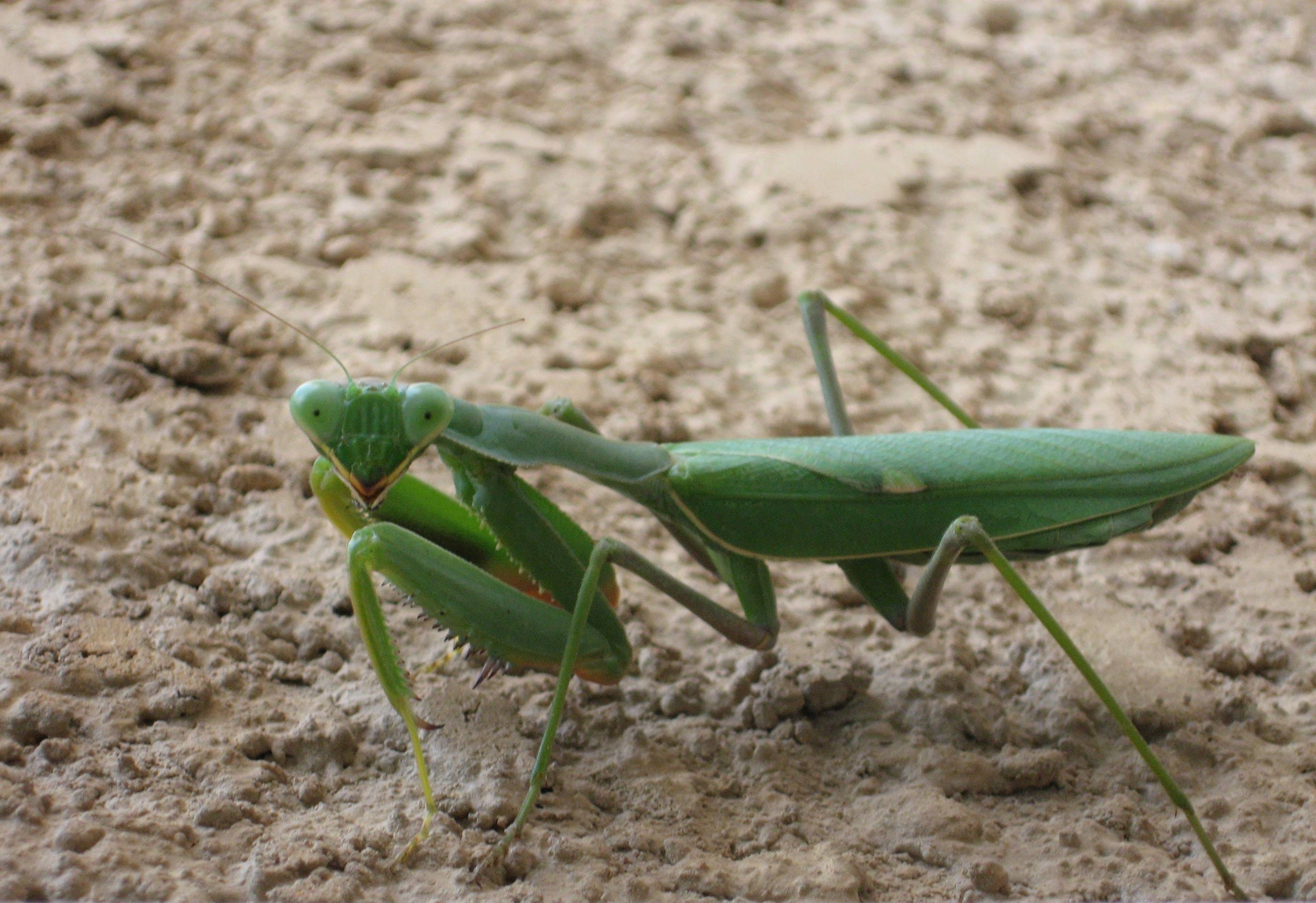
The African Mantis is a robust and formidable predator found across Africa. Its body is usually bright green, with a slightly flattened thorax and long, spiny forelegs that make it a skilled hunter. Measuring up to 10 centimeters in length, the African Mantis is among the largest and most adaptable mantis species, thriving in grasslands, gardens, and even urban areas.
This mantis primarily feeds on insects such as grasshoppers, crickets, and flies, but larger individuals have been observed taking small lizards or frogs. They use a combination of patience and rapid striking to catch prey, remaining still for extended periods until the perfect moment arises. Their hunting technique is a perfect example of how many Types of Mantis blend stillness and precision to succeed in the wild.
African Mantis also show interesting mating behaviors. Females, larger and more powerful, sometimes consume males after copulation, a behavior that may supply vital nutrients for egg development. Eggs are laid in oothecae, ensuring the next generation emerges in the spring. Observing these mantises provides a glimpse into predator-prey dynamics and the balance of survival in diverse ecosystems.
Their adaptability and hunting prowess make the African Mantis a favorite among insect enthusiasts and a classic example of predatory efficiency in the mantis world.
8. Devil’s Flower Mantis (Idolomantis diabolica)
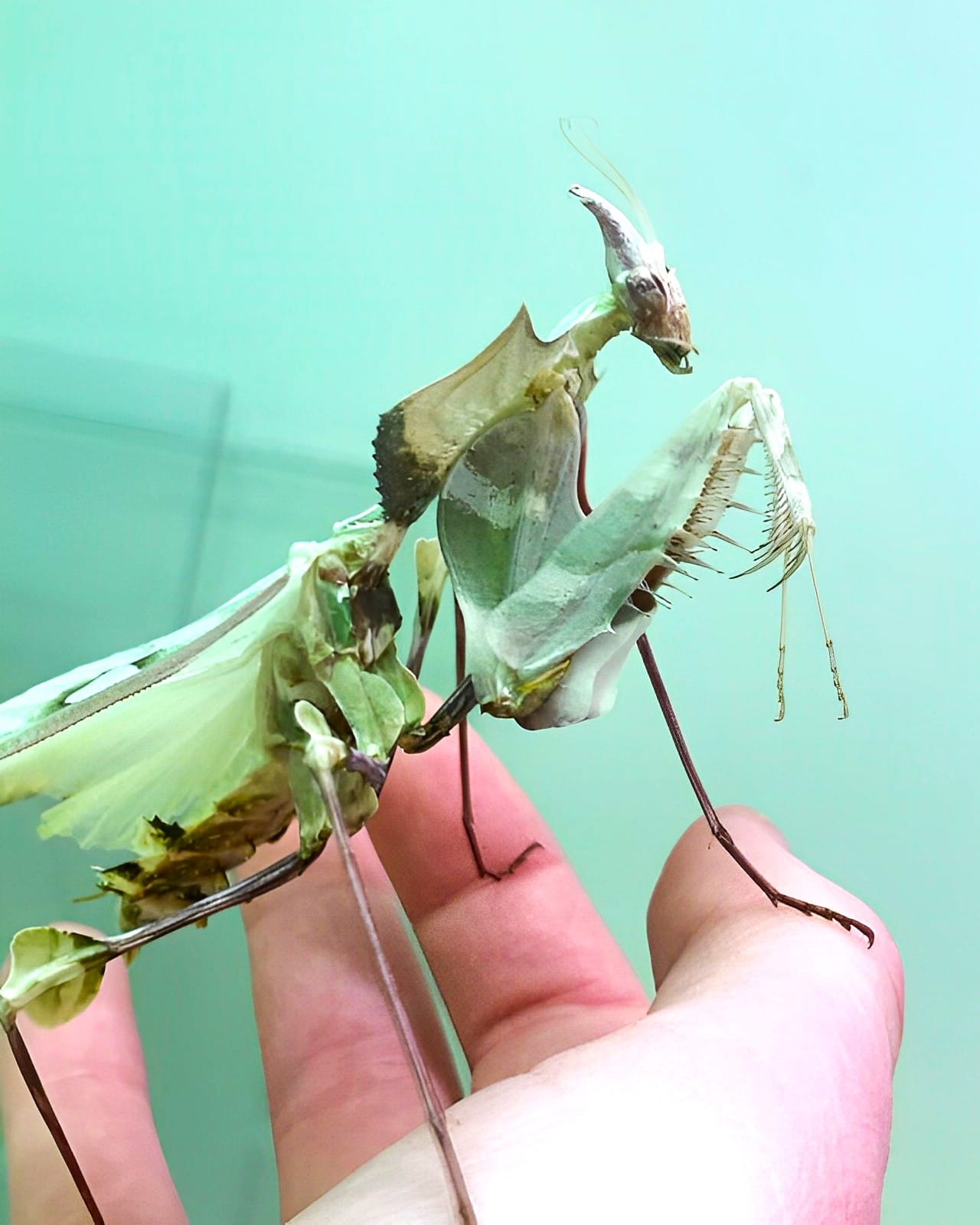
The Devil’s Flower Mantis is often called the “largest orchid mantis” because of its striking appearance and size. Native to East Africa, it can grow up to 12 centimeters, with long, colorful legs adorned with patterns resembling flower petals. These adaptations help it blend seamlessly into flowering plants while attracting prey. Its showy display also acts as a warning to potential predators, signaling that it is not easy to attack.
This mantis is an ambush predator. By remaining motionless among flowers, it lures pollinating insects directly into its strike range. Once prey is within reach, it uses its spiny forelegs to capture and hold them securely. Observing this hunting method demonstrates how visual deception and precision combine to make it one of the most effective hunters among Types of Mantis.
Females are larger and more striking than males, and like many mantis species, they may consume mates after reproduction. Eggs are deposited in protective oothecae, ensuring the next generation’s survival. Nymphs hatch looking like miniature adults, ready to employ their camouflage skills immediately.
The Devil’s Flower Mantis is not only a marvel of nature’s artistry but also a living example of evolutionary adaptation, combining color, size, and behavior to survive and thrive.
9. Spiny Flower Mantis (Pseudocreobotra wahlbergii)
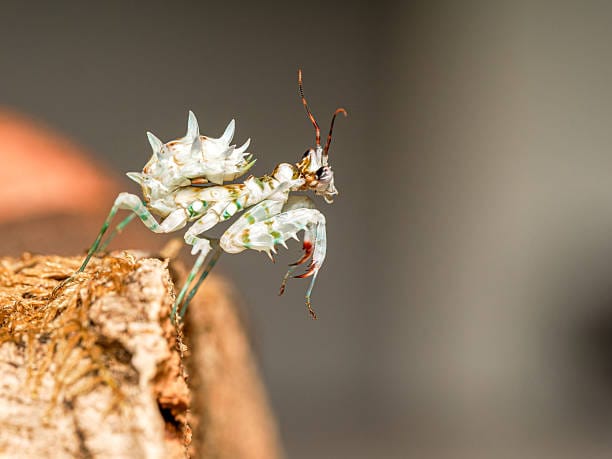
The Spiny Flower Mantis is a small yet impressive predator found in southern Africa. It measures around 4–5 centimeters and features striking spiny projections on its body that resemble flower petals. Its bright colors—often white with green or yellow markings—help it blend into flowering vegetation, providing both camouflage and a lure for unsuspecting insects.
This mantis is a daytime hunter, feeding on flies, moths, and other small insects. Its forelegs are equipped with spines to secure prey quickly. Unlike some larger mantis, it relies more on deception and quick reflexes than brute strength. Watching it strike demonstrates the precision and efficiency common among many Types of Mantis.
Females lay eggs in foamy oothecae attached to twigs or leaves. Nymphs emerge in spring, exhibiting the same spiny projections and hunting behaviors as adults. Despite their small size, Spiny Flower Mantises are fascinating to observe because they combine elegance, deception, and deadly efficiency.
Their colorful, spiny design and careful hunting strategies make them a standout species and a perfect example of how evolution equips mantises for survival in specific habitats.
10. Shield Mantis (Choeradodis rhombicollis)
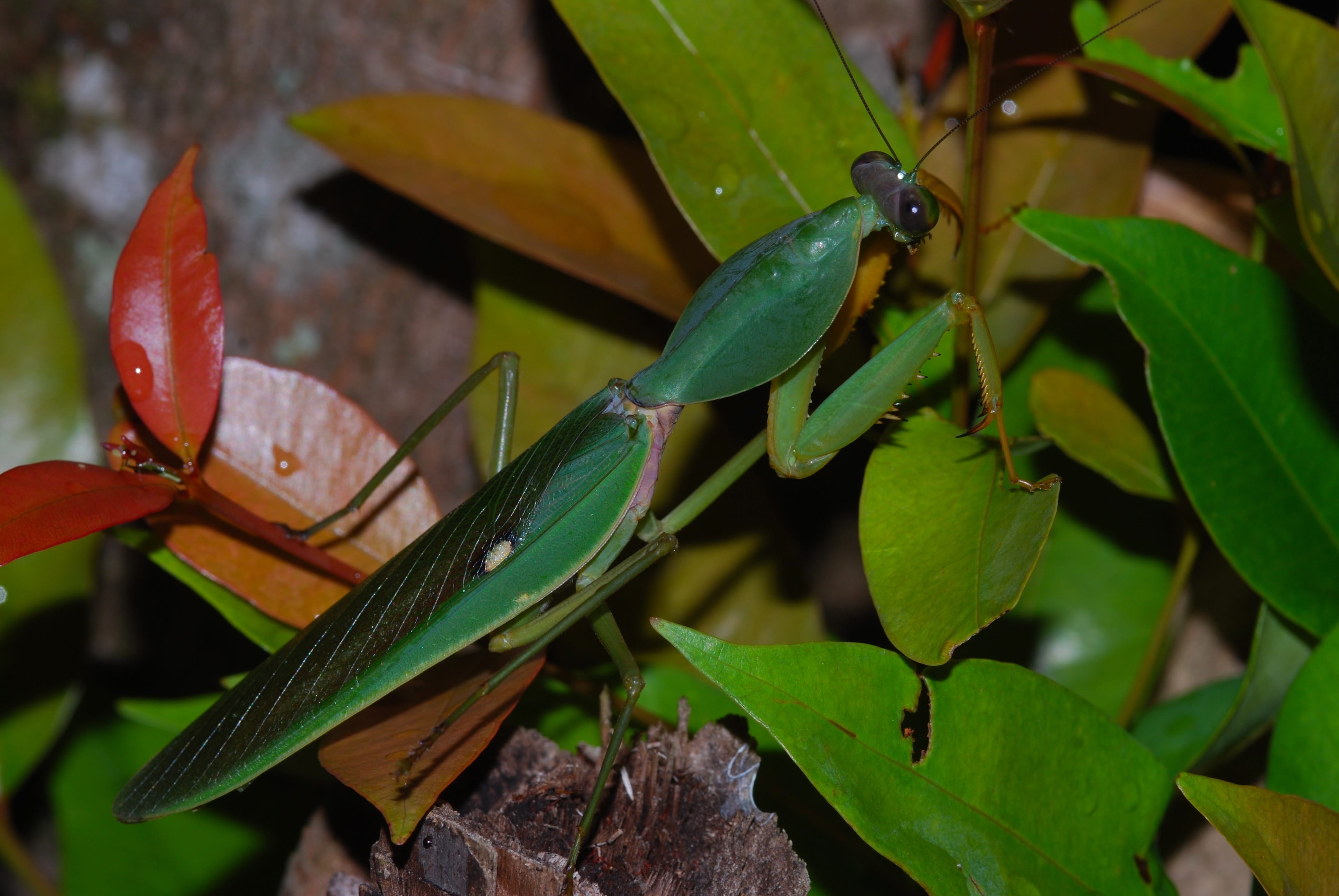
The Shield Mantis, sometimes called the “leaf mantis,” is native to Central and South America. Its flattened, leaf-like thorax resembles a small shield, which helps it blend perfectly with foliage. Adults are typically 6–7 centimeters long, with a green coloration that enhances their camouflage among leaves. This species is a great example of how physical adaptations help mantises survive in complex environments.
Shield Mantis are ambush predators. They rely on remaining motionless and letting prey approach rather than chasing it. Insects such as flies, moths, and smaller grasshoppers become easy targets for the precise strike of their spiny forelegs. Their patience and stealth demonstrate how many Types of Mantis balance subtlety and aggression to hunt effectively.
Reproduction involves laying eggs in protective oothecae. Females are larger and sometimes engage in sexual cannibalism, providing nutrients for egg development. Nymphs hatch resembling tiny adults and immediately start hunting. Observing a Shield Mantis in action highlights the importance of camouflage, precision, and patience in mantis survival.
11. Malaysian Orchid Mantis (Hymenopus bicornis)
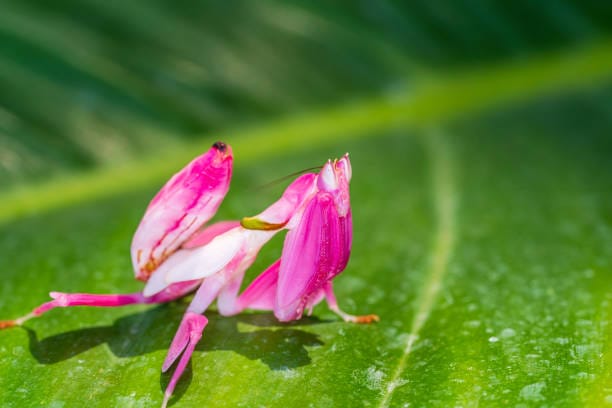
The Malaysian Orchid Mantis is a smaller cousin of the Orchid Mantis, native to Southeast Asia. It is visually striking, with delicate pink and white coloration, and features two horn-like projections on its head, giving it a unique, floral appearance. Adults usually measure 5–6 centimeters long, with females being larger than males.
Like other orchid mantises, this species uses floral mimicry to attract prey. Pollinating insects approach, thinking they’ve found a flower, only to be snatched by the mantis. This hunting method is both fascinating and highly effective, showcasing how some Types of Mantis have evolved specialized strategies for capturing food.
Reproduction follows the standard mantis pattern: eggs are deposited in oothecae, which provide protection through the season. Nymphs hatch resembling miniature adults and quickly begin hunting. Observing the Malaysian Orchid Mantis demonstrates the blend of beauty, stealth, and deadly precision that makes mantises so captivating.
12. Boxer Mantis (Acromantis formosana)

The Boxer Mantis, native to Taiwan, is small and agile, measuring about 4 centimeters long. Its name comes from its defensive posture, which resembles a boxer raising its fists. Its coloration is usually green or brown, helping it blend with leaves and stems.
This mantis feeds primarily on small insects like flies and aphids. It is a daytime hunter and uses both stealth and sudden strikes to capture prey. Despite its size, the Boxer Mantis is highly effective, demonstrating that precision and speed can be as important as size in hunting success among Types of Mantis.
Females lay eggs in frothy oothecae attached to vegetation. Nymphs resemble adults and begin hunting immediately after hatching. Observing a Boxer Mantis shows how smaller mantises can thrive using agility, camouflage, and timing rather than brute strength.
The combination of defensive behavior, camouflage, and hunting efficiency makes the Boxer Mantis a fascinating species to watch and study.
13. Giant Asian Mantis (Hierodula membranacea)

The Giant Asian Mantis is among the largest mantis species, native to Southeast Asia. Adults can grow up to 12 centimeters, making them impressive hunters and striking examples of predatory insects. Their bodies are typically bright green or brown, allowing them to blend into shrubs, trees, and tall grass.
This species is an ambush predator. It remains perfectly still while scanning for prey, striking with speed and accuracy when insects or small vertebrates come close. The spiny forelegs secure the prey, preventing escape. Observing a Giant Asian Mantis in action reveals the balance between patience and aggression that is a hallmark of many Types of Mantis.
Reproduction involves the female laying eggs in protective oothecae. Nymphs hatch looking like miniature adults and quickly begin hunting. Females may sometimes consume males post-mating, a behavior common among mantis species. The Giant Asian Mantis combines power, patience, and agility, making it a favorite among entomologists and hobbyists alike.
14. Budwing Mantis (Parasphendale affinis)

The Budwing Mantis, native to Africa, is named for its underdeveloped wings in females, which are too small for flight. Adults are typically 5–6 centimeters long and exhibit a green or brown coloration that provides camouflage in grasses and shrubs. Males are smaller and capable of flight, while females remain ground-dwelling and ambush predators.
Budwing Mantis feed on small insects such as flies, moths, and crickets. They rely on stealth and sudden movements to capture prey. Their hunting style highlights the variety of strategies found in Types of Mantis, showing that even species with limited mobility can thrive using patience and speed.
Females lay eggs in frothy oothecae, which attach to leaves or twigs. Nymphs emerge ready to hunt almost immediately, displaying the same stealth and ambush behaviors as adults. The Budwing Mantis is a clear example of how adaptations in wings and body structure influence lifestyle and survival.
15. Brunner’s Mantis (Brunneria borealis)

Brunner’s Mantis, also called the Northern Grass Mantis, is native to North America. Adults can reach 6–7 centimeters, with a slender, elongated body ideal for blending in with grass and low vegetation. Its coloration ranges from green to brown, helping it remain hidden from predators and prey alike.
This mantis primarily hunts small insects such as flies, grasshoppers, and crickets. It remains motionless for long periods, striking with lightning speed when prey approaches. Brunner’s Mantis demonstrates the efficiency of ambush hunting, a characteristic common to many Types of Mantis.
Females lay eggs in protective oothecae, which remain on stems or leaves until hatching. Nymphs look like miniature adults and immediately start practicing their hunting skills. Observing Brunner’s Mantis reveals how camouflage, precision, and patience are key to survival in a variety of habitats.
16. Egyptian Pygmy Mantis (Miomantis paykullii)
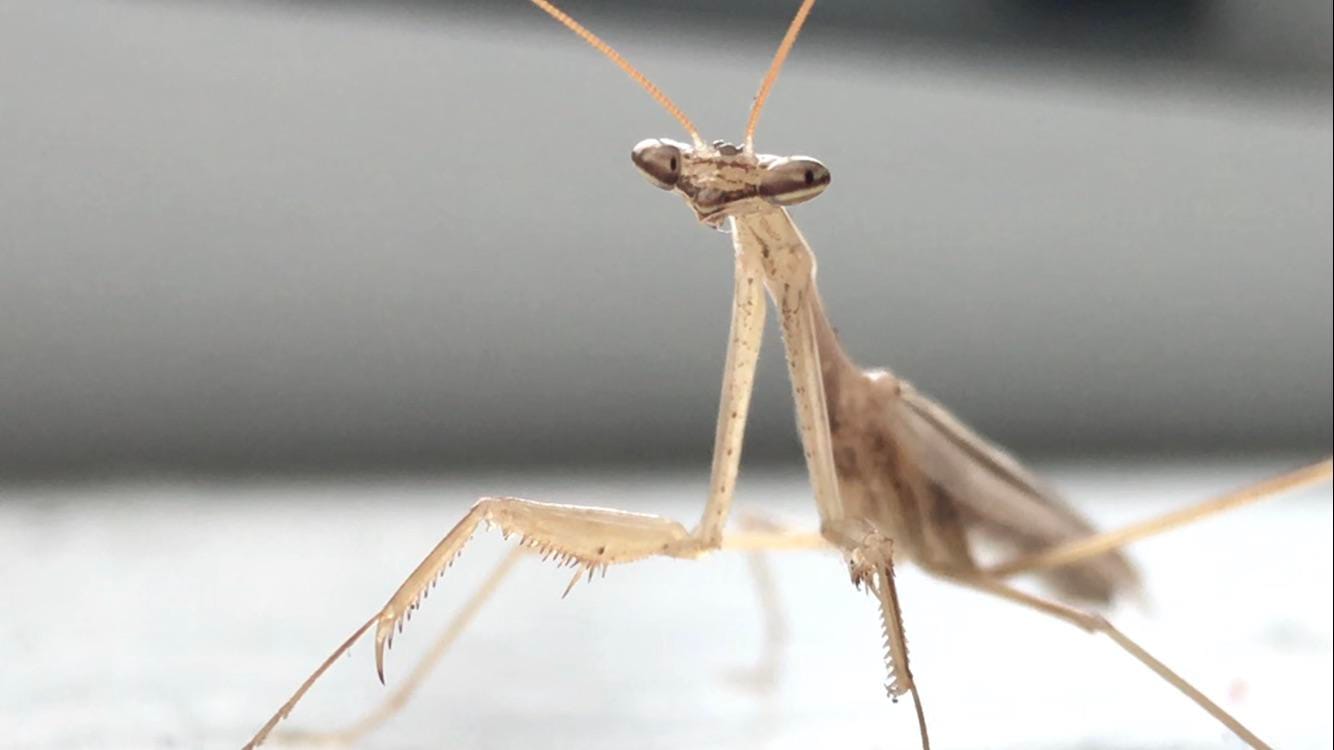
The Egyptian Pygmy Mantis is one of the smaller mantis species, native to North Africa. Adults are usually only 3–4 centimeters long, but their small size doesn’t make them any less skilled as hunters. Their slender bodies are typically pale green or brown, allowing them to hide easily among grasses and low shrubs.
This mantis feeds on tiny insects like aphids, flies, and small moths. It relies on stealth and speed, waiting patiently for prey to come close before striking with its spiny forelegs. Despite their size, Egyptian Pygmy Mantises are highly effective predators, demonstrating that hunting success in Types of Mantis isn’t just about size.
Females lay eggs in small oothecae, which provide protection through dry and hot conditions. Nymphs emerge looking like miniature adults and start hunting immediately. Observing this species teaches us how even the smallest mantises can survive using camouflage, patience, and agility.
17. Giant Shield Mantis (Rhombodera basalis)

The Giant Shield Mantis is a large mantis species found in Southeast Asia. Adults can reach 10 centimeters in length and have a broad, shield-like thorax that helps them blend with large leaves and plants. Their green coloration enhances their camouflage, making them nearly invisible among foliage.
This mantis is an ambush predator, waiting motionless until prey, such as insects or small lizards, come within reach. Its spiny forelegs strike quickly, ensuring a firm grip. The Giant Shield Mantis demonstrates how form and function work together in Types of Mantis, combining body shape, size, and patience for hunting efficiency.
Females lay eggs in large oothecae, and nymphs hatch resembling miniature adults. The combination of size, camouflage, and hunting skill makes the Giant Shield Mantis a remarkable example of mantis adaptation in dense forest habitats.
18. Jeweled Flower Mantis (Creobroter gemmatus)

The Jeweled Flower Mantis is a small yet visually stunning species native to Southeast Asia. Adults are around 4–5 centimeters long, with bright markings on their wings that resemble flower petals. These jewel-like patterns help attract prey while also providing camouflage among flowering plants.
This mantis is an active ambush predator, feeding on flies, moths, and other small insects. Its hunting relies on remaining still and striking with precision once prey is within reach.
Watching a Jeweled Flower Mantis demonstrates how subtle coloration and patience combine to make even small mantises effective hunters.
Females lay eggs in foamy oothecae that harden to protect the developing nymphs. Upon hatching, nymphs resemble adults and begin hunting immediately. This species exemplifies how beauty and efficiency coexist in Types of Mantis, making it both a visual delight and an effective predator.
19. Indian Flower Mantis (Creobroter pictipennis)
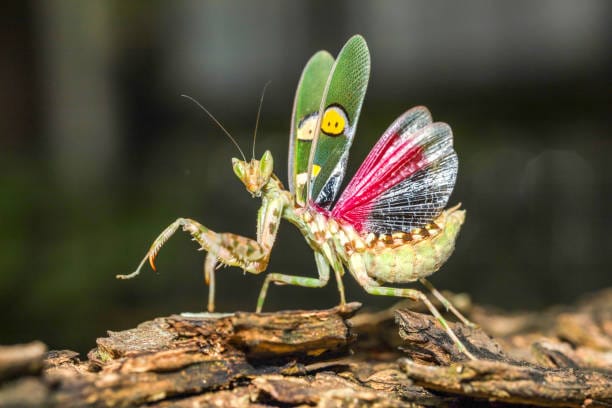
The Indian Flower Mantis is a small, colorful mantis native to India and Southeast Asia. Adults usually grow 4–5 centimeters long, with striking patterns on their wings that resemble flower petals. These markings serve both as camouflage and as a lure for pollinating insects, demonstrating a clever hunting strategy seen in many Types of Mantis.
This mantis primarily preys on small insects such as flies, moths, and other arthropods. It uses patience and precise strikes to capture prey. The combination of stillness and sudden movement makes it highly effective, despite its small size. Observing an Indian Flower Mantis shows how intricate adaptations help even tiny mantises thrive in competitive environments.
Females lay eggs in protective oothecae, and nymphs hatch resembling miniature adults. These young mantises quickly begin hunting and practicing their camouflage skills. Their colorful appearance and strategic hunting make the Indian Flower Mantis a favorite among insect enthusiasts and educators.
20. African Twig Mantis (Popa spurca)
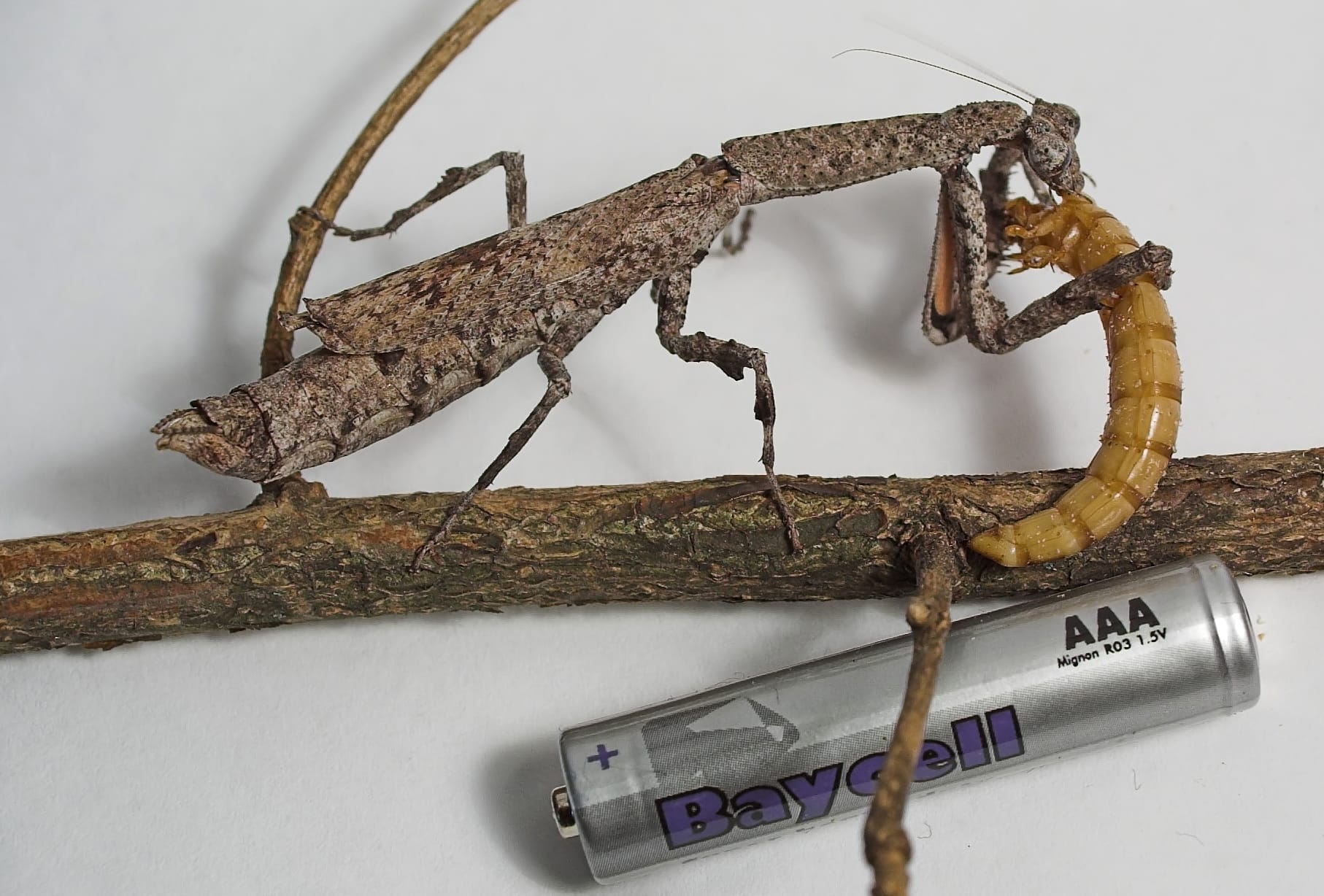
The African Twig Mantis is a master of disguise, native to sub-Saharan Africa. Adults are typically 6–7 centimeters long, with slender, elongated bodies that mimic twigs and branches perfectly. This camouflage helps them avoid predators while providing the element of surprise for capturing prey.
African Twig Mantises feed primarily on small insects such as flies, crickets, and grasshoppers. They use a combination of stealth, patience, and rapid strikes with their spiny forelegs. Their twig-like appearance makes them almost invisible in their natural habitat, highlighting how camouflage is crucial for hunting and survival among Types of Mantis.
Females lay eggs in oothecae attached to twigs, ensuring the next generation hatches in a protected environment. Nymphs resemble adults and begin hunting immediately, relying on their twig mimicry for protection and hunting efficiency. Watching an African Twig Mantis demonstrates the effectiveness of disguise and the patience required to succeed as a small predator in nature.
21. Feathered Mantis (Pseudempusa pinnapavonis)

The Feathered Mantis, native to Africa, is named for the feathery extensions on its legs and thorax. Adults typically measure 5–6 centimeters and are pale green or brown, providing excellent camouflage in grasses and shrubs. These feather-like projections break up their outline, making it difficult for both prey and predators to detect them.
Feathered Mantises are ambush predators, feeding on small insects such as flies, moths, and crickets. They remain motionless, striking with lightning speed when prey comes within reach. Their hunting style demonstrates how subtle physical adaptations can enhance effectiveness among Types of Mantis.
Females lay eggs in protective oothecae, which secure the next generation until hatching. Nymphs resemble adults and immediately begin hunting. Observing a Feathered Mantis highlights how delicate structures can play a big role in survival and efficiency.
22. Giant Rainforest Mantis (Hierodula majuscula)
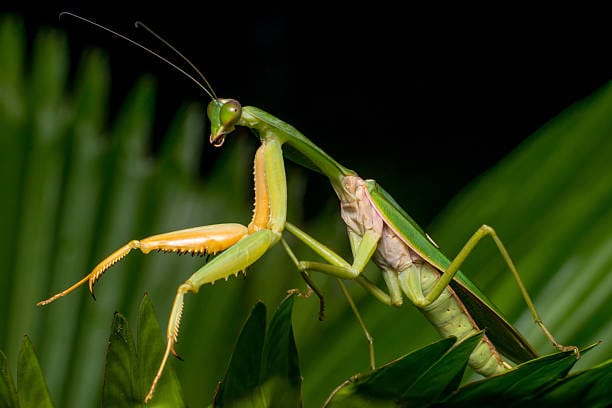
The Giant Rainforest Mantis is one of the largest mantises found in Australia. Adults can reach 12 centimeters in length, with bright green or brown coloration that blends into dense rainforest foliage. Their size and strength allow them to take larger prey compared to smaller mantis species.
This mantis is a patient ambush predator, feeding on insects, small frogs, and even other mantises. Their forelegs are spiny and strong, ensuring prey cannot escape once captured. Observing them in the rainforest illustrates the balance of power, patience, and camouflage common to many Types of Mantis.
Females lay eggs in foamy oothecae, and nymphs hatch ready to hunt. The Giant Rainforest Mantis is a striking example of how size and habitat specialization contribute to hunting efficiency and survival.
23. Arizona Unicorn Mantis (Phyllovates chlorophaea)

The Arizona Unicorn Mantis is native to the southwestern United States. Its name comes from the horn-like projection on its head, which may help in camouflage and species recognition. Adults are typically 6–7 centimeters long and are green or brown, blending with desert vegetation.
This species feeds on insects like grasshoppers, flies, and crickets. It uses stillness and sudden strikes to capture prey. The Arizona Unicorn Mantis demonstrates how specialized adaptations, like the head horn, contribute to hunting and survival in harsh environments.
Females lay eggs in protective oothecae attached to plants. Nymphs hatch resembling miniature adults and quickly begin hunting. This mantis shows how even desert-dwelling species among Types of Mantis have evolved unique survival strategies.
24. Horned Ground Mantis (Yersiniops solitarius)

The Horned Ground Mantis is native to North America and is a ground-dwelling species. Adults are small, typically 3–4 centimeters long, and feature horn-like projections on the head. Their slender brown or green bodies allow them to blend with soil and low vegetation.
This mantis primarily hunts small insects such as flies and grasshoppers. It relies on stealth and rapid strikes, demonstrating that even ground-dwelling mantises are effective predators. Its horn-like projections may aid in camouflage or mate recognition among Types of Mantis.
Females lay eggs in protective oothecae, and nymphs hatch looking like miniature adults, ready to hunt immediately. The Horned Ground Mantis shows how size, habitat, and subtle physical features influence hunting strategies.
25. Skinner’s Ground Mantis (Litaneutria skinneri)

Skinner’s Ground Mantis is another small North American species. Adults are 3–4 centimeters long, with slender bodies that blend with dry grass and soil. They are agile and ground-oriented, preferring open areas to shrubs or trees.
These mantises hunt small insects, using stealth and speed to capture prey. Their behavior illustrates that ambush hunting is effective even on the ground. They are less conspicuous than tree-dwelling mantises but just as skilled, highlighting diversity among Types of Mantis.
Females lay eggs in oothecae on the ground or low plants. Nymphs emerge fully capable of hunting. Observing Skinner’s Ground Mantis emphasizes how mantises adapt to different habitats, from trees to open grasslands.
26. Dragon Mantis (Toxodera spp.)
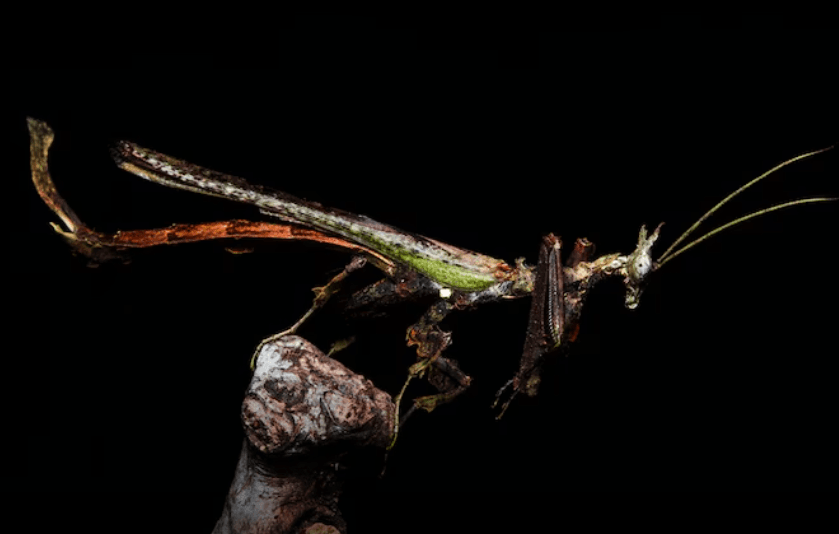
Dragon Mantises, found in Southeast Asia, are long, slender species that mimic sticks and branches. Adults can reach 10 centimeters or more, with green or brown coloration that blends with forest vegetation. Their elongated bodies provide both camouflage and reach for hunting.
These mantises feed on insects and occasionally small vertebrates. Their ambush strategy involves remaining motionless for long periods before striking with lightning speed. Dragon Mantises exemplify how body shape and patience combine for hunting efficiency among Types of Mantis.
Females lay eggs in foamy oothecae, and nymphs hatch resembling adults. Observing Dragon Mantises highlights the importance of mimicry, patience, and precision in survival strategies.
27. Lichen Mantis (Eremiaphila spp.)
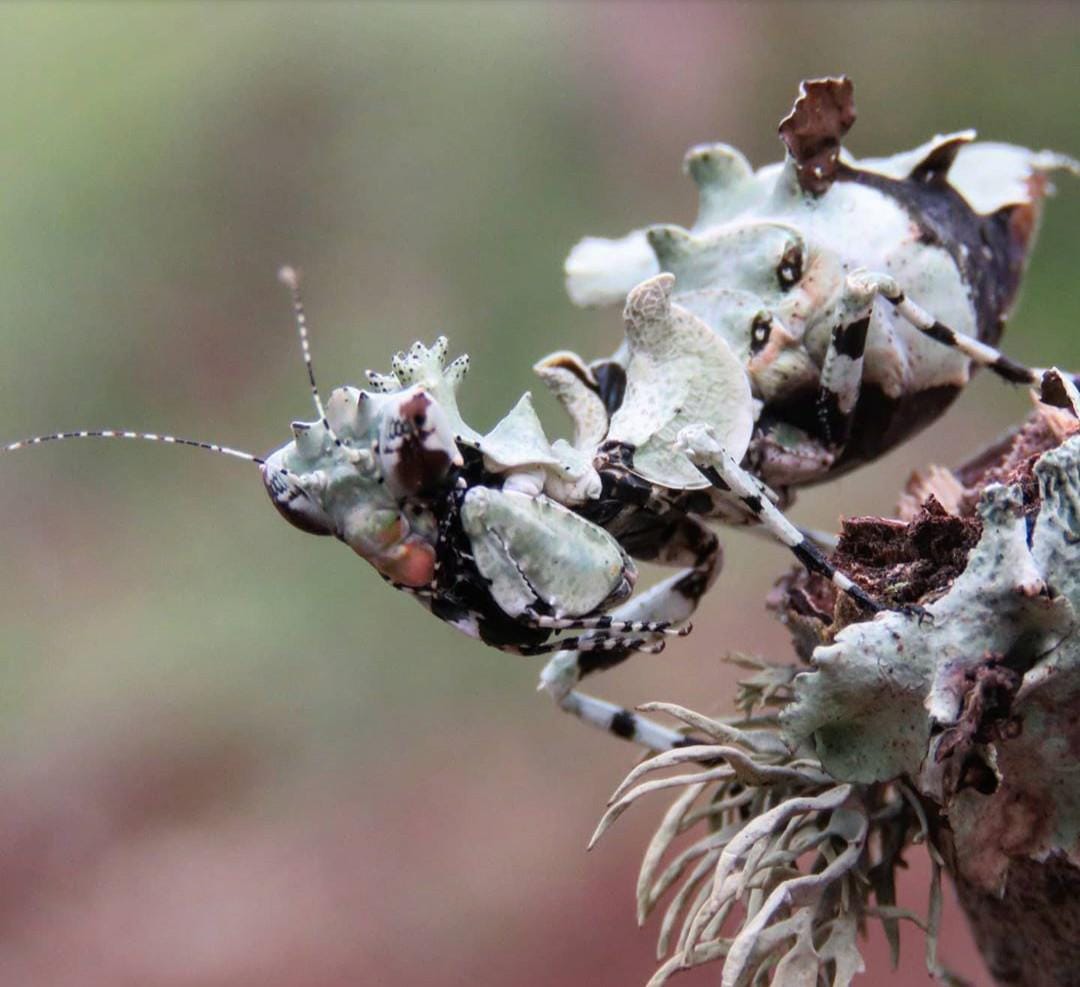
The Lichen Mantis is adapted to dry, rocky habitats where lichen is common. Its mottled gray and green body allows it to blend perfectly with its environment. Adults are small, usually 3–5 centimeters long, and rely heavily on camouflage for both hunting and protection.
Lichen Mantises feed on small insects such as flies and aphids. They remain motionless, waiting for prey to approach. This species demonstrates that coloration and stillness are crucial for hunting success in many Types of Mantis.
Females lay eggs in oothecae, and nymphs hatch looking like tiny adults. Observing Lichen Mantises shows how specialized habitats influence mantis evolution and hunting behavior.
28. Narrow-wing Mantis (Gonatista grisea)

The Narrow-wing Mantis, native to North America, is a slender species with long, narrow wings. Adults are 4–5 centimeters long, with gray or brown bodies that blend with tree bark and twigs. Their wings allow quick escape from predators if needed.
They hunt small insects using patience and precise strikes. The narrow-wing adaptation aids in both camouflage and mobility. This mantis is a good example of how body structure affects hunting and survival among Types of Mantis.
Females lay eggs in protective oothecae. Nymphs hatch looking like miniature adults and start hunting immediately, showing that even small adaptations like wing shape can influence success in mantis species.
29. Thistle Mantis (Blepharopsis mendica)

The Thistle Mantis is a medium-sized species native to Africa and the Middle East. Adults are 5–6 centimeters long, with spiny projections that mimic thistles and dry vegetation. Their brown and green coloration provides excellent camouflage in desert and scrub habitats.
This mantis hunts insects such as flies and moths, remaining still until prey approaches. Its spiny body helps conceal it from both predators and prey. The Thistle Mantis demonstrates the effectiveness of mimicry and patience in many Types of Mantis.
Females lay eggs in oothecae, and nymphs hatch resembling adults. Observing this species illustrates how specialized mimicry can aid survival in harsh environments.
30. American Grass Mantis (Caudellia nigrescens)

The American Grass Mantis is native to the United States and thrives in grassy areas. Adults are slender and green, measuring 4–5 centimeters long. Their coloration helps them blend seamlessly with blades of grass, making them almost invisible to predators and prey alike.
This species feeds on small insects such as flies and grasshoppers. Its ambush hunting style involves remaining still and striking with precise speed when prey is within reach. Observing the American Grass Mantis highlights the importance of camouflage and patience among Types of Mantis.
Females lay eggs in foamy oothecae attached to grass or low plants. Nymphs hatch looking like miniature adults and begin hunting immediately, continuing the cycle of survival. The American Grass Mantis is a perfect example of how mantises adapt to their environments for effective hunting and protection.
Conclusion
Across these 30 Types of Mantis, from the tiny Egyptian Pygmy Mantis to the enormous Giant Asian Mantis, we see remarkable diversity in size, shape, coloration, and hunting strategies. Despite their differences, all mantises share common traits: patience, precision, and the clever use of camouflage. These traits make them fascinating predators and essential players in ecosystems, controlling insect populations naturally.
Studying these mantises reveals lessons about evolution, survival, and adaptation. From floral mimics like Orchid Mantis to twig impersonators like African Twig Mantis, each species demonstrates how form and behavior work together for survival. Whether you are observing them in the wild, in a garden, or as part of a collection, mantises offer endless opportunities for learning and fascination.
Exploring Types of Mantis helps us appreciate the subtle artistry and strategic ingenuity of nature’s miniature hunters, reminding us that even the smallest creatures can have a big impact.
FAQ’s
1. What are mantises?
Mantises are predatory insects known for their distinctive front legs that fold as if praying. They are skilled hunters and can be found worldwide.
2. How many types of mantis exist?
There are over 2,400 species of mantises worldwide, with diverse sizes, colors, and adaptations.
3. What is the most common type of mantis?
The Chinese Mantis and European Mantis are among the most commonly observed species in North America and Europe.
4. Are mantises dangerous to humans?
No, mantises are harmless to humans. They do not bite or sting but are excellent predators of insects.
5. Do mantises eat other insects?
Yes, mantises feed on insects such as flies, crickets, moths, and sometimes small vertebrates.
6. Can mantises fly?
Many mantis species can fly, especially males. Females are often larger and may have limited flight capabilities.
7. What is a mantis’ lifespan?
Mantises typically live 6–12 months, depending on species, habitat, and environmental conditions.
8. What is a nymph in mantises?
A nymph is a juvenile mantis that hatches from eggs. It resembles a smaller version of the adult and grows through molting.
9. How do mantises reproduce?
Females lay eggs in a frothy case called an ootheca. Nymphs hatch later, often resembling miniature adults.
10. Why do female mantises sometimes eat males?
This behavior, known as sexual cannibalism, provides extra nutrients for egg production and is common in several mantis species.
11. What is the Orchid Mantis?
The Orchid Mantis mimics flower petals to attract pollinating insects and is native to Southeast Asia.
12. What is the Dead Leaf Mantis?
The Dead Leaf Mantis resembles a dried leaf, providing camouflage from predators and prey in forest environments.
13. How do mantises hunt?
Mantises use patience and ambush tactics, remaining still until prey comes within striking range of their spiny forelegs.
14. Do all mantises camouflage?
Many mantises use camouflage, but the specific method varies by species. Some mimic flowers, leaves, or twigs.
15. Where do mantises live?
Mantises are found worldwide, primarily in tropical, subtropical, and temperate regions, inhabiting gardens, forests, and grasslands.
16. Can mantises be kept as pets?
Yes, many small mantis species can be kept in terrariums, but they require careful feeding and appropriate habitat conditions.
17. What do nymphs eat?
Nymphs feed on very small insects such as aphids, fruit flies, and tiny crickets until they grow larger.
18. How fast can a mantis strike?
Mantises can strike in milliseconds, using their spiny forelegs to capture prey with precision.
19. What is the largest mantis species?
The Giant Asian Mantis and Devil’s Flower Mantis are among the largest species, reaching over 12 centimeters in length.
20. Are mantises solitary?
Yes, mantises are generally solitary, coming together only for mating purposes.
21. Do mantises have good eyesight?
Yes, mantises have large compound eyes that provide excellent vision for hunting and detecting predators.
22. How do mantises protect themselves?
They rely on camouflage, mimicry, and quick reflexes. Some species also display deimatic behavior to startle predators.
23. What is the Carolina Mantis?
The Carolina Mantis is native to the United States and is a small, agile species found in gardens and fields.
24. What is the Ghost Mantis?
The Ghost Mantis mimics dried or dead foliage to remain hidden from predators and prey.
25. Do mantises have predators?
Yes, birds, reptiles, frogs, and spiders can prey on mantises, despite their camouflage and agility.
26. How do mantises molt?
Mantises shed their exoskeleton multiple times as they grow, with each stage called an instar.
27. Can mantises regenerate lost limbs?
Young nymphs may partially regenerate lost limbs during molting, but adults cannot fully recover missing legs.
28. What is sexual dimorphism in mantises?
In many species, females are larger than males and have more robust bodies, while males are smaller and capable of flight.
29. What is the African Twig Mantis?
The African Twig Mantis mimics twigs perfectly, providing excellent camouflage in its natural habitat.
30. What is the Giant Shield Mantis?
The Giant Shield Mantis has a broad thorax resembling a shield, helping it blend with large leaves and plants.
31. How do mantises help gardeners?
Mantises control pest populations by feeding on insects, making them beneficial for gardens and crops.
32. Can mantises see in the dark?
Mantises are primarily diurnal, but some species can hunt at dusk using their excellent vision.
33. What is the Devil’s Flower Mantis?
This species mimics flower petals to attract prey, combining camouflage and visual lure for hunting success.
34. Are mantises poisonous?
No, mantises are not poisonous or venomous. Their main defense is camouflage and rapid strikes.
35. How do mantises catch flying insects?
They remain motionless until the insect approaches and then strike with their front legs to snatch it mid-air.
36. What is the difference between nymphs and adults?
Nymphs are smaller, wingless, and less developed, while adults have fully formed wings and reproductive organs.
37. Can mantises swim?
No, mantises are terrestrial and cannot swim, but some species can survive brief contact with water.
38. What is the Jeweled Flower Mantis?
The Jeweled Flower Mantis has colorful wing markings that resemble jewels or flower petals, aiding in camouflage and predation.
39. What is the Indian Flower Mantis?
The Indian Flower Mantis mimics flowers to attract pollinators, using deception to capture prey efficiently.
40. How do mantises contribute to ecosystems?
Mantises help control insect populations, serving as natural pest control and maintaining ecological balance.
41. Are mantises aggressive towards each other?
Yes, mantises can be cannibalistic, especially during mating or when confined in close spaces.
42. What is the American Grass Mantis?
The American Grass Mantis lives in grassy areas in the U.S., blending with blades of grass and hunting small insects.
43. Do mantises migrate?
No, mantises are generally sedentary, staying within their preferred habitats throughout their life cycle.