

Choosing types of flowers for bouquets is easier when you think about design role rather than making a random list of pretty blooms. Focal flowers create visual weight, line flowers establish height and movement, mass flowers build volume, and fillers connect the composition with smaller shapes or texture. The 30 flowers below cover classic, garden-style, seasonal, tropical, rustic, modern, and long-lasting bouquet options. Availability and vase performance vary with cultivar, grower, season, transport, and conditioning.
Which Flowers Are Best for Bouquets?
Roses, peonies, ranunculus, tulips, dahlias, hydrangeas, orchids, lisianthus, carnations, and gerbera daisies are versatile focal or mass flowers. Delphinium, snapdragon, gladiolus, stock, and lavender create line or movement, while baby’s breath, statice, yarrow, and alstroemeria help fill and connect the design. The best bouquet combines compatible stem strength, scale, color, fragrance, and vase behavior.
Bouquet Flower Comparison Table
| Flower | Main colors | Bouquet role | Typical season | Fragrance | Style |
|---|---|---|---|---|---|
| Rose | white, blush, pink, peach, yellow, red, and mauve | focal or mass | widely available; local garden-rose peaks vary | light to strong depending on cultivar | classic, romantic, garden, modern, and formal |
| Peony | white, blush, pink, coral, and red | focal | spring to early summer peak | moderate to strong | romantic, garden, luxury, and editorial |
| Ranunculus | white, cream, yellow, orange, blush, pink, red, and burgundy | focal or supporting focal | cool-season, often spring peak | light | romantic, garden, whimsical, and modern |
| Anemone | white, red, pink, purple, and blue-violet | focal or accent | cool-season, often winter to spring | light | modern, graphic, romantic, and editorial |
| Tulip | white, cream, yellow, orange, pink, red, purple, and bicolors | focal or mass | spring peak; often commercially available beyond peak | light | minimalist, modern, spring, and romantic |
| Dahlia | white, cream, yellow, peach, pink, red, burgundy, and purple | focal | summer to fall peak | light | garden, bohemian, editorial, and autumnal |
| Hydrangea | white, green, blue, purple, pink, and antique tones | mass | summer peak with broad florist availability | light | classic, coastal, romantic, and lush |
| Calla Lily | white, yellow, blush, pink, burgundy, purple, and near-black | focal or line | often commercially available year-round | light | modern, minimalist, formal, and architectural |
| Orchid | white, cream, pink, purple, green, yellow, and patterned forms | focal or cascade accent | varies by orchid type; many florist orchids available year-round | usually light | modern, tropical, editorial, and luxury |
| Lisianthus | white, cream, blush, pink, lavender, purple, green, and bicolors | focal support or mass | summer peak with broad florist availability | light | romantic, classic, garden, and airy |
| Sweet Pea | white, cream, blush, pink, lavender, purple, and bicolors | filler or delicate accent | spring to early summer peak | strong and sweet | romantic, fragrant, garden, and delicate |
| Carnation | white, blush, pink, peach, red, burgundy, green, and bicolors | mass or supporting focal | widely available year-round | light to spicy | classic, modern, sculptural, and budget-conscious |
| Delphinium | blue, purple, lavender, pink, and white | line | late spring to summer peak | light | garden, romantic, airy, and tall installations |
| Stock | white, cream, blush, pink, lavender, and purple | line or mass | cool season with broad florist availability | strong and clove-like | romantic, fragrant, classic, and garden |
| Snapdragon | white, yellow, peach, pink, red, purple, and bicolors | line | cool spring and fall peaks with florist availability beyond | light | garden, whimsical, editorial, and vertical |
| Scabiosa | white, blush, pink, lavender, burgundy, and near-black | accent or supporting focal | summer peak | light | garden, whimsical, textural, and bohemian |
| Freesia | white, yellow, orange, pink, red, lavender, and purple | accent or line | late winter to spring peak | strong and sweet | fragrant, romantic, spring, and refined |
| Cosmos | white, blush, pink, rose, and crimson | filler or supporting focal | summer to fall peak | light | wildflower, garden, airy, and informal |
| Protea | pink, red, cream, white, and multicolor forms | focal | varies by species and supply chain | light | bold, tropical, modern, and sculptural |
| Baby’s Breath | white and pale pink | filler | widely available year-round | light | airy, classic, cloud-like, and minimalist when massed |
| Sunflower | yellow, gold, orange, bronze, and red-toned cultivars | focal | summer to early fall | light | bold, rustic, garden, and casual |
| Gerbera Daisy | white, yellow, orange, pink, red, and bicolors | focal | broad commercial availability | light | bright, clean, playful, and modern |
| Chrysanthemum | white, yellow, bronze, green, pink, purple, and red | mass or focal depending on form | late summer and fall peak with year-round florist supply | light to distinctive | classic, modern, sculptural, and seasonal |
| Gladiolus | white, yellow, orange, pink, red, purple, green, and bicolors | line | summer peak | light | formal, dramatic, vertical, and contemporary |
| Iris | blue, purple, yellow, white, and bicolors | focal or line | spring peak | light | spring, artistic, classic, and garden |
| Alstroemeria | white, yellow, orange, pink, red, and purple | filler or supporting focal | widely available year-round | light | cheerful, practical, mixed, and long-lasting |
| Statice | white, yellow, pink, purple, and blue-violet | filler | summer peak with broad florist availability | light | dried, textural, rustic, and mixed |
| Yarrow | white, yellow, pink, red, and pastel cultivars | filler or flat textural accent | summer peak | herbal | meadow, rustic, garden, and textural |
| Lavender | lavender-purple, violet, pink, and white | filler or line accent | summer peak | strong herbal-floral | fragrant, rustic, Mediterranean, and dried |
| Celosia | red, orange, yellow, pink, magenta, and green | focal texture or filler | summer to fall peak | light | textural, modern, tropical, and autumnal |
1. Rose
Scientific name: Rosa spp.
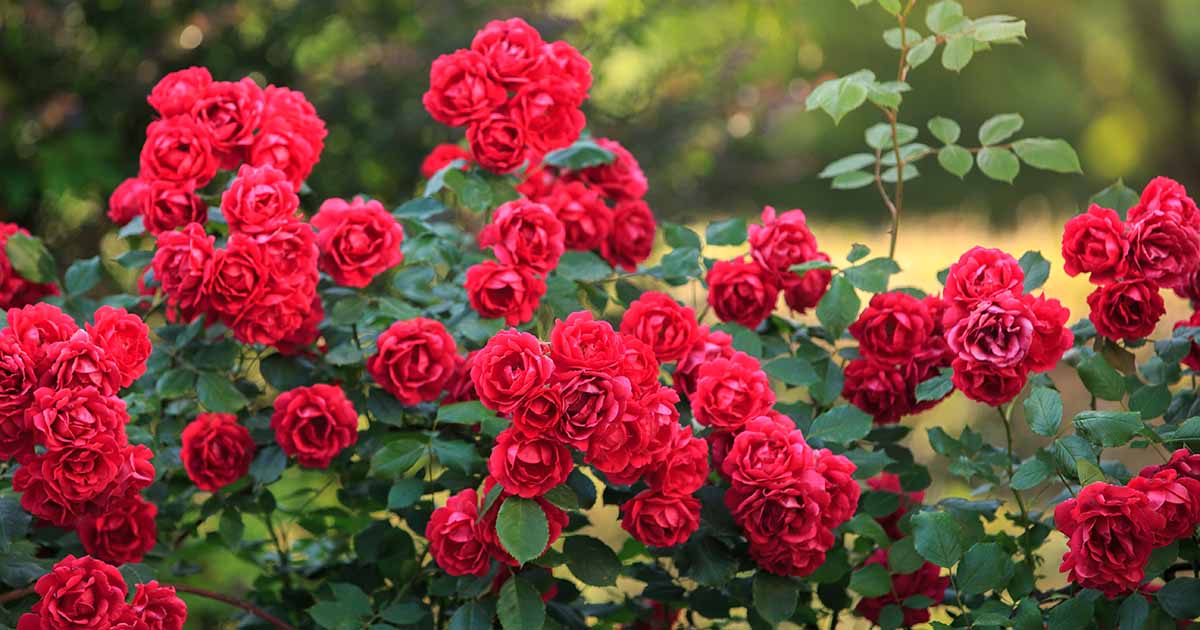
Rose works as a focal or mass flower in bouquets and suits classic, romantic, garden, modern, and formal designs. Common florist colors include white, blush, pink, peach, yellow, red, and mauve. Its natural or market peak is widely available; local garden-rose peaks vary, while professional wholesalers may extend availability through greenhouse production and imports. Fragrance is light to strong depending on cultivar. In flower-language traditions it may be associated with love, affection, celebration, or other meanings that vary by color and culture, but symbolism is culturally variable and should not override personal meaning. For bouquet use, choose firm, well-hydrated stems, remove foliage that would sit below the water line, and let the flower’s natural shape determine how tightly or loosely it is arranged.
2. Peony
Scientific name: Paeonia lactiflora

Peony works as a focal flower in bouquets and suits romantic, garden, luxury, and editorial designs. Common florist colors include white, blush, pink, coral, and red. Its natural or market peak is spring to early summer peak, while professional wholesalers may extend availability through greenhouse production and imports. Fragrance is moderate to strong. In flower-language traditions it may be associated with romance, prosperity, and good fortune in some traditions, but symbolism is culturally variable and should not override personal meaning. For bouquet use, choose firm, well-hydrated stems, remove foliage that would sit below the water line, and let the flower’s natural shape determine how tightly or loosely it is arranged.
3. Ranunculus
Scientific name: Ranunculus asiaticus
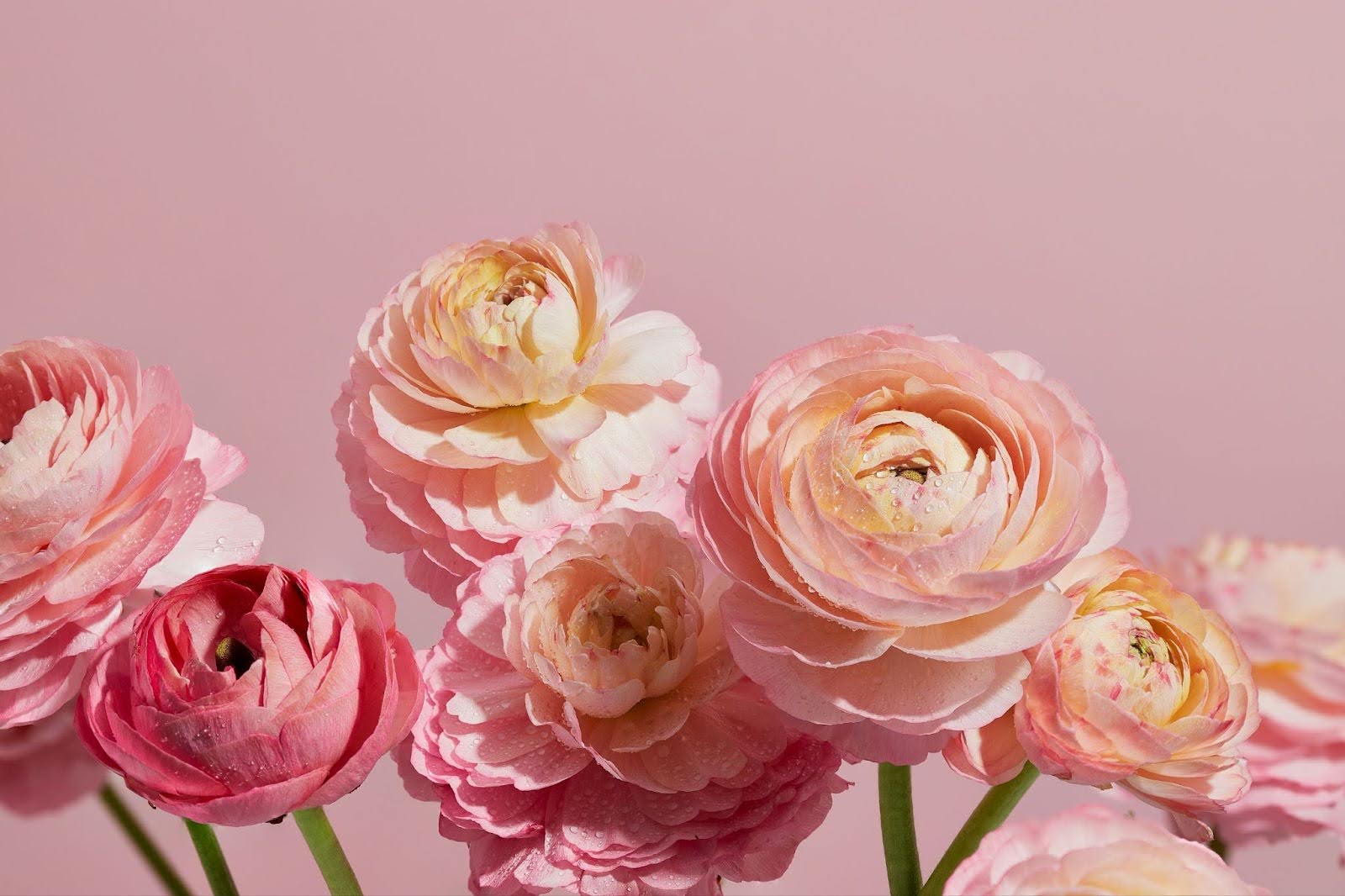
Ranunculus works as a focal or supporting focal flower in bouquets and suits romantic, garden, whimsical, and modern designs. Common florist colors include white, cream, yellow, orange, blush, pink, red, and burgundy. Its natural or market peak is cool-season, often spring peak, while professional wholesalers may extend availability through greenhouse production and imports. Fragrance is light. In flower-language traditions it may be associated with charm and radiant attraction in some floriography traditions, but symbolism is culturally variable and should not override personal meaning. For bouquet use, choose firm, well-hydrated stems, remove foliage that would sit below the water line, and let the flower’s natural shape determine how tightly or loosely it is arranged.
4. Anemone
Scientific name: Anemone coronaria
Anemone works as a focal or accent flower in bouquets and suits modern, graphic, romantic, and editorial designs. Common florist colors include white, red, pink, purple, and blue-violet. Its natural or market peak is cool-season, often winter to spring, while professional wholesalers may extend availability through greenhouse production and imports. Fragrance is light. In flower-language traditions it may be associated with varied meanings including anticipation or protection depending on tradition, but symbolism is culturally variable and should not override personal meaning. For bouquet use, choose firm, well-hydrated stems, remove foliage that would sit below the water line, and let the flower’s natural shape determine how tightly or loosely it is arranged.
5. Tulip
Scientific name: Tulipa spp.
Tulip works as a focal or mass flower in bouquets and suits minimalist, modern, spring, and romantic designs. Common florist colors include white, cream, yellow, orange, pink, red, purple, and bicolors. Its natural or market peak is spring peak; often commercially available beyond peak, while professional wholesalers may extend availability through greenhouse production and imports. Fragrance is light. In flower-language traditions it may be associated with love and renewal are common associations, but meaning varies by color, but symbolism is culturally variable and should not override personal meaning. For bouquet use, choose firm, well-hydrated stems, remove foliage that would sit below the water line, and let the flower’s natural shape determine how tightly or loosely it is arranged.
6. Dahlia
Scientific name: Dahlia spp.
Dahlia works as a focal flower in bouquets and suits garden, bohemian, editorial, and autumnal designs. Common florist colors include white, cream, yellow, peach, pink, red, burgundy, and purple. Its natural or market peak is summer to fall peak, while professional wholesalers may extend availability through greenhouse production and imports. Fragrance is light. In flower-language traditions it may be associated with commitment, strength, and creativity in some modern symbolism, but symbolism is culturally variable and should not override personal meaning. For bouquet use, choose firm, well-hydrated stems, remove foliage that would sit below the water line, and let the flower’s natural shape determine how tightly or loosely it is arranged.
7. Hydrangea
Scientific name: Hydrangea macrophylla
Hydrangea works as a mass flower in bouquets and suits classic, coastal, romantic, and lush designs. Common florist colors include white, green, blue, purple, pink, and antique tones. Its natural or market peak is summer peak with broad florist availability, while professional wholesalers may extend availability through greenhouse production and imports. Fragrance is light. In flower-language traditions it may be associated with gratitude, heartfelt emotion, or abundance depending on tradition, but symbolism is culturally variable and should not override personal meaning. For bouquet use, choose firm, well-hydrated stems, remove foliage that would sit below the water line, and let the flower’s natural shape determine how tightly or loosely it is arranged.
8. Calla Lily
Scientific name: Zantedeschia aethiopica
Calla Lily works as a focal or line flower in bouquets and suits modern, minimalist, formal, and architectural designs. Common florist colors include white, yellow, blush, pink, burgundy, purple, and near-black. Its natural or market peak is often commercially available year-round, while professional wholesalers may extend availability through greenhouse production and imports. Fragrance is light. In flower-language traditions it may be associated with elegance and beauty; associations vary by culture, but symbolism is culturally variable and should not override personal meaning. For bouquet use, choose firm, well-hydrated stems, remove foliage that would sit below the water line, and let the flower’s natural shape determine how tightly or loosely it is arranged.
9. Orchid
Orchid works as a focal or cascade accent flower in bouquets and suits modern, tropical, editorial, and luxury designs. Common florist colors include white, cream, pink, purple, green, yellow, and patterned forms. Its natural or market peak is varies by orchid type; many florist orchids available year-round, while professional wholesalers may extend availability through greenhouse production and imports. Fragrance is usually light. In flower-language traditions it may be associated with luxury, beauty, refinement, or strength in different traditions, but symbolism is culturally variable and should not override personal meaning. For bouquet use, choose firm, well-hydrated stems, remove foliage that would sit below the water line, and let the flower’s natural shape determine how tightly or loosely it is arranged.
10. Lisianthus
Scientific name: Eustoma grandiflorum
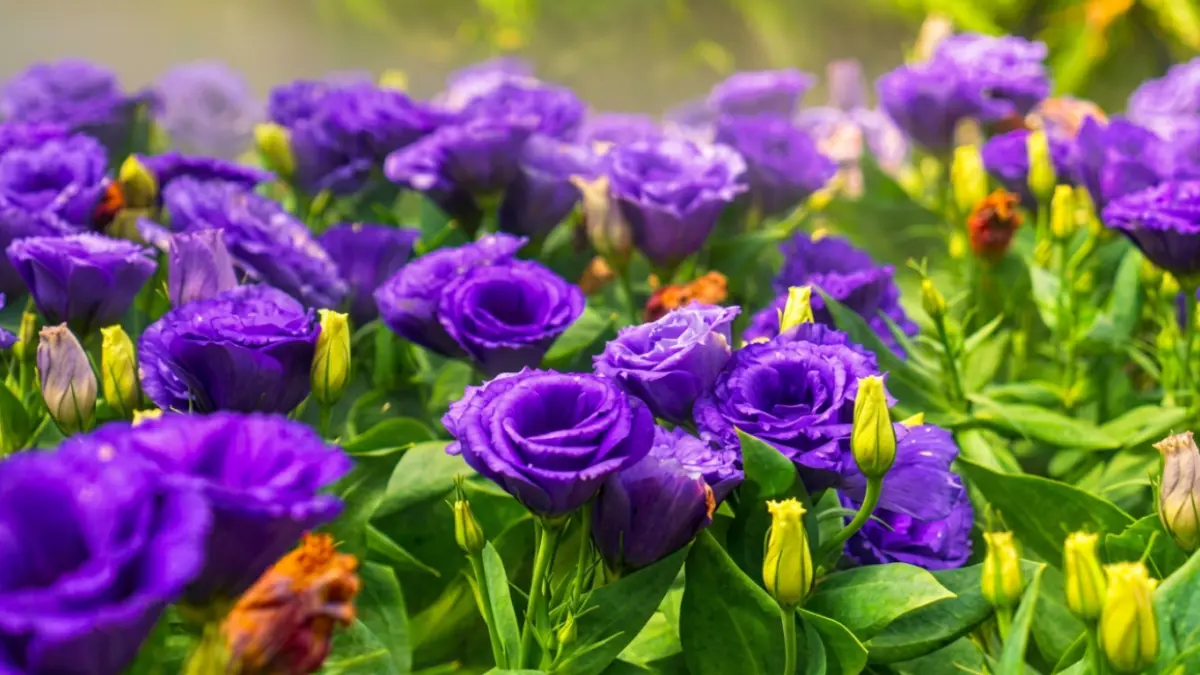
Lisianthus works as a focal support or mass flower in bouquets and suits romantic, classic, garden, and airy designs. Common florist colors include white, cream, blush, pink, lavender, purple, green, and bicolors. Its natural or market peak is summer peak with broad florist availability, while professional wholesalers may extend availability through greenhouse production and imports. Fragrance is light. In flower-language traditions it may be associated with appreciation and graceful sentiment in modern floriography, but symbolism is culturally variable and should not override personal meaning. For bouquet use, choose firm, well-hydrated stems, remove foliage that would sit below the water line, and let the flower’s natural shape determine how tightly or loosely it is arranged.
11. Sweet Pea
Scientific name: Lathyrus odoratus
Sweet Pea works as a filler or delicate accent flower in bouquets and suits romantic, fragrant, garden, and delicate designs. Common florist colors include white, cream, blush, pink, lavender, purple, and bicolors. Its natural or market peak is spring to early summer peak, while professional wholesalers may extend availability through greenhouse production and imports. Fragrance is strong and sweet. In flower-language traditions it may be associated with gratitude, pleasure, or farewell in traditional floriography, but symbolism is culturally variable and should not override personal meaning. For bouquet use, choose firm, well-hydrated stems, remove foliage that would sit below the water line, and let the flower’s natural shape determine how tightly or loosely it is arranged.
12. Carnation
Scientific name: Dianthus caryophyllus
Carnation works as a mass or supporting focal flower in bouquets and suits classic, modern, sculptural, and budget-conscious designs. Common florist colors include white, blush, pink, peach, red, burgundy, green, and bicolors. Its natural or market peak is widely available year-round, while professional wholesalers may extend availability through greenhouse production and imports. Fragrance is light to spicy. In flower-language traditions it may be associated with love and admiration are common, but color symbolism varies widely, but symbolism is culturally variable and should not override personal meaning. For bouquet use, choose firm, well-hydrated stems, remove foliage that would sit below the water line, and let the flower’s natural shape determine how tightly or loosely it is arranged.
13. Delphinium
Scientific name: Delphinium spp.
Delphinium works as a line flower in bouquets and suits garden, romantic, airy, and tall installations designs. Common florist colors include blue, purple, lavender, pink, and white. Its natural or market peak is late spring to summer peak, while professional wholesalers may extend availability through greenhouse production and imports. Fragrance is light. In flower-language traditions it may be associated with open-heartedness or positivity in some traditions, but symbolism is culturally variable and should not override personal meaning. For bouquet use, choose firm, well-hydrated stems, remove foliage that would sit below the water line, and let the flower’s natural shape determine how tightly or loosely it is arranged.
14. Stock
Scientific name: Matthiola incana
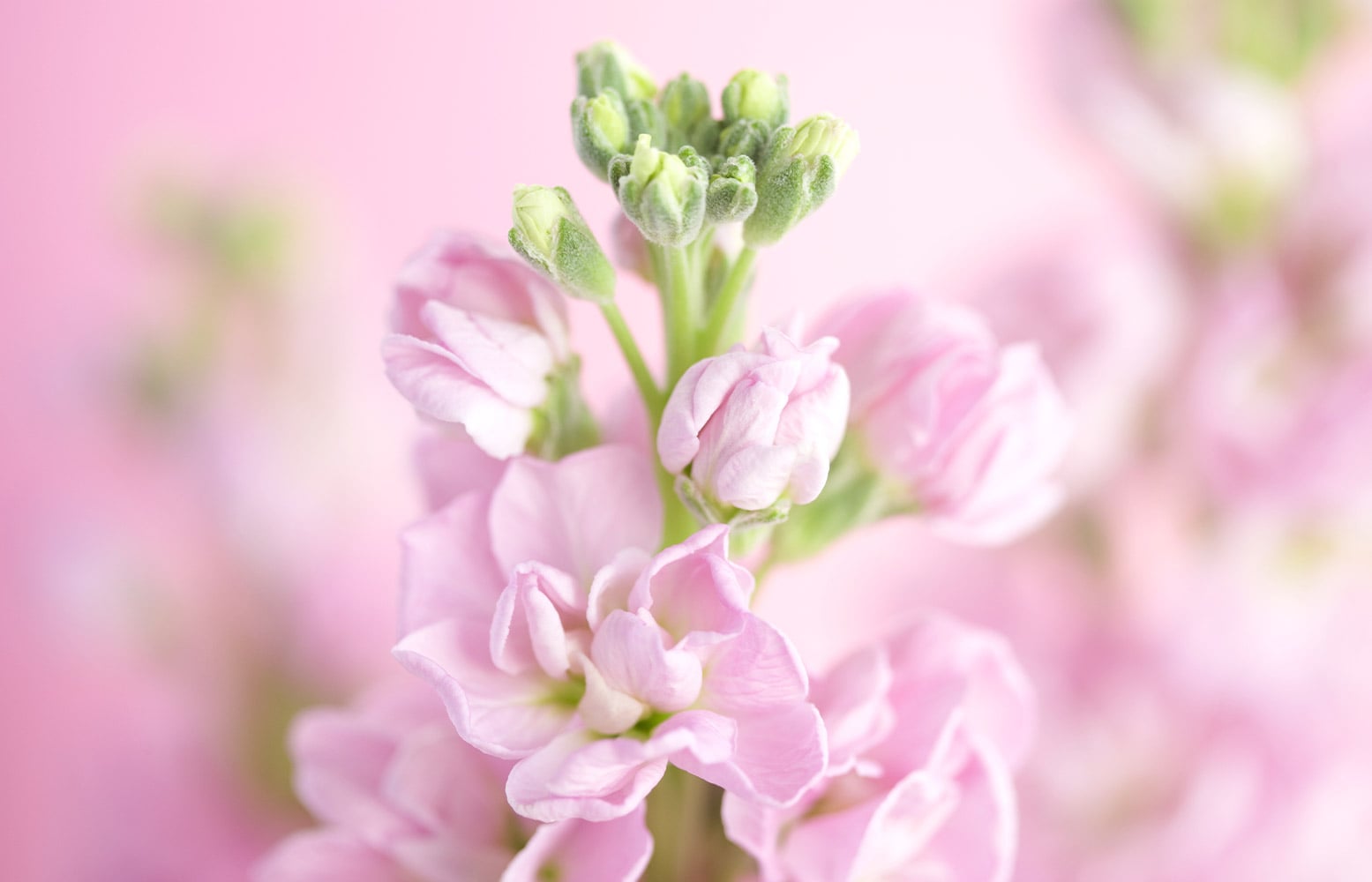
Stock works as a line or mass flower in bouquets and suits romantic, fragrant, classic, and garden designs. Common florist colors include white, cream, blush, pink, lavender, and purple. Its natural or market peak is cool season with broad florist availability, while professional wholesalers may extend availability through greenhouse production and imports. Fragrance is strong and clove-like. In flower-language traditions it may be associated with lasting beauty or affection in some traditions, but symbolism is culturally variable and should not override personal meaning. For bouquet use, choose firm, well-hydrated stems, remove foliage that would sit below the water line, and let the flower’s natural shape determine how tightly or loosely it is arranged.
15. Snapdragon
Scientific name: Antirrhinum majus
Snapdragon works as a line flower in bouquets and suits garden, whimsical, editorial, and vertical designs. Common florist colors include white, yellow, peach, pink, red, purple, and bicolors. Its natural or market peak is cool spring and fall peaks with florist availability beyond, while professional wholesalers may extend availability through greenhouse production and imports. Fragrance is light. In flower-language traditions it may be associated with grace or strength are common modern associations, but symbolism is culturally variable and should not override personal meaning. For bouquet use, choose firm, well-hydrated stems, remove foliage that would sit below the water line, and let the flower’s natural shape determine how tightly or loosely it is arranged.
16. Scabiosa
Scientific name: Scabiosa spp.
Scabiosa works as a accent or supporting focal flower in bouquets and suits garden, whimsical, textural, and bohemian designs. Common florist colors include white, blush, pink, lavender, burgundy, and near-black. Its natural or market peak is summer peak, while professional wholesalers may extend availability through greenhouse production and imports. Fragrance is light. In flower-language traditions it may be associated with love and remembrance appear in different traditions, but symbolism is culturally variable and should not override personal meaning. For bouquet use, choose firm, well-hydrated stems, remove foliage that would sit below the water line, and let the flower’s natural shape determine how tightly or loosely it is arranged.
17. Freesia
Scientific name: Freesia hybrids
Freesia works as a accent or line flower in bouquets and suits fragrant, romantic, spring, and refined designs. Common florist colors include white, yellow, orange, pink, red, lavender, and purple. Its natural or market peak is late winter to spring peak, while professional wholesalers may extend availability through greenhouse production and imports. Fragrance is strong and sweet. In flower-language traditions it may be associated with friendship, trust, and thoughtfulness are common associations, but symbolism is culturally variable and should not override personal meaning. For bouquet use, choose firm, well-hydrated stems, remove foliage that would sit below the water line, and let the flower’s natural shape determine how tightly or loosely it is arranged.
18. Cosmos
Scientific name: Cosmos bipinnatus
Cosmos works as a filler or supporting focal flower in bouquets and suits wildflower, garden, airy, and informal designs. Common florist colors include white, blush, pink, rose, and crimson. Its natural or market peak is summer to fall peak, while professional wholesalers may extend availability through greenhouse production and imports. Fragrance is light. In flower-language traditions it may be associated with harmony, modesty, or joy in modern interpretations, but symbolism is culturally variable and should not override personal meaning. For bouquet use, choose firm, well-hydrated stems, remove foliage that would sit below the water line, and let the flower’s natural shape determine how tightly or loosely it is arranged.
19. Protea
Scientific name: Protea spp.
Protea works as a focal flower in bouquets and suits bold, tropical, modern, and sculptural designs. Common florist colors include pink, red, cream, white, and multicolor forms. Its natural or market peak is varies by species and supply chain, while professional wholesalers may extend availability through greenhouse production and imports. Fragrance is light. In flower-language traditions it may be associated with transformation, courage, and diversity in modern symbolism, but symbolism is culturally variable and should not override personal meaning. For bouquet use, choose firm, well-hydrated stems, remove foliage that would sit below the water line, and let the flower’s natural shape determine how tightly or loosely it is arranged.
20. Baby’s Breath
Scientific name: Gypsophila paniculata
Baby’s Breath works as a filler flower in bouquets and suits airy, classic, cloud-like, and minimalist when massed designs. Common florist colors include white and pale pink. Its natural or market peak is widely available year-round, while professional wholesalers may extend availability through greenhouse production and imports. Fragrance is light. In flower-language traditions it may be associated with purity, everlasting love, or innocence in some traditions, but symbolism is culturally variable and should not override personal meaning. For bouquet use, choose firm, well-hydrated stems, remove foliage that would sit below the water line, and let the flower’s natural shape determine how tightly or loosely it is arranged.
21. Sunflower
Scientific name: Helianthus annuus
Sunflower works as a focal flower in bouquets and suits bold, rustic, garden, and casual designs. Common florist colors include yellow, gold, orange, bronze, and red-toned cultivars. Its natural or market peak is summer to early fall, while professional wholesalers may extend availability through greenhouse production and imports. Fragrance is light. In flower-language traditions it may be associated with cheerfulness and warmth in many modern associations, but symbolism is culturally variable and should not override personal meaning. For bouquet use, choose firm, well-hydrated stems, remove foliage that would sit below the water line, and let the flower’s natural shape determine how tightly or loosely it is arranged.
22. Gerbera Daisy
Scientific name: Gerbera jamesonii
Gerbera Daisy works as a focal flower in bouquets and suits bright, clean, playful, and modern designs. Common florist colors include white, yellow, orange, pink, red, and bicolors. Its natural or market peak is broad commercial availability, while professional wholesalers may extend availability through greenhouse production and imports. Fragrance is light. In flower-language traditions it may be associated with cheerfulness and innocence in common modern symbolism, but symbolism is culturally variable and should not override personal meaning. For bouquet use, choose firm, well-hydrated stems, remove foliage that would sit below the water line, and let the flower’s natural shape determine how tightly or loosely it is arranged.
23. Chrysanthemum
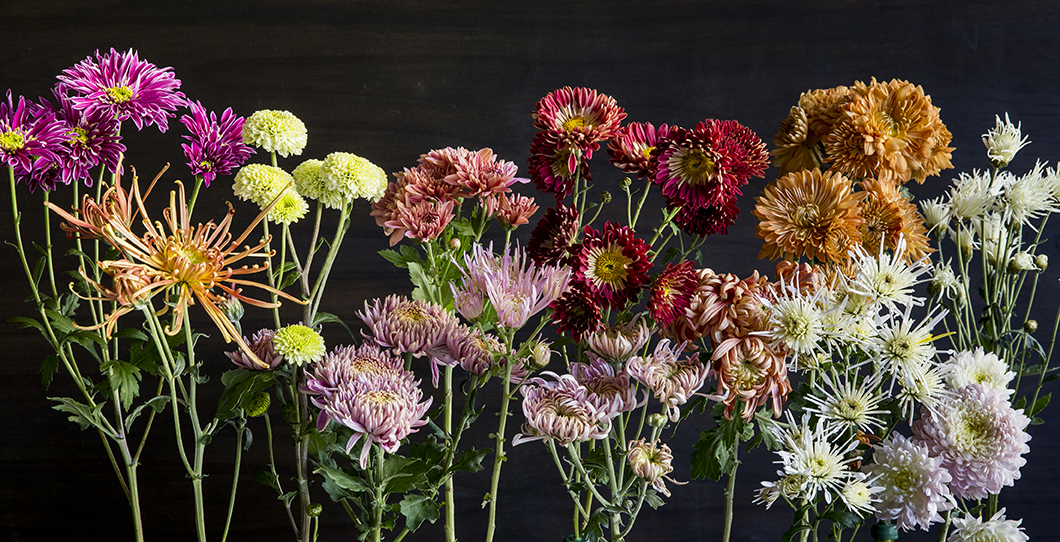
Chrysanthemum works as a mass or focal depending on form flower in bouquets and suits classic, modern, sculptural, and seasonal designs. Common florist colors include white, yellow, bronze, green, pink, purple, and red. Its natural or market peak is late summer and fall peak with year-round florist supply, while professional wholesalers may extend availability through greenhouse production and imports. Fragrance is light to distinctive. In flower-language traditions it may be associated with longevity, joy, remembrance, or mourning depending strongly on culture, but symbolism is culturally variable and should not override personal meaning. For bouquet use, choose firm, well-hydrated stems, remove foliage that would sit below the water line, and let the flower’s natural shape determine how tightly or loosely it is arranged.
24. Gladiolus
Scientific name: Gladiolus × hortulanus
Gladiolus works as a line flower in bouquets and suits formal, dramatic, vertical, and contemporary designs. Common florist colors include white, yellow, orange, pink, red, purple, green, and bicolors. Its natural or market peak is summer peak, while professional wholesalers may extend availability through greenhouse production and imports. Fragrance is light. In flower-language traditions it may be associated with strength and remembrance in some traditions, but symbolism is culturally variable and should not override personal meaning. For bouquet use, choose firm, well-hydrated stems, remove foliage that would sit below the water line, and let the flower’s natural shape determine how tightly or loosely it is arranged.
25. Iris
Scientific name: Iris spp.
Iris works as a focal or line flower in bouquets and suits spring, artistic, classic, and garden designs. Common florist colors include blue, purple, yellow, white, and bicolors. Its natural or market peak is spring peak, while professional wholesalers may extend availability through greenhouse production and imports. Fragrance is light. In flower-language traditions it may be associated with faith, wisdom, or hope in some traditions, but symbolism is culturally variable and should not override personal meaning. For bouquet use, choose firm, well-hydrated stems, remove foliage that would sit below the water line, and let the flower’s natural shape determine how tightly or loosely it is arranged.
26. Alstroemeria
Scientific name: Alstroemeria hybrids

Alstroemeria works as a filler or supporting focal flower in bouquets and suits cheerful, practical, mixed, and long-lasting designs. Common florist colors include white, yellow, orange, pink, red, and purple. Its natural or market peak is widely available year-round, while professional wholesalers may extend availability through greenhouse production and imports. Fragrance is light. In flower-language traditions it may be associated with friendship and devotion in modern flower language, but symbolism is culturally variable and should not override personal meaning. For bouquet use, choose firm, well-hydrated stems, remove foliage that would sit below the water line, and let the flower’s natural shape determine how tightly or loosely it is arranged.
27. Statice
Scientific name: Limonium sinuatum
Statice works as a filler flower in bouquets and suits dried, textural, rustic, and mixed designs. Common florist colors include white, yellow, pink, purple, and blue-violet. Its natural or market peak is summer peak with broad florist availability, while professional wholesalers may extend availability through greenhouse production and imports. Fragrance is light. In flower-language traditions it may be associated with remembrance and lasting beauty in modern associations, but symbolism is culturally variable and should not override personal meaning. For bouquet use, choose firm, well-hydrated stems, remove foliage that would sit below the water line, and let the flower’s natural shape determine how tightly or loosely it is arranged.
28. Yarrow
Scientific name: Achillea millefolium
Yarrow works as a filler or flat textural accent flower in bouquets and suits meadow, rustic, garden, and textural designs. Common florist colors include white, yellow, pink, red, and pastel cultivars. Its natural or market peak is summer peak, while professional wholesalers may extend availability through greenhouse production and imports. Fragrance is herbal. In flower-language traditions it may be associated with healing or protection in historical traditions, but symbolism is culturally variable and should not override personal meaning. For bouquet use, choose firm, well-hydrated stems, remove foliage that would sit below the water line, and let the flower’s natural shape determine how tightly or loosely it is arranged.
29. Lavender
Lavender works as a filler or line accent flower in bouquets and suits fragrant, rustic, Mediterranean, and dried designs. Common florist colors include lavender-purple, violet, pink, and white. Its natural or market peak is summer peak, while professional wholesalers may extend availability through greenhouse production and imports. Fragrance is strong herbal-floral. In flower-language traditions it may be associated with calm, devotion, or purity in different traditions, but symbolism is culturally variable and should not override personal meaning. For bouquet use, choose firm, well-hydrated stems, remove foliage that would sit below the water line, and let the flower’s natural shape determine how tightly or loosely it is arranged.
30. Celosia
Scientific name: Celosia argentea
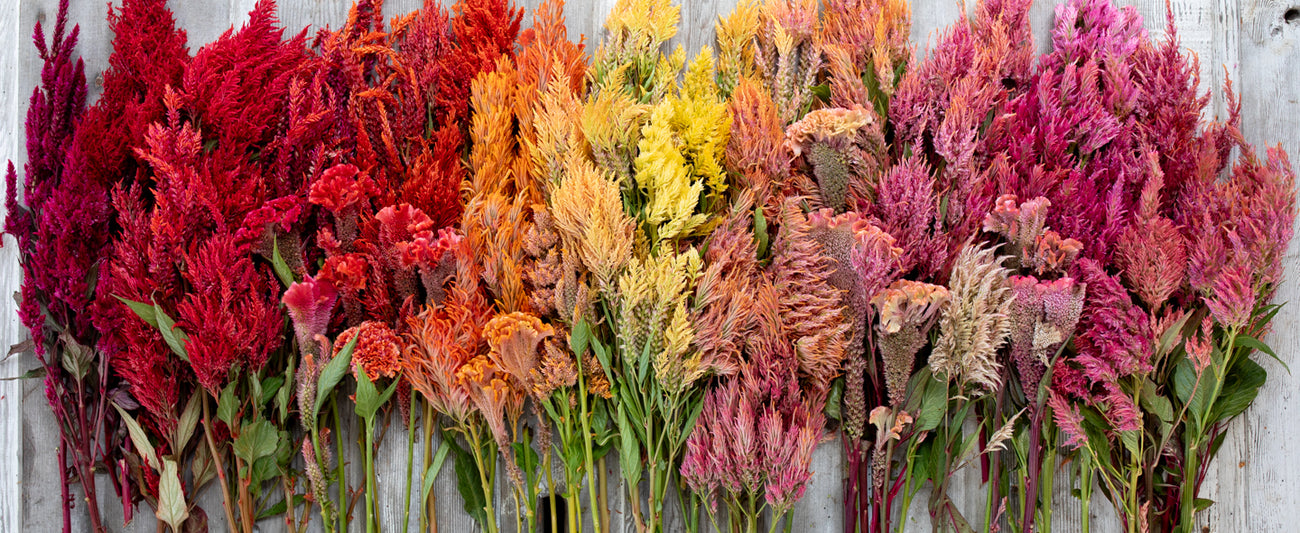
Celosia works as a focal texture or filler flower in bouquets and suits textural, modern, tropical, and autumnal designs. Common florist colors include red, orange, yellow, pink, magenta, and green. Its natural or market peak is summer to fall peak, while professional wholesalers may extend availability through greenhouse production and imports. Fragrance is light. In flower-language traditions it may be associated with boldness and affection in some modern interpretations, but symbolism is culturally variable and should not override personal meaning. For bouquet use, choose firm, well-hydrated stems, remove foliage that would sit below the water line, and let the flower’s natural shape determine how tightly or loosely it is arranged.
How Florists Combine Focal, Line, Mass, and Filler Flowers
A balanced bouquet usually has hierarchy. Focal flowers such as peonies, dahlias, proteas, or large roses catch the eye. Line flowers such as delphinium, snapdragon, gladiolus, and stock establish direction. Mass flowers such as hydrangea, chrysanthemums, carnations, or grouped roses create body. Fillers and textural flowers—baby’s breath, statice, yarrow, lavender, scabiosa, or branching alstroemeria—connect gaps and soften transitions. Not every bouquet needs all four roles, but understanding them makes substitutions much easier.
How to Choose Flowers for a Bouquet
- Start with the occasion and desired silhouette: compact, loose, tall, asymmetrical, cascading, or hand-tied.
- Choose one or two dominant flower shapes, then add contrasting texture rather than using many equally strong focal blooms.
- Check stem strength and hydration needs if the bouquet will be carried for hours.
- Use fragrance intentionally; a strongly scented bouquet may be wonderful for one person and overwhelming for another.
- Select seasonal flowers when practical, but allow the florist to substitute for quality and supply.
- For home arrangements, recut stems with clean tools and keep foliage out of vase water.
Best Bouquet Flowers by Season
Spring bouquets can feature tulips, ranunculus, anemones, irises, sweet peas, and peonies as they become available. Summer expands the choices to dahlias, sunflowers, hydrangeas, cosmos, yarrow, lavender, and many field-grown flowers. Fall favors dahlias, chrysanthemums, celosia, sunflowers, and richly colored roses or carnations. Winter bouquets often rely more on greenhouse and imported roses, orchids, calla lilies, carnations, anemones, and other reliable florist crops.
Vase Life, Fragrance, and Safety
Vase life is influenced by species, cultivar, harvest stage, transport, conditioning, room temperature, water cleanliness, and how long stems are left dry, so exact day counts can be misleading. Remove decaying material promptly, refresh water, and keep arrangements away from heat and ripening fruit. Some bouquet flowers are toxic if eaten, and true lilies are particularly dangerous to cats. Do not use florist stems as edible garnish unless they were produced and handled for food use.
Common Bouquet-Building Mistakes
- Using too many focal flowers with no visual hierarchy.
- Ignoring the weight and thickness of stems in a hand-tied bouquet.
- Letting leaves remain submerged in vase water.
- Choosing every flower at the same height and creating a flat top unintentionally.
- Mixing several strong fragrances without considering the recipient.
- Expecting seasonal field flowers to look identical to greenhouse product from another season.
Fun Facts About Bouquet Flowers
- Hydrangea can create a large mass from a single flower head.
- Gladiolus and delphinium can change the silhouette of a bouquet with just a few stems.
- Baby’s breath can be a filler or the main material in a monochromatic cloud bouquet.
- Alstroemeria often opens additional buds after the bouquet is arranged.
- Statice and lavender are popular in both fresh and dried arrangements.
- Protea provides visual weight through bracts and texture rather than soft layered petals.
- Calla lilies are often used for clean architectural lines rather than fluffy volume.
- Different chrysanthemum forms can function as focal, mass, or filler flowers.
- A bouquet can look more natural when flowers sit at different depths instead of forming one even surface.
- Professional conditioning before design can matter as much as the species chosen.
Final Thoughts on Types of Flowers for Bouquets
The most versatile types of flowers for bouquets are those that contribute a clear job—focal impact, line, volume, texture, fragrance, or seasonal character. Build around a few compatible shapes, allow variation in height and tone, and choose stems for freshness and durability as well as appearance. A well-structured bouquet does not need the greatest number of flower types; it needs a clear visual hierarchy and flowers suited to the occasion.
Frequently Asked Questions
1. What flowers are most common in bouquets?
Roses, carnations, chrysanthemums, tulips, lilies, lisianthus, alstroemeria, hydrangeas, gerbera daisies, and seasonal focal flowers are widely used.
2. What is a focal flower in a bouquet?
A focal flower is a visually dominant bloom, usually larger or more distinctive than surrounding material. Peonies, dahlias, proteas, roses, and gerberas can serve this role.
3. What is a line flower in a bouquet?
Line flowers create height, direction, and movement. Delphinium, snapdragon, gladiolus, stock, and some lavender stems are examples.
4. What is a filler flower?
Filler flowers are smaller or branching materials that connect larger blooms and add texture. Baby’s breath, statice, yarrow, and some branching alstroemeria can fill this role.
5. What is a mass flower?
Mass flowers build visual volume. Hydrangea heads, chrysanthemums, carnations, and groups of roses are common examples.
6. How many flower types should be in a bouquet?
There is no rule. A bouquet can be beautiful with one flower type or with several roles represented. Visual hierarchy matters more than the count.
7. What flowers last longest in a vase?
Carnations, chrysanthemums, alstroemeria, statice, and some orchids are known for good vase performance when conditioned properly, but cultivar and care strongly affect longevity.
8. What bouquet flowers are best in spring?
Tulips, ranunculus, anemones, irises, sweet peas, peonies, and spring roses are popular choices depending on local and wholesale availability.
9. What bouquet flowers are best in summer?
Dahlias, sunflowers, hydrangeas, cosmos, lavender, yarrow, zinnias, and many garden flowers are strong summer options.
10. What bouquet flowers are best in fall?
Dahlias, chrysanthemums, celosia, sunflowers, carnations, roses, statice, and warm-toned textural flowers suit fall palettes.
11. What bouquet flowers are best in winter?
Roses, carnations, orchids, calla lilies, anemones, chrysanthemums, and greenhouse-grown florist flowers are common winter choices.
12. What flowers are good for a romantic bouquet?
Roses, peonies, ranunculus, sweet peas, lisianthus, anemones, and delicate seasonal flowers create a romantic garden look.
13. What flowers are good for a modern bouquet?
Calla lilies, orchids, proteas, anthuriums, single-color roses, and sculptural line flowers suit modern designs.
14. What flowers are good for a rustic bouquet?
Sunflowers, yarrow, lavender, statice, cosmos, carnations, and seasonal field-grown flowers work well in rustic arrangements.
15. What flowers are good for a wildflower-style bouquet?
Cosmos, yarrow, scabiosa, snapdragons, delphinium, small roses, and airy seasonal flowers can create a meadow-inspired effect.
16. What bouquet flowers are strongly scented?
Stock, freesia, sweet pea, lavender, gardenia, some roses, and some lilies can have noticeable fragrance.
17. What bouquet flowers have little scent?
Calla lilies, many orchids, hydrangeas, carnations, lisianthus, chrysanthemums, and alstroemeria are often mild, though cultivar differences exist.
18. How do I keep a bouquet fresh?
Use a clean vase, fresh water, clean cutting tools, recut stems, remove submerged leaves, and keep the arrangement away from heat and direct sun.
19. How often should bouquet water be changed?
Change or refresh water whenever it becomes cloudy or develops debris; frequent clean water generally helps reduce bacterial buildup.
20. Should I add flower food to vase water?
Commercial flower food can help when used according to directions because it balances nutrients, acidity, and microbial control. Do not improvise strong household chemicals.
21. Why should leaves be removed below the water line?
Submerged leaves decay and support microbial growth, which can clog stems and shorten vase performance.
22. Can I mix all flower types in one vase?
Many flowers combine well, but stem strength, sap, fragrance, water needs, and scale differ. A florist can manage difficult combinations more reliably.
23. Are bouquet flowers safe for cats?
Not all are. True lilies are especially dangerous to cats, and other species can also be toxic, so check the exact flower before placing a bouquet within reach.
24. Can bouquet flowers be eaten?
Do not eat florist flowers unless they are positively identified as edible and specifically grown and handled for food use. Decorative flowers may carry pesticides or preservatives.
25. What flowers are easiest for a DIY bouquet?
Roses, carnations, alstroemeria, chrysanthemums, statice, baby’s breath, and sturdy seasonal flowers are often easier to handle than very fragile specialty blooms.
26. How do I make a bouquet look fuller?
Use mass flowers, branching stems, varied heights, and textural fillers, and rotate the bouquet while arranging so visual weight is distributed around the center.
27. How do I make a bouquet look airy?
Use fewer stems, preserve negative space, include line flowers and branching material, and place blooms at different depths instead of packing every gap.
28. What colors work well together in bouquets?
Analogous palettes such as pink-peach-coral feel blended, complementary pairs create contrast, and monochromatic palettes feel cohesive when they include several tones and textures.
29. Do flower meanings matter in a bouquet?
They can add personal or cultural meaning, but meanings vary by place and tradition. The recipient’s preferences and associations are usually more important than a rigid symbolism chart.
30. What is the best flower for a bouquet overall?
There is no universal best flower. Choose based on occasion, freshness, season, color, fragrance, stem strength, budget, and the visual role the bloom needs to play.