

Successful flower arrangements are built by role, not by simply collecting attractive blooms. Focal flowers establish emphasis, line flowers create direction and height, mass flowers build volume, fillers connect gaps, and textural stems add movement. These 25 flowers are widely useful because each contributes a clear design function and can be combined without forcing every stem to compete for attention.
Which Flowers Are Best for Arrangements?
Roses, peonies, dahlias, ranunculus, lisianthus, carnations, chrysanthemums, hydrangeas, delphiniums, snapdragons, stock, tulips, orchids, and sunflowers cover most focal, mass, and line needs. Fillers such as statice, baby’s breath, yarrow, scabiosa, and amaranthus add texture and transitions. The best selection depends on season, scale, fragrance tolerance, budget, and how long the arrangement must last.
Related Flower Guides
Quick Comparison
| Flower | Main colors | Design role | Typical season | Style |
|---|---|---|---|---|
| Rose | white, blush, pink, red, peach, yellow | focal or mass | year-round florist supply; garden peak late spring-fall | classic, garden, romantic |
| Peony | white, blush, pink, coral, red | focal | late spring to early summer | romantic, garden, luxury |
| Dahlia | wide range except true blue | focal | summer to frost | garden, editorial, textural |
| Ranunculus | white, blush, yellow, orange, pink, red | focal or supporting focal | cool-season, especially spring | romantic, refined, garden |
| Anemone | white, pink, red, blue-violet | focal accent | late winter to spring | modern, spring, editorial |
| Lisianthus | white, cream, blush, pink, lavender, purple, green | mass or supporting focal | summer peak; broad florist availability | romantic, garden, classic |
| Carnation | white, blush, pink, peach, red, burgundy, green, bicolors | mass or supporting focal | widely available year-round | classic, modern, sculptural |
| Chrysanthemum | white, yellow, bronze, green, pink, purple, red | mass, focal, or filler by form | fall peak; broad year-round supply | classic, modern, autumnal |
| Hydrangea | white, green, pink, blue, purple | mass | summer; broad florist availability | lush, garden, romantic |
| Delphinium | blue, purple, lavender, pink, white | line | late spring to summer | garden, airy, tall |
| Snapdragon | white, yellow, peach, pink, red, purple, bicolors | line | cool-season peaks; available beyond | garden, whimsical, vertical |
| Stock | white, cream, blush, pink, lavender, purple | line or mass | cool season | fragrant, classic, garden |
| Gladiolus | wide color range | line | summer peak | formal, dramatic, contemporary |
| Iris | blue, purple, yellow, white, bicolors | focal or line | spring | artistic, spring, classic |
| Sunflower | yellow, gold, cream, bronze, burgundy | focal | summer to fall | rustic, cheerful, bold |
| Gerbera Daisy | wide bright and pastel range | focal | widely available | clean, cheerful, modern |
| Tulip | wide range | focal or mass | spring; often commercially available beyond | minimal, spring, modern |
| Orchid | white, cream, pink, purple, green, yellow | focal or cascade accent | varies; many florist orchids year-round | modern, tropical, luxury |
| Sweet Pea | white, blush, pink, lavender, purple, bicolors | filler or delicate accent | spring to early summer | romantic, fragrant, garden |
| Scabiosa | white, lavender, blue, pink, burgundy | filler or textural accent | late spring to fall | garden, airy, textural |
| Statice | white, yellow, pink, purple, blue-violet | filler | summer; broad supply | rustic, dried, textural |
| Baby’s Breath | white, pale pink | filler | summer; broad florist availability | airy, classic, cloudlike |
| Yarrow | white, yellow, pink, red, pastels | filler or flat textural mass | summer | meadow, rustic, garden |
| Celosia | red, orange, yellow, pink, magenta, green | focal texture or filler | summer to fall | textural, tropical, modern |
| Amaranthus | green, burgundy, red | line or cascading texture | summer to fall | editorial, hanging, dramatic |
The entries below are selected and labeled according to the article’s search intent. Names, botanical ranks, and horticultural categories are kept distinct so the list does not inflate the count with duplicate common names.
1. Rose
Scientific name: Rosa spp.
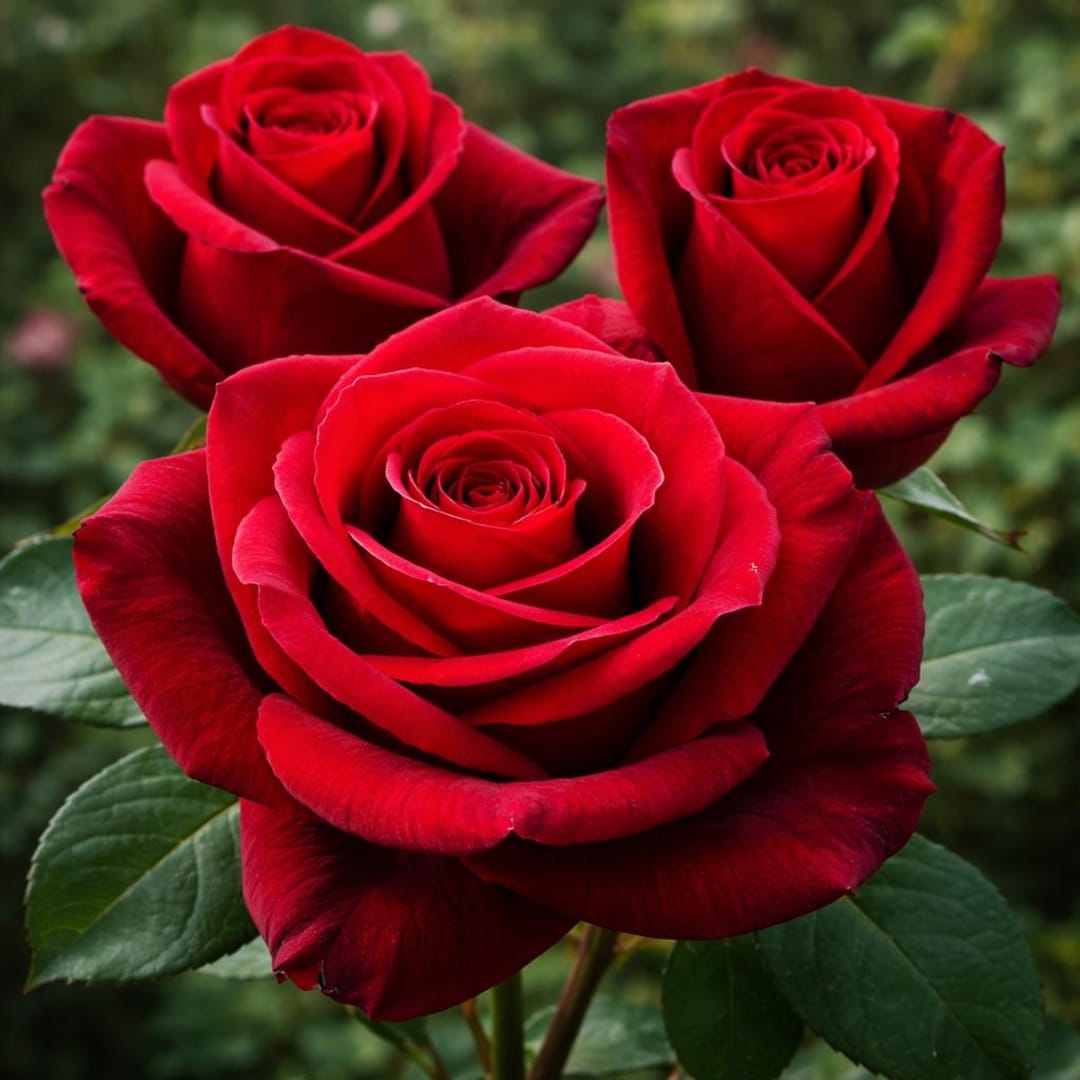
Rose is a useful arrangement flower because its form can work as a focal or mass element. Common colors include white, blush, pink, red, peach, yellow. Supply is typically year-round florist supply; garden peak late spring-fall, although exact availability varies by grower, region, and protected production. Its fragrance is light to strong by cultivar. The easiest visual clue is layered petals and a familiar rounded silhouette.
Best arrangement use: classic, garden, romantic. Condition by removing submerged foliage and recutting stems. When designing, balance flower scale, stem strength, and negative space rather than choosing only by color.
2. Peony
Scientific name: Paeonia lactiflora and hybrids

Peony is a useful arrangement flower because its form can work as a focal element. Common colors include white, blush, pink, coral, red. Supply is typically late spring to early summer, although exact availability varies by grower, region, and protected production. Its fragrance is light to strong. The easiest visual clue is large bowl- to bomb-shaped blooms that expand dramatically.
Best arrangement use: romantic, garden, luxury. Best when seasonal and harvested at the correct bud stage. When designing, balance flower scale, stem strength, and negative space rather than choosing only by color.
3. Dahlia
Scientific name: Dahlia hybrids
Dahlia is a useful arrangement flower because its form can work as a focal element. Common colors include wide range except true blue. Supply is typically summer to frost, although exact availability varies by grower, region, and protected production. Its fragrance is light. The easiest visual clue is highly structured flowerheads from ball to decorative forms.
Best arrangement use: garden, editorial, textural. Excellent visual impact but individual cultivars vary in vase performance. When designing, balance flower scale, stem strength, and negative space rather than choosing only by color.
4. Ranunculus
Scientific name: Ranunculus asiaticus
Ranunculus is a useful arrangement flower because its form can work as a focal or supporting focal element. Common colors include white, blush, yellow, orange, pink, red. Supply is typically cool-season, especially spring, although exact availability varies by grower, region, and protected production. Its fragrance is light. The easiest visual clue is many thin concentric petals on slender stems.
Best arrangement use: romantic, refined, garden. Handle stems gently because they can bend when warm. When designing, balance flower scale, stem strength, and negative space rather than choosing only by color.
5. Anemone
Scientific name: Anemone coronaria
:max_bytes(150000):strip_icc()/best-anemone-flower-varieties-4147178-Hero-9517c0621e044ec49989112d838005bf.jpg)
Anemone is a useful arrangement flower because its form can work as a focal accent element. Common colors include white, pink, red, blue-violet. Supply is typically late winter to spring, although exact availability varies by grower, region, and protected production. Its fragrance is light. The easiest visual clue is poppy-like flowers often with dark centers.
Best arrangement use: modern, spring, editorial. Continues opening and moving after cutting, giving arrangements a natural look. When designing, balance flower scale, stem strength, and negative space rather than choosing only by color.
6. Lisianthus
Scientific name: Eustoma grandiflorum
Lisianthus is a useful arrangement flower because its form can work as a mass or supporting focal element. Common colors include white, cream, blush, pink, lavender, purple, green. Supply is typically summer peak; broad florist availability, although exact availability varies by grower, region, and protected production. Its fragrance is light. The easiest visual clue is rose-like buds and silky open cups on branching stems.
Best arrangement use: romantic, garden, classic. Useful for adding multiple blooms from one stem. When designing, balance flower scale, stem strength, and negative space rather than choosing only by color.
7. Carnation
Scientific name: Dianthus caryophyllus hybrids

Carnation is a useful arrangement flower because its form can work as a mass or supporting focal element. Common colors include white, blush, pink, peach, red, burgundy, green, bicolors. Supply is typically widely available year-round, although exact availability varies by grower, region, and protected production. Its fragrance is clove-like in some cultivars. The easiest visual clue is ruffled densely petaled heads on strong stems.
Best arrangement use: classic, modern, sculptural. Very versatile because standard and spray forms give different scales. When designing, balance flower scale, stem strength, and negative space rather than choosing only by color.
8. Chrysanthemum
Scientific name: Chrysanthemum × morifolium
Chrysanthemum is a useful arrangement flower because its form can work as a mass, focal, or filler by form element. Common colors include white, yellow, bronze, green, pink, purple, red. Supply is typically fall peak; broad year-round supply, although exact availability varies by grower, region, and protected production. Its fragrance is light to distinctive. The easiest visual clue is forms range from daisy to button, spider, cushion, and disbud.
Best arrangement use: classic, modern, autumnal. Choose the flower form to match the design role. When designing, balance flower scale, stem strength, and negative space rather than choosing only by color.
9. Hydrangea
Scientific name: Hydrangea macrophylla and related species

Hydrangea is a useful arrangement flower because its form can work as a mass element. Common colors include white, green, pink, blue, purple. Supply is typically summer; broad florist availability, although exact availability varies by grower, region, and protected production. Its fragrance is light. The easiest visual clue is large rounded or lacecap clusters.
Best arrangement use: lush, garden, romantic. Needs excellent hydration; wilted stems sometimes recover after proper recutting and conditioning. When designing, balance flower scale, stem strength, and negative space rather than choosing only by color.
10. Delphinium
Scientific name: Delphinium hybrids
Delphinium is a useful arrangement flower because its form can work as a line element. Common colors include blue, purple, lavender, pink, white. Supply is typically late spring to summer, although exact availability varies by grower, region, and protected production. Its fragrance is light. The easiest visual clue is long vertical spikes covered in spurred florets.
Best arrangement use: garden, airy, tall. Adds height without the heavy visual weight of a large focal bloom. When designing, balance flower scale, stem strength, and negative space rather than choosing only by color.
11. Snapdragon
Scientific name: Antirrhinum majus
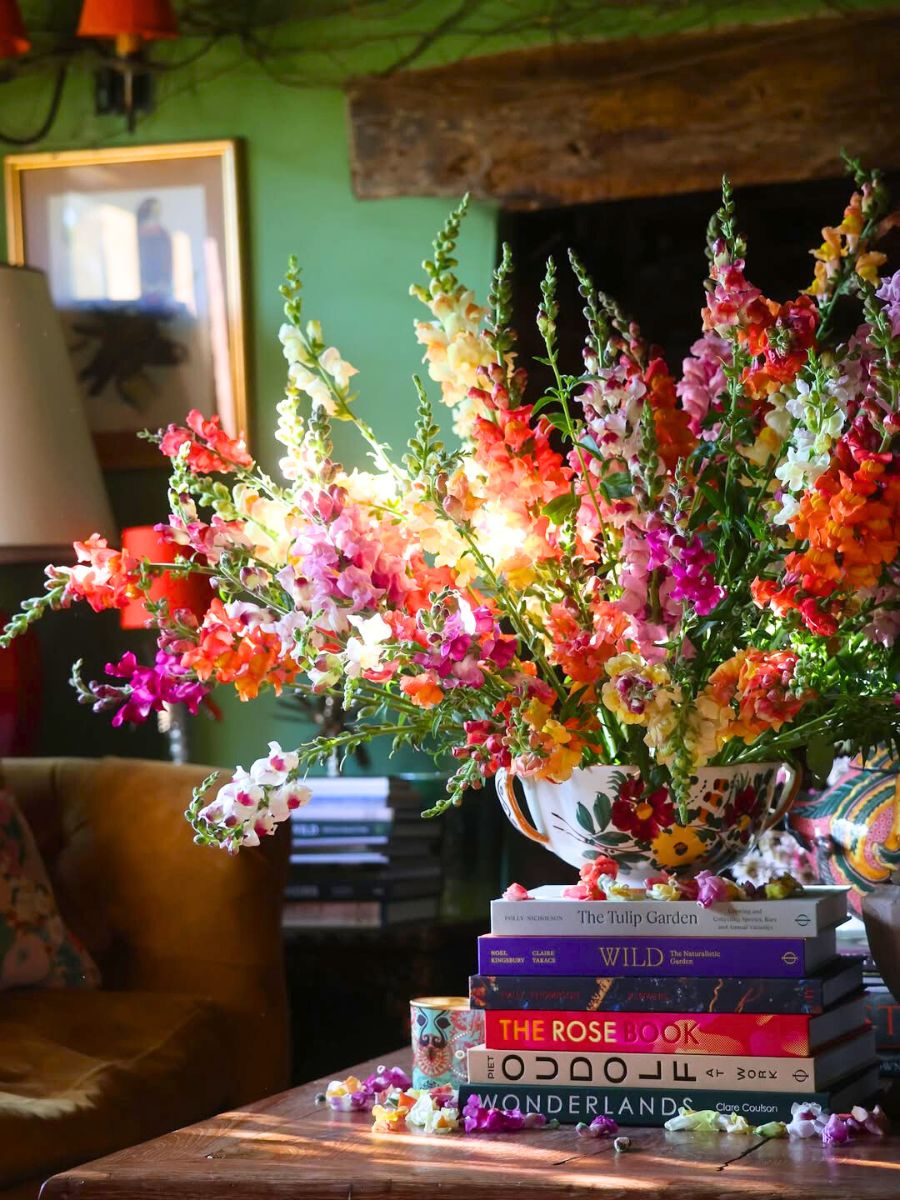
Snapdragon is a useful arrangement flower because its form can work as a line element. Common colors include white, yellow, peach, pink, red, purple, bicolors. Supply is typically cool-season peaks; available beyond, although exact availability varies by grower, region, and protected production. Its fragrance is light. The easiest visual clue is upright spikes with many two-lipped blossoms.
Best arrangement use: garden, whimsical, vertical. Useful for establishing the upper contour of an arrangement. When designing, balance flower scale, stem strength, and negative space rather than choosing only by color.
12. Stock
Scientific name: Matthiola incana
Stock is a useful arrangement flower because its form can work as a line or mass element. Common colors include white, cream, blush, pink, lavender, purple. Supply is typically cool season, although exact availability varies by grower, region, and protected production. Its fragrance is strong clove-like. The easiest visual clue is dense flower spikes with soft ruffled florets.
Best arrangement use: fragrant, classic, garden. Strong fragrance can dominate small tables, so use thoughtfully. When designing, balance flower scale, stem strength, and negative space rather than choosing only by color.
13. Gladiolus
Scientific name: Gladiolus hybrids

Gladiolus is a useful arrangement flower because its form can work as a line element. Common colors include wide color range. Supply is typically summer peak, although exact availability varies by grower, region, and protected production. Its fragrance is light. The easiest visual clue is tall one-sided spikes of funnel-shaped flowers.
Best arrangement use: formal, dramatic, contemporary. Can be cut into shorter segments for modern designs rather than always used full length. When designing, balance flower scale, stem strength, and negative space rather than choosing only by color.
14. Iris
Scientific name: Iris spp.
Iris is a useful arrangement flower because its form can work as a focal or line element. Common colors include blue, purple, yellow, white, bicolors. Supply is typically spring, although exact availability varies by grower, region, and protected production. Its fragrance is light. The easiest visual clue is upright standards and drooping falls.
Best arrangement use: artistic, spring, classic. Distinctive silhouette means only a few stems may be needed. When designing, balance flower scale, stem strength, and negative space rather than choosing only by color.
15. Sunflower
Scientific name: Helianthus annuus
Sunflower is a useful arrangement flower because its form can work as a focal element. Common colors include yellow, gold, cream, bronze, burgundy. Supply is typically summer to fall, although exact availability varies by grower, region, and protected production. Its fragrance is light. The easiest visual clue is large composite heads around a dark or green center.
Best arrangement use: rustic, cheerful, bold. Smaller branching cultivars are easier to scale into hand-tied bouquets. When designing, balance flower scale, stem strength, and negative space rather than choosing only by color.
16. Gerbera Daisy
Scientific name: Gerbera jamesonii hybrids
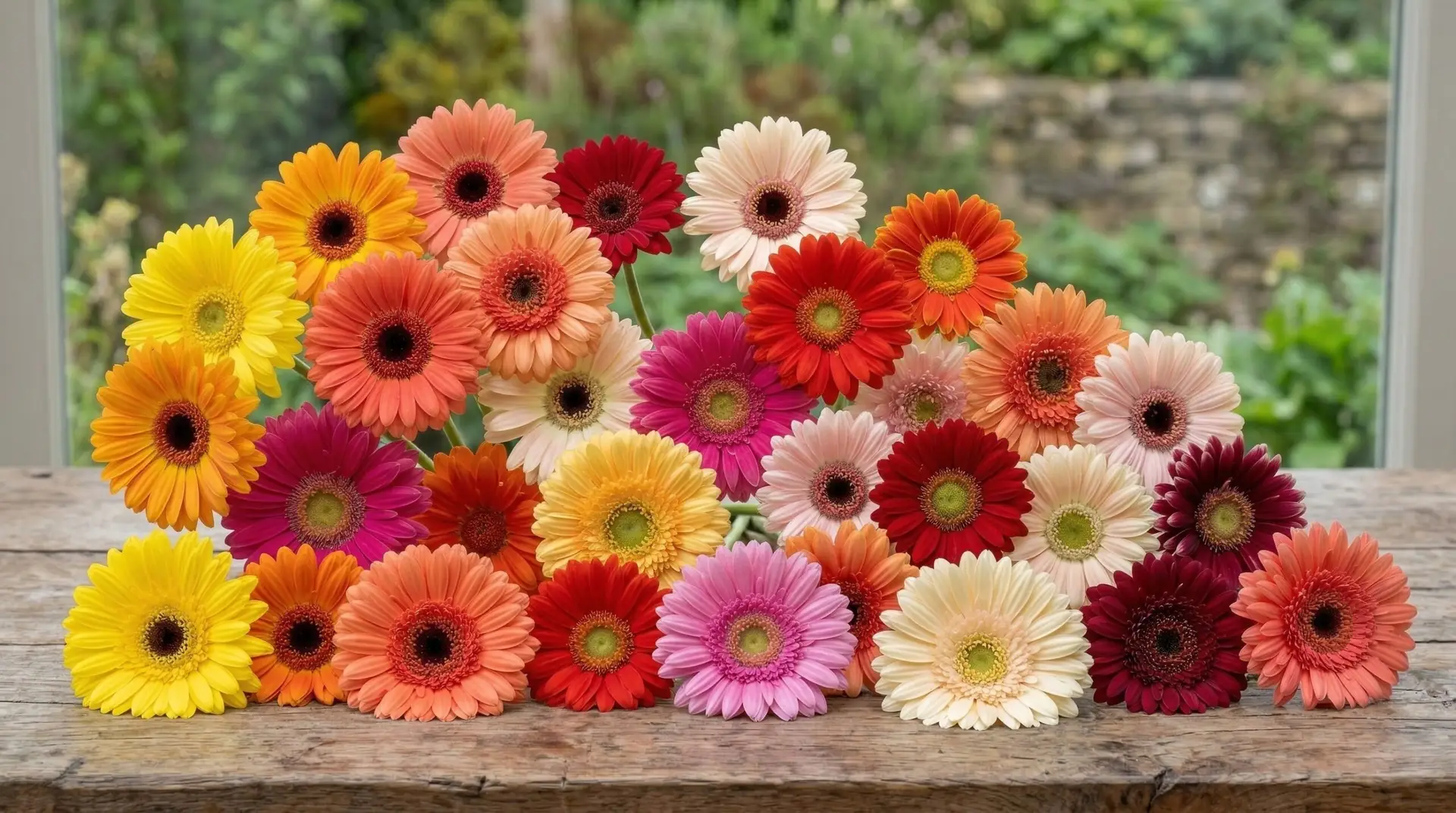
Gerbera Daisy is a useful arrangement flower because its form can work as a focal element. Common colors include wide bright and pastel range. Supply is typically widely available, although exact availability varies by grower, region, and protected production. Its fragrance is light. The easiest visual clue is large daisy-like heads on leafless stems.
Best arrangement use: clean, cheerful, modern. Stems are prone to bending if handled poorly; shallow clean water and good sanitation help. When designing, balance flower scale, stem strength, and negative space rather than choosing only by color.
17. Tulip
Scientific name: Tulipa hybrids
:max_bytes(150000):strip_icc()/tulip-types-for-spring-garden-1315804-hero-5c10c927e00c459eb24c702be447e50d.jpg)
Tulip is a useful arrangement flower because its form can work as a focal or mass element. Common colors include wide range. Supply is typically spring; often commercially available beyond, although exact availability varies by grower, region, and protected production. Its fragrance is light. The easiest visual clue is smooth cup-shaped flowers on flexible stems.
Best arrangement use: minimal, spring, modern. Tulips continue elongating and turning toward light after cutting. When designing, balance flower scale, stem strength, and negative space rather than choosing only by color.
18. Orchid
Scientific name: Orchidaceae florist hybrids
Orchid is a useful arrangement flower because its form can work as a focal or cascade accent element. Common colors include white, cream, pink, purple, green, yellow. Supply is typically varies; many florist orchids year-round, although exact availability varies by grower, region, and protected production. Its fragrance is light. The easiest visual clue is complex bilateral flowers on arches or sprays.
Best arrangement use: modern, tropical, luxury. Phalaenopsis, Cymbidium, and Dendrobium have very different scales and uses. When designing, balance flower scale, stem strength, and negative space rather than choosing only by color.
19. Sweet Pea
Scientific name: Lathyrus odoratus
Sweet Pea is a useful arrangement flower because its form can work as a filler or delicate accent element. Common colors include white, blush, pink, lavender, purple, bicolors. Supply is typically spring to early summer, although exact availability varies by grower, region, and protected production. Its fragrance is strong sweet. The easiest visual clue is ruffled butterfly-like blooms on thin stems.
Best arrangement use: romantic, fragrant, garden. Fragile compared with carnations or mums, but unmatched for airy fragrance. When designing, balance flower scale, stem strength, and negative space rather than choosing only by color.
20. Scabiosa
Scientific name: Scabiosa spp.
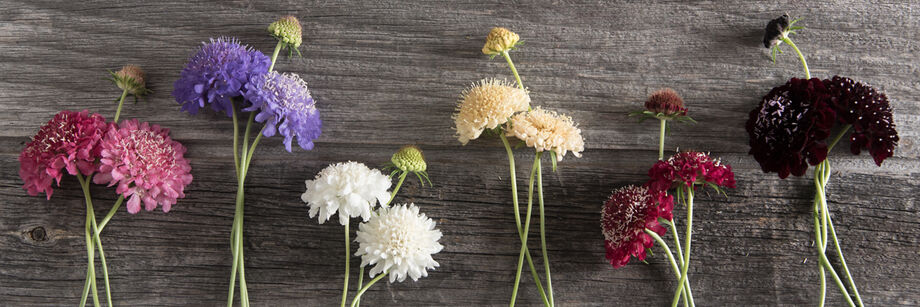
Scabiosa is a useful arrangement flower because its form can work as a filler or textural accent element. Common colors include white, lavender, blue, pink, burgundy. Supply is typically late spring to fall, although exact availability varies by grower, region, and protected production. Its fragrance is light. The easiest visual clue is pincushion heads on wiry stems.
Best arrangement use: garden, airy, textural. Seed heads can also add texture after flowering. When designing, balance flower scale, stem strength, and negative space rather than choosing only by color.
21. Statice
Scientific name: Limonium sinuatum
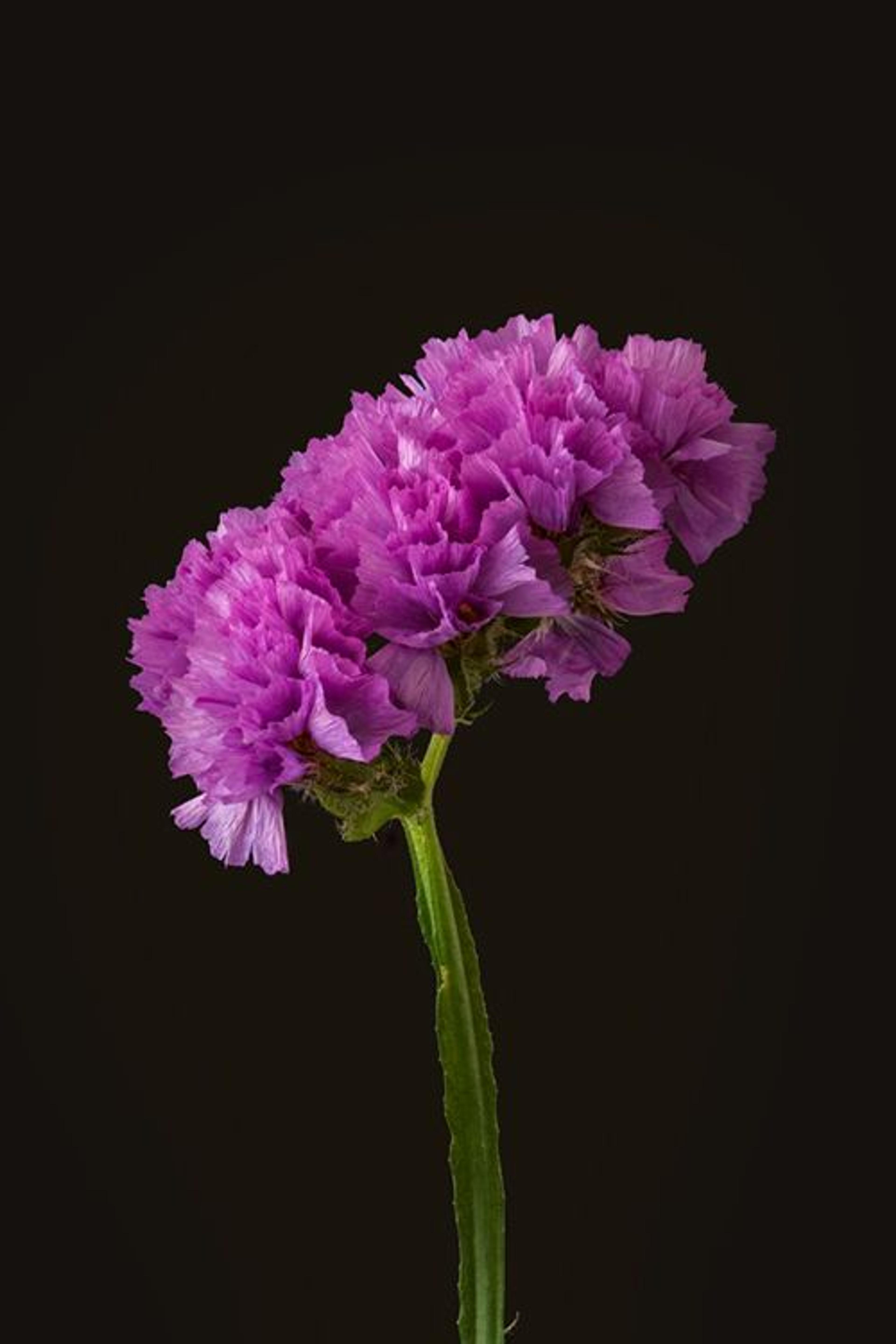
Statice is a useful arrangement flower because its form can work as a filler element. Common colors include white, yellow, pink, purple, blue-violet. Supply is typically summer; broad supply, although exact availability varies by grower, region, and protected production. Its fragrance is light. The easiest visual clue is branching sprays of papery small flowers.
Best arrangement use: rustic, dried, textural. Dries readily and retains shape well. When designing, balance flower scale, stem strength, and negative space rather than choosing only by color.
22. Baby’s Breath
Scientific name: Gypsophila paniculata
Baby’s Breath is a useful arrangement flower because its form can work as a filler element. Common colors include white, pale pink. Supply is typically summer; broad florist availability, although exact availability varies by grower, region, and protected production. Its fragrance is light. The easiest visual clue is many tiny flowers on highly branched stems.
Best arrangement use: airy, classic, cloudlike. Use sparingly for a modern airy effect or densely for a cloud form. When designing, balance flower scale, stem strength, and negative space rather than choosing only by color.
23. Yarrow
Scientific name: Achillea millefolium cultivars
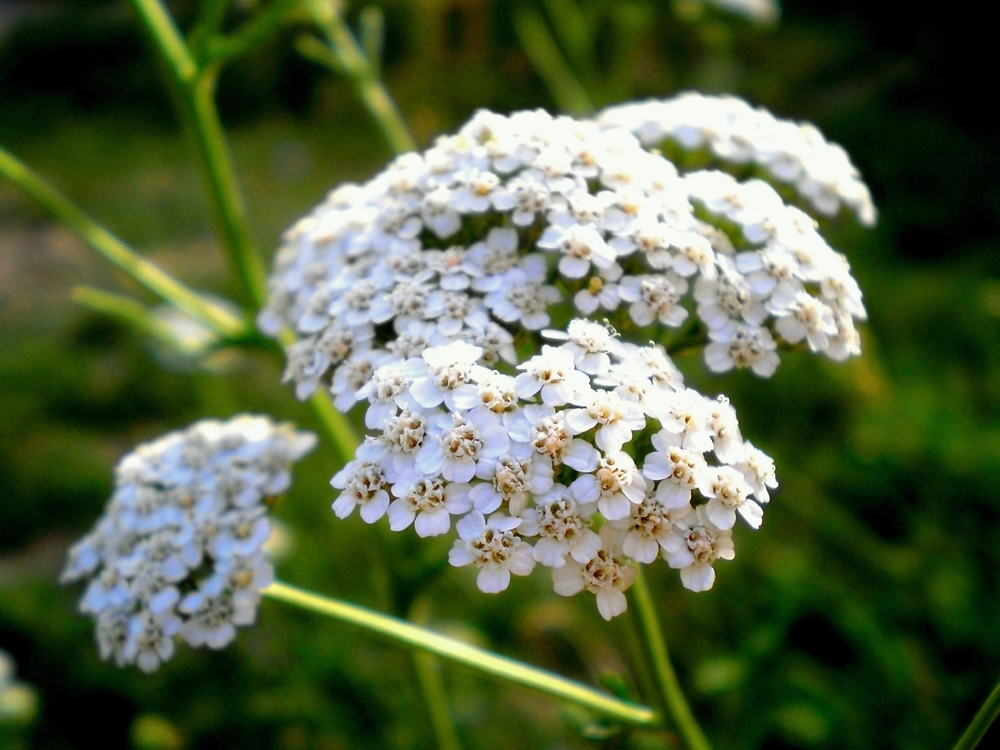
Yarrow is a useful arrangement flower because its form can work as a filler or flat textural mass element. Common colors include white, yellow, pink, red, pastels. Supply is typically summer, although exact availability varies by grower, region, and protected production. Its fragrance is herbal. The easiest visual clue is flat-topped clusters of many tiny florets.
Best arrangement use: meadow, rustic, garden. Good for bridging round focal flowers and vertical lines. When designing, balance flower scale, stem strength, and negative space rather than choosing only by color.
24. Celosia
Scientific name: Celosia argentea cultivars
Celosia is a useful arrangement flower because its form can work as a focal texture or filler element. Common colors include red, orange, yellow, pink, magenta, green. Supply is typically summer to fall, although exact availability varies by grower, region, and protected production. Its fragrance is light. The easiest visual clue is crested cockscomb or plume-like forms.
Best arrangement use: textural, tropical, modern. Dryable and strong in late-summer palettes. When designing, balance flower scale, stem strength, and negative space rather than choosing only by color.
25. Amaranthus
Scientific name: Amaranthus caudatus and cultivars
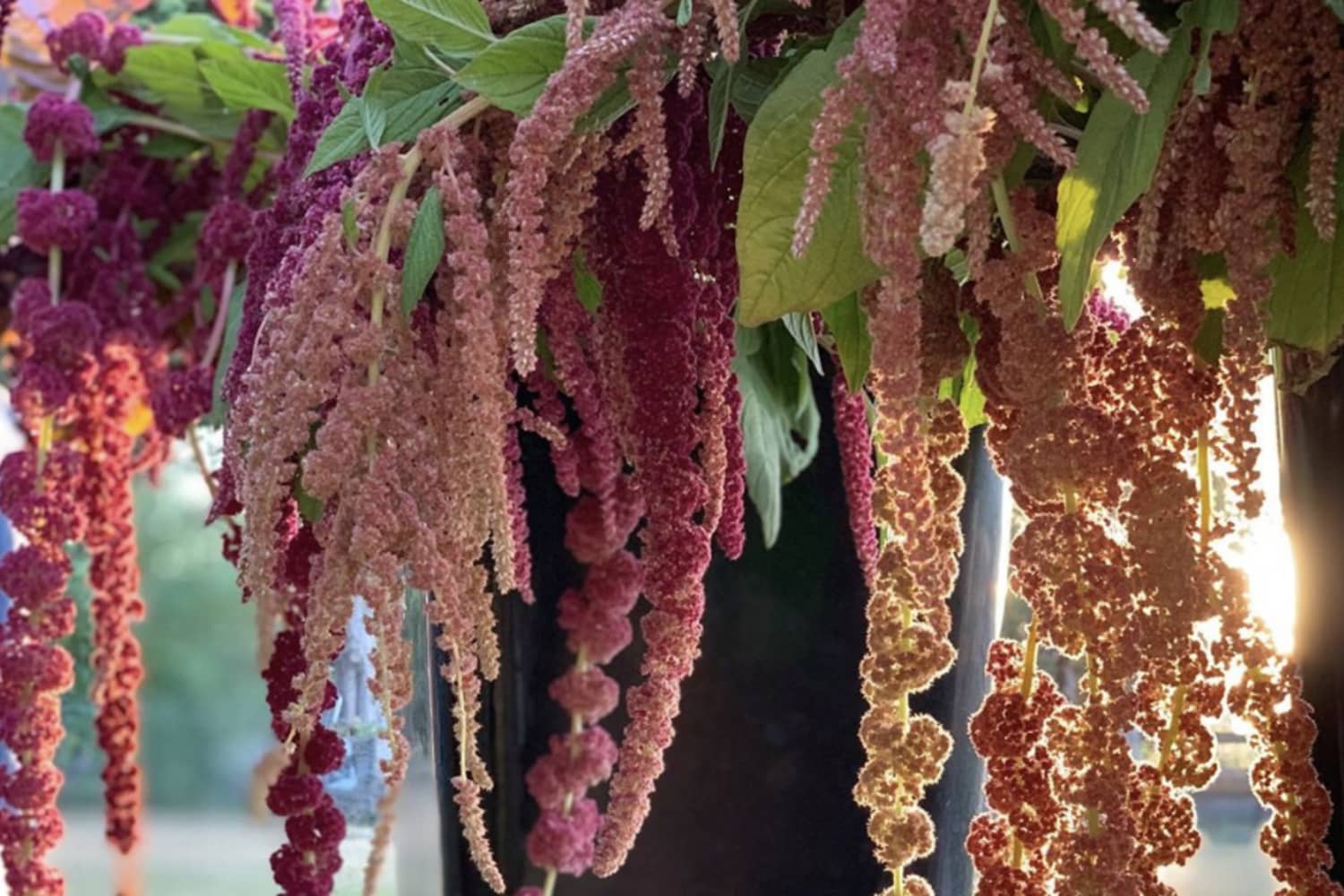
Amaranthus is a useful arrangement flower because its form can work as a line or cascading texture element. Common colors include green, burgundy, red. Supply is typically summer to fall, although exact availability varies by grower, region, and protected production. Its fragrance is light. The easiest visual clue is long tassels or upright textured flower spikes.
Best arrangement use: editorial, hanging, dramatic. Trailing forms are especially useful for movement and cascade. When designing, balance flower scale, stem strength, and negative space rather than choosing only by color.
Focal, Line, Mass, Filler, and Textural Flowers Explained
Focal flowers attract the eye; line flowers establish height or direction; mass flowers create visual weight; fillers soften transitions; and textural materials add surface interest or movement. A single species can change roles depending on scale. A disbud chrysanthemum may act as a focal, while spray chrysanthemums work as mass or supporting flowers.
How to Choose Flowers by Form
Round flowers such as roses, peonies, dahlias, and hydrangeas create mass. Spikes such as delphinium, snapdragon, stock, and gladiolus create vertical movement. Flat-topped yarrow adds a horizontal plane, while trailing amaranthus creates downward motion. Mixing at least two contrasting forms usually produces more readable depth than using flowers that all share the same silhouette.
How to Select Flowers for an Arrangement
Begin with the container, viewing distance, and occasion. Choose one or two focal flowers, then select line or textural stems that support the intended shape. Add mass and filler only as needed. Condition flowers in clean vessels, remove foliage below the water line, use clean tools, and recut stems. Keep ethylene-sensitive or delicate materials away from aging fruit and excessive heat.
Seasonal Availability and Substitutions
Local field-grown peonies, sweet peas, tulips, and dahlias have strong seasonal peaks, while global production gives florists broader year-round access to roses, carnations, chrysanthemums, orchids, and lisianthus. When a requested flower is out of season, substitute by design role and visual weight rather than by color alone.
Fragrance, Pets, and Event Safety
Strongly scented stock, lilies, sweet peas, garden roses, and some orchids may be unsuitable for scent-sensitive guests. True lilies are especially dangerous to cats, and sweet pea seeds and pods are toxic. For dining tables, avoid pollen-shedding stems directly over food and never assume decorative florist flowers are edible garnishes.
Common Mistakes When Choosing or Identifying Types of flowers for arrangements
- Using only focal flowers and losing shape.
- Choosing flowers by color while ignoring scale and form.
- Ignoring fragrance in enclosed dining spaces.
- Overcrowding stems so individual flowers cannot open.
- Failing to remove foliage below the water line.
- Using toxic ornamental flowers as food decoration.
Fun Facts About Types of flowers for arrangements
- Florists often think in design roles rather than botanical families.
- Tulips continue growing and bending after cutting.
- Hydrangea creates large visual volume with relatively few stems.
- Line flowers can make a short arrangement feel taller without more focal mass.
- Many fillers are attractive when dried.
- One stem of branching lisianthus can contribute several blooms.
- Carnations are available in both standard and spray forms.
- Orchids may be used as whole sprays or individual blooms.
- Seed heads can be as useful as flowers for texture.
- Seasonal local flowers can have a different stem character from imported greenhouse crops.
Final Thoughts on Types of flowers for arrangements
The most versatile types of flowers for arrangements are those chosen for a clear job. Build the shape with focal, line, mass, filler, and textural roles, then refine color and season. That approach creates stronger designs and makes substitutions much easier.
Frequently Asked Questions
1. What are the main types of flowers used in arrangements?
Florists usually combine focal or mass flowers, line flowers, filler flowers, and supporting foliage. In this guide, examples range from Rose, Peony, Dahlia, Ranunculus to airy fillers and vertical line flowers.
2. Which flowers make the best focal flowers?
Roses, peonies, dahlias, hydrangeas, sunflowers, gerberas, and orchids can all act as focal flowers because their size or visual character naturally draws attention.
3. What are line flowers in floral design?
Line flowers have tall or directional stems that help establish height and movement. Delphinium, snapdragon, gladiolus, and stock are familiar examples.
4. What are filler flowers?
Filler flowers are smaller blooms or branched stems used to connect larger focal flowers and soften gaps. Baby’s breath, statice, yarrow, and some scabiosa work well in this role.
5. What is the difference between focal and mass flowers?
A focal flower is used to attract the eye, while a mass flower helps create body and volume. A single species can sometimes serve either role depending on flower size and arrangement style.
6. Which flowers are best for wedding arrangements?
Roses, peonies, ranunculus, lisianthus, hydrangeas, orchids, sweet peas, and anemones are widely used, but the best choice depends on season, budget, color palette, fragrance, and durability.
7. Which arrangement flowers are available year-round?
Commercial supply varies, but roses, carnations, chrysanthemums, alstroemeria, orchids, and some lisianthus are commonly available for much of the year through protected or international production.
8. Which flowers are best for tall arrangements?
Delphinium, snapdragon, gladiolus, stock, amaranthus, and tall branches or foliage create height. Use them selectively so the design does not become top-heavy.
9. Which flowers work well in low centerpieces?
Roses, ranunculus, carnations, chrysanthemums, hydrangeas, tulips, and compact dahlias can build a low centerpiece when stems are cut and supported appropriately.
10. Which flowers have strong fragrance?
Stock, sweet peas, some roses, peonies, freesia, and certain lilies can be notably fragrant. Fragrance intensity varies by cultivar and freshness.
11. Which flowers have little fragrance?
Many orchids, anemones, ranunculus, carnations, hydrangeas, and gerberas have little to moderate scent, though cultivar differences occur.
12. How do I make a flower arrangement last longer?
Start with a clean vase, fresh water, clean cuts, and no foliage below the water line. Keep arrangements away from strong heat and direct sun, and refresh water according to the needs of the flowers.
13. Should all stems be cut at an angle?
An angled cut can increase exposed stem area and help keep a stem end from sitting flat against a vase bottom, but clean sharp cuts and correct conditioning matter more than angle alone.
14. How much foliage should I remove?
Remove leaves that would sit below the water line because submerged foliage decays quickly. Keep enough healthy foliage above the water to preserve the intended design.
15. Can I mix flowers with different vase lives?
Yes, but short-lived flowers may need to be removed first. Designing with flowers that have similar longevity is easier when an arrangement must look consistent for several days.
16. Why do some flowers wilt immediately after arranging?
Wilt can come from dehydration, blocked stems, heat, damaged tissue, or harvesting at the wrong stage. Recutting and conditioning in clean water often helps, but treatment varies by species.
17. Are hydrangeas good for arrangements?
Yes. Their large heads create immediate volume, but they can be thirsty and benefit from careful hydration and clean conditioning.
18. Are tulips good cut flowers?
Yes. Tulips have elegant lines and continue to elongate after cutting, so their movement should be considered in the final design.
19. Are dahlias good for arrangements?
Yes. Dahlias provide exceptional form and color, but their vase life is often shorter than that of carnations or chrysanthemums, so freshness matters.
20. Are carnations outdated for floral design?
No. Modern carnations have strong stems, long vase life, a wide color range, and useful texture. Their effect depends on how they are styled.
21. What colors work best in professional arrangements?
There is no universal best palette. Monochromatic, analogous, complementary, neutral, and high-contrast palettes can all work when value, saturation, texture, and occasion are considered.
22. How many flower varieties should be in one arrangement?
There is no fixed number. Simple designs may use one flower, while garden-style arrangements can use many. Repetition and a clear visual hierarchy are more important than variety count.
23. What flowers are suitable for minimalist arrangements?
Calla lilies, orchids, tulips, anthuriums, delphiniums, or a single branch can be effective because their shape reads clearly with minimal supporting material.
24. What flowers suit rustic arrangements?
Sunflowers, dahlias, zinnias, yarrow, scabiosa, amaranthus, and textural foliage can create a relaxed garden or field-inspired look.
25. What flowers suit romantic arrangements?
Roses, peonies, ranunculus, lisianthus, sweet peas, hydrangeas, and anemones are often chosen for soft, layered forms.
26. How do seasonal flowers affect arrangements?
In-season local flowers can offer better freshness, distinctive varieties, and a stronger sense of season, while commercial supply can extend availability beyond natural garden bloom periods.
27. Can garden flowers be used in professional arrangements?
Yes, if harvested cleanly at the right stage and conditioned properly. Garden-grown zinnias, dahlias, cosmos, snapdragons, and herbs can be excellent design material.
28. Are all arrangement flowers pet-safe?
No. Toxicity differs by species and animal. Lilies are especially dangerous to cats, so verify each plant if pets can reach the arrangement.
29. Can edible flowers be used in centerpieces?
They can, but decorative florist flowers should not be assumed food-safe. Only use correctly identified flowers grown specifically for culinary use if they may contact food.
30. How should I choose flowers for an arrangement?
Start with the occasion, vessel, scale, color palette, season, fragrance tolerance, and required longevity. Then choose a focal shape and add line, mass, filler, and foliage only where they improve the design.