
Michigan is a haven for bird enthusiasts, offering a rich diversity of raptors soaring across its forests, wetlands, and open fields. Among these magnificent birds, hawks capture the imagination with their precision hunting, striking plumage, and fascinating behaviors. In this guide, we will explore 12 types of hawks in Michigan, providing clear identification tips, insights into their habits, and interesting facts that make each species remarkable. Whether you are a casual observer or a dedicated birder, understanding these hawks enriches every trip outdoors and deepens appreciation for Michigan’s wildlife.
Types of Hawks in Michigan
1. Red-tailed Hawk (Buteo jamaicensis)
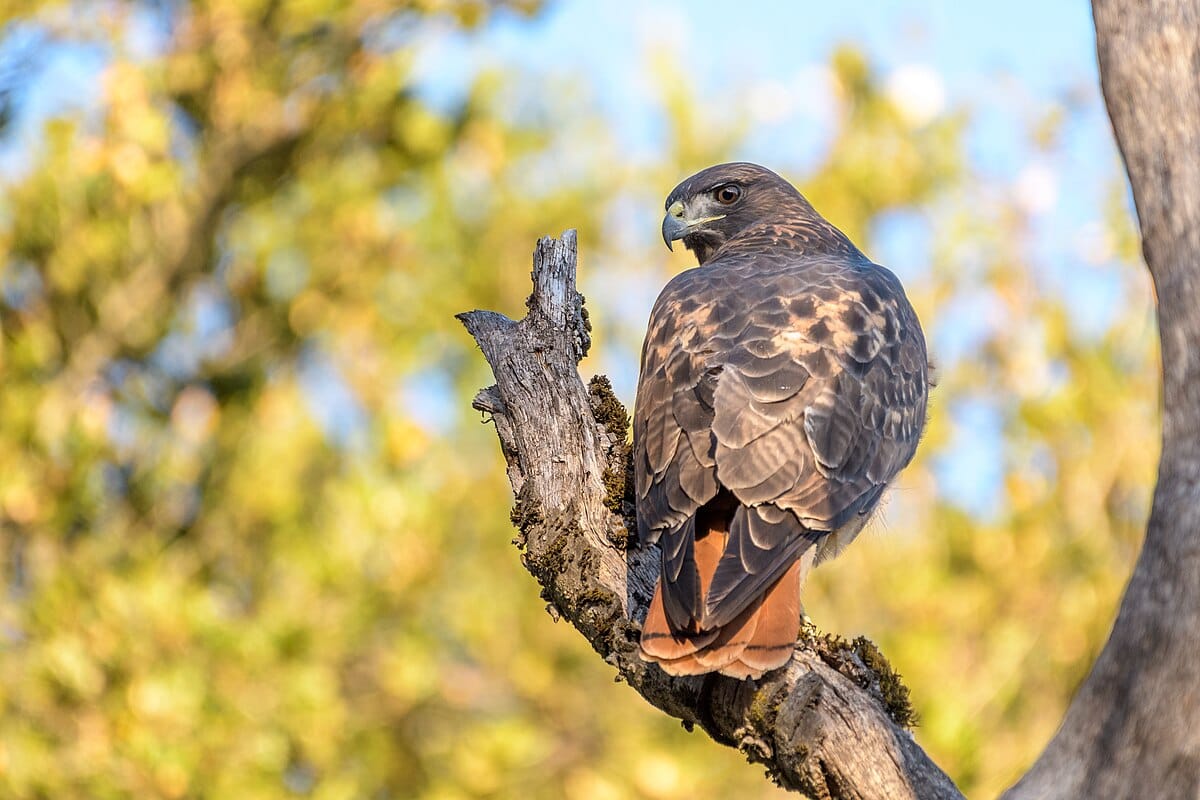
Fun fact: The Red-tailed Hawk is the quintessential North American raptor, instantly recognizable by its reddish tail. These hawks are large, broad-winged birds often seen perched on poles, fence posts, or soaring overhead. Their call, a distinctive “kee-eeeee-arr,” has become synonymous with cinematic depictions of raptors.
Physical Characteristics & Identification Tips
Red-tailed Hawks have a robust body, broad rounded wings, and a short, wide tail. Adults feature a warm reddish-brown tail while juveniles display more brown and banded patterns. Look for a light underside with a dark belly band. Their wingspan can reach up to 4.5 feet, making them formidable aerial predators.
Behavior and Nesting Habits
They hunt by perching high and scanning open areas for rodents and birds. Nests are built from sticks high in tall trees, often reused and expanded each year. Red-tailed Hawks are largely solitary but may form loose roosting groups in winter.
Habitat and Range
These hawks are widespread across Michigan, inhabiting forests, farmlands, deserts, and urban environments. They favor areas with open hunting grounds adjacent to perching spots.
Diet
Primarily rodents like mice, squirrels, and rabbits. They occasionally prey on birds, reptiles, and insects. Opportunistic feeding allows them to adapt to a variety of environments.
Reproduction and Life Cycle
Red-tailed Hawks usually lay 2–3 eggs per clutch. Incubation lasts about 28–35 days, and fledglings leave the nest after 6–7 weeks. Adults often maintain the same territory year after year.
Fun Facts / Unique Traits
They are highly adaptable and have been observed thriving in urban areas, even nesting on tall city structures. Their soaring flight and sharp eyesight make them expert hunters.
Human Interaction
Red-tailed Hawks are generally tolerant of humans and are a favorite among birdwatchers. Conservation efforts have helped maintain stable populations across Michigan.
2. Cooper’s Hawk (Accipiter cooperii)
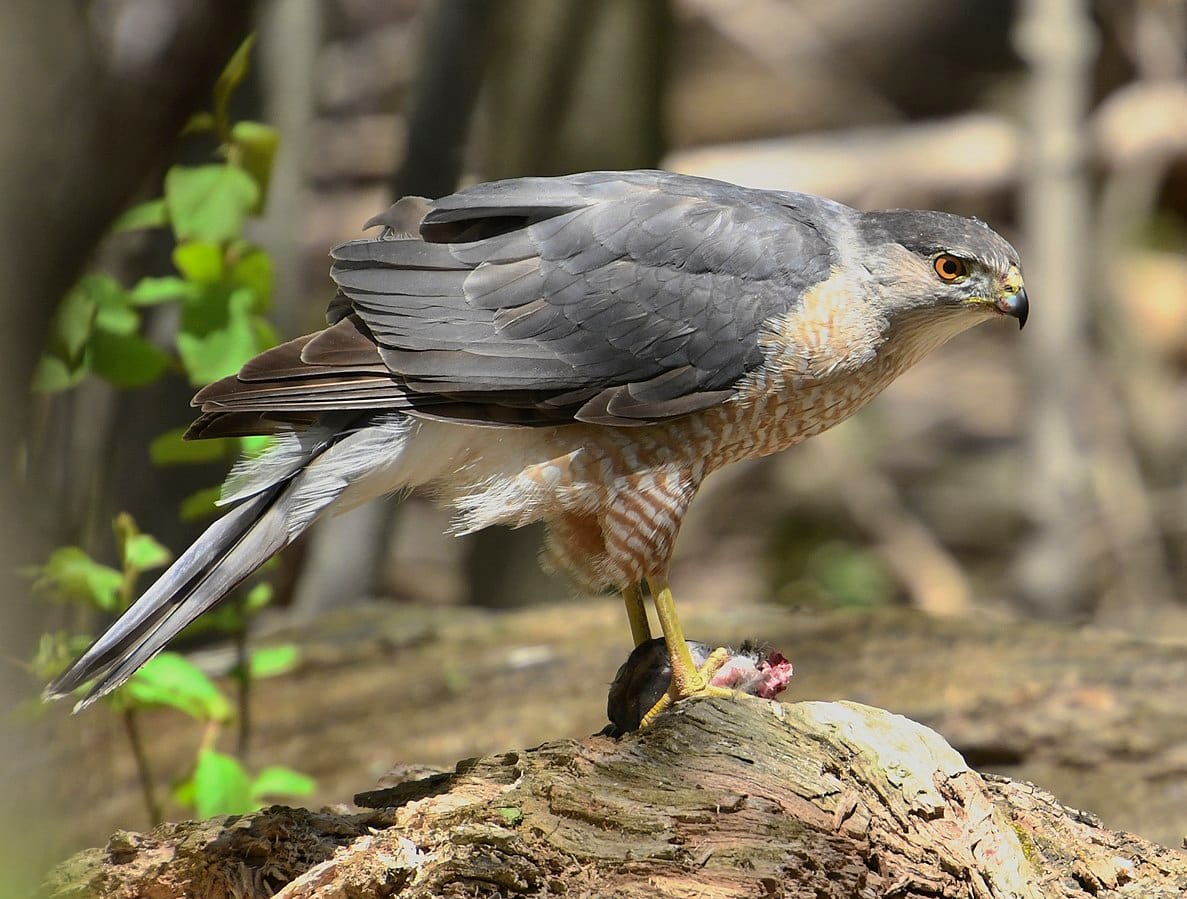
Fun fact: Cooper’s Hawks are agile, forest-dwelling hunters known for chasing birds through dense trees with remarkable speed and precision.
Physical Characteristics & Identification Tips
Medium-sized with rounded wings and long tails. Adults feature a slate-gray back, reddish barring on the chest, and a long tail with dark bands. Juveniles are brown above with streaked undersides. Cooper’s Hawks are often confused with Sharp-shinned Hawks, but they are larger with a proportionally longer tail.
Behavior and Nesting Habits
These hawks hunt by stealth, ambushing prey with sudden bursts of speed. Nests are built in tall trees with dense foliage. Cooper’s Hawks are monogamous, often returning to the same nesting area annually.
Habitat and Range
They prefer wooded areas and suburban backyards where bird feeders attract prey. Their range covers most of Michigan, especially near forest edges.
Diet
Primarily small to medium-sized birds, supplemented with rodents. They rely on speed, agility, and surprise to capture prey.
Reproduction and Life Cycle
Females lay 3–5 eggs, incubated for about a month. Chicks fledge around 30 days after hatching. Juveniles disperse to find their own territories but often remain near forested areas.
Fun Facts / Unique Traits
Cooper’s Hawks are known for their dramatic mid-air chases, sometimes capturing prey almost as big as themselves. Their adaptability allows them to thrive near human habitation.
Human Interaction
They occasionally prey on backyard birds, leading to mixed feelings from bird enthusiasts. Education and habitat preservation help maintain healthy populations.
3. Sharp-shinned Hawk (Accipiter striatus)
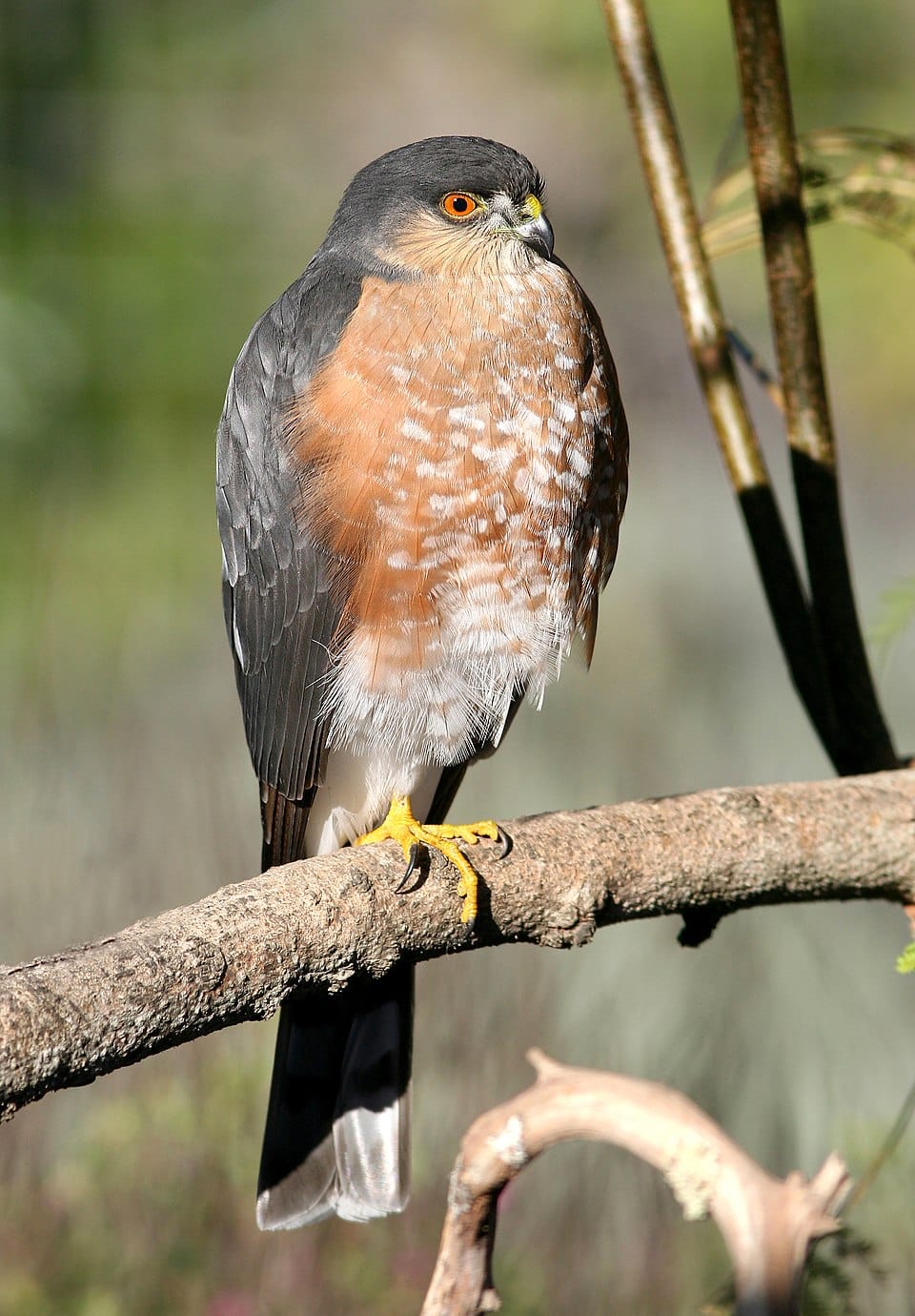
Fun fact: The Sharp-shinned Hawk is the smallest Accipiter in North America, nicknamed the “flying needle” for its needle-like agility in forested environments.
Physical Characteristics & Identification Tips
Small, compact body with short rounded wings and a long narrow tail. Adults have blue-gray upperparts and orange barring below. Juveniles are brown above with streaked undersides. They are often mistaken for juvenile Cooper’s Hawks but are smaller with shorter tails.
Behavior and Nesting Habits
Sharp-shinned Hawks hunt primarily in dense woodlands, preying on small birds with quick, sudden flights. They build twig nests high in conifers or deciduous trees. Monogamous and highly secretive, they are rarely seen at a distance.
Habitat and Range
Widely distributed across Michigan, favoring forests and suburban areas. They migrate south in winter but can remain in southern Michigan if food is plentiful.
Diet
Small songbirds make up most of their diet, occasionally supplemented by insects and small mammals. Their hunting success relies on speed, agility, and surprise.
Reproduction and Life Cycle
Females lay 4–8 eggs per clutch. Incubation lasts about 30 days, and fledglings leave the nest in 3–4 weeks. Juveniles disperse to find feeding territories.
Fun Facts / Unique Traits
Despite their size, Sharp-shinned Hawks are fierce hunters and can capture prey much larger than themselves. They are highly maneuverable in dense vegetation.
Human Interaction
They may take small backyard birds, but their presence also helps control pest bird populations. Conservation of forested areas supports their survival in Michigan.
4. Northern Harrier (Circus hudsonius)
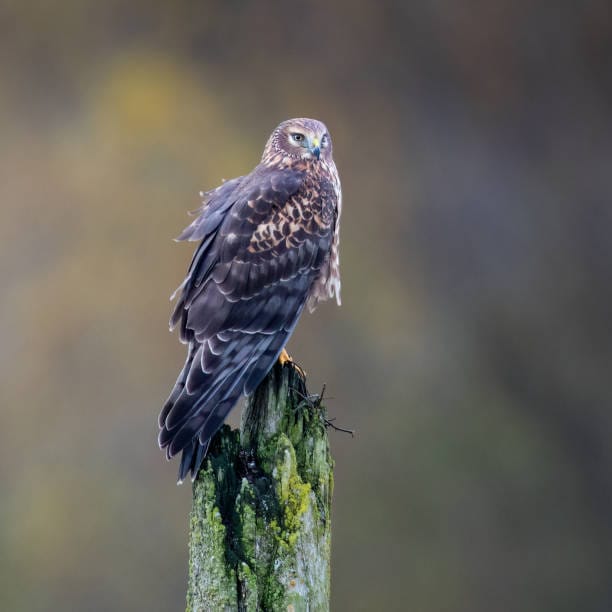
Fun fact: Northern Harriers are often called “Marsh Hawks” because of their low, gliding flight over wetlands, searching for prey with a distinctive owl-like facial disk.
Physical Characteristics & Identification Tips
Northern Harriers have a slim body, long wings, and a long tail. Adults are gray (males) or brown (females) with a white rump patch visible in flight. Juveniles are brown with streaked underparts. Their low flight style and V-shaped wings make them easily distinguishable from other hawks in Michigan.
Behavior and Nesting Habits
They hunt by flying low over fields and marshes, listening and looking for small mammals, birds, and amphibians. Nests are built on the ground in tall grasses or marsh vegetation. Northern Harriers are monogamous during the breeding season and exhibit cooperative parenting.
Habitat and Range
Common across Michigan’s wetlands, grasslands, and open fields. They migrate south in winter but may remain in southern regions if conditions allow.
Diet
Mostly small mammals such as voles, mice, and rabbits, supplemented by birds and amphibians. Their hunting is silent, aided by sharp hearing and keen eyesight.
Reproduction and Life Cycle
Females lay 4–7 eggs, incubated for approximately 33 days. Fledglings leave the nest at around 30 days. Adults continue to hunt and feed young until they are independent.
Fun Facts / Unique Traits
Northern Harriers are one of the few hawks with facial disks, which enhance their hearing. They are also famous for flying so low that their belly may nearly touch marsh grasses while hunting.
Human Interaction
Generally tolerant of humans when not disturbed at nesting sites. Their presence helps control rodent populations in agricultural and wetland areas.
5. Broad-winged Hawk (Buteo platypterus)
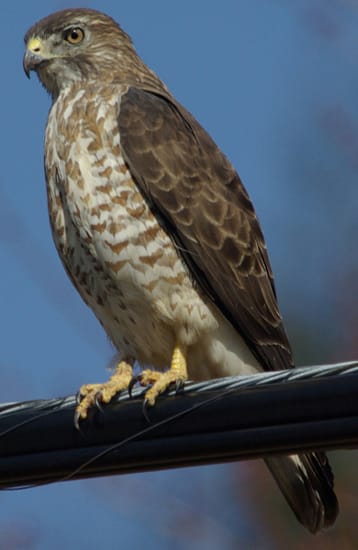
Fun fact: Broad-winged Hawks are known for their spectacular migratory flocks, called “kettles,” where hundreds of birds spiral together during fall migration.
Physical Characteristics & Identification Tips
Small to medium-sized Buteo with broad wings and a short tail. Adults have dark brown upperparts, pale underparts with fine reddish barring, and black-and-white banded tails. Juveniles appear streaked below. Their chunky wings and soaring flight make them recognizable in migration.
Behavior and Nesting Habits
These hawks are soaring hunters, often ambushing small mammals and birds. They build stick nests high in deciduous trees. Monogamous pairs often reuse or expand nests year after year.
Habitat and Range
Found in forests, woodlots, and rural areas across Michigan. They are most visible during migration in late summer and fall.
Diet
Feeds on small mammals, amphibians, reptiles, and insects. Opportunistic hunting allows adaptation to local prey availability.
Reproduction and Life Cycle
Typically lay 2–5 eggs. Incubation lasts around 28–33 days. Fledging occurs 30–40 days after hatching. Juveniles migrate south in large groups in their first fall.
Fun Facts / Unique Traits
Migration is impressive: thousands of Broad-winged Hawks gather in thermals to conserve energy over long distances. Their communal soaring is a spectacular natural phenomenon.
Human Interaction
They pose no threat to humans and are often enjoyed by birdwatchers during migration season. Maintaining forested habitats supports their breeding and migratory success.
6. Rough-legged Hawk (Buteo lagopus)
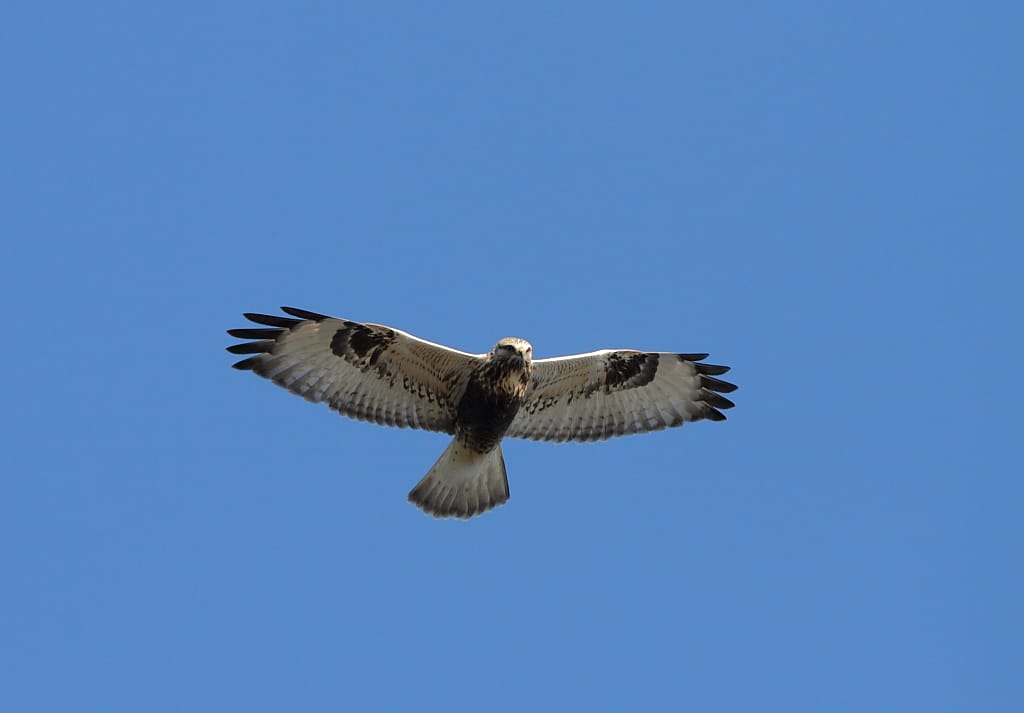
Fun fact: Named for the feathered tarsi, Rough-legged Hawks are Arctic visitors to Michigan in winter, gliding low over open fields in search of prey.
Physical Characteristics & Identification Tips
Medium-large Buteo with broad wings and feathered legs. Adults vary from light to dark morphs, with a distinctive dark belly band. Their white tail with a black terminal band and feathered legs are key identification features.
Behavior and Nesting Habits
They hunt by hovering and gliding low over open landscapes, often staying in winter territories that offer plentiful small mammals. Nesting occurs in Arctic breeding grounds, far north of Michigan.
Habitat and Range
Winter visitors to Michigan, favoring fields, prairies, and marshes. They migrate from tundra regions, arriving in late fall and departing by early spring.
Diet
Primarily voles, mice, and other small mammals. Occasionally take birds or insects. They hunt with patience, hovering briefly before striking.
Reproduction and Life Cycle
Breeding occurs in Arctic regions. In Michigan, they are winter visitors, so reproduction is not observed locally. Fledglings migrate south with adults for wintering grounds.
Fun Facts / Unique Traits
They are uniquely adapted to cold climates, with feathered legs and a heavy plumage that insulates against Arctic temperatures. Their hovering hunting style is a striking spectacle in winter fields.
Human Interaction
They are rarely disturbed by humans in Michigan. Farmers appreciate their role in controlling rodent populations during winter months.
7. Red-shouldered Hawk (Buteo lineatus)
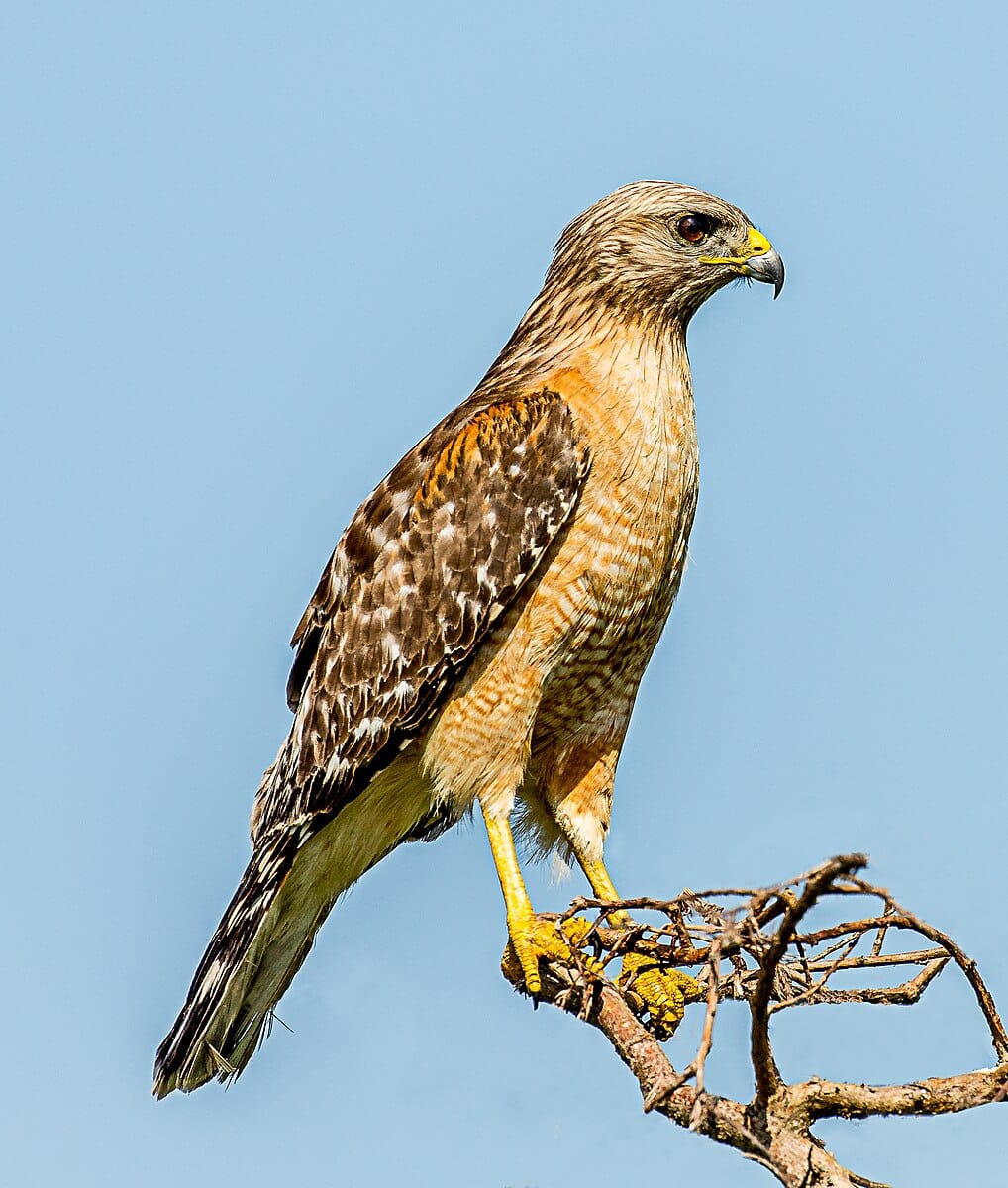
Fun fact: Red-shouldered Hawks are known for their loud, piercing “kee-ah” call that echoes through Michigan’s forests, signaling their presence to both humans and fellow raptors.
Physical Characteristics & Identification Tips
Medium-sized Buteo with striking rufous shoulders and a reddish, barred chest. Adults have black-and-white checkered wings and a banded tail. Juveniles appear brown above with streaked underparts. Their distinctive coloration and call make them relatively easy to identify among Michigan hawks.
Behavior and Nesting Habits
These hawks are sit-and-wait hunters, perching silently before swooping down on prey. Nests are built high in deciduous trees, often near water sources. Red-shouldered Hawks are monogamous and maintain territories year after year.
Habitat and Range
Found across southern and central Michigan in forests, river corridors, and wetlands. They favor areas with abundant prey and access to tall perches.
Diet
Primarily small mammals, amphibians, reptiles, and occasionally birds. They hunt by surprise attacks from elevated perches or low glides above the forest floor.
Reproduction and Life Cycle
Females lay 2–4 eggs per season. Incubation lasts 33–34 days, and fledglings leave the nest in about 5–6 weeks. Parents continue feeding young until they can hunt independently.
Fun Facts / Unique Traits
They are excellent swimmers for a hawk species and have been seen wading in shallow water to catch frogs and fish. Their vocalizations are among the loudest of Michigan raptors.
Human Interaction
Generally tolerant of humans, they thrive in protected forested areas. Birdwatchers prize their striking appearance and raucous calls for observation and photography.
8. Northern Goshawk (Accipiter gentilis)
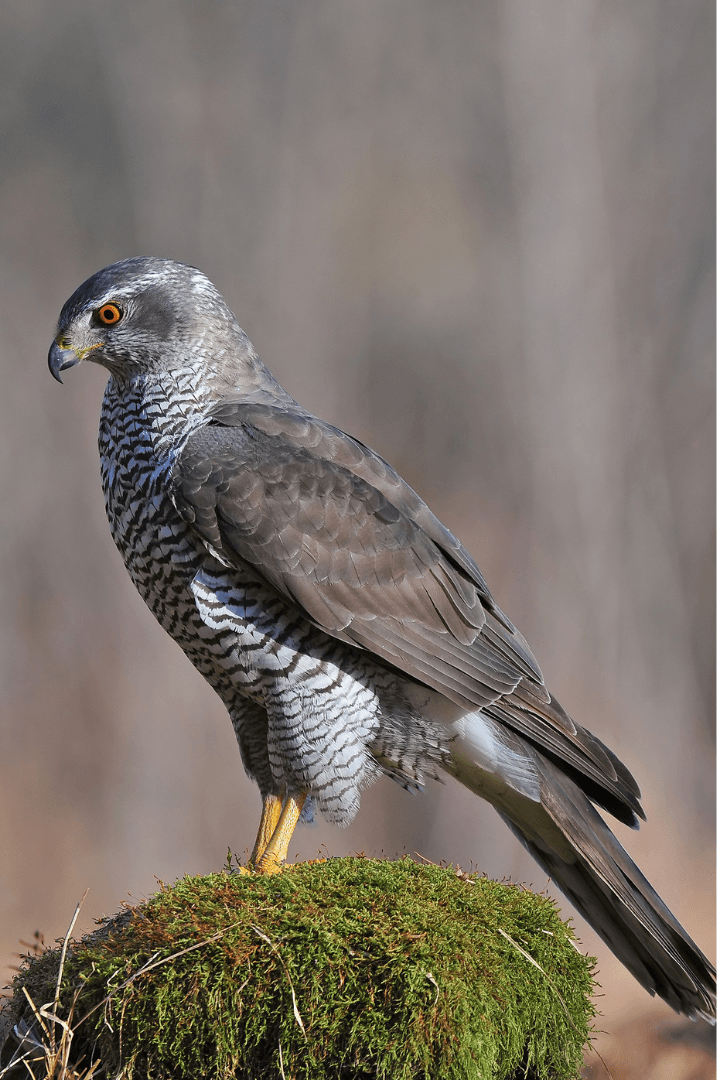
Fun fact: Northern Goshawks are powerful forest hunters, capable of chasing prey through dense woods with remarkable agility, earning a reputation as the “ghost of the forest.”
Physical Characteristics & Identification Tips
Large Accipiter with broad wings and a long tail. Adults have slate-gray backs, finely barred gray underparts, and piercing red eyes. Juveniles are brown above with streaked underparts. Their size and bold flight distinguish them from smaller Accipiters in Michigan.
Behavior and Nesting Habits
They are stealthy, ambush predators, hunting birds and mammals with sudden bursts of speed. Nests are built high in conifers or large deciduous trees. Northern Goshawks are territorial and return to the same nesting area annually.
Habitat and Range
Primarily found in mature forests throughout northern and central Michigan. They require dense woodland habitats for hunting and nesting.
Diet
Feeding largely on medium-sized birds and mammals, including squirrels, grouse, and crows. They rely on agility and surprise rather than soaring to capture prey.
Reproduction and Life Cycle
Females lay 2–4 eggs per clutch, incubated for about 30–36 days. Fledglings remain dependent for several weeks while learning hunting skills from adults.
Fun Facts / Unique Traits
They have extremely fast reaction times and can navigate through dense branches with minimal wing adjustments. Their quiet, ghost-like presence adds to their mystique in Michigan forests.
Human Interaction
Generally avoid humans, nesting in remote forests. Observing Northern Goshawks in the wild is a prized experience for birders due to their elusive nature.
9. Swainson’s Hawk (Buteo swainsoni)
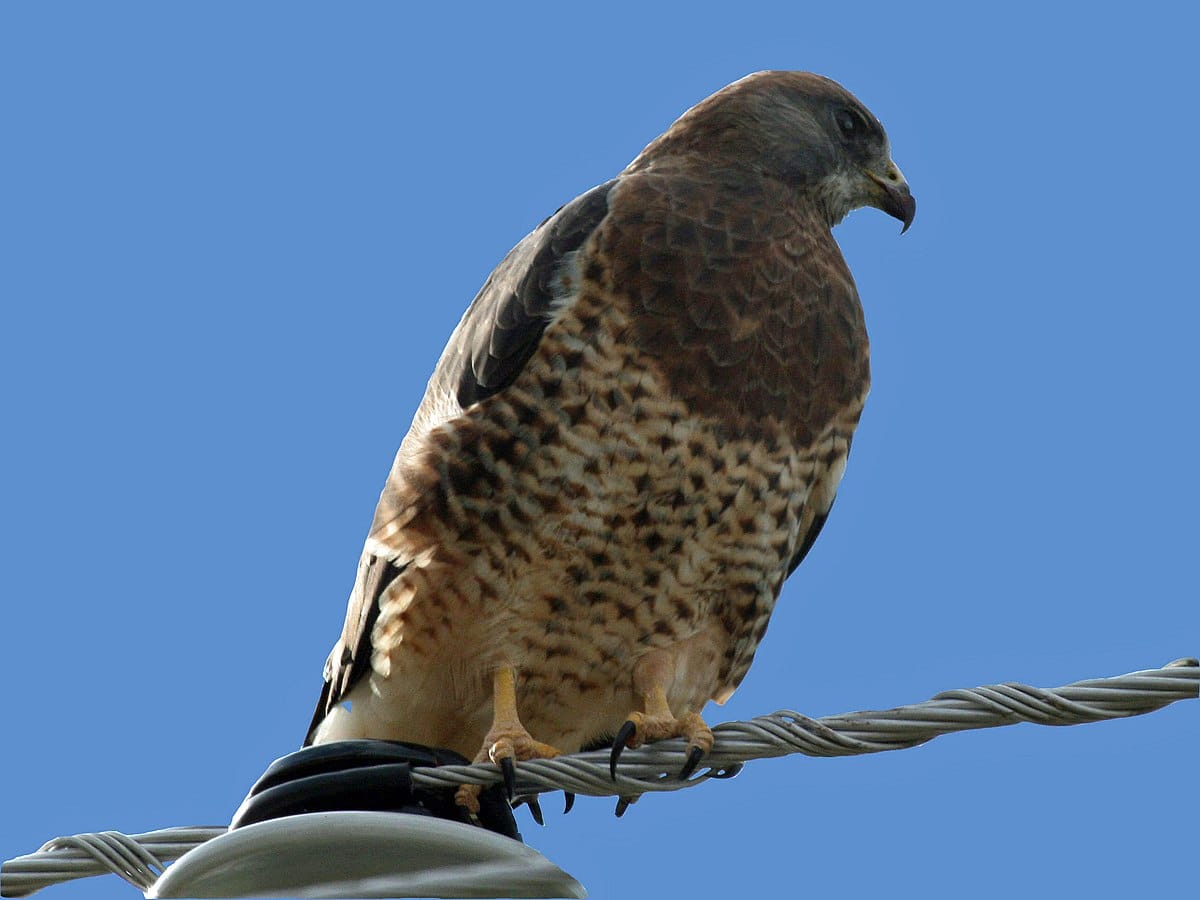
Fun fact: Swainson’s Hawks are long-distance migrants, traveling from North American breeding grounds all the way to South America for the winter.
Physical Characteristics & Identification Tips
Medium-large Buteo with long, narrow wings and a relatively long tail. Adults show a pale underside with darker flight feathers and chestnut shoulders. Juveniles have streaked underparts and a mottled appearance. Their long wingspan and soaring flight make them easily visible during migration in Michigan.
Behavior and Nesting Habits
They hunt by soaring high and scanning open fields for small mammals, insects, and occasionally birds. Nests are built in trees or on man-made structures. Monogamous pairs often return to the same nesting sites each year.
Habitat and Range
Occasionally found in open fields, grasslands, and farmlands in Michigan during migration. They are rare breeders in the state but more common in western North America.
Diet
Primarily insects and small mammals during the breeding season; in wintering grounds, they consume large quantities of grasshoppers and locusts. They are highly opportunistic feeders.
Reproduction and Life Cycle
Clutches typically contain 2–5 eggs. Incubation lasts around 28–32 days. Fledglings leave the nest in 5–6 weeks, after which they join adults in foraging flights.
Fun Facts / Unique Traits
Swainson’s Hawks are famous for forming huge migratory flocks, sometimes numbering in the thousands. Their migration is one of the most impressive raptor journeys in North America.
Human Interaction
Rarely seen in urban areas. Birdwatchers and photographers eagerly track migration routes to observe these spectacular raptors. Conservation of grasslands supports their breeding success.
10. Ferruginous Hawk (Buteo regalis)
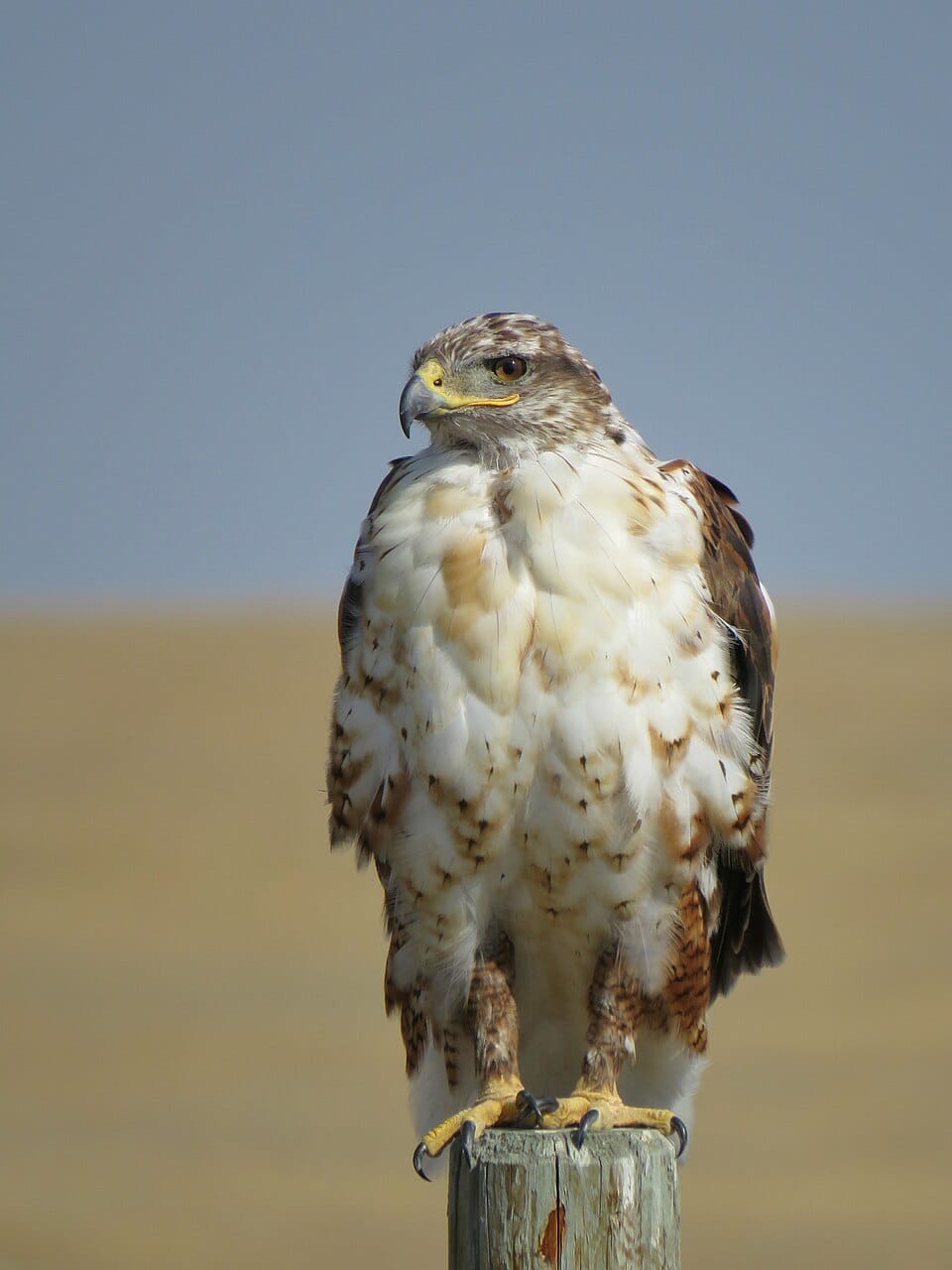
Fun fact: Ferruginous Hawks are the largest Buteo in North America, nicknamed “Ferruginous” for their rusty-colored plumage.
Physical Characteristics & Identification Tips
Adults display pale underparts, reddish-brown back and shoulders, and a wide, rounded wingspan that can exceed 4.5 feet. Juveniles appear mottled brown above and streaked below. They are often confused with Red-tailed Hawks, but Ferruginous Hawks are larger and more pale-bodied.
Behavior and Nesting Habits
They hunt by soaring over open prairies and grasslands, spotting prey from high above. Nests are built on cliffs, rocky outcrops, or tall trees in western North America, though occasional sightings in Michigan occur during migration.
Habitat and Range
Primarily a western species, Ferruginous Hawks are rare in Michigan, typically seen during migration. They prefer open plains, prairies, and agricultural lands.
Diet
Rodents, rabbits, and ground squirrels make up the majority of their diet. They hunt by spotting prey from the sky and diving with precision.
Reproduction and Life Cycle
Clutches of 2–4 eggs are incubated for around 28–32 days. Fledglings leave the nest after 5–6 weeks, gradually gaining independence under parental supervision.
Fun Facts / Unique Traits
Ferruginous Hawks are known for their endurance and long migratory flights. Their size and power allow them to capture prey much larger than that of other Buteos.
Human Interaction
Though rare in Michigan, they are a spectacular sight for birdwatchers. Conservation of open grasslands ensures their continued survival.
11. Short-tailed Hawk (Buteo brachyurus)
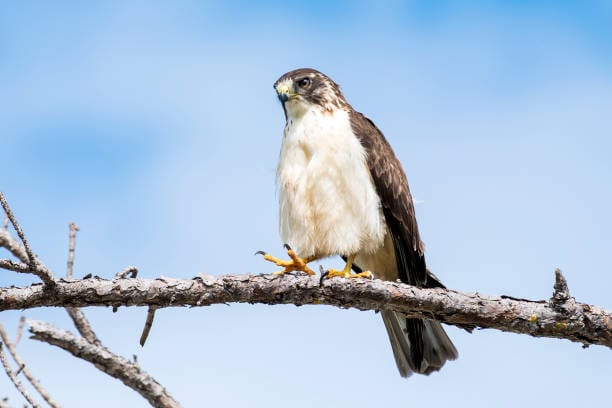
Fun fact: Short-tailed Hawks are swift, agile hunters often seen hovering above open fields before striking small birds or mammals.
Physical Characteristics & Identification Tips
Medium-sized hawk with broad, short tail and rounded wings. Adults are dark above with pale underparts, sometimes showing a contrasting belly band. Juveniles are streaked below. Their short tail is a key distinguishing feature.
Behavior and Nesting Habits
These hawks hunt by soaring and hovering over open terrain. Nests are constructed in tall trees, usually in forest edges. They are solitary and territorial.
Habitat and Range
Primarily found in southern U.S. and Central America. In Michigan, sightings are extremely rare, often during unusual migratory patterns.
Diet
Small birds, rodents, and insects. Their hunting style relies on sudden dives and quick aerial maneuvers.
Reproduction and Life Cycle
Females lay 2–3 eggs. Incubation is around 28–30 days, and fledglings leave the nest after 4–5 weeks. Migration patterns influence their presence in Michigan.
Fun Facts / Unique Traits
Short-tailed Hawks are agile fliers, capable of hovering mid-air like miniature kestrels. Their appearance in Michigan is always noteworthy for local birders.
Human Interaction
Rarely seen, they attract attention from wildlife enthusiasts. Protecting migratory corridors helps sustain their populations.
12. Osprey (Pandion haliaetus)
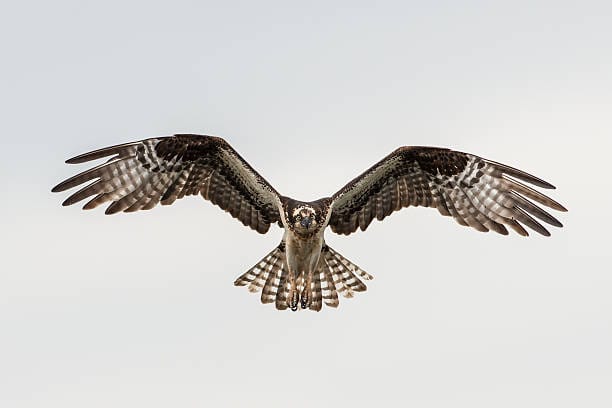
Fun fact: Ospreys are fish specialists, diving feet-first into water to catch their prey with remarkable precision.
Physical Characteristics & Identification Tips
Large raptor with white underparts, dark brown back, and a dark eye stripe. Wings are long and narrow with a crook at the wrist. Juveniles are mottled above with buff tones below. Their distinctive hunting style makes them easy to identify.
Behavior and Nesting Habits
They hunt primarily over lakes, rivers, and wetlands. Nests are large, built from sticks on platforms, trees, or human-made structures. Monogamous pairs often return to the same nest each year.
Habitat and Range
Ospreys are found near Michigan’s freshwater lakes and rivers. They migrate south to Central and South America for winter.
Diet
Exclusively fish, captured by plunging into water talon-first. They are highly efficient hunters, often carrying fish larger than their own body weight.
Reproduction and Life Cycle
Females lay 2–4 eggs. Incubation lasts 35–43 days, and fledglings leave the nest around 8–10 weeks. Adults continue to feed them during early independence.
Fun Facts / Unique Traits
Ospreys have reversible outer toes to grasp slippery fish. They can rotate their talons to align prey for flight.
Human Interaction
Ospreys have adapted well to human-made nest platforms. They are celebrated by birdwatchers and conservationists, serving as a success story for raptor protection in Michigan.
13. Zone-tailed Hawk (Buteo albonotatus)
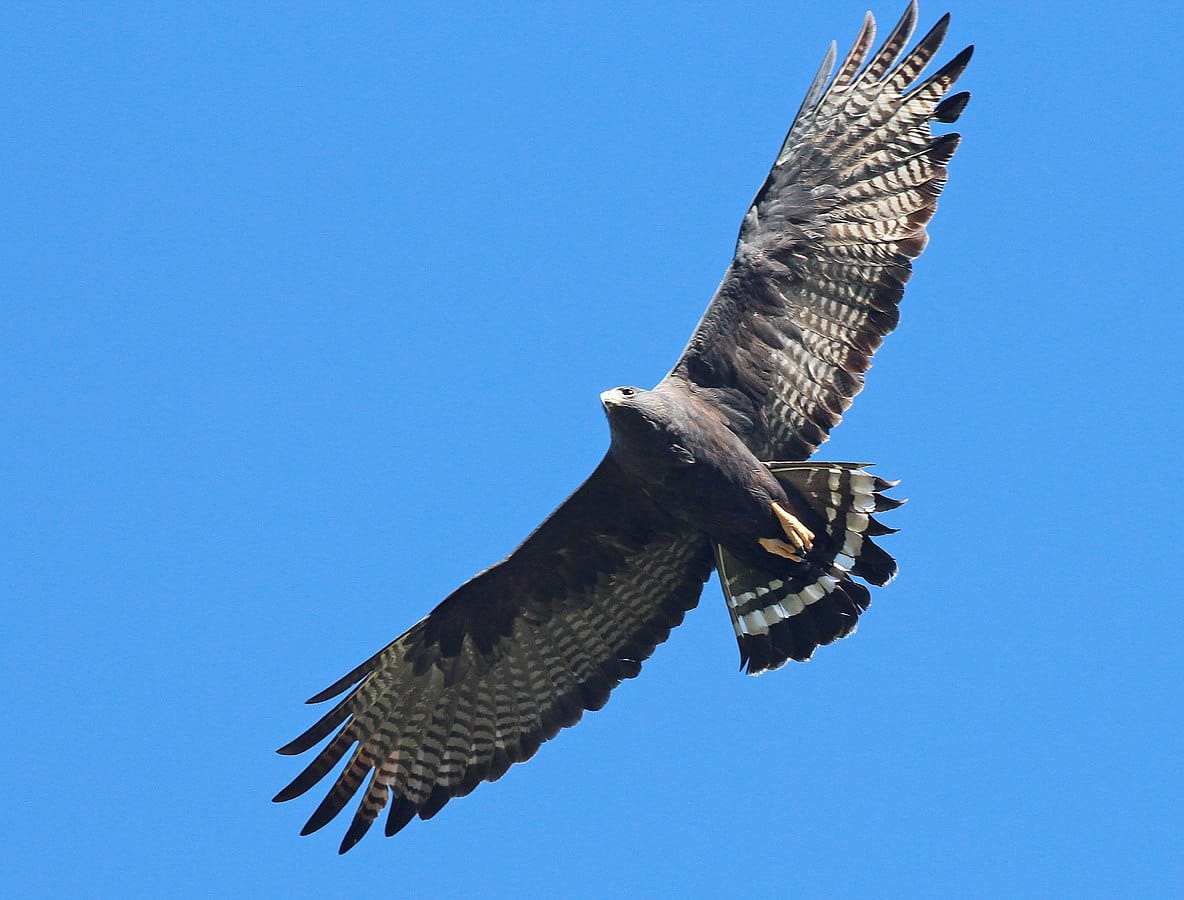
Fun fact: Zone-tailed Hawks mimic the flight pattern of Turkey Vultures, gliding silently to surprise prey in open habitats.
Physical Characteristics & Identification Tips
Medium-sized hawk with dark plumage and distinctive white bands at the tail tip. Adults are slate-gray with subtle wing markings; juveniles are browner with streaked undersides. Their unique soaring pattern is a reliable identification cue.
Behavior and Nesting Habits
They hunt by blending into Turkey Vulture flocks, approaching unsuspecting prey. Nests are built in tall trees or cliff ledges. Zone-tailed Hawks are solitary except during mating season.
Habitat and Range
Native to the southwestern U.S., sightings in Michigan are extremely rare and often considered vagrants. They prefer open forests and desert-adjacent regions.
Diet
Primarily small mammals and birds. Hunting strategy relies on stealth and blending with other raptors.
Reproduction and Life Cycle
Clutches of 2–4 eggs, incubated for about 28–30 days. Fledging occurs around 5–6 weeks. Michigan sightings do not include local breeding.
Fun Facts / Unique Traits
Their mimicry of Turkey Vultures allows them to approach prey unnoticed—a clever adaptation among hawks.
Human Interaction
Extremely rare in Michigan, they are exciting finds for birders and researchers. Observations contribute to understanding migratory patterns and vagrancy behavior.
Conclusion
Michigan is home to an impressive variety of hawks, each with its own distinctive traits, behaviors, and habitats. From the stealthy Northern Goshawk weaving through dense forests to the soaring Broad-winged Hawk forming massive migration kettles, these raptors showcase the state’s rich avian diversity. Whether hunting rodents in open fields, diving for fish as the Osprey does, or gliding silently like the Zone-tailed Hawk, each species plays a vital role in the ecosystem. Observing hawks in Michigan not only offers a thrilling experience for birdwatchers but also highlights the importance of preserving forests, wetlands, and grasslands for these skilled predators. By understanding their habits and habitats, we gain a deeper appreciation for the dynamic and fascinating world of hawks in Michigan.
Frequently Asked Questions about Hawks in Michigan
1. What are the most common types of hawks in Michigan?
The most common types of hawks in Michigan include Northern Harrier, Broad-winged Hawk, Red-shouldered Hawk, and Rough-legged Hawk.
2. How many types of hawks are found in Michigan?
Michigan is home to approximately 12–15 types of hawks, depending on migratory patterns and rare sightings.
3. When is the best time to see hawks in Michigan?
Fall migration, from September to November, is the best time to observe hawks soaring and forming migration kettles across the state.
4. Where can I find Northern Harriers in Michigan?
Northern Harriers are commonly seen in wetlands, marshes, and open fields throughout Michigan during both breeding and migration seasons.
5. What is the diet of Red-shouldered Hawks in Michigan?
Red-shouldered Hawks primarily feed on small mammals, amphibians, reptiles, and occasionally birds.
6. Are Broad-winged Hawks migratory in Michigan?
Yes, Broad-winged Hawks are migratory and are often seen in large “kettles” during fall migration across Michigan.
7. Do Northern Goshawks live year-round in Michigan?
Northern Goshawks primarily inhabit mature forests in northern and central Michigan and may stay year-round if conditions are favorable.
8. Can you see Rough-legged Hawks in Michigan year-round?
No, Rough-legged Hawks are winter visitors in Michigan, typically arriving in late fall and leaving in early spring.
9. Are Swainson’s Hawks common in Michigan?
Swainson’s Hawks are rare in Michigan and usually seen during migration periods.
10. Where do Ospreys nest in Michigan?
Ospreys nest near freshwater lakes, rivers, and wetlands, often using platforms, tall trees, or human-made structures.
11. What is unique about the hunting style of Zone-tailed Hawks?
Zone-tailed Hawks mimic Turkey Vultures in flight, allowing them to approach prey unnoticed in open areas.
12. How can you identify Ferruginous Hawks in Michigan?
Ferruginous Hawks have pale underparts, rusty-colored backs and shoulders, and a broad wingspan, distinguishing them from other Buteos.
13. Are Short-tailed Hawks found regularly in Michigan?
No, Short-tailed Hawks are extremely rare in Michigan and usually appear as vagrants during unusual migration events.
14. What habitats do Red-shouldered Hawks prefer in Michigan?
They prefer deciduous forests, river corridors, and wetlands with ample prey and tall perches.
15. How do Northern Harriers hunt in Michigan?
Northern Harriers hunt by flying low over open fields and marshes, using keen eyesight and hearing to detect small mammals and birds.
16. Do Broad-winged Hawks return to the same nesting sites in Michigan?
Yes, Broad-winged Hawks often return to the same nests each year, especially in forested areas.
17. What time of year do Ospreys migrate from Michigan?
Ospreys migrate south to Central and South America in late summer to early fall.
18. Can Ferruginous Hawks be seen hunting in Michigan?
They are mostly observed during migration and rarely hunt in Michigan, as their primary range is western North America.
19. How long do young Red-shouldered Hawks stay in the nest?
Fledglings leave the nest in about 5–6 weeks but continue to be fed by parents until they can hunt independently.
20. Are Northern Goshawks aggressive toward humans?
They generally avoid humans but can defend their nest aggressively if threatened.
21. What do Rough-legged Hawks eat in Michigan?
Rough-legged Hawks primarily hunt small mammals such as voles and mice in open fields during winter.
22. Do Swainson’s Hawks feed on insects in Michigan?
Swainson’s Hawks may opportunistically eat insects during migration, but they primarily hunt small mammals in their breeding range.
23. Are Zone-tailed Hawks protected in Michigan?
Zone-tailed Hawks are rare and protected under migratory bird laws, though sightings in Michigan are extremely uncommon.
24. How can you tell a juvenile Osprey from an adult in Michigan?
Juvenile Ospreys are mottled brown above with buff-colored underparts, while adults have white underparts and darker wings with a distinct eye stripe.
25. Do Ferruginous Hawks migrate through Michigan?
Yes, they are occasional migrants, primarily passing through Michigan during the fall and spring.
26. What is the call of a Red-shouldered Hawk like?
Their call is a loud, piercing “kee-ah” repeated several times, often heard in forested areas.
27. Which Michigan hawks are most often seen by birdwatchers?
Northern Harriers, Broad-winged Hawks, and Red-shouldered Hawks are among the most frequently observed species in Michigan.
28. How do Ospreys catch fish in Michigan?
Ospreys dive feet-first into water, grasping fish with sharp talons, then lift off to consume their catch safely.
29. Are Short-tailed Hawks solitary or social?
Short-tailed Hawks are generally solitary, except during mating season or when young are present.
30. Can Northern Goshawks hunt in Michigan winter?
Yes, they hunt birds and mammals throughout the year, including winter months, as long as prey is available in forested habitats.
31. Do Broad-winged Hawks use thermals in Michigan?
Yes, during migration they form large kettles, soaring on thermals to conserve energy during long-distance flights.
32. What role do hawks play in Michigan’s ecosystem?
Hawks help control populations of small mammals, birds, and insects, maintaining a balanced ecosystem.
Read more: 30 Types of Wild Birds (Pictures And Identification)