

The United Kingdom hosts a fascinating variety of deer species, each with its own story and ecological role. From the native Red Deer roaming the highlands to introduced species like the Fallow Deer gracefully inhabiting parklands, deer in the UK are a captivating sight for wildlife enthusiasts and casual walkers alike. In this guide, we explore eight species, highlighting how to identify them, their behaviors, habitats, diets, and intriguing traits, giving you all the tools to spot and appreciate these elegant mammals in their natural settings.
1. Red Deer (Cervus elaphus)

Fun fact: Red Deer are the largest land mammals in the UK, with males often exceeding 200 kg. Their striking antlers and deep, resonant calls make them an unmistakable presence in Scottish highlands and northern England.
Physical Characteristics & Identification Tips
Red Deer exhibit sexual dimorphism, with stags sporting large, branching antlers while hinds are smaller and antlerless. Their reddish-brown summer coat fades to a greyer tone in winter. Mature stags can be distinguished by palmate antlers with multiple tines, which they shed annually, typically in February-March.
Behavior
Red Deer are primarily crepuscular, most active at dawn and dusk. Stags engage in dramatic rutting displays, using roaring calls and antler clashes to establish dominance. Herd structures are matriarchal outside the rut, with hinds and calves forming family groups, while stags may roam solitarily or in bachelor groups during other seasons.
Habitat and Range
Red Deer prefer open moorland, upland forests, and rugged hills. In the UK, they are concentrated in Scotland, particularly the Highlands, but populations exist in parts of England and Wales. They are adaptable grazers, often moving to lower valleys in harsh winters.
Diet
Primarily herbivorous, Red Deer feed on grasses, heather, and young shoots. Seasonal diet changes include browsing on shrubs and bark during winter. They play a crucial ecological role by influencing vegetation patterns and seed dispersal.
Reproduction and Life Cycle
The rut occurs in September-October, with stags competing for hinds through vocal and physical displays. Gestation lasts approximately 8 months, producing a single fawn, which hides in vegetation for the first weeks. Fawns are weaned at 3-4 months but remain with the mother until the following breeding season.
Fun Facts / Unique Traits
Red Deer stags’ roars can carry over long distances, aiding in territory establishment. Antler growth is one of the fastest among mammals, growing up to 2 cm per day during peak periods. Surprisingly, they can run at speeds up to 45 km/h when evading predators or humans.
Human Interaction
Red Deer have been historically hunted for venison and trophies. Conservation areas, such as Cairngorms National Park, protect their populations. Responsible wildlife viewing encourages maintaining distance to avoid stress, especially during the rut.
2. Roe Deer (Capreolus capreolus)

Fun fact: Roe Deer are the UK’s second native deer species, known for their delicate stature and graceful movements across woodlands and farmland edges.
Physical Characteristics & Identification Tips
Roe Deer are smaller than Red Deer, standing about 65-75 cm at the shoulder. They exhibit reddish-brown coats in summer, turning grey-brown in winter. Bucks grow small, short, upright antlers with 2-3 points, easily distinguishing them from other species. A prominent white rump patch is visible year-round, aiding identification.
Behavior
Roe Deer are highly secretive and mostly crepuscular. Bucks mark territory with forehead glands and rubs on saplings. They are agile, capable of leaping fences and dense hedgerows. Social structure revolves around solitary or small family groups; adult males often maintain territories.
Habitat and Range
Found across the UK, Roe Deer inhabit woodlands, farmland edges, and hedgerows. They thrive in mixed landscapes providing cover and food. Woodland management practices influence their distribution and population density.
Diet
Roe Deer are browsers, feeding on leaves, shoots, berries, and agricultural crops. They may cause minor garden or farm damage, particularly in winter when natural forage is scarce. Their foraging helps shape woodland undergrowth diversity.
Reproduction and Life Cycle
Mating occurs in July-August, with delayed implantation allowing births in May-June. Typically, one or two fawns are born, which remain hidden for several weeks. Young are gradually integrated into the mother’s territory and learn survival behaviors by following her.
Fun Facts / Unique Traits
Roe Deer have a “barking” alarm call when disturbed. Their keen sense of smell, hearing, and eyesight make them elusive, explaining why many walkers rarely spot them despite their common presence.
Human Interaction
Roe Deer are often seen near suburban parks and gardens. They are hunted under licence for population management. Collision with vehicles is the primary human-related threat, emphasizing the need for wildlife awareness on roads.
3. Fallow Deer (Dama dama)
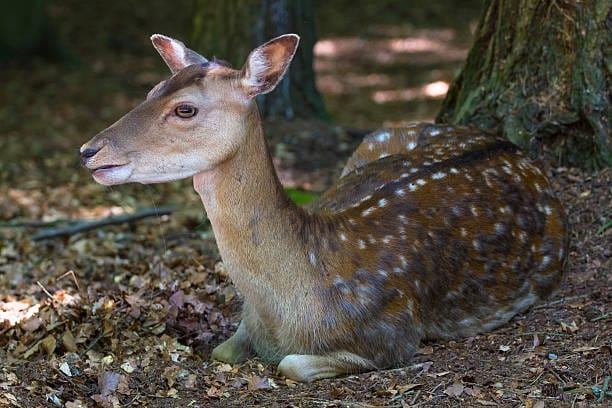
Fun fact: Fallow Deer are introduced, elegant, and widely admired for their distinctive palmate antlers and spotted coats.
Physical Characteristics & Identification Tips
Fallow Deer vary in coat coloration: common, menil, melanistic (dark), and white morphs. Bucks have broad, flattened palmate antlers, while does lack antlers. Medium-sized, they stand 80-100 cm at the shoulder, with a characteristic tail marked with a black stripe.
Behavior
Fallow Deer are sociable, often forming herds segregated by sex outside the rut. The rut occurs in October, with bucks competing using vocalizations, displays, and antler clashes. They are agile, capable of rapid sprinting and high jumps over obstacles.
Habitat and Range
Introduced centuries ago, Fallow Deer inhabit parklands, woodlands, and estate lands throughout England, Scotland, and Wales. They favor mixed habitats that provide cover and forage.
Diet
Fallow Deer are herbivorous, feeding on grasses, leaves, and young shoots. Seasonal variations include browsing shrubs in winter. Their grazing can influence woodland composition, especially in smaller estates or enclosed areas.
Reproduction and Life Cycle
Bucks establish dominance before the rut through displays and minor combat. Gestation lasts ~7 months, with one fawn typically born. Fawns hide in vegetation and are gradually introduced to the herd, learning social and foraging behaviors.
Fun Facts / Unique Traits
Fallow Deer are remarkable jumpers and swimmers. Their spotted coats in summer provide camouflage. Interestingly, palmate antlers distinguish them from other UK deer species, giving a “broad fan” appearance.
Human Interaction
Fallow Deer are popular in managed parklands for ornamental viewing and controlled hunting. They adapt well to semi-urban environments, occasionally causing minor crop or garden damage.
4. Sika Deer (Cervus nippon)
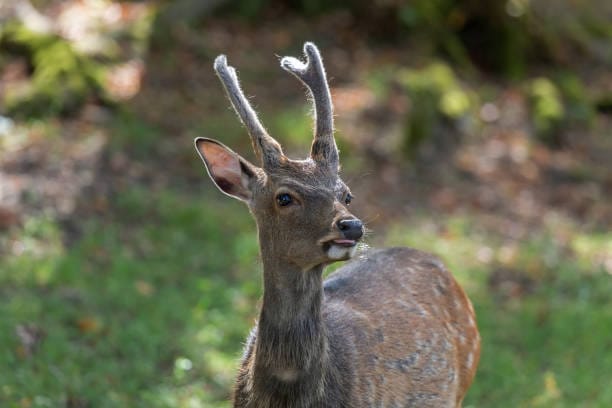
Fun fact: Sika Deer are originally from East Asia but have established thriving populations in the UK, particularly in Scotland and northern England, recognized by their spotted coats and melodic calls.
Physical Characteristics & Identification Tips
Sika Deer are medium-sized, about 70-90 cm at the shoulder, with summer coats spotted white on a reddish-brown background, which fades to a darker, almost blackish hue in winter. Bucks grow small, pointed antlers with several tines, typically shorter and less complex than Red Deer antlers. A noticeable white rump patch helps distinguish them from native species.
Behavior
Sika Deer are highly vocal, with males producing whistles, barks, and bugling sounds during the rut. They are generally shy and crepuscular, preferring early morning and late evening activity. Herd structures vary; hinds often remain in small family groups, while bucks can be solitary or form bachelor herds.
Habitat and Range
In the UK, Sika Deer favor woodlands, wetlands, and areas with dense undergrowth for cover. They are common in Scottish Highlands, the Lake District, and parts of Wales. Their ability to thrive in a variety of habitats has helped them expand significantly since introduction.
Diet
Sika Deer are herbivorous, feeding on grasses, leaves, and shrubs. In winter, they browse on tree bark and evergreen foliage. Their selective grazing influences forest regeneration and plant diversity.
Reproduction and Life Cycle
The rut occurs in September-October. Bucks compete vocally and physically for hinds. Gestation lasts about 7 months, with one fawn typically born. Fawns remain hidden for weeks, gradually joining their mother’s group and learning survival skills through observation.
Fun Facts / Unique Traits
Sika Deer can swim across rivers and lakes to evade predators or explore new habitats. Their vocalizations are so varied that one might imagine a “deer orchestra” echoing through misty Scottish mornings.
Human Interaction
While Sika Deer are admired for wildlife viewing, they are also considered invasive in some regions. Management includes controlled culling to prevent overgrazing and maintain ecological balance.
5. Reeves’ Muntjac (Muntiacus reevesi)

Eccles-on-Sea, Norfolk, UK. December
Fun fact: Often called the “barking deer,” Reeves’ Muntjac is small and agile, with an unmistakable alarm call that sounds like a dog bark.
Physical Characteristics & Identification Tips
Muntjac stand just 40-50 cm at the shoulder, making them among the smallest UK deer. They have reddish-brown coats, short antlers, and prominent canine tusks in males. The white underside and small tail tipped with black aid in identification.
Behavior
Muntjac are largely solitary and territorial. They are crepuscular but can be active during the day in undisturbed areas. Their signature bark serves both as a warning to other deer and as a response to perceived threats, startling walkers and other animals alike.
Habitat and Range
Introduced to the UK from China, Muntjac now inhabit southeastern England, particularly woodlands, parklands, and hedgerows. They adapt well to dense undergrowth, which provides cover from predators and humans.
Diet
Muntjac are browsers, feeding on leaves, shoots, berries, and grasses. They may also nibble garden plants, which sometimes leads to conflict with landowners. Their foraging contributes to natural seed dispersal and influences vegetation structure.
Reproduction and Life Cycle
Reproduction occurs year-round. Males defend territories and court females with displays and tusk gestures. Gestation is ~7 months, producing usually one fawn. Fawns hide for the first weeks, then gradually follow their mother to learn foraging and predator avoidance.
Fun Facts / Unique Traits
Muntjac are quick and agile, able to leap obstacles and evade predators effortlessly. Despite their size, their bark is loud and distinctive, often startling hikers unaware of their presence nearby.
Human Interaction
While beloved by wildlife enthusiasts for their charm, Muntjac populations are managed in some areas to reduce garden damage and prevent overpopulation. Their adaptability makes them successful colonizers across southern England.
6. Chinese Water Deer (Hydropotes inermis)
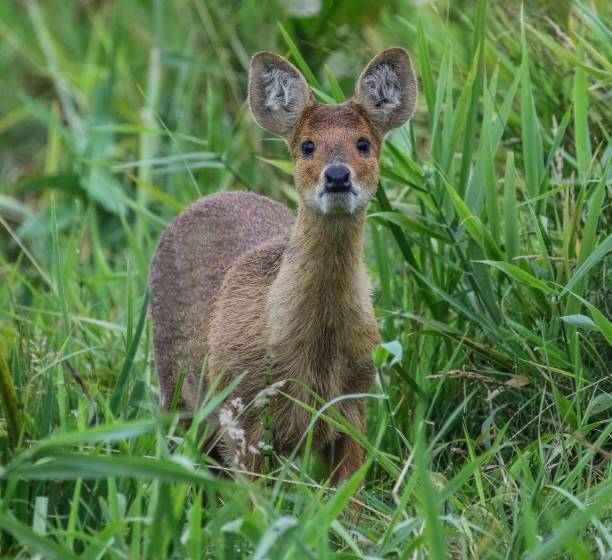
Fun fact: Unlike most deer, Chinese Water Deer have no antlers. Instead, males display elongated tusks, giving them a unique appearance among UK deer.
Physical Characteristics & Identification Tips
Standing 45-55 cm at the shoulder, Chinese Water Deer are small, stocky, and tawny brown with paler underparts. Males possess prominent canine tusks up to 5 cm, used in combat and display. They have rounded ears and a short tail, making them easily distinguishable from other species.
Behavior
These deer are crepuscular and secretive, favoring wetland edges, reed beds, and river valleys. Males are territorial, often vocalizing with whistling and barking sounds. They are strong swimmers, capable of navigating waterways to forage or escape predators.
Habitat and Range
Introduced from China, populations exist in East Anglia, particularly Norfolk and Suffolk. Their preference for marshy, wet environments allows them to coexist with limited disturbance from humans and other deer species.
Diet
Chinese Water Deer primarily browse on grasses, reeds, and aquatic vegetation. Their selective feeding habits influence wetland plant diversity and support healthy ecosystem dynamics.
Reproduction and Life Cycle
The breeding season peaks in winter. Gestation lasts approximately 6-7 months, producing one or two fawns. Young fawns remain hidden in dense vegetation until they are capable of following their mother and avoiding threats.
Fun Facts / Unique Traits
Male Chinese Water Deer use tusks for intraspecies combat during mating season. They are excellent swimmers, often seen gliding through canals or marshes, a skill uncommon in most UK deer species.
Human Interaction
These deer are relatively unobtrusive, but habitat management is necessary to balance wetland conservation with their populations. They offer excellent opportunities for wildlife photography, especially at dawn and dusk along riverbanks.
7. Fallow Deer (Dama dama)

Fun fact: Fallow Deer are known for their impressive palmate antlers and spotted summer coats, often featured in historic deer parks across the UK.
Physical Characteristics & Identification Tips
Medium-sized, standing 90-100 cm at the shoulder, Fallow Deer exhibit a variety of coat colors: common (spotted), menil (reddish-brown without spots), melanistic (almost black), and white. Bucks grow large, palmate antlers, which they shed annually in late winter. Hinds are slightly smaller, lacking antlers but sharing the general body shape and coat variations.
Behavior
Fallow Deer are social, often forming herds of hinds and juveniles, with bucks joining only during the rut. They are crepuscular, though in low-disturbance areas, they may be active during the day. During rutting season, bucks display ritualized behaviors, including groaning calls, parallel walks, and mock sparring.
Habitat and Range
Fallow Deer thrive in mixed woodlands, parklands, and grasslands. Historically introduced by the Normans, they now inhabit much of England, parts of Wales, and southern Scotland. They favor areas with cover and open spaces for grazing.
Diet
Their diet consists of grasses, herbs, young shoots, and leaves. Fallow Deer are selective feeders and their grazing patterns influence woodland undergrowth and grassland biodiversity.
Reproduction and Life Cycle
Rut occurs from September to October. Bucks compete for hinds using displays and occasional sparring. Gestation lasts about 230 days, with single fawns born in late spring. Fawns are hidden for weeks before joining the mother’s herd.
Fun Facts / Unique Traits
Fallow Deer are excellent jumpers, capable of clearing high fences. Their distinctive “blow” vocalization during rut is unmistakable and adds drama to woodland mornings.
Human Interaction
Fallow Deer are popular in managed estates and wildlife parks, but populations are monitored to prevent overgrazing and conflicts with agriculture. They are a favorite for wildlife enthusiasts and photographers.
8. Red Deer (Cervus elaphus)

Fun fact: The iconic Red Deer is the largest deer in the UK, famed for its booming roar during the rut and majestic antlers.
Physical Characteristics & Identification Tips
Standing 120-150 cm at the shoulder, Red Deer are robust, with reddish-brown summer coats and greyer winter coats. Bucks sport large, branching antlers, often with multiple tines. Hinds are smaller and lack antlers but are similar in coat color and body shape.
Behavior
Red Deer are social, forming harem groups led by dominant males during the rut. They are mostly crepuscular, but can be seen grazing during the day in quiet areas. During rut, males emit a loud roar to establish dominance and attract females.
Habitat and Range
Red Deer favor upland moorlands, forests, and open glades. They are widespread in Scotland, parts of northern England, and some areas of Wales. They prefer areas with both cover and open spaces for grazing and observation.
Diet
They are primarily grazers, consuming grasses, heather, shoots, and leaves. Seasonal dietary shifts occur, with more browsing in winter. Their grazing influences plant composition in uplands and woodlands.
Reproduction and Life Cycle
Rut occurs in September-October. Dominant males gather hinds into harems, competing with rivals using vocalizations and antler fights. Gestation is around 8 months, producing single calves. Fawns are hidden initially, then integrated into maternal groups.
Fun Facts / Unique Traits
Red Deer roars can carry over 1 km, and their antlers can reach impressive sizes with 12 or more tines. Watching stags display during the rut is a highlight for wildlife enthusiasts.
Human Interaction
Red Deer are managed for conservation, hunting, and eco-tourism. Their populations are monitored to maintain ecological balance and prevent habitat degradation.
Conclusion
The UK’s deer species represent a fascinating blend of native and introduced populations, each with distinct behaviors, adaptations, and ecological roles. From the elusive Roe Deer in dense woodlands to the iconic Red Deer on open moorlands, understanding their habits, habitats, and interactions with humans allows for better conservation and coexistence. Whether encountered in remote Scottish glens or managed estates in southern England, deer continue to capture the imagination of wildlife enthusiasts. Responsible management ensures their populations thrive while balancing ecological integrity, providing opportunities for observation, photography, and appreciation of these remarkable mammals.
FAQ
1. What type of deer live in the UK?
The UK has six main species of deer: Red Deer, Roe Deer, Fallow Deer, Sika Deer, Muntjac Deer, and Chinese Water Deer. Each species has different sizes, habitats, and behaviors.
2. What are the small brown deer in the UK?
The small brown deer are usually Roe Deer or Muntjac Deer. Roe Deer are native and common in woodlands, while Muntjac Deer are an invasive species originally from Asia.
3. What is Britain’s largest species of deer?
The Red Deer (Cervus elaphus) is the largest deer in Britain. Stags can weigh up to 400 pounds and stand over 4 feet tall at the shoulder.
4. What is the rarest deer in the UK?
The Chinese Water Deer and Muntjac are relatively rare compared to native species, but the Scottish subspecies of Red Deer is also considered rare in certain areas due to limited habitats.
5. How many types of British deer are there?
There are six main types of deer in the UK: Red, Roe, Fallow, Sika, Muntjac, and Chinese Water Deer.
6. How rare are muntjac deer in the UK?
Muntjac Deer are not very rare—they are an invasive species that has spread across southern England. However, they are still uncommon in the northern parts of the UK.
7. What deer is not native to Britain?
Muntjac Deer, Sika Deer, and Chinese Water Deer are not native to Britain. They were introduced from Asia in the 19th and 20th centuries.
8. Are deer a problem in the UK?
Yes, deer can be a problem when populations grow too large. They damage crops, gardens, and forests by overgrazing, and high numbers can increase vehicle collisions.
9. What is the most common deer in the UK?
Roe Deer are the most common deer in Britain. They are small, agile, and widely distributed across forests and farmland.
10. Can you shoot deer out of season in the UK?
No, shooting deer out of season is illegal in the UK. Deer stalking is regulated, with strict seasons for each species and area to protect populations.
11. What is a white deer called in the UK?
A white deer is often called an albino or piebald deer. These are rare color variants, usually of Red or Fallow Deer.
12. Can you eat muntjac deer in the UK?
Yes, muntjac deer meat can be eaten. Venison from muntjac is lean, flavorful, and often sold by licensed hunters or butchers.
13. What deer are invasive to the UK?
Muntjac Deer, Sika Deer, and Chinese Water Deer are considered invasive species because they compete with native deer and damage habitats.
14. Are there no reindeer in England?
Correct. Reindeer are not native to England. Small herds exist only on private farms or wildlife parks.
15. Is it legal to eat deer meat in the UK?
Yes, it is legal to eat venison in the UK, provided the meat comes from legally culled deer and is prepared according to food safety rules.
16. Can farmers shoot deer in the UK?
Farmers can shoot deer on their land, but they must follow legal seasons, get the necessary licenses, and ensure humane culling practices.
17. What is deer meat called in the UK?
Deer meat is called venison in the UK. It includes meat from Red, Fallow, Roe, and other deer species.
18. What do Brits call elk?
In the UK, “elk” usually refers to the European Red Deer. What Americans call elk is called “wapiti” in Europe.
19. Can you take a deer if you hit it in the UK?
If you hit a deer with a vehicle, you must report it to the local police. Taking the carcass is regulated and may require permission from the landowner and local authorities.
20. Can you keep a deer as a pet in the UK?
No, it is illegal to keep a wild deer as a pet in the UK. Only licensed wildlife parks or farms can hold deer under strict regulations.
21. How much is a deer worth in the UK?
The value of a deer depends on species and size. Venison can be worth £50–£200 per animal, while trophy stags in managed stalking estates may be valued higher.
22. How much does it cost to hunt deer in the UK?
Hunting costs vary widely. A day of deer stalking on a managed estate can cost anywhere from £150 to over £1,000, depending on species and location.
23. Can you shoot a deer with a shotgun in the UK?
Yes, shotguns can be used for deer hunting in some cases, but rifles are more common, especially for larger species like Red Deer. Hunters must follow legal regulations for caliber and range.
24. Do you need a licence to shoot deer in the UK?
Yes, a valid firearm certificate and permission from the landowner are required. Deer hunting is strictly regulated to protect wildlife populations.
25. How many species of deer are found in the UK?
There are eight main deer species in the UK: Roe, Red, Fallow, Sika, Reeves’ Muntjac, Chinese Water, White-tailed, and Sambar Deer.
26. Are all UK deer native?
No. Roe and Red Deer are native, while others such as Sika, Muntjac, Chinese Water, White-tailed, and Sambar have been introduced from other regions.
27. Can I see these deer in the wild?
Yes. Deer can be observed in forests, moorlands, parklands, and wetlands, though sightings may depend on the species, season, and human disturbance levels.
28. Are UK deer dangerous?
Generally, deer are not dangerous but can be unpredictable during the rut or if cornered. It is advisable to observe from a safe distance.
29. How do deer impact the environment?
Deer grazing affects vegetation structure, tree regeneration, and biodiversity. Balanced populations contribute positively to ecosystem dynamics, while overpopulation can lead to habitat degradation.
Read more:
- 30 Types of Deer (Pictures and Identification)
- 15 Types of Deer in North America (Pictures And Identification)
- 12 Types of Deer in USA (Pictures And Identification)
- 25 Types of Deer in Africa (Pictures And Identification)
- What Do Deer Eat? Complete Guide to Deer Diet, Foods, and Seasonal Feeding Habits
- 5 Types of Deer in Scotland (Pictures and Identification)
- 8 Types of Deer in Texas (Pictures and Identification)
- How to Hunt Deer from the Ground: Expert Tips for Successful Ground-Level Deer Hunting
- 8 Types of Deer in California (Pictures And Identification)
- 5 Types of Deer in Colorado: Species Identification with Pictures
- 5 Types of Deer in Illinois (Pictures And Identification)
- 5 Types of Deer in Oregon (Pictures and Identification)
- 5 Types of Deer in New Mexico (Pictures and Identification)
- 5 Types of Deer in Wisconsin (Pictures And Identification)
- 11 Moose Facts About the Majestic Herbivorous Giant
- 15 Types of Elk (Pictures And Identification)
- 5 Types of Deer in Montana (Pictures And Identification)