
Texas is one of the best places in North America for spotting hawks, thanks to its sweeping prairies, rugged canyons, quiet wetlands, and warm southern climate. Birdwatchers often describe the state as a massive highway in the sky, where raptors drift, circle, hunt, nest, raise their young, and pass through during migration. This guide explores twenty species of hawks found in Texas, offering clear descriptions, identification tips, behavior insights, and practical advice. If you’re curious about how these birds live, what they eat, or where you might see them, consider this a friendly field companion. No jargon overload, no stiff textbook tone—just useful information presented in a simple, enjoyable way.
20 Types of Hawks in Texas
1. Red-Tailed Hawk
Physical Characteristics & Identification Tips
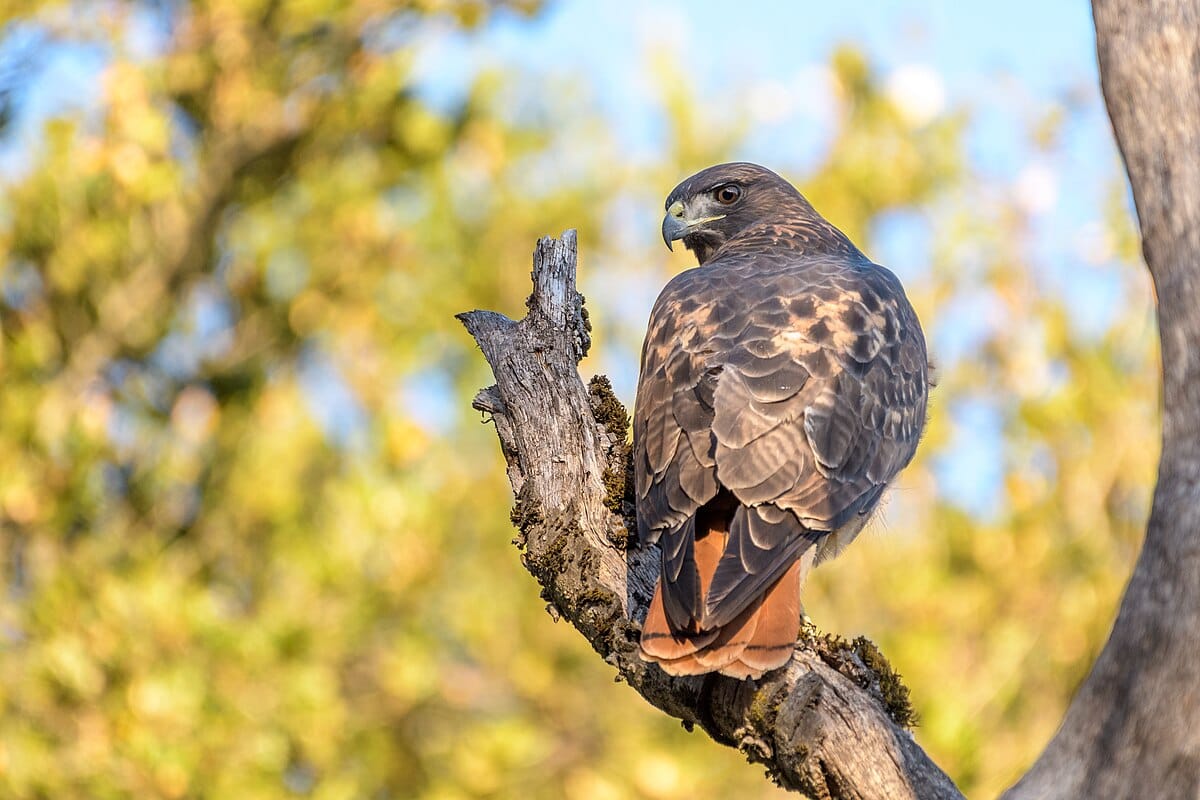
The Red-tailed Hawk is often the first raptor people recognize in Texas—partly because it seems to appear everywhere, and partly because it carries that famous rusty tail. Adult birds typically display a pale chest, a dark belly band, broad wings, and a heavy, sturdy body. Their wingspan can stretch past four feet, giving them the lift needed to rise on afternoon thermals like nature’s own hot-air balloons.
If you’re trying to identify one, look for a bird perched on a power pole, silo, or lonely fence post along a farm road. They sit upright with the calm confidence of a sheriff guarding a small town. When in flight, they glide with wings slightly lifted in a shallow “V,” and their tail becomes more noticeable. Immature birds may confuse beginners because their tails are brown and barred, not red—but their streaky breast and characteristic shape usually reveal their identity.
Behavior and Nesting Habits
Red-tailed Hawks are methodical hunters. They prefer soaring or waiting patiently for movement below, occasionally surprising their prey with a quick dive. Their calm nature sometimes gives the illusion they aren’t doing much, but the moment an opportunity appears—a mouse darting from cover, a rabbit hopping at the wrong time—they act with surprising speed.
Nesting is a cooperative project. A pair may build a large stick nest in tall trees, sometimes on cliff edges or even on human-made structures. They reuse these nests year after year, adding fresh material each season like homeowners refreshing furniture. Their young hatch covered in fluffy white down, and within a few weeks, the nest becomes a chaotic scene of flapping wings and impatient chirps as the juveniles test their developing muscles.
Habitat and Range
Red-tailed Hawks thrive in open country—grasslands, prairies, deserts, and forest edges. Texas offers a buffet of habitats, which is one reason they’re so widespread. You can find them from the Panhandle to the Gulf Coast, from pine forests in the east to dry scrub in the west. Their adaptability makes them one of the most successful raptors in North America.
Diet
Their diet leans heavily on mammals like rats, voles, and cottontail rabbits. They also take snakes, lizards, and occasionally birds. Many farmers quietly appreciate them for helping control rodent populations. Imagine having a natural pest-control expert patrolling your fields—one who works all year and never sends a bill.
Reproduction and Life Cycle
Breeding season typically begins in late winter. The female lays two to three eggs, and both parents take turns incubating them. The young remain in the nest for a little over a month. Once they fledge, they stay nearby while learning to hunt, often begging loudly for meals that their parents still provide. Over time, they gain confidence and drift away, establishing territories of their own.
Fun Facts / Unique Traits
One of the most interesting things about Red-tailed Hawks is their voice—or at least the one Hollywood assigns to them. Many movies use their screech to represent any large bird of prey, even eagles. So the dramatic cry you’ve heard while watching an eagle soar on screen? That’s usually the Red-tailed Hawk stealing the spotlight.
Human Interaction
Because they live close to roads and towns, people often see them more than any other hawk. They handle human presence reasonably well, though they prefer quieter nesting spots. Wildlife rehabilitators frequently treat these birds after vehicle collisions, but most recover thanks to their resilience. Overall, the species continues to flourish across Texas.
2. Red-Shouldered Hawk
Physical Characteristics & Identification Tips
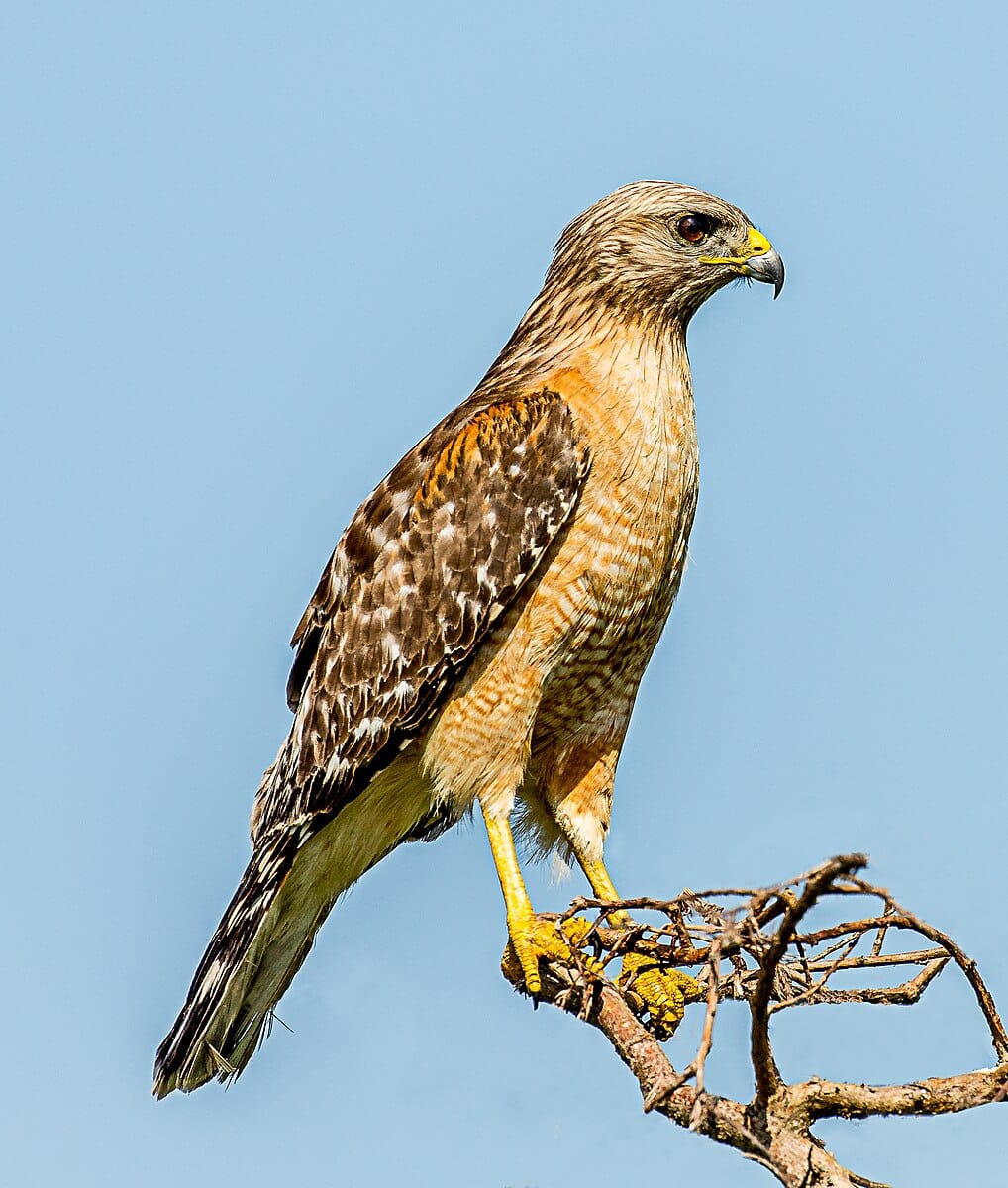
The Red-shouldered Hawk is striking, with rich orange barring across its chest and bold black-and-white bands along its wings and tail. The name comes from the reddish patch on its upper wing, which stands out when sunlight catches it just right. This hawk’s physique is slimmer and more agile than that of the Red-tailed Hawk, giving it a nimbleness better suited to life among dense forests.
Their piercing call—a loud “kee-yer”—often gives them away before you see them. If you hear that sound echoing through a woodland, look up; one may be gliding between branches like a feathered acrobat. When perched, their upright posture and colorful plumage make them fairly easy to recognize for anyone paying close attention.
Behavior and Nesting Habits
Red-shouldered Hawks love forests and spend much of their time weaving through trees, chasing small mammals or frogs. Their flight style includes quick wingbeats followed by short glides—almost like they’re testing the air currents around every trunk and branch. They’re social birds by hawk standards and occasionally form loose clusters in good habitats.
When breeding season arrives, pairs strengthen their bond through aerial displays and vocal calls. They build nests high in trees, often near water. The nest may be reused in future seasons and is lined with evergreen sprigs or bits of moss. Parents share the responsibility of feeding the chicks, bringing in meals of rodents or amphibians. Young birds grow quickly, transforming from helpless hatchlings into confident fliers.
Habitat and Range
In Texas, the species is most commonly found in the eastern portion of the state, where forests and wetlands are more prevalent. River corridors, cypress swamps, and wooded bottomlands provide ideal areas. They sometimes appear in suburban neighborhoods with mature trees, surprising homeowners with their bold calls.
Diet
Their diet includes squirrels, small mammals, frogs, snakes, and even crayfish. They often hunt from low perches, scanning the ground or water below. In some forests, you might see them snatching a frog from a shallow pool or dropping suddenly onto an unwary lizard scurrying across a log.
Reproduction and Life Cycle
Females generally lay two to four eggs. Both parents take part in incubation, though the female usually does the longer shifts. Once the young hatch, the adults deliver food frequently, sometimes every few minutes on good hunting days. After several weeks, the chicks begin practicing short hops along branches, eventually taking flight and exploring the surrounding trees.
Fun Facts / Unique Traits
Red-shouldered Hawks have a habit of imitating the calls of other birds, especially during territorial disputes. Some birdwatchers claim they’ve heard them mimic jays or even other hawks. Their bright plumage also makes them one of the more photogenic raptors—a favorite among nature photographers.
Human Interaction
These hawks generally adapt well to areas where people live, as long as tree cover remains. They sometimes nest in parks or greenbelts, offering city dwellers a chance to watch raptor behavior up close. Urbanization can affect the species by reducing older forest habitat, but in many parts of Texas, populations remain steady.
3. Northern Harrier
Physical Characteristics & Identification Tips
The Northern Harrier looks different from most hawks in Texas. Its long wings, slim body, pale face, and owl-like facial disc give it an appearance that confuses many beginners. The face shape actually helps direct sound, allowing it to hunt using both sight and hearing—an uncommon combination among hawks.
Females are brown with streaky markings, while males are pale gray with black wingtips, earning them the nickname “Gray Ghost.” When the male glides low over a field on a quiet morning, it’s easy to see how the name stuck; he seems to float effortlessly, barely disturbing the air. Both sexes have a clear white rump patch that stands out like a small flag when they fly.
Behavior and Nesting Habits
Northern Harriers are ground-hunters. Instead of circling high overhead, they skim low across fields and marshes, tilting side to side as though balancing on invisible strings. They rely on stealth and patience, listening for the faint rustle of a rodent in the grass. Their flight style resembles a slow, careful dance—fluid and precise.
Their nests are built on the ground, hidden among tall grasses or reeds. The female does most of the construction, creating a shallow platform of stems and leaves. Because the nest is completely exposed to predators, she stays close, defending it vigorously. The male provides food for the female and the chicks, often dropping prey into the nest in mid-air like a delivery service with excellent timing.
Habitat and Range
Northern Harriers prefer open landscapes—prairies, marshes, coastal grasslands, and agricultural fields. In Texas, they appear mostly in winter, migrating south from northern breeding grounds. The coastal plains, Panhandle grasslands, and central prairies are common places to spot them gliding just above the ground.
Diet
Their main food source is rodents, though they also hunt small birds, reptiles, and occasionally insects. The combination of keen eyesight and exceptional hearing makes them efficient hunters. Many farmers appreciate their presence, as they help reduce crop damage caused by rodents.
Reproduction and Life Cycle
During courtship, the male performs dramatic aerial displays—looping, diving, and twisting to impress the female. Observers sometimes describe these displays as the bird equivalent of a romantic dance-off. Once paired, the female lays four to six eggs, and incubation lasts about a month. The young grow quickly and begin exploring the surrounding grass shortly after fledging.
Fun Facts / Unique Traits
One interesting fact about Northern Harriers is that males may take more than one mate in a breeding season. Scientists have documented cases where a single male supported three nests at once, flying tirelessly to deliver meals to each family. Another fun detail: their owl-like facial disc is one of the best tools in the raptor world for detecting prey hidden in thick vegetation.
Human Interaction
Because they nest on the ground, they are vulnerable to habitat changes, especially the loss of natural grassland. Conservation groups work to protect and restore prairie ecosystems, which benefits harriers and countless other species. People who enjoy watching wildlife can help by supporting grassland protection efforts or simply observing these birds respectfully from a distance.
4. Cooper’s Hawk
Physical Characteristics & Identification Tips
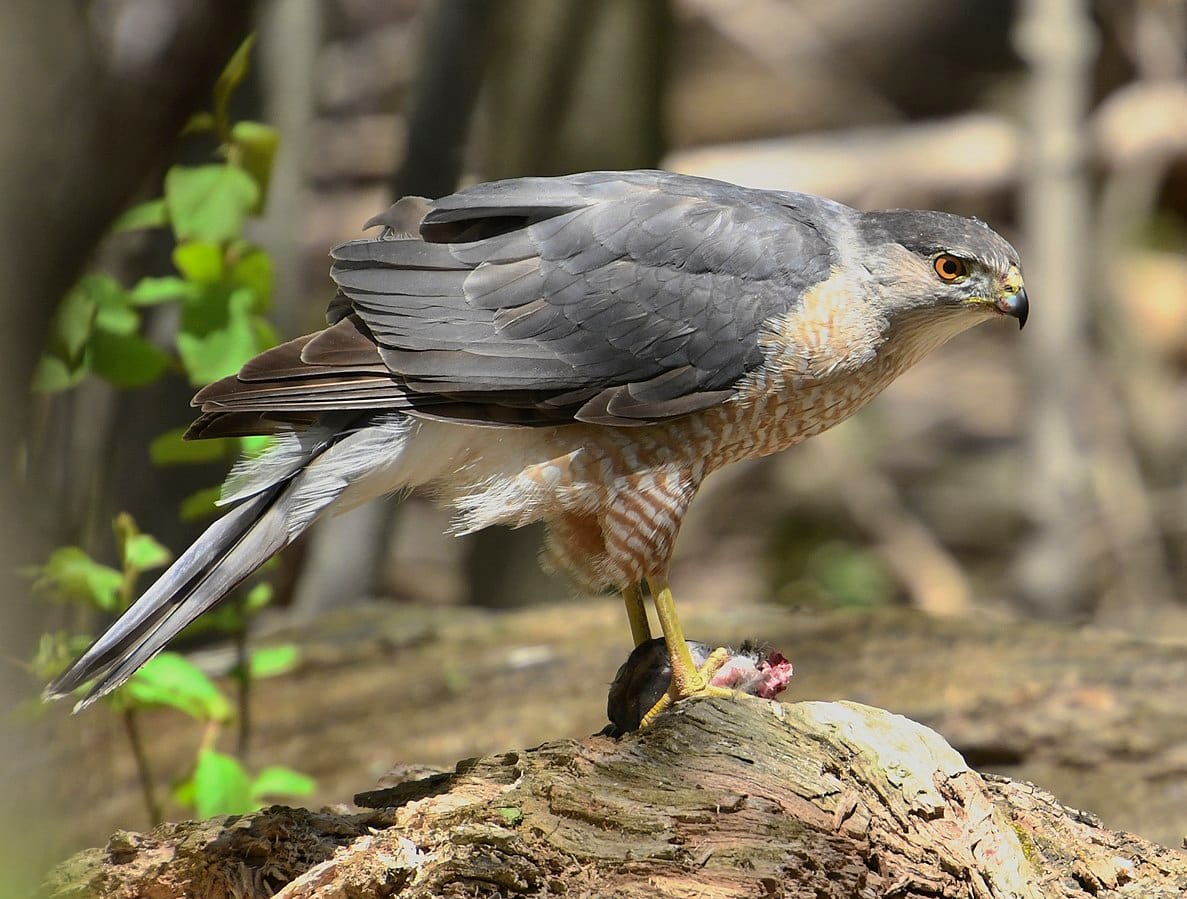
Cooper’s Hawks are sleek, agile, and built like the sports cars of the bird world. Their long tail, rounded at the end, and their short, powerful wings give them the perfect balance of speed and steering control. Adults wear a handsome blue-gray coat across their back and a warm, reddish barring on the chest. Juveniles, meanwhile, look like they’re wearing streaky brown pajamas—vertical chest stripes and soft brown tones that shift as they mature.
Many people confuse Cooper’s Hawks with their close cousin, the Sharp-shinned Hawk. The easiest difference to watch for is size: Cooper’s Hawks generally look about crow-sized, while Sharp-shins appear closer to a jay. If you’re watching one perched, the Cooper’s Hawk appears more muscular and broader through the chest, almost like a small, athletic falcon that decided it prefers forest life.
If the bird turns to look at you, its fiery red eyes stand out in adults—an intense stare that suggests it’s evaluating your potential as a mildly interesting object rather than a threat. Their tail often shows broad, rounded bands, and their flight style includes quick wingbeats followed by short glides. When they’re hunting, they burst through branches with astonishing maneuverability, chasing prey in ways that seem almost reckless.
Behavior and Nesting Habits
Cooper’s Hawks are famously bold hunters. Their preferred tactic is rapid pursuit through dense trees—darting, weaving, and slicing between branches with the kind of precision normally reserved for action movies. Many backyard birdwatchers witness the dramatic moment when one swoops in and scatters a feeder full of songbirds. It’s not ideal for the smaller birds, of course, but it does give you a front-row seat to one of nature’s most skilled aerial hunters.
Their nests are usually built in dense forests or stands of tall trees, often in spots shielded from sight. Both parents gather sticks, but the female does most of the arrangement, forming a flat platform lined with bark. The male takes the role of provider, delivering a steady stream of prey for the female during incubation. When the chicks hatch, Cooper’s Hawks take parenting seriously—defending the nest with fierce determination. A parent might swoop near intruders, including unwary humans wandering too close.
Young Cooper’s Hawks grow quickly. Within a few weeks, they shuffle around the nest, stretching their wings and testing their balance along the edge. Eventually, they take short flights to nearby branches, gaining strength and coordination. These branching stages often include a lot of comical wobbling, though the young birds take their new skills quite seriously.
Habitat and Range
In Texas, Cooper’s Hawks appear in forests, parks, wooded neighborhoods, and riparian corridors. Their adaptability has helped them thrive even in suburban environments. They no longer avoid towns the way they once did. Instead, they’ve learned that bird feeders provide reliable hunting grounds—unintentionally turning your backyard into a fast-food drive-through for hawks.
They are found year-round in much of Texas, though numbers increase in winter as northern birds migrate south. Central Texas, East Texas pine forests, and suburban zones around major cities often have the highest sightings.
Diet
Cooper’s Hawks primarily feed on medium-sized birds—doves, robins, grackles, and sometimes jays. They also take small mammals like squirrels and chipmunks when the opportunity arises. Because they chase prey through tight spaces, their meals often require split-second timing. Watching them hunt is like witnessing a high-speed chase condensed into five seconds.
Reproduction and Life Cycle
Females typically lay three to five eggs, which both parents help incubate. The young stay in the nest for about a month before fledging. Even after leaving the nest, they beg noisily for food, sometimes chasing their parents through the trees. This “feed me!” behavior is easy to spot and, if we’re honest, a bit entertaining—especially when the young birds seem shocked that hunting is now their responsibility.
Fun Facts / Unique Traits
Cooper’s Hawks are known for occasionally misjudging their high-speed pursuits, leading to collisions with branches or windows. They don’t lack skill—far from it—but even experts make mistakes at highway speeds. Another interesting detail: their flexible tail acts as a rudder, helping them pivot instantly during tight chases.
Human Interaction
Their relationship with humans has shifted dramatically. Once persecuted by farmers who misunderstood their hunting habits, they are now protected and appreciated for controlling certain pest populations. In urban areas, people sometimes find Cooper’s Hawks perched on fences or rooflines, assessing the neighborhood’s bird traffic like a seasoned inspector. Overall, they’ve adapted well to modern environments.
5. Sharp-Shinned Hawk
Physical Characteristics & Identification Tips
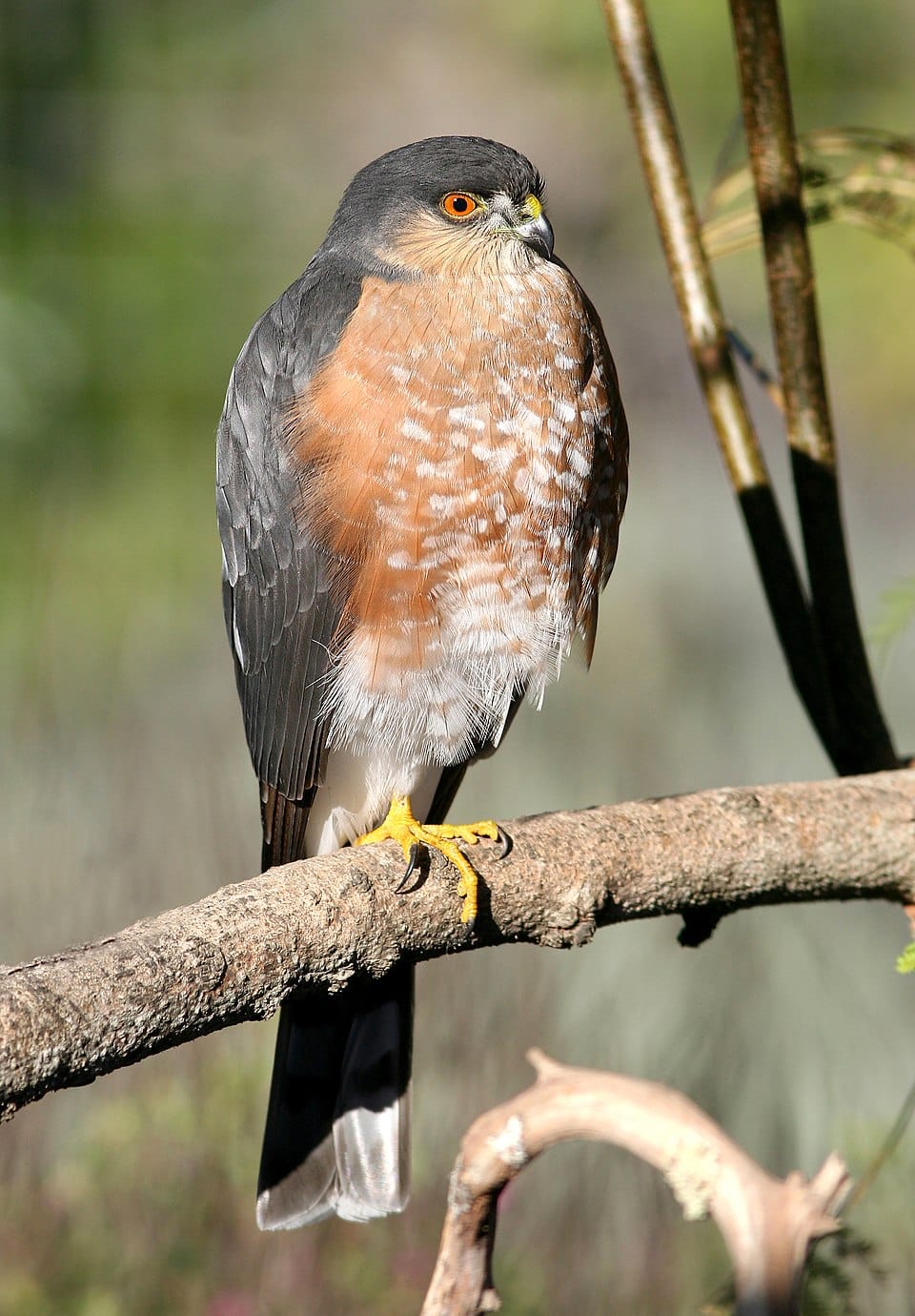
The Sharp-shinned Hawk is the smallest hawk in Texas, but don’t let its size fool you—it is fast, agile, and absolutely fearless. Adults display slate-blue wings and back, orange-and-white barring on the chest, and thin yellow legs that look surprisingly delicate. Juveniles show brown streaks instead of reddish ones, and their plumage blends well with forest edges.
When you see one perched, you may notice the rounded head, squared tail tip, and piercing yellow eyes that reflect a careful intelligence. Despite their small bodies, they carry themselves with confidence, almost as if they’re aware of the reputation they have among songbirds.
In flight, they beat their wings quickly and then glide briefly—a pattern that helps birdwatchers distinguish them from similar species. If you ever find yourself wondering which hawk blitzed through your yard at breakfast, scattering finches and sparrows like popcorn kernels on a hot pan, the Sharp-shinned Hawk is a likely suspect.
Behavior and Nesting Habits
Sharp-shinned Hawks specialize in ambush-style hunting. They hide in dense foliage or near natural funnels like hedgerows or forest openings. When a flock of smaller birds passes through, the hawk springs into action with remarkable precision. Their aerial skills are impressive: tight turns, sudden bursts of speed, and last-minute dodges that would make a stunt pilot proud.
They nest in mature forests, typically placing their nests on horizontal branches near the trunk of a conifer or tall hardwood. The nest is a somewhat messy platform of sticks, although the female improves the interior with bark and softer material. While the female incubates the eggs, the male brings food. Watching him arrive at the nest is almost comedic—he drops the prey and darts away quickly, as though trying not to interrupt the female’s focus.
Once the chicks hatch, the nest becomes busier. Young Sharp-shins grow quickly but remain dependent on their parents for several weeks. They learn to fly by hopping from branch to branch, building strength with every attempt. Although they eventually develop the sharp reflexes their species is known for, their first flights can be ungainly enough to give human observers a quick chuckle.
Habitat and Range
In Texas, Sharp-shinned Hawks are most commonly seen during migration and winter. They frequent wooded areas, neighborhoods with tall trees, and parks with established vegetation. They prefer regions where small birds gather, making backyard feeders an appealing buffet during colder months.
Their northern breeding range spans Canada and the northern United States, so many Sharp-shinned Hawks visiting Texas are seasonal guests. You might spot them perched quietly in a shady pine, waiting for the right moment to launch into action.
Diet
Sharp-shinned Hawks focus heavily on small birds: sparrows, finches, warblers, and similar species. Their hunting method resembles a sudden explosion of motion—one moment, everything is calm; the next, a blur of feathers streaks through the branches. They also take small mammals and insects when birds are scarce.
Reproduction and Life Cycle
The female lays three to five eggs. Incubation lasts roughly five weeks, with the male delivering most of the food. Once the young hatch, the feeding demands increase dramatically, turning both parents into tireless providers. After fledging, the juveniles often linger near the nest, perfecting their skills. Their early attempts at hunting can be clumsy, but within weeks they become competent predators.
Fun Facts / Unique Traits
A fun detail: Sharp-shinned Hawks were named for their slender legs, though few people get close enough to appreciate this characteristic. Their agility is legendary among birdwatchers—they can twist and dart through branches with ease, leaving startled prey little chance of escape.
Human Interaction
While they occasionally cause drama at backyard feeders, Sharp-shinned Hawks are part of a healthy ecosystem. Many homeowners grow fond of them once they understand their role in bird populations. Observing one perched quietly near a feeder can feel like seeing a tiny forest guardian watching over its domain.
6. Swainson’s Hawk
Physical Characteristics & Identification Tips
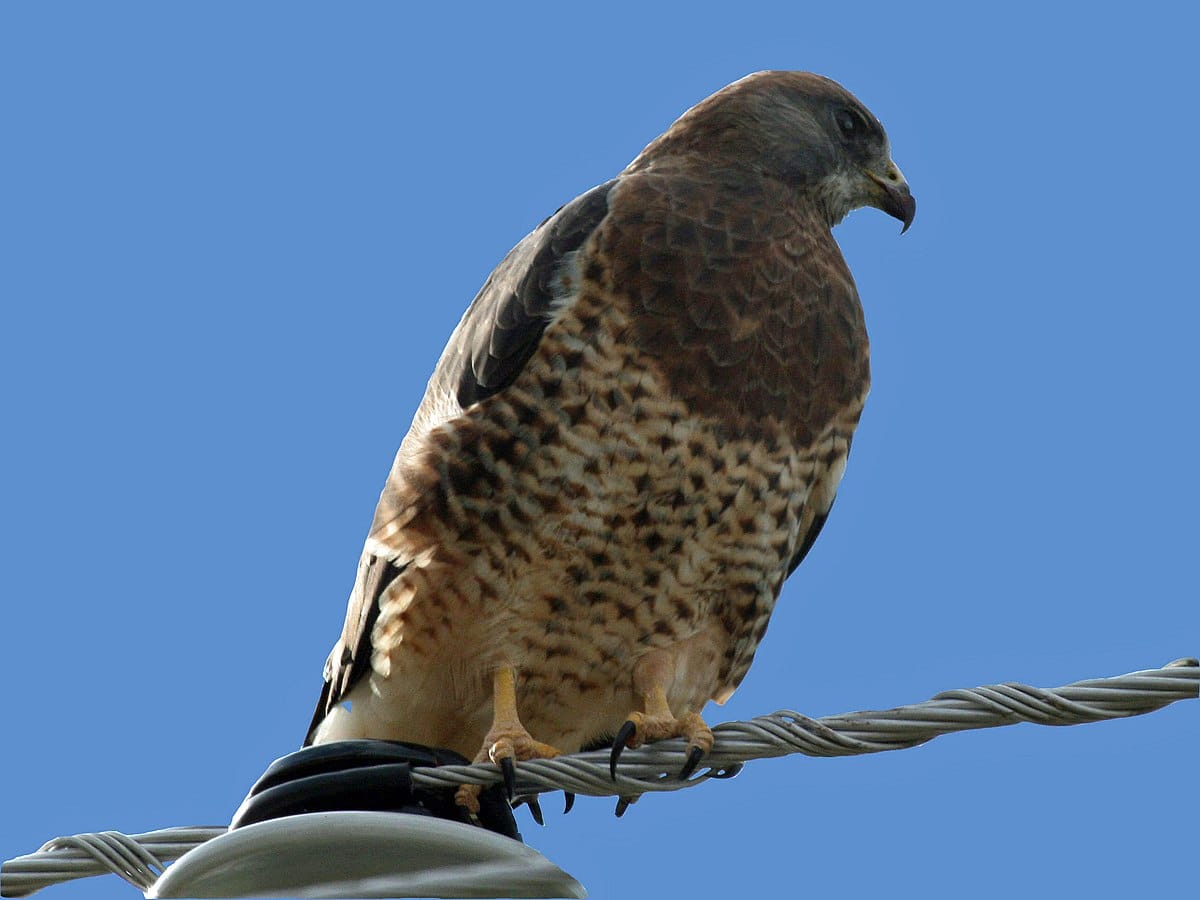
Swainson’s Hawks are elegant raptors built for long-distance travel. Their long wings, slender bodies, and pointed wingtips give them a graceful silhouette. Adults typically exhibit a dark bib across the upper chest and a contrasting pale belly. Some individuals appear much darker overall, while others show a lighter, more washed-out pattern. This variability can confuse beginners, but the species’ overall structure—long, lean, and aerodynamic—helps with identification.
When soaring, Swainson’s Hawks hold their wings flat, unlike the slight “V” shape seen in Red-tails. Their flight style is smooth and buoyant, allowing them to glide for long stretches. If you’re birdwatching on a spring morning and notice a group of hawks rising on thermals together, you may be witnessing a “kettle”—a swirling gathering of Swainson’s Hawks preparing for migration.
Behavior and Nesting Habits
Swainson’s Hawks are highly social by hawk standards. They migrate in massive flocks, sometimes numbering in the thousands—a spectacle that leaves even seasoned birdwatchers speechless. During breeding season, however, they settle into a quieter routine. They choose open landscapes with scattered trees or utility poles, building nests made of sticks, grass, and leaves.
Both parents contribute to nest building, though they occasionally add questionable décor like pieces of bark or discarded plant stems. Once the female lays her eggs, the pair becomes extremely protective of the site. They may circle above intruders or emit sharp calls that echo across the prairie. Their young grow rapidly, fueled by a diverse diet that shifts throughout the year.
Habitat and Range
In Texas, Swainson’s Hawks favor plains, open rangelands, agricultural fields, and lightly treed areas. The Panhandle and central plains are particularly good regions to spot them. Texas plays a major role in their annual migration. Every spring and fall, thousands pass through on their journey between North and South America.
Their migration path is one of the longest of any North American raptor. They travel all the way to Argentina, covering thousands of miles in a single year. This astonishing journey requires endurance, coordination, and cooperative flock behavior.
Diet
Their diet varies seasonally. During breeding in Texas, Swainson’s Hawks eat small mammals, reptiles, and the occasional bird. But once they begin their southbound migration, they shift dramatically to a diet dominated by insects—especially grasshoppers. Entire flocks descend on fields, feasting in a way that resembles a well-organized cleanup crew.
Reproduction and Life Cycle
Females generally lay two or three eggs. Incubation lasts several weeks, with both parents participating. When the chicks hatch, they appear as small white balls of fluff, quickly growing into curious juveniles who eagerly watch their parents’ comings and goings. As they near fledging age, they begin exercising their wings enthusiastically, hopping across the nest and nearby branches.
After fledging, they continue relying on their parents for a short time. Before long, however, the young must prepare for the long migration to South America. It’s an intimidating journey for a bird barely out of its first feathers, but nature equips them with strong instincts and excellent flying ability.
Fun Facts / Unique Traits
Swainson’s Hawks are sometimes called “grasshopper hawks” because of their appetite during migration. Another fun detail: researchers have documented enormous migration kettles containing over 10,000 hawks spiraling together. If you ever witness one, it feels like watching a living tornado made of wings.
Human Interaction
Agriculture influences their lives significantly. While open fields offer hunting opportunities, pesticide use can reduce insect populations, affecting their migration diet. Conservation groups have worked to raise awareness about these issues, and many farmers support efforts to maintain healthy grasshopper populations for the hawks.
Overall, Swainson’s Hawks remain a cherished species among Texans who enjoy watching the skies during migration seasons. They bring a sense of movement and natural rhythm to the landscape, reminding us that the world is full of remarkable journeys.
7. Broad-winged Hawk
Physical Characteristics & Identification Tips
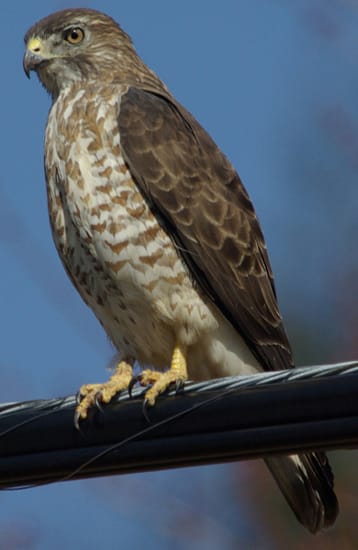
Broad-winged Hawks are medium-sized raptors, compact yet sturdy, with broad, rounded wings that give them their name. Adults display a rich brown back, a white underbelly streaked with fine reddish-brown bars, and striking black-and-white wing patterns visible in flight. When soaring, their wings form a wide, flat surface that catches thermals effortlessly. Juveniles are browner overall with streakier underparts, making them slightly trickier to identify.
If you observe them gliding high above fields or forests, look for their characteristic “chunky” silhouette with a relatively short tail. In flight, the broad wings contrast sharply with their compact body, giving them a classic, almost textbook raptor profile. They are often seen in kettles during migration, forming large swirls that slowly rise like living whirlwinds.
Behavior and Nesting Habits
Broad-winged Hawks are social among hawks—especially during migration—yet their daily hunting and nesting habits reveal a quieter, more solitary nature. They spend most of the year in wooded habitats, hunting from elevated perches or soaring overhead in search of prey. Flight is buoyant and sometimes playful, with occasional lazy circles in the wind, giving birdwatchers a relaxed observation experience.
Nests are usually built high in deciduous or mixed forests. Both sexes contribute to construction, weaving twigs and softer lining materials into a shallow, circular structure. The female incubates the eggs while the male brings food. The nestlings grow quickly, gaining strength daily as they test their fledgling wings, eventually leaving the nest after several weeks.
Habitat and Range
In Texas, Broad-winged Hawks prefer eastern forests, river corridors, and mature woodland areas. They migrate through Texas in large numbers during the fall, traveling from northern breeding grounds in Canada and the northern United States to Central and South America. During migration, open landscapes with scattered trees serve as resting points for brief hunting or thermaling.
Diet
Their diet consists mostly of small mammals, amphibians, reptiles, and insects. During breeding, small rodents and frogs make up the bulk of meals, while migrating Broad-winged Hawks can opportunistically feed on insects or small birds. Observing a hawk pause mid-flight to swoop down on a hidden prey item can be a fascinating lesson in patience and precision.
Reproduction and Life Cycle
Broad-winged Hawks lay two to five eggs per season. Both parents participate in feeding and protecting the young. Incubation lasts roughly a month, after which chicks hatch in fluffy white down. As they grow, they begin wing-flapping exercises in the nest, eventually moving to nearby branches before fledging entirely. Migration introduces them to broader landscapes, testing their endurance and navigational instincts from a young age.
Fun Facts / Unique Traits
A remarkable trait is their “kettle migration” behavior, where hundreds or thousands of individuals spiral together on thermals. To a human observer, this looks like a living tornado, a breathtaking aerial ballet. Their highly social migration behavior contrasts with their otherwise solitary breeding habits, demonstrating the adaptability and versatility of their species.
Human Interaction
Broad-winged Hawks benefit indirectly from healthy forests and protected riparian zones. Urban development and deforestation can limit suitable nesting areas, but in protected zones and parklands, they continue to thrive. Birdwatchers are often thrilled by the sight of a kettle in the sky, marking the passage of seasons with a spectacular natural performance.
8. Gray Hawk (Grey Hawk)

Physical Characteristics & Identification Tips
The Gray Hawk, or Grey Hawk, is a medium-sized raptor noted for its subtle elegance. Adults display soft gray plumage on the head and back, contrasting with a white or pale gray underbelly streaked lightly with darker lines. The tail is barred in black and white, providing a visual signature when the bird is in flight. Juveniles appear browner and mottled but gradually take on the gray adult tones as they mature.
One of the most distinctive features is their yellow legs and striking facial expression. The Gray Hawk carries itself with a composed confidence, often sitting quietly atop tree branches near streams or forest edges. Observers can sometimes spot them patiently scanning for prey from a concealed perch—a master of ambush hunting.
Behavior and Nesting Habits
Gray Hawks are patient hunters, often remaining motionless for long periods while waiting for amphibians, reptiles, or small mammals to approach. Their hunting style is methodical rather than explosive, relying on a combination of vision and timing. Flight is slow and deliberate, emphasizing control rather than speed.
Their nests are usually placed in tall trees, often near water sources such as rivers or wetlands. The nest itself is a simple stick platform, lined sparingly with leaves or bark. Both parents care for the eggs and young, with feeding duties shared but slightly divided by gender. Nestlings grow steadily, learning coordination skills before making their first cautious flights.
Habitat and Range
In Texas, Gray Hawks are most often found in south-central regions, particularly along wooded streams, riparian corridors, and river bottoms. Their range extends from Mexico into South Texas, where subtropical habitats provide consistent food and cover. They are less common in the northern and western parts of the state, favoring warmer, humid areas with mature tree cover.
Diet
Gray Hawks primarily consume small mammals, lizards, snakes, and amphibians. Occasionally, they take insects or small birds. Hunting typically occurs from a low perch, allowing the hawk to ambush prey with minimal energy expenditure. This patient approach contrasts with other more aerial or high-speed hawks, emphasizing their adaptability to local environments.
Reproduction and Life Cycle
Gray Hawks lay two to three eggs per breeding season. Both parents participate in incubation and feeding. After hatching, chicks grow quickly but remain dependent for several weeks. Flight practice begins slowly, with careful hops and short glides before fully fledging. Their life cycle revolves around stable habitats, emphasizing the importance of riparian ecosystems for survival.
Fun Facts / Unique Traits
The Gray Hawk’s quiet demeanor is unusual for raptors. Unlike hawks that vocalize frequently, Gray Hawks often remain calm, emitting calls only when necessary. They are skilled at camouflaging themselves among tree branches, making them challenging to spot for casual observers. Their unhurried hunting style is a lesson in efficiency—less effort, but highly effective.
Human Interaction
Conservation of riverine forests benefits Gray Hawks directly. Habitat destruction, especially along streams and rivers, threatens their breeding and feeding areas. Many birdwatchers actively seek them in protected parks and preserves. Observing a Gray Hawk from a distance often provides a quiet, contemplative wildlife experience, emphasizing patience and attentiveness in nature observation.
9. White-tailed Hawk

Physical Characteristics & Identification Tips
The White-tailed Hawk is a large, striking raptor easily recognized by its pale gray body, white tail, and dark wing tips. Adults have broad wings that enable long, graceful glides over open country. Their underwings are mostly white with contrasting dark patches, which makes them stand out against the horizon. Juveniles are browner and mottled, gradually adopting adult plumage over time.
Identification is aided by their soaring style and silhouette. When gliding high, their broad wings and short, rounded tails create an unmistakable profile. They hold their wings slightly upturned during thermaling, and the white tail is often the first visual cue to recognize them from a distance.
Behavior and Nesting Habits
White-tailed Hawks are often seen soaring above open grasslands, savannas, or scrublands. They hunt from the air or from elevated perches, spotting rodents, snakes, and small birds. Unlike some hawks, they display deliberate and elegant flight, almost like a practiced glider performing a measured dance across the sky.
Nests are built in large trees, cacti, or low cliffs. The structure is a robust platform of sticks, lined with softer material to protect the eggs and young. Both parents participate in nest-building and feeding. Chicks grow steadily, soon practicing short flights from the nest, and developing keen hunting skills under parental guidance.
Habitat and Range
White-tailed Hawks favor southern Texas, particularly open plains, rangelands, and coastal prairies. They are year-round residents in Texas but are most frequently observed in habitats that offer both wide visibility and access to prey. Their distribution stretches across Central and South America, with Texas serving as the northern edge of their range.
Diet
Their diet is mainly rodents, rabbits, snakes, and occasionally birds. Insects supplement meals during certain seasons. Hunting is methodical—hovering briefly over a field or scanning from a perch before dropping to strike. Observers note their precision and efficiency, often capturing prey on the first pass.
Reproduction and Life Cycle
Females lay two to three eggs per season. Both parents provide food and protection. Chicks grow rapidly, developing coordination before fledging. Post-fledging, juveniles remain nearby as they master flight and hunting, gradually dispersing to find their own territories. Life in open plains demands vigilance, patience, and timing—a lesson White-tailed Hawks seem to understand innately.
Fun Facts / Unique Traits
One fascinating trait is their preference for open areas, allowing them to soar for hours with minimal wingbeats. They are considered one of the more photogenic raptors, their white tail often gleaming in sunlight, providing a sharp contrast against blue skies or green fields. Many birdwatchers track them using this distinct feature.
Human Interaction
White-tailed Hawks are relatively tolerant of human presence in open country, though they rely on undisturbed nesting trees or shrubs. Conservation efforts focus on preserving rangelands and open habitats. Farmers sometimes notice them as silent rodent controllers, quietly benefiting agricultural lands while gliding gracefully overhead.
10. Zone-tailed Hawk
Physical Characteristics & Identification Tips
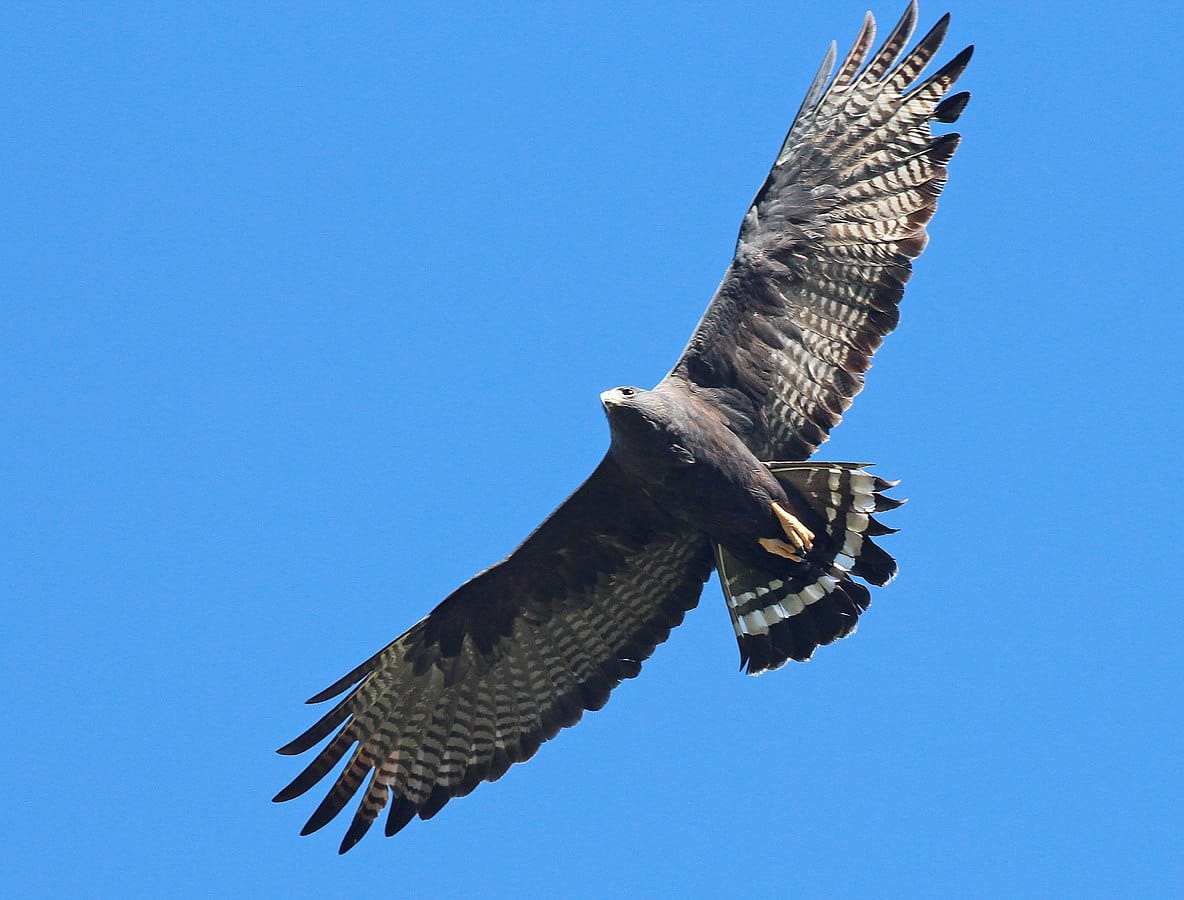
Zone-tailed Hawks are medium-sized raptors with a sleek, dark gray body and contrasting pale underwing bands. Their tail features multiple black bands separated by lighter gray, giving rise to their name. This hawk’s overall appearance is somewhat similar to a turkey vulture, a clever mimic that aids in hunting. Observers often notice their wings held in a slight dihedral while soaring, adding to the silhouette resemblance.
Adult Zone-tailed Hawks have sharp yellow eyes and a hooked beak suited for tearing prey. Juveniles appear browner with streaked underparts, gradually taking on adult gray plumage as they mature. Identification can be tricky from a distance, but watching the tail bands and flight style usually clarifies the species.
Behavior and Nesting Habits
These hawks employ stealthy hunting strategies, often flying among turkey vultures to surprise unsuspecting prey—hence their “vulture mimic” nickname. They hunt mostly small mammals, reptiles, and occasionally birds. Their flight is slow and calculated, allowing them to blend in and reduce detection by potential prey.
Zone-tailed Hawks typically nest in tall trees or cliff ledges. Both parents build a stick nest, lined with softer materials such as bark or leaves. The female incubates the eggs while the male supplies food. Chicks grow rapidly and start practicing flight near the nest, eventually leaving the nest area to develop independent hunting skills.
Habitat and Range
In Texas, Zone-tailed Hawks are most common in the southern and western parts, often near canyons, woodlands, and desert fringes. Their range extends from the southwestern United States into Central America. They favor open terrain interspersed with trees or cliffs, providing vantage points for hunting and nesting.
Diet
Small mammals, snakes, lizards, and birds form the bulk of their diet. Their mimicry of turkey vultures helps them approach prey unnoticed, giving them a strategic advantage over other raptors. Occasionally, they hunt near agricultural fields, benefiting from rodent activity.
Reproduction and Life Cycle
Females lay two to four eggs per season. Both parents care for the young, with fledging occurring after several weeks. Juveniles practice hunting under parental guidance and gradually disperse to find their own territories. The Zone-tailed Hawk’s mimicry is innate, helping young birds hunt successfully after leaving the nest.
Fun Facts / Unique Traits
Zone-tailed Hawks are famous for their vulture mimicry. By flying among vultures, they can approach prey unnoticed. This strategy is rare among raptors and demonstrates a fascinating adaptation for hunting efficiency. Observers often report initial confusion, mistaking the hawk for a harmless vulture.
Human Interaction
They are generally unobtrusive, rarely seen close to human settlements. Habitat conservation, particularly preserving trees and cliff areas, benefits this species. Birdwatchers delight in spotting them during migration, often noting their remarkable camouflage among soaring vultures.
11. Ferruginous Hawk
Physical Characteristics & Identification Tips
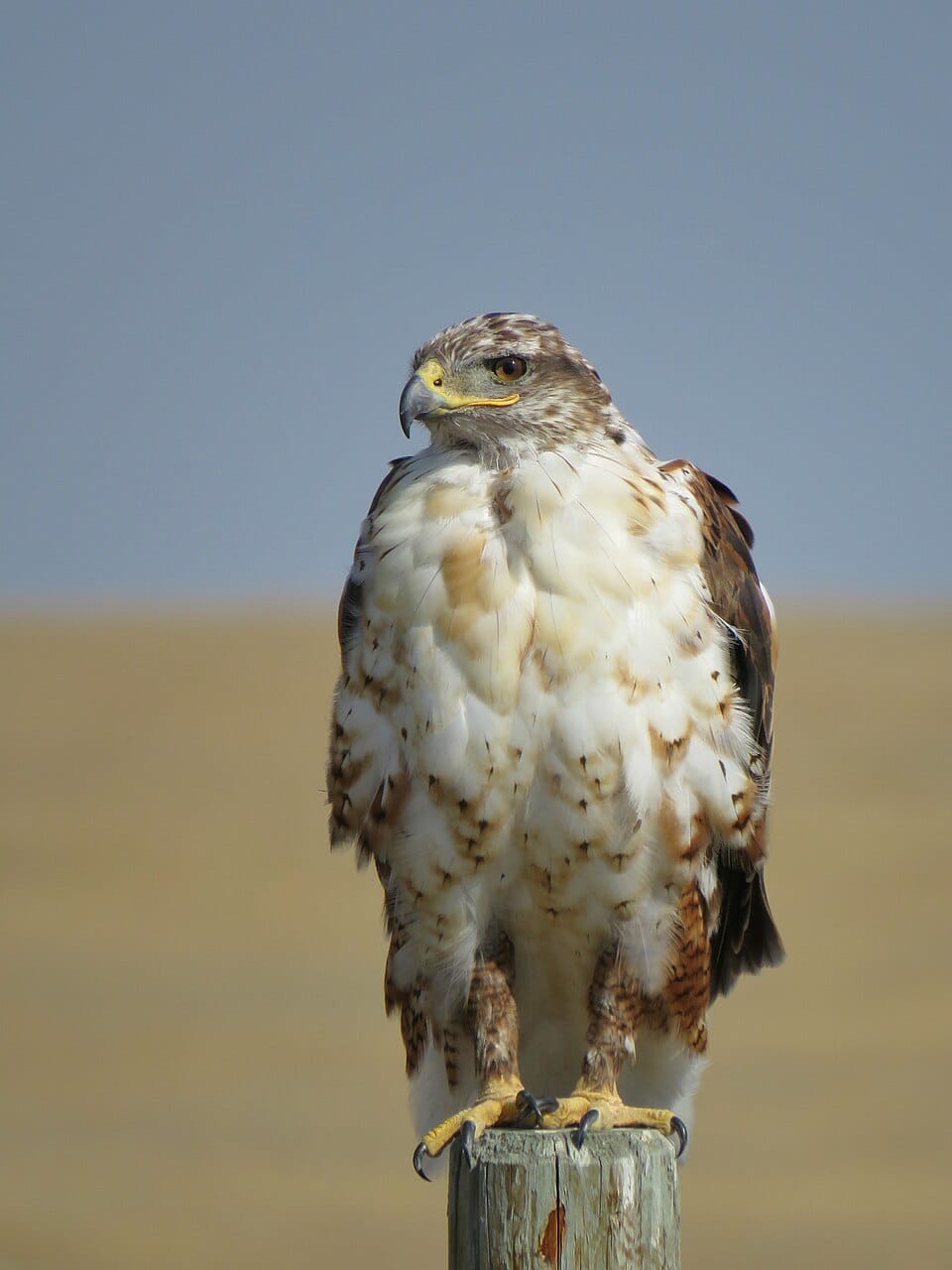
Ferruginous Hawks are among the largest hawks in Texas, easily identified by their rusty-colored back, pale underparts, and broad wings. Adults have long legs and a large, powerful beak, with males slightly smaller than females. Juveniles are streakier but gradually develop the characteristic ferruginous tones. Their size and coloration make them stand out against prairies and open fields.
In flight, the Ferruginous Hawk displays wide wings with dark wrist patches and a long tail. Observers often notice their soaring style—slow, deliberate, and purposeful, reminiscent of a glider taking advantage of thermals. When perched, their upright posture and keen gaze convey authority, as if surveying their prairie domain.
Behavior and Nesting Habits
Ferruginous Hawks are ground hunters, often scanning for rodents and rabbits from a perch or hovering briefly before diving. They are solitary except during mating and migration. Nesting occurs on cliffs, trees, or occasionally artificial structures. Both sexes build the nest using sticks and line it with softer material.
Females incubate the eggs, usually two to four, while the male provides food. Chicks grow rapidly, learning to flap and eventually glide within weeks. The species exhibits patience and endurance, with young developing strong hunting skills before independence.
Habitat and Range
Ferruginous Hawks favor open grasslands, plains, and deserts. In Texas, they are mostly seen in the Panhandle and western regions. They require vast, open spaces to spot prey and soar efficiently. Their range extends across western North America into Mexico.
Diet
Rodents, rabbits, and other small mammals dominate their diet. They also take reptiles and occasionally birds. Their hunting method combines observation, patience, and sudden bursts of energy. Ferruginous Hawks serve as natural pest control in prairie ecosystems.
Reproduction and Life Cycle
Females lay two to four eggs. Both parents care for the young. Fledging occurs after several weeks, during which juveniles practice flight and hunting. Early hunting attempts may be clumsy, but skill develops quickly due to parental guidance and practice.
Fun Facts / Unique Traits
Ferruginous Hawks are sometimes called “Ferrugies” by raptor enthusiasts. Their impressive size and long legs make them appear almost falcon-like in silhouette. They are well-adapted to prairie life, where speed, power, and patience combine for effective hunting.
Human Interaction
They generally avoid humans, though open landscapes increase visibility. Conservation of grasslands and prairie ecosystems benefits their survival. Observers appreciate them for both their striking appearance and role in maintaining ecological balance.
12. Common Black Hawk

Physical Characteristics & Identification Tips
The Common Black Hawk is a large, dark raptor with broad wings and a short, rounded tail. Adults are predominantly black with a white band near the tail tip, which becomes visible in flight. Juveniles are mottled with brown and gray before reaching adult coloration. They have powerful talons and a sharp, hooked beak, reflecting their predatory nature.
When soaring, their broad wings and solid dark coloration make them unmistakable against bright skies. Perched birds display an upright posture, scanning rivers or coastal areas for prey. Their flight is steady, with occasional flaps interspersed with long glides.
Behavior and Nesting Habits
Common Black Hawks are often found near water. They hunt opportunistically, taking fish, crabs, small mammals, and reptiles. Nesting occurs in tall trees near rivers, streams, or mangroves. Both parents participate in nest-building, incubation, and feeding. Chicks grow steadily and soon practice short flights, learning to navigate their watery habitats effectively.
Habitat and Range
In Texas, they are found mostly in southern regions, near coastal and riparian zones. Their range extends from the southwestern United States into Central America. Open water, forests, and river corridors provide ideal habitat for hunting and nesting.
Diet
Fish, crustaceans, small mammals, and amphibians form the majority of their diet. They are opportunistic feeders, adjusting based on local availability. Observers may see them swooping low over rivers or ponds, quickly snatching prey with precise talon strikes.
Reproduction and Life Cycle
Females lay two to three eggs. Both parents care for the nestlings. Fledging occurs after several weeks, during which the young develop hunting skills. Juveniles often remain nearby, honing their abilities under parental supervision before dispersing to establish independent territories.
Fun Facts / Unique Traits
Common Black Hawks often patrol rivers like sentinels, scanning for fish and other aquatic prey. Their dark plumage and slow, deliberate flight make them appear almost stealthy from a distance. They are rarely vocal, relying more on stealth and precision than noisy displays.
Human Interaction
They are relatively tolerant of humans when not disturbed. Conservation of riparian and coastal habitats is essential for their survival. Birdwatchers enjoy spotting them along waterways, appreciating their sleek form and calm hunting style.
13. Rough-legged Hawk
Physical Characteristics & Identification Tips
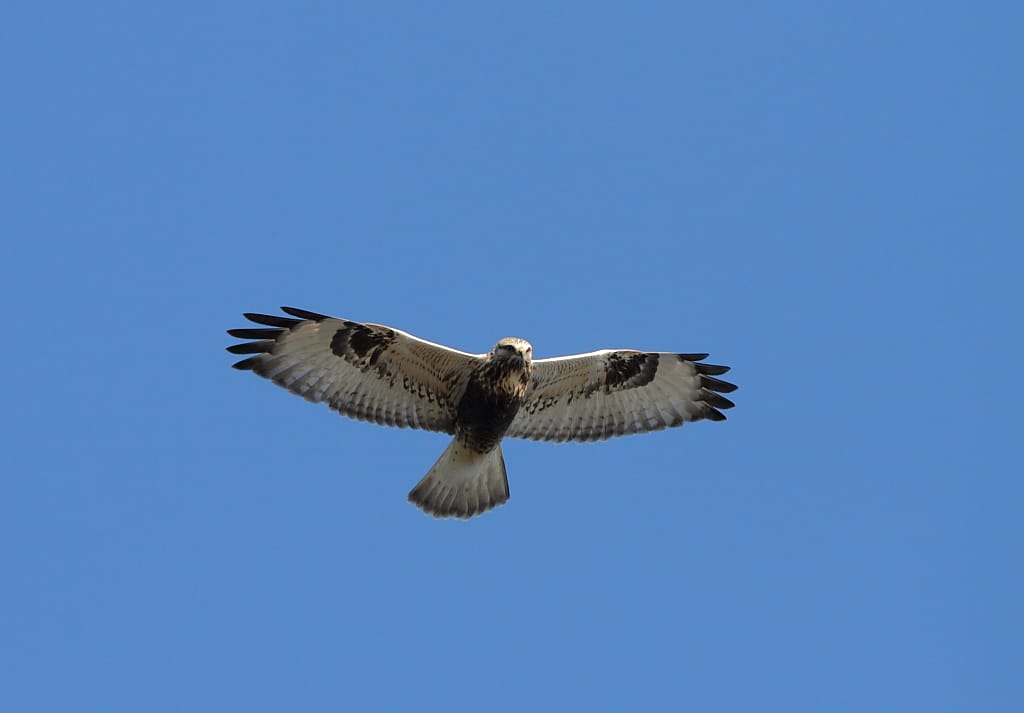
The Rough-legged Hawk is a large, northern raptor known for its distinctive feathered legs, which extend all the way down to the talons. This adaptation helps insulate against cold temperatures. Adults display brown plumage with lighter underparts streaked with dark markings. Their wings are broad and long, with dark patches near the carpal “wrist,” making them identifiable from a distance. Juveniles are darker overall with mottled underparts.
When soaring, Rough-legged Hawks hold their wings in a slight dihedral, giving them a characteristic gliding silhouette. Their tail is long and wide, often showing a dark terminal band contrasted against lighter feathers. Observers in winter can spot them hovering or gliding above open fields, scanning for small mammals below.
Behavior and Nesting Habits
Rough-legged Hawks hunt primarily by hovering above open ground, a method called “kiting.” They can remain almost stationary in the wind while scanning for voles, mice, or small birds. Once prey is spotted, they drop quickly, talons first, demonstrating remarkable precision and timing.
Nesting occurs in the tundra and boreal forests in their breeding range far north, but in Texas, these hawks are winter visitors. They do not breed locally, so nesting behavior is seldom observed in the state. During winter, they focus solely on hunting and conserving energy, often roosting in open fields or fence posts.
Habitat and Range
Rough-legged Hawks appear in Texas mainly during the winter months, migrating south from the Arctic and sub-Arctic regions. They prefer open grasslands, prairies, agricultural fields, and tundra-like landscapes where small mammals are abundant. Texas’s Panhandle and north-central regions are ideal wintering grounds.
Diet
Small mammals, especially voles and mice, make up most of their diet. Occasionally, they will take birds or reptiles when available. Their hunting style relies heavily on patience and keen eyesight, allowing them to spot subtle movement from high above the ground.
Reproduction and Life Cycle
Rough-legged Hawks breed far north and migrate south for the winter. Breeding involves two to four eggs per clutch, incubated primarily by the female. Chicks hatch in fluffy down and grow rapidly before fledging. While not breeding in Texas, observing these hawks in winter offers insight into their migratory life cycle.
Fun Facts / Unique Traits
Their feathered legs are one of the most unusual traits among North American hawks. They are sometimes called “rough-legged buzzards” due to the dense leg feathers. Hovering behavior is also striking, resembling a small helicopter suspended in midair.
Human Interaction
Rough-legged Hawks rarely interact with humans directly. They are often appreciated by birdwatchers for their graceful flight and unique hunting style. Conservation of open fields and prairie habitats indirectly supports their wintering populations.
14. Roadside Hawk

Physical Characteristics & Identification Tips
The Roadside Hawk is a small to medium-sized raptor with a compact build. Adults are generally dark brown on the upperparts, with lighter underparts streaked subtly. The tail features a series of thin bands, while the head displays a sharp, alert expression. Juveniles are streakier, but the short, rounded wings and relatively small size help distinguish this species.
This hawk is often seen perched along roadsides, fences, or utility lines, hence its name. Its compact shape and quick flight make it easily recognizable, even from a short distance. In flight, the wings are rounded, with a characteristic flap-and-glide pattern that distinguishes it from larger hawks.
Behavior and Nesting Habits
Roadside Hawks are opportunistic hunters. They perch quietly, scanning the ground for lizards, snakes, small mammals, or insects. Their hunting style is more static than other hawks, relying on keen eyesight rather than aerial chases. They frequently use human-modified landscapes, adapting well to pastures, farms, and open woodland edges.
Nests are usually placed in trees along forest edges or open areas. Both parents contribute to construction, incubation, and feeding. Eggs hatch into fluffy chicks that grow quickly, practicing flight in nearby branches before venturing further.
Habitat and Range
In Texas, Roadside Hawks are uncommon and mostly found in southern regions near subtropical forests and riparian corridors. Their range extends from southern Texas through Central and South America. They prefer edge habitats, where hunting opportunities are abundant, and visibility is clear.
Diet
Small reptiles, amphibians, mammals, and insects make up the bulk of their diet. Opportunistic by nature, Roadside Hawks adjust to local prey availability and may hunt near human activity if suitable cover is nearby.
Reproduction and Life Cycle
Females lay two to four eggs, with both parents sharing incubation and feeding duties. Nestlings grow steadily, eventually making their first flights under parental guidance. Juveniles practice hunting locally before dispersing to establish their own territories.
Fun Facts / Unique Traits
The Roadside Hawk’s calm demeanor while perched along open areas is striking. Its ability to thrive in semi-disturbed landscapes demonstrates adaptability uncommon among more forest-dependent hawks. Observers often spot it quietly watching, motionless for long periods before swooping to catch prey.
Human Interaction
They are often tolerated near rural roads, farmlands, and human habitations. Birdwatchers enjoy spotting them from vehicles or along cleared paths. Conservation focuses on preserving suitable edge habitats and reducing pesticide impacts on their prey.
15. Short-tailed Hawk
Physical Characteristics & Identification Tips
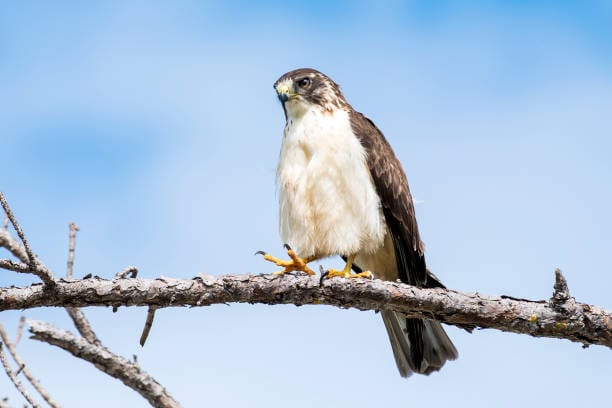
Short-tailed Hawks are small but powerful raptors. Adults display dark gray upperparts with pale underparts and bold chestnut coloration in some morphs. Their tail is relatively short and square-tipped, distinguishing them from other similar-sized hawks. Juveniles are streaky brown with mottled underparts.
In flight, their short tail and broad wings create a compact, agile silhouette. They often soar with quick, shallow wingbeats interspersed with glides. Observers can spot them hovering briefly over open areas, scanning for prey below with sharp, yellow eyes.
Behavior and Nesting Habits
Short-tailed Hawks hunt primarily during the day, feeding on small mammals, reptiles, and occasionally birds. They often perch quietly, waiting to swoop down on unsuspecting prey. Nests are usually built in tall trees, often in forest edges or along rivers. Both parents build the nest and care for the young, teaching fledglings critical hunting skills.
Habitat and Range
In Texas, Short-tailed Hawks are mostly found in southern regions near forests, rivers, and wetlands. Their range extends into Central and South America. They favor areas with open hunting grounds adjacent to perching or nesting sites.
Diet
Small mammals, lizards, snakes, and occasionally birds are typical prey. Their hunting combines stealth and precision, often from a perch before rapid descents. Short-tailed Hawks demonstrate patience and timing, rarely wasting energy on missed attacks.
Reproduction and Life Cycle
Females lay two to three eggs per season. Both parents provide food and protection. Chicks fledge within a few weeks, practicing flight and hunting under parental supervision. Young eventually disperse, searching for their own territories while perfecting hunting techniques.
Fun Facts / Unique Traits
Short-tailed Hawks are agile hunters despite their compact size. Their ability to hover briefly while scanning for prey is remarkable. They are often observed silently patrolling rivers or open forest edges, blending patience with efficiency.
Human Interaction
They are generally unobtrusive and avoid human disturbance. Conservation focuses on preserving forested river corridors and open hunting areas. Birdwatchers enjoy observing their hunting style, particularly the quick, precise swoops that demonstrate skill and patience.
16. Crane Hawk

Physical Characteristics & Identification Tips
The Crane Hawk is a medium-sized raptor with long legs and a slender body, well-adapted for hunting in dense forest understory and wetlands. Adults display a mix of gray, brown, and rufous plumage, with striking red or orange legs that stand out in contrast to their muted feathers. Juveniles appear mottled brown with paler underparts, gradually attaining adult coloration.
Their long legs and neck allow them to reach into tree cavities, crevices, and dense foliage—an unusual adaptation for a hawk. Observers often notice them perching quietly, scanning for prey, and occasionally moving with a deliberate, stalking gait along branches or low vegetation.
Behavior and Nesting Habits
Crane Hawks are patient hunters, often probing crevices for snakes, lizards, frogs, or small birds. They may hang from branches or use their elongated legs to extract prey from tree cavities—a technique few other raptors employ. Flight is powerful but purposeful, favoring gliding through forest clearings or over water bodies.
Nesting typically occurs in tall trees, often near water. Both sexes contribute to nest construction, forming a platform of sticks lined with leaves or soft vegetation. Females incubate eggs while males provide food. Chicks grow quickly, developing coordination and hunting skills before fledging.
Habitat and Range
In Texas, Crane Hawks are rare and mostly found in southern subtropical regions near forests, swamps, or river corridors. Their range extends from Mexico through Central and South America. They favor habitats that provide both cover and access to prey-rich wetlands or forest edges.
Diet
Their diet includes small mammals, amphibians, reptiles, and occasionally birds. They are opportunistic and employ specialized hunting techniques, such as reaching into tree cavities, showcasing a remarkable adaptation among raptors. This patient, methodical approach makes observing them in the wild particularly rewarding.
Reproduction and Life Cycle
Crane Hawks lay two to three eggs per clutch. Both parents are active in feeding and protecting the nestlings. Juveniles practice hunting and flying under parental guidance before dispersing to establish territories. Their life cycle is closely tied to forested wetlands, emphasizing the importance of conserving these habitats.
Fun Facts / Unique Traits
Crane Hawks are among the few raptors that can extract prey from tree cavities using their unusually long legs. This adaptation allows them to exploit resources inaccessible to other hawks. Observers often find this hunting behavior fascinating and almost “mechanical” in precision.
Human Interaction
Crane Hawks are generally unobtrusive and avoid human disturbance. Birdwatchers and wildlife enthusiasts appreciate spotting them in dense forests or along wetlands. Conservation efforts focus on preserving forested habitats and riparian areas essential for both hunting and nesting.
17. Great Black Hawk

Physical Characteristics & Identification Tips
The Great Black Hawk is a large, imposing raptor with entirely black plumage, except for a distinctive white band at the base of the tail and a pale eye that contrasts sharply with its dark feathers. Adults exhibit a broad wingspan and a robust body, giving them a commanding presence in the air. Juveniles are slightly browner with mottled underparts but otherwise similar in structure.
In flight, their broad wings and squared-off tail create a striking silhouette. Observers often notice their slow, deliberate flapping and gliding style. Perched birds maintain an alert, upright posture, scanning for prey with methodical attention.
Behavior and Nesting Habits
Great Black Hawks are versatile hunters. They feed on small mammals, reptiles, amphibians, and occasionally birds. They often patrol rivers, wetlands, and forest edges, either perched or soaring slowly. Their hunting style is calculated rather than frantic, emphasizing patience over speed.
Nests are large platforms built in tall trees near water or forest edges. Both parents contribute to nest building, egg incubation, and feeding of chicks. Young grow rapidly, practicing flight and hunting skills in a protective environment before venturing independently.
Habitat and Range
In Texas, Great Black Hawks are uncommon but can be found in southern subtropical forests and river corridors. Their overall range extends from southern Texas through Central and South America. They prefer areas that combine open spaces for hunting with tall trees for perching and nesting.
Diet
Small mammals, reptiles, amphibians, and occasionally birds constitute their primary diet. They employ deliberate, patient hunting techniques, scanning ground or water surfaces for prey before swooping with precision. Their diet and hunting style reflect adaptability to forested and semi-open habitats.
Reproduction and Life Cycle
Females typically lay two to three eggs. Both parents actively feed and protect chicks until fledging. Young practice flight and hunting in nearby trees, gradually mastering survival skills before dispersing to seek their own territories.
Fun Facts / Unique Traits
Great Black Hawks are known for their commanding presence and entirely black plumage. Their slow, purposeful gliding and alert posture make them appear almost regal. Observers often note their “silent authority” while perched or soaring above forest edges.
Human Interaction
These hawks are generally tolerant of distant human activity but require undisturbed trees for nesting. Conservation focuses on maintaining riparian forests and forested corridors. Birdwatchers find them impressive due to their size, coloration, and methodical hunting style.
18. Northern Goshawk
Physical Characteristics & Identification Tips
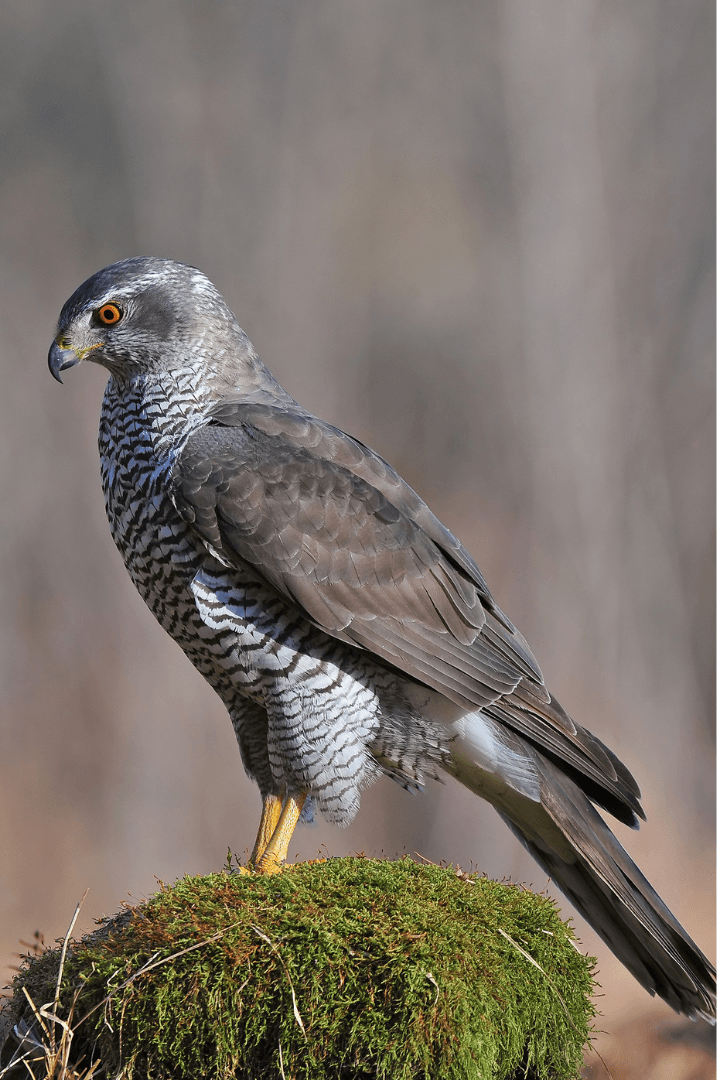
The Northern Goshawk is a large, powerful raptor with gray upperparts, pale underparts streaked with fine horizontal bars, and striking red or orange eyes. Adults display broad wings and long tails, adapted for agile flight through dense forests. Juveniles are browner with vertical streaks but otherwise similar in form.
In flight, their broad wings and long tail allow quick maneuvering between trees. Observers often notice their swift, controlled flapping followed by glides, making them highly effective forest hunters. Their gaze is piercing, giving them an almost predatory intensity from a distance.
Behavior and Nesting Habits
Northern Goshawks are aggressive predators, hunting birds, mammals, and occasionally reptiles. They rely on speed, agility, and surprise, often attacking prey from cover. Flight is explosive in short bursts through wooded areas, showcasing remarkable maneuverability.
Nesting occurs in tall, mature forests. Nests are large platforms of sticks, lined with leaves or soft material. Females incubate the eggs while males hunt. Chicks fledge after several weeks, practicing flight skills in the forest before dispersing.
Habitat and Range
In Texas, Northern Goshawks are rare visitors, mainly in forested mountainous areas of western regions. Their breeding range extends across northern North America, favoring boreal and temperate forests. Dense woodlands with ample prey are essential for their hunting and nesting success.
Diet
Birds and small mammals are the primary diet, supplemented by reptiles or amphibians when available. Hunting combines stealth, speed, and agile pursuit. Observers may spot them swooping through forest corridors or ambushing prey with sudden bursts of energy.
Reproduction and Life Cycle
Females lay two to four eggs. Both parents provide food and protection. Chicks grow rapidly, practicing flight and hunting before leaving the nest. The life cycle emphasizes agility, stealth, and skill acquisition from a young age, critical for survival in forested habitats.
Fun Facts / Unique Traits
Northern Goshawks are known for their aggressive nature and stealthy hunting skills. They can take prey larger than themselves and maneuver through dense forests with precision. Observers often regard them as “forest acrobats,” combining strength, speed, and intelligence.
Human Interaction
They avoid humans but are highly valued by birdwatchers for their rarity and skill. Conservation of mature forest tracts supports Northern Goshawk populations. Observing them in flight provides a lesson in the power of stealth, agility, and strategy.
19. Harris’s Hawk

Physical Characteristics & Identification Tips
Harris’s Hawks are medium-sized raptors, notable for their dark brown plumage, chestnut-colored shoulders, and white-tipped tail. Adults have yellow legs and a sharp, hooked beak. Juveniles appear lighter with streaked underparts and gradually attain adult coloration. Their wings are broad, enabling both soaring and agile maneuvering through trees or desert landscapes.
Harris’s Hawks are distinctive in flight, often gliding smoothly with coordinated wingbeats. Observers may notice the reddish tones on the shoulders catching sunlight during flight, making identification easier. Perched, their upright stance and keen eyes convey alertness and intelligence.
Behavior and Nesting Habits
Harris’s Hawks are famous for their cooperative hunting behavior, often working in small groups to flush out prey such as rabbits, birds, or lizards. This social hunting strategy is unusual among raptors and allows them to take larger or more agile prey effectively. Flight can be both fast and strategic, depending on the hunting situation.
Nesting occurs in trees or cacti, typically in desert, scrub, or woodland areas. Both sexes contribute to nest construction, incubation, and feeding. Juveniles learn hunting techniques from observing adults and gradually participate in group hunts, developing teamwork skills that persist into adulthood.
Habitat and Range
In Texas, Harris’s Hawks are mostly found in southern regions, particularly desert scrublands, semi-arid areas, and riparian corridors. Their overall range extends from the southwestern United States into Mexico and Central America. They prefer open landscapes interspersed with trees or shrubs that provide vantage points for hunting.
Diet
Rabbits, small mammals, lizards, and birds dominate their diet. Cooperative hunting allows them to catch prey larger than themselves or outmaneuver more agile targets. They are opportunistic, adapting to seasonal and local variations in prey availability.
Reproduction and Life Cycle
Females lay two to five eggs per season. Both parents and sometimes older offspring participate in feeding and protecting the young. Nestlings fledge after several weeks, gradually practicing hunting skills under adult supervision. Cooperation and social learning are key features of their life cycle.
Fun Facts / Unique Traits
Harris’s Hawks are unusual among raptors for their social nature. Cooperative hunting resembles a mini-team effort, with one hawk driving prey toward others. They have earned a reputation as the “pack hunters” of the raptor world. Observing this behavior is both entertaining and educational, offering insight into adaptive strategies in the wild.
Human Interaction
Harris’s Hawks are often used in falconry due to their intelligence and social nature. In the wild, they are sensitive to habitat destruction, particularly loss of trees or shrubs used for nesting and hunting perches. Birdwatchers enjoy observing their cooperative hunting, often highlighting their teamwork as a unique spectacle among hawks.
20. Harlan’s Hawk
Physical Characteristics & Identification Tips
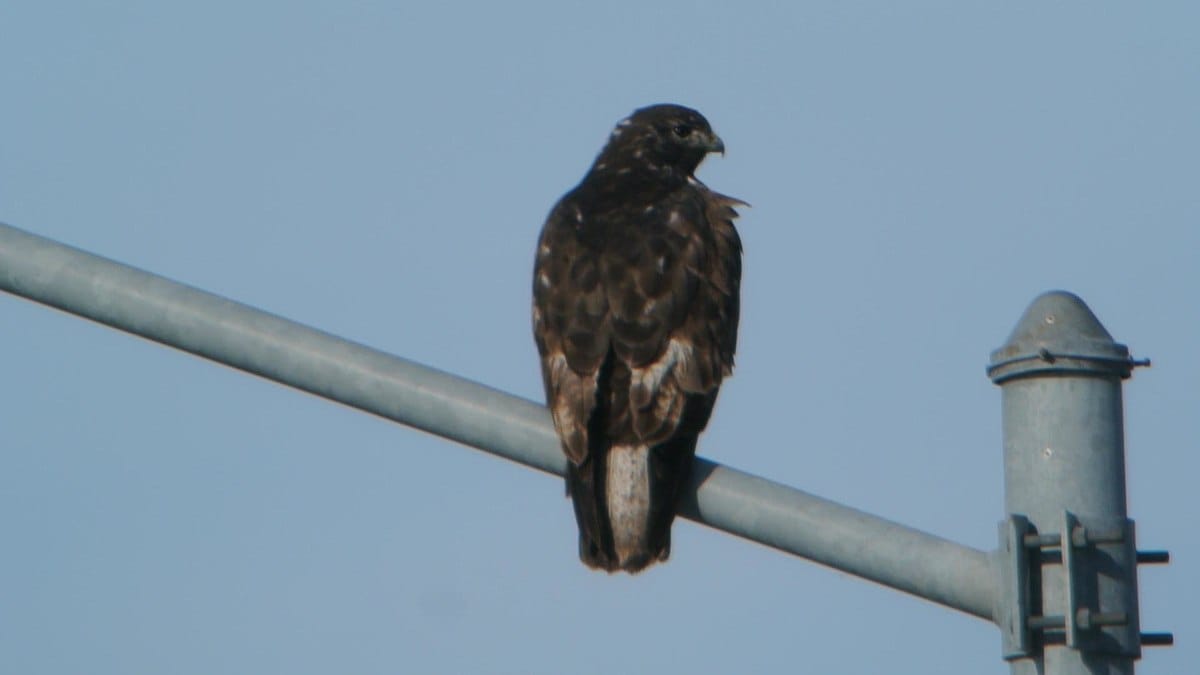
Harlan’s Hawk is a color variant of the Red-tailed Hawk, characterized by dark, often nearly black plumage with lighter streaking on the underparts. Adults display broad, rounded wings and a short, wide tail. Juveniles appear streakier and slightly lighter, gradually developing the darker tones of adults. Their striking dark appearance makes them particularly dramatic against snowy or open landscapes.
In flight, Harlan’s Hawks show broad wings with subtle underwing patterning and a slightly paler tail base. Observers can distinguish them from other Red-tailed Hawks by their darker overall coloration and strong contrast between underparts and wings. Perched, they appear almost menacing, their dark plumage blending with shadowy tree branches.
Behavior and Nesting Habits
Harlan’s Hawks are solitary hunters, relying on keen eyesight and powerful flight to capture rodents and small mammals. Flight style is strong and deliberate, often involving soaring and circling while scanning large areas for prey. They hunt mostly from perches but may swoop low over fields when prey is detected.
They typically nest in coniferous trees, preferring northern forests, though some winter in Texas. Nests are large stick platforms, lined with softer materials for insulation. Females primarily incubate eggs, while males provide food. Chicks fledge after several weeks, learning to hunt under parental guidance before dispersing.
Habitat and Range
Harlan’s Hawks breed in Alaska and northern Canada and migrate south for the winter. In Texas, they are rare winter visitors, typically seen in northern plains, open fields, or forest edges. They prefer open or semi-open areas where they can hunt effectively while still finding suitable perching sites.
Diet
Rodents, rabbits, and other small mammals dominate their diet. They are opportunistic hunters, adjusting hunting techniques based on prey availability. Harlan’s Hawks may perch silently for long periods, then swoop down with precision, demonstrating both patience and power.
Reproduction and Life Cycle
Breeding occurs far north, where females lay two to five eggs. Both parents participate in feeding and protecting chicks. Juveniles fledge after several weeks, honing flight and hunting skills before migrating south for winter. Their life cycle highlights adaptation to harsh northern climates and long migratory journeys.
Fun Facts / Unique Traits
Harlan’s Hawks are visually striking due to their dark plumage and contrast against snowy landscapes. They are considered one of the more dramatic Red-tailed Hawk variants. Their adaptability to wintering grounds in Texas demonstrates flexibility in migratory and hunting strategies.
Human Interaction
They are generally tolerant of distant human activity but rely on open areas and mature trees for hunting and perching. Conservation of prairie and open field habitats benefits wintering populations. Birdwatchers often seek them out for their distinctive coloration and rarity in Texas.
Conclusion
Texas is home to an impressive diversity of raptors, and the 20 types of hawks we’ve explored showcase the remarkable variety of form, behavior, and adaptation found within the state. From the cooperative hunting Harris’s Hawk to the stealthy Zone-tailed Hawk, each species brings unique hunting strategies, physical traits, and ecological roles. Observing these birds in their natural habitats provides a glimpse into the complex balance of prairie, forest, wetland, and desert ecosystems across Texas.
Many hawks in Texas display incredible adaptations—from feathered legs in Rough-legged Hawks to vulture mimicry in Zone-tailed Hawks—highlighting nature’s creativity in supporting survival and efficiency. Their presence contributes not only to ecological balance, by controlling populations of small mammals and reptiles, but also to the enjoyment and education of birdwatchers and wildlife enthusiasts alike.
Conservation efforts, including preserving forests, grasslands, and wetlands, are vital for maintaining healthy hawk populations. By understanding and appreciating these raptors’ habits, habitats, and life cycles, Texans and visitors alike can help ensure that these majestic birds continue to soar across the skies for generations to come.
Whether you are a seasoned birder or a casual observer, spotting one of these 20 types of hawks in Texas is always a rewarding experience. Each sighting is an opportunity to marvel at the beauty, precision, and adaptability of these magnificent raptors, reminding us of the rich wildlife diversity that makes Texas truly special.
FAQs About Hawks in Texas
1. What types of hawks can be found in Texas?
Texas is home to over 20 types of hawks, including Cooper’s Hawk, Swainson’s Hawk, Red-tailed Hawk, and Harris’s Hawk.
2. Where is the best place to spot hawks in Texas?
Open fields, grasslands, forests, and river corridors are ideal for spotting hawks in Texas.
3. When is hawk migration season in Texas?
Hawks typically migrate through Texas in the fall (September–November) and spring (March–May).
4. How many types of hawks live year-round in Texas?
Several species, such as Red-shouldered Hawks and Harris’s Hawks, live year-round in Texas.
5. Are any hawks in Texas endangered?
Most hawks in Texas are not endangered, but habitat loss can threaten local populations.
6. What is the largest hawk in Texas?
The Ferruginous Hawk is among the largest hawks found in Texas.
7. Do hawks in Texas eat rodents?
Yes, most hawks in Texas feed primarily on small mammals, including mice, rats, and rabbits.
8. Can you see hawks in Texas cities?
Some hawks, like Cooper’s Hawks, can adapt to urban and suburban areas in Texas.
9. How can you identify hawks in Texas?
Look for wing shape, tail patterns, coloration, size, and flight behavior to identify hawks in Texas.
10. Which Texas hawk mimics vultures?
The Zone-tailed Hawk in Texas is known for mimicking turkey vultures to approach prey unnoticed.
11. Do hawks in Texas migrate south for winter?
Yes, many northern species, like the Rough-legged Hawk, migrate through or to Texas during winter.
12. Where do hawks nest in Texas?
Hawks in Texas nest in tall trees, cliffs, and occasionally man-made structures, depending on the species.
13. How long do hawks live in Texas?
Most hawks in Texas live 10–20 years in the wild, depending on species and environmental conditions.
14. Are there any hawks unique to Texas?
While no hawks are exclusive to Texas, the state supports a diverse mix of species year-round and during migration.
15. What hawks in Texas hunt cooperatively?
Harris’s Hawks in Texas are known for cooperative hunting in small family groups.
16. Can you see migratory hawks in Texas parks?
Yes, many Texas parks and wildlife refuges host migratory hawks during fall and spring seasons.
17. How many hawk species migrate through Texas each year?
At least 10–12 species of hawks migrate through Texas annually, depending on weather and population trends.
18. Are hawks in Texas dangerous to pets?
Hawks primarily hunt small mammals and birds, but small pets could be at risk if left unsupervised outdoors.
19. What is the smallest hawk found in Texas?
The Sharp-shinned Hawk is among the smallest hawks commonly seen in Texas.
20. Do hawks in Texas eat snakes?
Yes, some Texas hawks, like the Red-tailed Hawk, occasionally feed on snakes and other reptiles.
21. How high do hawks fly in Texas?
Hawks in Texas can soar hundreds of feet in the air, using thermals to conserve energy while hunting.
22. Are hawks in Texas protected by law?
Yes, hawks in Texas are protected under the Migratory Bird Treaty Act, making it illegal to harm or capture them without a permit.
23. What Texas hawk is known for hovering while hunting?
The Rough-legged Hawk frequently hovers over open fields in Texas while searching for prey.
24. Do hawks in Texas eat insects?
Some smaller hawks in Texas may supplement their diet with large insects, though most rely on mammals and birds.
25. Can hawks in Texas be seen near water?
Yes, species like the Common Black Hawk and Gray Hawk are often found near rivers, streams, and wetlands in Texas.
26. What hawk in Texas has reddish shoulders?
Harris’s Hawk displays chestnut-colored shoulders, which are visible in flight or perched in the sun.
27. How can you attract hawks to your property in Texas?
Providing open hunting spaces, tall perches, and minimizing disturbances can encourage hawks to visit in Texas.
28. Are hawks in Texas easy to photograph?
They can be photographed, especially during migration or while perched, but patience is required to capture flight shots.
29. Do hawks in Texas have predators?
Adult hawks have few predators, though eggs and chicks may be taken by raccoons, snakes, or larger raptors in Texas.
30. What time of day are hawks most active in Texas?
Hawks in Texas are generally diurnal, most active during early morning and late afternoon when hunting is optimal.
31. Can hawks in Texas live near farms?
Yes, many Texas hawks adapt well to agricultural areas, feeding on rodents and other small prey.
32. How do Texas hawks help the ecosystem?
Hawks in Texas control populations of rodents, reptiles, and small birds, maintaining ecological balance in their habitats.
Read more: 11 Types of Hawks in Wisconsin (Pictures And Identification)