

Alberta is home to a fascinating assortment of weasels and mustelids, each playing a vital role in the province’s diverse ecosystems. From dense forests to wetlands and open grasslands, these nimble predators are masters of stealth, helping control rodent populations and contributing to ecological balance. Despite their small size, weasels exhibit extraordinary hunting skills, adaptable behaviors, and striking seasonal coat changes. This guide explores 5 types of weasels in Alberta, detailing their physical characteristics, behaviors, habitats, diets, reproduction, and interactions with humans. Whether you’re a wildlife enthusiast, hiker, or photographer, understanding these creatures deepens your appreciation for Alberta’s hidden wildlife wonders.
1. Long-Tailed Weasel (Neogale frenata)
Physical Characteristics & Identification Tips
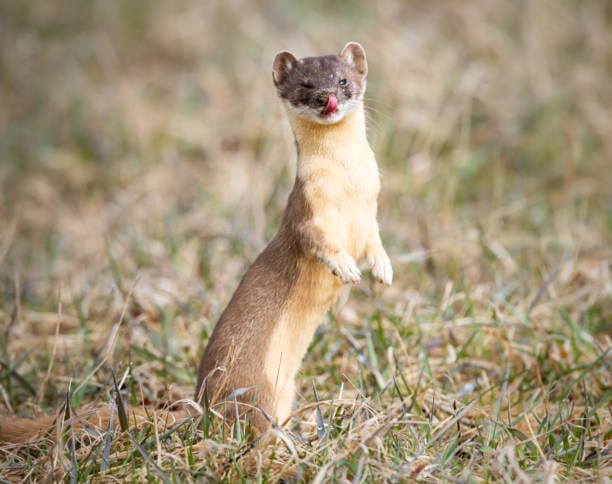
The Long-Tailed Weasel is an agile, slender predator distinguished by a reddish-brown coat on its back and a creamy white underbelly. Its elongated black-tipped tail is its signature feature, helping with balance during high-speed chases. Males typically measure 14–16 inches, while females are slightly smaller. In winter, the coat may turn white, blending perfectly into snowy landscapes while the black tail tip remains visible. These physical traits make it a master of camouflage and an efficient predator despite its modest size.
Behavior
Primarily nocturnal, Long-Tailed Weasels may hunt during the day in quiet, undisturbed areas. They are highly territorial and energetic, often chasing prey several times their size with remarkable speed and precision. Observing one in motion is like watching an acrobat weave through underbrush, with sudden leaps and twists. These weasels are fearless hunters, rarely deterred by larger animals in pursuit of their target.
Habitat and Range
Long-Tailed Weasels inhabit forests, grasslands, farmlands, and river edges throughout Alberta. They prefer areas with dense vegetation, abandoned burrows, and rock crevices that provide both shelter and hunting grounds. Their adaptability allows them to thrive near human settlements if food sources are abundant.
Diet
These weasels are carnivorous, preying on mice, voles, shrews, and occasionally birds or insects. They often cache food near dens to survive periods of scarcity. With a high metabolism, Long-Tailed Weasels hunt almost continuously, making them highly effective controllers of small mammal populations.
Reproduction and Life Cycle
Breeding occurs in summer, but delayed implantation ensures births in spring. Litters usually contain 5–8 kits, which are born blind and fully dependent on their mother. Within weeks, young develop hunting skills and agility needed for survival.
Fun Facts / Traits
- Can take down prey much larger than themselves.
- Excellent swimmers and climbers.
- Black-tipped tail remains distinct even in snowy habitats.
Human Interaction
Long-Tailed Weasels rarely interact directly with humans but provide natural rodent control. Wildlife watchers may observe tracks or dens more often than the animals themselves.
2. Short-Tailed Weasel / Ermine (Mustela erminea)
Physical Characteristics & Identification Tips
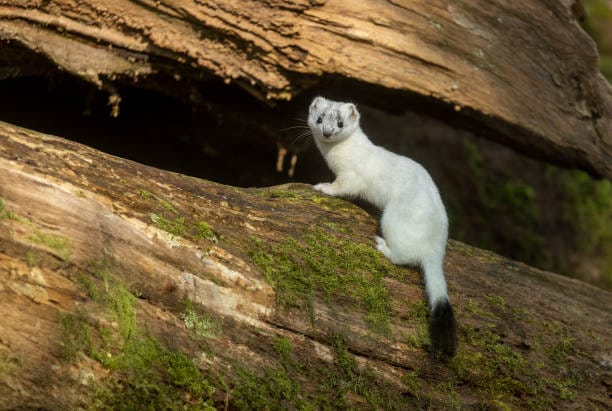
The Short-Tailed Weasel is compact, with brown summer fur that turns white in winter, except for its black-tipped tail. Adults range from 7–13 inches in length, males being larger. Despite their small size, these weasels are highly skilled predators, and their seasonal coat color provides excellent camouflage in snowy or forested environments.
Behavior
Stealthy and deliberate, Short-Tailed Weasels often hunt by following prey into burrows or dense vegetation. Their movements are quick, zigzagging, and almost dance-like, reflecting both agility and cunning. Primarily nocturnal, they may become active during daylight in quiet winter landscapes.
Habitat and Range
Found throughout Alberta, Ermines inhabit forests, wetlands, and open fields. They favor dense ground cover and abandoned burrows. Though rarely seen, their presence is often indicated by signs such as tracks or prey remains.
Diet
Short-Tailed Weasels feed on mice, voles, small birds, frogs, and occasionally insects. Hunting in tight spaces allows them to control rodent populations effectively, serving an important ecological role.
Reproduction and Life Cycle
Breeding occurs midsummer, with delayed implantation leading to spring births. Litters typically contain 4–9 kits, which develop rapidly, acquiring hunting skills within weeks.
Fun Facts / Traits
- Winter fur was historically prized for ceremonial garments.
- Fearless hunters capable of subduing larger prey.
- Key species for maintaining ecological balance.
Human Interaction
Farmers and conservationists value Ermines for natural rodent control. Direct sightings are rare, making indirect observations crucial for ecological studies.
3. Least Weasel (Mustela nivalis)
Physical Characteristics & Identification Tips
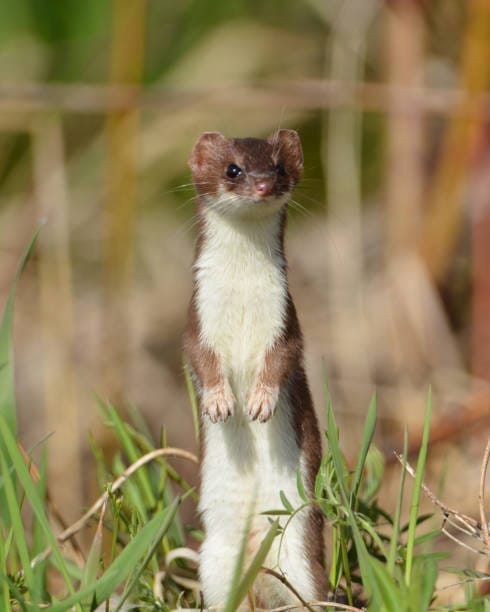
The Least Weasel is the smallest carnivore in Alberta, measuring 6–8 inches long. Brown above and white below in summer, they turn completely white in winter. Their short tail lacks a black tip, distinguishing them from other weasel species. Despite their tiny size, they are remarkably effective predators.
Behavior
Solitary, energetic, and fearless, Least Weasels move rapidly through underbrush and burrows. Their twisting, unpredictable movements make them highly effective hunters despite their small stature.
Habitat and Range
Least Weasels are found in open fields, meadows, and forest edges. They prefer areas with dense rodent populations and can survive in fragmented habitats, with northern regions of Alberta reporting higher densities.
Diet
Primarily small mammals such as mice and voles, occasionally insects or small birds. Their high metabolism requires near-constant hunting activity.
Reproduction and Life Cycle
Breeding occurs multiple times per year depending on food availability. Litters of 4–6 kits grow quickly and become independent hunters within weeks.
Fun Facts / Traits
- Formidable hunters despite tiny size.
- Can access extremely narrow spaces inaccessible to other predators.
- High-energy hunters with rapid metabolism.
Human Interaction
Least Weasels are rarely seen by humans but play a valuable role in controlling rodent populations. Spotting one is a special treat for wildlife enthusiasts.
4. American Mink (Neogale vison)
Physical Characteristics & Identification Tips
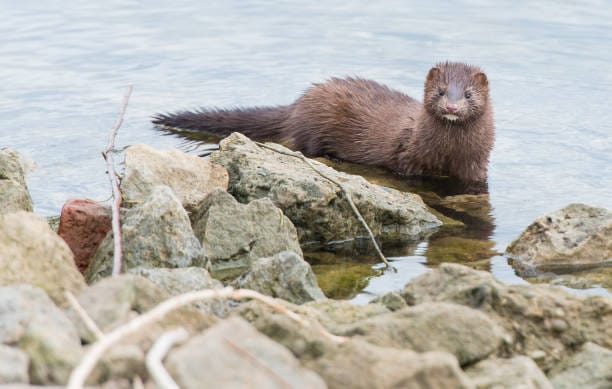
The American Mink is a sleek, semi-aquatic mustelid with dark brown fur, often slightly lighter on the throat and chest. Adults measure 12–18 inches in body length, plus a 4–6 inch tail. Their fur is dense and water-resistant, ideal for swimming and hunting in wetland areas. Males are noticeably larger than females, showing clear sexual dimorphism. Sharp claws and flexible bodies allow them to maneuver through tight spaces both in water and on land.
Behavior
Minks are solitary and primarily nocturnal, although they can be active during the day in quiet areas. They are highly territorial, marking their ranges with scent. Observing a mink hunting along a riverbank or diving underwater is a lesson in precision and stealth. They are opportunistic predators, often targeting fish, amphibians, and small mammals with remarkable agility.
Habitat and Range
American Minks inhabit rivers, streams, lakes, and wetlands across Alberta. Dense vegetation along waterways provides cover and denning sites, while clean water supplies abundant prey. They are adaptable, occasionally venturing near human activity when resources are available.
Diet
Minks are carnivorous and opportunistic. Their diet includes fish, crayfish, frogs, small birds, and rodents. They may store extra prey near dens to prepare for lean periods. Their hunting efficiency helps control populations of aquatic and semi-aquatic species.
Reproduction and Life Cycle
Breeding occurs from late winter to early spring, with delayed implantation ensuring kits are born when resources are plentiful. Litters usually consist of 3–6 kits, born blind and dependent. By 6–8 weeks, young begin exploring and learning to hunt alongside their mother.
Fun Facts / Traits
- Highly skilled swimmers and climbers.
- Often hunt both in water and on land.
- Historically prized for their fur.
Human Interaction
Minks generally avoid humans but are beneficial in controlling rodent populations. Wildlife enthusiasts may spot them along riverbanks, though direct sightings are uncommon.
5. American Badger (Taxidea taxus)
Physical Characteristics & Identification Tips
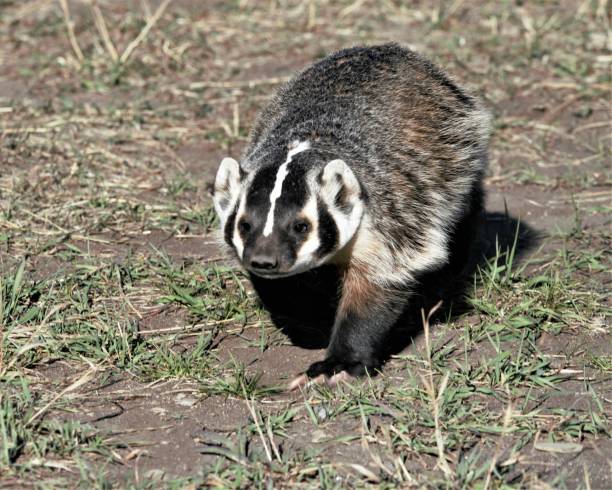
The American Badger is a robust, ground-dwelling mustelid with a broad, flattened body and powerful limbs adapted for digging. Adults weigh 7–12 kg and measure up to 30 inches long. Distinctive facial markings include white stripes running from nose to back of the head. Strong claws enable them to excavate extensive burrows, often leaving noticeable mounds of earth.
Behavior
Badgers are primarily nocturnal and solitary, exhibiting remarkable persistence when hunting burrowing prey. They are exceptional diggers, capable of quickly excavating tunnels to capture rodents. Despite their stout build, they can move swiftly and efficiently through underground burrows and open grasslands.
Habitat and Range
American Badgers favor open grasslands, prairies, and agricultural edges across Alberta. They require loose soil for burrowing and a healthy prey base. Dens serve as both hunting bases and shelters for resting or raising young.
Diet
Badgers primarily feed on small mammals such as ground squirrels, mice, and voles, but they will also eat insects and reptiles. Their digging ability allows them to access prey underground, reducing competition with other predators.
Reproduction and Life Cycle
Breeding occurs in late summer, with delayed implantation resulting in spring births. Litters typically contain 1–5 kits, which remain in the burrow for several weeks before emerging. Juveniles quickly develop hunting skills under parental supervision.
Fun Facts / Traits
- Exceptional diggers, sometimes creating complex burrow networks.
- Fearless and persistent hunters for their size.
- Can coexist with other mustelids by occupying underground niches.
Human Interaction
Badgers occasionally cause minor conflicts with farmers due to burrowing but are ecologically valuable for rodent control. Their elusive, nocturnal habits mean sightings are rare, making them a hidden gem of Alberta’s wildlife.
FAQ’s
1. Why is weasel fur allowed in Alberta?
Weasel fur is allowed in Alberta because weasels are not considered endangered or threatened. The fur industry is regulated by provincial wildlife laws, which permit trapping under controlled seasons and licensing to ensure sustainable populations.
2. Which species of weasel are found in Canada?
Canada is home to several weasel species, including the Long-tailed Weasel (Neogale frenata), the Short-tailed Weasel or Ermine (Mustela erminea), and the Least Weasel (Mustela nivalis), the smallest of them all. Their distribution varies depending on habitat and climate.
3. What is the Weasel Act of Alberta?
The Weasel Act of Alberta regulates the trapping, possession, and sale of weasels and other furbearing animals. It sets season dates, licensing requirements, and rules for humane trapping to protect wildlife populations.
4. Are there weasels in Banff National Park?
Yes, Banff National Park is home to both the Long-tailed Weasel and Short-tailed Weasel (Ermine). These small predators live in forests, meadows, and alpine areas and primarily hunt rodents and small birds.
5. What kind of weasels are in Alberta?
Alberta hosts the Long-tailed Weasel, Short-tailed Weasel (Ermine), and Least Weasel. They occupy diverse habitats, including forests, grasslands, and river valleys, and are active hunters of small mammals.
6. Are there minks in Alberta?
Yes, the American Mink (Neogale vison) is found throughout Alberta, especially near rivers, lakes, and wetlands. They are semi-aquatic predators that feed on fish, amphibians, and small mammals.
7. What is the largest rodent in Alberta?
The North American Beaver is the largest rodent in Alberta. Adult beavers can weigh 40–60 pounds and are famous for building dams and lodges that create wetland habitats.
8. Are there marmots in Alberta?
Yes, Alberta is home to several marmot species, including the Hoary Marmot and Vancouver Island Marmot in mountainous regions. They live in burrows and are herbivores that feed on grasses and plants.
9. Are groundhogs in Alberta?
Yes, groundhogs (also called woodchucks) are found in Alberta, mainly in lowland areas, fields, and along roadsides. They are closely related to marmots and hibernate during the winter.
10. What to do if a marmot bites you?
If a marmot bites you, immediately clean the wound with soap and water and apply an antiseptic. Seek medical attention if the bite is deep or shows signs of infection. While marmot bites are rare, they can transmit bacteria like Pasteurella.
11. What rodents does Alberta have?
Alberta has a variety of rodents, including beavers, groundhogs, marmots, muskrats, red squirrels, and meadow voles. These species occupy forests, grasslands, wetlands, and alpine areas across the province.
Conclusion
Alberta’s weasels and mustelids are a remarkable group of small yet powerful predators, each with specialized adaptations that allow them to thrive in diverse habitats from dense forests to open grasslands and wetlands. From the acrobatic Long-Tailed Weasel to the burrowing American Badger, these animals play crucial roles in controlling rodent populations, maintaining ecological balance, and enriching the province’s biodiversity. Observing them, whether directly or through tracks and signs, offers a glimpse into their secretive yet fascinating lives.
Despite their elusive nature, these weasels impact both natural ecosystems and human-altered landscapes. They highlight the intricate connections within Alberta’s wildlife and remind us of the importance of conserving habitats to support even the smallest members of the animal kingdom. Next time you explore Alberta’s wild spaces, remember that behind the brush or along a riverbank, a weasel may be quietly shaping its environment, proving that even the tiniest predators leave a big impression on the ecosystem.
Read more:
- 20 Types of Weasels: Species Identification with Pictures
- 5 Types of Weasels in Michigan (Pictures and Identification)
- 5 Types of Weasels in Ontario (Pictures And Identification)
- 5 Types of Weasels in New York | Identification & Facts
- 5 Types of Weasels in Vermont (Pictures And Identification)
- 6 Types of Weasels in Maine (Pictures and Identification)
- 5 Types of Weasels in Pennsylvania (Pictures and Identification)
- 5 Types of Weasels in Wisconsin | Identification & Facts
- 8 Types of Weasels in Minnesota | Identification & Facts
- 5 Types of Weasels in Ohio | Identification & Facts