
Mongooses are small, agile mammals known for their intelligence, courage, and adaptability in the wild. Across Africa and Asia, different species of mongoose have evolved to thrive in diverse habitats ranging from savannas and forests to wetlands and deserts. In this guide, we explore 10 distinct types of mongoose, reviewing their physical traits, behavior, diet, habitat, and social dynamics. This educational review is beginner-friendly and perfect for wildlife enthusiasts or anyone curious about these fascinating animals. By understanding each mongoose species, you gain insight into their role in ecosystems and their unique survival strategies in the wild.
10 Types of Mongoose
1. Egyptian Mongoose (Herpestes ichneumon)
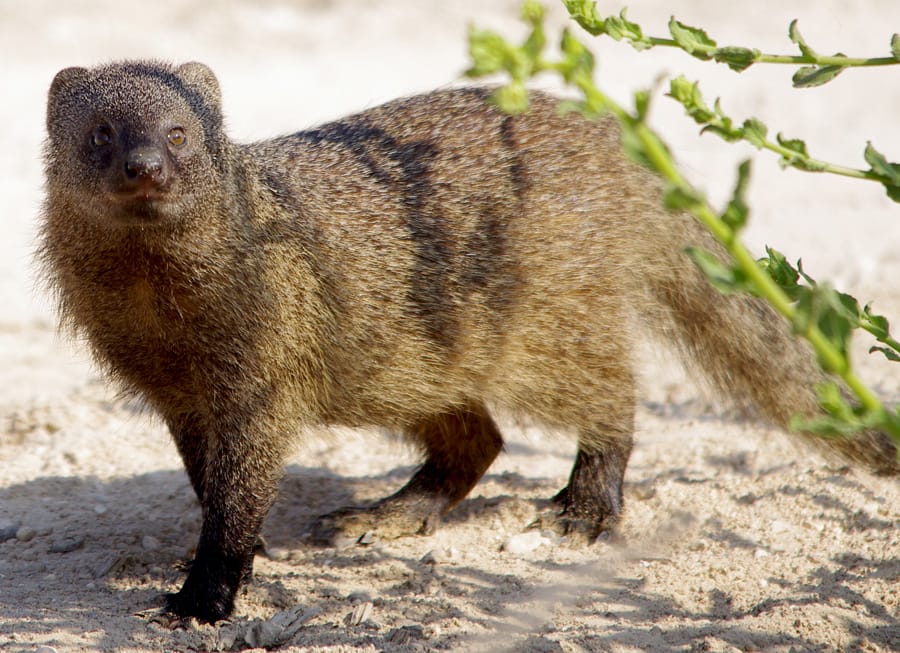
The Egyptian Mongoose, scientifically named Herpestes ichneumon, is one of the most iconic mongoose species. Native to North Africa, the Middle East, and parts of Iberian Peninsula, it is medium-sized, weighing 1.5–4 kilograms, with a body length of 40–60 cm and a bushy tail nearly as long as its body. Its fur is coarse, dark brown to grayish, providing camouflage in savannas, wetlands, and scrublands.
Behaviorally, the Egyptian Mongoose is largely solitary, hunting mostly at night. Its diet is varied, including insects, rodents, birds, eggs, amphibians, and small reptiles, including venomous snakes. It is famous for its agility and fearless nature, capable of confronting dangerous prey like snakes. Communication is achieved through scent marking and low growls to signal territory. Egyptian Mongooses are excellent swimmers, allowing them to exploit wetland habitats effectively.
Reproduction occurs annually, with females giving birth to 2–4 pups after 60–65 days gestation. Both parents invest in pup survival; pups quickly learn hunting and survival skills. Ecologically, the Egyptian Mongoose plays a vital role in controlling pests and balancing food webs. Its adaptability to diverse habitats demonstrates resilience and intelligence, making it a key species in the types of mongoose group.
2. Common Slender Mongoose (Herpestes sanguineus)
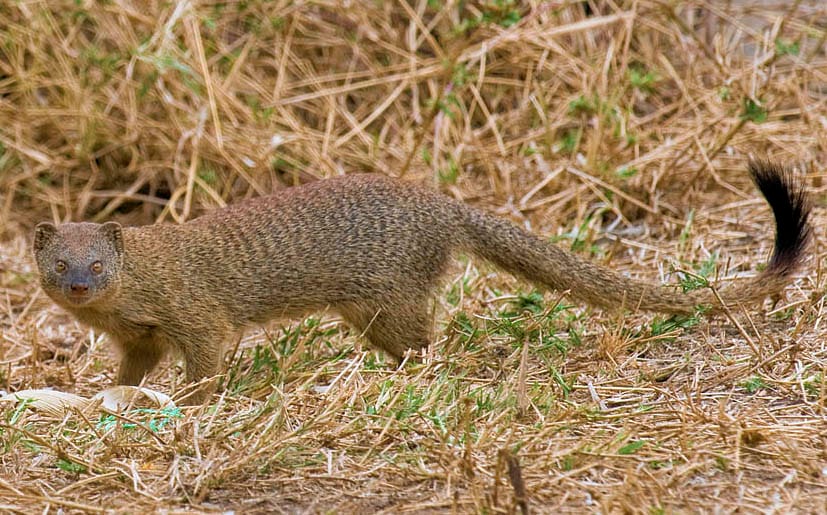
The Common Slender Mongoose, Herpestes sanguineus, inhabits sub-Saharan Africa and is recognizable by its long, slender body, reddish-brown coat, and pointed snout. Adult individuals weigh 0.5–1.5 kilograms and measure 25–35 cm in body length, making them smaller and more agile than the Egyptian Mongoose. Their long tails aid in balance while climbing and hunting in dense undergrowth.
Slender Mongooses are diurnal hunters, primarily feeding on insects, lizards, small mammals, and birds. Their keen eyesight, speed, and agility make them efficient predators. They are territorial but less aggressive than other mongooses, often living in overlapping ranges with minimal conflict. Vocalizations are subtle, and scent marking is used to maintain territory boundaries. Social behavior is generally solitary or in small family groups.
Breeding occurs seasonally; females give birth to 1–4 pups. Parental care is crucial, as young mongooses develop essential hunting and survival skills through observation and practice. The Common Slender Mongoose helps control insect and rodent populations, benefiting local ecosystems and human agriculture. Its intelligence, adaptability, and stealth make it a fascinating species in the types of mongoose group.
3. Yellow Mongoose (Cynictis penicillata)
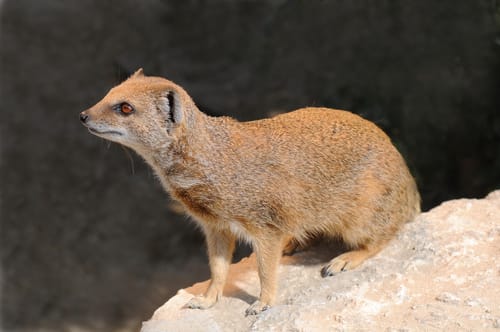
The Yellow Mongoose, Cynictis penicillata, is endemic to southern Africa, commonly found in South African grasslands, semi-arid regions, and savannas. Its bright yellowish-brown fur makes it instantly recognizable. Adults weigh 0.5–1.5 kilograms, with body lengths around 25–35 cm. Their bushy tails, tipped in black, assist in balance while standing upright to survey surroundings.
Yellow Mongooses are highly social and diurnal, living in small family groups called clans. They dig elaborate burrow systems for shelter and breeding, which also provide refuge for other animals. Their diet is omnivorous, consisting of insects, small vertebrates, seeds, and occasionally eggs. Communication includes chirps, high-pitched barks, and tail-raising postures. Social hierarchies are clear, with dominant pairs leading foraging and territory defense.
Reproductive cycles are synchronized with seasonal rainfall; females give birth to 2–6 pups, which are nurtured by both parents and occasionally older offspring. The Yellow Mongoose contributes to pest control, seed dispersal, and ecosystem health. Its vibrant fur, social intelligence, and adaptability highlight its importance among types of mongoose, making it a favorite subject for wildlife studies.
4. Marsh Mongoose (Atilax paludinosus)
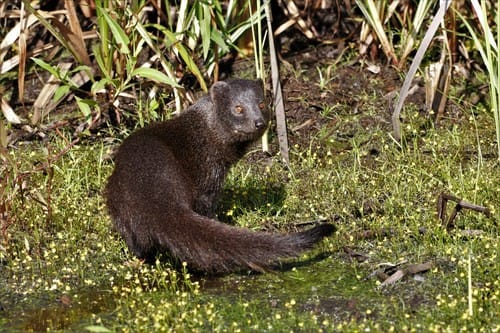
The Marsh Mongoose, Atilax paludinosus, is a semi-aquatic mongoose native to sub-Saharan Africa, especially near rivers, swamps, and wetlands. Adult Marsh Mongooses weigh 2–4 kilograms and measure 40–60 cm in length. Their coarse brown fur provides camouflage among reeds and grasses. Unlike many mongooses, they are excellent swimmers and divers, using water bodies to hunt and evade predators.
This species is primarily nocturnal, hunting crabs, fish, frogs, insects, and small mammals. Their diet is highly flexible, reflecting adaptation to wetland environments. Social behavior is largely solitary; individuals defend their territories and communicate through scent markings and subtle vocalizations. They are cautious but skilled hunters, capable of manipulating objects to access prey in water or burrows.
Reproduction is seasonal; females give birth to 2–3 pups after roughly 70 days gestation. Young learn hunting skills through observation, gradually becoming independent. Marsh Mongooses play a critical role in controlling aquatic and terrestrial prey populations and maintaining healthy wetland ecosystems. Their semi-aquatic lifestyle and specialized hunting techniques make them a unique and fascinating member of types of mongoose.
5. White-tailed Mongoose (Ichneumia albicauda)
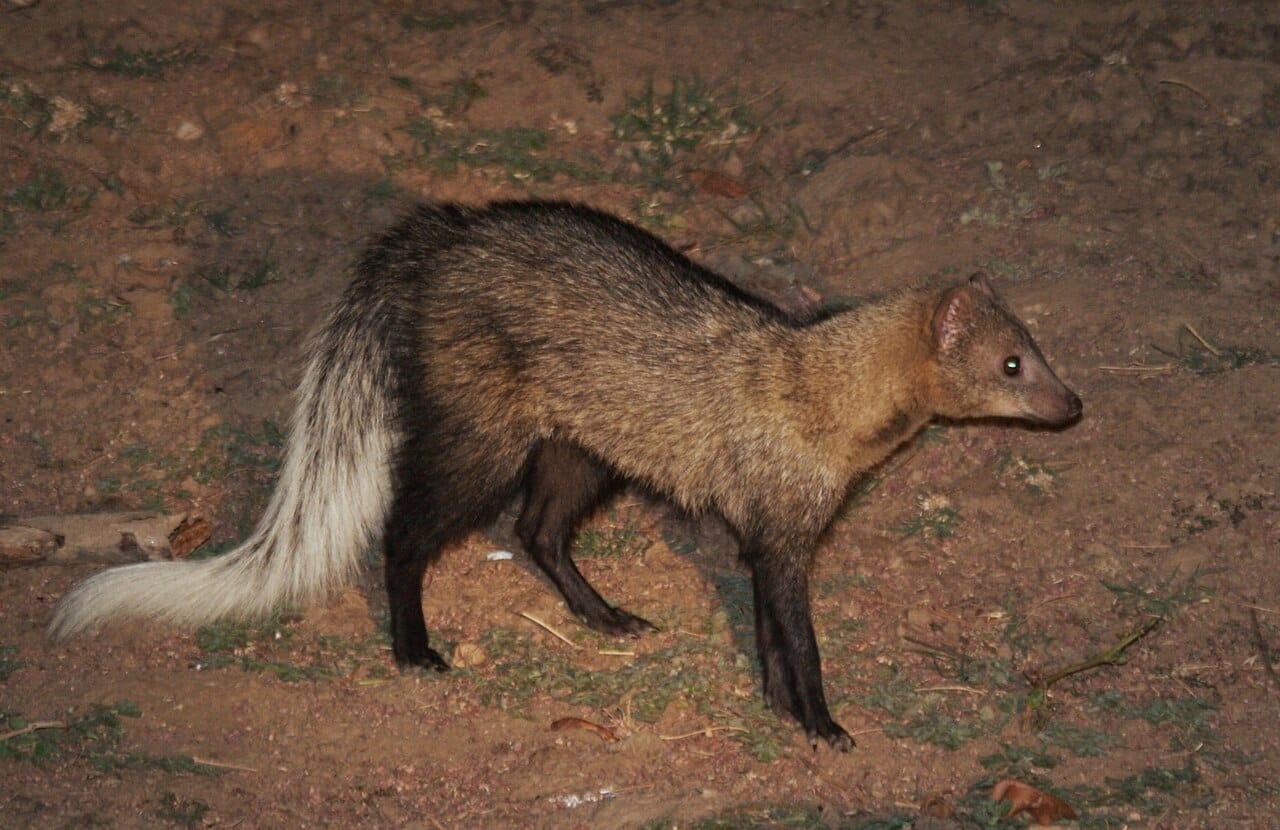
The White-tailed Mongoose, Ichneumia albicauda, is the largest African mongoose, distributed across eastern and southern Africa. Adults weigh 2.5–5 kilograms and measure 50–70 cm in body length. They are easily identified by their long, bushy tail with a white tip, coarse gray-brown fur, and elongated body. Their size and strength make them formidable hunters among mongoose species.
White-tailed Mongooses are primarily nocturnal and solitary, hunting small mammals, insects, birds, and reptiles. They are known for their agility and intelligence, capable of digging burrows and flushing prey from underground nests. Communication involves scent marking and low vocalizations. Despite their solitary nature, they exhibit complex behaviors during mating and territory disputes.
Females give birth to 1–3 pups after a gestation of around 90 days. Both parents contribute to pup survival, teaching hunting and foraging skills. Ecologically, White-tailed Mongooses are essential predators and scavengers, maintaining balance in savannas and forest edges. Their size, hunting prowess, and adaptability make them an impressive representative of the types of mongoose in Africa.
6. Banded Mongoose (Mungos mungo)
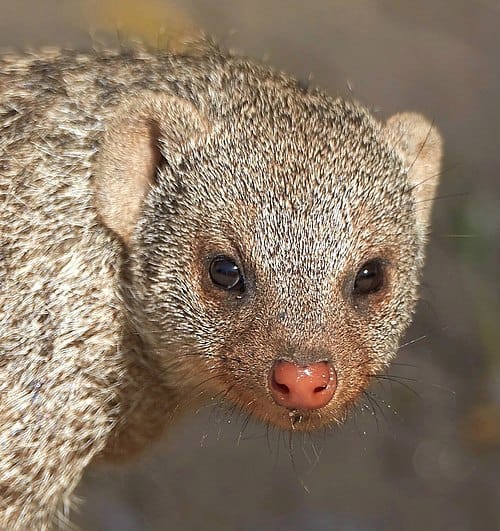
The Banded Mongoose, Mungos mungo, is a social and fascinating species native to sub-Saharan Africa. Adults weigh 1–2 kilograms and measure 25–40 cm in body length, with a distinctive pattern of dark horizontal bands across their backs. Their short, coarse fur varies from gray-brown to reddish-brown, while the tail is long and bushy, aiding in balance when climbing or foraging.
Banded Mongooses are highly social, living in clans of up to 20 individuals. They exhibit complex cooperative behaviors, such as group foraging, predator detection, and communal pup care. These mongooses are diurnal, feeding primarily on insects, small rodents, reptiles, and occasionally fruits. Their social structure relies on vocalizations, body language, and scent marking to coordinate activities and maintain territorial boundaries.
Reproduction is seasonal, with dominant pairs often leading the group in breeding. Females give birth to 2–5 pups, which are cared for communally. Pup survival rates are higher in cooperative groups due to shared protection and feeding. Ecologically, Banded Mongooses regulate insect and rodent populations, protect crops from pest outbreaks, and influence ecosystem dynamics through their social behaviors. Their intelligence, teamwork, and adaptability make them a prominent species among types of mongoose.
7. Gambian Mongoose (Mungos gambianus)
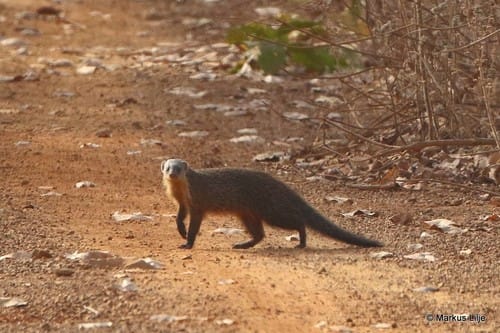
The Gambian Mongoose, Mungos gambianus, is a medium-sized mongoose found across West Africa, particularly near wetlands, forests, and grasslands. Adults weigh around 1–1.5 kilograms and measure 25–35 cm in length. Their fur is brownish-gray, often with a slight grizzled appearance. The tail is moderately long, used for balance and signaling within groups.
Gambian Mongooses are social but less conspicuous than Banded Mongooses. They hunt in small groups during the day, feeding on insects, small reptiles, amphibians, and occasionally bird eggs. Communication includes chirps, yips, and tail-raising postures. They are agile and clever hunters, capable of opening termite mounds and manipulating small prey to extract food.
Females give birth to 2–4 pups after a gestation of 60–65 days. Pup care is shared among adults, allowing young mongooses to learn hunting techniques and social skills. The Gambian Mongoose contributes to pest control, biodiversity maintenance, and seed dispersal through fruit consumption. Its intelligence, adaptability, and cooperative behaviors make it a key representative of types of mongoose in West Africa.
8. Black-footed Mongoose (Bdeogale nigripes)
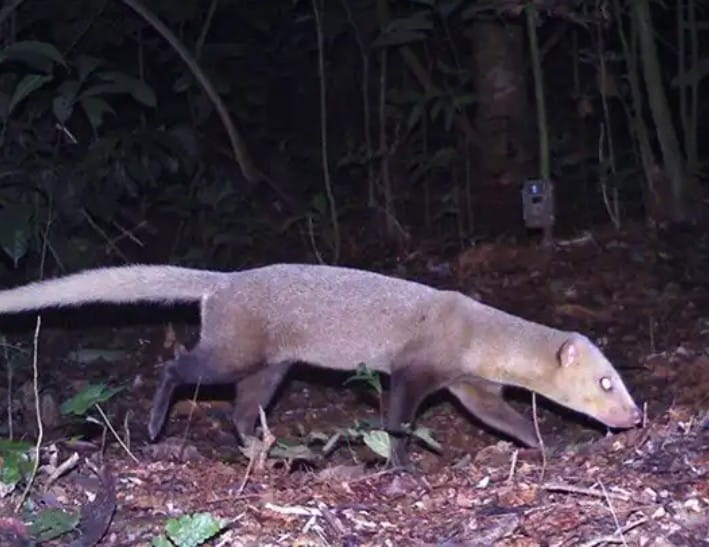
The Black-footed Mongoose, Bdeogale nigripes, is native to central Africa and is distinguished by its dark, almost black limbs and reddish-brown body. Adults weigh 1.2–2.5 kilograms and measure 30–45 cm in length, making them medium-sized mongooses. Their strong limbs and sharp claws allow them to dig for insects, small rodents, and other prey efficiently.
This species is primarily nocturnal, reducing encounters with larger predators. It feeds on insects, scorpions, small reptiles, and occasionally fruit. Black-footed Mongooses are generally solitary, except during mating or when raising pups. Communication is subtle, relying on scent marking and quiet vocalizations to establish territories. Their secretive lifestyle makes them less commonly observed in the wild, but they play an important ecological role in controlling invertebrate populations.
Breeding occurs seasonally, with females giving birth to 2–3 pups per litter. Young mongooses are taught foraging and hunting skills by observing adults. The Black-footed Mongoose’s nocturnal habits, adaptability, and predatory efficiency highlight the diversity and ecological importance of the types of mongoose.
9. Selous’s Mongoose (Paracynictis selousi)
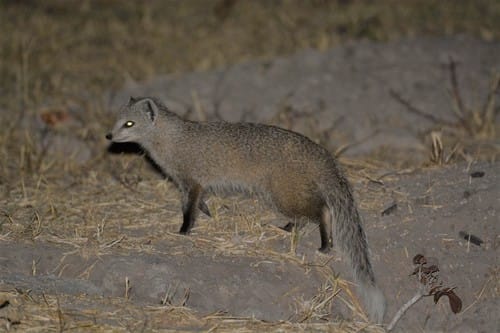
Selous’s Mongoose, Paracynictis selousi, is a small mongoose species native to southern Africa, particularly in Angola, Botswana, and Namibia. Adults weigh 0.7–1.2 kilograms and measure 20–30 cm in length. Their fur is grayish-brown, providing excellent camouflage in rocky and scrub habitats. They have a long, slender body and a slightly bushy tail, which aids in balance during movement through rugged terrain.
Selous’s Mongooses are primarily nocturnal, feeding on insects, small rodents, amphibians, and occasionally eggs or fruits. They are largely solitary but may interact at shared food sources or den sites. Communication is subtle, including scent marking and soft vocalizations. Their hunting strategy involves patience, quick reflexes, and agility, allowing them to capture prey efficiently in their habitat.
Females give birth to 1–3 pups per litter, which are raised in burrows and taught essential survival skills by the mother. Selous’s Mongooses are important for controlling insect and small vertebrate populations, contributing to ecosystem balance. Their secretive, agile, and highly adapted lifestyle highlights their place among the diverse types of mongoose.
10. Common Dwarf Mongoose (Helogale parvula)
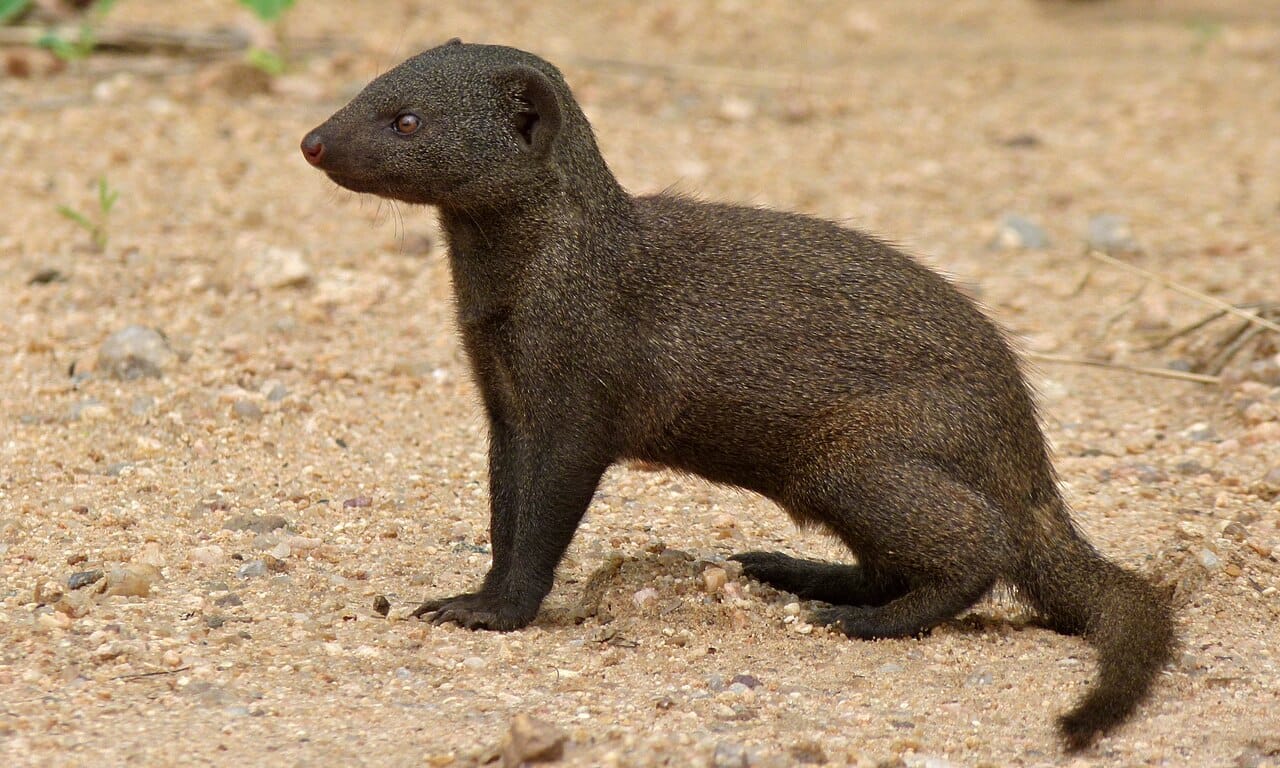
The Common Dwarf Mongoose, Helogale parvula, is the smallest African mongoose, widespread in savannas and dry forests across sub-Saharan Africa. Adults weigh 0.3–0.6 kilograms and measure only 18–28 cm in body length. Their fur is reddish-brown, with a short, bushy tail that aids in balance. Despite their small size, they are extremely agile and social animals.
Common Dwarf Mongooses live in large family groups of up to 30 individuals. They are diurnal, feeding primarily on insects, small reptiles, and occasionally fruit. Their social structure is highly cooperative, with dominant pairs breeding while subordinates help care for the young. Communication is sophisticated, involving chirps, barks, and tail signaling to coordinate foraging, warn of predators, and maintain group cohesion.
Reproduction is carefully regulated by social hierarchy. Females give birth to 2–4 pups after 50–60 days gestation, with communal care ensuring high survival rates. Ecologically, Dwarf Mongooses control insect populations, aerate soil through digging, and create burrows used by other wildlife. Their intelligence, social complexity, and adaptability make them an excellent example of the diversity and evolutionary success of the types of mongoose.
Conclusion
Mongooses are remarkable small mammals, showcasing intelligence, agility, and adaptability across a wide range of habitats in Africa and Asia. From the iconic Egyptian Mongoose to the highly social Common Dwarf Mongoose, each species has unique characteristics, behaviors, and ecological roles that make them fascinating subjects of study. The ten species reviewed in this guide — including the Slender, Yellow, Marsh, White-tailed, Banded, Gambian, Black-footed, and Selous’s Mongoose — highlight the incredible diversity within the types of mongoose group.
These mongooses are not only efficient predators of insects, rodents, and small reptiles but also play crucial roles in maintaining ecological balance. Their social behaviors, from monogamous pairings to cooperative group hunting, reveal their intelligence and adaptability. Observing these species in the wild offers valuable insights into predator-prey interactions, social dynamics, and survival strategies in diverse ecosystems.
Conservation of mongoose species is essential, especially for those with limited ranges or specialized habitats. Understanding their behavior, diet, and ecological contributions allows humans to better protect them and the environments they inhabit. Whether you are a wildlife enthusiast, a student, or a beginner interested in nature, learning about the types of mongoose enriches your knowledge of the animal kingdom and underscores the importance of preserving biodiversity for future generations.
Frequently Asked Questions About Types of Mongoose
1. What is a mongoose?
Mongoose is a small, agile mammal belonging to the family Herpestidae. They are known for their intelligence, speed, and ability to hunt small animals and insects.
2. How many types of mongoose are there?
There are more than 30 species of mongoose worldwide, but in this guide, we focus on 10 prominent types of mongoose with unique features.
3. Where do mongooses live?
Mongooses are found mainly in Africa and Asia, inhabiting savannas, forests, wetlands, grasslands, and sometimes near human settlements.
4. What do mongooses eat?
Mongooses are omnivores. Their diet includes insects, small rodents, birds, reptiles, eggs, and occasionally fruits and seeds.
5. Are mongooses dangerous to humans?
Most mongooses are shy and avoid humans. They are not considered dangerous, although they may attack small livestock if threatened or hungry.
6. How can I identify different types of mongoose?
Mongooses can be identified by their size, fur color, patterns, tail length, ear shape, and habitat. Each species has unique physical and behavioral traits.
7. What is the Egyptian Mongoose?
The Egyptian Mongoose (Herpestes ichneumon) is a medium-sized mongoose found in North Africa and the Middle East. It has dark brown fur and is known for hunting snakes.
8. What is the Common Slender Mongoose?
The Common Slender Mongoose (Herpestes sanguineus) is small and agile, found in sub-Saharan Africa. It has a reddish-brown coat and long slender body.
9. What is the Yellow Mongoose?
The Yellow Mongoose (Cynictis penicillata) is social and found in southern Africa. Its bright yellowish-brown fur and upright posture make it distinctive.
10. What is the Marsh Mongoose?
The Marsh Mongoose (Atilax paludinosus) is semi-aquatic, living near rivers and wetlands. It is an excellent swimmer and hunts aquatic prey.
11. What is the White-tailed Mongoose?
The White-tailed Mongoose (Ichneumia albicauda) is the largest African mongoose. It is nocturnal and has a bushy white-tipped tail.
12. What is the Banded Mongoose?
The Banded Mongoose (Mungos mungo) is social, living in clans of up to 20 members. It has dark bands across its back and cooperative behaviors.
13. What is the Gambian Mongoose?
The Gambian Mongoose (Mungos gambianus) is found in West Africa. It is social and diurnal, feeding on insects, rodents, and small reptiles.
14. What is the Black-footed Mongoose?
The Black-footed Mongoose (Bdeogale nigripes) has dark limbs and is nocturnal. It hunts insects, scorpions, and small vertebrates in central Africa.
15. What is Selous’s Mongoose?
Selous’s Mongoose (Paracynictis selousi) is a small, nocturnal mongoose found in southern Africa, living mostly in rocky and scrub habitats.
16. What is the Common Dwarf Mongoose?
The Common Dwarf Mongoose (Helogale parvula) is the smallest mongoose in Africa. It is highly social and lives in large cooperative family groups.
17. Are mongooses social animals?
Some species, like the Dwarf and Banded Mongoose, are highly social and live in groups, while others, like the White-tailed Mongoose, are largely solitary.
18. How do mongooses communicate?
Mongooses use vocalizations, body language, and scent marking to communicate with family members, warn of predators, and defend territory.
19. Do mongooses dig burrows?
Yes, many mongooses dig burrows for shelter, raising young, and protection from predators.
20. Are mongooses nocturnal or diurnal?
Behavior varies by species. Some, like the Slender Mongoose, are diurnal, while others, like the White-tailed Mongoose, are nocturnal.
21. How fast can a mongoose run?
Mongooses are agile and quick, reaching speeds of up to 20–25 km/h, which helps them catch prey and evade predators.
22. How long do mongooses live?
In the wild, mongooses typically live 6–10 years. In captivity, some species may live 12–15 years with proper care.
23. Do mongooses have predators?
Yes, mongooses face threats from large predators like leopards, lions, eagles, and snakes. Smaller mongooses are also vulnerable to larger mongoose species.
24. Do mongooses eat snakes?
Some species, like the Egyptian Mongoose, are known to hunt and kill snakes. They are fast, agile, and resistant to some snake venom.
25. How do mongooses hunt?
Mongooses hunt using speed, agility, and keen senses. They search for insects, small mammals, reptiles, and birds, often using clever techniques to flush out prey.
26. Do mongooses live near humans?
Some species, like the Golden Mongoose and Slender Mongoose, may adapt to human presence, scavenging near farms or villages.
27. How do mongooses reproduce?
Mating varies by species. Some are seasonal breeders, while others breed year-round. Females typically give birth to 1–6 pups per litter.
28. How do mongooses raise their young?
Parental care is important. In social species, pups are often cared for communally by group members, learning hunting and social skills from adults.
29. Are mongooses territorial?
Yes, mongooses mark and defend territories using scent marking, vocalizations, and patrolling behaviors.
30. Can mongooses swim?
Some species, like the Marsh Mongoose, are excellent swimmers and hunt aquatic prey, while most others avoid water.
31. How do mongooses survive in deserts?
Desert-adapted species conserve water, are active during cooler parts of the day, and feed on insects, small rodents, and seeds.
32. Do mongooses live in trees?
Most mongooses are terrestrial, though some, like the Slender Mongoose, may climb shrubs or low trees to hunt or escape predators.
33. Are mongooses endangered?
Most species are not endangered, but some, like the Black-footed Mongoose, face threats from habitat loss and human activity.
34. Do mongooses hunt in groups?
Some social species, like Banded and Dwarf Mongooses, forage in groups, improving hunting efficiency and predator detection.
35. How intelligent are mongooses?
Mongooses are highly intelligent, using problem-solving skills, teamwork, and agility to hunt and survive in diverse habitats.
36. Can mongooses climb fences?
They can jump or climb small obstacles but cannot scale tall fences. Their agility helps them escape predators or find food.
37. How do mongooses adapt to humans?
Mongooses may become nocturnal, feed on human waste, and avoid direct interaction while living near villages or farms.
38. What is the role of mongooses in ecosystems?
Mongooses control insect and rodent populations, disperse seeds, scavenge carrion, and maintain ecological balance.
39. How do mongooses avoid predators?
They use speed, camouflage, burrows, vigilance, and social cooperation to detect and evade predators.
40. Can mongooses interbreed with other species?
Rarely, some mongoose species may hybridize with closely related species, but this is uncommon in the wild.
41. How large can mongooses get?
Size varies by species. The White-tailed Mongoose is one of the largest, weighing 2.5–5 kg, while the Dwarf Mongoose weighs only 0.3–0.6 kg.
42. How do mongooses dig for food?
Mongooses use their sharp claws to dig for insects, larvae, and small mammals in soil or under rocks.
43. Are mongooses fast breeders?
Breeding frequency varies by species and environmental conditions. Some species have 1–2 litters per year, while others breed seasonally.
44. How do mongooses defend themselves?
They rely on speed, agility, sharp teeth, and group cooperation in social species. Some also confront snakes fearlessly.
45. What is the lifespan of mongooses in captivity?
In captivity, mongooses can live up to 12–15 years, benefiting from regular food, veterinary care, and protection from predators.
46. How do mongooses communicate in groups?
They use chirps, barks, tail signals, and scent marking to coordinate activities, warn of danger, and maintain social hierarchy.
47. Do mongooses hibernate?
No, mongooses do not hibernate. They remain active year-round, adjusting activity levels according to temperature and food availability.
48. How do mongooses hunt venomous snakes?
Mongooses are agile and have some resistance to venom. They use speed, precise strikes, and dodging to kill snakes safely.
49. Are mongooses solitary?
Solitary behavior occurs in species like White-tailed and Marsh Mongooses, while social species like Banded and Dwarf Mongooses live in groups.
50. How do mongooses contribute to biodiversity?
By controlling pests, dispersing seeds, scavenging, and providing prey for larger predators, mongooses maintain ecological balance and biodiversity.
51. Can mongooses live in forests?
Yes, some species, like the Slender and Gambian Mongoose, thrive in dense forests, while others prefer open grasslands or savannas.
52. Do mongooses eat fruit?
Yes, some species supplement their diet with fruits and seeds, which provide nutrients and aid in seed dispersal.
53. Why are mongooses important to humans?
They help control pests and rodents, which can protect crops and reduce the spread of diseases.
54. Can mongooses adapt to climate change?
Many species are adaptable, changing activity patterns, diets, and habitats to survive in changing environments.
Read more: 10 Types of Sea Lions (Pictures And Identification)