

Tarantulas are among the most fascinating arachnids in the animal kingdom. Known for their impressive size, thick bodies, and striking hair patterns, they have captured the curiosity of scientists, hobbyists, and wildlife enthusiasts alike. In this article, we will explore Types of Tarantulas from different parts of the world, highlighting their unique features, habitats, behaviors, and care requirements for pet enthusiasts. Whether you are interested in the giant Goliath Birdeater of South America or the vibrant Cobalt Blue Tarantula from Southeast Asia, this guide provides detailed information suitable for beginners and experts. Understanding these tarantulas is essential not just for enthusiasts, but also for appreciating their ecological role in the wild.
1. Goliath Birdeater (Theraphosa blondi)
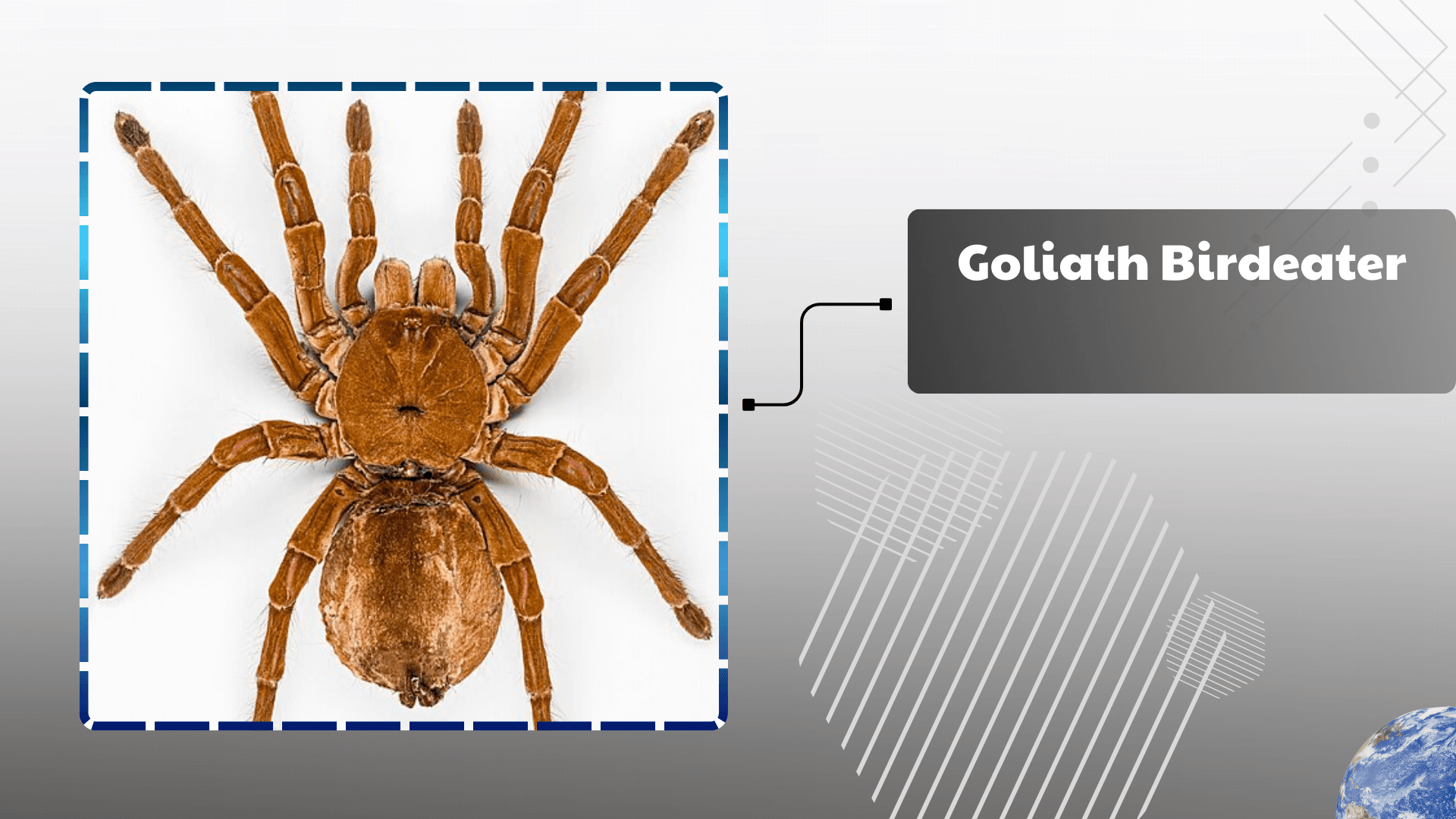
The Goliath Birdeater is arguably the most famous tarantula in the world. Native to the rainforests of northern South America, particularly in Venezuela, Brazil, and Suriname, this species holds the title of the largest tarantula by mass and size. Adult females can reach up to 11 inches in leg span and weigh over 6 ounces, while males are slightly smaller. Its body is covered in dense brown hairs that help it blend seamlessly into the forest floor, and the thick hairs on its abdomen can be flicked defensively to irritate predators. Despite its common name, the Goliath rarely preys on birds, mainly feeding on insects, frogs, lizards, and occasionally small rodents.
Goliath Birdeaters are nocturnal, spending the daytime in burrows or hidden under debris. They are opportunistic hunters, using their venom primarily to subdue prey rather than for defense. In captivity, these tarantulas require high humidity, a deep substrate for burrowing, and a diet rich in insects and occasional small vertebrates. Understanding the Goliath Birdeater helps illustrate how some of the largest Types of Tarantulas thrive in rainforest ecosystems and maintain ecological balance by controlling insect populations.
2. Pinkfoot Goliath (Theraphosa apophysis)
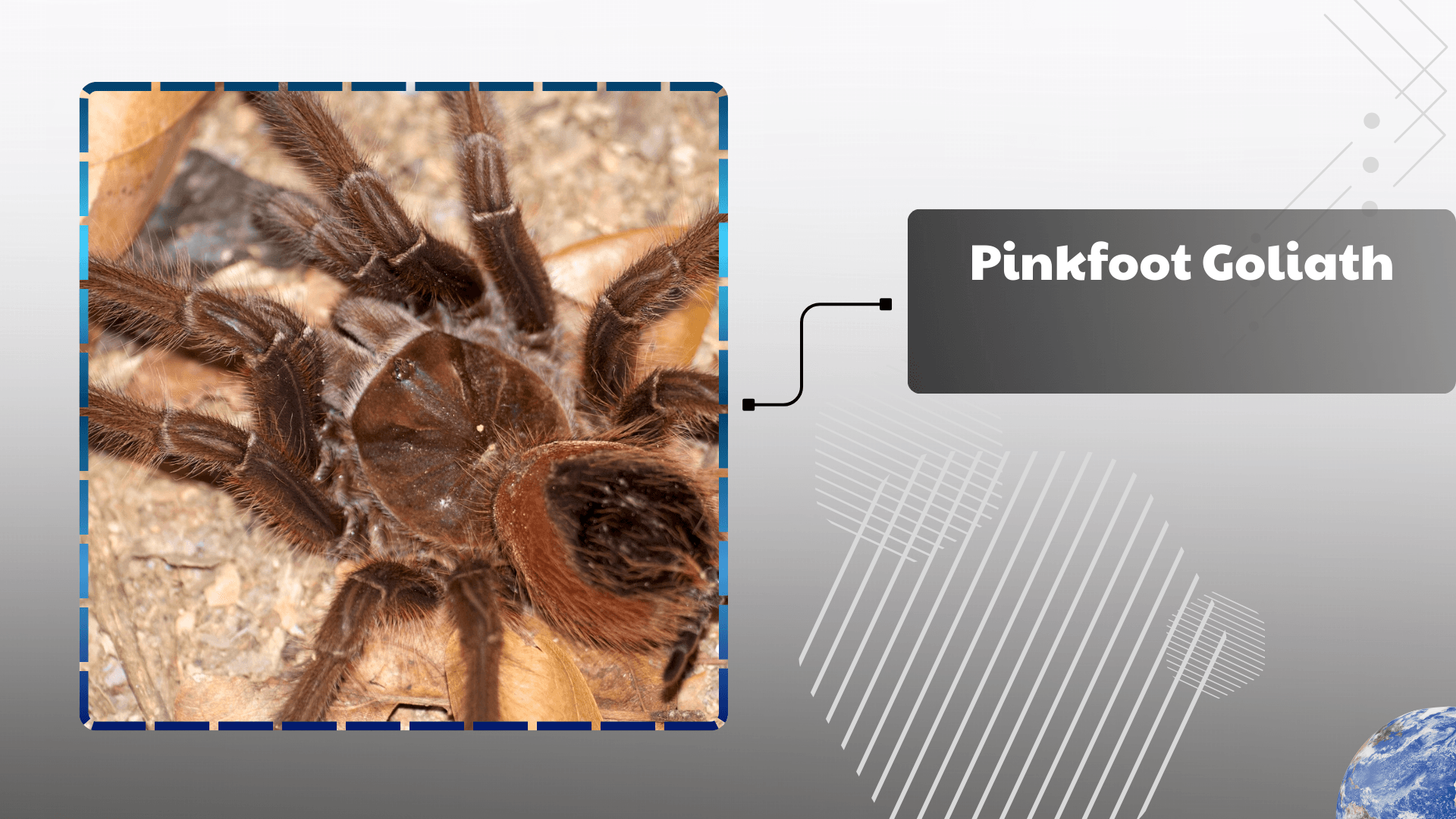
The Pinkfoot Goliath, closely related to the Goliath Birdeater, is known for its striking pinkish leg tips and slightly smaller size. Found mainly in the forested regions of Venezuela, this tarantula exhibits arboreal tendencies during its juvenile stages but becomes primarily terrestrial as an adult. Its dense setae (hairs) are not only protective but also sensory, helping the tarantula detect vibrations and changes in its environment. Unlike many large tarantulas, the Pinkfoot Goliath is considered skittish, preferring to retreat into its burrow when threatened rather than confront predators.
This species demonstrates fascinating reproductive behavior, with males becoming more active hunters during the mating season, seeking out females across the forest floor. The Pinkfoot Goliath’s venom is mild to humans, causing localized pain but rarely any serious effects. Its captivating coloration and impressive size make it a popular species in the exotic pet trade, though it is crucial to respect wild populations and support ethical breeding programs. This tarantula exemplifies the diversity of Types of Tarantulas in South America, highlighting adaptations for survival in dense rainforest habitats.
3. Brazilian Salmon Birdeater (Lasiodora parahybana)
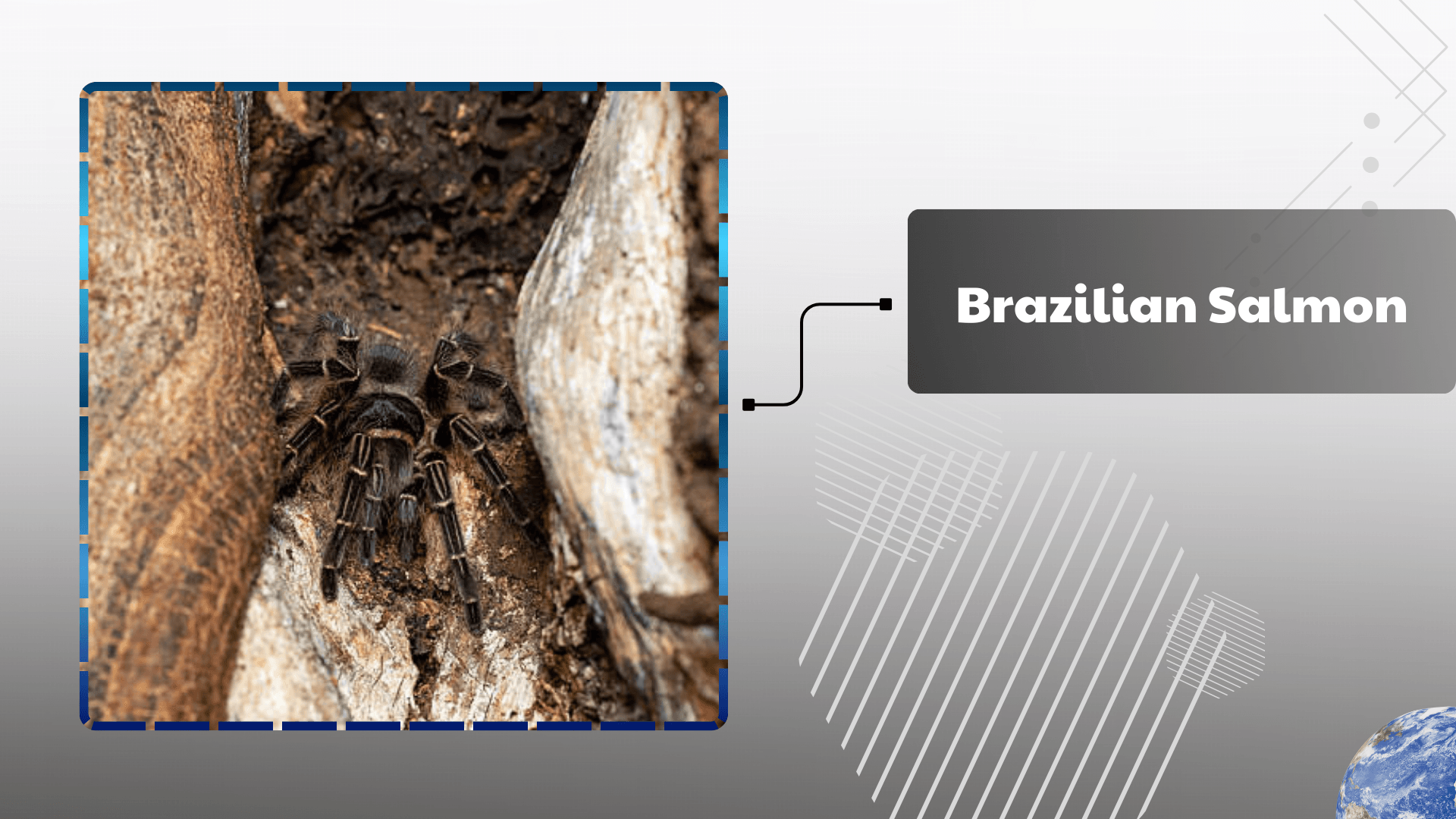
The Brazilian Salmon Birdeater is a giant terrestrial tarantula native to the Atlantic forests of Brazil. It is renowned for its salmon-colored hairs on the legs and abdomen, which create a beautiful contrast with its dark exoskeleton. Adults can reach up to 10 inches in leg span, making them among the largest tarantulas globally. This species is highly active and fast, exhibiting both defensive and defensive behaviors, including flicking urticating hairs and biting if provoked. However, its venom is not dangerous to humans, comparable to a bee sting in effect.
Lasiodora parahybana is a prolific breeder, with females capable of producing hundreds of eggs per clutch. Its diet in the wild consists of insects, small amphibians, and other invertebrates, while captive care involves feeding crickets, roaches, and occasional pinkie mice. Maintaining high humidity and a deep substrate is essential for successful burrowing and molting. By studying the Brazilian Salmon Birdeater, we gain insights into the adaptability and ecological importance of large tarantulas, reinforcing the significance of protecting their rainforest habitats.
4. Mexican Redknee Tarantula (Brachypelma smithi)
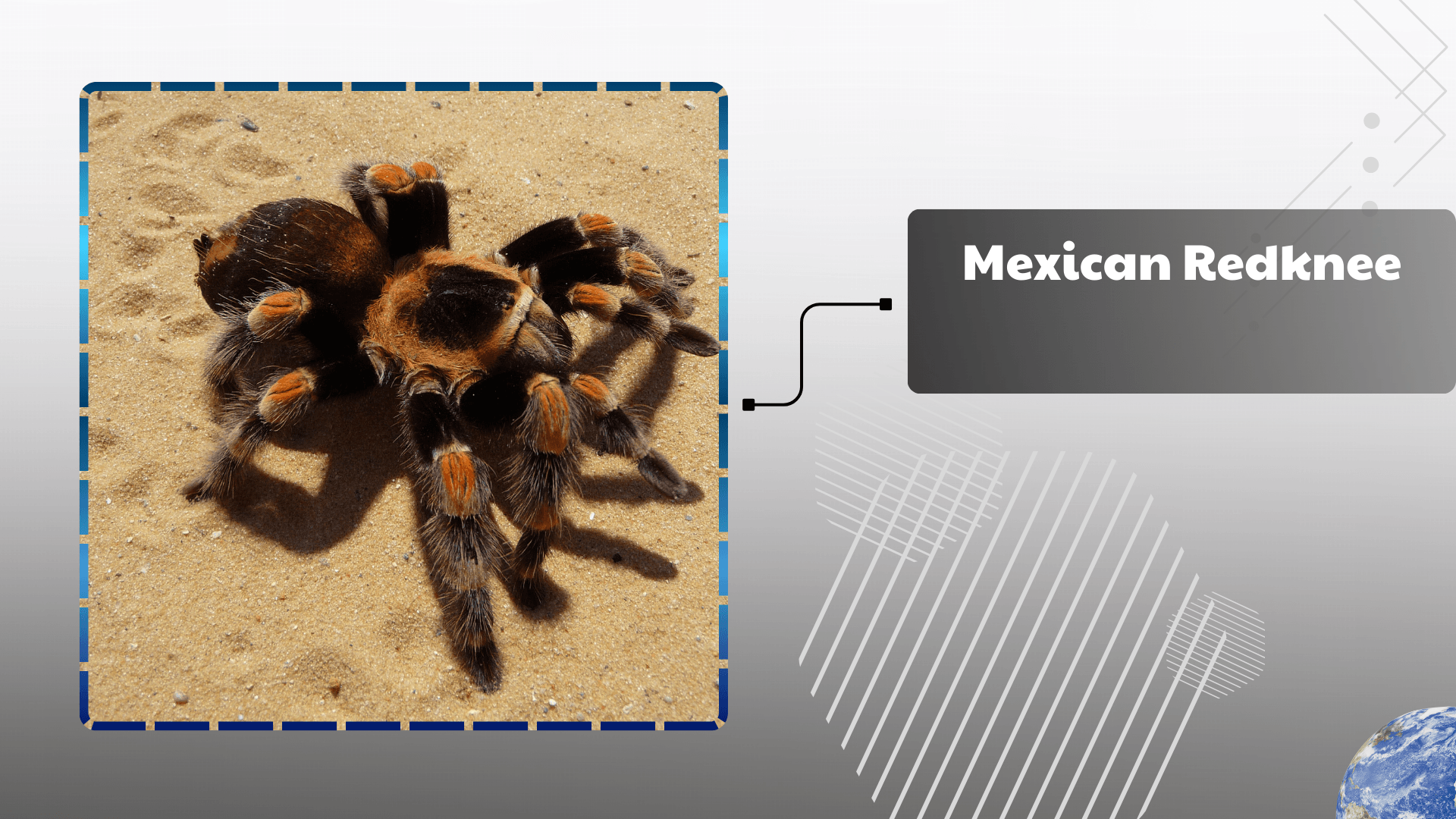
The Mexican Redknee Tarantula is one of the most iconic and recognizable tarantula species, celebrated for its vibrant black body and bright red-orange leg joints. Endemic to the Pacific coastal regions of Mexico, this species is slow-moving, docile, and frequently recommended for beginner tarantula enthusiasts. Adult females can live up to 25 years in captivity, while males have shorter lifespans. This long-lived nature contributes to their popularity in the exotic pet trade. In the wild, they inhabit scrublands, deserts, and semi-arid areas, often creating burrows beneath rocks or tree roots to avoid extreme temperatures.
Redknee Tarantulas are primarily insectivorous, feeding on crickets, roaches, and grasshoppers. They are nocturnal, remaining hidden during the day and emerging at night to hunt. Conservation concerns have arisen due to overcollection for the pet trade, prompting legal protections in Mexico and international regulations. Studying the Mexican Redknee highlights how visually striking tarantulas adapt to arid environments and survive for decades, illustrating the diversity of Types of Tarantulas in North America.
5. Mexican Redleg Tarantula (Brachypelma emilia)
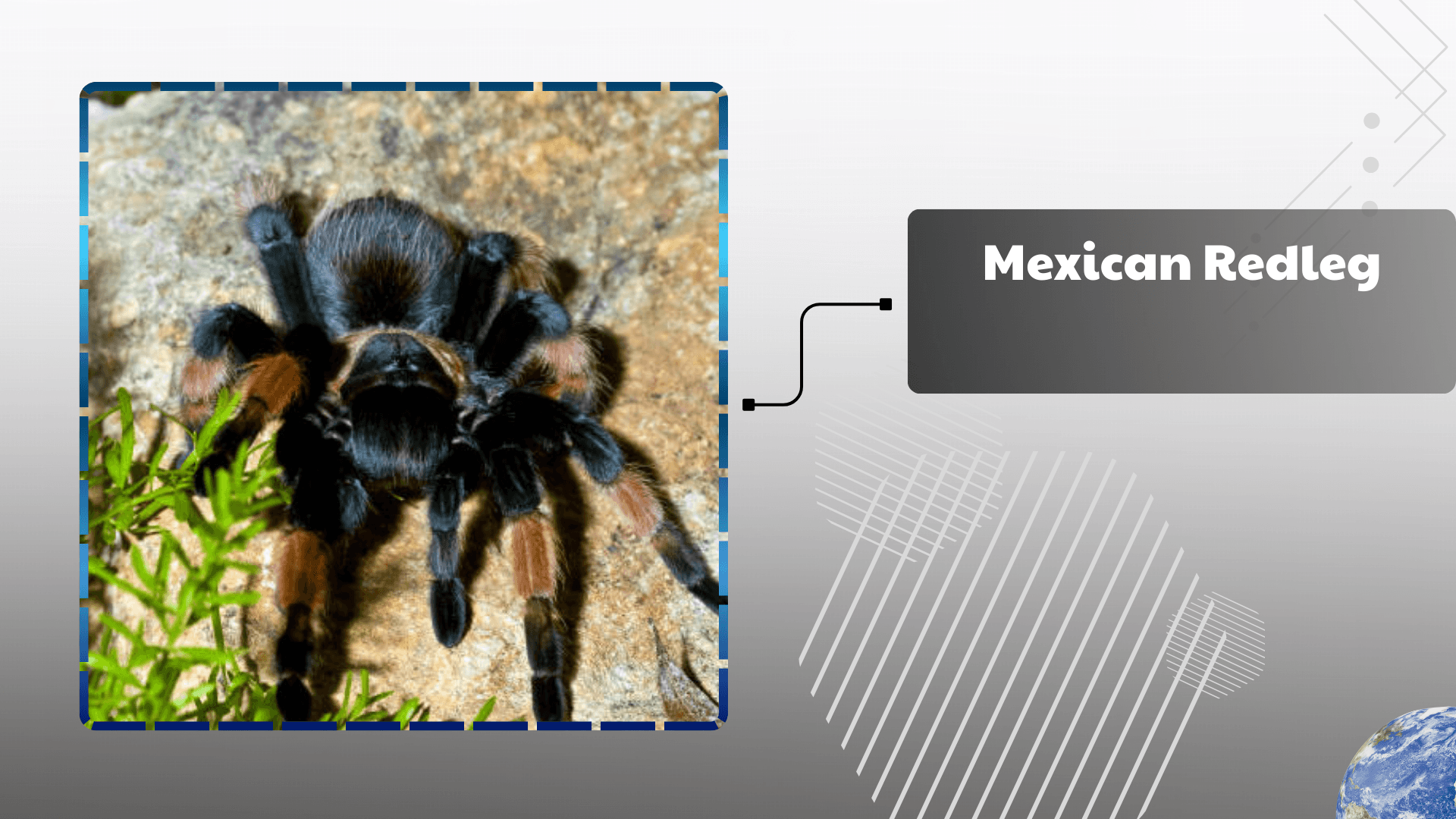
The Mexican Redleg Tarantula is a close relative of the Redknee species, distinguished by its reddish-orange legs and dark body. Native to the Pacific regions of Mexico, it thrives in semi-desert scrublands and tropical forests. Like other Brachypelma species, it is known for its calm temperament, making it a favorite among beginner and intermediate tarantula keepers. Its lifespan is impressive, with females often exceeding 20 years in captivity. Juveniles are more active and exploratory, while adults spend most of their time in burrows or resting under foliage.
Dietary habits include various insects, supplemented by occasional small vertebrates in the wild. Defensive behaviors include flicking urticating hairs, a common trait among New World tarantulas, which helps deter predators without the need for biting. The Mexican Redleg Tarantula exemplifies how certain Types of Tarantulas have evolved coloration for camouflage while maintaining a docile temperament that makes them accessible to enthusiasts worldwide. Their care and conservation underscore the importance of protecting natural habitats while appreciating these remarkable arachnids.
6. Honduran Curly Hair Tarantula (Brachypelma albopilosum)
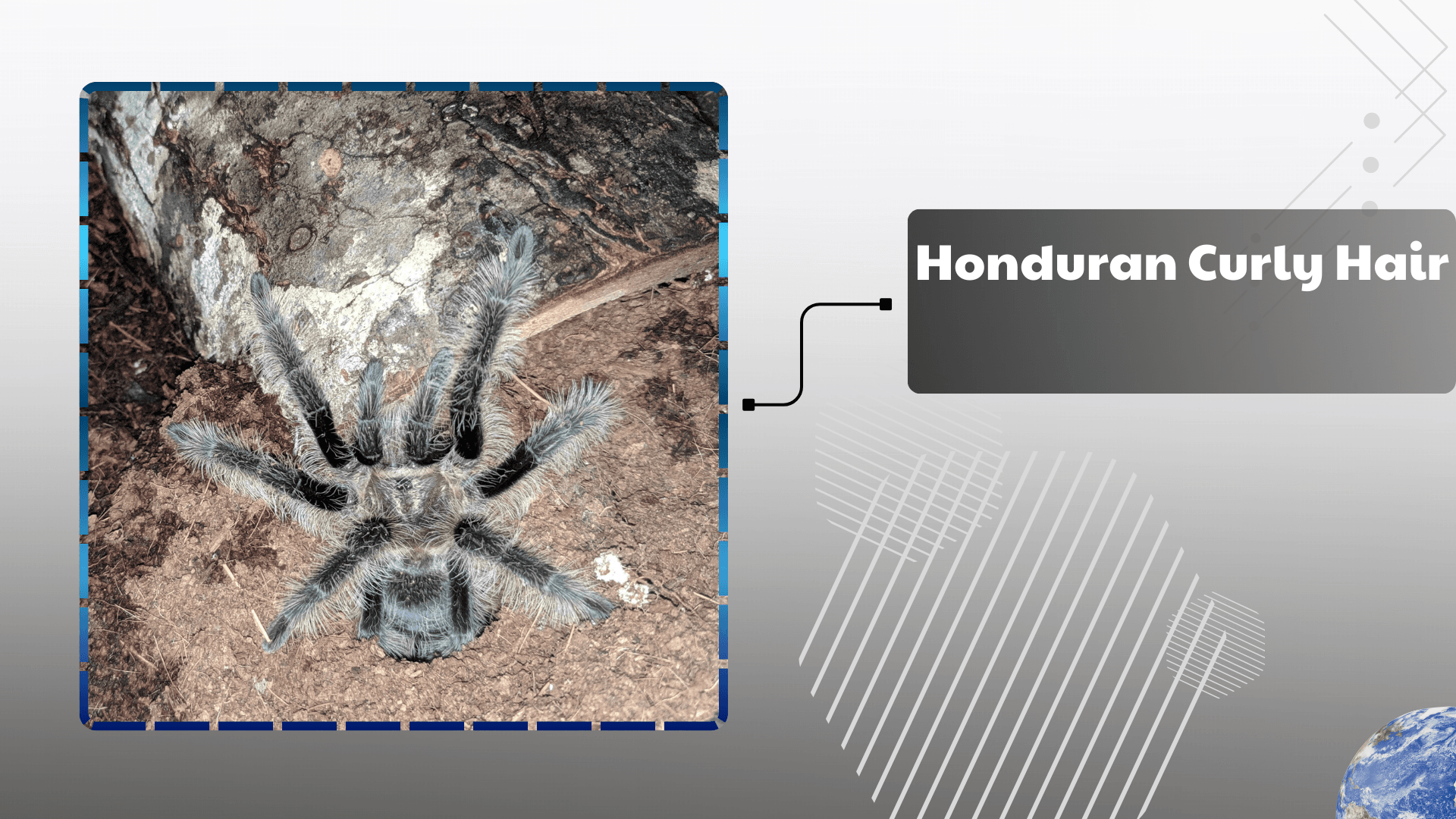
The Honduran Curly Hair Tarantula is a medium-to-large terrestrial tarantula native to Central America, particularly Honduras, Nicaragua, and Costa Rica. Its name comes from the distinctive curly or wavy hairs that cover its body and legs, giving it a unique and elegant appearance. These hairs, technically known as setae, serve multiple purposes: they protect the tarantula from predators, provide sensory input to detect vibrations in the ground, and play a role in thermoregulation.
Honduran Curly Hairs are renowned for their docile temperament and are often recommended as ideal pets for beginners. They are nocturnal hunters, feeding primarily on insects, but they are opportunistic and may also consume small vertebrates when available. Adults can reach a leg span of 5–6 inches, with females typically larger and longer-lived than males. Lifespan is remarkable: females can live over 15 years in captivity, whereas males generally live 5–6 years after reaching maturity.
This species creates burrows or resides under natural cover such as logs or rocks in the wild. They prefer humid environments and benefit from deep substrate for burrowing in captivity. Defensive behavior is moderate; when threatened, they may flick urticating hairs, but bites are rare and their venom is mild, comparable to a bee sting in humans. Their hardy nature, combined with tolerance for humidity fluctuations, makes them a popular example of Types of Tarantulas suitable for both education and exotic pet enthusiasts.
7. Desert Blonde Tarantula (Aphonopelma chalcodes)’
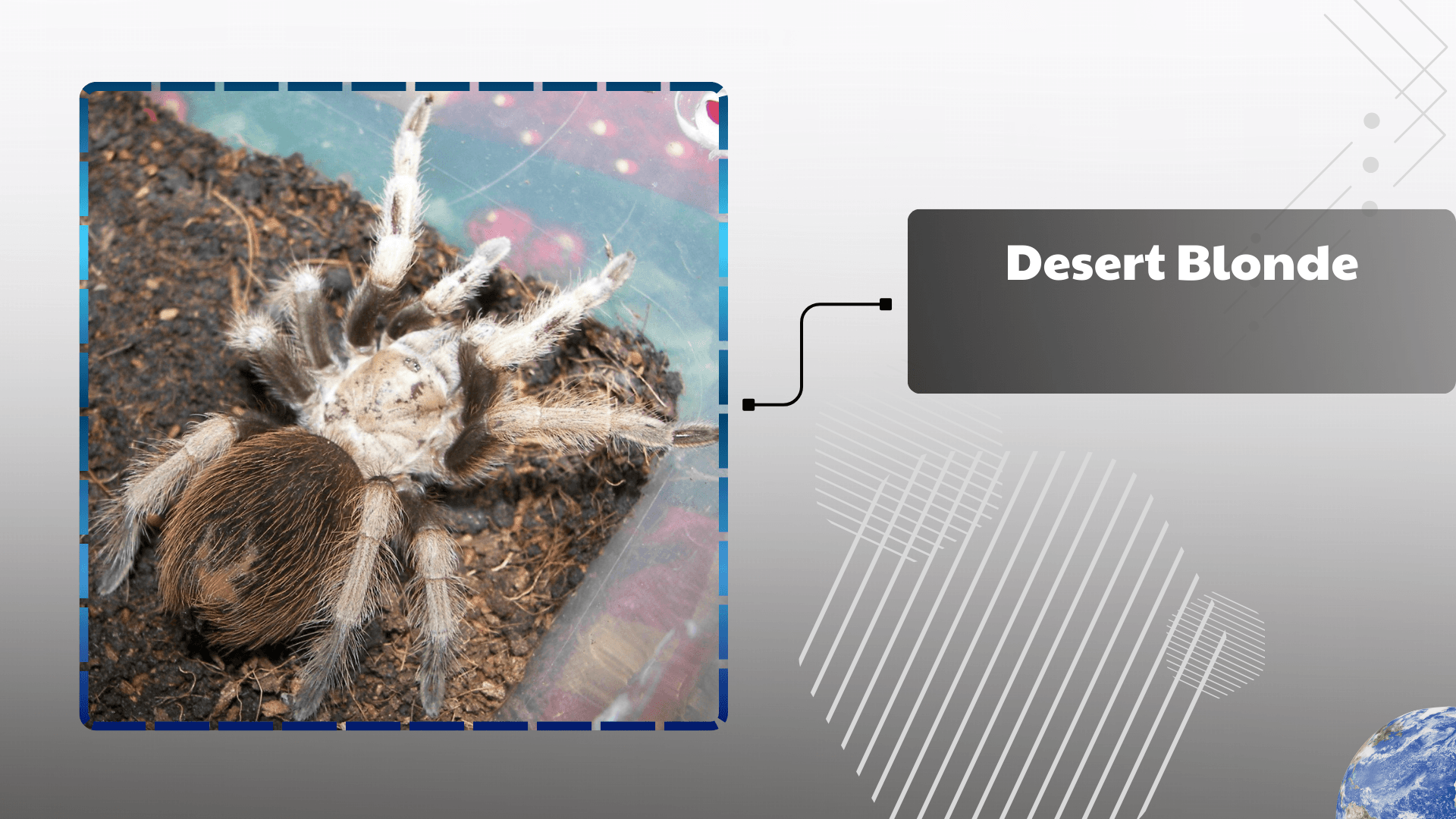
The Desert Blonde Tarantula is a strikingly beautiful species native to the arid deserts of the southwestern United States, including Arizona and New Mexico. Characterized by a pale, sandy-colored body and legs, it is expertly camouflaged against the desert sands. This terrestrial tarantula is primarily nocturnal, avoiding the intense heat of daytime, and emerges at night to hunt for insects, small lizards, and other prey.
Adult females of this species can reach leg spans of 4–5 inches and are known for their longevity, sometimes living over 20 years in captivity. Males are slightly smaller and generally live only a few years after reaching sexual maturity. Desert Blonde Tarantulas are burrowers, often digging elaborate tunnels beneath rocks or in loose sandy soil. The burrows provide protection from predators and extreme temperatures, allowing the spider to conserve moisture and energy.
In captivity, care for this tarantula is relatively simple due to its adaptability. It thrives in low-humidity environments with a substrate suitable for burrowing. Its temperament is calm and non-aggressive, with defensive behaviors typically limited to fleeing or flicking urticating hairs if provoked. Studying the Desert Blonde Tarantula offers insights into how certain Types of Tarantulas have evolved to survive in extreme, arid ecosystems while remaining resilient and low-maintenance in captive settings.
8. Costa Rican Zebra Tarantula (Aphonopelma seemanni)
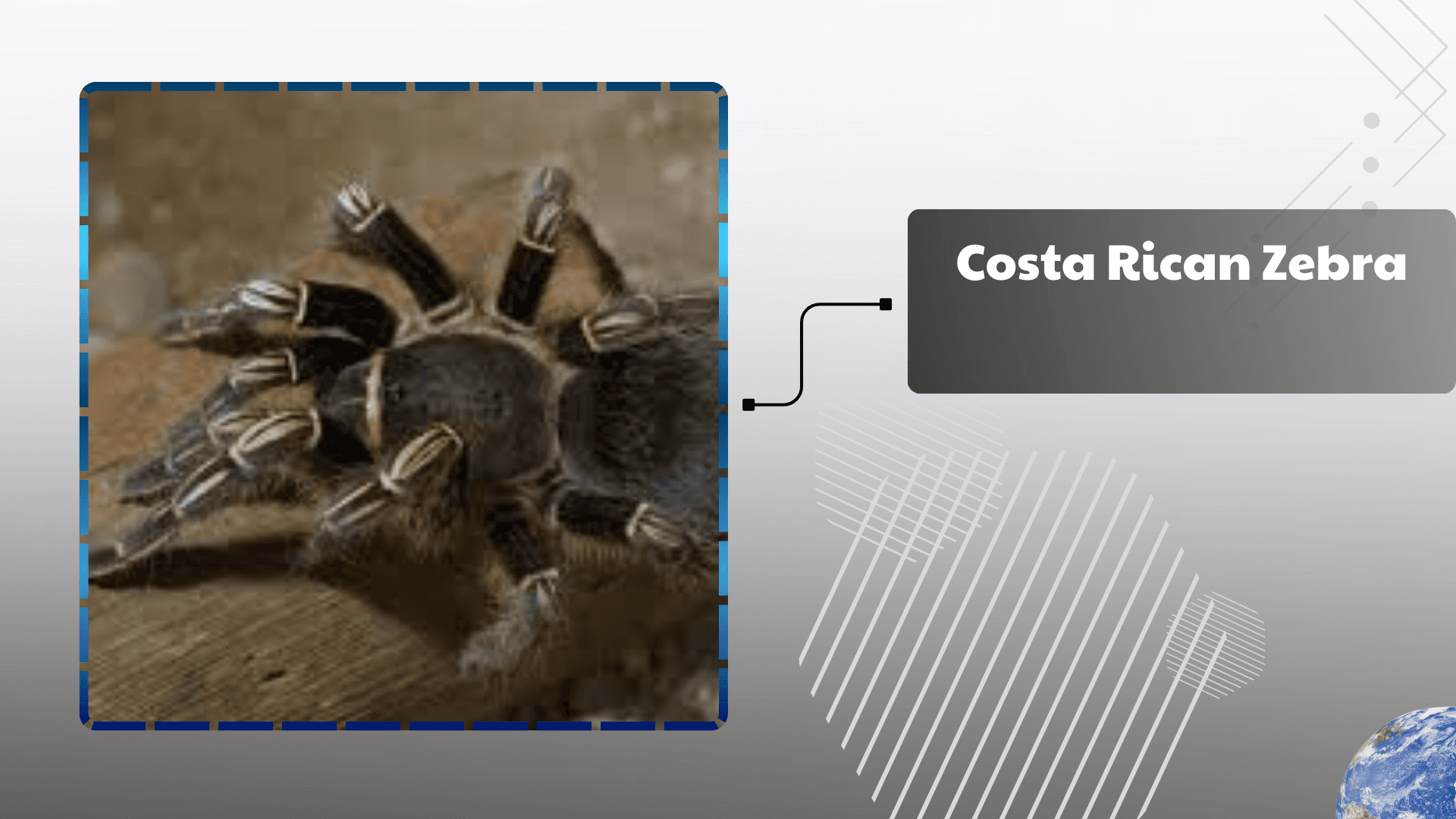
The Costa Rican Zebra Tarantula, often referred to as the Zebra Tarantula, is native to Central America, particularly Costa Rica and Nicaragua. This small-to-medium-sized tarantula is famous for the distinctive white stripes on its black legs, resembling the pattern of a zebra, which gives the species its common name. Its striking coloration serves as a warning to predators and contributes to its popularity among tarantula hobbyists worldwide.
Adults reach a leg span of about 4–5 inches, with females outliving males by many years. Zebra Tarantulas are primarily terrestrial but may climb low vegetation occasionally. They are nocturnal hunters, preying on insects, small amphibians, and other invertebrates. The species is known for being very active and fast-moving, which adds to its appeal for enthusiasts seeking an engaging, interactive tarantula.
In the wild, Costa Rican Zebras create burrows or occupy abandoned crevices, which provide shelter and help regulate temperature and humidity. In captivity, they require a dry substrate with some humidity and hiding spots. While generally calm, they may flick urticating hairs when disturbed, a common defensive mechanism among New World tarantulas. This species is an excellent representative of Types of Tarantulas adapted to tropical and subtropical environments, showcasing both unique coloration and resilient behavior patterns.
9. Brazilian Black Tarantula (Grammostola pulchra)

The Brazilian Black Tarantula is a large, glossy black tarantula native to Brazil, widely regarded as one of the most beautiful and docile tarantulas. Its sleek, velvet-like appearance makes it a favorite among exotic pet enthusiasts. Adult females can reach leg spans of up to 6–7 inches, while males are slightly smaller and more slender. The species is slow-moving, calm, and rarely displays defensive behavior, making it an ideal candidate for beginner tarantula keepers.
In the wild, Brazilian Blacks inhabit scrublands, savannas, and open forests. They are terrestrial burrowers, often seeking refuge under rocks, logs, or leaf litter. Their diet consists primarily of insects and other small invertebrates, and in captivity, they thrive on crickets, roaches, and mealworms. The species exhibits low activity levels and minimal stress responses, preferring to remain hidden rather than confront threats. Understanding the Brazilian Black Tarantula helps illustrate how some Types of Tarantulas balance aesthetics, docility, and adaptability, which is why it has remained so popular both in scientific study and pet trade.
10. Chilean Rose Tarantula (Grammostola rosea)
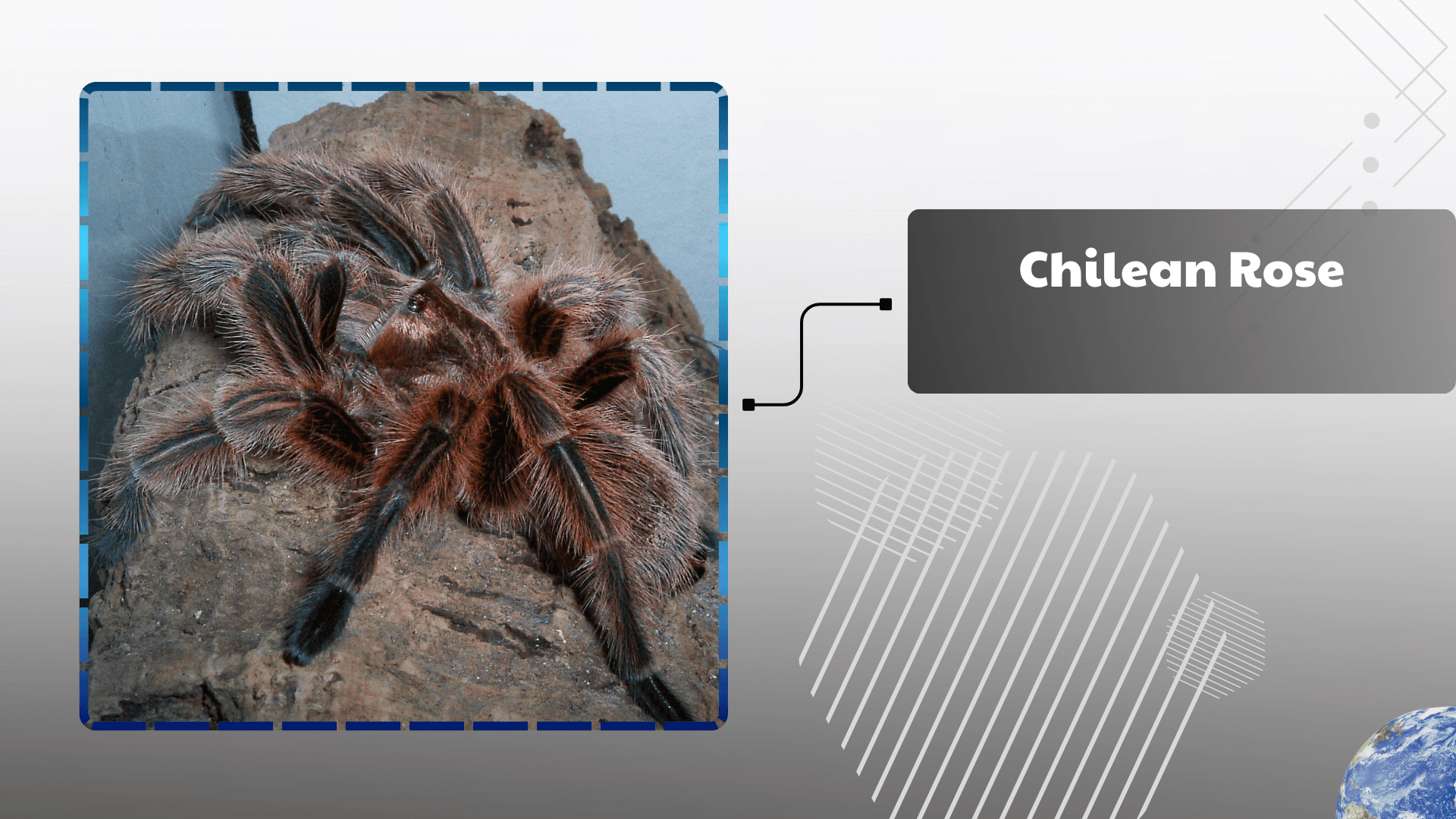
The Chilean Rose Tarantula is a medium-sized tarantula native to the deserts and scrublands of northern Chile. Known for its gentle temperament and attractive rose-colored hairs on the carapace and legs, it is one of the most commonly kept tarantulas in captivity. Adults typically reach a leg span of 4–5 inches, with females living up to 20 years, while males have shorter lifespans.
This species is a burrower, preferring dry, well-drained substrate with ample hiding places. It is nocturnal and primarily feeds on insects, although in captivity, a varied diet helps maintain health and vitality. Chilean Rose Tarantulas are generally calm, displaying defensive behavior only when provoked. Urticating hairs provide a primary defense mechanism, allowing the tarantula to deter predators without engaging in a fight. Studying this species highlights the adaptability of Types of Tarantulas to arid, desert-like conditions while demonstrating their suitability for educational purposes and exotic pet care.
11. Cameroon Baboon Tarantula (Hysterocrates gigas)
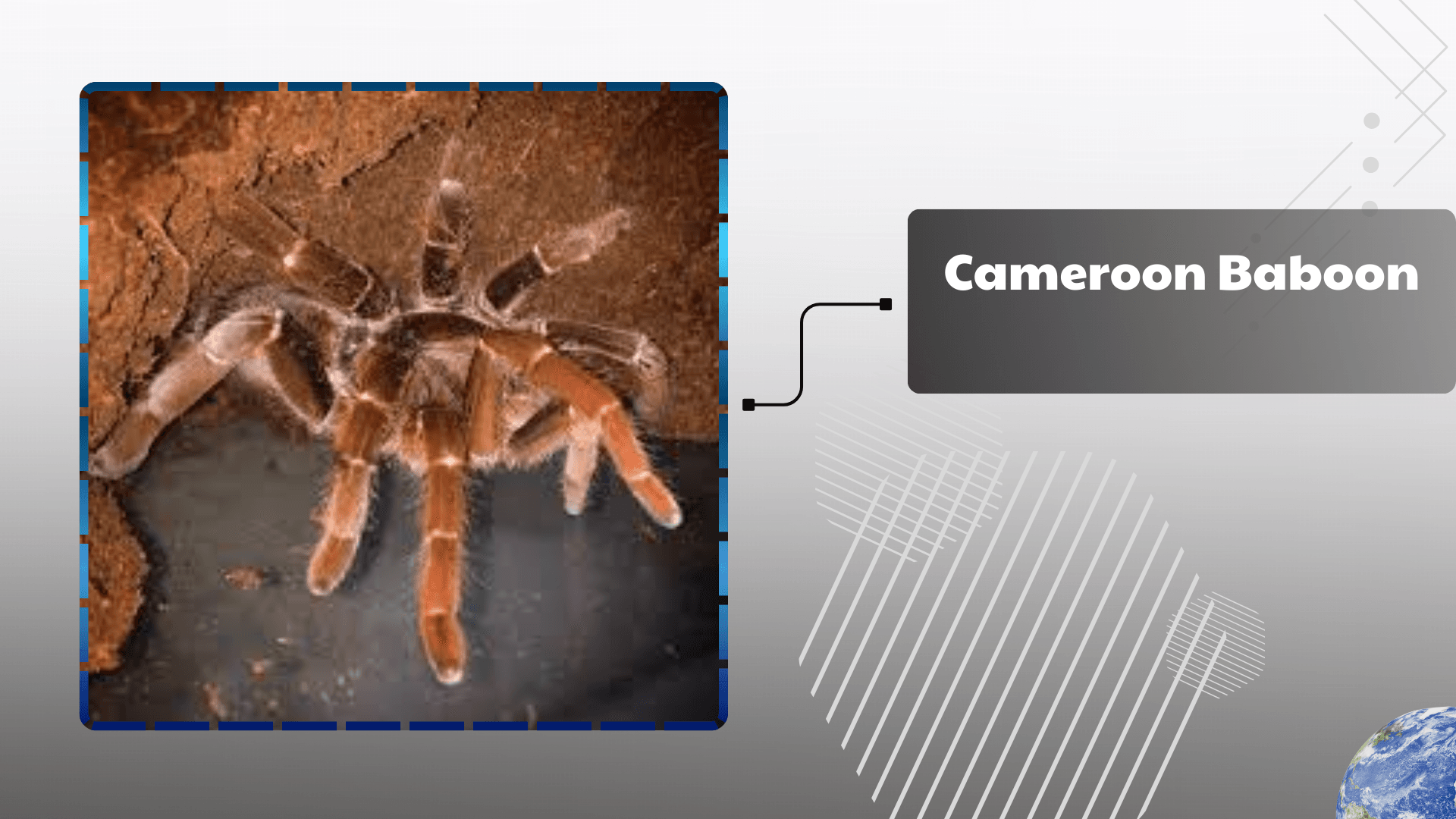
The Cameroon Baboon Tarantula is a large, ground-dwelling species native to the tropical rainforests of Cameroon and neighboring Central African regions. It is often referred to as a baboon tarantula due to its thick, robust legs and powerful build, which resemble the muscular limbs of a baboon. Adults can reach impressive sizes, with leg spans up to 8 inches, and they are renowned for their strong burrowing abilities.
This tarantula is primarily nocturnal, remaining hidden during the day in burrows or under forest debris. Its diet in the wild consists mainly of insects, small lizards, and occasionally amphibians. Despite its intimidating size, the Cameroon Baboon Tarantula is generally calm but will adopt a defensive stance if threatened, raising its front legs and flicking urticating hairs to deter predators. Venom is mild to humans, rarely causing more than minor discomfort.
In captivity, Cameroon Baboons require a spacious terrarium with deep substrate for burrowing and moderate humidity to mimic their rainforest environment. They are relatively hardy and can be maintained by hobbyists with some experience. Studying this species provides valuable insight into how robust, terrestrial Types of Tarantulas have evolved to thrive in dense, predator-rich environments.
12. King Baboon Tarantula (Pelinobius muticus)
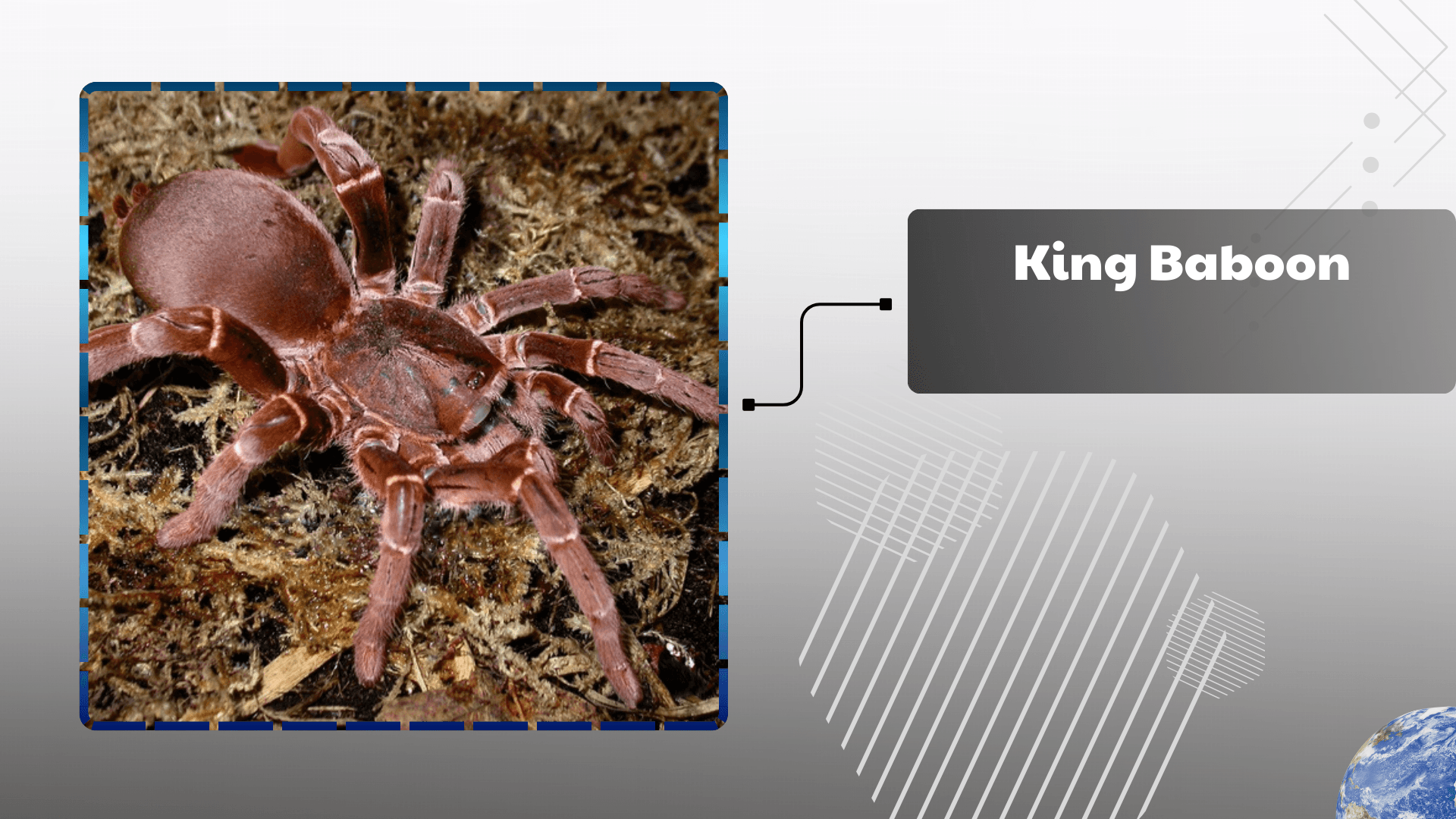
The King Baboon Tarantula is an African giant and one of the largest terrestrial tarantulas on the continent. Native to East Africa, particularly Kenya and Tanzania, this species is famed for its impressive size and defensive nature. Adult leg spans can exceed 8 inches, with thick, muscular legs and a sturdy body that enable powerful burrowing and climbing. Its dark brown to black coloration, coupled with dense hairs, provides camouflage in forest floors and grasslands.
King Baboons are highly defensive and can be aggressive when provoked. They are equipped with urticating hairs and potent venom compared to other African tarantulas, although bites to humans are rarely life-threatening. These tarantulas are nocturnal predators, feeding on insects, small mammals, and amphibians. In captivity, they require deep, secure enclosures with dry substrate for burrowing, and they thrive on a diet of crickets, roaches, and occasional pinkie mice.
This species exemplifies how certain Types of Tarantulas adapt to both predation pressures and environmental challenges, demonstrating remarkable strength, defensive strategies, and territorial behaviors that make them fascinating subjects of study for arachnologists and enthusiasts alike.
13. Orange Baboon Tarantula (Pterinochilus murinus)
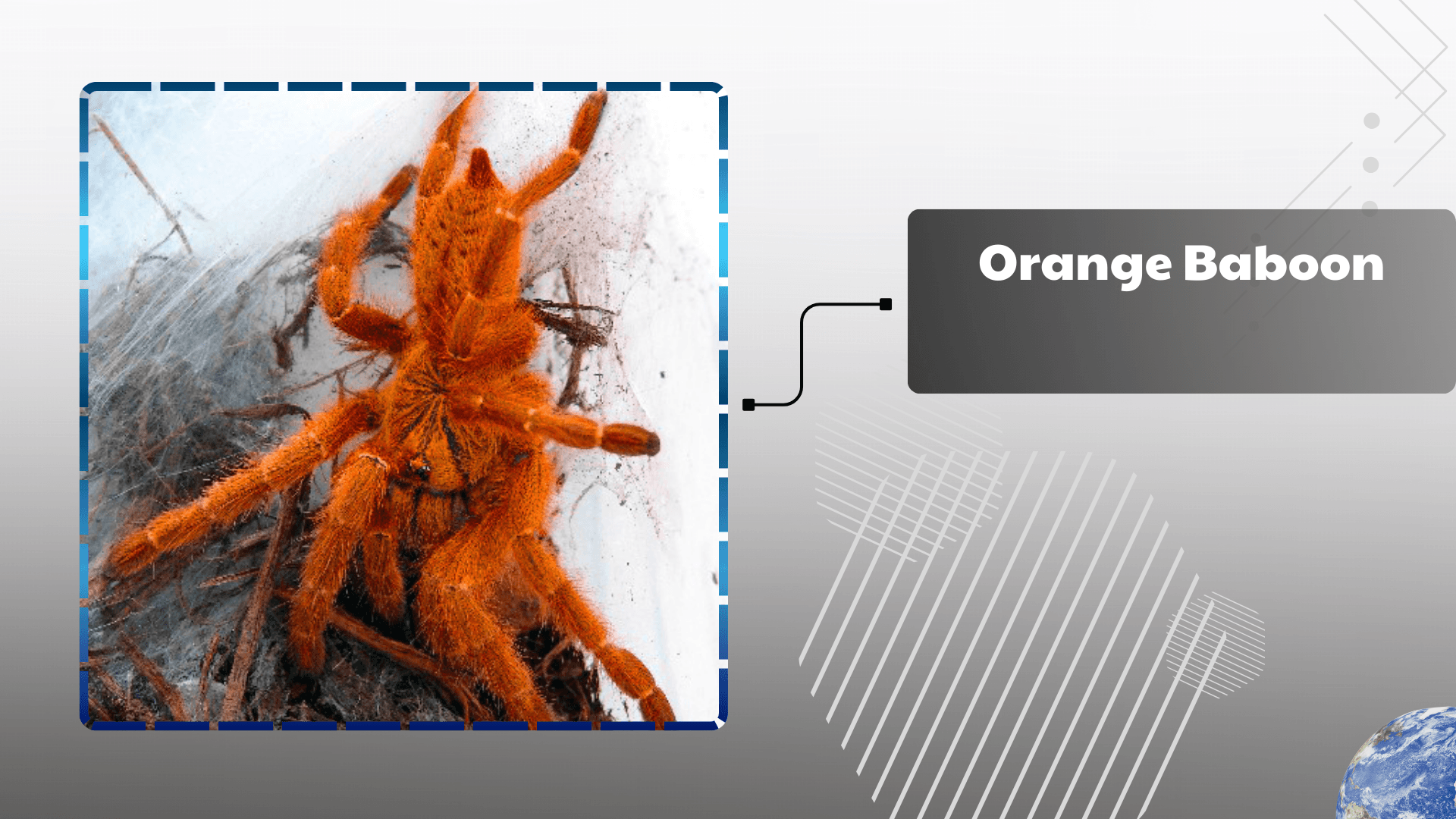
The Orange Baboon Tarantula, commonly known as OBT or “Orange Bitey Thing,” is native to savannas, scrublands, and forests in East Africa. This species is instantly recognizable by its bright orange coloration and dark legs, combined with a fast and aggressive temperament. Adults typically reach leg spans of 5–6 inches, and they are highly territorial and defensive, making them suitable only for experienced tarantula keepers.
OBTs are nocturnal hunters that prey on insects, small vertebrates, and other invertebrates. In the wild, they reside in silk-lined burrows, tree roots, or rock crevices. Defensive behaviors include rapid movement, lunging bites, and urticating hair flicking. While their venom is not lethal to humans, it can cause localized pain, swelling, and irritation. In captivity, a secure enclosure with a dry substrate and hiding spots is essential due to their speed and defensive nature.
The Orange Baboon Tarantula demonstrates how some Types of Tarantulas balance striking coloration with aggressive defense mechanisms, providing a unique perspective on arachnid adaptation and survival strategies in African ecosystems.
14. Greenbottle Blue Tarantula (Chromatopelma cyaneopubescens)
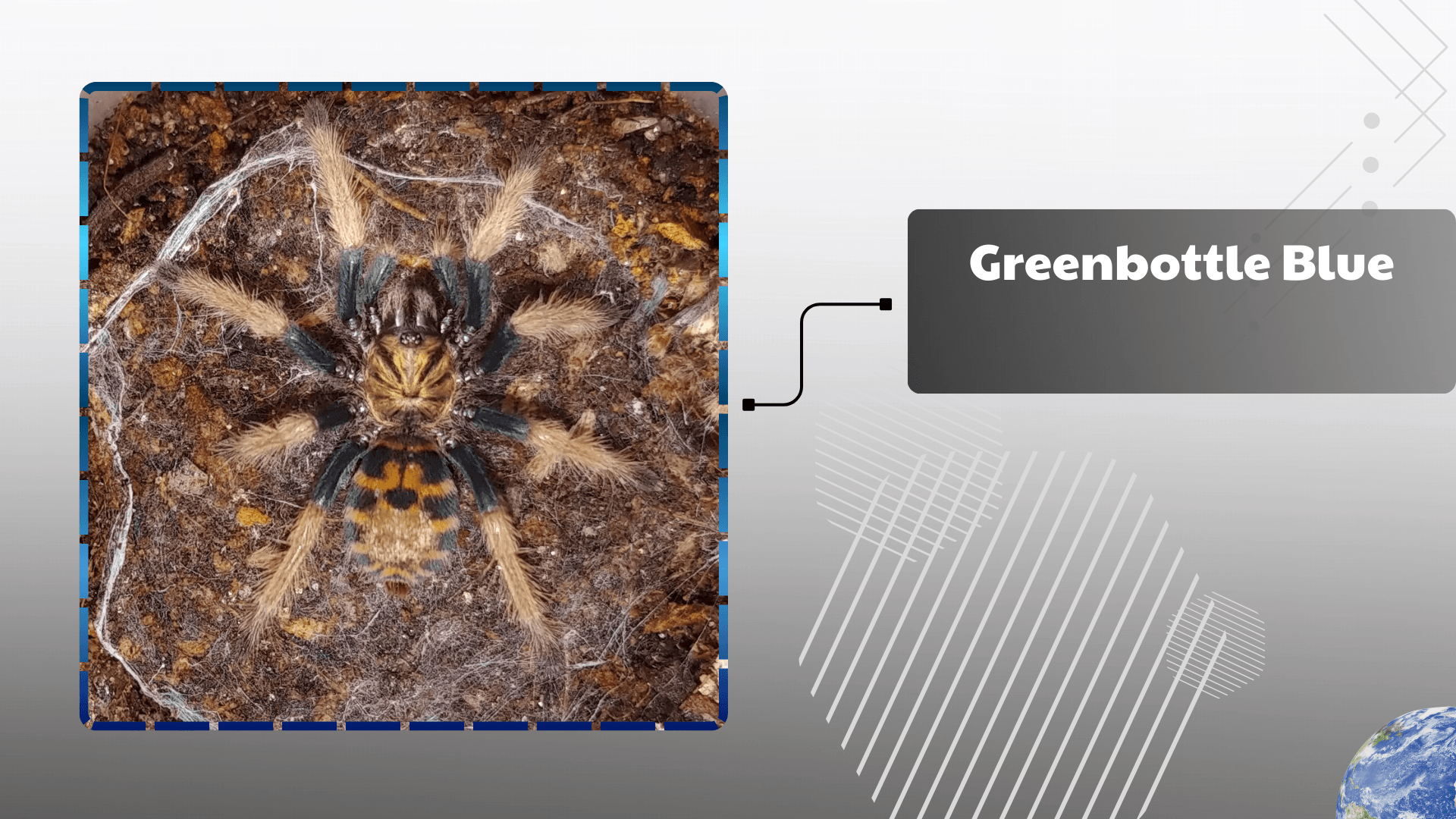
The Greenbottle Blue Tarantula is a stunning arboreal tarantula from northern Venezuela, known for its vibrant coloration. It features a metallic blue body, greenish carapace, and bright orange hairs on the abdomen, making it one of the most visually striking tarantulas in the world. Adults reach a leg span of 5–6 inches and are known for their active, curious, and fast-moving behavior.
This species constructs extensive silk retreats among bushes, trees, or other vegetation, which provide shelter and hunting grounds. Greenbottle Blues are primarily insectivorous but may opportunistically consume small vertebrates. They are generally hardy in captivity and are recommended for intermediate hobbyists due to their speed and defensive tendencies. While their venom is mild to humans, they may flick urticating hairs if disturbed.
The Greenbottle Blue Tarantula highlights how arboreal Types of Tarantulas have evolved for climbing, silk production, and visual signaling through vivid coloration, serving both as a warning to predators and an attraction for potential mates.
15. Cobalt Blue Tarantula (Cyriopagopus lividus)
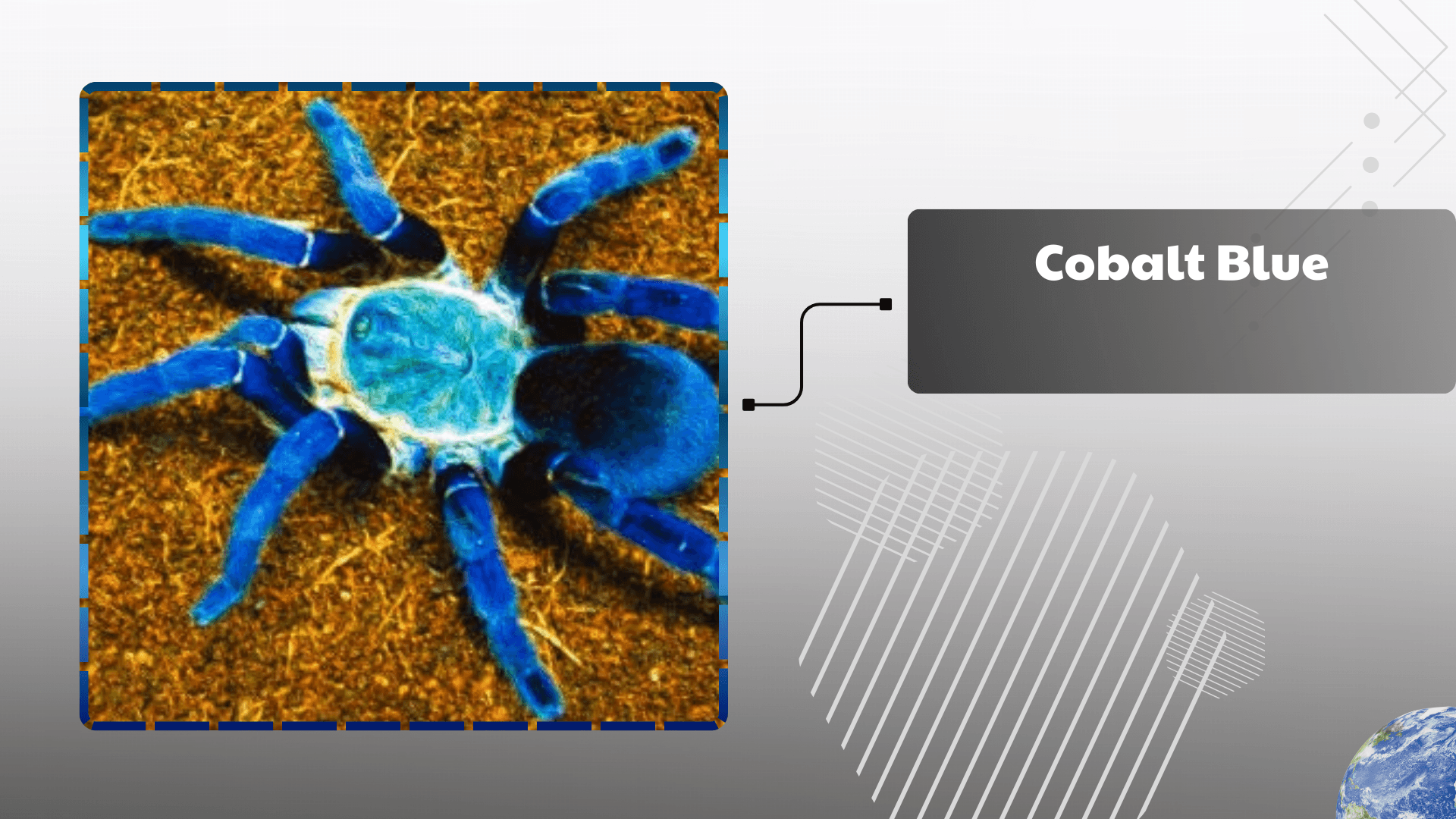
The Cobalt Blue Tarantula is an extraordinary species native to Myanmar and parts of Southeast Asia. Its electric blue legs and contrasting dark body make it one of the most sought-after tarantulas among collectors. Adults have leg spans of 5–6 inches, with males generally smaller than females. This species is highly defensive and fast, known for being a burrower that prefers deep, secure retreats in loose soil.
In the wild, Cobalt Blue Tarantulas hunt at night, preying on insects, small amphibians, and occasionally small reptiles. They are known for their potent venom relative to New World tarantulas, though it is not dangerous to humans unless an allergic reaction occurs. Captive care requires high humidity, deep substrate, and secure enclosures to prevent escape. They are not recommended for beginners due to speed, defensiveness, and burrowing habits.
The Cobalt Blue Tarantula demonstrates the incredible diversity of Types of Tarantulas in Asia, showcasing how color, speed, and defensive strategies combine to ensure survival in predator-rich tropical forests.
16. Pink Zebra Beauty Tarantula (Eupalaestrus campestratus)
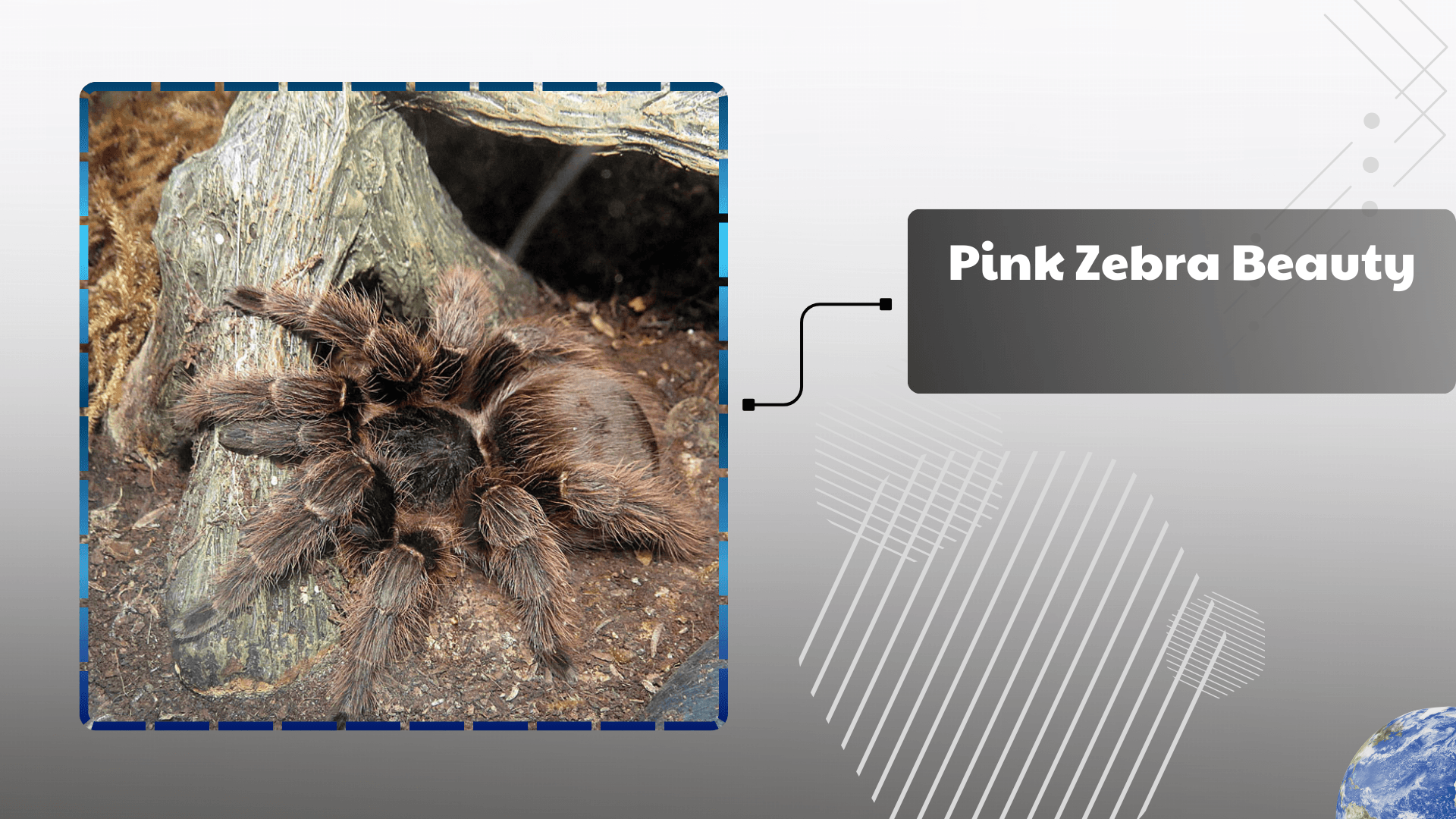
The Pink Zebra Beauty Tarantula is a striking terrestrial species native to southern Brazil, Uruguay, and Paraguay. This tarantula is named for its subtly striped pinkish hairs over a dark brown or black carapace and legs, giving it a zebra-like pattern with a delicate pink hue. Adults typically reach a leg span of 4–5 inches, and females can live over 15 years in captivity, while males have shorter lifespans.
Pink Zebra Beauties are known for their calm temperament and ease of care, making them ideal for beginners. In the wild, they inhabit grasslands and scrublands, creating burrows under rocks or dense vegetation to avoid predators and extreme weather. They are nocturnal hunters, feeding primarily on insects and other invertebrates, using stealth and ambush tactics rather than speed.
Defensive behaviors are minimal; this species may flick urticating hairs if threatened but rarely bites. In captivity, they require a dry substrate with hiding spots and occasional humidity to aid molting. The Pink Zebra Beauty Tarantula demonstrates how smaller Types of Tarantulas combine visual appeal with a docile nature, highlighting the diversity and adaptability of South American tarantulas to grassland ecosystems.
17. Gooty Sapphire Ornamental Tarantula (Poecilotheria metallica)

The Gooty Sapphire Ornamental Tarantula is one of the rarest and most visually striking tarantulas in the world, native to a small forested region in Andhra Pradesh, India. This arboreal species is instantly recognizable by its vibrant metallic blue coloration, which covers its legs, carapace, and abdomen. Adults reach a leg span of 5–6 inches, with females typically larger than males.
As an arboreal species, the Gooty Sapphire constructs silk retreats among tree branches, crevices, or under bark. They are primarily nocturnal predators, hunting insects and other small arthropods. While their venom is potent for subduing prey, it is rarely dangerous to humans unless a severe allergic reaction occurs. This tarantula is known for its speed and defensive tendencies, and as such, it is recommended only for advanced hobbyists.
In captivity, this species requires a tall enclosure with vertical climbing space, high humidity, and regular misting to replicate its natural rainforest habitat. Conservation efforts are critical for the Gooty Sapphire due to its extremely limited range and threats from habitat loss. Studying this species emphasizes the importance of protecting rare arboreal Types of Tarantulas while appreciating their breathtaking coloration and ecological significance.
18. Indian Ornamental Tarantula (Poecilotheria regalis)
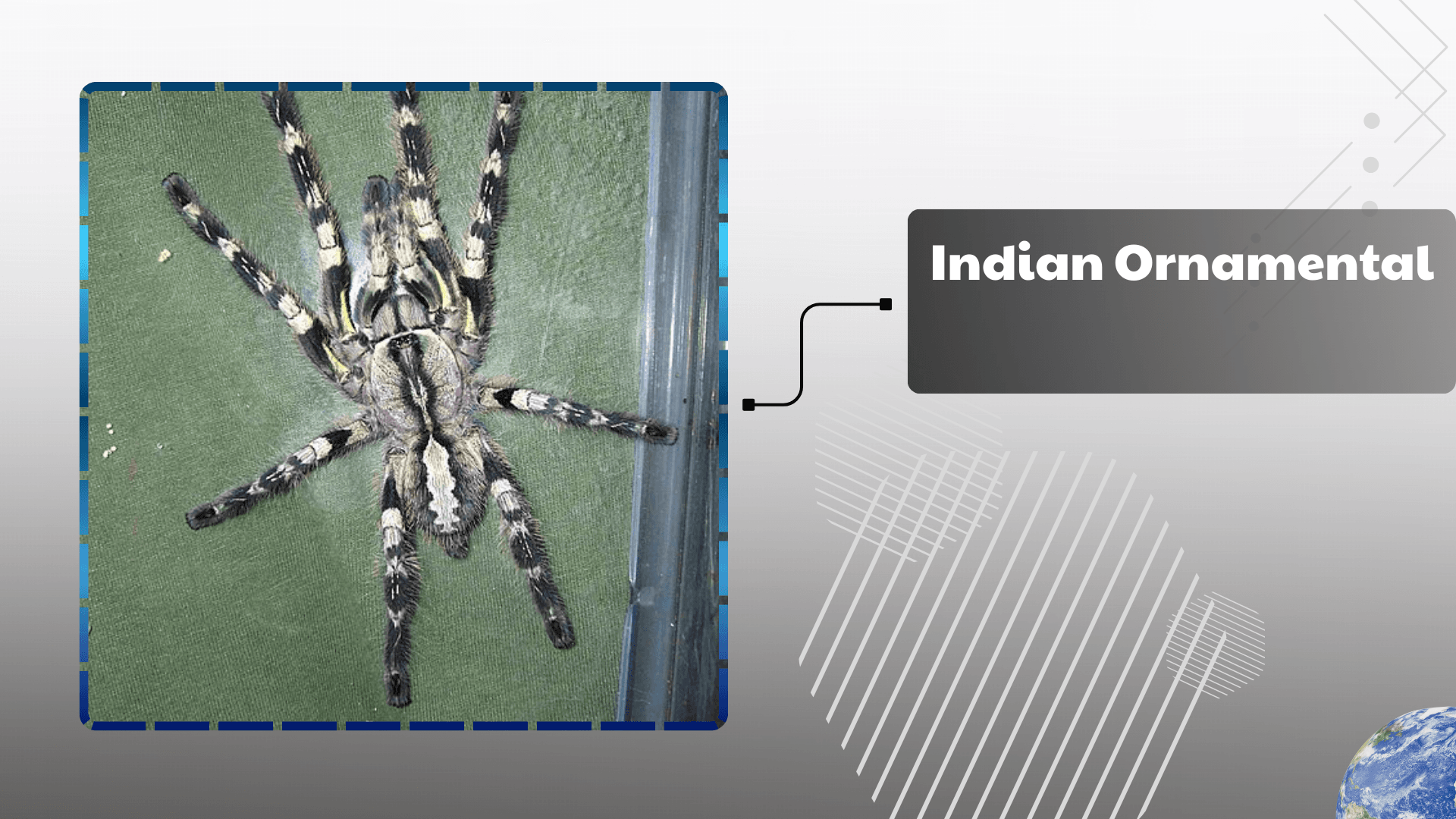
The Indian Ornamental Tarantula is a large arboreal tarantula native to southern India. Its striking pattern includes bold black and white markings on the legs and carapace, often with yellow or cream accents. Adults can reach a leg span of 6–7 inches, with females exhibiting longer lifespans than males. Known for its defensive nature, the Indian Ornamental is fast, alert, and capable of delivering a painful bite if provoked.
This species builds extensive silk retreats in tree hollows and crevices, which provide protection and facilitate ambush hunting. Its diet in the wild consists of insects, other arthropods, and occasionally small vertebrates. In captivity, they require tall enclosures with vertical climbing opportunities, high humidity, and multiple hiding spots. Due to their speed, defensive behavior, and potent venom relative to New World tarantulas, they are recommended only for experienced keepers.
The Indian Ornamental Tarantula exemplifies how certain Types of Tarantulas have evolved arboreal adaptations, combining speed, camouflage, and aggressive defense strategies to survive in predator-rich forest ecosystems.
19. Pink Toe Tarantula (Avicularia avicularia)
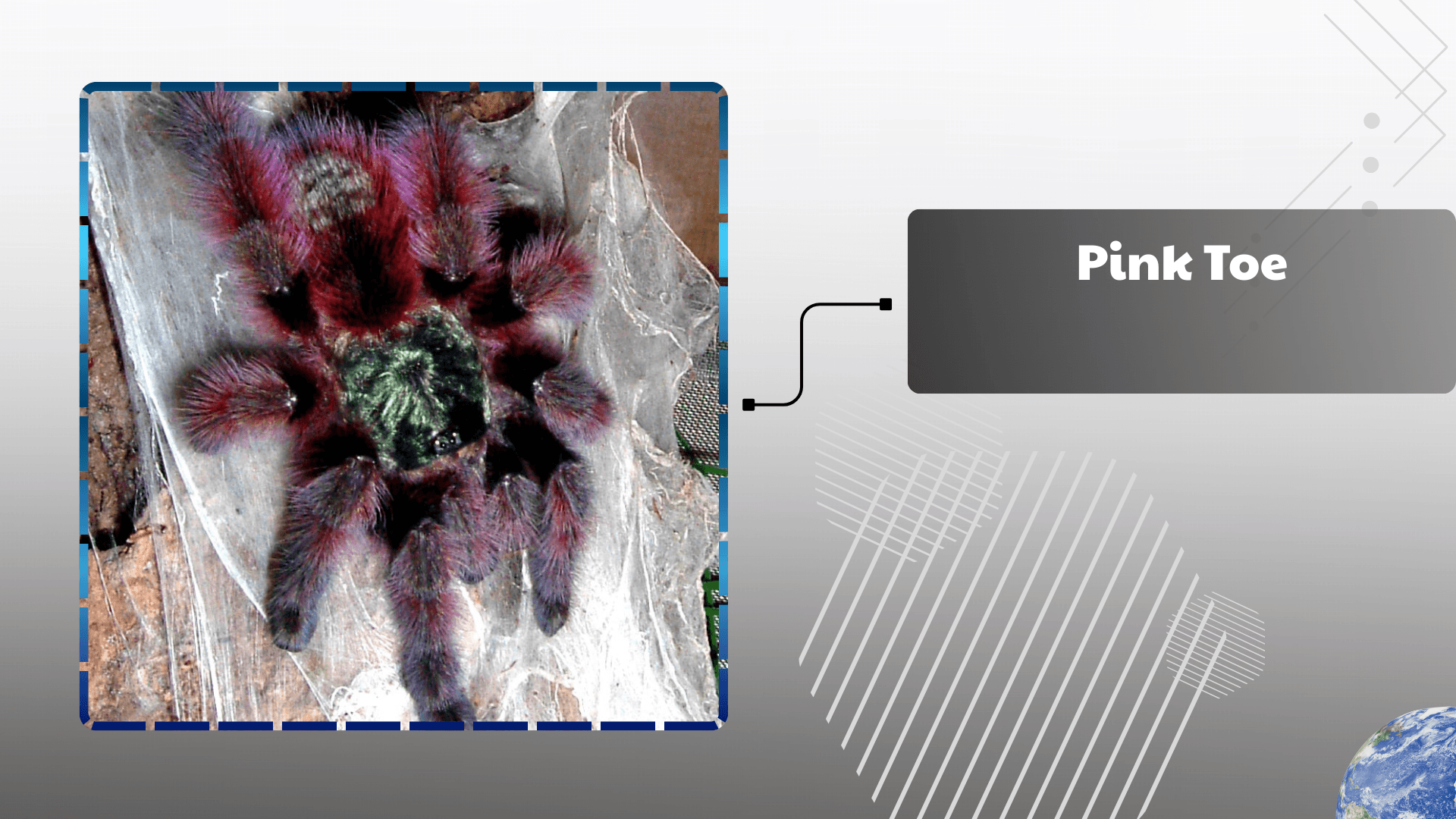
The Pink Toe Tarantula is a small-to-medium arboreal tarantula native to northern South America, including Brazil, Guyana, and Suriname. Its name comes from the distinctive pink or reddish tips on its feet, contrasting against a dark or olive-colored body. Adults typically reach a leg span of 4–5 inches, and females live significantly longer than males, sometimes exceeding 15 years.
Pink Toe Tarantulas are agile climbers and construct silk retreats in trees, shrubs, and foliage. They are primarily nocturnal hunters, feeding on insects and small arthropods. This species is known for its calm and docile temperament, making it a popular choice for beginner hobbyists. Defensive behavior is minimal, usually limited to fleeing or flicking urticating hairs if threatened.
In captivity, Pink Toe Tarantulas require tall enclosures with branches for climbing, moderate humidity, and a secure lid due to their propensity to jump. Studying this species highlights the adaptability of arboreal Types of Tarantulas, showing how morphology, coloration, and behavior are tailored for life above the forest floor.
20. Trinidad Chevron Tarantula (Psalmopoeus cambridgei)
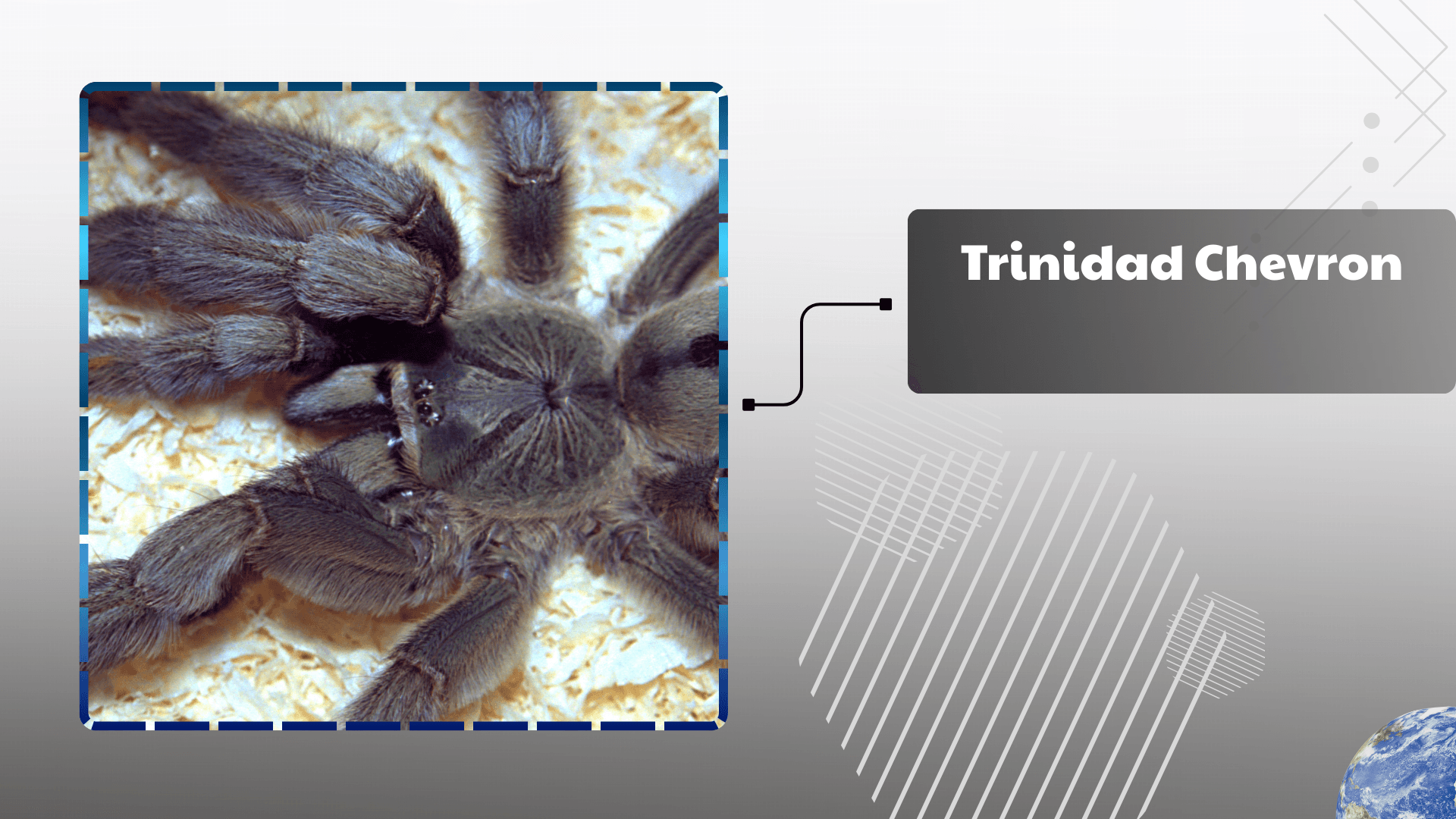
The Trinidad Chevron Tarantula is a medium-to-large arboreal species native to Trinidad and parts of northern South America. Recognized by its dark brown body with chevron-shaped markings on the abdomen and orange accents along the legs, this tarantula is both visually striking and highly agile. Adults typically reach a leg span of 5–6 inches, with females exhibiting greater longevity than males.
As an arboreal species, the Trinidad Chevron Tarantula constructs silk retreats in tree hollows, crevices, and under bark. They are nocturnal hunters, feeding primarily on insects and occasionally small vertebrates. This species is defensive and fast, capable of delivering a painful bite if provoked, so it is recommended only for experienced hobbyists.
In captivity, it requires a tall enclosure with climbing opportunities, moderate to high humidity, and consistent temperature to mimic its tropical forest habitat. The Trinidad Chevron Tarantula showcases the incredible diversity of arboreal Types of Tarantulas, combining vibrant coloration, speed, and strategic hunting adaptations that make it both a fascinating subject for study and a visually stunning specimen for enthusiasts.
21. Blue Fang Skeleton Tarantula (Ephebopus cyanognathus)
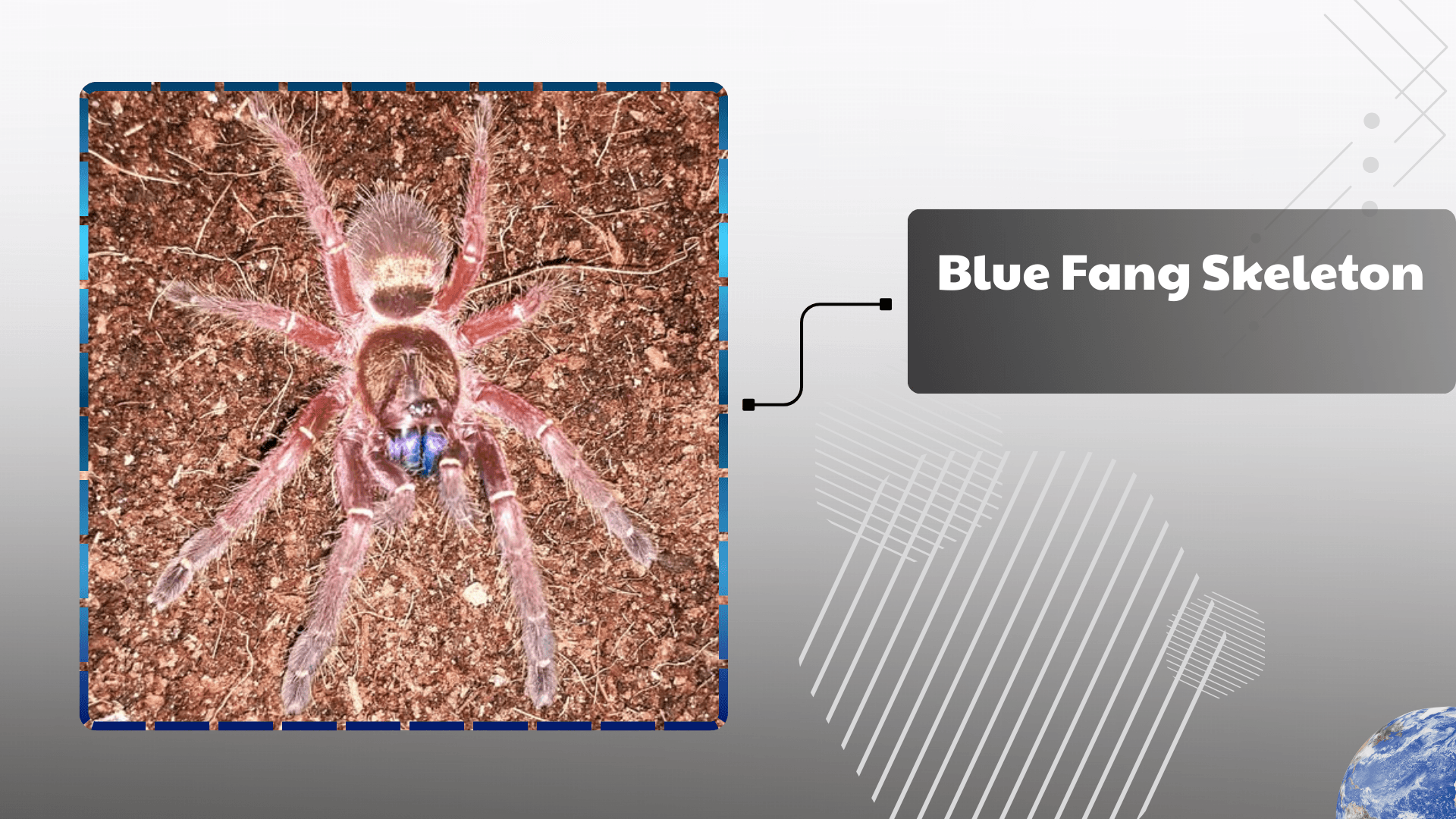
The Blue Fang Skeleton Tarantula is a medium-sized burrowing species native to the rainforests of French Guiana and Suriname. Its name comes from the striking blue chelicerae, which stand out against its brown and tan body. Adults can reach a leg span of 5–6 inches, with females generally larger and longer-lived than males. This tarantula is a fossorial species, meaning it spends most of its life in burrows beneath the forest floor.
In the wild, Blue Fang Skeleton Tarantulas dig deep burrows or occupy abandoned tunnels, which provide protection from predators and harsh environmental conditions. They are nocturnal hunters, feeding primarily on insects and occasionally small vertebrates. The species is known for its defensive behavior; it will flick urticating hairs and, if provoked further, may bite. Although their venom is not lethal to humans, bites can be painful and cause localized swelling.
In captivity, they require deep substrate for burrowing, moderate humidity, and secure enclosures. Their unique chelicerae coloration, combined with their burrowing habits, makes the Blue Fang Skeleton Tarantula an excellent representative of South American fossorial Types of Tarantulas. Studying this species highlights the diversity of behavioral and morphological adaptations that allow tarantulas to thrive underground.
22. Antilles Pinktoe Tarantula (Avicularia versicolor)
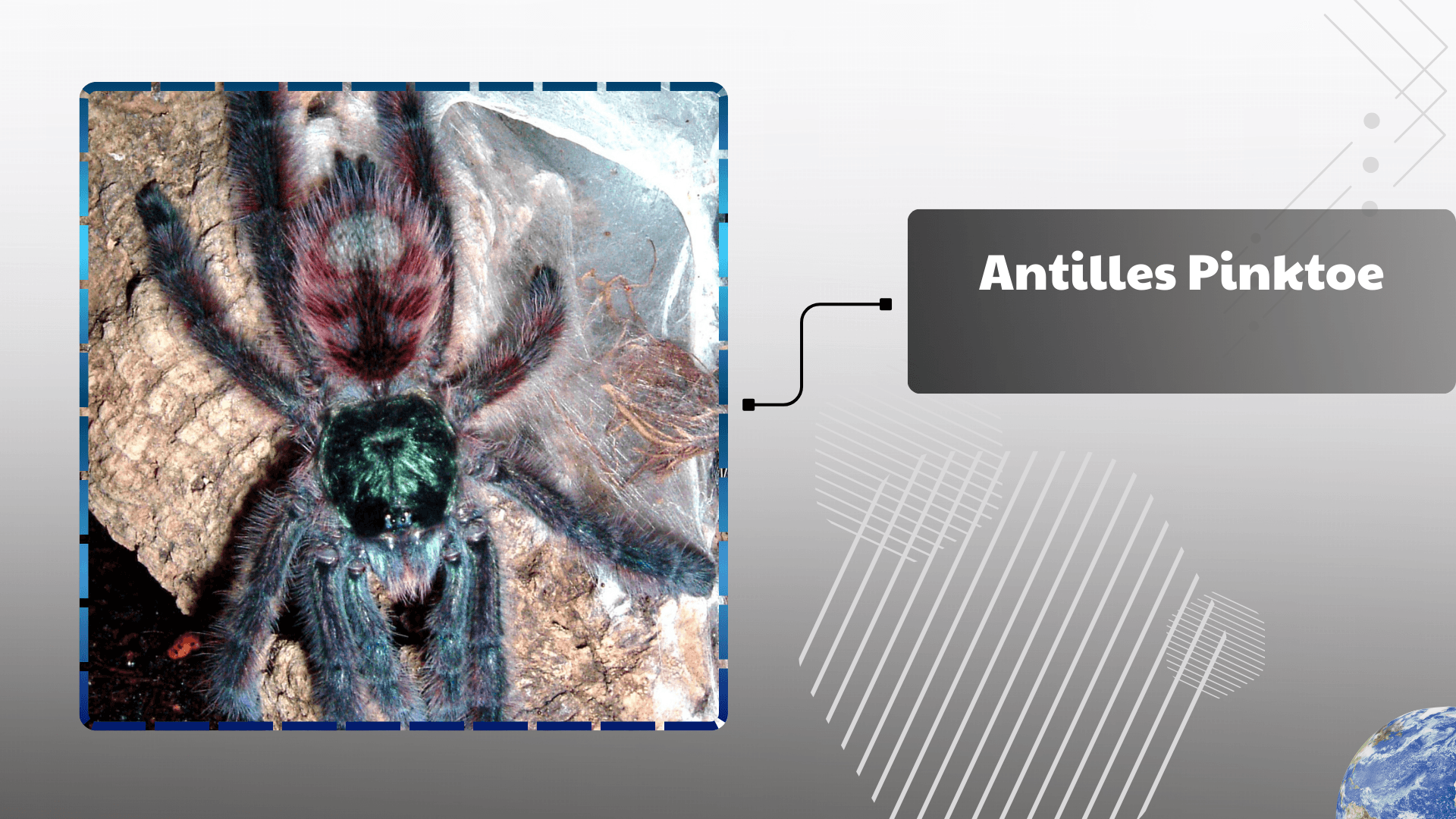
The Antilles Pinktoe Tarantula is an arboreal species endemic to the Caribbean, particularly Martinique and Guadeloupe. Known for its vibrant coloration, juveniles display metallic green and blue hues, which transition into a deep red or purple as they mature, with distinctive pink toes on each leg. Adults typically reach a leg span of 5–6 inches, with females outliving males by several years.
Antilles Pinktoe Tarantulas construct silk retreats in trees, shrubs, and other vegetation, creating a secure base from which they ambush prey. Their diet includes insects and other small invertebrates. This species is known for being calm and manageable, making it suitable for intermediate tarantula enthusiasts. Defensive behavior is generally limited to fleeing or flicking urticating hairs when threatened.
In captivity, they require tall enclosures with vertical climbing opportunities, consistent humidity, and multiple hiding spots. The Antilles Pinktoe demonstrates the adaptive advantages of arboreal Types of Tarantulas, including specialized morphology for climbing, color signaling for communication, and behavioral strategies for capturing prey from above the forest floor.
23. Salvador Sun Tiger Tarantula (Psalmopoeus pulcher)
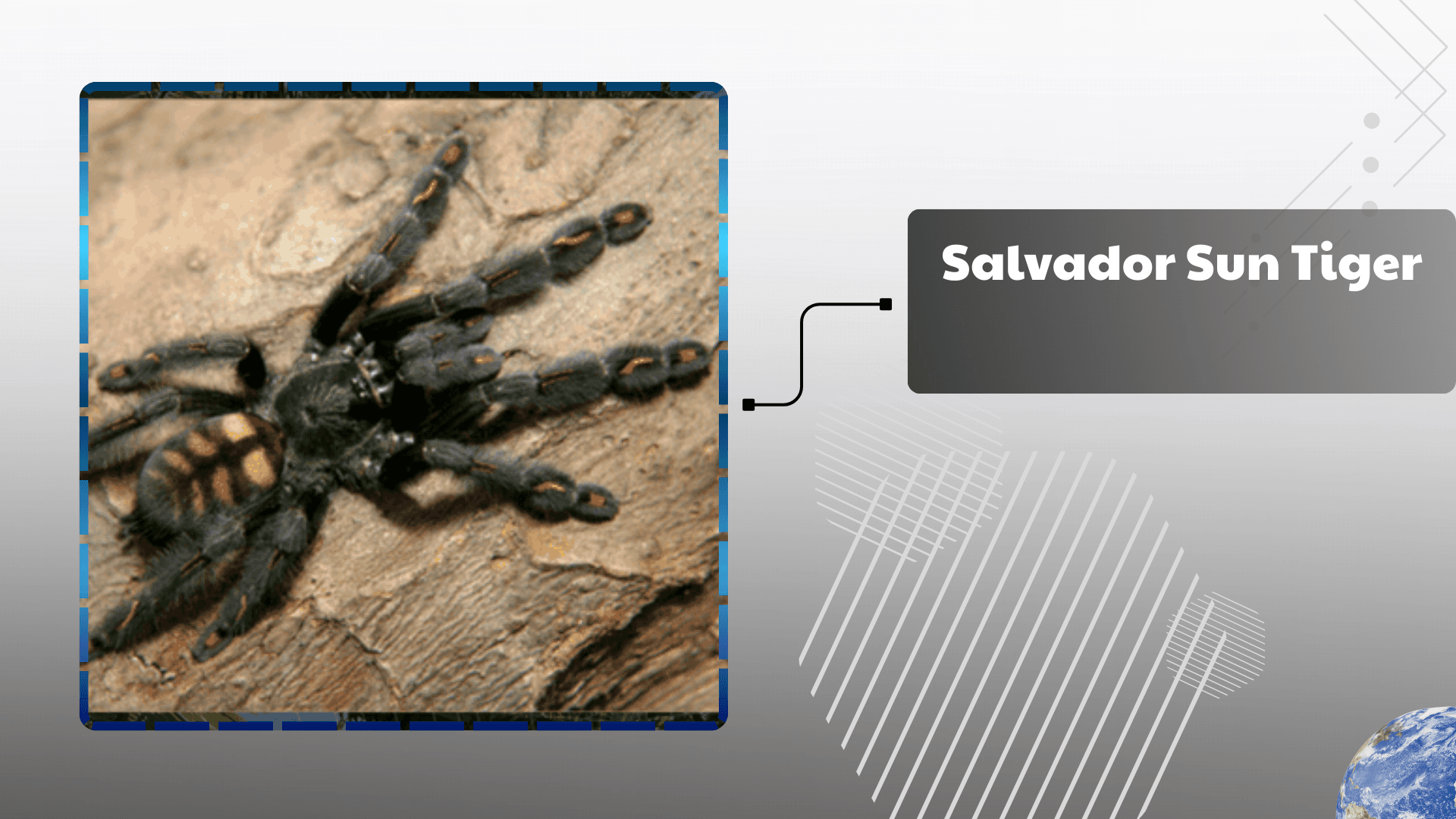
The Salvador Sun Tiger Tarantula is a medium-to-large arboreal species native to Central and South America, particularly Venezuela and Trinidad. Named for its striking sun-like orange markings on a dark brown body, this tarantula is visually stunning. Adults typically reach leg spans of 5–6 inches, with females living longer than males. It is fast, defensive, and best suited for experienced keepers due to its potent venom and quick movements.
In the wild, Salvador Sun Tigers inhabit tree hollows and crevices, constructing silk retreats to hide during the day. They are nocturnal predators, feeding on insects and small vertebrates. Defensive behaviors include rapid lunging, biting, and flicking urticating hairs. In captivity, tall enclosures with branches, high humidity, and secure lids are essential. This species exemplifies how arboreal Types of Tarantulas have evolved to balance aggressive defense, camouflage, and strategic hunting adaptations.
24. Mexican Red Rump Tarantula (Brachypelma vagans)
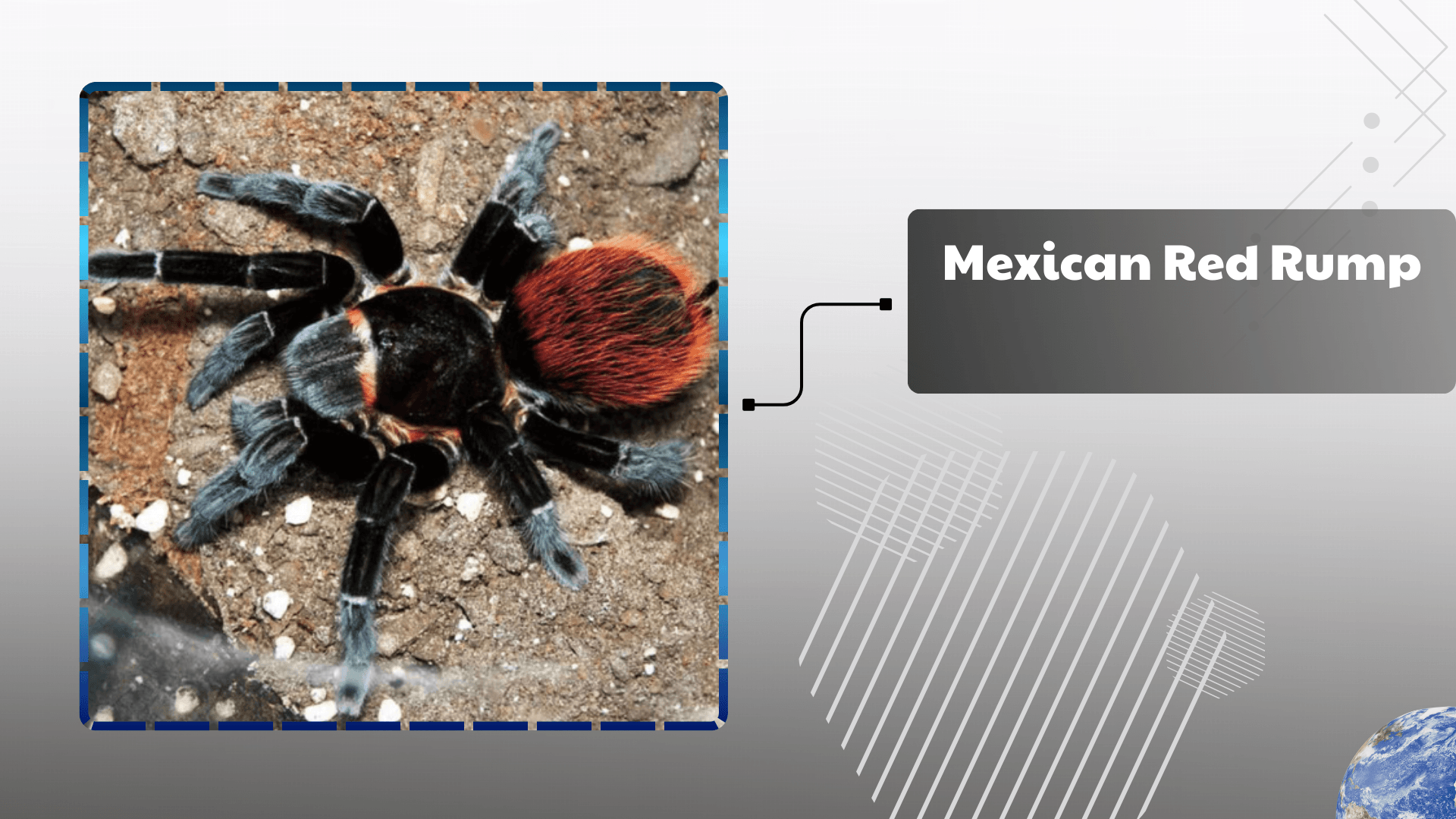
The Mexican Red Rump Tarantula is a large terrestrial species native to Mexico, Central America, and parts of northern South America. It is recognized by its reddish-orange abdomen and dark brown to black legs. Adults can reach leg spans of 6–7 inches, and females can live over 20 years, making them one of the longer-lived Types of Tarantulas. Males typically have shorter lifespans after reaching sexual maturity.
This species is a burrower, constructing tunnels under rocks, logs, or other cover to protect against predators and extreme temperatures. It is nocturnal, feeding primarily on insects and occasionally small vertebrates. Defensive behaviors include flicking urticating hairs and biting if provoked. In captivity, they are hardy and relatively low-maintenance, requiring a dry substrate with moderate humidity and secure hiding places. Their resilience, calm nature, and striking coloration make the Mexican Red Rump Tarantula a popular species among hobbyists and educators alike.
25. Brazilian Red and White Tarantula (Nhandu chromatus)
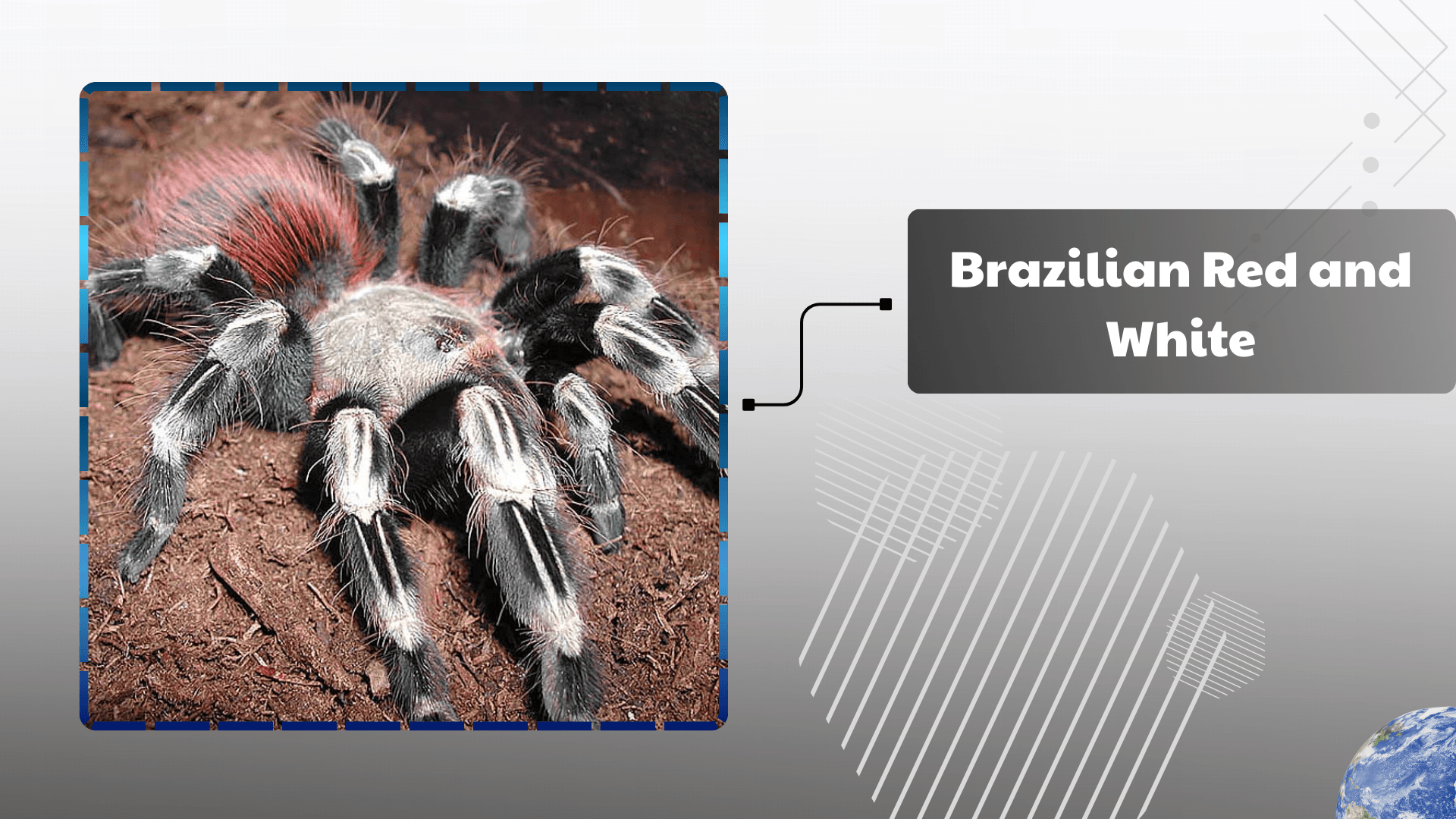
The Brazilian Red and White Tarantula is a large terrestrial species native to Brazil. Known for its vibrant reddish-brown carapace, dark legs, and white markings, this tarantula reaches a leg span of 6–7 inches. Females live significantly longer than males, often exceeding 15 years in captivity. They are calm and relatively docile but may flick urticating hairs when disturbed.
In the wild, Brazilian Red and White Tarantulas create burrows or occupy abandoned tunnels, providing shelter and a base for nocturnal hunting. Their diet consists mainly of insects and other small invertebrates. In captivity, they require deep substrate, moderate humidity, and a secure enclosure. Studying this species offers insights into how South American terrestrial Types of Tarantulas combine vibrant coloration with docility and adaptability, making them both visually appealing and easy to maintain for enthusiasts.
26. Giant White Knee Tarantula (Acanthoscurria geniculata)
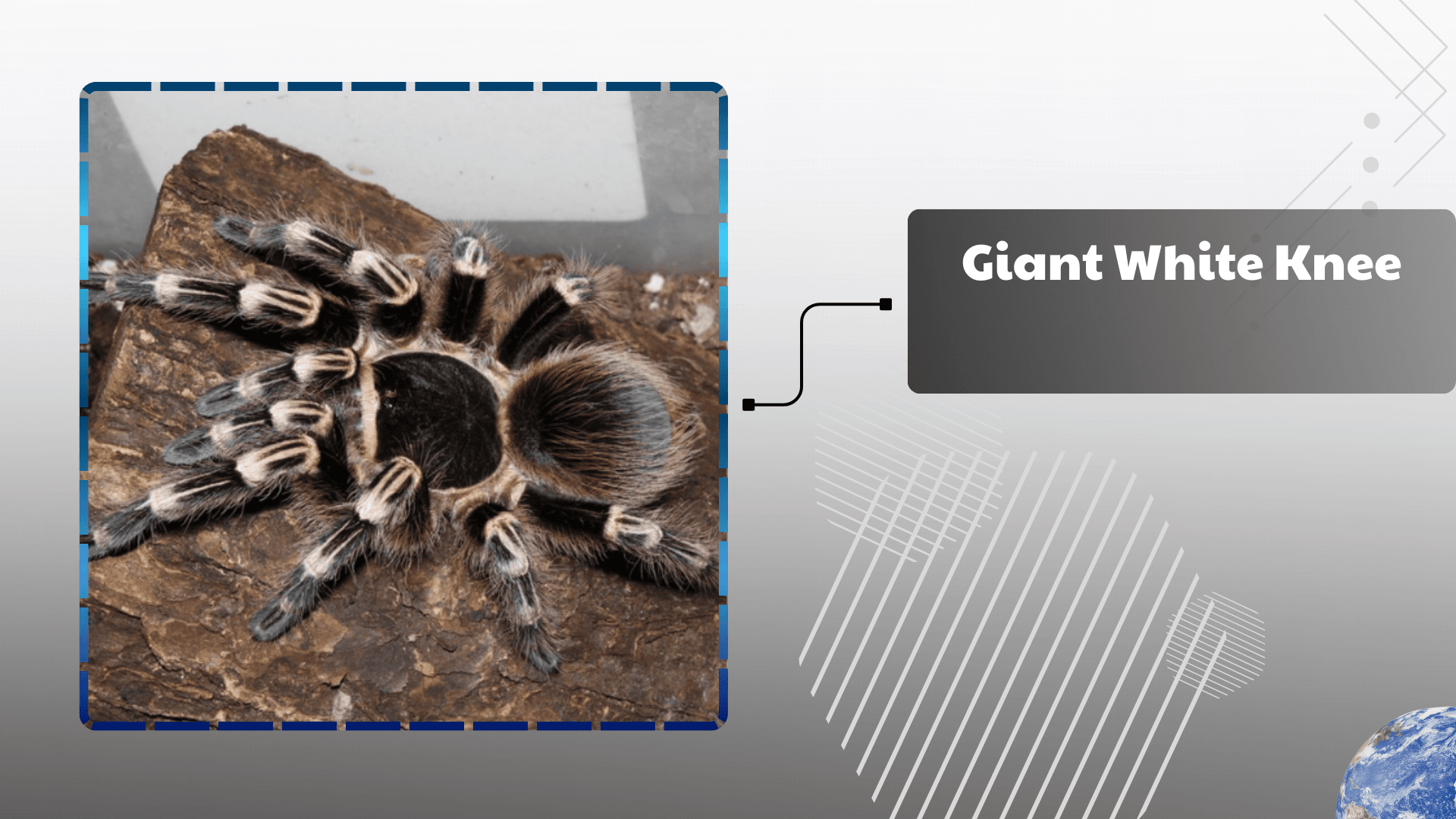
The Giant White Knee Tarantula is one of the largest and most visually striking tarantulas native to Brazil. Its name comes from the distinct white bands on its joints, contrasting with a dark brown to black body and legs. Adults can reach a leg span of 7–8 inches, with females being larger and longer-lived than males. Known for their impressive size and active nature, these terrestrial tarantulas are both fascinating and popular among intermediate to advanced hobbyists.
In the wild, Giant White Knees inhabit the forest floor, creating extensive burrows under rocks, logs, or leaf litter. They are nocturnal hunters, feeding primarily on insects, but they may also consume small reptiles and amphibians. Defensive behaviors include flicking urticating hairs and biting when threatened. Their venom is potent enough to subdue prey but generally causes only mild pain in humans.
In captivity, they require a deep substrate for burrowing, moderate humidity, and a spacious enclosure to accommodate their size and active behavior. Studying the Giant White Knee Tarantula provides insight into how terrestrial Types of Tarantulas develop strong burrowing habits, impressive camouflage, and defensive strategies to survive in dense South American forests.
27. Rhino Horned Baboon Tarantula (Hysterocrates gigas variant)
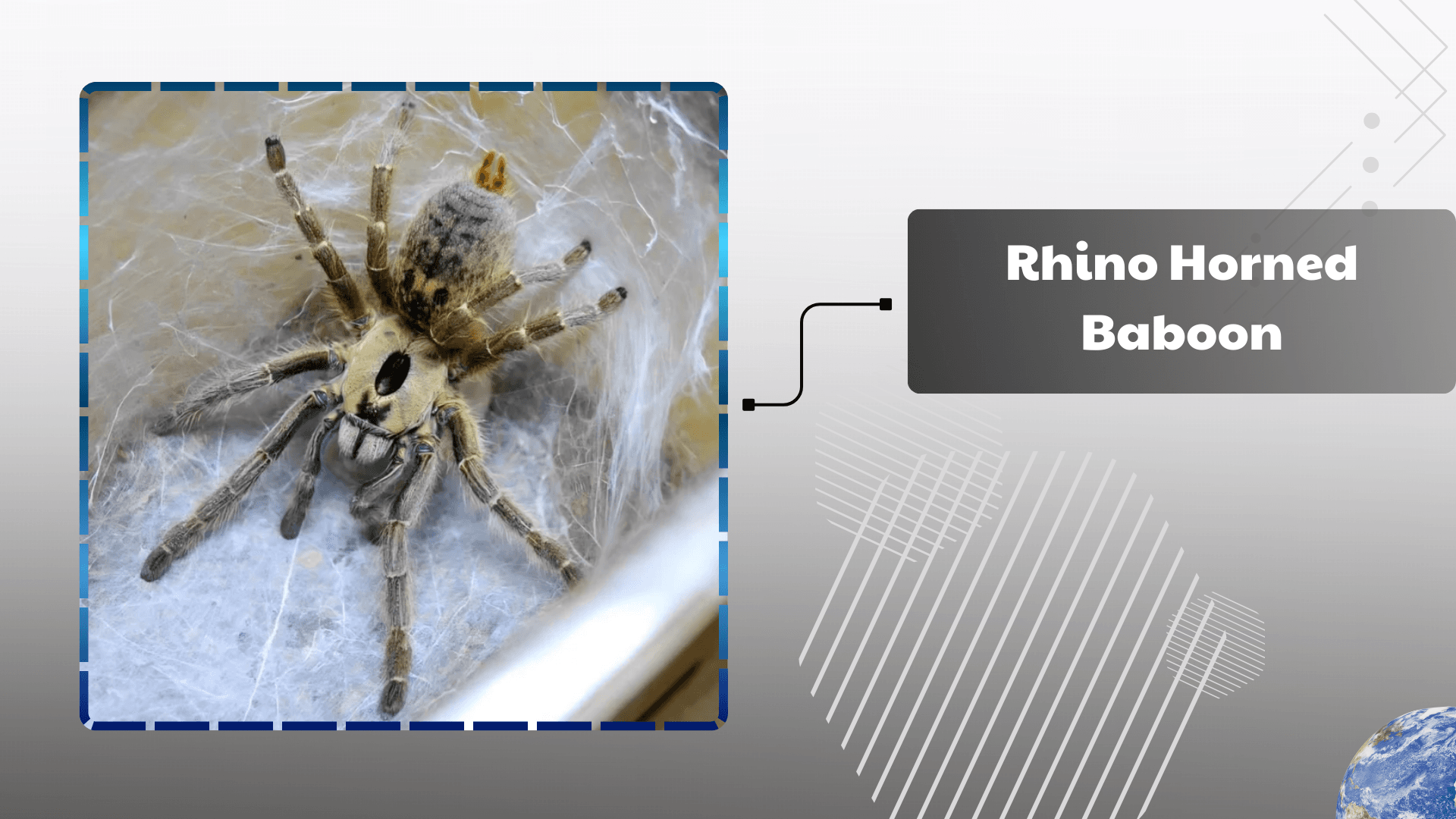
The Rhino Horned Baboon Tarantula is a variant of the African baboon tarantulas, native to Central Africa. It is distinguished by prominent horn-like projections on the carapace, giving it a dramatic appearance. Adults can reach leg spans up to 8 inches, with females significantly larger than males. Known for being robust and strong, this species is a prime example of African terrestrial tarantulas that rely on size and power as defense mechanisms.
In the wild, Rhino Horned Baboons dig burrows or utilize existing crevices, remaining hidden during the day to avoid predators. They are nocturnal hunters, preying on insects and small vertebrates. Defensive behaviors include raising front legs, flicking urticating hairs, and biting if provoked. Their venom is not typically dangerous to humans but can cause localized pain.
In captivity, they require deep substrate, moderate humidity, and secure enclosures. This species demonstrates how some Types of Tarantulas develop unique morphological features like horned carapaces to deter predators while maintaining efficient burrowing and hunting strategies.
28. Brazilian Grey Smoke Tarantula (Acanthoscurria geniculata variant)
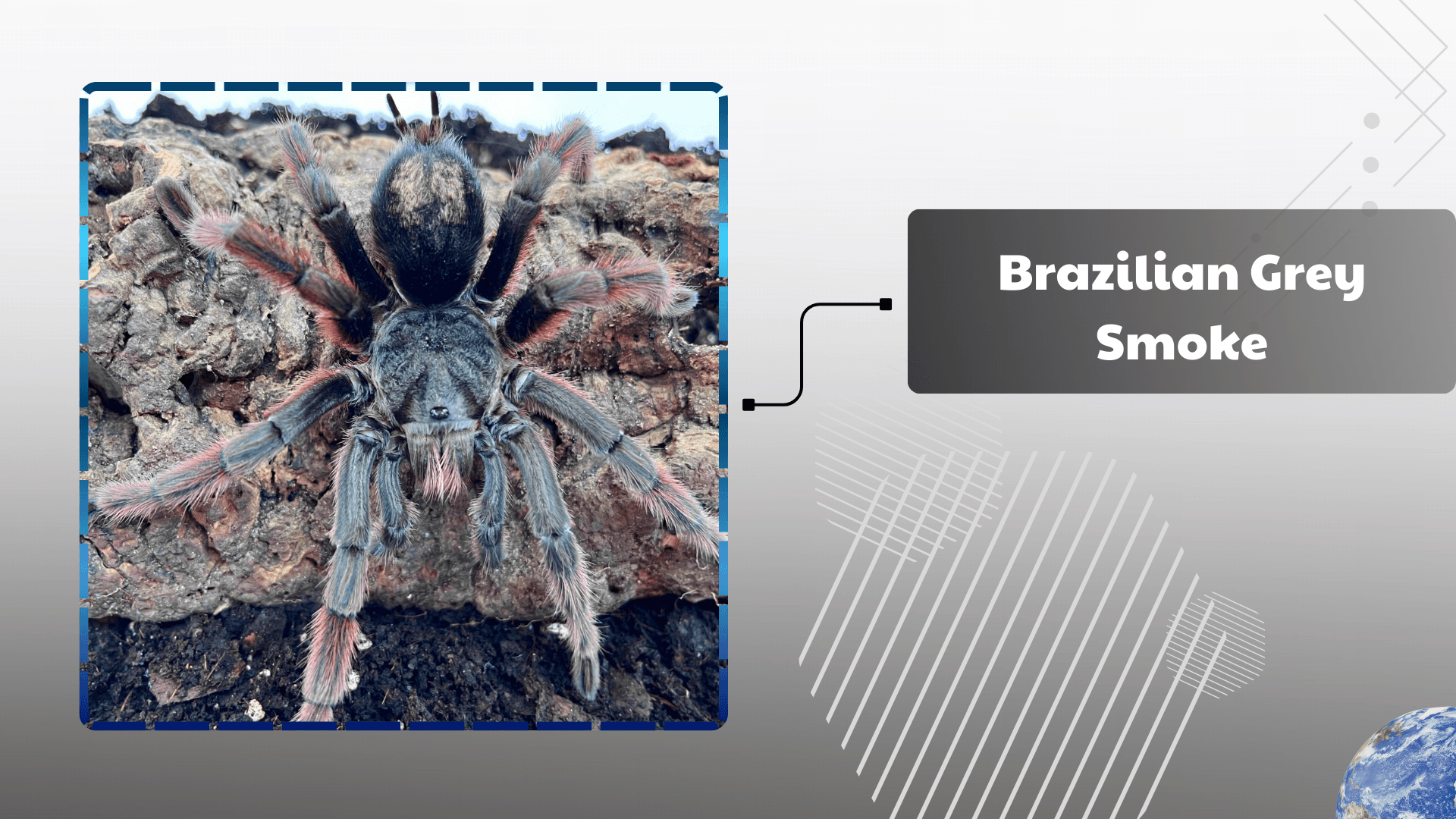
The Brazilian Grey Smoke Tarantula is a large terrestrial species from Brazil, known for its dark grey to black body with smoky-colored hairs on the legs. Adults can reach a leg span of 7 inches, and females are typically longer-lived, sometimes exceeding 15 years. This tarantula is renowned for its active yet relatively docile temperament compared to other large Acanthoscurria species.
In the wild, they construct burrows beneath rocks, logs, or leaf litter to escape predators and extreme weather conditions. They are nocturnal hunters, preying on insects and other small arthropods. Defensive behaviors include flicking urticating hairs and, rarely, biting. Their venom is mild but effective for subduing prey.
In captivity, they require deep substrate, hiding spaces, and moderate humidity. Studying the Brazilian Grey Smoke Tarantula highlights how terrestrial Types of Tarantulas adapt coloration, burrowing habits, and behavior to thrive in tropical forest floors.
29. Ornamental Baboon Tarantula (Pelinobius sp.)
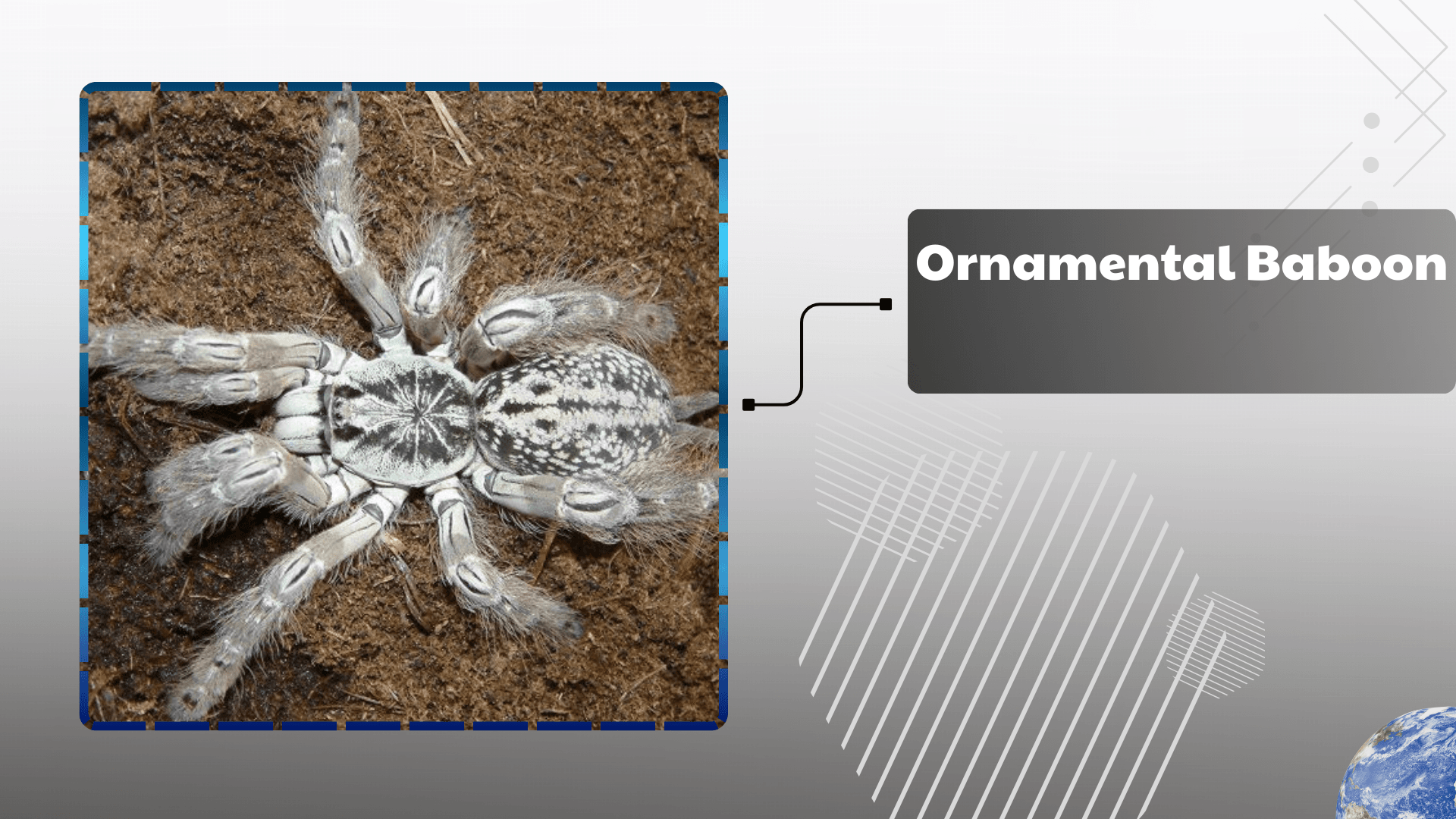
The Ornamental Baboon Tarantula is a large African species native to East Africa. It is named for its impressive size, robust legs, and attractive coloration, featuring earthy brown tones with subtle patterns. Adults can reach leg spans of 7–8 inches, and they are renowned for their burrowing capabilities. Females live significantly longer than males, sometimes exceeding 15 years in captivity.
Ornamental Baboons are nocturnal and primarily terrestrial, constructing extensive burrows for shelter. Their diet in the wild consists of insects, small vertebrates, and occasionally amphibians. Defensive behaviors include raising the front legs, flicking urticating hairs, and biting if provoked. Venom is effective on prey but generally mild for humans.
In captivity, deep substrate, secure enclosures, and moderate humidity are essential for their well-being. This species exemplifies the diversity of African terrestrial Types of Tarantulas, balancing strength, defense, and beauty in one impressive arachnid.
30. Bolivian Steely Blue Tarantula (Pamphobeteus sp.)
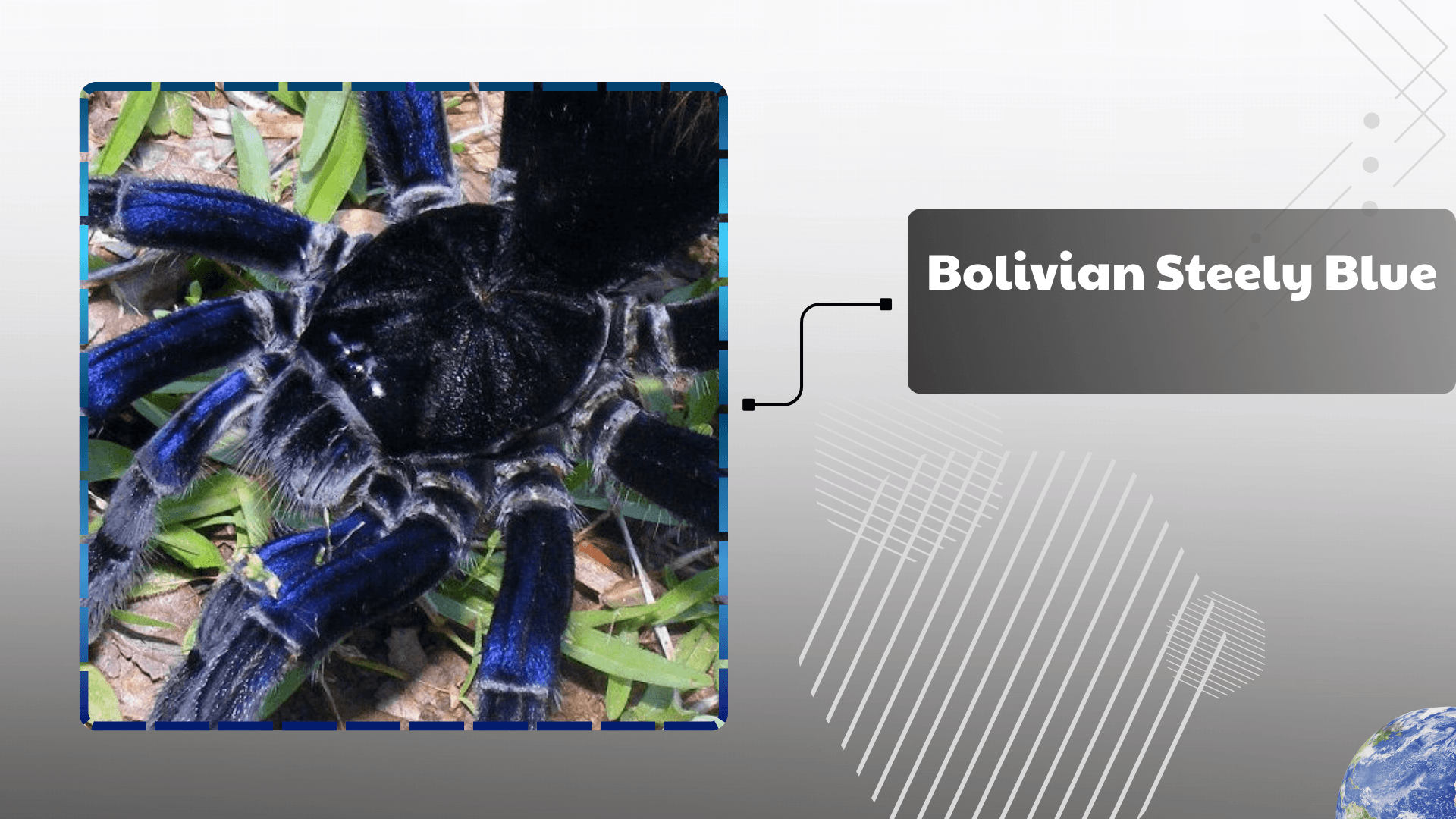
The Bolivian Steely Blue Tarantula is a large terrestrial tarantula native to Bolivia and surrounding South American regions. It is known for its metallic bluish coloration on the legs and a dark, robust body. Adults can reach leg spans of 6–7 inches, with females living considerably longer than males. This species is both attractive and hardy, making it a popular choice among intermediate tarantula enthusiasts.
In the wild, Bolivian Steely Blues are nocturnal hunters, feeding primarily on insects, small reptiles, and other arthropods. They construct burrows under rocks, logs, or leaf litter, providing shelter and aiding in ambush hunting. Defensive behaviors include flicking urticating hairs and biting if necessary, though they are generally calm and manageable in captivity.
Care in captivity involves deep substrate for burrowing, moderate humidity, and a spacious enclosure. Studying the Bolivian Steely Blue Tarantula offers insight into how terrestrial Types of Tarantulas evolve coloration, strength, and behavioral adaptations for survival in South American forests.
31. Peruvian Pinktoe Tarantula (Avicularia purpurea)
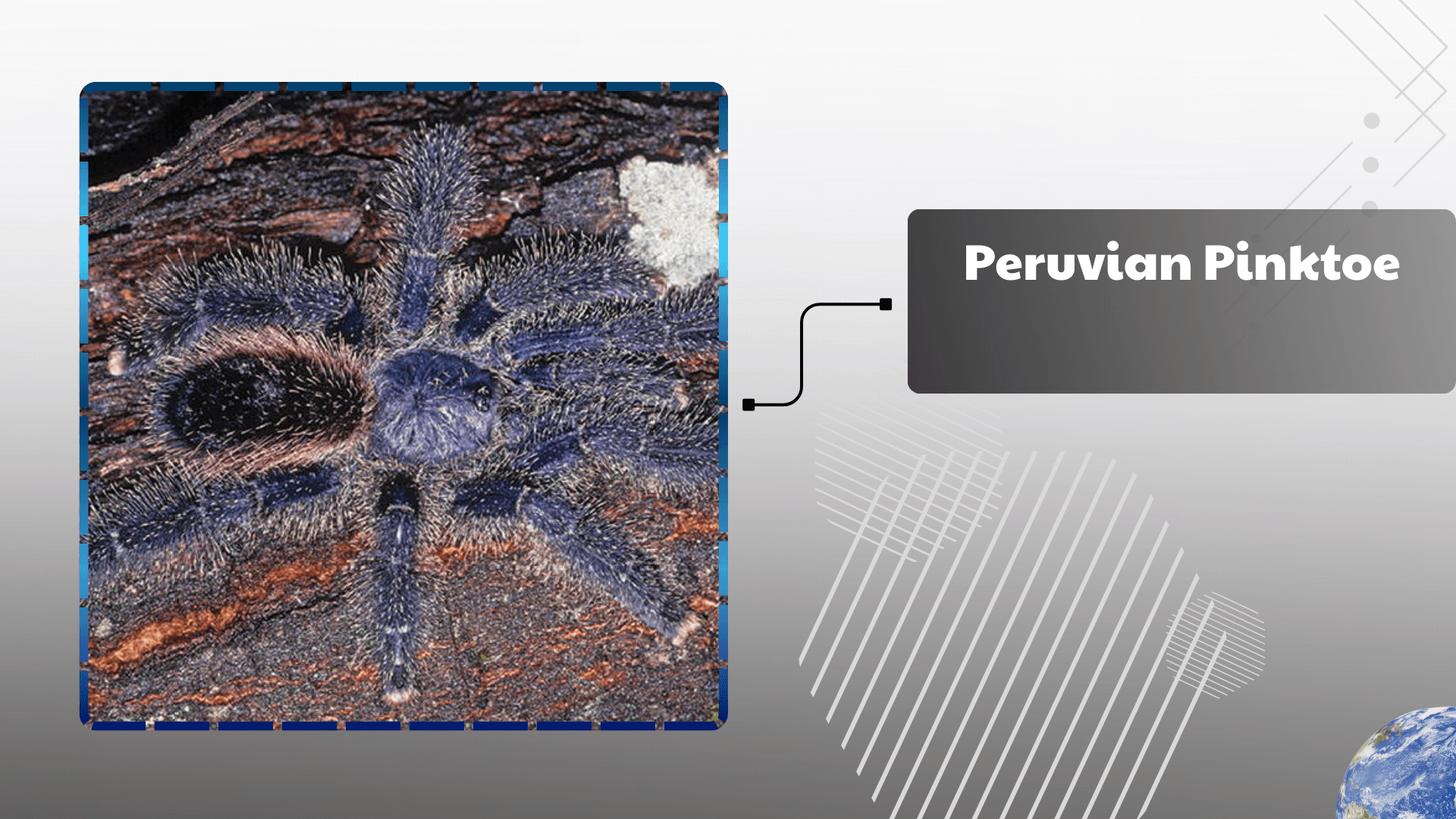
The Peruvian Pinktoe Tarantula is an arboreal species native to the rainforests of northern Peru. Its distinctive feature is the pink or reddish tips on its feet, contrasted against a dark purplish-brown body. Adults typically reach a leg span of 4–5 inches, with females living significantly longer than males. This species is agile, fast-moving, and primarily nocturnal, making it both fascinating and a little challenging for novice keepers.
Peruvian Pinktoe Tarantulas construct silk retreats in tree hollows, foliage, and crevices. These silk-lined homes serve as protection during the day and a strategic platform for ambushing prey at night. They feed mainly on insects, but larger individuals may also capture small vertebrates. Defensive behaviors are minimal; they tend to flee or flick urticating hairs when threatened. Although they can bite if provoked, their venom is mild and rarely harmful to humans.
In captivity, a tall enclosure with vertical climbing space, moderate humidity, and secure lids is essential. The Peruvian Pinktoe Tarantula highlights the adaptability of arboreal Types of Tarantulas, demonstrating how morphology, behavior, and habitat choice work together to ensure survival in tropical forest ecosystems.
32. Texas Tan Tarantula (Aphonopelma hentzi)
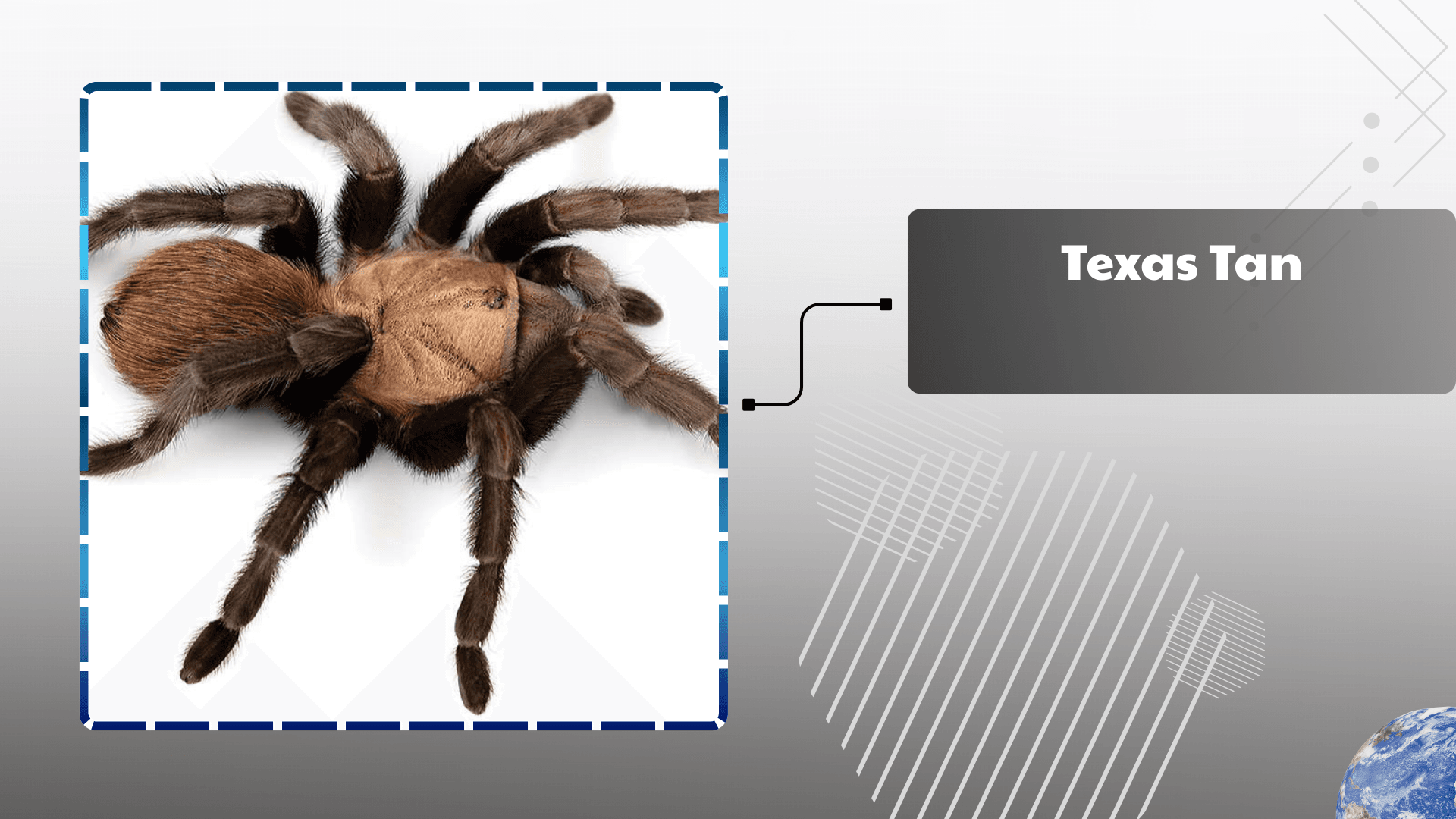
The Texas Tan Tarantula is a terrestrial species native to the southern United States, particularly Texas and Oklahoma. Its coloration ranges from light brown to tan, which provides excellent camouflage on the arid grasslands and scrublands it inhabits. Adults can reach a leg span of 5–6 inches, with females living over 20 years in captivity, making them one of the longest-lived North American Types of Tarantulas.
This tarantula is a burrower, creating tunnels beneath rocks, logs, or soil to avoid predators and extreme temperatures. Nocturnal hunting is typical, with a diet consisting mainly of insects. Defensive behaviors include flicking urticating hairs and biting when threatened. Though their venom is mild, bites can cause localized pain and irritation.
In captivity, Texas Tan Tarantulas are easy to care for, requiring a dry substrate with moderate humidity, secure burrows, and occasional feeding. This species showcases how North American tarantulas have adapted to arid and temperate habitats while maintaining robust survival strategies.
33. Pumpkin Patch Tarantula (Hapalopus sp.)
The Pumpkin Patch Tarantula is a small-to-medium terrestrial species from Colombia, known for its striking orange and black coloration reminiscent of a pumpkin patch. Adults reach a leg span of 4–5 inches, and females live longer than males. This species is relatively docile but can flick urticating hairs when provoked, making it suitable for hobbyists with some experience.
In the wild, Pumpkin Patch Tarantulas create burrows or use natural crevices for shelter. They are nocturnal hunters, feeding primarily on insects and other small arthropods. Defensive strategies rely on camouflage, burrowing, and minimal aggression. In captivity, a shallow substrate with hiding spots, moderate humidity, and regular feeding is recommended. This species demonstrates how small South American terrestrial Types of Tarantulas combine coloration, burrowing behavior, and nocturnal hunting to thrive in diverse habitats.
34. South American Pink Toe Tarantula (Avicularia spp.)
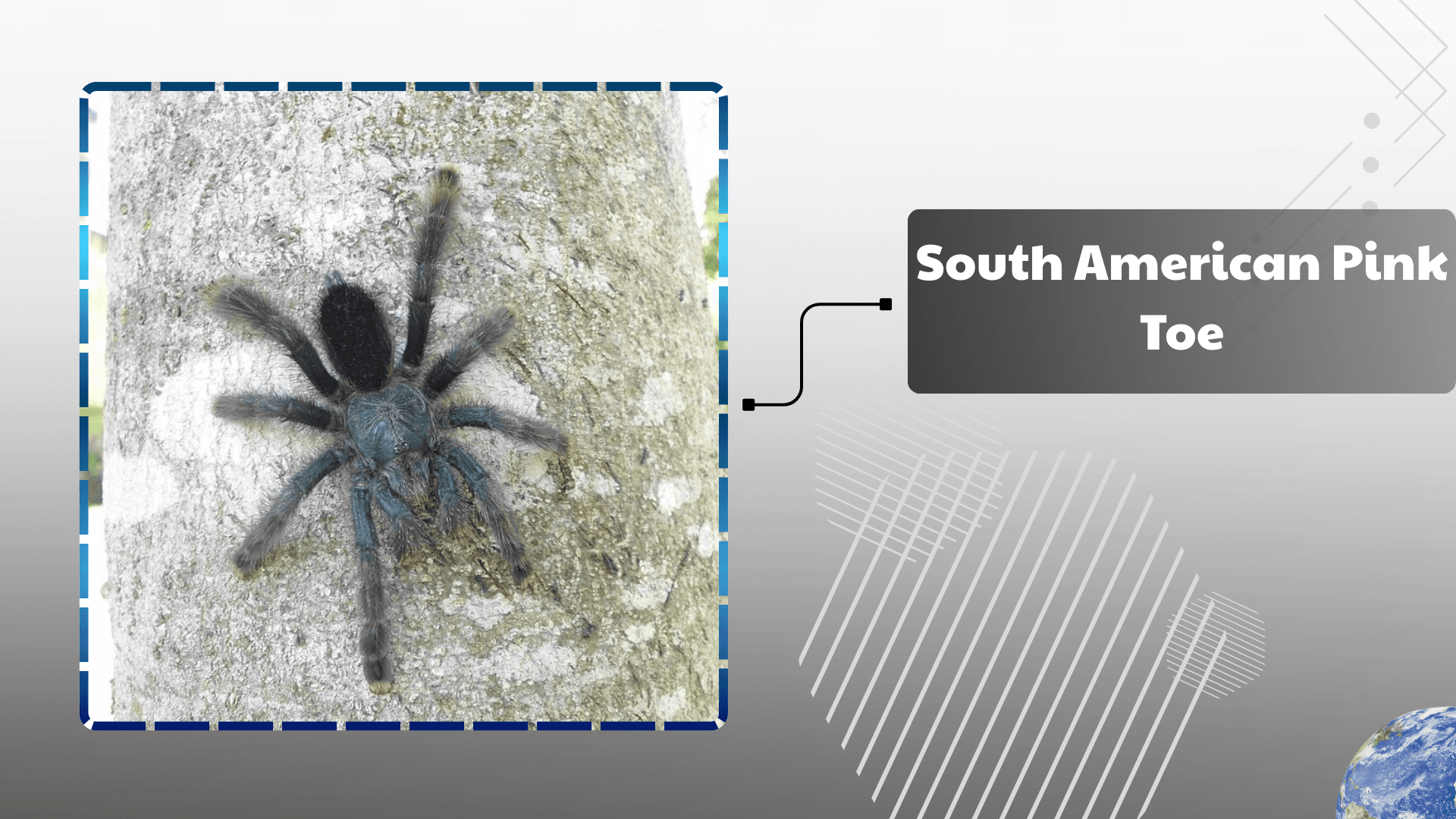
The South American Pink Toe Tarantula is a medium arboreal species found throughout northern and central South America. Named for its pink-tipped feet, it has a dark brown to purplish body that transitions from juvenile to adult stages with varying coloration. Adults typically reach a leg span of 4–5 inches, with females living significantly longer than males. Known for being calm and manageable, it is ideal for beginner hobbyists interested in arboreal species.
They construct silk retreats in trees, shrubs, and foliage, providing protection and a platform for nocturnal hunting. Their diet consists mainly of insects. Defensive behaviors are minimal, often limited to fleeing or hair flicking. In captivity, a tall enclosure with vertical climbing structures, moderate humidity, and secure lids is essential. The South American Pink Toe Tarantula showcases the unique adaptations of arboreal Types of Tarantulas, combining agility, camouflage, and silk use for survival.
35. Venezuelan Sun Tiger Tarantula (Psalmopoeus irminia)
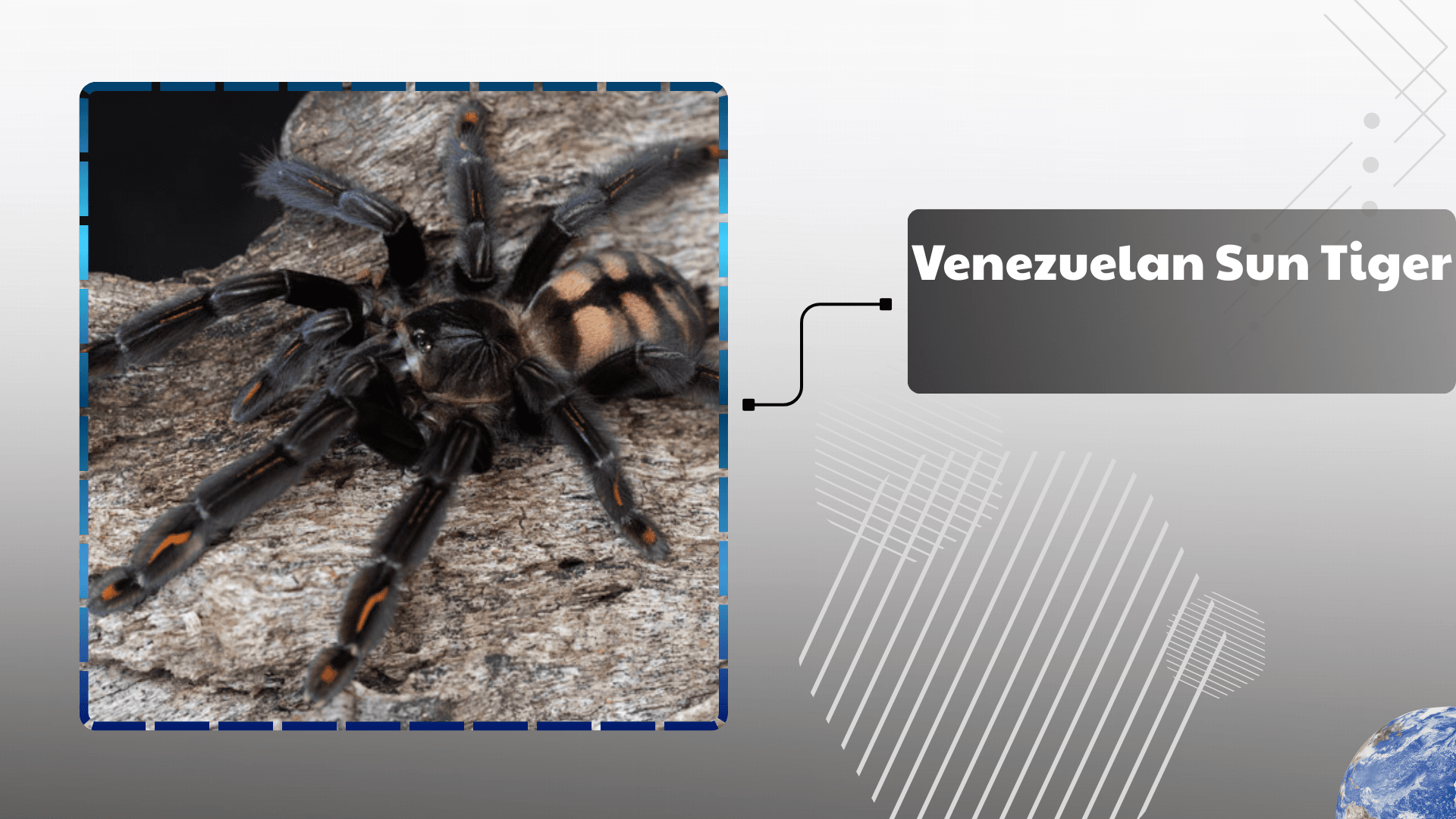
The Venezuelan Sun Tiger Tarantula is a striking arboreal species from Venezuela and parts of northern South America. It is instantly recognizable for its black body adorned with bright orange or golden chevrons along the legs and abdomen. Adults typically reach a leg span of 5–6 inches, with females outliving males by several years. Known for their speed and defensive behavior, they are recommended only for experienced hobbyists.
Venezuelan Sun Tigers construct silk retreats in tree hollows and branches, remaining hidden during the day and emerging at night to hunt insects and small vertebrates. Defensive behaviors include lunging, biting, and flicking urticating hairs. In captivity, they require tall enclosures, climbing structures, high humidity, and secure lids due to their speed and agility. This species exemplifies how arboreal Types of Tarantulas have evolved vibrant coloration, agility, and strategic hunting skills to thrive in predator-rich tropical forests.
Conclusion
Exploring the fascinating world of Types of Tarantulas reveals the incredible diversity, adaptations, and behaviors of these remarkable arachnids. From the arboreal Pinktoe and Gooty Sapphire Tarantulas to the massive terrestrial Giant White Knee and Brazilian Red and White Tarantulas, each species demonstrates unique strategies for survival, whether through camouflage, burrowing, silk retreats, or defensive behaviors. Tarantulas are not only visually stunning but also play essential roles in their ecosystems as predators of insects and other small creatures.
Understanding these Types of Tarantulas allows enthusiasts and researchers to appreciate their ecological importance, proper care in captivity, and conservation needs. By studying their habitats, hunting strategies, and fascinating life cycles, we gain insight into one of the most diverse groups of arachnids on the planet. Whether you are a beginner hobbyist or a seasoned arachnologist, learning about tarantulas enriches your knowledge of wildlife and highlights the wonder of nature’s intricate designs.
In conclusion, the 35 species covered here showcase the extraordinary range of Types of Tarantulas around the world, making them some of the most captivating and important creatures in both tropical and temperate ecosystems.
50+ FAQ About Types of Tarantulas
1. What are Tarantulas?
Tarantulas are large, hairy spiders belonging to the family Theraphosidae. They are found worldwide, mainly in tropical, subtropical, and desert regions, and are known for their impressive size and diverse behaviors.
2. What are the different Types of Tarantulas?
There are over 900 species of tarantulas globally. Common Types of Tarantulas include Pinktoe Tarantula, Gooty Sapphire, Chilean Rose, Giant White Knee, and Mexican Red Rump, among others.
3. Are all Tarantulas dangerous to humans?
Most tarantulas are not dangerous to humans. While their bite can be painful and may cause localized swelling, only a few species have venom that could cause serious health issues.
4. How long do Tarantulas live?
Female tarantulas can live 15–30 years depending on the species, while males generally live 5–10 years. Lifespan varies greatly among different Types of Tarantulas.
5. What do Tarantulas eat?
Tarantulas are carnivorous and primarily eat insects such as crickets, grasshoppers, and beetles. Larger species may also hunt small vertebrates.
6. Where do Tarantulas live?
Tarantulas inhabit diverse environments, including rainforests, deserts, grasslands, and mountainous regions. Arboreal species live in trees, while terrestrial species burrow in the ground.
7. Are Tarantulas good pets?
Many Types of Tarantulas make excellent pets due to their low maintenance and fascinating behaviors. Species like Pink Zebra Beauty, Chilean Rose, and Pinktoe Tarantulas are beginner-friendly.
8. How big do Tarantulas get?
Tarantula sizes range from small species with 2–3 inch leg spans to large species like the Giant White Knee, which can reach 7–8 inches.
9. Do Tarantulas spin webs?
Yes, but differently from typical spiders. Arboreal tarantulas spin silk retreats for climbing and safety, while terrestrial tarantulas use silk to line their burrows.
10. Can Tarantulas jump?
Some arboreal species, such as Pinktoe and Gooty Sapphire Tarantulas, are capable of short jumps when navigating branches or escaping threats.
11. How do Tarantulas defend themselves?
Defense mechanisms include flicking urticating hairs, biting, and retreating to burrows or silk shelters. Arboreal species rely more on speed and agility to evade predators.
12. What is the difference between arboreal and terrestrial Tarantulas?
Arboreal tarantulas live in trees and vegetation, using vertical space, while terrestrial tarantulas burrow on the ground. Their care, enclosure setup, and behavior differ significantly.
13. What is a fossorial tarantula?
Fossorial tarantulas are burrowing species that spend most of their time underground. Examples include the Blue Fang Skeleton and Mexican Red Rump Tarantulas.
14. How do Tarantulas reproduce?
Male tarantulas perform mating dances and use specialized pedipalps to transfer sperm to females. Females lay eggs in silk sacs, which hatch into spiderlings.
15. Are Tarantulas venomous?
Yes, all tarantulas are venomous, but their venom is generally mild to humans. It is primarily used to subdue prey.
16. Do Tarantulas molt?
Yes, tarantulas molt regularly to grow. Molting involves shedding their old exoskeleton and can take several hours. During this period, they are vulnerable.
17. What is the largest Tarantula species?
The Goliath Birdeater (Theraphosa blondi) is the largest tarantula by mass and leg span, reaching up to 11 inches across.
18. How do Tarantulas hunt?
They are ambush predators, waiting for prey to come close and then quickly capturing it with their fangs. Arboreal species may hunt from above using their silk retreats.
19. Can Tarantulas live in captivity?
Yes, many Types of Tarantulas thrive in captivity when provided proper substrate, humidity, temperature, and enclosure size.
20. How often do Tarantulas eat?
Adult tarantulas typically eat every 1–2 weeks, depending on species, size, and activity level.
21. Do Tarantulas drink water?
Yes, they require a shallow water dish in captivity and obtain moisture from prey in the wild.
22. What colors can Tarantulas be?
Tarantulas exhibit a wide range of colors, including blue, green, orange, red, brown, and metallic hues. Examples include the Gooty Sapphire and Bolivian Steely Blue Tarantulas.
23. Are Tarantulas nocturnal?
Most tarantulas are nocturnal hunters, being most active during the night and hiding during the day.
24. Can Tarantulas live together?
Generally, tarantulas are solitary and can be cannibalistic, so housing multiple individuals together is not recommended.
25. How do you handle Tarantulas safely?
Handling should be minimal. Use soft tools or gentle hands, avoid sudden movements, and never pick up aggressive or fast-moving species.
26. What is the difference between New World and Old World Tarantulas?
New World tarantulas (Americas) have urticating hairs and are generally calmer. Old World tarantulas (Africa, Asia) lack urticating hairs and are often faster and more defensive.
27. How do Tarantulas communicate?
They use vibrations, body postures, and in some cases, stridulation (rubbing body parts) to communicate, especially during mating or territorial disputes.
28. What is the ideal enclosure for a tarantula?
Terrestrial tarantulas need deep substrate and hiding places. Arboreal species require tall enclosures with climbing branches and silk retreat opportunities.
29. How do tarantulas survive in the wild?
Tarantulas use camouflage, burrows, speed, and defensive behaviors to evade predators. They hunt insects and play key roles in ecosystem balance.
30. Can tarantulas bite humans?
Yes, but bites are usually defensive, not aggressive. Most cause minor pain, swelling, and irritation.
31. How fast are Tarantulas?
Arboreal species like Pinktoe and Gooty Sapphire are fast and agile climbers. Terrestrial species tend to be slower but strong and powerful.
32. Do tarantulas make webs like house spiders?
No, they do not make typical webs for catching prey. Instead, they use silk for retreats, egg sacs, and stabilizing burrows or branches.
33. What are urticating hairs?
Urticating hairs are tiny barbed hairs on the abdomen of New World tarantulas, used to deter predators by causing irritation.
34. Which tarantula is best for beginners?
Beginner-friendly species include Pink Zebra Beauty, Chilean Rose, and Pinktoe Tarantulas due to their calm temperament and easy care.
35. Which tarantulas are aggressive?
Old World species, like Indian Ornamental and Trinidad Chevron Tarantulas, are fast, defensive, and more likely to bite if threatened.
36. Do tarantulas need special diets?
No, tarantulas feed mainly on insects. Occasionally, larger species may eat small lizards or frogs, but this is optional in captivity.
37. Can tarantulas survive without water?
They can survive for some time by extracting moisture from prey, but a shallow water dish in captivity is recommended.
38. How do tarantulas molt?
Moulting involves shedding the exoskeleton to grow. Tarantulas lie on their back or side and are vulnerable during this period.
39. Do tarantulas make sounds?
Some species can stridulate, producing hissing or rubbing sounds as a warning to predators or rivals.
40. How do you identify tarantula species?
Identification is based on coloration, size, leg pattern, body markings, geographic range, and sometimes microscopic examination of reproductive organs.
41. What is the rarest tarantula?
The Gooty Sapphire Ornamental Tarantula is considered one of the rarest, found only in a small forest in India.
42. How do tarantulas contribute to ecosystems?
Tarantulas control insect populations, serve as prey for larger predators, and contribute to soil aeration through burrowing.
43. Can tarantulas climb smooth surfaces?
Arboreal species are excellent climbers, while terrestrial tarantulas may struggle on smooth surfaces. Silk helps them anchor when climbing.
44. Do tarantulas hibernate?
Some species in temperate regions slow their activity or enter dormancy during cold months, while tropical species remain active year-round.
45. How often do tarantulas molt?
Juveniles molt more frequently, sometimes every few weeks. Adults molt less often, typically once or twice a year depending on growth rate.
46. What is the smallest tarantula?
The smallest tarantulas are some dwarf species in Asia and South America, with leg spans of 2–3 inches.
47. Do tarantulas have good eyesight?
Tarantulas have poor eyesight and rely on vibration, touch, and environmental cues to hunt and navigate.
48. Can tarantulas live outdoors?
Only in regions that match their native habitat. Most exotic species require controlled indoor environments in captivity.
49. How to safely clean a tarantula enclosure?
Remove uneaten prey, spot-clean substrate, and provide fresh water. Avoid handling the tarantula during cleaning.
50. Why are tarantulas popular pets?
Tarantulas are popular due to their low maintenance, fascinating behaviors, diverse appearances, and educational value for enthusiasts of all ages.
51. What are the benefits of studying tarantulas?
Studying tarantulas provides insight into evolution, predator-prey dynamics, venom properties, and ecological importance, highlighting the diversity among Types of Tarantulas.