
Walruses are some of the most iconic marine mammals of the Arctic and sub-Arctic regions, known for their impressive tusks, blubbery bodies, and social behavior on ice floes. These massive pinnipeds are not only a wonder to observe in the wild but also play critical roles in their ecosystems. In this guide, we explore 5 notable Types of Walruses, detailing their habitats, behavior, and distinctive features. From the Atlantic coasts to remote Pacific ice fields, walruses showcase remarkable adaptations to life in some of the planet’s coldest waters. This article aims to give readers a clear, friendly, and informative overview of these fascinating creatures, ideal for wildlife enthusiasts, students, and anyone curious about marine life.
Types of Walruses
1. Atlantic Walrus (Odobenus rosmarus rosmarus)
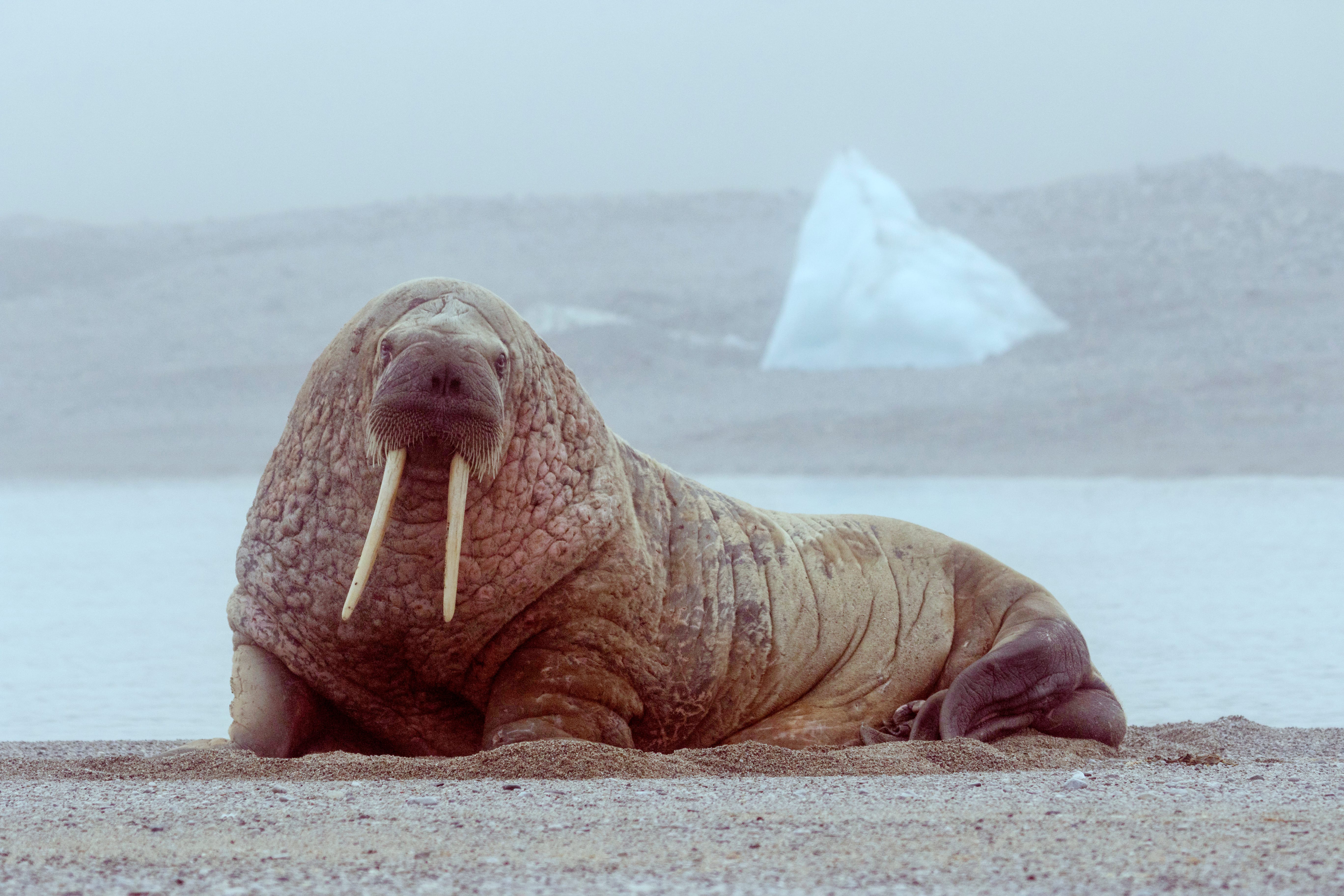
Fun fact: The Atlantic Walrus is the smaller of the two main walrus subspecies and is primarily found around the coasts of Canada, Greenland, and northern Norway. Atlantic Walruses are highly social, often forming large herds on ice or rocky beaches, which can number in the hundreds. Adult males can weigh over 1,200 kilograms, while females are slightly smaller, and both possess iconic elongated tusks used for dominance displays, defense, and aiding movement across ice. These tusks can grow up to a meter long and are sensitive, allowing walruses to detect changes in their surroundings.
Atlantic Walruses primarily feed on benthic invertebrates, particularly mollusks such as clams and mussels. They use their sensitive whiskers, known as vibrissae, to detect prey hidden in soft sediments. While their primary hunting method involves suction feeding, they also manipulate prey with flippers. These walruses are adapted to life in frigid waters, with a thick layer of blubber providing insulation. The subspecies is also characterized by wrinkled skin and a more compact body compared to its Pacific counterpart. Observing Atlantic Walruses in the wild often reveals intricate social behaviors, including playful interactions, vocal communication, and ritualized dominance contests among males.
2. Pacific Walrus (Odobenus rosmarus divergens)
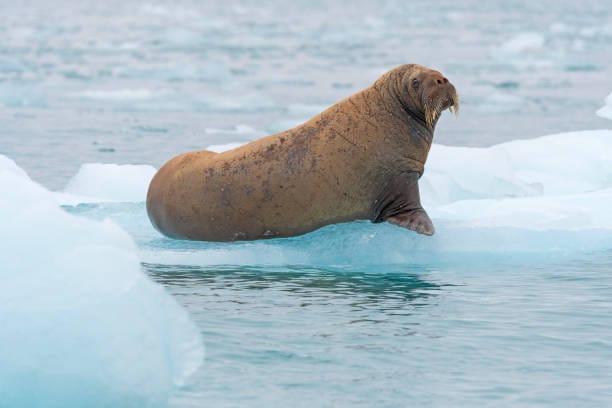
Fun fact: The Pacific Walrus is larger than its Atlantic cousin and ranges across the Bering and Chukchi Seas, encompassing areas of Alaska and eastern Russia. Pacific Walruses are among the heaviest pinnipeds, with adult males reaching weights of 1,500 kilograms or more. They rely heavily on sea ice for resting between foraging bouts and are remarkable for their long migrations, often traveling hundreds of kilometers following seasonal ice changes. Like Atlantic Walruses, Pacific males possess impressive tusks, used for establishing dominance, mating displays, and hauling out of icy waters.
Pacific Walruses feed primarily on clams and other invertebrates, but their diet can also include worms, crustaceans, and small fish. Their benthic foraging requires cooperation and sometimes results in clusters of walruses digging for prey in shallow seabeds. Social behavior is prominent, with males forming competitive herds during breeding seasons. Vocalizations, including bell-like calls and grunts, play a role in communication across large ice floes. The subspecies is closely studied for its ecological significance and sensitivity to climate change, as diminishing sea ice directly affects feeding and breeding behavior.
3. Laptev Sea Walrus (Odobenus rosmarus laptevi)
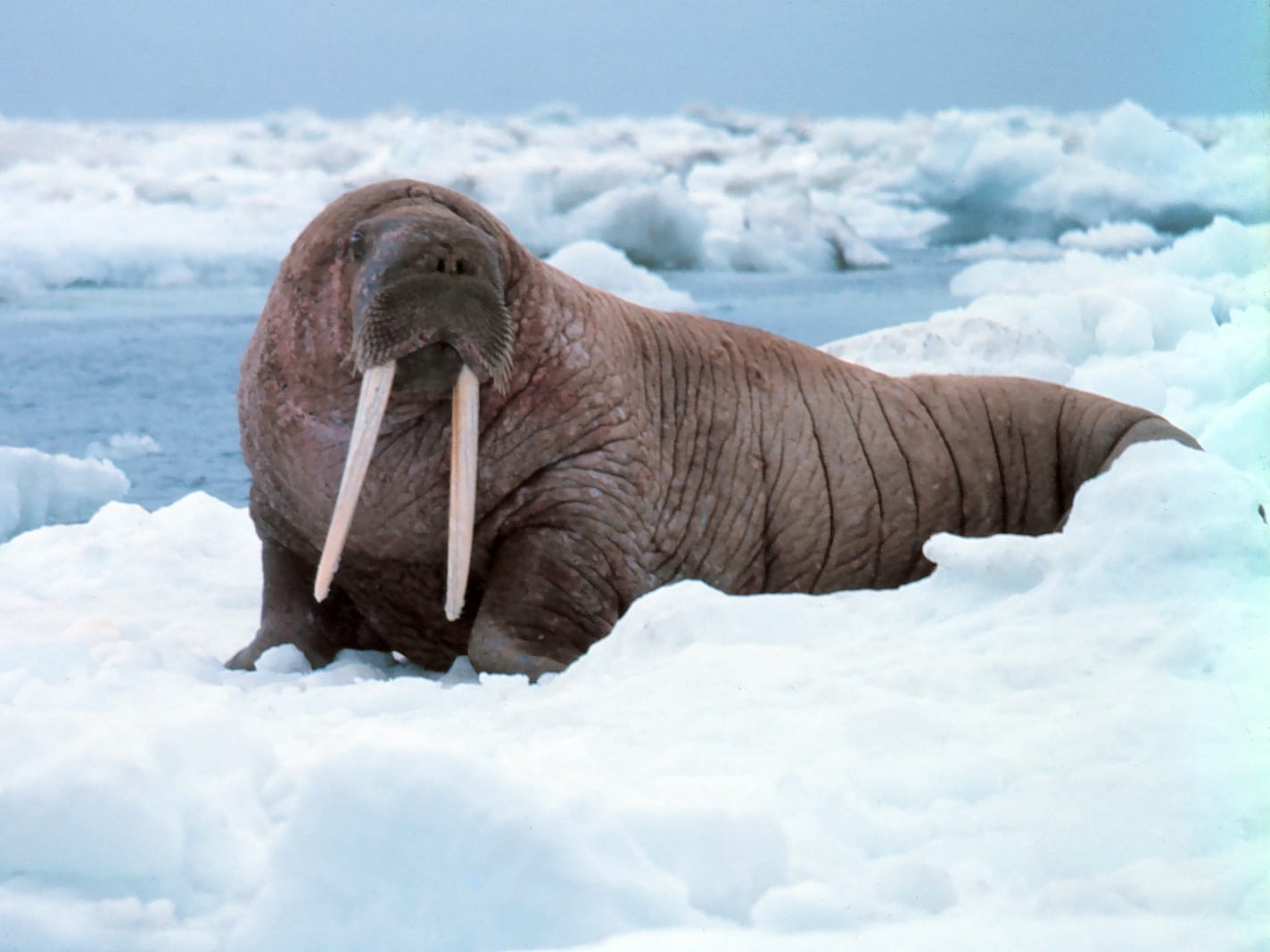
Fun fact: The Laptev Sea Walrus is a lesser-known subspecies residing primarily in the Russian Laptev Sea. This group is often isolated and considered transitional between the Atlantic and Pacific walrus subspecies. Adults display a mix of characteristics, including slightly smaller body sizes than Pacific Walruses and robust tusks suitable for ice maneuvering. Their populations are more fragmented, and they inhabit remote, frigid waters where ice coverage is seasonal and often unpredictable.
The Laptev Sea Walrus relies on benthic feeding, similar to other walrus types, using whiskers to locate mollusks beneath the sediment. Social structures are less dense than Atlantic or Pacific populations due to limited habitat availability, but small herds exhibit comparable behaviors, including synchronized movement, vocal communication, and competitive displays among males. Conservationists closely monitor this subspecies because of its vulnerability to ice loss and human disturbances, including shipping and resource extraction in the Arctic.
4. Odobenus rosmarus (General Walrus Species)
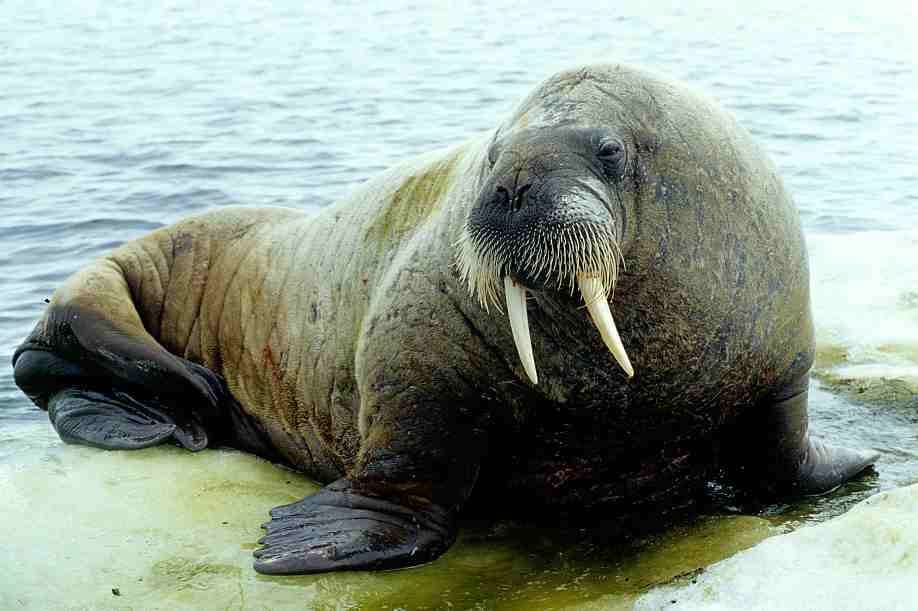
Fun fact: Odobenus rosmarus is the species name encompassing all living walruses. While subspecies show differences in size, tusk length, and geographic range, they share core adaptations, including thick blubber layers, social behaviors, and benthic feeding strategies. The species is a keystone predator in Arctic benthic ecosystems, influencing mollusk populations and serving as prey for polar bears and killer whales.
Members of Odobenus rosmarus demonstrate intricate social dynamics. Haul-out sites are critical for thermoregulation, breeding, and social interaction, with walruses using vocalizations, posturing, and tusk displays to communicate. Their life cycle is closely tied to the rhythm of the sea ice, with seasonal migrations following prey abundance. Both males and females can live into their twenties, maintaining territories and exhibiting strong maternal behaviors. Observing this species in its natural habitat provides insight into survival strategies in one of the harshest environments on Earth.
5. Valenictus (Extinct Walrus Genus — Toothless Walrus)
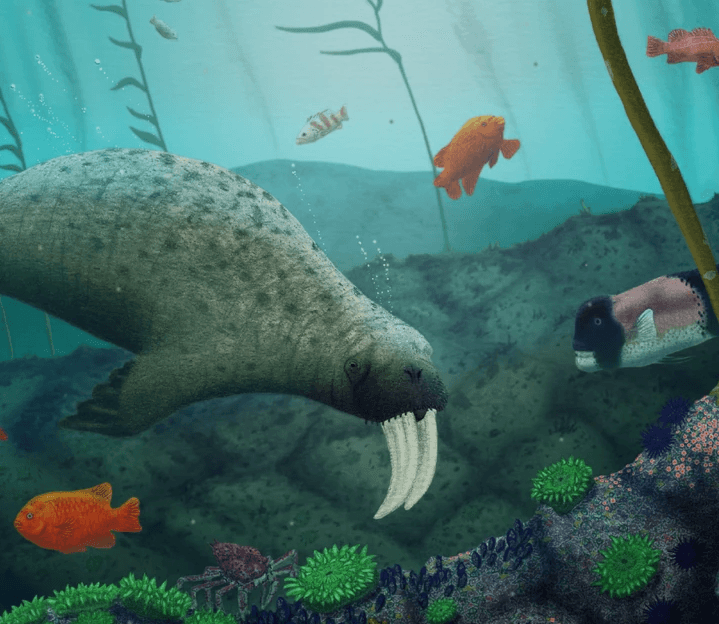
Fun fact: Valenictus represents an extinct genus of walruses notable for its lack of teeth, a significant departure from modern walruses. These prehistoric walruses once roamed the Pacific and North American coasts during the Pliocene and Pleistocene epochs. Fossil evidence suggests that Valenictus relied on suction feeding similar to modern walruses, but adapted to different prey availability in shallow coastal waters.
Valenictus species were smaller and more streamlined compared to living walruses, lacking prominent tusks but likely exhibiting social behavior similar to modern relatives. Their existence highlights the evolutionary diversity and adaptations within the Odobenidae family. Studying Valenictus provides paleontologists with insights into past climates, marine ecosystems, and the evolutionary pressures that shaped the survival strategies of large pinnipeds. The contrast between extinct and modern walruses illustrates the profound influence of environmental change on species morphology and distribution over millions of years.
Conclusion
Walruses are remarkable marine mammals that embody the resilience and adaptability of Arctic life. From the Atlantic and Pacific subspecies to the lesser-known Laptev Sea walrus and the extinct Valenictus, these pinnipeds demonstrate diverse adaptations for survival in some of the planet’s harshest environments. Their iconic tusks, social behaviors, and benthic foraging techniques make them both fascinating to observe and ecologically significant. Studying walruses provides insight into predator-prey dynamics, the effects of climate change on ice-dependent species, and the evolutionary history of marine mammals. Whether encountering them on icy shores or learning about their fossilized ancestors, walruses continue to captivate scientists and wildlife enthusiasts alike, reminding us of the delicate balance of Arctic ecosystems and the importance of conserving these majestic animals.
“`html
Frequently Asked Questions About Walruses
1. What is a walrus?
A walrus is a large marine mammal known for its tusks, whiskers, and social behavior. They are part of the pinniped family along with seals and sea lions.
2. How many types of walruses exist?
There are primarily two living subspecies, Atlantic and Pacific Walruses, with some experts recognizing the Laptev Sea population as a distinct group. Fossil genera like Valenictus add to historical diversity.
3. Where do walruses live?
Walruses inhabit Arctic and sub-Arctic regions, including coasts of Canada, Greenland, Russia, and Alaska. They rely on sea ice for resting and breeding.
4. What do walruses eat?
Walruses primarily feed on benthic invertebrates, especially clams and mussels, using suction to extract them from the seafloor.
5. How do walruses use their tusks?
Tusks are used for dominance displays, defense, hauling out of water onto ice, and sometimes in foraging or digging through ice or sediment.
6. How big can walruses get?
Adult male Pacific Walruses can weigh up to 1,500 kilograms, while Atlantic males typically reach 1,200 kilograms. Females are slightly smaller.
7. Do walruses swim well?
Yes, walruses are strong swimmers. They use their hind flippers and streamlined bodies to navigate frigid Arctic waters efficiently.
8. Are walruses social animals?
Yes, walruses are highly social and often gather in large herds on ice floes or beaches. Herds can include hundreds of individuals.
9. How do walruses communicate?
They use vocalizations, such as bell-like sounds and grunts, as well as body language, including head movements and tusk displays.
10. Do walruses have predators?
Polar bears and killer whales are the main predators of adult walruses, while calves are vulnerable to a wider range of Arctic predators.
11. How long do walruses live?
Walruses can live up to 30 years in the wild, with males and females reaching maturity around 5 to 7 years of age.
12. How do walruses reproduce?
Walruses mate in the water during the breeding season. Females give birth to a single calf after an 11–12 month gestation period.
13. How do walrus calves survive the cold?
Calves rely on maternal milk rich in fat and remain close to their mothers for warmth and protection during the first months of life.
14. Why are walruses important to ecosystems?
They control benthic invertebrate populations, contribute to nutrient cycling, and provide prey for predators like polar bears and killer whales.
15. Can walruses be found in zoos?
Yes, some walruses are kept in aquariums and marine parks for educational purposes and conservation awareness.
16. What is the difference between Atlantic and Pacific walruses?
Pacific Walruses are generally larger, have longer tusks, and inhabit the Bering and Chukchi Seas, while Atlantic Walruses are smaller and found in Canada, Greenland, and Norway.
17. How do walruses adapt to cold?
Walruses have thick blubber, a dense skin layer, and social behaviors like huddling to conserve heat in frigid Arctic waters.
18. Do walruses migrate?
Yes, especially Pacific Walruses, which follow seasonal sea ice movements to access feeding grounds and breeding areas.
19. Can walruses survive without ice?
Walruses depend on ice for resting, breeding, and avoiding predators. Loss of sea ice due to climate change poses a significant threat.
20. How do walruses find food?
They use sensitive whiskers, called vibrissae, to detect clams, mussels, and other invertebrates hidden in the seafloor sediment.
21. Are walruses endangered?
Currently, walruses are not listed as endangered, but climate change, habitat disturbance, and hunting can affect their populations.
22. What is Valenictus?
Valenictus is an extinct genus of walruses notable for lacking teeth, providing insight into evolutionary adaptations within the walrus family.
23. How fast can walruses swim?
Walruses can reach speeds of up to 35 km/h in short bursts when evading predators or traveling between feeding areas.
24. Do walruses dive?
Yes, walruses can dive up to 80 meters to reach benthic food sources and typically remain submerged for up to 30 minutes.
25. How do walruses interact socially?
They display complex social behavior, including vocalizations, tusk fights, and synchronized movement in herds.
26. Can walruses live in freshwater?
No, walruses are marine mammals adapted to saltwater environments, though they may rest near river mouths temporarily.
27. Why do walruses haul out on land?
Hauling out allows resting, mating, birthing, and protection from predators when sea ice is sparse.
28. How do male walruses establish dominance?
Males use tusks to spar with rivals, display size, and vocalize to attract mates and secure territories.
29. Are walruses intelligent?
Walruses exhibit problem-solving abilities, social awareness, and memory, especially in navigating large ice floes and hunting efficiently.
30. How thick is a walrus’s blubber?
Blubber thickness can exceed 15 cm in adult walruses, providing insulation and energy reserves in cold Arctic waters.
31. How do walruses sleep?
Walruses can sleep on ice or in water, often resting in groups with heads on each other to conserve heat and maintain vigilance.
32. Do walruses vocalize underwater?
Yes, walruses produce clicks, bell-like sounds, and grunts underwater for communication, especially during mating season.
33. Can walruses walk on land?
Yes, they use their strong flippers and tusks to haul their massive bodies over beaches and ice floes.
34. How long are walrus tusks?
Tusks can grow up to 1 meter in males, slightly shorter in females, and are composed of elongated canine teeth.
35. Do walruses hibernate?
No, walruses remain active year-round, adjusting location based on ice and food availability rather than hibernation.
36. How do walruses respond to climate change?
Walruses are vulnerable to sea ice loss, which affects resting, breeding, and access to food sources, forcing them to crowd on land.
37. Are walruses aggressive?
Walruses are generally peaceful but can become aggressive when threatened or during male dominance contests.
38. How are walrus populations monitored?
Scientists use aerial surveys, satellite tracking, and tagging to estimate populations and monitor migration and behavior.
39. Do walruses migrate in groups?
Yes, walruses often travel in large herds to follow seasonal ice and food availability, showing coordinated movement.
40. Can humans safely observe walruses?
Yes, guided tours and observation from safe distances allow humans to watch walruses without disturbing their natural behavior.
41. How do walruses impact local indigenous communities?
Walruses provide cultural and subsistence resources for Arctic indigenous peoples, including meat, tusks, and hide for traditional use.
42. Are walruses affected by pollution?
Yes, pollutants like heavy metals and oil spills can accumulate in walrus tissues, impacting health and reproduction.
43. How do walruses interact with polar bears?
Polar bears prey on young or weakened walruses, while adults use tusks and herd behavior to protect themselves from attacks.
44. Why are walruses important for marine research?
Walruses provide insight into Arctic ecology, climate change effects, and marine mammal physiology, making them key subjects for scientific study.