
If you are curious about the Types of Wild Rabbits in California, you’ve come to the right place. These rabbits are fascinating creatures that vary widely in size, color, and behavior. From the speedy Black-tailed Jackrabbit to the secretive Brush Rabbit, California is home to a surprising variety of wild rabbits that thrive in deserts, forests, scrublands, and mountain regions. Knowing how to identify them can enhance your nature walks, hikes, or backyard observations. This guide covers five key species, offering tips on physical features, behavior, habitat, diet, reproduction, and interactions with humans. Whether you’re a beginner or an avid wildlife enthusiast, this article provides an easy-to-follow, educational look at Wild Rabbits in California and helps you appreciate their role in local ecosystems.
1. Black-tailed Jackrabbit (A Key Species Among Wild Rabbits in California)
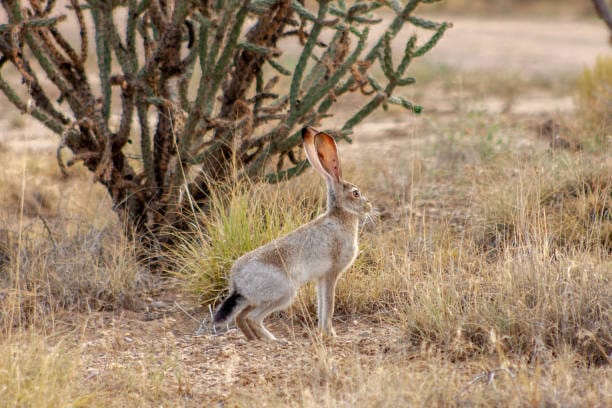
The Black-tailed Jackrabbit is one of the most familiar Wild Rabbits in California. Many people spot them racing across open fields or sitting still in desert shrubs like statues. Even though folks call them “rabbits,” they’re actually hares. That small distinction explains a lot of their behavior, body structure, and survival style. Below is a full breakdown to help you recognize them, understand how they live, and see why this animal has become part of California’s landscape story.
Physical Characteristics & Identification Tips
The Black-tailed Jackrabbit stands out the moment you see it. The first thing most people notice is the long ears—tall, thin, and pale inside. Those ears look too big for the head, like someone drew them with a bold marker. They help with hearing and cooling. On warm days, you can sometimes spot blood vessels visible beneath the thin skin, which help release heat.
The fur is a mix of brown, gray, and buff tones. It blends easily with dry soil and desert brush. If you catch a glimpse of the tail, you’ll see the name makes sense. The top is deep black while the underside stays lighter. When the animal runs, the tail flips in a way that creates a small dark streak behind it.
The body is lean. The legs, especially the hind ones, look built for running. And they are. Adults usually measure around two feet long and can weigh anywhere from three to seven pounds. Their posture is upright and alert. When resting, they tuck themselves into shallow depressions called “forms.” These spots help them stay hidden from predators.
If you’re new to identifying Wild Rabbits in California, a jackrabbit can confuse you at first. They’re much larger than cottontails. Their ears are longer. Their legs look more like a small antelope’s than a rabbit’s. If you see an animal sprinting with long leaps that look almost exaggerated, you’re probably looking at a jackrabbit.
Behavior
The behavior of the Black-tailed Jackrabbit is a mix of caution and boldness. They often freeze when approached. This gives them a chance to blend into their surroundings. But once they decide to run, they take off fast. They can reach speeds up to 40 mph, which surprises many people when they see it up close.
They rely on speed, sharp senses, and quick zigzag movements to escape coyotes, hawks, bobcats, and even domestic dogs. They don’t dig burrows like many smaller rabbits. Instead, they rely on surface shelters. You’ll often see them active around dusk or dawn. These hours give them more safety and cooler temperatures.
Black-tailed Jackrabbits are mostly solitary. You’ll rarely see them in tight groups, though it’s possible to see several individuals feeding in the same area. When feeding, they stay alert. Every few seconds, their head pops up to scan for danger. Watching a jackrabbit eat is a lesson in tension and calm blending together.
Habitat and Range
The Black-tailed Jackrabbit thrives in open areas. Deserts, prairies, dry valleys, and shrublands are perfect for them. They don’t like heavy forests or thick vegetation. They need space to run. Their bodies are built for visibility and speed, not squeezing through woods.
Across California, you can spot them from the Imperial Valley to the Central Valley, and up through the Great Basin region. You may even see them near agricultural fields and outer neighborhoods where open land borders development.
They’re flexible in where they live, but they need two main things: low plants and open ground. These spaces give them enough cover to hide and enough space to escape. In many places, jackrabbits have adapted well to human activity. As long as there’s room to feed and no constant disturbance, they stick around.
Diet
The diet of a Black-tailed Jackrabbit changes with the season. They eat mostly grasses, shrubs, and forbs. In dry months, they switch to tougher vegetation like sagebrush or mesquite. These plants aren’t easy to chew, but jackrabbits have teeth and digestive systems made for fibrous food.
During wetter seasons, they prefer softer plants. New shoots and fresh grasses give more moisture, and this helps them conserve water. Jackrabbits rarely drink from open water unless they must. Plants usually give them all the hydration they need.
They can also climb slightly to reach taller shrubs, standing on their hind legs for a better reach. Farmers sometimes see them nibbling on young crops, especially alfalfa. This makes them a subject of occasional conflict, though they’re usually not destructive enough to be considered severe pests.
Reproduction and Life Cycle
Reproduction for this species leans toward speed and quantity. Females can have multiple litters a year, especially in warmer regions of California. Each litter can include one to six leverets. The young are born fully furred with eyes open. This is a major difference from true rabbits, whose babies are born blind and hairless.
The mother doesn’t stay with the young constantly. Instead, she visits them for short nursing periods. This lowers the chance of predators discovering the nest. Leverets grow fast. Within a few weeks, they start exploring and eating solid food. Within months, they become independent.
This fast reproductive cycle helps the species handle predator pressure and changing conditions. It also explains why jackrabbits stay common even in areas where many other small mammals decline.
Fun Facts / Traits
- Their ears work like cooling towers. They help release excess heat on hot California afternoons.
- Despite looking fragile, jackrabbits can jump distances over ten feet in a single bound.
- They can rotate their ears independently, like tiny satellite dishes searching for sound.
- In some Indigenous stories, the jackrabbit appears as a clever animal known for quick thinking.
- Their eyes are placed in a way that gives them nearly 360-degree vision.
Human Interaction
Humans see Black-tailed Jackrabbits in many settings—roadsides, farmlands, desert hiking trails, and even near suburban edges. They rarely cause problems unless they feed on crops. Even then, most farmers tolerate them because the damage is usually minor.
Drivers should watch for them at night. Jackrabbits often freeze in headlights or bolt across roads without warning. Collisions are common in rural areas, especially during breeding seasons when young animals roam more.
Some people try to feed them, but this isn’t a good idea. It can make them dependent on humans or draw predators close to homes. Observing from a distance is safer for both sides.
In protected areas, park staff remind visitors to keep dogs leashed. A loose dog can harm jackrabbits or chase them into dangerous areas. The stress alone can harm them.
Overall, jackrabbits coexist fairly well with people. They adapt quickly, as long as wide open land still exists for them to use.
2. Desert Cottontail (A Common Species Among Wild Rabbits in California)
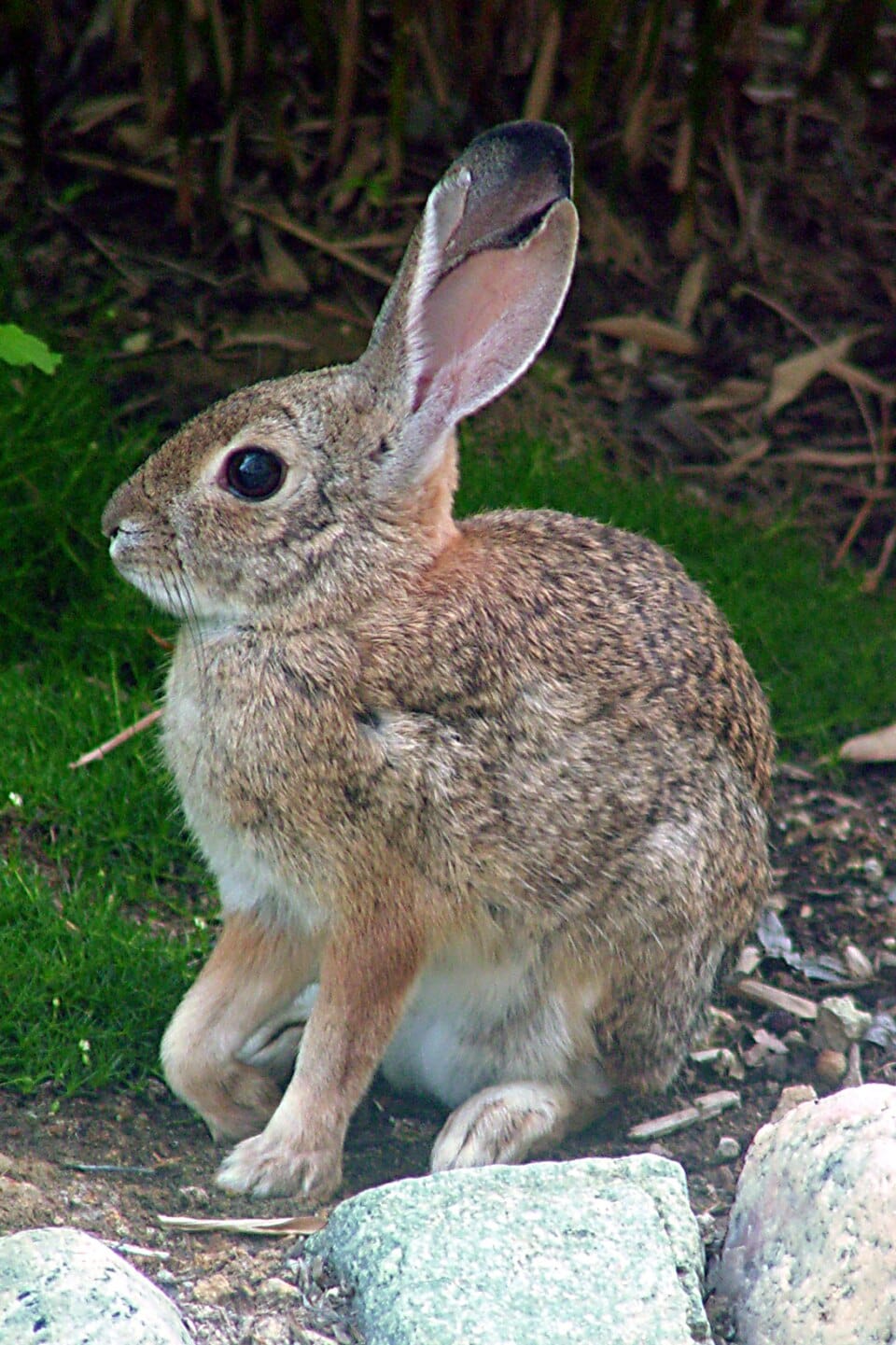
The Desert Cottontail is one of the easiest Wild Rabbits in California to recognize. Many hikers in Southern California see this rabbit right after sunrise, nibbling on grass near desert shrubs. It’s smaller than a jackrabbit, has shorter ears, and behaves differently. This rabbit has a calm look, but it reacts fast when something feels off. If you walk slowly in quiet areas, you may spot one sitting under a bush with its ears half-raised. Below is a full, beginner-friendly guide to help you identify this species and understand how it lives.
Physical Characteristics & Identification Tips
The Desert Cottontail has a rounded body and a soft appearance. It’s lighter than most jackrabbits and more compact. Adults usually weigh between one and three pounds. The fur blends into sandy soil tones, with warm browns, grays, and pale yellows. If you look closely, the coat has a speckled pattern that helps it disappear into dry terrain.
The ears are shorter than a jackrabbit’s but longer than many other cottontails. They stand straight up and help the rabbit detect faint sounds. The inside of the ears is light, sometimes pinkish. When the rabbit is calm, the ears tilt outward, almost like two little fans resting on its head.
The most famous feature is the tail. When the rabbit runs away, the bright white underside flashes like a tiny cotton puff. That’s where “cottontail” comes from. Many people think the flashing tail distracts predators by creating a moving target.
If you’re new to spotting Wild Rabbits in California, here’s a simple trick:
If the rabbit is small, round, and has a bright white tail, it is likely a Desert Cottontail.
Behavior
The Desert Cottontail lives cautiously. It depends on being alert more than being fast. You’ll see it freeze in place when it senses danger. This works well because its fur blends into the background. Many predators walk past without noticing it.
When it must run, it uses quick, sharp movements rather than long leaps. The run looks like a zigzag pattern. This style helps it escape hawks, coyotes, and foxes. They’re also active during early mornings and late afternoons when temperatures are lower.
Unlike some rabbits that live underground, the Desert Cottontail doesn’t dig deep burrows. It uses shallow depressions beneath bushes, fallen branches, or rocks. These spots protect it from heat and predators. It may use abandoned burrows left by other animals, but it usually prefers shelter above ground.
They are mostly solitary. You might see two or three in the same field, but each one keeps a comfortable distance. They don’t form tight groups like prairie dogs. Instead, they share space without interacting much.
Habitat and Range
The Desert Cottontail fits well into dry landscapes. It thrives in areas that look too harsh for many small animals. You can find it in:
- deserts
- scrublands
- grassy foothills
- open woodlands
- edges of agricultural fields
In California, it occurs across much of the southern part of the state. It appears from the Mojave Desert to the Sonoran Desert and up through parts of the Central Valley. It sometimes lives near suburban neighborhoods where yards border wild zones.
What makes this rabbit successful is its flexibility. It doesn’t need a specific plant or a fancy hiding place. It simply needs dry ground with scattered bushes and enough vegetation to eat.
Diet
The Desert Cottontail eats many types of plants. Grasses make up a large share of its diet. In spring, it eats fresh green shoots. In summer, it switches to tougher plants like sagebrush or prickly leaves. It can handle foods that look too dry for other animals.
One interesting thing is how it deals with water. Like many Wild Rabbits in California, it gets most of its water from plants. This reduces the need to drink. During drought months, this skill helps it survive when ponds and puddles disappear.
It also practices re-ingestion of partially digested food. This sounds unpleasant, but it helps extract extra nutrients from tough fiber. Many herbivores do this to stay healthy.
Reproduction and Life Cycle
This species breeds frequently. Warmer climates allow for multiple litters a year. A single litter may include one to six babies. Baby cottontails, called kits, are born blind and hairless. They stay in nests lined with fur and dried plants.
The mother visits only for short feeding sessions. This reduces scent trails that predators could follow. Kits grow quickly. By three weeks, they hop around and explore their surroundings. Within a month, many become independent.
Because life in the wild is risky, high reproduction helps the population stay steady. Even if many young don’t reach adulthood, enough survive to maintain healthy numbers.
Fun Facts / Traits
- The Desert Cottontail rarely drinks free-standing water; moisture in plants keeps it hydrated.
- It can stand on its hind legs to reach leaves a bit higher up.
- The tail flash may confuse predators for a moment—just long enough for escape.
- They can rotate their ears to pinpoint the direction of sound.
- This rabbit is often seen on hiking trails in early morning hours.
Human Interaction
People see Desert Cottontails often around California parks, desert trails, and neighborhood edges. They generally avoid people but won’t panic if you keep a safe distance. Many families enjoy watching them from porches or during walks.
Sometimes they nibble garden vegetables, which can frustrate homeowners. Using simple fencing usually solves the problem. They aren’t aggressive and tend to stay away if the area feels busy.
Feeding them is not recommended. Human food can cause health problems, and it may attract coyotes or other predators. Observing them quietly is the best approach.
Like other Wild Rabbits in California, cars pose the greatest risk. They freeze when headlights shine on them, which can lead to collisions. Slowing down in rural areas at dusk helps both animals and drivers.
3. Brush Rabbit (A Distinctive Species Among Wild Rabbits in California)
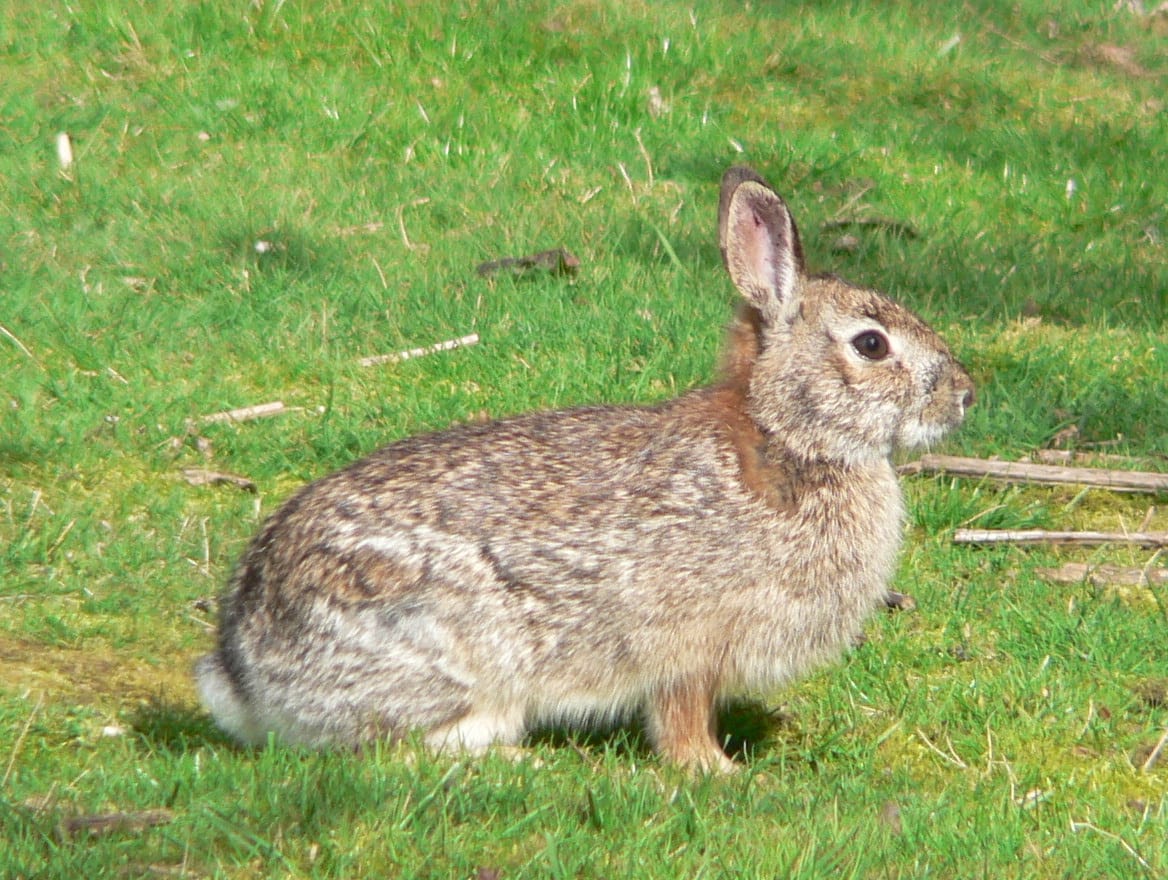
The Brush Rabbit is smaller, shyer, and more secretive than many Wild Rabbits in California. Unlike the Desert Cottontail, which often feeds in the open, the Brush Rabbit sticks to dense vegetation. You might never see one even if you walk past its home every day. It moves quietly through thick brush like a tiny shadow. Below is a full guide to help you understand this rabbit’s habits, how to recognize it, and why it prefers dense cover.
Physical Characteristics & Identification Tips
The Brush Rabbit is compact. Most adults weigh less than two pounds. Their bodies look rounded, and their fur has deeper tones than other rabbits. The colors usually include dark browns, charcoal grays, and muted tans. These tones let them disappear into coastal scrub and chaparral.
The ears are shorter than those of many other cottontails. They look rounded at the top, almost like small leaves. Because of this, the Brush Rabbit often appears more “spherical” when sitting still. The head is short and rounded, with eyes that reflect light softly in the shade.
The tail is also shorter than that of the Desert Cottontail. It still has a pale underside, but it doesn’t flash as brightly. This suits the rabbit well because it doesn’t rely on running across open ground. Instead, it escapes into dense brush where a flashing tail would be less helpful.
If you’re trying to identify Wild Rabbits in California and see a small, dark, quick-moving rabbit in thick vegetation, it is most likely a Brush Rabbit.
Behavior
Brush Rabbits are quiet creatures. They spend most of their day hidden in shrub layers. They use a network of small runways—tiny paths through brush—to travel without being seen. These paths look narrow, like someone dragged a rope across the dirt.
They do not leap or sprint across large fields. Instead, they slip through dense cover with short, rapid hops. This style helps them avoid hawks, owls, foxes, and other predators.
They are crepuscular, meaning they are active mostly during dawn and dusk. In hot areas, they may shift activity to deeper nighttime hours to avoid overheating.
Brush Rabbits can be territorial. They rarely tolerate other adults in their core area. However, overlapping ranges occur when food sources are abundant.
Habitat and Range
Habitat defines this species more than any other rabbit in the state. The Brush Rabbit lives in places with dense ground vegetation, including:
- chaparral thickets
- coastal scrub
- brushy canyons
- oak understories
- riverbanks with heavy shrubs
The species spans much of coastal and near-coastal California. From Baja California northward, it follows the chaparral belt. It avoids open deserts, grasslands, and mountain tops. If there isn’t thick brush, this rabbit likely isn’t there.
This species plays an important role in shrubland ecosystems. Its feeding and movements influence plant growth patterns, though in subtle ways.
Diet
This rabbit eats a variety of vegetation. It prefers soft plants, including grasses, leaves, and young shoots. It also nibbles low shrubs and fallen berries when available. In many brushlands, seasonal growth cycles shape its diet.
During spring, it feeds on new growth. In summer, it sometimes eats drier plants. In winter, it may consume bark, buds, or whatever greenery remains. Like other rabbits, it re-digests some food to extract more nutrients.
Because it stays in thick brush, it often eats near its shelter. This lowers exposure to predators but limits access to lush open grasses. Still, the safety tradeoff works well for this species.
Reproduction and Life Cycle
The Brush Rabbit has multiple breeding periods each year in warm climates. Each litter may include two to five babies. The young are born blind and hairless, like most cottontails.
Nests are built under thick vegetation. These nests are hard to find, even when you know the general area. The mother covers the young with fur and plant material before leaving.
Kits grow quickly. After two or three weeks, they begin leaving the nest. By one month, many young become independent. Their survival depends heavily on the density of the brush. More hiding spots mean more young reach adulthood.
Fun Facts / Traits
- This species almost never leaves cover unless necessary.
- It uses narrow pathways that can be hard to spot unless you’re on your hands and knees.
- Their darker fur tones help them stay hidden in shade.
- They have been part of many local folklore stories due to their elusive behavior.
Human Interaction
People rarely see Brush Rabbits unless they spend time in chaparral regions. The rabbit’s secretive nature makes it a quiet neighbor. Hikers may spot them along shady hiking trails early in the morning.
One issue the species faces is habitat loss. Development reduces brushlands, which limits where they can live. They don’t adapt as well to open fields or urban edges as other rabbits do.
Cats pose another threat. Domestic and feral cats kill many Brush Rabbits each year. Keeping outdoor cats supervised helps local wildlife survive.
The good news is that Brush Rabbits still remain common across many natural areas. People can support them by keeping native shrubs in gardens near wild zones. These provide shelter for many small animals, not just rabbits.
4. Nuttall’s Cottontail (A Lesser-Known Wild Rabbit in California)
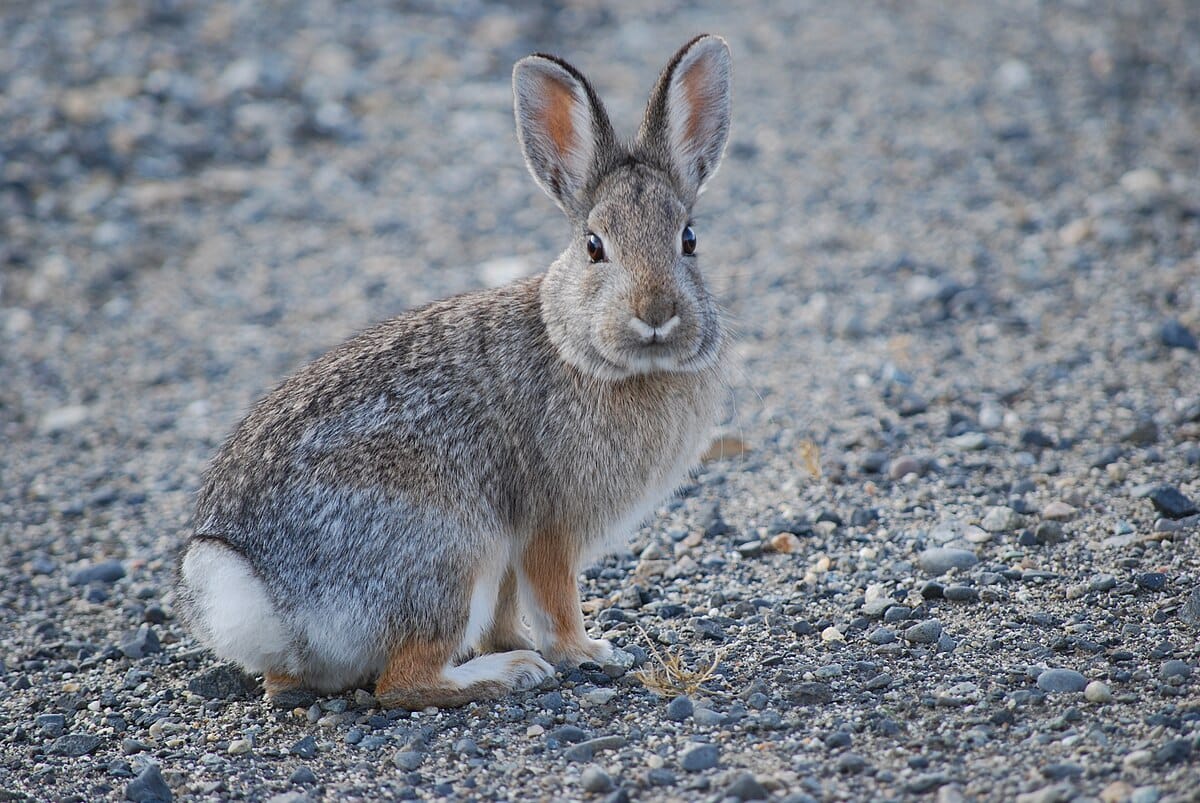
Nuttall’s Cottontail is one of the quieter Wild Rabbits in California. You’re less likely to see it in deserts or open fields. Instead, it prefers cooler, brushy, or wooded areas. This makes it a bit mysterious for hikers and nature watchers. Its small size and muted colors help it hide, and it tends to stay under cover most of the time. Understanding this rabbit requires paying attention to its habitat, behavior, and how it interacts with other species.
Physical Characteristics & Identification Tips
Nuttall’s Cottontail is small and compact. Adults usually weigh between 1.5 and 2.5 pounds. The coat is mostly grayish-brown, sometimes tinged with reddish or ochre. Its fur blends into the forest floor, dry leaves, and underbrush. This camouflage makes it nearly invisible unless it moves.
The ears are shorter than the Black-tailed Jackrabbit and slightly more pointed than the Brush Rabbit. The tail is small and rounded, with a white underside. When running, the tail flashes briefly but is less noticeable than the larger cottontails’ tails. Its eyes are large, alert, and placed high on the head, giving it a wide field of view.
Identification tip: if you’re in coastal chaparral, oak woodland, or shaded river valleys in California and see a small, gray-brown rabbit that hugs the ground and disappears quickly, it’s probably Nuttall’s Cottontail.
Behavior
This species is shy and secretive. Nuttall’s Cottontail relies on freezing and hiding rather than long sprints. When threatened, it darts into dense vegetation, often disappearing completely from sight. It uses a network of small trails under shrubs and grasses to move safely.
The rabbit is most active at dawn and dusk. During hot days, it stays deep in cover to avoid overheating. Unlike the Black-tailed Jackrabbit, it rarely ventures into open areas, preferring shadowed, concealed spots. It is mostly solitary but may share overlapping feeding areas with other rabbits without interacting directly.
Habitat and Range
Nuttall’s Cottontail prefers habitats such as:
- dense brush along riverbanks
- coastal scrub areas
- wooded valleys
- marsh edges with tall vegetation
It is mostly found in northern and central California, including the Sacramento Valley and coastal foothills. Unlike some other cottontails, it avoids open desert and grasslands, sticking to places that provide both food and cover. Its survival depends on maintaining dense ground vegetation.
Diet
Nuttall’s Cottontail eats a variety of plants, focusing on grasses, clover, leaves, and shrubs. It also eats twigs and bark during the winter months. Like other wild rabbits in California, it re-ingests partially digested material to maximize nutrient absorption. This adaptation is essential during seasons when fresh green food is scarce.
The diet supports its hydration needs, as it rarely drinks open water. Seasonal availability influences food choice. In spring, it prefers tender shoots and clover. In summer, it shifts to tougher leaves. In winter, twigs and bark make up a large portion of the diet.
Reproduction and Life Cycle
The species breeds multiple times a year. Females may produce two to four litters, with each litter containing one to six kits. Young are born blind and hairless and remain in a carefully constructed nest lined with fur and vegetation. The mother visits briefly to nurse the young.
After about three weeks, kits start exploring outside the nest. They grow quickly and reach independence in roughly a month. High predation risk in dense vegetation makes rapid reproduction important. Even with many natural threats, populations remain stable due to frequent breeding.
Fun Facts / Traits
- Nuttall’s Cottontail is among the most secretive of California’s wild rabbits.
- It prefers shaded areas with dense shrubs for safety.
- Its small size and subtle coloration make it very hard to spot.
- The rabbit is a prey species for many predators, including owls, foxes, and snakes.
- It uses short trails under vegetation to move safely without being seen.
Human Interaction
Because it prefers dense brush, people rarely see this rabbit. Hikers in shaded canyons or along riverbanks may spot a fleeting movement among leaves. Habitat loss due to urbanization or agriculture is a threat, as it removes essential cover.
Feral cats and domestic dogs pose risks, as do changes in vegetation due to human activity. Protecting brush areas in parks or backyards can help maintain local populations. Observing from a distance is recommended, and feeding them is unnecessary and potentially harmful.
5. Snowshoe Hare (A Rare Wild Rabbit in California)

The Snowshoe Hare is one of the less common Wild Rabbits in California. It usually lives in northern mountainous regions, where cooler temperatures and forested areas suit it best. This species is known for its distinctive large hind feet, which act like snowshoes. These allow it to move quickly on soft ground, and in other regions, even snow. It’s a fascinating rabbit to study because of its seasonal coat color changes and unique adaptations.
Physical Characteristics & Identification Tips
The Snowshoe Hare is medium-sized, generally weighing between 2.5 and 4 pounds. Its fur changes seasonally: brown in summer to blend with forest floors, and white in winter for camouflage in snow-covered areas. The tail is small and white underneath. Its hind feet are unusually large compared to its body size, giving the “snowshoe” name. This adaptation distributes its weight, allowing the hare to run over soft soil or snow without sinking.
The ears are moderately long with black tips. Eyes are large and positioned for wide peripheral vision. If you see a hare that changes color with seasons and has disproportionately large feet, it’s likely a Snowshoe Hare.
Behavior
Snowshoe Hares are mainly nocturnal and crepuscular. They feed mostly during dawn and dusk, resting in dense vegetation during the day. When threatened, they rely on a combination of camouflage and rapid zigzag running to evade predators. Unlike cottontails, they are strong jumpers and can cover impressive distances in a single bound.
They are largely solitary, with overlapping home ranges. Males and females interact mainly during breeding seasons. Hares have keen senses, and their ears can rotate independently to detect subtle noises.
Habitat and Range
In California, Snowshoe Hares are restricted to northern mountain ranges, forests with dense understory, and riparian areas in higher elevations. They avoid low deserts and open fields. Their survival depends on seasonal cover and accessible vegetation. Forest management and conservation efforts are important to maintain their preferred habitat.
Diet
Snowshoe Hares eat a mix of grasses, herbs, twigs, and bark. In winter, they feed mainly on woody plants like willow and aspen. During summer, they consume soft leaves, shrubs, and berries. Like other rabbits, they re-ingest some material to extract more nutrients, particularly in winter when food quality is lower.
Reproduction and Life Cycle
These hares can breed multiple times per year, producing two to three litters annually. Litter size ranges from three to eight young. Kits are born fully furred with open eyes, which allows them to leave the nest within hours. This early mobility helps reduce predation. Rapid growth and reproduction help maintain populations despite heavy predation from lynx, foxes, and raptors.
Fun Facts / Traits
- Seasonal color change is a famous survival adaptation.
- Large hind feet allow movement over soft ground without sinking.
- Snowshoe Hares are a key prey species for many predators, including the Canadian lynx.
- They rely on camouflage rather than burrowing for protection.
- They can rotate ears independently to detect danger.
Human Interaction
Snowshoe Hares are rarely seen by casual observers in California because of their northern, forested habitat. They are sensitive to habitat disruption, and recreational activities like hiking may disturb them. However, they generally avoid humans and remain hidden. Conservation of northern forests and riparian areas is vital to maintain their populations. Observing quietly without feeding or chasing is the best way to enjoy these hares in the wild.
Conclusion: Observing Wild Rabbits in California
California’s landscapes are full of life, and the Types of Wild Rabbits in California are a key part of that diversity. From the large and alert Black-tailed Jackrabbit to the elusive Snowshoe Hare, each species has adapted to survive in its unique environment. Watching them in their natural habitats teaches us about survival, adaptation, and the subtle balance of ecosystems. Remember, the best way to enjoy these wild rabbits is to observe quietly from a distance, respect their habitats, and avoid feeding them. Whether you’re hiking in the desert, exploring chaparral, or wandering forested areas, keeping an eye out for these animals adds a rewarding layer to your outdoor adventures. Start exploring today and see how many of these fascinating rabbits you can spot!
Frequently Asked Questions About Wild Rabbits in California
1. What types of wild rabbits live in California?
California is home to several wild rabbit species, including the Black-tailed Jackrabbit, Desert Cottontail, Brush Rabbit, Nuttall’s Cottontail, and Snowshoe Hare. Each species has unique physical traits, behaviors, and habitat preferences that help them survive in the state’s diverse ecosystems.
2. Where can I find Black-tailed Jackrabbits in California?
Black-tailed Jackrabbits are common in California’s deserts, grasslands, and open valleys. They prefer open areas where they can run quickly to escape predators. You can often spot them near the Mojave Desert, Central Valley, and other dry, open landscapes.
3. How can I identify Desert Cottontails in California?
Desert Cottontails are smaller than jackrabbits and have shorter ears. Their most distinctive feature is a bright white tail, which flashes when they run. In California, they are common in deserts, scrublands, and the edges of agricultural fields.
4. Are Brush Rabbits common in California?
Brush Rabbits are more secretive and less commonly seen than other wild rabbits in California. They thrive in dense coastal scrub, chaparral, and shaded brushy areas where they can hide easily from predators.
5. What habitats do Snowshoe Hares prefer in California?
Snowshoe Hares are typically found in northern California’s mountainous and forested regions. They prefer cool, shaded forests with dense understory vegetation. They avoid open deserts and grasslands.
6. How many species of wild rabbits are native to California?
There are at least five main species of wild rabbits native to California: Black-tailed Jackrabbit, Desert Cottontail, Brush Rabbit, Nuttall’s Cottontail, and Snowshoe Hare. Each occupies specific habitats throughout the state.
7. Can you see wild rabbits in California deserts?
Yes, species like the Black-tailed Jackrabbit and Desert Cottontail are well-adapted to desert conditions. They are most active during early mornings or late afternoons when the temperatures are cooler.
8. What do wild rabbits eat in California?
Wild rabbits in California primarily eat grasses, herbs, leaves, shrubs, and in some cases, twigs or bark. Their diets may vary seasonally depending on food availability and habitat.
9. How do wild rabbits survive in California’s hot summers?
Wild rabbits survive hot California summers by staying in shaded areas, burrows, or under brush during peak heat. Many species, like cottontails, feed during cooler hours, such as early morning or late evening.
10. When is the best time to observe wild rabbits in California?
The best time to see wild rabbits in California is during dawn or dusk. These are their most active periods, and the light conditions make it easier to spot them without disturbing their natural behavior.
11. Do wild rabbits in California hibernate during winter?
No, wild rabbits in California do not hibernate. Instead, they remain active year-round, relying on available food and shelter to survive colder months, particularly in mountainous or northern regions.
12. Are wild rabbits dangerous to California gardens?
Wild rabbits may nibble on garden plants, young crops, or flowers, but they are generally not dangerous. Simple fencing or protective barriers can prevent damage while keeping rabbits safe.
13. How can I safely watch wild rabbits in California?
To observe wild rabbits safely in California, keep a quiet distance, avoid sudden movements, and never feed them. Use binoculars if needed, and respect their natural habitats to reduce stress on the animals.
14. What predators hunt wild rabbits in California?
Common predators of wild rabbits in California include coyotes, foxes, bobcats, hawks, owls, and domestic cats or dogs. Rabbits rely on camouflage, speed, and hiding to avoid being caught.
15. Are Black-tailed Jackrabbits in California larger than cottontails?
Yes, Black-tailed Jackrabbits are larger than most cottontails in California. They have longer legs and ears, and their body structure is built for speed in open areas.
16. How do wild rabbits in California protect themselves from predators?
Wild rabbits protect themselves through camouflage, freezing when threatened, zigzag running, and hiding in dense vegetation or shallow forms. Their keen senses of hearing and vision help detect danger early.
17. Can wild rabbits in California live near human neighborhoods?
Some species, like the Desert Cottontail and Black-tailed Jackrabbit, may live near suburban areas in California. They often stay at the edges of neighborhoods where open space or vegetation is available.
18. How fast can wild rabbits run in California?
Black-tailed Jackrabbits can reach speeds of up to 40 mph in California’s open areas. Other species, like cottontails, run slower but use quick zigzag movements to evade predators.
19. How do Nuttall’s Cottontails differ from other wild rabbits in California?
Nuttall’s Cottontails are smaller, more secretive, and prefer shaded brush or woodland habitats in California. Unlike desert species, they rely heavily on dense vegetation for protection.
20. What are fun facts about wild rabbits in California?
Wild rabbits in California have unique adaptations: Jackrabbits can leap great distances, cottontails flash their tails to confuse predators, and Snowshoe Hares change color with the seasons for camouflage.
21. Do Snowshoe Hares change color in California?
Yes, Snowshoe Hares in California change their fur color seasonally. Brown during summer blends with soil and vegetation, while white in winter provides camouflage against snow in northern mountain areas.
22. How do Brush Rabbits navigate dense California chaparral?
Brush Rabbits use narrow trails through thick shrubs and dense vegetation in California chaparral. Their small size and dark fur allow them to move quietly and stay hidden from predators.
23. Are wild rabbits in California endangered or threatened?
Most wild rabbits in California, like the Black-tailed Jackrabbit and Desert Cottontail, are not endangered. However, habitat loss and urban development can threaten local populations of Brush Rabbits and Snowshoe Hares.
24. How can I attract wild rabbits to my backyard in California?
To attract wild rabbits in California, provide native shrubs, grasses, and safe hiding spots. Avoid pesticides, and keep pets supervised. Feeding them is not recommended as it can harm their health.
25. What role do wild rabbits play in California ecosystems?
Wild rabbits are important prey for predators and help control vegetation growth in California. Their feeding and burrowing behaviors also contribute to soil aeration and ecosystem health.
26. How long do wild rabbits live in California?
Wild rabbits in California typically live 1–3 years in the wild. Predation, food availability, and habitat conditions influence their lifespan.
27. Do wild rabbits in California have seasonal breeding patterns?
Yes, most wild rabbits in California breed multiple times a year, especially in warmer areas. Breeding cycles depend on food availability and climate conditions.
28. What is the difference between jackrabbits and cottontails in California?
Jackrabbits in California are larger, have longer legs and ears, and live in open areas. Cottontails are smaller, have shorter ears, and prefer brushy or shaded habitats.
29. Can wild rabbits in California be pets?
Wild rabbits in California are not suitable as pets. They are adapted to survive in natural habitats and often do not thrive in captivity. Domestic rabbits are a safer option for pets.
30. How do California parks protect wild rabbit populations?
California parks protect wild rabbits by conserving habitats, limiting human disturbance, managing predators, and educating visitors about observing wildlife responsibly.
31. Why are wild rabbits important to California wildlife?
Wild rabbits provide food for predators, help maintain plant diversity, and contribute to ecosystem balance. Their presence indicates healthy habitats across California.
32. How do humans impact wild rabbits in California?
Human activities like urbanization, agriculture, and recreational land use can reduce wild rabbit habitats in California. Conserving vegetation and keeping pets controlled can minimize negative impacts.
33. Where are the best California locations for spotting wild rabbits?
Deserts, chaparral, grasslands, oak woodlands, and northern forests are ideal places to spot wild rabbits in California. Early morning or late afternoon increases your chances.
34. What signs indicate wild rabbits are present in California?
Tracks, droppings, chewed plants, and small trails in vegetation are signs of wild rabbits in California. Observing movement at dawn or dusk can also indicate their presence.
35. How do wild rabbits in California adapt to changing habitats?
Wild rabbits adapt by shifting feeding habits, using new shelter locations, and modifying activity patterns. Some species tolerate urban edges, while others rely on undisturbed brush or forested areas in California.
Read more: 4 Types of Wild Rabbits in Oklahoma (Pictures And Identification)