

Bison are among the largest land mammals in the Northern Hemisphere, and they have shaped grasslands, forests, and human cultures for thousands of years. When people search for Types of Bison, they are often looking for clear identification, basic differences, and a sense of how these powerful animals live and behave. Despite their similar appearance at first glance, bison species and subspecies vary in size, habitat, behavior, and conservation history. Some roam open plains, others prefer dense northern forests, and a few survive only as fossils and cave paintings.
This guide explores ten different types of bison in a clear, friendly way. Each section focuses on one type, explaining where it lives or lived, how it behaves, and what sets it apart. The goal is simple: to help you recognize each bison and understand its role in nature without turning the experience into a biology lecture.
Types of Bison
1. American Bison (Bison bison)
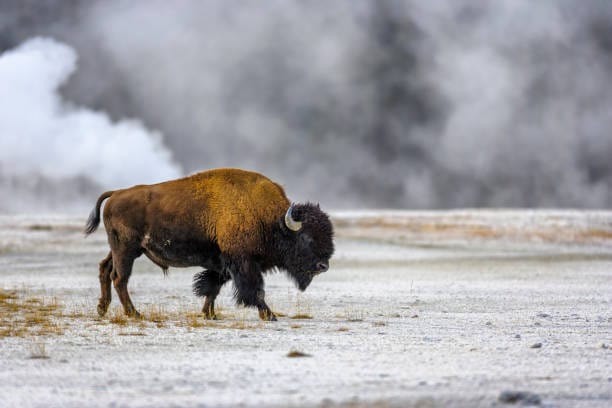
The American bison is the most familiar bison species and a true icon of North America. Often called the “buffalo” of the Great Plains, this animal once roamed the continent in numbers so large that early explorers described the ground as moving. At its peak, tens of millions of American bison migrated across grasslands, shaping ecosystems through grazing and trampling.
American bison are massive animals with broad shoulders, a large head, and a thick hump supported by strong muscles. Their dark brown coat is especially heavy around the head, neck, and forelegs, giving them a rugged, front-heavy appearance. Both males and females carry short, curved horns, which they use for defense and dominance displays rather than constant fighting.
In terms of behavior, American bison are social and usually form herds. During most of the year, these herds are relatively calm, grazing steadily and moving with purpose. During the breeding season, however, bulls become more aggressive, and brief but intense clashes can occur. Watching two bison bulls square off is a reminder that these animals, despite their calm grazing habits, are anything but tame.
Today, American bison survive mainly in protected areas such as national parks, reserves, and managed ranches. Their recovery from near extinction in the late 19th century is often cited as one of North America’s great conservation stories, even though truly wild populations remain limited.
2. Plains Bison (Bison bison bison)
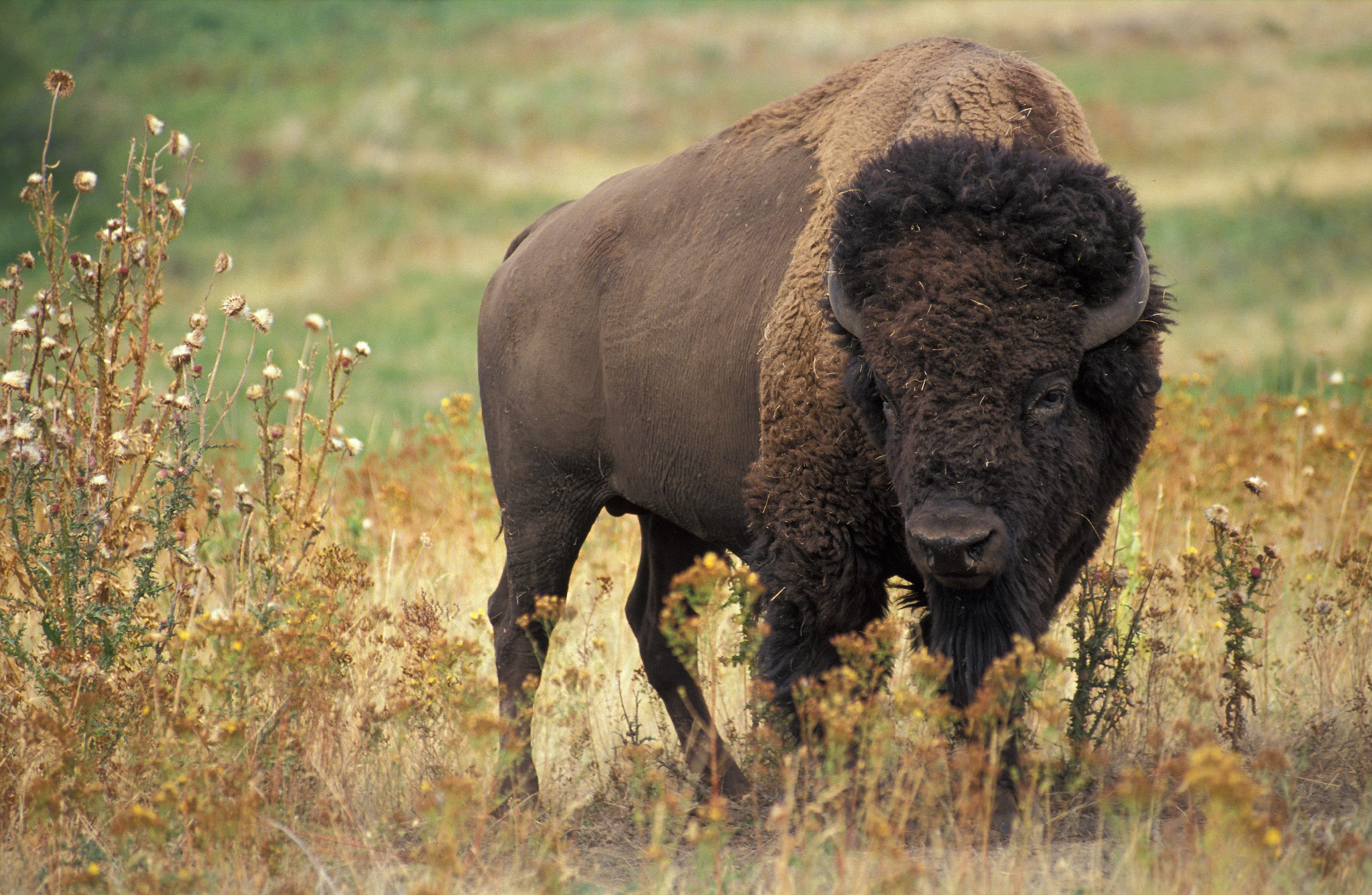
The plains bison is a subspecies of the American bison and the animal most people picture when they imagine herds thundering across open grasslands. Historically, this bison dominated the prairies and plains from Canada down into Mexico, following seasonal patterns of grass growth and water availability.
Physically, plains bison are slightly smaller than their northern relatives but still impressive in size. They have a pronounced shoulder hump, a thick mane around the head, and a relatively sleek back compared to forest-dwelling bison. Their build reflects their lifestyle: long-distance movement across open terrain where speed and endurance matter.
Plains bison are primarily grazers, feeding on grasses and sedges. Their grazing behavior helps maintain healthy grassland ecosystems by preventing woody plants from taking over. In this way, the plains bison acts like a living lawn mower—one with horns and a stubborn attitude.
Although once nearly wiped out by overhunting, plains bison now exist in conservation herds and commercial operations. Seeing them today offers a glimpse into what the North American plains looked like before fences and highways reshaped the land.
3. Wood Bison (Bison bison athabascae)

The wood bison is the largest living type of bison and a subspecies of the American bison. It inhabits the boreal forests and wetlands of northern Canada and parts of Alaska, where winters are long and unforgiving. Compared to plains bison, wood bison appear taller, with longer legs and a more angular build.
One noticeable difference lies in the shape of the hump and coat. Wood bison have a higher, more forward-set hump and less hair on the rear half of their body. This design suits their forested environment, where maneuverability and endurance in deep snow are more important than wide-open speed.
Their diet includes grasses, sedges, and shrubs, especially during winter when snow covers much of the ground. Wood bison often use their large heads to sweep snow aside, uncovering food below. This behavior benefits other animals as well, creating feeding opportunities in harsh conditions.
Once thought to be on the brink of extinction, wood bison populations have slowly increased thanks to careful management. They remain vulnerable, but their presence in the far north stands as a reminder that bison are not just animals of open plains—they can also thrive in quiet, frozen forests.
4. European Bison (Bison bonasus)
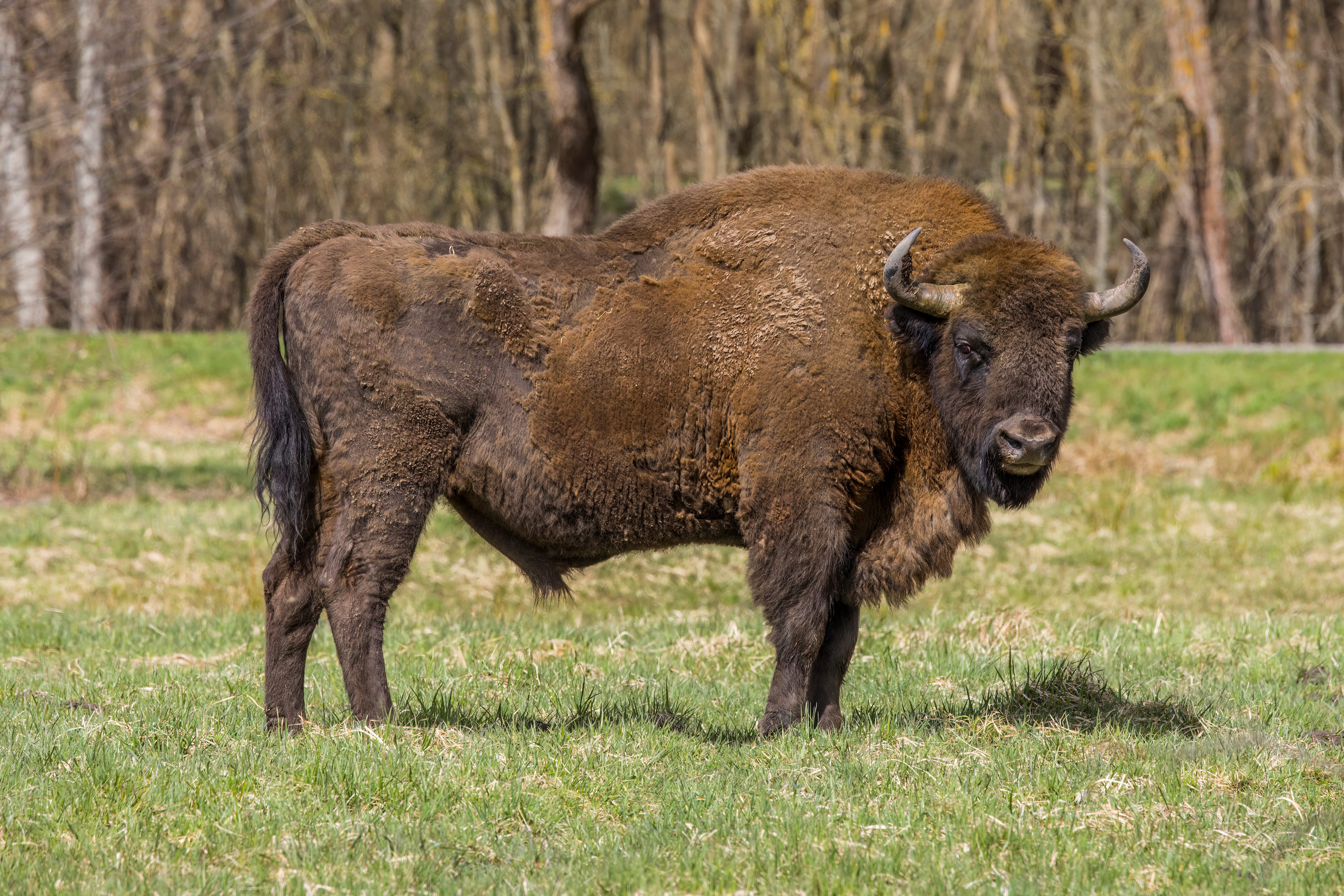
The European bison, also known as the wisent, is the largest land mammal in Europe. Unlike its American cousin, this bison favors mixed forests rather than open grasslands. Its history is closely tied to royal hunting grounds and later to intensive conservation efforts.
European bison have a slightly slimmer build and longer legs compared to American bison. Their coat is less shaggy, and their mane is shorter, giving them a more streamlined appearance. These traits help them move through dense woodland with ease.
Behaviorally, European bison are cautious and often avoid human contact. They live in small herds, usually led by females, while adult males tend to be more solitary outside the breeding season. Their diet includes grasses, leaves, bark, and shoots, reflecting their forest-based lifestyle.
By the early 20th century, the European bison was extinct in the wild. Every living individual today descends from a small number of captive animals. Thanks to reintroduction programs, free-ranging herds now exist in several European countries, offering hope that this ancient species can continue to reclaim parts of its former range.
5. Lowland Wisent (Bison bonasus bonasus)
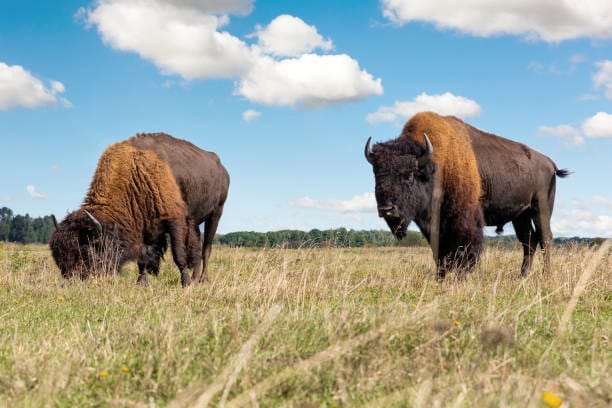
The lowland wisent is a subspecies of the European bison and represents the genetic backbone of most modern European herds. Historically, it inhabited lowland forests across Eastern and Central Europe, where it shared space with wolves, lynx, and early human communities.
In appearance, the lowland wisent closely resembles the general European bison but tends to be slightly larger and heavier. Its strong legs and broad chest make it well-suited for long-distance movement through forest clearings and river valleys.
Lowland wisents are adaptable feeders. They graze in open meadows when available and browse on woody plants during lean seasons. This flexibility has helped them survive in fragmented landscapes where pristine forests are rare.
Modern lowland wisent populations are the result of careful breeding and reintroduction programs. While they still rely on human protection, seeing these animals roam freely again is a powerful example of how conservation can reverse even the most severe declines—proof that sometimes nature just needs a second chance.
6. Carpathian Bison (Bison bonasus hungarorum)
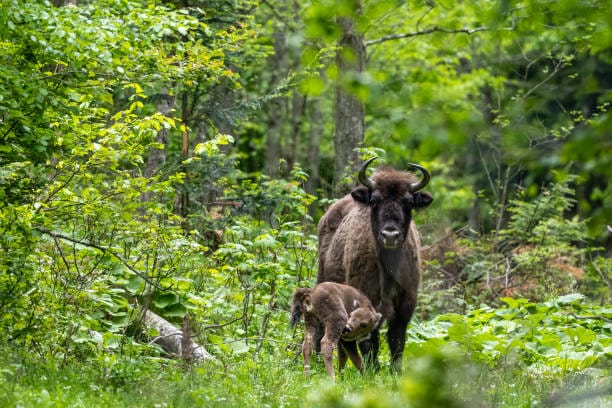
The Carpathian bison was a subspecies of the European bison that once lived in the Carpathian Mountains of Central and Eastern Europe. This region, known for dense forests and rugged terrain, shaped the behavior and physical traits of these animals. Compared to lowland wisents, Carpathian bison were slightly more compact, a body form better suited for navigating hills, valleys, and uneven ground.
Historical records describe the Carpathian bison as wary and elusive. They tended to remain deep within forest cover, avoiding open spaces unless food was scarce. This cautious nature likely helped them survive alongside predators and early human hunters for centuries. Their diet consisted of grasses in forest clearings, along with leaves, bark, and young shoots.
Unlike plains-dwelling bison, Carpathian bison lived in smaller, loosely connected groups. Seasonal movement was common, with herds shifting elevation depending on weather and food availability. Winters were harsh, and survival depended on both physical endurance and learned migration routes passed down through generations.
Sadly, this subspecies did not survive into the modern era. Intensive hunting and habitat loss led to its extinction in the 19th century. While no pure Carpathian bison exist today, their genetic influence lives on through conservation breeding programs involving European bison. Their story serves as a quiet reminder that even animals adapted to remote mountains are not immune to human pressure.
7. Caucasian Bison (Bison bonasus caucasicus)
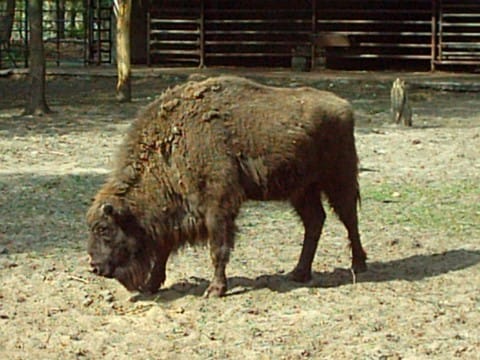
The Caucasian bison was another forest-dwelling subspecies of the European bison, native to the Caucasus Mountains between the Black and Caspian Seas. This region’s steep slopes, dense forests, and varied climate created a challenging environment that shaped a tough and resilient animal.
Caucasian bison were generally smaller and more lightly built than lowland wisents. Their slimmer frame and longer limbs helped them move efficiently across mountainous terrain. Their coat was less dense than that of northern bison, reflecting the milder but unpredictable climate of the Caucasus region.
These bison were known for their agility rather than brute strength. Observers noted that they could climb slopes with surprising ease, often using narrow forest paths and ridgelines. Their diet included grasses, herbs, leaves, and woody plants, depending on altitude and season.
By the early 20th century, the Caucasian bison had disappeared due to overhunting and habitat destruction. However, its genetic legacy did not vanish entirely. Modern European bison populations include hybrid lines that carry Caucasian ancestry, allowing a small part of this mountain bison to persist. It is a subtle survival story—one written into DNA rather than landscapes.
8. Steppe Bison (Bison priscus)
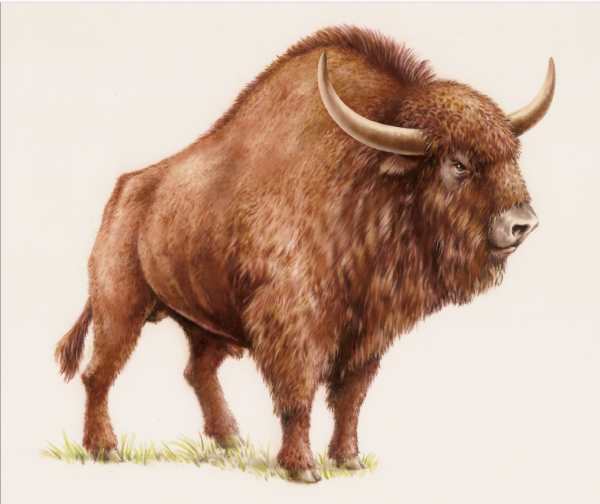
The steppe bison was a massive prehistoric species that lived across Eurasia and North America during the Ice Age. It thrived in cold, open environments known as mammoth steppes—vast grasslands that stretched from Western Europe to Alaska. Cave paintings and fossil remains show that humans encountered this bison regularly.
Steppe bison were larger and more heavily built than modern bison. Their long horns curved outward, making them one of the most imposing herbivores of their time. A thick coat protected them from freezing temperatures, while their powerful muscles supported long-distance movement across open landscapes.
Behaviorally, steppe bison likely formed large migratory herds, similar to modern plains bison but on an even grander scale. These herds played a major role in shaping Ice Age ecosystems by grazing heavily and maintaining open grasslands.
As the climate warmed and grasslands gave way to forests, steppe bison populations declined. Combined with human hunting, these changes led to their extinction. Even so, the steppe bison is considered an ancestor of modern American and European bison, making it a key chapter in the evolutionary story of the genus.
9. Ancient Bison (Bison antiquus)
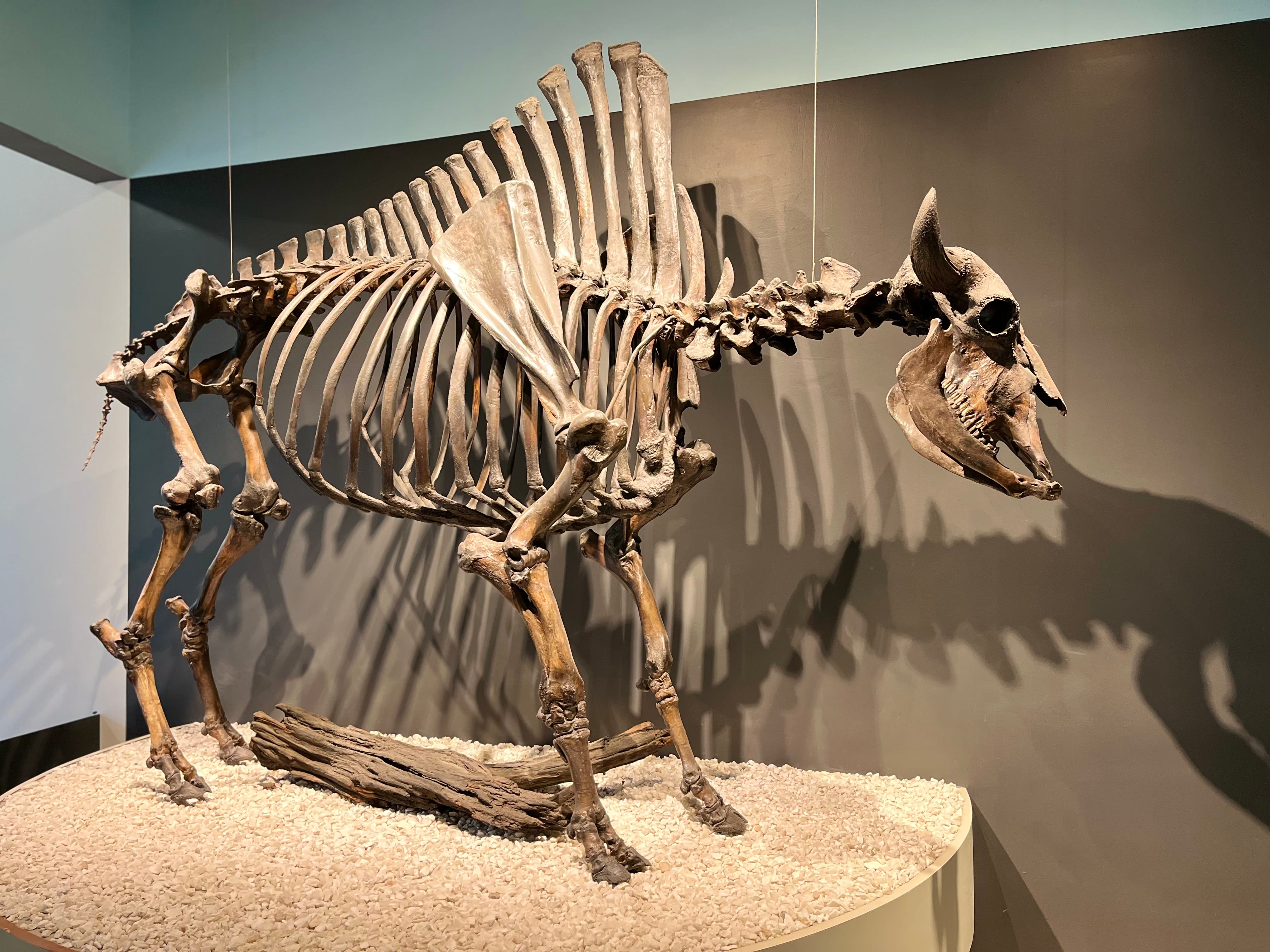
Bison antiquus was one of the largest bison species to roam North America during the late Ice Age. Fossils show that it exceeded modern American bison in size, with longer legs and a more elongated frame. This species lived in open grasslands and lightly wooded areas, often alongside early human populations.
Ancient bison were well adapted to a range of environments. Their long limbs allowed efficient travel across wide territories, while their strong jaws handled tough grasses. Evidence from archaeological sites suggests that early humans hunted Bison antiquus for food, tools, and clothing.
Unlike some Ice Age giants, Bison antiquus survived long enough to overlap with modern ecosystems. Over time, gradual climate shifts and selective pressures favored smaller, more compact bison forms. This evolutionary transition eventually led to the American bison we recognize today.
Rather than vanishing abruptly, Bison antiquus faded through adaptation. Its legacy lives on in the genes and physical traits of modern bison, making it less a lost species and more a stepping stone in a long evolutionary journey.
10. Long-horned Bison (Bison latifrons)
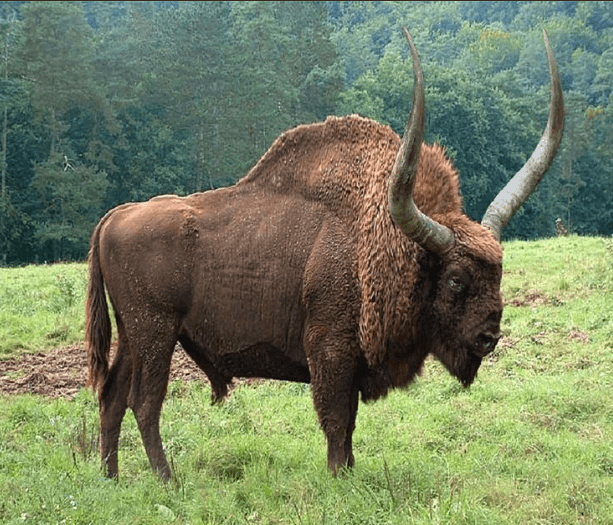
The long-horned bison was one of the most striking bison species ever to exist. Living during the early and middle Ice Age in North America, it is famous for its enormous horns, which could span over two meters from tip to tip. Seeing one in person would have been an unforgettable—and possibly intimidating—experience.
Despite their impressive horns, long-horned bison were not built for constant combat. The horns likely played a role in mating displays and defense rather than daily fighting. Their bodies were tall and muscular, designed for open habitats where visibility was high.
These bison lived in grasslands and savanna-like environments, grazing on a variety of plants. Their size and weaponry provided protection from predators, though young or injured individuals were still vulnerable.
As environments changed and more compact bison proved better suited to shifting climates, Bison latifrons disappeared. Its dramatic horns remain one of the most recognizable symbols of Ice Age megafauna—a reminder that nature has experimented with forms far more extreme than what we see today.
Conclusion
Bison are more than just large grazing animals; they are living records of ecological change, climate shifts, and human history. From the vast herds of American and plains bison that once shook the ground of North America, to the cautious European wisent moving quietly through forests, each type reflects a different way of surviving in a demanding environment. Even the extinct forms, known only through fossils and ancient art, help explain how modern bison came to be.
Looking across these Types of Bison, a clear pattern emerges. Grasslands favor strength and endurance, forests reward agility and caution, and changing climates constantly reshape what works and what does not. Some bison adapted and endured, while others left their mark in bone, genetics, and story rather than living herds.
Today, bison conservation stands as both a warning and a success. Their recovery shows that protection and patience can bring powerful animals back from the edge. At the same time, their past reminds us that no species is guaranteed a future without space to live and room to move. Understanding bison, in all their forms, is a step toward respecting the landscapes they still depend on.
FAQ’s
1. What is a bison?
A bison is a large, shaggy-haired mammal in the cattle family, native to North America and Europe.
2. How many types of bison exist?
There are two living species of bison, along with several recognized subspecies and extinct forms.
3. What are the main Types of Bison?
The main types include American bison, European bison, and their related subspecies and extinct ancestors.
4. Are bison and buffalo the same animal?
No. The term “buffalo” is a common nickname, but true buffalo live in Africa and Asia.
5. Where do American bison live today?
They live mainly in national parks, wildlife reserves, and managed herds across North America.
6. Where are European bison found?
European bison live in protected forests across Eastern and Central Europe.
7. Which bison is the largest living type?
The wood bison is the largest living bison, both in height and overall mass.
8. What is the difference between plains bison and wood bison?
Plains bison favor open grasslands, while wood bison live in northern forests and wetlands.
9. Are bison dangerous to humans?
Yes. Although they may appear calm, bison are wild animals and can be aggressive if threatened.
10. How fast can a bison run?
Bison can reach speeds of up to 35 miles per hour over short distances.
11. Do bison live in herds?
Yes. Most bison live in herds, though adult males may live alone outside breeding season.
12. What do bison eat?
Bison are herbivores that feed mainly on grasses, sedges, and other low-growing plants.
13. Can bison survive winter snow?
Yes. Bison use their large heads to push snow aside and reach vegetation underneath.
14. Are bison related to cows?
Yes. Bison and domestic cattle belong to the same family, Bovidae.
15. What is a wisent?
Wisent is another name for the European bison.
16. Why did European bison almost go extinct?
Overhunting and habitat loss caused their disappearance from the wild in the early 1900s.
17. What is a steppe bison?
The steppe bison was a prehistoric species that lived during the Ice Age across Eurasia and North America.
18. Are any Ice Age bison still alive?
No, but modern bison descended from ancient Ice Age species.
19. How big was the long-horned bison?
It was extremely large, with horns spanning more than two meters from tip to tip.
20. Did humans hunt bison in the past?
Yes. Indigenous peoples relied on bison for food, tools, clothing, and shelter.
21. How long do bison live?
Bison typically live 15 to 20 years in the wild.
22. Are bison protected animals?
Many bison populations are protected, especially those in national parks and reserves.
23. Can bison interbreed with cattle?
Yes. Bison and cattle can produce hybrids, sometimes called beefalo.
24. What role do bison play in ecosystems?
Bison help maintain grasslands by grazing and creating habitat diversity.
25. Why are bison important to Native American cultures?
Bison were central to food, spirituality, and daily life for many Indigenous tribes.
26. Are bison territorial?
Bison are not strongly territorial but may defend space during breeding season.
27. Do bison migrate?
Historically, bison followed seasonal grazing patterns, moving long distances.
28. What is Bison antiquus?
Bison antiquus was a large prehistoric species considered an ancestor of modern bison.
29. Why did some bison species go extinct?
Climate change, habitat shifts, and human hunting all contributed to extinction.
30. Are bison aggressive year-round?
No. Aggression increases mainly during the breeding season.
31. Can bison swim?
Yes. Bison are strong swimmers and can cross rivers and lakes.
32. How much does an adult bison weigh?
Adult males can weigh over 2,000 pounds, depending on the type.
33. What is the difference between a bison and a yak?
Yaks are native to Asia and adapted to high altitudes, while bison evolved in plains and forests.
34. Do bison have predators?
Wolves and bears can prey on calves or weak adults.
35. Are bison kept on farms?
Yes. Some bison are raised commercially for meat and conservation breeding.
36. How many bison exist today?
There are several hundred thousand bison worldwide, mostly in managed herds.
37. What is a wood bison’s habitat?
Wood bison live in boreal forests, marshes, and northern grasslands.
38. Why do bison roll in dust?
Dust bathing helps remove parasites and maintain their thick coat.
39. Are bison social animals?
Yes. Social bonds help protect calves and improve survival.
40. Can bison jump fences?
Yes. Despite their size, bison can jump or push through fencing.
41. Do bison communicate with sounds?
They use grunts, snorts, and bellows to communicate, especially during mating season.
42. What makes bison different from other large herbivores?
Their combination of size, speed, endurance, and cold tolerance sets them apart.
43. Are bison endangered?
Some populations are stable, but genetically pure wild bison remain limited.
44. What is the cultural symbol of the American bison?
The American bison is a national symbol of the United States.
45. Why are people interested in learning about Types of Bison?
Understanding bison helps people appreciate wildlife history, conservation, and ecosystem balance.