

Africa holds more than just savannas and lions. If you explore carefully, you will find that there are also deer and deer-like ungulates across this vast continent. In this guide, I describe 25 types of deer in Africa — both the few true deer and many deer-like antelopes — so you get a full view of what “deer in Africa” often means. Whether you know little or a bit about African wildlife, this article helps you identify animals, understand their habitats, and see how they survive. By the end you will get a wider sense of deer in Africa — where they live, how they look, and why they matter.
1. Barbary Stag (Cervus elaphus barbarus)
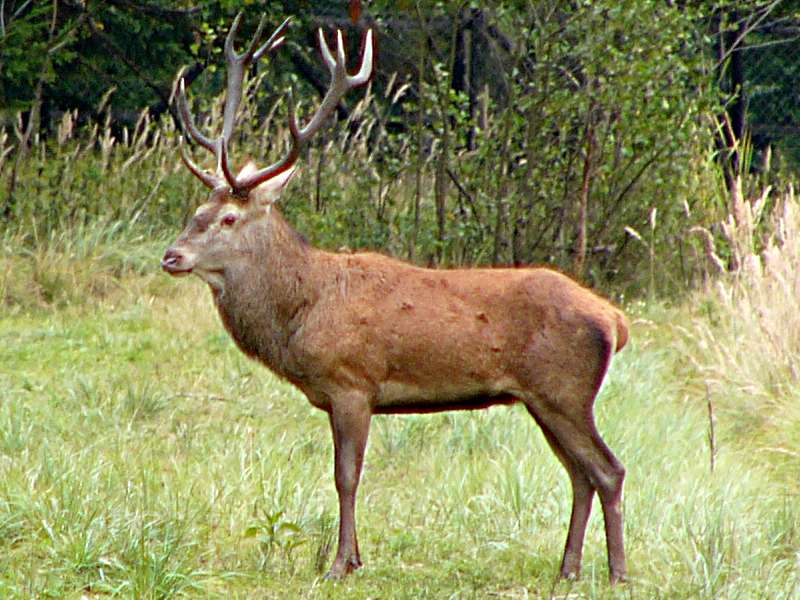
The Barbary Stag is the only deer truly native to Africa. It lives in the Atlas Mountains of North Africa — in parts of Morocco, Algeria, and Tunisia. If you visit mountainous forest slopes there, you might catch a glimpse of one. They are adapted to cool, rocky habitats with shrubs and pine or cedar forests. Their coat is tawny brown and becomes denser in winter. Males have antlers that branch widely. Their face is gentle and their body build is lean but sturdy — good for climbing mountain slopes and moving over rough terrain.
Barbary Stags live in small groups or sometimes alone. They feed on leaves, shrubs, grasses, even pine needles when food is scarce. Because the area is mountainous, food may be limited — but these deer manage by browsing over wide terrain. They are more active at dawn and dusk, avoiding midday heat. Their alert ears and light steps help them spot danger early. When threatened, they stay silent until the last moment; their escape is often a quick sprint uphill or into thick forest where predators find it hard to follow.
These deer are shy but curious. If you try to follow their tracks you may see hoofprints in soil or on rocky paths, often near streams or shaded hollows where they rest. In winter, you may spot antler sheds. Their antlers help you confirm their presence. The Barbary Stag is a symbol of resilience: an animal surviving on the edge of desert and mountain, bridging Africa’s wild beauty with the deer world often thought foreign to the continent.
2. Red Deer (Cervus elaphus)

Red Deer are not originally African — they come from Europe and parts of Asia — but you can now find them in some fenced estates, farms, and private game reserves in South Africa and Namibia. While they are not wild in the native sense, their presence influences what “deer in Africa” may mean for some. Adult stags weigh between 350–500 pounds, with tall bodies and elegant legs. Their fur shifts with season — reddish-brown in warmer months, duller grey in colder months. Males grow large branching antlers each year.
Because they live in managed spaces, Red Deer in Africa adapt to local conditions by feeding on grasses, shrubs, and browse available in reserves. Their behavior is calmer than deer in wild settings, but they still follow natural rhythms. During rut season, males call to cows and often spar with rivals — but inside fenced habitats, they avoid predators and harsh climates more easily. Many reserves try to replicate natural forest or valley terrain to keep them healthy.
If you ever visit a ranch or game reserve that houses Red Deer, you might notice their posture, antlers, and calm gait. Unlike native antelopes, their build and behavior remind you of European deer — making them a living bridge between continents. They help people appreciate deer species beyond Africa’s typical wildlife, and add variety to the deer-in-Africa story when properly noted as introduced species.
3. Fallow Deer (Dama dama)

Fallow Deer arrive from Europe and have small populations in private reserves and farms in South Africa. They are easy to spot because of their coat variations: common fallow deer have tan fur with spots, others may be almost white or dark. Adult deer stand about 3 feet at the shoulder and weigh around 100–200 pounds. Bucks grow wide, flattened antlers (palmate), which distinguish them clearly from native African antelopes or even from wild deer species.
These deer are social. On estates where they are kept, you’ll often see small herds grazing together over woodland clearings or open meadows. They feed on grass, leaves, and shrubs. Because they live in managed lands, food is often abundant; but fallow deer retain natural behaviors — they rest under trees during hot midday, move quietly at dusk, and stay alert to noise or sudden movement. Their compact size and cautious nature help them hide or run quickly when danger appears.
Fallow Deer in Africa may satisfy curiosity about European deer types without leaving the continent. They add another layer to the “deer in Africa” concept — though it’s important to remember they are not native. Their presence reflects human influence, wildlife trade, and attempts to offer variety on game lands. For wildlife watchers, recognizing them helps understand how non-native species fit into African wildlife landscapes.
4. Sika Deer (Cervus nippon)
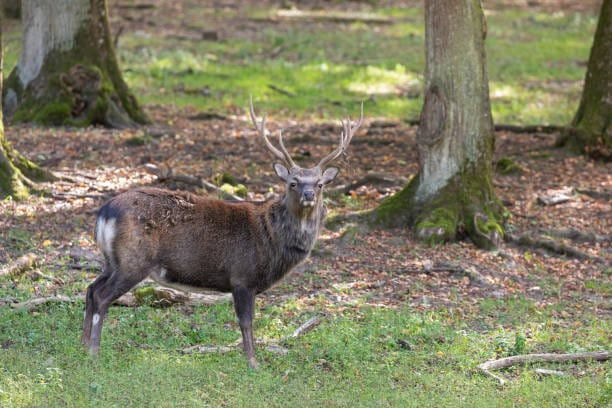
Sika Deer are another non-native species found in a few private game farms in South Africa. Originating from East Asia, they are smaller than red or fallow deer, standing around 2.5–3 feet at the shoulder with a compact, agile build. Their coat is dark brown with faint white spots that stay visible year-round, giving them a distinct look even when blending into shrubs or wooded areas. Stags grow antlers with a simple but sharp branching structure.
Because they live in controlled environments, Sika Deer adapt easily to African climates. They graze and browse on grasses, shoots, and leaves, often moving quietly through shaded terrain. Their behavior can be surprisingly bold — males sometimes vocalize loudly during rut season, producing high-pitched whistles that echo through the trees. This separates them from most African antelopes, whose calls are much softer.
Sika Deer remain more elusive than fallow or red deer, but when you spot one, their alert eyes, rapid movement, and unique coloration make them instantly recognizable. Like other introduced deer, they broaden the “deer in Africa” category while still remaining distinct from the true native wildlife.
5. Bushbuck (Tragelaphus scriptus)
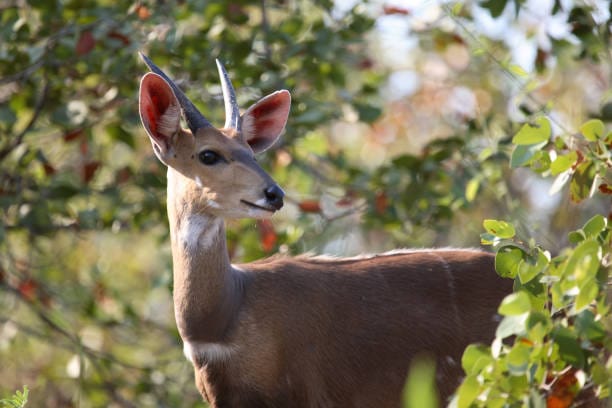
The Bushbuck is one of Africa’s most widespread forest-dwelling antelope species and is often included in deer-type lists because of its size, behavior, and spotted coat. These animals are medium-sized, with males standing up to 3 feet tall and displaying dark chestnut to chocolate coloring. Females are lighter with more pronounced white spots and striping. Males carry short, spiraled horns instead of antlers.
Bushbuck prefer dense vegetation along riverbanks, forests, and bushlands. They are shy and usually solitary, choosing to move under thick cover rather than across open plains. Their diet consists mostly of leaves, fruits, and shrubs. Because they move quietly and freeze quickly when disturbed, they can be surprisingly hard to detect despite living close to human settlements in some regions.
Their adaptability, wide distribution, and deer-like appearance make Bushbuck one of the most recognized “deer-type” animals in Africa. They stand as an important part of woodland ecosystems and an iconic species for anyone exploring Africa’s forest environments.
6. Greater Kudu (Tragelaphus strepsiceros)
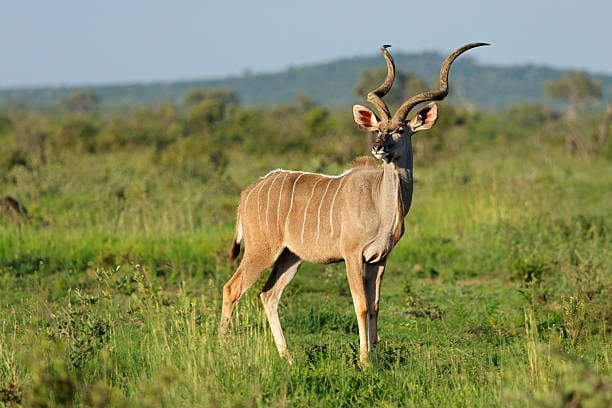
Greater Kudu are among Africa’s most majestic and recognizable antelopes, often compared to deer because of their size, grace, and striking markings. Adult males stand nearly 5 feet at the shoulder and carry long, spiraling horns that can reach over 5 feet in length. Their coats are grey-brown with distinct white stripes running vertically along the body, giving them an elegant appearance.
These animals inhabit savannas, bushlands, and lightly wooded areas across eastern and southern Africa. Kudus browse for leaves, fruits, and shoots, often standing on hind legs to reach higher branches. Despite their large size, they move quietly and are known for their powerful leaps — sometimes clearing obstacles over 2 meters high.
The Greater Kudu is an icon of African wildlife. Its beauty, calm behavior, and impressive horns make it one of the closest antelope equivalents to “large deer” found on other continents. Their presence enriches the landscape and offers unforgettable sightings for wildlife enthusiasts.
7. Lesser Kudu (Tragelaphus imberbis)
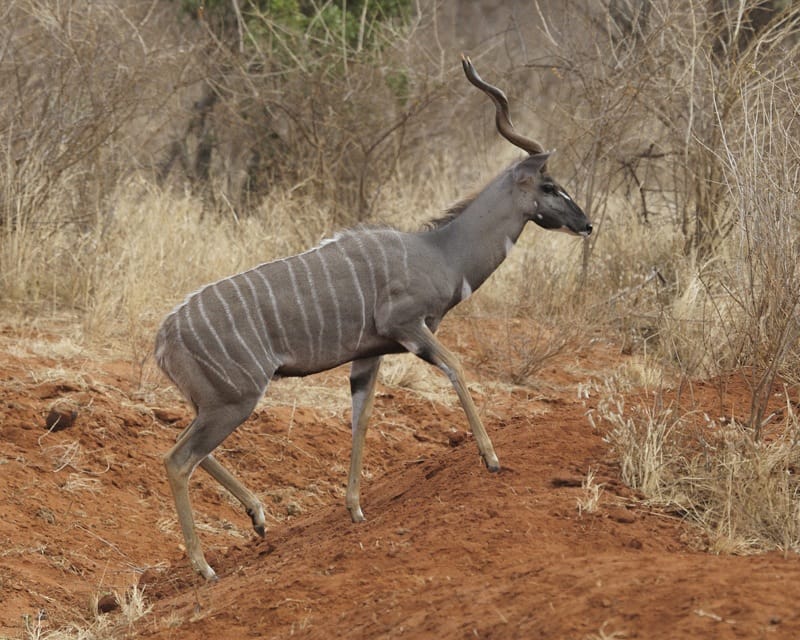
The Lesser Kudu is a smaller, more delicate relative of the Greater Kudu, found mainly in the dry bushlands of East Africa. Males have tightly spiraled horns, while females lack horns entirely. Their coat is a vibrant reddish-brown with bright white stripes — more vivid than those of the Greater Kudu.
Lesser Kudu are shy, elusive, and mostly nocturnal. They hide in dense brush during the day, emerging at dusk to browse on leaves and twigs. Their agility is impressive — they can sprint quickly, zigzag through bush cover, and leap over barriers with ease. Their alert senses help them avoid predators like leopards and hyenas.
Because of their elegant body shape, striped coat, and woodland lifestyle, they are often regarded as one of Africa’s most “deer-like” antelopes. Spotting a Lesser Kudu is always a special moment due to their secretive nature.
8. Nyala (Tragelaphus angasii)
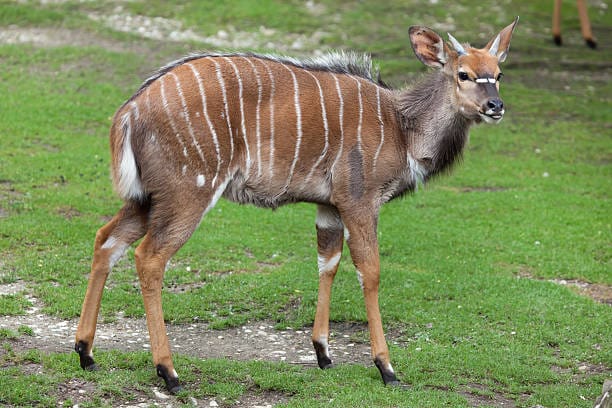
Nyala are medium-sized antelopes found in South Africa, Mozambique, Zimbabwe, and Malawi. Males are dark brown with white stripes, a shaggy mane, and elegant spiraled horns. Females, by contrast, are bright reddish-orange and lack horns, making them easy to distinguish. This sexual dimorphism (large differences between males and females) is one of the strongest among African antelopes.
They live near rivers, woodlands, and thickets where food and cover are abundant. Nyala browse on foliage, fruits, and shoots. Their movements are slow, careful, and deliberate — much like deer navigating dense woodland. They prefer staying close to water sources and are often seen stepping quietly through shaded areas.
Nyala are considered one of Africa’s most beautiful antelope species, with a mix of elegance, calm behavior, and deer-like body shape. Their striking appearance makes them a favorite among wildlife photographers and safari travelers alike.
9. Impala (Aepyceros melampus)

Impala are one of the most familiar antelope species in Africa, often grouped with deer because of their elegant bodies, expressive faces, and quiet movements. They live across eastern and southern Africa, thriving in grasslands, acacia woodlands, and savanna edges. Their reddish-tan coat blends well with dry vegetation, while the white belly and contrast markings give them a clean, refined look. Males grow lyre-shaped horns that curve outward and then inward, creating a smooth, flowing shape. Females lack horns and tend to gather in large herds with their young.
Impalas balance between browsing and grazing depending on the season. In the rainy months, they shift to grasses, taking advantage of fresh growth. During drier periods, they feed on shrubs, leaves, and fruits. This flexible diet helps them remain widespread even when food becomes scarce. Their speed and agility are well known. They can run fast, leap over bushes in a flash, and change direction so quickly that predators often misjudge their path.
One of the most interesting parts of Impala behavior is the way males display during rut. Their loud snorts echo across valleys, and their mock fights can go on for hours, with horns clashing again and again. Despite their delicate appearance, males are strong and persistent when competing for mates. And if you’ve ever seen an entire herd spring into the air at once, it’s easy to understand why many people compare Impala to deer in Africa. Their grace, alertness, and group behavior are unmistakably deer-like, even though they’re more closely related to antelopes.
10. Springbok (Antidorcas marsupialis)
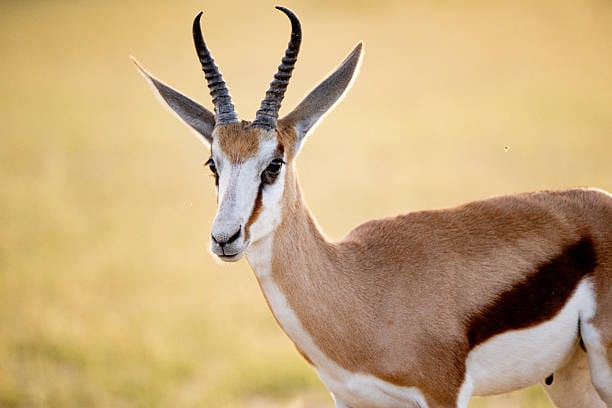
The Springbok is a national symbol in South Africa and one of the most recognizable “deer-type” antelopes on the continent. Their size, agility, and patterned coat make them look almost like a mix between a gazelle and a small deer. Their tan-and-white coloring, combined with a dark side stripe, gives them a clean, striking appearance in open plains. Both males and females can grow modest horns with gentle curves and ridges.
Springbok live mostly in dry grasslands and semi-desert regions where water is limited. They have a special adaptation: they can survive long stretches without drinking, getting most of their moisture from vegetation. Their name comes from “pronking,” a behavior where the Springbok leaps straight up into the air with stiff legs, often several times in a row. It’s one of the most energetic displays in African wildlife. They do it when excited, alarmed, or during mating season. Watching a whole herd pronk together feels almost unreal — like a wave bouncing across the horizon.
Their diet consists of grasses, shrubs, and succulent plants. Because they live in harsh environments, they roam widely, following patches of good grazing. Their swift movements and sharp senses help them avoid predators such as cheetahs and wild dogs. Many safari travelers describe Springbok as “the closest thing to a desert deer,” mainly because of their clean build, expressive face, and calm herding behavior. They’re a perfect example of how different African ungulates can resemble deer in appearance and movement.
11. Thomson’s Gazelle (Eudorcas thomsonii)
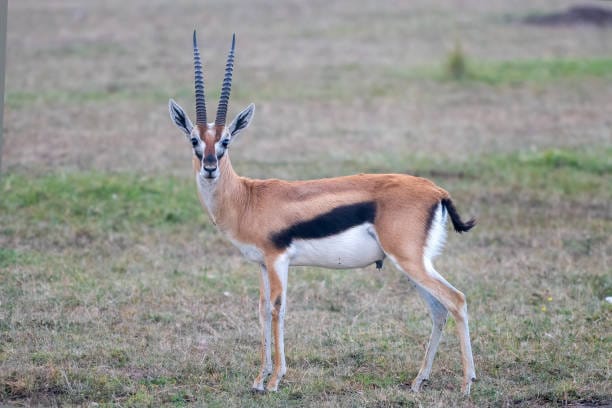
Thomson’s Gazelles, often called “Tommies,” are small, quick, and full of energy. Their light build, thin legs, and delicate faces give them a deer-like look, especially when seen from a distance on the savanna. Their coat is warm tan on top with a bold black stripe and clean white underside. Both males and females usually have slender horns that curve slightly backward.
They live across East Africa’s open grasslands, especially in regions shared with massive migrations of wildebeest and zebra. Tommies are highly alert animals. They twitch, glance, and reposition constantly, as if always expecting something to happen — which fits, considering they share space with many predators. Their speed is impressive. They can sprint quickly, but what sets them apart is their ability to maintain direction control, weaving and shifting when avoiding danger.
Thomson’s Gazelles graze on short grasses and pick through fresh shoots left behind after larger animals trample the ground. Their small size makes them easy targets, yet they manage so well because of their sharp awareness. Watching a group of Tommies grazing quietly feels peaceful, but when they take off running — or when they give that quick bounce known as “stotting” — you’re reminded of how finely tuned they are for survival.
12. Grant’s Gazelle (Nanger granti)

Grant’s Gazelles are larger and more robust than Thomson’s Gazelles, though they share many similar features. Their long legs, clean tan-and-white coat, and elegant posture give them a look that many people instinctively compare to deer. Males carry long horns that sweep upward in a wide arc, often thicker and more powerful-looking than those of related species. Females may have shorter horns or none at all, depending on the region.
Grant’s Gazelles occupy dry savannas, shrublands, and semi-arid plains across East Africa. They’re known for their independence. They can live far from water, sometimes using dry landscapes that other grazing animals avoid. This tolerance helps them maintain stable populations even during tough dry seasons. Their diet includes shrubs, herbs, and grasses, and they often browse more than graze compared to smaller gazelles.
During the dry season, males become territorial and defend open spaces where females feed. Their displays involve circling, posturing, and occasionally sparring. These interactions can look dramatic but rarely end in serious harm. What stands out most is their calm confidence. Grant’s Gazelles don’t waste energy. They walk with relaxed steps, pause often, and stand tall with clear awareness of their surroundings.
Their appearance, behavior, and wide habitat use make them one of the most deer-like antelopes in Africa’s eastern savannas.
13. Common Reedbuck (Redunca arundinum)
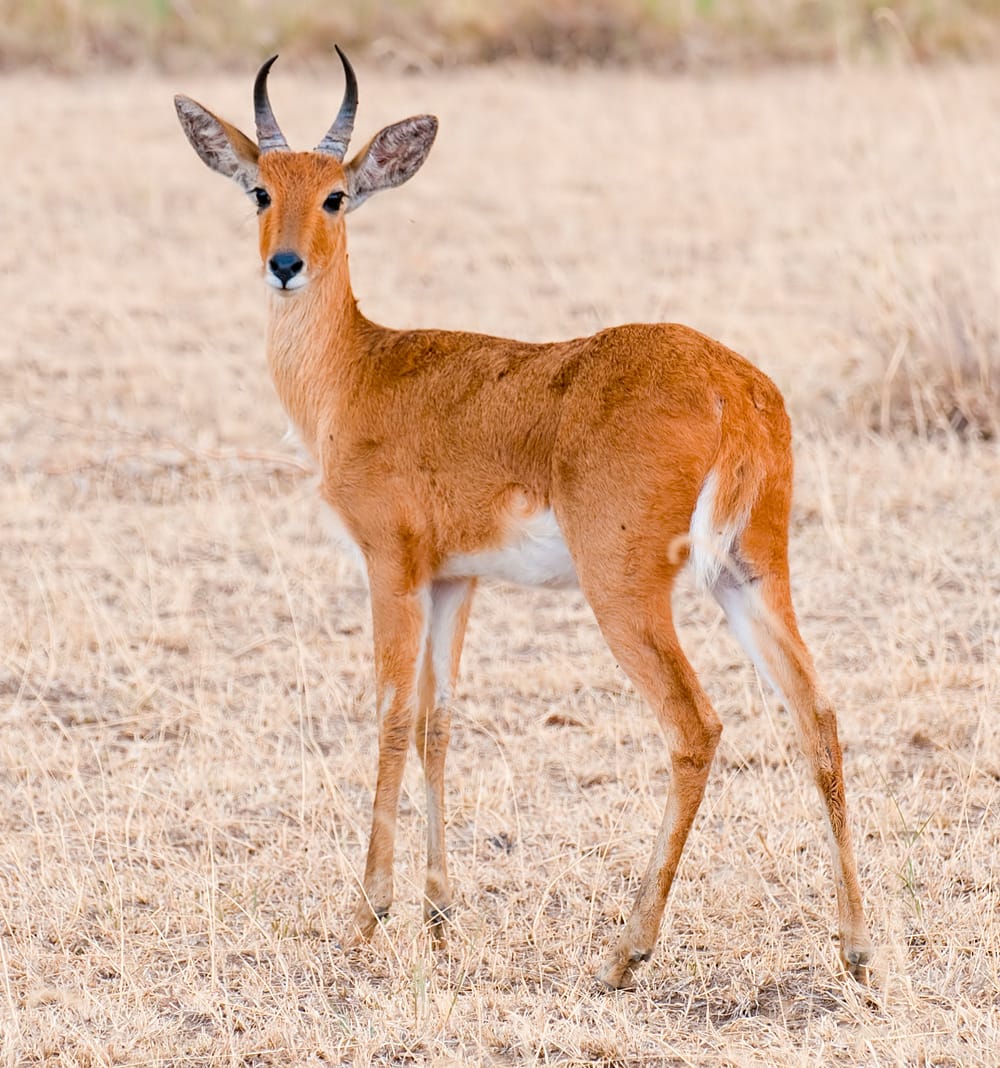
The Common Reedbuck is a medium-sized antelope that thrives near grasslands, marshes, and river edges. Their sandy or greyish coat blends perfectly with tall grass, and their white belly adds a soft contrast. Males grow forward-curving horns that kink slightly at the base. Females lack horns but share the same overall body shape, which many wildlife fans consider deer-like due to their round ears and soft expression.
Reedbuck are highly dependent on cover. They hide in tall vegetation during the day and come out to feed mainly at dusk or dawn. When startled, they give off a sharp whistle and run with a distinctive bounding rhythm. Their caution helps them survive in regions with lions, leopards, and hyenas.
They graze on grasses, especially near wet areas, and shift between feeding spots as vegetation changes. Their range spreads from southern to eastern Africa, where they shape grassland ecosystems by keeping growth in check. Many travelers compare Reedbuck to marsh-dwelling deer in other parts of the world because their behavior and habitat preferences line up so closely.
14. Mountain Reedbuck (Redunca fulvorufula)
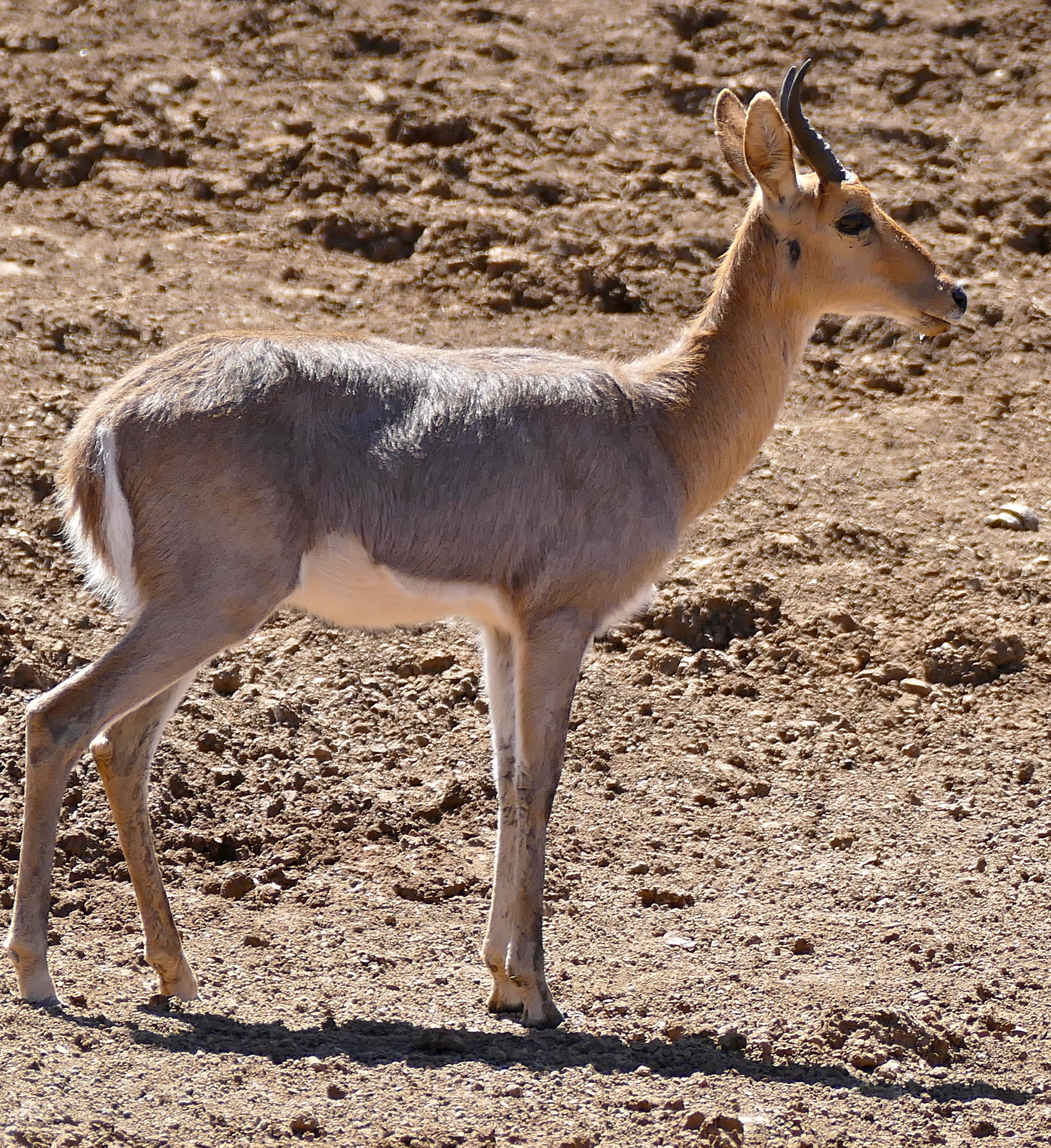
Mountain Reedbuck live in a completely different world from their lowland relatives. They inhabit rocky slopes, high-altitude grasslands, and rugged foothills across southern and eastern Africa. Their coats are lighter grey and slightly fluffier, giving them insulation against cooler conditions. Males grow short, forward-curving horns, while females remain hornless.
Because they live in steep, open terrain, Mountain Reedbuck rely on sharp eyes and quick movements. They can dash up or down slopes with ease, and they often keep a good distance from danger by staying high and watching everything below. Their diet consists of grasses, herbs, and other plants spaced between rocks.
Their alert posture and gentle facial features give them that unmistakable deer-type silhouette. Even though they’re antelopes, they fill the same ecological role that mountain deer might fill elsewhere: grazing on tough highland grasses and shaping plant growth in elevated landscapes.
15. Waterbuck (Kobus ellipsiprymnus)
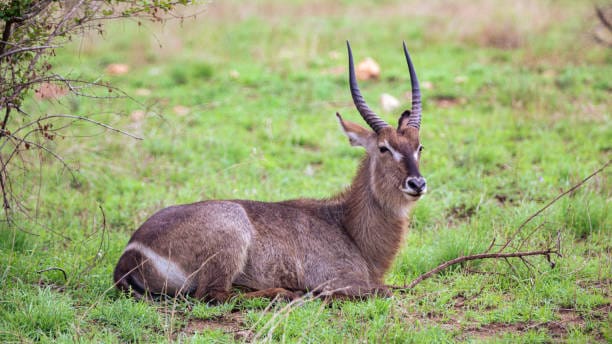
Waterbuck are sturdy, strong-bodied antelopes found near rivers, lakes, and wetlands. Their shaggy brown coat is thicker than that of most other African grazers, and males grow long, ridged horns that curve backward and outward. One of their most recognizable features is the white ring on their rump, an easy field mark for identification.
They depend heavily on moist habitats because their skin produces a musky oil that helps repel water. You’ll often see Waterbuck resting near water sources, grazing on lush grasses, or cooling off in the heat. Their movements are balanced and deliberate, giving them a deer-like presence even though they are heavier and more muscular.
Waterbuck are highly social. Females gather in loose groups, while males establish territories near good grazing or water access. Their deep calls echo across wetlands at dusk. And when a predator approaches, Waterbuck often run straight into deep water — a trick that allows them to avoid lions but not always the faster crocodiles.
16. Sitatunga (Tragelaphus spekii)
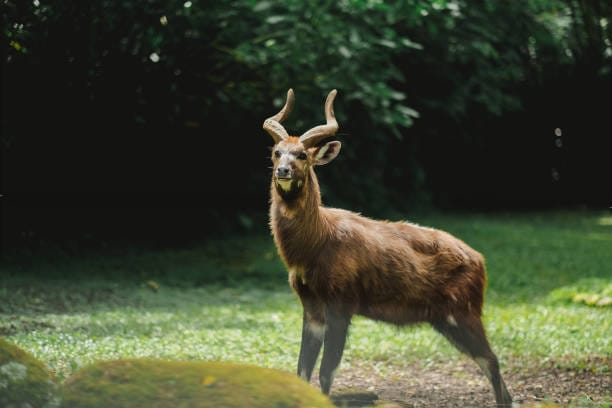
The Sitatunga is Africa’s most specialized swamp antelope, so well adapted to marshes that its hooves are long and splayed to keep it from sinking into mud. Their shaggy coat, soft brown tones, and faint striping make them look like a cross between a forest deer and a wetland specialist. Males are darker with spiraled horns, while females are smaller and reddish.
Sitatunga live in reedbeds, papyrus swamps, and flooded forests. They often hide so well that you might only see ripples or a pair of ears sticking out above vegetation. Their slow, careful steps through water make them feel almost ghostlike. When threatened, they slip quietly into deep water and swim with surprising skill.
Because of their wetland lifestyle, their diet includes reeds, aquatic plants, leaves, and shoots. They are one of Africa’s most elusive antelopes and easily one of the most deer-like in behavior. Their whole life revolves around quiet movement, hidden pathways, and feeding in shaded water edges.
17. Bongo (Tragelaphus eurycerus)
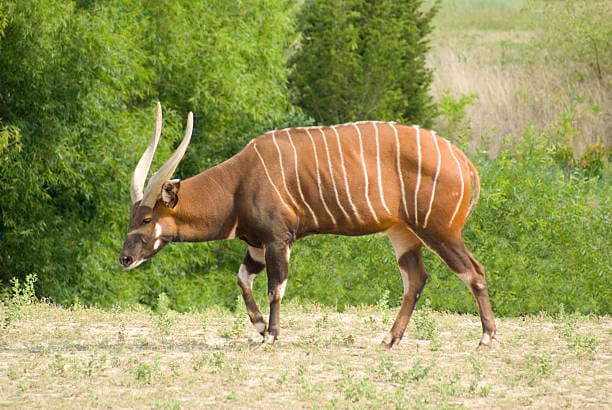
The Bongo is one of the most visually striking antelopes on Earth. With its bright orange coat, bold white stripes, and long spiraled horns, it looks almost too colorful to be real. Males and females both grow horns, and their large size makes them among Africa’s heaviest forest antelopes. Bongos live in West and Central African rainforests, moving through dense foliage with surprising ease.
They feed on leaves, fruits, young shoots, and shrubs, using their long tongues to strip plants from branches. Despite their size, they move quietly and often freeze when disturbed. Their ears rotate constantly, listening for activity in the forest. Many people compare Bongos to large tropical deer because of their markings, gentle nature, and forest-dwelling habits.
Seeing a Bongo in the wild is rare and often unforgettable. They prefer low-traffic areas far from humans and stick to shadow-filled trails. Their presence adds a sense of mystery to the deep African forests.
18. Common Eland (Taurotragus oryx)
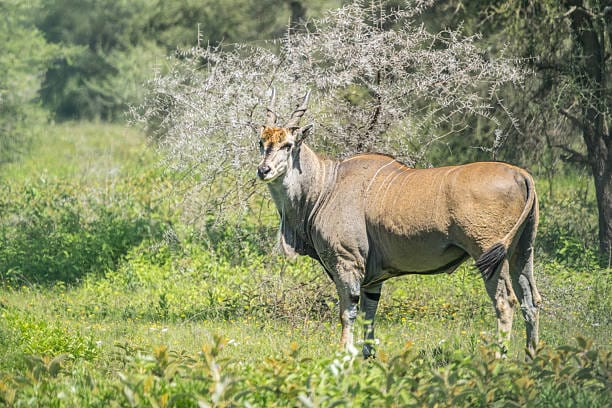
Common Eland are the largest antelopes in Africa, sometimes weighing more than a buffalo. Their size, quiet temperament, and subtle markings make them resemble giant forest deer. Both sexes have straight, spiraled horns, and their coat ranges from sandy tan to bluish-grey. Younger animals have pale stripes along their sides.
Eland live in grasslands, savannas, and open woodlands. They browse on leaves, herbs, and fruits, but they can also graze when needed. Even though they’re huge, they move softly and can jump nearly two meters from a standing position — a surprising sight if you’ve never witnessed it.
Eland travel in loose, shifting herds. Their clicking leg joints produce a unique sound when they walk, almost like two stones tapping together. Biologists believe this sound helps them keep track of each other. Their calm, almost gentle movements give them a deer-like presence despite their immense size.
19. Roan Antelope (Hippotragus equinus)
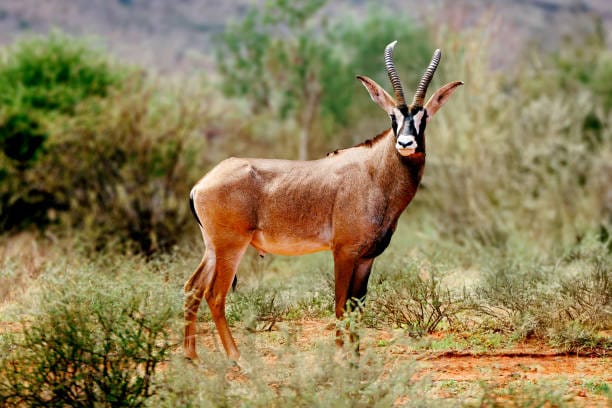
Roan Antelope are large, powerful animals with a mix of horse-like and deer-like traits. Their reddish-brown coat, black-and-white facial mask, and long, curved horns give them a strong, confident look. They live in savannas and lightly wooded grasslands across West, Central, and southern Africa.
Roan feed mostly on grasses and prefer areas with scattered shade. Their herds usually consist of one dominant male, several females, and their offspring. While they appear calm, they’re capable fighters and will confront predators when cornered.
Their upright stance, alert expression, and long horns often remind visitors of large deer from other continents. They represent the more powerful end of Africa’s deer-type antelope spectrum.
20. Sable Antelope (A Closer Look at a Majestic African Species)
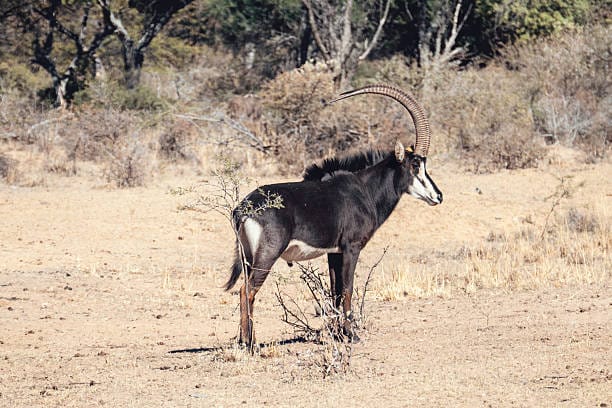
The sable antelope is one of the most eye-catching hoofed animals in Africa. Many travelers remember their first encounter with this species because it carries itself with a mix of strength and calm confidence. Even from a distance, the long curved horns look almost unreal, like something carved for decoration. But this animal is very much alive, and it plays an important role in many savanna ecosystems. When you study African wildlife, the sable antelope often becomes one of the animals you keep coming back to, simply because there’s a lot to talk about.
One of the easiest ways to recognize a sable is the deep, dark coat on adult males. The color makes them stand out in a landscape where many animals rely on sandy brown coats to blend in. Females and young males look lighter, usually chestnut or reddish. That color difference helps people spot them even without binoculars. And then there are the horns. They stretch backward in a sweeping curve, and the longest ones can reach more than a meter. Both males and females have horns, which is uncommon among antelope.
In the wild, sable antelopes prefer areas where grasslands and light woodlands meet. They like having enough cover to hide their calves but also clear patches where they can graze. These habitats also guide how their herds form. A typical herd has females, calves, and one adult male that spends a lot of time on alert. If another male approaches too close, the dominant one will make his opinion clear. Their fights look dramatic, but most of the time these animals settle disputes through posture rather than actual force.
Sables rely heavily on specific grasses. They avoid rough, dry patches and pick plants that are easier to chew and digest. When the grass becomes too tough during the dry season, they move into shaded places where young shoots still grow. Water is another important part of their routine. A herd may walk long distances to reach a good water source, especially in very hot months. In these moments, you can see the strength of the species: even young calves manage to keep up.
Calving usually happens during or just after the rainy season. The mother hides her newborn for a few weeks, allowing the calf to grow strong before joining the herd. This secretive approach means predators rarely get a chance to spot them early. As the calf grows, it picks up skills from older individuals. You often see an entire herd walking with the same sense of rhythm, almost like a group that has practiced together for years.
Unfortunately, sable antelopes face threats across many parts of their range. Habitat loss is the biggest challenge, especially where woodlands are converted into farmland. Bushmeat hunting also causes problems for some populations. Still, several protected areas support healthy herds. Visitors who explore these parks often list the sable as one of their favorite sightings.
When talking about types of deer in Africa, the sable antelope always enters the conversation, even though it is technically an antelope and not a true deer. People group them together because of their similar roles in the ecosystem, body shape, and horn structures. Understanding the sable gives you a better picture of how African hooved mammals survive in challenging environments. Whether you look at them from an ecological or visual standpoint, they remain one of the most striking animals on the continent.
21. Steenbok (Small but Surprisingly Tough)
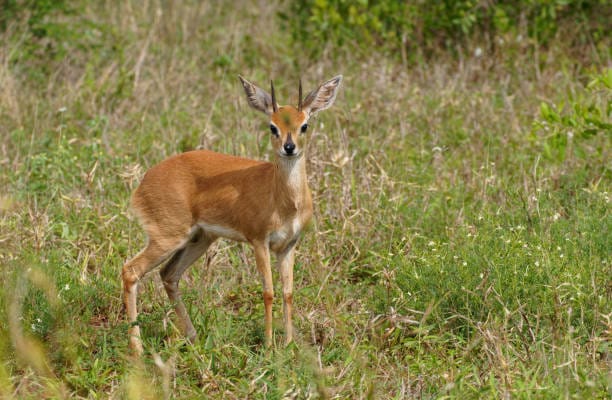
The steenbok may be one of the smallest antelope species in Africa, but it has a personality and survival strategy that earns respect quickly. Anyone who spends time in the bush knows how quick this little antelope is. One moment you see it standing still, almost too delicate for the harsh landscape, and the next moment it vanishes into the tall grass as if it slipped through an invisible doorway. This ability makes people curious, and the more you learn about it, the more impressive the steenbok becomes.
The steenbok stands only about half a meter at the shoulder, which is tiny compared to giant species like the eland or kudu. Its body shape is slim, with long legs and a narrow face. The reddish coat blends perfectly with dry grass, giving it natural camouflage. Males have short, straight horns, while females do not. But even without horns, the females are no less alert. Both sexes rely on speed and stealth to avoid danger.
Unlike many African antelope, steenboks do not form large herds. They usually live as solitary animals or as pairs in a shared territory. This lifestyle reduces competition for food and lowers the chances of attracting predators. You might expect a loner species to face more risk, but the opposite is true here. Their small size, excellent hearing, and quick reaction time make them incredibly hard to catch.
Steenboks eat a mix of leaves, berries, flowers, and seeds. They also have a clever trick that helps them survive dry conditions: they get most of their water from the plants they eat. This means they don’t need to visit open water regularly, which protects them from predators that wait near waterholes. Their diet even includes roots, which they dig up with their hooves. Seeing a steenbok sniff the ground and suddenly pull up a root is a fun moment for many wildlife photographers.
The breeding cycle is flexible, allowing them to give birth at various times of the year. A female hides her newborn in dense vegetation for the first weeks. The mother returns only for feeding, keeping interactions quick to avoid drawing attention. Young steenboks learn early how to sit perfectly still until danger passes. This instinct saves many of them in areas with heavy predator presence.
Predators that target steenboks include jackals, caracals, leopards, and even eagles. But despite their small size, steenboks show an impressive ability to survive. Many people who observe wildlife long enough end up gaining a soft spot for them. Perhaps it’s the contrast between their fragile appearance and their strong survival instincts.
In discussions about deer in Africa, the steenbok often appears because travelers think of deer as small, light-footed animals that live in grasslands. While this antelope is not a true deer, it fits the same mental image for many people. Its behavior and size reflect how wildlife adapts to dry environments where speed and silence matter more than sheer strength. If you ever spot a steenbok during a safari, count yourself lucky—they can be surprisingly hard to find twice in the same spot.
22. Oribi (Graceful, Gentle, and Often Overlooked)
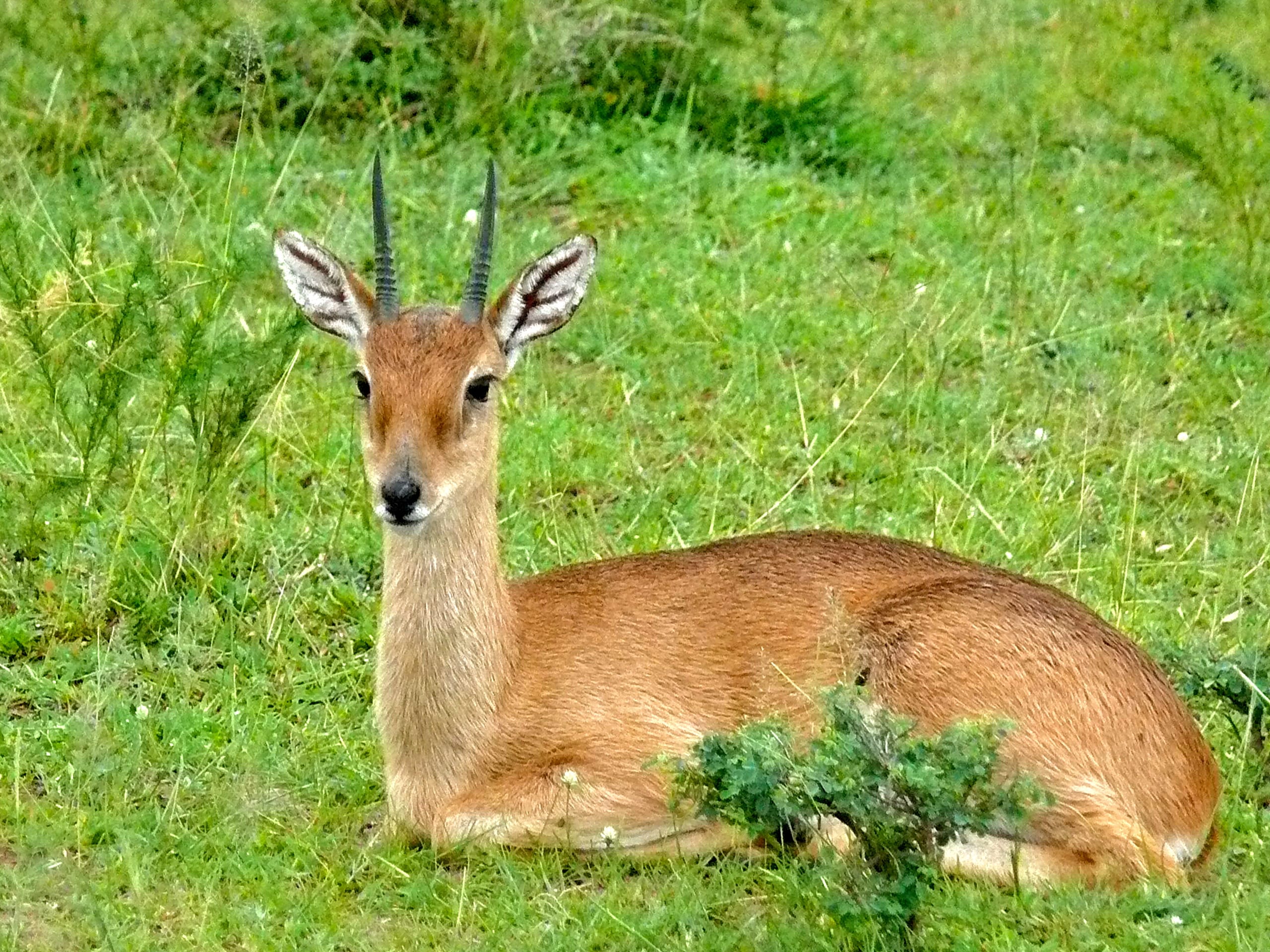
The oribi is one of those African antelope species that deserves more attention than it gets. People who visit famous parks sometimes focus on the larger animals and skip over the smaller ones. But once you take time to study the oribi, you see a creature that balances elegance with resilience in a way few species do. It’s a quiet presence in open grasslands, but that silence hides a story worth telling.
This small antelope stands around 50–66 cm at the shoulder. It has a slender body, long neck, and thin legs built for quick sprints. The reddish-brown coat, white belly, and expressive dark eyes give it a gentle look. Only males carry the short, straight horns. Females lack them, but they make up for it with exceptional awareness. You rarely catch an oribi off guard.
Oribis live in small groups, often a male with a few females. Their territories are well-defined, and the resident male watches over them with surprising commitment. If an intruding male wanders in, a tense standoff usually follows. These encounters rarely turn violent. They rely more on posture and movement to send a message. Their body language is subtle, but once you learn it, you can predict their next move fairly easily.
Feeding habits reflect the oribi’s preference for high-quality vegetation. They graze selectively, choosing tender grasses and leaving the coarse ones behind. This makes them sensitive to changes in grassland quality. Overgrazing by livestock often pushes them into smaller areas, where they compete with other small antelope. In healthy habitats, however, they thrive and show strong population stability.
One interesting trait is their “sentinel behavior.” In many groups, one member stands alert while the others feed. This lookout role shifts among group members. It’s like having someone watch the road while everyone else relaxes. When the sentinel detects danger, the oribi’s alarm call is sharp and carries across the grassland. After that, the group bolts away in a springy run that covers ground much faster than you might expect.
Females give birth to a single calf after a gestation of around seven months. The newborn hides for weeks, relying on its stillness to avoid detection. If a predator approaches, the mother uses distraction techniques—darting away or stamping lightly—to confuse the threat. This behavior shows the strong bond between mother and calf, even though the two spend little visible time together.
Oribis face threats such as habitat loss, bushmeat hunting, and competition with livestock. In some areas, populations remain strong, especially in protected reserves. But in unprotected regions, their numbers drop quickly. Conservation programs work to maintain grassland quality, which directly supports healthy oribi populations.
When people talk about types of deer in Africa, the oribi often slips into the conversation because of its size and behavior. It resembles small deer species from Asia or Europe, and this comparison helps newcomers recognize it. Even though it is an antelope, its gentle appearance and quiet nature give it a “deer-like” charm that many travelers remember for years.
23. Kirk’s Dik-dik (Types of Deer in Africa)
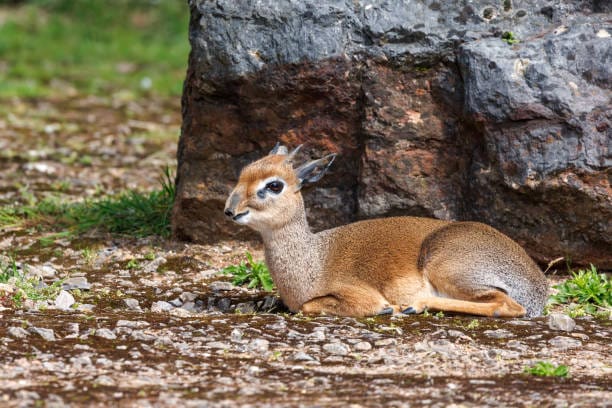
Kirk’s Dik-dik might be one of the smallest antelope in Africa, but size doesn’t slow it down. These tiny animals live across eastern Africa and look like something pulled straight from an illustrator’s sketchbook—huge eyes, a pointed snout, and skinny legs that somehow hold everything together. People often compare them to miniature deer because of their graceful posture, fast reactions, and soft, sandy coats. When you watch one standing alert in tall grass, it’s easy to see why many travelers think they’ve spotted a young deer rather than an antelope.
Even though they weigh as little as a house cat, Kirk’s Dik-dik holds its own in the African savannas. They stick to thick shrubs where they can slip away quickly. The elongated snout isn’t just for looks—it helps them regulate heat and conserve water. It works almost like a built-in cooling device. In hot climates, that little nose makes a big difference.
Their behavior is just as interesting. Most antelope travel in groups, but Dik-diks prefer the quiet life. They form lifelong pairs and defend tiny territories that they patrol daily. Picture a married couple who love gardening and don’t like uninvited guests—that’s basically a Dik-dik pair. They even lay down their droppings in tidy piles as boundary markers. That seems strange to us, but in the bush it’s a pretty clear message.
Food-wise, they are picky eaters. They browse leaves, shoots, and fruits and rarely drink from waterholes. Their diet provides enough moisture, helping them stay out of trouble. Less time at a water source means fewer chances of crossing paths with big predators.
Spotting them in the wild isn’t easy. They freeze, then bolt in a zigzag pattern at impressive speed. Their name “dik-dik” even comes from the alarm sound they make when startled. If you ever hear a tiny whistle followed by a blur moving through the bushes, you probably just missed your chance to see one up close.
As far as deer-like animals go in Africa, Kirk’s Dik-dik stands out for its small build, charming personality, and clever survival strategy. Whether you’re traveling through Tanzania or Kenya, the moment you see one quietly stepping through brush, you’ll understand why wildlife fans love them so much.
24. Blue Duiker
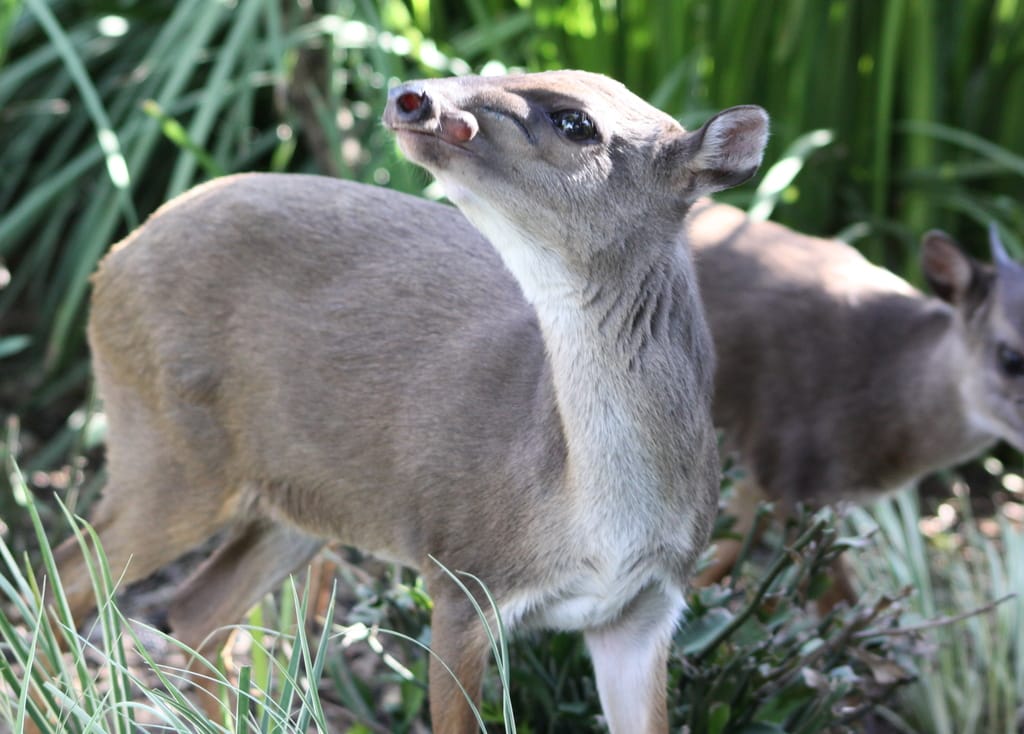
The Blue Duiker is another small antelope that often gets mislabeled as a “mini deer” because of its compact body, shy movements, and soft expression. But unlike many of the open-grassland species, Blue Duikers prefer deep forests. They occupy rainforests from Central Africa down into parts of southern Africa, moving through thick vegetation like shadows. Their blue-gray coat gives them their name and helps them disappear into dark understory layers.
If you’re used to seeing large antelope, the Blue Duiker can catch you off guard. Most adults stand barely 14 inches tall. You could set one next to a medium-sized dog, and it might still look smaller. Yet despite their size, they play a vital role in forest ecosystems. They help disperse seeds by feeding on fruits, fallen leaves, mushrooms, and even insects when food is scarce.
Their behavior shows how smart they are about survival. They use narrow trails and move carefully, listening for danger. When startled, they sprint in quick bursts, then vanish into foliage. You’ll rarely see more than a flash of movement unless you’re quiet and patient.
Blue Duikers communicate in soft grunts and whistles and live in monogamous pairs. Much like Kirk’s Dik-dik, they defend a small territory, though they rely more on scent marking. Every inch of their space matters to them, and they patrol it with surprising confidence for an animal their size.
Watching them feed is surprisingly calming. They lower their heads, sniff the forest floor, and pick up fruits left behind by monkeys or birds. Without them, many seeds wouldn’t spread as far, which would change how the forest grows. So even though they may seem tiny and quiet, their contribution is huge.
The Blue Duiker is easy to love—gentle, cautious, and beautifully adapted to its home. Of all the deer-like species across Africa, this one brings a different atmosphere: peaceful, quiet, and tied closely to forest life.
25. Red Hartebeest
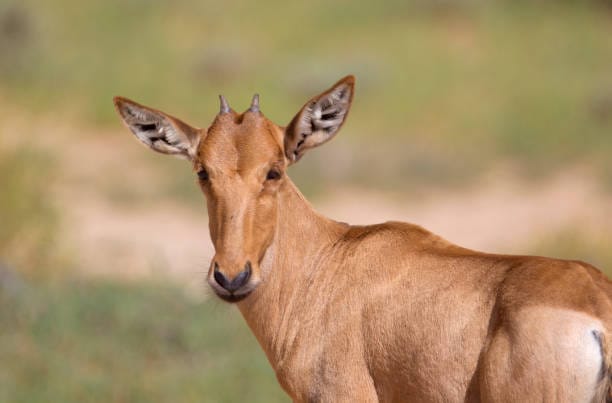
Compared to the first two species in this section, the Red Hartebeest feels like a complete contrast. If Kirk’s Dik-dik is the “cute neighbor kid,” and the Blue Duiker is the quiet bookworm, the Red Hartebeest is the athlete who always wins track events. This antelope is one of Africa’s fastest long-distance runners and one of the species people often confuse with deer because of the tall posture, long legs, and sleek body.
You’ll find them in open savannas and semi-arid plains from Namibia to South Africa. They thrive in places where visibility is high and danger can be spotted from far away. Their reddish-brown coat shines under the sun, and the darker face markings give them a sharp, alert expression.
One of their most recognizable features is their horns. Both males and females carry them, and the shape can look almost artistic—curving in a narrow “S” pattern. These horns aren’t just for decoration; they help defend the herd and settle disputes among adults. Even so, Red Hartebeest are usually calm animals that prefer running to fighting.
Speaking of running, they can reach speeds close to 45 mph and maintain pace far longer than most predators expect. They’re built for efficiency. Their long faces allow more nasal airflow, which cools them and improves stamina. Their strong legs allow them to leap, turn, and sprint with ease. Outrunning danger is part of their daily life.
Red Hartebeest travel in medium-sized herds and often mix with zebras or wildebeest. More eyes mean better chances of spotting trouble. They’re also grazers, feeding on grasses and occasionally herbs. During dry seasons, they move to greener patches, but they can handle tough conditions if needed.
What makes the Red Hartebeest interesting to travelers is how visible they are. Unlike shy forest species, these antelope often stand in the open, watching you as you approach. They’ll keep their distance, but they don’t panic right away. They simply wait, judge the situation, then decide if you deserve a burst of speed.
The Red Hartebeest brings energy to any safari—tall, athletic, and confident. Even though they aren’t true deer, many people describe them as “African deer” because of the build and graceful stride. They’re a key species for open landscapes and one of the most striking antelope to photograph.
Conclusion
Africa’s deer-like antelopes are some of the most fascinating animals on the planet. Whether it’s the tiny Kirk’s Dik-dik darting through shrubs, the forest-dwelling Blue Duiker slipping between shadows, or the bold Red Hartebeest running across wide plains, each species offers a different look at how wildlife adapts to its home. These animals aren’t true deer, but many travelers use the term because their shape, movements, and gentle eyes remind them of the deer they know from other parts of the world.
What stands out most is how well each species fits its landscape. Some depend on thick forests, others lean on speed, and a few stay hidden in small family territories. Together, they show how broad and varied African wildlife really is. If you’re learning about types of deer in Africa, this group gives you a clear picture of how rich and surprising the continent’s ecosystems can be.
And if you plan to keep exploring wildlife topics, you’ll find that every species—big or small—has its own story that’s worth knowing. From here, you can look deeper into behavior, conservation, or even compare these antelope to true deer across the world. But for now, you’ve seen just how much variety Africa holds, and why people love studying these remarkable animals.
FAQ About Types of Deer in Africa
1. Are there true deer species native to Africa?
No. Africa does not have native true deer. Most species people call “African deer” are actually antelopes.
2. Why do people call antelopes “deer” in Africa?
Because their body shape, behavior, and face resemble deer from Europe, Asia, and North America.
3. What animals in Africa are closest to deer?
Species like bushbuck, kudu, nyala, and dik-dik are commonly compared to deer.
4. Are kudu considered deer?
No. Kudu are antelopes in the Bovidae family.
5. Are bushbuck dangerous?
They avoid people, but males can defend themselves if cornered.
6. Do any African “deer” grow antlers?
No. African antelopes grow horns, not antlers. Horns stay year-round.
7. Why doesn’t Africa have native deer?
Deer evolved in regions outside Africa. Antelopes filled similar roles on the continent.
8. What is the smallest deer-like animal in Africa?
The Blue Duiker or Kirk’s Dik-dik, depending on the region.
9. What is the largest “deer-like” species in Africa?
The Common Eland, which is the largest antelope on Earth.
10. Do African deer-like animals migrate?
Some do. Examples: springbok and certain gazelles follow seasonal food.
11. What do African antelopes eat?
Grass, leaves, shoots, herbs, and sometimes fruit depending on the species.
12. Are any African deer-like species endangered?
Yes. Bongo, Roan Antelope, and Sable Antelope face conservation threats.
13. Do African antelopes live in forests?
Yes. Species like Blue Duiker, Nyala, and Sitatunga prefer dense cover.
14. Which species live in open savannas?
Impala, hartebeest, springbok, and many gazelles.
15. Are African antelopes fast runners?
Many are. Gazelles and springbok are among the fastest animals in Africa.
16. Do both males and females grow horns?
It varies. In some species, both sexes grow horns; in others, only males.
17. How long do African antelopes live?
Most live 10–18 years in the wild depending on species and predators.
18. What predators hunt these animals?
Lions, leopards, hyenas, wild dogs, and cheetahs.
19. Do African “deer” form herds?
Some do. Gazelles, eland, and hartebeest form large groups, while dik-dik live in pairs.
20. Which African antelope jumps the highest?
Impala can leap over 3 meters high.
21. Are African antelopes active at night?
Some are partly nocturnal, especially those living in dense forests.
22. Which African antelopes are shy?
Bushbuck and sitatunga are known for skittish behavior.
23. Are Blue Duikers hard to spot?
Yes. They stay in forest cover and move fast through undergrowth.
24. What makes the Bongo special?
Its bright stripes and large size make it stand out among forest antelopes.
25. How big are Common Eland?
Adult males can weigh over 1,000 kg.
26. Do any African deer-like animals swim?
Yes. Sitatunga is an excellent swimmer, often hiding in wetlands.
27. How do dik-dik pairs live?
They form long-term monogamous pairs and protect small territories.
28. What do gazelles eat in dry seasons?
They browse shrubs and take moisture from plants.
29. Are hartebeest strong runners?
Yes. Their long legs and sloped bodies help them run long distances.
30. Do African antelopes use scent marking?
Many species use glands and urine to mark territory.
31. Are any “deer” species found in North Africa?
Some gazelles and antelope species live in northern regions and deserts.
32. Which antelopes have spiral horns?
Kudu, eland, and bongo are known for strong spiral horns.
33. Are antelope horns shed?
No. Horns stay for life and continue to grow.
34. Do African antelopes travel far for water?
Some do, especially species in arid environments.
35. Which species is easiest to see on safari?
Impala and springbok are commonly seen in many parks.
36. Which species are most elusive?
Forest species like bongo and sitatunga are harder to find.
37. What time of day are antelopes most active?
Many are active around sunrise and sunset.
38. Do antelopes communicate with sound?
Yes. They use grunts, barks, whistles, and snorts depending on species.
39. How do young antelopes avoid predators?
Some hide in grass; others stay close to the mother in herds.
40. Are African antelopes good climbers?
Most prefer flat or rolling ground, but species like klipspringer can climb rocky cliffs.
41. Why do some species have stripes?
Stripes help them blend into forest shadows.
42. Are any African “deer” fully domesticated?
No. None are considered truly domesticated, though some are farmed in limited areas.
43. Which species has the longest horns?
Kudu have some of the longest spiral horns among antelopes.
44. Are African antelopes good parents?
Most mothers are attentive and protective of their young.
45. What is the rarest African deer-like species?
The Lowland Bongo is one of the rarest.
Read more:
- 30 Types of Deer (Pictures and Identification)
- 15 Types of Deer in North America (Pictures And Identification)
- 12 Types of Deer in USA (Pictures And Identification)
- What Do Deer Eat? Complete Guide to Deer Diet, Foods, and Seasonal Feeding Habits
- 5 Types of Deer in Scotland (Pictures and Identification)
- 8 Types of Deer in UK (Pictures And Identification)
- 8 Types of Deer in Texas (Pictures and Identification)
- How to Hunt Deer from the Ground: Expert Tips for Successful Ground-Level Deer Hunting
- 8 Types of Deer in California (Pictures And Identification)
- 5 Types of Deer in Colorado: Species Identification with Pictures
- 5 Types of Deer in Illinois (Pictures And Identification)
- 5 Types of Deer in Oregon (Pictures and Identification)
- 5 Types of Deer in New Mexico (Pictures and Identification)
- 5 Types of Deer in Wisconsin (Pictures And Identification)
- 11 Moose Facts About the Majestic Herbivorous Giant
- 15 Types of Elk (Pictures And Identification)
- 5 Types of Deer in Montana (Pictures And Identification)