
Idaho is home to a fascinating array of wild rabbits, each with its own habits, habitats, and behaviors. Understanding the different types of wild rabbits in Idaho is helpful for wildlife enthusiasts, hikers, and nature observers. These rabbits vary from small, secretive species like the Pygmy Rabbit to larger, more visible jackrabbits that dominate open grasslands. This guide explores their physical characteristics, behavior, diet, and more, giving you the knowledge to identify and appreciate these creatures in their natural environment. By the end, you’ll have a clear idea of how these wild rabbits survive, thrive, and interact with their surroundings in Idaho.
1. Pygmy Rabbit
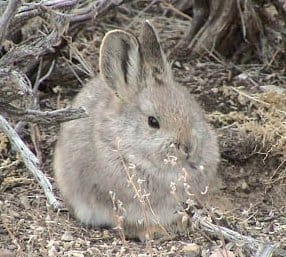
Physical Characteristics & Identification Tips
The Pygmy Rabbit (Sylvilagus idahoensis) is Idaho’s smallest rabbit species. Adults weigh less than a pound, with a compact body and short ears. Their fur is a soft, grayish-brown with a paler belly. They are easily mistaken for juvenile rabbits due to their size, but their small stature is permanent. The short tail blends with the body color, unlike the bright white tails of cottontails. One identifying feature is their small feet, which are adapted for digging shallow burrows and moving quietly through dense sagebrush.
Behavior
Pygmy Rabbits are shy and secretive. They spend most of their time in sagebrush habitats, rarely venturing into open areas. They are crepuscular, active at dawn and dusk, and primarily rely on hiding to avoid predators rather than running. Their movements are quiet and deliberate, often involving slow hops along the base of shrubs. Thumping hind legs is a warning to nearby rabbits. Observers may need patience to spot one, as these rabbits are masters at blending into their environment.
Habitat and Range
In Idaho, Pygmy Rabbits are found in dense sagebrush areas across southern and central regions. They prefer habitats with loose soil for digging burrows and plenty of shrub cover for protection. Unlike other rabbits, they are closely associated with sagebrush ecosystems and rarely occupy grasslands or open forest areas.
Diet
They feed primarily on sagebrush leaves, stems, and shoots. In winter, when fresh vegetation is scarce, they rely on woody parts of the shrubs. Their diet is highly specialized, which ties them closely to sagebrush availability. Pygmy Rabbits get most of their hydration from the plants they eat.
Reproduction and Life Cycle
Breeding occurs from late winter to early spring. Females may produce one to two litters per season, usually with 2–6 kits. The young are born in underground burrows, blind and hairless, and remain hidden for several weeks. Pygmy Rabbits mature quickly and are capable of independent survival within a month. Their lifespan averages 1–3 years, heavily influenced by predation and habitat conditions.
Fun Facts / Traits
- Smallest rabbit species in North America.
- Excellent diggers, creating burrows under sagebrush for shelter.
- Highly secretive, making sightings rare.
Human Interaction
They are rarely seen outside protected habitats. Habitat destruction and predation by domestic cats and dogs are primary threats. Conservation efforts in Idaho focus on preserving sagebrush ecosystems to sustain populations.
2. Mountain Cottontail
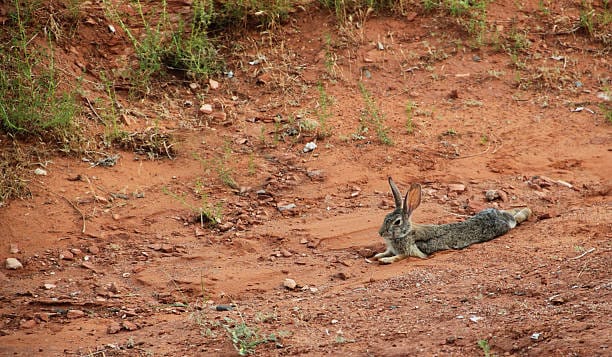
Physical Characteristics & Identification Tips
The Mountain Cottontail (Sylvilagus nuttallii) is larger than the Pygmy Rabbit, weighing 2–4 pounds. Its fur is brown-gray with a lighter underside, and it has a prominent white tail. Its ears are moderately long, aiding in predator detection. Mountain Cottontails have a robust body with strong hind legs, allowing short bursts of speed. They are commonly mistaken for Desert Cottontails but can be distinguished by their slightly darker fur and preference for higher elevations.
Behavior
These rabbits are crepuscular and tend to stay near brush, rocks, and logs. When threatened, they freeze and then dash in short, zigzag hops to escape predators. Unlike jackrabbits, they are not built for long-distance running. Mountain Cottontails are solitary, interacting mostly during the breeding season. They communicate using foot thumping and subtle scent markings.
Habitat and Range
Found in mountainous regions of Idaho, they prefer rocky slopes, meadows, and forest edges. They require areas with a combination of cover for safety and open spaces for feeding. Elevations from 3,000–7,000 feet are common habitats.
Diet
Mountain Cottontails feed on grasses, herbs, twigs, and buds. In winter, woody plants supplement their diet. They are selective feeders and influence local plant growth by grazing selectively. Moisture from vegetation is usually sufficient for survival.
Reproduction and Life Cycle
Breeding occurs from early spring to late summer, producing multiple litters of 3–6 kits per year. Kits are born in shallow depressions called forms, hidden under vegetation. They grow quickly and are independent within a few weeks. Lifespan in the wild ranges 2–3 years.
Fun Facts / Traits
- Excellent at hiding in rocky terrain.
- Short zigzag hops help evade predators.
- Adaptable to mountain and foothill habitats.
Human Interaction
Mountain Cottontails are occasionally spotted by hikers and hunters. They are not typically pests and provide food for predators like hawks and foxes. Observing them offers insight into Idaho’s high-elevation ecosystems.
3. Eastern Cottontail

Physical Characteristics & Identification Tips
The Eastern Cottontail (Sylvilagus floridanus) is medium-sized, weighing 2.5–4 pounds. It has grayish-brown fur with a lighter belly and a signature fluffy white tail. Ears are moderately long, and its large, dark eyes give an alert appearance. Compared to Mountain Cottontails, they are slightly smaller and prefer lower elevation habitats.
Behavior
Eastern Cottontails are active during dawn and dusk. They use short zigzag hops to escape predators and often freeze before fleeing. They are solitary, meeting mainly during breeding season. Foot thumping serves as an alarm signal to nearby rabbits.
Habitat and Range
They inhabit meadows, river valleys, farmland edges, and light forest areas across southern and western Idaho. They tolerate low-density human presence and are sometimes seen near gardens.
Diet
Their diet consists of grasses, leafy plants, and twigs. In winter, bark and buds become essential food sources. They obtain most water from the vegetation they consume.
Reproduction and Life Cycle
Breeding runs from early spring to fall. Multiple litters of 3–7 kits are typical. Kits are born blind and hairless, hidden in grass-lined nests. Young grow quickly and leave the nest within weeks. Lifespan averages 1–3 years in the wild.
Fun Facts / Traits
- White fluffy tail is a key identifier.
- Short, quick hops help them escape predators efficiently.
- Adaptable to habitats with partial human presence.
Human Interaction
Eastern Cottontails are frequently seen by gardeners and hikers. They rarely become major pests but contribute to local ecosystems as prey and herbivores.
4. White-Tailed Jackrabbit

Physical Characteristics & Identification Tips
The White-Tailed Jackrabbit (Lepus townsendii) is larger than cottontails, weighing 3–6 pounds. They have long legs, long ears, and a white underside of the tail. Their body is lean and built for long-distance sprints. The fur is gray-brown, and their white tail is visible during flight, helping confuse predators.
Behavior
Jackrabbits are crepuscular and very fast runners. They use straight sprints or zigzag patterns to evade predators. They are mostly solitary except during mating season. Their large ears help detect predators from afar.
Habitat and Range
They inhabit open grasslands, plains, and valleys across Idaho. They avoid dense forests and human-dense areas. Open terrain is essential to spot predators and use their speed effectively.
Diet
They feed on grasses, herbs, buds, and occasionally bark in winter. Large legs and endurance allow them to travel farther in search of food.
Reproduction and Life Cycle
Breeding occurs in spring and summer. Litters of 2–5 leverets are common. Leverets are born fully furred and mobile, unlike cottontail kits. Lifespan is usually 3–4 years in the wild.
Fun Facts / Traits
- Can reach speeds over 35 mph.
- White tail flashes confuse predators during escape.
- Prefer wide-open spaces for safety and foraging.
Human Interaction
Encounters are mostly in grasslands and during hunting. They are rarely seen in urban areas and are important prey for local predators.
5. Black-Tailed Jackrabbit
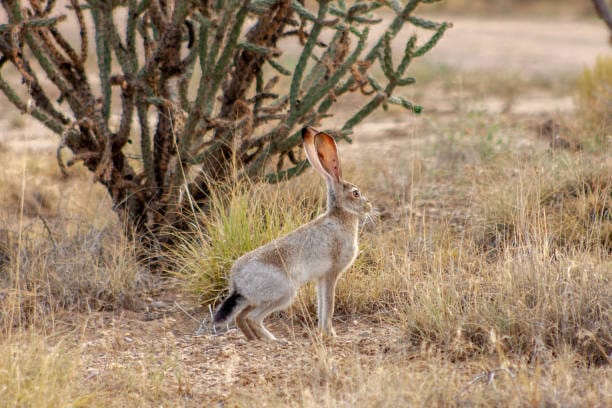
Physical Characteristics & Identification Tips
The Black-Tailed Jackrabbit (Lepus californicus) is similar in size to the White-Tailed Jackrabbit but has a distinctive black top tail. They are lean, with long ears and legs for fast sprints. Fur is light brown-gray, blending with Idaho’s desert and grassland landscapes.
Behavior
Highly active at dawn and dusk, they rely on speed to evade predators. Unlike cottontails, they prefer running long distances rather than hiding. They are solitary except for mating season. Foot thumping is used as a warning signal.
Habitat and Range
They inhabit southern Idaho grasslands, deserts, and open plains. Sparse shrubs provide cover while allowing visibility to detect predators.
Diet
Primarily grasses, herbs, and buds. In dry seasons, they eat twigs and woody plants. They adapt diet to seasonal vegetation availability.
Reproduction and Life Cycle
Breeding occurs in spring and summer, with 2–6 leverets per litter. Young are born fully furred and active. Lifespan ranges 3–5 years depending on predation.
Fun Facts / Traits
- Black top tail is a clear identifying feature.
- Long-distance sprinter of Idaho’s grasslands.
- Helps maintain balance of grassland ecosystems through grazing.
Human Interaction
Occasionally observed by hikers and hunters in open plains. They rarely intrude on human settlements but provide prey for predators and help control vegetation growth.
Conclusion: Understanding Wild Rabbits in Idaho
Frequently Asked Questions (FAQs) About Wild Rabbits in Idaho
1. What are the most common types of wild rabbits in Idaho?
Idaho hosts several rabbit species, including Pygmy Rabbit, Mountain Cottontail, Eastern Cottontail, White-Tailed Jackrabbit, and Black-Tailed Jackrabbit. Each has unique habitats, behaviors, and identifying features.
2. How can I identify a Pygmy Rabbit?
Look for its tiny size, short ears, soft gray-brown fur, and small feet. Pygmy Rabbits are the smallest in North America and often stay hidden under sagebrush.
3. How do Mountain Cottontails differ from Desert Cottontails?
Mountain Cottontails are slightly larger, darker, and prefer higher elevations with rocky slopes and meadows, while Desert Cottontails are adapted to arid lowlands.
4. What is the difference between a cottontail and a jackrabbit?
Cottontails are smaller, with short ears and legs for short hops. Jackrabbits are larger, have long ears and legs, and are built for speed to escape predators.
5. Where can I find Eastern Cottontails in Idaho?
They inhabit meadows, river valleys, farmland edges, and light forest areas across southern and western Idaho, sometimes near human activity.
6. What do White-Tailed Jackrabbits eat?
They feed on grasses, herbs, buds, and sometimes bark in winter. They travel long distances to find food and prefer open grasslands.
7. Are wild rabbits in Idaho active during the day?
Most species are crepuscular, active during dawn and dusk. They hide during the day to avoid predators and extreme temperatures.
8. How do Black-Tailed Jackrabbits escape predators?
They rely on high-speed sprints and zigzag running patterns in open plains. Their lean bodies and long legs allow quick getaways.
9. Can I see Pygmy Rabbits in the wild?
Yes, but sightings are rare due to their secretive nature. They stay hidden in dense sagebrush areas in southern Idaho.
10. How long do wild rabbits live?
Life expectancy ranges from 1–5 years, depending on species, predation, and environmental conditions.
11. Do rabbits in Idaho dig burrows?
Pygmy Rabbits dig shallow burrows, while most cottontails use forms, which are shallow depressions lined with vegetation. Jackrabbits do not dig burrows.
12. What is a leveret?
A leveret is a baby hare, born fully furred and mobile, unlike cottontail kits, which are blind and hairless at birth.
13. How can I tell Mountain Cottontails from Eastern Cottontails?
Mountain Cottontails are slightly larger, darker, and inhabit higher elevations. Eastern Cottontails prefer lower elevations and open habitats like meadows and farmland.
14. What predators hunt wild rabbits in Idaho?
Coyotes, foxes, bobcats, hawks, owls, and snakes commonly prey on these rabbits, making them vital to the local food chain.
15. Do rabbits hibernate?
No, rabbits remain active year-round, adjusting their diet and behavior to seasonal changes.
16. Are White-Tailed Jackrabbits endangered?
No, they are relatively common in Idaho’s open plains and grasslands, though habitat changes can affect local populations.
17. How do rabbits stay hydrated in arid areas?
Most hydration comes from plants they eat, such as grasses, herbs, and sagebrush. Water from food is usually sufficient.
18. Can rabbits live near humans?
Some species, like Eastern Cottontails, tolerate rural or suburban areas if food and cover are available. Jackrabbits prefer open, less populated areas.
19. How do Pygmy Rabbits communicate?
They use foot thumping, subtle body movements, and scent marking to warn nearby rabbits of danger.
20. When is the breeding season for Idaho rabbits?
Most breed from early spring through late summer, with multiple litters per season depending on food availability.
21. How many babies do rabbits have per litter?
Cottontails have 3–7 kits per litter, while jackrabbit leverets usually number 2–6. Kits grow quickly and become independent in a few weeks.
22. What role do wild rabbits play in ecosystems?
They control vegetation, disperse seeds, and serve as prey for predators, maintaining ecological balance.
23. Why do Snowshoe Hares change color in winter?
Although Idaho doesn’t host many Snowshoe Hares, species like Pygmy Rabbits rely on camouflage with seasonal plant changes for survival.
24. Do rabbits damage crops?
Occasionally, especially cottontails nibbling on garden plants or farmland edges, but they are generally not a major pest.
25. How can I observe rabbits safely?
Use binoculars, stay quiet, and observe at dawn or dusk. Avoid approaching closely to prevent stress or flight.
26. Do rabbits eat insects?
No, all Idaho rabbits are herbivores, feeding on grasses, buds, leaves, and twigs.
27. How fast can jackrabbits run?
White-Tailed and Black-Tailed Jackrabbits can reach speeds over 35 mph in short bursts.
28. What is a “form” in rabbit behavior?
A form is a shallow ground depression where a cottontail rests or hides during the day, often lined with vegetation.
29. Why do rabbits thump their hind legs?
Thumping is a warning to other rabbits about predators nearby, signaling danger without drawing human attention.
30. Are Idaho rabbits solitary?
Most are solitary outside mating season. They maintain overlapping territories but avoid close social contact.
31. How can I tell a jackrabbit from a hare?
Jackrabbits are larger, with long legs and ears, and rely on speed. Hares like leverets are born fully furred and mobile, and inhabit cooler, more open areas.
32. When is the best time to see wild rabbits in Idaho?
Dawn and dusk are ideal. Spring and summer provide active feeding and sightings of young, while winter offers a chance to see them foraging for woody vegetation.
Read more: 8 Types of Wild Rabbits in New Mexico (Pictures And Identification)