
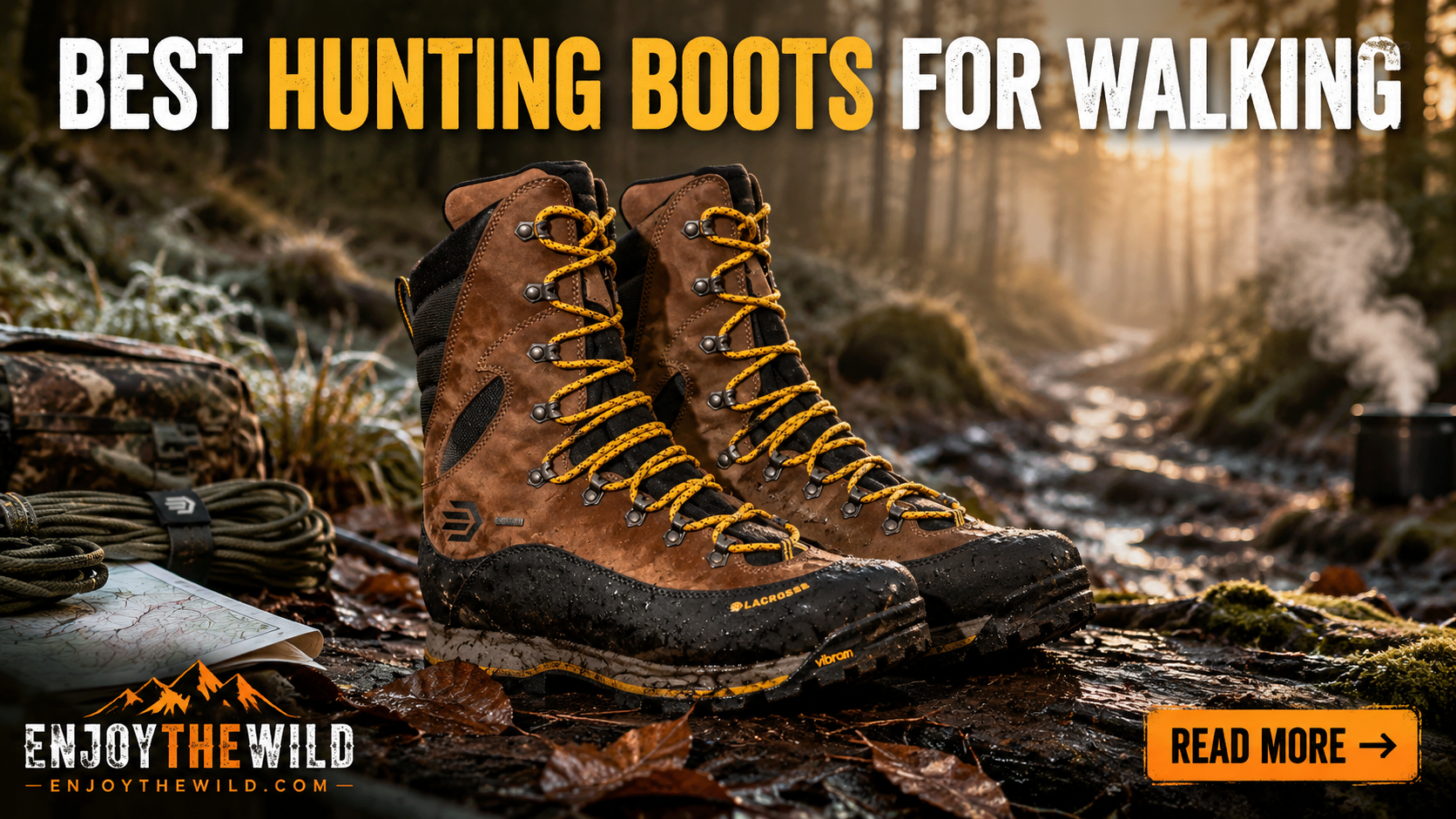
Finding the best hunting boots for walking is different from choosing a boot only for sitting in a deer stand. If your hunt involves scouting, still-hunting, upland walking, turkey hunting, hiking to remote stands, crossing uneven ground, or covering several miles in a day, comfort and support matter just as much as waterproofing and insulation.
This guide compares 10 hunting boots that make sense for hunters who walk more than they sit. The list includes lightweight waterproof hunting boots, supportive leather boots, upland-style field boots, mountain hunting boots, insulated boots for colder walks, and one rubber option for wet-ground hunters who still need practical mobility.
Each product was selected based on walking comfort, support, traction, waterproof protection, weight, ankle stability, durability, break-in considerations, brand reputation, Amazon availability, and overall field value. The goal is to help hunters choose footwear that reduces fatigue, protects the feet, and performs responsibly in real hunting conditions.
No hunting boot can make every terrain easy. A boot that feels great on flat upland fields may not be stiff enough for steep elk country, while a rugged mountain boot may feel like too much for short walks to a whitetail stand. Always match your boots to your hunting style, terrain, season, and foot shape.
Always hunt responsibly. Follow local hunting laws, licensing requirements, legal seasons, land-access rules, and ethical hunting practices. Break in your boots before the season, wear moisture-managing socks, and choose footwear that helps you move safely in the field.
Quick Picks:
- Best Overall: Danner Recurve 7” 400G Waterproof Hunting Boot on Amazon
- Best Budget Option: ROCKY Retraction Waterproof 800G Insulated Outdoor Boot on Amazon
- Best Premium Pick: Crispi Nevada Non-Insulated GTX Hunting Boot on Amazon
- Best for Upland Walking: Irish Setter Wingshooter 7” Waterproof Hunting Boot on Amazon
- Best Lightweight Pick: Irish Setter VaprTrek 8” Waterproof Hunting Boot on Amazon
Comparison Table
| Product | Best For | Material | Insulation | Key Features | Walking Comfort Notes | Check Price |
|---|---|---|---|---|---|---|
| Danner Recurve 7” 400G Waterproof Hunting Boot | Best Overall for Walking | Leather and textile hunting boot build | 400g insulation | Danner Dry waterproofing, Vibram SPE midsole, TPU heel clip | Lighter hiking-style feel for active hunters | Check Price on Amazon |
| Irish Setter VaprTrek 8” Waterproof Hunting Boot | Best Lightweight Active Boot | Camo hunting boot construction | Verify exact version | Waterproof build, 8-inch height, active hunting design | Good for mobile hunting and moderate walking | Check Price on Amazon |
| Danner Pronghorn 8” Waterproof Hunting Boots | Best Versatile Walking Boot | Leather and textile upper | Varies by model | Waterproof hunting design, supportive height, outdoor traction | Reliable all-around option for mixed terrain | Check Price on Amazon |
| Irish Setter Wingshooter 7” Waterproof Hunting Boot | Best Upland Walking Boot | Leather upper | Usually uninsulated; verify exact style | Classic field profile, waterproof build, removable footbed | Comfortable traditional boot for fields and rolling ground | Check Price on Amazon |
| Kenetrek Corrie 3.2 Hiker Waterproof Hiking Boot | Best Supportive Hiker-Style Hunting Boot | Leather and synthetic upper | Non-insulated | 7-inch height, Windtex waterproof membrane, reinforced toe and heel guards | Designed like a rugged hiker for long walking days | Check Price on Amazon |
| Kenetrek Bridger 7” High Hiking Boots | Best Lightweight Premium Hiker | Leather hiking boot construction | Non-insulated | Reinforced toe and heel guards, Grapon outsole, high-cut support | Good for hunters who want hiking comfort with rugged support | Check Price on Amazon |
| Crispi Nevada Non-Insulated GTX Hunting Boot | Best Premium Walking and Mountain Boot | Water-repellent nubuck upper | Non-insulated | GORE-TEX lining, ankle support system, rugged hunting build | Premium choice for hunters covering serious miles | Check Price on Amazon |
| Meindl Comfort-Fit Extreme Gore-Tex Waterproof Hunting Boot | Best Wide Toe Box Option | Leather hunting boot construction | Uninsulated | Gore-Tex waterproof design, comfort-fit shape, made in Germany listing | Good for hunters who need toe room on long walks | Check Price on Amazon |
| ROCKY Retraction Waterproof 800G Insulated Outdoor Boot | Best Budget Cold-Weather Walking Boot | Camo outdoor hunting boot construction | 800g insulation | Waterproof design, insulated warmth, outdoor traction | Better for shorter cold walks than warm early-season hiking | Check Price on Amazon |
| LaCrosse Alphaburly Pro 18” 800G Waterproof Hunting Boot | Best Rubber Boot for Wet Walks to Stands | Rubber and neoprene | 800g insulation | Tall waterproof rubber shaft, EVA cushioning, deer hunting design | Best for wet access routes, not long mountain walking | Check Price on Amazon |
For walking-heavy hunts, lace-up boots usually make more sense than tall rubber boots because they hold the foot more securely, reduce heel slip, and provide better support on uneven ground. The Danner Recurve, Irish Setter VaprTrek, Danner Pronghorn, Irish Setter Wingshooter, Kenetrek Corrie, Kenetrek Bridger, Crispi Nevada, and Meindl Comfort-Fit Extreme are the most walking-focused options in this comparison. The ROCKY Retraction and LaCrosse Alphaburly Pro remain useful for hunters who walk shorter distances in cold or wet conditions, but they are not the first choice for long mountain miles.
1. Danner Recurve 7” 400G Waterproof Hunting Boot on Amazon
Short Overview
The Danner Recurve 7” 400G Waterproof Hunting Boot is one of the best hunting boots for walking because it feels closer to a supportive hiking boot than a bulky traditional hunting boot. It is built for hunters who cover ground while scouting, turkey hunting, still-hunting, or walking to stands through mixed terrain. The listing describes Danner Dry waterproofing, 400g insulation, a Vibram SPE midsole, and a TPU heel clip. That combination makes it useful for cool-weather hunts where you want some warmth without stepping into a heavy late-season boot. The 7-inch height gives ankle coverage while still allowing natural movement. It is not the tallest boot for deep mud or the stiffest boot for heavy mountain packs, but it works well for hunters who prioritize walking comfort. The moderate insulation makes it more versatile than very warm 800g boots for active hunters. If your main concern is staying comfortable over several miles, the Recurve is a strong overall pick.
Key Features
- 7-inch waterproof hunting boot design
- 400g insulation on this version
- Danner Dry waterproof protection
- Vibram SPE midsole for all-day walking comfort
- TPU heel clip for added support
Pros
- Excellent walking comfort for active hunters
- Moderate insulation works for cool conditions
- Less bulky than tall rubber boots
- Good choice for scouting, turkey hunting, and mobile deer hunting
Cons
- Not ideal for deep mud or standing water
- May not be warm enough for extreme cold sits
- Less support than heavier mountain boots for big loads
Who It’s Best For
This boot is best for hunters who walk several miles during scouting, turkey hunting, mobile deer hunting, and moderate-terrain hunts. It is ideal for buyers who want a comfortable waterproof hunting boot without excessive bulk.
2. Irish Setter VaprTrek 8” Waterproof Hunting Boot on Amazon
Short Overview
The Irish Setter VaprTrek 8” Waterproof Hunting Boot is built for hunters who prefer mobility over heavy stiffness. It is a practical choice for walking-heavy hunts, early-season deer hunting, turkey hunting, scouting trips, and moderate terrain where you want a boot that feels lighter underfoot. The listing describes a waterproof hunting boot with camouflage styling and an 8-inch profile. This makes it a good alternative to bulky insulated rubber boots when you need better foot control and less fatigue. The VaprTrek line is often considered by hunters who want a more athletic boot feel. It may not be the best choice for carrying heavy packs in steep mountain country, but it works well for active hunters who move often. The 8-inch height offers more ankle coverage than a hiking shoe while still staying manageable. If you want the best hunting boots for walking in mild-to-moderate terrain, this is one of the most relevant options.
Key Features
- 8-inch waterproof hunting boot
- Camouflage hunting style
- Lace-up fit for better adjustment
- Active hunting profile
- Good for scouting, turkey hunting, and mobile hunting
Pros
- Light and mobile feel for walking hunts
- More field-specific than basic hiking boots
- Useful for hunters who cover moderate distances
- Camo design works well in hunting environments
Cons
- Not as stiff as premium mountain boots
- Not as tall as rubber swamp boots
- Insulation and features can vary, so verify the exact listing
Who It’s Best For
The VaprTrek is best for hunters who want a lighter waterproof hunting boot for mobile deer hunting, turkey hunting, scouting, and walking on moderate terrain.
3. Danner Pronghorn 8” Waterproof Hunting Boots on Amazon
Short Overview
The Danner Pronghorn 8” Waterproof Hunting Boot is a proven all-around option for hunters who walk through mixed terrain but still want traditional hunting boot support. It is especially useful if your hunts include moderate hiking, wet woods, rocky trails, creek crossings, and long approaches to stands or glassing spots. The Pronghorn line commonly includes waterproof protection, leather-and-textile construction, cushioning, and outdoor traction depending on the exact model. Compared with lightweight boots, it may feel more substantial, but that extra support can help on uneven ground. Compared with tall rubber boots, it offers better lace-up control and walking stability. It is not the lightest boot on this list, but it is one of the most versatile. The 8-inch height is a practical middle ground for many hunters. If you want one walking-friendly hunting boot that can handle different seasons and terrain, the Pronghorn is a safe comparison pick.
Key Features
- 8-inch hunting boot height
- Waterproof hunting boot construction
- Leather and textile-style upper on many versions
- Supportive midsole and traction outsole design
- Good all-around field versatility
Pros
- Versatile choice for many hunting styles
- More supportive than many lightweight boots
- Good for mixed terrain and moderate walking
- Better foot control than most rubber pull-on boots
Cons
- May need break-in time
- Not as light as some athletic-style hunting boots
- Not as easy to clean as full rubber boots
Who It’s Best For
The Danner Pronghorn is best for hunters who want a dependable waterproof boot for mixed terrain, moderate hiking, long walks to stands, and general all-season hunting use.
4. Irish Setter Wingshooter 7” Waterproof Hunting Boot on Amazon
Short Overview
The Irish Setter Wingshooter 7” Waterproof Hunting Boot is a classic walking boot for upland hunters, bird hunters, and anyone who covers open fields, grass, light woods, and rolling terrain. It has a traditional leather field-boot profile rather than a bulky rubber or mountain style. The listing describes waterproof construction and a removable footbed, which helps make it practical for long walking days. This boot is not designed for extreme mountain loads or deep swamp conditions, but it shines when you want comfort over moderate ground. The 7-inch height keeps it lighter and more flexible than many taller hunting boots. It also transitions well from hunt camp to general outdoor use. Hunters who dislike stiff technical boots may appreciate the more natural walking feel. For upland hunting and long field walks, the Wingshooter is one of the most comfortable-style options to compare.
Key Features
- 7-inch waterproof hunting boot
- Leather upper construction
- Removable footbed according to many listings
- Classic upland hunting profile
- Lace-up design for adjustable walking comfort
Pros
- Excellent for upland and field walking
- Traditional leather boot comfort
- Less bulky than rubber or mountain boots
- Good for moderate terrain and camp use
Cons
- Not ideal for deep mud or swampy terrain
- Not the warmest choice for long winter sits
- Less supportive than premium mountain boots
Who It’s Best For
This boot is best for upland hunters, bird hunters, pheasant hunters, field hunters, and outdoor users who prioritize walking comfort over heavy insulation or extreme terrain support.
5. Kenetrek Corrie 3.2 Hiker Waterproof Hiking Boot on Amazon
Short Overview
The Kenetrek Corrie 3.2 Hiker is a strong option for hunters who want a supportive hiking-style boot for long walking days. The listing describes a 7-inch leather and synthetic upper, reinforced toe and heel guards, a Windtex waterproof breathable membrane, lightweight Grapon outsoles, and 5mm nylon midsoles for support. That makes it relevant for hunters who cover miles while scouting, glassing, hiking to remote areas, or hunting rolling and rocky terrain. It is less bulky than many traditional mountain boots but more rugged than casual hiking footwear. The reinforced areas help with abrasion around rocks, brush, and rough ground. The non-insulated design makes it better for active walking in mild to cool weather than for long freezing sits. It is a good choice if your hunting style looks more like hiking with a weapon or bow than sitting in one place all day. For walking-focused hunters, this is one of the most practical premium hiker-style picks.
Key Features
- 7-inch leather and synthetic upper
- Windtex waterproof breathable membrane according to listing
- Reinforced rubber toe and heel guards
- Lightweight Grapon outsole for traction
- 5mm nylon midsole for support in rugged terrain
Pros
- Good hiking-style comfort for long walks
- Supportive without being a tall mountain boot
- Waterproof construction helps in wet terrain
- Reinforced toe and heel areas improve durability
Cons
- Not insulated for very cold stand hunting
- Premium pricing may not suit casual hunters
- May not provide as much height as 10-inch mountain boots
Who It’s Best For
The Kenetrek Corrie 3.2 is best for hunters who walk long distances, scout often, hunt mixed terrain, and want a waterproof hiking-style boot with rugged hunting-ready support.
6. Kenetrek Bridger 7” High Hiking Boots on Amazon
Short Overview
The Kenetrek Bridger 7” High Hiking Boot is another good option for hunters who want walking comfort with premium outdoor construction. The listing describes reinforced toe and heel guards, double and triple stitching, and lightweight Grapon outsoles. This boot is especially appealing for hunters who want a high hiker rather than a bulky insulated hunting boot. It can work well for scouting, spring turkey, early-season deer, upland walking, and general outdoor hiking around hunt camp. Because it is a hiker-style boot, it may feel more natural over longer distances than tall rubber pull-ons. It is not meant to replace a dedicated extreme cold boot or a knee-high wetland boot. However, it is a strong choice for hunters who prioritize mobility and sure-footed walking. If your hunting day includes lots of steps, the Bridger is worth comparing closely.
Key Features
- 7-inch high hiking boot design
- Leather upper construction
- Reinforced toe and heel guards according to listing
- Double and triple stitching in high-wear areas
- Lightweight Grapon outsole
Pros
- Good walking comfort for scouting and active hunts
- Reinforced construction for rough ground
- More mobile than many heavy insulated boots
- Useful for hunters who prefer hiking-style footwear
Cons
- Not built for deep mud like rubber boots
- Not the warmest late-season choice
- May be more expensive than budget hunting boots
Who It’s Best For
The Kenetrek Bridger is best for hunters who want a rugged high hiker for scouting, walking, upland-style hunts, early-season trips, and mixed-terrain outdoor use.
7. Crispi Nevada Non-Insulated GTX Hunting Boot on Amazon
Short Overview
The Crispi Nevada Non-Insulated GTX Hunting Boot is a premium choice for hunters who cover serious miles and want support, waterproofing, and high-end field construction. The Amazon listing describes a water-repellent nubuck upper, GORE-TEX lining, and Crispi’s Ankle Bone Support System. This makes it a strong option for mountain hunts, long walking days, backpack hunting, scouting, and uneven terrain. Because it is non-insulated, it works best for active hunters who generate heat while moving rather than hunters sitting still in freezing weather. Compared with budget hunting boots, it is a larger investment, but serious hunters often prioritize fit and long-term support over the lowest price. It is more supportive than lightweight field boots and more walking-focused than tall rubber boots. It may require break-in time depending on your feet and the terrain. For hunters who want one premium lace-up boot for long walking and rugged country, the Crispi Nevada is a standout option.
Key Features
- Water-repellent nubuck upper according to listing
- GORE-TEX waterproof lining
- Non-insulated design for active hunting
- Ankle Bone Support System listed by Crispi
- Premium rugged hunting boot construction
Pros
- Excellent for long-distance walking and rugged terrain
- Premium support and waterproof protection
- Good for active hunters who do not want heavy insulation
- Strong choice for mountain, scouting, and backpack-style hunts
Cons
- Premium price point
- Not insulated for very cold stationary hunts
- May be more boot than casual hunters need
Who It’s Best For
The Crispi Nevada is best for serious hunters, mountain hunters, backpack hunters, and anyone who walks long distances and wants premium waterproof support.
8. Meindl Comfort-Fit Extreme Gore-Tex Waterproof Hunting Boot on Amazon
Short Overview
The Meindl Comfort-Fit Extreme Gore-Tex Waterproof Hunting Boot is a useful option for hunters who need walking comfort and more toe room. The listing describes an uninsulated Gore-Tex waterproof hunting boot with a comfort-fit design and wide toe box. That matters because many long-distance boot problems come from cramped toes, pressure points, and swelling after several miles. This boot is better for active hunters than for hunters who need maximum insulation for long sits. It can work for upland walking, scouting, mountain approaches, and mixed-terrain hunting. The uninsulated build makes it easier to manage temperature when you are constantly moving. It may not be the cheapest option, but the fit-focused design can be valuable for hunters who struggle with narrow boots. If your feet need extra room during long walking hunts, this is a smart product to compare.
Key Features
- Uninsulated hunting boot design
- Gore-Tex waterproof protection according to listing
- Comfort-fit shape
- Wide toe box listed for foot comfort
- Made in Germany according to listing title
Pros
- Good option for hunters who need more toe room
- Waterproof protection for wet ground
- Uninsulated design helps active hunters manage heat
- Useful for walking, scouting, and mixed terrain
Cons
- Not ideal for very cold stationary hunts
- Wide toe box may not suit narrow feet
- Premium-style boot may cost more than casual options
Who It’s Best For
This boot is best for hunters who walk long distances and need a roomier fit, especially around the toe box. It is a good choice for active hunters who dislike cramped hunting boots.
9. ROCKY Retraction Waterproof 800G Insulated Outdoor Boot on Amazon
Short Overview
The ROCKY Retraction Waterproof 800G Insulated Outdoor Boot is a value-focused choice for hunters who walk to stands, blinds, trail cameras, food plots, and cold-weather hunting locations. It is not the lightest boot for high-mileage scouting, but it offers warmth and waterproofing at a more accessible level than many premium boots. The listing describes waterproof construction and 800g insulation. That makes it better for cool and cold weather than warm early-season hunts. It is especially useful for hunters who walk moderate distances and then sit for a while. The camo design fits hunting environments, and the insulated build helps when temperatures drop. It may feel too warm or bulky if you walk aggressively for many miles. For budget-minded hunters who need a cold-weather walking-to-stand boot, the ROCKY Retraction is practical.
Key Features
- Waterproof hunting boot construction
- 800g insulation according to listing
- Camo outdoor hunting style
- Designed for cold and wet conditions
- Value-focused insulated boot
Pros
- Good value for cold-weather hunting
- Warm enough for many stand and blind hunts
- Useful for wet fields and moderate walks
- More affordable than many premium walking boots
Cons
- Too warm for many early-season walking hunts
- Bulkier than lightweight active hunting boots
- Not the best choice for long mountain miles
Who It’s Best For
This boot is best for budget-conscious hunters who walk moderate distances in cold and wet conditions before sitting in a stand or blind.
10. LaCrosse Alphaburly Pro 18” 800G Waterproof Hunting Boot on Amazon
Short Overview
The LaCrosse Alphaburly Pro 18” 800G is not the first boot most hunters would choose for long mountain walks, but it deserves a place in this guide because many hunters walk through wet grass, mud, and lowland trails to reach deer stands or blinds. The tall rubber shaft helps protect against water, mud, and wet vegetation. The 800g insulation makes it useful in cold stand conditions after the walk in. Compared with lace-up boots, it offers less precise foot lockdown, so it is better for shorter wet approaches than high-mileage walking. It is easy to clean and practical for scent-conscious deer hunting routines. If your walking involves swampy access trails rather than steep ridges, this boot can make sense. It is also useful for hunters who prioritize waterproof lower-leg coverage over lightweight performance. For long hiking, choose a lace-up boot; for wet stand access, the Alphaburly Pro remains a strong option.
Key Features
- 18-inch waterproof rubber hunting boot
- 800g insulation on this version
- Rubber and neoprene-style construction
- Tall shaft for wet grass, mud, and lowland terrain
- Pull-on design for easy use
Pros
- Excellent waterproof coverage for wet access routes
- Good for cold deer stands and lowland hunting
- Easy-to-clean rubber exterior
- Useful for scent-conscious whitetail hunters
Cons
- Not ideal for long-distance hiking
- Can feel too warm in mild weather
- Less foot control than lace-up walking boots
Who It’s Best For
This boot is best for deer hunters who walk through wet, muddy, or swampy access routes before sitting in a stand or blind. It is not the best pick for long mountain walking.
Buying Guide: How to Choose the Best Hunting Boots for Walking
Start With Walking Distance
The best hunting boots for walking should match how many miles you actually cover. A hunter who walks 300 yards to a treestand does not need the same boot as a hunter who scouts all day or hikes several miles into public land. For short walks, warmth and waterproofing may matter most. For long walks, fit, weight, arch support, heel lock, cushioning, sole stability, and break-in comfort become more important.
If your hunts regularly involve several miles, choose lace-up boots rather than tall rubber boots. Lace-up boots usually hold the heel more securely, reduce foot sliding, and give better control on side slopes and uneven ground.
Choose Lace-Up Boots for Long Walking
For most walking-heavy hunts, lace-up hunting boots are the best starting point. They allow you to adjust fit through the ankle and midfoot, which helps reduce heel slip and hot spots. A good lace-up boot also supports your ankles better than a loose pull-on boot when crossing rocks, roots, sidehills, and muddy slopes.
Rubber boots still have a place, especially for wet lowland deer hunting, but they are usually better for short-to-moderate walks than long-distance movement. If your foot moves inside the boot too much, blisters and fatigue can develop faster.
Pay Close Attention to Fit
Fit is the most important factor in walking comfort. A boot that is too tight can cause toe pain, numbness, cold feet, and blisters. A boot that is too loose can cause heel slip and poor control. Try boots with the socks you plan to wear while hunting. Make sure your toes have room on downhill steps and your heel stays secure when climbing.
If you have wide feet, look for wide sizing, a roomier toe box, or boots designed with extra forefoot space. If you have narrow feet, avoid boots that feel sloppy even when laced tightly.
Think About Weight
Every extra ounce matters when you walk for hours. Heavy boots can feel protective, but they also increase fatigue. Lightweight hunting boots and hiker-style boots are often better for active hunters. However, lightweight should not mean flimsy. The boot still needs enough sole stability, waterproof protection, and durability for hunting terrain.
If you hunt flat fields or rolling ground, a lighter boot may be ideal. If you hunt mountains with a loaded pack, a slightly heavier boot with better support may be worth the tradeoff.
Match Insulation to Activity Level
Insulation can be helpful, but too much insulation can hurt walking comfort. Boots with 800g insulation may feel great during cold stand sits, but they can make your feet sweat during long walks. Sweaty socks can later make your feet feel colder when you stop moving.
For active walking hunts, uninsulated or lightly insulated boots often make more sense. A 400g boot can be a good middle ground for cool conditions. Heavy insulation is better for slow movement and long stationary sits.
Prioritize Cushioning and Midsole Support
Walking comfort comes from more than soft padding. You need cushioning, but you also need midsole support that prevents your feet from feeling beat up after hours on uneven ground. Soft boots may feel comfortable at first but can lack support over miles. Very stiff boots may support heavy loads but feel tiring on flat ground.
Choose the stiffness based on terrain. Upland hunters may prefer flexible comfort. Mountain hunters need more support. Deer hunters walking mixed trails may want a balanced boot.
Look for Reliable Traction
Walking while hunting often means crossing wet leaves, mud, snow, loose dirt, slick grass, creek banks, and uneven trails. Good traction helps prevent slips and reduces fatigue because you do not have to fight for every step. Deep lugs are useful in mud. More stable outsoles help on rocks and slopes.
Do not choose boots based only on the upper material. The outsole pattern and rubber quality matter greatly for walking safety.
Waterproofing Still Matters
Even walking-focused boots need waterproof protection. Morning dew, creek crossings, wet brush, rain, and mud can soak ordinary footwear quickly. Waterproof membranes and rubber sections help protect your feet, but water can still enter over the top if the boot is too low for the conditions.
After wet hunts, dry your boots slowly in a ventilated area. Avoid direct high heat because it can damage leather, rubber, glue, and waterproof membranes.
Break-In Time Matters
Never take brand-new hunting boots on a long hunt without testing them first. Wear them around the house, then on short walks, then on light hikes. This helps you identify heel slip, toe pressure, ankle rubbing, or sizing problems before opening day.
Premium boots may still need break-in time. A boot that feels slightly stiff at first may become excellent after use, but sharp pressure points are a warning sign.
Consider Terrain and Hunting Style
For upland hunting, choose comfortable field boots with flexible soles. For turkey hunting, choose lightweight waterproof boots for spring grass and moderate walking. For mountain hunting, choose stiffer boots with ankle support and rugged traction. For whitetail stand hunting, choose boots based on the walk in and how long you will sit afterward.
The best hunting boots for walking are not always the warmest, tallest, or most expensive boots. They are the boots that match your miles, terrain, weather, and feet.
Responsible Hunting Use
Comfortable boots help you move more safely, but they do not replace responsible hunting preparation. Always follow local seasons, licensing rules, land-access requirements, firearm or bow safety practices, and ethical hunting standards. Carry water, navigation tools, and emergency essentials when walking far from roads or camp.
Final Recommendation
The best overall choice for most hunters who walk a lot is the Danner Recurve 7” 400G Waterproof Hunting Boot on Amazon because it balances waterproofing, moderate warmth, mobility, and walking comfort in a less bulky design.
For a lightweight active-hunting option, the Irish Setter VaprTrek on Amazon is a strong pick. For upland walking, the Irish Setter Wingshooter on Amazon is a comfortable field-style option. For serious long-distance and rugged terrain, compare the Crispi Nevada GTX on Amazon, Kenetrek Corrie 3.2 on Amazon, and Meindl Comfort-Fit Extreme on Amazon.
Choose based on your walking distance, terrain, insulation needs, waterproofing requirements, and fit. Check current sizes and availability on Amazon before buying, and share this guide with hunting partners or outdoor friends who need comfortable hunting boots for long days in the field.
Frequently Asked Questions
1. What are the best hunting boots for walking overall?
The best hunting boots for walking overall are boots that balance comfort, support, waterproofing, traction, and weight. For many hunters, the Danner Recurve is a strong walking-focused choice because it feels less bulky than many traditional hunting boots while still offering waterproof protection and moderate insulation.
2. What makes a hunting boot good for walking?
A good walking hunting boot should have a secure heel, comfortable toe box, supportive midsole, reliable traction, manageable weight, and enough waterproofing for wet grass, mud, and rain. It should reduce fatigue instead of feeling heavy and stiff all day.
3. Are lace-up hunting boots better for walking?
Yes, lace-up boots are usually better for walking because they hold the foot more securely and allow better adjustment around the ankle and midfoot. This helps reduce heel slip and improves control on uneven ground.
4. Are rubber hunting boots good for walking?
Rubber hunting boots can work for short or moderate walks in wet conditions, but they usually do not provide the same heel lock and ankle support as lace-up boots. They are better for wet deer stand access than long-distance hiking.
5. What are the best hunting boots for long walks?
For long walks, consider lightweight lace-up boots such as the Danner Recurve, Irish Setter VaprTrek, Kenetrek Corrie, Crispi Nevada, or Meindl Comfort-Fit Extreme. The right choice depends on fit, terrain, and insulation needs.
6. What are the best hunting boots for upland walking?
Upland hunters often prefer comfortable leather or lace-up field boots. The Irish Setter Wingshooter is a strong option for walking fields, grass, light woods, and rolling terrain.
7. What are the best hunting boots for scouting?
For scouting, choose lightweight waterproof boots that feel comfortable over several miles. Danner Recurve, Irish Setter VaprTrek, Kenetrek Corrie, and Kenetrek Bridger are good options to compare.
8. What are the best hunting boots for turkey hunting?
Turkey hunters often walk through wet spring grass and moderate terrain. Lightweight waterproof boots such as the Danner Recurve, Irish Setter VaprTrek, and Danner Pronghorn can work well.
9. What are the best hunting boots for mountain walking?
For mountain walking, choose boots with strong ankle support, stable soles, waterproofing, and durable uppers. Crispi Nevada, Kenetrek Corrie, Kenetrek Bridger, and Kenetrek Mountain-style boots are good types to compare.
10. Are insulated boots good for walking?
Insulated boots can be good for walking in cold weather, but too much insulation can cause sweating. For active hunts, uninsulated or 400g boots are often more comfortable than 800g boots.
11. Is 800g insulation too much for walking hunts?
It can be too much if you walk aggressively or hunt mild weather. Boots with 800g insulation are better for cold conditions, shorter walks, and long sits after the walk in.
12. Is 400g insulation good for walking?
Yes, 400g insulation is a good middle ground for cool-weather walking hunts. It adds warmth without feeling as bulky or hot as heavier insulation.
13. Are uninsulated hunting boots better for walking?
Uninsulated boots are often better for long active walks, early season, warm climates, and hunters who generate heat while moving. You can pair them with warmer socks when needed.
14. Should hunting boots for walking be lightweight?
They should be light enough to reduce fatigue but still supportive enough for the terrain. Very light boots can feel comfortable at first but may lack support on rough ground.
15. What is the best boot height for walking hunts?
A 7-inch to 8-inch boot is a good height for most walking hunts. It gives ankle coverage without feeling as bulky as taller mountain or rubber boots.
16. Are 10-inch hunting boots good for walking?
They can be good for mountain terrain and heavy loads, but they may feel stiff or heavy for flat-ground walking. Choose 10-inch boots when support matters more than flexibility.
17. How should hunting boots fit for walking?
They should feel secure around the heel and midfoot, with enough toe room for downhill steps and thicker socks. Avoid boots that pinch or allow excessive heel lift.
18. Should I size up for walking hunting boots?
Some hunters size up slightly for thick socks, but too much extra room causes heel slip. Check the brand’s size chart and Amazon sizing feedback before ordering.
19. How do I avoid blisters while walking in hunting boots?
Choose a proper fit, wear wool or moisture-managing socks, break in boots before hunting, keep feet dry, and stop early if you feel hot spots developing.
20. What socks are best for walking in hunting boots?
Wool or wool-blend socks are usually best because they manage moisture and warmth better than cotton. Avoid cotton socks for long wet or cold walks.
21. Are hiking boots good for hunting walks?
Yes, hiking boots can work for hunting walks, especially in mild weather and active terrain. However, hunting-specific boots may offer better camo, insulation, waterproofing, and rugged field protection.
22. What is the difference between hunting boots and hiking boots?
Hunting boots often add camo, insulation, scent-control-friendly rubber, taller shafts, and rugged field protection. Hiking boots usually prioritize trail comfort, weight, and breathability.
23. Are premium hunting boots worth it for walking?
Premium boots can be worth it if you walk long distances, hunt rough terrain, or spend many days in the field. Better materials and support can improve comfort and durability over time.
24. What are the best budget hunting boots for walking?
The ROCKY Retraction can be a practical budget option for cold-weather moderate walks, while the Irish Setter VaprTrek may appeal to hunters who want a lighter active boot. Always compare fit and current availability.
25. Are waterproof hunting boots necessary for walking?
Waterproof boots are useful for most hunters because walking often involves dew, mud, rain, wet brush, creek crossings, and snow. Wet feet can cause discomfort and blisters.
26. Do waterproof boots breathe well?
Some waterproof boots breathe better than others, but waterproof membranes can feel warmer than highly breathable non-waterproof footwear. Active hunters should balance waterproofing with temperature control.
27. Can waterproof boots still get wet inside?
Yes. Water can enter over the top, through damaged areas, or from sweat buildup. Proper socks, gaiters, and boot care can help.
28. Are tall rubber boots better for wet walking?
Tall rubber boots are better for shallow water, mud, and wet grass, but they are not always better for long walking. They usually provide less foot control than lace-up boots.
29. What are the best hunting boots for walking in mud?
For short muddy walks, tall rubber boots like the LaCrosse Alphaburly Pro work well. For longer muddy trails, a lace-up waterproof boot with aggressive traction may be more comfortable.
30. What are the best hunting boots for walking on rocks?
Choose supportive boots with stable midsoles, ankle support, and durable outsoles. Crispi Nevada, Kenetrek Corrie, and Meindl Comfort-Fit Extreme are good types to compare for rocky walking.
31. What are the best hunting boots for walking in snow?
For snow, look for waterproofing, traction, and enough insulation for your activity level. Heavier insulation is better for slow walking or sitting, while moderate insulation is better for active movement.
32. Should walking hunting boots be stiff?
They should be stiff enough for support but not so stiff that they cause fatigue on flat ground. Mountain boots need more stiffness, while upland and scouting boots can be more flexible.
33. Do walking hunting boots need ankle support?
Yes, ankle support is helpful on uneven terrain, side slopes, rocks, roots, and muddy trails. Flat-ground hunters may need less support than mountain hunters.
34. Are low-cut hunting shoes good for walking?
Low-cut shoes may be comfortable for light scouting or warm weather, but they provide less ankle protection and waterproof coverage. Most hunters prefer mid-height boots.
35. How do I break in hunting boots for walking?
Wear them at home first, then on short walks, then on longer hikes. Gradually increase distance before using them for a full hunting day.
36. How long does it take to break in hunting boots?
Break-in time depends on materials and stiffness. Lightweight boots may feel comfortable quickly, while premium leather or mountain boots may need several shorter walks before a full hunt.
37. Can I wear new hunting boots on opening day?
It is not recommended. New boots can cause blisters or pressure points. Test them before opening day so you know they fit correctly.
38. How do I clean hunting boots after walking in mud?
Brush off dried mud or rinse rubber boots with water. Clean leather boots gently and condition them according to manufacturer instructions. Let all boots air dry slowly.
39. How should I dry hunting boots after a wet walk?
Remove insoles if possible and air-dry the boots in a ventilated area. Avoid direct high heat because it can damage leather, rubber, glue, and waterproof membranes.
40. Can hunting boots be used for camping?
Yes, hunting boots can work well for camping in wet, cold, or rugged conditions. For hot summer camping, lighter hiking shoes may be more comfortable.
41. Can hunting boots be used for hiking?
Yes, many lace-up hunting boots work well for hiking. Hiker-style hunting boots are especially useful for scouting, mountain approaches, and long walking hunts.
42. Are hunting boots good for backpack hunting?
For backpack hunting, choose boots with strong support, stable soles, waterproofing, and a secure fit. Premium models like Crispi, Kenetrek, and Meindl are often compared for this type of use.
43. What are the best boots for walking to a deer stand?
If the walk is wet and short, rubber boots like the LaCrosse Alphaburly Pro can work well. If the walk is longer or hilly, a lace-up waterproof boot may be more comfortable.
44. Should I choose rubber or leather for walking to stands?
Choose rubber if the route is wet, muddy, and short. Choose leather or lace-up boots if the route is longer, rocky, hilly, or requires better foot control.
45. What are the best boots for public land walking?
Public land hunters often walk farther, so lace-up waterproof boots with good traction and support are usually best. Danner Recurve, Danner Pronghorn, Irish Setter VaprTrek, and Kenetrek Corrie are worth comparing.
46. What are the best walking boots for early-season hunting?
Early-season hunters should consider uninsulated or lightly insulated waterproof boots. Heavy 800g boots may feel too warm if you cover miles.
47. What are the best walking boots for late-season hunting?
Late-season hunters need more insulation and waterproofing, especially if they walk in snow or sit after the walk. Moderate-to-heavy insulation may be helpful depending on activity level.
48. Are wide toe box hunting boots better for walking?
They can be better for hunters whose feet swell during long walks or who dislike toe pressure. A roomy toe box can improve comfort, but it should not make the whole boot feel loose.
49. What causes foot fatigue in hunting boots?
Foot fatigue can come from poor fit, too much weight, weak midsole support, stiff boots that do not match the terrain, wet socks, poor socks, or insufficient break-in time.
50. How do I know if a hunting boot is too heavy?
If your legs feel tired quickly, your stride feels awkward, or the boot feels excessive for the terrain, it may be too heavy. Long-distance hunters often benefit from lighter boots.
51. Are expensive walking hunting boots always better?
No. Expensive boots may offer better materials and support, but fit matters most. A moderately priced boot that fits well can outperform a premium boot that does not match your foot.
52. Should I buy hunting boots on Amazon?
Amazon can be useful for comparing models, sizes, and customer feedback. Always verify the exact product page, size, width, insulation level, return policy, and seller before buying.
53. What is the biggest mistake when buying hunting boots for walking?
The biggest mistake is buying based only on warmth, brand, or camo pattern while ignoring fit and walking comfort. A boot must match your miles and terrain.
54. Can good boots replace responsible hunting preparation?
No. Good boots help comfort and safety, but responsible hunting also requires legal licenses, knowledge of the season, ethical decisions, safe firearm or bow handling, navigation, hydration, and emergency planning.
55. What is the safest way to choose hunting boots for walking?
The safest approach is to choose boots that fit well, match your terrain, keep your feet dry, provide enough traction, and support your walking distance. Break them in before the hunt and always follow hunting laws and ethical field practices.